-
Office Voodoo: a real-time editing engine for an algorithmic sitcom (2003):
http://alumni.media.mit.edu/~lew/research/voodoo/Voodoo-Siggraph-03-sketch.pdfOffice Voodoo is an interactive film installation using exclusively live action footage and running on a real-time, shot-based editing engine that fluidly assembles the film as it is being watched, while respecting the conventions of continuity editing. Each character in the film is represented by a physical voodoo doll. As viewers manipulate these dolls, they affect the emotions of the people on screen. They can also call the people in the film using their phones.
-
Bored with your video game? Artificial intelligence could create new levels on the fly
-
algorithmthink: cursing the algorithm, while simultaneously thinking that a new algorithm will solve your problems. - coined by inconvergent
-
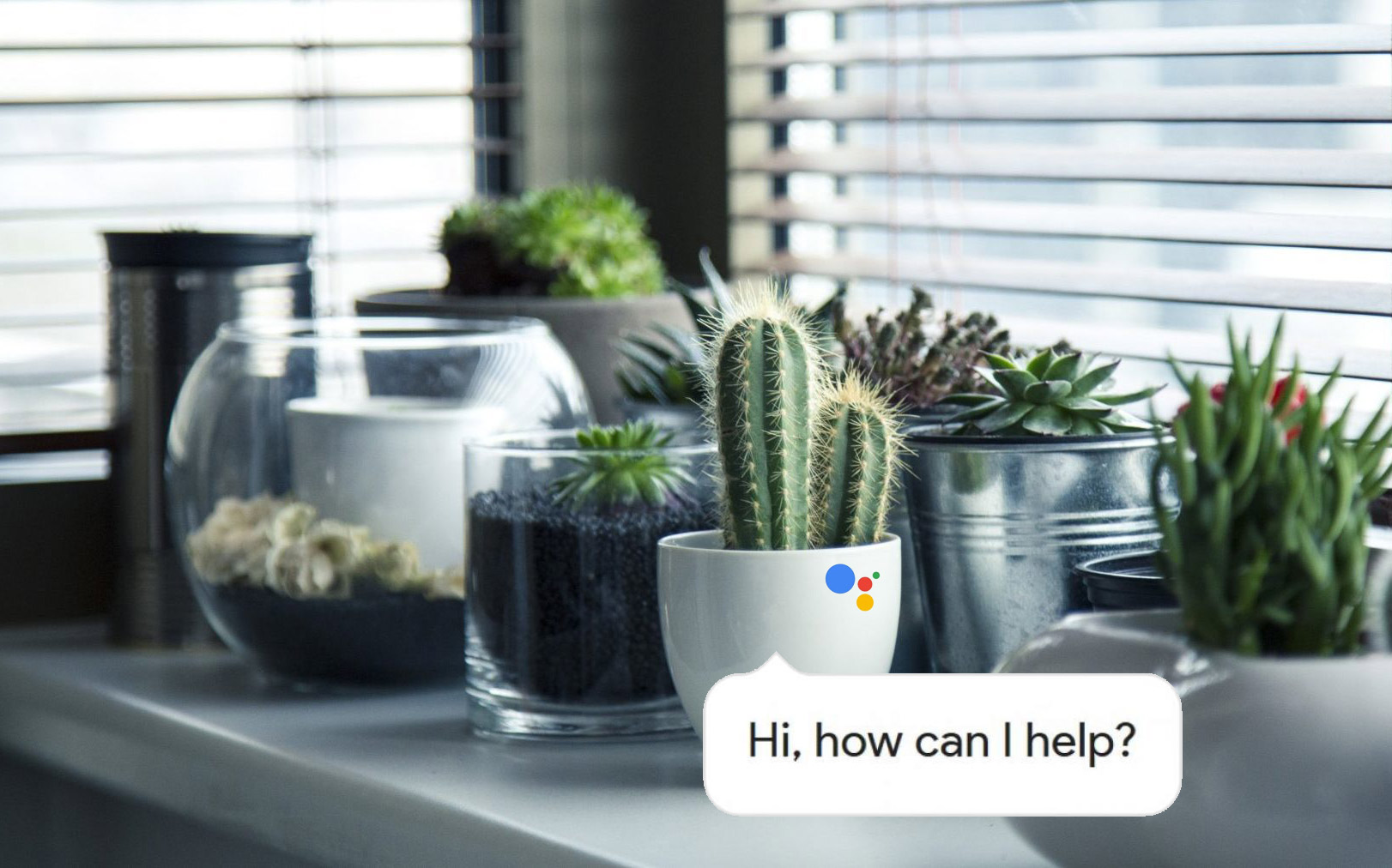
BonsAI - "a smart bonsai plant integrated with artificial intelligence technology":
http://www.japantrends.com/bonsai-smart-bonsai-plant-artificial-intelligence-technology/BonsAI can also move around, searching for sunlight by itself. When it reaches light, it lights up the LEDs integrated into its pot to show its pleasure.
-
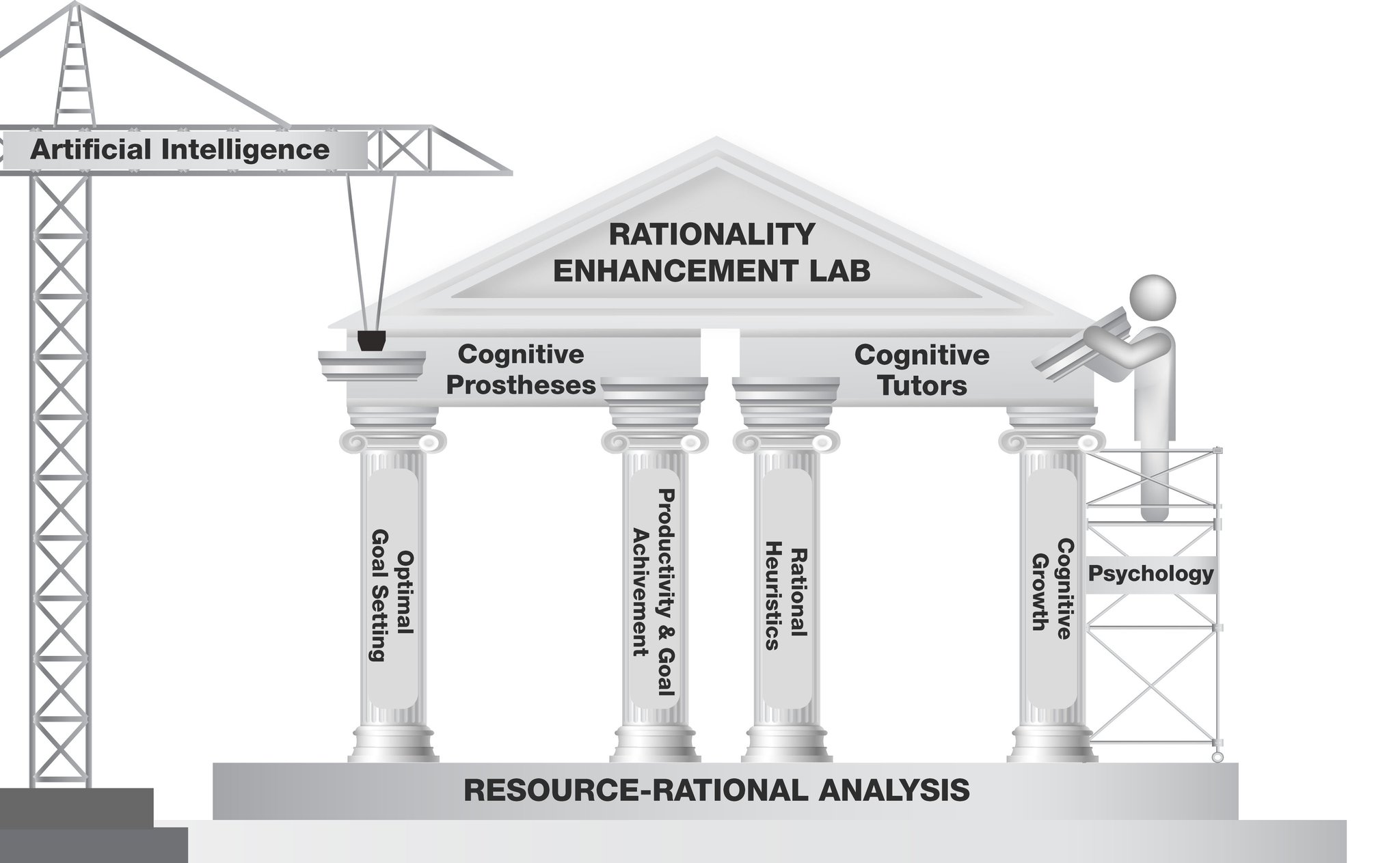
Rationality Enhancement Lab: https://sites.google.com/site/falklieder/rel #ML
-
"Inside the Brotherhood of the Ad Blockers": https://www.bloomberg.com/news/features/2018-05-10/inside-the-brotherhood-of-pi-hole-ad-blockers Article on "Pi-hole", the open source software, running on a $35 Raspberry Pi which blocks ads across an entire network. "an existential crisis for the $200 billion advertising industry"
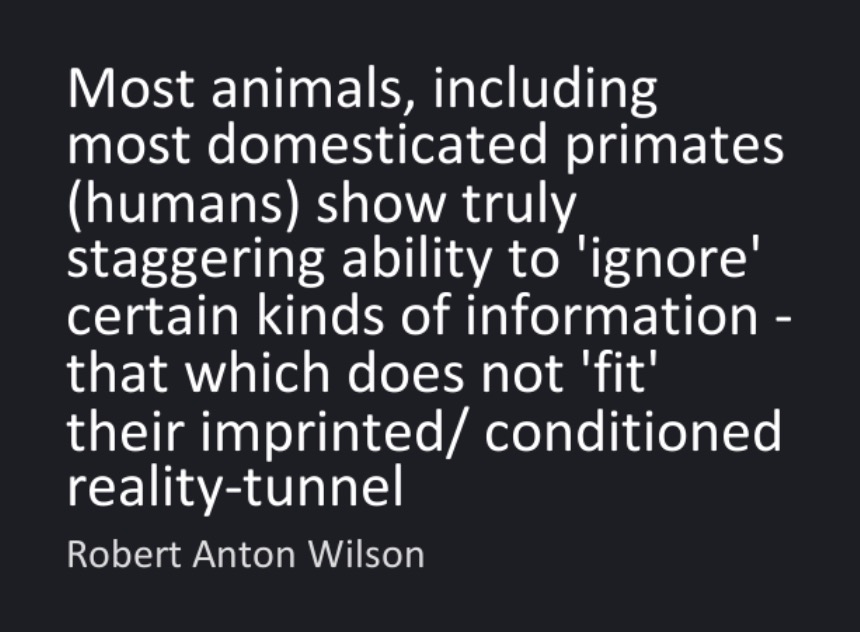
Ad-Blocking is only the very first generation of what could be called "Reality Tunnel Management" (RTM) Applications. It will become a very large industry, propelled by the rise of Augmented Reality and Generative Media. https://en.wikipedia.org/wiki/Reality_tunnel
-
"The basis of all authority is the supremacy of fact over thought. Yet this contrast of fact and thought can be conceived fallaciously. For thought is a factor in the fact of experience. Thus the immediate fact is what it is, partially by reason of the thought involved in it" - The Function of Reason, by Alfred North Whitehead
https://brocku.ca/MeadProject/Whitehead/Whitehead_1929/1929_01.html
https://www.amazon.com/Function-Reason-Alfred-North-Whitehead/dp/0807015733 -
China's Social Credit System: An Evolving Practice of Control: https://papers.ssrn.com/sol3/papers.cfm?abstract_id=3175792
There is a central core: the fundamental objective of the SCS is instituting cybernetic mechanisms of behavioural control, where individuals and organizations are monitored in order to automatically confront them with the consequences of their actions.
-
Affective Displays at Wrist - real-time visualisation of affective data: #Emotion
-
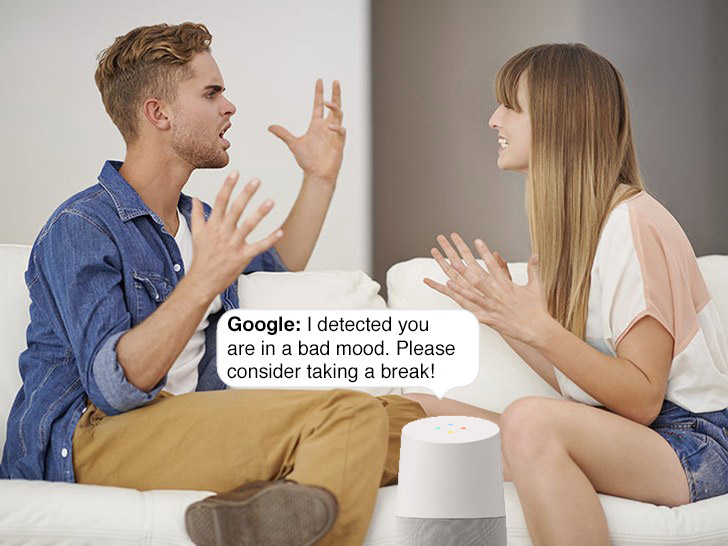
Prediction: Coming soon to Google & Amazon Assistance: "Emotional Care": The AI constantly checks the emotional state of the people in the room (couples/families) & gives vocal warnings if the mood goes "bad". People will love it. I find this vision deeply troubling.
-
Thoughts on Sanity in Times of Automated Insanity
The following is a collection of loosely connected thoughts on the role of sanity in times of automated insanity. Its purpose is mainly a note to self for future writing. Feedback welcome.
Part One
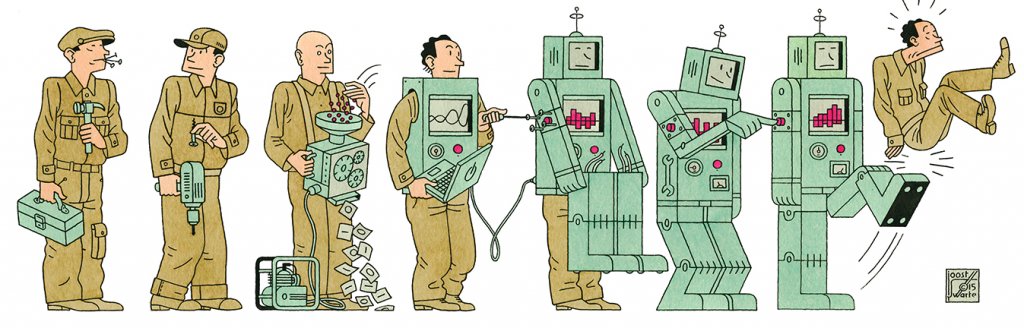
One of the great tragedies of our cultures embracing the story that machines soon will eclipse humanity is that humans started to experience themselves mainly as things ~ as objects instead of subjects ~ as meaningless collections of matter trapped inside a random, dead universe.
This view of life and the self is passive, static and egotistical. It relates to the world in terms of "having objects" instead of the process of participation. Modern man 'has' everything - gadgets, jobs, entertainment, technology - yet 'is' nothing.
People that believe machines will be 'better' than them in every possible way and replace them in the foreseeable future, gradually lose all sense of hope, faith and courage ~ ending up living mummified existences, constantly on the defence and living in deep fear.
To conclude this section, I'll like to invite you to meditate on the following question: "What does it mean to be human?" To have hope & interest, to feel love & tenderness, to 'be' verses to 'have', to transcend the ego & simplistic narratives of the imminent takeover by machines.
Part Two
"The possibility that we can build robots who are like men belongs, if anywhere, to the future. But the present already shows us men who act like robots. When a majority of men are like robots, then there will be no problem building robots who are like men" ~ Erich Fromm (1968)
For 5k+ years, the intense human need for certainty was guaranteed by the concept of God. With the dawn of science, we had to learn to deal with (un)certainty rationally & develop critical thinking. Today, we run the risk of again losing such skills, by replacing "God" with "A.I"
The defining characteristic of the extreme end of the A.I spectrum (singularity), is Necrophilia ~ an attraction to death, decay and a indifference towards life. They want to control life cause they are deeply afraid of it. Its symbol is the Russian roulette or killer robots.
When AlphaGo leaves the game board & enters the real battlefield. As described by Fromm:
"The blind and irrational reliance on computer decision becomes dangerous in foreign policy as well as strategic planning when done by opponents, each of whom works with his own data-processing system. He anticipates the opponent's moves, plans his own, and constructs scenarios for the X possibilities of moves on both sides. He can construct his game in many ways: that of his side winning, a stalemate, or both losing. But as Harvey Wheeler has pointed out, if either "wins" it is the end of both. While the purpose of the game is to achieve a statement, the rules of the game make a stalemate unlikely. Both players, by their methods and their need for certainty, give up the way which has been that of precomputer diplomacy and strategy: the dialogue - with its possibility of give and take, open or veiled withdrawal, compromise, or even surrender when that is the only rational decision. With the present method, the dialogue, with all its possibilities for avoiding catastrophe, is ruled out. The action of the leaders is fanatical because it is pursued even to the point of self-destruction, although in a psychological sense they are not fanatics, because their actions are based on an emotion-free belief in the rationality (calculability) of the computer methods."
"Our age has found a substitute for God: the impersonal calculation. This new god has turned into an idol to whom all men may be sacrificed. A new concept of the sacred & unquestionable is arising: calculability, probability, factuality" ~ Erich Fromm - The Revolution of Hope, Toward a Humanized Technology (1968)
Part Three
"The function of Reason is to promote the art of life" - Whitehead
To be continued...
-
Towards "Experience Theory"
The "bit" is a basic unit of information.
What should a basic unit of "experience" be called?Information theory studies the quantification, storage & communication of information. With its invention, Claude Shannon paved the way for a communication & computation revolution.
Can there be an equivalent theory for Experience? What would it be?
Want: A robust & comprehensive 'Experience Theory'.
Where do we start?Experience Theory would make such observations much easier to unpack:
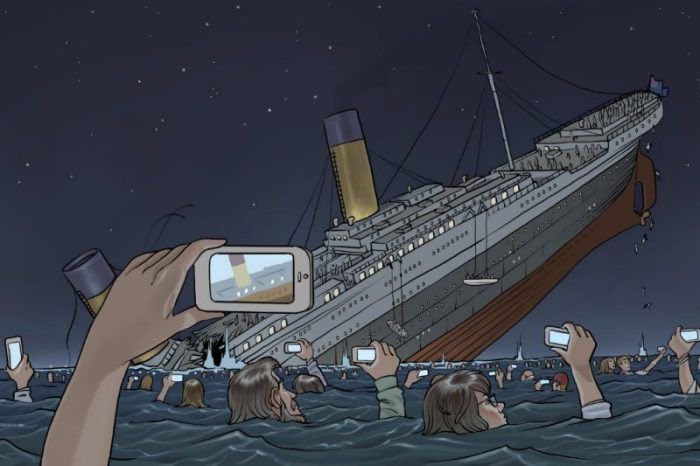
Samim’s Law of Diminished Experience: The quantity of photos one takes is inversely correlated with the quality of the present moment experience.
Related links:
- Qualia: https://plato.stanford.edu/entries/qualia/
- Integrated information theory: https://en.wikipedia.org/wiki/Integrated_information_theory
- And for reference: Experience: https://en.wikipedia.org/wiki/ExperienceDiscussion Thread:
https://twitter.com/samim/status/993742477763883008 -
Samim’s Law of Diminished Experience:
The quantity of photos one takes (an attempt to save a tiny sliver of the present experience for later replay) is inversely correlated with the quality of the present moment experience.
Example: The more you look at your phone, the less you'll experience the actual sunset.

Discussion around this law can be found in this thread:
https://twitter.com/samim/status/990554137661079553Thanks to Greg Lloyd for naming the law & everyone who made suggestions.
Related links, recommended by the community:
"Take a Picture, You'll Enjoy It More - Photographing experiences usually increases positive feelings about them, study says": http://www.apa.org/news/press/releases/2016/06/picture-enjoy.aspx << Notice this study speaks only about "enjoyment", nevertheless fascinating.
-
A conundrum of our times: To solve many of the pressing global problems, we ought to do *less*, not *more*.
-
When dealing with powerful technologies (ML, Blockchain, Psychedelics, etc.) there tends to be the "Jesus Effect": Newcomers that just discovered the tech think its real magic & start to act like Jesus for a while. This is dangerous & should be avoided.
"I suppose it is tempting, if the only tool you have is a hammer, to treat everything as if it were a nail." - Abraham Maslow, The psychology of science
-
"The British Library Talk: Part 1" - by @BrianEnoMusic :
Eno's conceptual points on "infinite media" (enabled by generative systems) are spot on. Eno measures the length of his musical pieces in millions of years - jokingly saying that "the holocene will be followed by the enocene". #Generative #Music