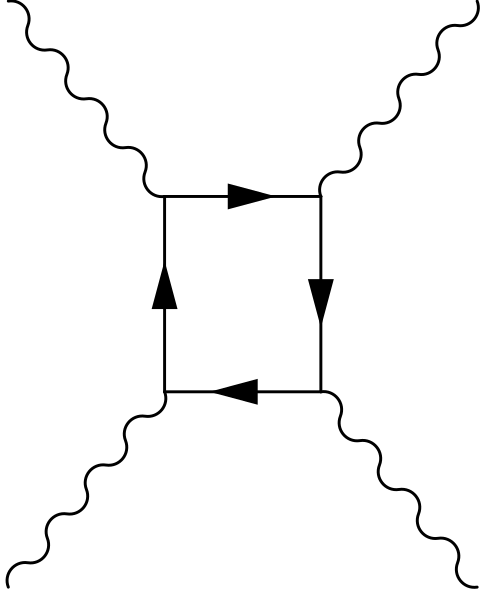
The Schwinger limit is a critical threshold in quantum electrodynamics representing the maximum intensity an electromagnetic field can reach before the vacuum itself becomes unstable and spontaneously produces matter. Named after Nobel laureate Julian Schwinger, it defines the point where space-time fields turn non-linear and tear virtual electron-positron pairs into real particles.
"The vacuum is not empty; it is a lively playground of virtual particles being born and destroyed continually." - Julian Schwinger from his landmark 1951 paper, “On Gauge Invariance and Vacuum Polarization”