Topsoil: Inside Nature’s Decentralized Supercomputer Made of Dirt
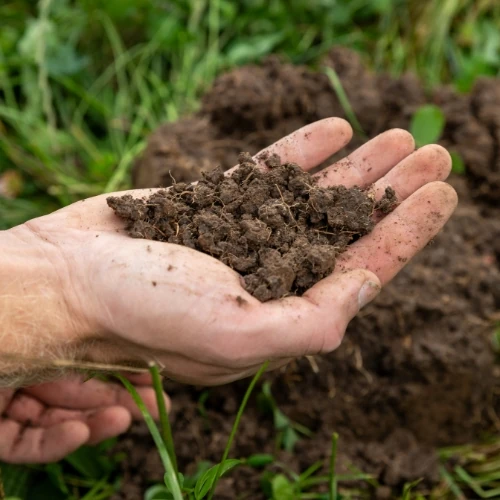
While the tech industry pours hundreds of billions into data centers for AI, one of the most sophisticated networks on Earth runs in the top thirty centimeters of the ground, powered by sunlight and dead leaves.
Topsoil is the thin upper layer of the ground, usually only a few handspans deep, and almost all life on land depends on it. The UN’s Food and Agriculture Organization estimates that 95% of our food is produced in it, directly or indirectly. It filters rain into groundwater, holds at least twice as much carbon as the entire atmosphere, and most of our antibiotics were originally found in it. And according to a 2023 study in PNAS, soil is home to about 59% of all species on Earth, making it the most biodiverse habitat on the planet.
And still, we mostly treat it like dirt.
The workforce
Biologists usually sort the organisms that keep soil running by size.
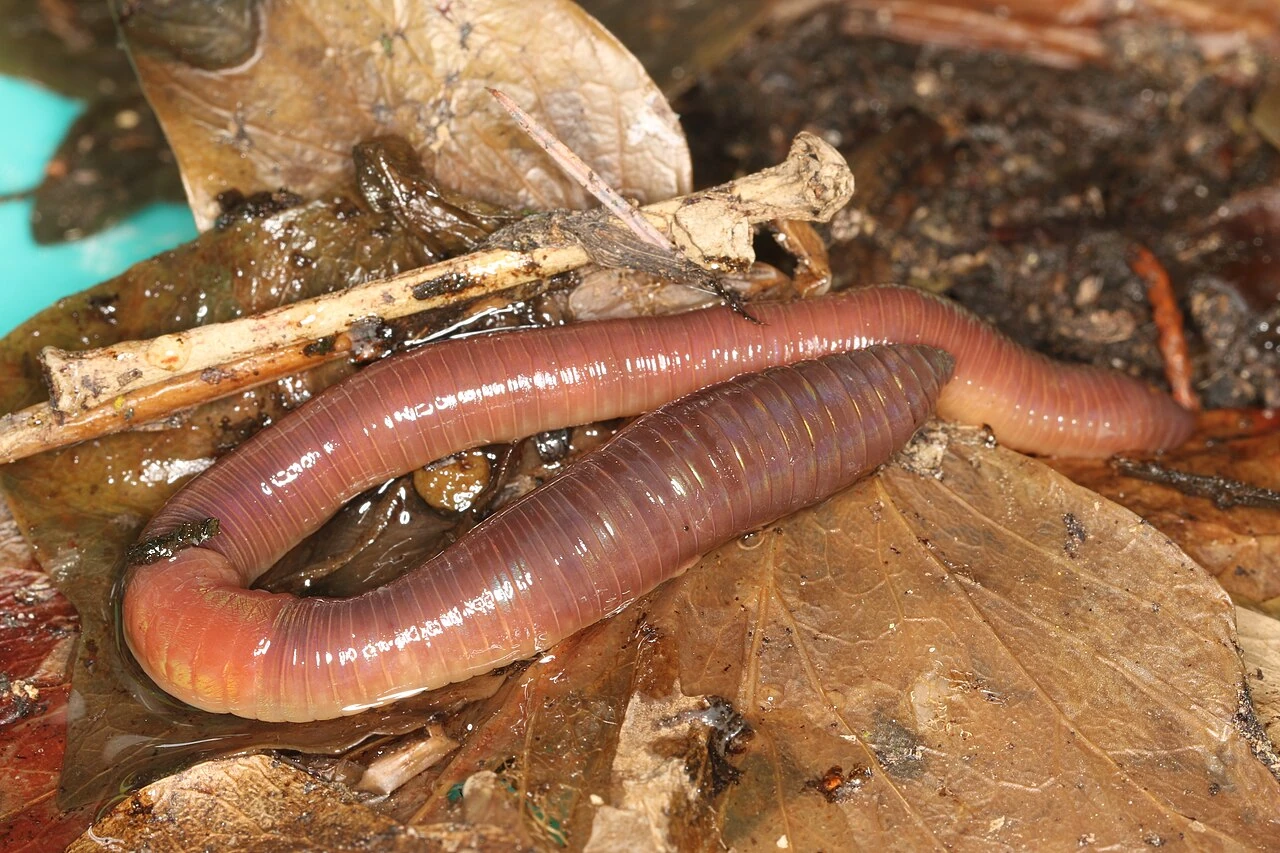
At the top are the Ecosystem Engineers, the heavy machinery. Earthworms swallow compacted dirt and dead leaves and leave behind castings packed with nitrogen, phosphorus and potassium. Their tunnels pull oxygen down to roots and let rain soak in instead of running off. Where worms are scarce, ants and termites take over, and dung beetles drag waste underground and bury nutrients right where the roots are.
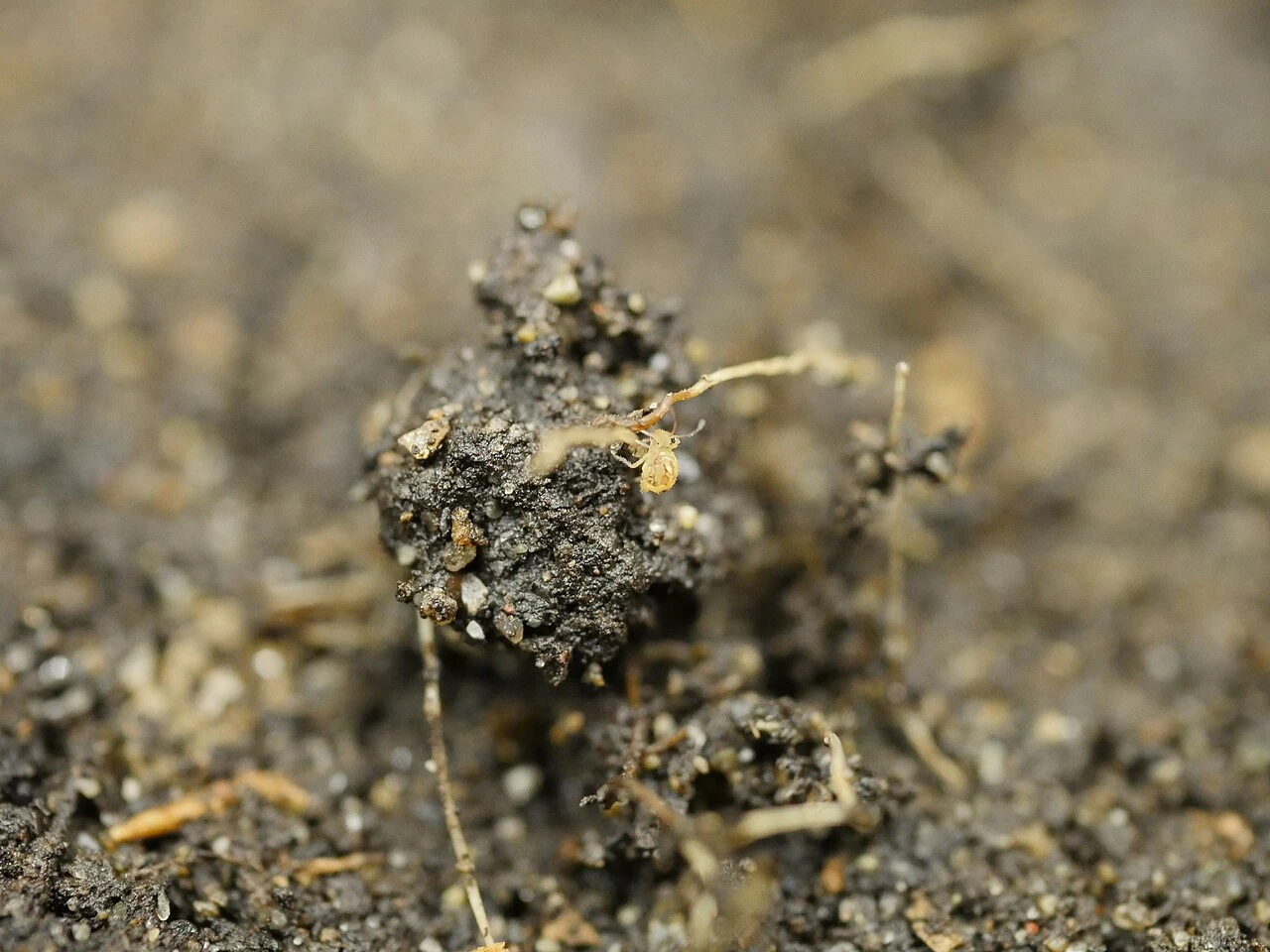
Below them are the Shredders and Recyclers. Millipedes and woodlice chew tough leaf litter into flakes. Springtails and mites, tens of thousands per square meter, graze those flakes down further, and their droppings feed the stable organic matter that makes soil dark and fertile.
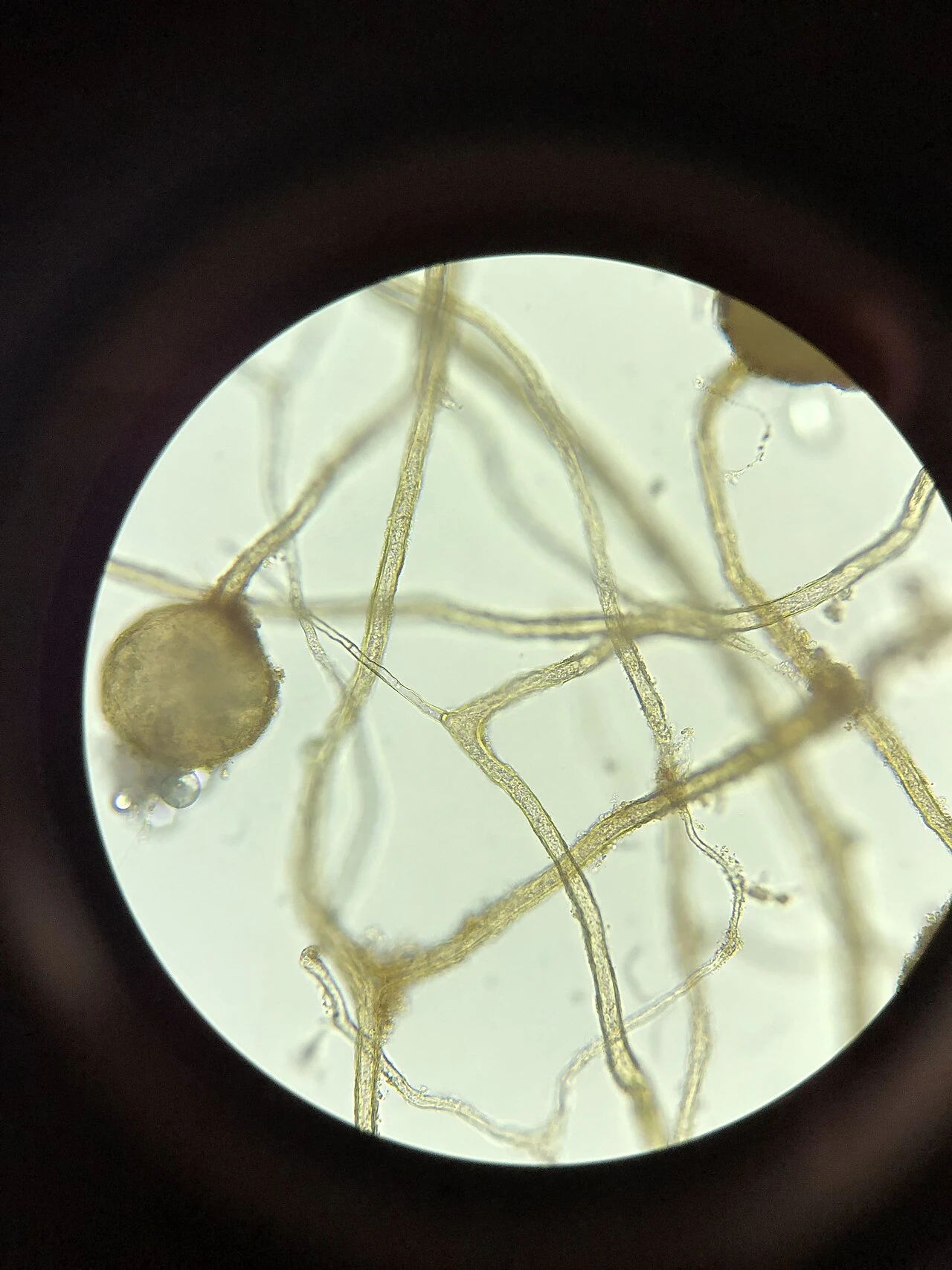
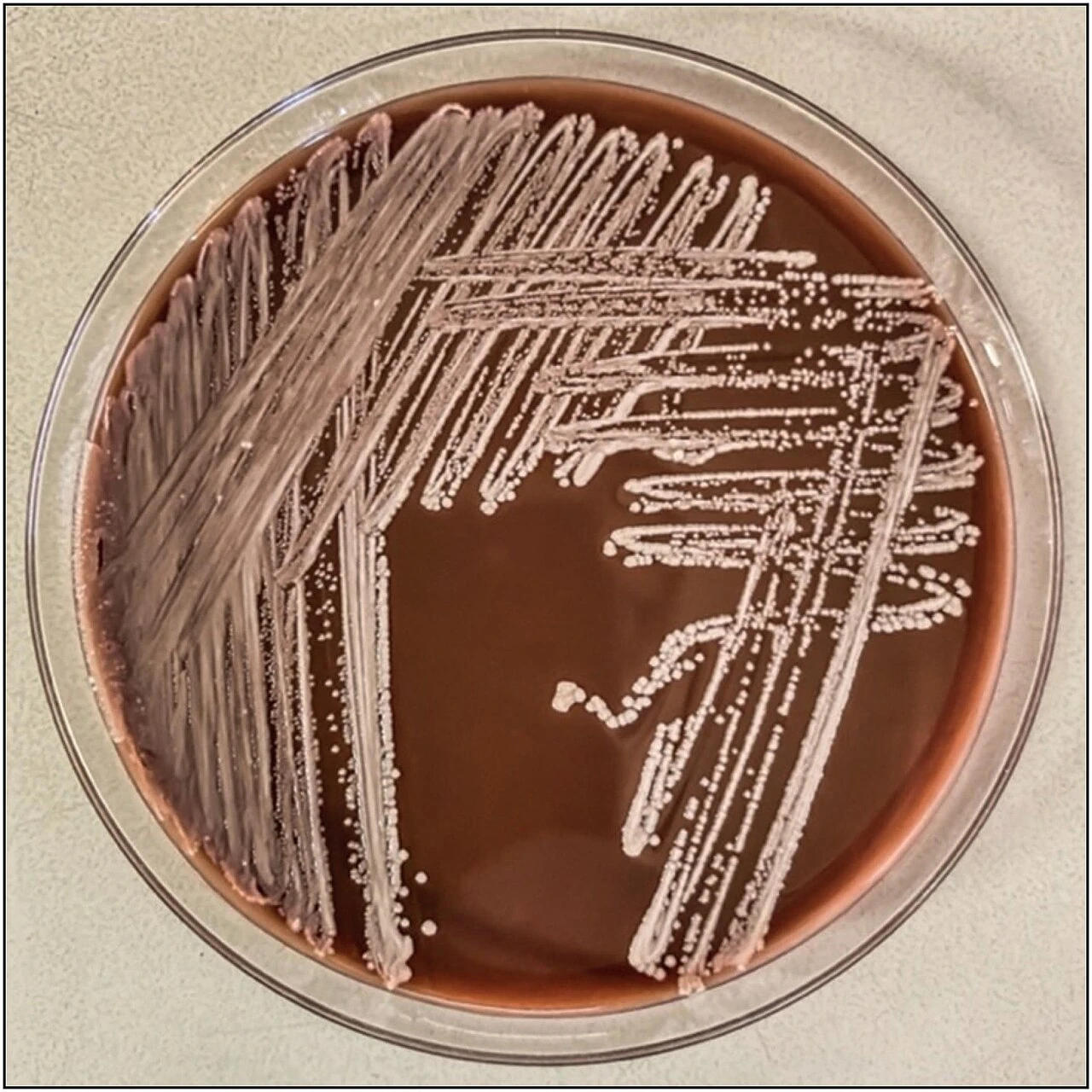
Then comes the invisible layer, which outnumbers everything else combined. Nematodes and protozoa hunt bacteria and excrete the surplus nitrogen in a form plants can absorb instantly. Nitrogen-fixing bacteria pull fertilizer straight out of the air. Soil bacteria like Streptomyces wage chemical warfare on their neighbors, and that arsenal gave us streptomycin and tetracycline. Mycorrhizal fungi wrap plant roots in threads finer than hair, trading water and phosphorus for the plant’s sugar. A single tablespoon of healthy topsoil holds more living organisms than there are humans on Earth.
Follow a single fallen leaf and you can watch the whole chain at work. A millipede shreds it, springtails and mites grind it finer, and fungi and bacteria break it down into its chemical elements. Then an earthworm swallows the mix, drags it underground and packs it into crumbly, aerated soil. Nobody in that chain is coordinating the others.
Simple parts, complex whole
Individually, a soil bacterium or an ant is a very simple machine running a short list of rules: move toward food, away from danger, release a chemical signal. It has no model of the climate, the field or the forest.
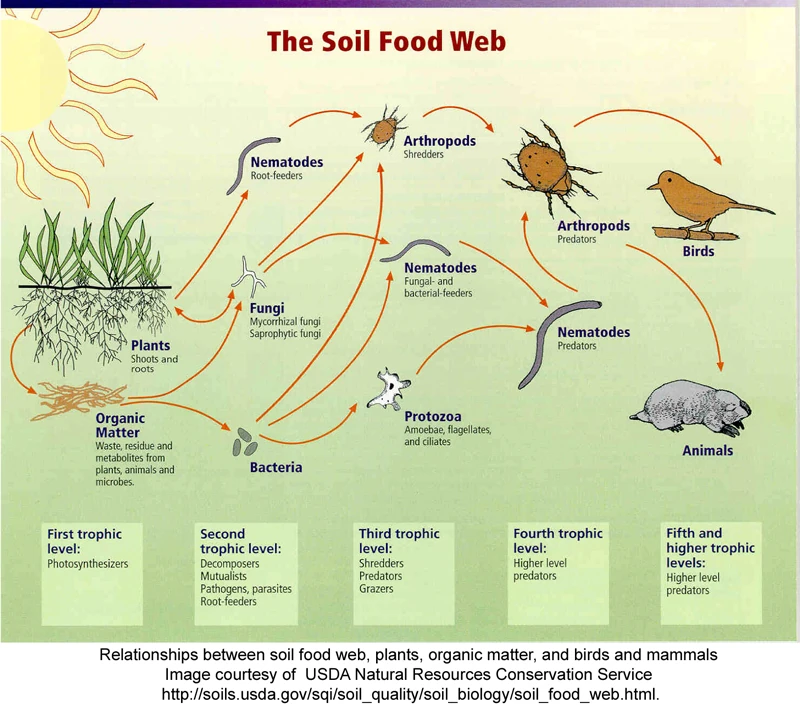
But multiply those simple programs by trillions, let them eat, trade and signal to each other, and something appears that none of them contains: a self-organizing, self-maintaining network. It buffers the soil’s pH, regulates how much nitrogen is released and when, and turns death into the raw material of new life. Complexity scientists call this emergence: behavior that exists at the level of the whole network and can’t be found in any of its parts. Nothing in the soil is in charge of it.
Read it like an engineer
To be clear, soil will never run a spreadsheet. If it’s a computer, it’s a physical one: it solves routing, allocation and memory problems by growing into the answer, the way a soap film finds the smallest surface without doing any math. Read the last decade of research with that in mind and it starts to look a lot like a hardware spec sheet.
The power supply. Soil life decomposes roughly 50 billion tonnes of carbon a year. Run that through basic chemistry and you get a continuous metabolic power of around 60 terawatts. That is about three times humanity’s entire energy use, and more than a thousand times the roughly 415 TWh a year that all the world’s data centers consumed in 2024. That says little about efficiency, since most of the energy goes into simply staying alive. But it gives a sense of the scale, and all of it is solar power, delivered as sugar through roots and dead leaves.
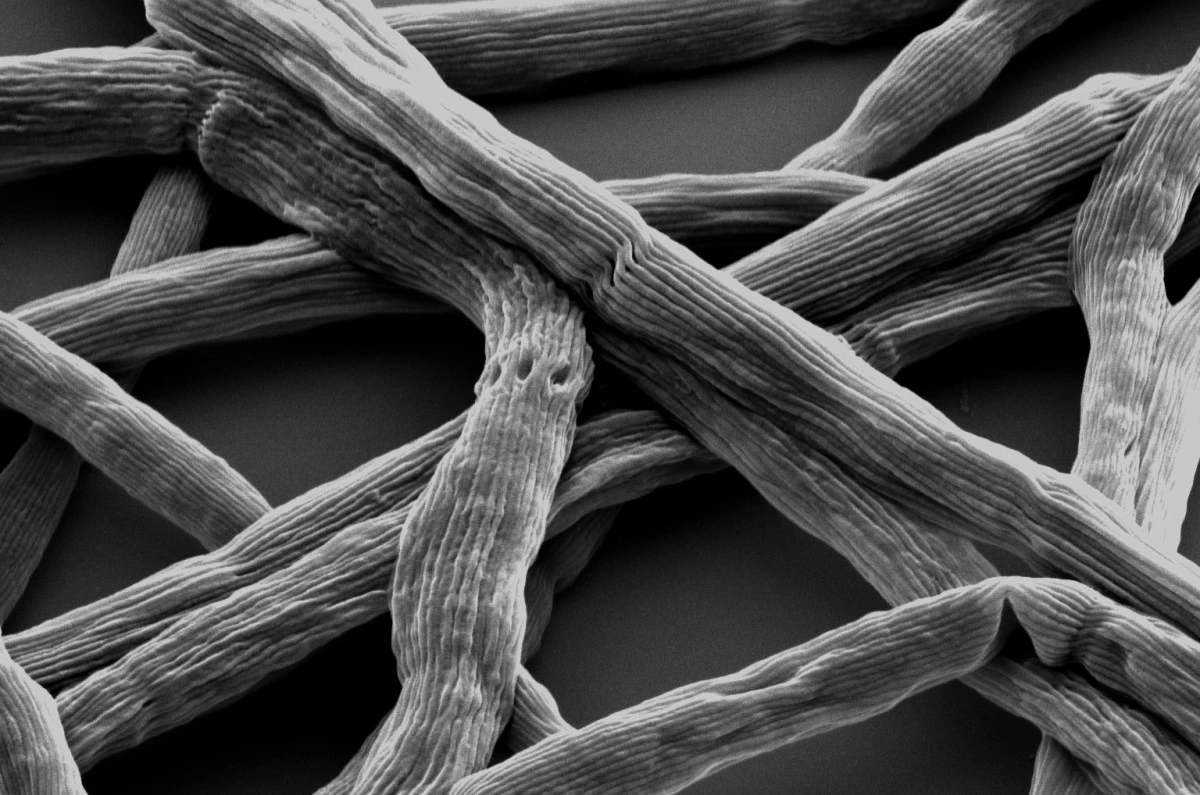
The wires. In the mud beneath ponds and seabeds live cable bacteria, chains of thousands of cells that conduct electrons over centimeters through protein fibers. Direct measurements put their current density in the same range as household copper wiring. Before they were discovered in 2012, biologists assumed living things could only move electrons over distances of nanometers.
The signals. In 2015, researchers showed that biofilms of Bacillus subtilis, a common soil bacterium, send electrical waves through the colony using potassium ion channels, the same basic trick our neurons use. Bacteria also run quorum sensing: every cell releases a signal molecule, and a behavior only switches on once the concentration shows that enough neighbors are present. A computer scientist would call it a distributed threshold decision. Bacteria also share code: through horizontal gene transfer they pass working genes, antibiotic resistance for example, even across species, a bit like pulling a package from someone else’s repository.
The routing. A 2025 study in Nature built a robot to film living mycorrhizal networks, tracking over 500,000 fungal nodes and around 100,000 internal flows. The fungi grow as self-regulating traveling waves, keep transport back to the roots steady, add loops that shorten the paths to new trading partners, and widen and speed up their busiest “trunk routes”. In network engineering terms, that is load balancing and redundant routing, with capacity added where the traffic is heaviest.
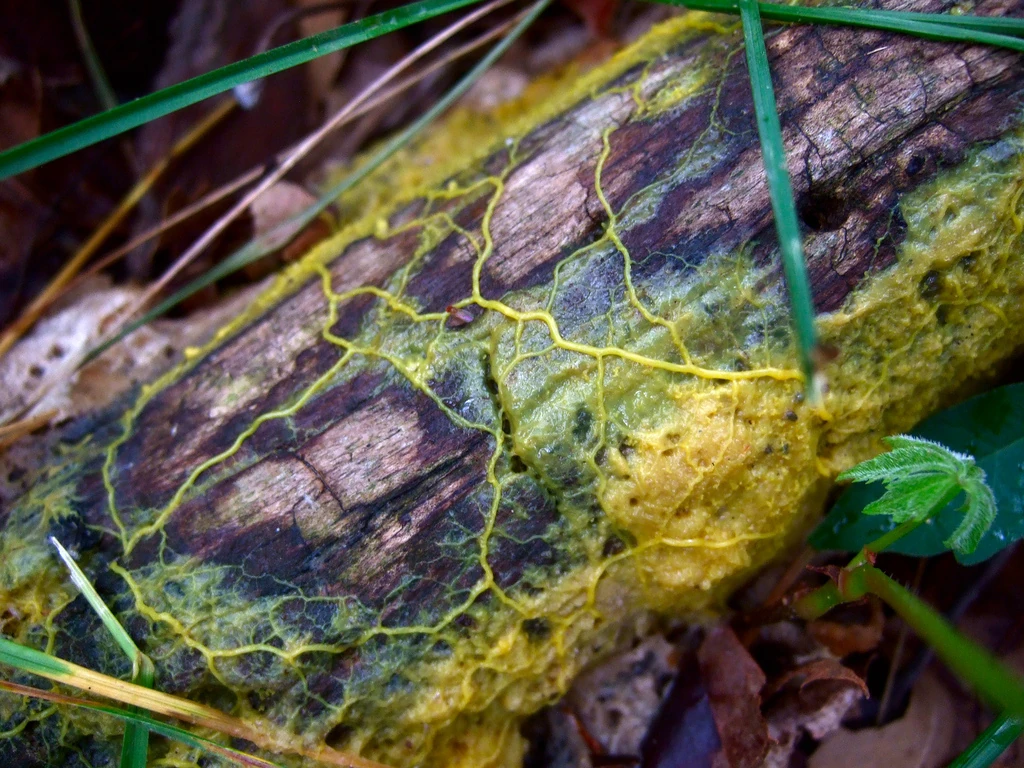
The forest-floor slime mold Physarum polycephalum, a single brainless cell, famously redrew the Tokyo rail network when researchers placed oat flakes in the positions of the surrounding cities. In about a day, its tubes formed a network that matched the real railway on cost, efficiency and fault tolerance.
The memory. The same slime mold also remembers. Researchers at the Max Planck Institute showed that it stores the location of food in the widths of its tubes: tubes near a meal thicken, others shrink, and that pattern steers its future decisions. The memory is the network’s physical architecture, much like the learned weights of a neural network. Bacteria do a version of it too: a brief flash of light on a Bacillus subtilis biofilm leaves an electrical imprint in the exposed cells that lasts for hours.
The immune system. The strongest evidence that the network learns comes from ordinary farm fields, not lab dishes. When wheat is grown year after year in a field infected with take-all, a fungal root disease, the disease first gets worse and then, after a few seasons, fades on its own. Over those seasons the soil builds up Pseudomonas bacteria that produce an antibiotic the fungus is highly sensitive to, and farmers around the world rely on this "take-all decline" to keep the disease in check. Plants under attack appear to recruit protective microbes through chemicals released by their roots, which researchers call the “cry for help”, and the protection can outlast the plant and benefit the next crop sown in the same soil. Soil scientists call it soil memory. It behaves like an immune system that remembers past infections, spread across thousands of species.
The hardware lab. Computer scientists have started treating all this as usable hardware. At the University of the West of England, Andrew Adamatzky’s lab records fungal electrical spikes that cluster into trains, though calling them a “language” is still speculative. In 2025, an Ohio State team grew memristors out of shiitake mycelium, memory components that switched at up to 5.85 kHz with about 90% accuracy and survived being dried out.
The economy. Plants pay the fungal network in sugar, up to a fifth of the carbon they photosynthesize, and they reward the partners that deliver the most phosphorus per unit of sugar. A 2023 estimate in Current Biology found that the world’s plants route about 13 billion tonnes of CO₂-equivalent carbon into mycorrhizal fungi every year, at least temporarily. That is roughly 36% of annual fossil fuel emissions flowing through a single underground market.
The factory. Nitrogen-fixing microbes on land pull around 120 million tonnes of nitrogen out of the air every year, at air temperature and ordinary pressure. That is about the same output as the entire industrial Haber-Bosch process, which needs 300 to 500 °C, around 200 times atmospheric pressure and roughly 2% of the world’s final energy to do the same job.
It’s worth being careful here. The popular “Wood Wide Web” story, with mother trees sending warnings to their seedlings, has been sharply criticized for running far ahead of the field data. The measured findings above are strange enough without it.
Where it beats our machines
On several counts, nothing we have built comes close.
Start with uptime. Fungi were already trading with plant roots about 407 million years ago, as fossils from Scotland’s Rhynie chert show, and the system has been running ever since. It kept going through every mass extinction since then, including the asteroid that ended the dinosaurs. The internet is about fifty years old, and a server that stays up for a few years without a reboot is something people brag about.
Then there is power. The soil as a whole uses a lot of energy, but it spreads that energy across an almost unimaginable number of tiny consumers. A growing bacterium runs on roughly a trillionth of a watt, and cells short of food can get by on a small fraction of that. A single high-end AI chip draws around 700 watts, and it needs a power plant, a cooling system and a supply chain spanning several continents behind it.
Then decentralization. When a key data center goes down, the services running on it usually go down too. Soil degrades more gracefully. Its intelligence isn’t stored in any one place, so it has no single point of failure, and because many species do overlapping jobs, others can often take over part of the work when one group of microbes is knocked out.
And it builds itself. In the 1940s John von Neumann worked out the theory of a machine that could build copies of itself, and we still haven’t built one that works outside a lab. A soil bacterium does it in a few hours, blueprint included, from whatever it finds around it. The whole system grows, repairs and reproduces itself out of rotting material, minerals and air, with no factory involved, and very little of what it produces goes to waste.
Finally, it works on live input. Our largest AI models are trained on a fixed snapshot of text that people have already written. Soil responds continuously to moisture, temperature, chemistry and disease, and together those responses drive a large share of the planet’s carbon and water cycles.
How we are breaking it
For about a century, industrial agriculture has mostly managed soil through three numbers: nitrogen, phosphorus and potassium. Soil was storage you could top up from a bag. And it worked. Synthetic nitrogen feeds roughly half of humanity. But it works by going around the living network rather than through it, and there’s a growing body of research on what that costs.
Plowing physically severs the fungal network every season, which is roughly like cutting a data center’s cables once a year and waiting for it to rebuild. Heavy phosphorus fertilizer makes plants stop paying their fungal partners, and a meta-analysis of 136 studies found that nutrient enrichment cuts both the abundance and diversity of these fungi worldwide. Degrading gracefully doesn’t mean soil can’t be broken. After heavy disturbance, microbial communities often stay changed for years, and the processes they run change with them. The redundancy that makes soil resilient can be used up.
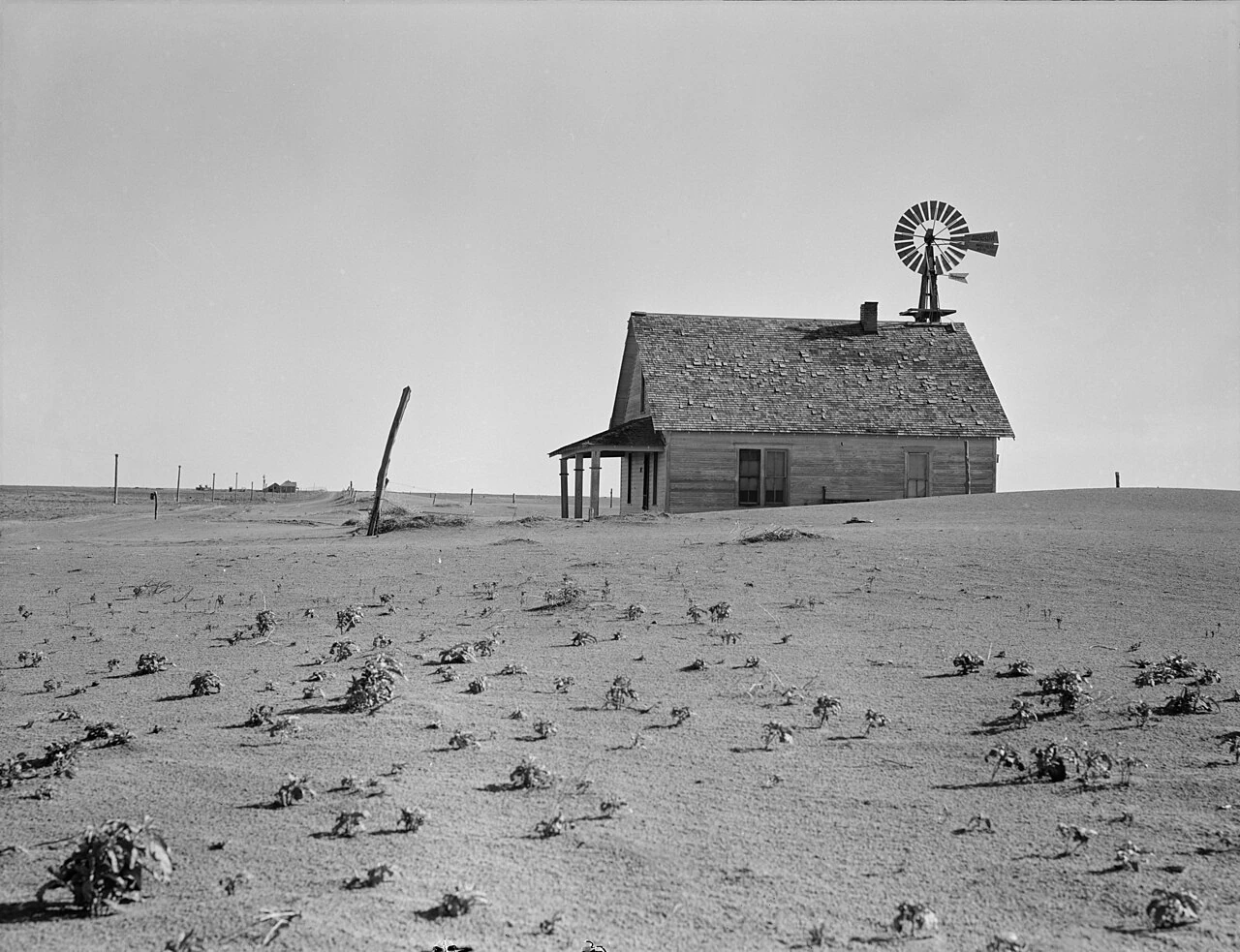
The physical losses are worse. It can take up to 1,000 years to form a single centimeter of soil, yet conventionally plowed fields erode 10 to 100 times faster than soil forms, fast enough to wear through a typical hillside’s soil within the lifespan of a civilization. The EU passed its first soil law only in 2025, while estimating that 60 to 70% of its soils are already degraded.
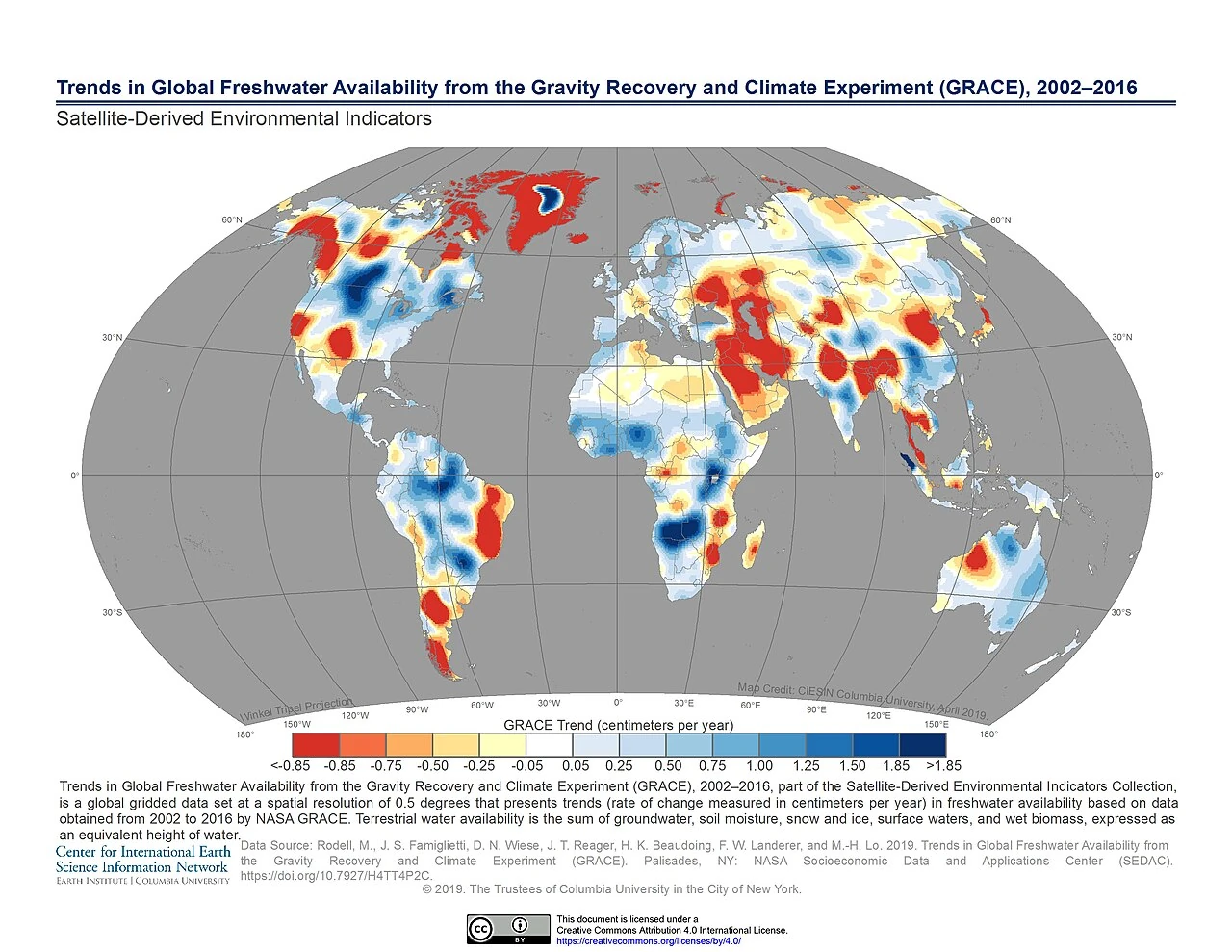
The water is going the same way. Rain refills aquifers by soaking down through soil, and it soaks in best where worm tunnels, roots and fungal threads keep the ground open, while compacted, crusted fields send more of it away as runoff. At the same time, we are pumping out what lies underneath to irrigate our crops. A PNAS study published this month reanalyzed more than two decades of gravity data from NASA’s GRACE satellites at much finer resolution, and found that published estimates of groundwater depletion had been on average 45% too low. Northern India alone is losing about 32 billion tonnes of water a year, nearly double recent estimates.
We’re also losing it before we’ve properly studied it. Around 99% of soil bacteria refuse to grow in a lab. When researchers finally coaxed some to grow by putting their culture chips back into the ground, a screen of about 10,000 of these newly grown strains turned up teixobactin, a new class of antibiotic. The first global map of mycorrhizal fungi, the SPUN Underground Atlas built from 2.8 billion DNA sequences, came out only in 2025. It found that more than 90% of fungal diversity hotspots lie outside any protected area.
How to treat a supercomputer
The usual answer to all of this is a moral one: nature is suffering, we should feel guilty and get back to the land. Most people have learned to tune that message out, and it treats soil as a victim to be pitied rather than a system to be understood.
Try a different frame. Imagine engineers had just discovered a working computer spread across every continent, 400 million years old, running entirely on sunlight, and full of organisms whose genetic code nobody has read yet. Nobody would call it dirt. They would map it, instrument it and study its protocols before touching anything. They would certainly stop wiping it every spring.
Seen that way, most of what soil scientists recommend reads less like conservation and more like competent systems administration. Plowing is a hard reset that severs the network, so you do it as rarely as possible; no-till farming brings erosion close to the rate at which soil forms. Living roots are the power supply, so you keep cover crops growing between harvests and the power never goes off. Bagged fertilizer is a workaround that routes around the network, while compost and crop residue feed it.
The more interesting step is learning to work with it. Some of that has already started. Microbiologists found teixobactin by letting the soil grow what their labs couldn’t. Engineers are growing memory components out of mycelium. The SPUN atlas is mapping the fungal network the way early researchers mapped the internet. And in 2025, a team at Rockefeller University sequenced a single sample of forest soil to 2.5 trillion letters of DNA and assembled hundreds of complete bacterial genomes, more than 99% of them new to science. They then predicted molecules straight from the genetic code, built them in the lab and found two new antibiotic candidates with rare modes of action, without ever growing the bacteria that carry the genes. We’ve spent a century writing to this system through a bag of fertilizer. We’ve barely started reading from it.
A shift in perspective like this has happened before. In 1909 the US Bureau of Soils described soil as “the one resource that cannot be exhausted.” A quarter of a century later, dust clouds from the Great Plains darkened the sky over Washington just as Congress was holding hearings on soil erosion. In 1935 it created the Soil Conservation Service, and in 1937 Roosevelt wrote to every state governor that "the Nation that destroys its soil destroys itself." Within a few years, soil went from inexhaustible dirt to national infrastructure, and the United States still has more than 3,000 soil conservation districts today.
Right now, most of the money and attention in tech goes into building artificial intelligence, while we run down a system that has been online for 400 million years and has no backup. Topsoil that washes off a hillside takes thousands of years to rebuild. Fixing that doesn’t require anyone to go back to the land. It requires seeing the land for what it is: the oldest and largest computing system on the planet, already running and already paid for by the sun. Treat it as infrastructure worth understanding and investing in, and a better relationship with it follows almost by itself.