-
Offline is the new luxury - VPRO Full Documentary (2016)
To be online all the time and everywhere. It sounds great, but it has its drawbacks. As digital networks are closing in, there are fewer places to be really on your own. Being offline is becoming a luxury. Where can you be offline?
We are connected to the internet even in our bedrooms. It’s the ambition of companies like Google and Facebook to connect the entire world, so that we can be online all the time and everywhere. Google has send balloons up into the skies over Sri Lanka to provide the island state with free Wi-Fi for a month. On the ground, more and more devices communicate through the so-called Internet-of-Things. We are going to be ‘glass citizens’ in a transparent house, connected for life to a wireless intravenous drip and traced anywhere via our smartphones. What does it mean?
A small but growing group of people is saying goodbye to lifetime connectability. They are researching ways to keep control. What can we learn from them about life in the digital era? With: Paul Frissen (political scientist), Sherry Turkle (psychologist MIT), Evgeny Morozov (internet critic) and Birgitta Jonsdottir (hacker & founder Pirate Party)"We use technology as long as *we use it* and it does not get to the point where *it uses us and control us*, that's the bottom line" - A anonymous member of the Amish community.
"You have to understand what drives those companies (google & co). They are only interested in convincing their investors & financials markets that they will keep on growing indefinitely - that they have the capacity to capture the markets in India, China etc." - @evgenymorozov
-
Money, happiness and eternal life - Greed - Full Documentary:
Can money and power ever make us happy? How much is enough? Our constant desire for more is part of our human nature.
Some call it a useful dowry of evolution, others a fault in the human genetic make-up: The old mortal sin Greed seems to be more ubiquitous than ever. Why can't people ever get enough, where is this self-indulgence leading - and are there any ways out of this vicious circle of gratification?
"People like to have a lot of stuff because it makes them the feeling of living forever," says American social psychologist Sheldon Solomon, who believes today's materialism and consumerism will have disastrous consequences.
Anyone who fails to satisfy his or her desires in this age of the Ego is deemed a loser. But with more than 7 billion people on the Earth, the ramifications of this excessive consumption of resources are already clear. Isn’t the deplorable state of our planet proof enough that "The Greed Program," which has made us crave possessions, status and power, is coming to an end? Or is the frenzied search for more and more still an indispensable part of our nature? We set off to look for the essence of greed. And we tell the stories of people who - whether as perpetrators or victims or even just as willing consumers - have become accomplices in a sea change in values. http://www.dw.com/en/tv/greed/s-32898"There is a thin line that separates a business man & a criminal. Why? Cause anything i do someone is bound to say i've cheated him. If its Bill Gates or me, people will say we are criminal - its cause we think beyond how other people think" - A leading business man / politican in Zimbabwe
-
The implications of open science, open access and open discourse becoming a global standard, is hard to understate. Wild times.
-
Leon Krings explains the Japanese concept of Kata: https://en.wikipedia.org/wiki/Kata
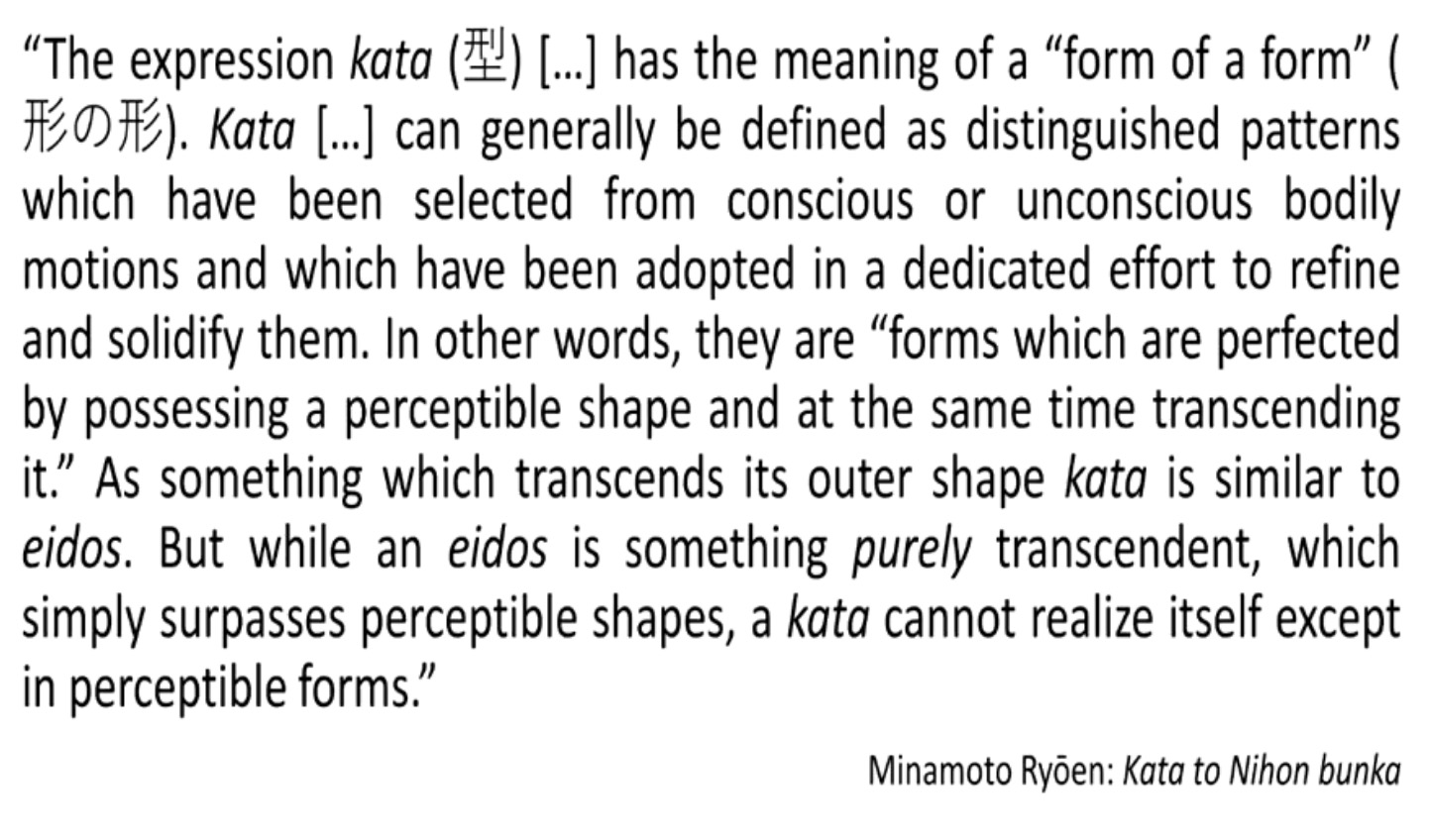
Toshihiko Izutsu mentions in his description of the Zen-Buddhist practice that after you de-subjectify the subject and de-objectify the object, you return to re-objectifying the object and re-subjectifying the subject. If you don't do this returning movement, you stay in one-sided mysticism and you won't have any social or intersubjective connection. It is a paradoxical inter-penetration of unity and opposition.
Leon Krings is a student of Professor Dr. Rolf Elberfeld: https://de.wikipedia.org/wiki/Rolf_Elberfeld his books are downloadable here: https://www.uni-hildesheim.de/fb2/institute/philosophie/team/prof-dr-rolf-elberfeld/
Watch Elberfeld talk about Shōbōgenzō and how Asian and European philosophical traditions can meet (German only)
And his talk on "Philosophy in a globalised world" (German only):
-
If you think about it, Google is morphing into a religious cult (intelligent scientology), that makes its money with life science + livestock management (AI genetics + social engineering), in order to feel a bit of certainty in a bizarro post-nation-state, climate change reality.
-
My recent piece "Thoughts on the Generative AI Creative Economy: there will be blood" (https://samim.io/p/2018-04-19-find-it-comedic-how-professional-digital-creative-tools/) generated some discussion on reddit, with people asking "is this concern real or just doom & gloom? Are there concrete examples?" Read my response here:
Beyond doom and gloom, there is hope: The vision/opportunity I sense is phenomenal: Creative AI tools could help raise the global level of literacy, creativity and empathy, by dramatically shortening the time of thought to highly communicative (possibly multimodal) artefacts. Many moons ago I wrote this extensive piece on the sector, from a more hopeful, slightly utopian perspective: https://medium.com/@creativeai/creativeai-9d4b2346faf3
Yet the reality of creative industries today looks very different: Advertising runs the show (see Google etc) - which is really just a synonym for either "spam" or "social engineering" - both horrible for societies in times of climate change - and not conducive as objective functions for more creativity or education. In the sense of raw reach & economic impact, the advertising industry is arguably the most powerful "art form" of the 21st century. And so when you ask for "concrete example" of dystopian generative systems, we must look at developments in this area.
One of the influential developer of creative tools - Adobe - recently has doubled down on the intersection of """AI""" and """Creativity""", with their "Sensei" Initiative. Guess who they are targeting with their tools? Yes, Advertisers. In the sector of advertising, the quality VS quantity debate is very different: it is NOT about the values of art in the classical sense, or about storytelling or other humane things - it is about naked money. This is a clearly parameterized signal to feed to machines as loss/reward-function - and due to this fake clarity, such systems can grow like cancer.
Such economic success is precisely what drives humans to extend generative advertising logic to other creative fields. Repetitive generative muzak in the charts and endlessly boring superhero movie rehashes on the screen are a reality already today, and all using some form of "optimisation" algorithms. And so we see the rise of "creative" botnets - the rise of fake news and ever more fractaline simulacra's (see this post: https://samim.io/p/2018-04-23-the-solution-to-exploding-fake-news-and-spam-botnets-ca/)
I personally do not agree with the politics and dynamics of the visions outlined here. My writing is meant as a warning pointer in search space. We must strive towards more appealing outcomes, for humanities sanity and well-being in times of climate change might very well depend on it.
-
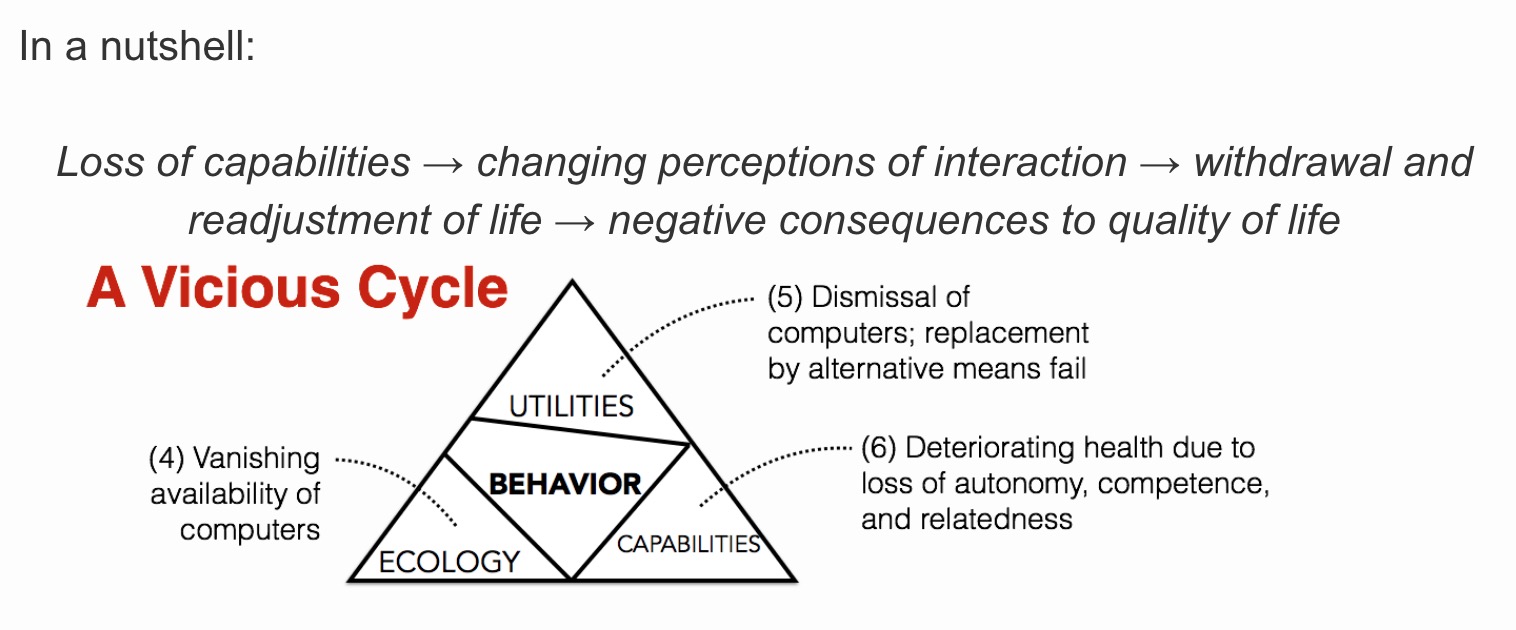
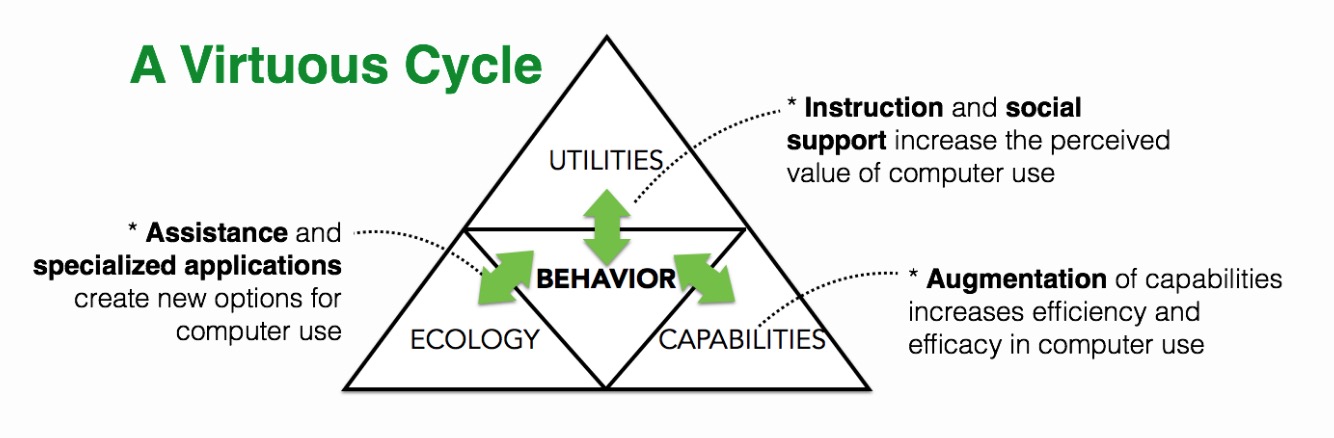
"On Designing for the Aging User" - by @oulasvirta : https://blogs.aalto.fi/userinterfaces/2016/10/24/on-designing-for-the-aging-user/
-
Slow Travel: The Benefits Of Longer-term Programs And Immersive Experiences Abroad:
https://www.wheretherebedragons.com/news/slow-travel-benefits-longer-term-programs-immersive-abroad-experiences/ #FFHCI #ClimateChange -
Assorted links on Ecology, Interfaces & the Politics of Artifacts
Zur Ökologie der Moral bei Bruno Latour:
http://www.fsw.uzh.ch/foucaultblog/essays/210/zur-oekologie-der-moral-bei-bruno-latourPolitics and Pragmatism in Scientific Ontology Construction:
https://www.slideshare.net/mtraven/politics-and-pragmatism-in-scientic-ontology-constructionReview of ‘Politics of Nature’ by Bruno Latour:
https://avoidingthevoid.wordpress.com/2009/09/24/review-of-politics-of-nature-by-bruno-latour/A Summary of a Convenient Vocabulary for the Semiotics of Human and Nonhuman Assemblies:
http://www.conceptlab.com/notes/akrich-latour-1992-convenient-vocabulary.htmlLaboratory Life:
https://en.wikipedia.org/wiki/Laboratory_LifeLangdon Winner:
https://en.wikipedia.org/wiki/Langdon_WinnerSocial construction of technology:
https://en.wikipedia.org/wiki/Social_construction_of_technologyTechnology dynamics:
https://en.wikipedia.org/wiki/Technology_dynamicsSymbolic interactionism:
https://en.wikipedia.org/wiki/Symbolic_interactionismEdward T. Hall:
https://en.wikipedia.org/wiki/Edward_T._HallScience and technology studies:
https://en.wikipedia.org/wiki/Science_and_technology_studiesTechnology is Culture:
https://www.slideshare.net/mtravenSpace, Time and the Politics of Smart Objects:
https://www.bloomsbury.com/uk/phase-media-9781501335617/Surely You're Joking, Mr. Feynman!:
https://en.wikipedia.org/wiki/Surely_You%27re_Joking,_Mr._Feynman!Doing Interface Ecology: The Practice of Metadisciplinarity:
http://www.intelligentagent.com/archive/Vol6_No1_interface_kerne.htmInterface ecology lab:
http://ecologylab.net/define.htmlEcology at the Interface Conference:
http://iris-ses.eu/iris-ses-at-the-ecology-at-the-interface-conference/The Ecology of Commerce. A Teasing Irony Gap between environment and business, ecology and economics Industry suppresses our immune system Free market:
http://slideplayer.com/slide/9759948/Ecology and ecosystems notes:
https://www.slideshare.net/jschmied/ecology-and-ecosystems-notesEcological interface design:
https://en.wikipedia.org/wiki/Ecological_interface_designMapping Experiences with Actor Network Theory:
https://www.slideshare.net/LizaPotts/mapping-experiences-with-actor-network-theoryActor-network Theory and Culture:
https://machinicassemblages.wordpress.com/2009/08/27/actor-network-theory-and-culture/Interface Ecology: An Open Systems Approach to Analyzing and Making Culture:
http://ecologylab.net/research/publications/kernePerformanceStudies97.PDFDoing interface ecology: the practice of metadisciplinary:
https://dl.acm.org/citation.cfm?id=1086144 -
The Growing Beyond Earth Challenge (GBE): https://www.fairchildgarden.org/Science-Conservation-/Growing-Beyond-EarthNasa-and-Fairchild
Designed to expand food options and increase plant diversity for spaceflight by evaluating multiple edible plants that meet NASA’s criteria for size and edibility. Using equipment that mimics the environmental conditions aboard the International Space Station, students are testing factors that may influence plant growth, flavor, and nutrition.
-
https://www.hydroponics.eu/ - "online shop for indoor growing of plants". The amount of growth in this industry is delicious. #FFHCI

-
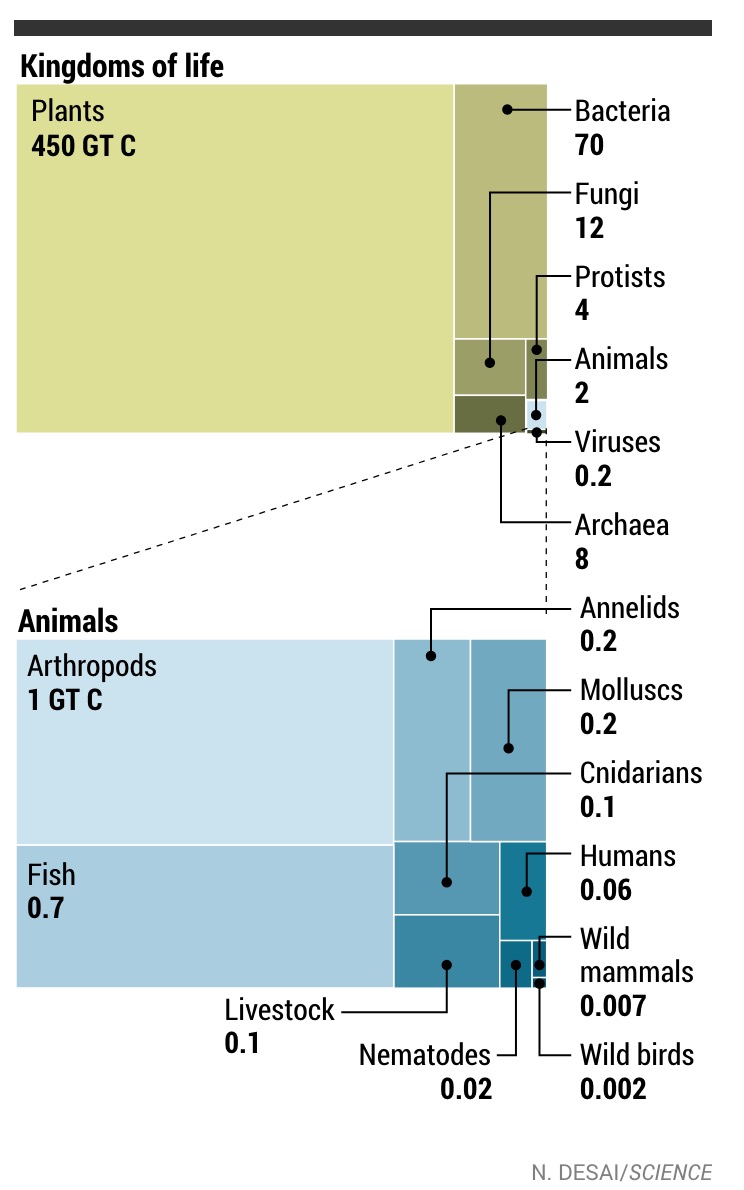
Plants outweigh all other life on Earth: http://www.sciencemag.org/news/2018/05/plants-outweigh-all-other-life-earth #FFHCI #ClimateChange
"All life on Earth weighs about 550 gigatons. Of that, plants make up 450 gigatons of carbon (GT C), followed by bacteria at 70 GT C and fungi at 12 GT C. Animals are a mere 2 GT C, of which half are insects."
-
The Berlin BioRobotics lab is doing interesting work: http://berlinbiorobotics.blog/projects/
incl. using ML to track all bees in the hive and using robotic fish for the analysis of collective motion. #ML #FFHCI -
https://ontoscopy.net - "mediations on living, thining & observing." #Mindful
-
INORI -PRAYER: http://www.k2.t.u-tokyo.ac.jp/vision/WOW_TOKYO_AYABAMBI/index-e.html
SUGIZO - THE LAST IRA - ATOLS Remix:
ATOLS - Space 2 (Short Ver.1)
-
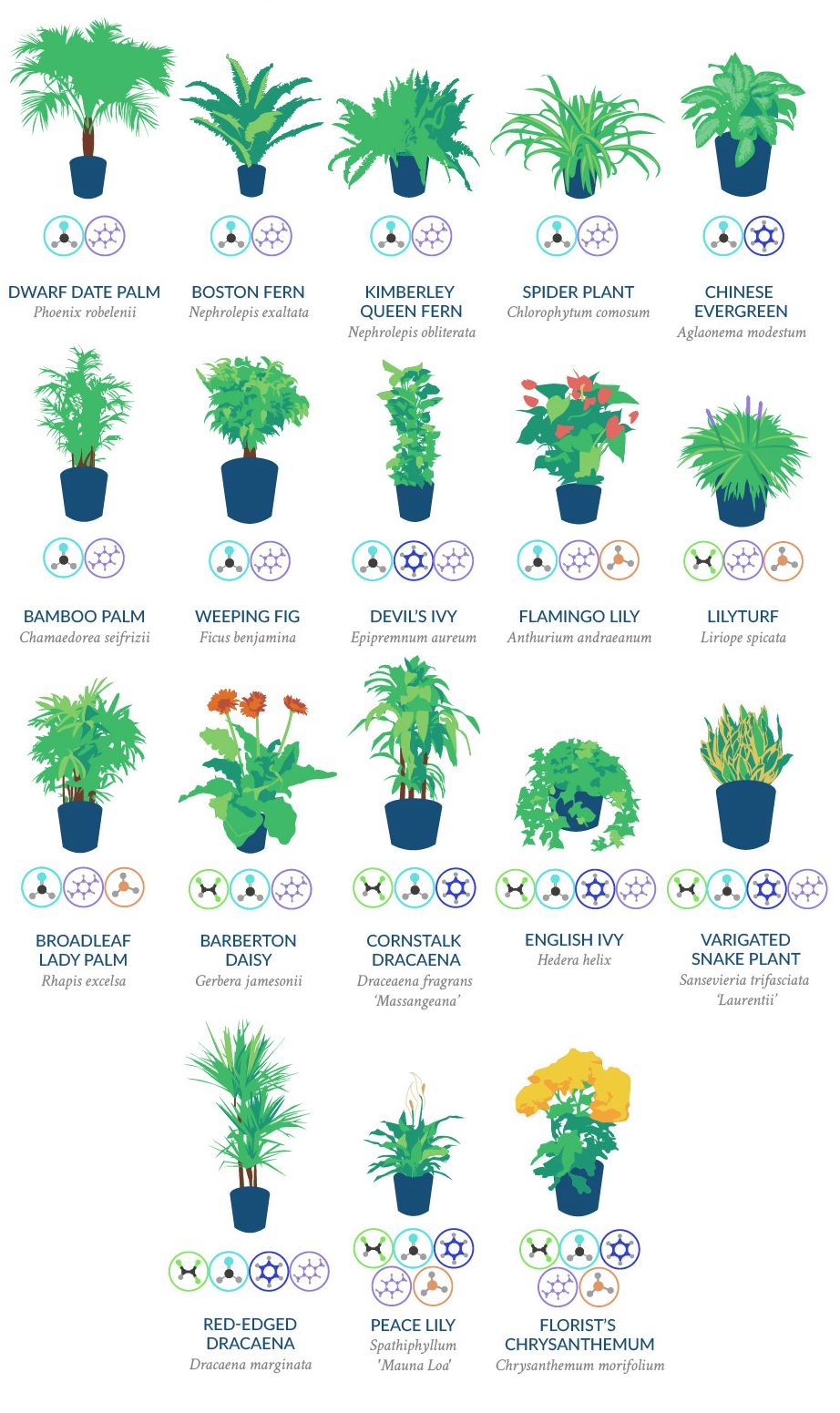
NASA Clean Air Study: https://en.wikipedia.org/wiki/NASA_Clean_Air_Study
"The results suggest that certain common indoor plants provide a natural way of removing toxic agents from the air, helping neutralize the effects of sick building syndrome"
-
There are always flower for those who want to see them - Henri Matisse
-
"We have an ethical responsibility to refuse to work on software that will negatively impact the well-being of other humans, flora and fauna."
-
Dialogues of paradoxical beauty and bananas
Assorted yet connected discussions on Twitter today. My replies are bold.
"If it's not paradoxical, it's not true" - Shunryū Suzuki
------------
Q: No one ever got anywhere that mattered without stress and discomfort.
A: I fundamentally disagree and suggest you get involved with meditation, qi-gong, tai-chi, animals, nature, psychedelics or any related art form.
Q: Growth - even towards exploring the activities you suggest - necessarily involves moving in directions that are new; and this is discomforting.
A: Ah yes, "Growth" indeed is related to suffering *on the surface* - as if life. But there is a deeper reason why for example Qi-Gong is called "the art of *effortless* movement". The feeling of "Alienation" you discuss is real, but only as far as you allow it to be.
------------
Q: wondering if there's an engine for value creation or does your conceptualization only consider it as a flow per se?
A: this is a fascinating question. I subscribe to the views that 1) "Qi" is real 2) Reality is eternal 3) We are "it" (non-dual). Looking at it from that perspective, there is only recognition, cultivation and flow of value. "Engine" metaphors are outdated in climate change times ;)
------------
Q: A key idea is like a stone hitting the water, expanding and rippling wide.
A: I fundamentally disagree with this notion. Ideas are just momentary invitations to form a habit (a pattern that ripples across infinite spacetime). The fetishisation of "ideas" (a thing/object VS a process/water) in our cultures leads to mummified cult-like outcomes.
------------
Q: Podcast with Almaas of @DiamondApproach about attachment to the nondual viewpoint.
A: Any so-called path to "Enlightenment" that does not make one deeply laugh, dance or be silent - that relies on countless intellectual words to describe that which can ultimately only be experienced - is not for me
------------
Q: @Plinz how would you design a "hive mind attack detector"?
A: 1. Check if other people or media are present 2. Check if they want you to be good :)
Q: hehehe ;-) so does this logic has to be applied to our tweets as well?
A: of course! no Discordian is allowed to believe what he reads.
Q: "All statements are true in some sense, false in some sense, meaningless in some sense, true and false in some sense, true and meaningless in some sense, false and meaningless in some sense, and true and false and meaningless in some sense."
A: Every word we hear is a little virus that wants to run a piece of software on your brain.
Q: abracadabra: "I appreciate that the Wikipedia post on "Direct Experience" is tiny: https://en.wikipedia.org/wiki/Direct_experience"
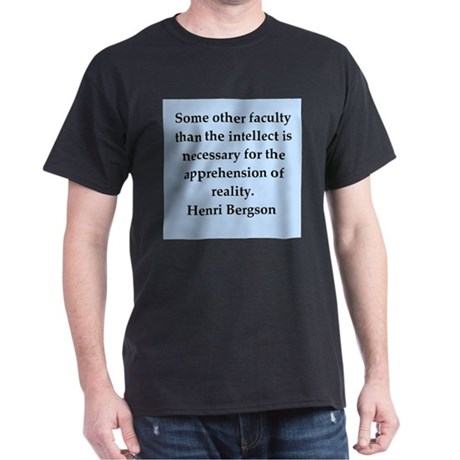
Q: “The limits of my language mean the limits of my world.” – Ludwig Wittgenstein
Q: Within fractal reality where everything means nothing and nothing is everything - isn't the quest for objective truth through the tools of the intellect the ultimate "little virus", dooming the seeker to a life of pointless hardship? Asking for a friend ;)
A: You could spend the next 2h reading about yet another "very important" political drama - OR - you could take the next 2h and learn about "intelligence in nature" and learn why mushrooms are lightyears ahead of machines: https://samim.io/p/2018-05-20-climate-change-and-intelligence-in-nature-a-collecti/ pick your poison carefully