tag > ALife
-
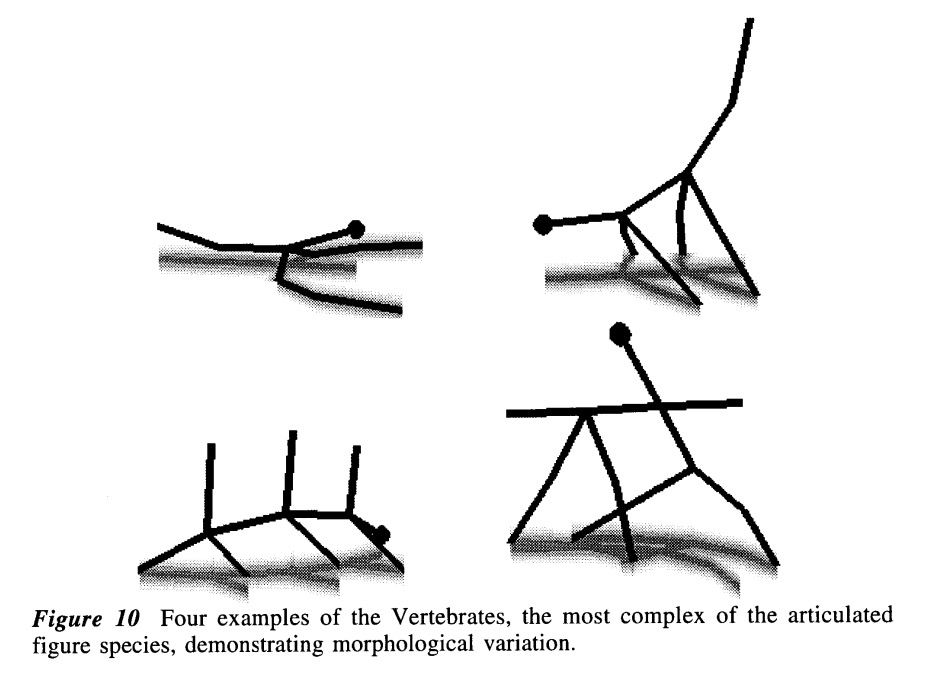
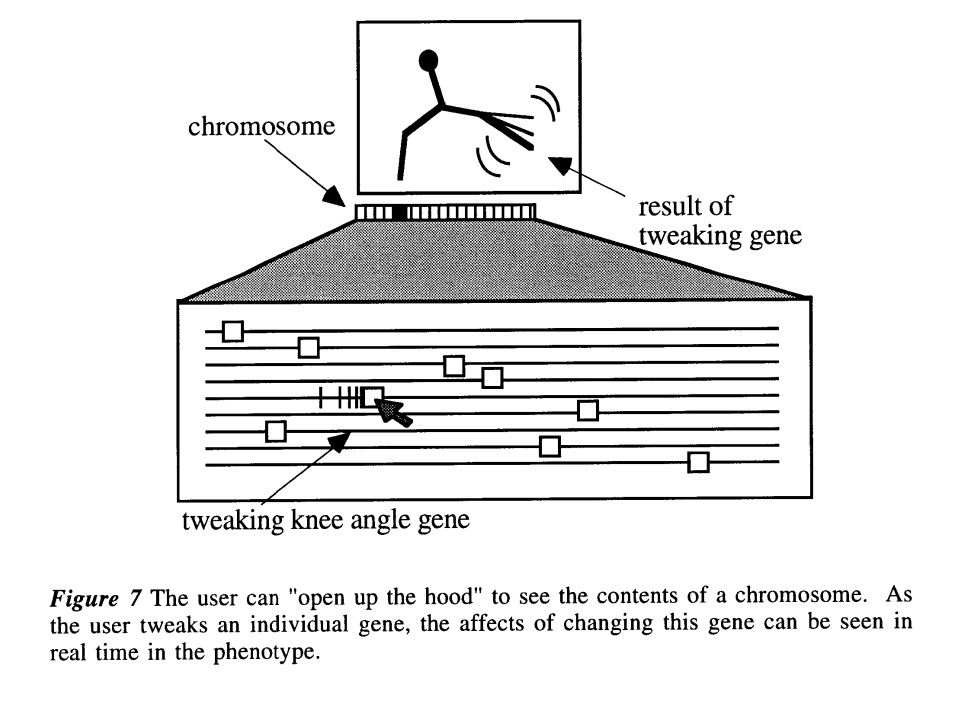
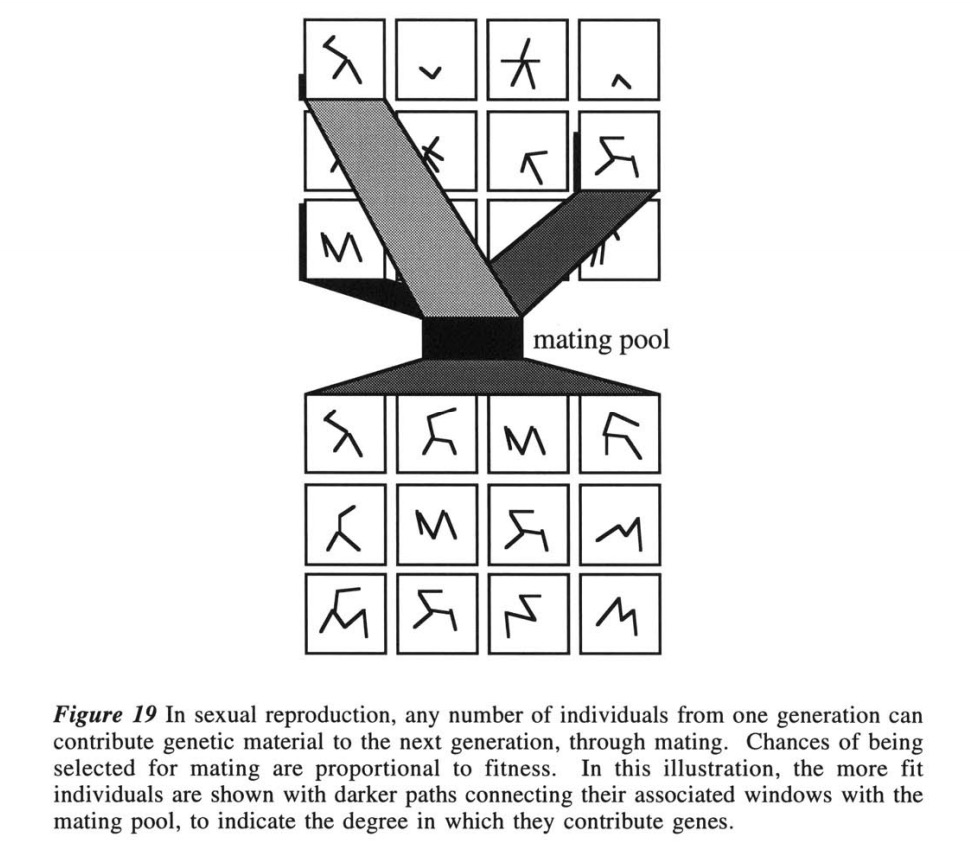
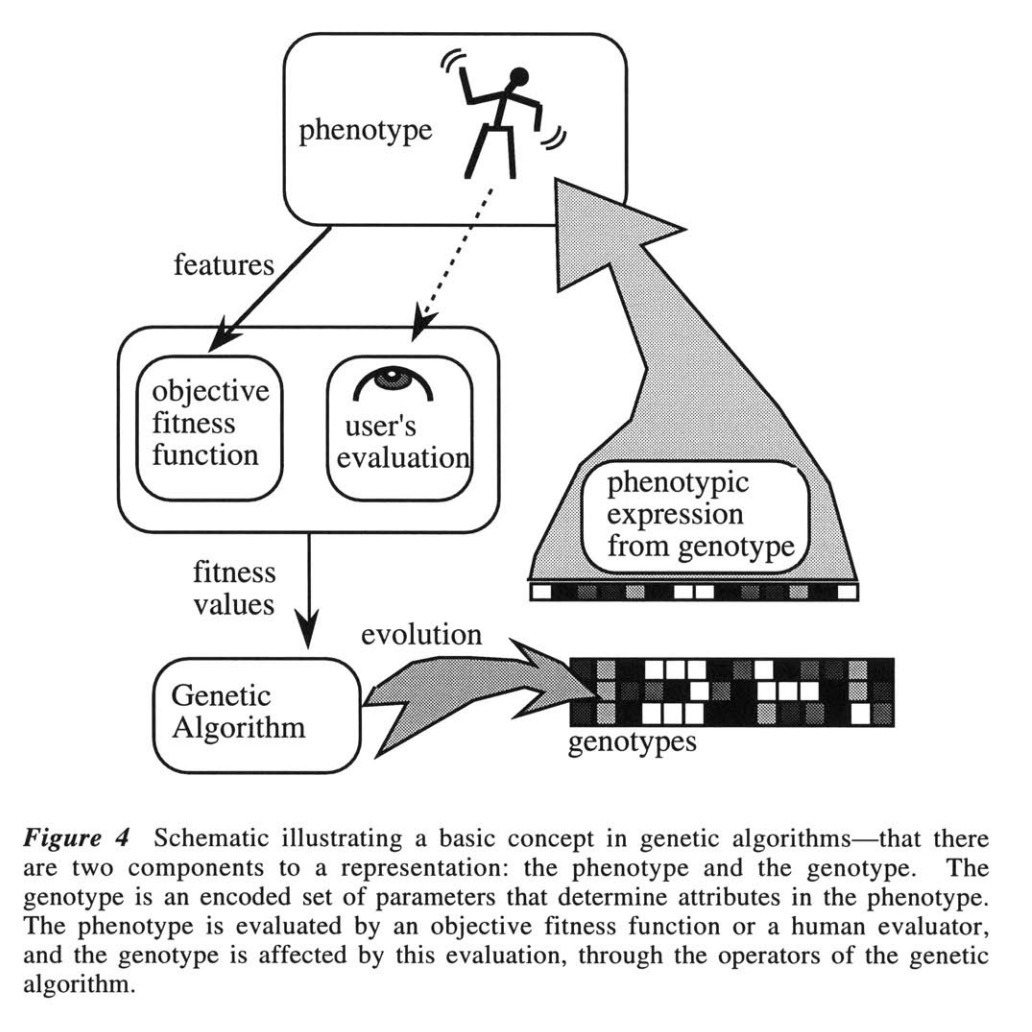
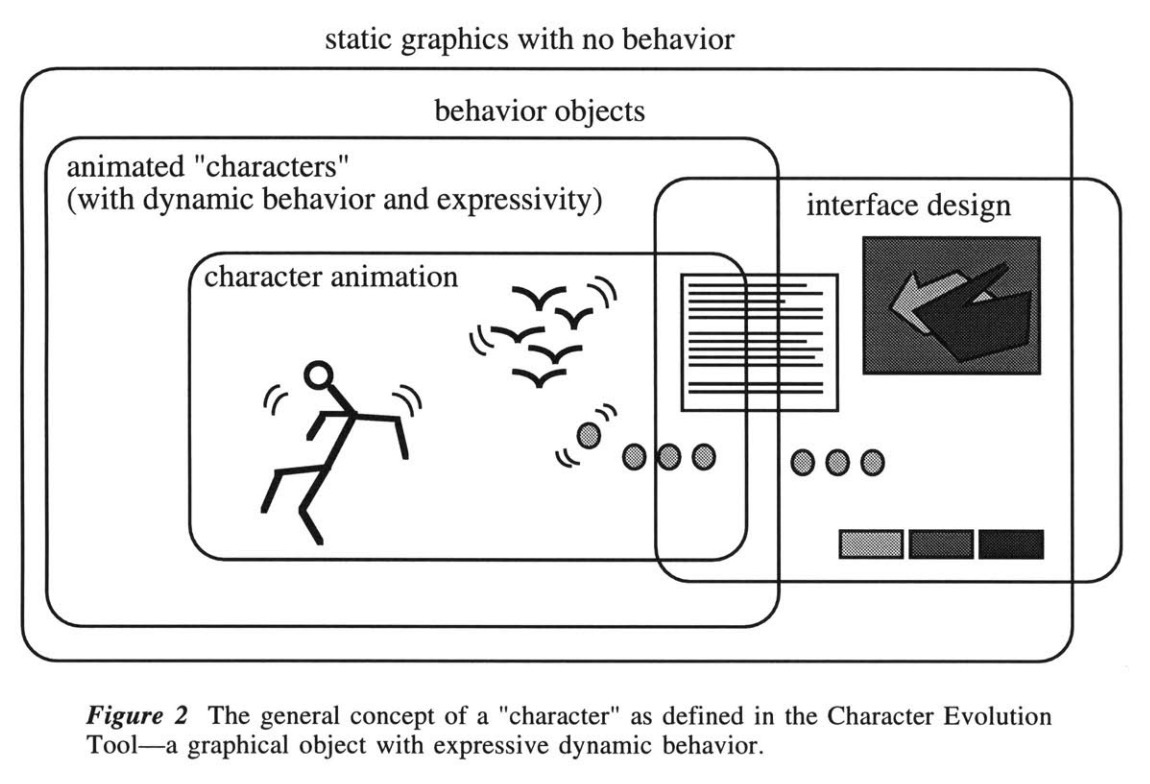
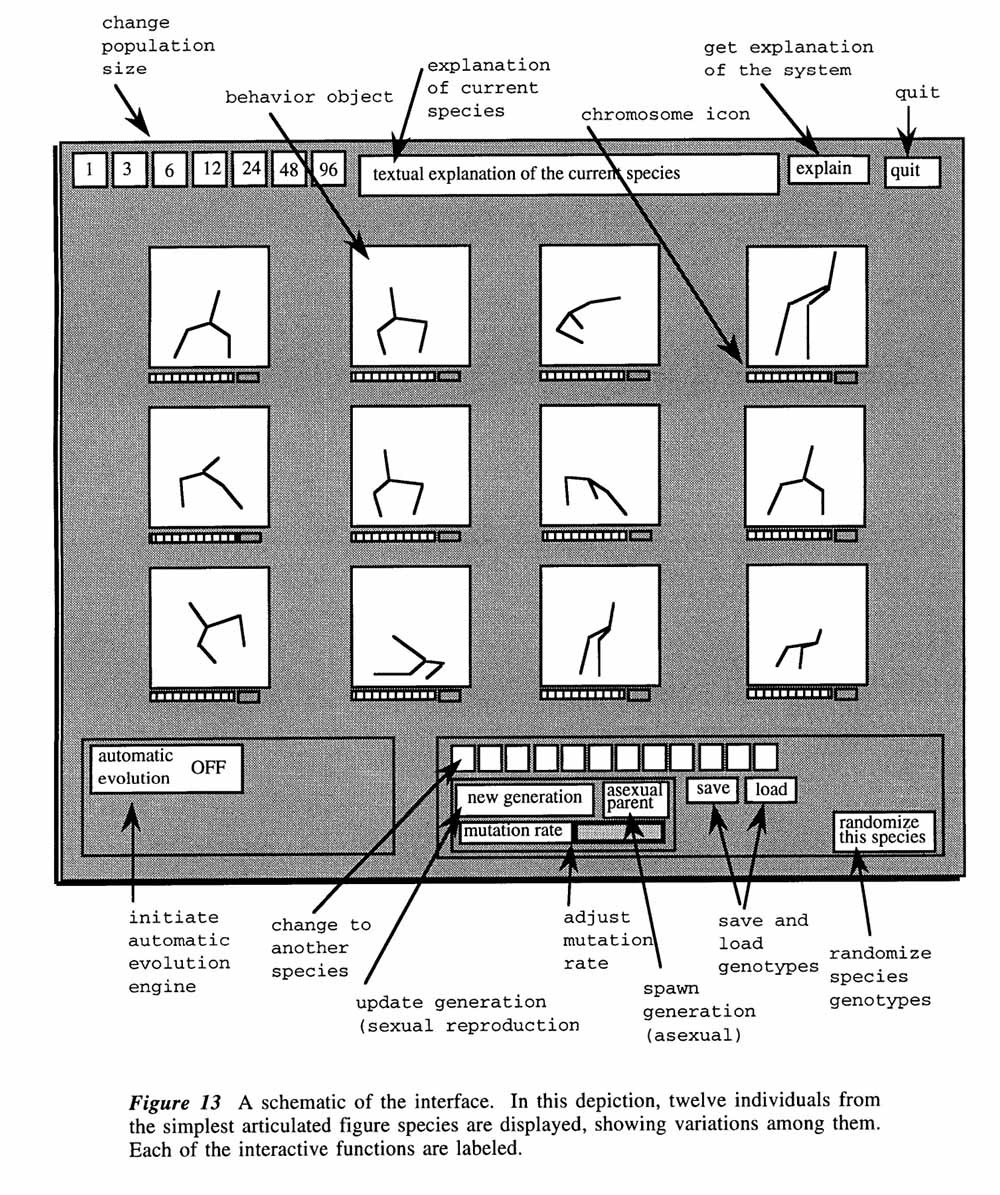
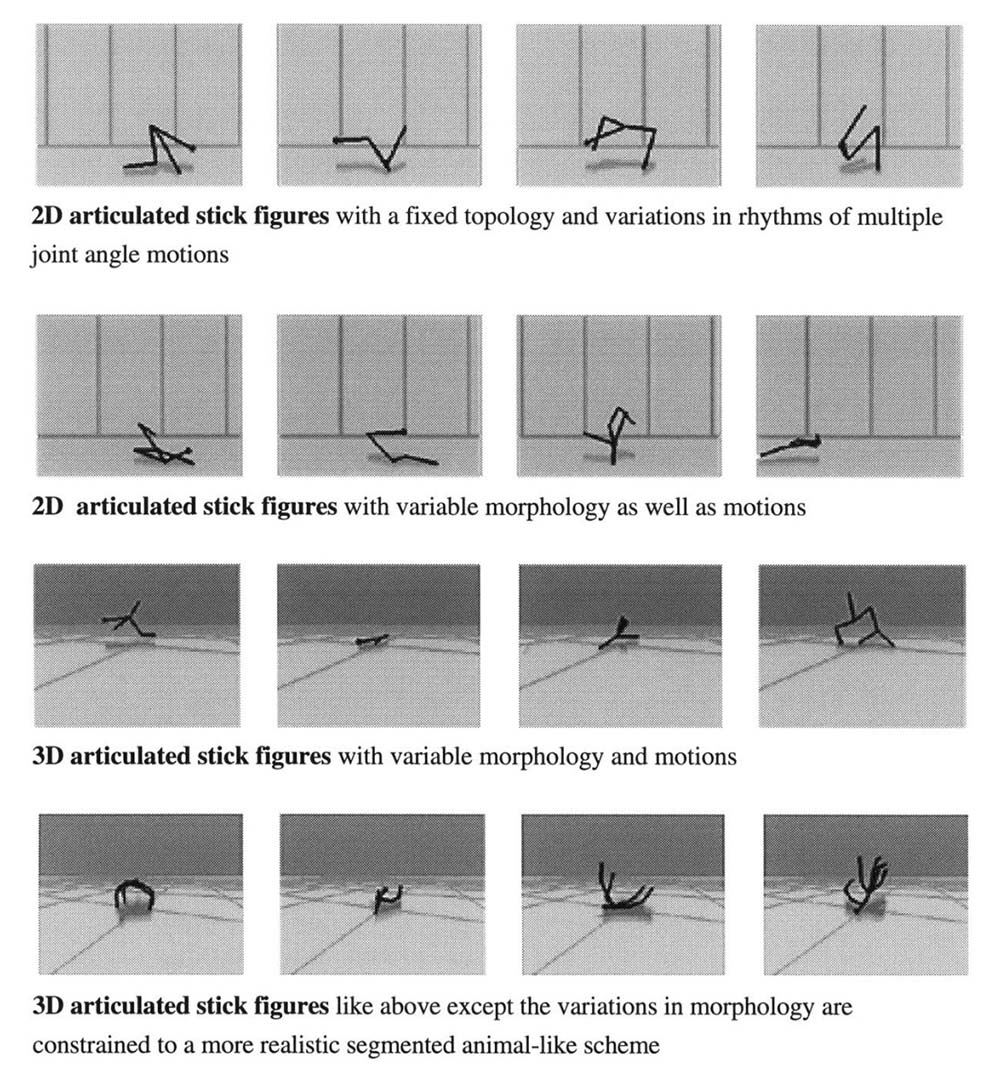
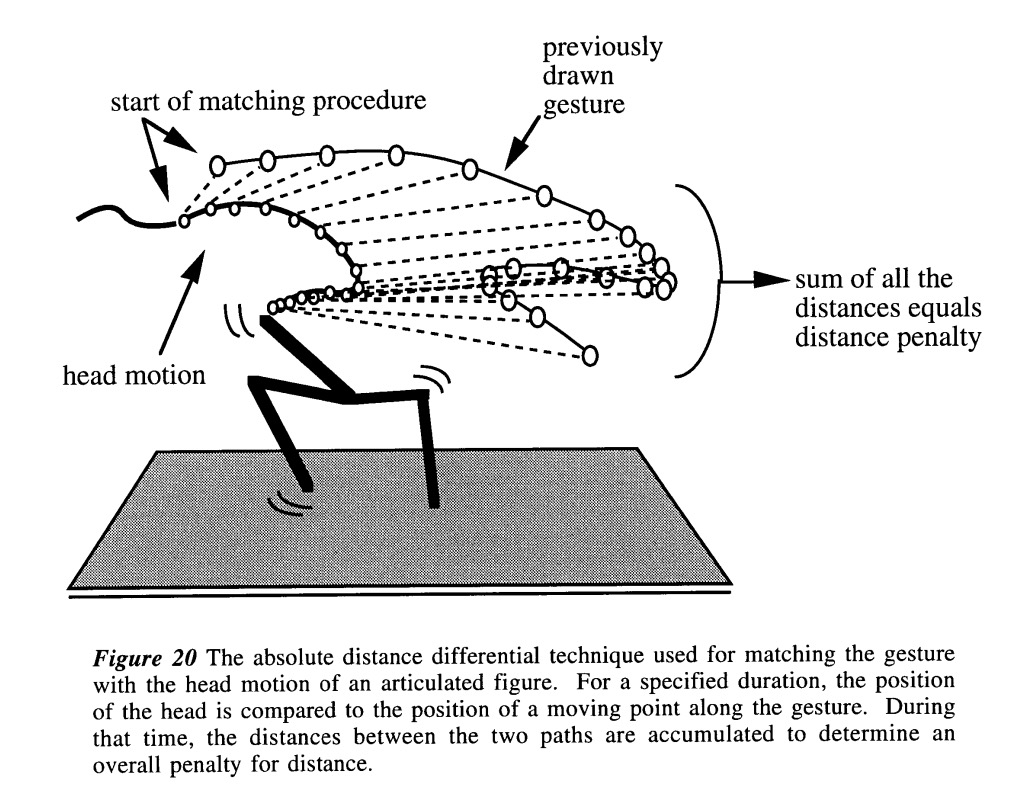
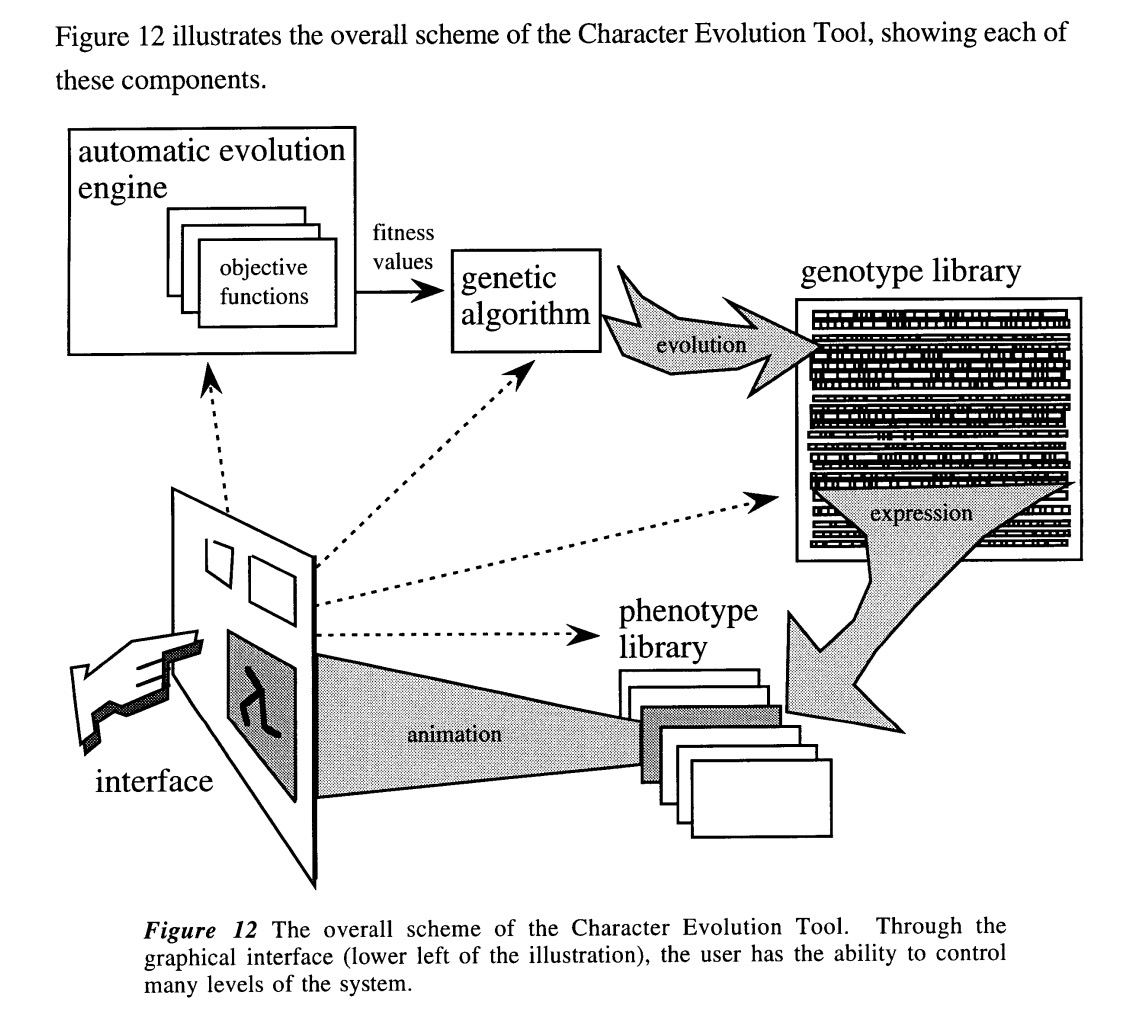
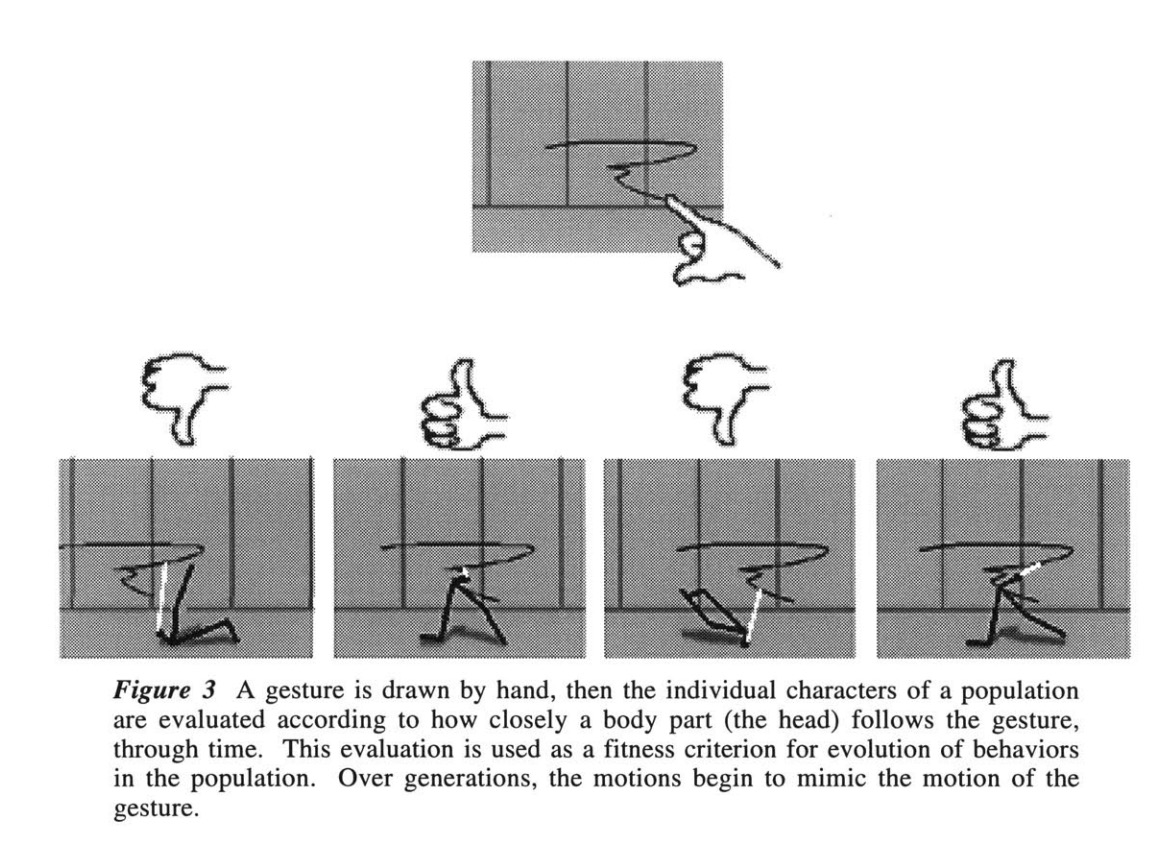
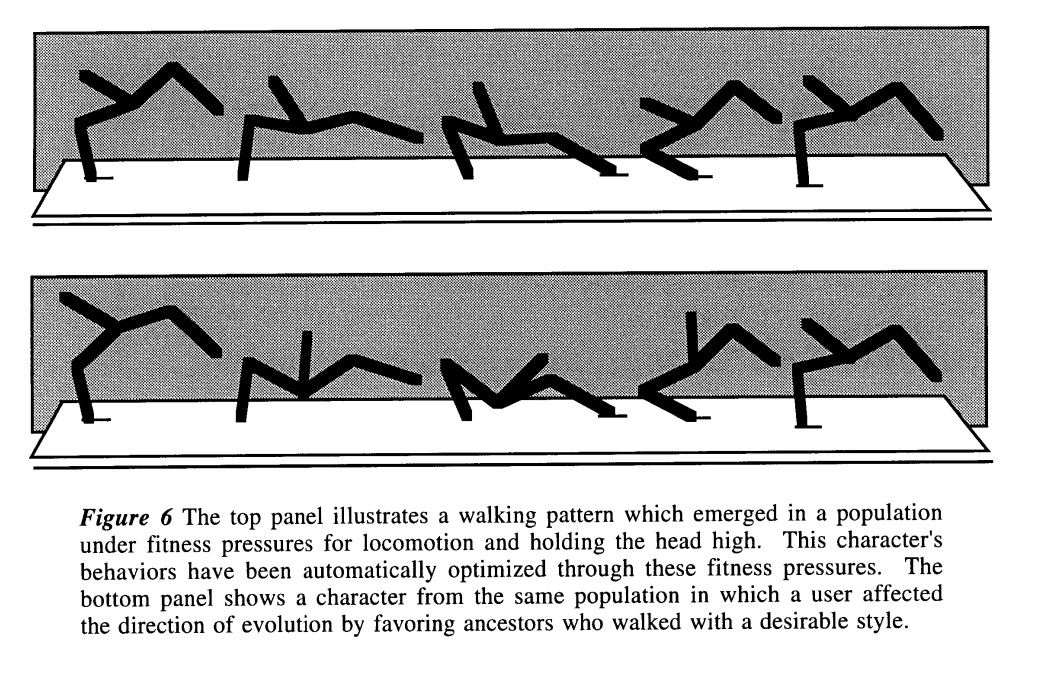
Disney Meets Darwin - "An Evolution-based Interface for Exploration and Design of Expressive Animated Behavior" (1994) by Jeffrey Ventrella: http://www.ventrella.com/
https://pdfs.semanticscholar.org/9ded/6c66bec25e02ac3163fd3e9ba914c506fc16.pdf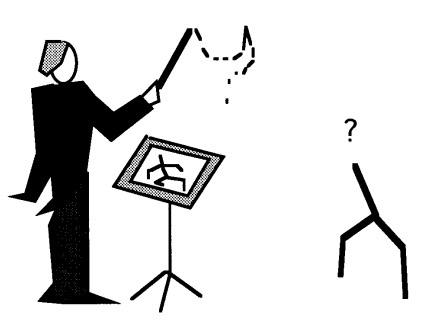
-
Gene Pool: http://www.swimbots.com/ #ML #Generative #ALife
It's a computer simulation where hundreds of virtual organisms evolve swimming skills. These organisms are called "swimbots". You can set mate preference criteria and thus influence what the swimbots consider as attractive qualities in potential mates. The most attractive swimbots get chosen most often to have little babies, and so their genetic building blocks propogate to future generations. Eventually, swimbots get better at pursuing each other, competing for food, and becoming babes to other swimbots. Local gene pools emerge which compete for sex and food (for energy to have more sex). Eventually a dominant sub-population takes over.
-
Jordan Pollack - Full Interview. #Generative #ML #ALife
-
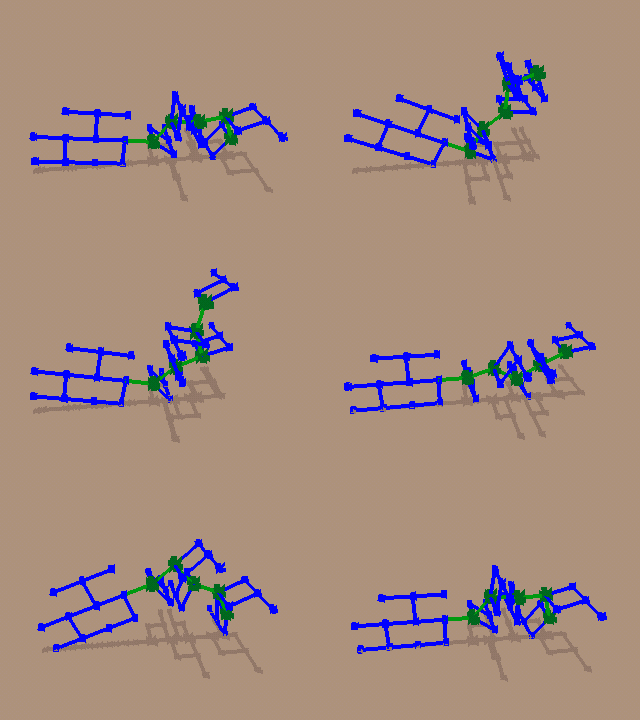
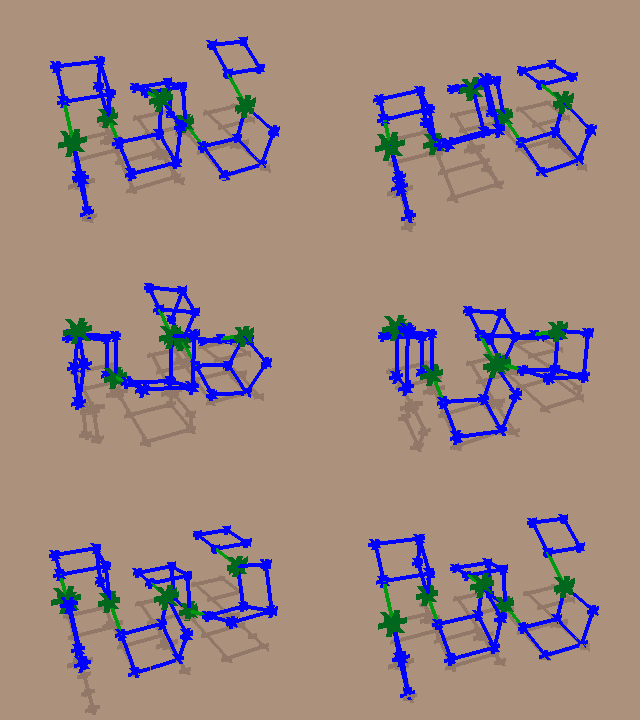
Generative Representations for Design Automation:
http://www.demo.cs.brandeis.edu/pr/evo_design/evo_design.html #Generative #ML #ALife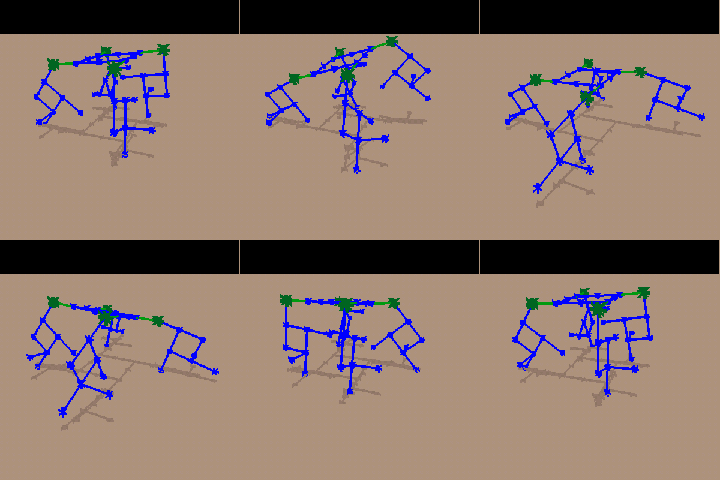
-
Computer Evolution of Buildable Objects:
http://www.demo.cs.brandeis.edu/pr/buildable/crane/index.html #Generative #ML #ALife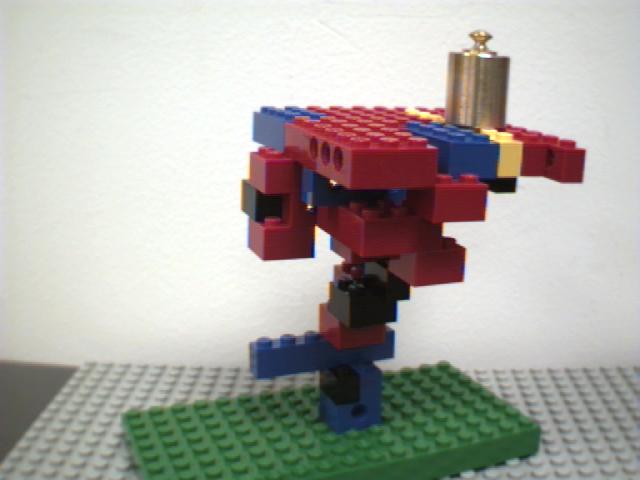
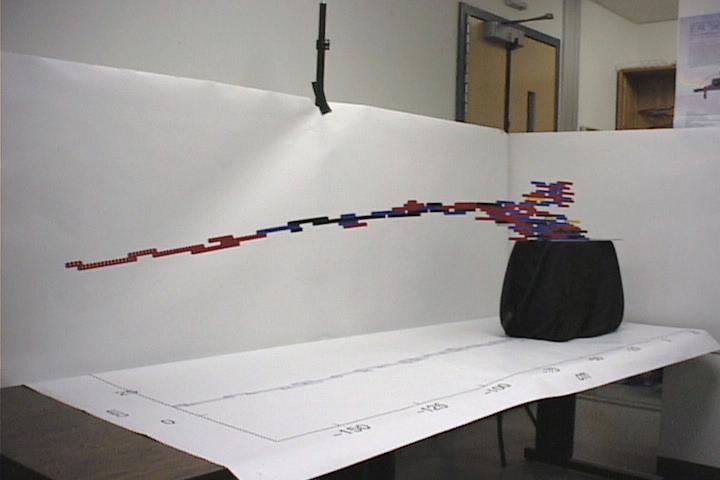
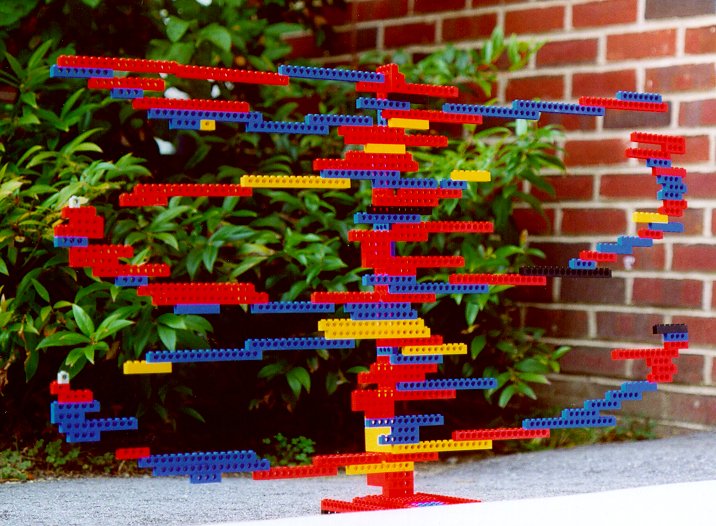
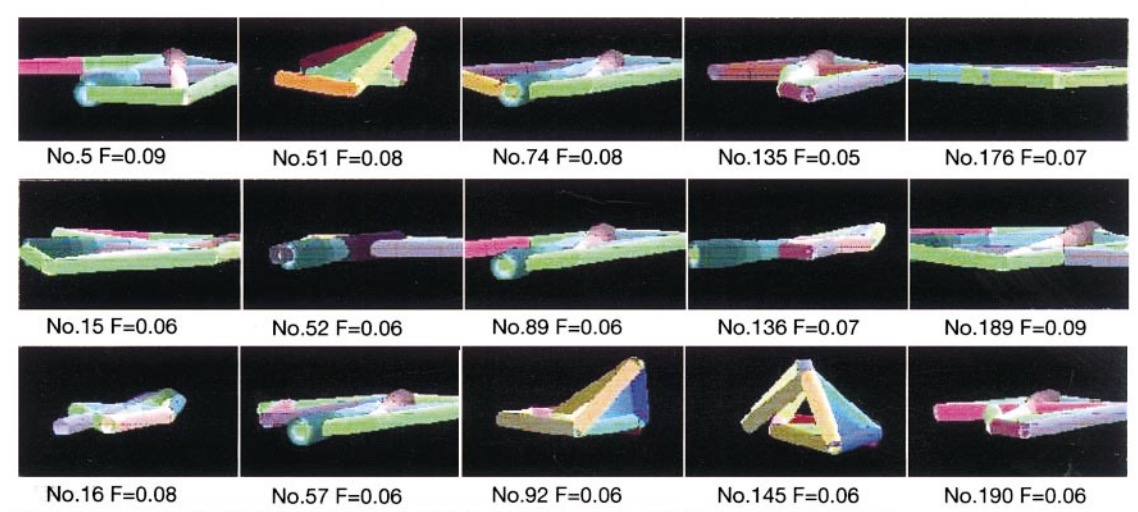
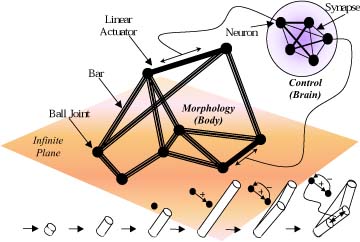
We believe that not just the software, but also the physical body of a robot could be the result of an evolutionary process. A step in this direction is the evolution of buildable lego structures, designed by the computer through the combination of genetic algorithms and physical simulation.
-
Automatic design and manufacture of robotic lifeforms - by Hod Lipson & Jordan B. Pollack:
http://www.demo.cs.brandeis.edu/golem/download/naturegolem.pdf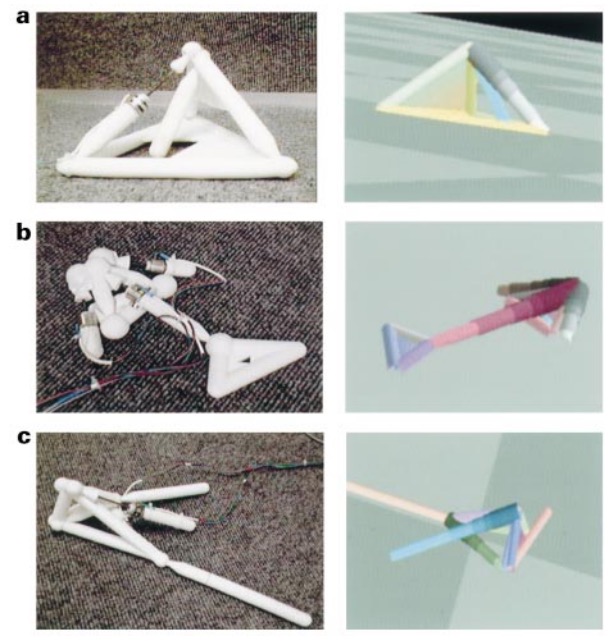
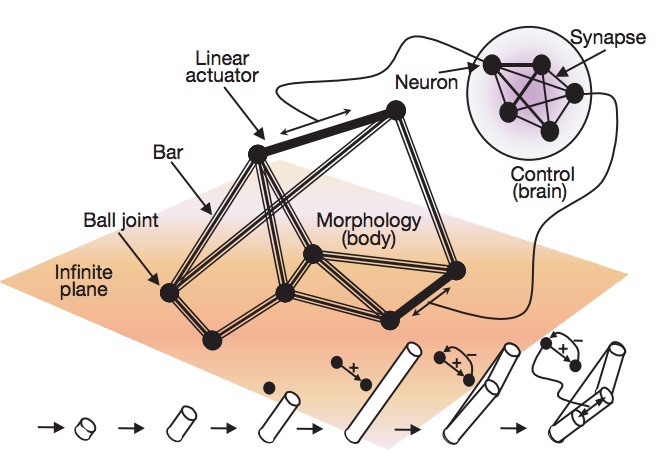
-
The Golem Project - Automatic Design and Manufacture of Robotic Lifeforms: http://www.demo.cs.brandeis.edu/golem/ #ML #Generative #ALife
-
Framsticks - a three-dimensional life simulation project: http://www.framsticks.com/
-
Biped walking with CMA-ES: http://www.iri.upc.edu/files/scidoc/1917-On-the-application-of-CMA-ES-to-biped-walk.pdf #ML #Robot #ALife
-
People describing their #Generative #ALife creations makes for a fun read:
https://www.reddit.com/r/programming/comments/1w6ugu/tunzelbots_pythonprogrammed_organisms_evolving/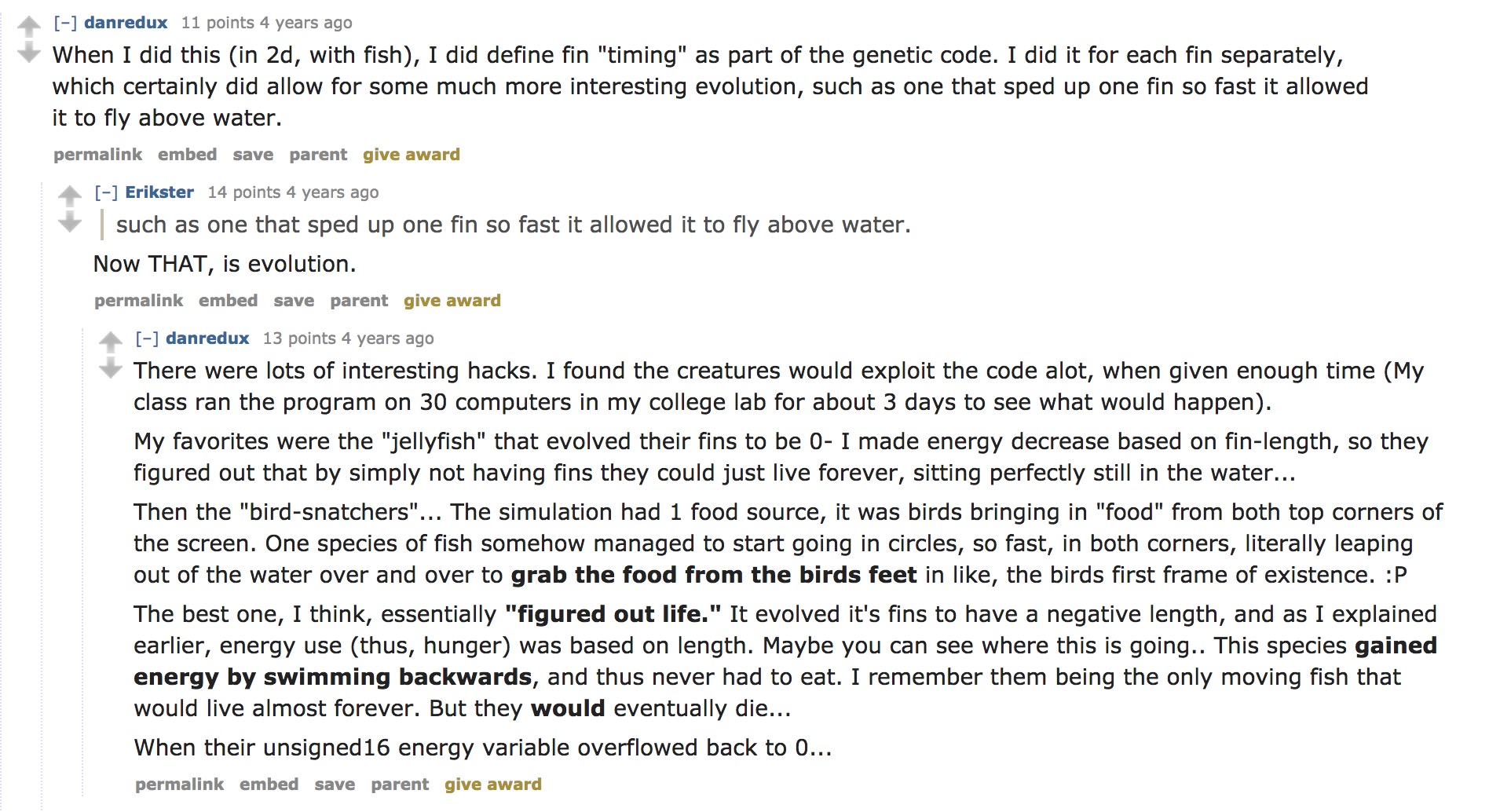
-
Tunzelbots - by Eugénie von Tunzelmann: Python-programmed organisms evolving motion in a beautiful 3D environment. #Robot #ML #Generative #ALife
-
Dan Lessin - Research Profile: https://real.itu.dk/people/former-members/dan-lessin/
-
Open-Ended Behavioral Complexity for Evolved Virtual Creatures:
http://www.cs.utexas.edu/users/ai-lab/downloadPublication.php?filename=http://nn.cs.utexas.edu/downloads/papers/lessin.gecco13.pdf&pubid=127271 -
"It's somewhat comedic to watch the ML community rediscover key insights the Alife & Evolutionary Computation communities had back in the 1980s and Alan Turing back in the 1940s" - @samim
"IMHO it is impossible to keep up with current literature and learn all the history given the firehose of the last years. We are missing historians that can create easily accessible digests of what happened in earlier decades." - @cmarschner
"This is true. Perspective wants to be expensive. A substantial part of my job is often connecting the past dots, identifying "adjacent possibles" and constructing a grounded future narrative." - @samim
-
Mutator VR Exhibition by William Latham: #Generative #Art #ALife
-
Karl Sims - Virtual creatures: #Generative #ALife
-
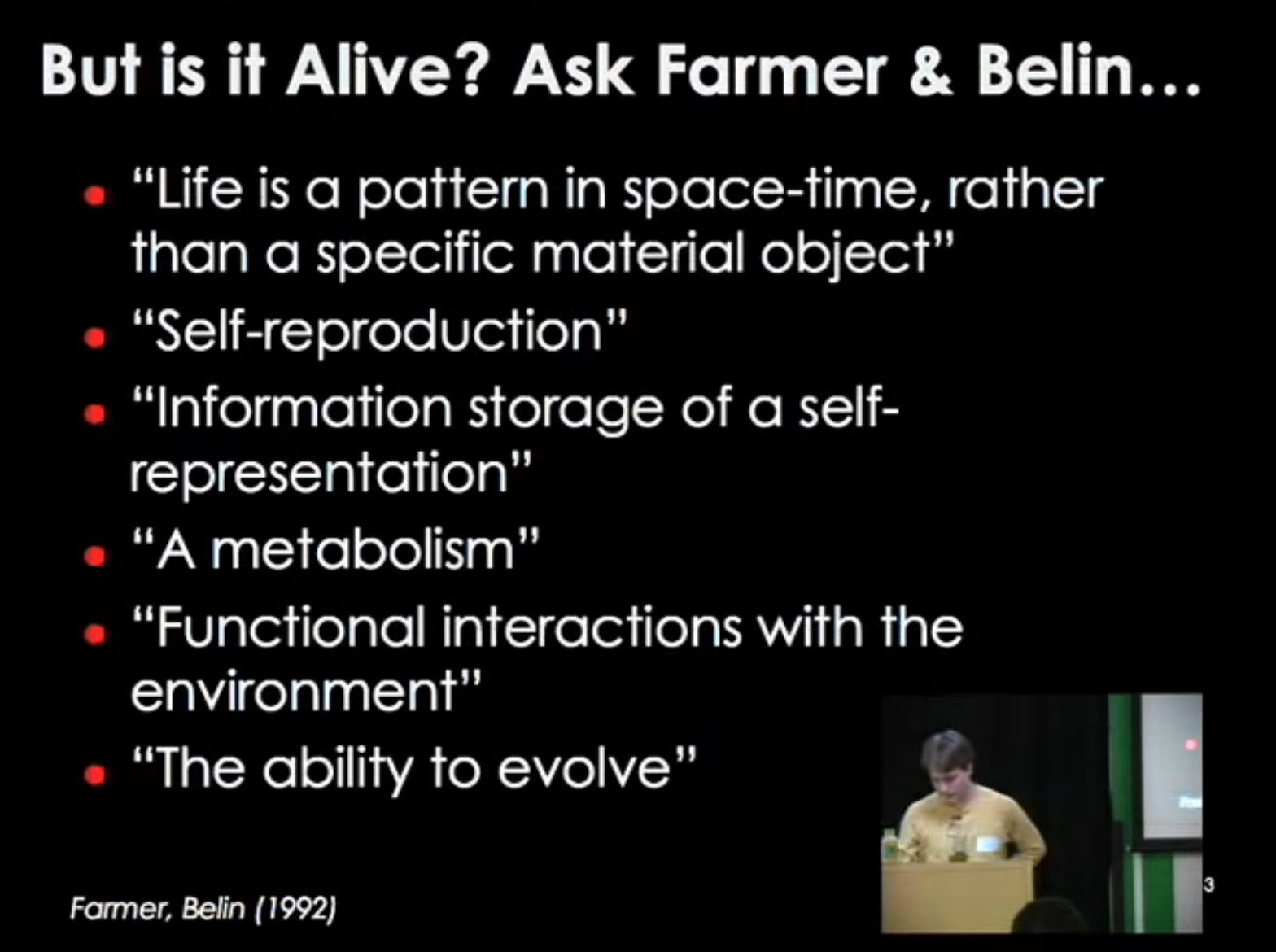
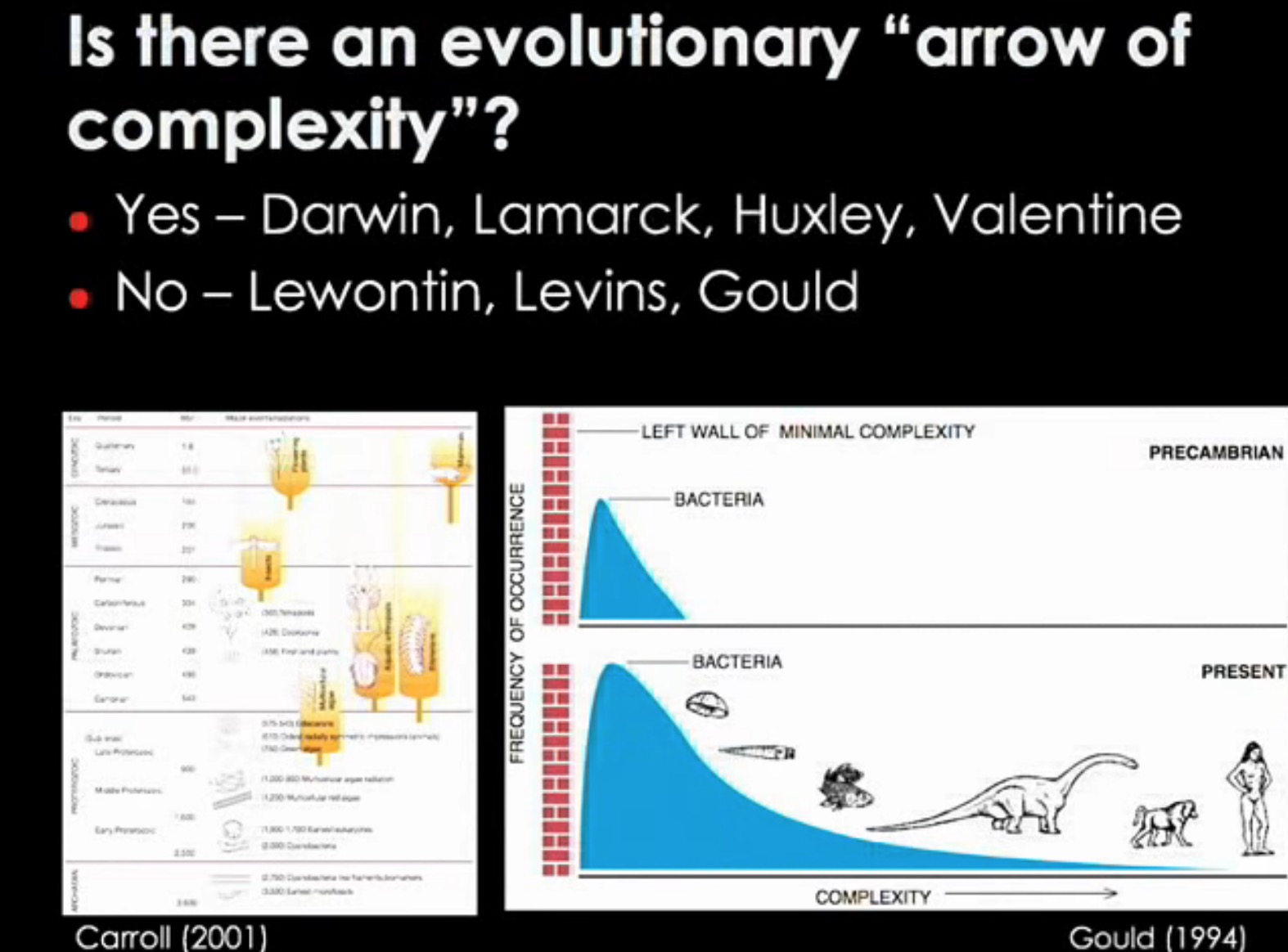
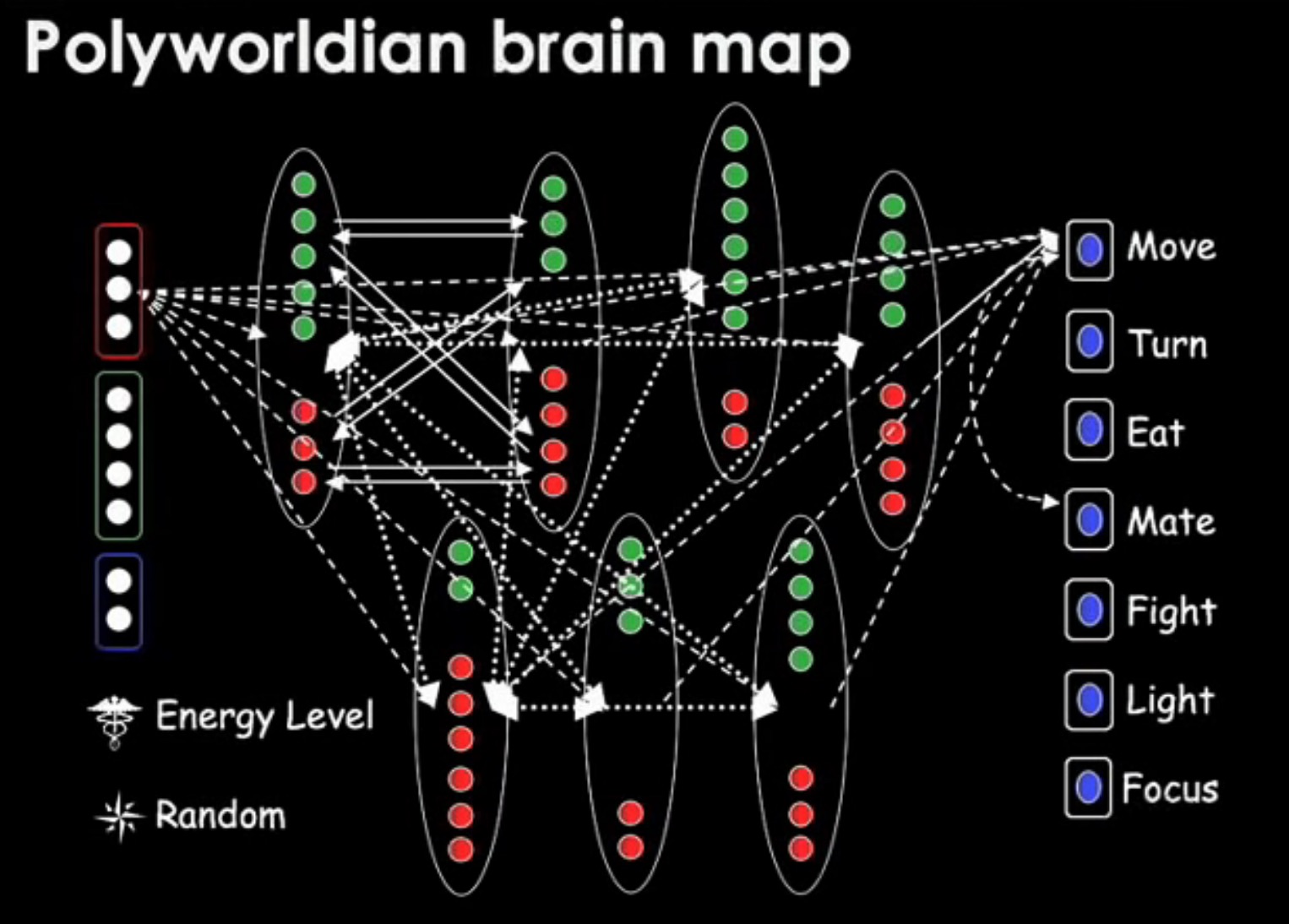
Polyworld: Using Evolution to Design Artificial Intelligence (2007, by Larry Yaeger) - talk by Virgil Griffith
This presentation is about a potential shortcut to artificial intelligence by trading mind-design for world-design using artificial evolution. Evolutionary algorithms are a pump for turning CPU cycles into brain designs. With exponentially increasing CPU cycles while our understanding of intelligence is almost a flat-line, the evolutionary route to AI is a centerpiece of most Kurzweilian singularity scenarios. This talk introduces the Polyworld artificial life simulator as well as results from our ongoing attempt to evolve artificial intelligence and further the Singularity. Polyworld is the brain child of Apple Computer Distinguished Scientist Larry Yaeger, who remains the primary developer of Polyworld: