tag > FFHCI
-
Project Oasis - "A plant ecosystem you can talk to":
https://experiments.withgoogle.com/oasisThey had me really interested until I read this: "A plant ecosystem inside a box. You can talk to it using the Google Assistant and ask it to create certain conditions". << very wrong symbolism for me!
-
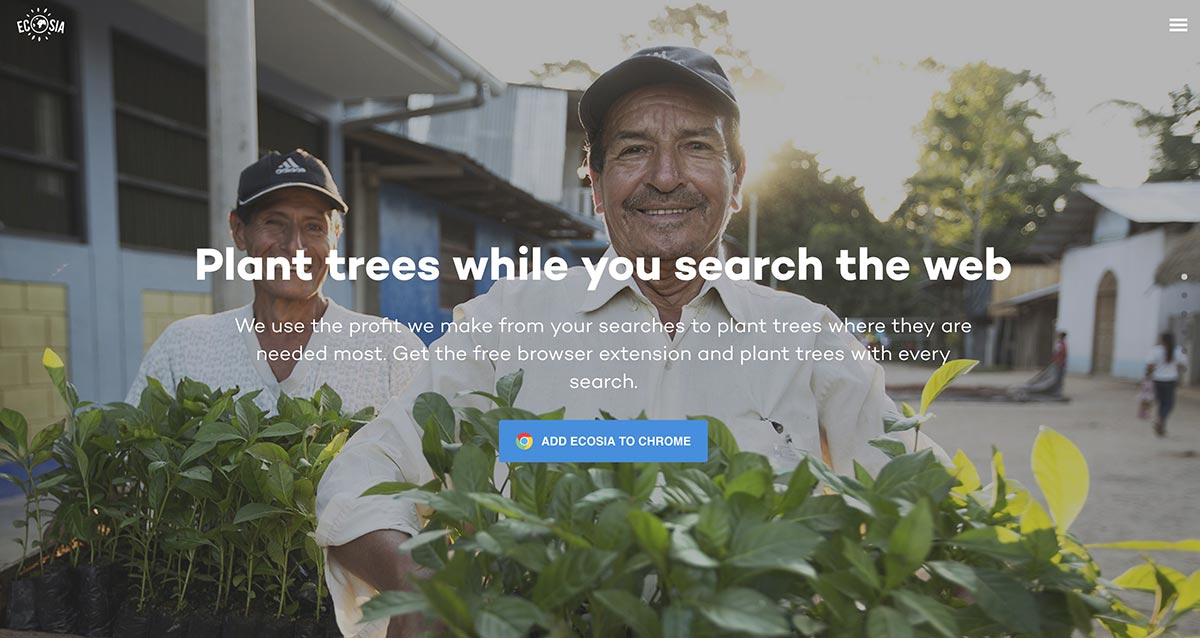
Ecosia - "a search engine that plants trees. Search the web, save the environment": https://info.ecosia.org/what #FFHCI #ClimateChange
-
Flora - "The talking plant. An interactive bio-hybrid organism" - by @florarobotica:
In the project flora robotica we investigate how humans, robots, and plants can interact. In this video we show the possibilities of sophisticated sensor technology to make plants interact with you. The technology used is electrophysiology. You see cables attached to the plant that are used to measure electrical signals.
-
Is the rate at which we drive real insects into extinction (after millions of years on earth) and the rate at which we create primitive/crude emulations of those very insects related?
http://ascii.jp/elem/000/001/687/1687200/

-
Practical solutions to move towards more positive outcomes in the unfolding climate change catastrophe - by @Plinz (tweet)
Shift population centers above future sea levels and in different climates, focus on sustainable development, indoor agriculture, solar thermal, desalination, fix governance, end culture wars, protect civilization at almost all costs, leave messages to future intelligent species
-
"You can not take away someone's story, without giving them a new one"
- @GeorgeMonbiot -
An Introduction to Slow Computing:
Paper: https://osf.io/preprints/socarxiv/rmxfk/
Project: http://progcity.maynoothuniversity.ie/2017/12/new-paper-slow-computing/Abstract: "In this short position paper we examine some of the dimensions and dynamics of the algorithmic age by considering three broad questions. First, what are the problematic consequences of life mediated by ‘algorithm machines’? Second, how are individuals or groups and associations resisting the problems they encounter? Third, how might the algorithmic age be re-envisioned and re-made in more normative terms? We focus on two key aspects of living with ubiquitous computing, ‘acceleration’ and ‘data grabbing,’ which we contend are two of the most prominent and problematic features of the algorithmic age. We then begin to shed light on the sorts of practices that constitute slow computing responses to these issues. In the conclusion, we make the case for a wide-scale embrace of slow computing, which we propose is a necessary step for society to make the most of the undeniable opportunities for radical social change emerging from contemporary technological developments"
SLOW COMPUTING
- How to practice resistance in the algorithmic age?
- Slowing down one's rate of participation in processes of acceleration and temporal reconfiguration
- Performing intricate 'dances' around and within data grabbing infrastructures
- Using technology on our own terms
ACCELERATION
- Networked technologies ore creating a faster and busier world
- Acceleration of the pace of life; technological acceleration; acceleration of social change
- People being 'always-everywhere available'
- Time shifting of activities to formerly unavailable times (*dead time mode 'productive time)
- More flexible scheduling of activities • Simultaneous occurrences, multitasking, and the interleaving of Wit/tiles
- Shortening In the time log between action and event - immediate, distanciated response and real time systems
- Compression, densification and fragmentation of time
SLOWING DOWN
- Deciding to participate in tool processes at a slower rate than might be otherwise expected
- Aim is to reduce time compression, fragmentation, densification and stresses.
- Tactics include:
- Switching off Wifi routers for set periods each day
- less frequent 'checking in' on social media or only pursuing one or two email sessions per day
- reserving computational free leisure time
- maintaining scheduled, no device-ing meal times
- organising pro-arranged meetings rather than doing so on-the-fly
- choosing to buy and use non-smart or analogue electrical goods
- collecting goods purchased online in-store rather than having them delivered
- In other words, re-build one's life around social and clock time rather than network time, and older, slower practices rather than accelerated ones.
- Not to abandon technology, but use it differently
CONCLUSION
- Algorithmic age poses a number of personal challenges
- Slow computing is about trying to negotiate these challenges as much as possible on one's own terms
- As well as practical interventions, slow computing requires normative and political thinking concerning the land of algorithmic future we wont to create and live in
- How should society and states respond collectively through regulation, legislation, education, and training?
- Need to elaborate an ethics of acceleration and grabbing; an ethics of big data, algorithmic governance, machine learning, artificial intelligence, automation and the diverse technologies and practices that increasingly shape everyday life
- Plus map out moral contours and actions and more just alternatives
-
Why is it that so many of the very practical, sane & futuristic alternative movements of our time (cultural, political, ecological, economical) - seem to have very poor design, aesthetics, usability & PR strategies? It's confusing.
-
Learning to Speak Shrub - "Using molecular codes, plants cry for help, ward off bugs, and save each other": http://nautil.us/issue/59/connections/learning-to-speak-shrub-rp
-
Jack Clark Tweets: If AI is a new industrial revolution shouldn't we be... incredibly concerned? The industrial revolution was a time of great chaos and misery for millions of people, and it occurred during a period with less extreme weather and a less connected world.
My reply: Isn't the "AI is a new Industrial revolution" metaphor extremely backwards in times of climate change and mass species extinction? .I invite you to join the turnkey debate of our day: A mature, honest and intellectually cunning discussion of the planetary politics of Gaia.
-
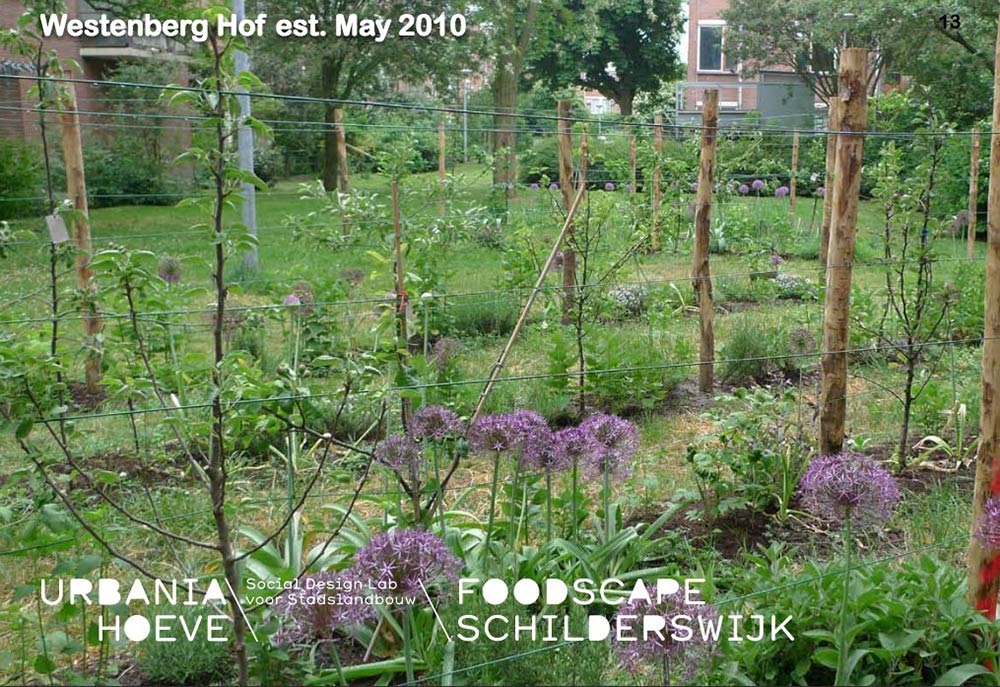
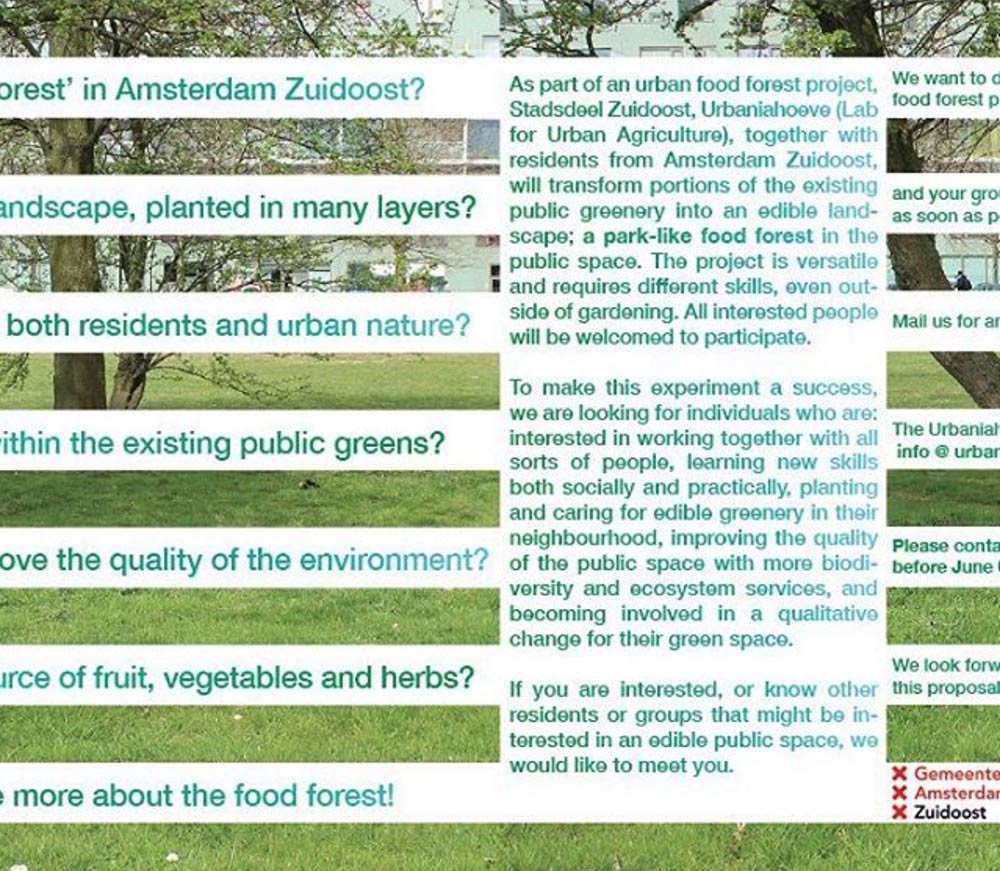
A public space food forest in Amsterdam Zuidoost? http://www.urbaniahoeve.nl/2018/05/a-public-space-food-forest-in-amsterdam-zuidoost-foodforest-amsterdam-publicspace-urbaniahoeve-stadsdeelzuidoost-zuidoost-info-at-urbaniahoeve-dot-nl-2/
"Edible Public Spaces"
-
"Xi Jinping calls for China to become world leader in science, technology": https://www.youtube.com/watch?v=unqPqFJyb2o "Do not let scientists be bound by red tape": https://www.youtube.com/watch?v=i61bCm-Em2c
#Prediction: China will replace its drive for technocratic leadership, with eco-leadership in the next 10y.
The second largest economy in the world calling for total deregulation of science & technology in times of climate change. What could possibly go wrong?
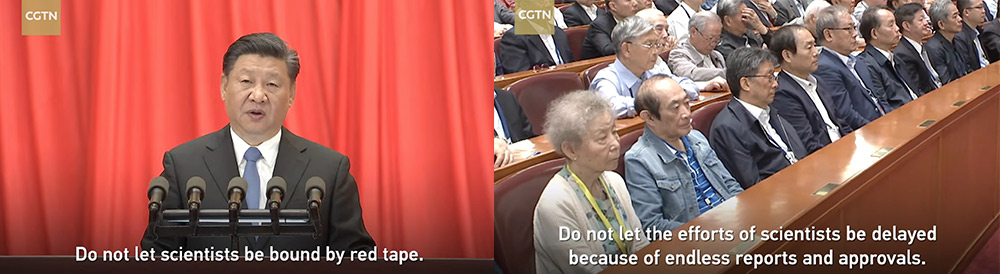
@vakibs asks: Are you really that hopeful? They are cutting edge in how to abuse face recognition. A part of me hopes for China to realize its Daoist heritage. But I am really not convinced by the current leadership. It will most likely push for mass surveillance and not ecological health.
My answer: I am very much this hopeful, for hope is powerful https://samim.io/p/2018-02-27-excerpts-from-the-revolution-of-ho/ I do not say such things out of blind/dumb idealism or self-deception - but realistically see our path going from geo-politics to eco-politics, as a matter of naked survival. It won't be utopia, more Gaia. While I don't fully agree with the visions & conclusions of thinkers like Latour or Rifkin, they are at least soberly and cunningly discussing the coming politics of Gaia. The notion is right and we ought to do the same: https://samim.io/p/2018-05-21-on-not-joining-the-dots-excellent-talk-by-bruno-lat/
@prepaid_africa responds: Plus, ironically, comparative and competitive advantage. I once wrote a whole article tracing how the EU regs were forcing sustainable & eco friendly changes in industry sectors
My answer: exactly, a "competitive advantage" - a notion which itself is being eclipsed by more complex and dynamic model (see Actor–network theory etc). Plus it is time to say this clearly: The fairies, ents and river spirits are waking up & demanding from us to dance to a different beat.
-
"What Is Plant-Thinking?: Botany’s Copernican Revolution" - by @michael_marder:
https://lareviewofbooks.org/article/what-is-plant-thinking-botanys-copernican-revolution/ -
A Word of Caution: Against the Commodification of Vegetal Subjectivity:
http://philosoplant.lareviewofbooks.org/?p=255Like ontological plurality, the dispersal of intelligence into a multiplicity of minds, distributed across the sentient extension of plants, is not an assured escape route from metaphysical and capitalist domination. In our “knowledge economies,” intelligence is the commodity that produces and reproduces itself with the excess of surplus-value, over and above what is strictly required for its self-reproduction. Why would plant intelligence be any different?
Capitalism and metaphysics coax knowledges out, extract, attribute value to, and traffic in them. The surplus over the knowing and the known is the capacity to know, a potentiality prior to its actualization. Doesn’t the surge of interest in plant intelligence zero in (and capitalize) on this capacity of plants, which it then converts into the principles of vegetal robotics, environment sensing, or biochemical signaling? There is nothing inherently wrong with learning these things from plants in a cross-species or cross-kingdoms pedagogy that is not limited to capitalism.
The troublesome bit is the form such learning and its objective outcomes assume: a commodity. Of course, nothing and no one is ensured against the far-reaching power of commodification, insinuating itself into the previously noneconomic domains of life (in the discourse of economics: “externalities”). If, however, plant intelligence is also under the spell of the commodity form, then we cannot assert that it maintains and fosters an innately redemptive potential in the midst of the current capitalist-metaphysical onslaught.It is for this reason that I much prefer plant-thinking, an expression I coined with the inspiration of Plotinus’s phutiké noesis (“vegetal mind”), to plant intelligence. In a nutshell, intelligence is instrumental; thinking is not. Intelligence is meant to solve problems and achieve determinate goals; thinking problematizes things and makes them indeterminate. Intelligence is the triumphant, algorithmically verifiable application of the mind to matter (or to the environment), forced to do the mind’s bidding. Thinking happens when the instrumental approach fails; it is a positive sign of failure, of disquiet, of an unending albeit finite search.
-
Larger Than Life: Injecting Hope into the Planetary Health Paradigm - by @susanprescott88 et.al: http://www.mdpi.com/2078-1547/9/1/13/htm
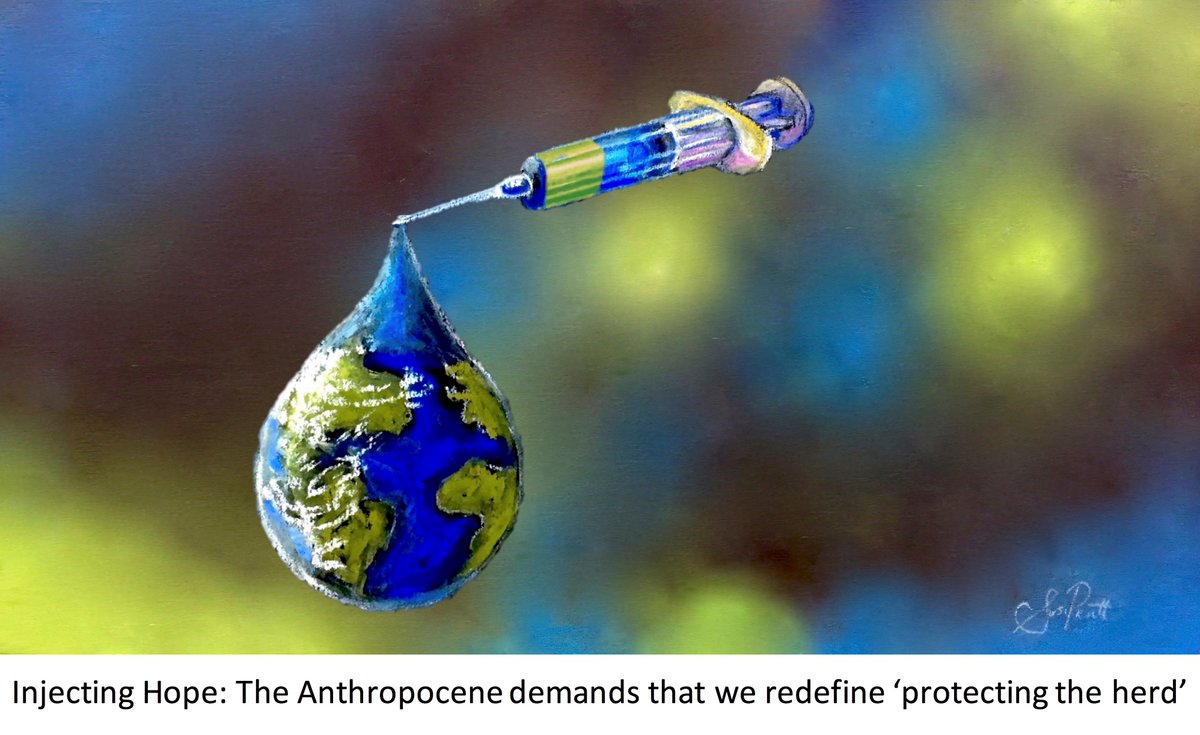
Abstract: The term planetary health, popularized in the 1980s and 1990s, was born out of necessity; although the term was used by many diverse groups, it was consistently used to underscore that human health is coupled to the health of natural systems within the Earth’s biosphere. The interrelated challenges of climate change, massive biodiversity losses, environmental degradation, grotesque socioeconomic inequalities, conflicts, and a crisis of non-communicable diseases are, mildly stated, daunting. Despite ‘doomsday’ scenarios, there is plenty of room for hope and optimism in planetary health. All over planet Earth, humans are making efforts at the macro, meso and micro scales to promote the health of civilization with the ingredients of hope—agency and pathway thinking; we propose that planetary health requires a greater commitment to understanding hope at the personal and collective levels. Prioritizing hope as an asset in planetary health necessitates deeper knowledge and discourse concerning the barriers to hope and the ways in which hope and the utopian impulse are corrupted; in particular, it requires examining the ways in which hope is leveraged by advantaged groups and political actors to maintain the status quo, or even promote retrograde visions completely at odds with planetary health. Viewing the Earth as a superorganism, with humans as the collective ‘nervous system’, may help with an understanding of the ways in which experience and emotions lead to behavioral responses that may, or may not be, in the best interest of planetary health. We argue that the success of planetary health solutions is predicated on a more sophisticated understanding of the psychology of prevention and intervention at all scales.
-
A Population That Pollutes Itself Into Extinction (and It’s Not Us):
https://mobile.nytimes.com/2018/04/30/science/microbes-ecological-suicide.html"microbial village be infected with mass stupidity, to devastating effect. soil bacteria fed a diet of glucose and nutrients in the lab & allowed to grow at will, ends up polluting their local environment so quickly & completely that the entire population soon kills itself":