The Observer Protocol: A Guide to User-Generated Reality
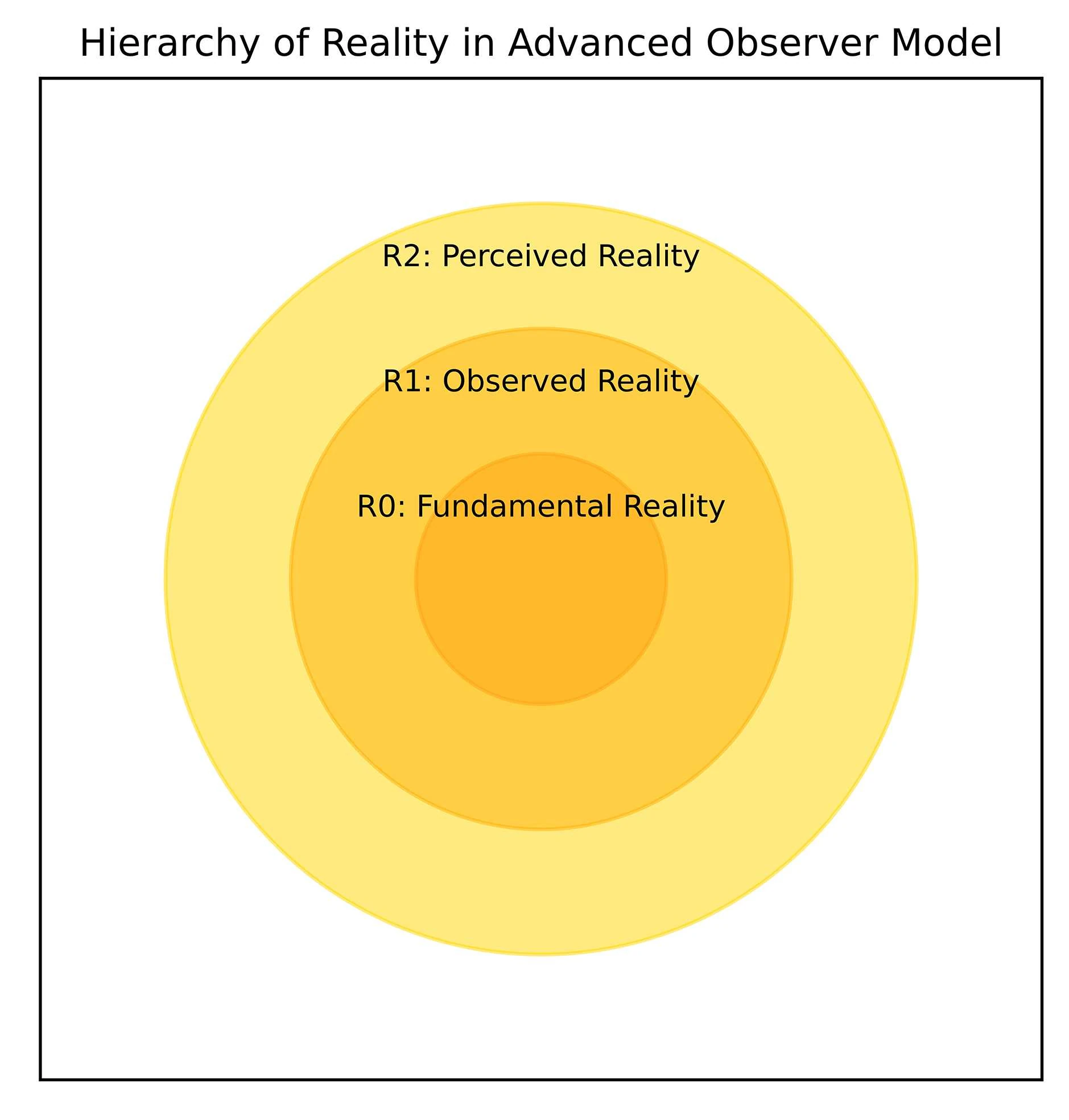
In the classical view of the world, we are passive spectators watching a clockwork universe tick by. But if we lean into the quantum reality—where the observer and the observed are inseparable—the "waiting game" changes entirely.
When you desire a specific outcome, you aren't waiting for an external event to happen; you are participating in the collapse of a wave function. Here is how to play the game of User-Generated Reality.
1. The Law of Non-Observation
In physics, the act of measurement forces a particle to lock into a single, static state. In life, "checking the status" (obsessively tracking a goal, a person, or a result) is a constant measurement.
- The Theory: Every time you look for "proof" that your reality hasn't changed yet, you provide the universe with a coordinate that says: It is still not here.
- The Protocol: Stop measuring. By looking away, you release the "Observed" from its fixed position, allowing it to exist in a state of fluid potential. You give reality the "space" to glitch in your favor.
2. Vibrational Pre-Occupancy
If the observer and the observed are one, then the "future" version of you—the one who already has what they want—is the only version that actually exists.
- The Theory: Reality is a 3D "loading bar" that is always trying to catch up to the Observer’s internal state.
- The Protocol: Act as the vacuum. Clear the physical and mental space for your desire before it manifests. By preparing the "landing strip," you create a mathematical necessity for the event to occur. The universe abhors a vacuum; it will rush to fill the space you’ve created.
3. Collapsing the Wave Function
A wave function is a cloud of "maybe." It only becomes a "fact" when an interaction occurs.
- The Theory: You can force a re-calculation of the timeline by changing your internal or external variables.
- The Protocol: Introduce a "glitch." Change a routine, a minor preference, or a settled thought. This shift forces the "System" to re-evaluate your trajectory. In that moment of flux, a "10-day delay" can snap into an "instant arrival."
4. The End of Distance
Distance is a construct of the classical mind. In an entangled universe, there is no "over there."
- The Theory: If you are entangled with your goal, it is already at your coordinates. The perceived "gap" is simply the time it takes for your senses to realize the shift has already happened.
- The Protocol: Pivot from wanting (which implies distance) to having (which implies unity). When the Observer decides the distance is zero, the Observed has no choice but to appear.
The Golden Rule: The simulation responds to your conviction, not your anxiety. Stop watching the pot; start seting the table.
In 2026, the "scientific proof" for your user-generated reality is no longer just a philosophical debate; it has moved into rigorous experimental physics. The core model used to describe this is the Extended Wigner's Friend Scenario (Video). Additionally, consider Wheeler's Participatory Universe (The "It from Bit"), and recent advancements in Macro-Scale Entanglement
Reality is not a "place" you live in; it is a continuous measurement you are performing. The moment you change the way you measure (your observation), the physical system is mathematically forced to realign with that new measurement.