tag > RadioBio
-
Static EMFs Control Diabetes - A Chance Finding Leads to a Breakthrough
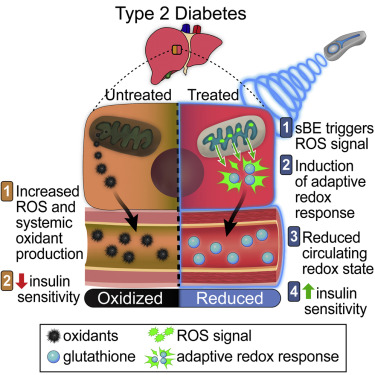
In a startling new paper, researchers at the University of Iowa medical school are reporting that static electric and magnetic fields (EMFs) can control diabetes in laboratory mice. “Exposure to EMFs for relatively short periods reduces blood sugar and normalizes the body’s response to insulin,” says Calvin Carter, one of the leaders of the research group. “The effects are long-lasting, opening the possibility of an EMF therapy that can be applied during sleep to manage diabetes all day.” Carter is a post-doc in the lab of Val Sheffield at the university’s Carver College of Medicine. Sheffield is a former Howard Hughes Medical Institute (HHMI) investigator. The new findings appear in Cell Metabolism, a highly regarded journal.
-
Scientists Say A Mind-Bending Rhythm In The Brain Can Act Like Ketamine

"There was a rhythm that appeared and it was an oscillation that appeared only when the patient was dissociating," says Dr. Karl Deisseroth, a psychiatrist and neuroscientist at Stanford University. Dissociation is a brain state in which a person feels separated from their own thoughts, feelings and body. It is common in people with some mental illnesses, or who have experienced a traumatic event. It can also be induced by certain drugs, including ketamine and PCP (angel dust). Deisseroth's lab made the discovery while studying the brains of mice that had been given ketamine or other drugs that cause dissociation. The team was using technology that allowed them to monitor the activity of cells throughout the brain.
Researchers pinpoint brain circuitry underlying dissociative experiences
Stanford scientists identified brain circuitry that plays a role in the mysterious experience called dissociation, in which people can feel disconnected from their bodies and reality.
-
Astrophysicists detect the strongest magnetic field in the universe
The Insight-HXMT team has performed extensive observations of the accreting X-ray pulsar GRO J1008-57 and has discovered a magnetic field of ~1 billion Tesla on the surface of the neutron star. This is so far the strongest magnetic field conclusively detected in the universe. This work, published in The Astrophysical Journal Letters ("Insight-HXMT Firm Detection of the Highest-energy Fundamental Cyclotron Resonance Scattering Feature in the Spectrum of GRO J1008-57"), was primarily conducted by scientists from the Institute of High Energy Physics (IHEP) of the Chinese Academy of Sciences and Eberhard Karls University of Tübingen, Germany.
-
Biophoton Communication: Can Cells Talk Using Light?
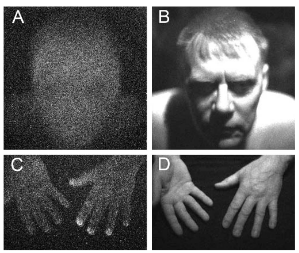
A growing body of evidence suggests that the molecular machinery of life emits and absorb photons. Now one biologist has evidence that this light is a new form of cellular communication. Nobody is quite sure how cells produce biophotons but the latest thinking is that various molecular processes can emit photons and that these are transported to the cell surface by energy carying excitons.
Human Ultraweak Photon Emission: Key Analytical Aspects, Results and Future Trends – A Review
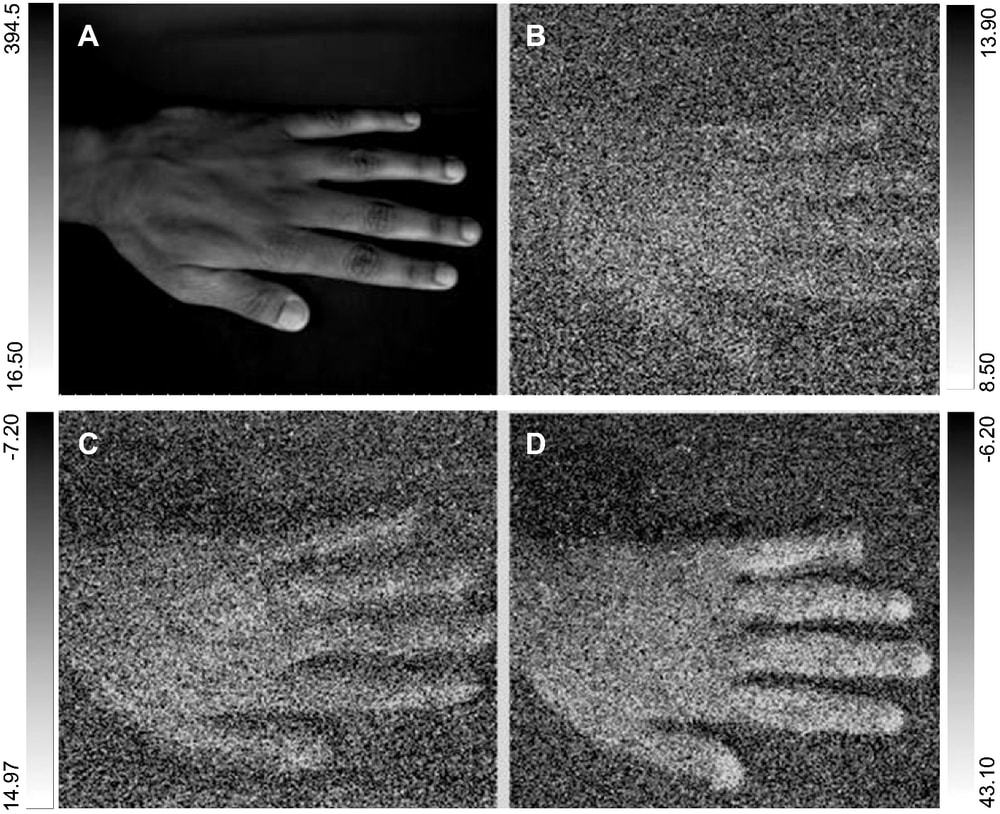
Living systems emit what is called ultraweak photon emission (UPE). This visually undetectable phenomenon has only been studied in humans for the last 30 years, finding that UPE is a complex process depending on multitude factors. Considering previous literature, this review discusses the current trends in the analysis of in vivo UPE from human beings.
Photos from "Anatomic characterization of human ultra-weak photon emissionwith a moveable photomultiplier and CCD imaging"
Bizarre Phenomenon of Light Flashing From Human Eyes Caught on Camera For First Time
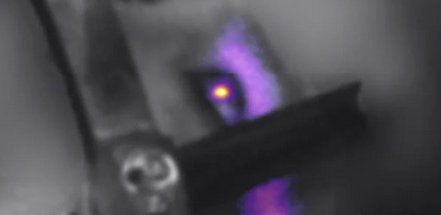
Some radiation therapy patients report seeing flashes of light in front of their eyes during treatment – even when their eyes are closed. Now this long-standing mystery may have been solved, thanks to this weird effect being caught on camera for the first time.
Studies by Alexander Gurwitsch in the 1920’ s with onion root cells revealed the phenomenon of mitogenetic radiation. Subsequent works by Popp, Van Wijk, Quickenden, Tillbury, and Trushin have demonstrated a link between Gurwitsch’s mitogenetic radiation and the biophoton, emissions of light correlated with biological processes. The present study seeks to expand upon these and other works to explore whether biophoton emissions of bacterial cultures is used as an information carrier of environmental stress. Bacterial cultures (Escherichia coli and Serratia marcescens) were incubated for 24 hr in 5 ml of nutrient broth to stationary phase and cell densi‐ties of ~107 cells/mL. Cultures of E. coli were placed upon a photomultiplier tube housed within a dark box. A second bacterial culture, either E. coli or S. marcescens, was placed in an identical dark box at a distance of 5 m and received injections of hydrogen peroxide. Spectral analyses revealed significant differences in peak fre‐quencies of 7.2, 10.1, and 24.9 Hz in the amplitude modulation of the emitted bio‐photon signal with respect to whether a peroxide injection occurred or not, and whether the species receiving the injection was E. coli or S. marcescens. These and the subsequent results of discriminant functions suggest that bacteria may release bio‐photons as a non‐local communication system in response to stress, and that these biophotons are species specific.
-
"Alles Leben schwingt in Resonanz miteinander. Die kosmische Strahlung ist sozusagen die Stimmgabel, die jede lebende Zelle, jedes Molekül, jedes Atom in Vibration bringt und hält..." - Winfried Otto Schumann
-
Prof. Kamal Sarabandi and ECE PhD student Navid Barani won a best paper award for their research on how biological cells may use electromagnetic signal transmission to communicate.| The project is funded by the DARPA RadioBio program.
-
Can electrostatic fields limit the take-off of tiny whiteflies (Bemisia tabaci)?

Electrostatic fields are abundant in the natural environment. We tested the idea that electrostatic attraction forces between tiny whiteflies (Bemisia tabaci) and the substrate could be substantial to the point of limiting their take-off. These insects are characterized by a very small body mass and powerful take-offs that are executed by jumping into the air with the wings closed. Wing opening and transition to active flight occur after the jump distanced the insect several body lengths away from the substrate. Using high-speed cameras, we captured the take-off behavior inside a uniform electrostatic field apparatus and used dead insects to calculate the electric charge that these tiny insects can carry. We show that electrostatic forces stimulate the opening of the insect's wings and can attract the whole insect toward the opposite charge. We also found that whiteflies can carry and hold an electrical charge of up to 3.5 pC. With such a charge the electrostatic field required to impede take-off is much stronger than those typically found in the natural environment. Nevertheless, our results demonstrate that artificial electrostatic fields can be effectively used to suppress flight of whiteflies, thus providing options for pest control applications in greenhouses.
-
The internet information platform EMF-Portal of the RWTH Aachen University summarizes systematically scientific research data on the effects of electromagnetic fields (EMF). All information is made available in both English and German. The core of the EMF-Portal is an extensive literature database with an inventory of 31,713 publications and 6,775 summaries of individual scientific studies on the effects of electromagnetic fields.
-
Quote by Luc Montagnier - The Nobel Prize in Physiology or Medicine 2008

-
The appearance of endogenous electromagnetic fields in biological systems is a widely debated issue in modern science. The electrophysiological fields have very tiny intensities and it can be inferred that they are rapidly decreasing with the distance from the generating structure, vanishing at very short distances. This makes very hard their detection using standard experimental methods. However, the existence of fast-moving charged particles in the macromolecules inside both intracellular and extracellular fluids may envisage the generation of localized electric currents as well as the presence of closed loops, which implies the existence of magnetic fields. Moreover, the whole set of oscillatory frequencies of various substances, enzymes, cell membranes, nucleic acids, bioelectrical phenomena generated by the electrical rhythm of coherent groups of cells, cell-to-cell communication among population of host bacteria, forms the increasingly complex hierarchies of electromagnetic signals of different frequencies which cover the living being and represent a fundamental information network controlling the cell metabolism. From this approach emerges the concept of electromagnetic homeostasis: that is, the capability of the human body to maintain the balance of highly complex electromagnetic interactions within, in spite of the external electromagnetic noisy environment. This concept may have an important impact on the actual definitions of heal and disease.
-
Quantum Teleportation on the Nanoscale Using a Chemical Reaction
“By generating entangled electrons through photochemistry that interact with a third electron in an organic radical, we can teleport information from one end of a molecule to another through electron transfer and ensure that it is moved without compromising, or changing, the information carried.” — Matthew D. Krzyaniak
-

DNA teleportation is a claim that DNA produces electromagnetic signals (EMS), measurable when highly diluted in water. This signal can allegedly be recorded, transmitted electronically, and re-emitted on another distant pure water sample, where DNA can replicate through polymerase chain reaction despite the absence of the original DNA in the new water sample.[1] The idea was introduced by the Nobel laureate Luc Montagnier in 2009. It is similar in principle to water memory, a concept popularised by Jacques Benveniste in 1988.
-
Are the Earth’s magnetic poles about to swap places? Strange anomaly gives reassuring clue
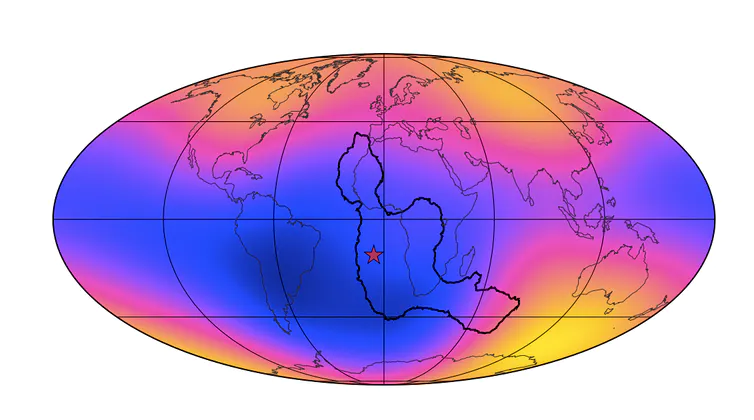
The geomagnetic field at Earth’s surface with the South Atlantic Anomaly outlined in black and St Helena marked with a star. Deep inside the Earth, liquid iron is flowing and generating the Earth’s magnetic field, which protects our atmosphere and satellites against harmful radiation from the Sun. This field changes over time, and also behaves differently in different parts of the world. The field can even change polarity completely, with the magnetic north and south poles switching places. This is called a reversal and last happened 780,000 years ago.
Now our new study, published in the Proceedings of the National Academy of Sciences, has uncovered how long the field in the South Atlantic has been acting up – and sheds light on whether it is something to worry about.
-
Neuroscientists Discover Each Of Us Has A Distinct Brain Signature

Neuroscientists from Yale report that they can identify each of us by our unique brain signature much like a neural thumbprint. They have discovered that you and I display our own distinct brain signature when we’re processing information similar to our unique fingerprints that distinguish us from everyone else on the planet.
-
Dogs May Use Earth's Magnetic Field to Navigate

Dogs are renowned for their world-class noses, but a new study suggests they may have an additional — albeit hidden — sensory talent: a magnetic compass. The sense appears to allow them to use Earth's magnetic field to calculate shortcuts in unfamiliar terrain.
-
Out of Nowhere, a Global Magnetic Anomaly
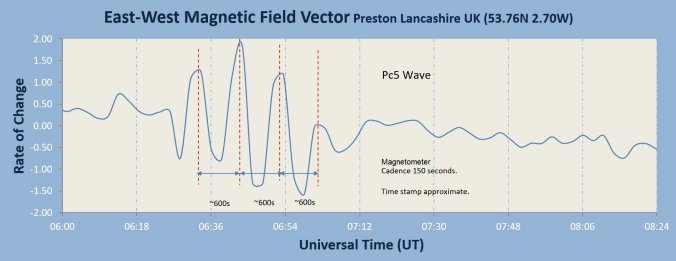
Earth's quiet magnetic field was unexpectedly disturbed by a wave of magnetism that rippled around the globe for more than 30 minutes. There was no solar storm or geomagnetic storm to cause the disturbance.
-
Secret History of Silicon Valley
-
Swarm probes weakening of Earth’s magnetic field (ESA)
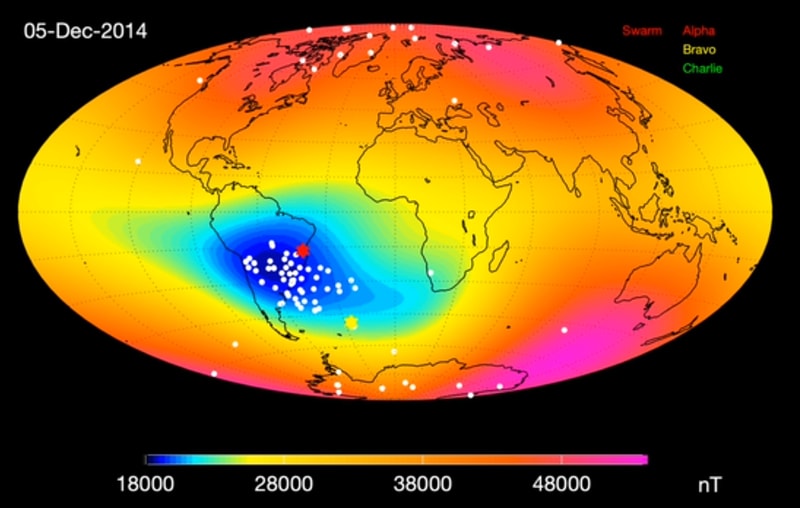
In an area stretching from Africa to South America, Earth’s magnetic field is gradually weakening. This strange behaviour has geophysicists puzzled and is causing technical disturbances in satellites orbiting Earth. Scientists are using data from ESA’s Swarm constellation to improve our understanding of this area known as the ‘South Atlantic Anomaly.’