tag > Space
-
The sun fires off its biggest solar flare in more than 3 years (space.com)
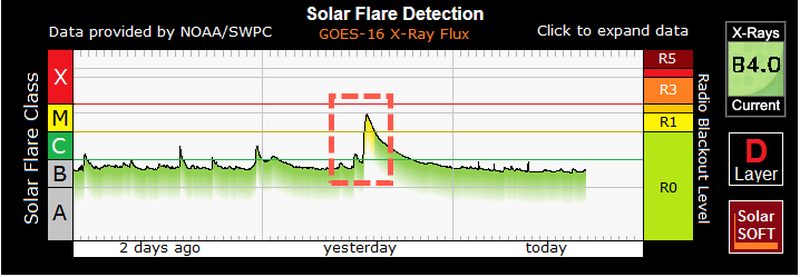
image from spaceweather.com -
Physicists could do the 'impossible': Create and destroy magnetic fields from afar

A new study circumvents a 178-year-old theory. Scientists have figured out a way to create and cancel magnetic fields from afar. The method involves running electric current through a special arrangement of wires to create a magnetic field that looks as if it came from another source. "We create the illusion of having this source at a distance," Mach-Batlle said. The researchers published their findings Oct. 23 in the journal Physical Review Letters.
-
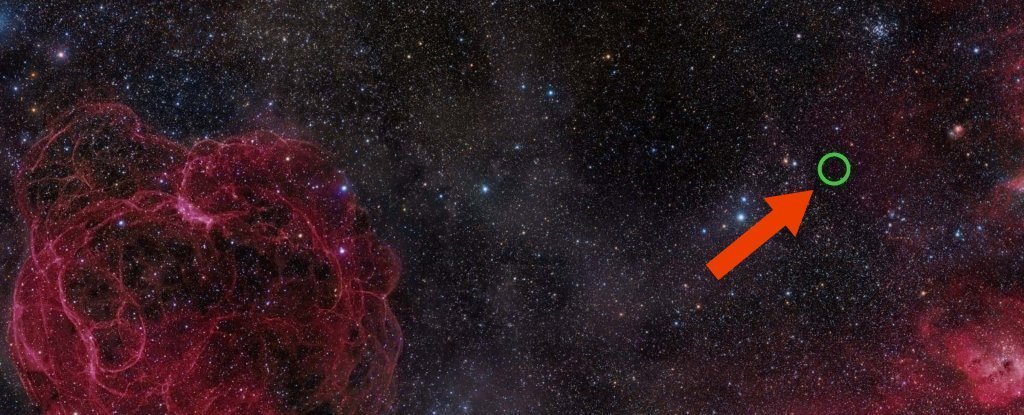
Amateur astronomer Alberto Caballero finds possible source of Wow! signal
Amateur astronomer Alberto Caballero, one of the founders of The Exoplanets Channel, has found a small amount of evidence for a source of the notorious Wow! signal. In his paper on arXiv, Caballero describes searching the Gaia database for possible sun-like stars that might host an exoplanet capable of supporting intelligent life.
-
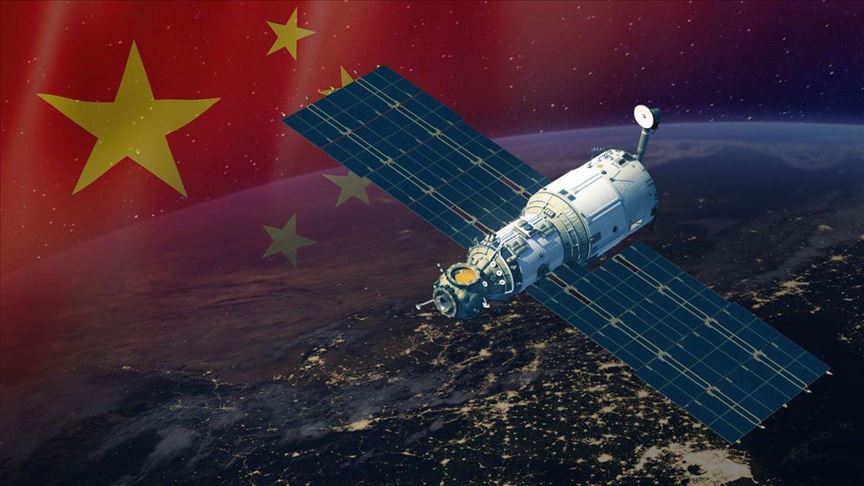
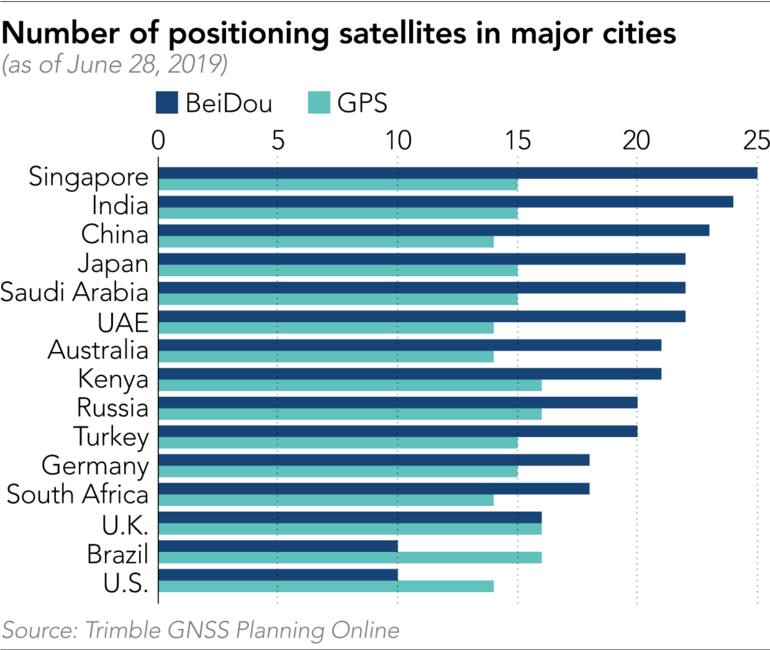
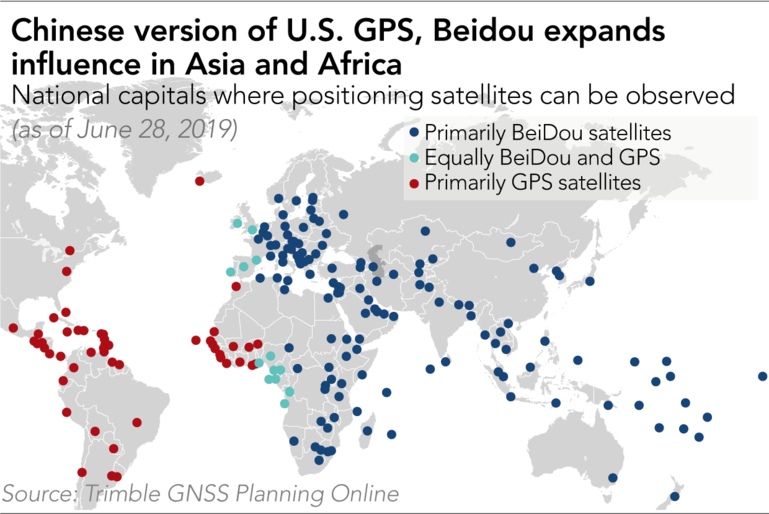
In 165 countries, China's Beidou eclipses American GPS (Nikkei)
Capital cities for 165 of 195 major countries are observed more frequently by Beidou satellites than by GPS.
-
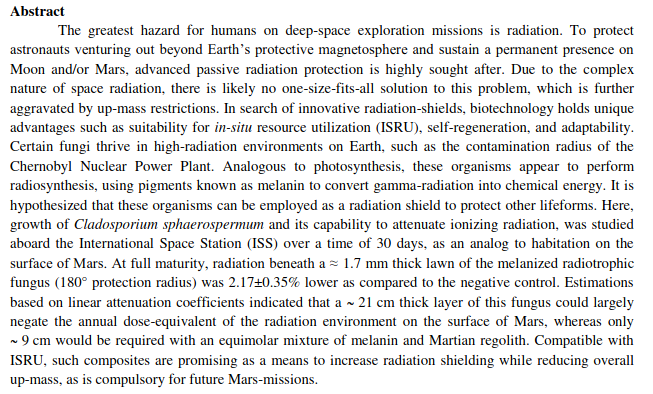
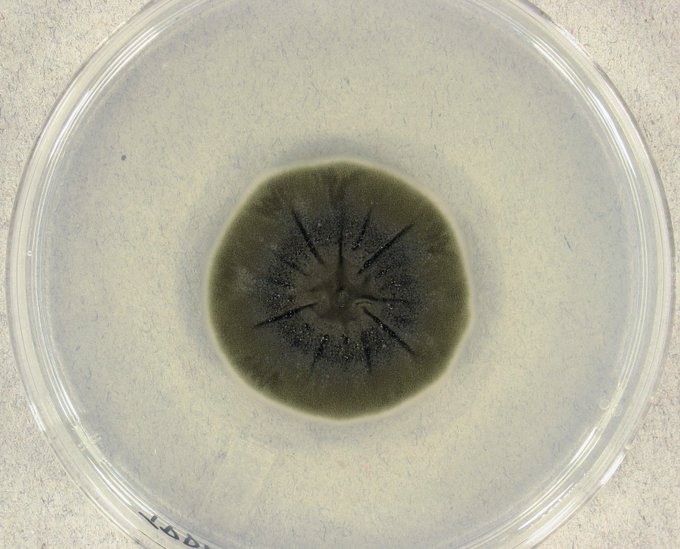
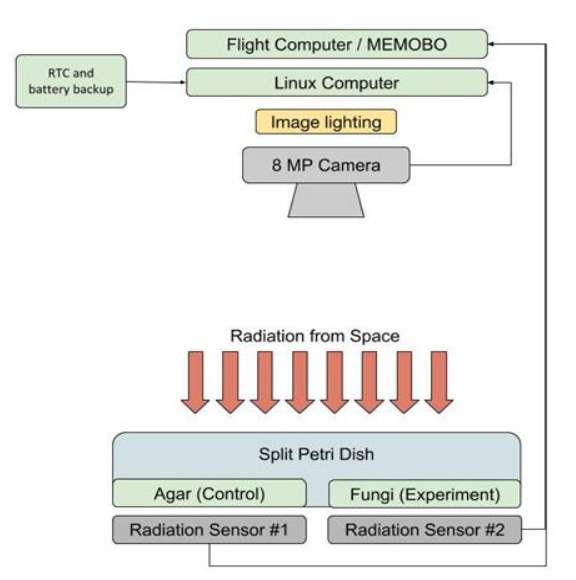
Self-replicating fungi converts gamma radiation into chemical energy.
"been found to thrive in ... Chernobyl Nuclear Power Plant" and " been found to populate the exteriors of spacecraft in low Earth orbit (LEO)".
-
Helicopter pilot finds 'strange' monolith in remote part of Utah (The Guardian)


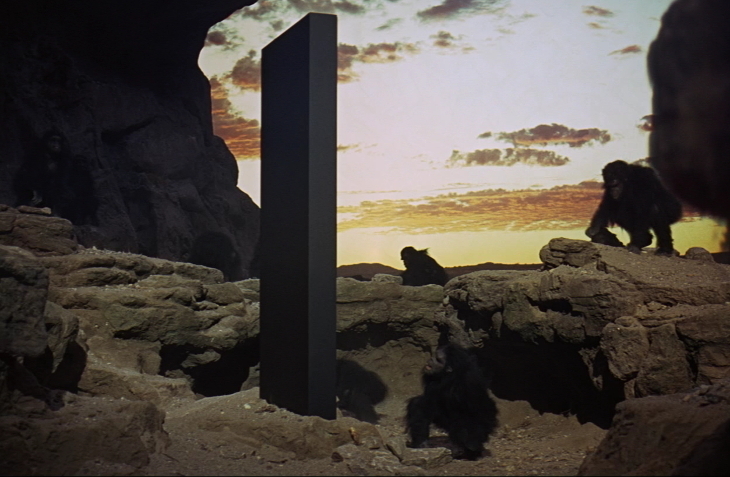
Fan's of the movie 2001: Space Odyssey? -
Does the human brain resemble the Universe?
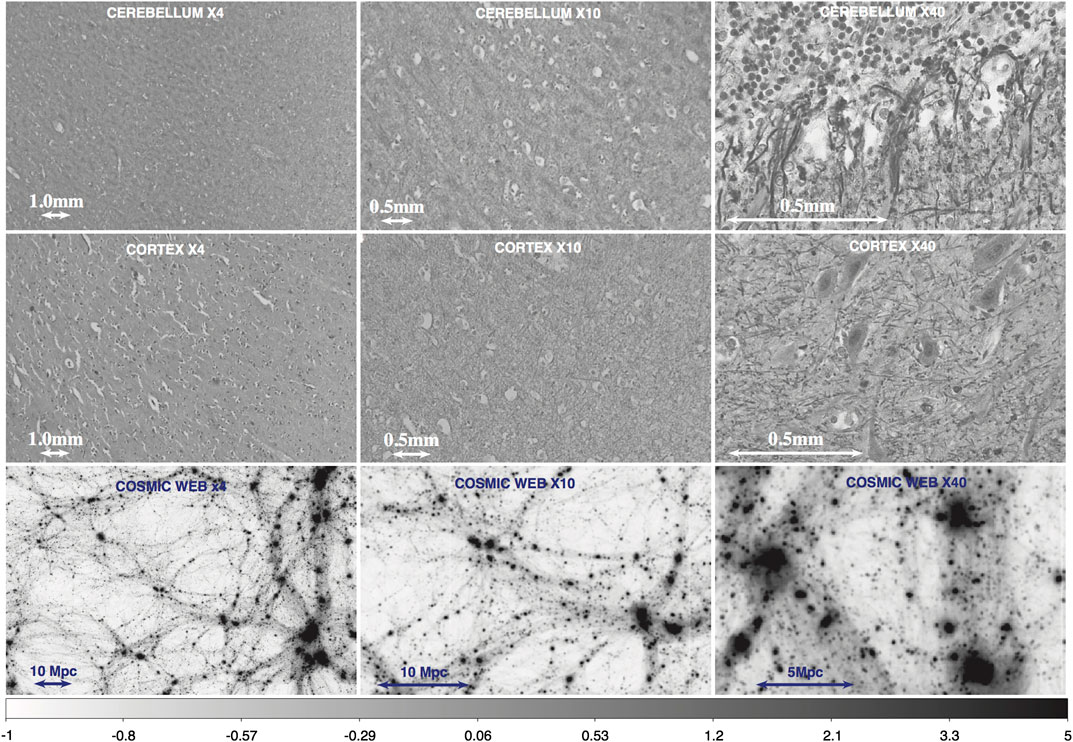
An astrophysicist of the University of Bologna and a neurosurgeon of the University of Verona compared the network of neuronal cells in the human brain with the cosmic network of galaxies… and surprising similarities emerged. The study was published in Frontiers of Physics: "The quantitative comparison between the neuronal network and the cosmic web”.
-
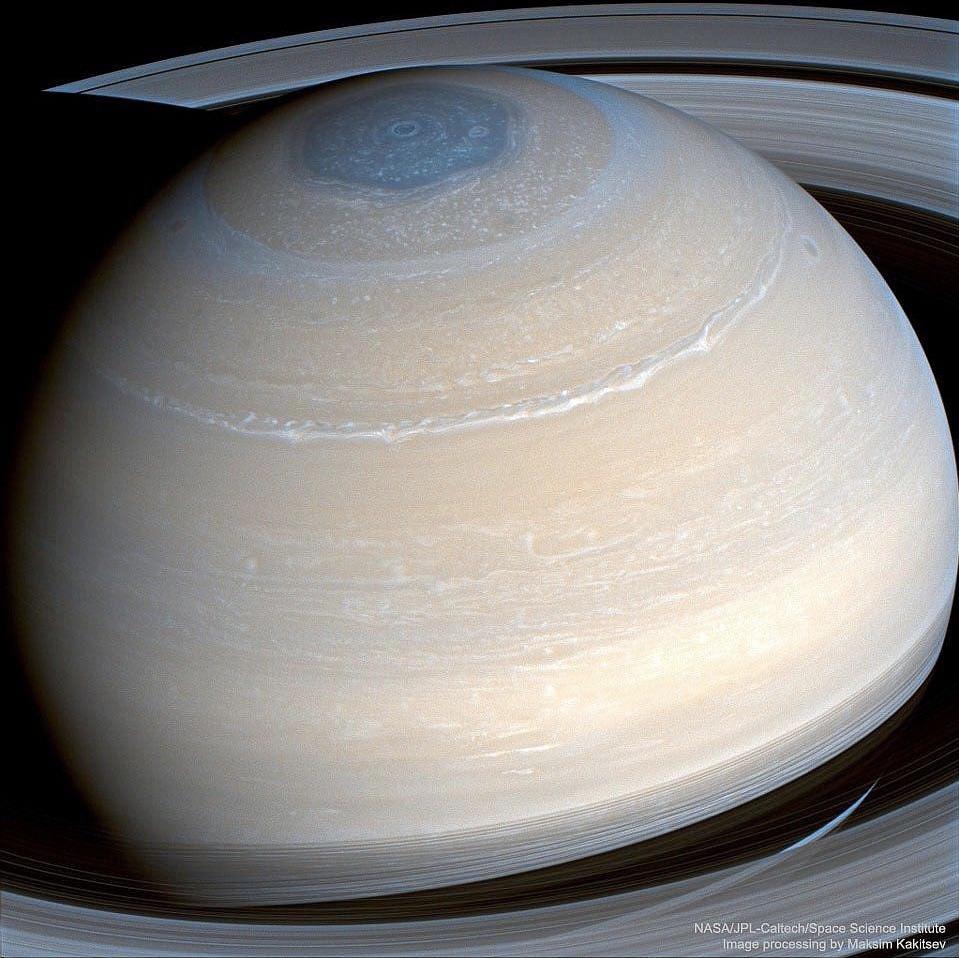
Scientists Discover New Molecule, Possible Basis For Life, on Saturn's Moon Titan (cnn)
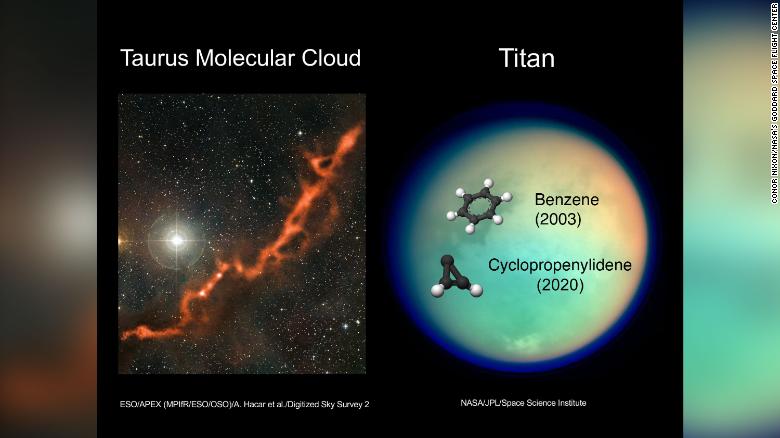
Saturn's largest moon, Titan, is the only moon in our solar system that has a thick atmosphere. It's four times denser than Earth's. And now, scientists have discovered a molecule in it that has never been found in any other atmosphere. The particle is called cyclopropenylidene, or C3H2, and it's made of carbon and hydrogen. This simple carbon-based molecule could be a precursor that contributes to chemical reactions that may create complex compounds. And those compounds could be the basis for potential life on Titan. The molecule was first noticed as researchers used the Atacama Large Millimeter/submillimeter Array of telescopes in Chile. This radio telescope observatory captures a range of light signatures, which revealed the molecule among the unique chemistry of Titan's atmosphere. The study published earlier this month in the Astronomical Journal...
-
NASA’s SOFIA Discovers Water on Sunlit Surface of Moon (NASA)
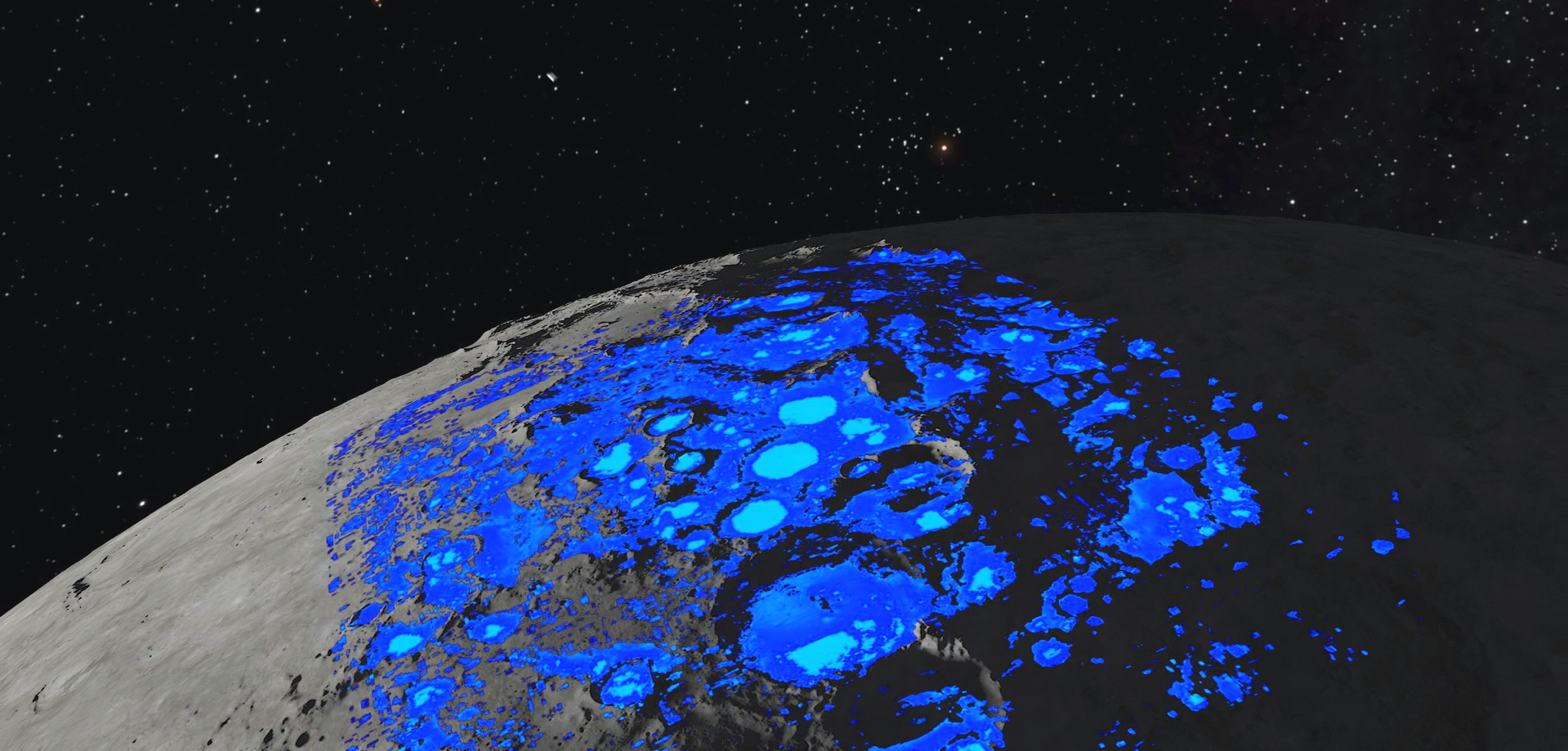
NASA’s Stratospheric Observatory for Infrared Astronomy (SOFIA) has confirmed, for the first time, water on the sunlit surface of the Moon. This discovery indicates that water may be distributed across the lunar surface, and not limited to cold, shadowed places.
Water on the moon should be more accessible than we thought (MIT)
If you don’t already know: Yes, there is water on the moon. NASA suggests there’s as much as 600 million metric tons of water ice there, which could someday help lunar colonists survive. It could even be turned into an affordable form of rocket fuel (you just have to split water into oxygen and hydrogen, and presto—you have propulsion for spaceflight).
-
Water on Mars: discovery of three buried lakes intrigues scientists
Researchers say they have detected a group of lakes hidden under the red planet’s icy surface.
-
NASA/NOAA Declare Beginning Of Solar Cycle 25
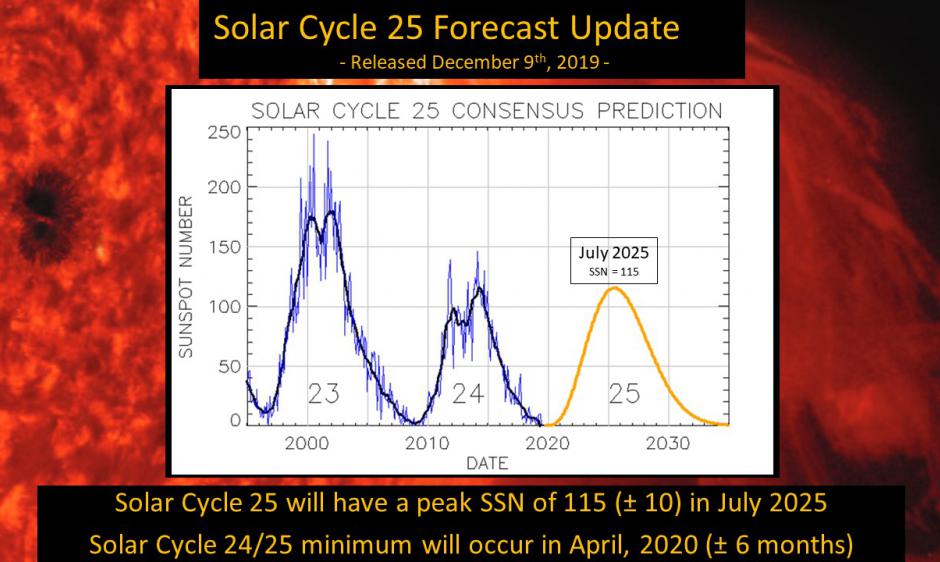
The solar minimum between Solar Cycle 24 and 25 - the period when the sun is least active - happened in December 2019, when the 13-month smoothed sunspot number fell to 1.8, according to the Solar Cycle 25 Prediction Panel, co-chaired by NOAA and NASA. We are now in Solar Cycle 25 with peak sunspot activity expected in 2025, the panel said. Solar Cycle 24 was average in length, at 11 years, and had the 4th-smallest intensity since regular record keeping began with Solar Cycle 1 in 1755. It was also the weakest cycle in 100 years. Solar maximum occurred in April 2014 with sunspots peaking at 114 for the solar cycle, well below average, which is 179.
-
Astrophysicists detect the strongest magnetic field in the universe
The Insight-HXMT team has performed extensive observations of the accreting X-ray pulsar GRO J1008-57 and has discovered a magnetic field of ~1 billion Tesla on the surface of the neutron star. This is so far the strongest magnetic field conclusively detected in the universe. This work, published in The Astrophysical Journal Letters ("Insight-HXMT Firm Detection of the Highest-energy Fundamental Cyclotron Resonance Scattering Feature in the Spectrum of GRO J1008-57"), was primarily conducted by scientists from the Institute of High Energy Physics (IHEP) of the Chinese Academy of Sciences and Eberhard Karls University of Tübingen, Germany.