tag > Space
-
"Alles Leben schwingt in Resonanz miteinander. Die kosmische Strahlung ist sozusagen die Stimmgabel, die jede lebende Zelle, jedes Molekül, jedes Atom in Vibration bringt und hält..." - Winfried Otto Schumann
-
Amazon's Project Kuiper gets FCC approval; half of its 3,236 satellites to go up by 2026
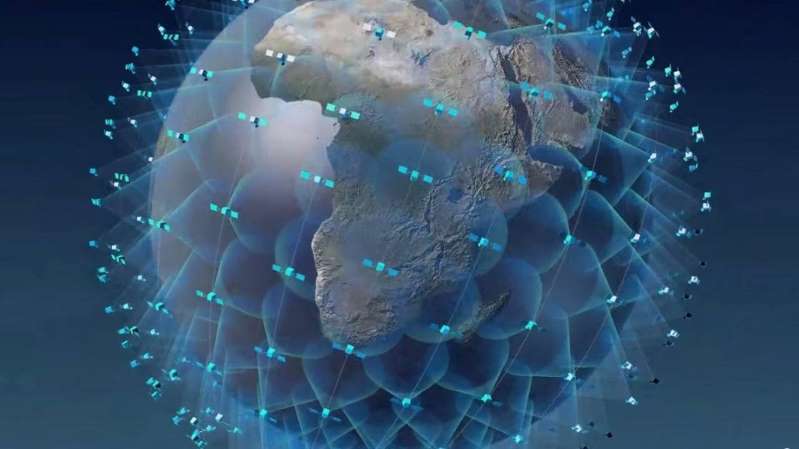
The US Federal Communications Commission (FCC) has given Amazon unanimous approval to launch and operate a constellation of 3,236 internet-providing satellites as part of its 'Project Kuiper' – a codename that is said to be changed once the project begins commercial operations.
-
Dwarf planet Ceres is an 'ocean world' with sea water beneath surface, mission finds
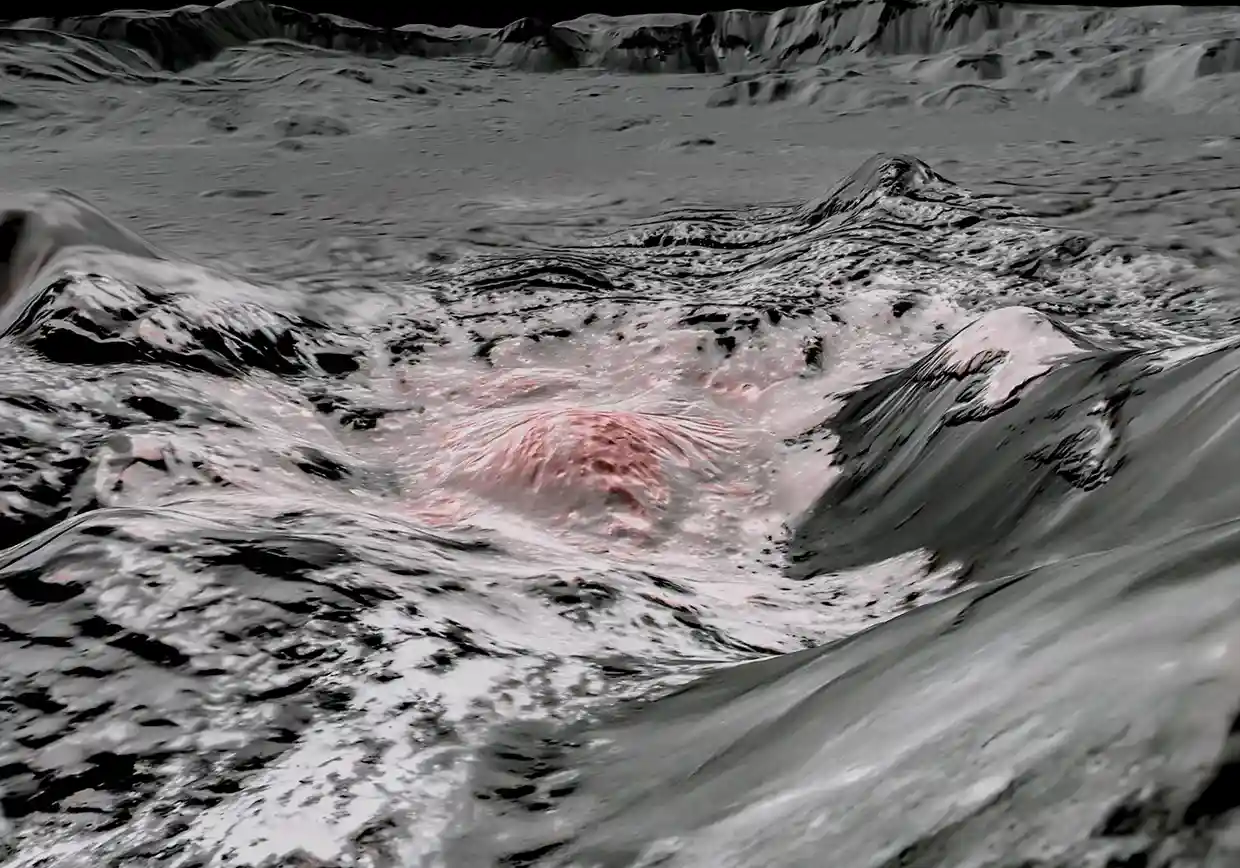
Using infrared imaging, one team discovered the presence of the compound hydrohalite – a material common in sea ice but which until now had never been observed beyond Earth. Maria Cristina De Sanctis, from Rome’s Istituto Nazionale di Astrofisica said hydrohalite was a clear sign Ceres used to have sea water. “We can now say that Ceres is a sort of ocean world, as are some of Saturn’s and Jupiter’s moons,” she told AFP. The team said the salt deposits looked like they had built up within the last 2 million years – the blink of an eye in space time. This suggests that the brine may still be ascending from the planet’s interior, something De Sanctis said could have profound implications in future studies. “The material found on Ceres is extremely important in terms of astrobiology,” she said. “We know that these minerals are all essential for the emergence of life.”
-
No Longer in Shadows, Pentagon’s U.F.O. Unit Will Make Some Findings Public (NYTimes)
For over a decade, the program, now tucked inside the Office of Naval Intelligence, has discussed mysterious events in classified briefings.
Pentagon Has ‘Off-World Vehicles Not Made on This Earth'
The Pentagon's on-and-off-again, once-covert UFO program is decidedly back on—and will soon reveal some of its findings to the public. An astrophysicist who consulted on the UFO program confirms the government possesses materials from “off-world vehicles not made on this earth.”
-
Venus, long-thought dormant, shows signs of volcanic activity
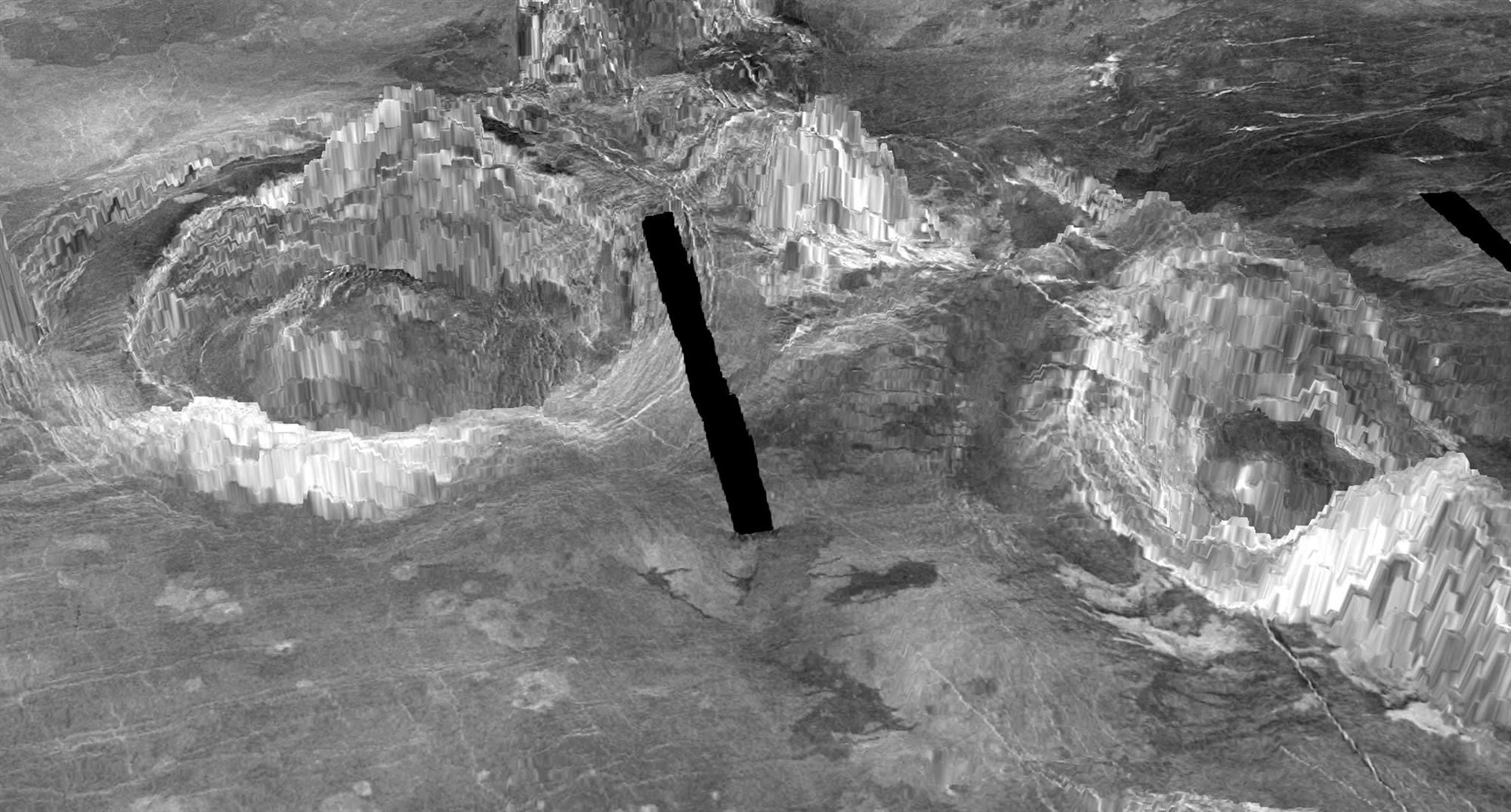
Two coronae, ring-like structures formed when hot material from deep inside the planet rises through the mantle and erupts through the crust, are observed on the surface of Venus in a 3-D rendition Scientists have identified 37 volcanic structures on Venus that appear to be recently active — and probably still are today — painting the picture of a geologically dynamic planet and not a dormant world as long thought. The research focused on ring-like structures called coronae, caused by an upwelling of hot rock from deep within the planet’s interior, and provided compelling evidence of widespread recent tectonic and magma activity on Venus’s surface, researchers said on Monday. The research has been published in the journal Nature Geoscience.
-
Are the Earth’s magnetic poles about to swap places? Strange anomaly gives reassuring clue
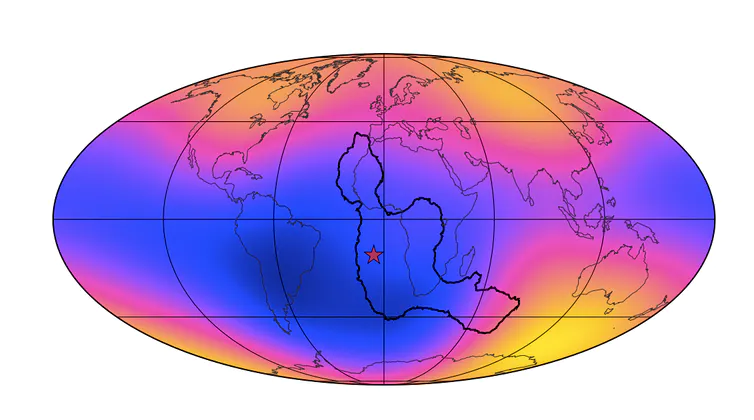
The geomagnetic field at Earth’s surface with the South Atlantic Anomaly outlined in black and St Helena marked with a star. Deep inside the Earth, liquid iron is flowing and generating the Earth’s magnetic field, which protects our atmosphere and satellites against harmful radiation from the Sun. This field changes over time, and also behaves differently in different parts of the world. The field can even change polarity completely, with the magnetic north and south poles switching places. This is called a reversal and last happened 780,000 years ago.
Now our new study, published in the Proceedings of the National Academy of Sciences, has uncovered how long the field in the South Atlantic has been acting up – and sheds light on whether it is something to worry about.
-
UAE successfully launches Hope probe, Arab world's first mission to Mars
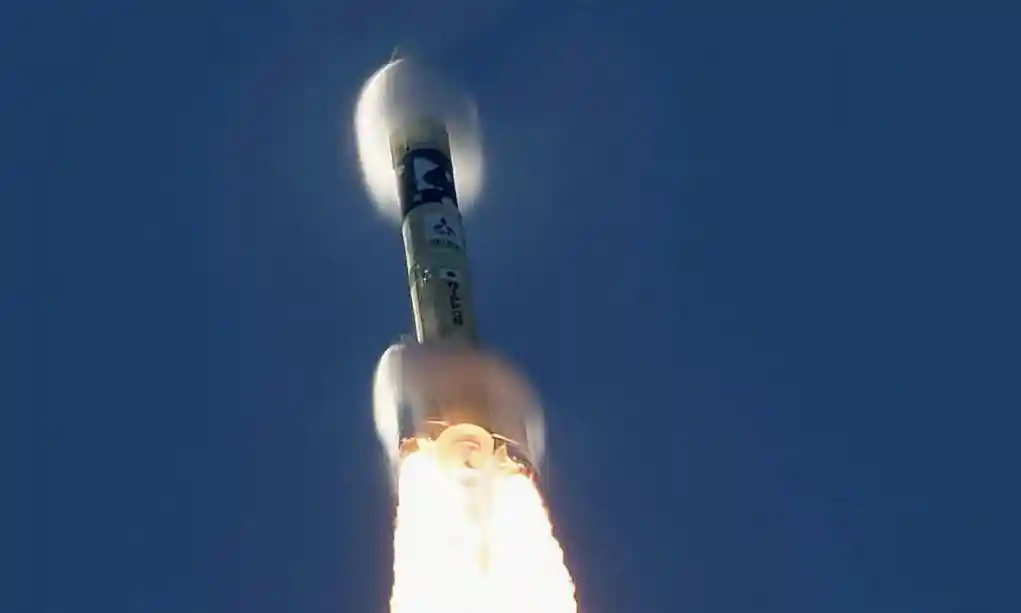
A rocket carrying the unmanned probe, known as Al-Amal in Arabic, joins China and US in race to red planet. A live feed of the launch showed the rocket carrying the probe lifting off from the Tanegashima Space Centre in southern Japan at 6.58am (9.58pm GMT).
-
Out of Nowhere, a Global Magnetic Anomaly
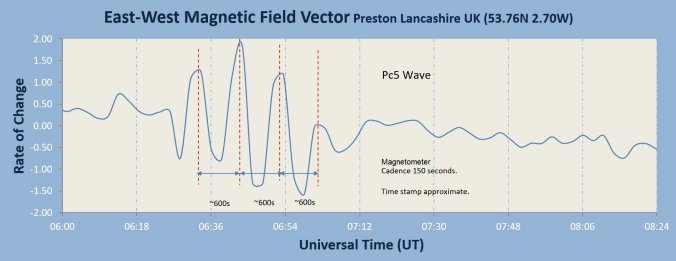
Earth's quiet magnetic field was unexpectedly disturbed by a wave of magnetism that rippled around the globe for more than 30 minutes. There was no solar storm or geomagnetic storm to cause the disturbance.
-
Astronomers detect regular rhythm of radio waves, with origins unknown (MIT)
A team of astronomers, including researchers at MIT, has picked up on a curious, repeating rhythm of fast radio bursts emanating from an unknown source outside our galaxy, 500 million light years away.
-
There Are At Least 36 Intelligent Alien Civilizations In Our Galaxy, Say Scientists
Published today in The Astrophysical Journal, the new paper examines the likely number of Communicating Extra-Terrestrial Intelligent (CETI) civilizations in the Milky Way. It assumes that intelligent life comes to occur on other planets much as it has done on our own planet. A key assumption is that it takes around five billion years for intelligent life to form on other planets, as it does on Earth. Another is that a technological civilization will last at least 100 years—as ours has, thus far. After all, it took 4.5 billion years of evolution before a technological civilization arose on Earth, and was capable of communicating.
-
Tunguska Meteor of 1908 Might Have Returned To Space (space.com)

A new explanation for a massive blast over a remote Siberian forest in 1908 is even stranger than the mysterious incident itself. Known as the Tunguska event, the blast flattened more than 80 million trees in seconds, over an area spanning nearly 2,000 square kilometers — but left no crater. A meteor that exploded before hitting the ground was thought by many to be the culprit. However, a comet or asteroid would likely have left behind rocky fragments after blowing up, and no "smoking gun" remnants of a cosmic visitor have ever been found. Now, a team of researchers has proposed a solution to this long-standing puzzle: A large iron meteor hurtled toward Earth and came just close enough to generate a tremendous shock wave. But the meteor then curved away from our planet without breaking up, its mass and momentum carrying it onward in its journey through space.
-
Swarm probes weakening of Earth’s magnetic field (ESA)
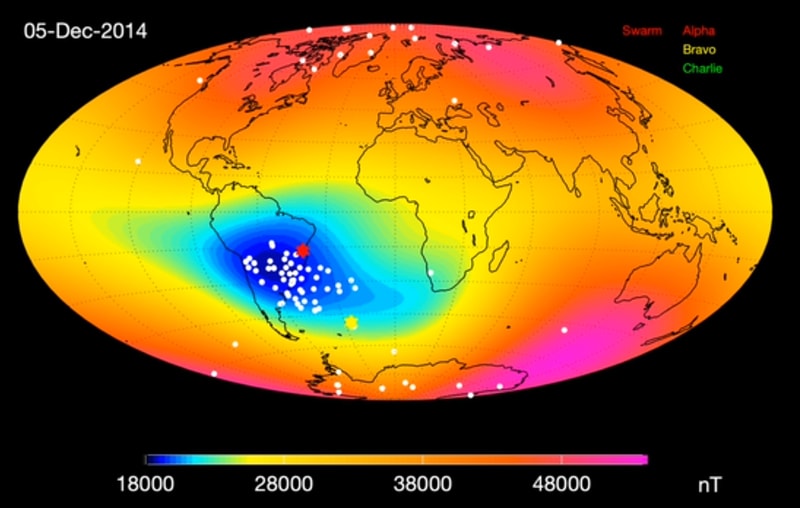
In an area stretching from Africa to South America, Earth’s magnetic field is gradually weakening. This strange behaviour has geophysicists puzzled and is causing technical disturbances in satellites orbiting Earth. Scientists are using data from ESA’s Swarm constellation to improve our understanding of this area known as the ‘South Atlantic Anomaly.’
-
Form Energy claims aqueous air battery provides 150 hours of storage
The holy grail of energy storage has always been low-cost and long-duration. Form Energy intends on deploying a 1 MW/150 MWh system with a Minnesota utility before 2023, an unprecedented energy storage duration if successful. The Breakthrough Energy Ventures net-zero fund chaired by Bill Gates is among the funders behind Form Energy.
-
Scientists Create a Prototype 'Air Plasma' Engine That Works Without Fossil Fuels
A prototype jet engine can propel itself without using any fossil fuels, potentially paving the way for carbon-neutral air travel. The device compresses air and ionizes it with microwaves, generating plasma that thrusts it forward, according to research published Tuesday in the journal AIP Advances. That means planes may someday fly using just electricity and the air around them as fuel.
-
Famous Martian Meteorite Contains 4-Billion-Year-Old Organic Compounds (newsweek)
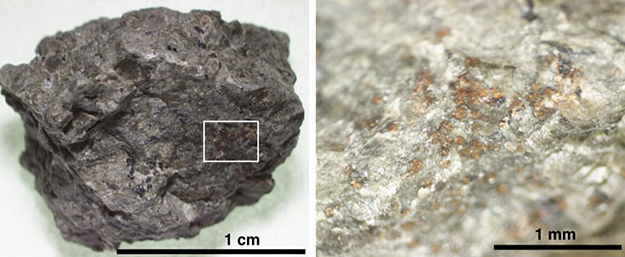
Scientists have identified 4-billion-year-old nitrogen-containing organic molecules in a Martian meteorite, a discovery that may shed light on whether or not the Red Planet once hosted life. According to a study published in the journal Nature Communications, the researchers found the organic molecules, those that contain carbon atoms, in a famous Martian meteorite dubbed Allan Hills 84001, which was uncovered in Antarctica in 1984. This object once formed part of the Red Planet's surface, but it was blasted into space by a meteor impact around 15 million years ago before eventually falling to Earth.