tag > History
-
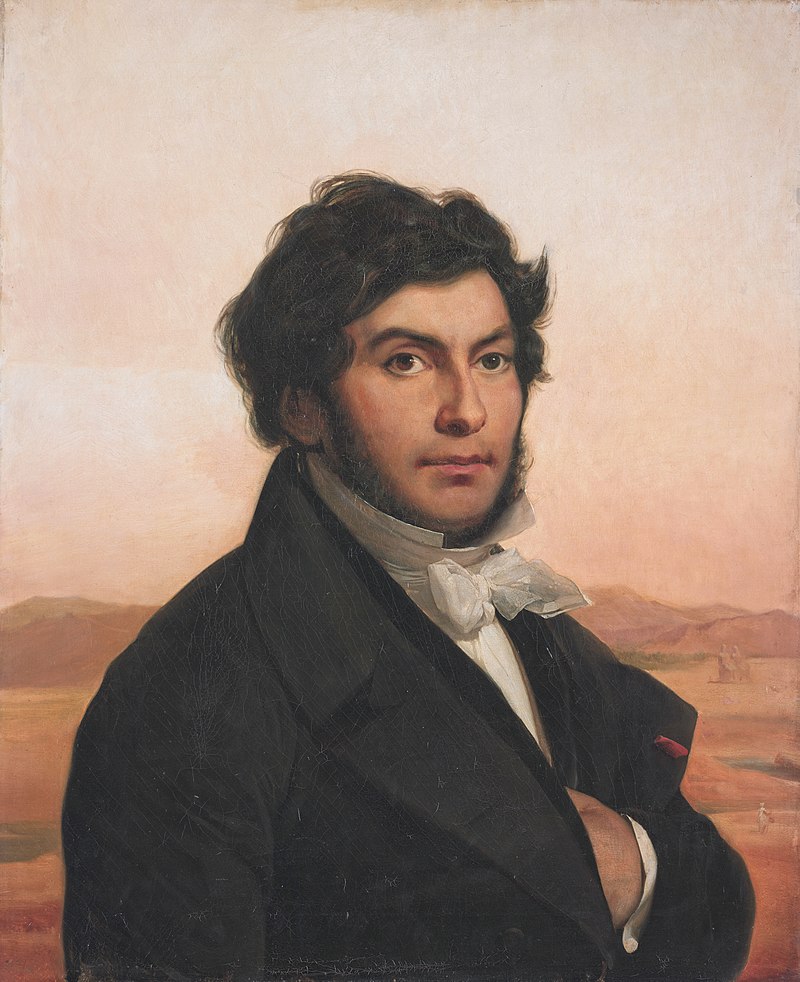
Portrait of Kaibara Ekken (貝原益軒の肖像) (1630-1714)
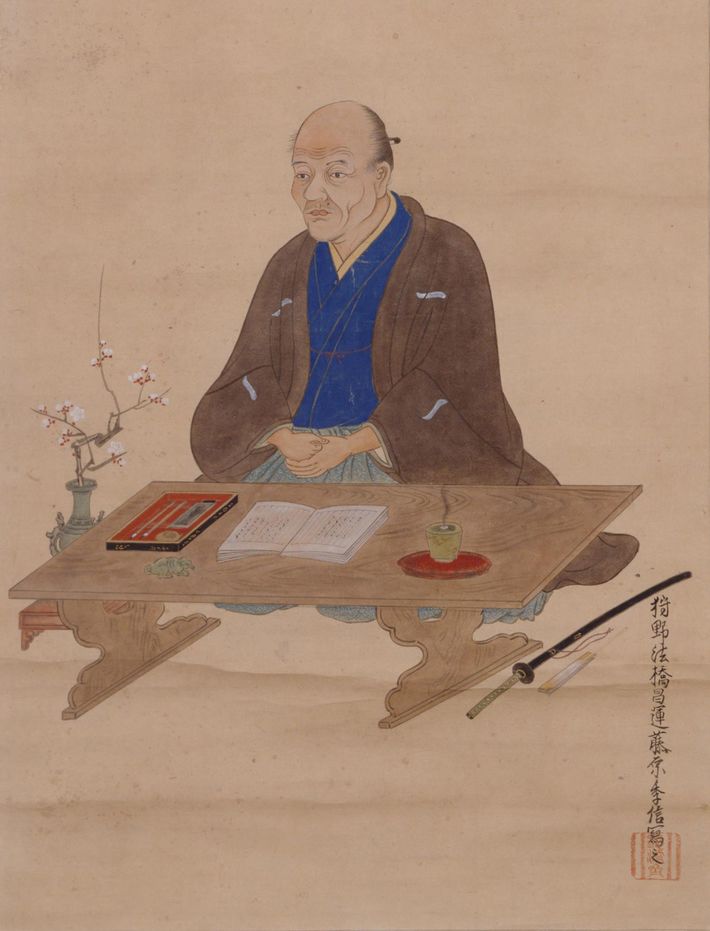
Ekiken Kaibara (Ekken Kaibara) was an Edo Era philosopher whom Philipp Franz von Siebold, the German physician and botanist who spent time in Nagasaki, once called “the Aristotle of Japan.” He authored numerous works, including Yōjōkun (The Book of Life-Nourishing Principles), which is still read even today. Kaibara was born and raised in Chikuzen Province (now Fukuoka Prefecture). In addition to being a scholar, he spent many years in the service of the Kuroda Clan.
When he was young, he loved to read, and he was smart enough to be considered a child prodigy. He did not spend all of his time absorbed in books, however. He was also known to go out into the field to see things for himself. Back then, most scholarly books were written in difficult Chinese characters, but Kaibara wrote in simple Japanese that even commoners could read, which led to his works becoming widely read.
Kaibara’s most famous work, Yōjōkun, was a handbook for healthy living that he wrote when he was 83 years old. In it, he wrote that one needed to be emotionally healthy, not just physically healthy, to lead a long and fulfilling life. When he was younger, Kaibara also studied medicine. Another one of his famous works was Yamato Honzō (Medicinal Herbs of Japan), which listed and classified Japan’s medicinal herbs, animals, minerals and agricultural goods. It was the first book dealing with medicinal plants ever written in Japan.
"Doing this will definitely shorten your life" - the 300-year-old classic declares, "But we still do it anyway" - the real reason
Summary text from an book by Kaibara Ekiken
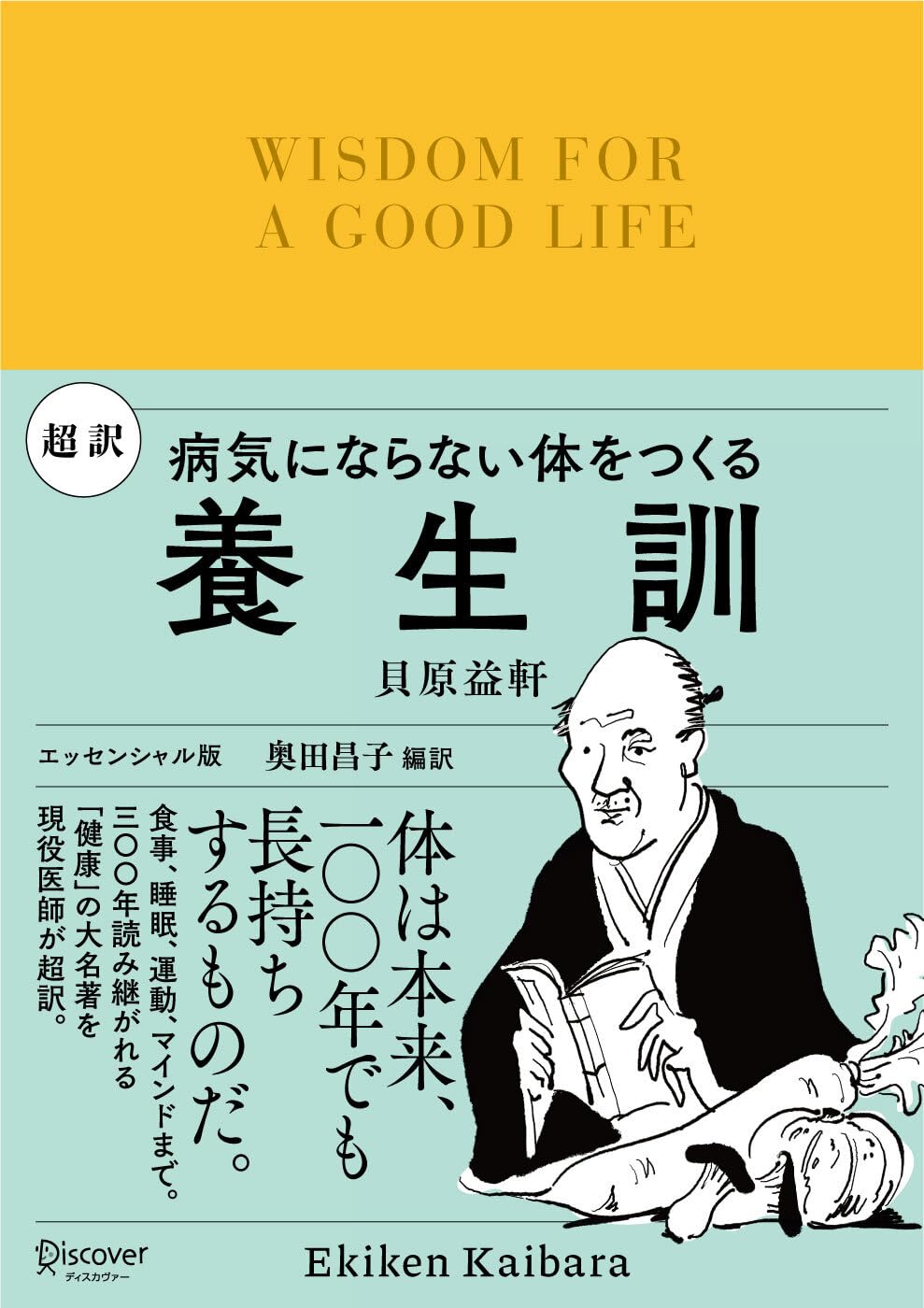
The author of the classic health book " Yōjōkun " published in 1713 was the physician Kaibara Ekiken. The book begins with the words "health is the greatest happiness in life," and explains "how people should live in order to be happy." We will deliver the essence of the book from the latest edition, edited and translated by the physician Masako Okuda.
*This article is a re-edited version of an excerpt from Kaibara Ekiken's " Abridged Translation of Health Instructions for Building a Body That Doesn't Get Sick" (edited and translated by Okuda Masako, Discover 21).
To gain wisdom you must live long
When we are young, we are easily impulsive and lack wisdom. We are ignorant of history and unfamiliar with social change. We often make mistakes that we later regret, and we don't understand the logic of things or the joys of life.
If you live a long life, you will make new discoveries every day and be able to do things you couldn't do before. Only then can you deepen your studies and knowledge. That is why you must take care of yourself and live a long life at all costs. If you make a firm resolution to master the art of health care, you can extend your lifespan.
(Volume 1, General Overview)
A long and healthy life is easier than making money or getting ahead in life.
Many people dream of making money or getting ahead in life, and so they flatter others or rely on gods and Buddhas. On the other hand, very few people make an effort to take care of themselves in order to live a long and healthy life. Making money and getting ahead in life involve the help of others, so they are not something you can achieve on your own, and no matter how hard you try, it usually doesn't work. On the other hand, good health and prosperity are things that concern your own body, so they are easy to achieve if you put your mind to it.
It is foolish to pursue what is difficult to obtain and to neglect what is easy to obtain. In fact, even if you gain status and fame, it is of no use if you are prone to illness and have a short life.
(Volume 1, General Overview)
Greed will lead you astray from the path to longevity
The body is naturally capable of lasting for 100 years. It would be such a waste to destroy it by not giving in to our desires for even a moment.
If you want to live a long and peaceful life, you must not be swayed by your desires. Whether you give in to your desires or resist them is the difference between a long life and a short one.
(Volume 2, General Overview, Part 2)
Be a diligent ant rather than a lazy grasshopper
It is best to start taking care of yourself when you are young and have the strength. If a person who relied on unhealthy living in their youth starts taking care of themselves when they are older, it is like a rich person who has been living a life of luxury going bankrupt and panicking to become frugal. It is still better to take care of yourself when you are older, but the effect is less.
(Volume 2, General Overview, Part 2)
Don't lie to yourself
The reason why we can't stop doing something even though we know it's wrong is because we don't really believe it's wrong. In other words, our feelings are lying. We must not lie to ourselves.
(Volume 2, General Overview, Part 2)
It's not because I'm weak-hearted that I can't stand it
There are people who say, "Everyone knows that we shouldn't eat too much. But it's hard to resist, so we just eat." I don't think that's true. People like that don't really understand health care.
If you fall into a pond, you will drown. If you step into a fire, you will be burned to death. If you drink poison, you will be poisoned to death. Everyone knows this, so no one would voluntarily jump into water and die. People deliberately do dangerous things because they don't know they are dangerous. It is foolish. If you have a good understanding of health care, you would not indulge in whatever you please.
(Volume 2, General Overview, Part 2)
The body is corroded from the inside and out
The causes of illness exist both inside and outside the body. Causes that arise within the body include the seven desires for food, sex, sleep, etc., and the seven emotions, including joy, anger, sadness, and pleasure . * External influences on the body are caused by the living environment, such as wind, cold, heat, and humidity.
Control excessive desires and emotions and avoid bad environments, and you will stay healthy.
(Volume 1, General Overview)
Too much nutrition weakens the body
People take in nutrients from outside the body through food, but if there is an excess of nutrients, the life force within the body is lost. Think of it like a plant. If you give too much fertilizer, moisture will seep out of the roots and the roots will wilt.
If you water a plant too much, its roots will rot. The same is true for people. If you don't eat too much, your body's natural vitality will be nourished, and you will live longer and live out your natural lifespan.
(Volume 1, General Overview)
Pleasure is the seed of pain, pain is the seed of pleasure
Indulging in fine food and sexual indulgence may make you feel good for a while, but it will damage your body and cause you long-term suffering. If you don't like this, you should refrain from doing things that give you quick enjoyment. It's a matter of taking it easy first and suffering later, or suffering first and taking it easy later. The same goes for health care. If you suppress your desires and emotions, you will surely be happy later.
(Volume 2, General Overview, Part 2)
Anger and desire are the greatest enemies of health care
Of all the emotions, the ones that are most detrimental to one's health are anger and desire. Anger burns the heart, and desire drowns the heart. Both rob us of our energy and strength. We need to carefully control them.
(Volume 2, General Overview, Part 2)
Keep your mind quiet and your body moving
It is good to keep the mind quiet and the body moving. Sitting all day makes you ill. Standing or walking for long periods is also bad, but lying down or sitting for long periods is the worst.
(Volume 5, The Five Senses)
Health care starts with a healthy stomach
People digest the food they eat in their stomach and intestines, sending nutrients to the whole body to sustain life. It's similar to how plants grow by absorbing nutrients from the soil. Therefore, if you want to take care of your health, it's essential to first get your stomach and intestines in good condition.
(Volume 3, Food and Drink)
Food is a double-edged sword
Food is the most important thing in life, and we cannot survive even half a day without food and drink. However, at the same time, our desire for food is very strong. If we eat and drink as we please, we will inevitably damage our stomachs, get sick, and die.
(Volume 3, Food and Drink)
Avoid fatty foods and eat only a little meat.
Food should be lightly seasoned and heavy, greasy foods should be avoided. Raw, cold, and hard foods should be avoided, and one soup dish and one or two side dishes should be recommended. Only one type of meat should be eaten, and if meat is used in the soup, it should not be used as a side dish. Meat makes the stomach feel heavy, so do not eat too much of it.
(Volume 3, Food and Drink)
-
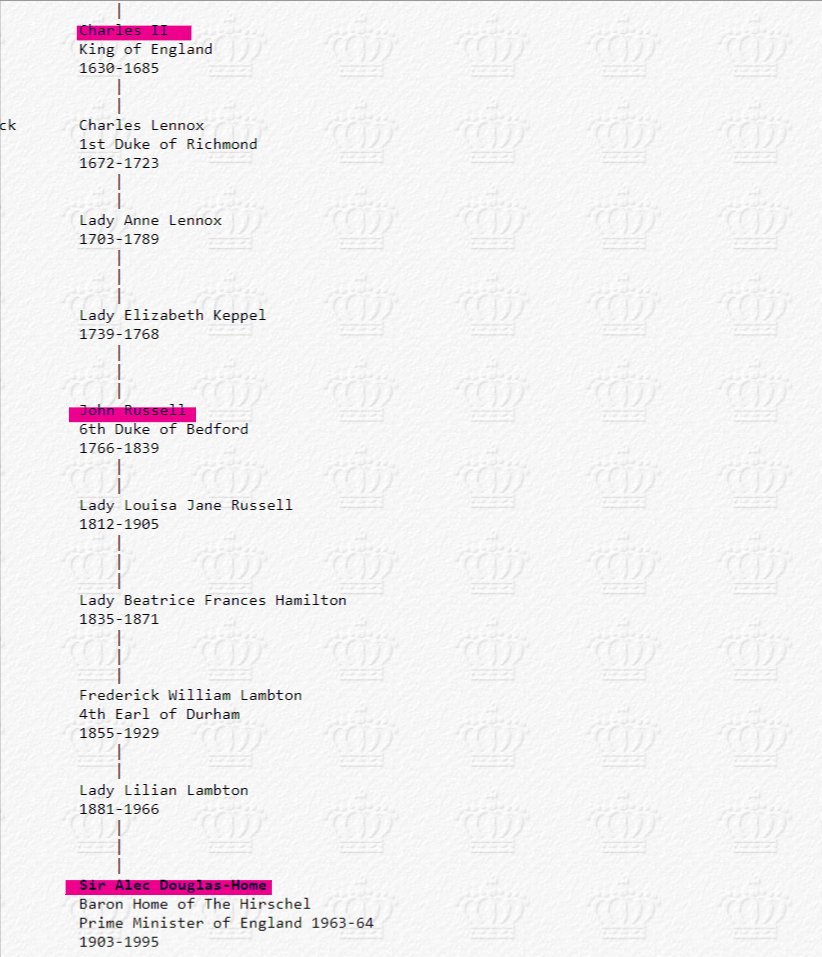
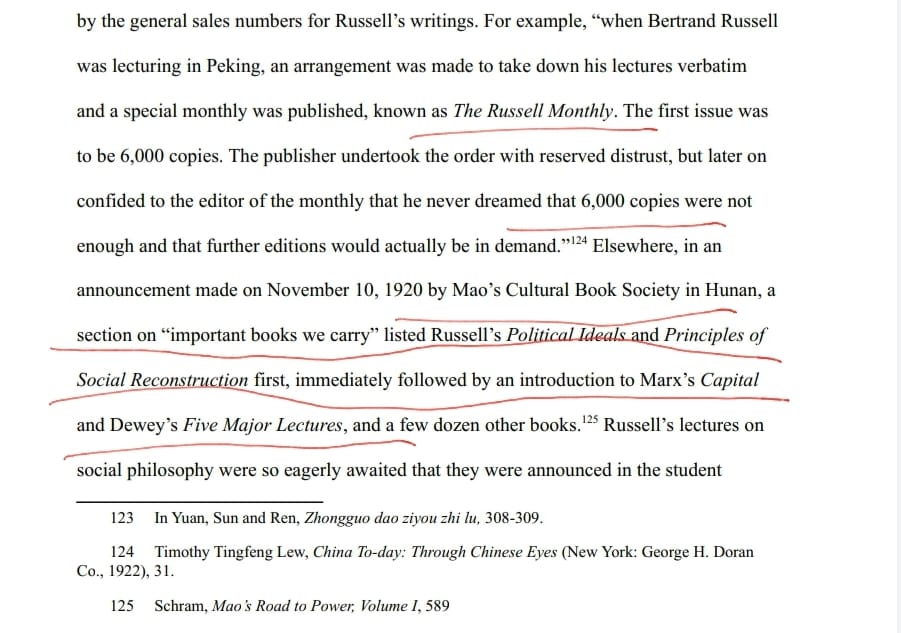
"It was Bertrand Russell and Yale-in-China of Yale University, who groomed Mao and Chen Duxiu, co-founder of CCP. Sir Alec Douglas-Home was descended from Marie de Medici via Russell, Duke of Bedford. He mentored Henry Kissinger." More...

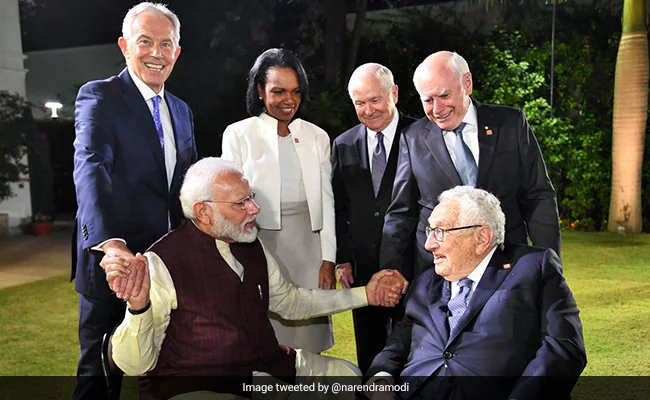
Henry Kissinger, mentored by a descendant of Marie de Medici, with his boys from the BRICS club. WWII needs covert dialects which require an "arms-length". The Crown holds US/Western coalition close but BRICS at "arms-length" (Source)


-
Chen Tuan – Patriarch of Qigong
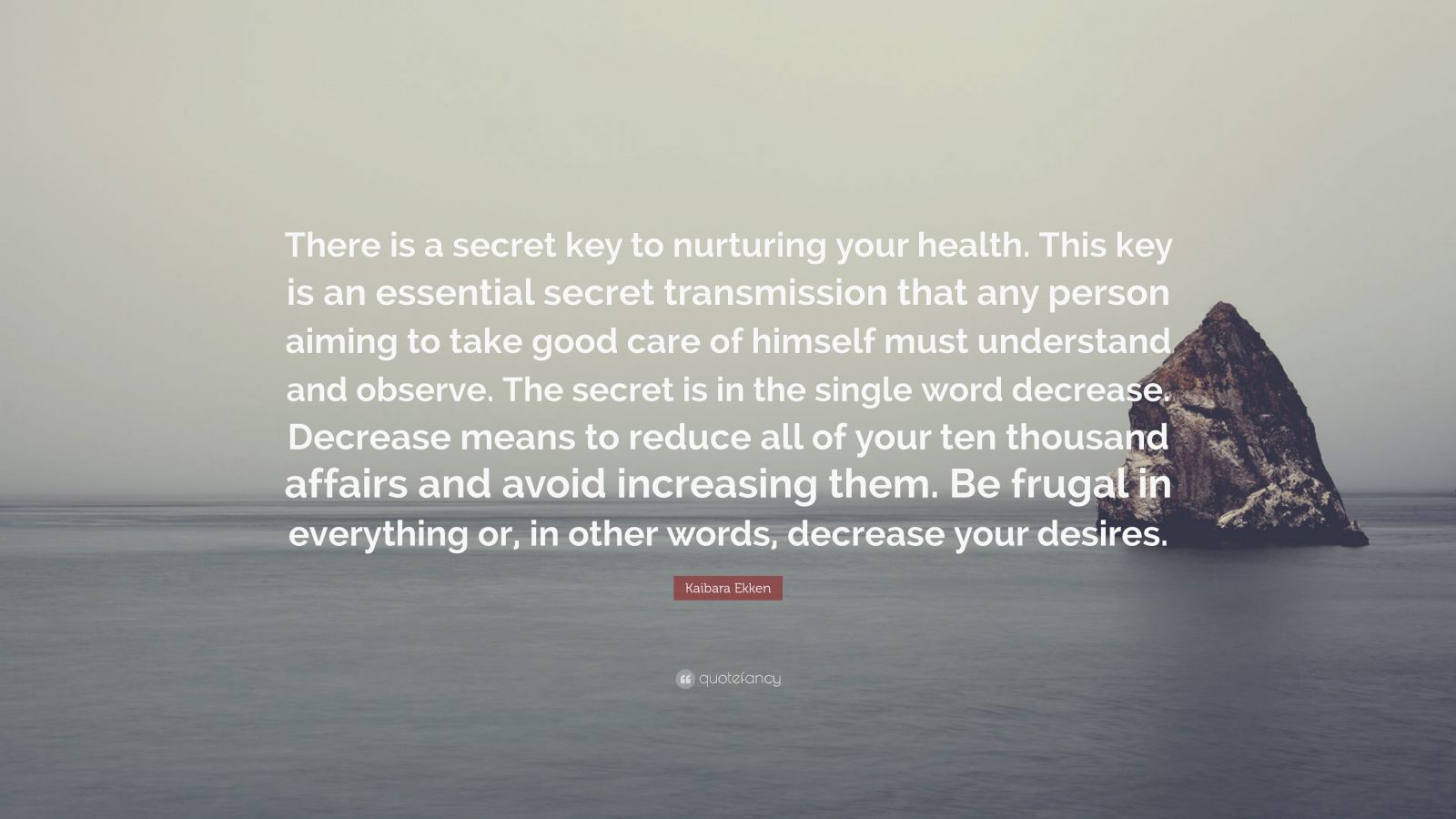
People whose spirit and energy is profound and pure are at peace in their bodies and tranquil within themselves. . . Most people these days are very fond of wealth and high position, but they are never content at heart. There are so many who are not happy at all. Yet those whose spirit and energy are at peace and tranquil are usually unconcerned and relaxed in their minds. That is what we call “ freedom at heart.” – Chen Tuan
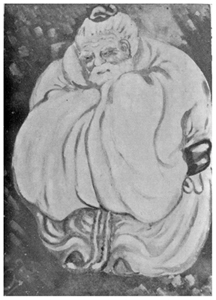
Chen Tuan 
Mount Wudang – Five Dragon Temple 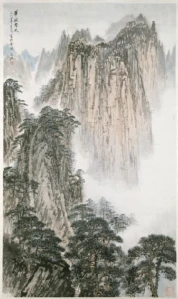
Peaks of Mount Hua Piercing the Sky by Song Wenzhi Chen Tuan was born in Henan province, China, toward the end of the ninth century. From an early age, after the death of his parents, he turned to studying Taoism and devoted his life to mastering the arts of longevity. He went on retreat and lead a hermit life in the Nine Room Cave and later in the Five Dragon Temple, both on Mount Wudang in Hunan. Chen Tuan was summoned to the imperial palace in 956 during the Tang Dynasty. However, court life did not appeal to him and he later settled on Mount Hua in Sichuan.
Chen Tuan was again summoned to the court during the Song Dynasty in 976, by emperor Zhao Kuangyin. The emperor knew of Chen Tuan’s abilities in divination and understanding of the Tao and asked him to become his adviser. Again this time, Chen Tuan informed the emperor that he preferred the company of the clouds around Mount Hua to that of people. The emperor respected Chen Tuan’s wishes but wished to remain friends so that he could learn more of the Tao, in the future, after he had returned the country to a state of peace.
During his reign, emperor Zhao Kuangyin reunified most of China proper, effectively ending the tumultuous Five Dynasties and Ten Kingdoms period. At one point, the emperor wished to establish a garrison on Mount Hua due to its strategic location. The emperor decided to pay Chen Tuan a visit.
Chen Tuan was waiting for the emperor and even before the emperor could bring up the subject of establishing a garrison, Chen Tuan suggested that the two play a game of chess. If the emperor won, he could do as he wished with the mountain. But, if the sage won the emperor would have to promise that troops never be stationed on the sacred mountain.
Given his skills in divination, the sage easily foresaw the emperor’s moves and afterwards told Zhao Kuangyin how he had beaten him. The emperor laughed and honored Chen Tuan with the name Xiyi, in regards to the sage’s wisdom being rare (xi) and mysterious (yi). From that time on, Chen Tuan was know as Chen Xiyi.
Many of the Qigong and Martial arts exercises from Mount Hua are attributed to Chen Xiyi. These methods have been passed down through the ages but still remain extremely rare.
It is these same techniques that Shang Rinpoche now shares with his students currently, in Taiwan and around the world. It is Shang Rinpoche’s wish that his students be able to nurture robust and healthy bodies in order to support the further study of the mind through meditative practices. It is in this way that ancient Taoist exercises can support ancient Buddhist practices for the benefit of modern people.
-
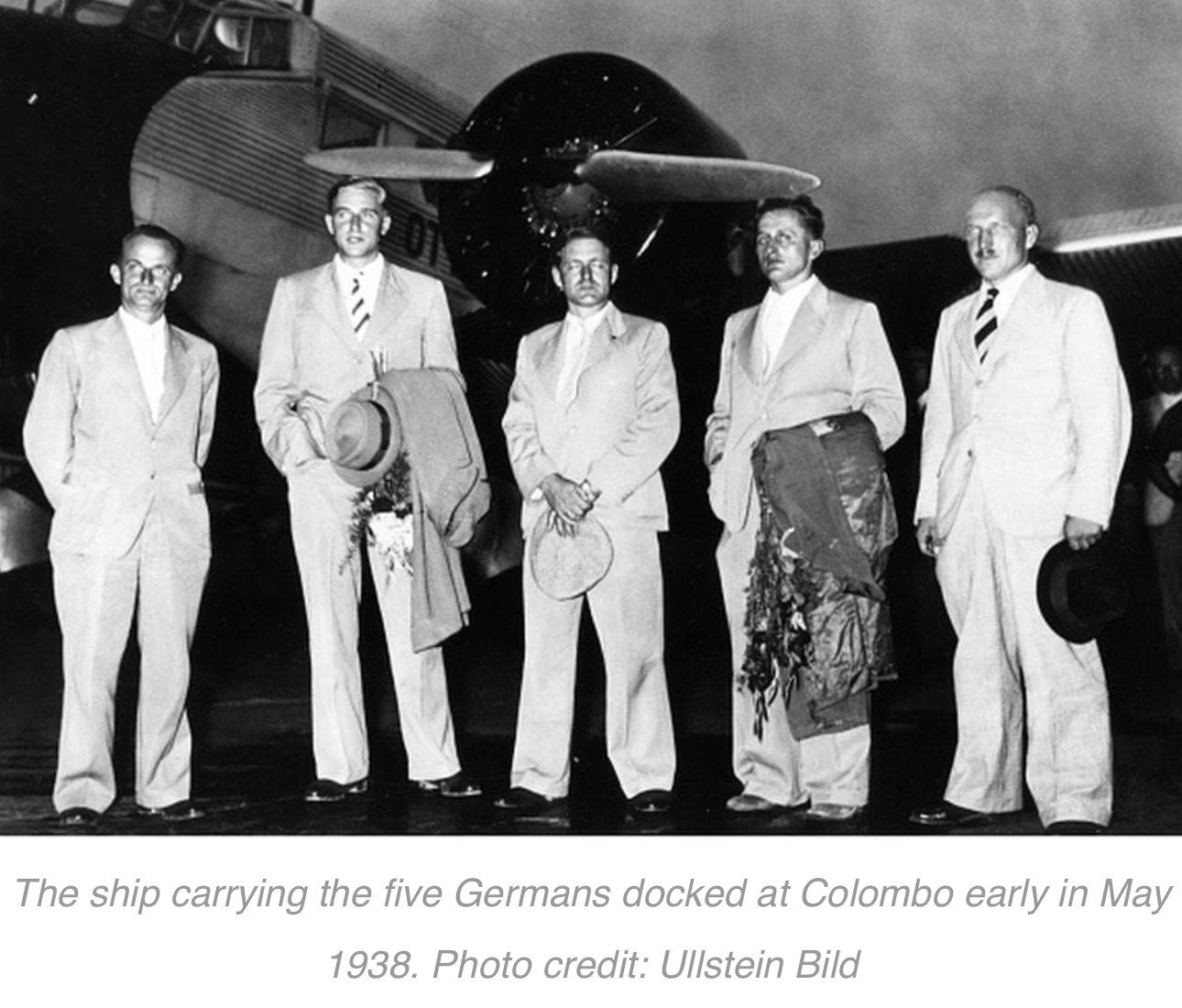
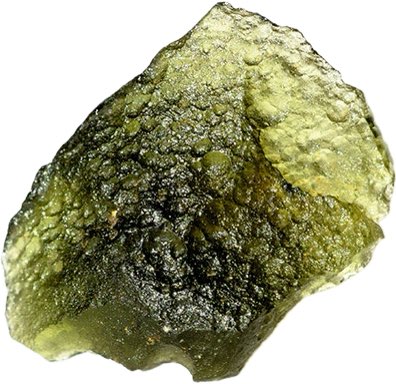
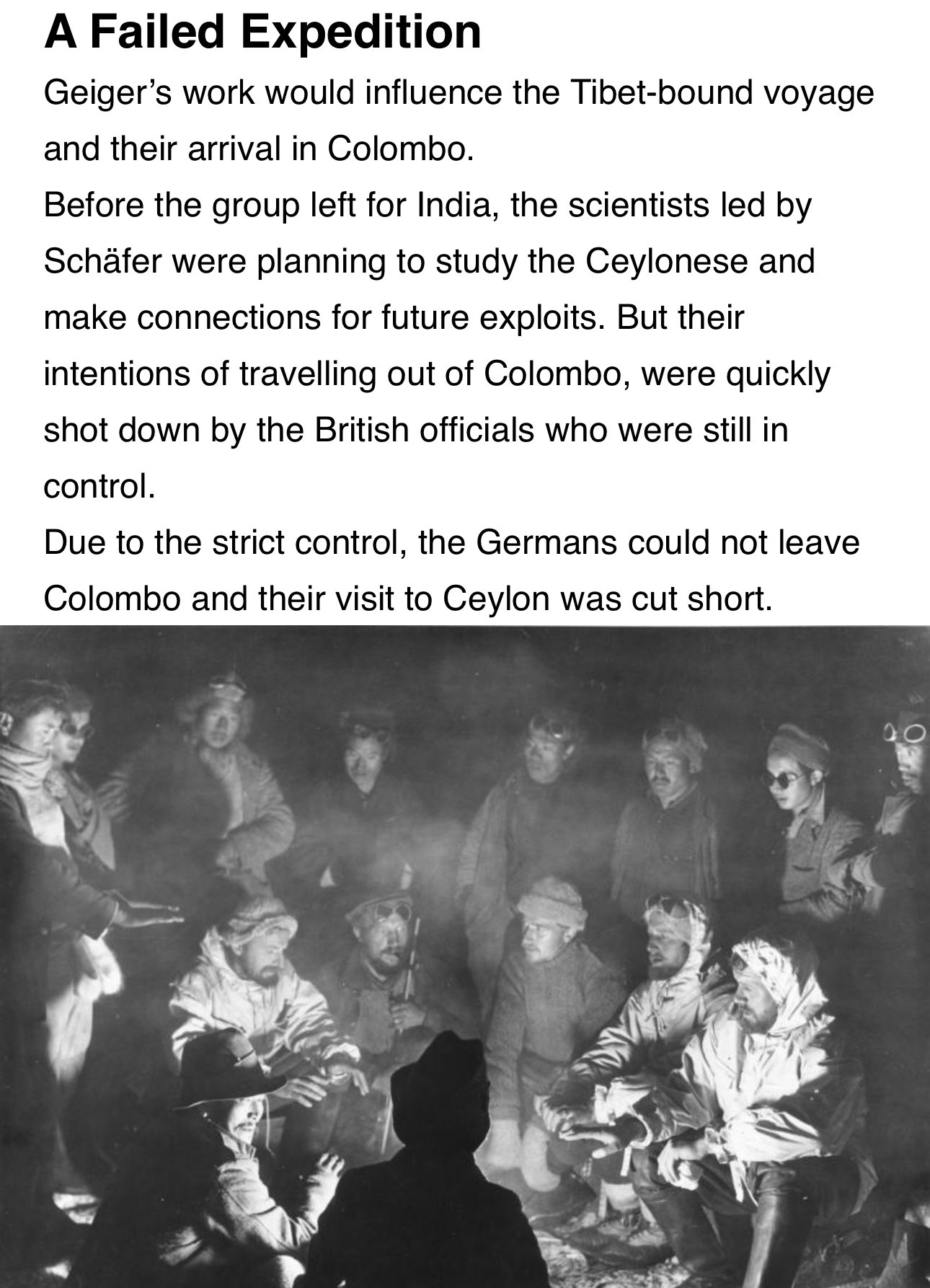
British Intelligence denied German Ahnenerbe access to Sri Lanka in 1938. Why? Fulcanellian.

-
Medieval knights battling snails
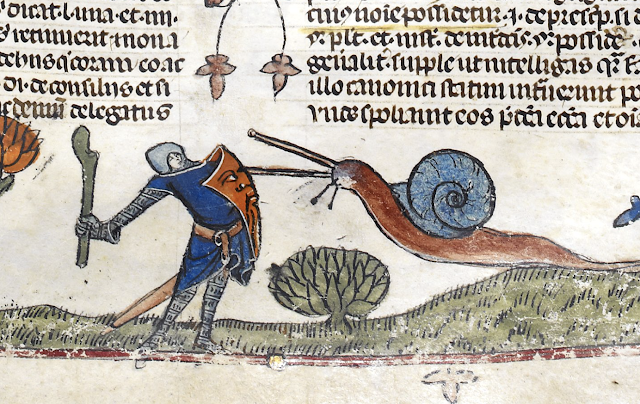
Snails are surprisingly common depictions in the marginalia of medieval manuscripts, often depicted in battle with armored knights.
Sometimes the creatures appear to be hovering, attacking knights in mid-air. Occasionally there is more than one. This is the uniquely medieval phenomenon of the fighting snail – and to this day, why they were depicted remains utterly mysterious...
But for a brief period in the late 13th Century, illuminators – those who decorated books – across Europe embraced a new obsession: fighting snails. For a comprehensive study of these warring gastropods, the art historian Lilian Randall counted 70 examples, in 29 different books – most of which were printed in the two decades between 1290 and 1310. The illustrations are found across Europe, but particularly in France, where there was a thriving manuscript-production industry at the time, says Clarke.
The specific scenarios that warring snails found themselves in varied, but broadly followed the same format of a snail-assailant standing off against a knight. Often, the molluscs have their antenna – technically their upper tentacles, or ommatophores – pointed aggressively forwards, as though they were swords. In one, a snail is shown fighting a nude woman. In a few they're not depicted as regular molluscs at all, but hybrids between snails and men – who are being ridden by rabbits, naturally.
More information, and many illustrations, at the BBC. Image (cropped for size) credit to The British Library.
-
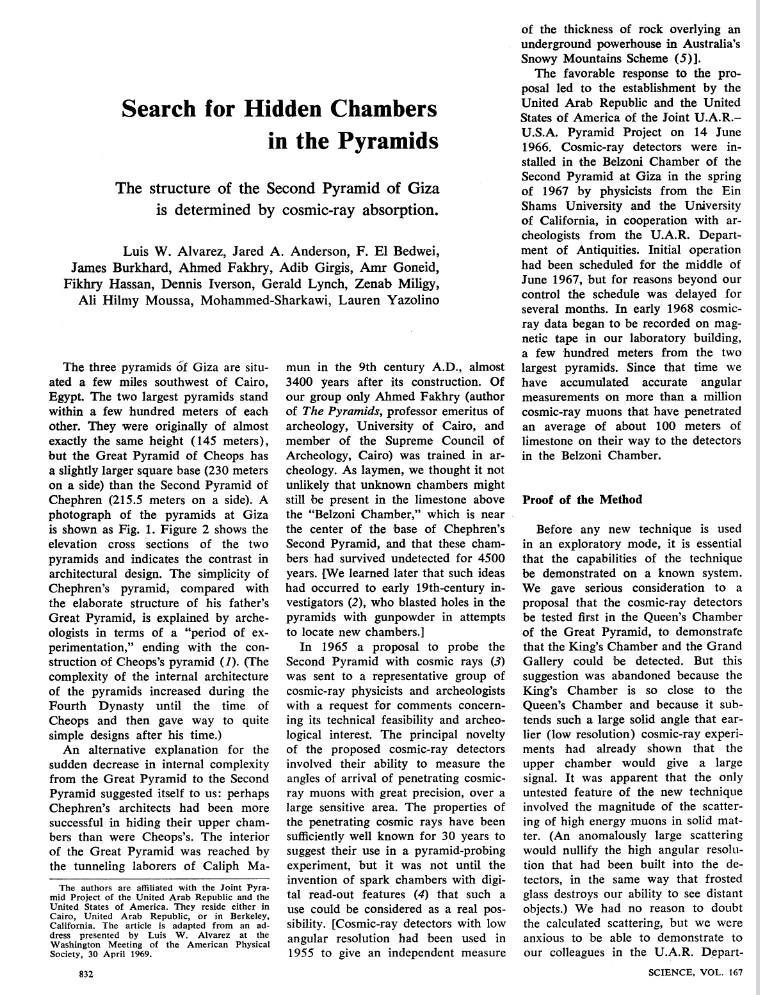
February 6, 1970: Luis Alvarez (1911 - 1988, physicist, nobel price winner) publishes a paper in Science on Cosmic Rays and Pyramids