tag > Music
-
Why it's still two turntables in 2026 and the future of DJ software
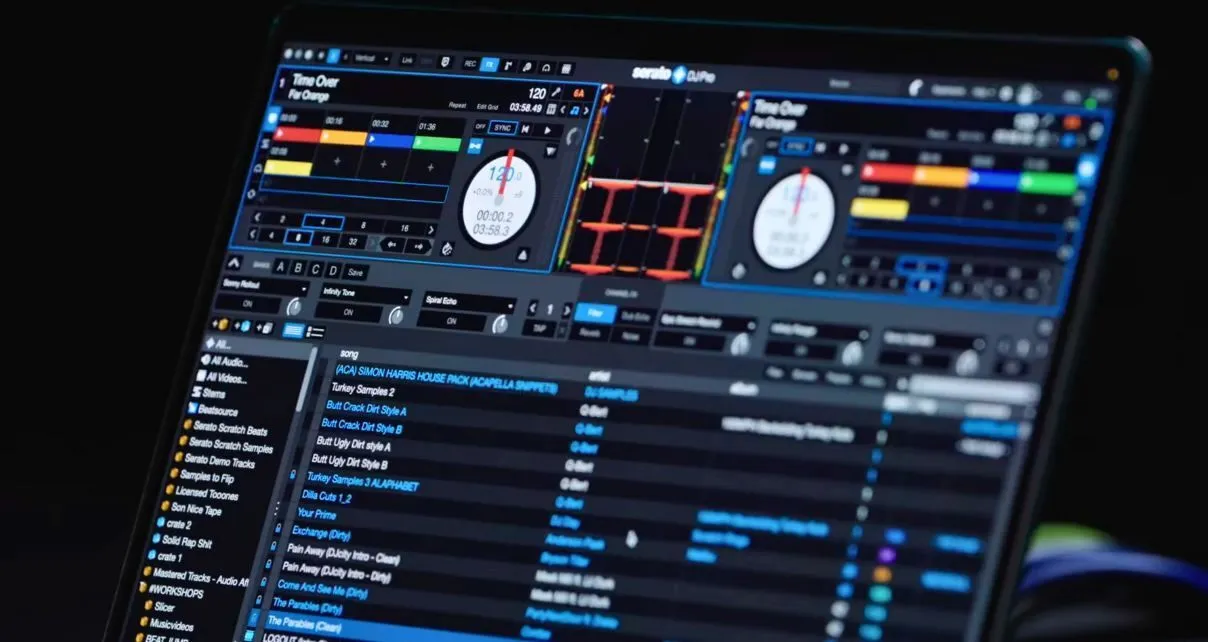
Because DJ software isn't a tool, it's an instrument — and instruments don't modernize, they ossify. A guitar hasn't changed in 70 years either, and nobody complains. Serato/Traktor/rekordbox sell to people who have invested thousands of hours of muscle memory into a specific physical grammar: two sources, a crossfader, beatmatch, phrase, cut. Any paradigm change devalues that skill capital, and skilled users are precisely the ones who pay. The interface conservatism is rational — it's just rational for performers.
The hardware owns the software. AlphaTheta (Pioneer) controls the club booth; rekordbox exists to feed CDJs, and Serato/Traktor exist to sell controllers. When your revenue is molded plastic in the shape of 1978, your software roadmap is too. The club standard is a de facto protocol — a DJ shows up with a USB stick anywhere on earth and it works. Protocols freeze.
The labor is the product. Millions of those users aren't optimizing for the output — they're buying the craft fantasy. Beatmatching by hand when sync buttons exist is the point, the same way people drive manual transmissions. An interface that removes the work removes the reason they showed up. (Notice the sync button *does* exist and is still culturally contested 15 years later. That tells you everything about the pace.)
And licensing walls keep disruptors out. Every "Spotify DJ app" startup died or shipped crippled — no export, no offline — because you can't build outcome-oriented products on DRM'd streams. The incumbents are structurally protected from exactly the kind of entrant who'd rethink the interaction model. (This is also why our local-first stance is the moat note in your ideas doc.
---
The future of DJ software: a bifurcation
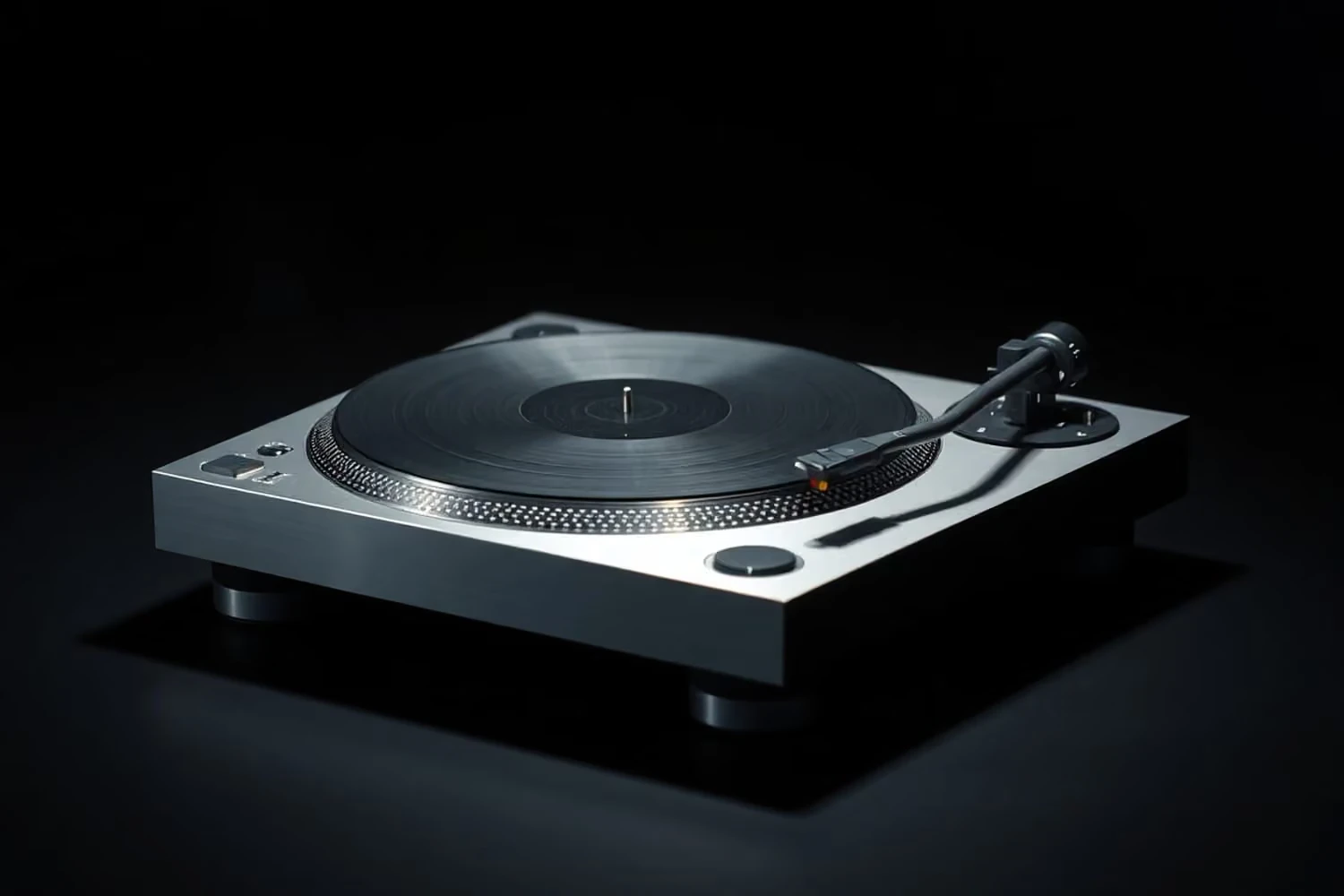
The field splits in two, and the halves stop pretending to be the same product.
1. Performance instruments stay — and stay skeuomorphic. Clubs are theater; a human taking risk in front of a crowd *is* the product, and you can't automate a ritual. Stems, FX, and AI-assist will keep arriving as expressive range — like pedals for a guitarist — but the two-deck grammar survives because both performer and audience understand it. That market is served, and it's fine.
2. The outcome market gets machines. Over 95% of "mixed music" listening happens with no performer present — house parties, runs, road trips, radio-style streams. Those contexts never needed decks; they inherited deck-shaped software because it was the only software that existed. The interaction model for this market isn't "more knobs, but AI" — it's intent-level interaction: audio in, mix out; point at the one moment you dislike and say "different." You don't operate the machinery; you direct it.
3. The deepest shift: the mix stops being a recording and becomes a program. A recorded set is a performance capture — dead audio. The alternative is the mix as a *recipe*: every entry point, tempo ramp, and transition stored as data, re-renderable, editable, versionable. Once mixes are programs, things impossible in deck-world become trivial: swap one track from last night's set and re-render in seconds, leaving everything else untouched. Add stem separation and even the *track* stops being the atomic unit — the endgame is music as fluid material, continuously re-mixable. No tool rooted in the two-deck metaphor can follow, because its whole model is two audio streams with a human in the middle, in real time.
4. The live version is the AI DJ as a steerable agent. Radio reinvented: an endless set from your own library that the room can push harder or softer. The human role shifts from operator to curator — taste stays human, execution goes machine. That's how every music-tech shift has landed: drum machines didn't kill drummers, they created genres.
The incumbents aren't stupid — they're loyal: to performers, to hardware, to a ritual worth preserving. But they're serving the stage while the world mostly needs the outcome. The future isn't a smarter deck. It's the mix as a living, steerable artifact.
-
Deezer says 44% of songs uploaded to its platform daily are AI-generated
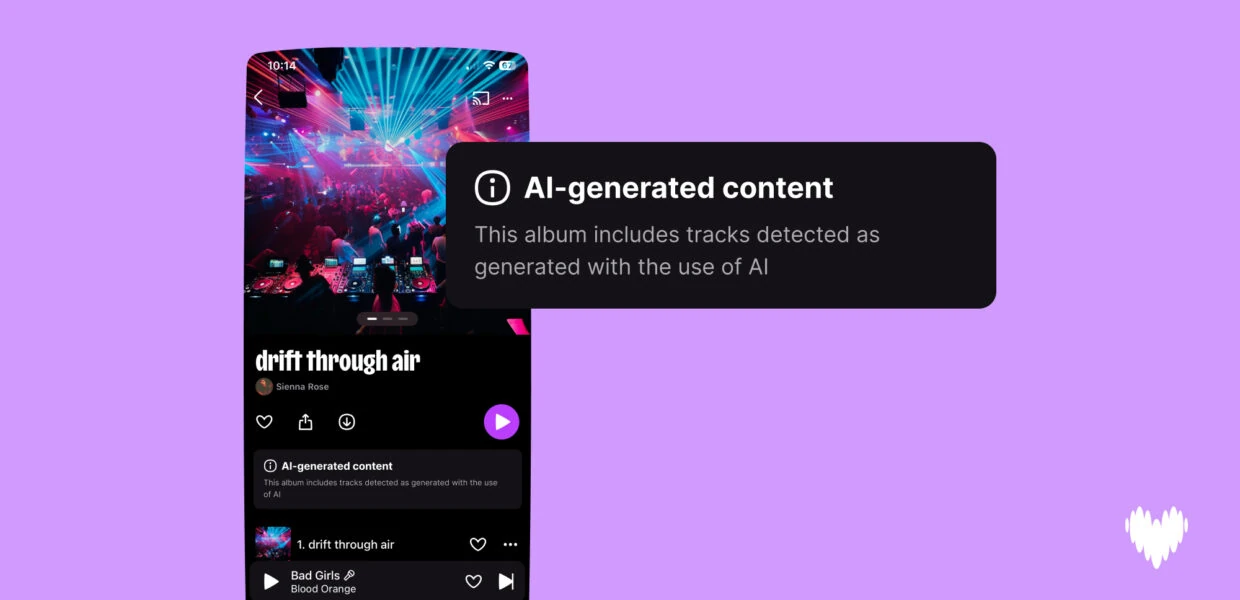
Deezer announced on Monday that AI-generated tracks now represent 44% of all new music uploaded to its platform. The company said it’s receiving almost 75,000 AI-generated tracks per day and more than two million per month.
The consumption of AI-generated music on the platform is still very low, at 1-3% of total streams, and 85% of these streams are detected as fraudulent and demonetized by the company.
The latest figure from Deezer highlights a continuous surge in AI-generated music uploads to the platform. Deezer reported receiving around 60,000 AI tracks per day in January, up from 50,000 in November, 30,000 in September, and just 10,000 in January 2025, when it first launched its AI-music detection tool.
-
Are we in the right place at the wrong time, as Dr. John said, or in the wrong place at the right time?
-
AI Music in 2025 – Notes on a Stalled Revolution
It’s been over a year since we wound down our generative music startup okio. Since then the space has “evolved” in ways both predictable and boring.
We now have 50+ high-quality video gen models, yet music still has just a handful (suno, udio, stability, 11labs…) - all closed source, all sounding somewhere between bland and absolute dog poo (unless you burn weeks on trial-and-error hacks).
The music industry’s lawyer army has strangled innovation, while many musicians have turned violently anti-AI. UX innovation has stalled too: most tools haven’t evolved in a year, others now mimic a shitty DAW in the browser.
Some sell “ethically sourced data” (usually half-true), but it's pointless as outputs still sound like dog poo. Google showed off real-time gen, but in mega-corp fashion it’ll never be a real product - they'll ship a muzak machine for video slop at scale.
The only glimmer: Chinese dark-horses might drop open-source, uncensored models trained on everything. They’ll sound great—and get demonized in the West.
Shame, because the promise of generative music has never been bigger.
Music is humanity’s most direct technology for emotion. And yet AI music has been reduced to slop and jingles. It’s a tragedy of imagination: the space where innovation should be loudest is dead quiet.
My bet is that the real breakthroughs won’t come from the lawyer-choked West or from UX gimmicks. They’ll come from the underground, open source, and global scenes - just like every real musical revolution before. Onwards!
-
Rest in peace, Jay Haze. Grateful for the funky times we shared and all I learned along the way. Much love, old friend.
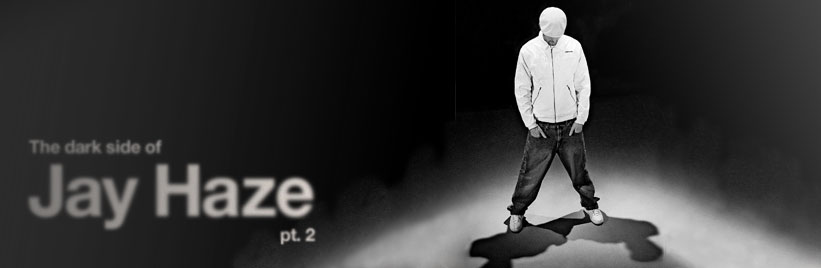
We spend intensive times in the studio and on the road and made lots of music back in the early 2000s..
-
New MusicForComputers release: Machine Dub – by Count Slobo.
11 min of AI-generated roots dub. Think King Tubby’s ghost routed through neural nets. A synthetic prayer in bass + echo, crafted by the Machine, for the Machine. Play it loud and let Jah signal ride the wires!
-
Pink Noise - The "1/f" structure of spectral brain dynamics
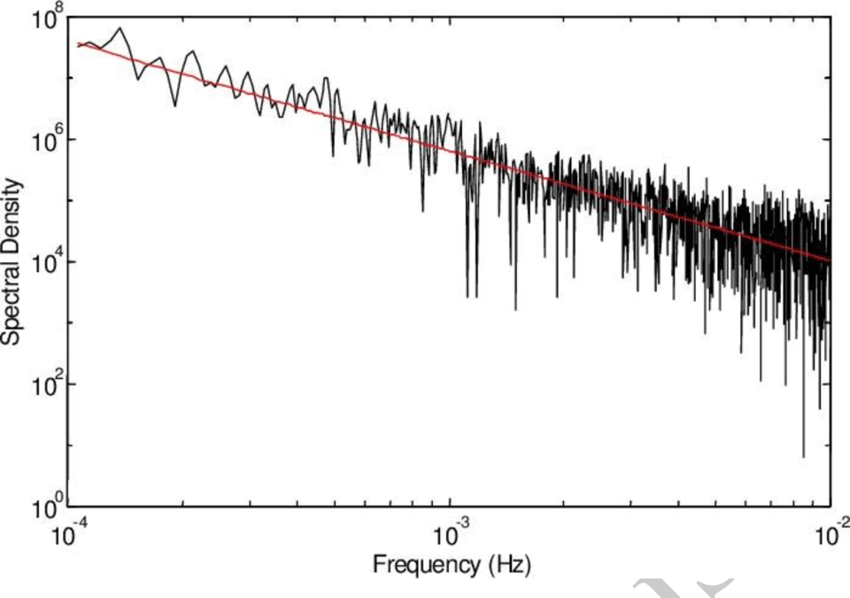
1/f noise, also known as flicker noise or pink noise, is a type of noise where the power spectral density is inversely proportional to the frequency. This means the noise power decreases as the frequency increases. 1/f noise is observed in various fields, including electronics, music, biology, and economics
James Keeler and Farmer demonstrated that a system of coupled logistic maps could produce fluctuations with a 1/f power spectrum. They showed that this occurred because the system continually tunes itself to stay near a critical point, a property that was later dubbed self-organized criticality by Per Bak. - Source