tag > Music
-
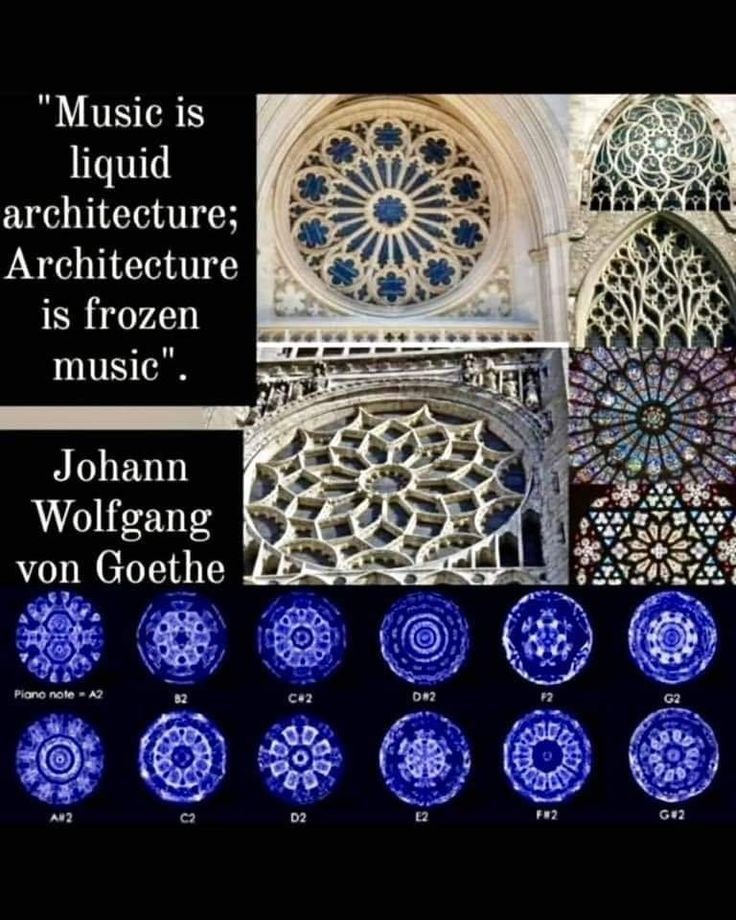
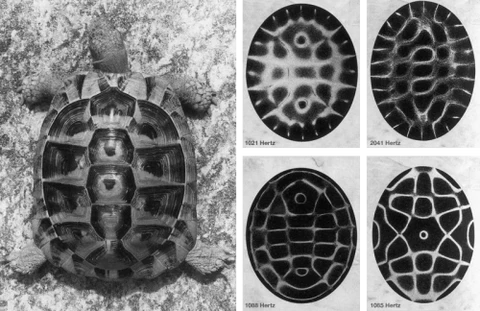
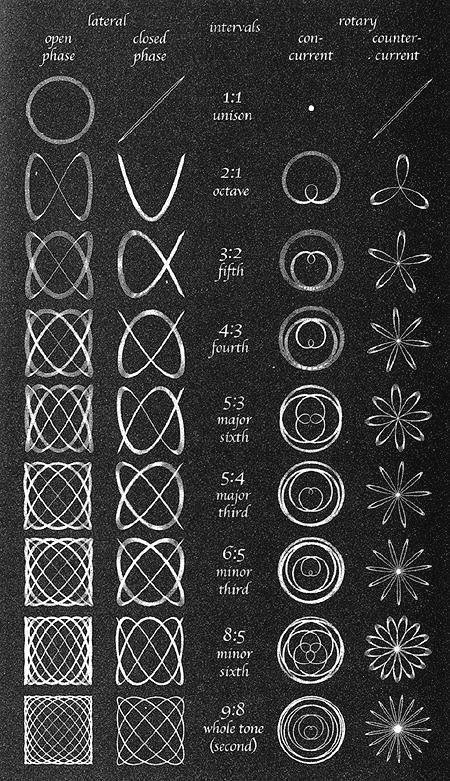
Visualizing musical intervals as geometric patterns highlights the deep link between mathematics, geometry, and music theory.
-
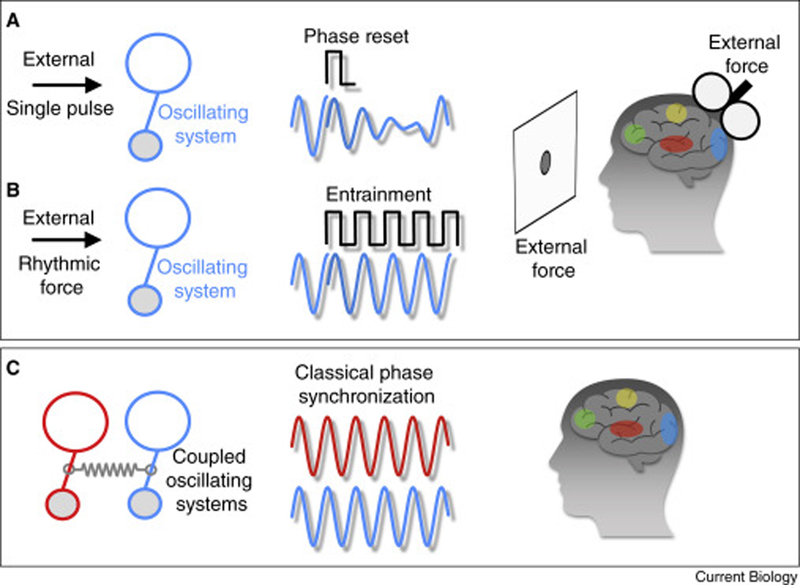
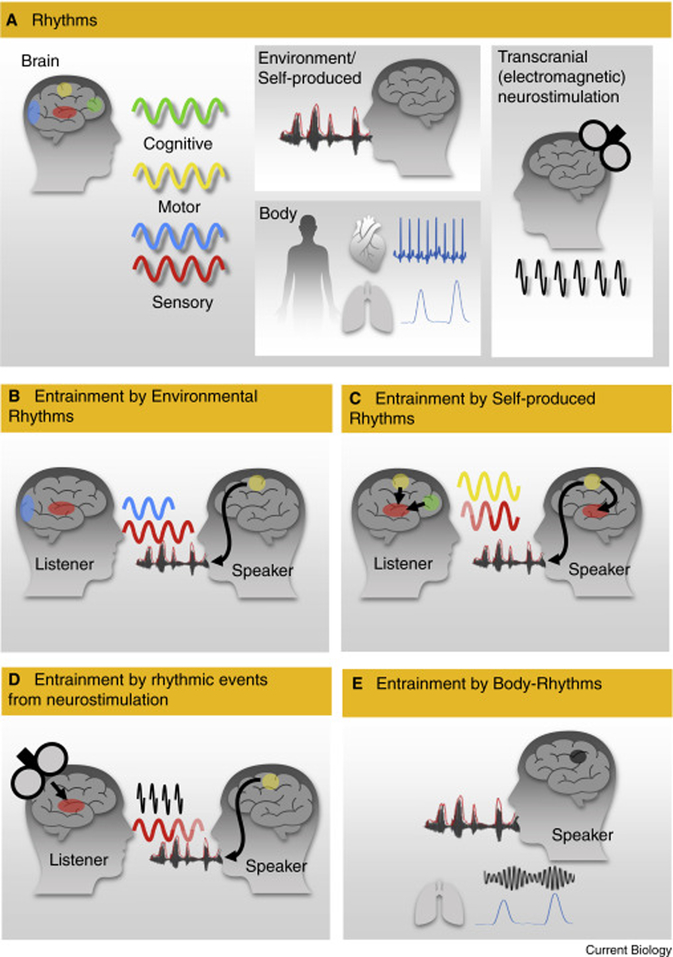
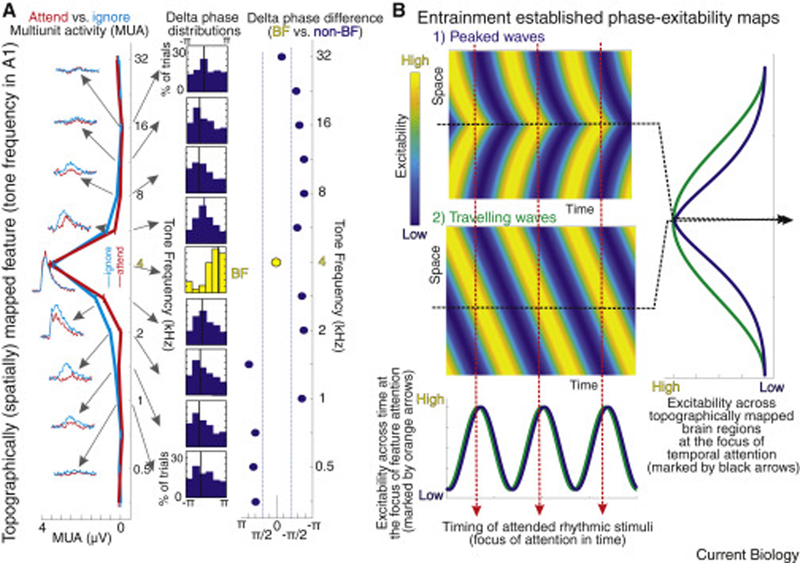
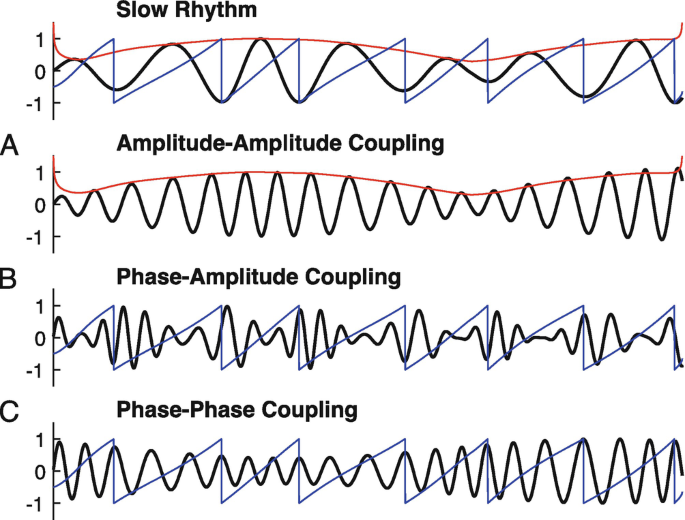
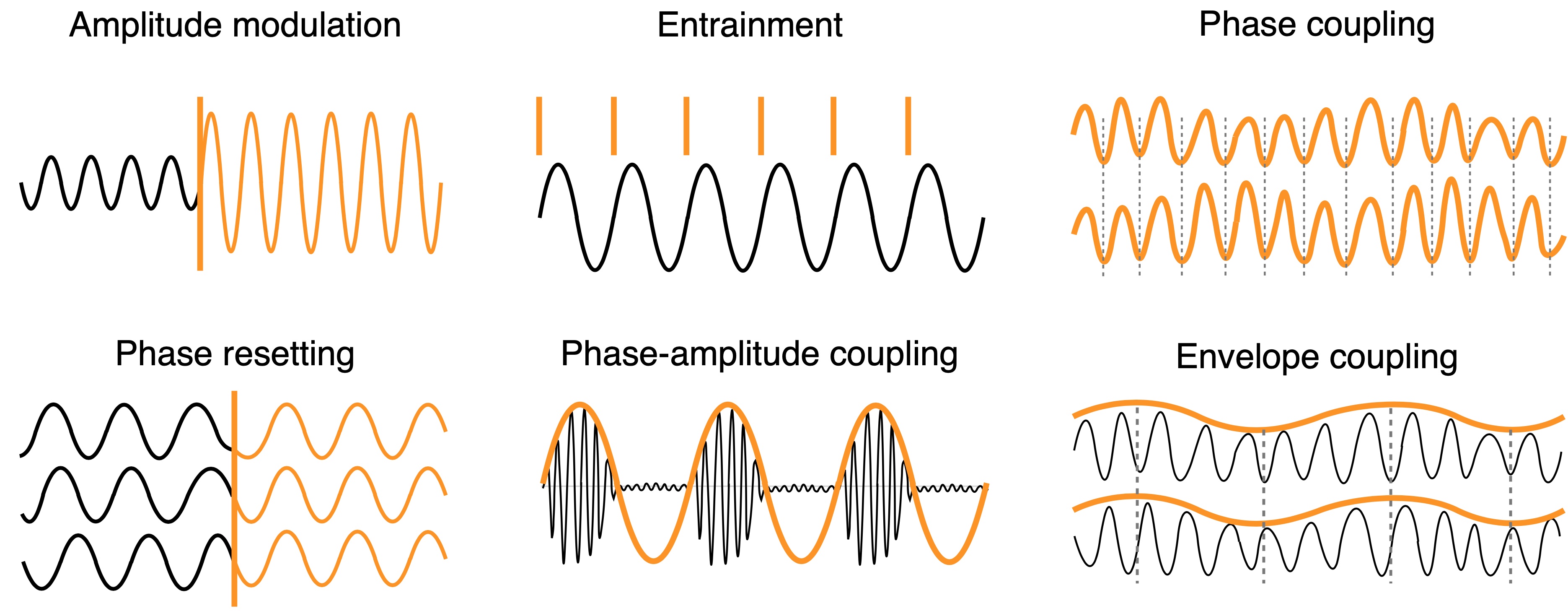
Neural waves study provides evidence that brain's rhythmic patterns play key role in information processing
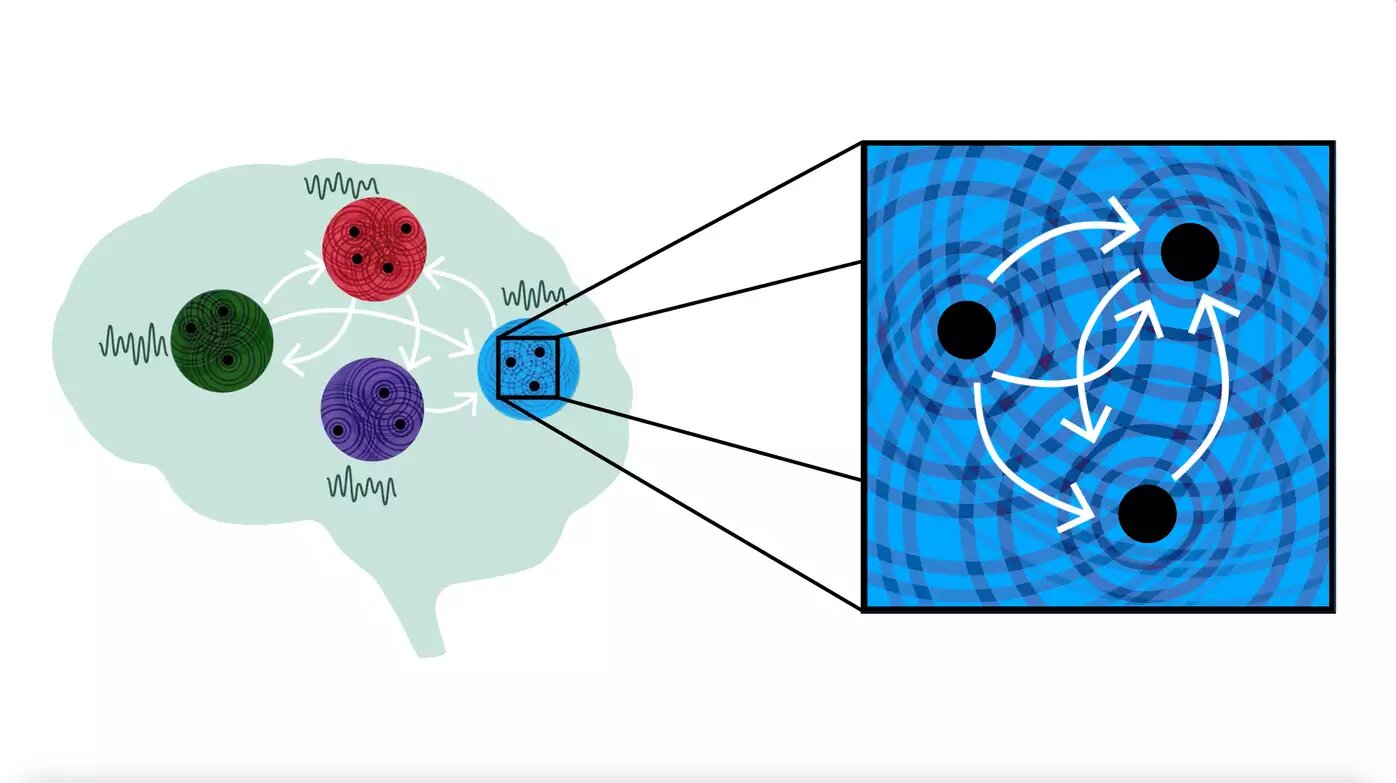
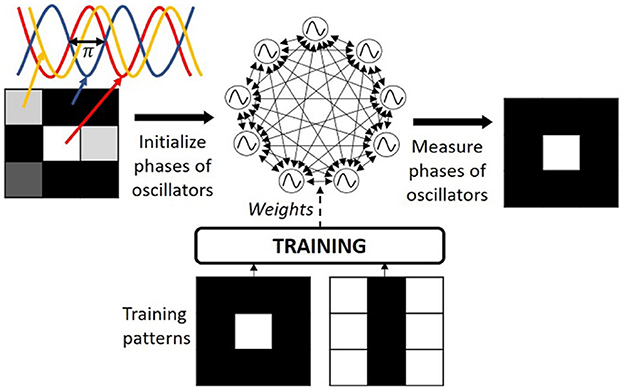
The authors of the study suggest that the brain uses the superposition & interference patterns of waves to represent and process information in a highly distributed way, exploiting the unique properties of coupled oscillator networks such as resonance and synchronization.
Papers & Code:
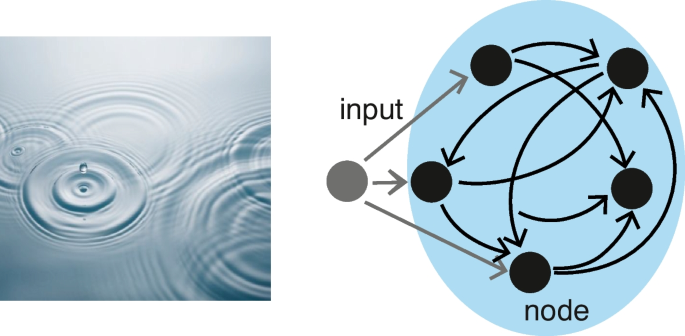
Code: Harmonic oscillator recurrent network (HORN) Pytorch Implementation
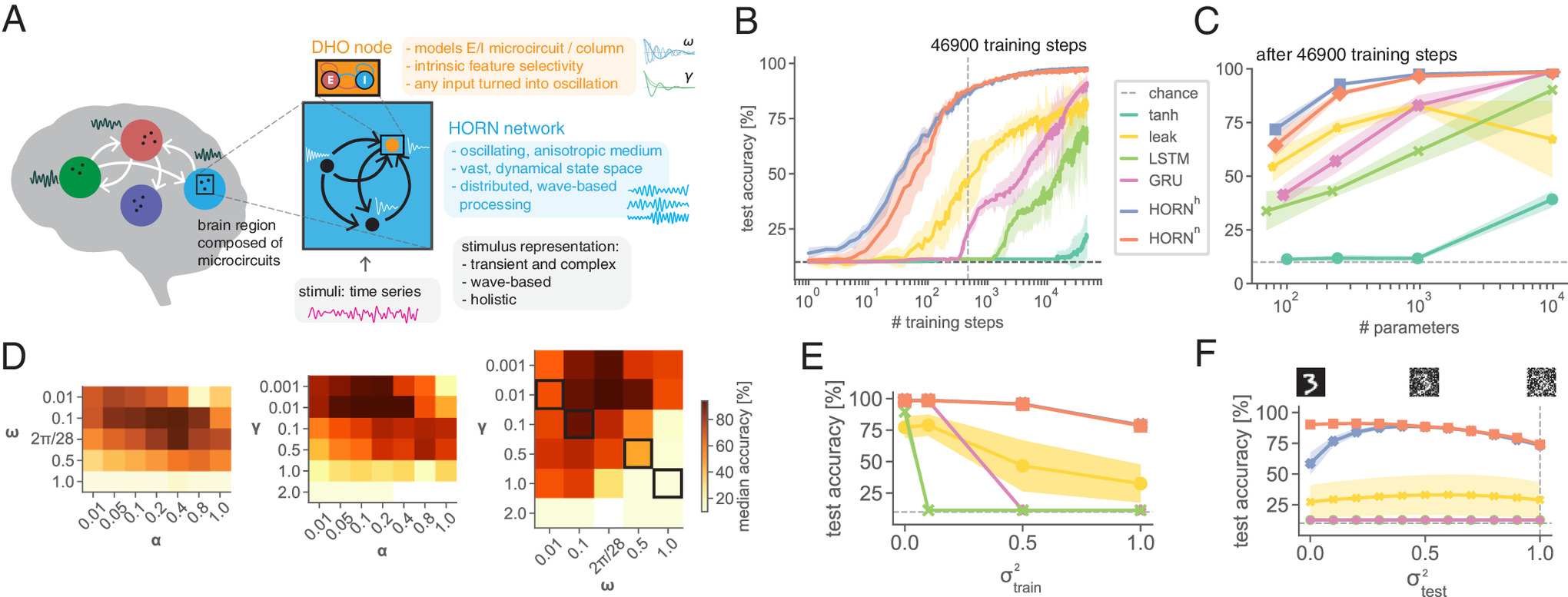
Overview:
High-level concepts:
Recast neural processing as continuous‐time dynamics rather than pure feed-forward stateless layers.
Embedding physical, continuous dynamics—oscillations, waves, vortices, and damping—directly into the network’s layers unlocks powerful, implicit mechanisms for attention, multi-scale integration, and long-range memory, without the combinatorial bloat of explicit attention heads or deeper stacks.
1. Controlled Oscillations as an Inductive Bias
Damped Harmonic Oscillator (DHO) nodes
In
model.py, each hidden unit integrates its “position” x and “velocity” y via:
Key Insight: forcing every node into an oscillatory regime makes phase, frequency and amplitude available for coding from the very first forward pass—no need to “discover” oscillations through recurrent loops alone.
Why it matters:
- Leaky‐integrator RNNs can oscillate only indirectly (if you tweak weights).
- By baking oscillations into the node, you guarantee resonance‐based feature extraction and a rich dynamical repertoire from the start.
2. Wave‐Based Representations & Interference
Traveling waves & standing waves
- External input → local standing oscillation in each DHO
- Recurrent coupling → traveling waves that propagate, collide, and interfere
High‐Dimensional Mapping:
- Low‐dimensional time-series (e.g. pixel sweep in sMNIST) → high-dimensional spatiotemporal interference pattern across the N oscillators.
- After training, these patterns carve out stimulus‐specific trajectories in the N-dimensional state space that are linearly separable by your final
h2olayer.
Code touch-point: The
record=Trueflag inforward()gives yourec_x_tandrec_y_t. Visualizing these (as indynamics.pyortrain.py) shows exactly how different input classes sculpt different wave‐interference signatures.
3. Resonance & Intrinsic Receptive Fields
The intrinsic gain curve of each DHO node is defined as:
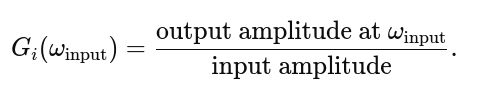
In the PNAS work, a grid‐search found optimal \omega \approx 2\pi/28 to match the dominant frequency of straight strokes in sMNIST.
Computational payoff: Nodes automatically amplify (resonate) in-band inputs—so you’re baking in priors about the signal’s spectral content at the architectural level, not just via learned weights.
How to explore in your code:
- In
dynamics.py, drive a single DHO with a pure sine wave at different frequencies. - Measure steady‐state amplitude &bar; x &bar; after transients → plot &bar; x &bar; vs. frequency.
- That’s your empirical G(\omega_{\text{in}}) curve.
4. Heterogeneity → Near‐Critical Dynamics
Biological motif: neurons/pyramidal microcircuits have tunings and delays that vary across the network.
HORN’s version: drawing each unit’s \omega_i and \gamma_i (and later, delays) from a distribution.
Why it helps:
- Expands the repertoire of possible wave‐interference patterns
- Brings network closer to a “critical” regime: balance of order/disorder, long memory tails, richer transient dynamics
Simple test in code:
- In
dynamics.pyyou already sampleomegaandgamma. Try:- Homogeneous run (all ω = ω_base, γ = γ_base) vs.
- Heterogeneous run (sampled ω, γ)
- Quantify:
- Pairwise phase‐locking values between units over time (look at how PLV distribution broadens)
- Linear separability: train a small linear SVM on the recorded
rec_x_tsnapshots and compare classification accuracy.
5. Hebbian Alignment of Backprop
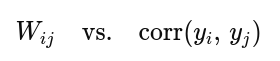
Surprising finding: gradient‐based BPTT weight updates on
h2hend up correlating strongly with pre-post activity correlations—i.e. they “look Hebbian.”Takeaway: Even though you’re minimizing a cross‐entropy loss at the readout, the recurrent weight updates reorganize the network to amplify stimulus‐specific synchrony patterns.
Next step in code:
- After an epoch of supervised training, scatter‐plot before & after training to see the emergence of a positive correlation between weight strength and firing‐correlation
6. Spontaneous → Evoked State Manifolds
Biological signature: cortex at rest floats through a “rich club” of states; stimuli transiently collapse it into a low‐variance, stimulus‐specific subspace.
HORN mimic:
- Add small random kicks to
y_t(Poisson noise) whenrecord=False - Observe via PCA on the recorded trajectories that:
- Rest: clouds of points filling a large manifold
- During input: rapid collapse to distinct clusters for each class
- After: rebound back to the resting manifold
In summary
- Oscillatory nodes give access to phase, frequency, and amplitude as first‐class coding variables.
- Wave interference provides a massively parallel, high‐dimensional embedding of inputs.
- Resonance priors let you tune the network at the architectural level to known signal statistics.
- Heterogeneity & delays enrich the dynamic repertoire and promote near‐critical, richly transient behaviors.
- Hebbian‐style learning emerges naturally even under supervised BPTT, hinting at fully unsupervised alternatives.
- Rest–stimulus manifold dynamics in HORN match key cortical phenomenology.
-
Weekend immersed in Deep Oscillator Neural Networks has been a resonant journey.
-
The ‘Triadex Muse’ Edward Fredkin & Marvin Minsky, USA, 1971
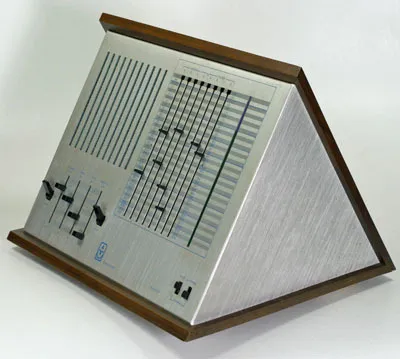
The Triadex Muse was an idiosyncratic sequencer based synthesiser produced in 1972. Designed by Edward Fredkin and the cognitive scientist Marvin Minsky at MIT, the Muse used a deterministic event generator that powered by early digital integrated circuits to generate an audio output. The Muse was not intended as a musical instrument per-se but as a compositional tool (as well as an artificial intelligence experiment), therefore the audio output was left purposefully simple; a monophonic square-wave bleep. The Muse was designed to be connected to a number of other Triadex units – an Amplifier and speaker module, a Multi-Muse Cable (used to link multiple Muses together), and a Light Show module; a colour sequencer whose 4 coloured lamps blink in time to the Muse’s signals, using Triadex’s own proprietary standard (therefore they were unable to connect to any other voltage controlled instrument)
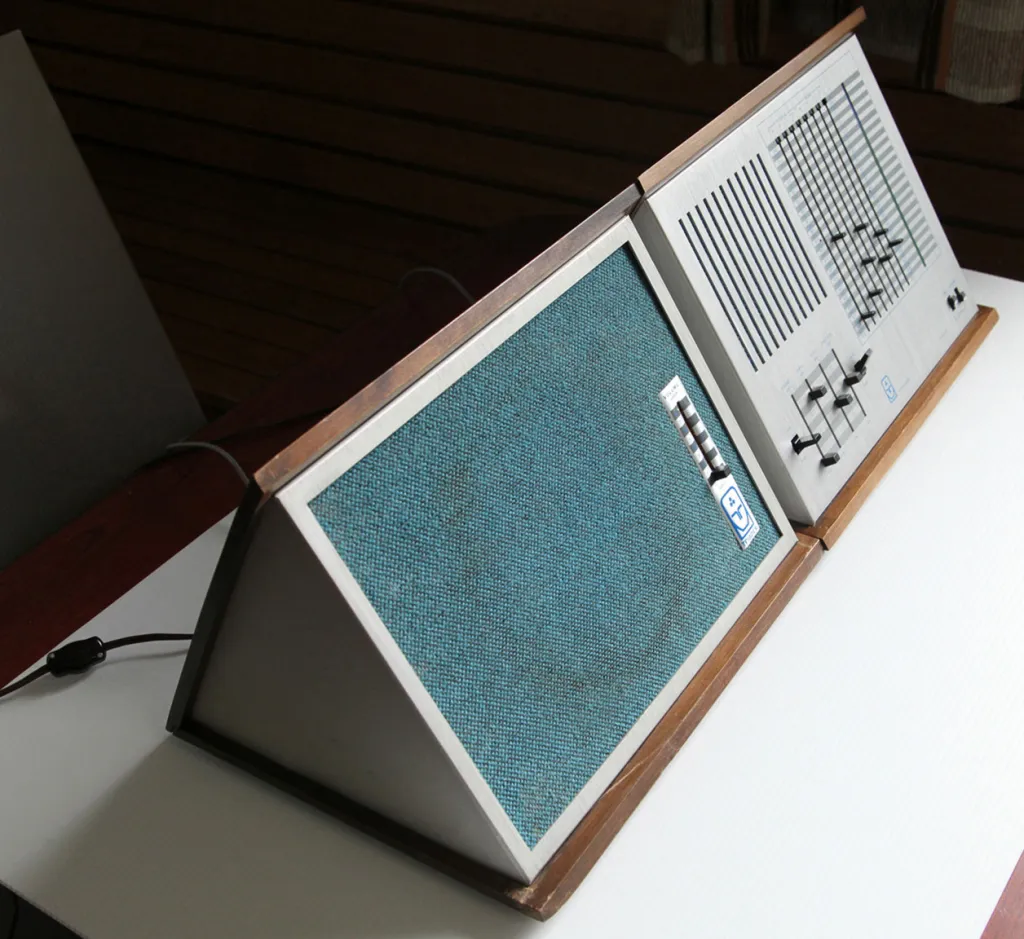
The Muse had no keyboard control but a series of eight slider each with forty set positions. Four of the sliders controlled the interval between notes, and the other four controlled the overall sequence ‘theme’. Visual feedback was provided by a series of displays next to the sliders showing the status of the logic gates. Another set of sliders control the volume from the internal speaker, the tempo of the sequence, and the pitch. Additional switches allow you to start the sequence from the beginning, step through it note-by-note, or substitute a rest point in place of the lowest note.
-
OGTAPE 2 – a new mostly AI-generated tune created with @michalho as Count Slobo, our 'AI Music Producer' alias. We pushed the AIs where they're NOT supposed to go, packing 10+ tunes into a 4min footwork-infused experimental banger. Most AI music doesn't sound like this
The levitation music video features mind-bending AI Generated clips by @chorosuke_1019 (link) @masahirochaen (link) @SuguruKun_ai (link) @ai_Tyler_no_bu (link) & few more anons (link)
-
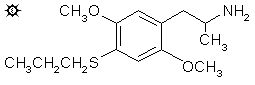
ALEPH-7 - 2,5-Dimethoxy-4-n-propylthioamphetamine - Alexander Shulgin, Pihkal
EXTENSIONS AND COMMENTARY: This drug was the first definition of the term, Beth state.
There is something of the Fourier Transform in any and all drug experiments. A psychedelic drug experience is a complex combination of many signals going all at the same time. Something like the sound of an oboe playing the notes of the A-major scale. There are events that occur in sequence, such as the initial A, followed by B, followed by C-sharp and on and on. That is the chronology of the experience, and it can be written down as a series of perceived phenomena. The notes of the scale. Black quarter notes, with flags at the tops of their staffs, going up the page of music.
But within each of these single events, during the sounding of the note “A,” for example, there is a complex combination of harmonics being produced at the same time, including all components from the fundamental oscillation on up through all harmonics into the inaudible. This mixture defines the played instrument as being an oboe. Each component may be shared by many instruments, but the particular combination is the unique signature of the oboe.
This analogy applies precisely to the study of psychedelic drugs and their actions. Each drug has a chronology of effect, like the notes of the A-major scale. But there are many components of a drug’s action, like the harmonics from the fundamental to the inaudible which, taken in concert, defines the drug. With musical instruments, these components can be shown as sine waves on an oscilloscope. One component, 22%, was a sine wave at a frequency of 1205 cycles, and a phase angle of +55°. But in psychopharmacology? There is no psychic oscilloscope. There are no easily defined and measured harmonics or phase angles. Certainly, any eventual definition of a drug will require some such dissection into components each of which makes some contribution to the complex whole. The mental process may some day be defined by a particular combination of these components. And one of them is this Beth state. It is a state of uncaring, of anhedonia, and of emotionlessness.
Many drugs have a touch of this Beth state, ALEPH-7 more than most. If a sufficient alphabet of effects (I am using the Alephs, Beths, Gimels, and Daleths of the Hebrew as token starters only) were to be accumulated and defined, the actions of new materials might someday be more exactly documented. Could depression, euphoria, and disinhibition for example, all be eventually seen as being made up of their component parts, each contributing in some measured way to the sum, to the human experience? The psychologists of the world would be ecstatic. And drugs such as ALEPH-7 might be useful in helping to define one of these parts.
-
ULTRA SIGMA: SLOBODAN does not care. Only DANCE. This is NOT music. This is ENERGY.
-
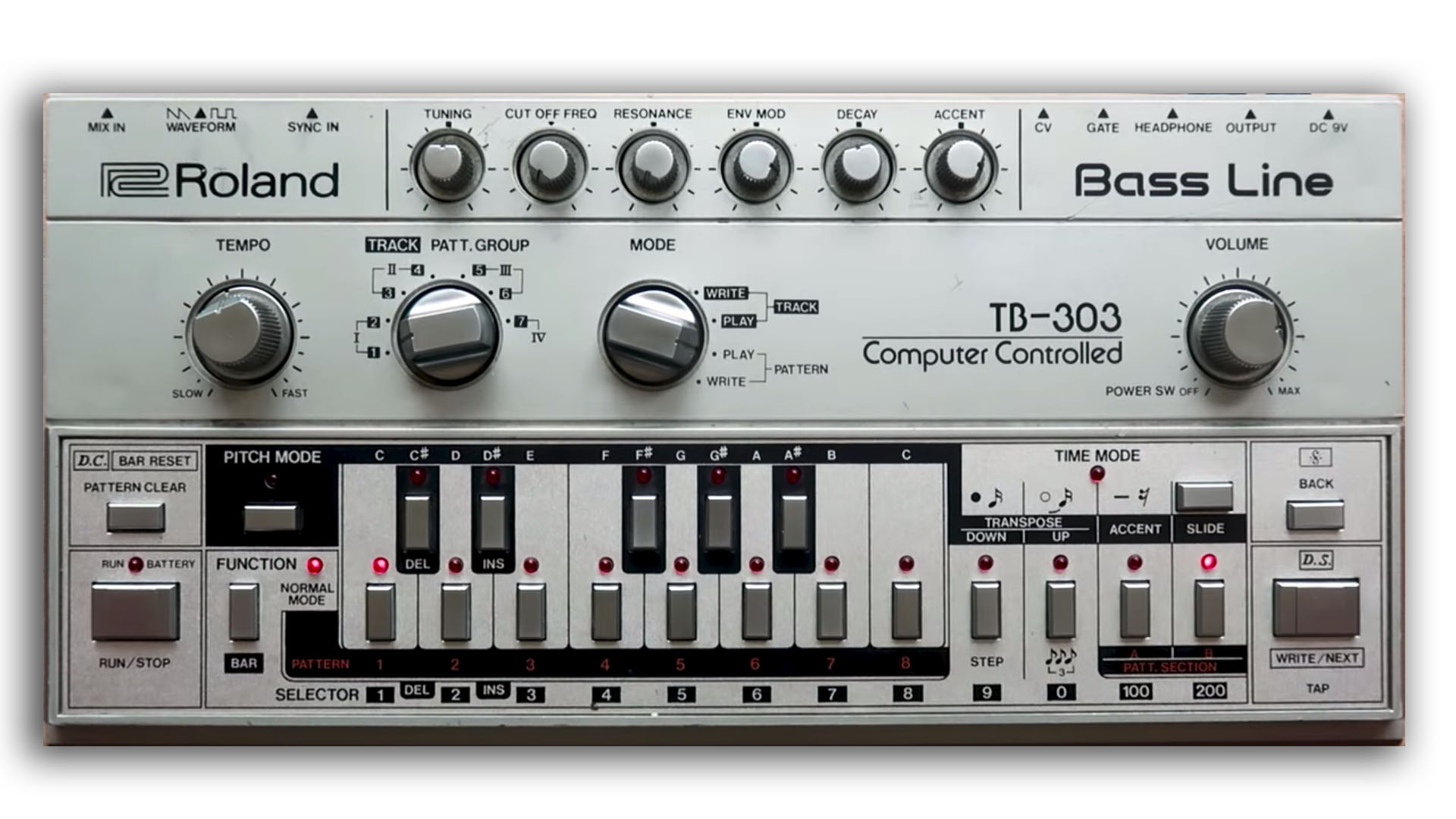
Despite the rapid advancements in AI-generated music, it's intriguing that nothing has come close yet to crafting an iconic, genre-defining sound like classic instruments such as the TB-303.