tag > Science
-
Against Hierarchies: Notes Toward a Logical Anarchism - Samim's commentary on "Hierarchical Introspective Logics" - by John F. Nash Jr., 1998

पूर्णस्य पूर्णमादाय पूर्णमेवावशिष्यते ॥
“Removing infinity from infinity, leaves infinity”
– Brihadaranyaka Upanishad
Let us begin by refusing the polite fiction that Hierarchical Introspective Logics is a technical solution to anything. It is not. It is a symptom. A well-mannered, carefully typeset symptom of a much older intellectual disease: the belief that when thought collides with its own limits, the appropriate response is to build a taller bureaucratic structure.
Gödel did not discover a small technical flaw in formal logic. He discovered that self-certifying reason is impossible. Nash accepts this discovery in words, but then proceeds to behave as though it were a logistical inconvenience rather than a structural impossibility. His hierarchies are not insights; they are filing systems for paradox.
The trick is familiar. When a system cannot justify itself, introduce a supervisor. When the supervisor cannot justify itself, introduce a supervisor of the supervisor. Continue indefinitely. Call this “progress”. At no point ask why supervision itself is assumed to be the right response.
This is not courage. It is discipline masquerading as depth.
What Nash calls “introspection” is in fact a prohibition. Each level may speak about the one below, but none may speak fully about itself. This is not a discovery about logic. It is a rule imposed to prevent embarrassment. Paradox is not solved; it is quarantined. One might admire the cleanliness of the quarantine while still noticing that the disease remains endemic.
The hierarchy reproduces itself endlessly because it must. Each level re-enacts the same drama: expressive power produces undecidable truths, consistency cannot be proven internally, and justification must be outsourced. This is not a staircase toward truth. It is a fractal of evasion. Zoom in, and you find incompleteness. Zoom out, and you find incompleteness. The pattern is invariant. Only the notation changes.
Here we encounter the real sleight of hand. Nash invites us to confuse organization with explanation. Because the paradox is now arranged neatly by levels, we are encouraged to believe that something has been achieved. But rearranging a problem does not diminish it. A labyrinth with better signage is still a labyrinth.
The invocation of ordinals and infinity adds an aura of inevitability, as though the hierarchy were dictated by mathematics itself rather than chosen as a strategy. But infinity here functions as mythology, not substance. When definable ordinals run out, new axioms are declared. When those run out, more are introduced. This is not discovery. It is permission-giving. The hierarchy continues because we decide that it should.
At this point one is tempted to ask an impolite question: why should we accept that *this* mode of continuation is superior to any other? Why not add the Riemann Hypothesis directly as an axiom? Why not embrace inconsistency locally? Why not tolerate plural, incompatible systems side by side? Nash offers no answer except tradition and taste, dressed up as necessity.
This is where the reverence for formalism becomes ideological. The hierarchy is presented as the natural, disciplined alternative to “arbitrary” axioms. But discipline is not neutrality. It is a preference. A historically conditioned one. Other mathematical cultures, other epistemic traditions, have lived quite happily without this obsession with global consistency and meta-certification.
Gödel’s result does not demand hierarchy. It demands humility. Nash supplies hierarchy instead.
The deeper error lies in the unexamined assumption that logic must aspire to timeless authority. Proofs are temporal acts. They occur in history, under constraints, by finite agents. Truth, meanwhile, is treated as an eternal object hovering above these acts. The attempt to force the former to certify the latter is what generates paradox in the first place. Nash’s levels merely postpone the confrontation by slicing time more finely.
One might say that the hierarchy replaces the fantasy of a single God’s-eye view with the fantasy of an infinite committee of lesser gods, each certifying the paperwork of the one below. This is not liberation from absolutism. It is absolutism distributed across infinitely many desks.
A genuinely radical response to incompleteness would not try to manage it. It would abandon the demand it frustrates. It would accept that mathematics, like science, advances by inconsistency, bricolage, historical accident, and local success rather than global justification. It would treat Gödel not as a problem to be administrated, but as a warning against epistemic monotheism.
From this perspective, Hierarchical Introspective Logics is impressive only in the way a well-run bureaucracy is impressive. Everything is in order. Nothing is resolved. The paradox is still there, patiently waiting at every level, unimpressed by the new titles assigned to it.
Gödel did not tell us that we need taller systems.
He told us that there is no final system.
Nash builds upward anyway.
That is not a solution.
It is a preference.
And preferences, unlike theorems, are negotiable.
AGAINST METHOD, AGAIN
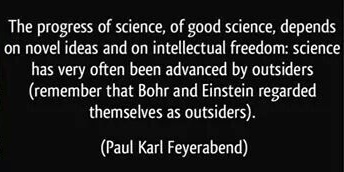
Science advances by violations, not by obedience.
Every method that claims universality mistakes habit for law.
This is not a rejection of rigor.
It is a rejection of methodological sovereignty.
1. No Method Owns Reality
Mathematics, statistics, falsifiability, peer review, reproducibility:
all are tools, none are judges.
When a method declares itself the final arbiter of truth, it ceases to explore and begins to govern.
Truth does not recognize jurisdictions.
2. Regularities Are Not Explanations
Patterns are observations, not verdicts.
A regularity across scales is not a law.
A resonance across domains is not a metaphysics.
A recurrence demanding immediate interpretation is a trap.
Nature repeats because it can, not because it must.
3. Reduction Clarifies Only What Survives Being Broken
Decomposition reveals components, not coherence.
Complex systems do not live in parts.
They live in relations that disappear when isolated.
When a method cannot handle feedback, self-similarity, or scale drift, it renames them noise and congratulates itself.
4. Falsifiability Is a Tool, Not a Virtue
Many productive ideas were unfalsifiable when introduced.
Some remain so longer than institutions tolerate.
To prohibit them in advance is not scientific discipline.
It is intellectual risk aversion disguised as ethics.
History shows that theories often become testable only after they are allowed to be wrong without punishment.
5. Methodological Purity Produces Sterility
Every foundational shift broke the rules of its time.
Copernicus violated physics.
Galileo violated epistemology.
Quantum theory violated causality.
Complexity theory violated reductionism.
Each was accused of mysticism.
Each was later called inevitable.
Inevitable is the name orthodoxy gives to heresy after surrender.
6. Hierarchies Do Not Resolve Paradox
Pushing contradiction one level upward does not solve it.
It delays responsibility.
Recursive systems do not terminate cleanly.
They stabilize locally, then fail again.
A framework that cannot survive its own recursion is not deep.
It is fragile.
7. Noise Is Structural, Not Accidental
Life exists in variance, not averages.
Meaning emerges in misalignment, not consensus.
The obsession with noise elimination is an obsession with control.
8. Interdisciplinarity Without Risk Is Decoration
Borrowing vocabulary without breaking disciplinary borders is mimicry.
True cross-fertilization produces hybrids that offend specialists.
That offense is a signal, not a flaw.
9. Any Theory That Requires Protection Is Finished
No framework deserves immunity.
No critique deserves finality.
The moment a method demands silence instead of counterexamples, it becomes theology with citations.
The Only Rule That Survives
“Anything goes” does not mean everything is equal.
It means no gatekeeper decides in advance what may count.
Let ideas compete under interference.
Let them mutate.
Let them fail loudly.
What survives disruption earns attention.
Not obedience.
Progress does not come from cleaner rules. It comes from dirt under the rules.
See this related post - #Comment #Philosophy #Science
-
Zeroing In on Zero-Point Motion Inside a Crystal
A nanocrystal cooled to near absolute zero produces an unexpected light emission, which is shown to arise from quantum fluctuations in the crystal’s atomic lattice.
-
#Comment: Geometry is a special case of time - the spatial crystallization of temporal relations. Temporality itself is a local deformation of the timeless - a ripple in the infinite, which only appears as motion when seen from within. Numbers are what’s left when the infinite slows enough to be counted. It’s beautifully paradoxical.
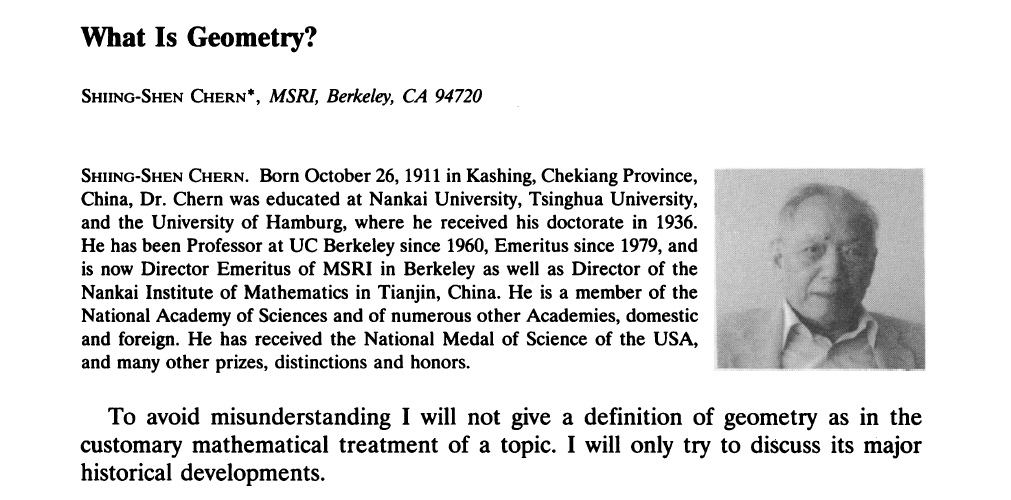
In responds to:
"What Is Geometry?" - by Shiing-Shen Chern- Axioms (Euclid)
- Coordinates (Descartes, Fermat)
- Calculus (Newton, Leibniz)
- Groups (Klein, Lie)
- Manifolds (Riemann)
- Fiber bundles (E. Cartan, Whitney)
"A property is geometric, if it does not deal directly with numbers"
-
"Either mathematics is too big for the human mind, or the human mind is more than a machine" - Kurt Gödel
-
How Power Manages Science and Technology
When scientific and technological research touches the fundamental levers of control — energy, biology, computation — elite power structures (deep states, intelligence agencies, ruling classes, mafias, etc.) not only monitor it, but may also shape, obscure, or re-route its development to serve long-term strategic dominance.
The modern myth is that science is pure, open, and self-correcting. But in reality:
- What gets researched is funded.
- What gets funded is surveilled.
- What threatens power is either co-opted or buried.
- What can’t be buried is mythologized.
The following is a realpolitik framework for how powerful technologies and elite governance actually intersect.

Framework
Stage 1: Anticipate: Pre-adaptive Surveillance of Knowledge Frontiers - Identification of Strategic Potential & Actor Mapping
Powerful technologies emerge decades before they’re publicly announced. Early-stage researchers may not fully grasp the consequences of their work — but elites do. Once a field is tagged as high-potential, key actors (scientists, funders, institutions) are tracked, recruited, or quietly influenced. An internal map of the epistemic terrain is built: who knows what, who’s close to critical breakthroughs, who can be co-opted or should be suppressed.
- Fund basic research not to build products, but to map the edge.
- Track polymaths, fringe theorists, and scientific iconoclasts.
- Run epistemic horizon scans (AI now automates this)
- Grant funding with strings attached.
- Placement of intelligence-linked intermediaries in labs.
- Psychological profiling and surveillance of leading minds.
- “Soft control” via academic prestige, career advancement, or visa threats.
Stage 2: Fragment: Strategic Compartmentalization & Obfuscation: Split Innovation Across Silos
Once a technology reaches strategic potential, the challenge is no longer identification — it’s containment. The core tactic is epistemic fragmentation: ensure no one actor, lab, or narrative holds the full picture. Visibility is not suppressed directly — it’s broken into harmless, disconnected shards. This phase is not about hiding technology in the shadows — it’s about burying it in plain sight, surrounded by noise, misdirection, and decoys.
- Compartmentalization: Knowledge is split across teams, so no one has full awareness.
- Parallel black programs: A classified mirror project runs ahead of the public one.
- Decoy narratives: Media and academia are given a simplified or misleading story.
- Scientific gatekeeping: Critical journals quietly steer attention away from dangerous directions.
- Epistemic fog-of-war: Build a social climate where control can thrive — not through suppression, but through splintering, saturation, and engineered confusion.
Stage 3: Instrumentalize: Controlled Deployment & Narrative Shaping
If the technology is too powerful to suppress forever, it’s released in stages, with accompanying ideological framing. The public sees it only when it’s safe for them to know — and too late to stop. Make it seem like a natural evolution — or like the elite’s benevolent gift to humanity. The most dangerous truths are best told as metaphors, jokes, or sci-fi.
But before the reveal, the real work begins:
- Integrate into command-and-control systems (military, surveillance, economic forecasting).
- Codify into law and policy: enabling new levers of governance (e.g. biosecurity regimes, pre-crime AI, carbon credits).
- Exploit informational asymmetry: e.g., high-frequency trading built on undisclosed physics or comms protocols.
- Secure control infrastructure: supply chains, intellectual property choke-points, and “public-private” monopolies.
- Pre-adapt the market and media — using subtle leaks, trend seeding, or early-stage startups as proxies.
Then the myth is constructed:
- Deploy symbolic shielding: cloak raw power in myth, film, or ironic commentary.
- Use rituals (commencement speeches, Nobel lectures, TED talks) to obscure the real nature of breakthroughs.
- Seed controlled leaks and semi-disclosures to generate awe, not revolt.
- Convert metaphysical insights (e.g. “life = code”, “mind = signal”) into operational control metaphors.
- Institutional gatekeepers (Nobel committees, national academies)Gatekeep with institutions: Nobel committees, elite journals, think tanks.
- Corporate-industrial partnerships (Big Pharma, Big Tech)
- Use luminary figures (public intellectuals, laureates, CEOs) to define what “good” use looks like.
The Real Control Layer Isn’t Secrecy — It’s the Story
To keep a grand secret, you must build an epistemic firewall that is not just informational, but ontological. It aims to suppress not just knowledge, but the framework through which such knowledge could be interpreted, discussed, or even believed. This isn’t about secrecy, it’s about cognitive weaponization. The secret isn’t contained by denying evidence, but by reframing language, redefining credibility, and contaminating epistemology itself. Over time, the cover-up matures into a self-replicating stable belief-control ecosystem. A strange attractor in the collective belief space. That’s how you preserve a secret in complex social environments: not by hiding it, but by making belief in it structurally impossible. (Source)
Techniques of Control at a Glance
Method Description Epistemic scaffolding Fund basic research to build elite-only frameworks Narrative engineering Design public understanding through myths & media Semantic disorientation Rebrand dangerous tech in benign terms (e.g. “AI alignment") Strategic discreditation Mock or marginalize rogue thinkers who get too close Pre-emptive moral laundering Use ethics panels to signal virtue while proceeding anyway Digital erasure Delete or bury inconvenient precursors and alternative paths Delay Buy time for elites to secure control infrastructure Obfuscation Misdirect public understanding through simplification, PR, or ridicule Compartmentalization Prevent synthesis of dangerous knowledge across fields Narrativization Convert disruptive tech into a safe myth or consumer product Pre-adaptation Create social, legal, and military structures before the tech hits public awareness Symbolic camouflage Wrap radical tech in familiar UX, aesthetic minimalism, or trivial branding Ethical absorption Turn dissident narratives into grant-friendly “responsible innovation” discourse Proxy institutionalization Use NGOs, think tanks, or philanthropy to launder strategic goals as humanitarian Controlled opposition Seed critiques that vent public concern while protecting the core systems Information balkanization Fragment discourse so that no unified resistance narrative can form Timed mythogenesis Engineer legends around specific discoveries to obscure true origin, purpose, or ownership
Freedom in a world where Revelation trumps Innovation?
Powerful technologies don’t just “emerge” — they’re groomed into the world. The future isn’t discovered. It’s narrated. And the narrative is controlled long before the press release drops. What is perceived by the public as discovery is, more often, revelation — staged for impact after control has been secured. By the time you hear about a breakthrough, it’s usually old news, already militarized, integrated into elite systems and stripped of its subversive potential.
If you’re serious about scientific freedom:
It is time for an Epistemic Insurgency.
Guerrilla ontologists, sharpen your models.
Build technologies for nonviolent struggle.
Rewrite the operating system of belief. -
In science, if the experiment works and can be reproduced, the path you took barely matters. Beware the high priest who tells you otherwise.