tag > fnord
-
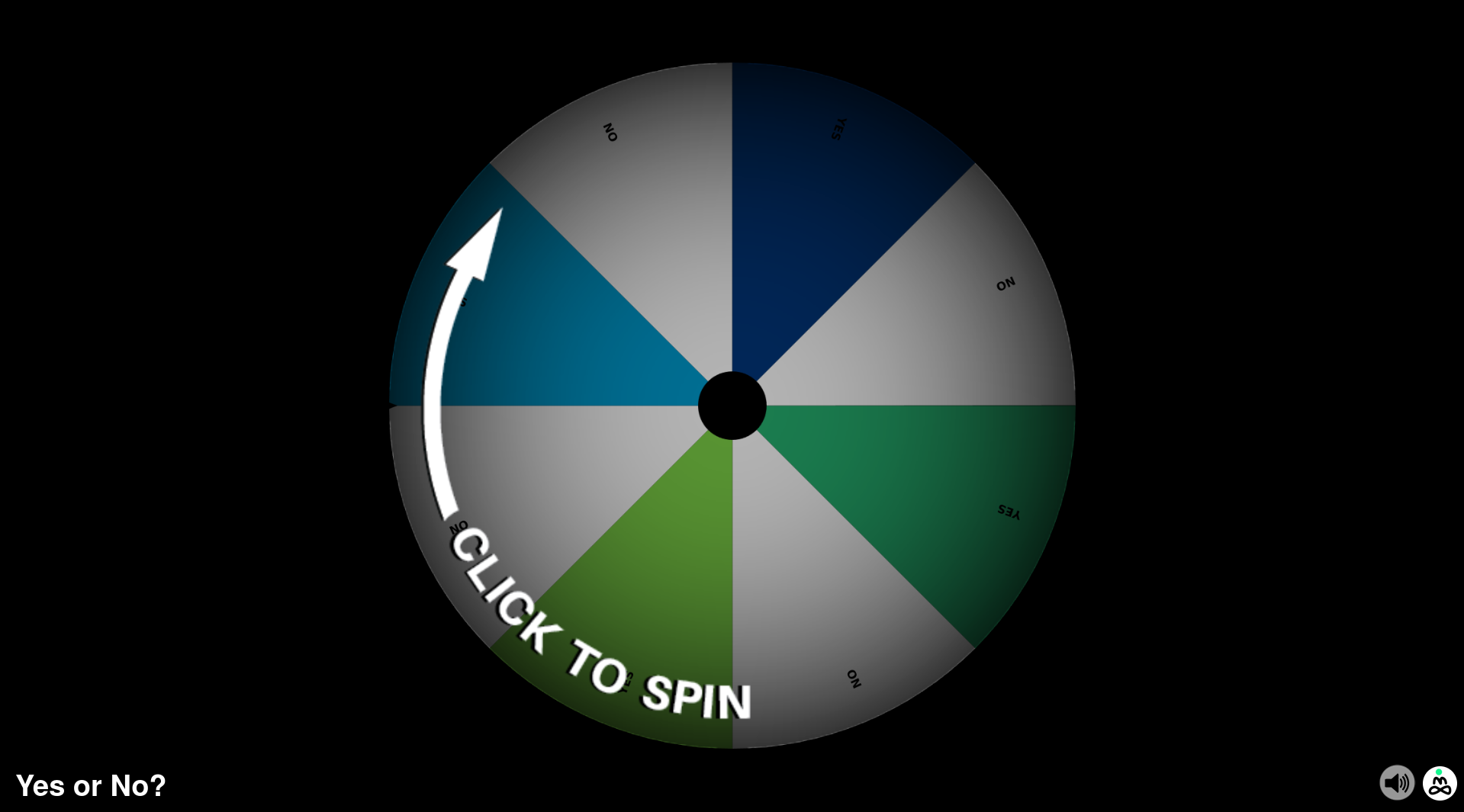
Introducing "Decide" - a simple tool for making swift Yes/No decisions: https://samim.io/decide/
Inspired by "Flipism", Decide is a celebration of the power of randomness in life's choices. Try it now and simplify your decision-making process 🎲✨
-
Stories from the Federal Bureau of Control’s paranormal headquarters

The mysterious, windowless, apocalypse-proof building known by its address, 33 Thomas Street, is the subject of much speculation. Formerly known as the AT&T Long Lines Building, it is assumed to be one of the NSA’s mass surveillance hubs codenamed TITANPOINTE. In an episode of the X-Files, cellphone data is used to copy consciousness and upload it into a virtual heaven hosted on servers in the Long Lines Building. However, virtual heaven ends up like digital slavery.
In the video game Control, the Federal Bureau of Control’s paranormal headquarters, where the inside is bigger than the outside, is based on 33 Thomas Street. The FBC is a secret government agency that investigates and contains AWEs, or Altered World Events, which are supernatural phenomena affected by the collective unconscious. The FBC also fights against the Hiss, an entity that corrupts reality, which they accidentally let invade through the HQ’s portal into the Astral Plane.

So, is there really a simulation or a portal inside the building at 33 Thomas Street? Perhaps these concepts are one and the same. All you need to do to create a portal into the collective unconscious is give everyone a cell phone that feeds them the same ideas. The real portal is the mind, or the imagination, and what we let into it eventually comes back out in some way, shape, or form.
Ironically, the FBC from Control was actually based on the SCP Foundation, a fictional secret organization and online collaborative writing project responsible for creating creepypastas and other forms of digital folklore. Memes can become hyper-real, and something fake can have very real effects, such as the Slender Man stabbing.
-
The main reason why the Lottery exists is to capture rogue time travelers.
-
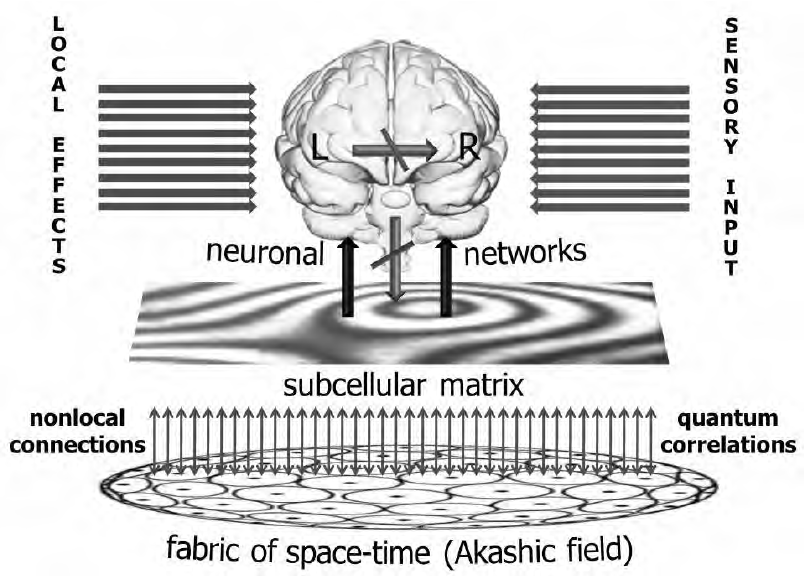
Step into the future with a career in Akashic field engineering. More rewarding and exhilarating than legacy AGI jobs. We are hiring non-locally. Apply now!
-
The decline of the octopus is opening unique opportunities to disrupt the balance of power. Large-scale p2p distributed information warfare networks augmented by weaponized open source AI capabilities, are an obvious and increasingly impactful factor.



-
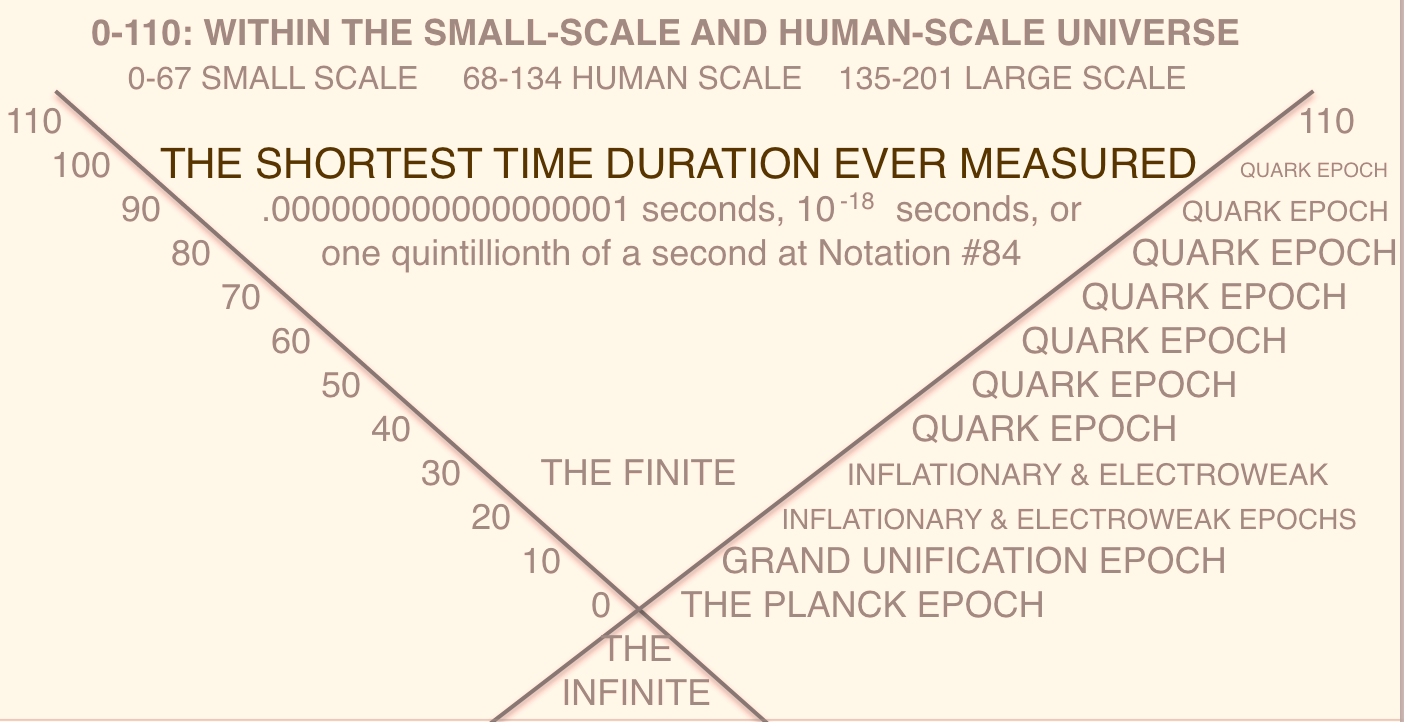
Planck Epoch: What is time? What is space? What is finite? What is infinite?
-
R.I.P. Antero Alli (1952-2023), a Finnish-American philosopher, writer, film-maker, theater director. Known for his books, incl. on the Eight-Circuit Model of Consciousness of Timothy Leary & Robert Anton Wilson.



"I have lived by a code of 'amor fati' for many years - in love with What Is; whatever fate comes my way, I accept. This is no passive acquiescence or subordination to death but a revolution of Spirit to the deep mystery pulsing at the very heart of existence itself." Antero Alli, March 17, 2023
Antero came to redefine death as "Genesis" - a new beginning, a portal into the next chapter of his journey. Our beloved Antero transcended into Genesis yesterday around 12:45pm at home in Portland, Oregon. In his words, "Honestly, I'm not one to mourn over but to celebrate..."
Arto Antero Alexander All - 11/11/1952 - 11/9/2023
-
Iona Miller RIP (1949 - 2021) - Thank you for all the food for thought and spirit

-
Cheers to the brave souls who declare they've figured it all out and have everything under control. Your tightrope act in clown shoes is truly awe-inspiring!

-
The Strange Mystery of the Pauli Effect
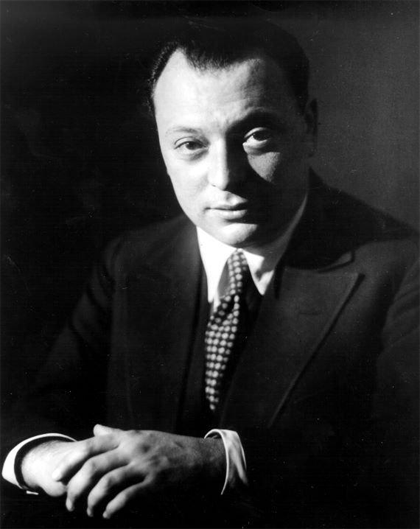
Austrian physicist, Nobel laureate, professor of theoretical physics at the Swiss Federal Institute of Technology, and early pioneer in quantum mechanics, Wolfgang Ernst Pauli is largely considered to be one of the most brilliant physicists to have ever lived. He was the first to propose the existence of the neutrino in 1930, won the Nobel Prize in Physics in 1945, was widely praised by Albert Einstein, won the Max Planck medal in 1958, and was instrumental to the development of many areas of theoretical physics and quantum theory. Pauli was highly respected among his peers, an impeccable scientific mind like no other, but he also had some rather strange ideas and oddness orbiting him, with one of these being what would later be called “The Pauli Effect.”
It began when people, including Pauli himself, noticed that whenever he was around in a lab there was an inordinate number of freak mishaps and malfunctions of equipment. Almost without fail, when Pauli entered a lab, things would break, electrical systems would malfunction or go haywire, beakers would crack, bunsen burners would fail to ignite, and various equipment would either stop working or experience some sort of disturbance, with even fires breaking out on occasion. Colleagues jokingly referred to it as “The Pauli Effect,” stating as one of its laws “a functioning device and Wolfgang Pauli may not occupy the same room,” but as it continued it became very noticeable that it seemed to all be beyond coincidence and jokes. The effect even seemed to work through walls or across distances. One popular anecdote is that one time Pauli was passing the railway station of Göttingen, when at that moment several pieces of lab equipment at the nearby University of Göttingen exploded without any apparent reason. Similarly, another story has it that when Pauli was visiting Princeton’s Institute for Advanced Study the Princeton University physics department’s massive cyclotron particle accelerator inexplicably burst into flames and burned for more than 6 hours before being put out.
As weird incidents like this increased in frequency, Pauli’s peers went from joking about it all to starting to believe there was something truly weird going on in the physicist’s presence, and that there was perhaps something to it. It is rumored that the experimental physicist Otto Stern once even banned Pauli from his lab for fear that he would break something or ruin an experiment. It is interesting to note how these serious, top level scientists were starting to elevate The Pauli Effect to a superstition, seeing it as beyond rational explanation. One science photographer by the name of David Fathi would once say of this:
I had a lot of problems trying to understand how some of the brightest minds of their time could give in to ideas that seem like pure superstition. But now I think that to work in a field like quantum physics, so abstract and far removed from common intuition, you probably have to be predisposed at thinking far out of the box, and you have to be creative and open to weird ideas.
Pauli himself began to seriously consider that there was some as yet unexplained phenomenon behind it all, convinced that it was all real. This was not a big jump for him, as he was already curious about parapsychology and subscribed to C. G. Jung’s ideas on synchronicity, which Jung described as “circumstances that appear meaningfully related yet lack a causal connection,” as well as the hidden meaning of dreams. Pauli began to come up with some way to explain it all, theorizing that certain people had the ability to somehow affect technical equipment in their vicinity through forces not yet understood. Pauli was so convinced that this was a real mystery that he discussed it at length with Jung. One of his ideas was that this was due to a sort of psychokinesis, in which mental energy is projected to have an effect on physical surroundings. Pauli would say:
The existence of relatively constant psychic contents that survive personal ego…All we can observe is their effect on other living people, whose spiritual level and whose personal unconscious crucially influence the way these contents actually manifest themselves.
It is interesting that Pauli’s musings on this are some of the earlier ideas put forth on psychokinesis, in an era before it even had an official, agreed upon name. Pauli was never able to prove any of this, but he allegedly spent much time pondering it and writing of it in his journals. He often lamented that there was no way to prove any of this under strict lab conditions, that in the end it was mostly based on anecdotal evidence, and that it was probably doomed to forever remain misunderstood. However, he maintained that the Pauli Effect was real, that people could mentally influence surrounding objects and electronics right up until his death in 1958. So was this just superstition among scientists or was there anything to it at all? It is hard to know just how grounded this was in reality, but it remains a curious little piece of lore merging science and the paranormal, as well as a strange little historical curiosity.