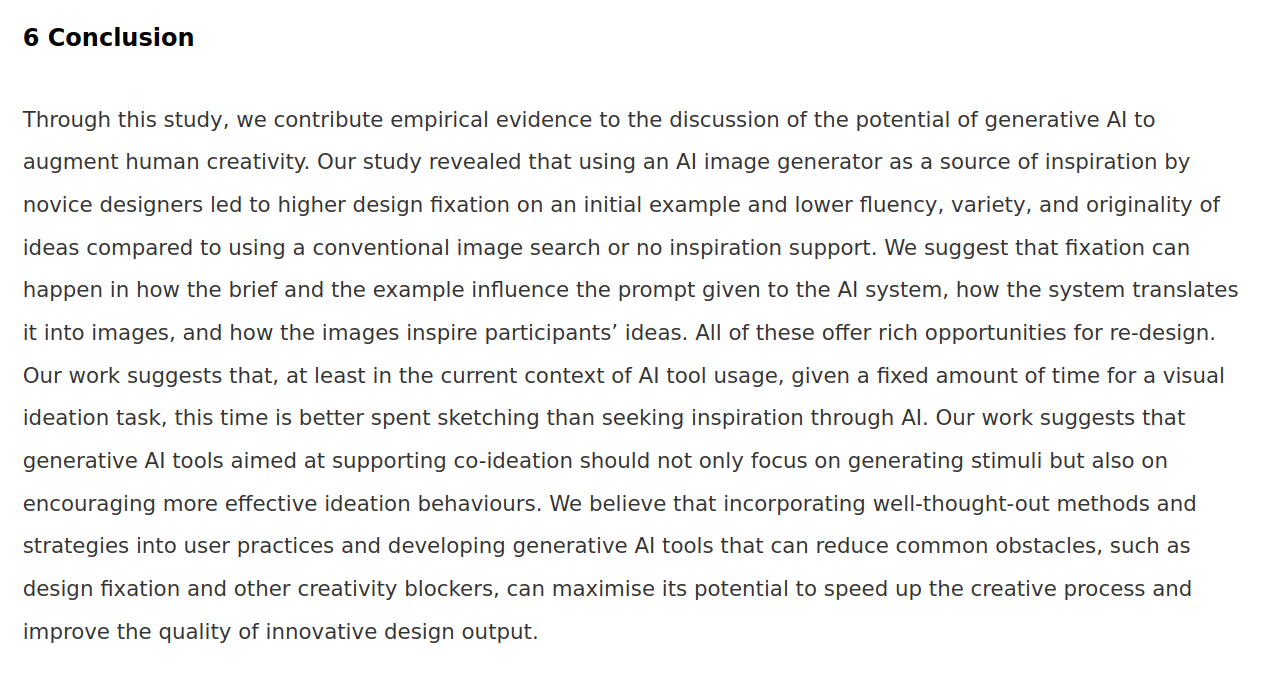
tag > Creativity
-
This is your reminder to embark on your own adventures. It’s not about how grand they are—it’s about taking that first step and embracing the journey over the destination.
-
For nearly a decade, I've been waiting for AI tools that can explore ideas seamlessly across different levels of abstraction—switching perspectives at will. Yet, beyond basic LLMs, this hasn't hit the mainstream. When will we see it? Who's working on this?
-
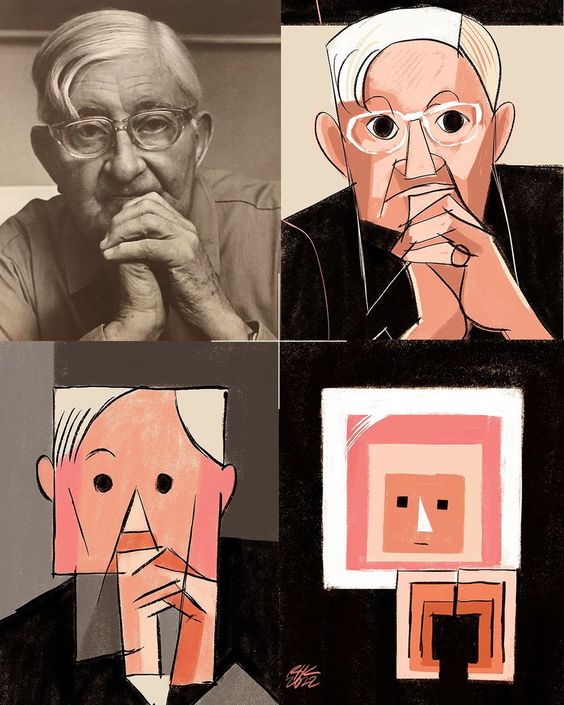
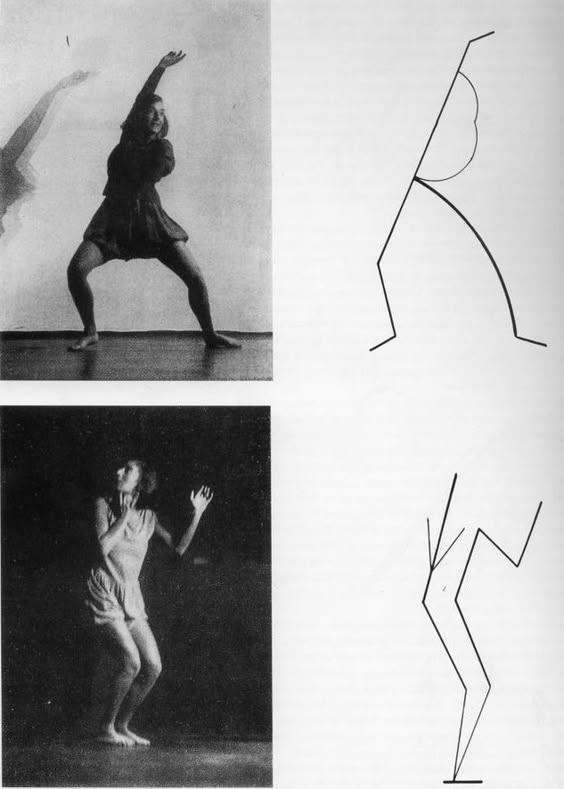
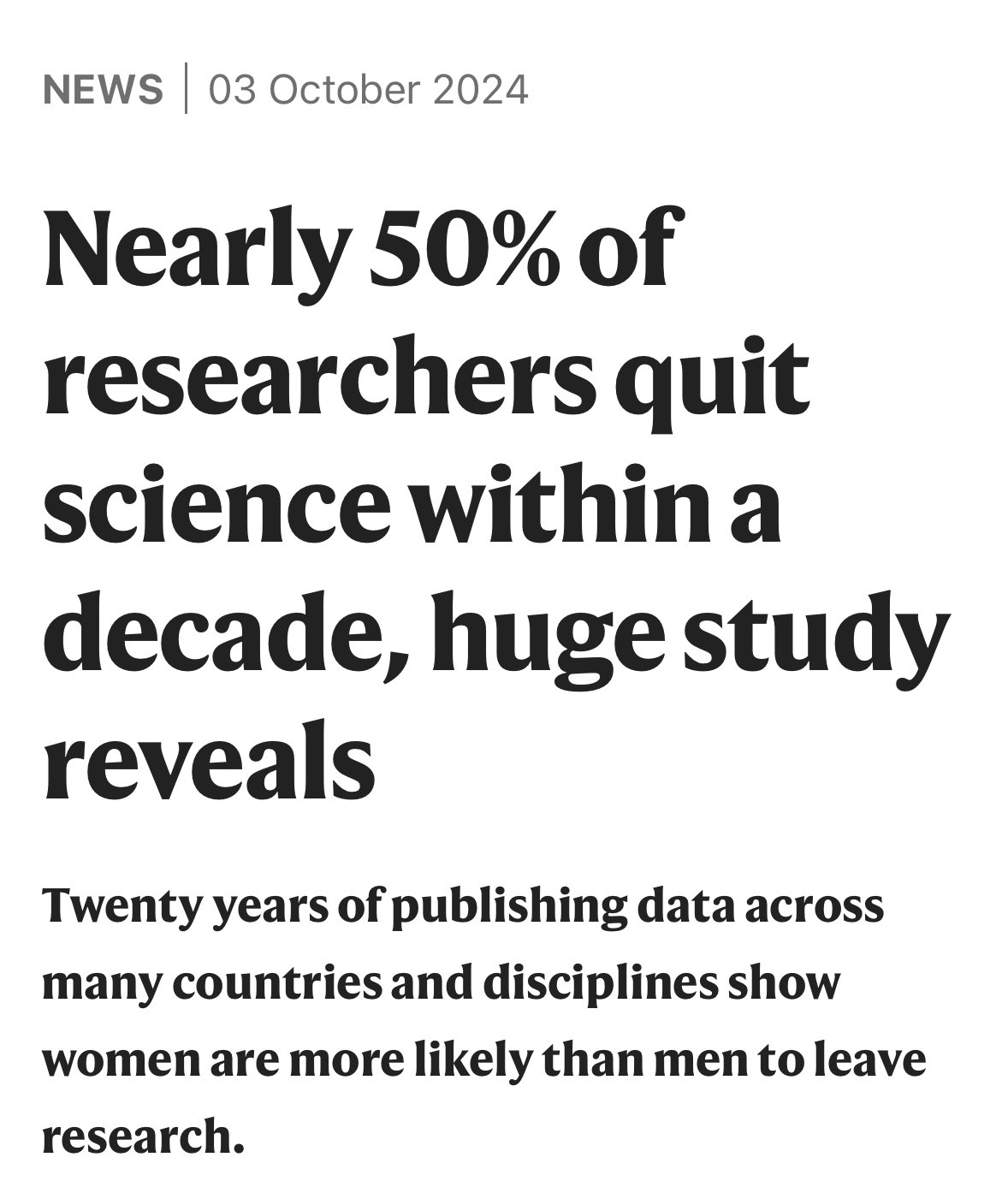
The scientific process is good at some things, but horrible at other things.
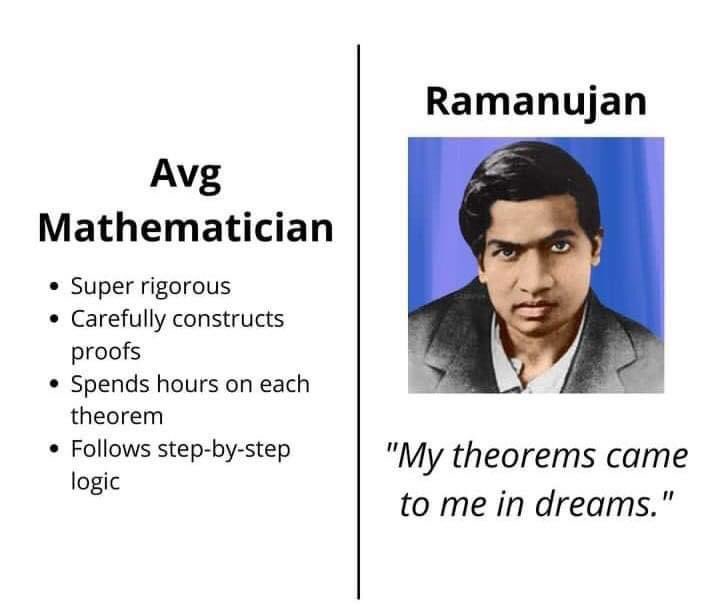
Related: "Eureka! The Story of Archimedes' Greatest Discovery is deeply misunderstood"
-
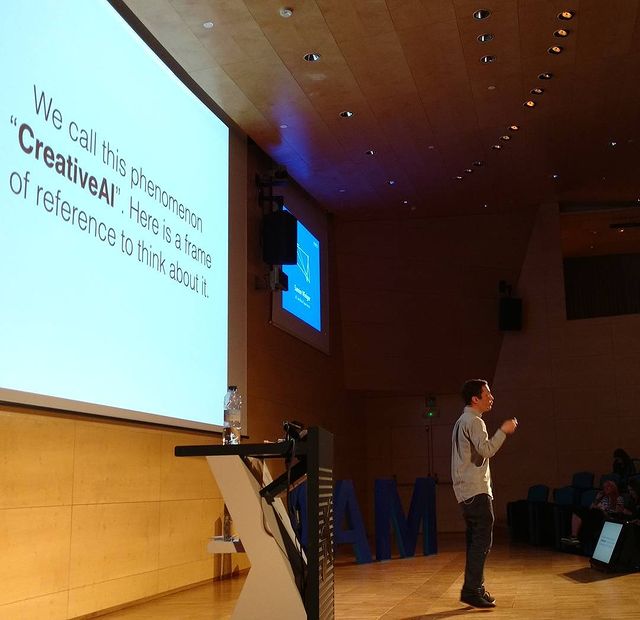
442 Weeks ago, in 2016, Samim Winiger was talking about Creative Artificial Intelligence at IAMW16
-
"A pile of rocks ceases to be a rock pile when somebody contemplates it with the idea of a cathedral in mind." - Antoine de Saint Exupéry

-
Thoughts on CreativeAI, 8 years later
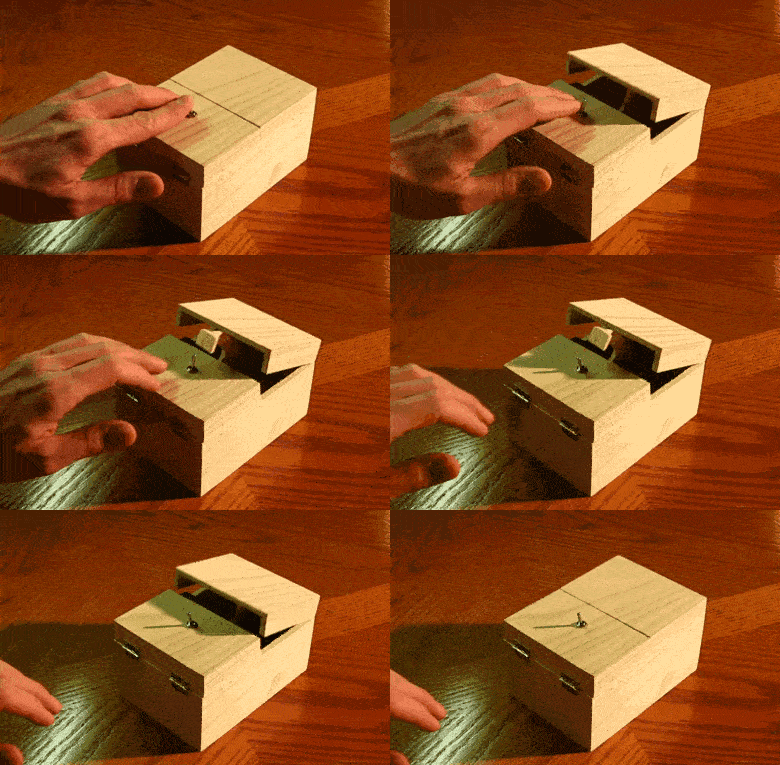
In light of an upcoming experiment, I've been revisiting a piece I wrote in March 2016 titled "Creative AI: On the Democratisation & Escalation of Creativity" (https://medium.com/@creativeai/creativeai-9d4b2346faf3). This expansive manifesto, which outlined much of the Generative AI landscape years before its mainstream emergence, hinged on a fundamental assumption: The central point of Generative AI Systems is to make more people more creative and to enable "a future where CreativeAI helps us raise the human potential."
Reflecting on this vision from today's vantage point, I now perceive it as rather naive and recognize it as just one of many competing viewpoints. The current landscape has revealed far more compelling scenarios that have yet to capture widespread attention—reminiscent of the nascent state of Generative AI in 2016. More on these ideas soon.
-
We know from biology that new forms of organisms simulate their primitive form as closely as possible at first, even though obliged to exist under changed internal and external conditions. - Wilhelm Ostwald
-
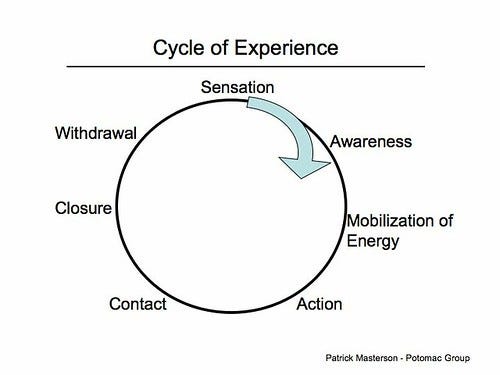
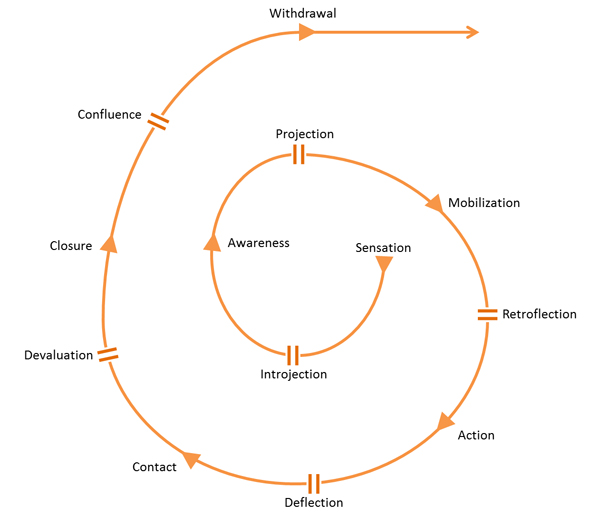
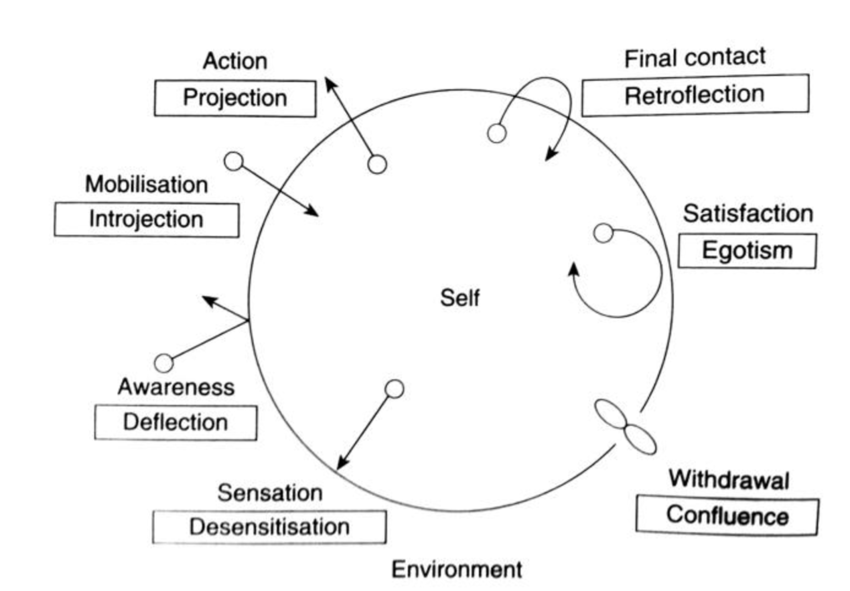
In 1947, Perls introduced what would become the cycle of experience. He called it Organismic/World Metabolism as a description of the process underlying the achievement of internal balance. He believed that there exists an instinctive cycle which reflected the “cycle of the interdependency of organism and environment.” (Perls, 1969, 44; 69)
This cycle was a self-regulating experiential cycle that maintained the internal equilibrium of each individual. Because self regulation for human beings involves some form of consciousness that includes moral regulation, the moral regulation, by it’s very nature, “must lead to the accumulation of unfinished situations in our system and to interruption of the organismic circle. (Perls, 1969, 45) Hence, we have an instinctual cycle that seeks to complete itself. However, through internal and/or outside influences, the completion of this cycle can be short-circuited, creating an incomplete cycle. This incomplete cycle, if necessary to return the organism to equilibrium, will continue to recycle until the original need is satisfied. Such situations result “in a ‘fixed Gestalt’ or ‘unfinished experience/situation’ which interferes with good contact with self, others, or the environment in the present.” (Clarkson, 2000, 7)
-
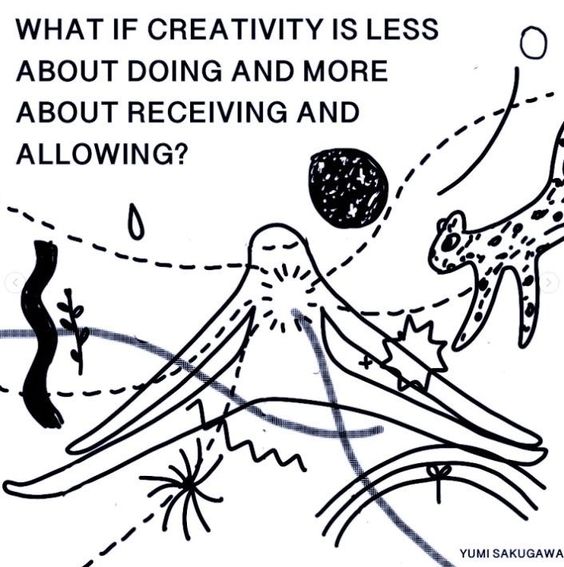
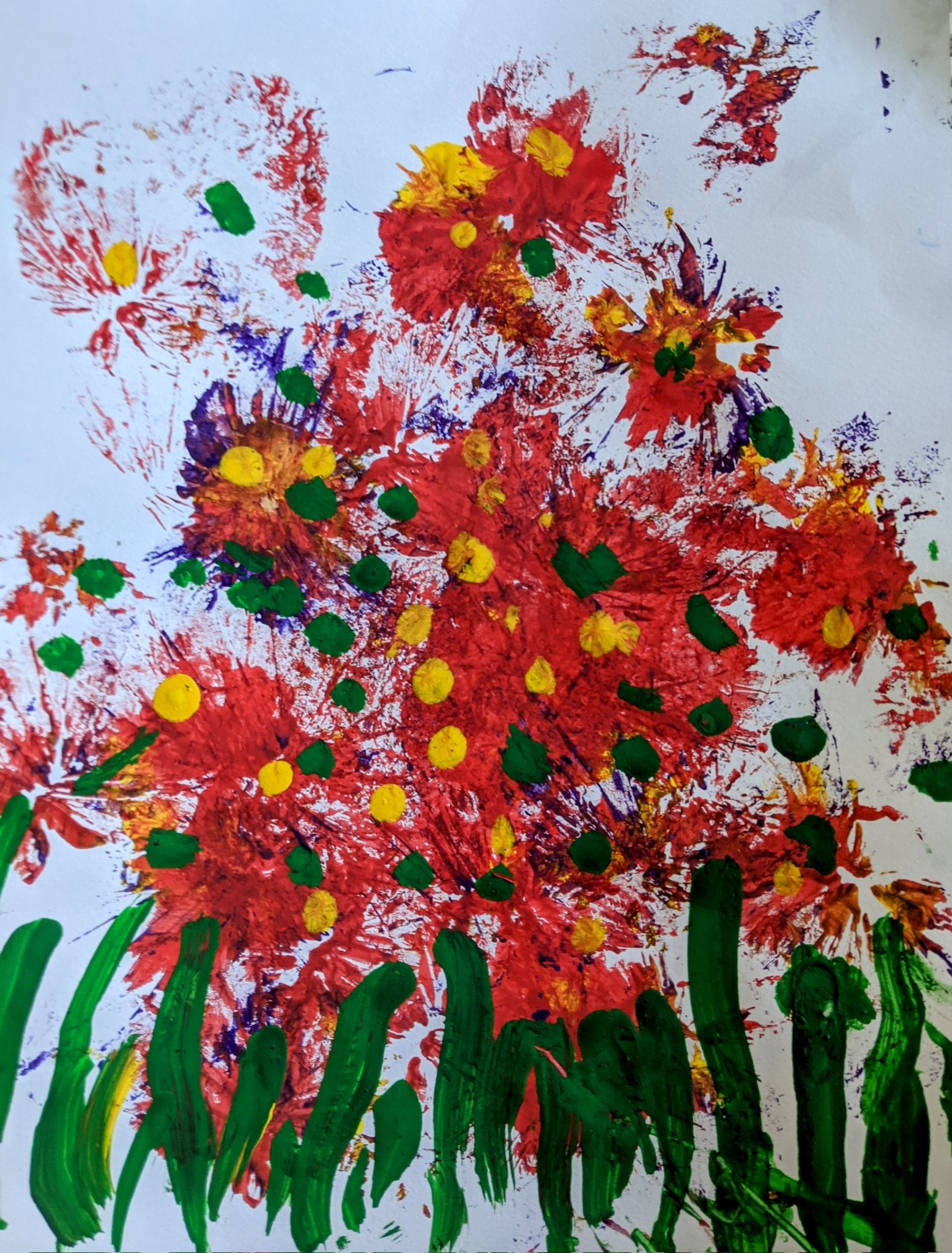
Today, our 4-year-old made this painting for me. It brought more joy to my heart than any of the billions of AI-generated images. It reminded me that the act of creation and the role of the creator are far more important than the artifacts themselves.
-
Exploring Generative Design Spaces
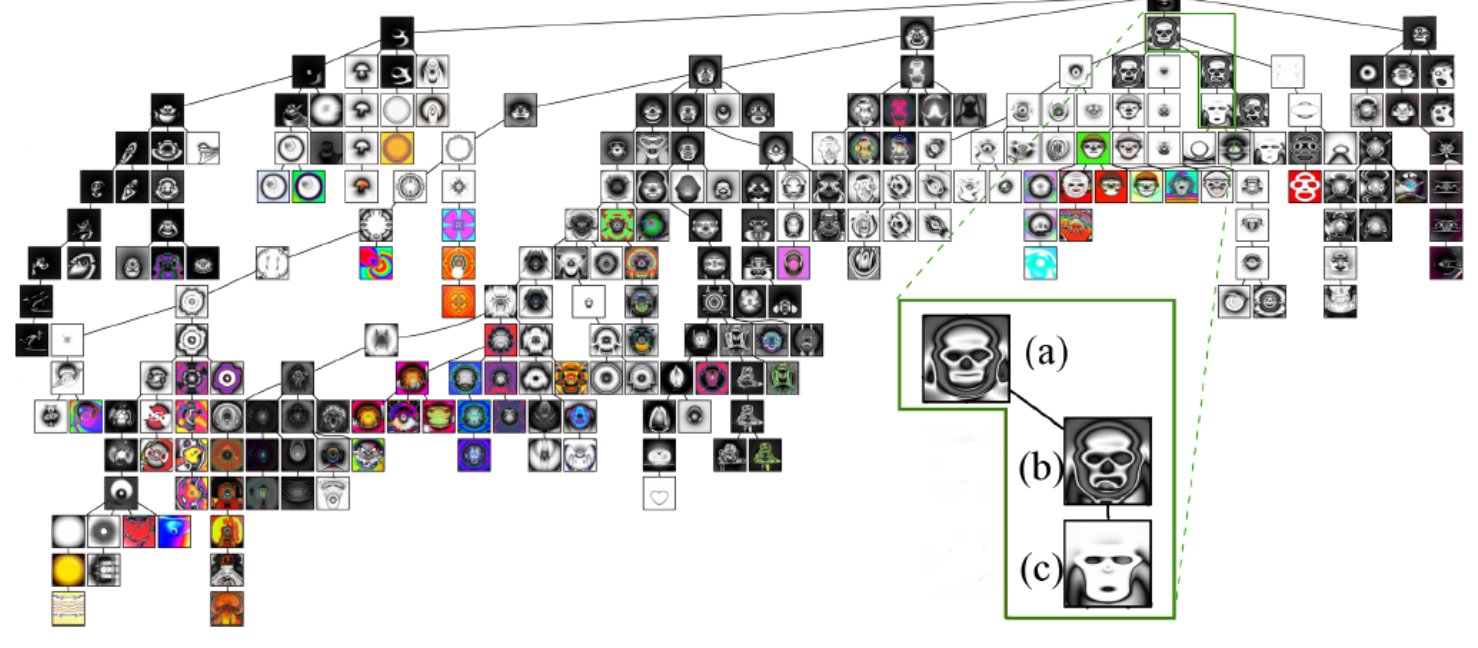
A primary HCI challenge of generative ML systems in creative settings is that the design possibility spaces that users are exploring are extremely large. Naive approaches - like manual prompting - do not scale. "Serendipity engineering" is still in its infancy.
It's fascinating that the Picbreeder experiment - A case study in collaborative evolutionary exploration of design space - which started in 2007 by @kenneth0stanley et al is still highly relevant and cutting edge today.
-
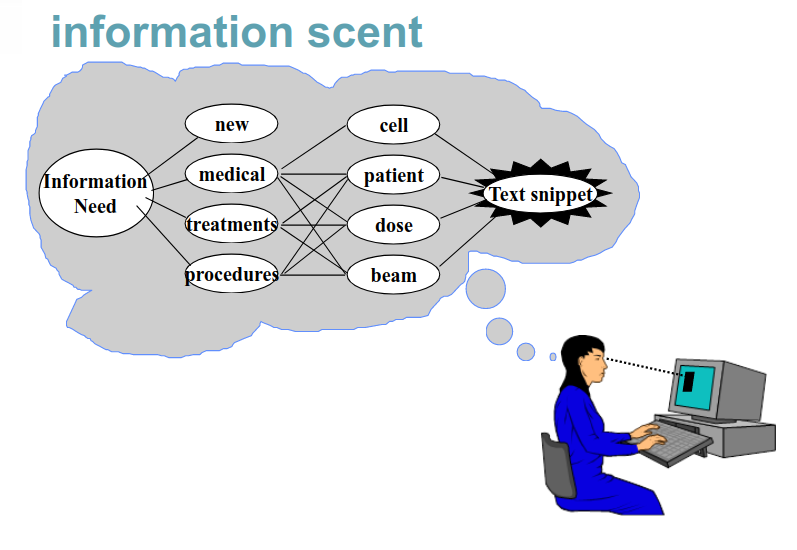
Information Foraging and Information Scent are poorly understood mechanisms how lifeforms navigate massive, complex search spaces efficiently.
-
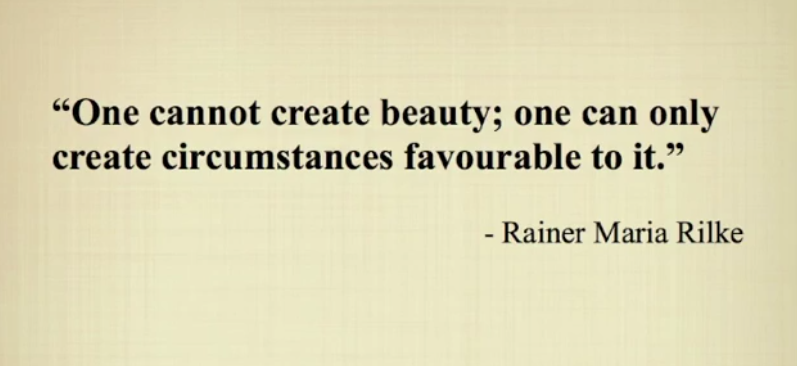
"One cannot create beauty; one can only create circumstance favorable to it" -Rainer Maria Rilke
-
The timid little flame of an idea needs playful fun to transform into a blazing magical fire
I forgot for a sec just how important "having fun" is as a gradient for success. One can research, engineer and optimize anything to the nth degree, but if the journey is not fun and personally meaningful, it's likely dead in the water.

Regardless of the project idea one considers, upon closer examination, one inevitably concludes that there are numerous ambiguities and challenges associated with it. Moreover, when presenting any idea to a group of ten people, at least five may fail to grasp it until a compelling pitch is crafted. Approaching ideas exclusively with an analytical engineering mindset swiftly spells doom for nascent concepts—it stifles innovation at its core, depriving it of the essential spark of playful creativity necessary for initiation. Consequently, the focus should not initially be on achieving a robust implementation with universal applicability, but rather on swift implementation and eliciting feedback. The timid little flame of an idea needs playful fun to transform into a blazing magical fire