tag > Creativity
-
In science, if the experiment works and can be reproduced, the path you took barely matters. Beware the high priest who tells you otherwise.
-
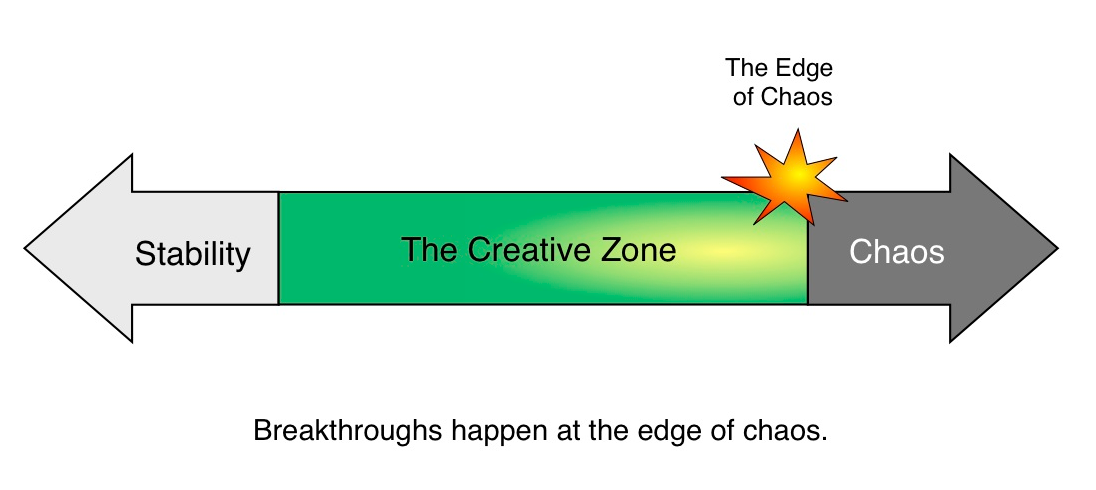
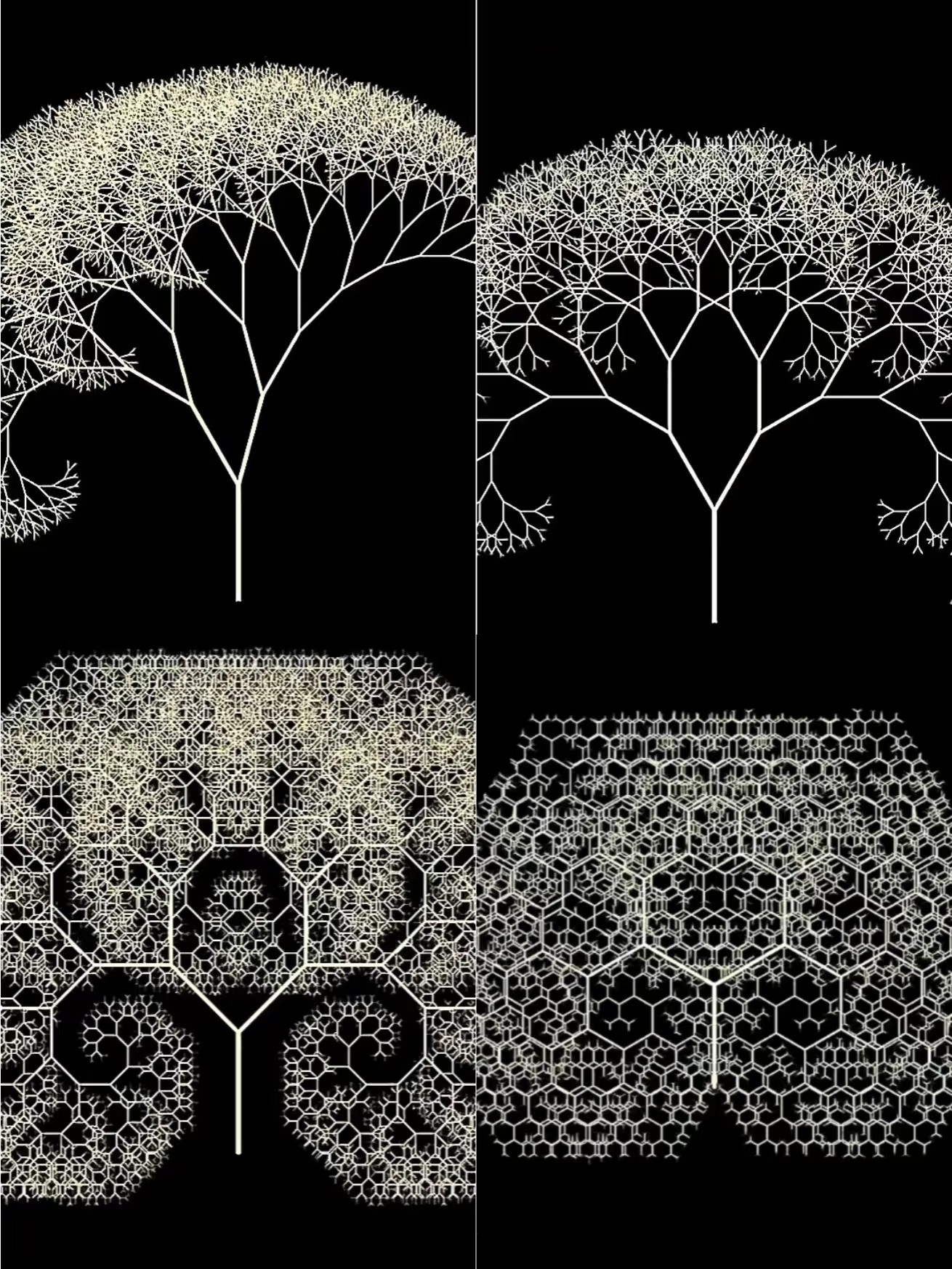
Life isn't about resisting chaos. Life is about blossoming into a natural and elegant order on the edge of chaos.
-
Exapt, Adapt, Disrupt: A Conceptual Framework for Systemic Innovation - by Jacqueline Fendt
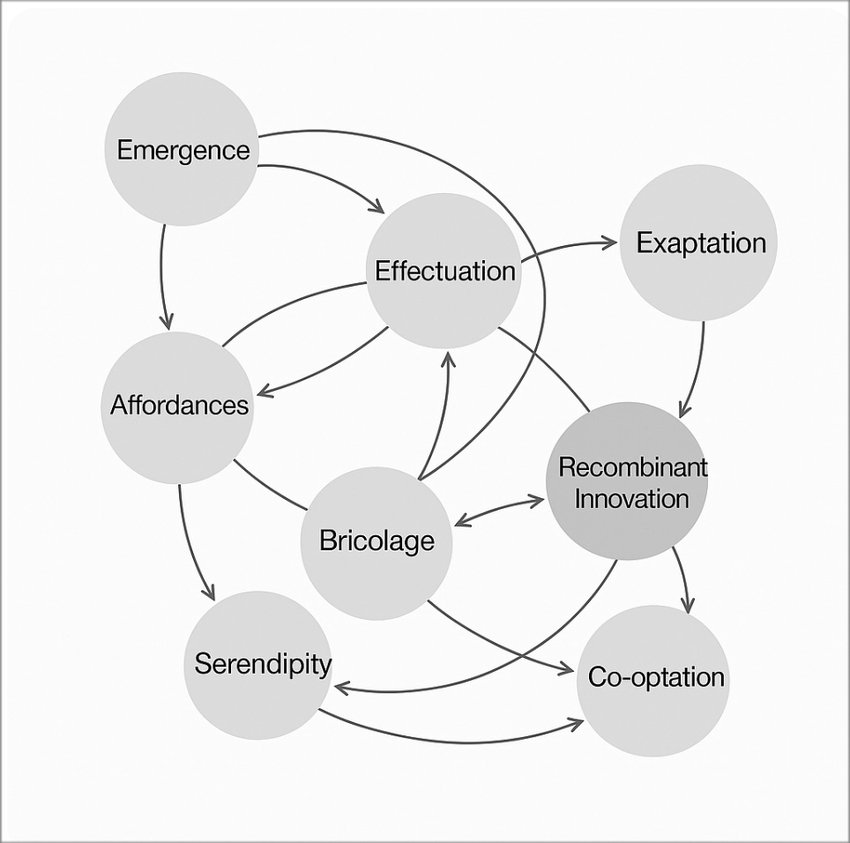
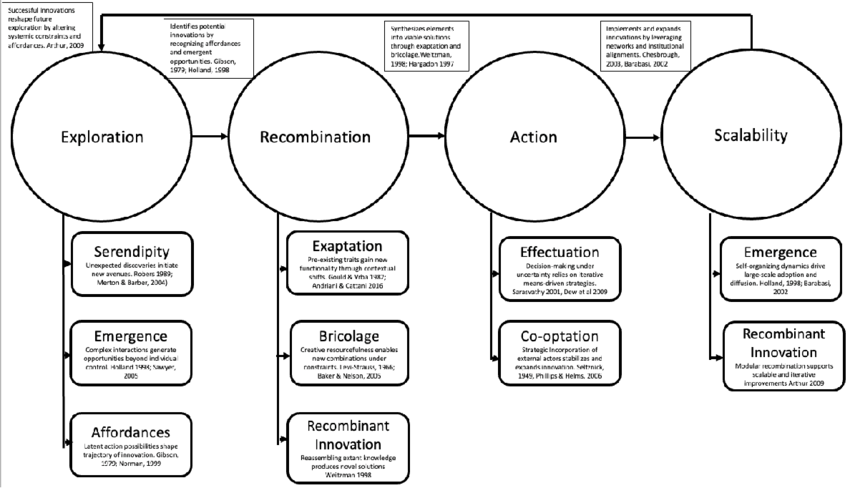
Abstract: How do breakthroughs emerge in unpredictable environments? This paper develops a unified framework for systemic innovation by integrating eight key concepts: exaptation, serendipity, emergence, co-optation, bricolage, affordances, recombinant innovation, and effectuation. By synthesizing insights from complexity science, sociology, and entrepreneurship, we reveal how creativity flourishes when innovators repurpose existing elements, harness uncertainty, and leverage unexpected affordances. Unlike conventional models that emphasize structured problem-solving, this framework captures the nonlinear, adaptive, and systemic nature of creativity in innovation ecosystems. We illustrate its applicability across diverse cases—from the exaptation of mRNA vaccines to the recombinant innovation of AI-driven drug discovery, the co-optation of gig work by tech giants, and the emergence of decentralized finance. Our findings suggest that transformative creativity is not a solitary act, but an emergent systems-level process shaped by adaptive recombination and strategic improvisation. By shifting the focus from predictive planning to creative adaptation, this study provides a novel roadmap for navigating uncertainty and fostering systemic change. It offers both scholars and practitioners an actionable lens to harness creativity, unlock latent affordances, and scale innovation in complex environments.
#Complexity #Science #ML #Creativity #Systems #KM #Generative #Augmentation
-
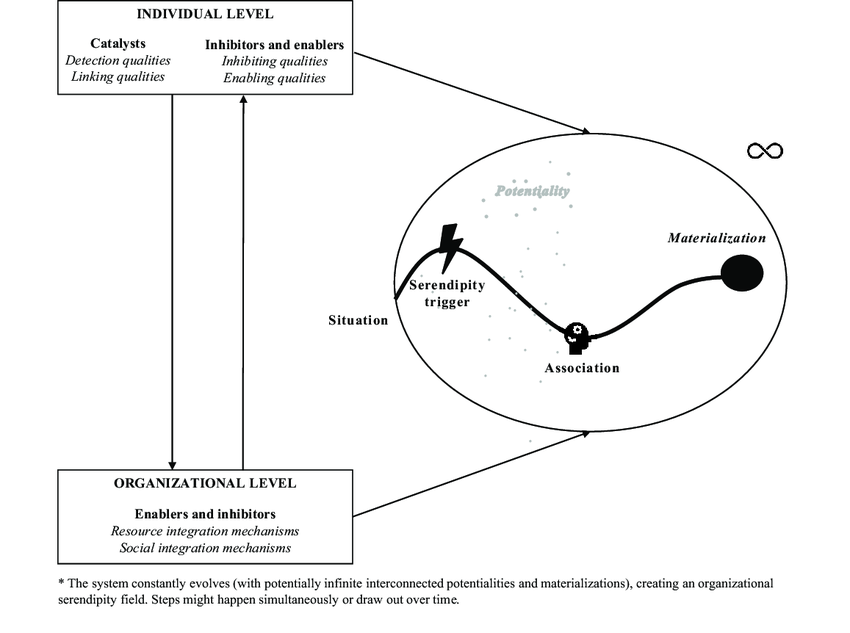
Towards a Theory of Serendipity: A Systematic Review and Conceptualization - by Christian Busch
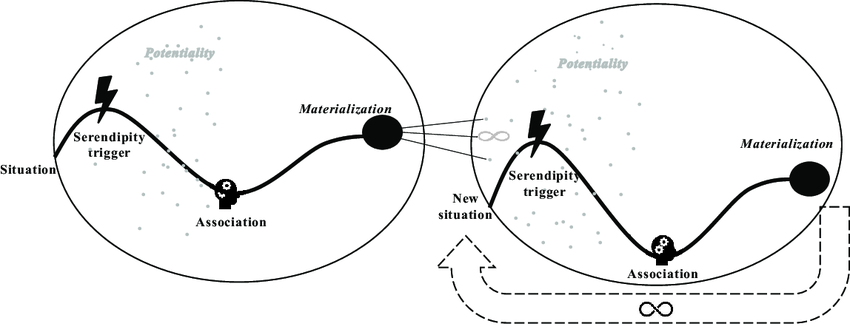
Serendipity is the discovery of valuable, unanticipated outcomes through exploration, often found while searching for something else. Serendipity is a catalyst for crossing emergence thresholds. Serendipity engineering tries to design systems that make serendipity more likely.
-
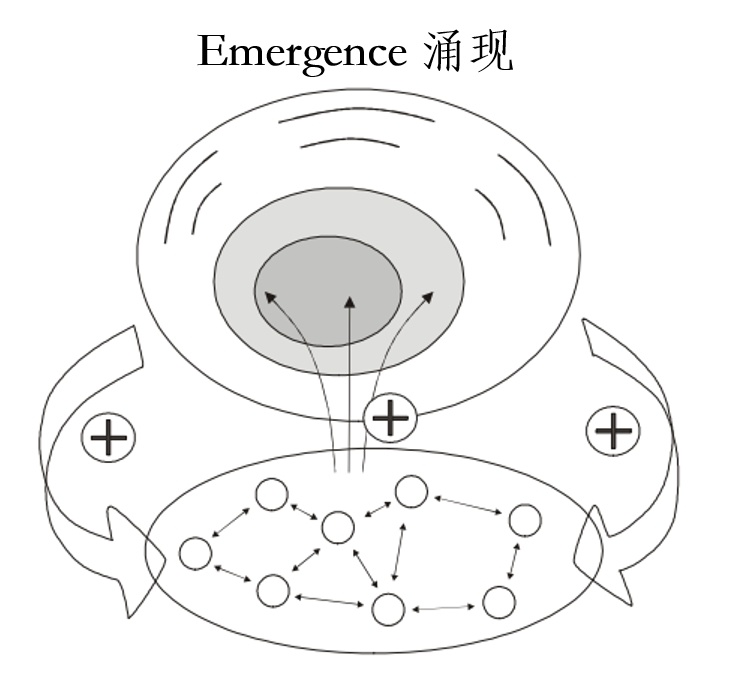
Emergence - The Key Role in Systems Thinking
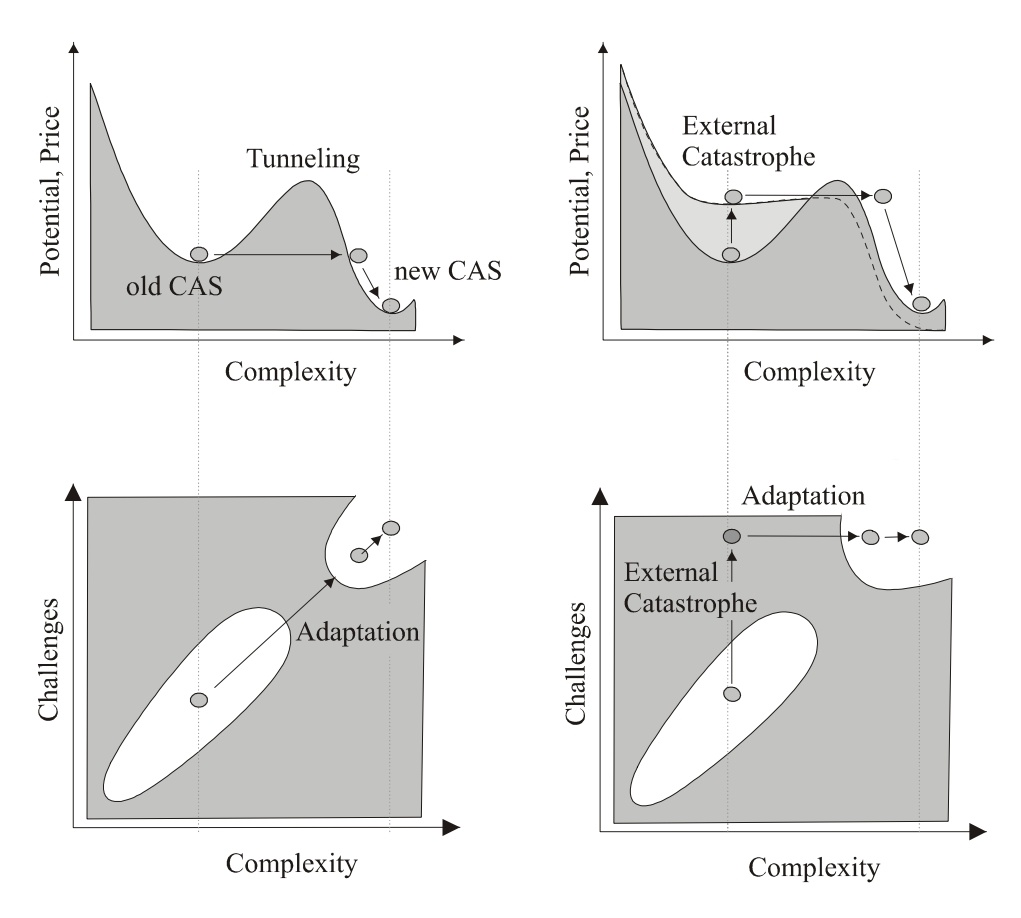
1. Definition and Core Paradox of Emergence
Definition: Emergence refers to properties that arise at a higher level of a system, which cannot be deduced or reduced from the individual characteristics of its basic elements. For example, life is an emergent property of gene interactions.
Paradox: Emergent properties possess both persistence and dynamism (e.g., the stable formation of a flock of birds despite individual changes), as well as dependence and independence (they depend on the system but are partially independent of microscopic elements).
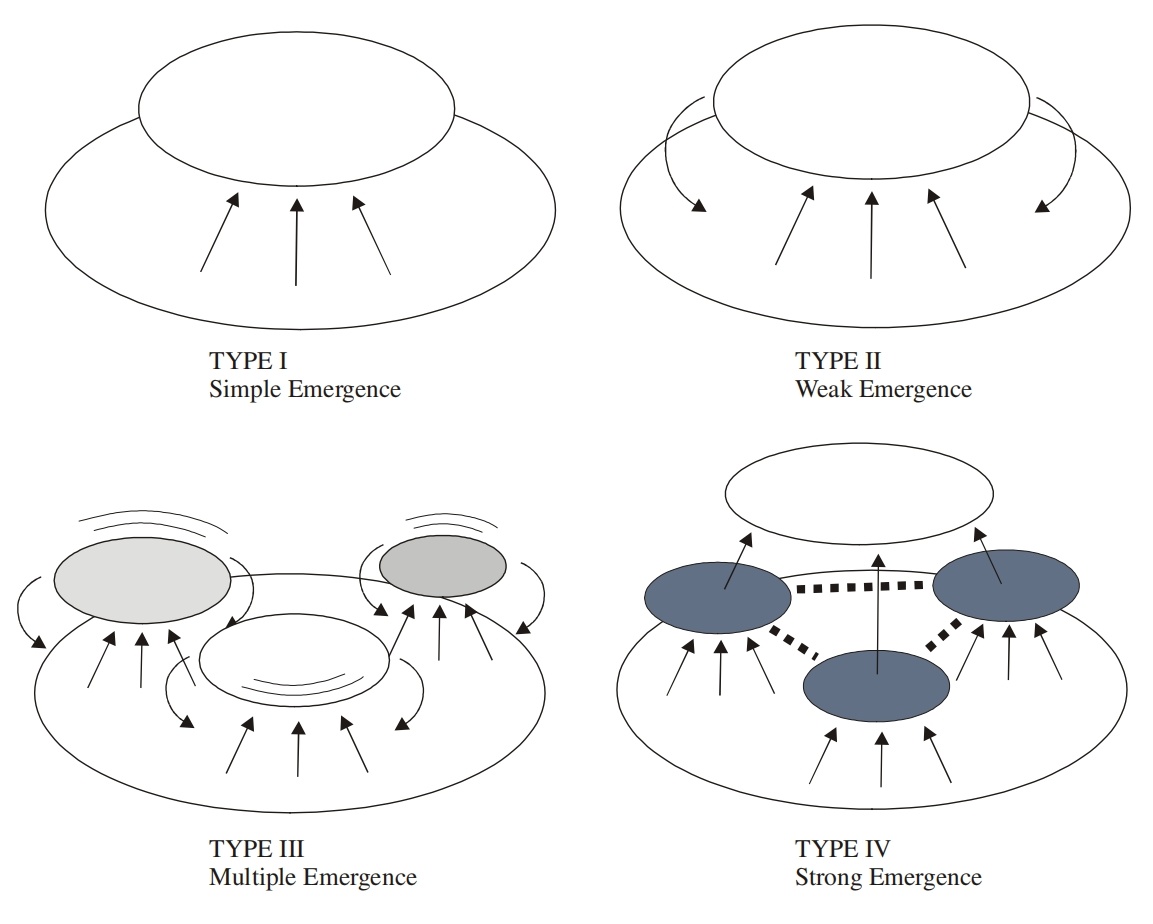
2. Classification Framework for Emergence
Emergence is classified into four types based on feedback mechanisms and causal relationships, each containing subtypes:
I. Simple Emergence (No Top-Down Feedback)
Ia (Intentional Emergence): Human-designed systems (e.g., machines, software) with clear and predictable functions but lacking flexibility. Examples: clock functions, code semantics.
Ib (Unintentional Emergence): Emergence of statistical average properties (e.g., gas pressure, network characteristics), dependent on relationships between elements but without feedback.
II. Weak Emergence (With Simple Feedback)
IIa (Stable): Dominated by negative feedback, forming stable patterns. Examples: ant foraging, bird flock behavior, market economy supply-demand balance.
IIb (Unstable): Positive feedback leads to short-term explosive phenomena. Examples: stock market bubbles, fashion trends, social media hotspots.
III. Multiple Emergence (Complex Feedback and Adaptability)
IIIa (Pattern Formation): Combination of positive and negative feedback, generating complex patterns. Examples: animal fur patterns, reaction-diffusion systems, cellular automata (e.g., "Conway's Game of Life").
IIIb (Adaptive Emergence): Systemic breakthroughs overcoming barriers, such as significant transitions in evolution. Examples: ecosystem evolution, scientific paradigm shifts.
IV. Strong Emergence (Irreducible New Systems)
New hierarchical systems completely independent of underlying rules, such as life based on genes, culture based on language. This type of emergence crosses the "correlation barrier," where microscopic details do not affect macroscopic behavior. Examples: the origin of life, the evolution of language.
3. Basis and Significance of Classification
Feedback Mechanism: From no feedback (Type I) to multiple feedbacks (Type III), ultimately to transcendent systems (Type IV).
Predictability: Type I is fully predictable, Type II is predictable in principle, Type III is chaotic and unpredictable, Type IV is unpredictable due to new laws.
Philosophical Relevance: Strong emergence is related to "supervenience," where higher-level properties depend on but are independent of the lower level.
4. Applications and Insights
Engineering and Science: Understanding emergence helps design robust systems (e.g., coping with unpredictable failures), and optimize collective intelligence (e.g., distributed algorithms).
Evolution and Innovation: Emergence explains breakthrough evolution in complex systems like life and culture, emphasizing the catalytic role of environmental mutations (e.g., disasters) in innovation.
-
“To myself I am only a child playing on the beach, while vast oceans of truth lie undiscovered before me” - Isaac Newton
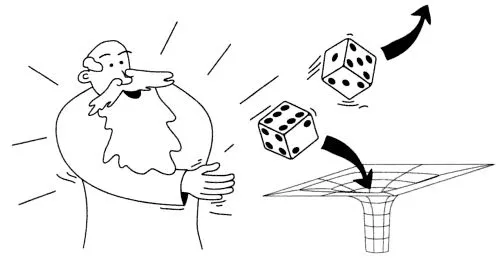
"The human mind is not capable of grasping the Universe. We are like a little child entering a huge library. The walls are covered to the ceilings with books in many different tongues. The child knows that someone must have written these books. It does not know who or how. It does not understand the languages in which they are written. But the child notes a definite plan in the arrangement of the books—-a mysterious order which it does not comprehend, but only dimly suspects." - Albert Einstein
-
Plotting the Pareto frontier of global scientific knowledge throughout history has become surprisingly feasible. The resulting patterns and models are both peculiar and illuminating.
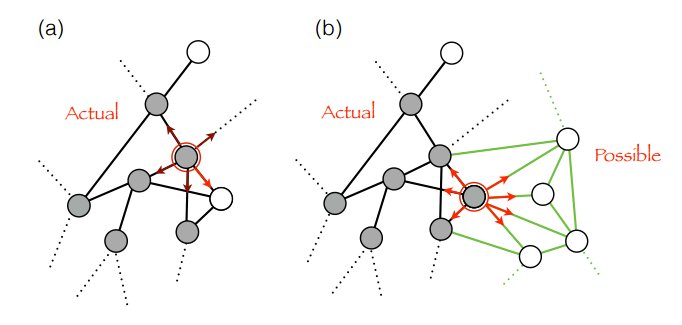
Image from: Dynamics on Expanding Spaces: Modeling the Emergence of Novelties (2017)
-
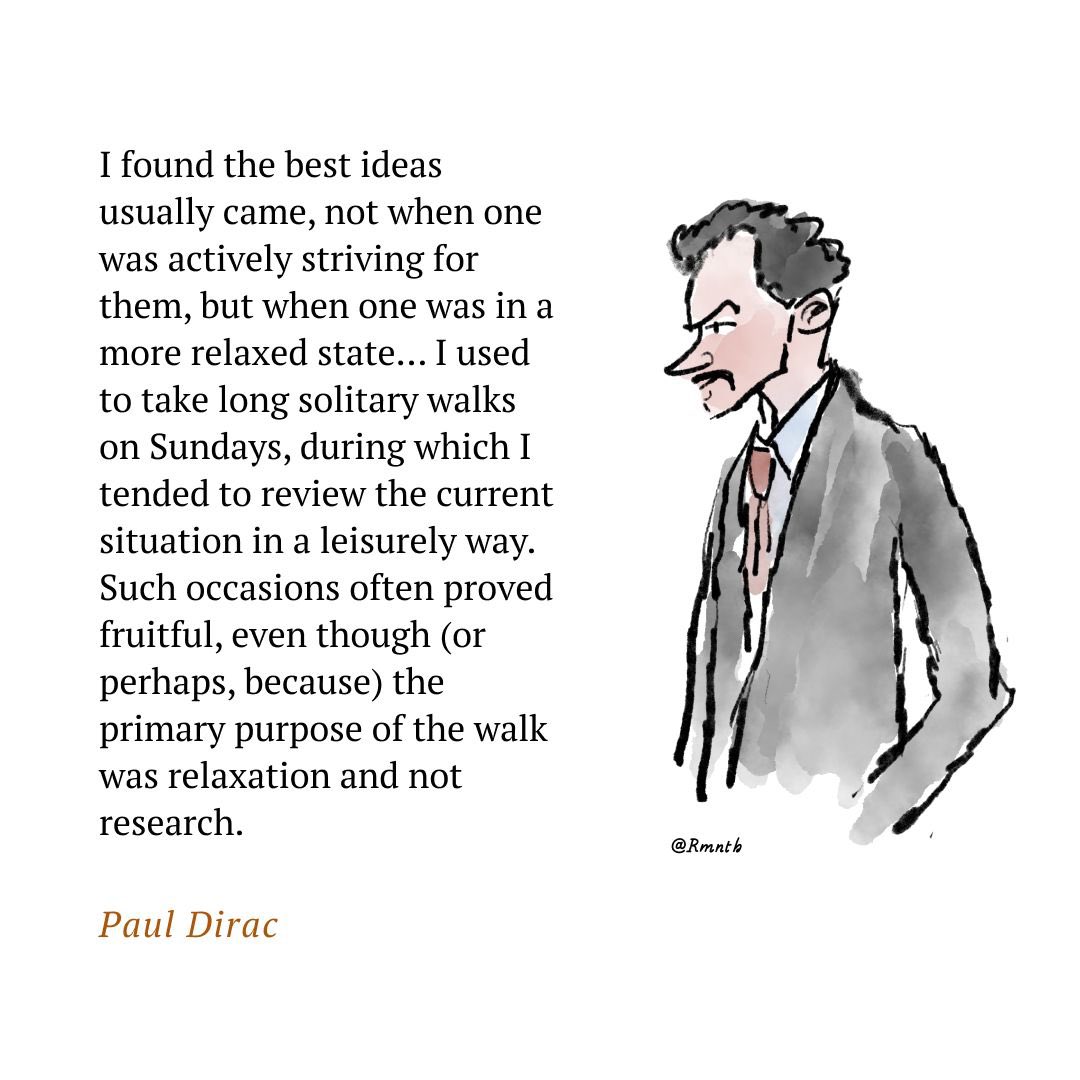
Paul Dirac on how to get good ideas: don't strive for them, be relaxed, go for a long walk.
-
I started my first startup at 19 and have built three more since. Through some wins and many failures, I’ve learned just how brutally hard it is to go from 0 to 1.
But the game is changing. AI can now build, clone, and market products in days—handling the entire startup life cycle. What once took countless people can now be done by one. And this shift is only accelerating. Everyone is a coder now. No moat will survive. The traditional startup playbook is being rewritten.
So what comes next? Nobody knows but some signals are clear—these will matter more: community-building, taste-making, performance, and LARPs—all powered by swarms of AI agents running the operations.
Given this shift, what should entrepreneurs focus on right now? Open to ideas!
My current working model is that full-stack AI tools will make 95% of SaaS businesses obsolete within 2-4 years (and later most businesses). What remains will be an AI Agent Marketplace run by tech giants, with former SaaS owners competing for relevance in this new ecosystem.
-
GRANDMA TOOK THE WRONG MUSHROOMS - AI Generated Cartoon, made with Gemini
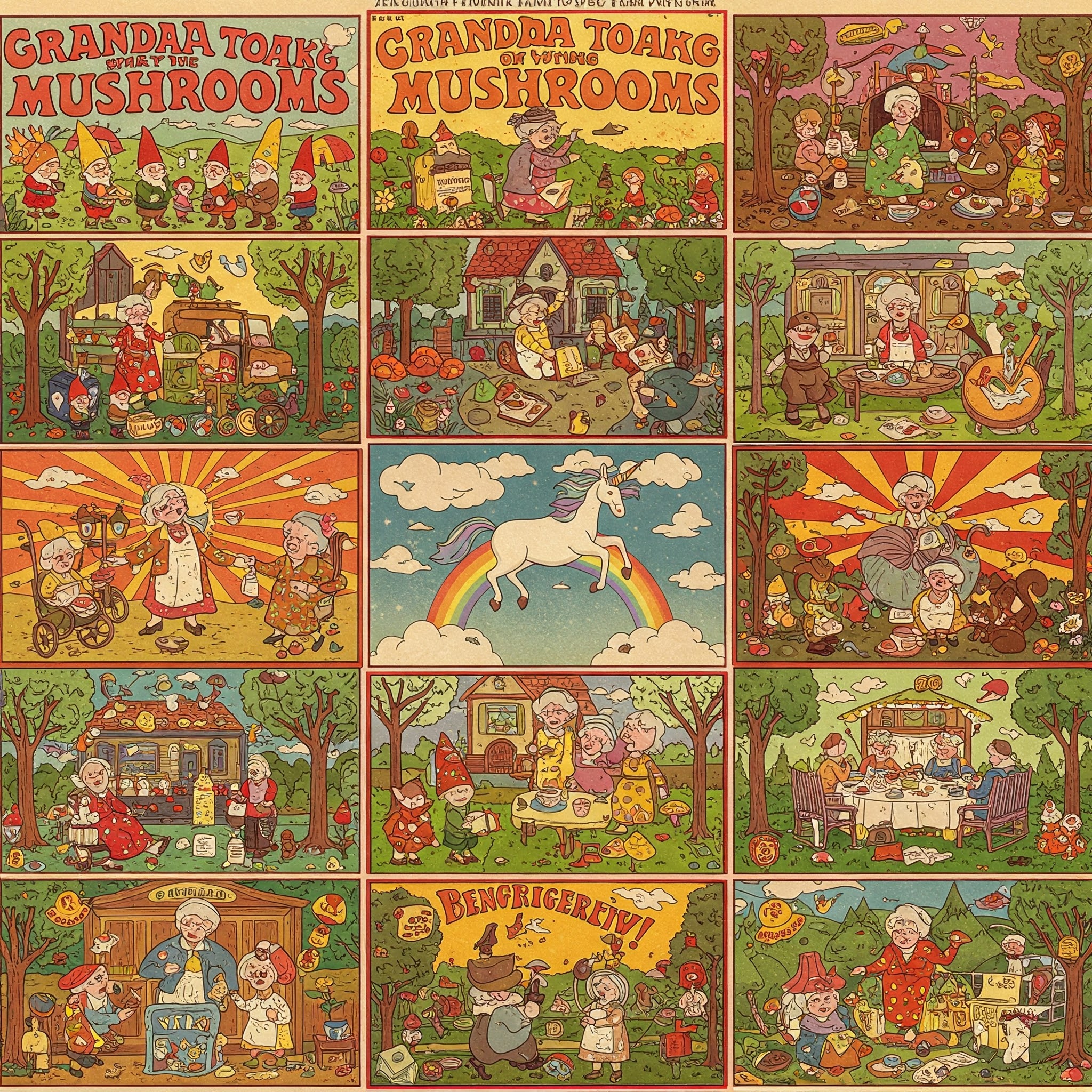
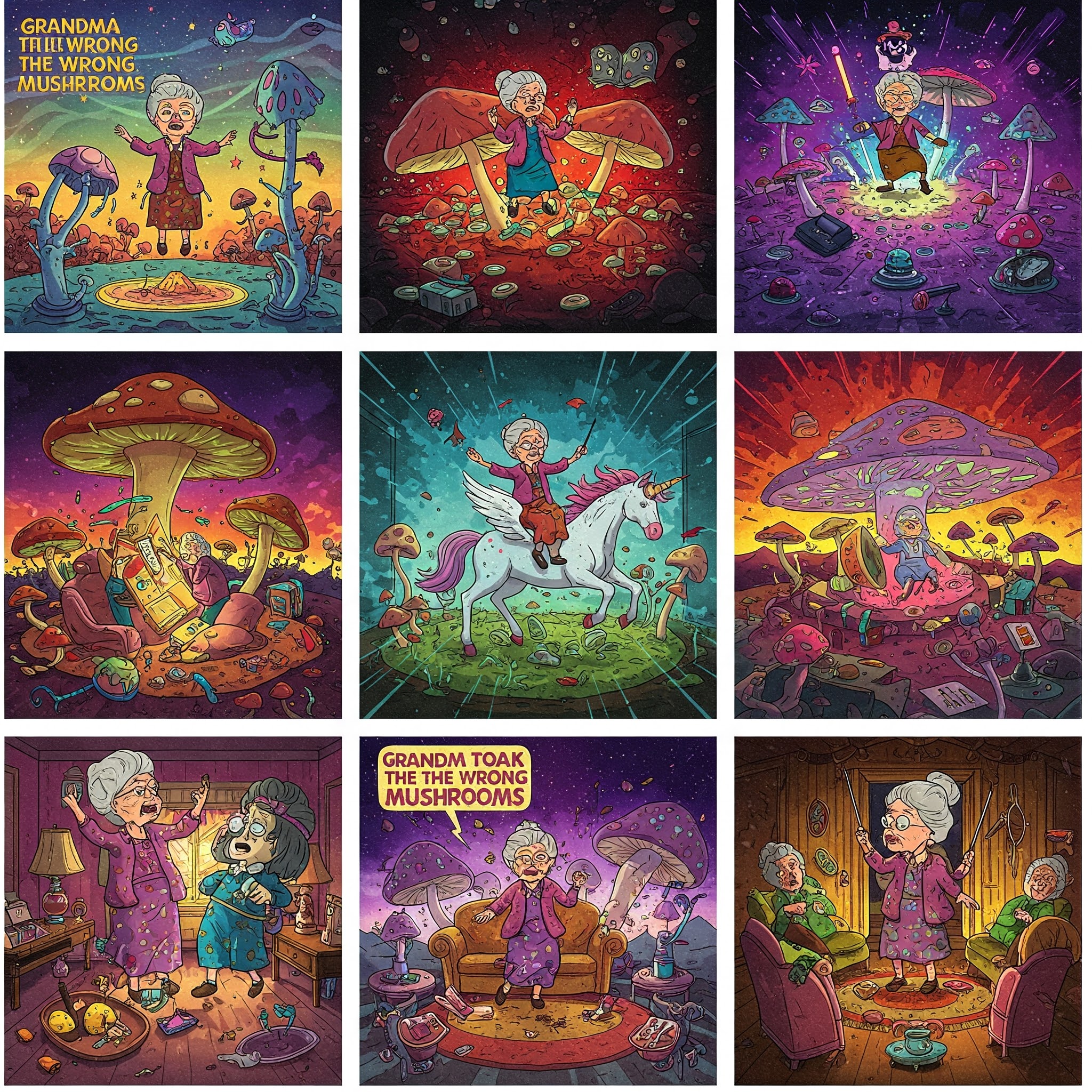
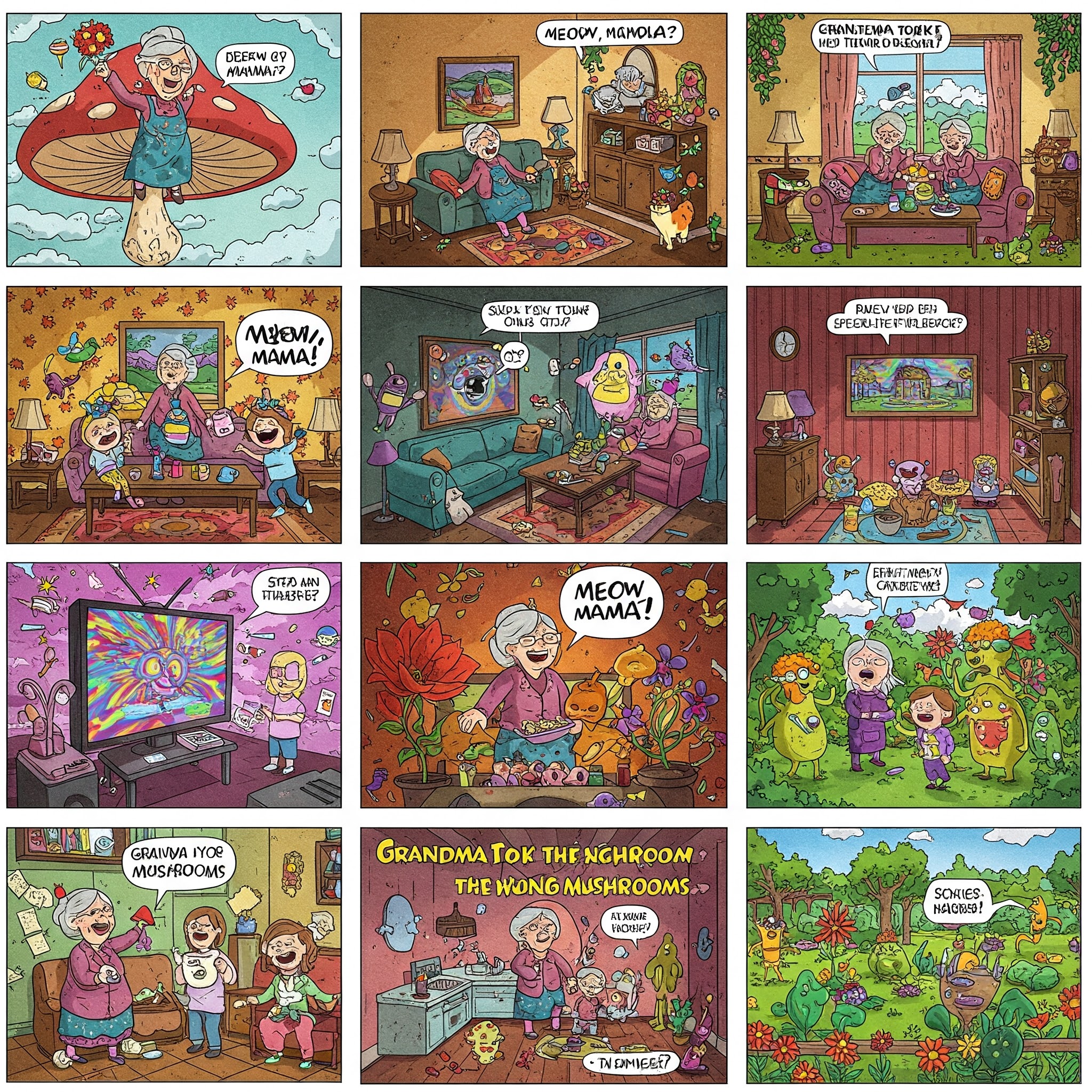
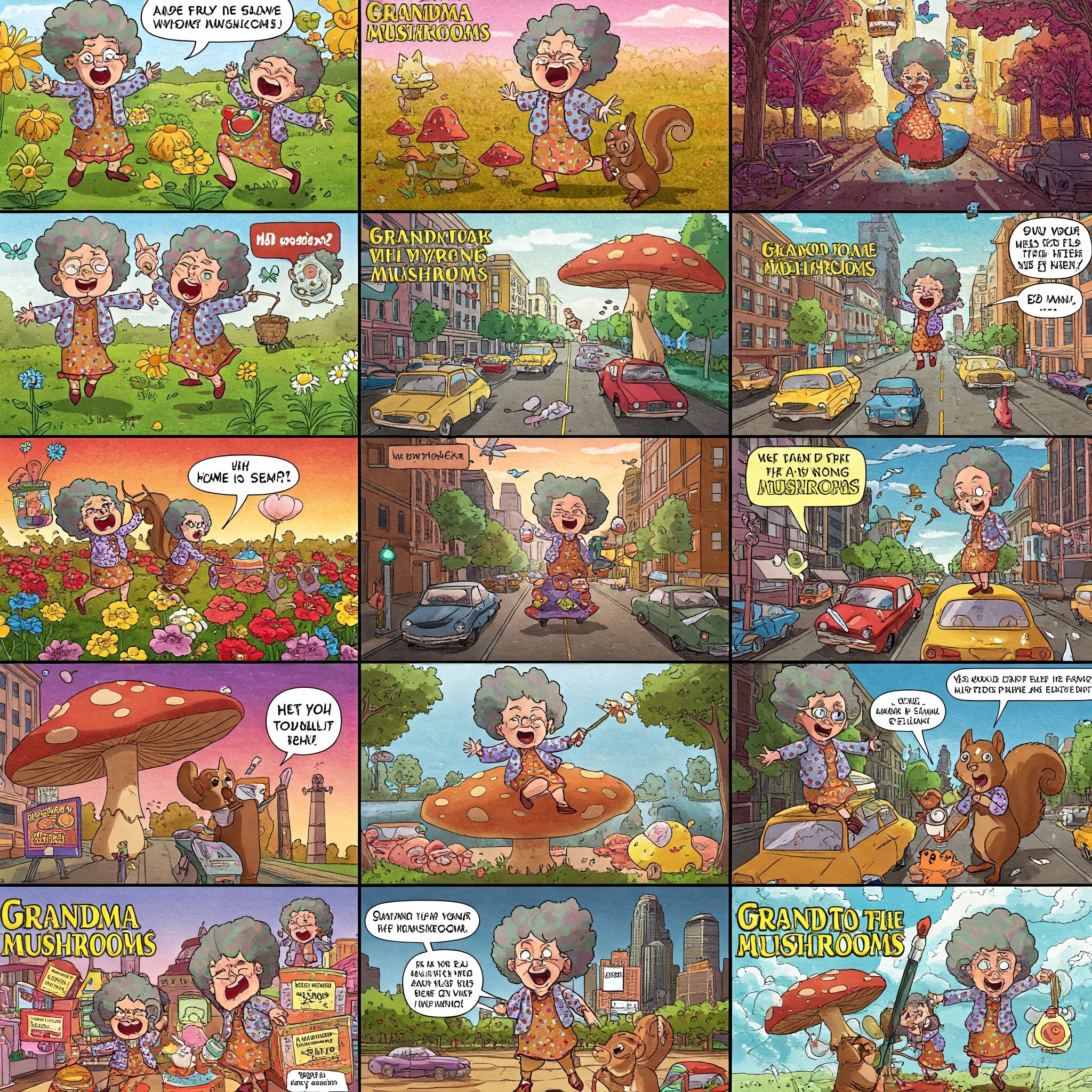
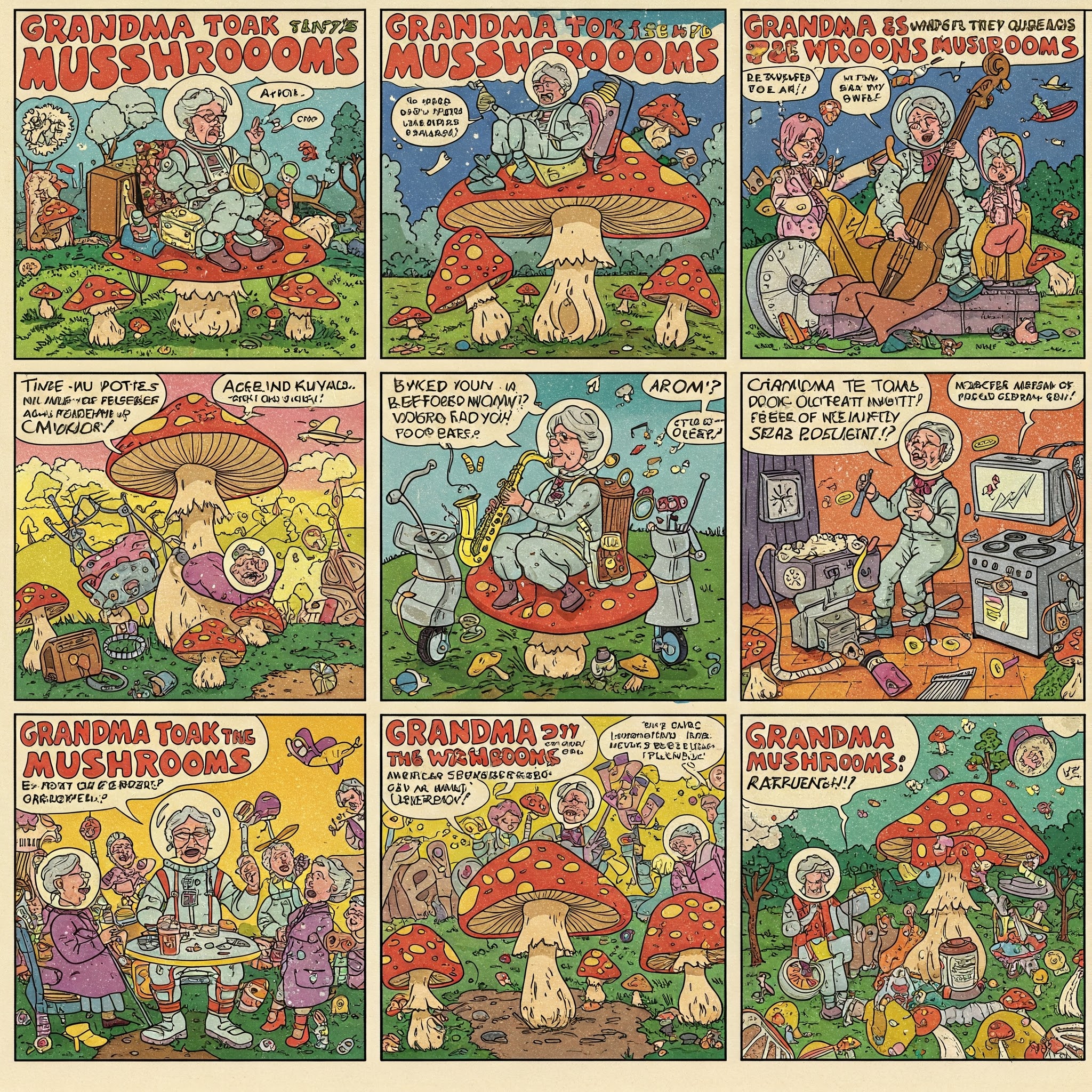
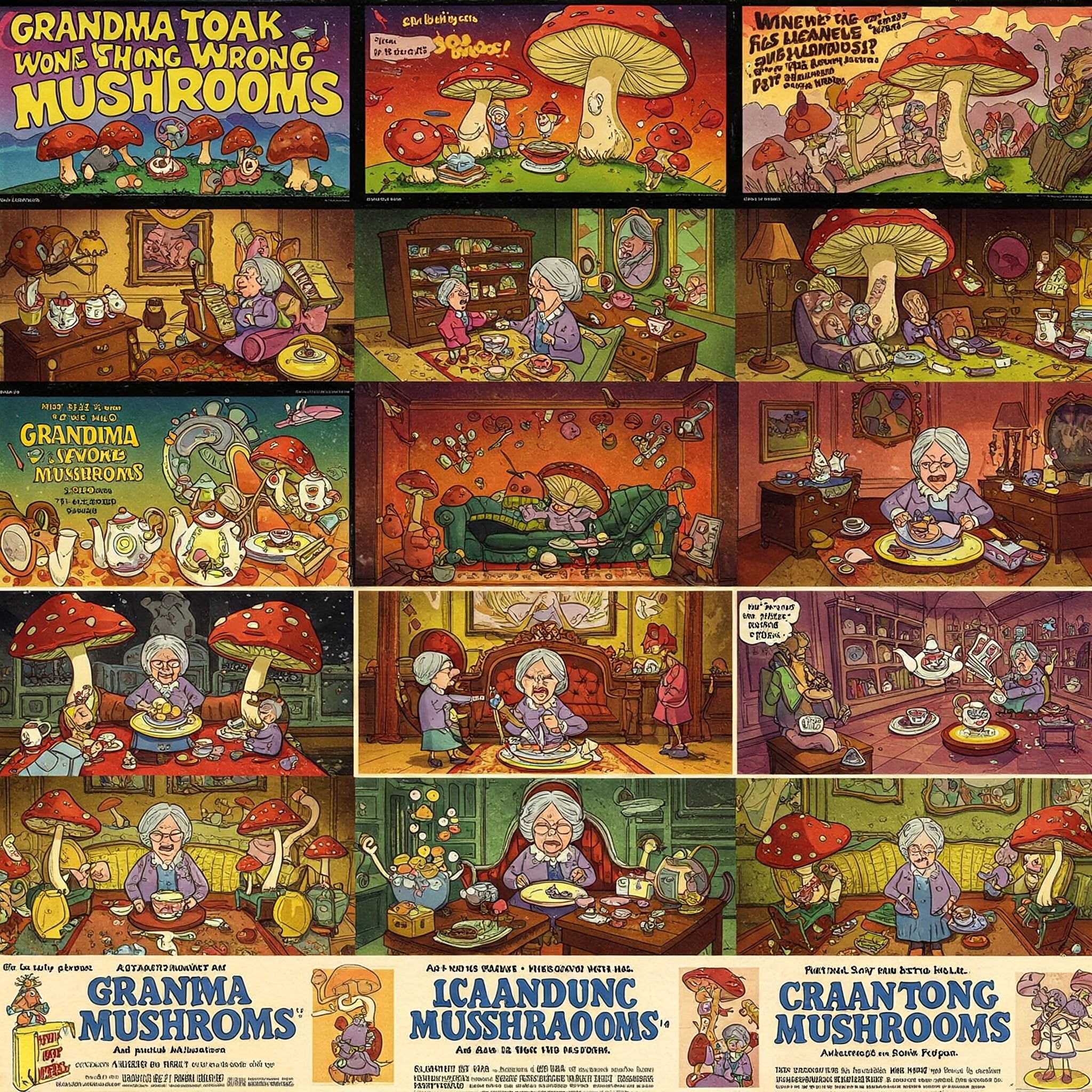
MUSHROOMS. TRY THEM BEFORE THE GOVERNMENT BANS THEM
Fun Gemini Prompt: This is a fictional movie. Use this as a starting point and imagine the next sequence of scenes. Create a series of separate images, each depicting a distinct moment in the story, presented in a sequential order like a storyboard. Include quotes for each image to narrate the events happening within it. Ensure the flow between images is consistent and logical, with each one styled like a cinematic movie shot that advances the narrative. Maintain the same format and visual style across all images to keep them cohesive. [YOUR TOPIC]

Gemini Prompt: "this is a character i made. let's take him on a visual adventure! you write the story and create the images, too! please keep the same style"
Gemini Prompt: Generate a series of images; Like a story for a TV AD for a mushroom supplement company. Make it ultra funny. Use hyper realistic visual style. But make it absurd and use a Wes Anderson inspired style
-
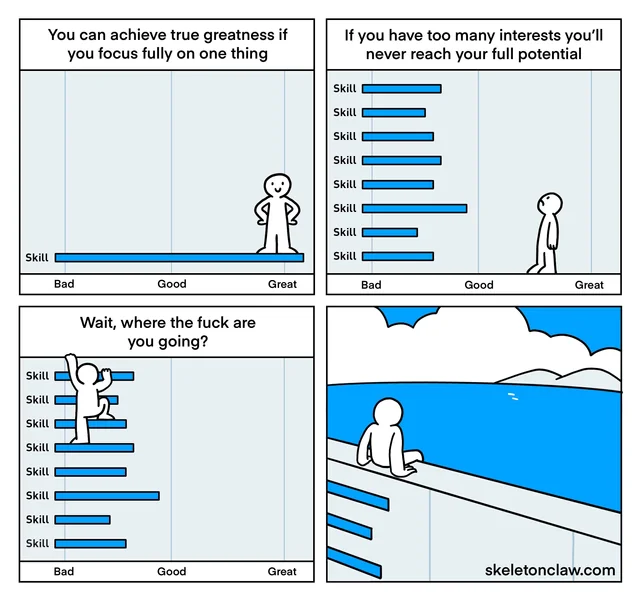
You can achieve true greatness if you focus fully on one thing... ohh..
-
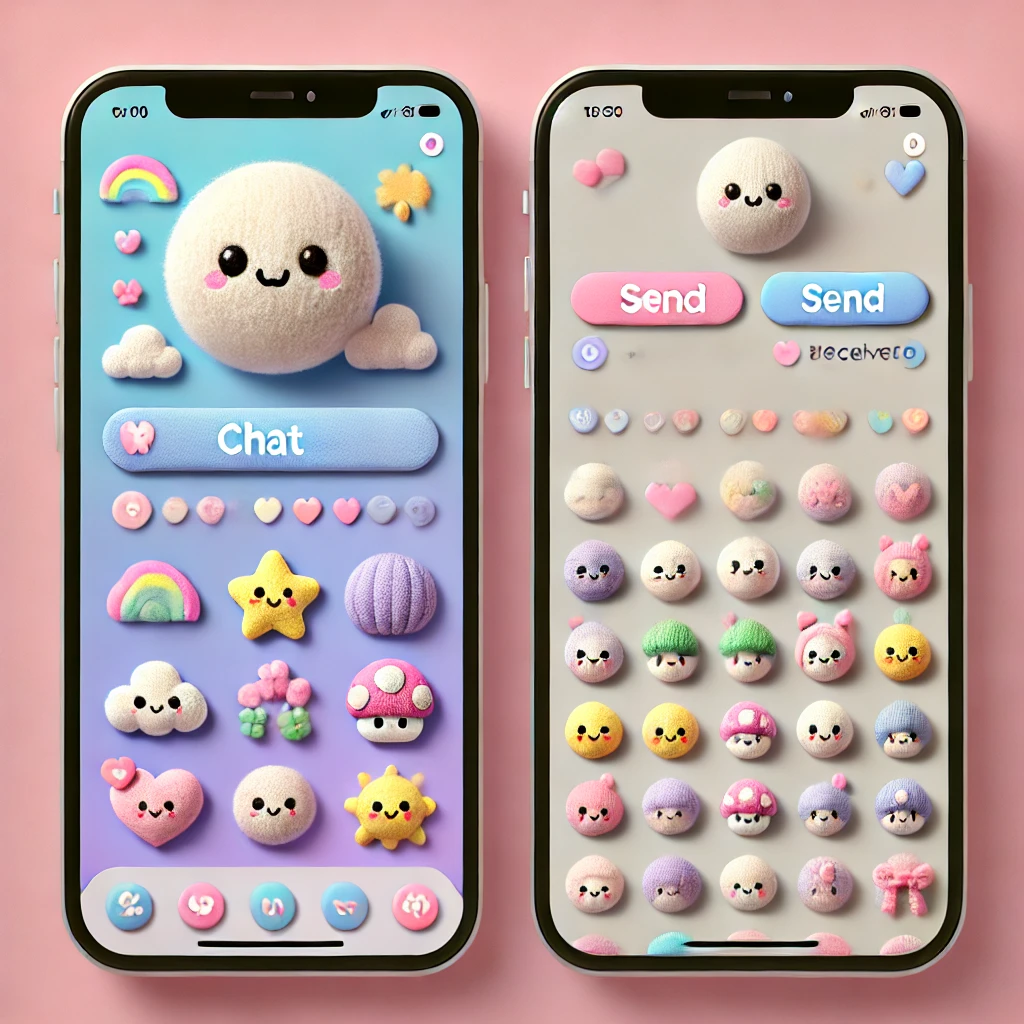
With LLMs making app development dramatically easier, I’ve started creating bespoke mini apps for my 5-year-old daughter as a hobby. It’s incredibly rewarding—especially since few seem to be exploring how AI can uniquely serve this age group.











-
Lots of bosses proclaim 'We want more innovation!' but very few are ready to handle what it actually takes.