tag > Experience
-
Speaking of weird experiences...
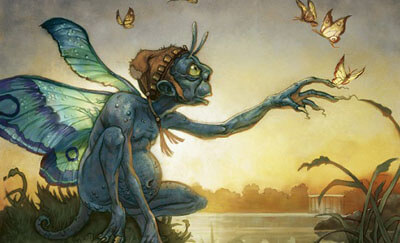
This morning at 6 i was in the kitchen with my daughter. We looked out of the window and saw something strange flying above the neighbors balcony. At first I thought it is a butterfly. But no, that's a lot too big. A bird? No, it moved a bit like a helicopter. Then after a long confusing moment, the "thing" starts to fly hectically into a nearby bush. If I did not experience it myself, I wouldn't believe what we saw...
-
Future men will look back on our epoch as a age of darkness
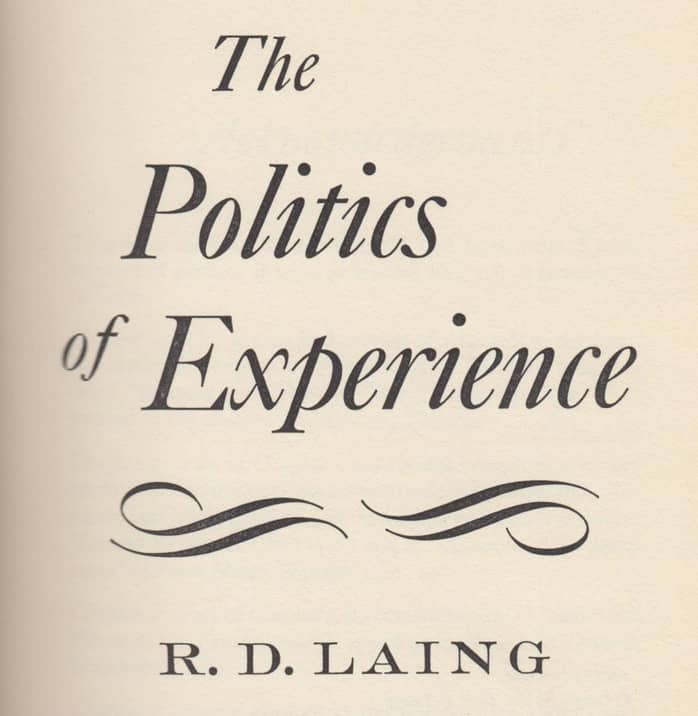
"If the human race survives, future men will, I suspect, look back on our enlightened epoch as a veritable age of Darkness. They will presumably be able to savour the irony of the situation with more amusement than we can extract from it. The laugh’s on us. They will see that what we call "schizophrenia" was one of the forms in which, often through quite ordinary people, the light began to break through the cracks in our all-too-closed minds." - R.D. Laing, The Politics of Experience, p. 107
Related: Tom Shandel & Kirk Tougas‘ 1989 documentary, Did You Used To Be R.D.Laing?, made shortly after Laing’s death. (via)
-
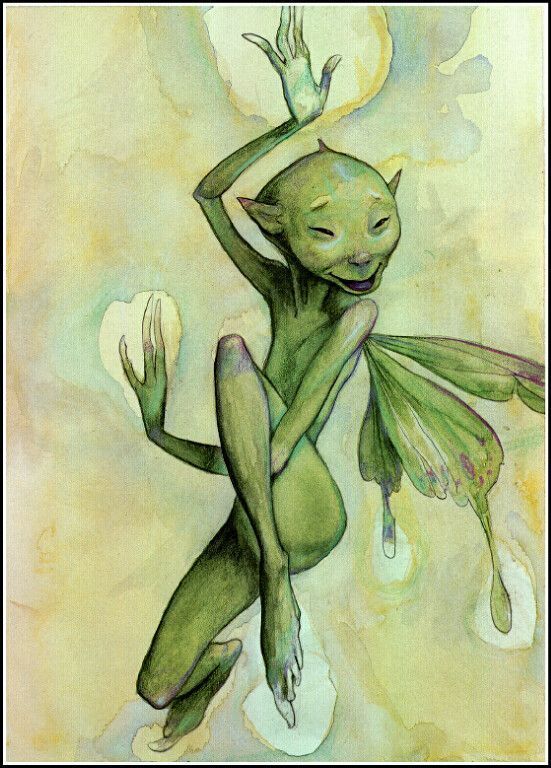
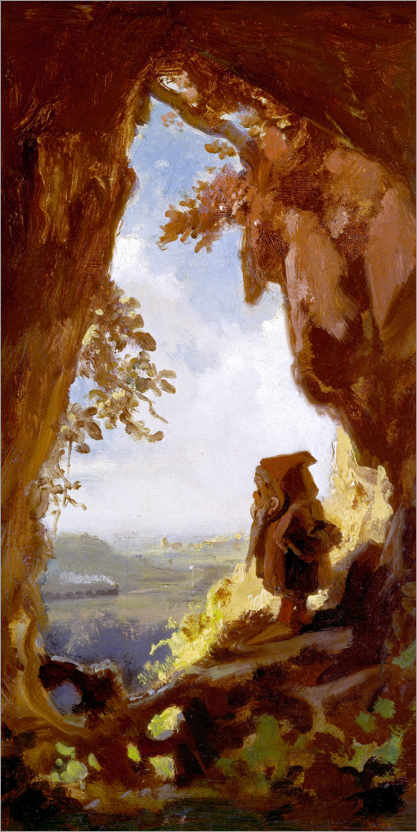
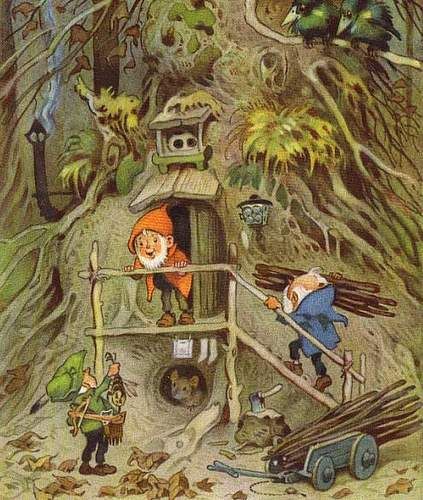
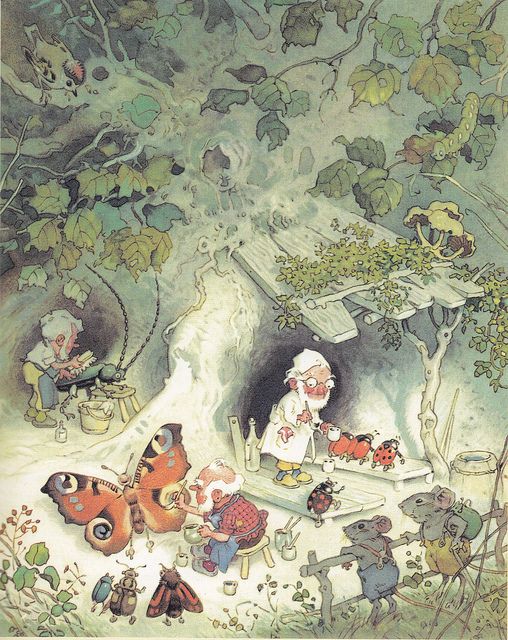
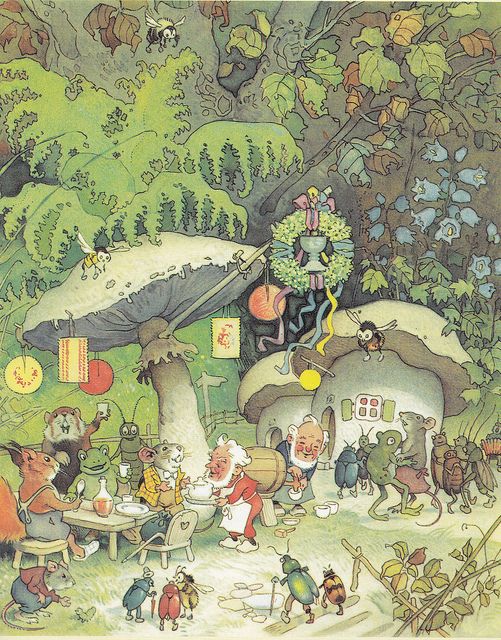
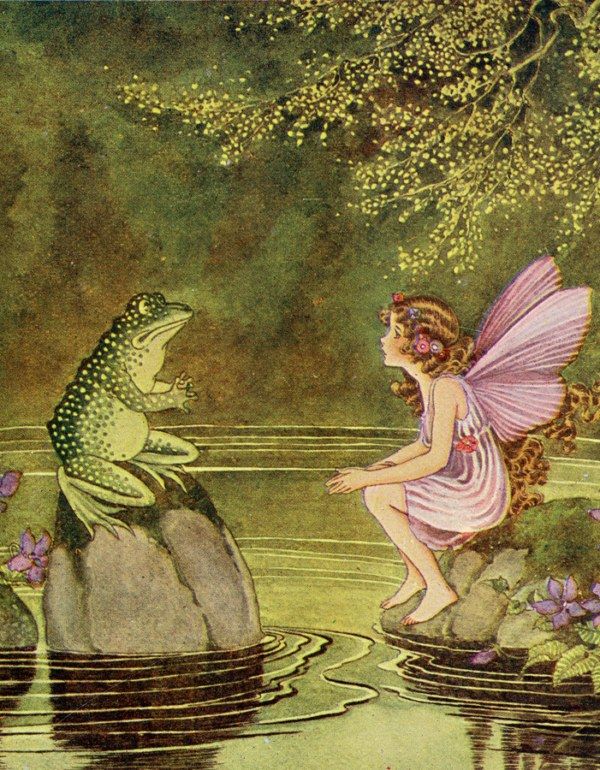
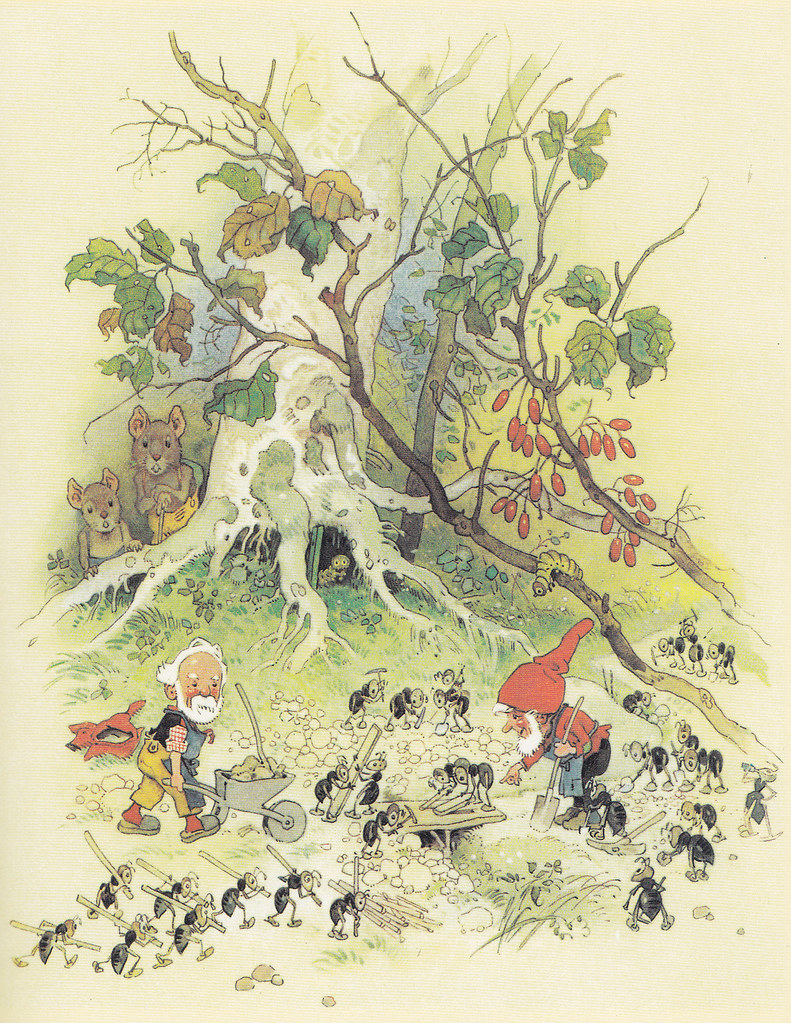
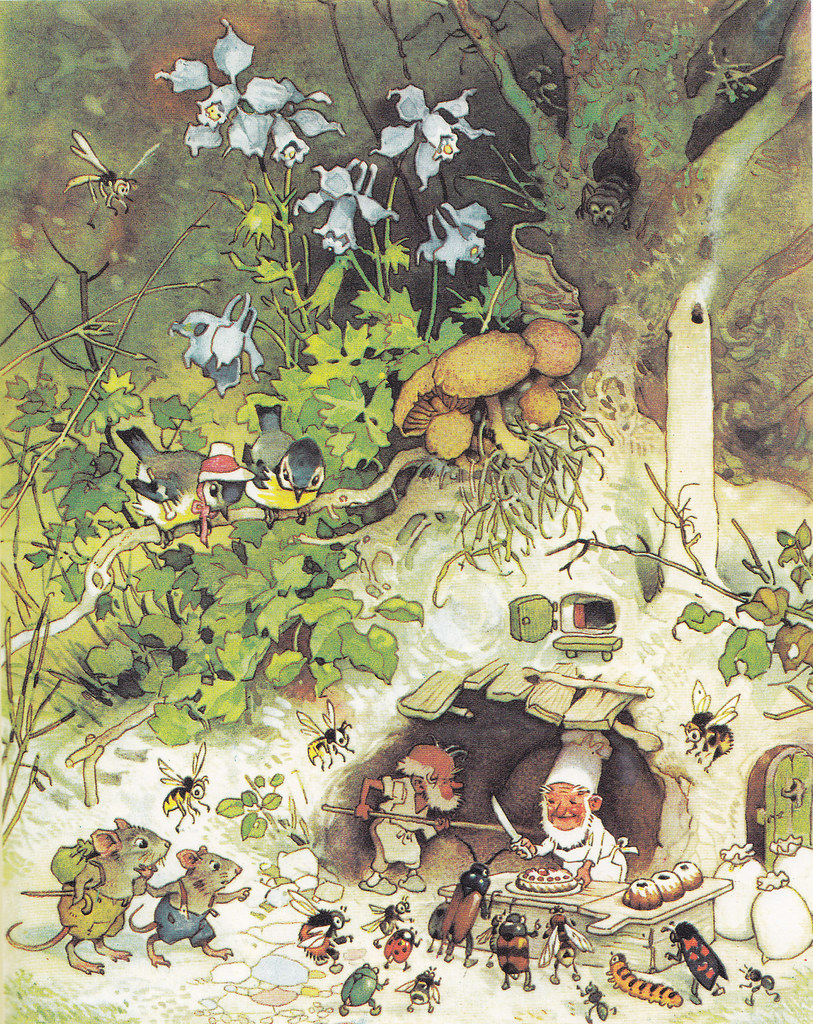
That moment when one is forced to acknowledge, that one's child can see unusual creatures (commonly called gnomes, elves, fairies, goblins, yōkai
, etc.) and interacts with them regularly.







-
“The possession of knowledge does not kill the sense of wonder and mystery. There is always more mystery.” ― Anaïs Nin
“The mystery of life isn't a problem to solve, but a reality to experience.” - Frank Herbert
-
“Experience remains, of course, the sole criterion of the physical utility of a mathematical construction. But the creative principle resides in mathematics.” - Albert Einstein 1934
-
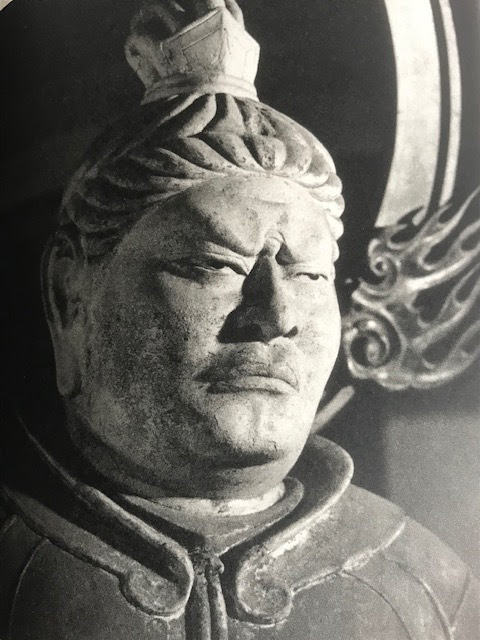
Inhale and Exhale my dear friend - Why so serious and tense? Celebrate and laugh - for life is truly a wonderfully mysterious and equally comedic situation! Beyond words and other forms of symbolic reasoning and semiotic shadow-boxing, lies a vast ocean of direct experience. The fiction created by the spell of words people weave around them, can lead to great distortions of meaning. While being "right" can be fun - being "effective" - "kind, receptive and present" is essential. Hence, "Chill out. Do less. Enjoy more" remains a timeless mantra - and true sophistication is signified by its tendency toward simplicity, love and peace.
-
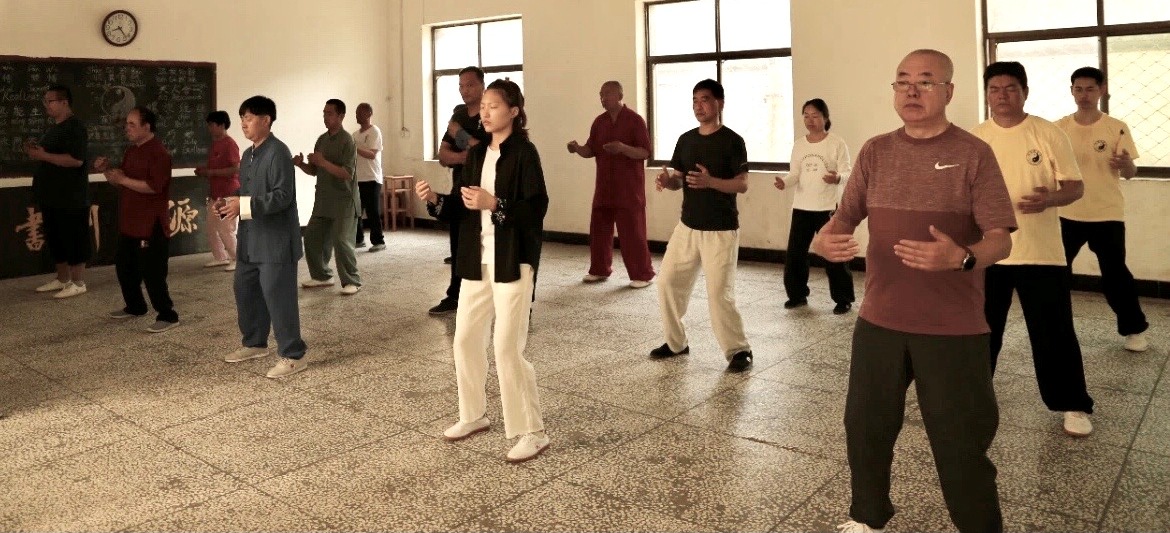
"Throughout the training there is an implicit understanding that words often get in the way. The realities of direct experience, and the fiction created by the spell of words people weave around them, can lead to great distortions of meaning."
-
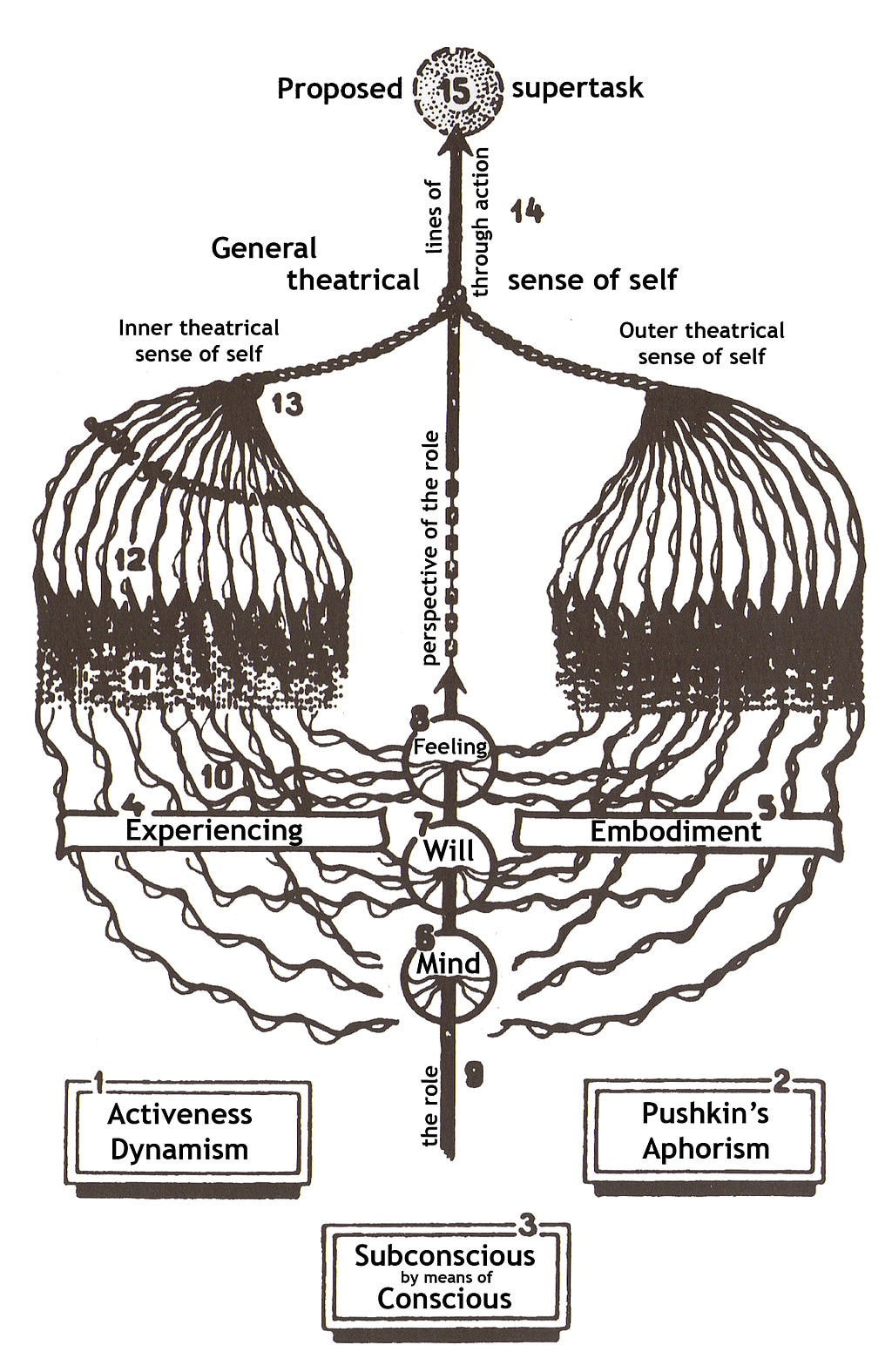
Stanislavski's system is a systematic approach to training actors that the Russian theatre practitioner Konstantin Stanislavski developed in the first half of the twentieth century. His system cultivates what he calls the "art of experiencing" (with which he contrasts the "art of representation"). It mobilises the actor's conscious thought and will in order to activate other, less-controllable psychological processes—such as emotional experience and subconscious behaviour—sympathetically and indirectly. In rehearsal, the actor searches for inner motives to justify action and the definition of what the character seeks to achieve at any given moment (a "task")
Related: Theatre as Engineering - from Stanislavski to Cybernetics & Overview of Stanislavski's System
-
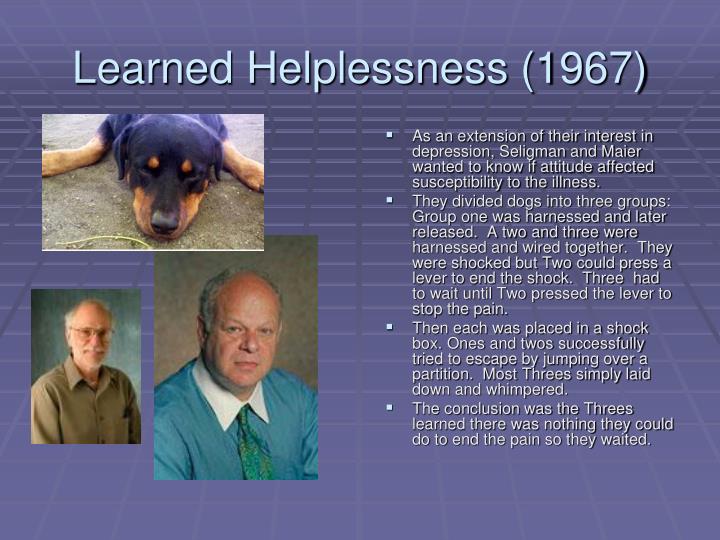
"In psychology, a mental state in which an organism forced to bear aversive stimuli, or stimuli that are painful or otherwise unpleasant, becomes unable or unwilling to avoid subsequent encounters with those stimuli, even if they are “escapable,” presumably because it has learned that it cannot control the situation. Developed by American psychologist Martin Seligman starting in 1967."
#RTM #NeuroScience #Military #Media #Health #Therapy #Experience #Ethics
-
From Viktor Frankl's "Man's Search for Meaning", developer of Logotherapy (slides)
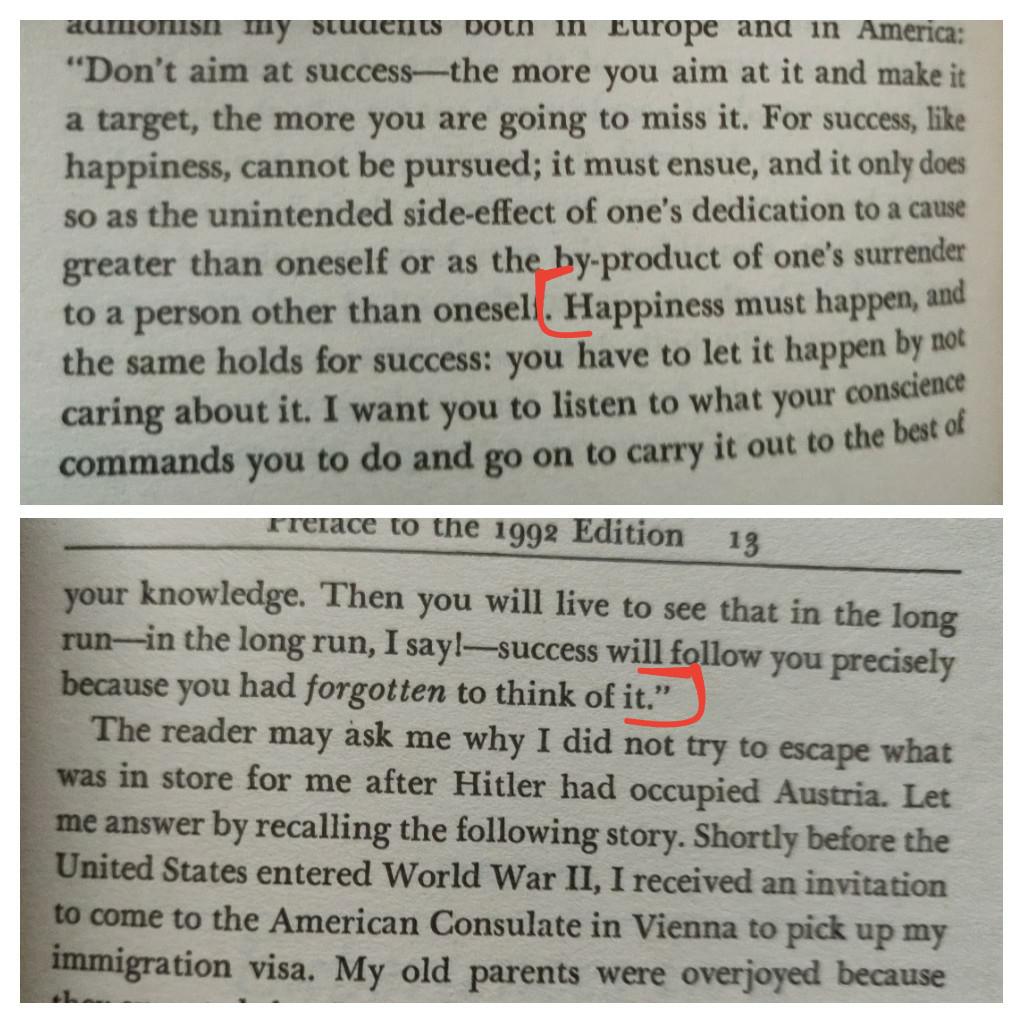
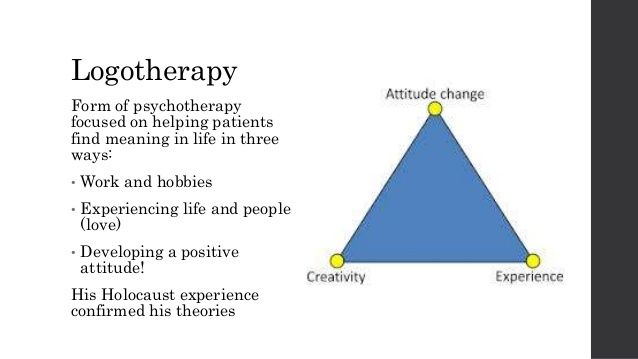
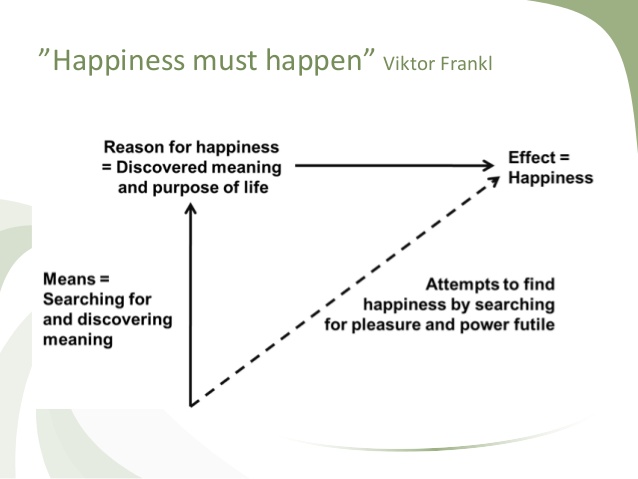
According to Frankl, "We can discover this meaning in life in three different ways: (1) by creating a work or doing a deed; (2) by experiencing something or encountering someone; and (3) by the attitude we take toward unavoidable suffering" and that "everything can be taken from a man but one thing: the last of the human freedoms – to choose one's attitude in any given set of circumstances"
Documentary: Viktor Frankl und trotzdem Ja zum Leben sagen (DE only)
-
Cognitive Bias Codex
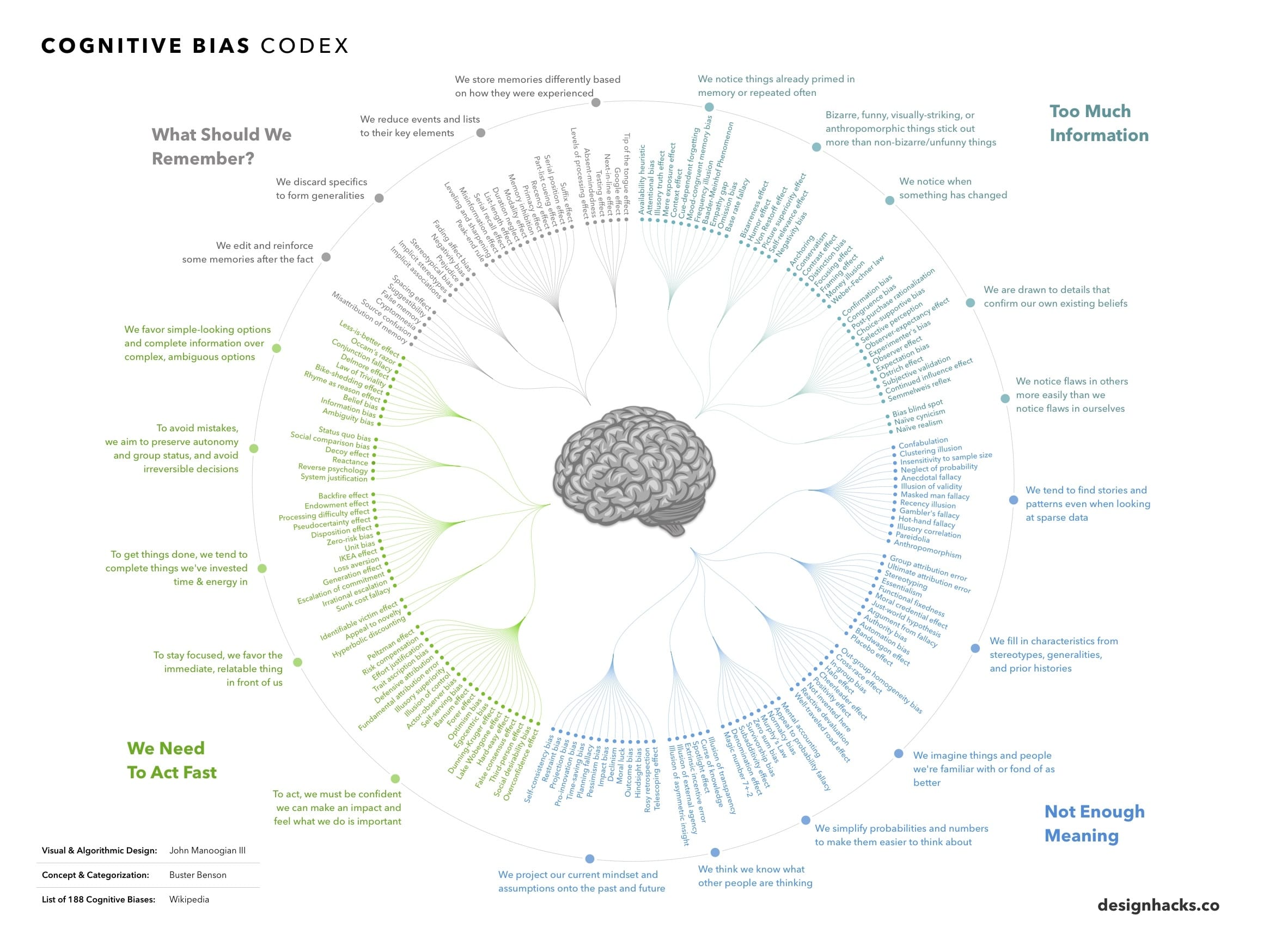
Wikipedia: "A cognitive bias is a systematic pattern of deviation from norm or rationality in judgment. Individuals create their own 'subjective social reality' from their perception of the input. An individual's construction of social reality, not the objective input, may dictate their behavior in the social world. Thus, cognitive biases may sometimes lead to perceptual distortion, inaccurate judgment, illogical interpretation, or what is broadly called irrationality."
#Comment: Why do scientists tend to describe cognitive bias as if they were a terrible pathological condition? Why do they casually dismiss their crucial role for serendipity, creativity and joy? One beings "perceptional distortion" or "illogical, subjective reality" is another's unique evolutionary path. Narrowly defining and enforcing normal is a job for dictators. Wisely negotiating the politics of experience requires simplicity, compassion and patience - not reason, norms, metrics, objectives and force.
-
What Kind of Happiness Do People Value Most? #Experience
https://hbr.org/2018/11/what-kind-of-happiness-do-people-value-most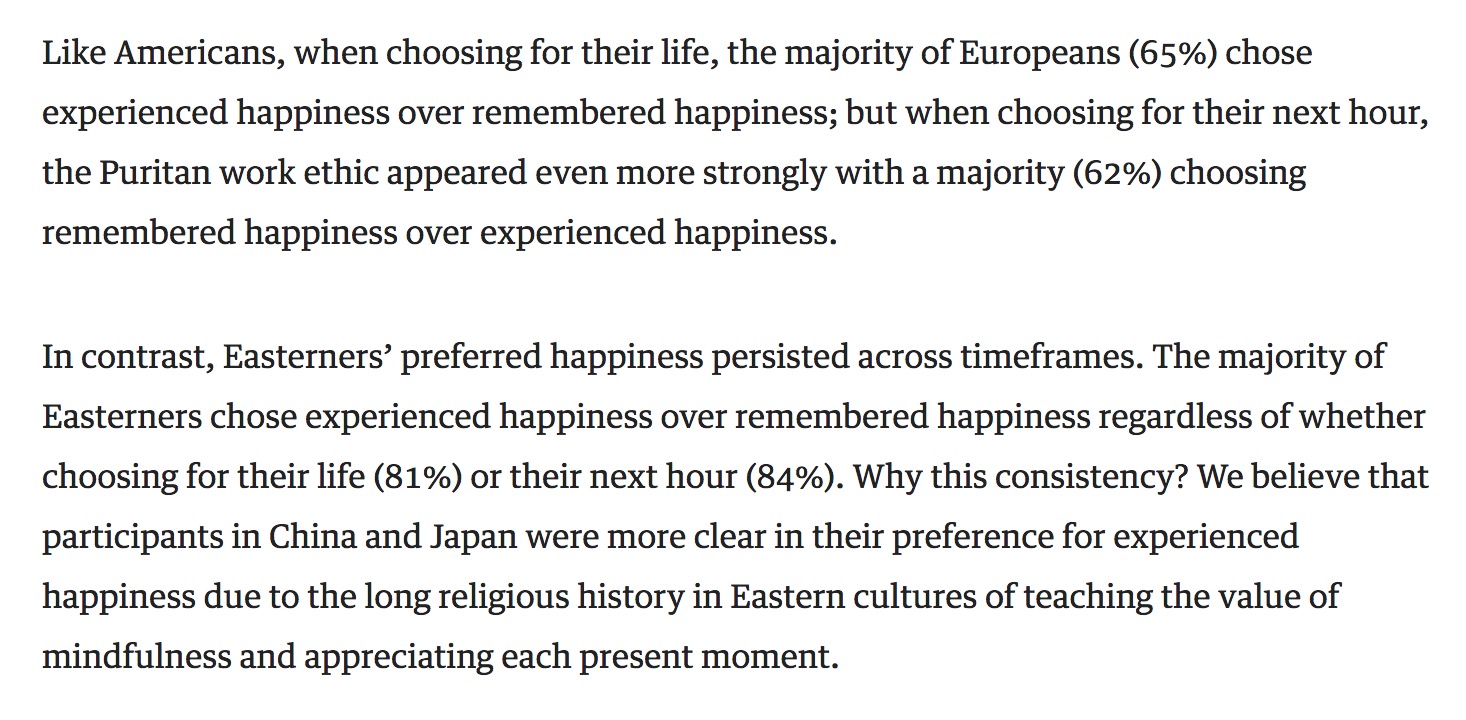
-
Towards "Experience Theory"
The "bit" is a basic unit of information.
What should a basic unit of "experience" be called?Information theory studies the quantification, storage & communication of information. With its invention, Claude Shannon paved the way for a communication & computation revolution.
Can there be an equivalent theory for Experience? What would it be?
Want: A robust & comprehensive 'Experience Theory'.
Where do we start?Experience Theory would make such observations much easier to unpack:
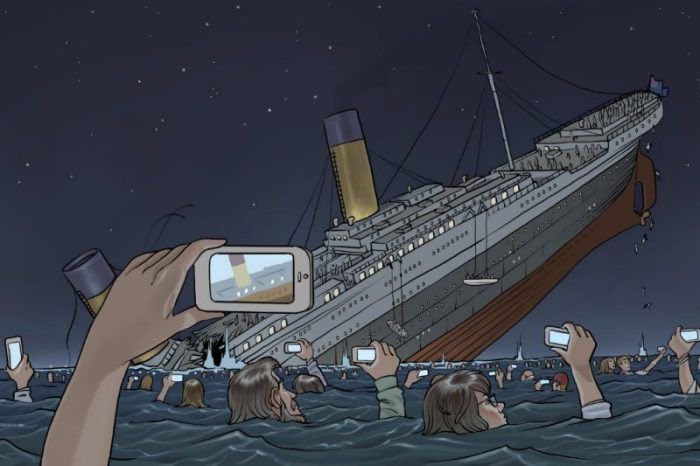
Samim’s Law of Diminished Experience: The quantity of photos one takes is inversely correlated with the quality of the present moment experience.
Related links:
- Qualia: https://plato.stanford.edu/entries/qualia/
- Integrated information theory: https://en.wikipedia.org/wiki/Integrated_information_theory
- And for reference: Experience: https://en.wikipedia.org/wiki/ExperienceDiscussion Thread:
https://twitter.com/samim/status/993742477763883008 -
Samim’s Law of Diminished Experience:
The quantity of photos one takes (an attempt to save a tiny sliver of the present experience for later replay) is inversely correlated with the quality of the present moment experience.
Example: The more you look at your phone, the less you'll experience the actual sunset.

Discussion around this law can be found in this thread:
https://twitter.com/samim/status/990554137661079553Thanks to Greg Lloyd for naming the law & everyone who made suggestions.
Related links, recommended by the community:
"Take a Picture, You'll Enjoy It More - Photographing experiences usually increases positive feelings about them, study says": http://www.apa.org/news/press/releases/2016/06/picture-enjoy.aspx << Notice this study speaks only about "enjoyment", nevertheless fascinating.