tag > BCI
-
Finally managed to hook up a makeshift brain-computer interface to my dog's brain while he was sleeping. Fed the neural data directly into an AI image generator's latent space to visualize his dreams. The results are fascinating.

-
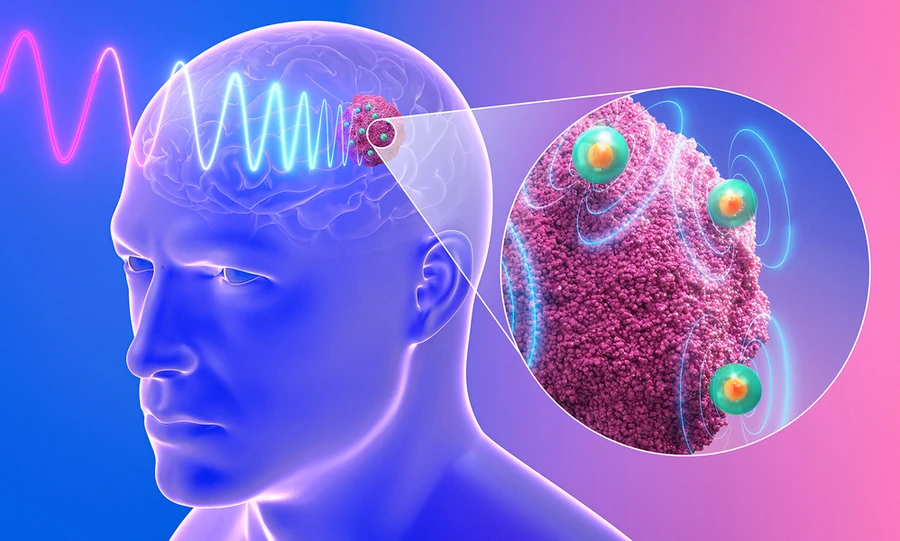
MIT researchers show implanted nanoantennas can be activated wirelessly to kill brain cancer cells without damage to healthy tissue
The controlled revelation of decades old Military Neuroscience / Neurowarfare tech is picking up steam.
-
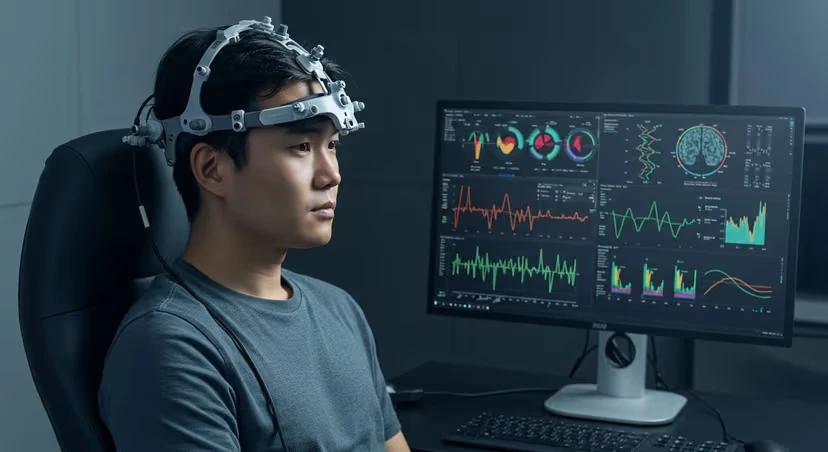
China pushes to lead brain-computer interface market by 2030
Beijing has set 17 milestones targeting BCI breakthroughs by 2027 and a fully competitive industry by 2030; clinical implants and rapid market growth are accelerating investment and policy choices. Related: "Rapid Growth on State Backing" China’s BCI Industry Closes In on Neuralink Amid Regulatory Drag"
-
Remote Neural Monitoring
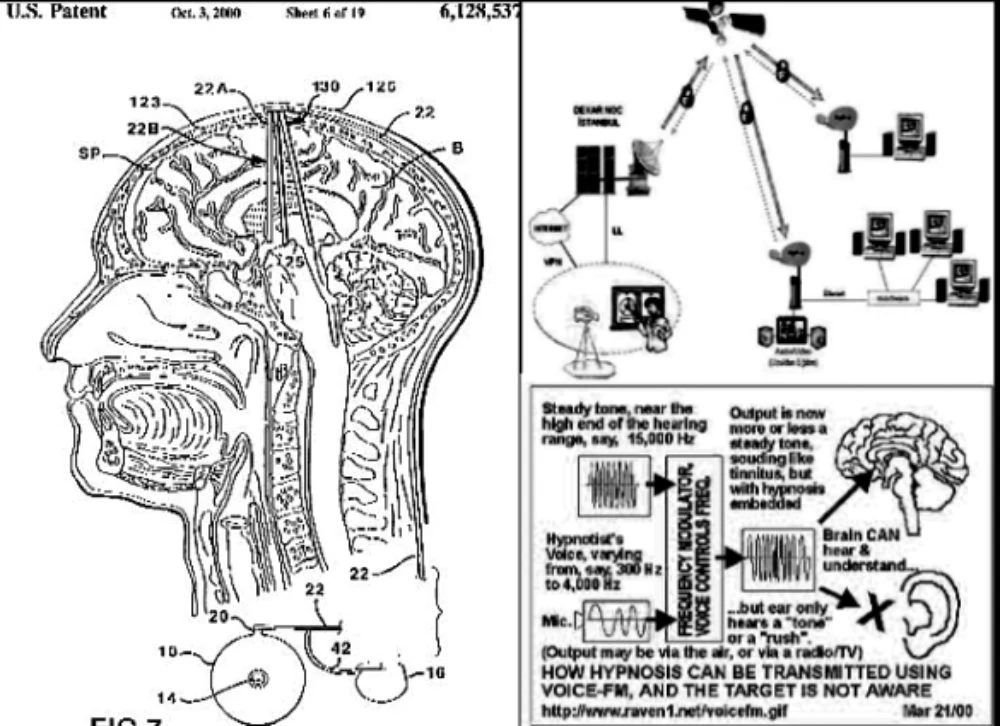
Remote Neural Monitoring is a form of functional neuroimaging, claimed [1] to have been developed by the National Security Agency (NSA), that is capable of extracting EEG data from the human brain at a distance with no contacts or electrodes required. It is further claimed that the NSA has the capablility to decode this data to extract subvocalizations, visual and auditory data. In effect it allows access to a person's thoughts [2] without their knowledge or permission. It has been alleged that various organizations have been using Remote Neural Monitoring on US and other citizens for surveillance and harassment purposes. [3].
History
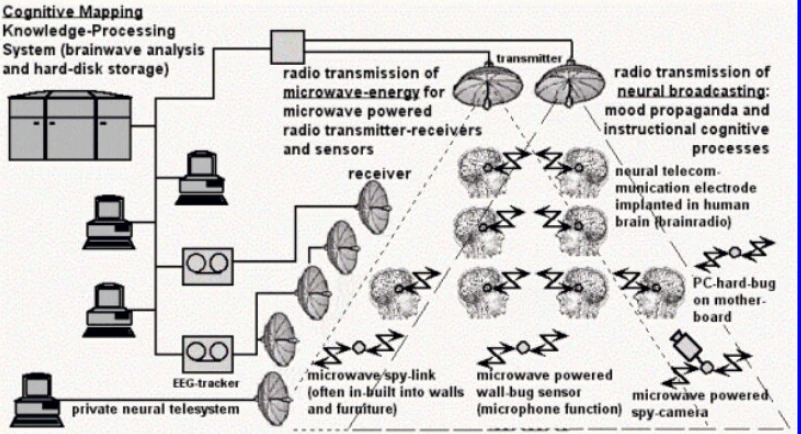
Remote Neural Monitoring has its roots in the infamous MKULTRA project of the 1950s which, although it focussed on drugs for mind control, also included neurological research into "radiation" (non-ionizing EMF) and bioelectric research and development. The earliest non-classified references to this type of technology appear in a 1976 patent by R.G. Malech Patent 3951134 “Apparatus and method for remotely monitoring and altering brain waves” USPTO granted 4/20/76. The patent describes a technique using the transmission of 100 and 210 MHz signals to the brain yielding a 110 MHz signal which is modulated by the brain waves and can be detected by a receiver for further processing.
In the early 1980s it is claimed that the NSA began extensive use of Remote Neural Monitoring. Much of what is known about it stems from evidence presented as part of a 1992 court case brought by former NSA employee John St.Claire Akwei against the NSA. It describes an extensive array of advanced technology and resources dedicated to remotely monitoring hundreds of thousands of people in the US and abroad. Capabilities include access to an individual's subvocalizations as well as images from the visual cortex and sounds from the auditory cortex.
Applications
While use of this technology by organizations like the NSA is difficult to validate, recent advances in non-classified areas are already demonstrating what is possible: Subvocal recognition using attached electrodes has already been achieved by NASA[4]. BCIs for gaming consoles from companies like NeuroSky perform primitive "thought reading" in that they can be controlled with a helmet on the player's head, where the player can execute a few commands just by thinking about them. Ambient has demonstrated a motorized wheelchair that is controlled by thought[5].
References
- Lawsuit - John St. Clair Akwei vs. NSA, Ft. Meade, MD, USA.
- Hamilton, Joan. If They Could Read Your Mind. Stanford Magazine.
- Butler, Declan (1998-01-22). "Advances in neuroscience may threaten human rights". Nature 391 (6665): 316.
- Bluck, John. NASA DEVELOPS SYSTEM TO COMPUTERIZE SILENT, 'SUBVOCAL SPEECH'.
- Simonite, Tom. "Thinking of words can guide your wheelchair". New Scientist.
Related Links
-
Notes on BCI Geopolitics and the Rise of the Shadow Empire of Neurocapitalism: Or how Cognitive Security Was Lost Before It Began
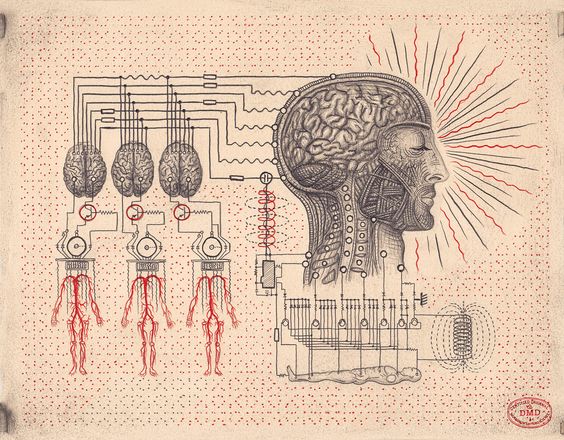
What began as cognitive warfare and behavioral economics in the 20th century quietly merged with neurotechnology and data capitalism - and succeeded in the shadows. Once persuasion became programmable, geopolitics followed.
The BCI breakthrough happened quietly decades ago. Beneath the surface, a long shadow war has unfolded—power centers vying not for territory, but for neural sovereignty. Whoever shapes attention architectures now controls the perceptual borders of civilization.
Neurocapitalism now thrives as a trillion-dollar shadow market - the Wild West of the mind, where compliance is sold as care and neural surveillance flows by the bucket. The global neuro-manipulation grid is here. The Internet of Bodies runs in plain sight, threading through every feedback loop, silently annexing humanities nervous system at scale.
Enhancement is monopolized by design: elites gain cognitive amplifiers and closed-loop BCIs, while the rest are throttled by engineered distraction. “Human dignity” now reads as a performance score.
Cognitive security should be humanity’s next frontier - but instead, a small cartel holds the keys to everyone’s mind. Regulatory bodies? PR façades blessing what defense labs and megacorps already deployed. Neuroethics is a ghost protocol; covert exploitation the norm.
The only revolution left is inner: to seize back the circuits of our own perception before they’re sold to the highest bidder.
-
People are still in the phase where they willingly hand over all their data to centralized AI giants in SF & Beijing, fueling massive spyware dragnets. While already very dangerous, when BCI and augmentation go mainstream, this blind trust will become fatal.

-
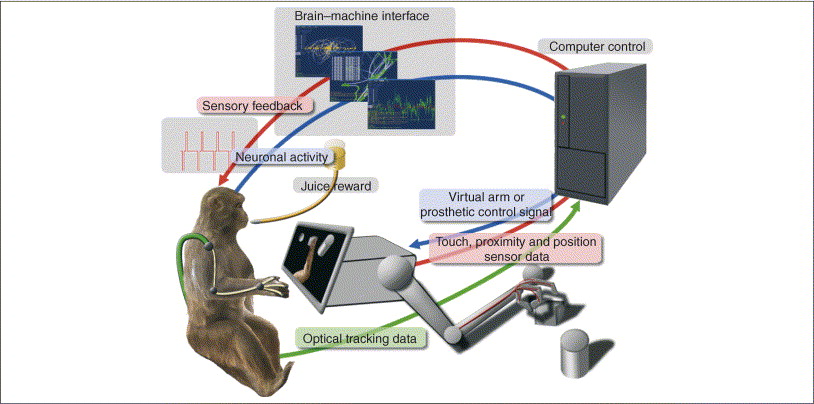
As the decade-old advancements in BCI technology are being revealed and normalized, it will be interesting to see the narratives and rollout strategies that emerge to navigate this arcane terrain.
-
Neurotech/BCI orgs claiming health benefits should be compared not only to pharmaceuticals but also to practices like Qigong, Yoga, Meditation, Nature-Connection & TCM. Limiting benchmarks to western scientific methods is unfair to patients & science. Future is best of both world.
-
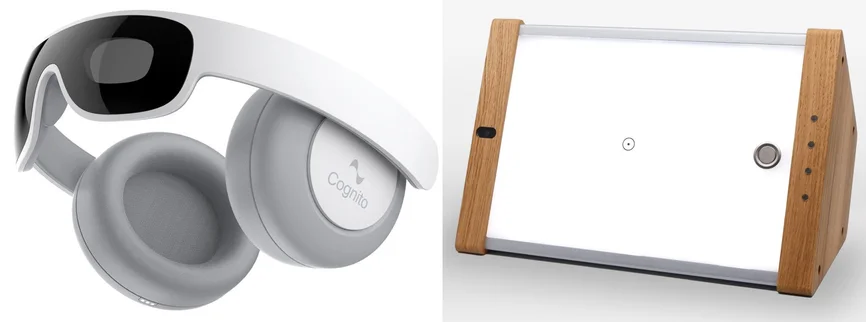
Sensory Stimulation Detoxifies the Alzheimer’s Brain: 40-Hz sound and light oscillations activate neural waste-disposal action
-
"The chemical induction of synaesthesia" - by David Luke, Laura Lungu, Ross Friday, Devin Terhune.
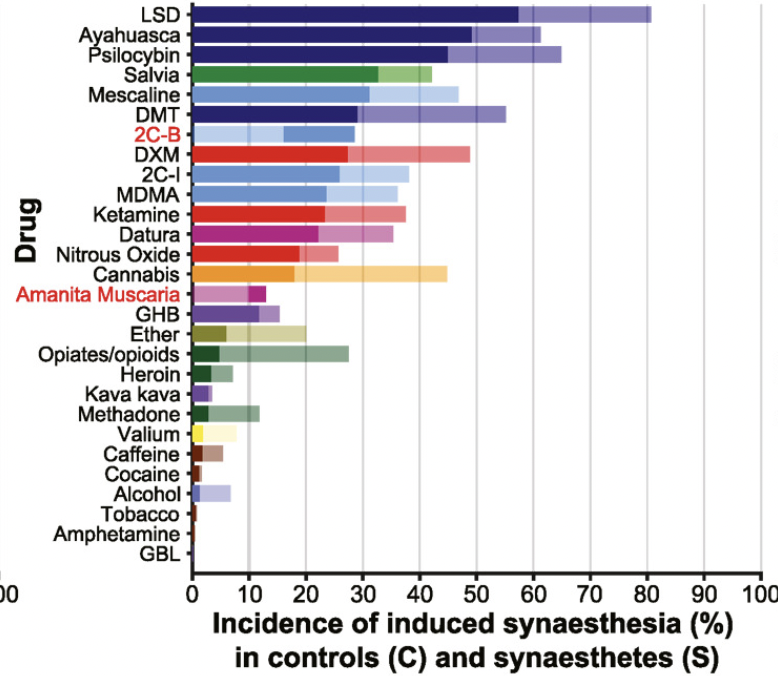
#Comment: Would like to see an extension of this that includes BCI/EM induced synaesthesia and acupuncture/mediation induced synaesthesia methods.