tag > Networks
-
Coronavirus Fuels P2P Connectivity: Crypto-Driven Meshnet Gives Rural Towns Internet
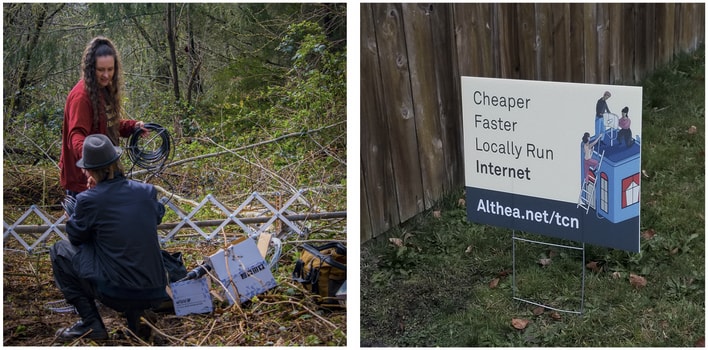
While the coronavirus wreaks havoc on the economy across the U.S., a number of the 1,737 residents from Clatskanie, Oregon can’t obtain an internet service provider (ISP). The situation has motivated the town to adopt a decentralized meshnet ISP called Althea and the network’s users are paid in cryptocurrency for relaying.
-

Solar advocates are starting a guerrilla solar movement to combat the notion that one should have to pay for energy.
Related: Wikipedia entry - Book: Solar Guerrilla - Constructive Responses to Climate Change
-
This is Fine: Optimism & Emergency in the P2P Network - by Cade Diehm
Excellent Article! Here is its conclusion section: "We can no longer marvel at the novel interactions afforded by peer-to-peer technologies, nor perform political theatrics within these networks. We need to lay aside our delusions that decentralisation grants us immunity – any ground ceded to the commons will be met with amplified resistance from those who already own these spaces. When this happens, every single arrogant tradeoff, every decision made in ignorance that assumes a stable march towards progress without regression will be called to account. Without cohesive organisation, mobilisation to harden security and privacy and without a sincere commitment from protocol designers to revise their collective assumptions, the push back from incumbent power will leverage each and every socio-technical flaw in each and every network. The fallout and trauma for increasingly digitalised communities will unquestionably dwarf the 2000s Copyright War. If there is no collective worldview reset, the peer-to-peer movement will remain a historical novelty, a technological bauble and thought experiment for detached technologists unable to understand the political gravity of their tools, and whose life work will never withstand the attacks against it."
-
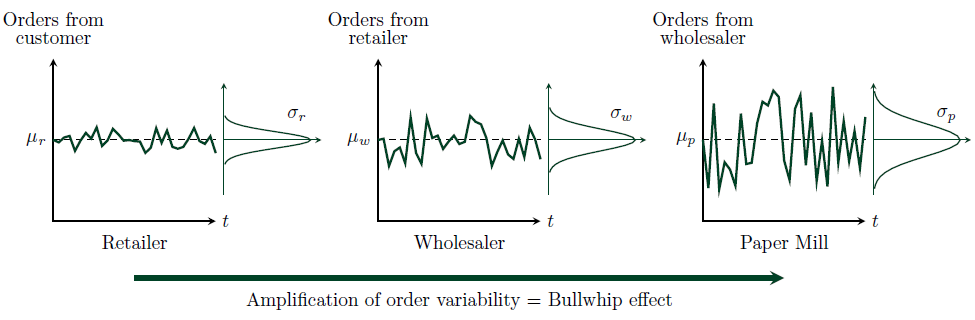
The bullwhip effect in supply chains
Variability of demand gets amplified from downstream (retailer) to upstream. Thus, firms must either increase their inventory levels, which limits responsiveness to demand, or risk shortages. Based on Moyaux, Chaib-draa & D’Amours (2006: 3).
-
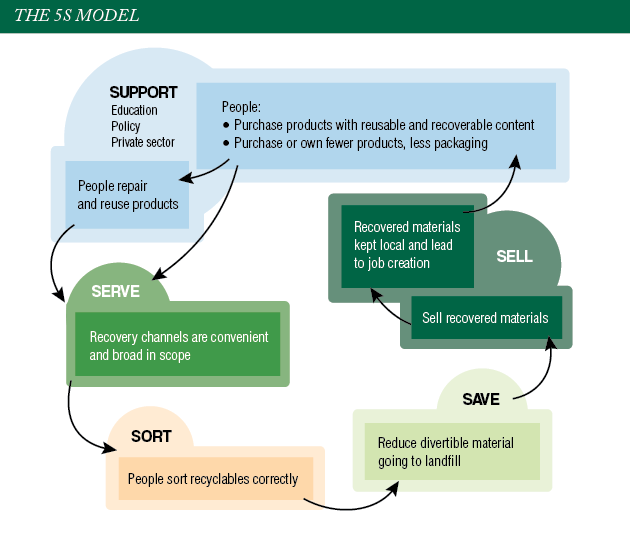
Municipal officials often say they want to boost diversion and keep collected materials in the regional economy, but developing a workable plan for doing so is difficult. Here's a look at one model that lays the groundwork. This is the first in a series of articles called “Steps to Circularity” that will explore a variety of different projects and viewpoints connecting the business of recycling to the wider circular economy movement.
-
A Network Theory of Power - by Manuel Castells
Power in the network society is exercised through networks. There are four different forms of power under these social and technological conditions:
1. Networking Power: the power of the actors and organizations included in the networks that constitute the core of the global network society over human collectives and individuals who are not included in these global networks.
2. Network Power: the power resulting from the standards required to coordinate social interaction in the networks. In this case, power is exercised not by exclusion from the networks but by the imposition of the rules of inclusion.
3. Networked Power: the power of social actors over other social actors in the network. The forms and processes of networked power are specific to each network.
4. Network-making Power: the power to program specific networks according to the interests and values of the programmers, and the power to switch different networks following the strategic alliances between the dominant actors of various networks.
Counterpower is exercised in the network society by fighting to change the programs of specific networks and by the effort to disrupt the switches that reflect dominant interests and replace them with alternative switches between networks. Actors are humans, but humans are organized in networks. Human networks act on networks via the programming and switching of organizational networks. In the network society, power and counterpower aim fundamentally at influencing the neural networks in the human mind by using mass communication networks and mass self-communication networks. -
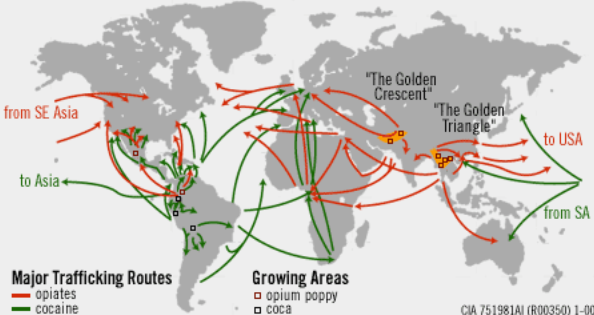
The United Nations Office on Drugs and Crime's World Drug Report 2005 estimates the size of the global illicit drug market at US$321.6 billion in 2003 alone. With a world GDP of US$36 trillion in the same year, the illegal drug trade may be estimated as nearly 1% of total global trade. Consumption of illegal drugs is widespread globally.
#Comment: The "Illegal drug trade estimated as nearly 1% of total global trade" is a bad joke - and the real numbers are likely pure dark comedy.
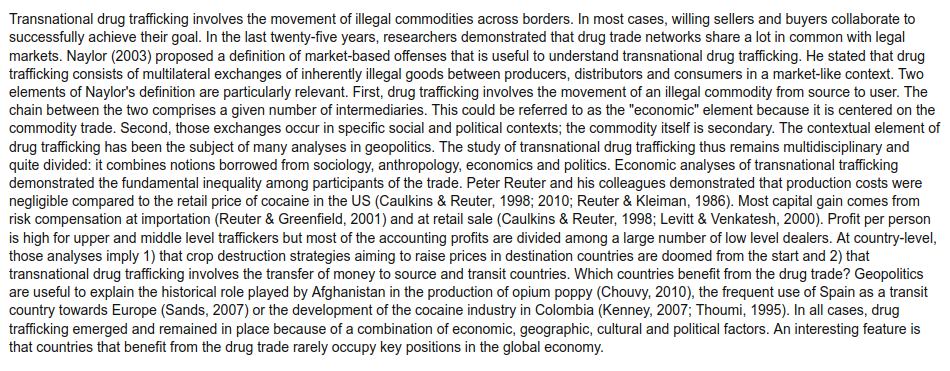
Drug trafficking networks in the world-economy
-
“Only the simplest & purest commodities are traded on markets, most value creation has nothing to do markets - it is largely generated by networks not markets. Thereby our value creation economy needs to be regulated to accelerate open networks not the illusion of markets.” (via)
-
Lenin on World Government

“There is no doubt that the development is going in the direction of a single World trust which will swallow up all enterprises and all states without exception. But the development in this direction is proceeding under such stress, with such a tempo, with such contradictions, conflicts and convulsions not only economical, but political national, etc. etc — that before a single world trust will be reached, before the respective financial national capitals will have formed a “World Union” of ultra imperialism, imperialism will explode and capitalism will turn into its opposite." - Vladimir Lenin, (Introduction to Imperialism and World Economy by N, Bukharin, Martin Lawrence, 1917)
-
What the Transition movement can teach us about how to ‘bounce forward’
“it’s hard to imagine what the future will look like, but for now, consumer demand for local products is exploding” - by @robintransition
-
Supply networks and complex adaptive systems: control versus emergence (unpaywalled)
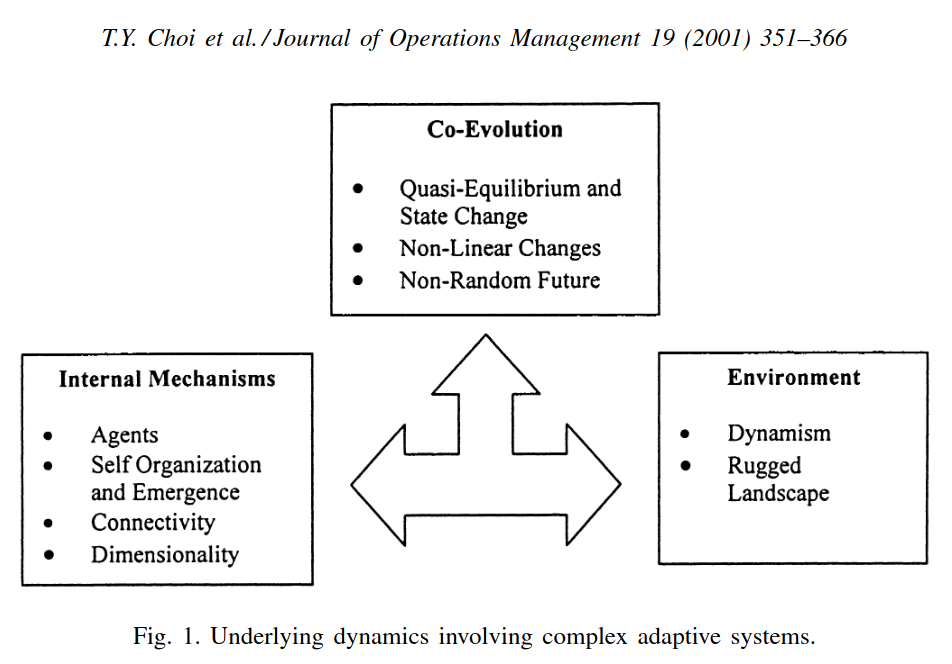
Abstract: In much of the current literature on supply chain management, supply networks are recognized as a system. In this paper, we take this observation to the next level by arguing the need to recognize supply networks as a complex adaptive system (CAS). We propose that many supply networks emerge rather than result from purposeful design by a singular entity. Most supply chain management literature emphasizes negative feedback for purposes of control; however, the emergent patterns in a supply network can much better be managed through positive feedback, which allows for autonomous action. Imposing too much control detracts from innovation and flexibility; conversely, allowing too much emergence can undermine managerial predictability and work routines. Therefore, when managing supply networks, managers must appropriately balance how much to control and how much to let emerge.
-
Tesla has a new product: Autobidder, a step toward becoming an electric utility

Tesla aims to eventually become a massive distributed electric utility, and we’ve now learned of a new product, Autobidder. The idea is that Tesla would keep deploying more solar and energy storage systems, big and small, at the residential level and on utility-scale, and manage those distributed systems to act as a giant electric utility.
-
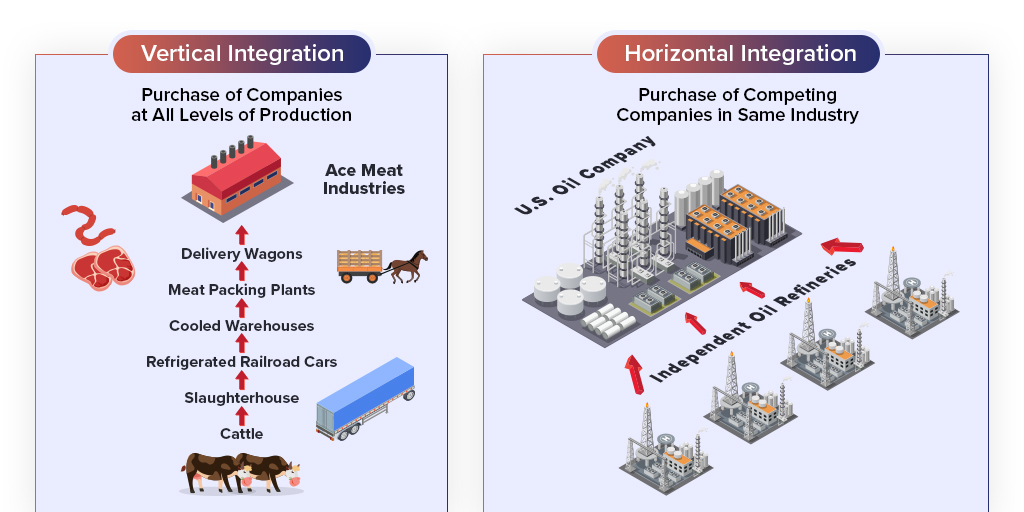
Horizontal and Vertical Integration.
Horizontal integration is the process of a company increasing production of goods or services at the same part of the supply chain. Via expansion, acquisition or merger. Vertical integration is an arrangement in which the supply chain of a company is owned by that company.
-
Cowboys and Inventors: The Myth of the Lone Genius - by Dave King:
https://www.exaptive.com/blog/the-myth-of-the-lone-genius #Networks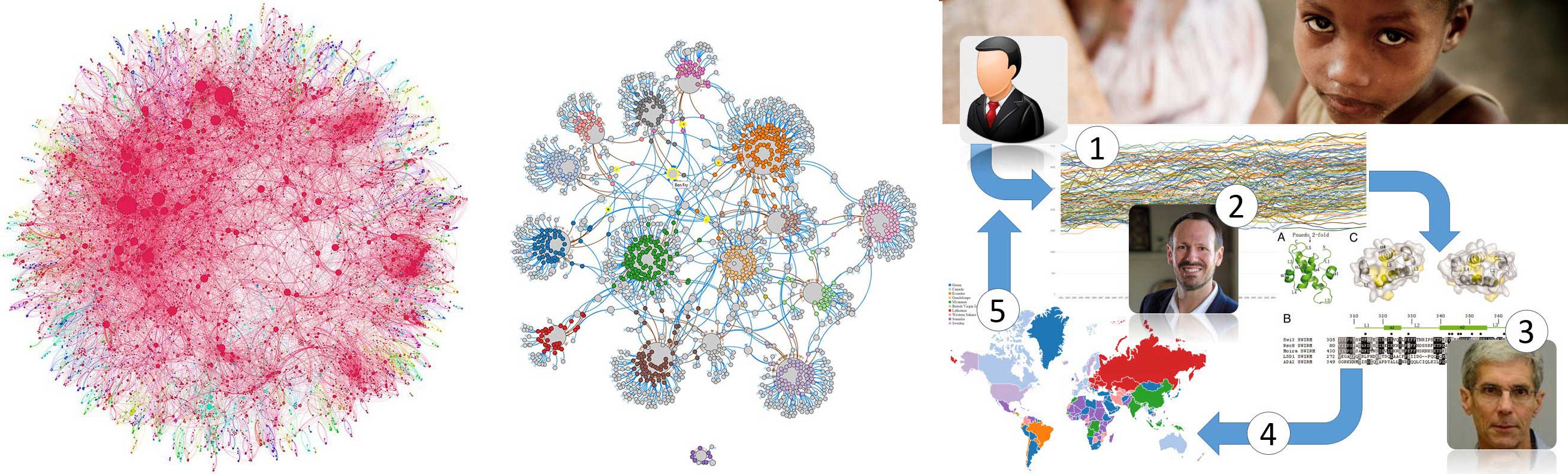
Mapping Science Networks and Projects to Limit the Rise in Global Temperatures:
https://www.exaptive.com/blog/mapping-science-networks-and-projects-focused-on-limiting-the-rise-in-global-temperatures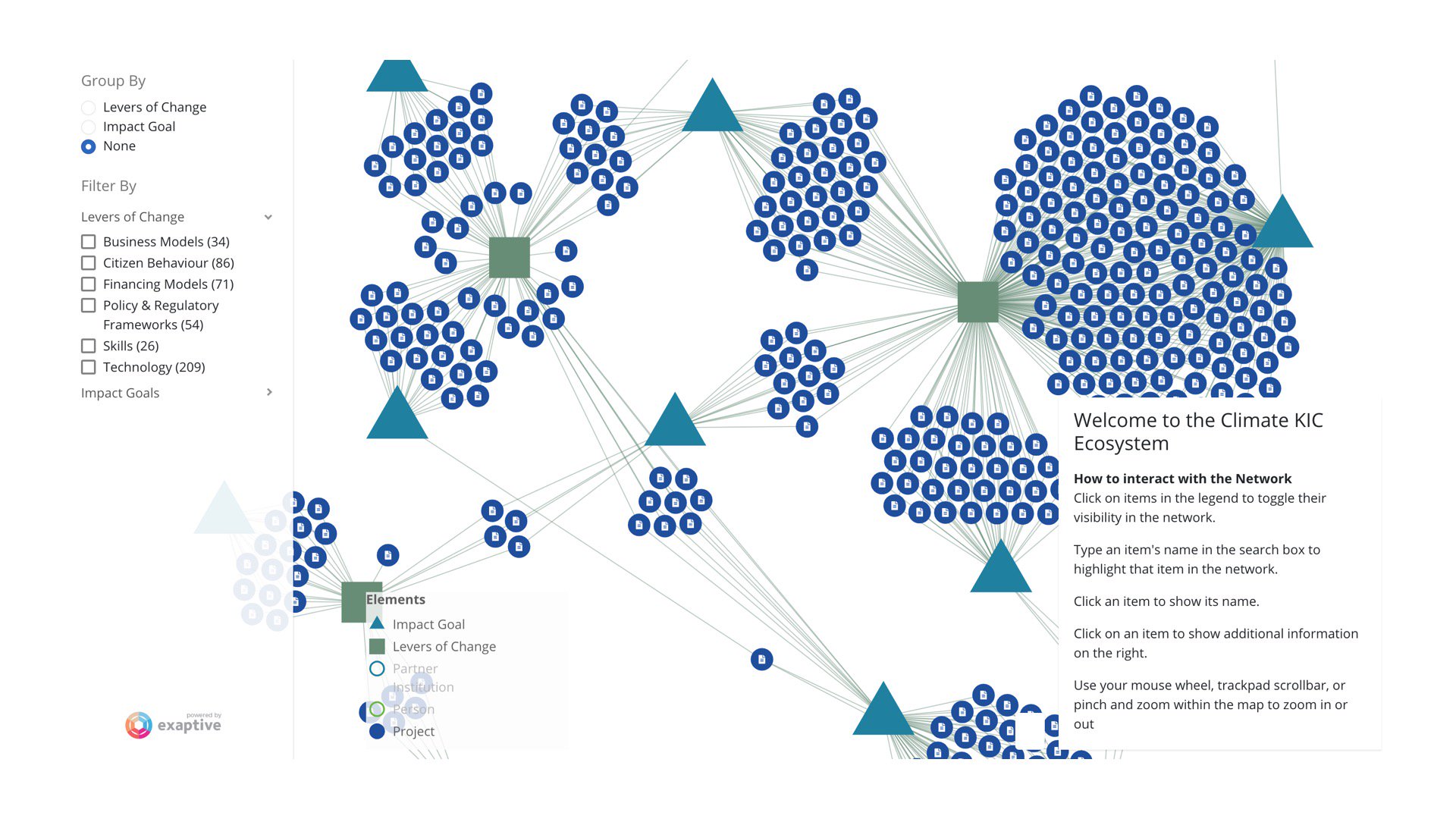
-
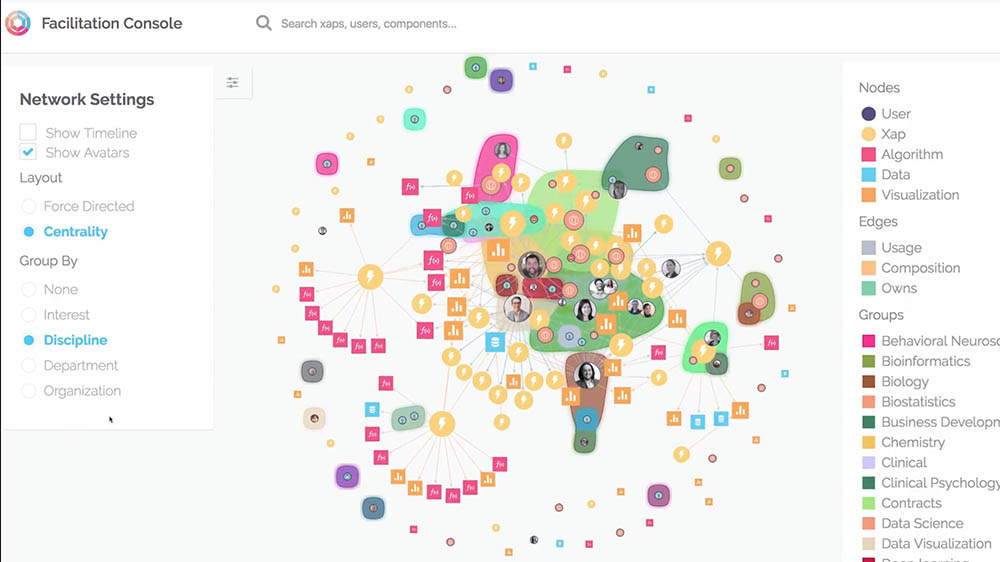
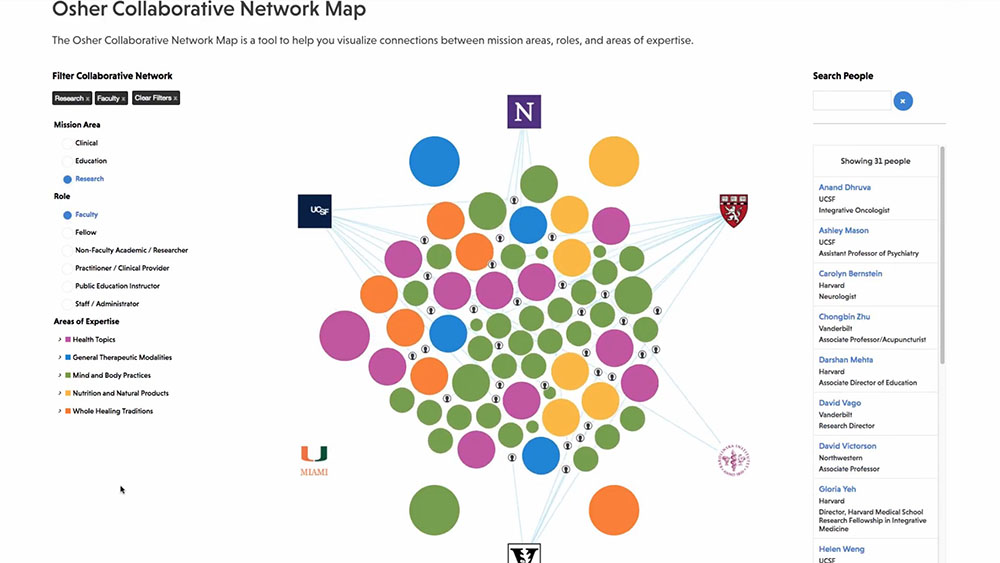
Using technology to facilitate "aha!" moments - talk by Dave King https://www.exaptive.com

-
Networks: Weaving People, Ideas and Projects - overview by June Holley - @juneholley:
Introduction to Network Weaving - by June Holley:
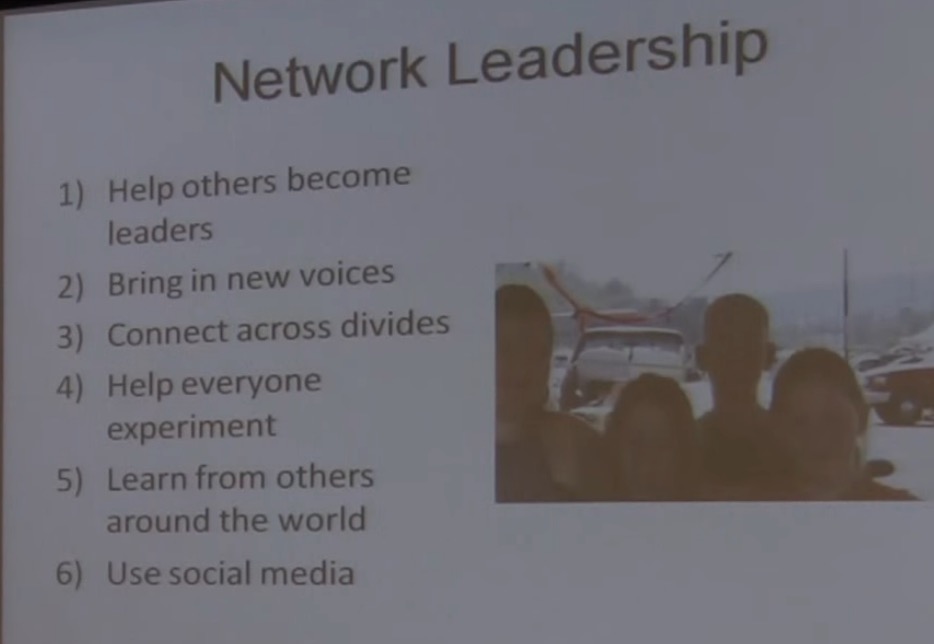
Introduction to Network Leadership - presentation by June Holley
-
In Berlin every week a new "X as Service" site pops-up - all with broken objective functions.
Convenience (deeply steeped in oppression) to drive greater consumption (a root cause of climate change) is a totally backwards concept. Lets use the tech for more interesting things!