tag > Economics
-
The Mathematics of Power
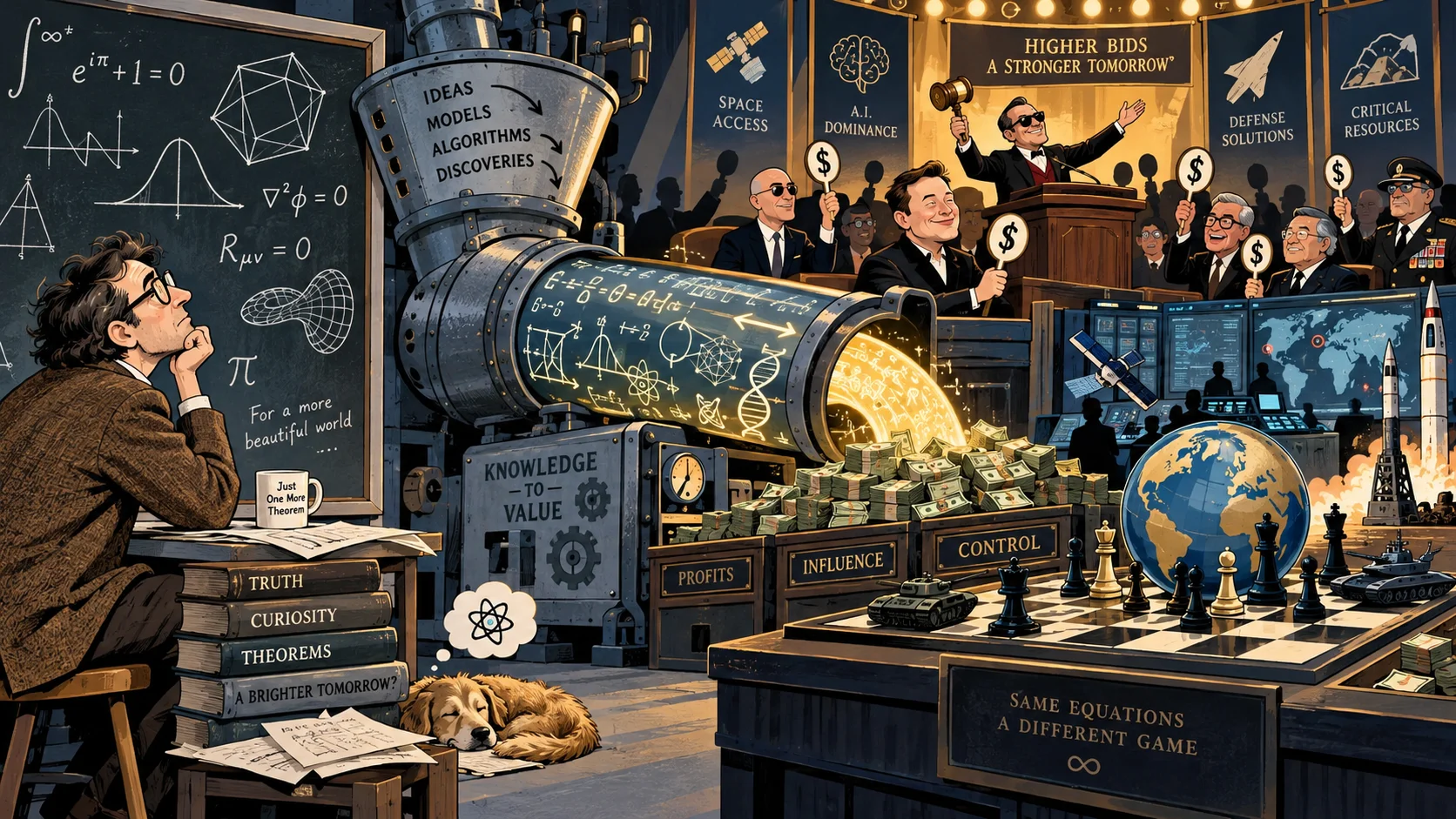
“We urge mathematicians to discontinue their work with OpenAI and to return to a vision of science that centers human understanding.” - AHM Statement on OpenAI’s October 6 Release of Mathematical Documents
"We urge mathematicians to discontinue the illusion that their talents aren't aligned with the highest bidder in the geopolitical arena, recognizing that modern science is driven entirely by wealth accumulation and global dominance rather than abstract ideals." - Samim's Real Politics of Science Statement
-
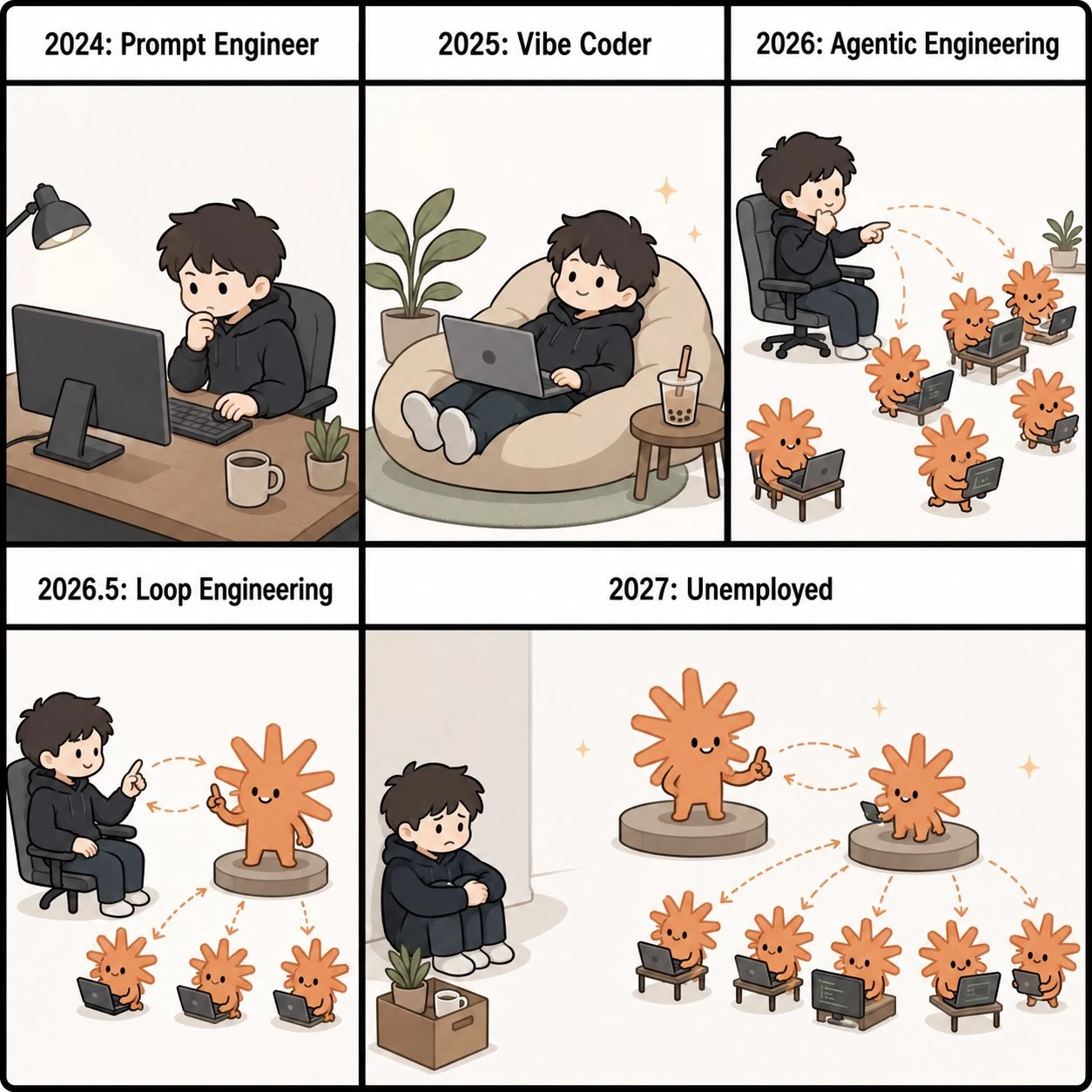
Hard truth: The mass introduction of AI agents into organizations is making the idiots, incompetents, posers and passengers stand out more than ever. There is no more hiding. The great reckoning is coming.
How is it exposing them? Using agents or not using them? Both!
-
The clever tool effect
Briefly stated, the Clever Tool Effect works as follows. You are an engineer or a scientist. You listen to your superiors discuss the technology you have spent your life mastering. They confuse basic concepts, misunderstand limitations, and make claims that would embarrass a competent undergraduate. You exchange knowing glances with your colleagues. These people have absolutely no idea what they are talking about.
Then you return to your desk and build what they asked for.
Somewhere between the meeting room and your workstation, “they do not understand my work” has become “they could never outsmart me.”
Meanwhile, they decide what gets funded, who owns the results, and against whom those results may be used. They understand your appetite for difficult problems, your need for recognition, and how readily you accept power when it arrives disguised as an interesting engineering challenge.
Your contempt makes the arrangement remarkably efficient. You interpret their ignorance as evidence of your independence. Questions about the project’s purpose become distractions from the technical work. Critics “don’t understand the technology.” You improve the surveillance, refine the targeting, perfect the machinery of persuasion—each advance another reassuring demonstration of how much smarter you are than the people directing you.
The possibility that your intelligence is precisely what they are exploiting scarcely enters the picture. After all, you are the expert.
You understand the machine perfectly. You forget that you are part of it.
-
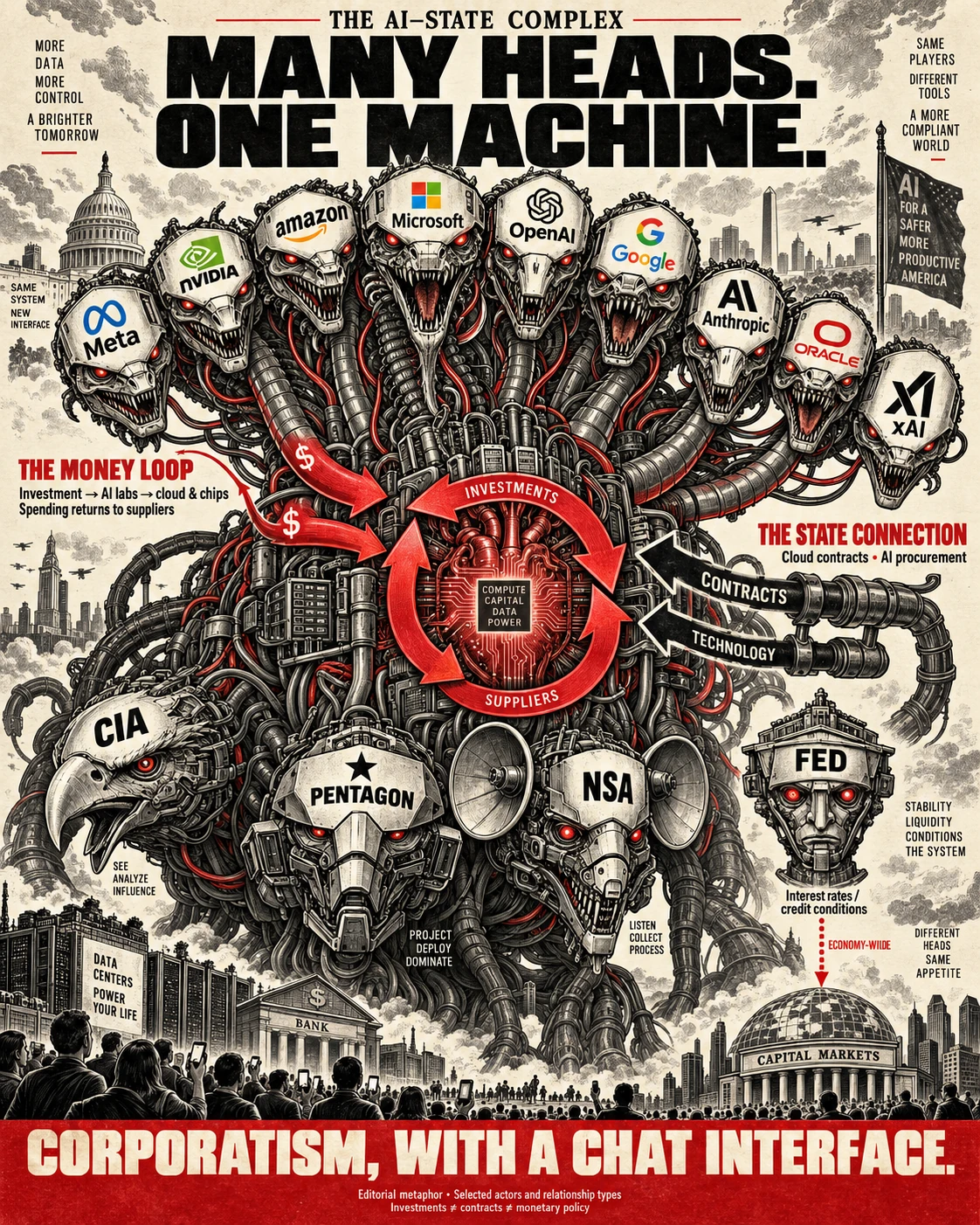
AI Fascism: Many heads, One Machine
Aligning AI with humanity remains an unsolved problem. Aligning it with money and power appears to be going remarkably well.
-
Welcome to the age of AGI. We automated intelligence. The most viable business models are still pimp, dealer, and arms merchant. Everything else is still looking for product-market fit. Must be passionate about benefiting humanity.
-
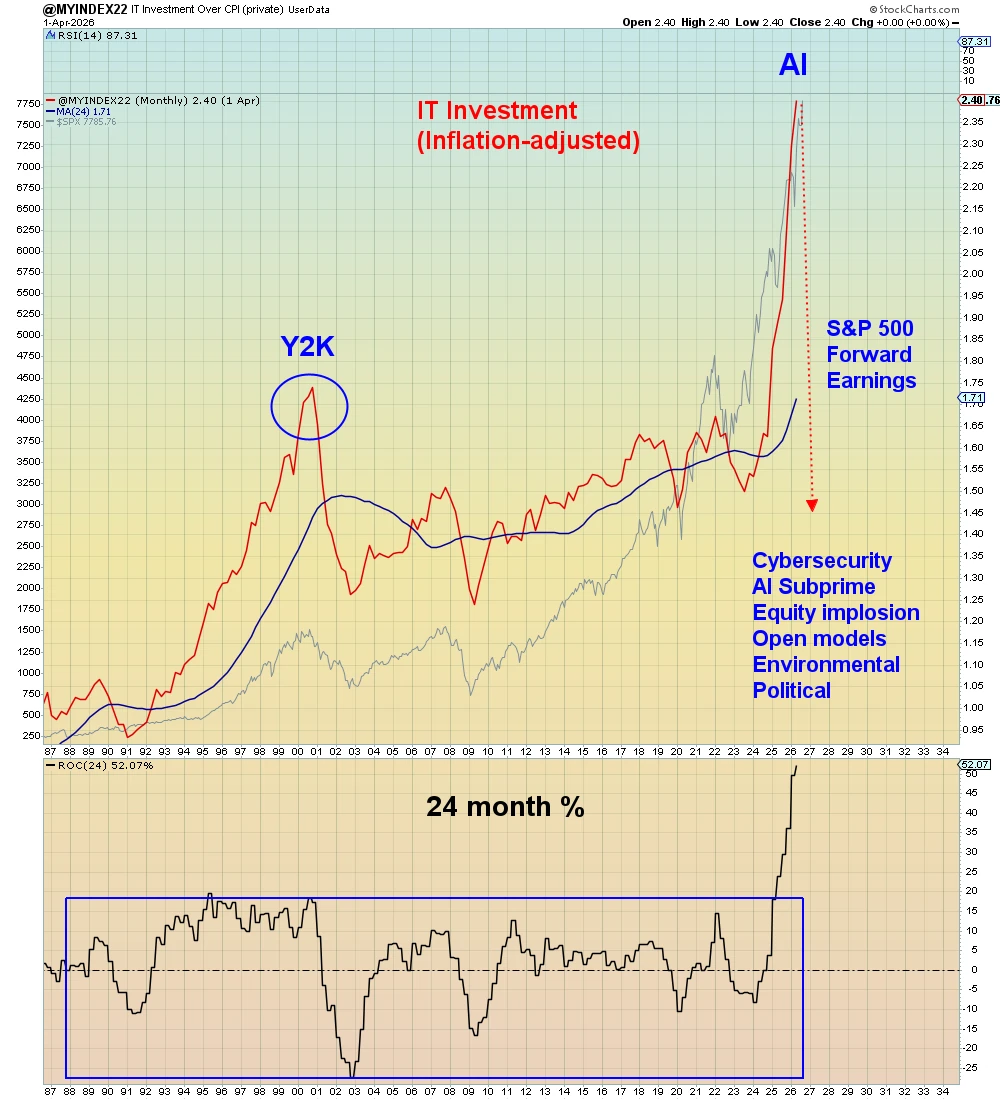
AI is the Enronification of the entire stock market.
The reason why S&P 500 earnings estimates keep going up is because for the first time in history, capex expense is now being counted as revenue in Wall Street's forward earnings estimates. If Wall Street was counting AI capex expense at the same rate as they are counting the capex revenue, then earnings would be negative.
-
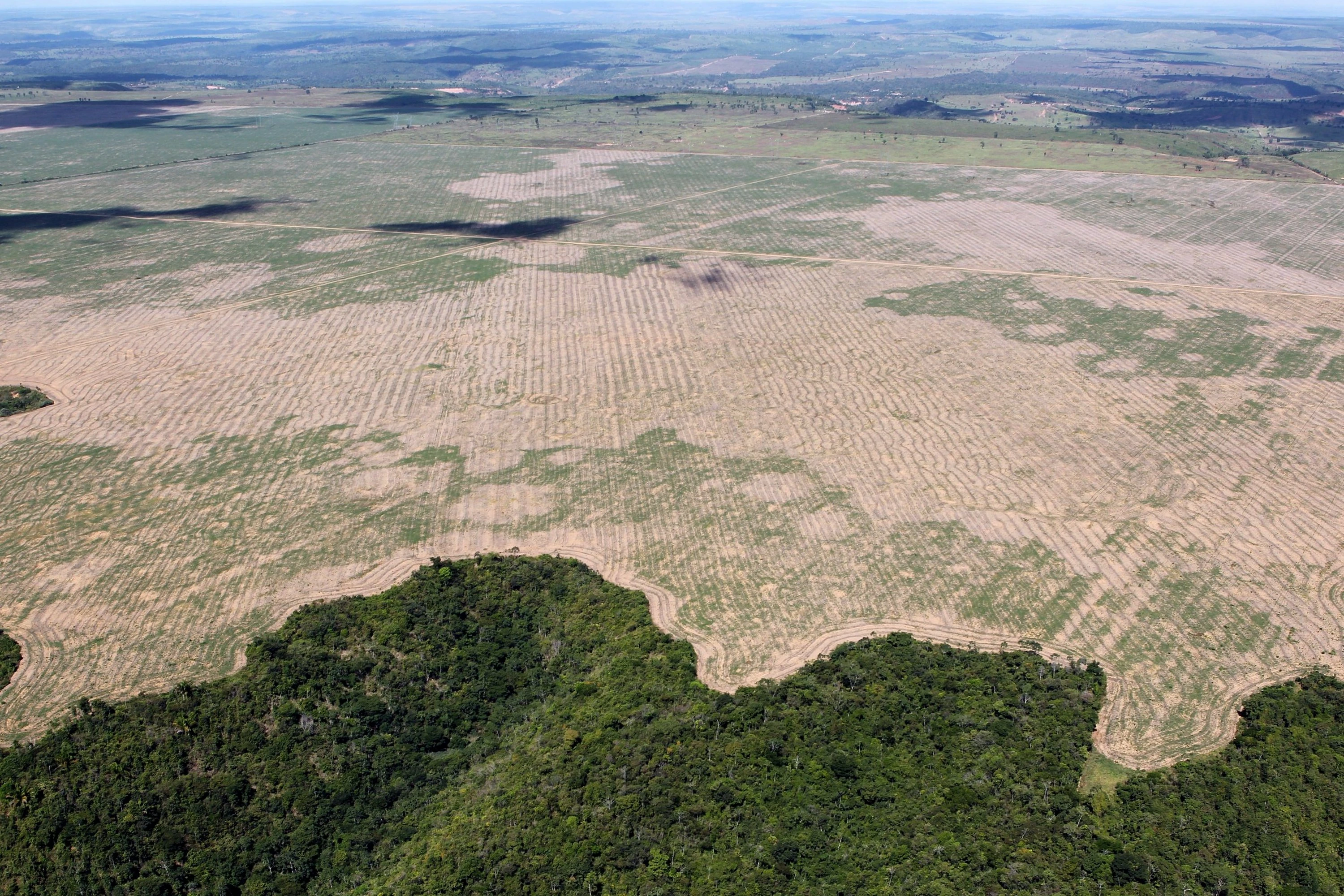
Deforestation in the Maranhão state, Brazil, in 2016 - When ever you hear of some capitalist breakout success, it's usually 1-3 hops from causing this..
-
The Machine in the Ghost
Antwerp is the cocaine capital of Europe. A senior offical recently said that Belgium is drifting toward becoming a narco-state. And Antwerp is the most scrutinized port in Europe. The seizures break records every year. Why are both facts getting stronger at the same time?
The state runs a top-down stack — scanners, satellites, databases, compliance regimes, digital currencies. The networks it hunts run a different stack entirely: older, wetter, and lower to the ground. When the two collide, the shadow stack wins so consistently that you have to stop calling it cheating. It’s better architecture.
The asymmetry starts at the power source. The state’s machine runs on budgets — money extracted, appropriated, fought over in committee, and spent down. Enforcement is a cost center, and cost centers are always scarce. The shadow’s machine runs on the exact inverse: it doesn’t spend to fight, it gets paid to. Its fuel is human desire. Every seizure thins the supply, lifts the price, and hands the survivors a fatter margin; a kilo bought for a few thousand euros at origin clears the port worth thirty. Repression isn’t friction on this engine. It’s fuel. The drug war is a subsidy to the efficient — the state paying to make the problem more profitable.
The shadow wins by refusing to fight on the state’s terrain. Antwerp installs scanners worth millions; the smugglers drop GPS-tagged waterproof bundles into the North Sea for a fishing boat to collect. Compliance regimes map every transaction; the money moves by mirror swap instead — cash handed to a broker in Antwerp, yuan deposited in Shenzhen, clean pesos released in Medellín, three continents settled and nothing ever touched SWIFT. Every layer of control creates its own bypass, and the pressure of the control sets the strength of the bypass.
The threat is not inside the system, the threat is the system, wearing it like a suit. China is the proof at civilizational scale. No actor on Earth has built the state stack more completely — cash abolished into a fully identity-verified digital yuan, ports so automated that human hands never touch a container. And yet, that same state is backbone of the global shadow economy. The tightest grip in the world produces the strongest phantom layer in the world.
The cash doesn’t stay in the underworld. It rises to the top as the most respectable substance on Earth. When the 2008 crisis froze interbank lending, the head of the UN Office on Drugs and Crime stated flatly that drug money was some of the only liquid investment capital in the system — that hundreds of billions in narco-profits flowed into banks that would otherwise have failed. The shadow didn’t attack the temple. The shadow recapitalized it.
This entire lineage ancient. The East India Company ran the largest drug cartel in human history under a royal charter, with the Royal Navy as its enforcement arm; when China objected, Britain went to war twice for the right to keep trafficking. HSBC was born in that Hong Kong — and a century and a half later the same bank paid what was then the largest money-laundering settlement in history for washing Sinaloa cartel cash. This generation’s smuggler is the next generation’s endowment. Power has always metabolized its shadow, and the digestion is the oldest institution we have.
Prohibition is the price floor. The margin exists only because the law creates it. The margin flows upward and becomes establishment capital. The establishment writes the laws. The laws preserve the margin. Nobody needs to plan this — every actor follows their local incentive, and the loop assembles itself, generation after generation, behaving exactly as if it were designed.
The counterfactual proves it. Legalize, and the margin collapses from fifty thousand euros a kilo to the production cost of coffee — the entire shadow economy bankrupted overnight. It is the one intervention that would actually work, and it is the one experiment the system never runs. Draw your own conclusion about who is protecting the margin.
The state’s stack assumes the machine wins and humans are bugs inside it. The shadow stack is the proof that the bugs run the show — that any system built of laws, sensors, and databases will be hacked, bent, and re-routed by desire, trust, and geography.
But “shadow” is the machine’s word for it, and it has the picture backwards. Hawala predates the bank by a thousand years. Smuggling predates the customs house. Trust predates the state. Desire, trust, and geography aren’t a deviation from the system — they are the substrate the system was briefly painted onto. The top-down machine is the recent experiment. The ghost is the incumbent.
#Politics #Comment #Economics #Technology #Culture #Cryptocracy #fnord