tag > Qi
-
Cultivation of the Body, the Breathing and the Mind - talk by Master Lai Jian Hui
English by Master Faye Yip
-
Poem by the 12th century Chinese Buddhist master Hongzhi Zhengjue
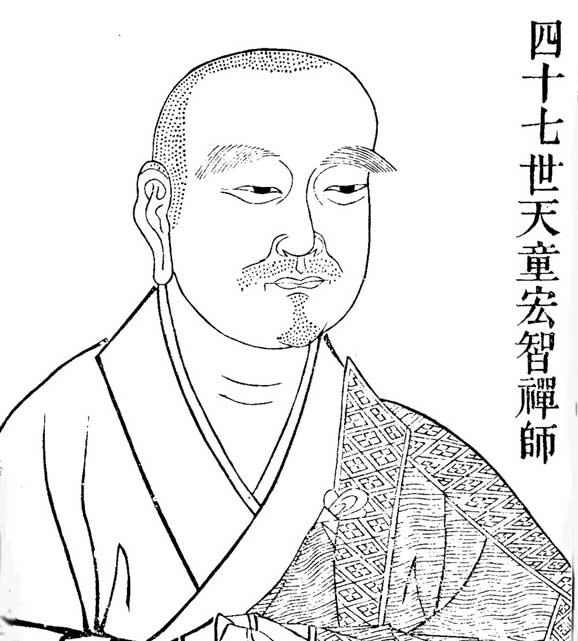
All things originate from the mind. When the whole mind is silent, all appearances end. Which is other, which is self? When there is no sign of differentiation, not even a single atom can be established. When not a single thought is born, you penetrate through before the womb and after the skin bag; one point of inconceivable illumination, whole and undifferentiated, without corners, edge or traces that cannot be dimmed. What cannot be dimmed is called inherent knowledge; the point of inherent knowledge is called the fundamental endowment.
When you realize all things are empty you are free in all states of mind and penetrate beyond through every atom of dust. The primordial beam of light pervades everywhere and transforms according to the energies and situations. Everything it meets is the source, subtly illuminating all things. Empty, the wind in the pines and the moon in the water respond outwardly without getting confused. Live in clear harmony, without a wandering mind, not sticking anywhere. With a mind like spring bearing flowers, like a mirror reflecting images; in the midst of floods of tumult, you will naturally stand serene above it all.
When your state is thoroughly peaceful and your livelihood is cool and serene, you will see the emptiness of the ages; there is nothing to be troubled by, nothing that can obstruct. Empty, absolute and radiant; clear, complete and shining; it clearly exists for all ages, never dimmed. If you want to remain tranquil, cover and uphold in the same way as sky and earth -- appearing or disappearing, shutting down or opening up, all are up to you.
Clean, pure, perfectly clear; the power of the eye cannot reach its bounds. Still, silent, empty and vast, the ken of the mind cannot find its edges. One who investigates sincerely and really arrives considers this the fundamental ground; neither buddhas nor demons can enter; neither dust nor dirt can defile it.
There is utterly no way to study this matter; the essence lies in emptying and opening body and mind so they are vast as space, then you will naturally be complete everywhere. This awareness cannot be dimmed, this clarity cannot be confused. The moon follows the flowing waters, the rain goes with the moving clouds. Each and every sense and sensation is immediate and absolute. Therefore it was said that a saint has no self, but there is nothing that is not himself. It is so obvious, so clear; you realize that gathered in or let out, it has become a white bull on open ground, which you cannot drive away even if you try.
Written by the 12th century Chinese Buddhist master Hongzhi Zhengjue. English translation by Thomas Cleary published in Timeless Spring: A Soto Zen Anthology. Found via naturalawareness
-
Revisiting Burr and Northrop’s “The Electro-Dynamic Theory of Life” (1935)
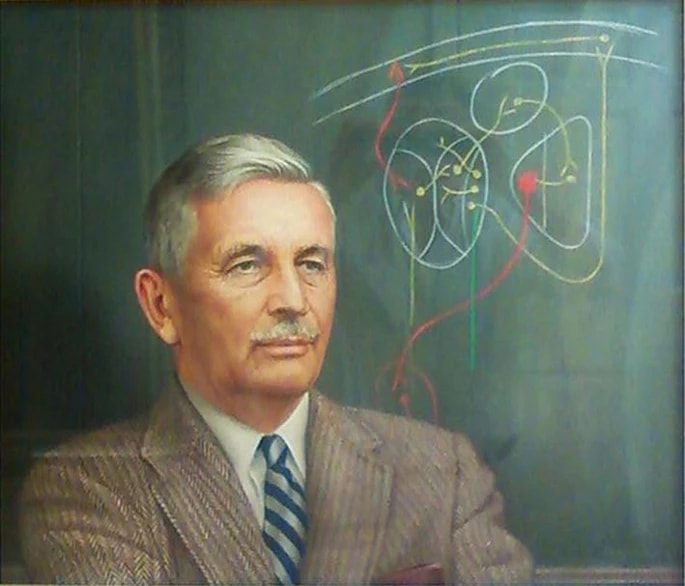
Abstract: Harold Saxton Burr was a biologist working throughout the 1930s–1950s on an important set of problems related to biological organization and the origin of complex living forms. He was a profound thinker, suggesting a complementary focus on field concepts in addition to the emphasis on particle models and integrating concepts from physics and philosophy in his work. He developed innovations in electrophysiological technique and used them to perform a wide experimental survey of bioelectricity in normal and pathological growth. Here, I briefly review his classic paper with philosopher F. S. C. Northrop, “The Electro-Dynamic Theory of Life,” in the context of advances in this field over the last few decades. Based on recent progress, it is now clear that Burr was a prescient and visionary thinker. His main hypothesis, that bioelectric gradients serve as prepatterns guiding morphogenesis, has been confirmed using modern molecular physiology, as have his ideas about the place of cancer and the nervous system in the question of biological organization. With limited technology but deep insight, he derived insights that anticipated many modern discoveries. Even more importantly, Burr’s view of bioelectricity as a convenient entry point for rigorous investigation of the broader question of self-organizing properties of life highlights a frontier of inquiry that awaits today’s researchers. Burr and Northrop’s “The Electro-Dynamic Theory of Life,” originally published in the Quarterly Review of Biology (10(3):322–333, 1935), is available as supplementary material in the online version of this essay.
Talent hits a target no one else can hit; genius hits a target no one else can see. —Arthur Schopenhauer
-
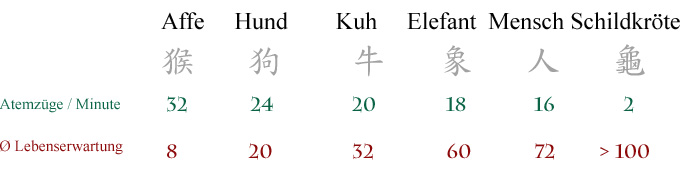
Longevity of a species is inversely correlated with its respiratory rate: A tortoise breathes very slowly, approximately two breaths per minute and lives for up to 150 years. So, breathe slowly.
-
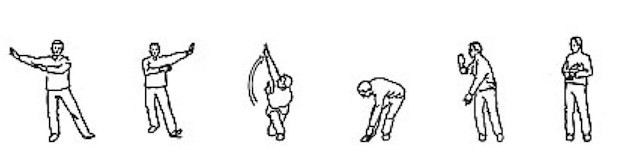
Shibashi - 十八式 (18 Movement Taiji Qigong) - performed by Sam Sujatna
-
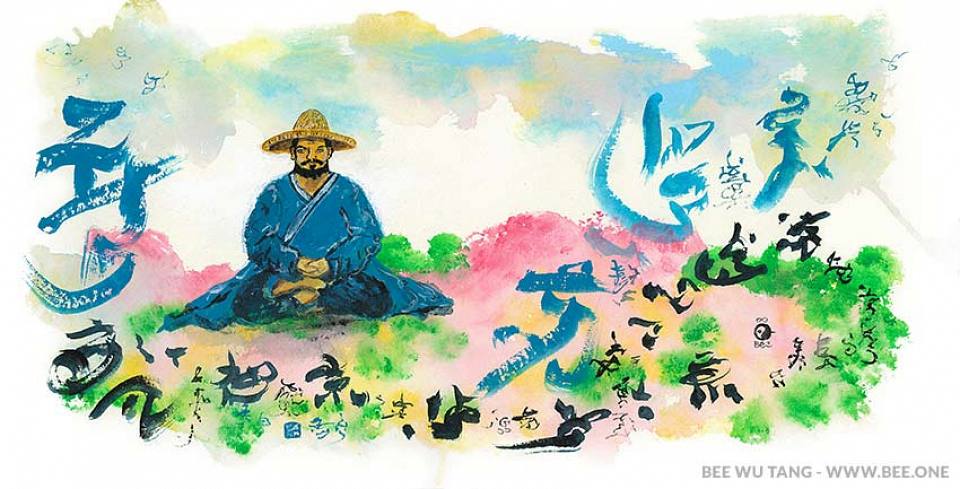
Zhang Sanfeng (張三丰) - Legendary Chinese Taoist who invented T'ai chi ch'üan
-
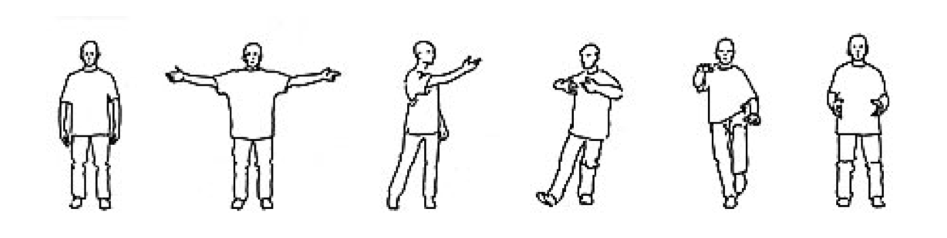
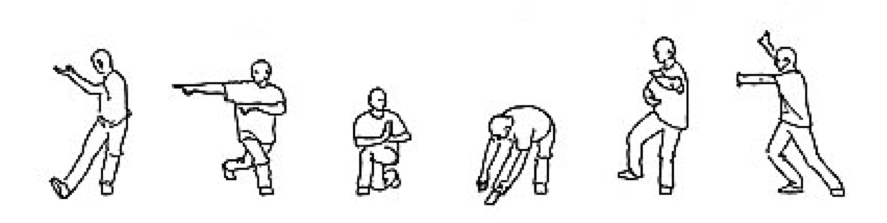
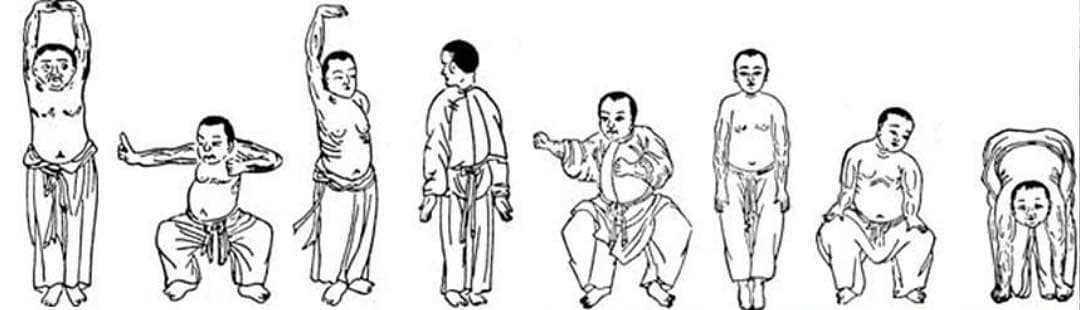
Ancient Qigong Practice Illustrations
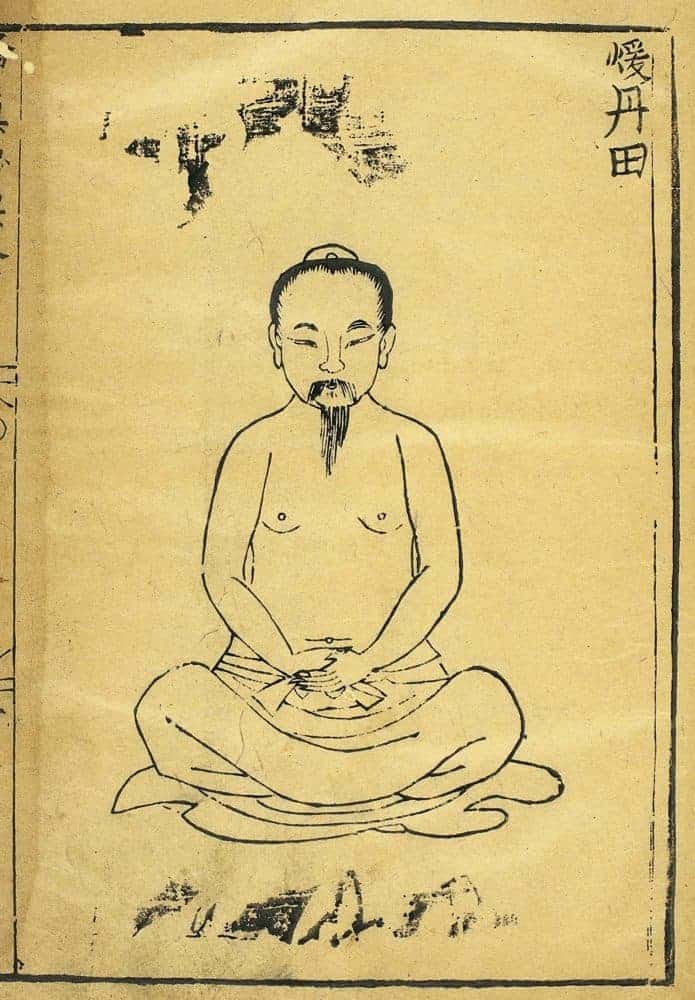
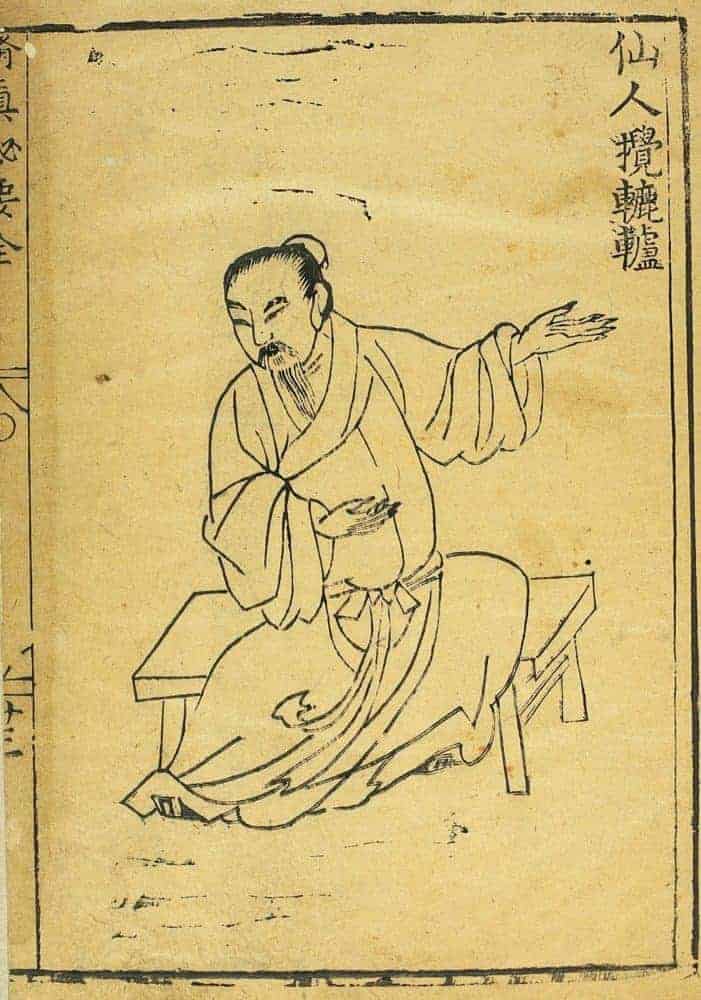
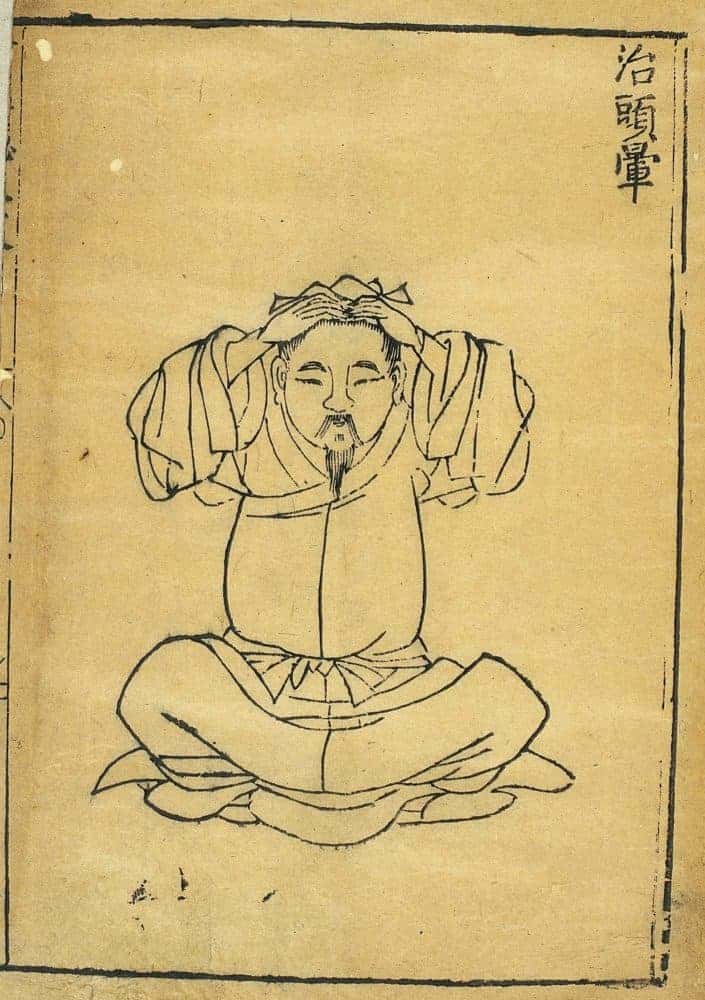
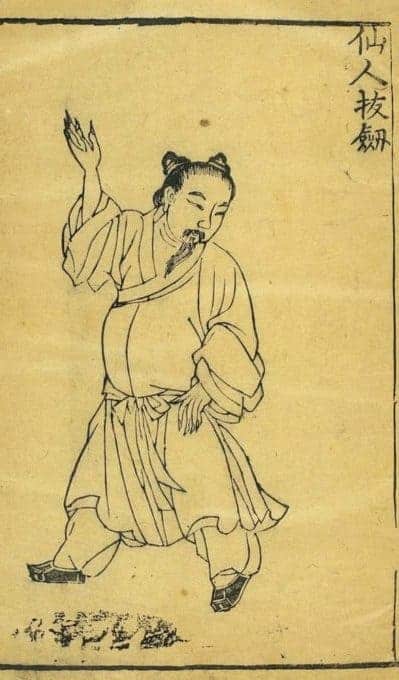
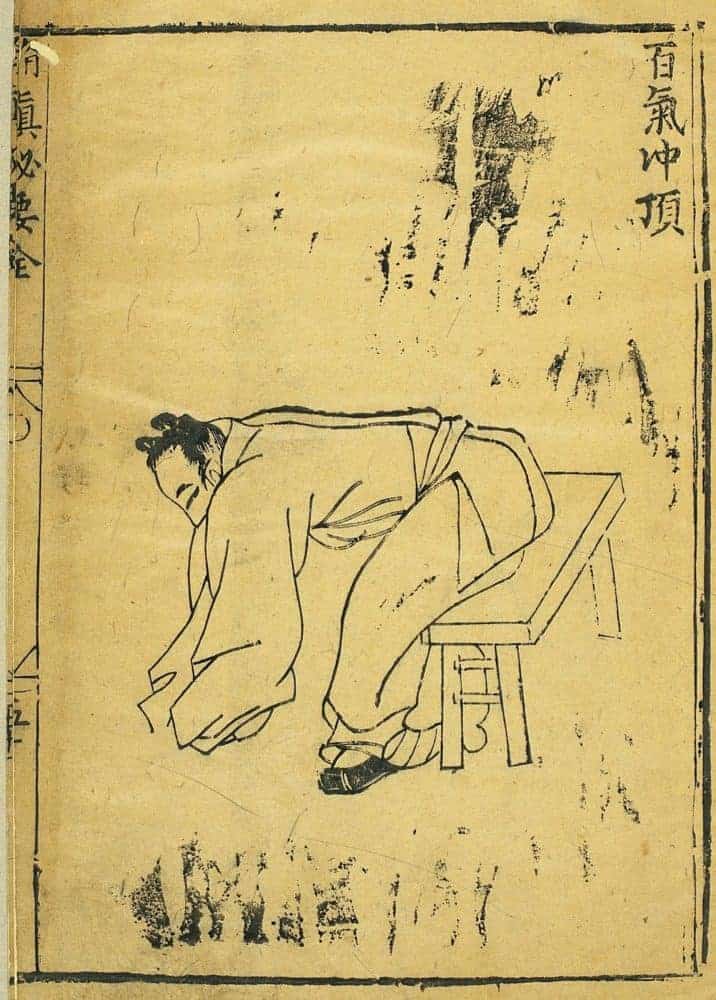

Xiuzhen miyao, a gymnastic (daoyin/qigong) text of unknown origin, was rediscovered and published with a preface by Wang Zai in 1513 (8th year of the Zhengde reign period of the Ming dynasty). It records 49 exercises. This illustration depicts Lü zu jiu ji fa (Ancestor Lü's technique for rescuing from illness), a technique used to free blocked Qi channels. It is practised as follows: One adopts a standing position. If the blocked channels are on the left side of the body, one conducts one's gong power with the left hand and focuses the attention on the left side, raising the left arm while circulating Qi. The same procedure is carried out on the right, if that side is affected.
-
Onsen (温泉) - the highly advanced relaxation culture of japan is simply astonishing



-
"Total Relaxation is Possible"
- from "The Lazy Man's Guide to Relaxation"