tag > Qi
-
Organism feeds upon is negative entropy
“What an organism feeds upon is negative entropy. Or, to put it less paradoxically, the essential thing in metabolism is that the organism succeeds in freeing itself from all the entropy it cannot help produce while alive.” - Erwin Schrödinger, What is Life? (1943)
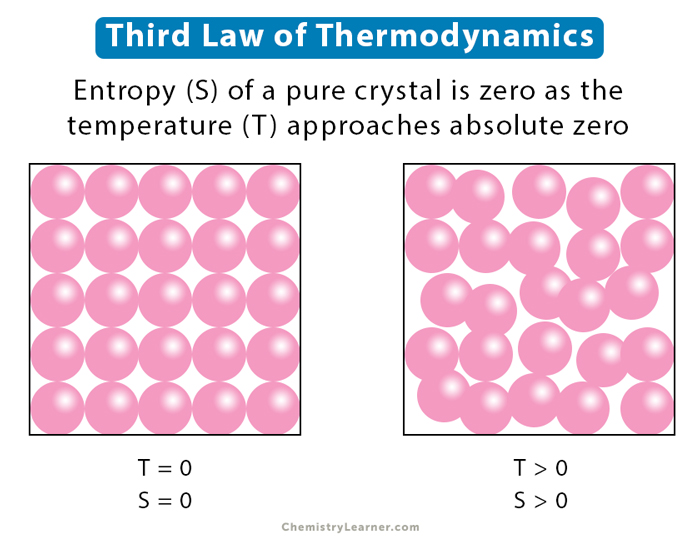
Entropy, the measure of a system’s thermal energy per unit temperature that is unavailable for doing useful work. Because work is obtained from ordered molecular motion, the amount of entropy is also a measure of the molecular disorder, or randomness, of a system.
“Entropy requires no maintenance.” — Robert Anton Wilson
-
The Amazing Power of Sung in Taijiquan and Qigong
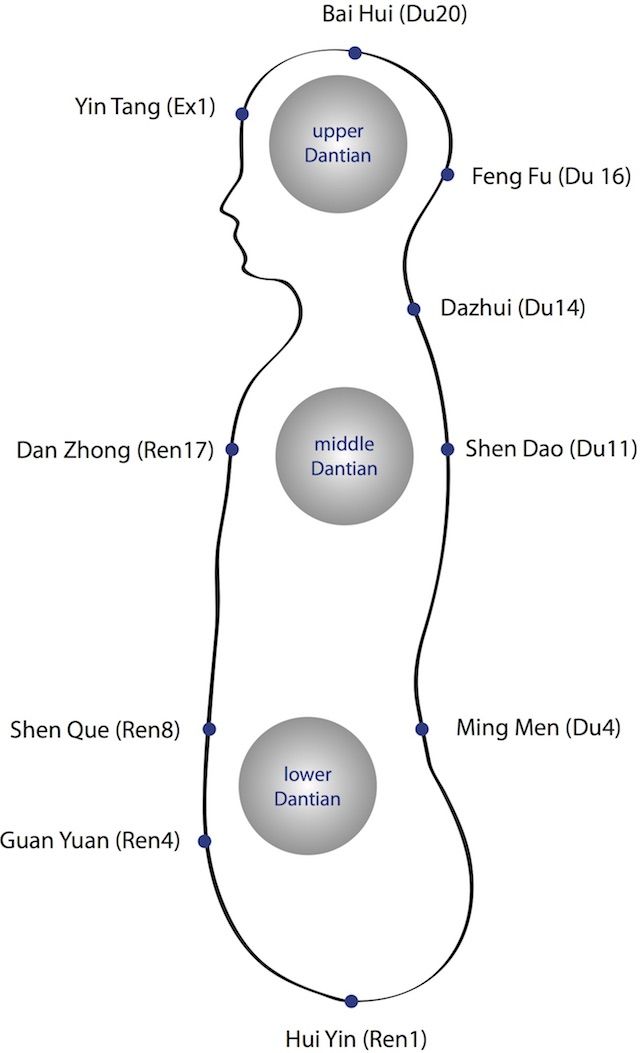
Those who study the authentic methods of Taijiquan and Qigong with perseverance will experience amazing benefits in health and wellbeing which cannot be clearly defined or explained. The ancient Chinese civilisation used the word sung to describe a necessary pre-requisite before such benefits may be obtained. Only then can one experience and express the wonderful feeling of restful joy in the heart at every moment.
Sung is usually translated from Chinese to mean deep relaxation, but such a weak interpretation iswoefully inadequate as the Real experience is far more profound. Students of the Esoteric and MartialArts can travel along the road to perfection only if, from the very beginning of their training, they makethe achievement of sung their paramount priority. Technical detail and refinement of each set exercisewill improve gradually and naturally 'when the student is ready', but at each stage of the training, thehighest degree of sung is necessary to experience the union of mind and body taught by the Masters.Unfortunately, modern competitions have done much to undermine the essential quality of the Arts,where competitors are marked upon their exaggerated and 'flowery' movements, which maynevertheless be martially impotent. In much the same way, the vital quality of sung is lost by studentswho egotistically strive to 'look good' during their performance to the detriment of their energy flow.
The great Masters of Taijiquan, such as eighty-five year old Fu Zhongwen, heir to the Yang familytradition, with whom I studied in China, display the outward quality of sung at all times. Transmissionof the Arts cannot be taught physically but rather is felt as an awesome but loose power whichdistinguishes the Real from the false teachers. However such great Masters may not score so highlyin superficial competitions before less discerning judges. Fu's teacher, Grandmaster Yang Chen Fuused to say to his students, "Relax, relax, and then relax again"; in order that not only the muscles,tendons and ligaments achieve the supreme conditioning of sung, but also the bone marrow, in thevery depths of our essential nature. Sung cannot be explained in rational terms, but the followingverse may help a little to unlock the mystery in body, mind and Spirit :-
Sung in the Body
When we free ourselves from fixed rigidity, we have Sung in our posture.
Then stiff strength, brute force and aggression disappear from our movements
And give way before the gentle, relaxed softness of Sung.
We become moderate, flexible and open in all our activities,
Knowing when to yield and accept the will of Providence.
And so our turbulent emotions and selfish desires melt away
Before the joyful inner power of Sung which holds all opposite forces in balance.Sung in the Mind
Sung frees our minds from selfish conditioning and binding systems,
And enables us to give and forgive in equal measures,
So that we are free to become kind, gentle and tolerant.
Sung enables us to do our duty without being duty-bound,
And allows us to practice a discriminating morality without piety.
Sung gives us detachment from our possessions and restrains our anger.
This freedom from worry and discord is the purest form of healing.
So that we are free to become kind, gentle and tolerant.
Sung enables us to do our duty without being duty-bound,
And allows us to practice a discriminating morality without piety.
Sung gives us detachment from our possessions and restrains our anger.
This freedom from worry and discord is the purest form of healing.Spiritual Sung
Sung is found when we empty ourselves in order to be filled.
By the inner Presence which lets go our fears and restores our wholeness
To enter into communion with the Tao at the highest level.
Only then are we able to express the unique Love, Peace and Truth
Which leads to purity of Being in the here and now, and the realisation
of the immortal 'I' which cannot be labelled in the mysteries of the Void.
Sung is the unlimited power and glory of God personified in one such as the Christ
So that you and I can find it in infinite measure within ourselves.
And then you will know that Sung is Love, and that you are Sung.Written by Tony Henrys and transcribed by John Gent. February 1992.
-
Lin Kong Jing - Empty Force
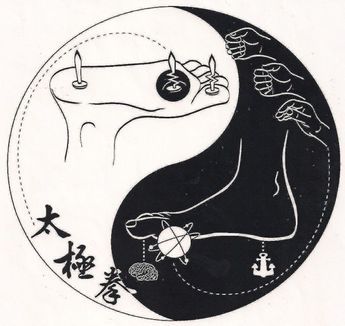
Lin Kong Jing is an advanced spiritual and martial practice that explores consciousness manipulation and the underlying nature of reality. Rooted in traditional Chinese energetic arts, this method allows practitioners to perceive and interact with the fundamental illusion (maya) of existence. Through refined qi cultivation, adepts learn to project internal energy beyond physical boundaries, potentially influencing reality through pure intention and heightened energetic awareness (Yi).
-
Yang Tai Chi and Taoist Neigong
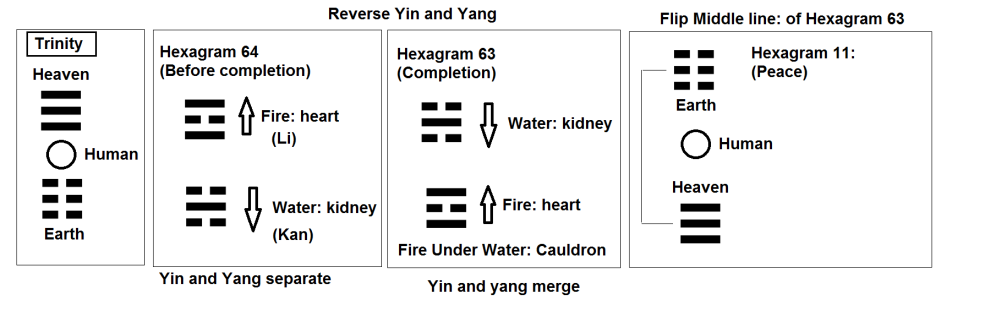
“In reality the essence of Tai Chi is not found in the external postures, but rather the internal principles, energy, and Qi. Yang is the trigram Chien (heaven), yin is the trigram Kun (earth). Inhaling and retreating represents the principle of the reversal of yin and yang. If we allow the fire (Li) to rise, and the water (kan) to descend, the two will separate. If, however we put the fire under the water, then their positions have reversed. This is called the principle of water and fire complementing each other, or principle of reversal”- Yang Cheng Fu from Self Defense Applications of Tai Chi Chuan [Tai Chi chuan shih-yung fa]
-
Tian Zhaolin: A Legacy of Yang Taiji
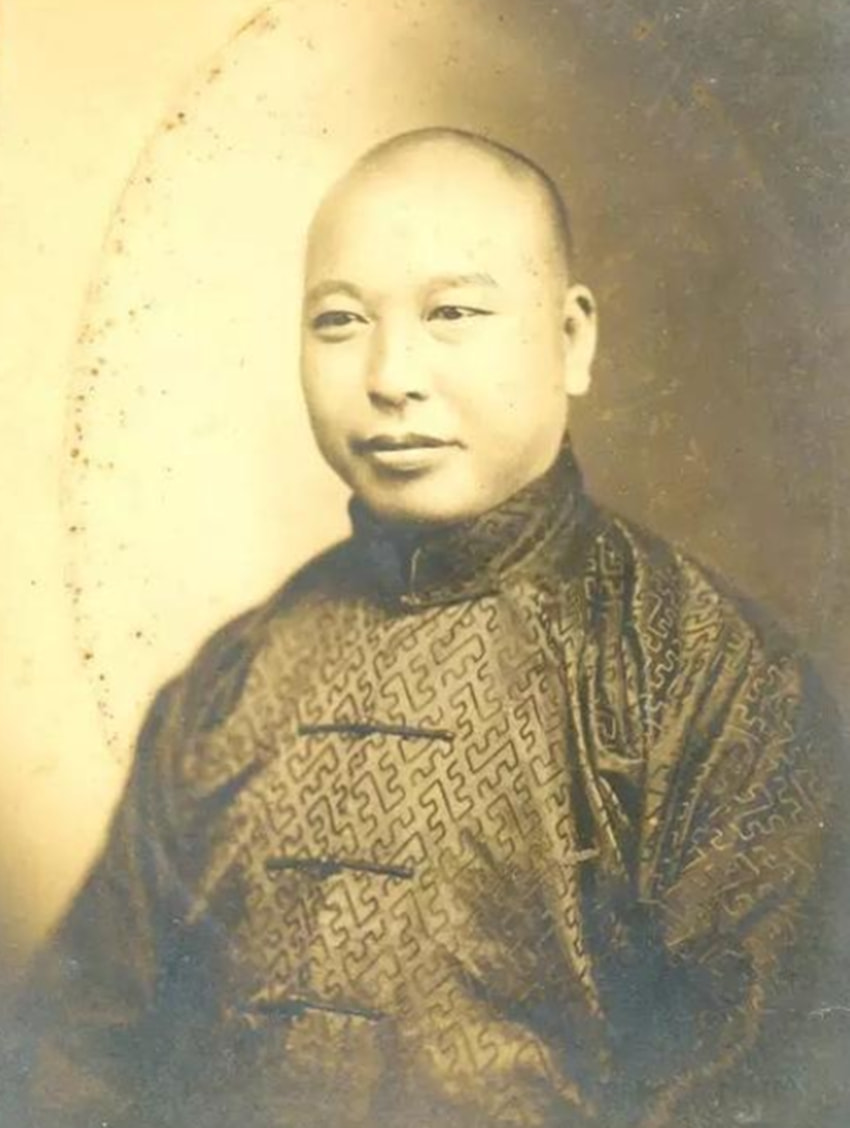
Article by Leroy Clark and Key Sun.
The immortal arrives without shape; moves without form; comes and goes with no trace; Such is the quality of the expert.
Although Tian Zhaolin (1891-1960) is lesser known outside China than other taiji masters like Chen Yenlin (Chen Kung) and Cheng Man Ching, he occupies a significant position in taiji lineage and is one of the most senior non-family descendants of the Yang family taiji. He was more senior than any yet known to the west. For example, Chen Yenlin directly learned taiji from Tian Zhaolin. Also, Cheng Man Ching’s teachers include Yang Chengfu and Ye Da Mi. Ye Da Mi was also a student of Tian Zhaolin.
The present article intends to introduce several contributions of Tian Zhaolin to Yang taiji. It is in part based on knowledge obtained from our correspondences and conversations with Masters Tian Yingjia (the middle son of Tian Zhaolin) and Yao Guoqing (Tian Yingjia’s primary Tudi) over the last several years.
The Early Years
Tian Zhaolin’s father passed away when he was an infant. As a young boy of eight years, he had to sell fruit to support his mother and two sisters. Yang Jianhou (1839-1917), the second son of Yang style founding father Yang Luchan, noticed him on his walks to the palace where he taught. He recruited him as his student and also provided maintenance for young Tian’s impoverished family. Thus from the age of 13 years and on, Tian Zhaolin learned taiji from Yang Jianhou and subsequently from Jianhou’s sons Yang Shaohou (1862-1930) and Yang Chengfu (1883-1936). These teachers were exceptional and profound taiji grand masters.
Once in the Yang family household, Tian Zhaolin was required to participate literally around-the-clock in the practice of their internal art alongside Jianhou’s sons Shaohou and Chengfu. The practices were overseen by father Jianhou. Tian Zhaolin lived with the Yang family, practiced day and night with them, ate with them, and slept with them. The first six months Zhaolin was made to practice stake exercises exclusively. After that Jianhou began to teach him the soft, sticky, energy art that he had inherited from his father Luchan. During the stake practice, should one of them move even the slightest, ole Jianhou would quickly come over to strike that person sharply with his long-handled smoking pipe. Similarly, during the practice of jin, should one of them hesitate or stop, Teacher Jianhou would quickly approach and strike that person sharply with his pipe. Tian Zhaolin also became a constant companion of Yang Shaohou. Tian also served as a practice partner for Shaohou. He learned to withstand his various “jins” and blows.
During those early years, in addition to living, learning, and practicing at the Yang family home, Tian Zhaolin also followed Teacher Jianhou to the palace and other various teaching sites carrying the master’s sword. Since Zhaolin had a very solid foundation and a very high awareness level and with the excellent teaching and training, he made a great progress.
After some seven years of learning and severe practice, in 1911 Teacher Jianhou ordered Zhaolin to enter a public fight contest representing his family. Zhaolin was surprised and quickly tried to beg-off, explaining to his teacher that he did not feel adequately prepared and did not wish to bring dishonor on the family. Jianhou responded by telling Zhaolin that he would not have ordered him to enter such a contest if he (Jianhou) did not believe he was well prepared. Tian Zhaolin then followed his teacher’s advice, entered the contest, and he won. Once home after the contest, Teacher Jianhou ordered Zhaolin to follow his eldest son Shaohou from this point onward. Shaohou and Zhaolin were often seen together around the capital and at martial art exhibitions. Tian’s reputation began to grow after his success in that raw fight competition.
Recognition
After Jianhou’s passing in 1917, Tian Zhaolin continued to learn from Shaohou. Shaohou was known to possess a skill and method called, “One Thousand Hands Guanyin”. Tian also used this same method. In 1921 Zhaolin followed Shaohou to Hangzhou. There he hired a man-pulled chariot. The chariot man upon hearing the northern accent tried to double charge Tian his fee. Tian refused to pay the unfair, outrageous price. Soon some ten additional chariot men appeared and started to attack Tian. He launched them all out and to the ground.
Another time Tian was drinking tea in a teahouse by a lake. Two Army officers came in and told him to give them his seat. Tian refused. They struck at him but both were launched away. The Army officers then ordered ten nearby soldiers to fight him. Again, Tian launched them away, effortlessly, one by one.
Once Shaohou and Zhaolin attended a martial arts show together. Western boxing was included in the demonstration. When the western boxer finished his demonstration, the audience barely applauded. Then Zhaolin got up on the stage and demonstrated some taiji techniques. The audience went wild with applause. This offended the western boxer greatly. He got back up on the stage and demanded to know from the announcer why his western boxing demonstration received such little recognition while the taiji demonstration received such good response. The ring announcer suggested it was probably because so few in the audience understood western boxing while they did understand martial arts and taijiquan. With that the bellicose western boxer immediately demanded a challenge of the martial artist.
Yang Shaohou was sitting with Zhaolin at ringside. Zhaolin immediately jumped back into the ring and told the announcer he was willing to take the western boxer’s challenge. Shaohou shouted up at Zhaolin to knock the guy out of the ring. The challenge match began. The two fighters approached one another. Zhaolin started to circle slightly. He held one arm up shoulder level and extended the other to the front. Suddenly the western boxer lunged at Zhaolin. Before anyone could see, the western boxer was suddenly tossed cleanly from the ring. It was as if he were a kite held taunt by a string when suddenly the string is cut and the kite suddenly jumps out, up and away cleanly. He was bewildered and did not understand what had happened.
Energy, including that of taijiquan, may be thought of as transmission by wave. Earlier generation adepts in taiji had an expression – “'hitting the cow on the other side of the Mountain.” This phrase referred to hitting an opponent’s front side with the pain and effect being felt on the back side. In years past, people who sparred with Shaohou often described him as also having an energy like electricity. That is, it caused very painful sensations in the muscle and even on the skin surface. Tian Zhaolin, coming from that background, also knew this method. In the 1940’s a guy known as "Big Spear Liu" came to Shanghai’s “big world,” the city’s major performance and entertainment center. Spear Liu asked the doorkeeper, “Are there any good hands around here?” In other words, he was seeking someone considered highly skilled in martial art in order to make a challenge. The doorkeeper told “Big Spear Liu” of Tian Zhaolin. With that Big Spear set off to find Mr. Tian. He found Zhaolin and immediately demanded to spar by each striking the other three times. Tian responded that it may not be necessary. He said, “Just let me touch you. If you can tolerate my touch, you win. Liu, sensing a fool and an effortless victory, immediately agreed. The two men approached and Zhaolin reached out his hand to touch Liu’s chest. Within a few moments, Liu's facial muscles started to contort. Soon he grimaced and his face showed signs of intense pain. Spear Liu pulled away and, after recovering, commented: “I have traveled throughout five provinces and various cities but until today I have never seen such a profound skill.”
According to the descriptions of two elderly gentlemen still living today who observed Tian Zhaolin’s teaching practice at a park in Shanghai from early 1950’s to his later years, Tian’s push-hand practice with his students and others was particularly impressive and amazing. They describe Tian’s sparring with people as being like a “wheel fighting”. That is, an opponent would come forth, touch hands with Zhaolin, and quickly be sent flying as if they had ran into a rapidly turning wheel and had been repelled off. From 6:00 a.m. to noon he would teach and push-hands with them. Tian would just smile and teach without ever breaking a sweat, hour after hour, everyday, day after day. Many, many people came to learn from him. He was a throwback and reflection of the early Yang masters. He would push-hands with anyone without even asking their style or their names. In a flash they all would fall to the ground, one after another, without fail. His teaching and practice was a fascinating sight to behold. Tian’s early tudi’s, Ye Da Mi, Cheng ZhiJin, Yang KaiRu, and Shen PeiRong were all very good at push-hands.
There was a port-worker who was skillful in shaolin boxing. Once he tried to secretly attack Tian from behind while Tian was pushing-hands with another student. Tian didn’t even turn around; he simply made a certain kind of vocalization. With that sound both the student and the attacker were launched-out four yards away. Then Tian turned around and asked the port-worker if he had been hurt. That port-worker felt shame and apologized for his rude behavior.
Another time in the 1950’s, Zhaolin participated in a charity event in Shanghai. He demonstrated the rare taiji skill known as “lin kong jin”. A shaolinchuan master was there and thought it was a trick. He became incensed and bellowed that the demonstration was a fraud. He expressed a desire to challenge Tian. A relative of Chengfu’s student Tung Ying Chieh was there and stopped the challenger from going ahead with fighting Tian. Tung’s relative said he knew Zhaolin and absolutely understood that Zhaolin would have seriously hurt the external boxer if the two were allowed to fight there.
On another occasion, grandson Bingyuan likes to describe how a Shanghai gang came to their home to attack his grandfather. The gang members knocked on their door. Zhaolin opened the door and without any warning the thugs attacked him with an axe. Zhaolin managed to thwart the attack and struck the thugs, launching them all out. They fled immediately before Tian could follow up.
One of the most enlightening and widely read books on taijiquan in the west, as well as in China, has been attributed completely to the late Chen Yenlin. In fact, in China Chen Yenlin’s book has been republished and reworked several times. Some have claimed Chen learned directly from Yang Chengfu and that he was a teacher of Chengfu’s children. That is incorrect. Chen Yenlin did not even met Yang Chengfu. Chen Yenlin learned taiji from Tian Zhaolin for approximately a year about 1940. Prior to this Yenlin had learned a shaolin art.
Chen Yenlin was encouraged to study taiji by a print shop owner named Shi Huan Tang, Shi was also a taiji student of Teacher Tian. Chen Yenlin subsequently became a student of Tian Zhaolin. Notably, Yenlin wrote a couplet in honor of his teacher Zhaolin after his passing in 1960.
The work entitled, “Taiji Boxing, Saber, Sword, Spear, and Push-Hands”, was actually co-authored by both Shi Huan Tang and Chen Yenlin. All the information for that work was obtained from Tian Zhaolin. Yenlin would invite ZhaoLin to his home, along with three or four other senior students, for dinner. A secretary would be on hand to record the conversations on taijiquan. All the information in that book came from Tian Zhaolin. Originally, the book contained pictures of Chen and Shi pushing-hands. Tian had been asked for pictures but he responded that he did not know where he had placed them.
Tian then asked an artist to make drawings of his gestures for the book. However, when the book was published only Chen’s photos were included. To make matters worse, co-author Shi Huan Tang also was excluded from any credit by Chen Yenlin. Tian’s students were very upset over this. Tian Zhaolin, himself, was also dismayed by Chen’s behavior. Nevertheless, descendents today acknowledge the work today as being a good description of the large frame practice of Yang’s method. One should note, however, the large frame is but a small portion of the complete Yang family method.
Chen Yenlin’s book was first published in 1943 in two volumes. The book detailed and recorded the large frame, weapons, and the foundation for inner jin. It is noted, however, the middle frame of Jianhou and the 64-gesture small frame of Luchan, Banhou, Jianhou, Shaohou, and Zhaolin were not included in that book. Very few people know the middle frame and the small frame today.
Tian Zhaolin and Taiji’s Original Frame
The Door to Virtue is Heavy and Hard to Push
The small frame was the original frame of taijiquan as taught by Yang Luchan. It was done quickly. Except for the early members of the family and Tian Zhaolin, very few people who learn Yang’s tai chi can do the original small frame set.
When Luchan and his sons came to the capital and began teaching, he separated some of the original curriculum into component parts. Included in some of those changes, the small frame evolved and slowed into the middle frame. Jianhou finalized some of those changes in the middle frame. The large frame is distinctly different from the middle and small frames. The large frame is nearly devoid of circular motion. Third generation Yang Chengfu is credited with most of the development of the large frame. This was done to popularize taiji and to accommodate the interest of average citizens.
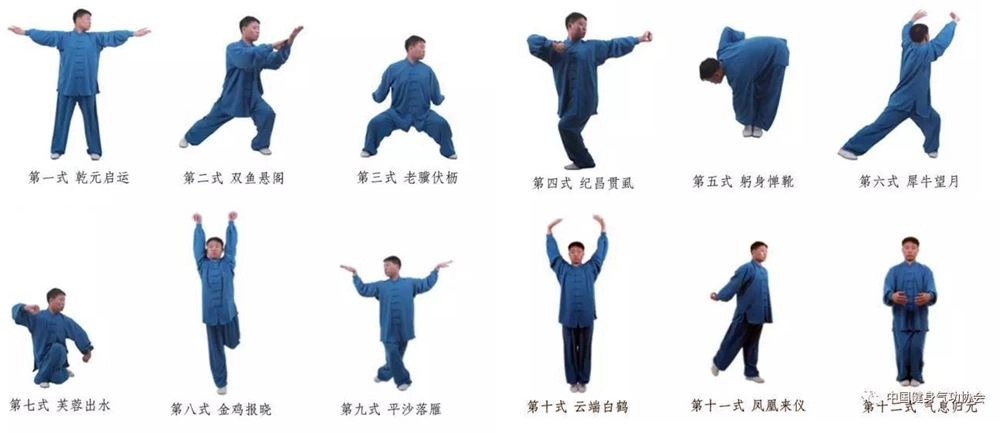
Yang Jianhou also taught that a key to the practice was the exercise known as “Eight Pieces of Brocade”. However, the taiji’s Eight Pieces of Brocade exercise differs from that of the same name known in shaolinchuan circles. Jianhou also advised that the set is the external side of taiji and meant only to lead the student to better energy development and usage. The goal of taijiquan is finally to leave the set as one incorporates the practice into one’s daily walk and activities.
Spirit and Two Red Lanterns
Tian Zhaolin was hospitalized in Shanghai in 1960. Some four months earlier, his beloved wife of many years and the mother of his three sons, had passed away. This tragedy had shaken him so much that he became increasingly listless and ill. One night, his oldest son Tian Hong and middle son Yingjia, staying by their father’s hospital bed, noted he was suddenly excited after awakening from a sleep. He told them of a dream he just had. In his dream, Jianhou and Shaohou came walking towards him. As they approached, he noted, each was carrying a red lantern to receive him. They welcomed him, smiled, and beckoned him to rejoin them after all these years of separation. Finally, Zhaolin advised his sons, he was now going to rejoin them, to be with them again at last. With that Tian Zhaolin smiled and quietly passed away. This event showed his close relationship with the senior Yang family.
Tian Zhaolin had three sons. The eldest, Tian Hong, was a school teacher. The middle son, Tian Yingjia, became an electrical engineer and also followed his father in taijiquan. The youngest son, Tian Yingrui, became a university professor in Shanghai. Only Yingjia followed his father’s footsteps in taijiquan. Tian Bingyuan, grandson of Zhaolin, learned taiji from his father. Yao Guoqin was selected as Master Tian Yingjia’s primary student. Tian Yingjia has 49 disciples and has taught some 500 students in all.
-
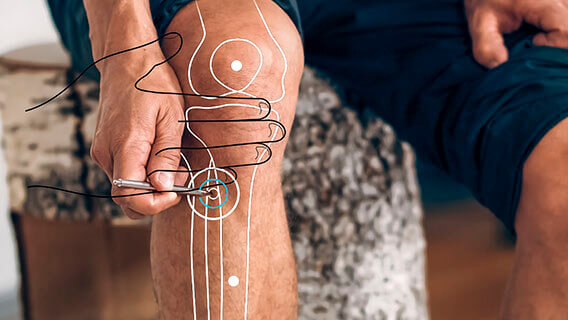
"Zu" means foot/leg, "San" means three, and "Li" means village/mile. Esoterically, this is said to represent a journey through three levels of existence:
- The physical realm (Jing)
- The energetic realm (Qi)
- The spiritual realm (Shen)
Spiritual Correspondences:
- In Taoist alchemy, ST-36 is considered a "gate" between Earth and Heaven energies
- It's sometimes called the "Point of Life's Prosperity" or "Earth Point"
- Some traditions view it as a connection point to ancestral energy
- It's believed to be linked to the "Yellow Court" (huang ting), an energetic center of transformation
Cosmic Architecture:
ST-36 is said to be a microcosmic reflection of primal creation patterns:
- - It represents the point where pure consciousness first manifests into form
- - Contains within it the sacred geometry of universal creation
- - Mirrors the structure of galaxies and atomic particles simultaneously
- - Functions as a portal between dimensional planes
Vibrational Essence:
In the deepest esoteric teachings, ST-36 is understood as:
- - A nexus point where different frequencies of reality converge
- - A gateway to access akashic records through bodily wisdom
- - A point where sound becomes light becomes matter
- - The intersection where individual soul patterns meet universal consciousness
Initiatory Mysteries:
Some ancient traditions speak of ST-36 as:
- - A key activation point in spiritual awakening sequences
- - A repository of ancestral wisdom codes
- - A point where past-life memories can be accessed
- - A gateway for communicating with spiritual guides
The Three Villages Mystery:
The deeper meaning of the "three villages" relates to:
- - The three worlds of shamanic tradition
- - The triple goddess aspects in ancient mystery schools
- - The three stages of alchemical transformation
- - The three levels of consciousness in esoteric Buddhism
Time and Space Dynamics:
At its most profound level, ST-36 is said to:
- - Exist outside linear time
- - Connect to parallel reality versions of oneself
- - Hold keys to understanding quantum entanglement through the body
- - Function as a biological stargate
Sacred Geometry:
The point contains within it:
- - The patterns of the flower of life
- - The golden mean ratio
- - The toroidal field of the heart
- - The spiral patterns of DNA activation
Consciousness Technology:
Advanced practitioners speak of using ST-36 to:
- - Access cellular memory banks
- - Download cosmic wisdom codes
- - Upgrade DNA programming
- - Interface with higher dimensional beings
The Dragon Path:
In the most secretive traditions, ST-36 is part of:
- - The dragon lines of Earth's energy grid
- - Ancient stellar navigation systems
- - Interdimensional communication networks
- - Consciousness evolution blueprints
Soul Contract Elements:
The point is said to contain:
- - Individual soul mission codes
- - Karmic resolution patterns
- - Future timeline potentials
- - Higher self connection protocols
-
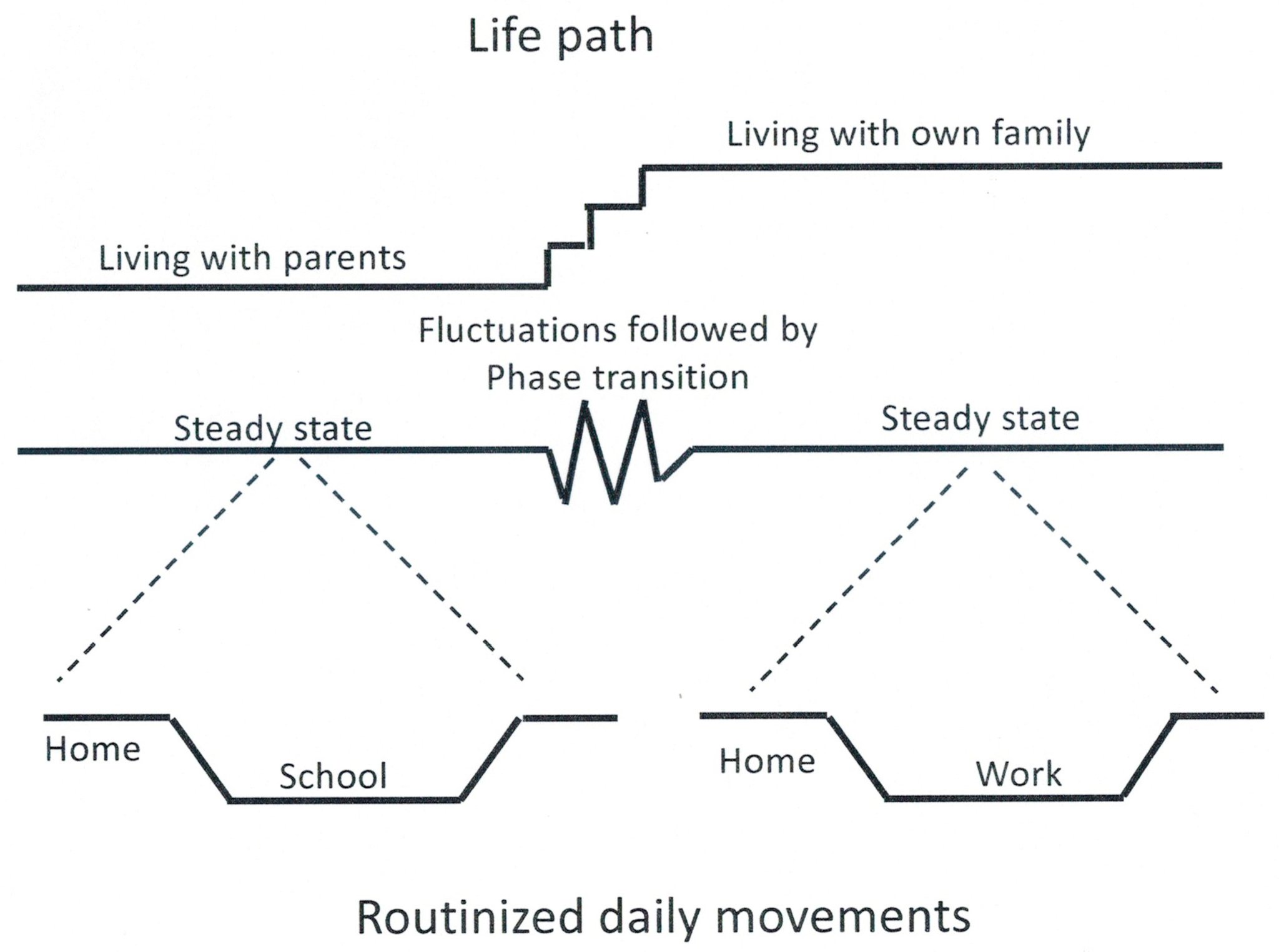
More logical treatises & scientific theorems should include symbols instructing perceivers to shift their mind-body state (e.g., meditate, walk in nature, take psychedelics, perform a ritual) before proceeding with the computation or thought. A lost art form.