tag > RTM
-
A Theory of Acausal and Atemporal Logic: Patterns Beyond Time (LLM Generated)
1. Foundational Principles
1.1 Pattern Primacy
Rather than treating causation as fundamental, we posit that patterns and relationships are primary. These patterns exist independent of temporal sequence, similar to how the I Ching's hexagrams represent states that transcend linear time.
1.2 State Resonance
States of being can "resonate" with each other without direct causal connection. This resonance manifests as:
- Synchronistic occurrences
- Pattern alignment
- State correspondences
1.3 Multi-valued Truth
Drawing from Belnap's four-valued logic, we extend to a system where truth values are:
- Present
- Absent
- Resonant (corresponding to multiple states)
- Void (outside the pattern system)
2. Logical Operations
2.1 Pattern Operations
Instead of traditional logical operators (AND, OR), we define:
- ⋈ RESONATES_WITH: States that align in pattern
- ⊹ TRANSFORMS_TO: States that naturally flow into each other
- ⋉ COMPLEMENTS: States that complete a pattern
- ◇ MIRRORS: States that reflect each other
2.2 State Relations
States relate through:
- Pattern Completion
- Resonant Harmony
- Transformative Potential
- Mirror Opposition
3. Inference Rules
3.1 Pattern Recognition
If A ⋈ B and B ⋈ C, then A and C share a pattern-relationship (not necessarily direct)
3.2 Transformation Chains
If A ⊹ B and B ⊹ C, then A has transformation potential toward C
3.3 Resonance Networks
States can form networks of resonance where:
- Multiple states resonate simultaneously
- Patterns emerge at network level
- Individual states influence network patterns
4. Application Framework
4.1 Pattern Analysis
To analyze a situation:
- Identify present states
- Map resonance patterns
- Recognize transformation potentials
- Understand network effects
4.2 Decision Making
Decisions consider:
- Pattern completion potential
- Resonance effects
- Network implications
- Transformation opportunities
5. Theoretical Extensions
5.1 Complex Systems
The framework extends to:
- Emergent behaviors
- Self-organizing systems
- Network dynamics
- Collective intelligence
5.2 Quantum Parallels
Similarities with quantum phenomena:
- Non-locality
- Superposition
- Entanglement
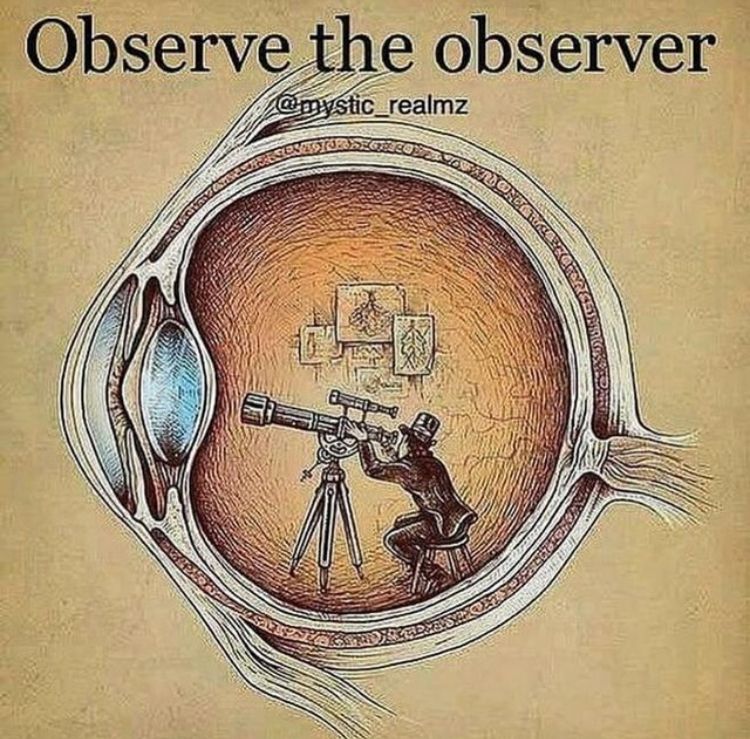
- Observer effects
6. Formal Notation
Let Σ be the set of all possible states
For any states s1, s2 ∈ Σ:- s1 ⋈ s2 : States resonate
- s1 ⊹ s2 : State transforms
- s1 ⋉ s2 : States complement
- s1 ◇ s2 : States mirror
7. Key Theorems
7.1 Resonance Theorem
For any states A, B, C ∈ Σ:
If A ⋈ B and B ⋈ C
Then there exists a pattern P where A, B, C are members7.2 Transformation Conservation
For any closed system of states:
The total pattern potential remains constant
Only the distribution changes7.3 Network Emergence
In any sufficiently connected network of states:
Emergent patterns arise that transcend individual state properties8. Applications
8.1 Decision Analysis
- Pattern recognition in complex situations
- Understanding systemic implications
- Identifying resonant opportunities
- Anticipating transformations
8.2 System Design
- Creating resilient systems
- Fostering beneficial patterns
- Managing transformations
- Cultivating resonance
8.3 Problem Solving
- Finding pattern-based solutions
- Leveraging resonance
- Working with transformations
- Understanding systemic effects
9. Limitations and Considerations
9.1 Boundary Conditions
- Pattern recognition limits
- System complexity thresholds
- Observer influence effects
- Network scale constraints
9.2 Practical Challenges
- Pattern verification
- Resonance measurement
- Transformation tracking
- Network mapping
10. Future Directions
10.1 Research Areas
- Pattern formalization
- Resonance metrics
- Transformation dynamics
- Network effects
10.2 Potential Applications
- AI systems
- Complex decision making
- Social dynamics
- Natural systems
Intention-Manifested Reality: A Formal Framework for Yi Dao Qi Dao 意到氣到
1. Foundational Integration
1.1 Core Principles
Let I be the space of intentions
Let Q be the space of energetic manifestations
Let R be the space of realized statesThe Yi Dao Qi Dao principle can be formally expressed as:
∀i ∈ I, ∃q ∈ Q : i ⟹ q1.2 I Ching State Mappings
Each hexagram H can be represented as:
- Upper trigram: Tu
- Lower trigram: Tl
- Internal lines: Li
- Changing lines: Cj
H = (Tu, Tl, {Li}, {Cj})2. Intention-Reality Operations
2.1 Primary Operators
- ⋈ (Resonance): Aligns intention with potential
- ⊹ (Transformation): Maps intention to manifestation
- ⋉ (Complementarity): Balances opposing forces
- ◇ (Reflection): Shows mirror states
- ⊚ (Intent Focus): Concentrated attention
- ⟲ (Cyclic Return): Pattern repetition
2.2 Key Relationships
For intention i and manifestation q:
i ⊚ q ⟹ P(q|i) > P(q|¬i)Where P(q|i) is the probability of manifestation given intention
3. I Ching Correspondences
3.1 Classical Mappings
Eight Trigrams (Ba Gua) as operators:
- ☰ (Heaven) : Pure Yang intention
- ☷ (Earth) : Pure Yin manifestation
- ☳ (Thunder) : Initiating force
- ☴ (Wind) : Gentle penetration
- ☵ (Water) : Flowing adaptation
- ☶ (Mountain) : Stillness/grounding
- ☲ (Fire) : Illumination/awareness
- ☱ (Lake) : Joyful reflection
3.2 State Transformations
For any hexagram state H:
H ⊹ H' iff ∃Cj : transform(H, Cj) = H'4. Intention-Reality Axioms
4.1 Core Axioms
1. Intention Precedence:
∀q ∈ Q, ∃i ∈ I : i ⊚ q2. Reality Response:
∀i ∈ I, ∃R' ⊆ R : i ⋈ R'3. Observer Effect:
∀r ∈ R, O(r) ≠ rWhere O is the observation operator
4.2 Transformation Rules
For intentions i1, i2 and manifestations q1, q2:
If i1 ⋈ i2 then P(q1 ⋉ q2) > P(q1 ⋉ ¬q2)5. Practical Applications
5.1 Intention Setting Protocol
- Define intention i ∈ I
- Apply focus operator: i ⊚
- Maintain resonance: i ⋈ Q
- Observe manifestation: O(q)
5.2 Reality Navigation
Using I Ching guidance:
For current state H: 1. Identify changing lines Cj 2. Calculate H' = transform(H, Cj) 3. Apply intention i toward H' 4. Maintain i ⊚ H'6. Advanced Concepts
6.1 Quantum Properties
Superposition of intentions:
i = α1i1 + α2i2 + ... + αninEntanglement of states:
|i1q1⟩ + |i2q2⟩6.2 Network Effects
For intention network N(I):
Collective_Intent = ∑(i ∈ N(I)) w_i * iWhere w_i is the intention weight
7. Key Theorems
7.1 Intention-Manifestation Theorem
For well-formed intention i:
If i ⊚ q maintained for t > tc Then P(q) → 1 as t → ∞7.2 Resonance Amplification
For i1, i2 ∈ I: If i1 ⋈ i2 Then P(q|i1 ∧ i2) > P(q|i1) + P(q|i2)8. Practical Implementation
8.1 Intention Cultivation
- Clear formulation: i = formalize(intent)
- Energy alignment: i ⋈ Q
- Maintained focus: i ⊚ t
- Observation: O(q)
8.2 Reality Navigation
- State assessment: H = current_state()
- Intention setting: i = desired_state()
- Alignment: i ⋈ H'
- Manifestation: q = manifest(i)
9. Limitations and Considerations
9.1 Boundary Conditions
- Intention clarity threshold
- Reality inertia
- Collective field effects
- Observer limitation
9.2 Ethical Framework
- Non-harm principle
- Collective benefit
- Karmic considerations
- Energy conservation
10. Future Research Directions
10.1 Theoretical Development
- Quantum intention fields
- Collective consciousness effects
- Time-independent manifestation
- Reality consensus mechanisms
10.2 Practical Applications
- Intention amplification techniques
- Reality navigation protocols
- Collective manifestation methods
- Quantum reality engineering
-
Nuel Belnap (1930 - 2024) explored many interesting ideas during his long career
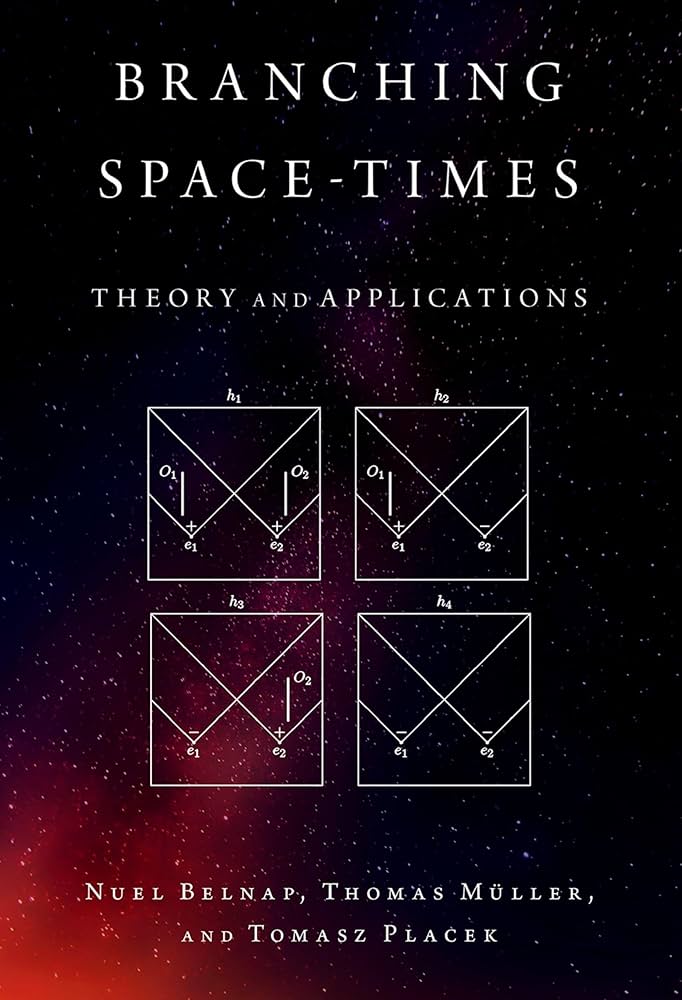
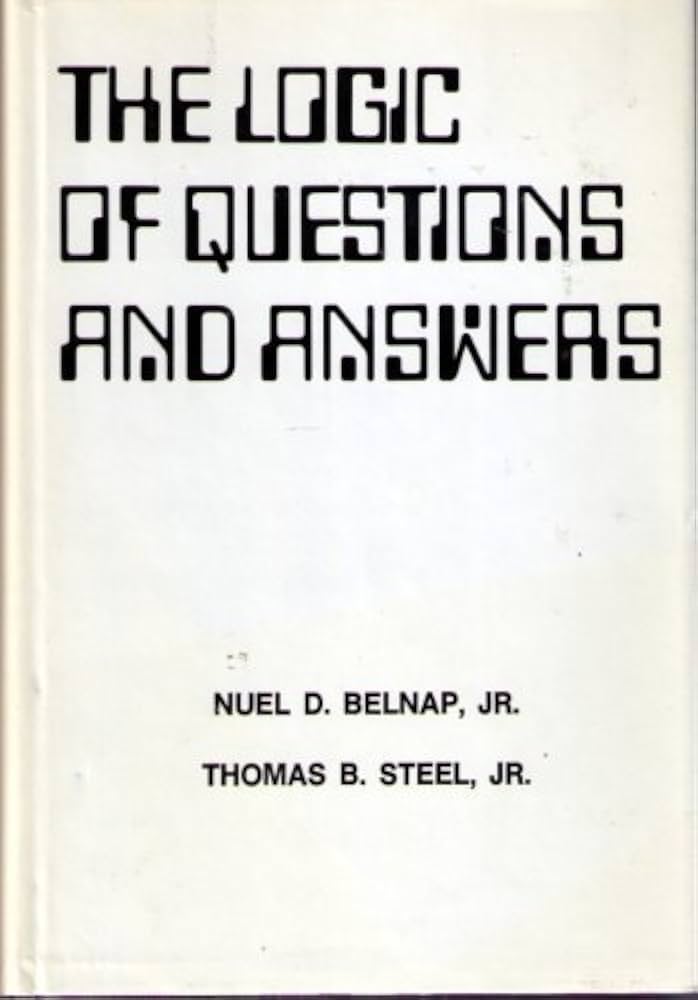
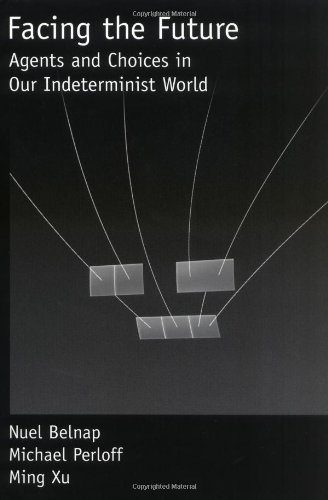
An analysis of Nuel Belnap's key philosophical contributions, particularly focusing on his work in logic and the philosophy of action.
Nuel Belnap is best known for several major contributions:
1. Four-Valued Logic
One of Belnap's most significant contributions is his four-valued relevance logic, developed with Alan Anderson. This logic system includes the traditional true and false values, but adds two more:
- Both (true and false)
- Neither (neither true nor false)
This was particularly influential in computer science and information systems, as it provides a framework for handling inconsistent or incomplete information.
2. Branching Time Theory
Belnap developed a sophisticated theory of branching time (also known as branching space-time), which is crucial for understanding:
- The nature of indeterminism
- The relationship between time and possibility
- How future contingents should be evaluated
3. The Theory of Agency and Action
His work with Michael Perloff and Ming Xu on the "stit" theory (seeing-to-it-that) is fundamental to understanding:
- How agents bring about changes in the world
- The logical structure of agency and action
- The relationship between choice, time, and causation
4. Knowledge Representation
His contributions to epistemic logic and belief revision include:
- How to represent and reason about knowledge states
- How to handle contradictory information
- The logic of questions and answers
5. Interrogative Logic (erotetic logic)
With Thomas Steel, Belnap developed important work on the logic of questions, including:
- The formal structure of questions and answers
- How to represent different types of questions
- The relationship between questions and knowledge
The philosophical significance of Belnap's work lies in several key insights:
1. Logic isn't limited to binary truth values - sometimes we need more sophisticated ways to represent information states.
2. Time and possibility are intimately connected, but their relationship is more complex than simple linear progression.
3. Agency and causation require careful formal analysis to understand properly.
4. Questions are as logically important as statements and deserve formal analysis.
More on Belnap's Theory of Agency and Action, particularly his influential "stit" (seeing-to-it-that) theory.
The "stit" theory is one of the most sophisticated logical analyses of agency and action ever developed. Here are its key components:
1. Core Concept of "Seeing-to-it-that"
- Instead of treating actions as primitive entities, Belnap analyzes them in terms of agents "seeing to it that" certain states of affairs come about
- The basic form is: [α stit: A] - which reads as "agent α sees to it that A"
- This shifts focus from actions themselves to their results/outcomes
2. Choice and Moments
Belnap's theory introduces several crucial elements:
- Moments: Points in time where choices can be made
- Choice cells: Sets of possible futures available at each moment
- Histories: Complete possible paths through time
- Agents have different choices available at different moments
3. Key Properties of Agency
The theory identifies several essential features of agency:
- Positive condition: The agent must make a difference
- Negative condition: The outcome shouldn't be inevitable
- Independence of agents: Different agents' choices are independent
- No backwards causation: Choices can only affect the future
4. Types of "stit" Operators
Belnap developed different versions of the stit operator:
- Achievement stit: Focusing on bringing about immediate results
- Deliberative stit: Involving conscious choice
- Strategic stit: Concerning long-term planning and strategy
5. Philosophical Implications
a) On Free Will:
- The theory provides a formal framework for understanding free will
- Shows how genuine choice can exist in a causally structured world
- Demonstrates how multiple agents can have real choices simultaneously
b) On Responsibility:
- Helps clarify when an agent is truly responsible for an outcome
- Distinguishes between direct and indirect responsibility
- Shows how responsibility relates to available choices
c) On Causation:
- Provides a sophisticated account of agent causation
- Shows how individual agency relates to broader causal structures
- Distinguishes between different types of causal influence
6. Applications
The theory has been applied to:
- Legal reasoning about responsibility
- Computer science (especially in multi-agent systems)
- Ethics (particularly in analyzing moral responsibility)
- Game theory
- Decision theory
7. Key Insights
a) Agency is Relational:
- Being an agent isn't just about having properties
- It's about standing in certain relations to outcomes
- These relations are temporally structured
b) Choice is Fundamental:
- Agency can't be reduced to mere causation
- Real choice requires genuine alternatives
- Choices must be effective but not guaranteed
c) Time and Agency are Interlinked:
- Agency only makes sense in a branching time structure
- Present choices affect which futures are possible
- Past choices constrain but don't determine future ones
8. Extensions and Developments
The theory has been extended to handle:
- Group agency
- Institutional action
- Probabilistic outcomes
- Normative concepts (obligations, permissions)
9. Current Relevance
The theory remains particularly relevant for:
- AI ethics (understanding artificial agency)
- Social robotics
- Collective responsibility
- Digital ethics and accountability
Belnap's theory of agency stands out for its mathematical rigor combined with philosophical depth. It shows how formal logical methods can illuminate fundamental questions about human action and responsibility. The theory continues to influence discussions in philosophy of action, ethics, and computer science.
-
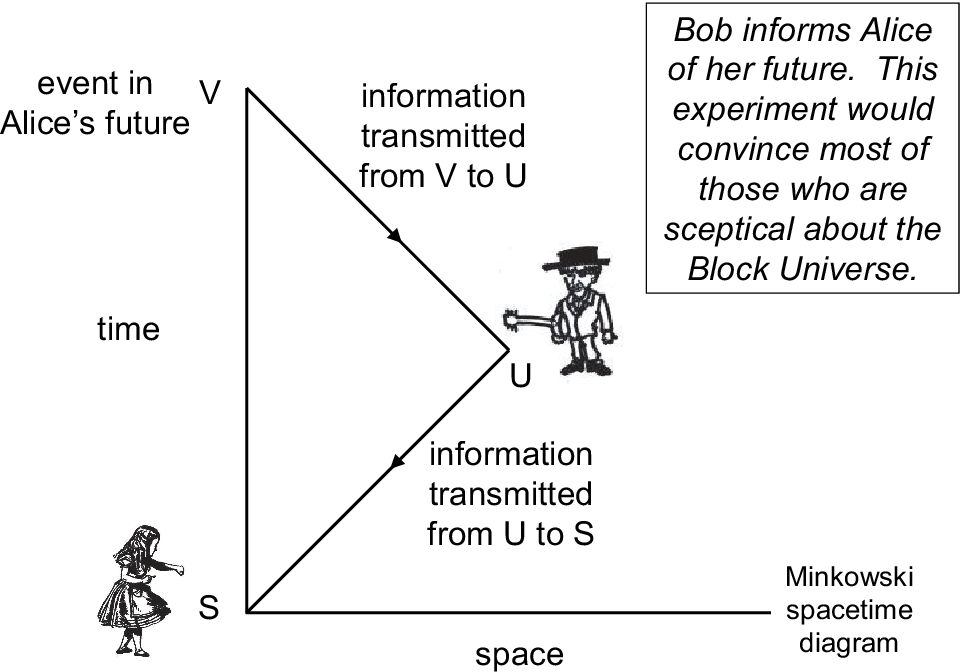
The paradox of Eternalism is that everything exists always at once, including and excluding nothing.
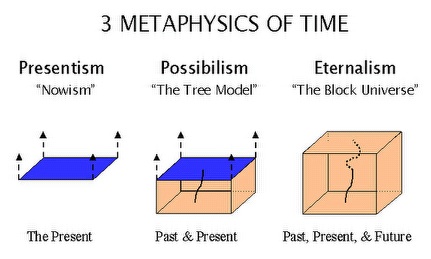
In a acausal reality where time travel is the norm, machine learning is simply a naive linear-time causal joke for children that are learning about self-awareness.
-
As the advanced mind-control tech underground gradually normalizes & commercializes its capabilities, a key question becomes how much are you willing to pay for "creating core memories for people" as a service.
-
Soft-Wireheading Simulacrum has been achieved internally