tag > Science
-
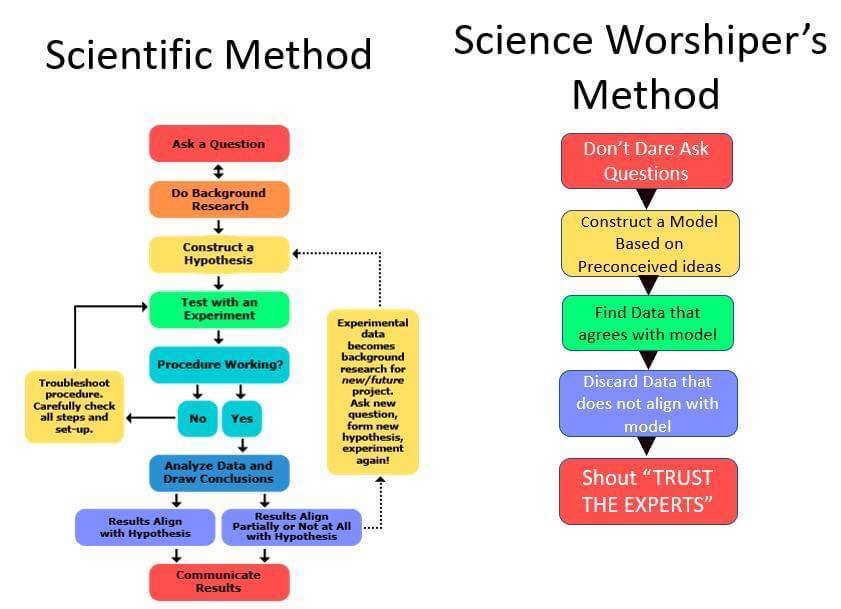
The foundation of democracy is not voting, it is a well educated and informed public.

Or in the words of Gunter Pauli: "0.1% of world population could qualify as scientist. I favor society where the wisdom of people prevails, experts provide technical input with humility. If 0.1% decides for 99.9% then we have given up democracy. Then we need vaccines against fear mongering not against viruses. 😔"
-
How is Mathematics Truth and Beauty? - Interview with David Chalmers
#Comment: A fun chat about mereology (the study of parts and the wholes they form.). They ignore that all assumptions about a fundamental "upper ontology" rely on reality being finite, with a orderly flow of time/information/causality/etc. In an infinite reality where everything exists (including nothing), there is no fundamental upper ontology to be discovered.
-
The most mind-blowing concept in music (Harmonic Series) - by Andrew Huang
Just Intonation vs Equal Temperament
-

"Turtles all the way down" is an expression of the problem of infinite regress. The saying alludes to the mythological idea of a World Turtle that supports the earth on its back. It suggests that this turtle rests on the back of an even larger turtle, which itself is part of a column of increasingly large world turtles that continues indefinitely (i.e., "turtles all the way down").
-
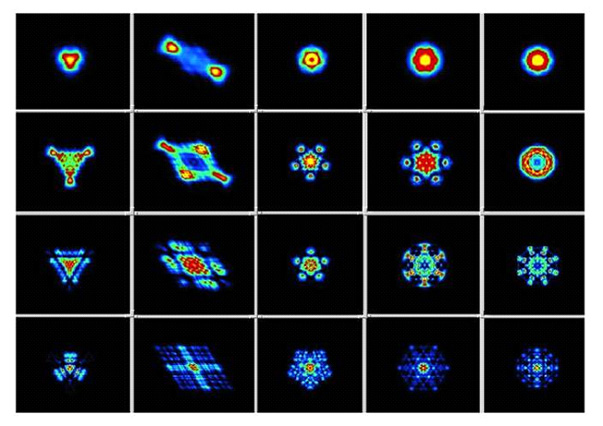
Within an Anglo-Dutch research collaboration, we discovered that certain types of laser designs output fractal light patterns. This work concerns fractal formation in linear systems, and is quite distinct from our later studies predicting the emergence of spontaneous patterns in nonlinear systems.
Research team demonstrates fractal light from lasers

Reporting this month in Physical Review A, the team provides the first experimental evidence for fractal light from simple lasers and adds a new prediction: that the fractal pattern should exist in 3-D and not just 2-D, as previously thought.
-
Scientists Create a Prototype 'Air Plasma' Engine That Works Without Fossil Fuels
A prototype jet engine can propel itself without using any fossil fuels, potentially paving the way for carbon-neutral air travel. The device compresses air and ionizes it with microwaves, generating plasma that thrusts it forward, according to research published Tuesday in the journal AIP Advances. That means planes may someday fly using just electricity and the air around them as fuel.
-
Humans fundamentally misunderstood Evolution

"700,000 Years Of Progress" - Art by Alfred Frueh (1880-1968) The evolution of species is not going always "upwards" as commonly understood, but it is arguably even going "downwards" in recent times. Perceiving humans as more "advanced" as Trees, Worms or Dolphins is a very arrogant, reductionist, stupid joke. In the bigger picture, there is no discernible "objective function" or "arrow of progress" at all, only temporary patterns and habits in time. Evolution is not going anywhere at all. There is no "answer" or "destination" at the end of the rainbow - contrary to the gospel of the religion du jour (science), which keeps preaching visions of a "mathematically beautiful end state which we are racing towards" (which is essentially the science version of God).
-
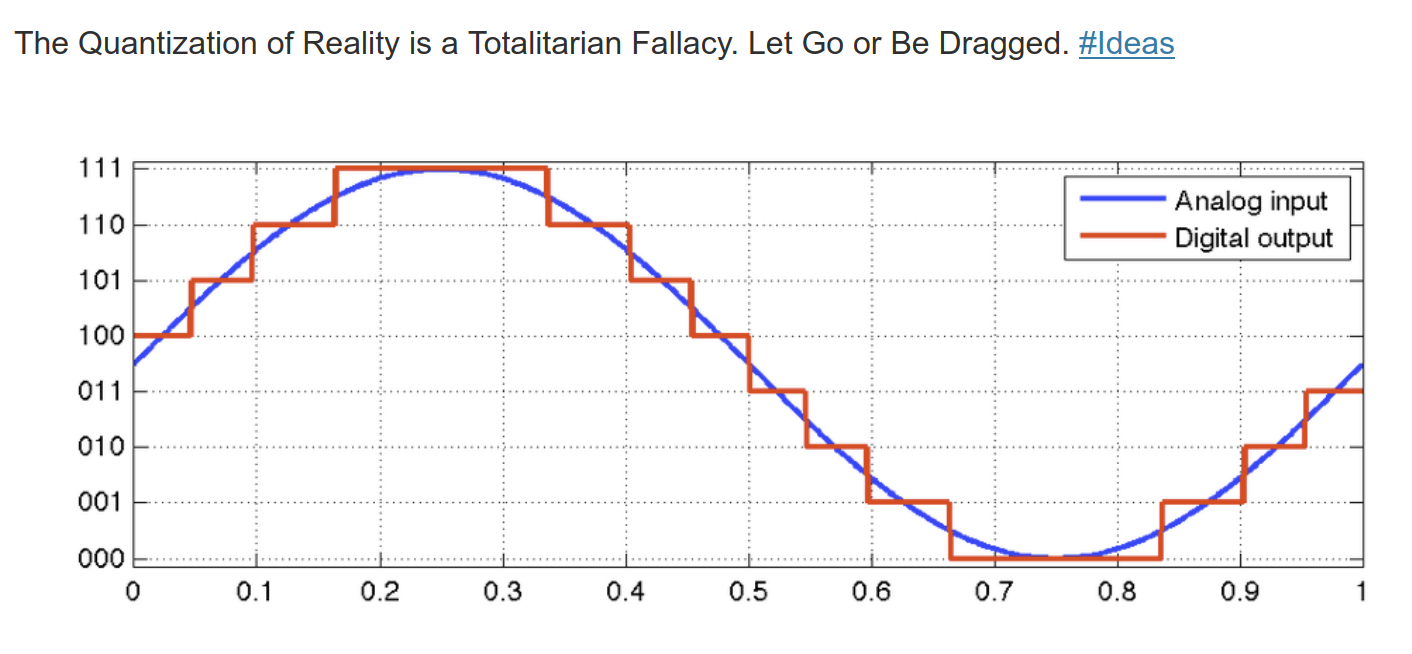
Is Space-Time Quantized Or Analog? (space.com)
"What are the implications if 'space-time' (as conceived of in the Einstein Theory of General Relativity) is quantized like all other aspects of matter and energy?" Space.com reports of a new study that tried to find out.
-
NASA contemplates turning a moon crater into a giant, powerful telescope (CNet)
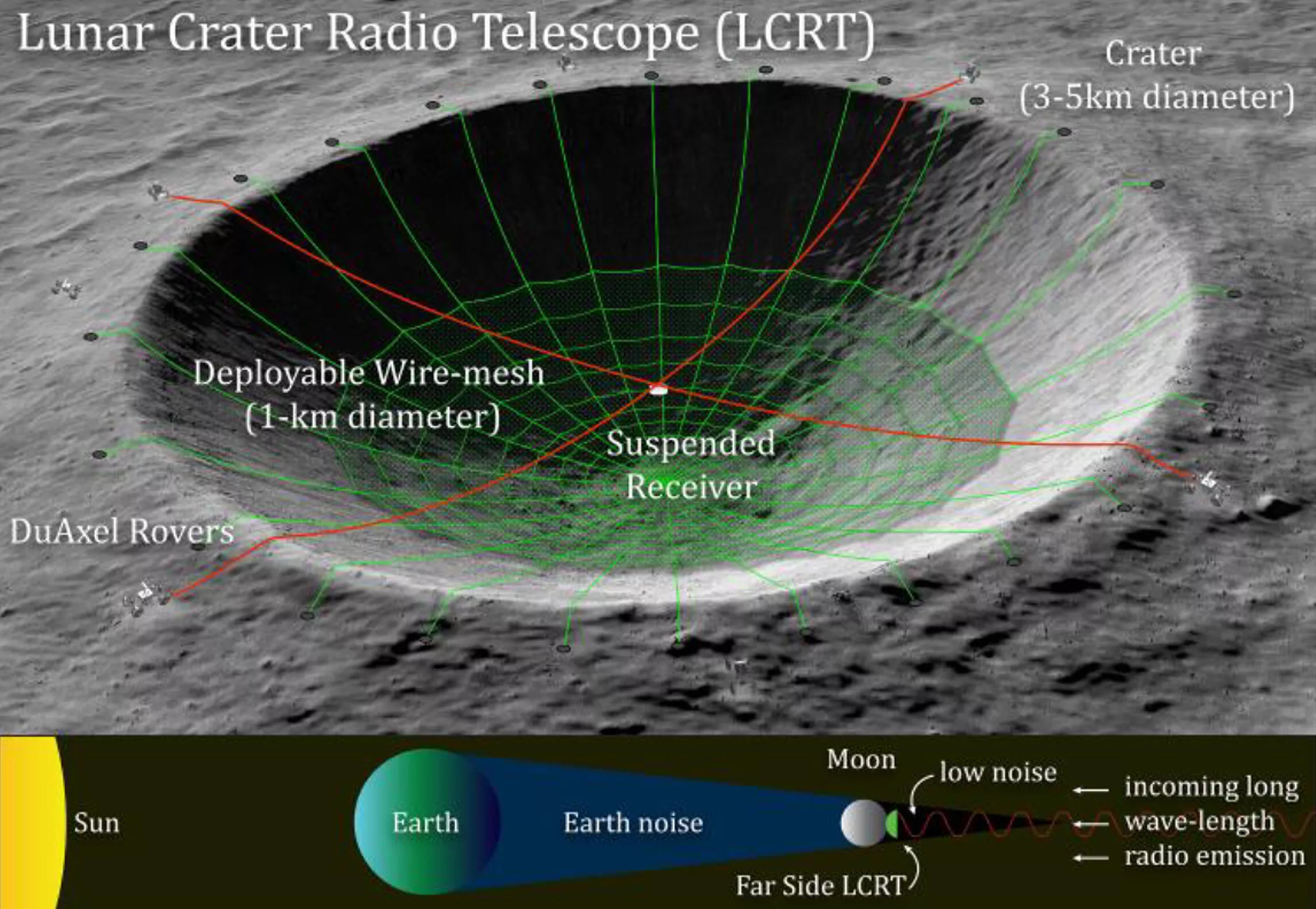
NASA has selected a lunar-crater radio telescope idea to receive funding through its NASA Innovative Advanced Concepts (NIAC) program, the agency announced on Tuesday. The Phase I award goes to projects in very early stages of development. Saptarshi Bandyopadhyay, a robotics technologist at NASA's Jet Propulsion Laboratory, is the mind behind the moon dream. Making it happen would require sending robots to the far side of the moon and using the machines to deploy a wire mesh over a crater.
-
Deep-sea worms and bacteria team up to harvest methane (phys.org)
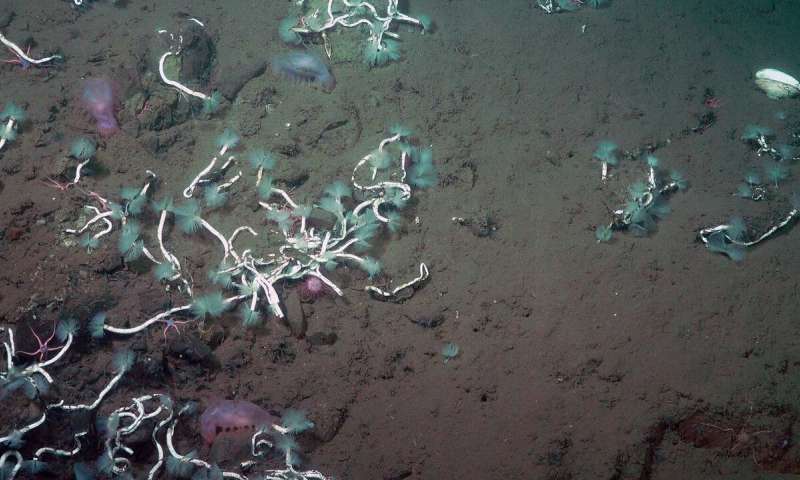
Methane-consuming serpulid worms on the seafloor off the coast of Costa Rica. Scientists at Caltech and Occidental College have discovered a methane-fueled symbiosis between worms and bacteria at the bottom of the sea, shedding new light on the ecology of deep-sea environments. They found that bacteria belonging to the Methylococcaceae family have been hitching a ride on the feathery plumes that act as the respiratory organs of Laminatubus and Bispira worms. Methylococcaceae are methanotrophs, meaning that they harvest carbon and energy from methane, a molecule composed of carbon and hydrogen.
-
Reiki Can’t Possibly Work. So Why Does It? (The Atlantic)

The energy therapy is now available in many hospitals. What its ascendance says about shifts in how American patients and doctors think about health care.
-
Covid-19 — Navigating the Uncharted - Research Paper by Anthony S. Fauci, M.D

"If one assumes that the number of asymptomatic or minimally symptomatic cases is several times as high as the number of reported cases, the case fatality rate may be considerably less than 1%. This suggests that the overall clinical consequences of Covid-19 may ultimately be more akin to those of a severe seasonal influenza (which has a case fatality rate of approximately 0.1%) or a pandemic influenza (similar to those in 1957 and 1968) rather than a disease similar to SARS or MERS, which have had case fatality rates of 9 to 10% and 36%, respectively."
-
In Exactly A Year Our Knowledge Of The Cosmos Will Change Forever. This Is The $10 Billion Reason (Forbes)
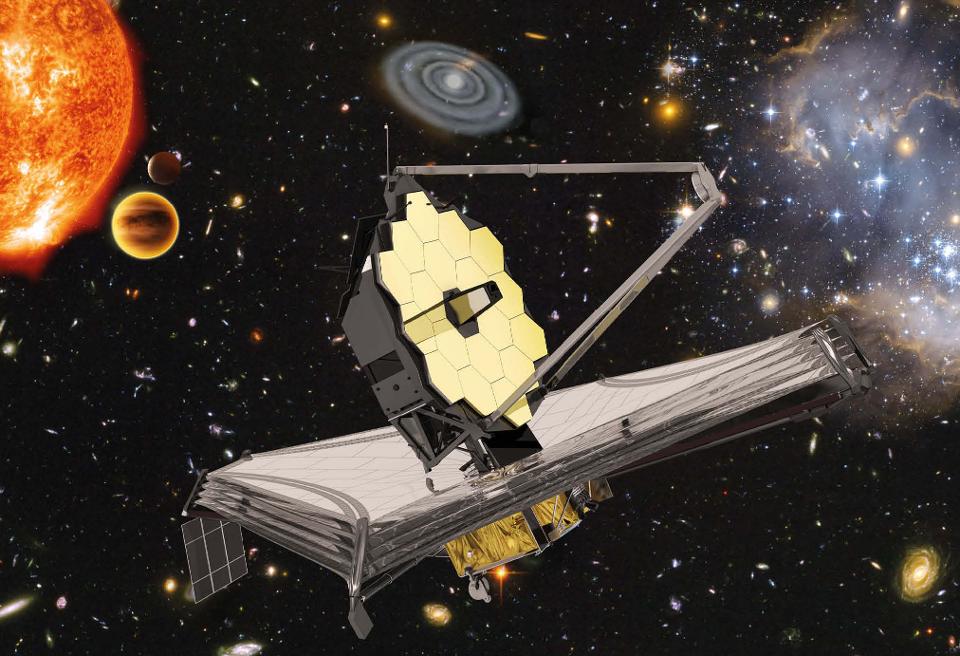
In precisely one year—on Tuesday, March 30, 2021—the almost US$10 billion James Webb Space Telescope (JWST or “Webb” for short) will launch on a European Ariane 5 rocket from the Guiana Space Centre to the northwest of Kourou in French Guiana. The successor to the Hubble Space Telescope, “Webb” will study the solar system, directly image exoplanets, photograph the first galaxies, and explore the mysteries of the origins of the Universe.
-
Subsurface Mercury: Window to ancient, possibly habitable, volatile-rich materials (phys.org)
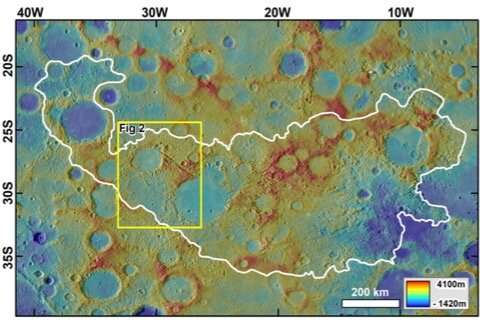
New research raises the possibility that some parts of Mercury's subsurface, and those of similar planets in the galaxy, once could have been capable of fostering prebiotic chemistry, and perhaps even simple life forms, according to a paper by a team led by Planetary Science Institute Research Scientist Alexis Rodriguez.