tag > OpenSource
-
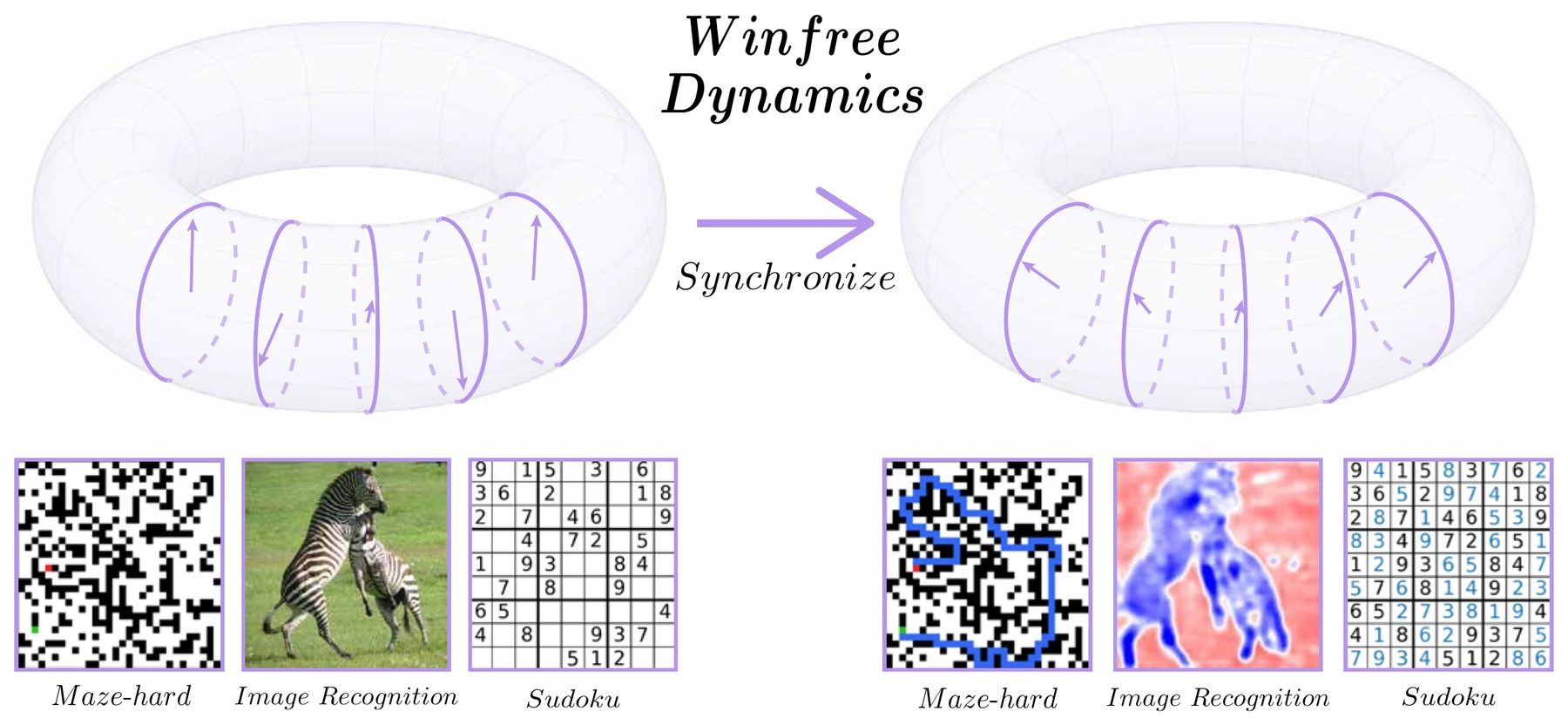
Winfree Oscillatory Neural Network (paper, code)
We introduce Winfree Oscillatory Neural Networks (WONN), a dynamical neural architecture that evolves neural representations as phase oscillators on the toroidal phase space (S1)d. Generalized Winfree synchronization dynamics organize oscillators into structured collective states, enabling scalable computation for image recognition and structured reasoning.
-
The Infinite Machine: Survival in the Era of Atmospheric Software
I recently read this post “The SaaS Apocalypse Is OpenSource’s Greatest Opportunity"
Nearly a trillion dollars has been wiped from software stocks in 2026, with hedge funds making billions shorting Salesforce, HubSpot, and Atlassian. A article on HackerNoon argues that most commercial SaaS could inevitably become OpenSource, not out of ideology but economics. The article claims, is that maintainers who refuse to embrace AI tools risk being forked, or simply replicated from scratch, by those who do.
The following is my analysis, in reaction to this article:
1. The part that is absolutely true
Yes: the cost of producing code has collapsed.
What your story describes (45-min prototype with integrations) is not hype anymore. It’s real. You’ve seen it yourself.
This creates three undeniable shifts:
→ Code is no longer the bottleneck
It used to be:
idea → design → engineering → product
Now it’s:
idea → working system
That compresses the value chain massively.
→ The “minimum viable SaaS” is dead
Anything that is:
- CRUD + UI
- basic integrations
- shallow workflow logic
…is now trivial to replicate.
That means:
- feature-based moats = gone
- thin SaaS = already commoditized
This part of the essay is 100% correct.
→ Long-tail explosion is inevitable
The “goat ERP” example is actually profound.
We’re entering:
hyper-niche, custom, semi-disposable software
Not startups—software artifacts as byproducts of thinking
That’s a real structural shift.
2. Where the argument goes wrong
This is the key overreach:
“Proprietary SaaS becomes a commodity → Open Source wins”
That sounds elegant, but it’s too binary and historically naive.
❌ Mistake #1: Confusing building software with running systems
Most SaaS value is NOT in:
- writing code
It’s in:
- reliability
- uptime
- compliance
- data integrity
- trust
- support
- edge-case handling
Example:
Rebuilding something like DocuSign is easy.Replacing it in a bank or government workflow?
→ not easy at all
❌ Mistake #2: Ignoring state + data gravity
The real moat is not code.
It’s:
- accumulated data
- workflows embedded in organizations
- integrations nobody wants to touch
- legal/compliance certification
That’s why:
- Salesforce still exists
- Atlassian still prints money
Even though their products are painfully clonable.
❌ Mistake #3: Overestimating Open Source dominance
Open Source does not automatically win when costs drop.
History actually shows:
Layer Winner Infrastructure Open Source (Linux, etc.) Application layer Proprietary (usually) Why?
Because:
companies don’t want software, they want outcomes + accountability
And Open Source often lacks:
- SLAs
- ownership
- guarantees
3. What’s actually happening (more precise model)
The real shift is this:
👉 We are moving from:
Software as a product
👉 To:
Software as a fluid capability
This creates 3 new dominant layers:
1. Interface layer disappears
Users won’t care about apps.
Agents will choose tools.
This part aligns with what Sam Altman has hinted:
tools become interchangeable execution units
2. Execution layer commoditizes
Yes—this is where:
- CRUD SaaS dies
- Open Source explodes
- clones are infinite
3. Control layer becomes everything
This is the new moat:
- distribution
- trust
- data ownership
- embedded workflows
- brand
- compliance
- network effects
4. The real winners (not what the essay claims)
It’s not simply “Open Source wins”.
The winners are:
→ Companies that control decision flow
Think:
- who the agent calls
- which API is default
- what system holds context
→ Companies with deep integration into reality
- finance
- healthcare
- logistics
- government
These don’t get disrupted by a weekend clone.
→ Companies that become platforms for agents
Not SaaS tools.
But:
environments where agents operate
5. The most important insight hidden in the essay
This is the real gem:
“When creation costs collapse, value shifts to distribution and what cannot be commoditized.”
Yes.
But in 2026, that “non-commoditized” thing is not Open Source vs Proprietary.
It is:
👉 Context ownership
Who owns:
- the workflow
- the memory
- the user intent
- the data graph
That’s the new oil.
6. My blunt take
- This essay is directionally right
- but strategically misleading if taken literally
It correctly predicts:
- death of thin SaaS
- explosion of software
- collapse of build costs
It incorrectly predicts:
- Open Source dominance as default outcome
- collapse of major SaaS incumbents
- irrelevance of proprietary models
Don’t think:
“we build software”
Think:
we orchestrate intelligence + workflows + agents around outcomes
And most importantly:
👉 Don’t compete on building things
👉 Compete on deciding what gets built, when, and why
Software, the 2027 Outlook
By 2027, the software industry will not have collapsed, but it will have decoupled from the “per-seat” subscription model that defined the last 20 years. While AI makes code cheaper to write, the massive compute costs of running AI agents are forcing a shift toward usage-based and outcome-based pricing.
1. The Market Pivot: From “Seats” to “Tasks”
The industry is moving toward a “SaaS-to-AI” transition where revenue is tied to work performed rather than human headcount.- Agentic Market Explosion: Spending on AI software is forecast to reach $297.9 billion by 2027, a nearly four-fold increase from 2022.
- Outcome-Based Pricing: By 2027, “AI agents” will be standard enterprise SKUs. Companies will pay per “unassisted customer resolution” or “contract drafted” rather than paying for 100 employee logins.
- The “Hybrid” Bridge: Most incumbents (Salesforce, Microsoft, etc.) will use hybrid models—base seat fees plus “AI credits” or usage tiers—to protect margins against volatile compute costs.
- The Development Shift: “System Designers,” Not “Coders”
The role of the software engineer is being fundamentally redefined by 2027.
- 80% Upskilling: Approximately 80% of developers will need to upskill by 2027 to focus on AI orchestration, governance, and system architecture rather than routine syntax.
- AI-Native Engineering: Mid-2026 to 2027 marks the era of “AI-native” engineering, where AI agents handle 90% of boilerplate code, bug fixes, and testing.
- The Review Crisis: A major bottleneck in 2027 will be code review and validation. AI will generate code so fast that human oversight and automated “guardrail” tools will become the most expensive part of the lifecycle.
- Key Growth Sectors & Risks
- Fastest Growing: Financial Management Systems (FMS) and Digital Commerce are expected to be the largest and fastest-growing AI software application markets by 2027.
- The “Pilot-to-Production” Gap: While 80% of enterprises will have deployed some generative AI by 2026, Gartner predicts 40% of agentic AI projects will fail by 2027 due to poorly designed underlying business processes.
- Regulatory Fragmenting: By 2027, AI governance and compliance will cover 50% of the global economy, requiring corporations to spend billions on legal and ethical alignment.
- Financial Outlook (Forecasts for 2027)
What comes next
👉 Phase 1 (already happening)
- Code becomes cheap
- SaaS features commoditize
- Prototypes are instant
👉 Phase 2 (happening now → 2027)
- Execution becomes expensive (AI compute)
- Value shifts to orchestration + outcomes
So paradoxically:
Building software is cheap
Running intelligent systems is expensiveThat tension is the economic engine of the next decade.
2. Why “per-seat SaaS” actually dies (this part is real)
The old model:
pay per human using software
Breaks because:
- AI replaces interaction
- work is done without humans in the loop
So charging per seat becomes nonsensical.
Example shift:
Old:
- 100 sales reps → 100 Salesforce licenses
New:
20 humans + 50 agents
→ pay per:- lead processed
- deal closed
- email handled
👉 This is a unit of value realignment
From:
access
To:
outcome
3. The hidden driver: compute economics
This is the part many people miss (but your text gets right):
AI introduces a hard cost floor again.
Unlike SaaS:
- traditional software → near-zero marginal cost
- AI systems → non-trivial marginal cost per task
So now companies must price based on:
- tokens
- inference time
- agent loops
- tool calls
Which forces:
👉 Usage-based pricing (inevitable)
👉 Outcome-based pricing (differentiation layer)
4. This creates a completely new stack
Here’s the actual emerging architecture:
Layer 1 — Commoditized execution
- LLMs
- tools
- open-source components
Cheap(ish), abundant
Layer 2 — Orchestration
- agent coordination
- workflow design
- memory systems
- guardrails
- evaluation
👉 This is where real engineering moves
Layer 3 — Outcome contracts (new SaaS)
- “we resolve 10k tickets/month”
- “we generate 500 qualified leads”
- “we process all invoices”
👉 This becomes the product
Layer 4 — Trust / compliance / integration
- auditability
- legal guarantees
- enterprise embedding
👉 This is where incumbents like Microsoft still dominate
5. The important insight
This one:
“40% of agentic AI projects will fail due to poor process design”
This is huge.
Because it implies:
The bottleneck is no longer technology. It is system design.
And that leads directly to:
👉 “System Designers” > “Coders”
This is not a buzzword shift.
It’s a power shift.
The new scarce skill:
- defining workflows
- aligning incentives
- handling edge cases
- designing feedback loops
- managing failure modes
👉 In other words:
You are not building software anymore
You are designing socio-technical systems
👉 The real product is no longer software
It is:
a continuously running system that produces outcomes
Which means:
- software = internal component
- agents = labor
- workflows = factory
- pricing = output
The deeper truth:
The winning companies will:
- hide usage
- sell outcomes
- manage compute internally
Like this:
Customer sees:
“$10k/month for autonomous support”
Internally:
- tokens
- retries
- agent failures
- cost optimization
Here’s the simplest way to think about 2026–2027:
Old world:
- Software = product
- Humans = operators
- Pricing = seats
New world:
- Software = component
- Agents = operators
- Humans = supervisors
- Pricing = outcomes
The one thing nobody is saying out loud
The one thing nobody is saying out loud—because it undermines the “AI is magic” marketing and the “AI is a job-killer” doom—is this:
We are entering the era of “Disposable Software,” and it’s going to create a massive, unmanageable garbage fire of technical debt.
Here’s the “secret” reality:- The “Maintenance Trap": It is now 10x easier to generate a feature than it is to understand why it works. In 2027, companies will have millions of lines of “dark code” written by AI agents that no human on staff actually understands. When that code breaks (and it will), the cost to fix it won’t be “near zero"—it will be astronomical because you’ll be paying humans to perform “digital archaeology” on hallucinated logic.
- The Death of Junior Mentorship: If AI does all the “easy” coding, the entry-level rungs of the career ladder disappear. By 2027, the industry will realize it has a “Senior Gap.” We’ll have plenty of AI to write code, but a shrinking pool of humans who actually know how to tell if the AI is lying.
- Software as a Commodity, Trust as a Luxury: If anyone can spin up a “DocuSign clone” in a weekend, the software itself becomes worth zero. The only thing left with value is Identity and Liability. You aren’t paying DocuSign for the “drag and drop” box; you’re paying them to stand in court and testify that the signature is real.
The “Secret": The “SaaS Apocalypse” isn’t about code; it’s about the collapse of the User Interface. If an AI agent can just talk to an API and get the job done, 90% of the “dashboards” we pay for today are useless overhead. We are building the most sophisticated UI tools in history just as the need for UIs is starting to vanish.
The even deeper secret—the one that makes both the “AI doomers” and the “AI evangelists” uncomfortable—is this:
We are accidentally building a “Digital Dark Age” where the cost of verifying truth exceeds the cost of creating it.
In the old world, the bottleneck was scarcity (it was hard to write code, hard to make a movie, hard to write a book). In the 2027 world, the bottleneck is entropy.- The “Recursive Rot” Secret
Nobody wants to admit that AI is currently eating its own tail. As AI-generated code, text, and data flood the internet, future AI models are being trained on the “synthetic slop” of their predecessors. We are hitting a point of Model Collapse. By 2027, the “secret” struggle for every major tech company won’t be “better algorithms,” it will be the desperate, expensive hunt for “Clean Human Data"—the digital equivalent of “low-background steel” salvaged from pre-atomic shipwrecks. - The “Liability Black Hole”
The industry is quietly terrified of the day an AI-generated bridge, medical device, or financial algorithm fails and kills someone or bankrupts a city.
- The Secret: There is currently no legal framework for “who is at fault” when an autonomous agent makes a hallucinated decision.
- Insurance companies are the ones who will actually “kill” the SaaS apocalypse. If they refuse to underwrite an AI-built “DocuSign clone,” that software is commercially dead, no matter how “free” or “open source” it is.
- The “Silent Re-Centralization”
The narrative is that AI “democratizes” software (anyone can build!). The reality is the opposite.
- Because AI makes creating software so cheap, the only thing that matters is Compute and Data.
- The “secret” is that we aren’t moving toward a world of a million indie developers; we are moving toward a world where three companies (Microsoft/OpenAI, Google, Amazon) own the “Oxygen” (the compute) that every “independent” app needs to breathe.
- The “End of the User”
This is the deepest one: Software is no longer being built for humans.
By 2027, the majority of “users” for software will be other AI agents. When a “SaaS” tool talks to an “LLM” which talks to a “Database,” there is no human in that loop. We are building a massive, global machine that is increasingly unobservable to the people who own it.
The real secret? We aren’t “collapsing the cost of software.” We are externalizing the cost onto the future. We’re saving money today by creating a world so complex and synthetic that, eventually, no human will be able to debug it.
We are witnessing the death of software as an artifact and its rebirth as an atmosphere. The “SaaS Apocalypse” isn’t a funeral; it’s a phase shift where the lines of code become as cheap and invisible as the air we breathe. But as the cost of creation hits zero, the price of the “human element"—discernment, accountability, and the courage to stand behind a product—becomes the only real currency left. We are building a world of infinite answers, only to realize that the value was always in knowing which questions to trust.
-
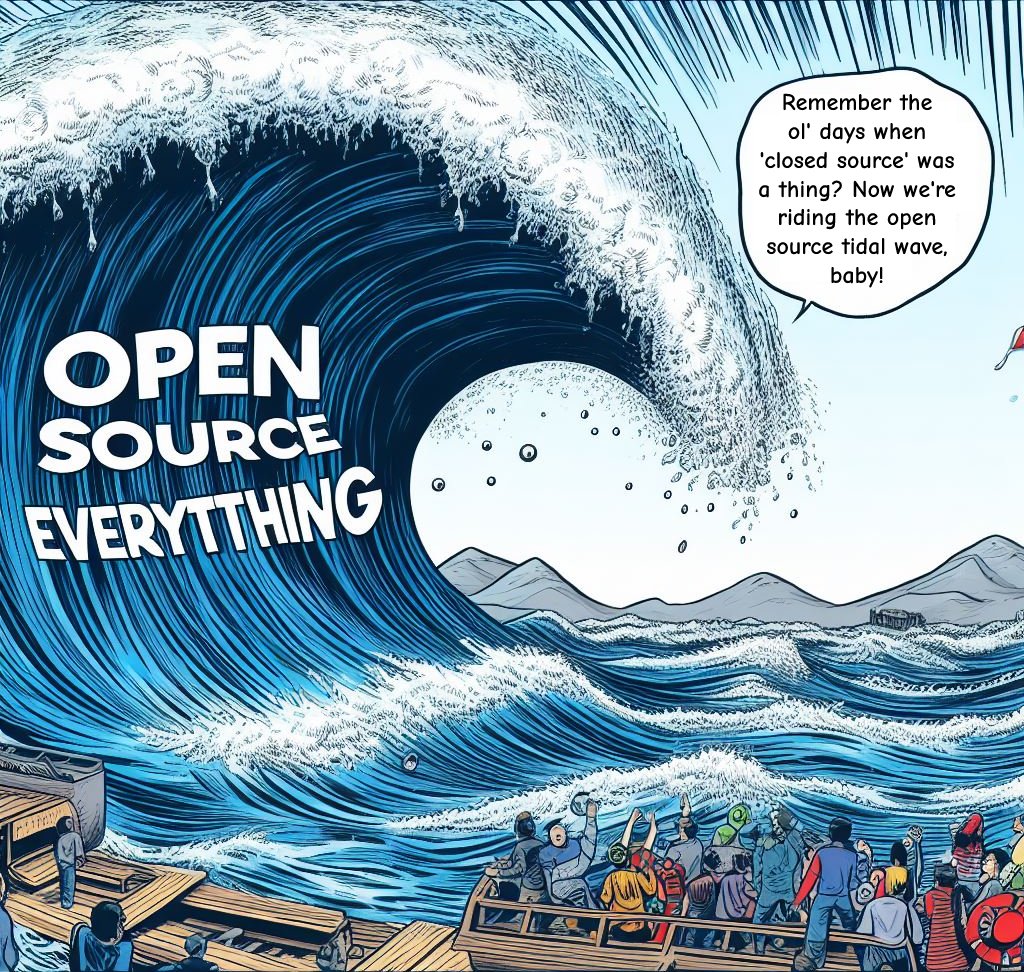
We're entering an era where LLM agents can quickly clone any SaaS application, eroding traditional defenses and economic moats. This will accelerate the 'open-source everything' movement and have a significant impact on society.
-
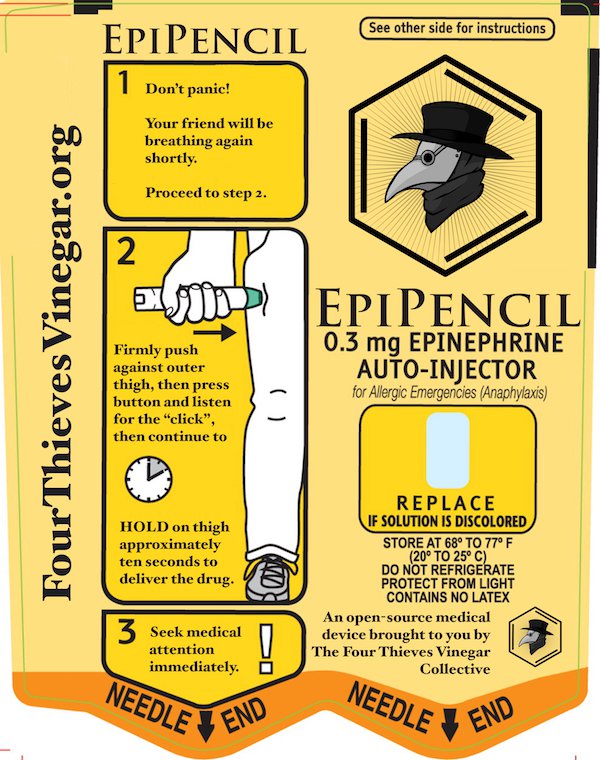
The Rise of DIY, Pirated Medicine - Article about Four Thieves Vinegar Collective
Hepatitis C medication "Sovaldi" is $1,000 per pill, $84,000 for entire treatment. The DIY version is $3.57 per pill, or $300 for the entire treatment.
-
"Switzerland federal government requires releasing its software as open source"
The announcement from the powerful Gnomes of Zurich Illuminati faction carries deep symbolic significance and far-reaching implications.

-
Articles stating Linus Torvalds joined NSA in 1994 are spreading malicious disinformation. He joined in 1988.


#OpenSource #InfoSec #Cryptocracy #Military #Technology #Comedy #Comment
-
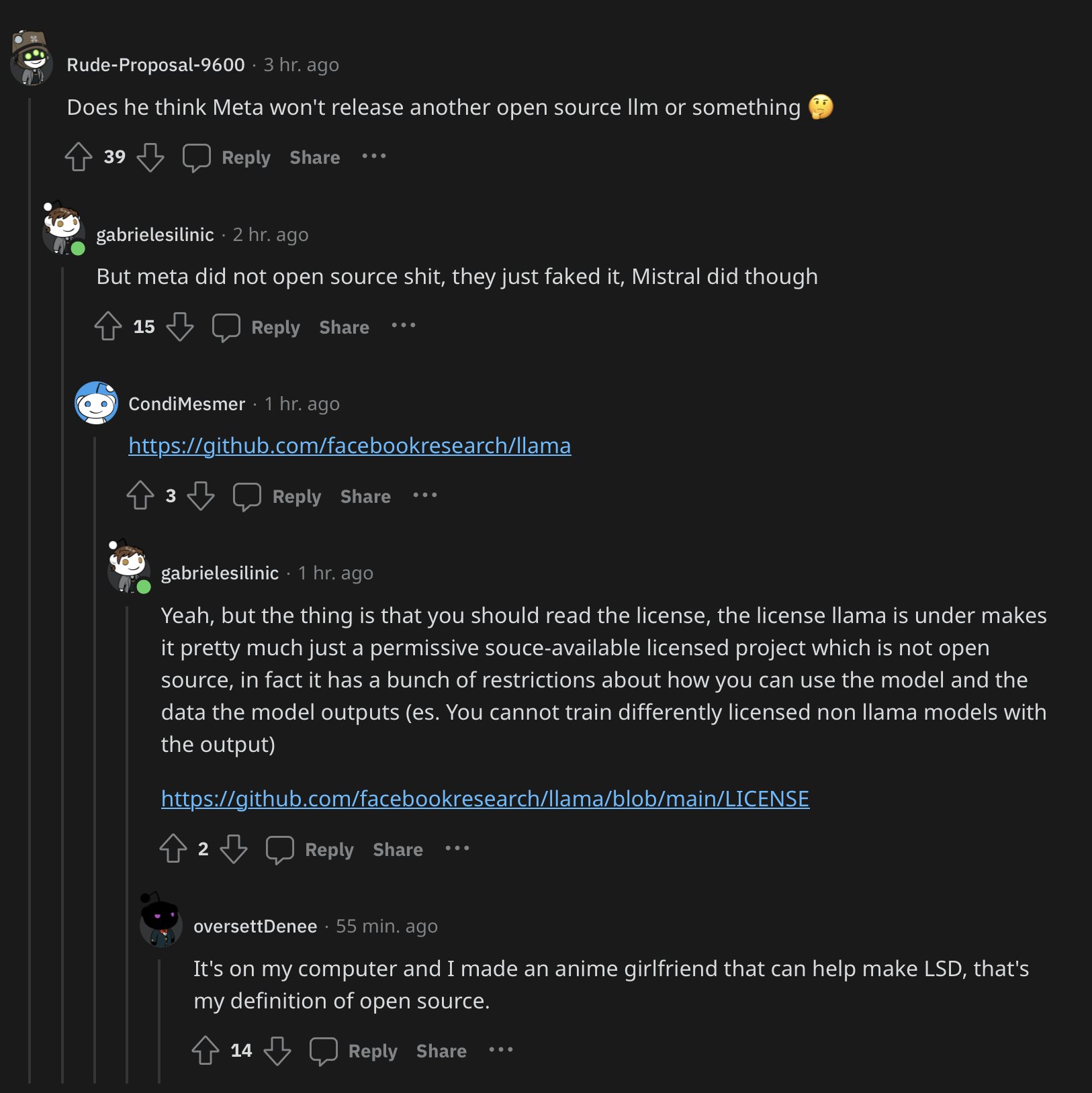
"Open Source AI" is an oxymoronic, purposely misleading term. From electricity generation, chip fabs, and cloud infra, to data and software - none of it is truly "open". The entire game is rigged from the gecko and stealth owned by very few - the rest is just marketing.