-
The BNT162b2 mRNA vaccine against SARS-CoV-2 reprograms both adaptive and innate immune responses (medrxiv)
The mRNA-based BNT162b2 vaccine from Pfizer/BioNTech was the first registered COVID-19 vaccine and has been shown to be up to 95% effective in preventing SARS-CoV-2 infections. Little is known about the broad effects of the new class of mRNA vaccines, especially whether they have combined effects on innate and adaptive immune responses. Here we confirmed that BNT162b2 vaccination of healthy individuals induced effective humoral and cellular immunity against several SARS-CoV-2 variants. Interestingly, however, the BNT162b2 vaccine also modulated the production of inflammatory cytokines by innate immune cells upon stimulation with both specific (SARS-CoV-2) and non-specific (viral, fungal and bacterial) stimuli. The response of innate immune cells to TLR4 and TLR7/8 ligands was lower after BNT162b2 vaccination, while fungi-induced cytokine responses were stronger. In conclusion, the mRNA BNT162b2 vaccine induces complex functional reprogramming of innate immune responses, which should be considered in the development and use of this new class of vaccines.
-
Bill Gates-Backed Company Releasing Over 100,000 Genetically Modified Mosquitoes
"The British company Oxitec is deploying a total of 144,000 genetically modified mosquitoes to study how to control their reproduction and thus stop the spread of dengue, Zika, and other types of ailments in humans and animals."
#Comment: The mainstreaming of Gene drives is in full effect. Welcome to Eugenics 2.0
-
"Mathematician: An individual willing to assume anything but responsibility."- Theodore von Kármán
-
Mindblowing: advances in brain tech spur push for 'neuro-rights'
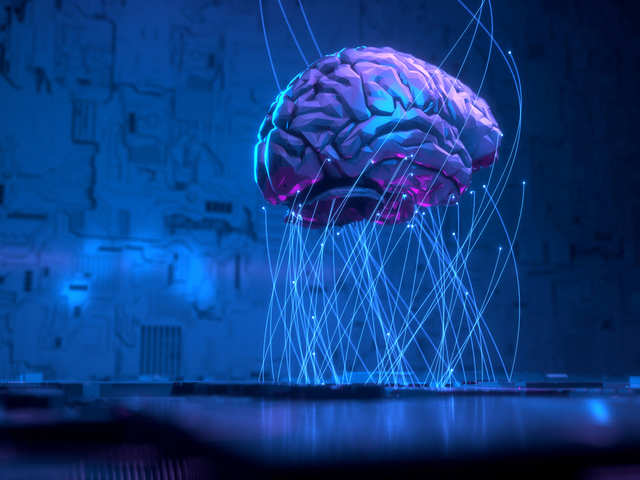
by Alberto PEÑA, April 29, 2021
As sci-fi thriller "Inception" topped box offices across the world, audiences were delighted and appalled by its futuristic story of a criminal gang invading people's dreams to steal valuable data.
More than a decade on, the technology envisioned by filmmaker Christopher Nolan is likely not far off, according to experts in Chile, who have moved the security debate beyond burglar alarms to safeguarding the most valuable real estate people ever own: their minds.
The South American nation is aiming to be the world's first to legally protect citizens' "neuro-rights," with lawmakers expected to pass a constitutional reform blocking technology that seeks to "increase, diminish or disturb" people's mental integrity without their consent.
Opposition senator Guido Girardi, one of the authors of the legislation, is worried about technology -- whether algorithms, bionic implants or some other gadgetry -- that could threaten "the essence of humans, their autonomy, their freedom and their free will."
"If this technology manages to read (your mind), before even you're aware of what you're thinking," he told AFP, "it could write emotions into your brain: life stories that aren't yours and that your brain won't be able to distinguish whether they were yours or the product of designers."
- 'Prevent manipulation' -
Scores of sci-fi movies and novels have offered audiences the dark side of neurotechnology -- perhaps invoking criminal masterminds ensconced in secret strongholds, manipulating the world with a dastardly laugh while stroking a cat.
In fact, the nascent technology has already demonstrated how it can have significantly positive applications.
In 2013, then-US president Barack Obama promoted the BRAIN (Brain Research through Advancing Innovative Neuro-technologies) initiative, which aimed to study the causes of brain disorders such as Alzheimer's, Parkinson's and epilepsy.
Back in Chile, Science Minister Andres Couve told AFP the neuro-rights debate "is part of a consolidation of a new scientific institutionality in the country that is now capturing international attention."
But many are worried about the potential for nefarious actors to abuse technological advances.
Chile's President Sebastian Pinera proposed at last week's Ibero-American summit in Andorra that countries legislate together on the thorny issue.
"I call on all Ibero-American countries to anticipate the future and to adequately protect, now, not just our citizens' data and information, but also their thoughts, their feelings, their neuronal information, to prevent these from being manipulated by new technologies," the conservative Pinera said.
The Chilean bill contains four main fields of legislation: guarding the human mind's data, or neuro-data; fixing limits to the neuro-technology of reading and especially writing in brains; setting an equitable distribution and access to these technologies; and putting limits on neuro-algorithms.
Spanish scientist Rafael Yuste, an expert on the subject from Columbia University in New York, told AFP some of these technologies already exist, and even the most remote will be available within 10 years.
- 'A new Renaissance' -
They are already being applied to animals in laboratories.
Scientists have experimented with rats, implanting images of unfamiliar objects in their brains and observing how they accept those objects in real life as their own and incorporate them into their natural behavior.
"If you can enter there (into the chemical processes of the brain) and stimulate or inhibit them, you can change people's decisions. This is something we've already done with animals," said Yuste.
The science has opened the possibility of designing hybrid humans with artificially enhanced cognitive abilities.
The risk is that, without proper safeguards, the technology might be used to alter people's thoughts, employing algorithms via the internet to re-program their hard wiring, to dictate their interests, preferences or patterns of consumption.
"To avoid a two-speed situation with some enhanced humans and others who aren't, we believe these neuro-technologies need to be regulated along principles of universal justice, recognizing the spirit of the Universal Declaration of Human Rights," said Yuste.
Yuste considers neuro-technology a "tsunami" that humanity will have to deal with, which is why people need to be prepared.
"Neuro-technology can be scary if you think about dystopian science-fiction scenarios. However, for every dystopian scenario, there are 10 beneficial ones," said Yuste, who sees neuro-technology as "a new Renaissance for humanity."
Already, neuro-technologies are used on patients suffering from Parkinson's or depression by stimulating the brain with electrodes to "alleviate the symptoms," said Yuste.
Similarly, deaf people are treated with "cochlear implants in the auditory nerve" that stimulate the brain.
It is hoped that something similar in the future will restore sight to the blind or treat those with Alzheimer's by strengthening the memory's neuronal circuits.
"It will be a beneficial change for the human race," said Yuste.
apg/bc/ft
Related Video discussing this article.
-
Africa's drought crisis: Zimbabwe seeks solutions, Madagascar edges toward famine

Multi-year drought in Madagascar is pushing 1.35m to famine -with those suffering from hunger up 85% on last year. Similar story unfolding in Zimbabwe, Angola, Namibia. “We haven't harvested anything for almost 2 years”
-
"In reality time and space exist in you; you do not exist in them." - Sri Nisargadatta Maharaj
-
Scientists Claim to Spot Fungus Growing on Mars in NASA Rover Photos
The hunt for life on Mars continues, with NASA’s latest rover Perseverance using its scientific instrumentation to scan the Jezero Crater, an area believed to be a dried up ancient lake, for any signs of ancient microbial life.
But according to an international team of researchers, the space agencies other rovers may have already found signs of relatively advanced life — in the form of “fungus-like Martian specimens,” according to a new paper published in the journal Advances in Microbiology.
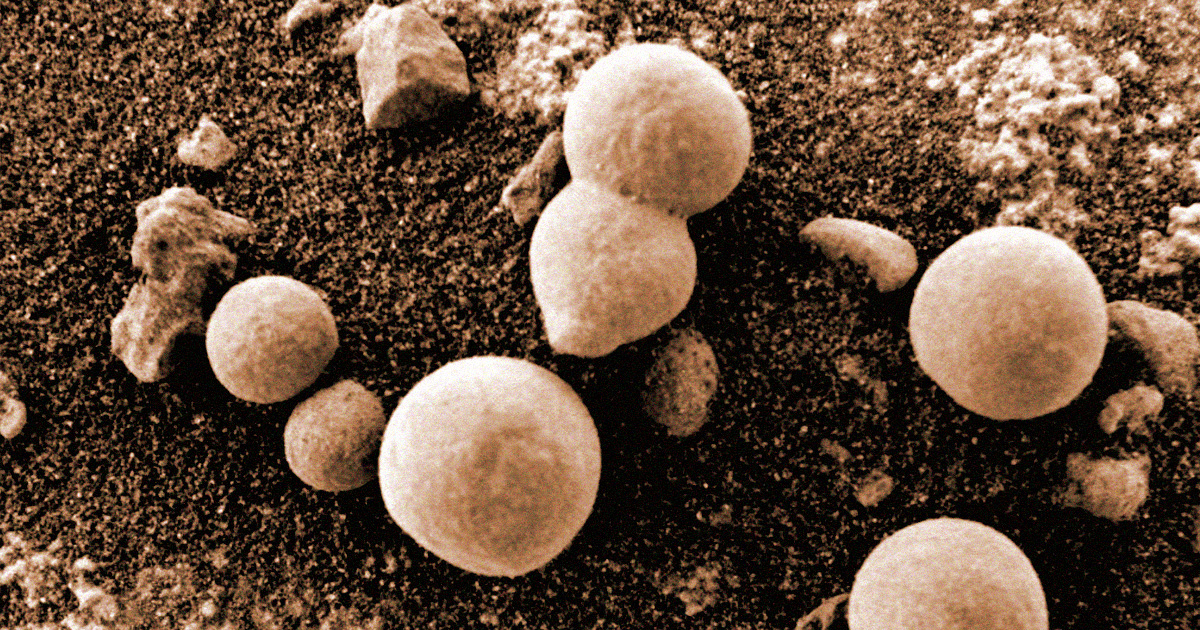
The team, which includes researchers from the Harvard-Smithsonian Center for Astrophysics and George Mason University, believes they have found photographic evidence of a variety of fungus-like organisms, some resembling the shape of puffballs, a round cloud-like fungus found in abundance back here on Earth, on the Red Planet.
Their evidence: images taken by NASA’s Opportunity and Curiosity rovers as well as the agency’s HiRISE high-resolution camera attached to the Mars Reconnaissance Orbiter.
“Fungi thrive in radiation intense environments,” the team writes in its paper. “Sequential photos document that fungus-like Martian specimens emerge from the soil and increase in size, including those resembling puffballs.”
“After obliteration of spherical specimens by the rover wheels, new sphericals — some with stalks — appeared atop the crests of old tracks,” the researchers write.
The team went so far as to say that “black fungi-bacteria-like specimens also appeared atop the rovers.”
They didn’t stop there: the team also examined photos taken by NASA’s HiRISE, and found evidence for “amorphous specimens within a crevice” that “changed shape and location then disappeared.”
“It is well established that a variety of terrestrial organisms survive Mars-like conditions,” the team concludes. “Given the likelihood Earth has been seeding Mars with life and life has been repeatedly transferred between worlds, it would be surprising if there was no life on Mars.”
The team argues that these Martian lifeforms “would have evolved on and already be adapted to the low temperatures, intermittent availability of water, low amounts of free oxygen, and high levels of radiation.”
The researchers did caveat their findings, pointing out that “similarities in morphology are not proof of life,” and that “we cannot completely rule out minerals, weathering, and unknown geological forces that are unique to Mars and unknown and alien to Earth.”
But it’s a wild conclusion nonetheless. The researchers’ peers will likely go over the paper with a fine-toothed comb, and likely shred the results — it’s not every day that researchers are willing to stick out their necks and claim to have found evidence of life on Mars.