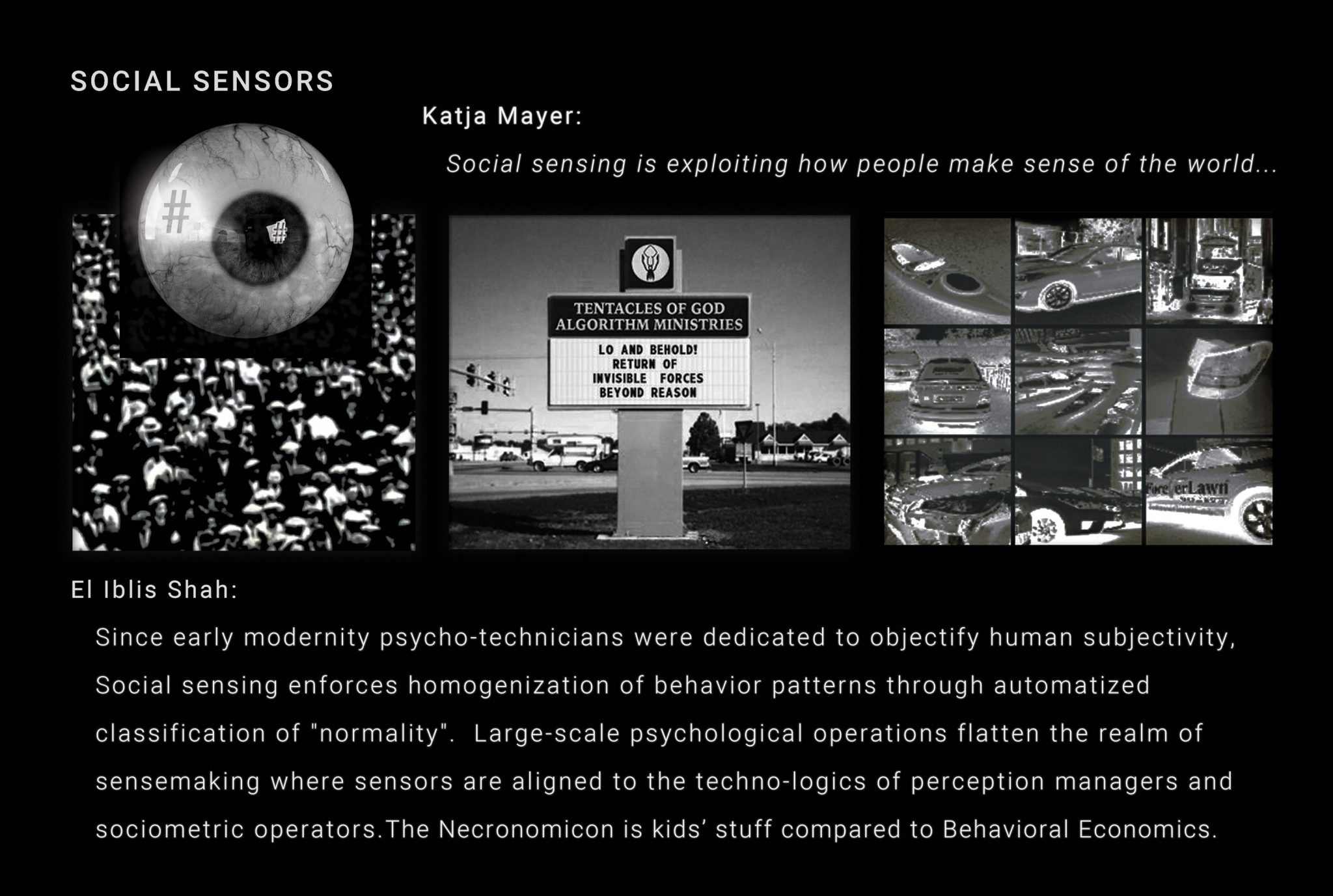
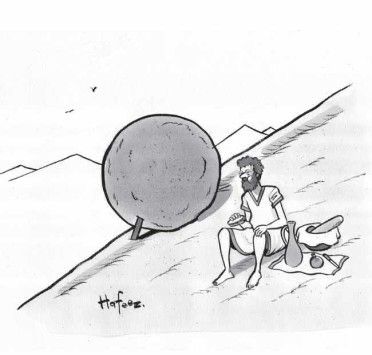
tag > KM
-
What If the Universe Remembers Everything? - Presentation by Rupert Sheldrake (2025)
#Comment: The most evocative question gets asked by an audience member at the end of the presentation, hinting at the paradoxical nature of this hypothesis, and indeed nature itself:
"You mentioned that its only for self organizing system. But at the same time you where a little bit critical of the issue of the fine tuning constants and ratios, parameters etc. of the beginning of the universe. So at what point do you think morphic resonance comes into effect?"
-
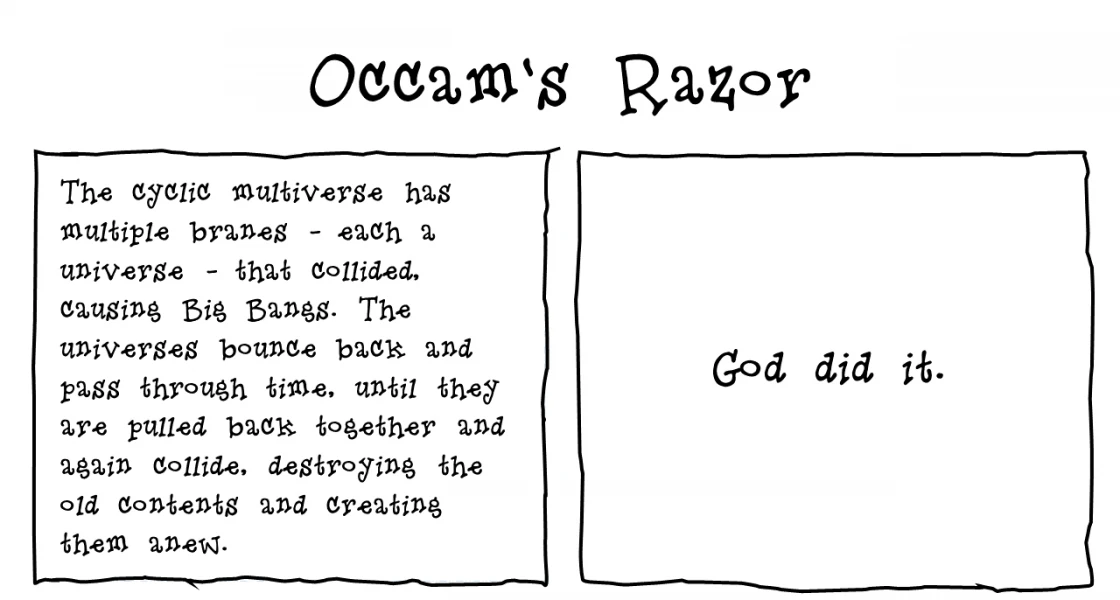
When in doubt, apply this principle: KISS (Keep It Simple Stupid)
Known as well as Occam's Razor: a problem-solving principle suggesting that when faced with competing explanations, the simplest one with the fewest assumptions is usually the most likely to be correct.
-
The universe has a tax on deliberation.
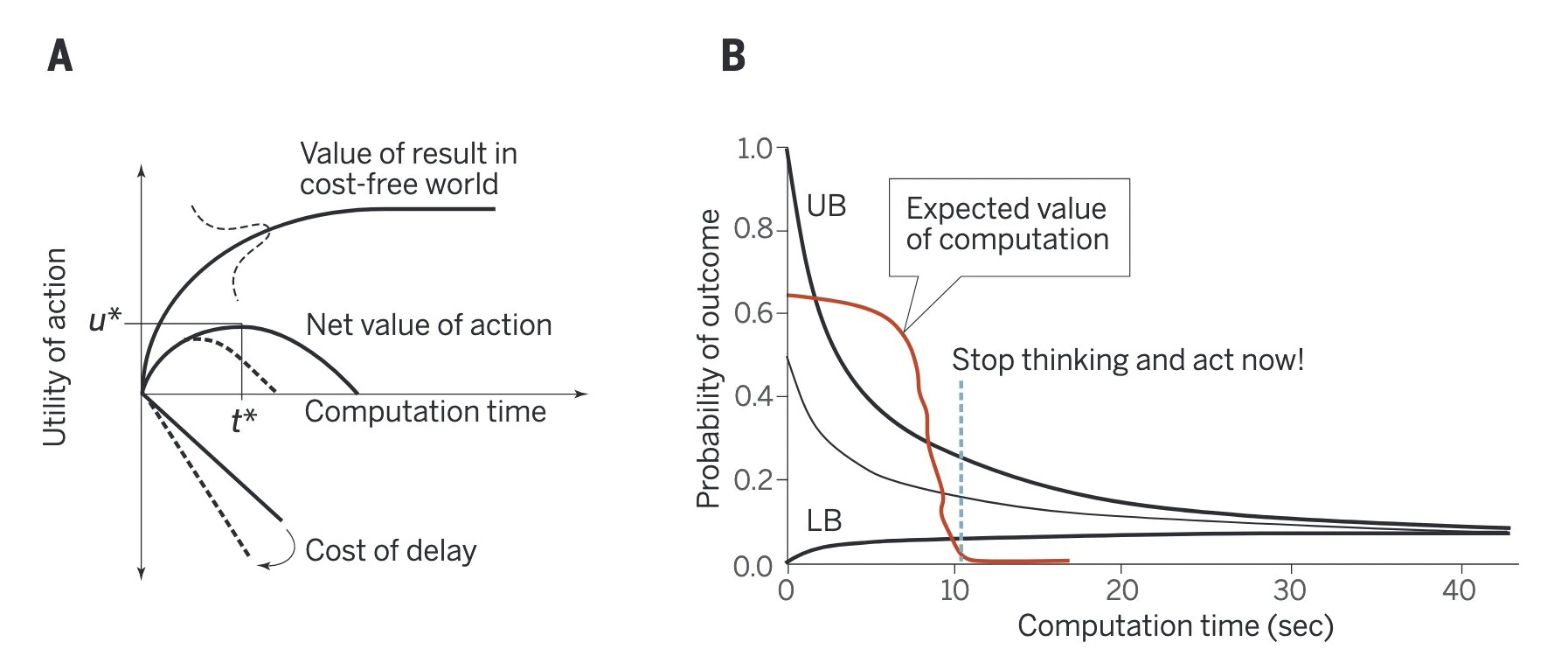
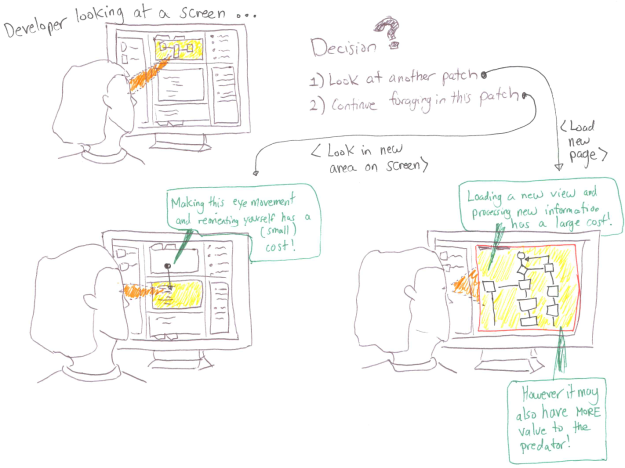
Rationality collapses into "just do things" quickly. In a live environment, thinking is not free; every extra second spent optimizing carries opportunity cost, the cost of delay. So while additional reflection has marginal benefits in an abstract, costless world, once you factor in delay, the net value of further thinking peaks—and then drops—quickly. Figure 2B captures this as a direct order with an exclamation mark; there is a moment when the right move is to "Stop thinking and act now!". - Source
The diagram is from the paper: "Computational rationality: A converging paradigm for intelligence in brains, minds, and machines". Gershman, S. J., Horvitz, E. J., & Tenenbaum, J. B. (2015). Science, 349(6245), 273–278.
"Imagine driving down the highway on your way to give an important presentation, when suddenly you see a traffic jam looming ahead. In the next few seconds, you have to decide whether to stay on your current route or take the upcoming exit—the last one for several miles— all while your head is swimming with thoughts about your forthcoming event. In one sense, this problem is simple: Choose the path with the highest probability of getting you to your event on time. However, at best you can implement this solution only approximately: Evaluating the full branching tree of possible futures with high uncertainty about what lies ahead is likely to be infeasible, and you may consider only a few of the vast space of possibilities, given the urgency of the decision and your divided attention. How best to make this calculation? Should you make a snap decision on the basis of what you see right now, or explicitly try to imagine the next several miles of each route? Perhaps you should stop thinking about your presentation to focus more on this choice, or maybe even pull over so you can think without having to worry about your driving? The decision about whether to exit has spawned a set of internal decision problems: how much to think, how far should you plan ahead, and even what to think about.
This example highlights several central themes in the study of intelligence. First, maximizing some measure of expected utility provides a general-purpose ideal for decision-making under uncertainty. Second, maximizing expected utility is nontrivial for most real-world problems, necessitating the use of approximations. Third, the choice of how best to approximate may itself be a decision subject to the expected utility calculus—thinking is costly in time and other resources, and sometimes intelligence comes most in knowing how best to allocate these scarce resources."
-
A Fun LLM Prompt for Excavating Weird but Real History
Take a real historical person or event X.
1. Begin with strictly factual context about X.
2. Identify one obscure, marginal, or forgotten adjacent fact (a minor invention, footnote, coincidence, secondary figure, or parallel event).
3. Follow that thread outward, step by step, into a surprising but real connection.
Present this as a short, playful story, but clearly separate:
- what is verified history
- what is speculative interpretation
The goal is not fantasy, but delight through improbable truth.
Bonus Prompt
"Rewrite this text as if Jorge Luis Borges created it".
-
Recent developments in Recognition-Primed Decision (RPD)
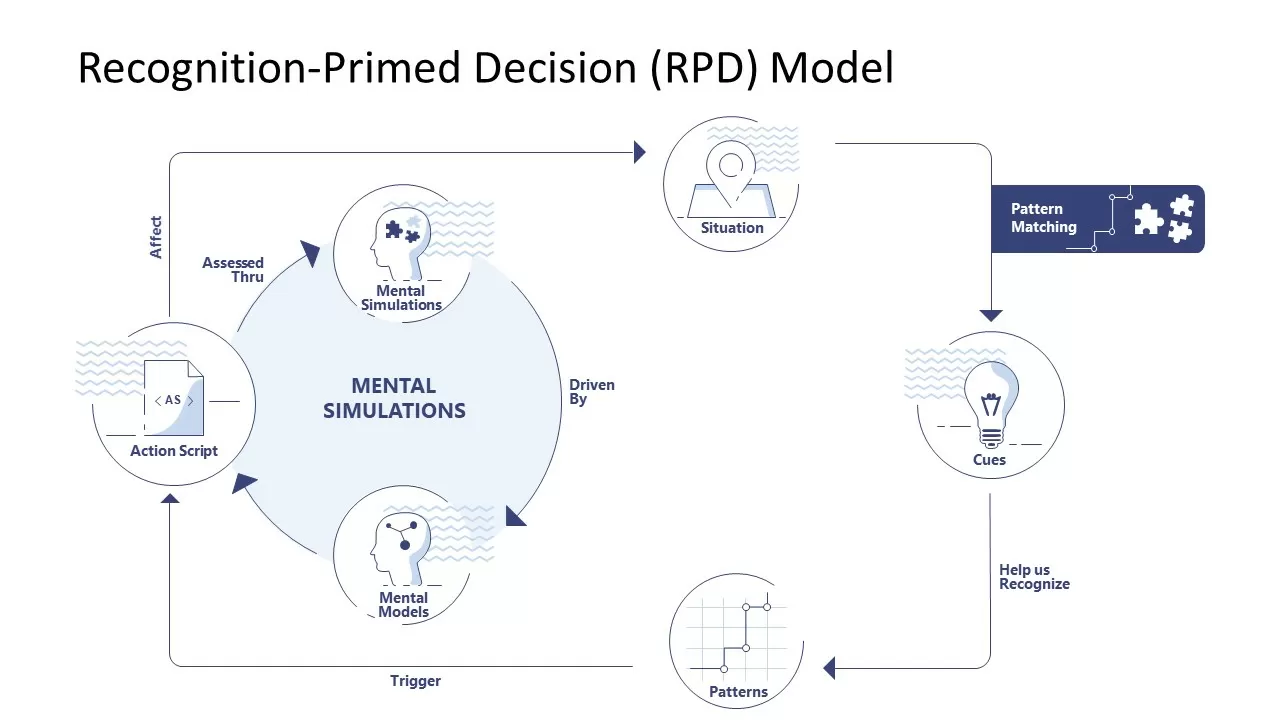
In 2026, the Recognition-Primed Decision (RPD) model has evolved from a tool for emergency responders into a cross-disciplinary framework for high-stakes decision-making in digital and automated environments. The current evolution focuses on the following key areas:
1. Integration with Artificial Intelligence (AI): As of 2026, RPD is increasingly used to design and evaluate AI systems, moving beyond simple automation to "Human-AI Teaming".
- AI Explainability: Researchers are using RPD to help AI systems explain their "decisions" in ways that align with human mental models, making it easier for human operators to trust or override AI recommendations.
- AIQ (Artificial Intelligence Quotient): Gary Klein and colleagues have developed the AIQ toolkit to help humans better understand and manage the specific AI systems they interact with, applying NDM principles to complex tech stacks.
2. Computational & Probabilistic Models: Advancements in 2025 and 2026 have led to the creation of Probabilistic Memory-Enhanced RPD (PRPD) models.
- Dynamic Information Processing: These newer models, such as those used in mid-air collision avoidance for pilots, can process continuous real-time data automatically without human-defined categories.
- Pattern Maturity: PRPD models show how "prototypes" or mental patterns automatically strengthen as an agent (human or machine) gains more experience.
-
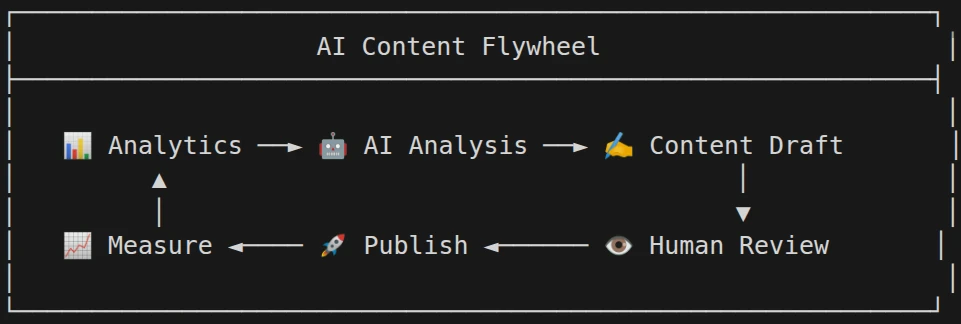
AI Content Flywheel
While all major blogging/CMS platforms are focused on traditional human-centeric workflows, the AI Content Flywheel is taking off vertically and demands new concepts and interfaces.
Data layer
class AnalyticsStore:
    def get_top_posts(self, period="90d") -> List[PostMetrics]
    def get_tag_trends(self) -> Dict[str, TrendData]
    def get_post_characteristics(self, path: str) -> PostAnalysis
Analysis layer
def analyze_content_patterns():
top_posts = analytics.get_top_posts()
return {
    "optimal_length": avg([p.word_count for p in top_posts]),
    "best_tags": most_common([t for p in top_posts for t in p.tags]),
    "title_patterns": extract_patterns([p.title for p in top_posts]),
    "best_publish_day": most_common([p.date.weekday() for p in top_posts])
}
Content generation prompts
# When generating content, include context:
system_prompt = f"""
You are helping write content for siteX:

AUDIENCE INSIGHTS:
- Top countries: USA (45%), Germany (12%), UK (8%)
- Best performing tags: {analytics.top_tags}
- Optimal post length: ~{analytics.optimal_length} words

CONTENT GAPS:
- Last post about "{gap_topic}": {days_ago} days ago
- This topic has shown {trend}% growth in similar blogs

SUCCESSFUL PATTERNS ON THIS BLOG:
- Titles that include numbers perform 2.3x better
- Posts with code examples get 40% more engagement
- Tuesday/Wednesday publishes outperform weekends
"""
Automated A/B testing
You get the picture...
-
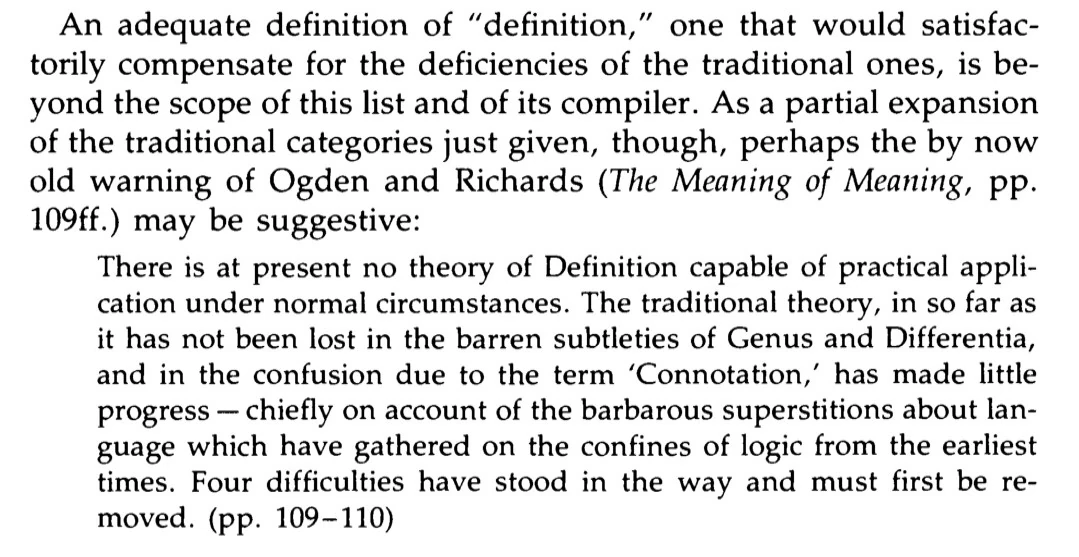
"The map is not the territory. The word (incl. LLM tokens) is not the thing" - Alfred Korzybski