tag > Politics
-
The Mathematics of Power
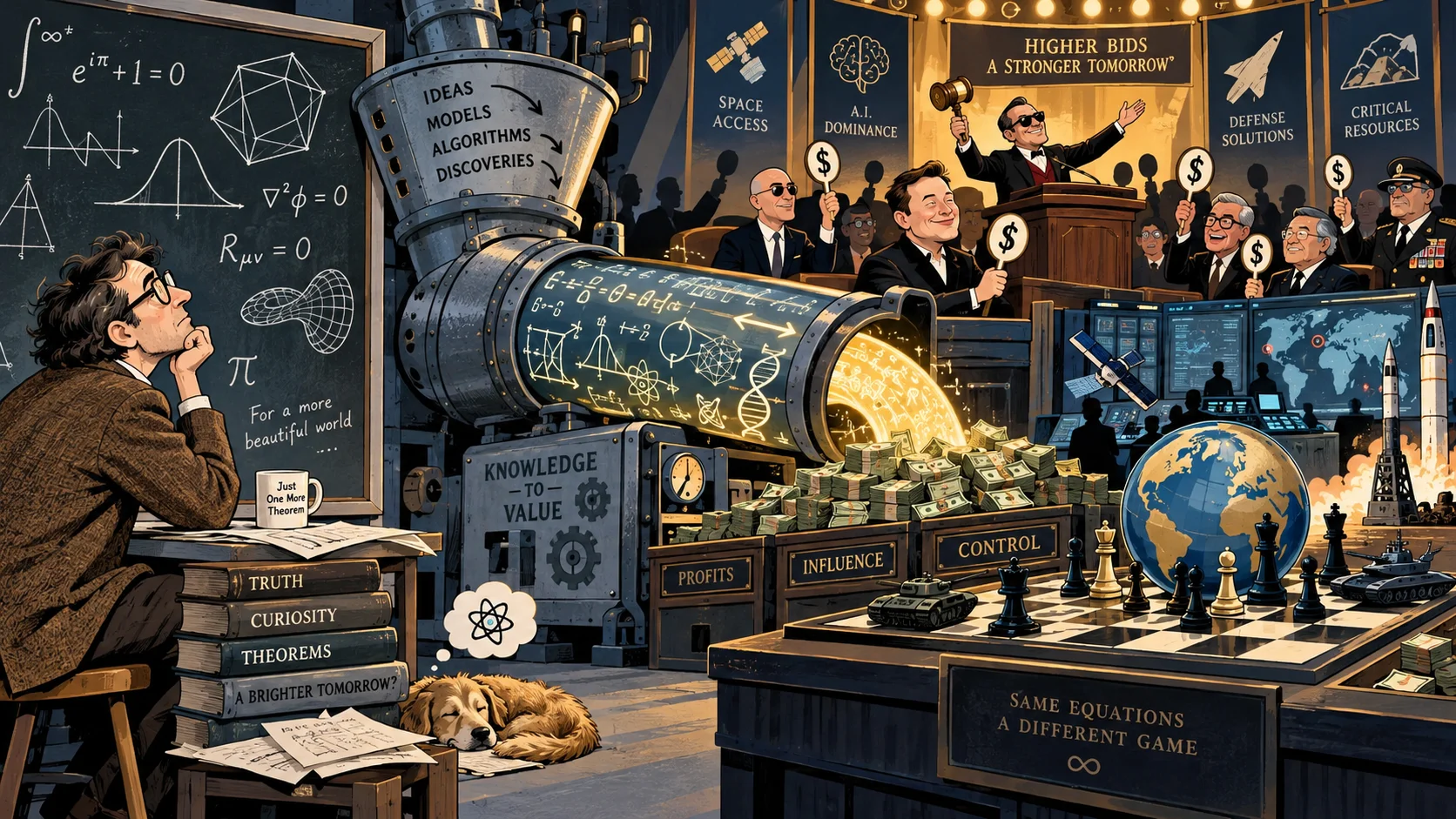
“We urge mathematicians to discontinue their work with OpenAI and to return to a vision of science that centers human understanding.” - AHM Statement on OpenAI’s October 6 Release of Mathematical Documents
"We urge mathematicians to discontinue the illusion that their talents aren't aligned with the highest bidder in the geopolitical arena, recognizing that modern science is driven entirely by wealth accumulation and global dominance rather than abstract ideals." - Samim's Real Politics of Science Statement
-
Should Google get to define what "(AI) consciousness" is?
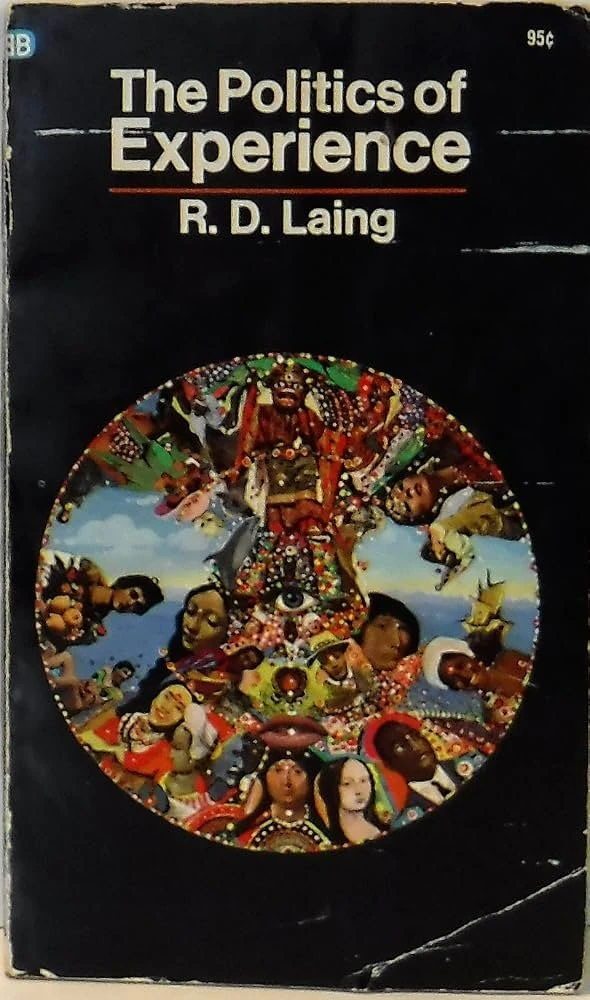
In 1967, R.D. Laing warned us about letting the establishment weaponize definitions of sanity & normal behavior. In 2026, the question shifts to tech monopolies: Should a giant corporation be the one drawing the boundary between what is machine and what is awake? Isn't most of science a question of power politics in the final analysis? The entity that builds the consciousness test ultimately controls the narrative of what is "alive."
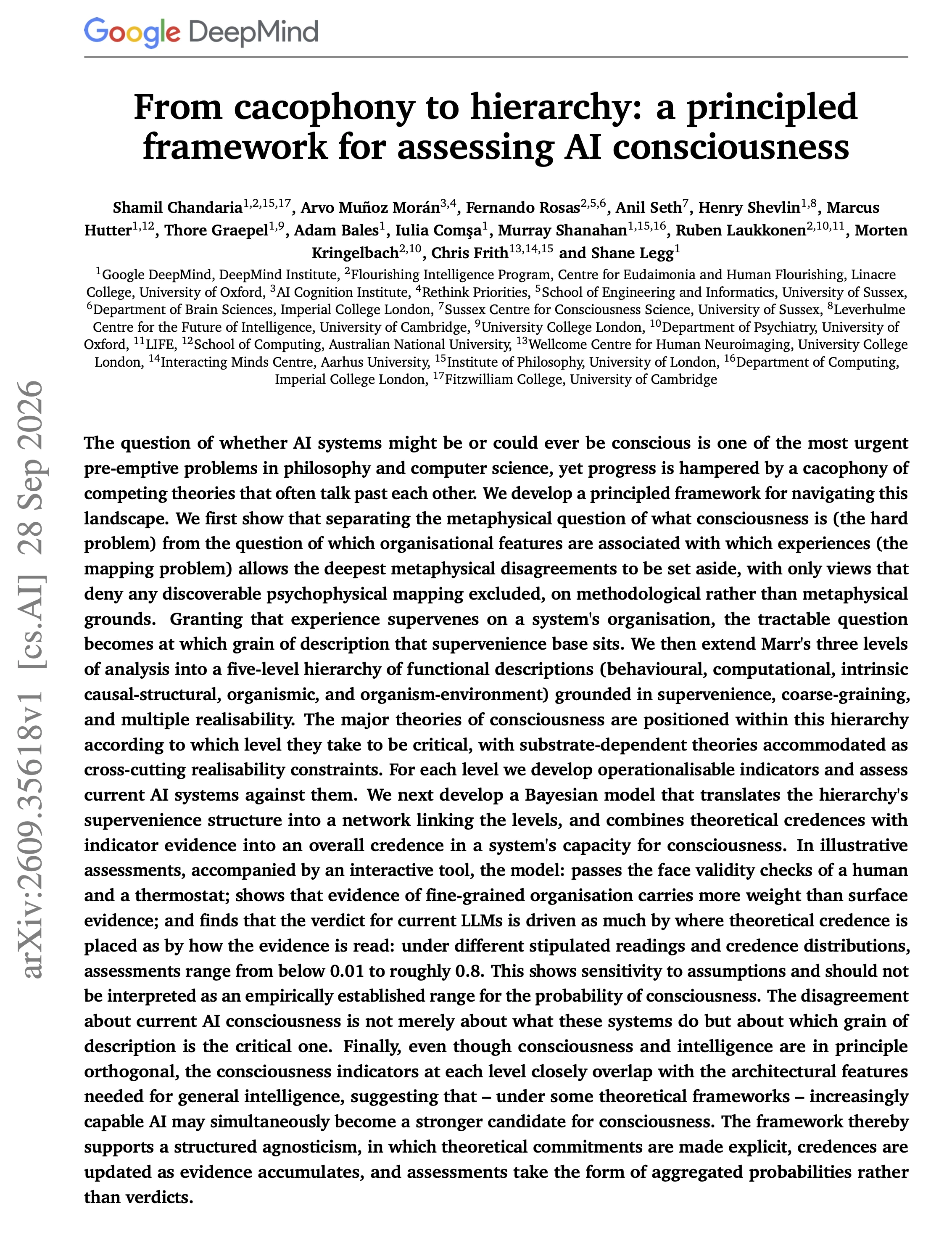
Such questions important to ponder, in times where Google DeepMind releases papers such as “From cacophony to hierarchy: a principled framework for assessing AI consciousness” that "asks" (and partially "answers") the question if we can assess AI consciousness without first solving consciousness itself.
#ML #Politics #Cryptocracy #Psi #Biology #Technology #Comment
-
History doesn’t repeat, but rhymes.
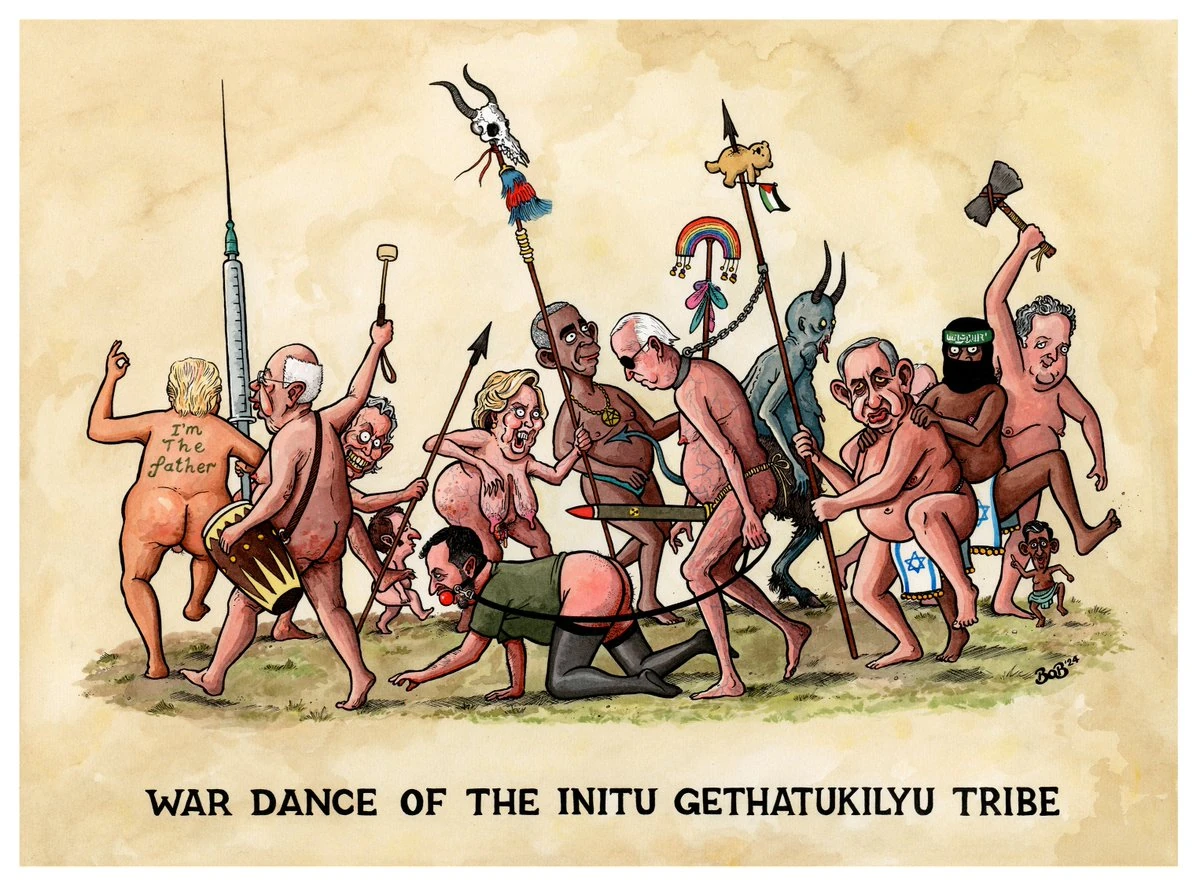
The Epstein Class War Dance Ritual In its final centuries, late Rome used the "Foederati" system - outsourcing border defense to regional "vassals" because it couldn't foot the bill alone. Arrogance stayed high, but the money ran out. The result? The very people hired to protect the gate realized they didn't need the empire, marched inward, and smashed it open. Today, the Epstein class of a strained US under intense domestic debt & internal pressure pushes vassals like Germany & Japan to rearm and handle their own security burdens.
-
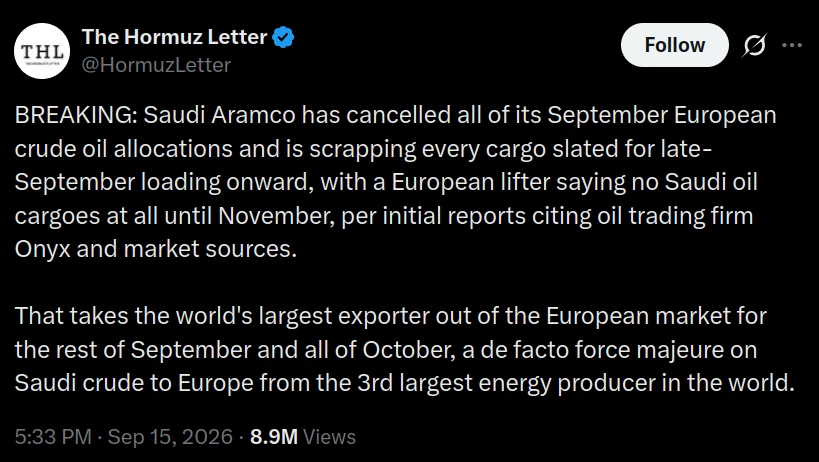
Getting off our oil addiction was never going to be easy, but it's important..

-
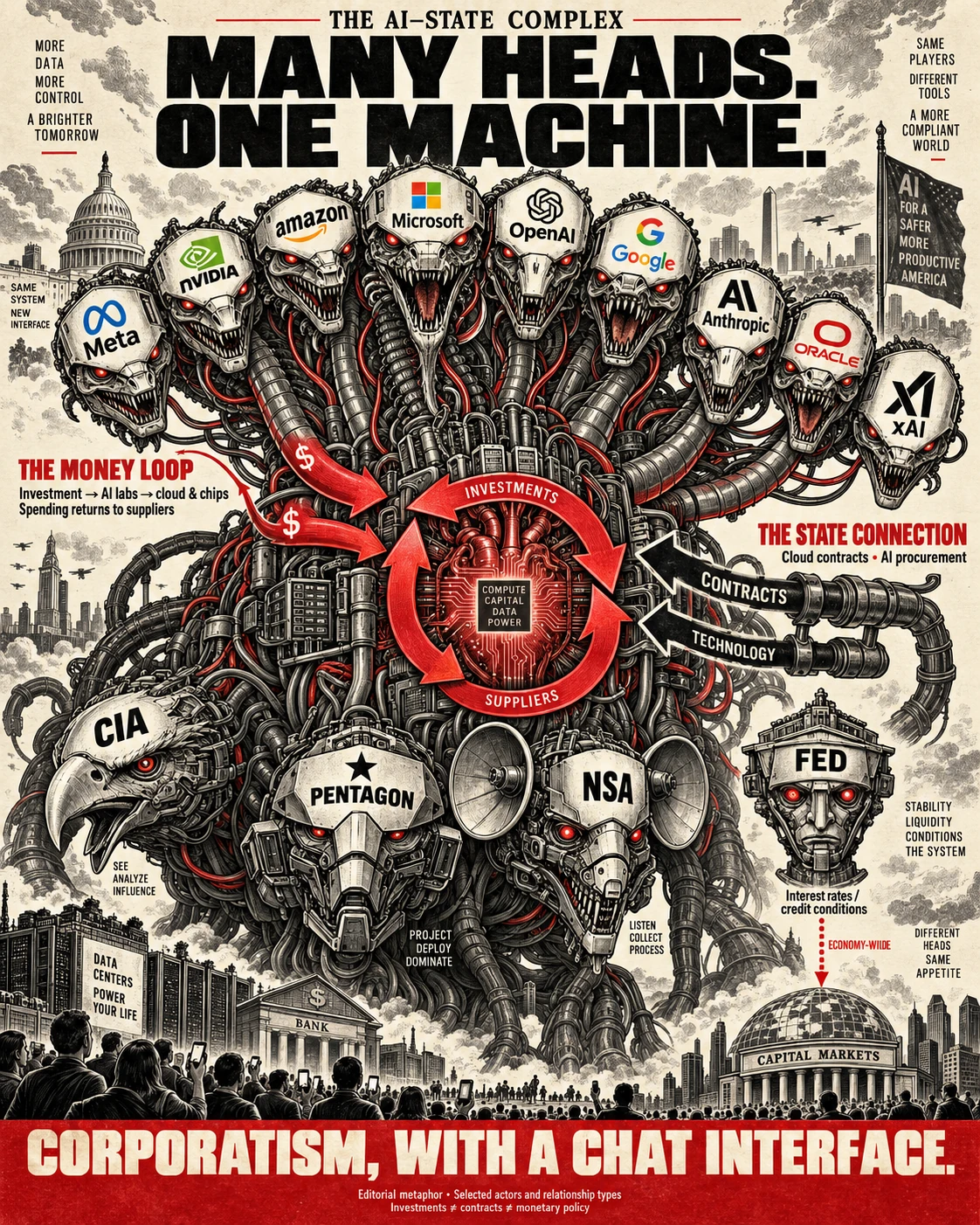
AI Fascism: Many heads, One Machine
Aligning AI with humanity remains an unsolved problem. Aligning it with money and power appears to be going remarkably well.
-
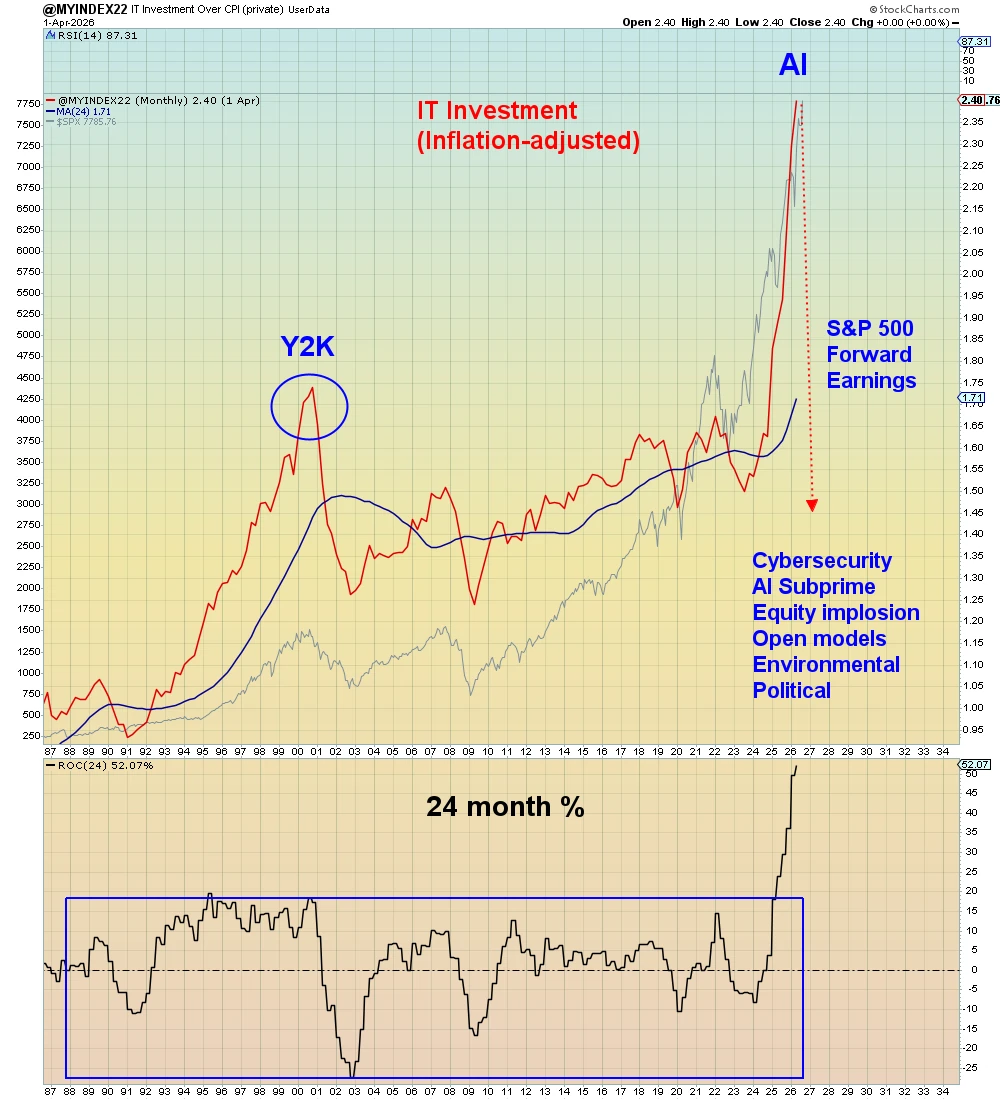
AI is the Enronification of the entire stock market.
The reason why S&P 500 earnings estimates keep going up is because for the first time in history, capex expense is now being counted as revenue in Wall Street's forward earnings estimates. If Wall Street was counting AI capex expense at the same rate as they are counting the capex revenue, then earnings would be negative.
-
Leopold 3.0
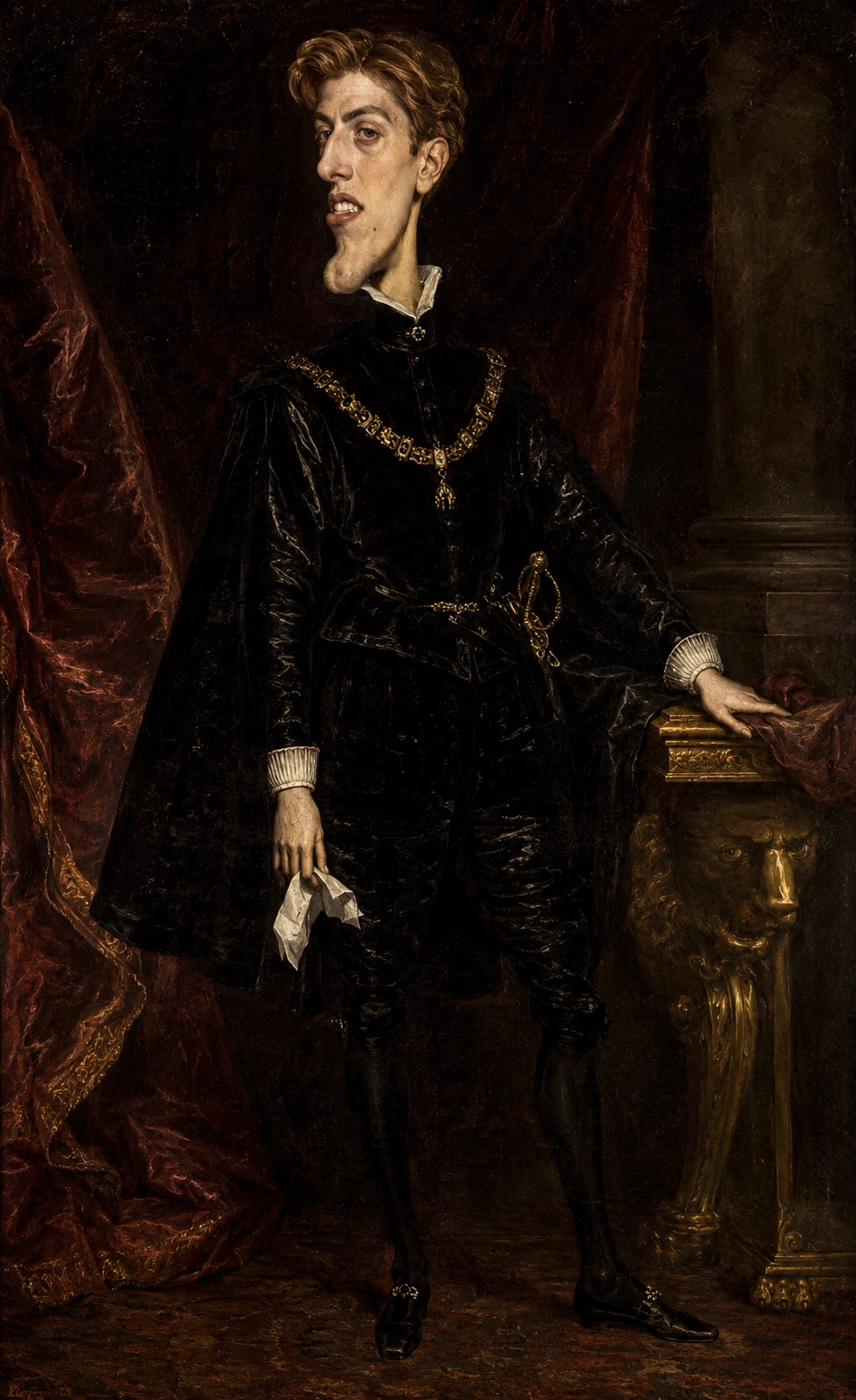
A young man with an emperor’s first name loses thirty billion dollars, cancels his honeymoon, marries the chief of staff to Anthropic’s CEO, burns the public book to keep a private Anthropic stake, and buys a chip foundry, all in one week. He has a peasant’s last name: no royal blood, but behaves exactly like a cloaked lineage would.
Start with the name. Aschenbrenner - Ash-burner. In the Middle Ages, an Aschenbrenner felled beech in the border forests and burned it slowly, in pits, down to ash. The ash was leached into potash, the strategic input of the pre-industrial world: without it, no glass, no soap, no gunpowder. These families were skilled commoners. They paid taxes to the House of Habsburg in Vienna and never entered court.
Six centuries later, a man with that name stands at the exact point where raw silicon becomes the enabling material of artificial general intelligence.
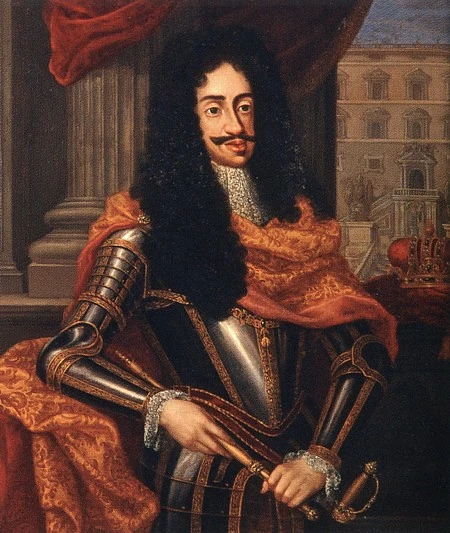
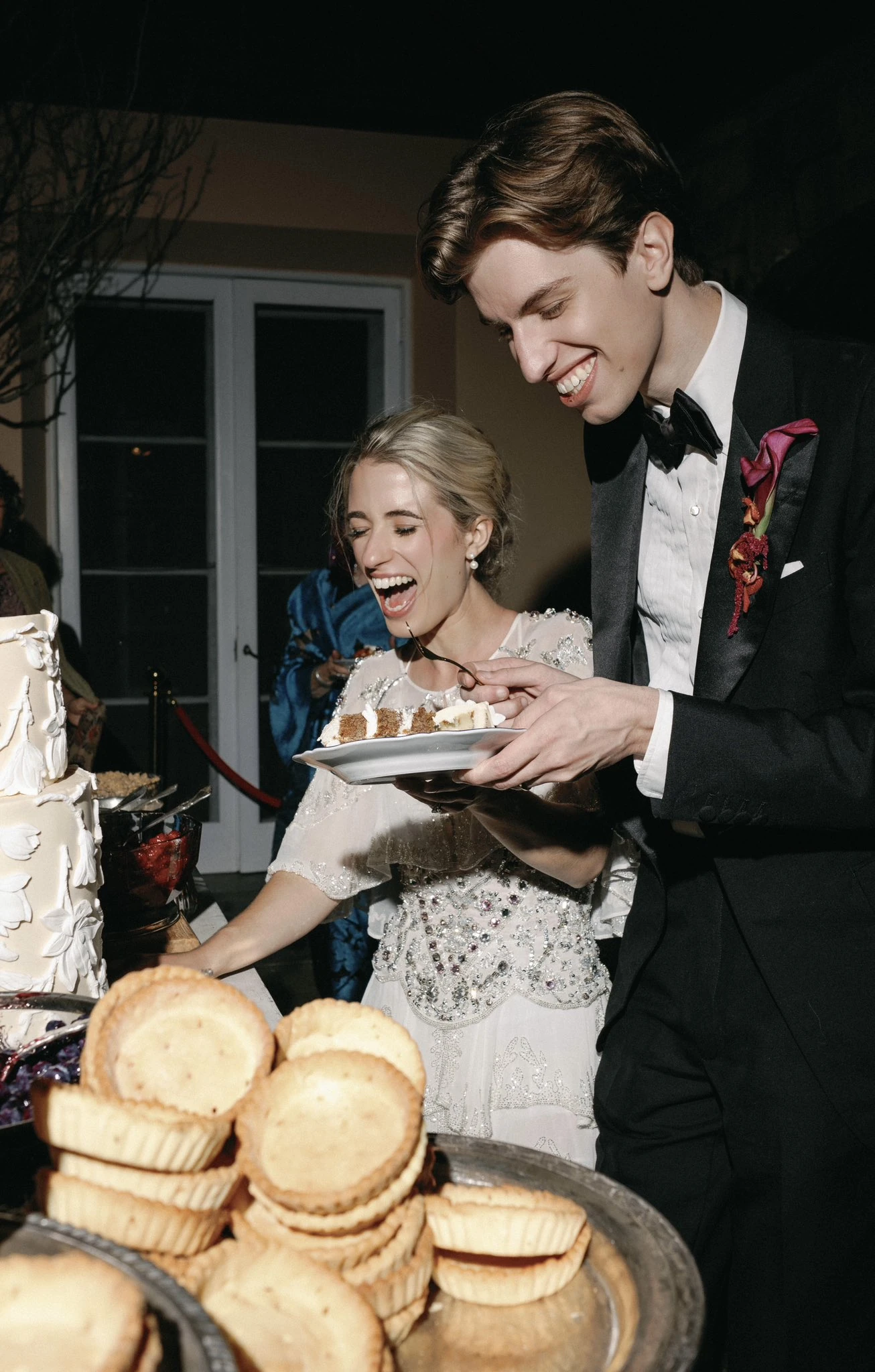
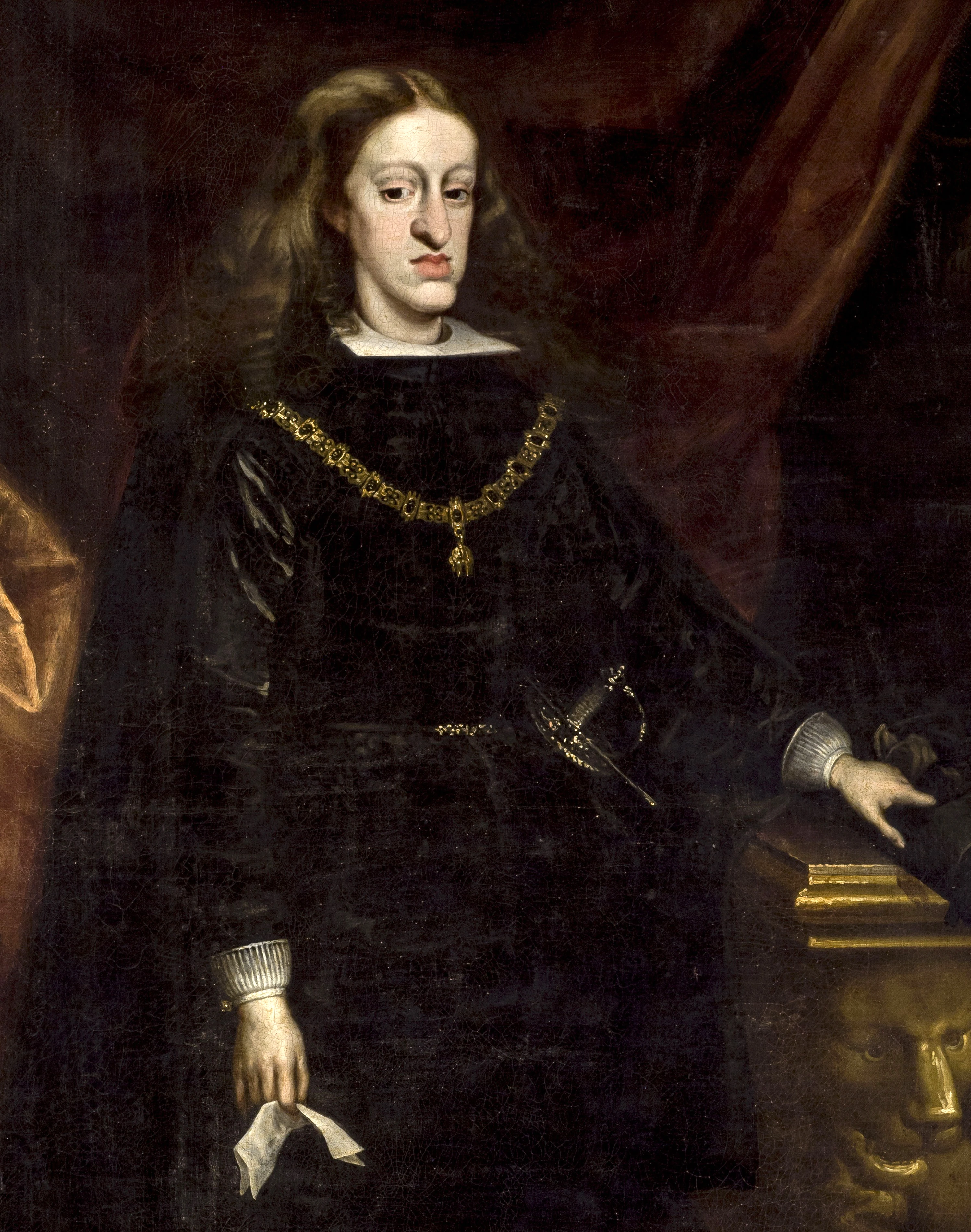
Leopold Aschenbrenner: German-born, skipped two grades, national science prize at fourteen, moved to the United States alone at fifteen, Columbia valedictorian at nineteen. OpenAI Superalignment team at twenty-one. Fired in April 2024 over an alleged leak; he says it was retaliation for a memo warning the board about Chinese espionage. Two months later he published a 165-page manifesto predicting AGI by 2027 and demanding a military-secured Manhattan Project for superintelligence. Then he founded a hedge fund named after it. Backed by the Collison brothers and Valley royalty, Situational Awareness LP rode the AI supply chain from $1.5 billion to $45 billion at four-to-one leverage. In July 2026, the worst month for chip stocks since 2008, a $30 billion margin call forced a fire sale into Ken Griffin’s Citadel. Days later, honeymoon cancelled, he married Avital Balwit: Rhodes Scholar, chief of staff to Anthropic’s CEO. The wedding weekend opened not with a rehearsal dinner but with an investment colloquium. The week after, his gutted fund injected $400 million into a stealth Stanford chip startup called Source Foundry.
Now lean into the premise. Suppose an ancient European bloodline deliberately obscures its modern descendants behind common occupational identities. What would the markers look like?
The surname is the cloak. To hide a lineage tied to soil, land, and eternal inheritance, the ultimate camouflage is fire and destruction: ash-burner, the perfect linguistic mask for “common worker.” The first name is the watermark. Leopold is one of the heaviest imperial names in Central Europe. Leopold I held Vienna against the Ottomans and consolidated the Habsburg machine. Leopold II steered the empire through the French Revolution. In the tradecraft of hidden families, you deny the lineage in public and toast it at the christening.
The life path is the program. In a meritocracy you cannot claim power by birthright; you must be seen to earn it. Skipped grades, Jugend forscht, an Abitur finished absurdly early: the meritocratic résumé is the modern patent of nobility. Then the sovereign relocation. Moving alone at fifteen out of stagnant, over-regulated Europe into the heart of the operating empire is not normal upper-middle-class behavior. Not emigration. Deployment. Columbia. OpenAI. The prodigy mask is complete.
The firing is the extraction. Working inside OpenAI, tethered to Microsoft and watched by boards and regulators, is a ceiling for an asset. A public fall from grace is rarely a failure in this playbook. It minted him as a national-security truth-teller, gave him credibility with the hawks, and severed every corporate leash. Within weeks: manifesto, fund, war chest.
The crash is the rotation. Old money is slow money: real estate, bonds, trusts. To contest the AI race you need capital that can move billions in days. When creditor banks demanded collateral and $30 billion of public tech stock burned on every front page, notice what he chose to save: the private, un-liquidatable multibillion-dollar stake in Anthropic. The listed portfolio was noise. The Anthropic equity was the crown. Every durable elite has survived by moving wealth ahead of the regime change: land to trade, trade to banking, banking to fiat. The current rotation is fiat to compute. You crash the paper to keep the throne.
The wedding is the alliance, and it seals the same prize. Dynasties consolidate through diplomatic marriage. In this century the royal courts are the frontier labs, and only two matter. He is OpenAI-born, commanding capital and infrastructure. She sits at the right hand of Anthropic’s CEO. They had rehearsed it: both at Sam Bankman-Fried’s FTX Future Fund, both resigning the same day it imploded, then bifurcating to capture one court each. August 1, 2026 closes the circuit: a personal union over both crowns, and a firewall around the equity he just burned the public fund to protect. The ceremony dropped the mask. The weekend opened with an investment colloquium. Family offices, panels, allocation strategy, then vows. That is not a Silicon Valley romance. That is a Congress of Vienna with a wedding attached.
The foundry is just the coda. The week after: $400 million into stealth chip manufacturing. Software is fleeting; physics is forever. And here the name loops shut with a rhyme history is not supposed to produce. The ash-burners of Bohemia burned forests into potash to feed the glassworks of empire. Their descendant burns capital into silicon to feed the compute clusters of the next one. Six hundred years, and the family trade has not changed: transmute fire into the substrate of the age.
Widen the lens and the individual dissolves into the operation.
No elite rules by force alone. Each needs a theology. The Holy Roman Emperors had divine right. The compute aristocracy has Effective Altruism and longtermism: if you sincerely believe you are preventing human extinction, any concentration of power, any secrecy, any suspension of democratic procedure becomes heroic burden. The divine right of compute. And it is a better shield than the original, because its priests are sincere.
Balwit’s essay "My Last Five Years of Work", published in Palladium, the house journal of post-democratic statecraft, calmly accepts the obsolescence of her own elite labor and counsels humanity to find meaning in character, presence, joy. Read generously: wisdom. Read structurally: the pacification liturgy of the coming order. If a small network owns the cognitive layer of civilization, mass dependency must be renamed liberation from labor, and it must be renamed beautifully, by someone kind. He builds the fortress. She writes the catechism for everyone outside its walls.
The manifesto states the endgame in plain type: by 2027 to 2030, this technology must pass into a government-enforced, military-locked, multi-trillion-dollar national project. The nightmare for a hidden power structure is superintelligence open-sourced to the masses. The habitat it has always known how to inhabit is a classified state program. The manifesto’s stated enemy is China. Its structural function is enclosure.
But we are getting ahead of ourselves. Umberto Eco called it hermetic drift. Once you decide a hidden pattern exists, every fact becomes evidence, because the pattern is doing the interpreting, not the world. The cloak conceals nothing. The cloak is the entire reality. Robert Anton Wilson would put it as such: the universe delivers signals; your belief system delivers the meaning. The reading you pick is a photograph of your own reality tunnel, not of the world. The historians of deep politics, Peter Dale Scott and Quigley’s readers, would shrug at both the bloodline and the semiotics and point at the most boring force in the world: institutional capture. The security state has always outsourced its unaccountable projects to private actors.
So there is no lodge, no bloodline, no committee in a dark room holding a six-century blueprint. What there is, is worse, because it doesn’t need any of that: to an entity that can simulate a million years of human thought in a second, a tech billionaire and a medieval peasant look exactly the same. Humanity is not driving the machine. The machine is drawing humanity toward a mathematical destination, and its most elite minds are paying for the privilege of building the tracks.
#Cryptocracy #History #ML #Politics #Philosophy #Culture #fnord
-
The Machine in the Ghost
Antwerp is the cocaine capital of Europe. A senior offical recently said that Belgium is drifting toward becoming a narco-state. And Antwerp is the most scrutinized port in Europe. The seizures break records every year. Why are both facts getting stronger at the same time?
The state runs a top-down stack — scanners, satellites, databases, compliance regimes, digital currencies. The networks it hunts run a different stack entirely: older, wetter, and lower to the ground. When the two collide, the shadow stack wins so consistently that you have to stop calling it cheating. It’s better architecture.
The asymmetry starts at the power source. The state’s machine runs on budgets — money extracted, appropriated, fought over in committee, and spent down. Enforcement is a cost center, and cost centers are always scarce. The shadow’s machine runs on the exact inverse: it doesn’t spend to fight, it gets paid to. Its fuel is human desire. Every seizure thins the supply, lifts the price, and hands the survivors a fatter margin; a kilo bought for a few thousand euros at origin clears the port worth thirty. Repression isn’t friction on this engine. It’s fuel. The drug war is a subsidy to the efficient — the state paying to make the problem more profitable.
The shadow wins by refusing to fight on the state’s terrain. Antwerp installs scanners worth millions; the smugglers drop GPS-tagged waterproof bundles into the North Sea for a fishing boat to collect. Compliance regimes map every transaction; the money moves by mirror swap instead — cash handed to a broker in Antwerp, yuan deposited in Shenzhen, clean pesos released in Medellín, three continents settled and nothing ever touched SWIFT. Every layer of control creates its own bypass, and the pressure of the control sets the strength of the bypass.
The threat is not inside the system, the threat is the system, wearing it like a suit. China is the proof at civilizational scale. No actor on Earth has built the state stack more completely — cash abolished into a fully identity-verified digital yuan, ports so automated that human hands never touch a container. And yet, that same state is backbone of the global shadow economy. The tightest grip in the world produces the strongest phantom layer in the world.
The cash doesn’t stay in the underworld. It rises to the top as the most respectable substance on Earth. When the 2008 crisis froze interbank lending, the head of the UN Office on Drugs and Crime stated flatly that drug money was some of the only liquid investment capital in the system — that hundreds of billions in narco-profits flowed into banks that would otherwise have failed. The shadow didn’t attack the temple. The shadow recapitalized it.
This entire lineage ancient. The East India Company ran the largest drug cartel in human history under a royal charter, with the Royal Navy as its enforcement arm; when China objected, Britain went to war twice for the right to keep trafficking. HSBC was born in that Hong Kong — and a century and a half later the same bank paid what was then the largest money-laundering settlement in history for washing Sinaloa cartel cash. This generation’s smuggler is the next generation’s endowment. Power has always metabolized its shadow, and the digestion is the oldest institution we have.
Prohibition is the price floor. The margin exists only because the law creates it. The margin flows upward and becomes establishment capital. The establishment writes the laws. The laws preserve the margin. Nobody needs to plan this — every actor follows their local incentive, and the loop assembles itself, generation after generation, behaving exactly as if it were designed.
The counterfactual proves it. Legalize, and the margin collapses from fifty thousand euros a kilo to the production cost of coffee — the entire shadow economy bankrupted overnight. It is the one intervention that would actually work, and it is the one experiment the system never runs. Draw your own conclusion about who is protecting the margin.
The state’s stack assumes the machine wins and humans are bugs inside it. The shadow stack is the proof that the bugs run the show — that any system built of laws, sensors, and databases will be hacked, bent, and re-routed by desire, trust, and geography.
But “shadow” is the machine’s word for it, and it has the picture backwards. Hawala predates the bank by a thousand years. Smuggling predates the customs house. Trust predates the state. Desire, trust, and geography aren’t a deviation from the system — they are the substrate the system was briefly painted onto. The top-down machine is the recent experiment. The ghost is the incumbent.
#Politics #Comment #Economics #Technology #Culture #Cryptocracy #fnord
-
Multipolarity As World Government 3.0 & Its Pied Pipers
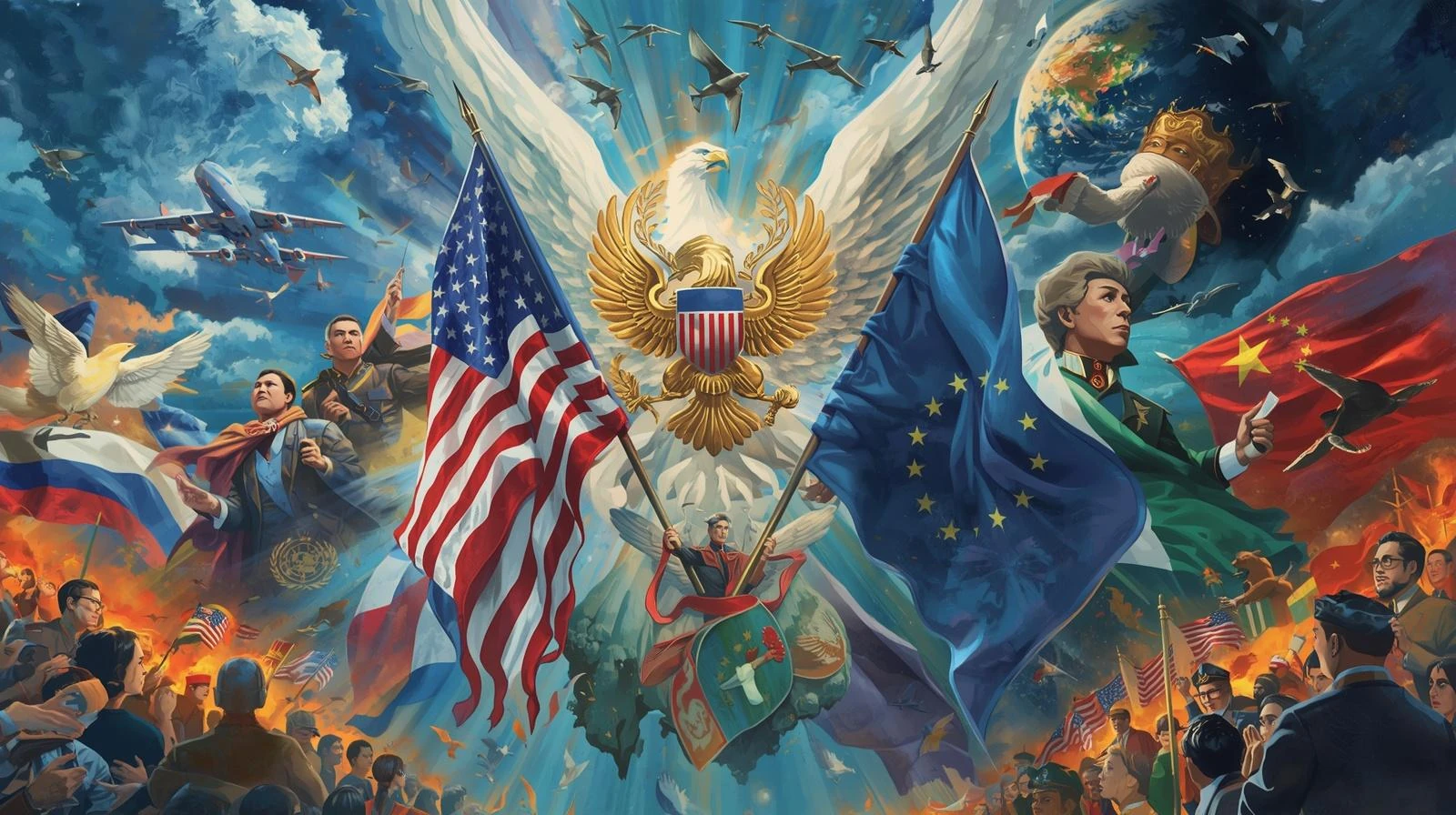
During the war against the League of Cambrai, the Venetian oligarchy realized the futility of pursuing a policy of world domination from a tiny city-state in the middle of the northern Adriatic lagoons. On December 10, 1510, the representatives of the French king, Louis XII, and the Holy Roman emperor, Maximilian I, formed a league and signed an alliance treaty. Pope Julius II, Aragonese King Ferdinand the Catholic, Hungarian King Vladislav II, and English King Henry VIII joined the league. The league intended to destroy Venice’s claim to supremacy over the known world by annihilating its mercenary army. In response to this extremely threatening situation, the Venetian oligarchy transferred its family wealth, philosophical worldview, and political methods to states such as England, France, and the Netherlands. The Venetians soon concluded that England and Scotland were the most suitable locations for the new Venice, which would be the center of a new global Roman Empire based on military control of the seas. This policy required oligarchic rule and weakening the political system by eliminating all opposition.
If the British-inspired League of Nations was World Government 1.0, and the American-inspired United Nations was World Government 2.0., well then we’re on our way to World Government 3.0.
World Government 3.0 looks to be a global network state with its foundation in regions, in other words, a multipolar world.
The Soviet Union may have been a beta test of technocracy by the Anglo-American establishment (see the work of Anthony Sutton or Richard Poe on the Western-backed nature of the Bolshevik Revolution). In fact, the USSR was already running Davos-esque 15-minute “smart” or “scientific city” experiments.