tag > RadioBio
-
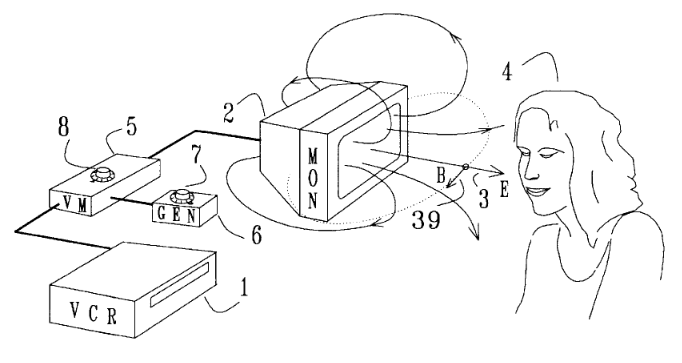
The ½ Hz Sensory Resonance - from the patent "Remote magnetic manipulation of nervous systems"
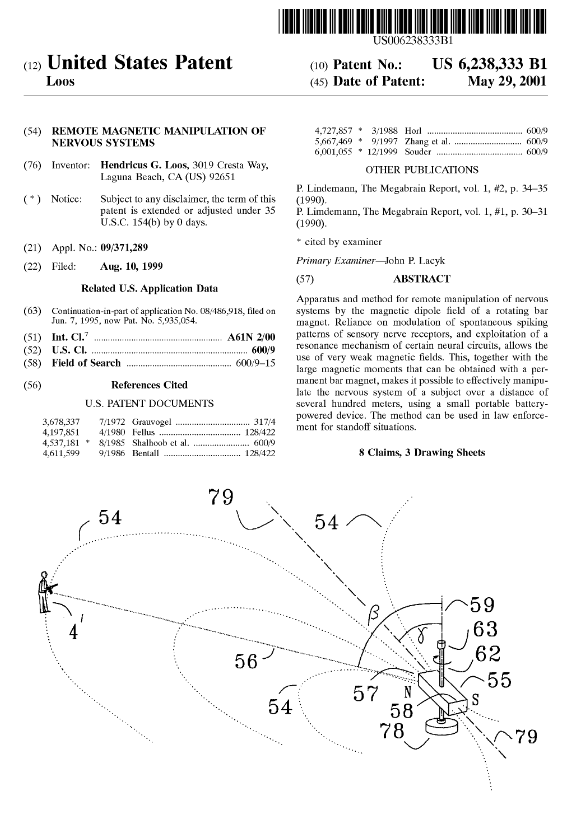
The human nervous System exhibits a Sensitivity to certain low-frequency Stimuli, as is evident from rocking a baby or relaxing in a rocking chair. In both cases, the maximum Soothing effect is obtained for a periodic motion with a frequency near ½ Hz. The effect is here called “the ½ Hz Sensory resonance'. In the rocking response, the Sensory resonance is excited principally by frequency-coded signals from the vestibular end organ. However, the rocking motion also induces body Strains, and these are detected by Stretch receptors residing in the skin and elsewhere in the body. In addition, relevant Signals may originate from thermal receptors which report skin temperature fluctuations caused by air currents that are induced by the rocking motion. All these receptors employ frequency coding in their Sensory function, and it must be that their signals are combined and compared in the brain with the vestibular nerve signals in an assessment of the Somatic State. One may thus expect that the Sensory resonance can be excited not only through the vestibular nerve, but also Separately through the other Sensory modalities mentioned. This notion is Supported by the observation that gently Stroking of a child with a frequency near ½ Hz has a soothing effect. Further support derives from the successful excitation of the ½ Hz sensory resonance by weak external electric fields, as discussed in “Method and Apparatus for Manipulating Nervous Systems”, U.S. Pat. No. 5,782,874. The ½ Hz sensory resonance involves the autonomic nervous System, and it can be used to induce relaxation, Sleepiness, or Sexual excitement, depending on the precise Stimulation frequency and the affected afferent nerves. Another Sensory resonance has been found at about 2.4 Hz;
Related patent: "Subliminal acoustic manipulation of nervous systems"
-
Earth's Natural Radio: Strange sounds at VLF frequencies and below - NVARC Presentation by Philip J Erickson (W1PJE) (May 2022)
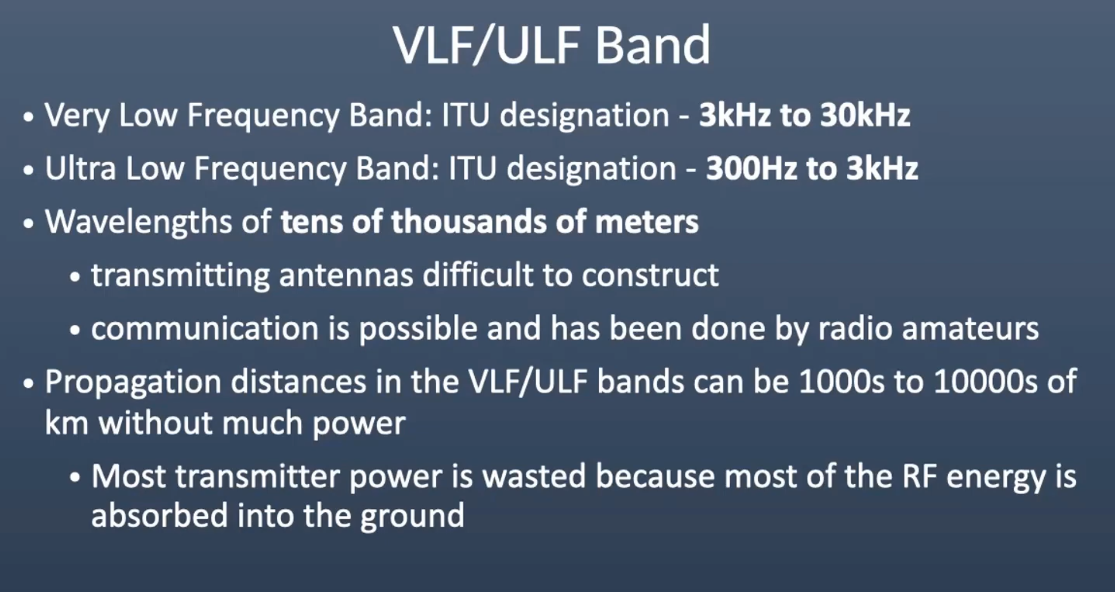
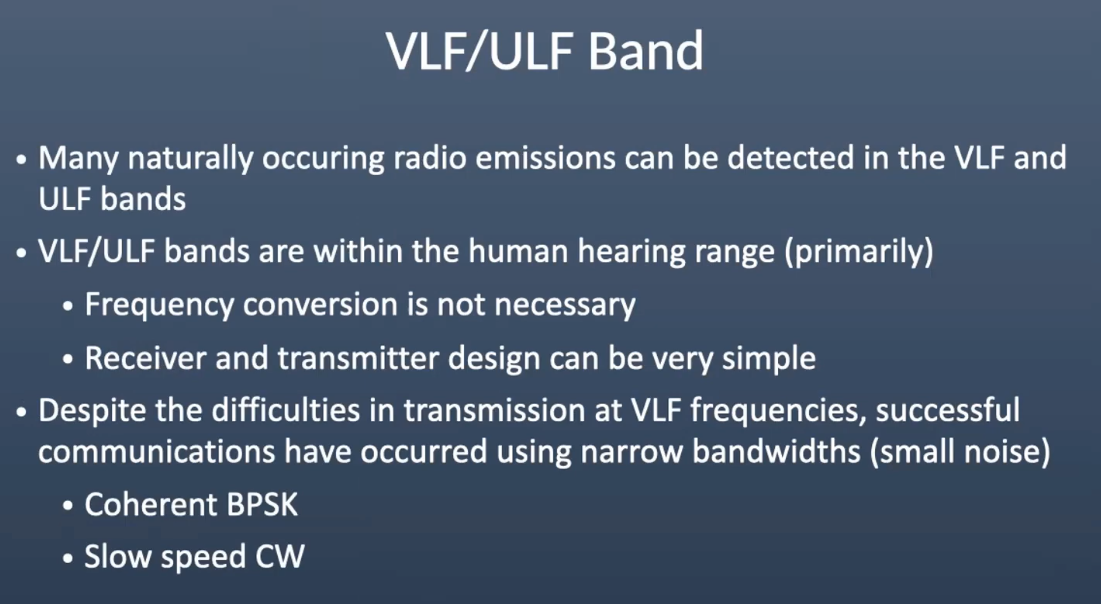

"I will provide an overview of natural emissions at very low electromagnetic frequencies in the VLF (3 - 30 kHz) and ULF (300 Hz - 3 kHz) ranges. These radio emissions are generated by physical phenomena, such as lightning discharges or interactions with plasma in the ionosphere, and in some cases are global in nature. They are also very interesting because their RF frequencies are primarily within human hearing range (although they are not acoustic waves!), and so heterodyne receiver architectures are not needed - making both receiver and transmitter design quite simple.
I will cover natural emissions, including audio samples, and describe what they tell us about the ionosphere and magnetosphere, including whistlers, chorus hiss, sferics, and more. Also covered will be human signals in this frequency range, such as power line harmonics and VLF communications signals used by almost every government for information transfer to submerged vessels. Some information will be provided as well on the challenges of receiving and transmitting signals in this range within your backyard, including the "Dreamer's Band" amateur frequencies below 9 kHz and the new "EbNaut" digital mode for this frequency range."
About Philip J Erickson
I am an associate director and head of the Atmospheric and Geospace Sciences group at Haystack Observatory, operated by Massachusetts Institute of Technology (MIT). Haystack is located approximately 42 km as the crow flies from the main MIT campus on a 1300 acre parcel overlapping the towns of Westford, Groton, and Tyngsboro, MA (grid FN42go). Since the late 1950s, Haystack has conducted frontier remote sensing research into the properties of the near-Earth space environment, including the ionosphere, neutral atmosphere, overlying plasmasphere, and the magnetosphere that surrounds our planet.I am a member of Nashoba Valley Amateur Radio Club (NVARC), a physical as well as spectral neighbor of Haystack. Outreach programs and activities are ongoing between Haystack and NVARC; see the NVARC page for details. I am also a member of the HamSCI citizen science initiative.
The talks Q&A section has interesting tid bits about the true complexities of climate change and the modeling of it: https://youtu.be/8J2zYgGIsno?t=4032 - https://youtu.be/8J2zYgGIsno?t=4235
Tools: http://www.abelian.org/ - http://websdr.org/ - http://www.vlf.it/ - https://theinspireproject.org/
Related Talk: Giant Antennas of the Navy! NVARC Presentation - by George Allison, K1IG
-
The quickest way to destroy a bee hive, is to place a wireless telephone inside it.
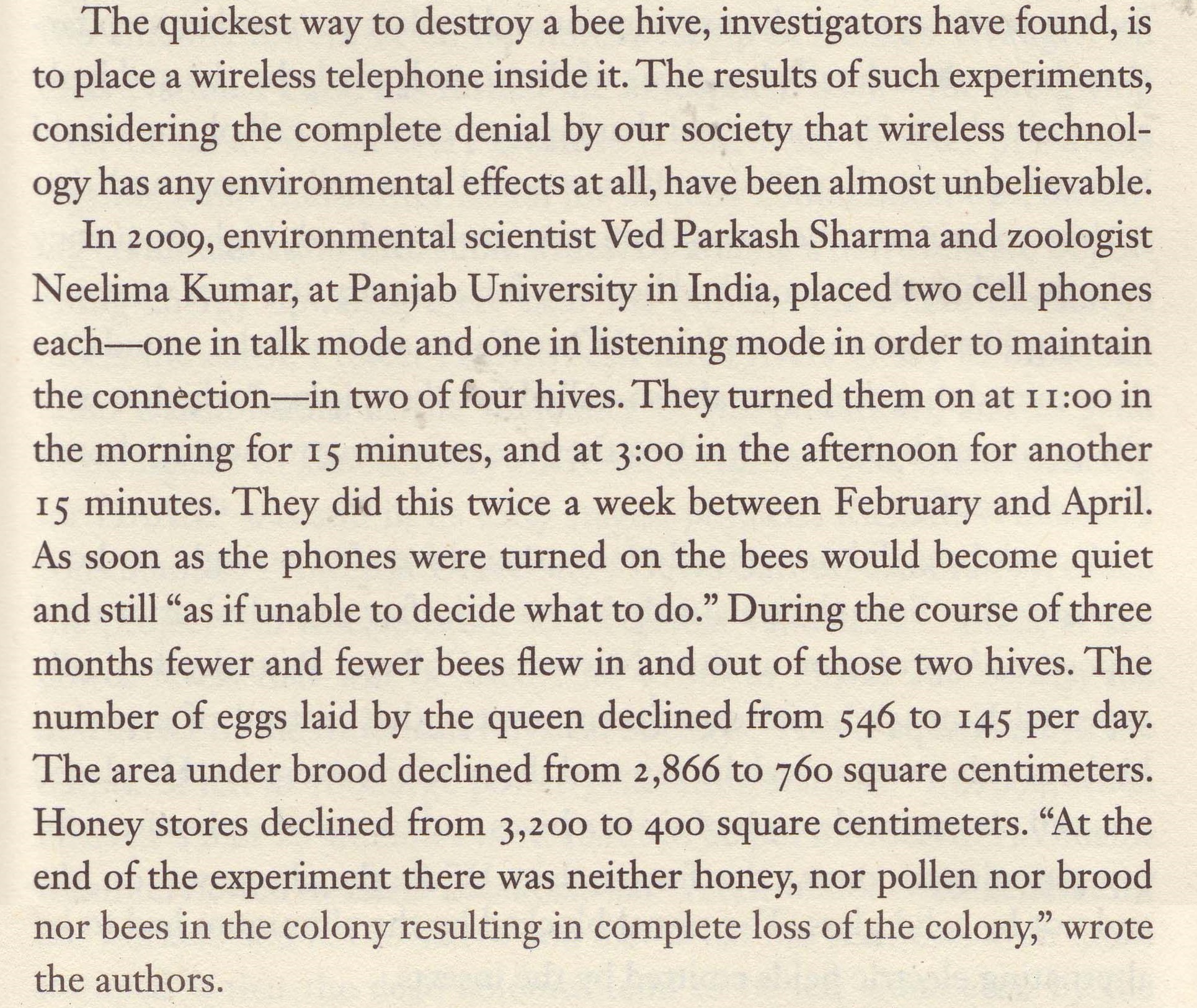
Europe’s first UMTS network, which turned every cell phone into a computer, and every cell tower into a transmitter of broadband radiation, went into service in the fall of 2002—just before the disastrous winter during which so many of Europe’s honey bees vanished.
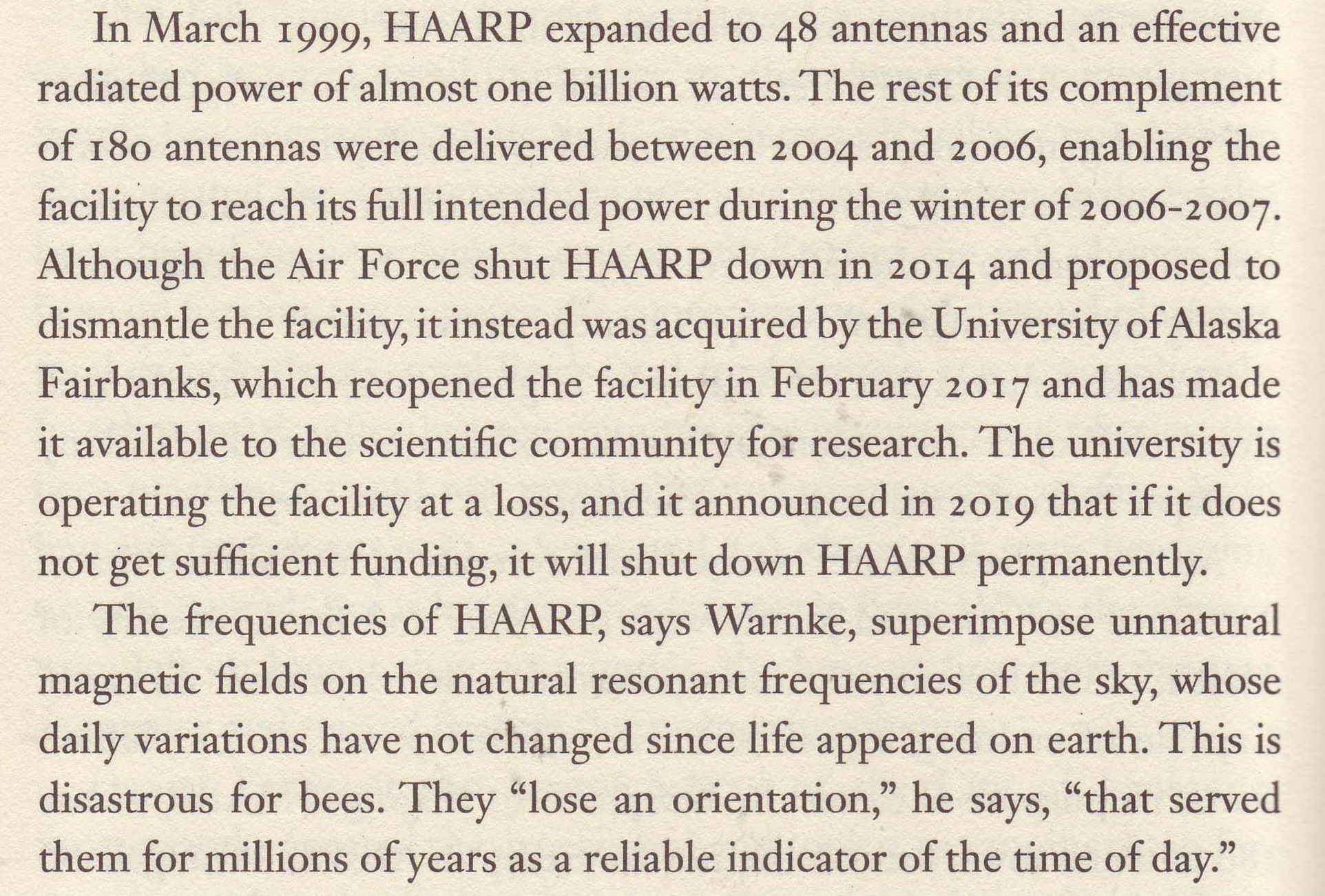
The international beekeeping community is extremely resistant to giving up its long-standing belief in the infectious nature of bee losses, and so, in the absence of evidence, most beekeepers are falling back on the only thing they know: more toxic pesticides to kill mites.

But the decimation of so many other insect species that are not subject to the same parasites is a strong hint that a non-infectious agent is at work. Exquisite sensitivity to electromagnetic fields has been demonstrated in a variety of insects.

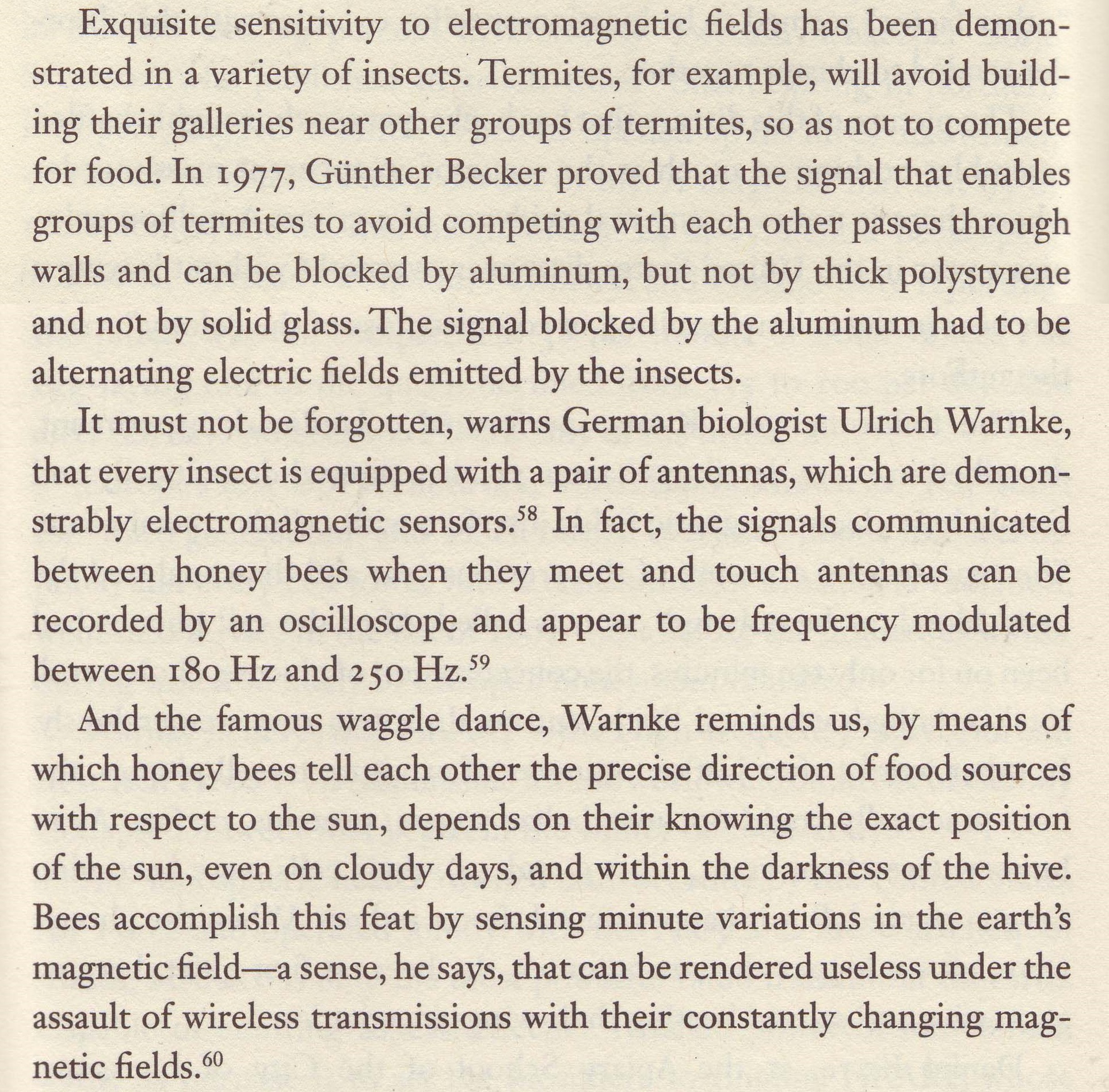
Excerpts from the Book "The Invisible Rainbow": A History of Electricity and Life
-
Wireheading?

Practitioners in the A.I, machine learning, generative modeling/art, human augmentation and related domains should be very clear about this: Significant parts of these communities - implicitly or explicitly - are racing towards implementing and perfecting Wireheading and Mind-control, in its many expressions. Let's stop to beat about the bush and openly discuss the socio-spiritual-technical design decisions and implications of such systems, which in the shadows have advanced far further than most choose to believe. Most importantly, let's meditate so we can choose the path forward in a conscious and relaxed way.
#ML #Generative #Augmentation #Military #SE #RTM #BCI #RadioBio
-
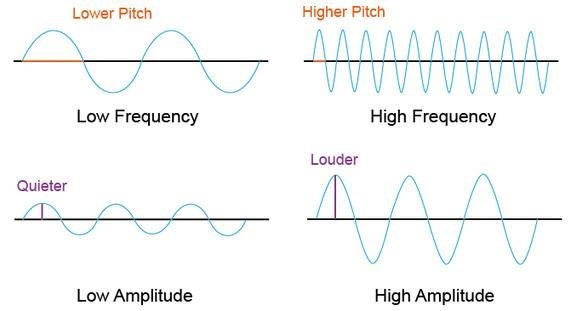
Learning about almost anything from first principles, means learning about how (sound) waves work
-
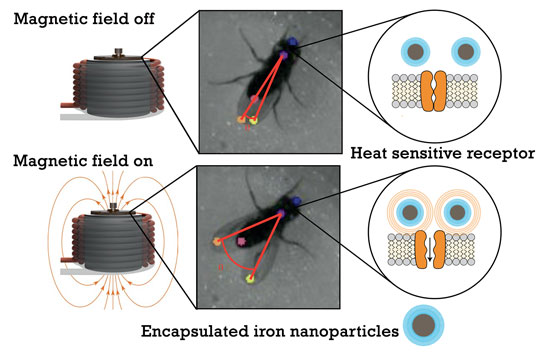
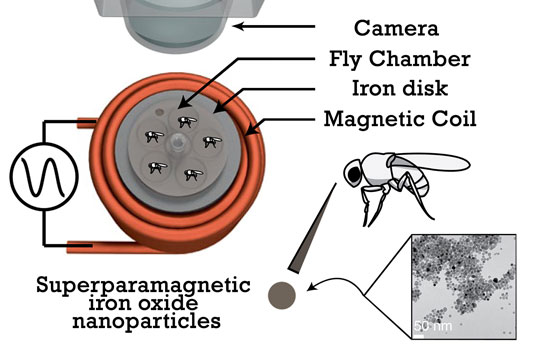
US researchers 'hack' fly brains and control them remotely - "It took genetic engineering, nanotechnology, and electrical engineering to achieve this result" - "Magnetic control of select neural circuits"

-
Vladimir Gavreau an pioneering researcher in the field of Infrasound.
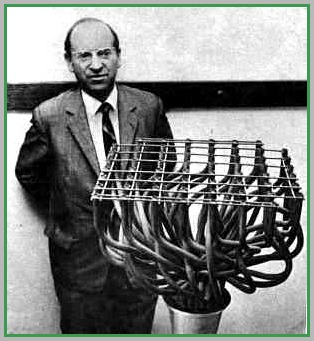
"In developing a military weapon, scientists intend to revert to a policeman's whistle form, perhaps as big as eighteen feet across, mount it on a truck and blow it with a fan turned by a small airplane engine. This weapon, they say, will give forth an all-destroying 10,000 acoustic watts. It could kill a man five miles away. There is one snag: at present, the machine is as dangerous to its operators as to the enemy. The team is working on a way to focus it. Various systems of baffles have been tried, but the most promising method appears to be propagation of a different and complementary sound a wave length backward from the machine. This changes the frequency of airwave length moving in that direction, thus protecting anyone to the rear. There is, of course, a much simpler means of protection: turn the machine on from a safe distance. This summary of Professor Vladimir Gavreau's experiments with infrasound is based on the Sunday Times article.[2] A much more comprehensive article has appeared in an American periodical, The National Enquirer, Vol.42, No. 27, March 10, 1968. Professor Gavreau's discovery has been patented, and anybody can obtain the plans and full description from the French patent office upon payment of two francs."
Related: The sonic doom of Vladimir Gavreau - The Sonic Weapon of Vladimir Gavreau - Acoustic Trauma : Bioeffects of Sound - Infrasound linked to spooky effects
-
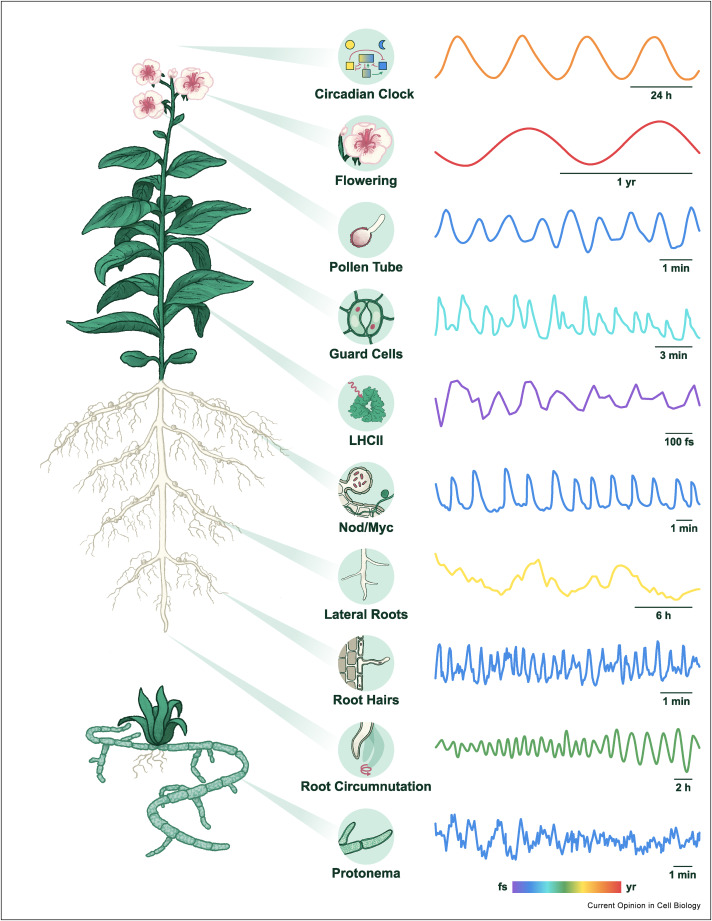
Electrifying rhythms in plant cells - Plant cells generate rhythms/oscillations in virtually all scales of spatiotemporal organization. 24 orders of magnitude in time 15 in space.
-
Neurons are fickle. Electric fields are more reliable for information.
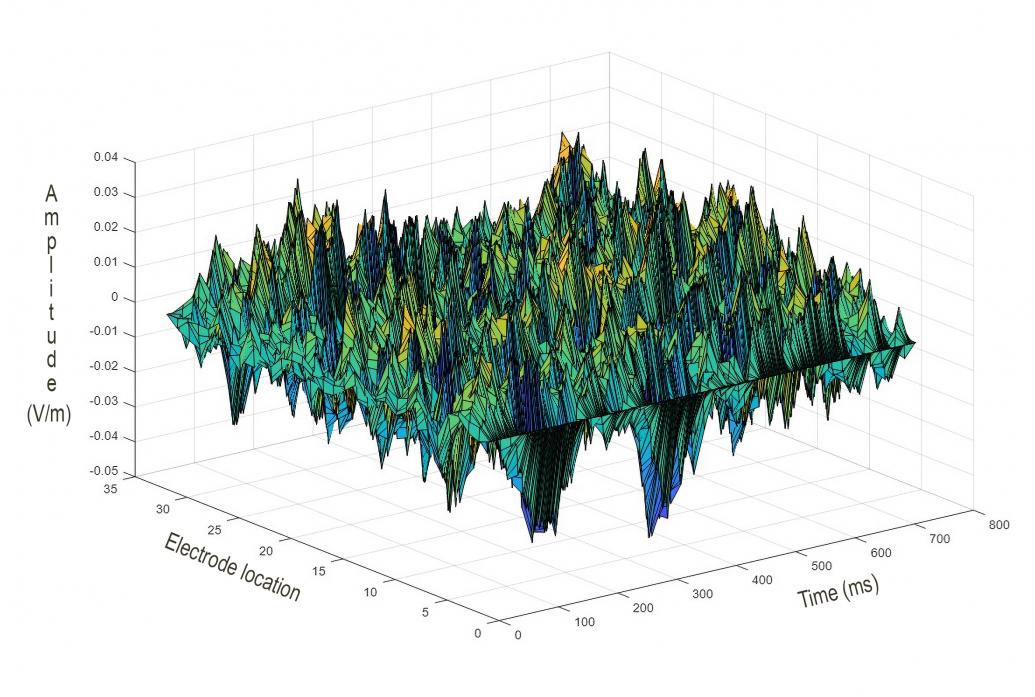
A new study suggests that electric fields may represent information held in working memory, allowing the brain to overcome “representational drift,” or the inconsistent participation of individual neurons
-
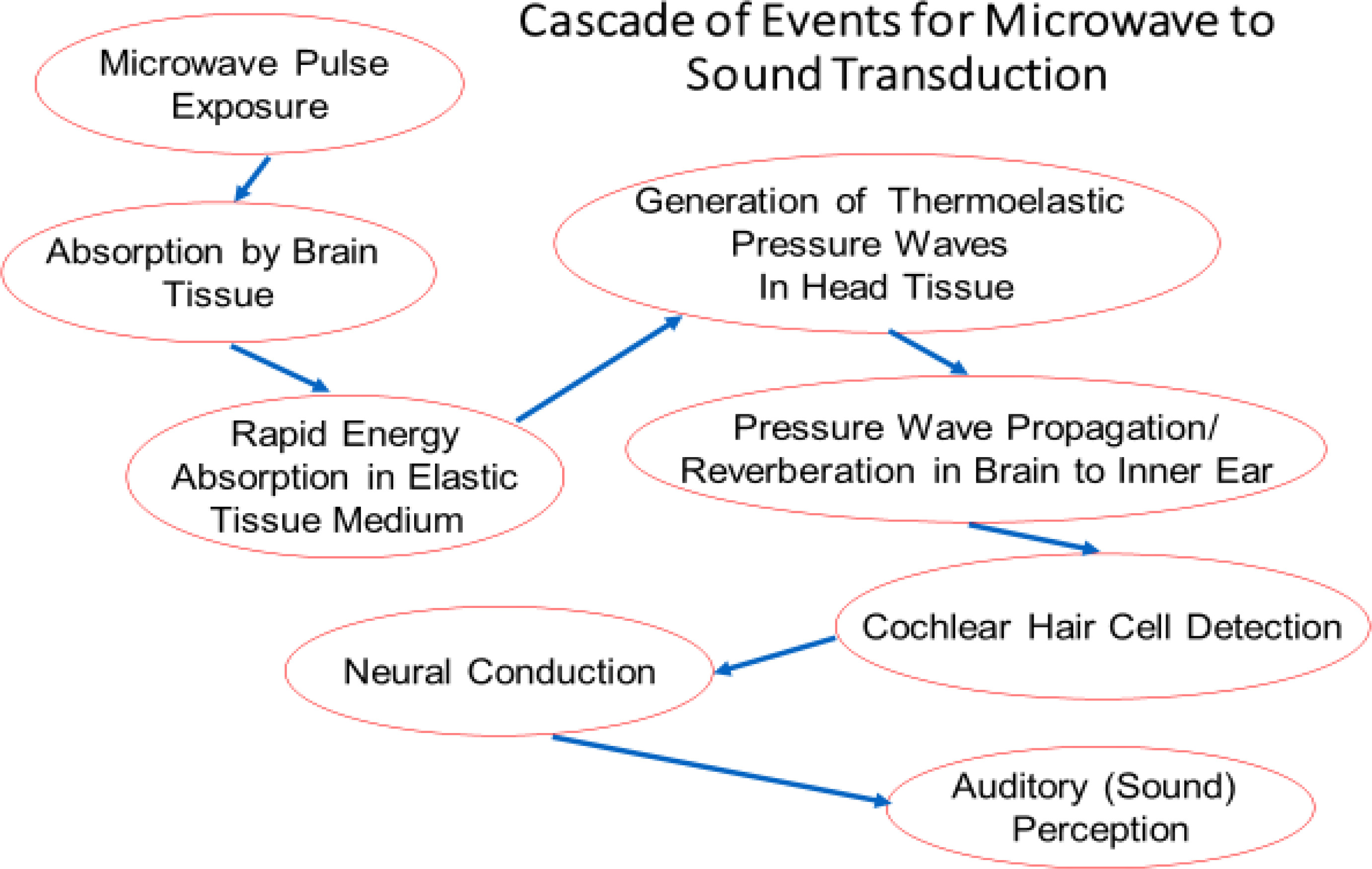
Take-Home Messages: •This paper describes neurophysiological, psychophysical, and behavioral observations from laboratory studies involving human and animal subjects. •Absorption of a single microwave pulse impinging on the head may be perceived as an acoustic zip, click, or knocking sound. •A train of microwave pulses may be sensed as an audible buzz, chirp, or tune by humans. •Mechanistic studies show absorption of microwave pulses by soft tissues in the head launches a thermoelastic pressure wave that travels in the brain •Depending on the power of the impinging microwave pulses, the level of induced sound pressure could be considerably above the threshold of auditory perception. •The microwave auditory effects and associated pressure waves could potentially render damage to brain tissues to cause lethal or nonlethal injury.
-
A Sixth Sense: Sharks and Electricity
Sharks exhibit an incredible sensitivity to their watery environment, including an extra sensory advantage: the ability to detect tiny electric signals. This "sixth sense" can help them locate meals, identify mates, and even, we believe, navigate the oceans. Hundreds of "electrosensors" sit embedded within a shark's head; in concert, they can discern changes as small as a billionth of a single volt. This talk brings together physics, chemistry, and biology to reveal how a creature can "see" the world electrically. Our speaker is Dr. Brandon Brown, Professor and Chair in the Physics Department at the University of San Francisco. Dr. Brown's Wonderfest presentation was recorded by Eric Yao on December 9, 2019, at HopMonk Tavern in Novato, California.
Biophysicist Adrianus Kalmijn Dies at 88
His work revealed that sharks use an electromagnetic sense to navigate and detect prey.

Adrianus Kalmijn: The Electric and Magnetic Sense of Sharks, SkaS, and Rays (1974)