tag > Regenerative
-
Coronavirus Shutdown: The End of Globalization and Planned Obsolescence – Enter Multipolarity (strategic-culture)
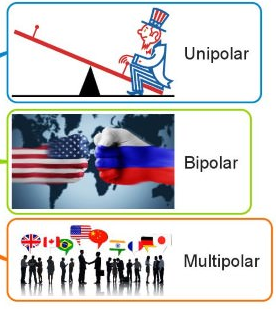
The coronavirus pandemic has shown that the twin processes of globalization and planned obsolescence are deficient and moribund. Globalization was predicated on a number of assumptions including the perpetuity of consumerism, and the withering away of national boundaries as transnational corporations so required. What we see instead is not a globalization process, but instead a process of rising multipolarity and a rethinking of consumerism itself.
-
Meicai: China’s Unicorn Farm-to-Table Startup (radiichina)

Farm-to-table is a direct relationship between a specific farm and a restaurant. Originating from China, Meicai is a app that allows users to get produce delivered from a farm straight to the comfort of their homes. It was established in 2014 by owner Liu Chuanjun. Meicai assures that the harvests reach the location within 12 to 18 hours after the order has been placed. Its consumers range from individuals to 10 million restaurants. The company is valued at over $7 billion.
-
Coping with Covid19 – the Open Food Network and the New Digital Order(s)
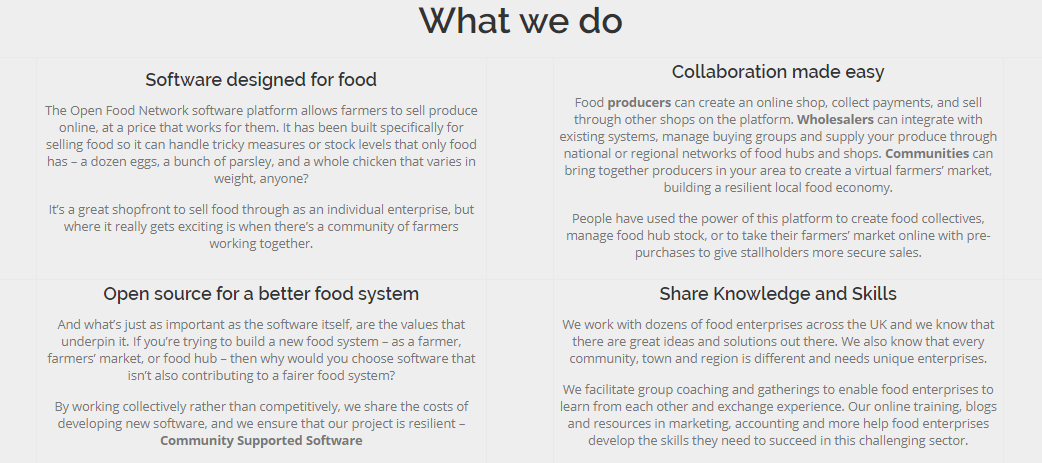
With Covid19, aka the coronavirus, come restrictions on people’s outdoor movements and gathering. This means that, while supermarkets are considered essential, it seems to be case by case for other food markets: instantly, farmers markets are shutting all over Europe with serious consequences for small producers. Digital food platforms have never been more urgent. In this new restricted mobility context, Open Food Network is perhaps the best example of a good food network that’s digitised, cooperative, open source, not for profit and ready for your community.
-
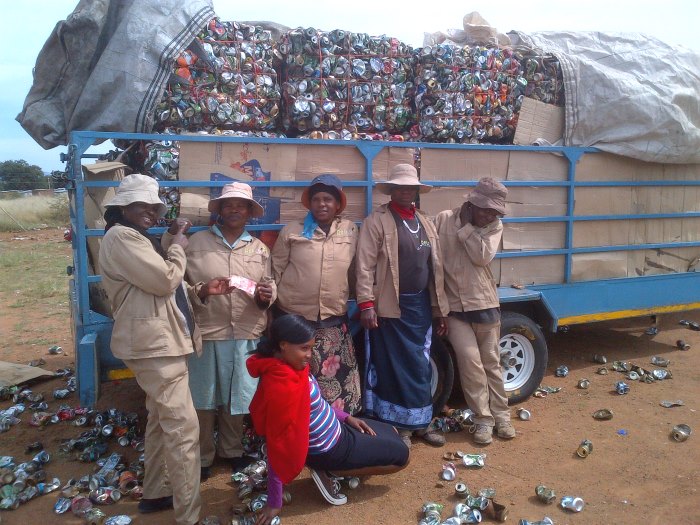
Image from: "Limpopo-based recycling co-operative wins SEED Award" A recycling cooperative is an industrial cooperative, co-owned and maintained by either workers or consumers, which specializes in the recycling of various materials. Such cooperatives are either non-profit or not-for-profit; a major theoretical benefit of mass co-ownership is that raw recycled materials can become increasingly and equally distributed among the membership population at a low cost, be it for reusage at home or for reusage in the manufacturing of newer goods or versions of goods to be sold to customers at cheaper prices than would be possible with freshly obtained raw materials.
-
Soil gets its smell from bacteria trying to attract invertebrates (NewScientistic)
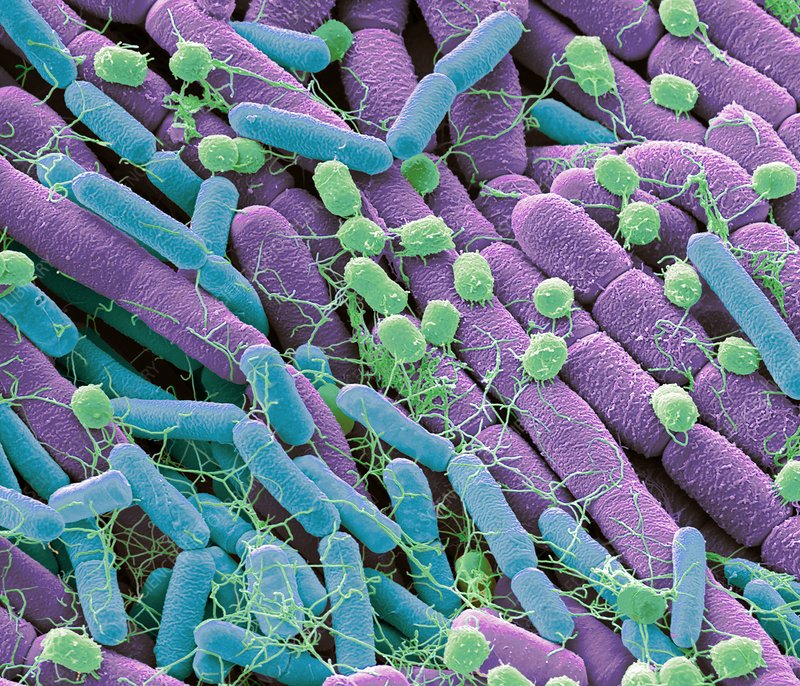
Soil gets its characteristic earthy smell from certain chemicals produced primarily by soil-dwelling bacteria called Streptomyces. But until now, we didn’t know why these bacteria produce these odours and what role they play in the soil ecosystem. To find out more, Paul Becher at the Swedish University of Agricultural Sciences in Alnarp and his colleagues set up field traps in woodland containing colonies of Streptomyces.
They thought that the smell may act as a signal to other organisms that they are poisonous, because some bacteria like Streptomyces can be toxic. Instead, the smell – which comes from gases released by Streptomyces, including geosmin and 2-methylisoborneol (2-MIB) – seems to attract invertebrates that help the bacteria disperse their spores. Becher and his team found that springtails – tiny cousins of insects – that feed on Streptomyces were drawn to the traps containing the bacterial colonies, but weren’t drawn to control traps that didn’t contain Streptomyces. By comparison, insects and arachnids weren’t attracted to the traps containing Streptomyces.
-
Delivering Community-Based Solutions - Interview with Illac Diaz, Liter of Light
-
Degrowth / Postwachstum zur Einführung - talk by Matthias Schmelzer (DE Only)
-
New Renewable Energy Capacity Hit Record Levels In 2019 (theguardian)
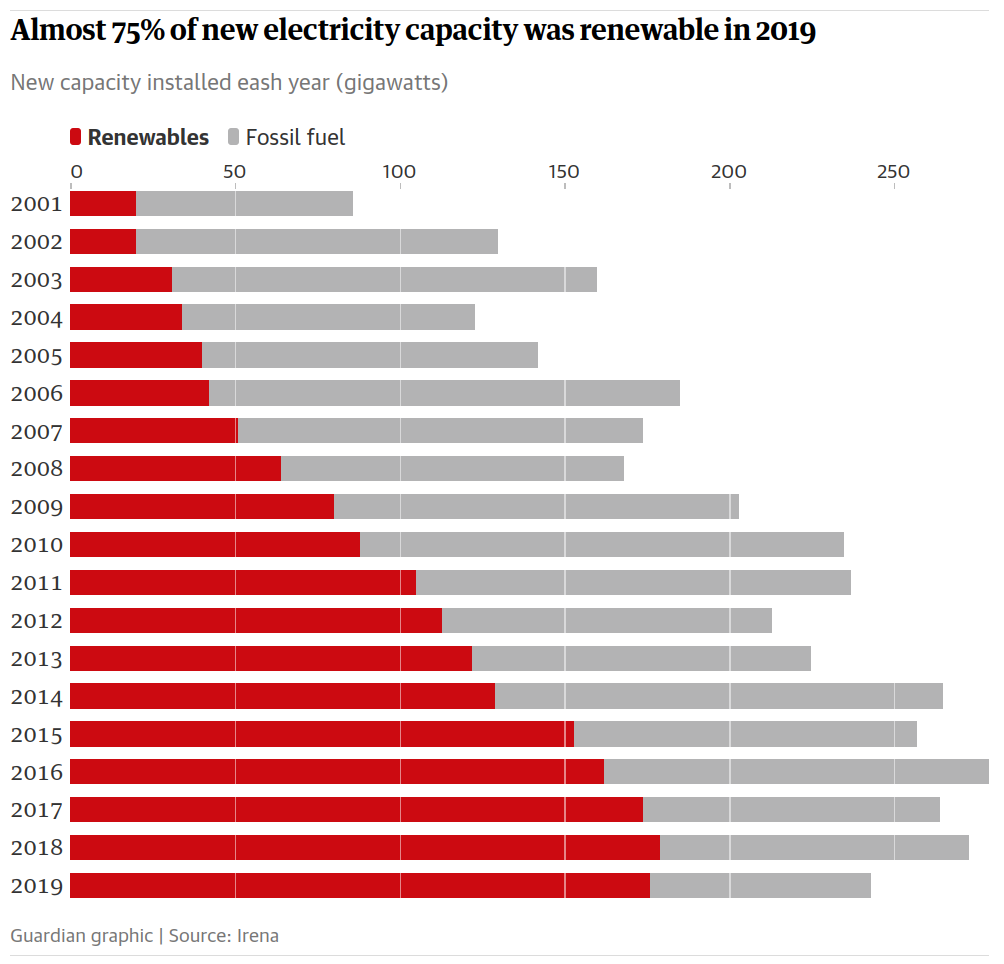
According to data from the International Renewable Energy Agency (Irena), solar, wind and other green technologies now provide more than one-third of the world's power, marking another record. Fossil fuel power plants are in decline in Europe and the U.S., with more decommissioned than built in 2019. But the number of coal and gas plants grew in Asia, the Middle East and Africa. In the Middle East, which owns half the world's oil reserves, just 26% of new electricity generation capacity built in 2019 was renewable.
-
Edible insects set to be approved by EU in 'breakthrough moment' (Guardian)
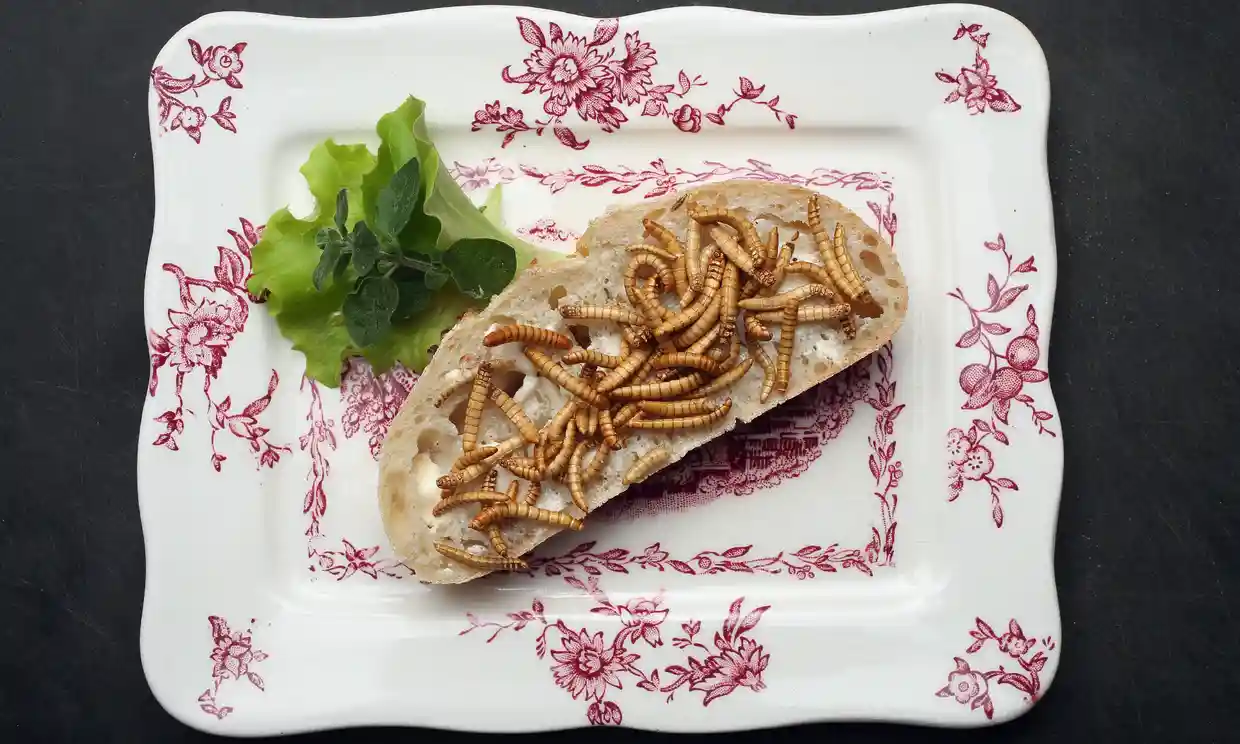
It is being billed as the long-awaited breakthrough moment in European gastronomy for mealworm burgers, locust aperitifs and cricket granola. Within weeks the EU’s European Food Safety Authority is expected by the insect industry to endorse whole or ground mealworms, lesser mealworms, locusts, crickets and grasshoppers as being safe for human consumption. The ruling is likely to lead to the final authorisation of their sale across the EU as a “novel food” by as soon as the autumn, opening up opportunities for mass production of a range of insect dishes to be sold across Europe for the first time. “These have a good chance of being given the green light in the coming few weeks,” said Christophe Derrien, the secretary general of the industry organisation International Platform of Insects for Food and Feed.
-
Saving ocean life within a human generation is ‘largely achievable’ say scientists (sciencefocus)
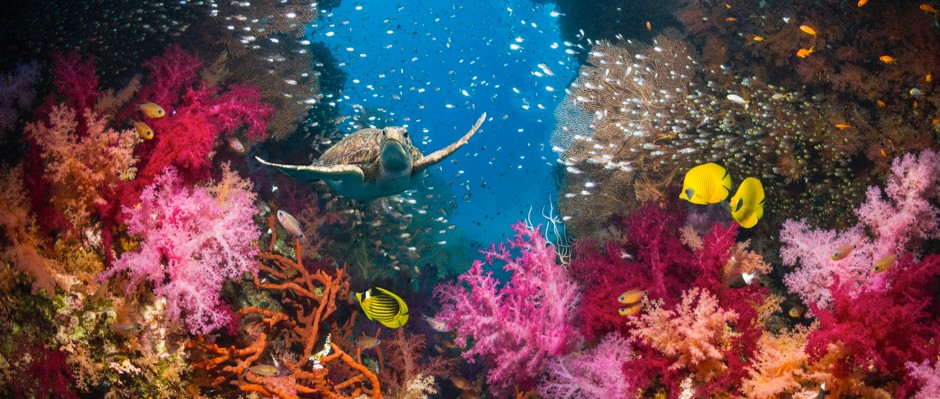
The number of marine species threatened with global extinction has decreased from 18 per cent in 2000 to 11.4 per cent in 2019. Notable rebounds from the brink of extinction include humpback whales, which have increased from a few hundred animals to more than 40,000; and northern elephant seals, from just 20 breeding animals to more than 200,000 today. Scientists say the focus should be on rebuilding depleted wildlife populations and ecosystems, not simply on conserving what remains.
-
Our open source platform enables new, ethical supply chains. Food producers can sell online, wholesalers can manage buying groups and supply produce through networks of food hubs and shops. Communities can bring together producers to create a virtual farmers’ market, building a resilient local food economy.
-
Report reveals ‘massive plastic pollution footprint’ of drinks firms (Guardian)

"Coca-Cola, PepsiCo, Nestlé and Unilever are responsible for more than half a million tonnes of plastic pollution in six developing countries each year, enough to cover 83 football pitches every day, according to a report."
“Why are we here?”
Plastic… asshole.”
-
The Open Food Network and the New Digital Order(s)
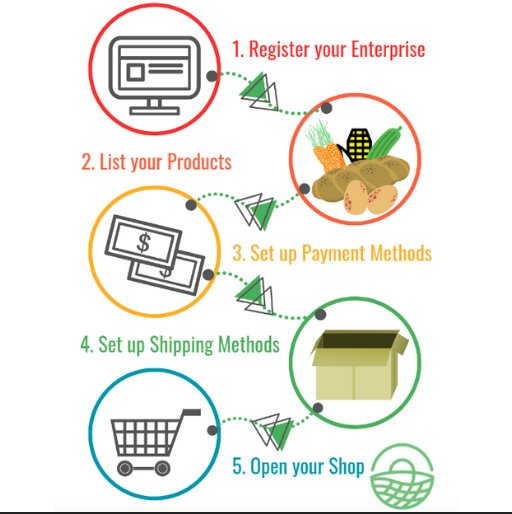
With Covid19, aka the coronavirus, come restrictions on people’s outdoor movements and gathering. This means that, while supermarkets are considered essential, it seems to be case by case for other food markets: instantly, farmers markets are shutting all over Europe with serious consequences for small producers. Digital food platforms have never been more urgent. In this new restricted mobility context, Open Food Network is perhaps the best example of a good food network that’s digitised, cooperative, open source, not for profit and ready for your community.
-
Oil demand down 20% globally (Bloomberg)
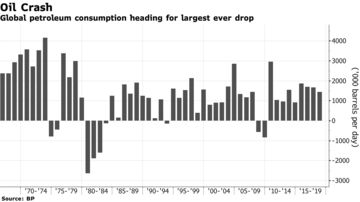
Russell Hardy, CEO of Vitol Group, the world's largest independent oil trader, says global crude demand is down 15-20 million barrels a day (that's 20% of global)
-
COVID-19 drives new threat to bats in China (sciencemag)
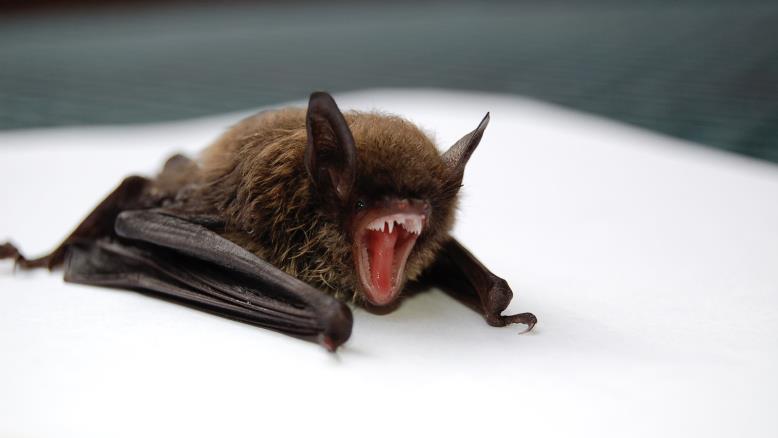
In China, bats are traditionally symbols of good luck and happiness. There are more than 1400 species of bats worldwide, but more than half of them have unknown or decreasing population trends. Unfortunately, the suggestion that coronavirus disease 2019 (COVID-19) may have originated in bats is putting them at increased risk.
-
Air pollution plunges in European cities amid coronavirus lockdown (jpost)
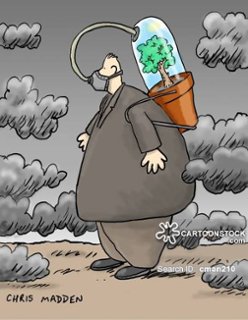
While early reports of dolphins swimming in Venice were proven false, the European Space Agency reports that air pollution dropped in three cities. "This is a first level estimate; some of these values have gone down by about 40% of the normal value... so a very drastic decrease," Josef Aschbacher, ESA Director of Earth Observation Programmes. "What you really see are the centers of this pollution… It is quite a good first level indicator of anthropogenic pollution coming from traffic and industry," added Aschbacher.
-
Wann endet Fracking? (When does Fracking come to an end) (Telepolis, DE only)
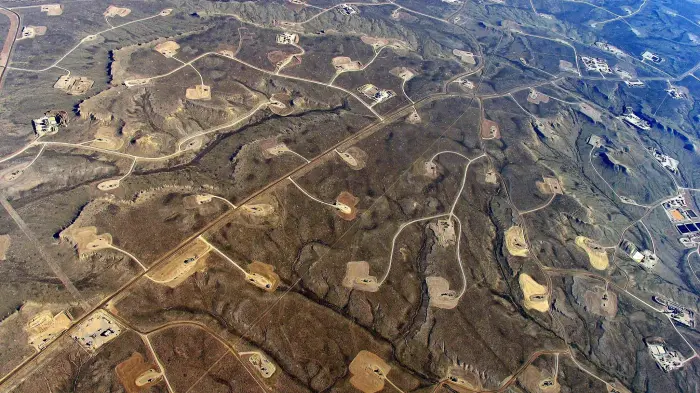
Der Ölpreiskrieg zwischen Russland und Saudi-Arabien könnte das Ende der US-Fracking-Industrie einläuten. Die amerikanische Ölindustrie bereitet sich nicht nur wegen der Corona-Pandemie auf schwere Zeiten vor. Ab dem ersten April werden die seit drei Jahren geltenden Förderlimits der OPEC aufgehoben. Dann dürfen sämtliche Länder soviel produzieren, wie sie wollen. Der aktuelle Preis für ein Barrel Rohöl von 25 US-Dollar könnte unter 10 US-Dollar fallen. Das gilt allerdings als unwahrscheinlich. Für die Frackingindustrie ist selbst der aktuelle Preis viel zu niedrig, um am Leben bleiben zu können.
-
Scientists find bug that feasts on toxic plastic (Guardian)

A bacterium that feeds on toxic plastic has been discovered by scientists. The bug not only breaks the plastic down but uses it as food to power the process. The bacterium, which was found at a waste site where plastic had been dumped, is the first that is known to attack polyurethane. Millions of tonnes of the plastic is produced every year but it is mostly sent to landfill because it it too tough to recycle.
-
As China continues planting trees, 23% of the country is now covered in forest (SCMP)