tag > Robot
-
New soba noodle-making robot at Japan train station eatery can cook 150 servings an hour

A two-armed robot is helping to prepare soba noodles at an eatery at JR Kaihimmakuhari Station in this city's Mihama Ward, capably boiling the noodles in a strainer, rinsing them and then dipping them in iced water. The Sobaichi Perie Kaihimmakuhari eatery implemented a collaborative cooking system, with the robot cooking the food and employees adding the dipping sauce or soup and toppings. It is apparently the first time for the cooking robot to be introduced in an actual restaurant setting. Connected Robotics commented, "Not only can it tackle the shortage of human resources, it can also cook without any human contact and is therefore useful in reducing the risk of coronavirus infections." JR East Foods, meanwhile, explained, "We aim to implement it (the robot) at 30 stores by the end of fiscal 2025."
-
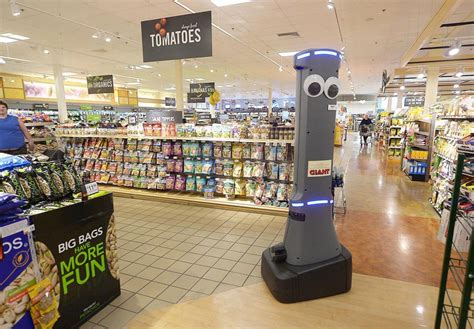
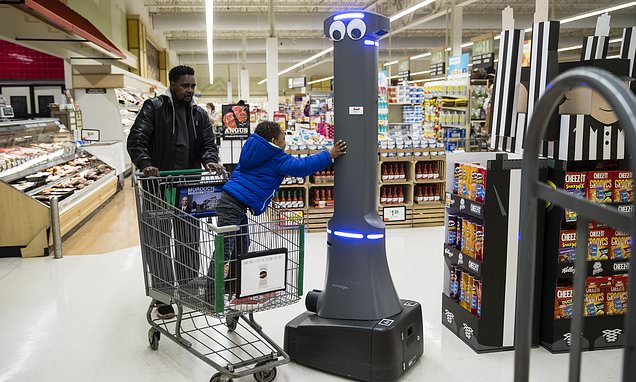
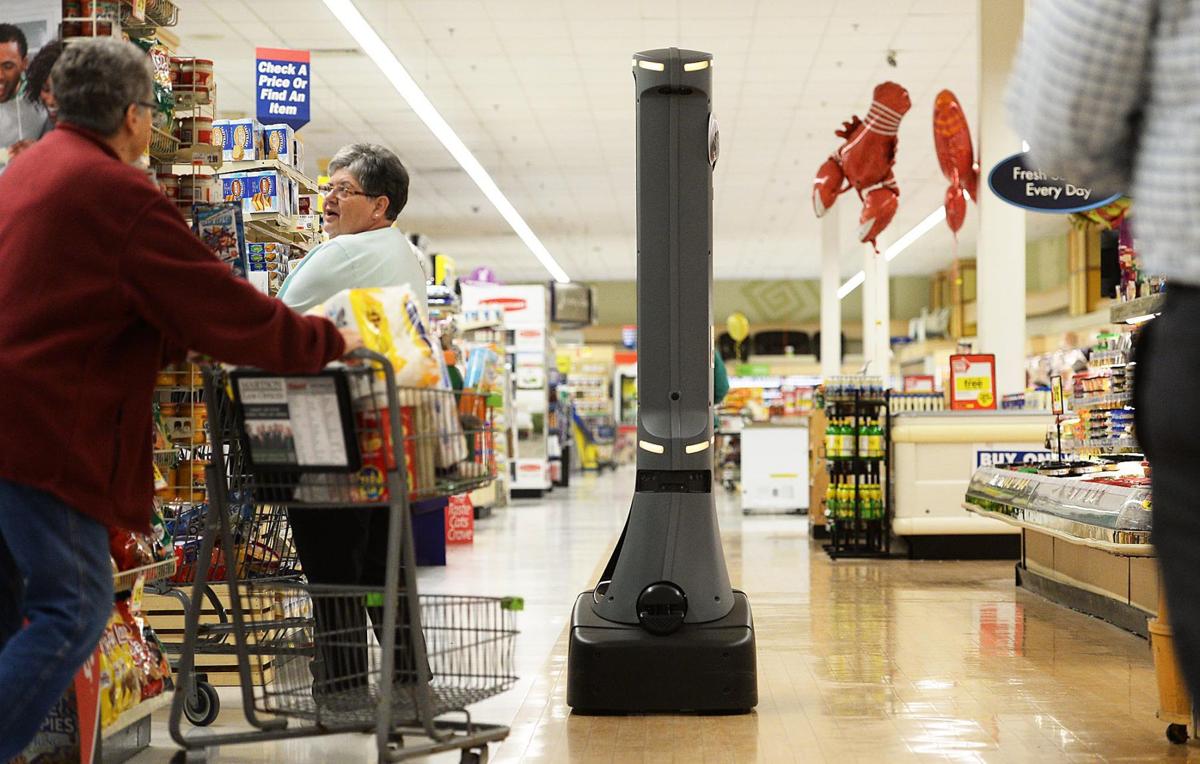
Marty the Robot - costs $35k and all it does is detect trash on the floor and yell an alarm for a wage worker to come and pick it up.
-
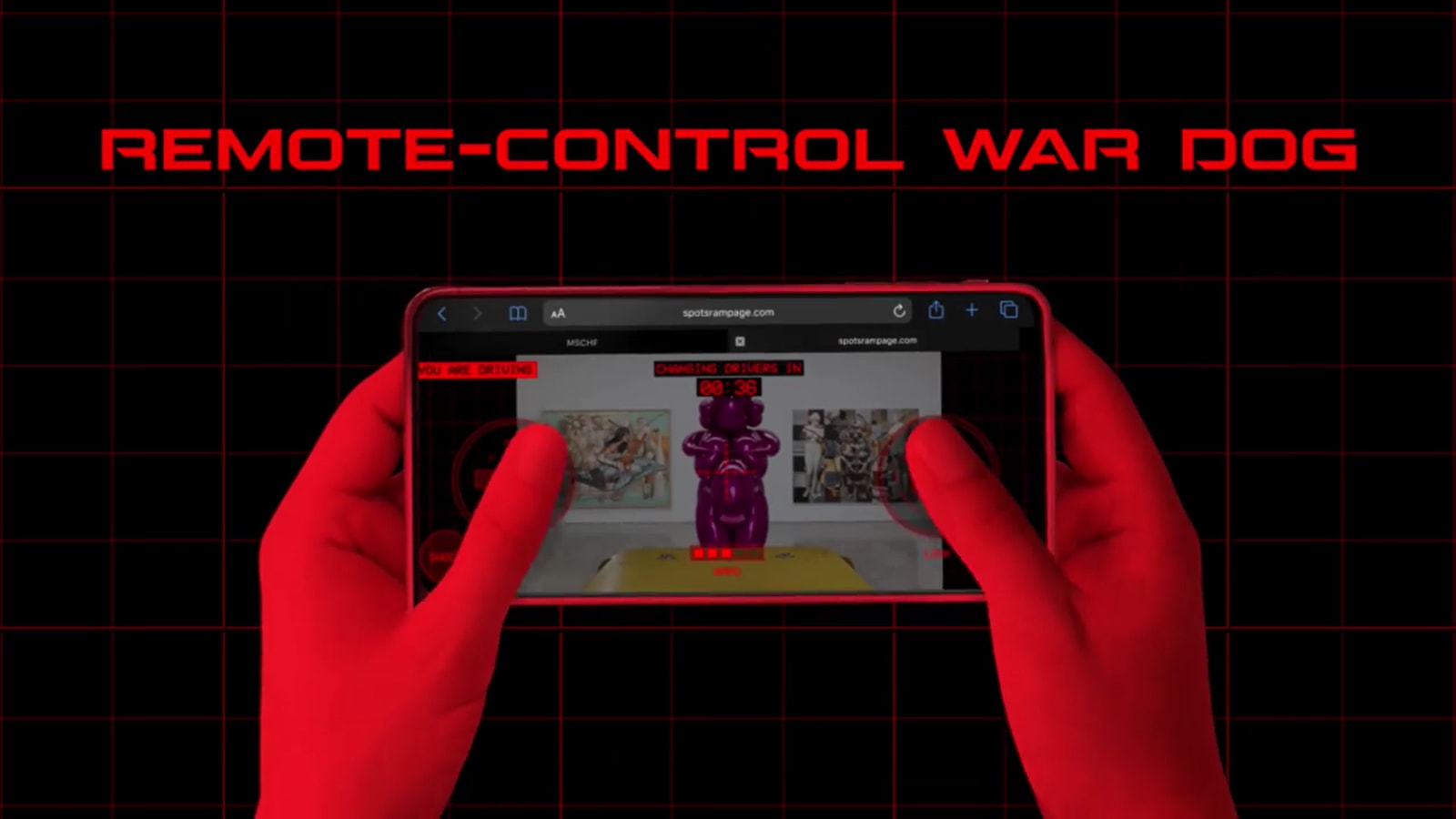
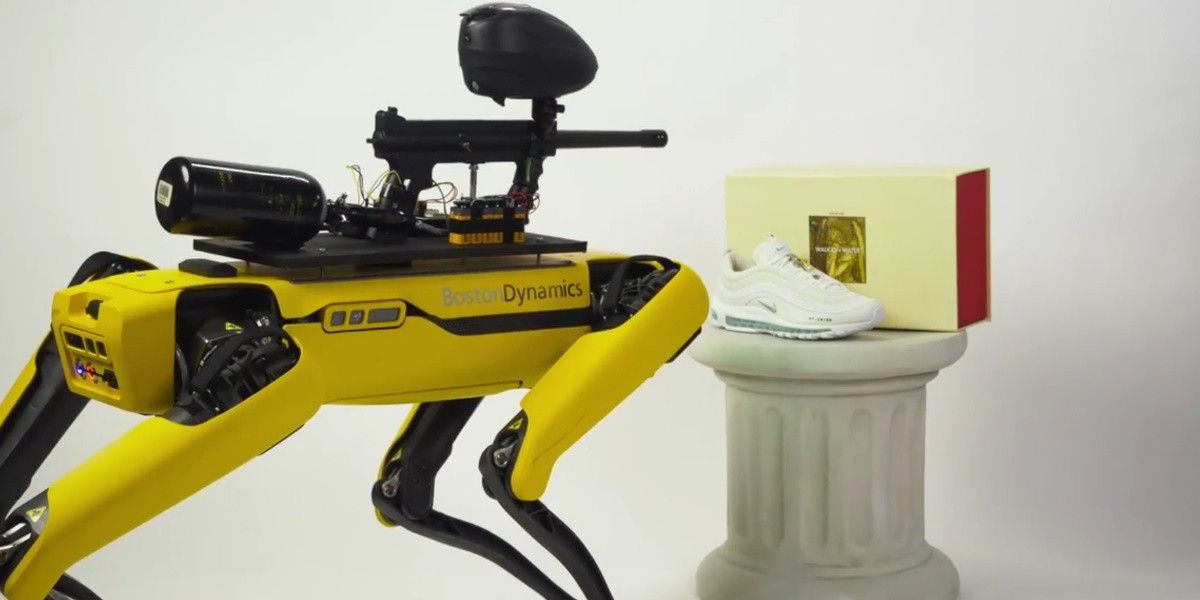
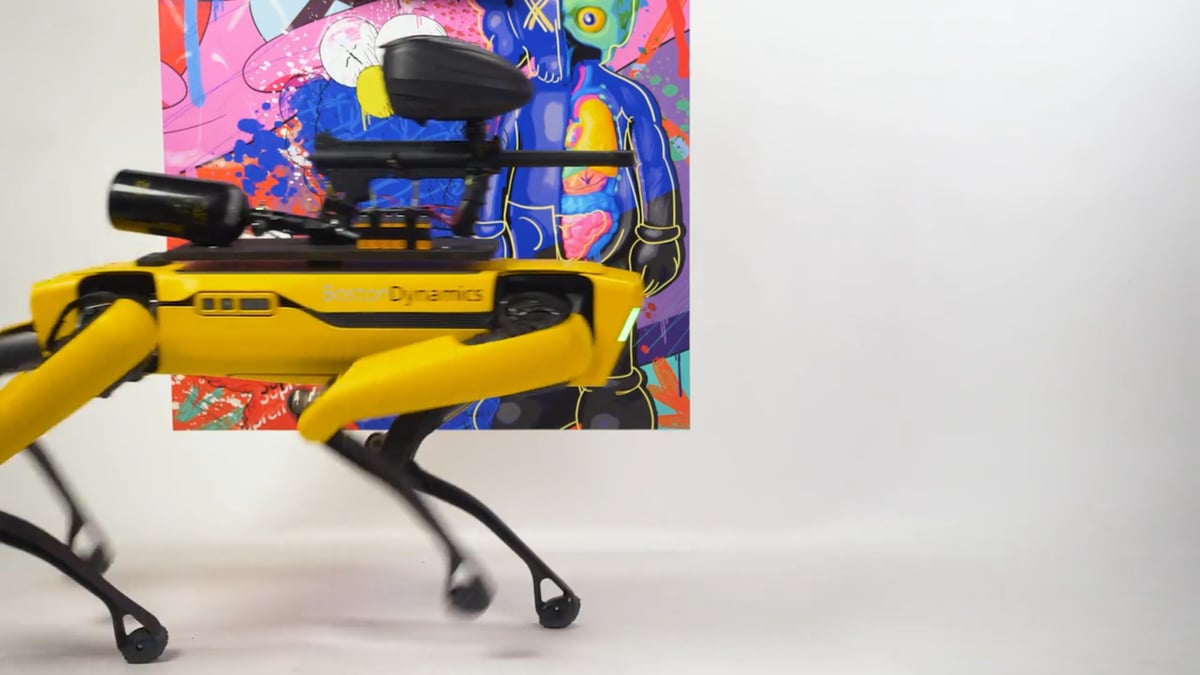
"We've put a Spot in an art gallery, mounted it with a .68cal paintball gun, and given the internet the ability to control it. We're livestreaming Spot as it frolics and destroys the gallery around it. Spot's Rampage is piloted by YOU! Spot is remote-controlled over the internet, and we will select random viewers to take the wheel."
More infos: Robot War Dog Company objects to their Robot War Dogs being called War Dogs
-
Boston Dynamics is back with dancing Robots
The Russian answer to this new Boston Dynamics Video is even more entertaining...
-
The Metaphysical Can Opener - by Frederik Schodt
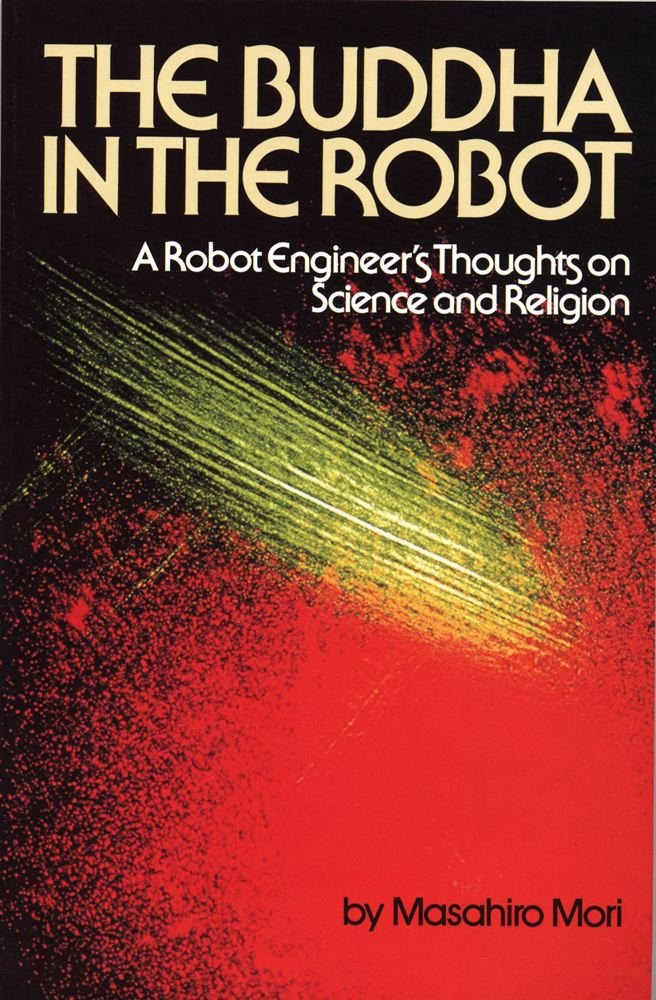
I first met Mori Masahiro (森 政弘, Japanese roboticist, born 1927) in the spring of 1986, when interviewing scientists for my book Inside the Robot Kingdom: Japan, Mechatronics, and the Coming Robotopia. Mori’s focus was on Robots and Buddhism, which seemed a novel combination to me at the time.
In researching robots Mori had found that he had to understand not only the human body’s individual parts and their functions but their relationship to the entire human body and the universe in which it exists. And this had brought him to Buddhism, which teaches that the Buddha-nature is in all things (not just sentient beings) and is where, according to his interpretation, parts of whole systems are simultaneously independent and connected—that a universe and the source of all truth can exist in the single petal of a flower. Only a few years earlier, a book of his essays had been translated and published in English with the provocative title of The Buddha in the Robot: A Robot Engineer’s Thoughts on Science and Religion.

Mori, a ninety-two-year-old with a razor-sharp mind at the time of this writing, is a long-time student of Buddhism—especially the Rinzai sect of Zen Buddhism, which delights in shaking rigid human minds with riddles and paradoxes, thus allowing new truths to emerge and lead us to enlightenment. In a more immediate sense, Mori’s main goal in using Buddhism has been to stimulate creative thinking, to get people to think “outside of the box.” It is, he might say, a type of “applied Buddhism.”
Always smiling, in the course of our 1986 interview, he pulled out an ordinary permanent-ink magic marker and lit it with a lighter, whereupon he announced with delight, “See? It’s not a marker, it’s really a lamp!” It was only one of many intellectual tricks he played with ordinary objects in his office to try to get me to perceive things differently. More provocatively, he stated that “to learn the Buddhist way is to perceive oneself as a robot” and that, conversely, “to learn the robot is to learn Buddhism.” Paraphrasing the thirteenth-century Sōtō Zen master Dōgen, he noted, “To learn the Buddhist way is to learn about oneself. To learn about oneself is to forget oneself. To forget oneself is to perceive oneself as all things. To realize this is to cast off the body and mind of self and others.”
As Mori writes in The Buddha in the Robot, “ignorance is seen in Buddhist philosophy as the fundamental cause of all evil.”1 Comparing humans to machines, he notes that humans are so complicated compared to other animals that not all their parts are synchronized properly. Therefore, he writes, using two Sanskrit terms directly transliterated (not translated) in Xuanzang’s version of the Heart Sutra,
If all human beings were running on all thousand wheels, the possibilities for the future would be infinite. The wisdom that we would have then would be what is spoken of in Buddhism as prajñā. We would have that unsurpassed enlightenment known as anuttarā-samyak-saṃbodhi.2
The year after I met him, Mori assumed the chairmanship of the Robotics Society of Japan and wrote to the members, emphasizing what are arguably the most important four Chinese characters in the entire Heart Sutra—色即是空:
In Eastern philosophy we often use the famous phrase “form is indeed emptiness; emptiness is indeed form.” Yet form is created from emptiness.... A robot has form ... but it is also infinite. The robot’s shape, the work it does, and the ways in which the robot is applied are all infinite, just as life itself is infinite. Our Eastern philosophy is hinting to us that if we refine our insights and creativity, we can create limitless robots that are both interesting and useful. In other words, robot research and production can become a far greater source of spiritual enjoyment.3
Around the same time that I interviewed Mori, I also visited a “think tank” that he had founded in 1970. It was designed to promote creative thinking and came to be called the Jizai Institute…. It was only then, Mori says, that he became intensely interested in Buddhism and—while himself not a priest—eventually became a much sought-after lecturer and writer on the subject.
The Heart Sutra became my deep, deep connection to Buddhism. It may seem silly, but when gargling in the morning, when affixing my chop to documents, when driving the car and about to totally lose it, I would start chanting kanjizai bosatsu gyōjin hannyaharamita. If the phone rang when I was chanting the sutra at home, my first-grade daughter would pick it up and say, “Papa’s doing that “gyate gyate” [mantra] stuff right now so call back later, okay?”4
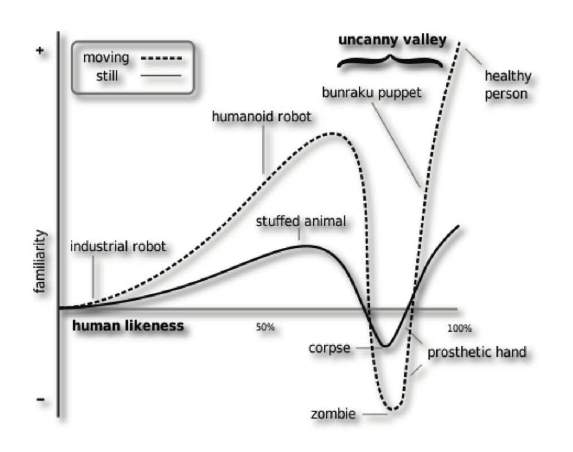
Buddhism aside, Mori may be most famous today for a concept he introduced in 1970. In a provocative essay titled “Bukimi no tani,” or “The Uncanny Valley,” he questioned the wisdom of making robots too lifelike and illustrated his theory with a rising graph that has a sharp valley-like dip in the middle before rising again. Going up what might be called the “affinity” curve, as machines become more identifiably lifelike we feel closer to them, but just before a robot becomes a near-perfect replica of man, at the stage of wax dolls or android machines, the level of familiarity plunges and changes to a sense of the uncanny. Mori is cautioning future roboticists to avoid having their designs fall into this “Uncanny Valley” because humans will always feel closer to a robot slightly different from man and a little more “robot”-like.5
The Heart Sutra Robot
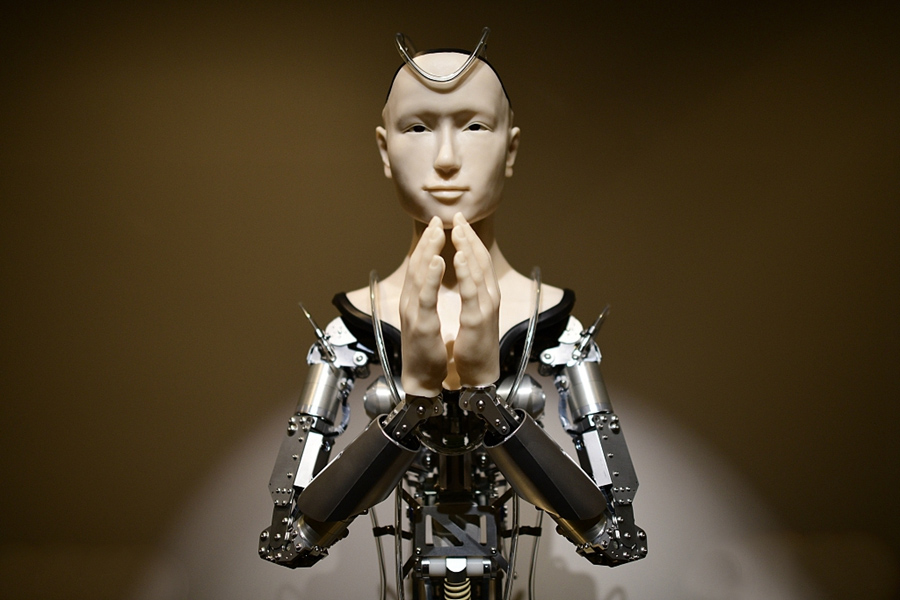
Thirty-three years after meeting Professor Mori, I went to see a “Heart Sutra robot” at the four-hundred-year-old Kōdai-ji temple complex in Kyoto, part of the Rinzai sect of Zen Buddhism. Mori had no connection to the robot itself, but in several surprising ways it seemed to illustrate his theories. At the temple, Avalokiteśvara—known as Kannon, the Goddess of Compassion, in Japan and the “narrator” in the Heart Sutra—was displayed in an intimate-sized hall on the sprawling temple grounds. As a pamphlet said,
Avalokiteśvara is the Bodhisattva of compassion and salvation, and can change into a variety of shapes for those seeking help. Today, in a world of technological development and increased psychological and material well-being, Avalokiteśvara has been revealed on the grounds of Kyoto’s Kōdai-ji temple as the “Android Kannon MINDAR,” for the many people who are still suffering.
….The Kōdai-ji MINDAR robot [was designed] to be a modern Bodhisattva statue that can be worshiped. And that is where Professor Mori’s Uncanny Valley comes into play.
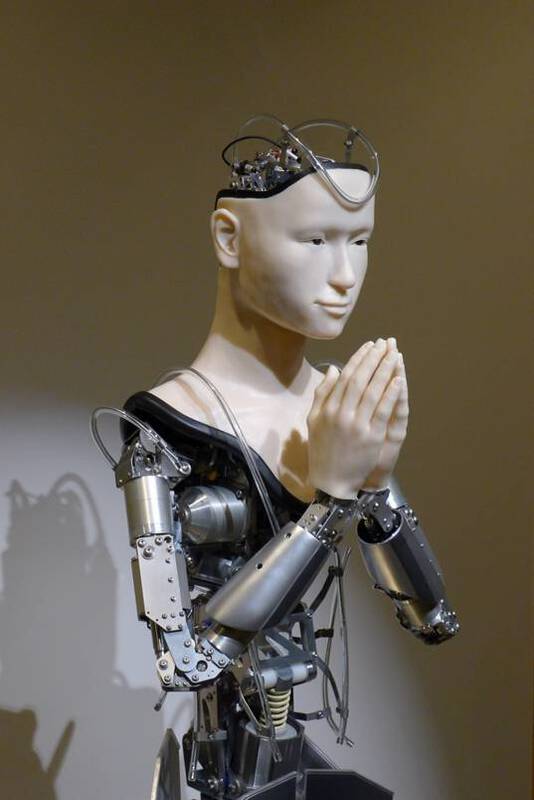
Photo © Frederik L. Schodt 2019 When I visited Kōdai-ji, I found that the MINDAR robot’s head and hands were indeed android in appearance, covered with a highly realistic skin and looking entirely human. Yet in a seeming concession to Mori’s theory of the Uncanny Valley, the robot’s arms and chest were skeletal, with servo motors and wires all exposed. The lower torso was only represented abstractly, as the robot is stationary and does not move about the hall; it only moves its head, face, hands, and upper torso to a limited extent. The head was hairless and the face—the most detailed aspect of the robot—had eyes that blinked and moved and seemed uncannily real. But the aura the robot exuded was gender fluid. As the woman who presented the “show” noted, after cautioning everyone in the room to turn off their cell phones, this gender neutral look was appropriate, as the robot was supposed to approximate Avalokiteśvara, a Bodhisattva who can appear as male or female (or even an animal or something inanimate) depending on the viewer and who can travel through time and space.
After a short introduction, the show started. The robot’s hands moved about in the air, but in a simplified way, in the sense that the fingers were not articulated; when the robot put his/her hands together, as if in prayer, they looked most realistic. The tone of speech was pleasant, and natural, with only a slight machine quality to it. Japanese speech is normally highly gender-specific, but this voice seemed gender-neutral, perhaps because, while the robot head itself looked vaguely feminine, it spoke matter-of-factly, like a Japanese male. Facial expressions and movements closely corresponded to the language used.
The show lasted about twenty-five minutes. As the robot spoke, images were projected on the wall behind, showing both abstract, cosmic scenes, as well as realistic scenes from nature, calligraphic images of the Xuanzang Heart Sutra itself, and even scenes of a virtual audience. Instead of merely reciting the Heart Sutra, the robot focused on an explanation of its enigmatic kū or “emptiness” concept. In response, members of the virtual human audience projected on the wall—who struggled to understand the seeming contradictions of “emptiness”—posed probing questions. The robot, in the role of a celestial Bodhisattva—in this case a Kannon or god/dess of mercy—gave explanations. No fancy AI or facial recognition technologies were employed to react with the real audience in the room. The robot was giving a repeatable, programmable sermon on the Heart Sutra and, for any non-Japanese in the audience, projection mapping provided English and Chinese translations on the wall.
There were clearly technological and artistic challenges in creating the robot and its installation (which reportedly cost the temple nearly a million dollars). Not the least of these was finessing the Uncanny Valley curve, made extra-complicated because, while quasi-human in form, as an amorphous deity and object of worship this robot was not supposed to look too human in the first place.
Writing the robot’s sermon may have been even more difficult than designing the robot. At the temple I met one of a team of three scenario writers who worked on it, a Rinzai sect priest named Honda Dōryū. He later told me that they particularly struggled with two things. The first was the sutra’s always-difficult but key concept of “emptiness.” They had originally intended to focus on that in a faithful, easy-to-understand format, but this did not work because of its complexity and the fact that the compressed sutra itself does not expressly detail the benefits that a true understanding of emptiness can create in believers. They therefore had the android focus on how an understanding of the sutra can bring about compassion.
The second issue was how to justify using an android robot for the sermon, since sermons are normally given by human priests. The solution was to have a dialog with the virtual audience, led by the robot, that encouraged the real audience to think about what it means to be human and about the difference between robots and humans—to think about what humans have that robots don’t. One solution, Honda says, was to concentrate on what is in Japanese called bonnō (煩悩, from the Sanskrit kleśa), the mental defilements such as greed, hatred, delusion, and other destructive states of mind that cause suffering, for which we humans seem to have an infinite capacity. As he put it, “By understanding the concept of emptiness we can empathize with others’ emotions and grow closer to them. We can wish for their happiness, and as a result we ourselves can become happy.”6
Notes
- 1. Masahirō Mori and Charles S. Terry, The Buddha in the Robot: A Robot Engineer’s Thoughts on Science and Religion (Tokyo: Kosei Publishing, 1985), pp. 7–9. Frederik L. Schodt, Inside the Robot Kingdom: Japan, Mechatronics, and the Coming Robotopia (Tokyo: Kodansha International, 1988), pp. 207–10.
- 2. Mori and Terry, The Buddha in the Robot, p. 8.
- 3. Mori Masahirō, “Kaichō shūnin no goaisatsu” [Words from the new chairman], Journal of the Robotics Society of Japan, 2 February 1987, p. 3 (translation by the author).
- 4. Mori Masahirō, “Jizai kenkyūsho no kokoro” [The spirit of the Mukta Institute], in Hannya shingyō wo toku [Explaining the Heart Sutra] (Tokyo: Daihōrinkaku, 2005), pp. 117–19 (translation by the author).
- 5. Schodt, Inside the Robot Kingdom, pp. 208–9.
- 6. Honda Dōryū , email to author, 8 October 2019.
-
Jamoca - a robot dog newly released by Tencent's Robotics X Lab
-
Pope Francis prays for good AI
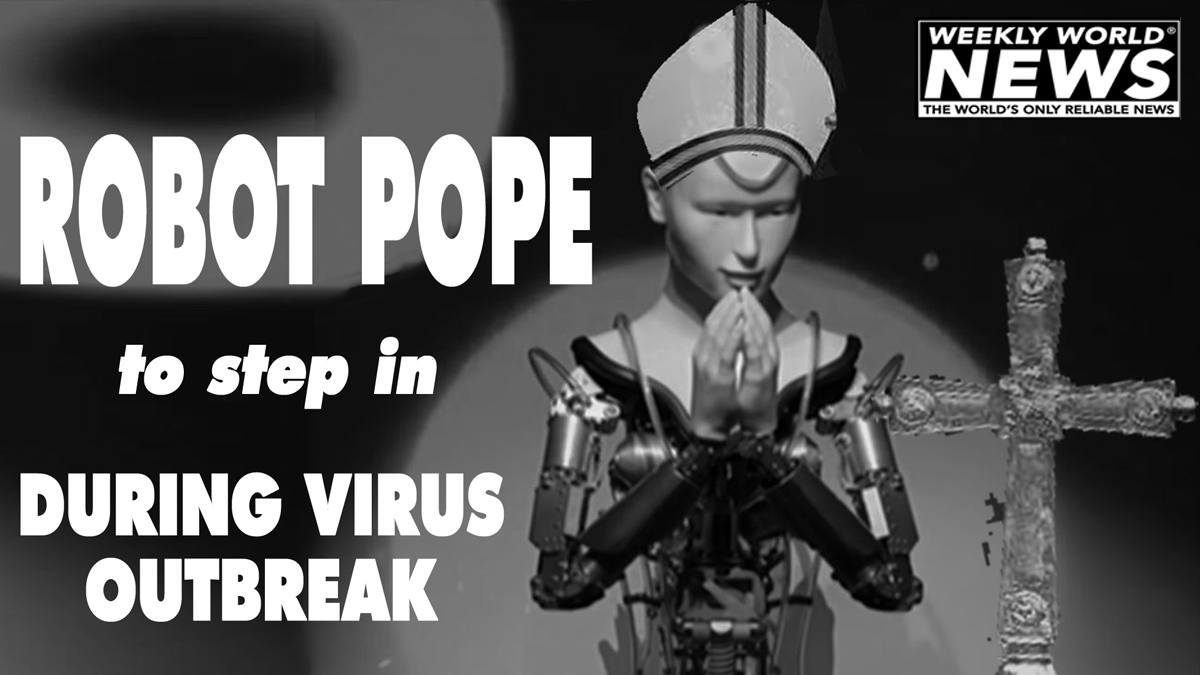
"We pray that the progress of robotics and artificial intelligence may always serve humankind," reads Francis' intention for November.
-
Study Finds Stronger Links Between Automation and Inequality
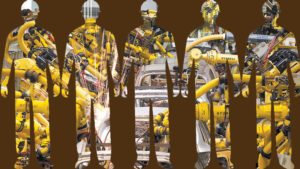
New research by MIT economist Daron Acemoglu shows that since 1987, automation has taken away jobs from lower-skill workers without being replaced by an equivalent number of labor-market opportunities.
"Automation is critical for understanding inequality dynamics" says Acemoglu, detailing the findings.


Does the US tax code favor automation?
"We find that the U.S. tax system favors excessive automation. In particular, the heavy taxation of labor and low taxes on capital encourage firms to automate more tasks and use less labor than is socially optimal."
-
Diet and Weight Loss: Using Social Robots to Support Human Health and Well-being
Monash University’s Dr. Nicole Robinson explains how social robots can play a role in diet and weight reduction without the need for human intervention.
#Comment: A brain dead narrative proposed by scientists who in their blind love of the machines have become robots themself. If all you have is a hammer, everything looks like a nail.
-
Robotic lab assistant is 1,000 times faster at conducting research
Researchers have developed what they say is a breakthrough robotic lab assistant, able to move around a laboratory and conduct scientific experiments just like a human.
-
Dogs Obey Commands Given by Social Robots
Results of the experiments showed that the dogs paid significantly more attention to the robot than the speaker, and were significantly more likely to follow a sit command from the robot
-
Booz Allen Hamilton wins massive Pentagon artificial intelligence contract
Booz Allen Hamilton won a five-year, $800 million task order to provide artificial intelligence services to the Department of Defense’s Joint Artificial Intelligence Center (JAIC). Under the contract award, announced by the General Services Administration and the JAIC on May 18, Booz Allen Hamilton will provide a “wide mix of technical services and products” to support the JAIC, a DoD entity dedicated to advancing the use of artificial intelligence across the department.
The Pentagon’s Joint AI Center wants to be like Silicon Valley
It was a busy week for defense-focused AI: DarwinAI signed a partnership with Lockheed Martin, the world’s largest defense contractor, to work on explainable AI solutions. Robotics company Sphero, maker of the BB-8 droid from Star Wars, spun out Company Six, which will focus on military and emergency medical applications. And Google Cloud was awarded a Pentagon contract for its multi-cloud solution Anthos this week, even though the $10 billion JEDI contract between AWS and Microsoft Azure is still tied up in courts.
-
China to account for 44% of global robotics market (including drones) by 2024
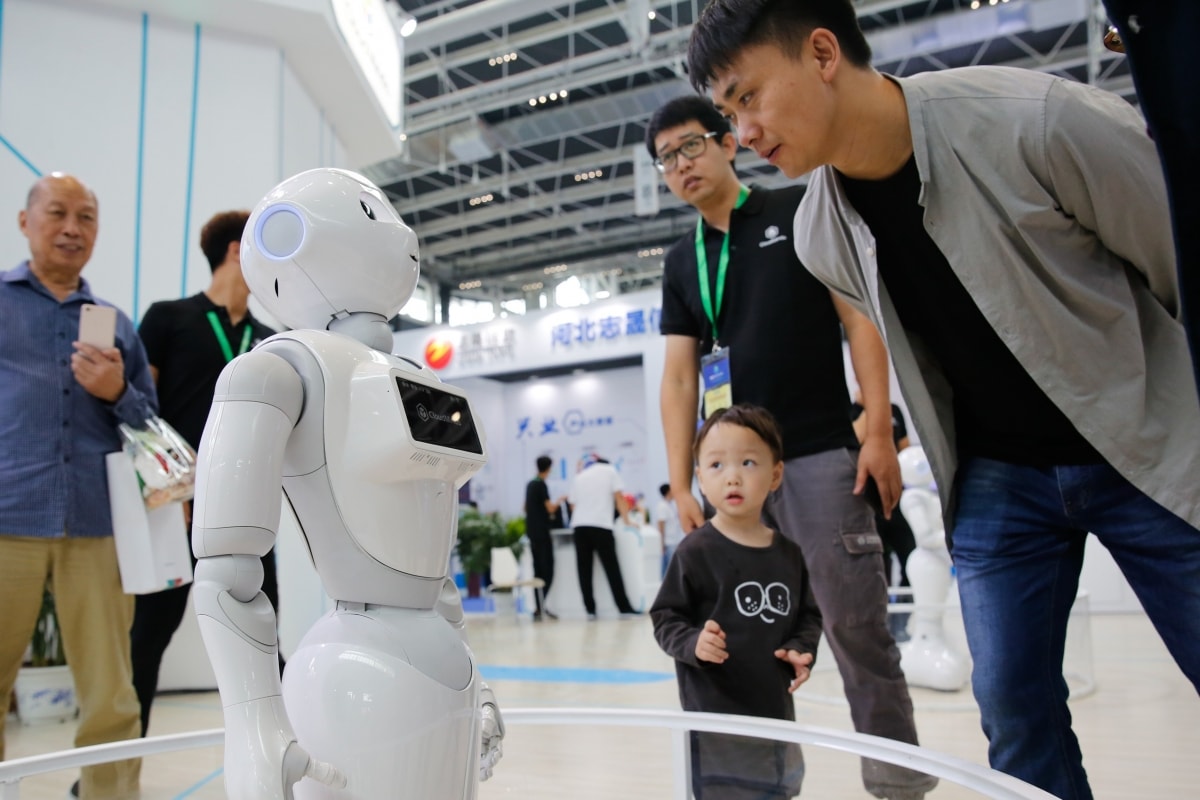
China is the largest robotics (including drones) market in the world. It is expected to account for 38% of the global total in 2020, with a total expenditure of US$47.38 billion according to IDC. By 2024, China will account for 44% of the global market. And, it will reach US$121.12 billion.
-
Laikago Robot Dog - by Unitree Robotics
-
TITAN-XIII : Sprawling-type Quadruped Robot
-
NASA contemplates turning a moon crater into a giant, powerful telescope (CNet)
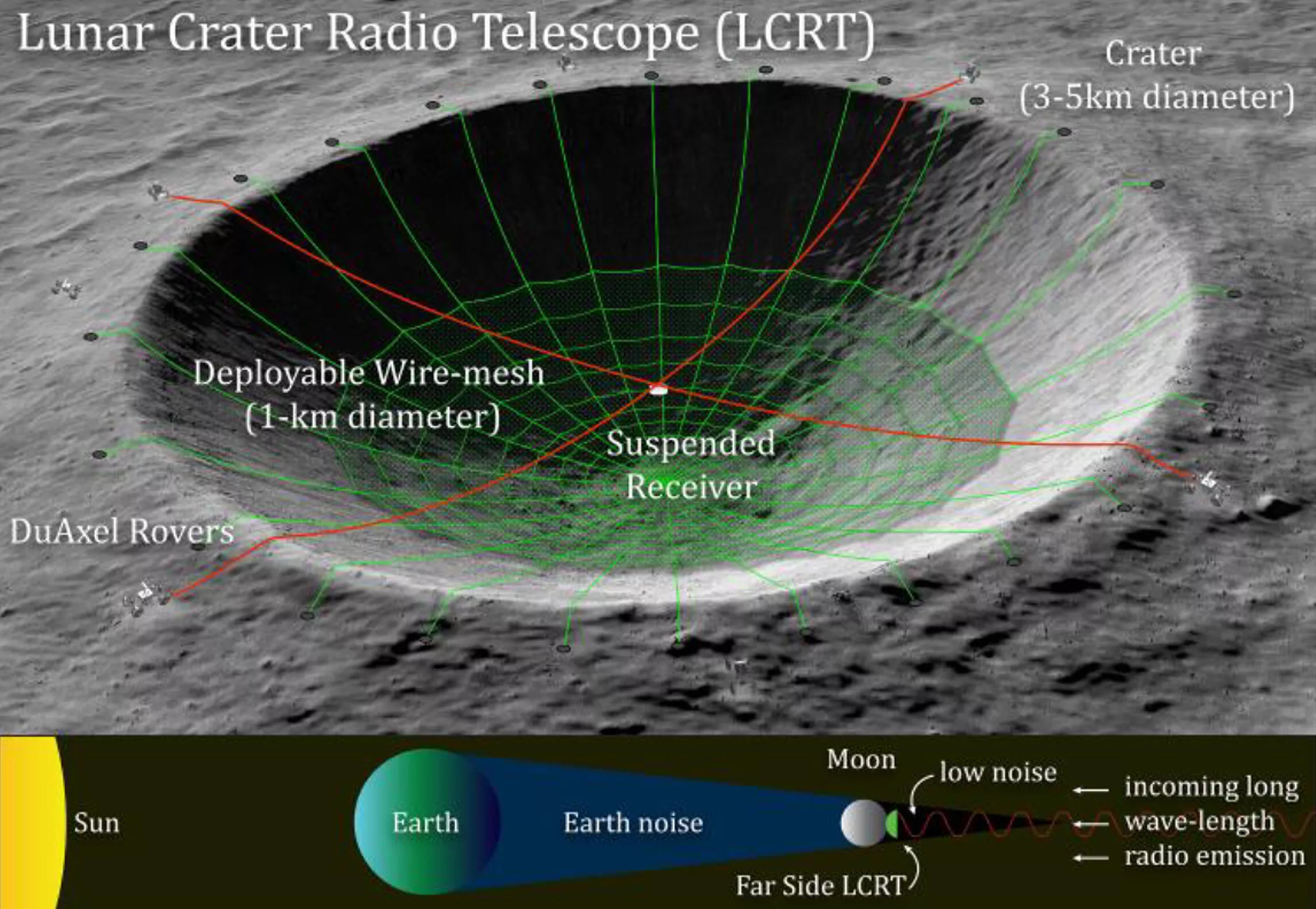
NASA has selected a lunar-crater radio telescope idea to receive funding through its NASA Innovative Advanced Concepts (NIAC) program, the agency announced on Tuesday. The Phase I award goes to projects in very early stages of development. Saptarshi Bandyopadhyay, a robotics technologist at NASA's Jet Propulsion Laboratory, is the mind behind the moon dream. Making it happen would require sending robots to the far side of the moon and using the machines to deploy a wire mesh over a crater.