tag > Robot
-
Scientists Create 'Xenobots' -- Virtual Creatures Brought to Life (nytimes.com)
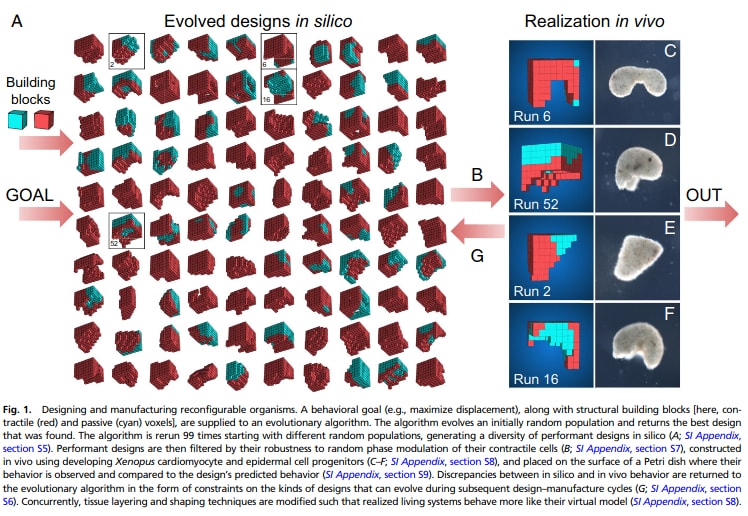
Strictly speaking, these life-forms do not have sex organs — or stomachs, brains or nervous systems. The one under the microscope consisted of about 2,000 living skin cells taken from a frog embryo. Bigger specimens, albeit still smaller than a millimeter-wide poppy seed, have skin cells and heart muscle cells that will begin pulsating by the end of the day. These are all programmable organisms called xenobots, the creation of which was revealed in a scientific paper in January, by Sam Kriegmana, Douglas Blackistonb, Michael Levinb, and Josh Bongarda,
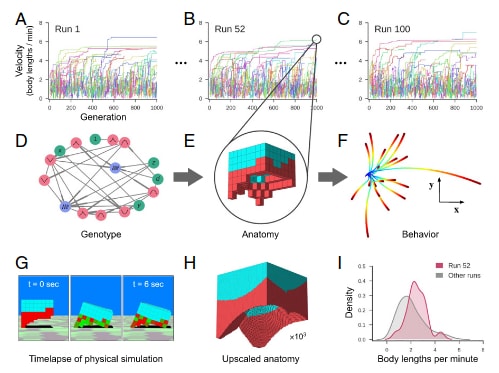
A xenobot lives for only about a week, feeding on the small platelets of yolk that fill each of its cells and would normally fuel embryonic development. Because its building blocks are living cells, the entity can heal from injury, even after being torn almost in half. But what it does during its short life is decreed not by the ineffable frogginess etched into its DNA — which has not been genetically modified — but by its physical shape. And xenobots come in many shapes, all designed by roboticists in computer simulations, using physics engines similar to those in video games like Fortnite and Minecraft...
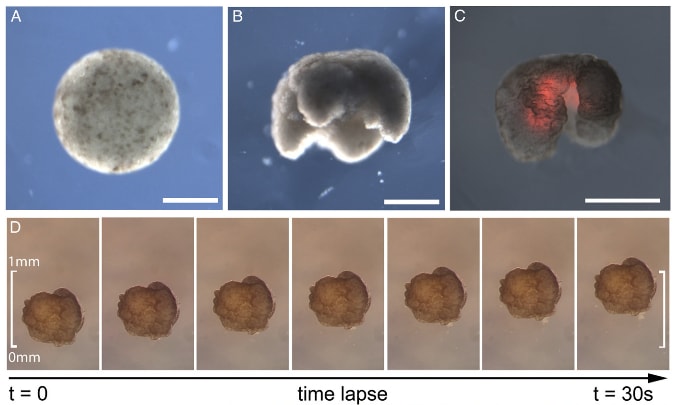
All of which makes xenobots amazing and maybe slightly unsettling — golems dreamed in silicon and then written into flesh. The implications of their existence could spill from artificial-intelligence research to fundamental questions in biology and ethics. "We are witnessing almost the birth of a new discipline of synthetic organisms," said Hod Lipson, a roboticist at the Columbia University who was not part of the research team. "I don't know if that's robotics, or zoology or something else."
An algorithm running for about 24 hours iterated through possible body shapes, after which the the two researchers tried "to sculpt cellular figurines that resembled those designs." They're now considering how the process might be automated with 3-D cell printers, and the Times ponders other future possibilities the researchers have hinted at for their Xenobots. ("Sweep up ocean microplastics into a larger, collectible ball? Deliver drugs to a specific tumor? Scrape plaque from the walls of our arteries?")
-
Intel is using A.I. to build smell-o-vision chips (Intel, 2020)

Smell-O-Vision machines of the past With machine learning, Loihi can recognize hazardous chemicals “in the presence of significant noise and occlusion,” Intel said, suggesting the chip can be used in the real world where smells — such as perfumes, food, and other odors — are often found in the same area as a harmful chemical. Machine learning trained Loihi to learn and identify each hazardous odor with just a single sample, and learning a new smell didn’t disrupt previously learned scents. Intel claims Loihi can learn 10 different odors right now.
How smell, emotion, and memory are intertwined, and exploited (Harvard, 2020)
Researchers explore how certain scents often elicit specific emotions and memories in people, and how marking companies are manipulating the link for branding.
-
Tiny Qoobo - The headless robot cat
-
China's robot industry boosted as demand emerges in fight against coronavirus (GT, 2020)
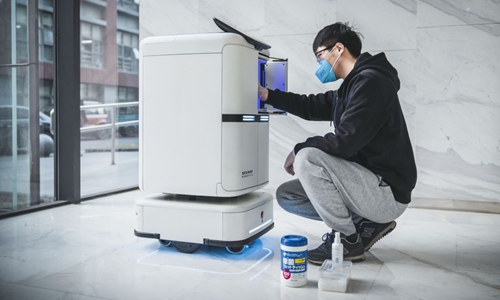
Intelligent robots in China have made a collective appearance amid the coronavirus epidemic with delivery, medical and disinfection purposes, contributing to prevention and control efforts. Experts say that though intelligent robot technology is still in an initial phase, the epidemic has offered a boost to the robot industry.
Chinese police wear smart helmets to check body temperature in crowds due to Coronavirus
Police in China can now screen out potential coronavirus carriers with the help of futuristic-looking smart helmets. Shenzhen-based Kuang-Chi Technology introduced police smart helmets that can quickly measure body temperature in crowds. The infrared cameras attached to the N901 helmets enable wearers to measure temperature from up to five meters away. They have facial recognition.
-
Underwater Snail-o-Bot gets kick from light
Researchers at the Max Planck Institute for Intelligent Systems in Stuttgart in cooperation with Tampere University in Finland developed a gel-like robot inspired by sea slugs and snails they are able to steer with light. Much like the soft body of these aquatic invertebrates, the bioinspired robot is able to deform easily inside water when exposed to this energy source. Due to specifically aligned molecules of liquid crystal gels – its building material – and illumination of specific parts of the robot, it is able to crawl, walk, jump, and swim inside water. The scientists see their research project as an inspiration for other roboticists who struggle to design untethered soft robots that are able to move freely in a fluidic environment. Such inventions could one day play a pivotal role in the research field of minimally-invasive robotic medical applications. In the video: the top left panel represents crawling with 2X speed; the middle left represents walking with 2X speed, bottom left represents jumping with 2X speed, and the right panel represents swimming with 1X speed.
-
Louis-Philippe Demers and Bill Vorn’s Inferno is a participatory performance in which performers wear robotic harnesses that control their arms in time with synchronised music and light.
-
Acoustically driven microrobot outshines natural microswimmers
Researchers at the Max Planck Institute for Intelligent Systems in Stuttgart have designed and fabricated an untethered microrobot that can slip along either a flat or curved surface in a liquid when exposed to ultrasound waves. Its propulsion force is 2 to 3 orders of magnitude stronger than the propulsion force of natural microorganisms such as bacteria or algae. Additionally, it can transport cargo while swimming. The acoustically propelled robot hence has significant potential to revolutionize the future minimally invasive treatment of patients.
-
Scientists Use Stems Cells From Frogs To Build First Living Robots (The Guardian)
Research Paper: A scalable pipeline for designing reconfigurable organisms - by Sam Kriegman, Douglas Blackiston, Michael Levin, and Josh Bongard (2020)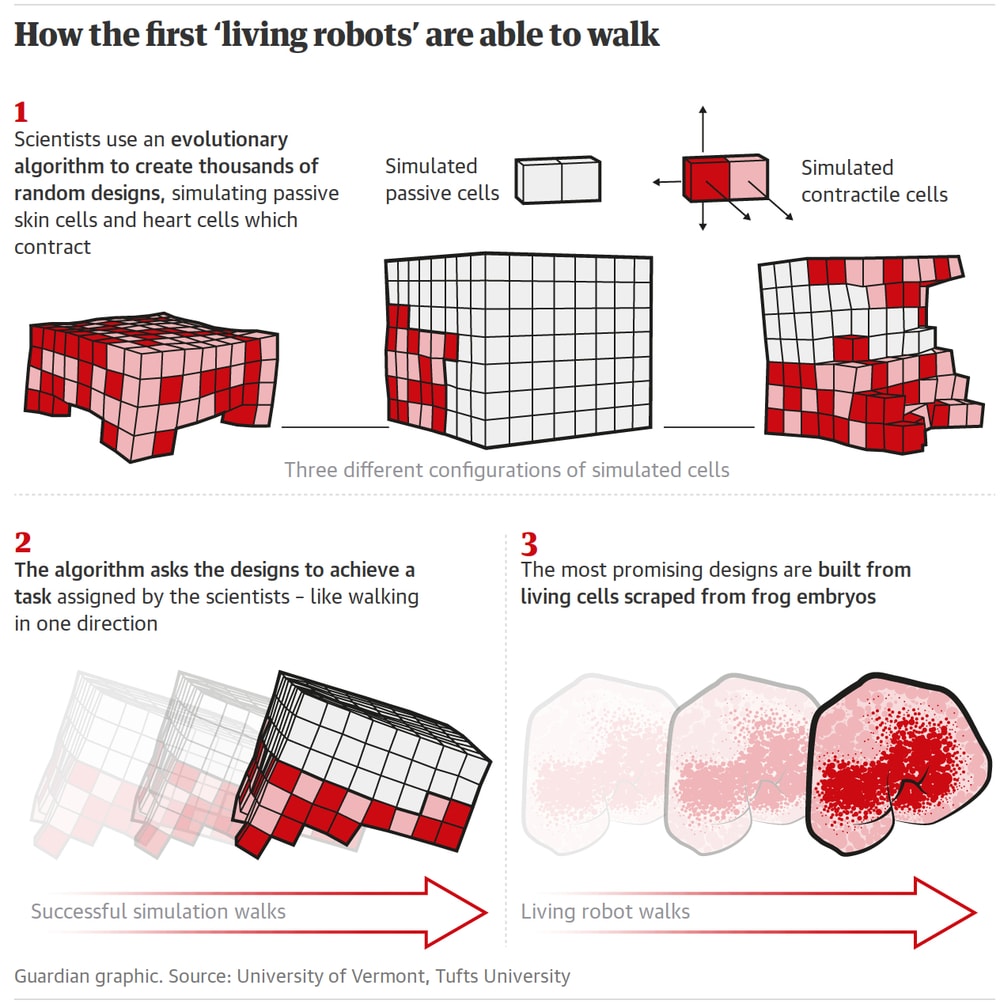
Abstract
: "Here we show a scalable pipeline for creating functional novel lifeforms: AI methods automatically design diverse candidate lifeforms in silico to perform some desired function, and transferable designs are then created using a cell-based construction toolkit to realize living systems with the predicted behaviors. Although some steps in this pipeline still require manual intervention, complete automation in future would pave the way to designing and deploying unique, bespoke living systems for a wide range of functions."
#Comment: Impressive research and ongoing work - congrats! But beyond the praises, please allow me to offer some critical reflections: As usual, the media (and researchers) is willingly mislabeling and exaggerating. Evolutionary Soft-robotics, ALife etc. are progressing, sure. But is this a "first living machine", as is loudly claimed in some of the articles about this work? Humans still lack a functional, semi-universal definition of what constitutes "living". Such questions are by and large still at the same stage, as when Schrödinger published "What Is Life?" in 1944. The reporting on this research contains many other such fantastical claims ("Xenobots SOON could be used to deliver medicine to humans" etc.), presented as hard science/engineering reality - even it clearly encompasses a manifold of unsolved hard problems and questions and is deep in fundamental research territory. More humbleness and restraint would serve all involved parties very well. It makes for good science and a robust public discourse, unlike the hype driven 15min-of-fame click-bait madness of today.
Related: My mini docu "Life": EP 1 on Artificial Life, and EP 2 on Neurorobotics
More media news clips feat. the research:
Computer-designed organisms - interview with Josh Bongard
Computer designed organisms. Aired on CNN Jan 19, 2020.
-
"And now i see with eye serene, the very pulse of the machine. A being breathing thoughtful breaths, a traveler between life and death." - William Wordsworth (1770 – 1850)
-
Among the key efforts launched under Walker’s tenure at DARPA was development of the Long-Range Anti-Ship Missile. Walker also reinvigorated the agency’s hypersonic weapons and space efforts. Also noted by the agency: Under Walker’s leadership, DARPA launched the three-year, $1.5 billion Electronics Resurgence Initiative as well as the five-year, $2 billion AI Next program. Walker also “made pivotal investments in the realm of engineered biology, resulting in several breakthroughs, chief among them a program that has helped reduce Ebola fatality rates by more than 70%,”
#Military #BCI #Biotech #Biology #RadioBio #ML #Augmentation #Robot
-
Where do minds belong? - by Caleb Scharf (Director of astrobiology at Columbia)
"Intelligence could have been moving back and forth between biological beings and machine receptacles for aeons"
"Any machine intelligence might already be dreaming of becoming biological again, returning to an islanded state in the great wash of interstellar space"
-
Uniqlo's Tokyo Warehouse is 90% Robotic (Financial Times)
-
China flight systems jammed by pig farm’s African swine fever defences (scmp)
"Chinese state media reported last week that gangs were exploiting the African swine fever crisis by deliberately spreading the disease by using drones to drop infected items on to pig farms. A Chinese pig farm’s attempt to ward off drones – said to be spreading African swine fever – jammed the navigation systems of a number of planes flying overhead. In more common cases, according to the magazine, the criminals spread rumours about the presence of the virus to achieve a cheap purchase price."
-
Paralyzed man walks using brain-controlled robotic suit (CNN)
Paralysed man walks using mind-controlled exoskeleton (Guardian)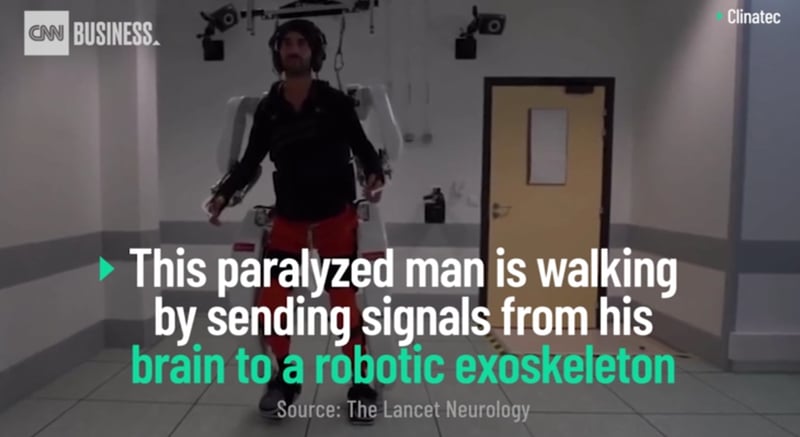
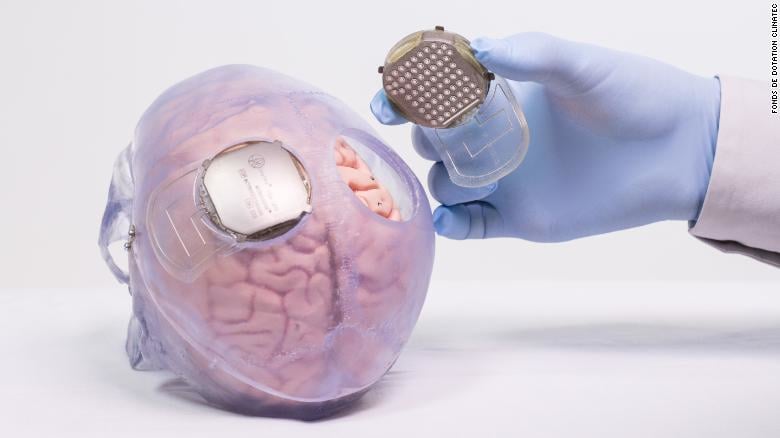
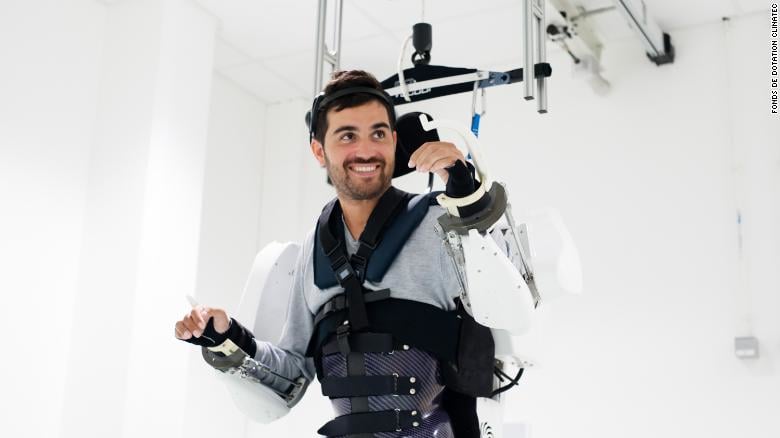
Related: New Neuroprosthetics startup, founded by Verily (Google) & GlaxoSmithKline: Galvani Bioelectronics
-
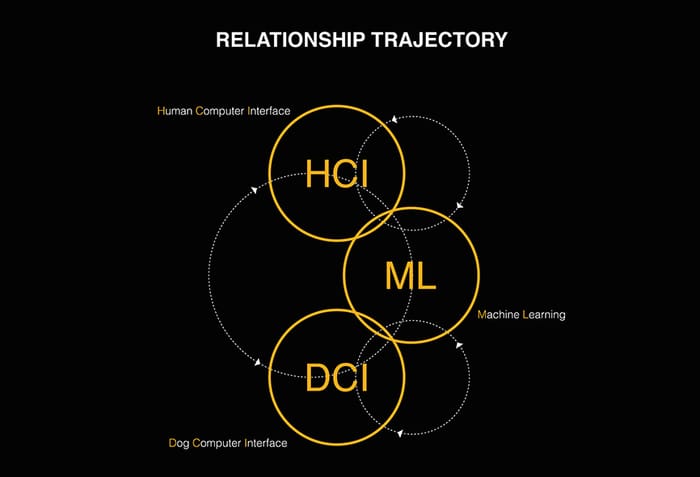
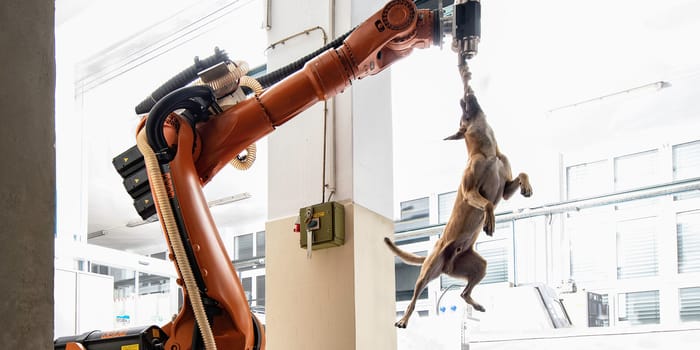
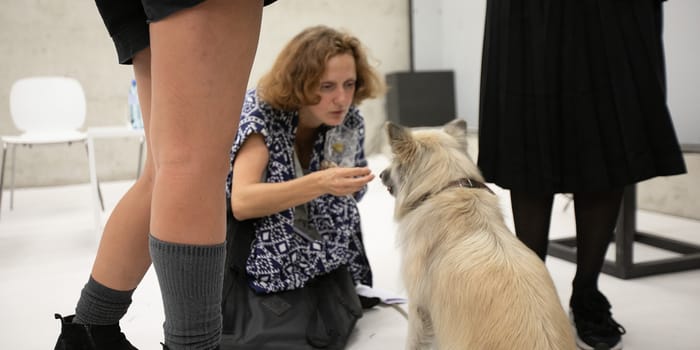
Man-Dog-Machine - by Maja Smrekar (2019)
"Smrekar’s “!brute_force” – part of the human (un)limited exhibition by Hyundai & Ars Electronica in Beijing – deals with the relation man-dog-machine. The basic statement of the work is: Even if we need technology, our existence must not be limited to machines."
-
On DARPA’s research into human enhancement (The Atlantic)
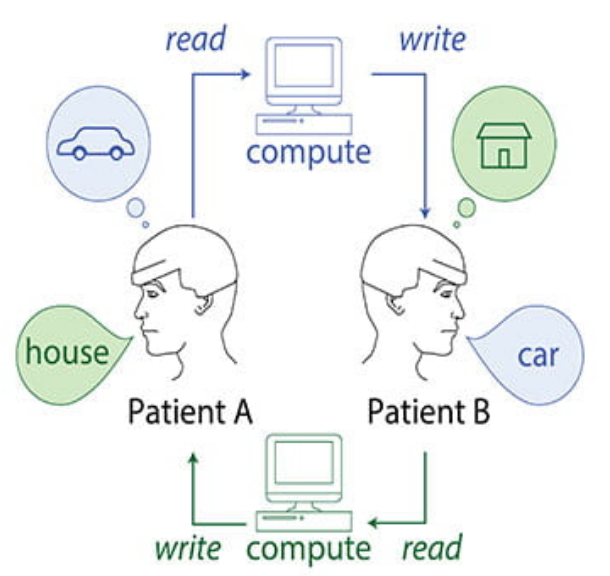
The mission: “to ‘free the mind from the limitations of even healthy bodies.’ What the agency learns from healing makes way for enhancement. The mission is to make human beings something other than what we are, with powers beyond the ones we’re born with and beyond the ones we can organically attain.” “How can I liberate mankind from the limitations of the body?” one researcher asked. One aspiration: "the ability, via computer, to transfer knowledge and thoughts from one person’s mind to another’s."