tag > Science
-
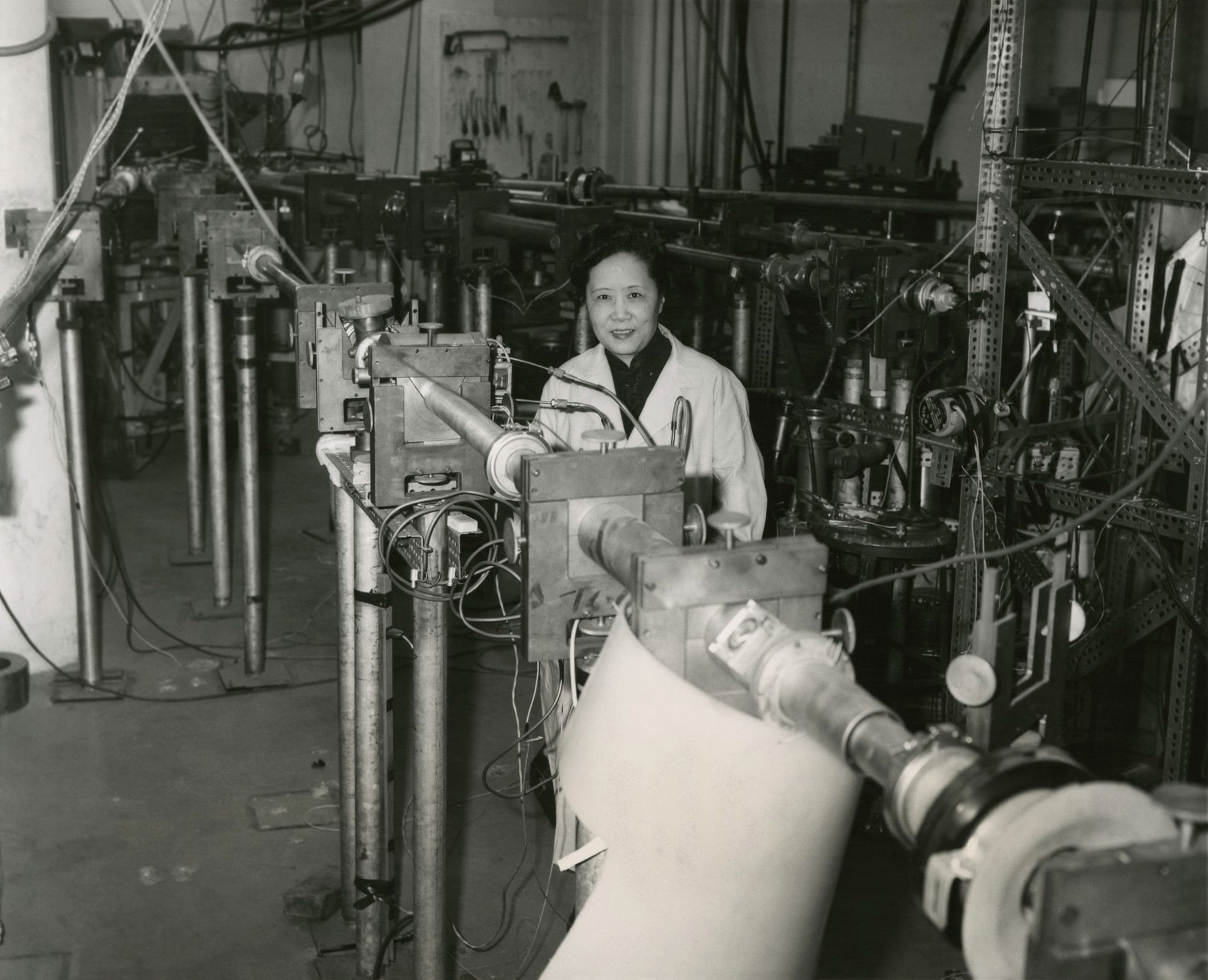
The Wu experiment was a nuclear physics experiment conducted in 1956 by the Chinese American physicist Chien-Shiung Wu. The experiment's purpose was to establish whether or not conservation of parity, which was previously established in the electromagnetic and strong interactions, also applied to weak interactions. If P-conservation were true, a mirrored version of the world would behave as the mirror image of the current world.
Related: Tsung-Dao Lee, Yang Chen-Ning - #Science
-
Information And Complexity - Book by Mark Burgin & Cristian Calude (2016)
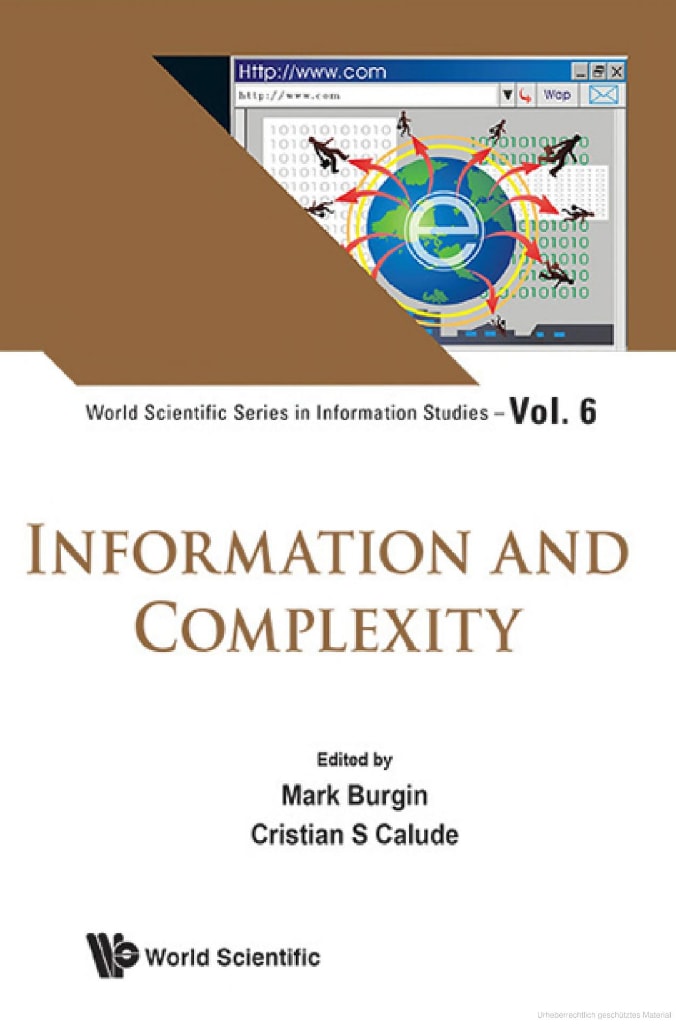
The book is a collection of papers of experts in the fields of information and complexity. Information is a basic structure of the world, while complexity is a fundamental property of systems and processes. There are intrinsic relations between information and complexity. The research in information theory, the theory of complexity and their interrelations is very active. The book will expand knowledge on information, complexity and their relations representing the most recent and advanced studies and achievements in this area. The goal of the book is to present the topic from different perspectives — mathematical, informational, philosophical, methodological, etc.
-
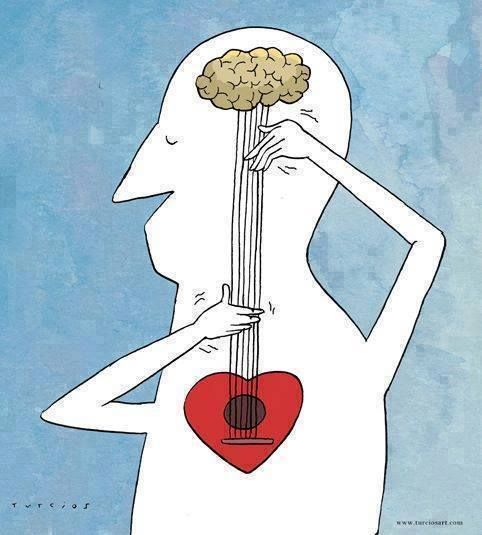
"The creation and destruction of harmonic and 'statistical' tensions is essential to the maintenance of compositional drama. Any composition (or improvisation) which remains consistent and 'regular' throughout is, for me, equivalent to watching a movie with only 'good guys' in it, or eating cottage cheese." — Frank Zappa
"Happiness is not a matter of intensity but of balance, order, rhythm and harmony." - Thomas Merton
-
"Slow science was pretty much the only science conceivable for hundreds of years; today, we argue, it deserves revival and needs protection. Society should give scientists the time they need, but more importantly, scientists must take their time. We do need time to think. We do need time to digest. We do need time to misunderstand each other, especially when fostering lost dialogue between humanities and natural sciences. We cannot continuously tell you what our science means; what it will be good for; because we simply don’t know yet. Science needs time."
-
Breathing is coupled with voluntary action and the cortical readiness potential (Nature)
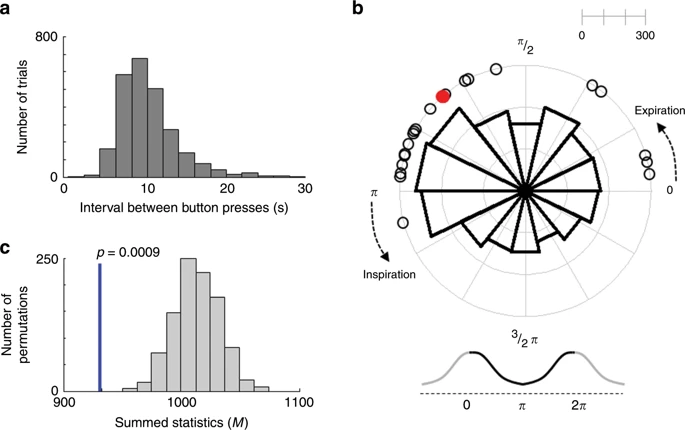
Abstract: Voluntary action is a fundamental element of self-consciousness. The readiness potential (RP), a slow drift of neural activity preceding self-initiated movement, has been suggested to reflect neural processes underlying the preparation of voluntary action; yet more than fifty years after its introduction, interpretation of the RP remains controversial. Based on previous research showing that internal bodily signals affect sensory processing and ongoing neural activity, we here investigated the potential role of interoceptive signals in voluntary action and the RP. We report that (1) participants initiate voluntary actions more frequently during expiration, (2) this respiration-action coupling is absent during externally triggered actions, and (3) the RP amplitude is modulated depending on the respiratory phase. Our findings demonstrate that voluntary action is coupled with the respiratory system and further suggest that the RP is associated with fluctuations of ongoing neural activity that are driven by the involuntary and cyclic motor act of breathing.
-
Down on the Farm That Harvests Metal From Plants (NYTimes)
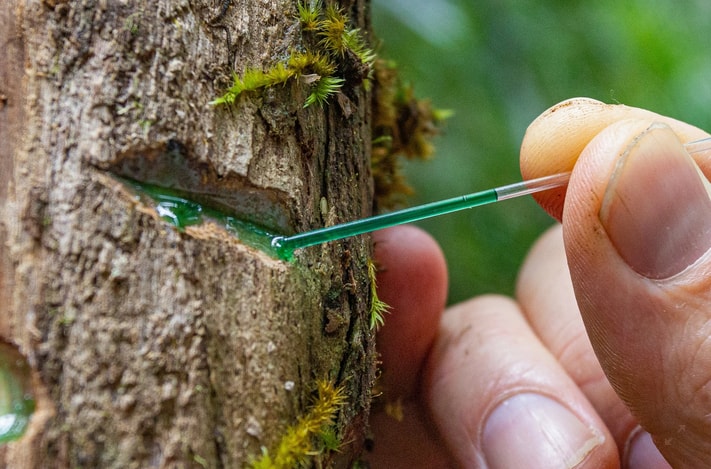
Nickel-rich sap being taken from a tree in Malaysia "Hyper-accumulating plants thrive in metallic soil that kills other vegetation, and botanists are testing the potential of phytomining. Some of Earth’s plants have fallen in love with metal. With roots that act practically like magnets, these organisms flourish in metal-rich soils that make hundreds of thousands of other plant species flee or die. Slicing open one of these trees or running the leaves of its bush cousin through a peanut press produces a sap that oozes a neon blue-green. "
-
Scientists Built a Genius Device That Generates Electricity 'Out of Thin Air'
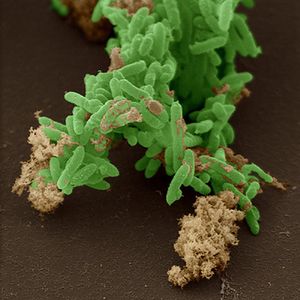
This unusual microbe, belonging to the Geobacter genus, was first noted for its ability to produce magnetite in the absence of oxygen, but with time scientists found it could make other things too, like bacterial nanowires that conduct electricity. For years, researchers have been trying to figure out ways to usefully exploit that natural gift, and they might have just hit pay-dirt with a device they're calling the Air-gen. According to the team, their device can create electricity out of… well, almost nothing.
-
Recent #Science News. May you live in interesting times...
- New NASA Photos From Antarctica Reveal Shocking Levels of Ice Melt
- Representing 500 Million Citizens, The EP Officially Declares a Climate Emergency
- Scientists Have Created Bionic Jellyfish And Successfully Controlled Their Movements
- Scientists Have Discovered a Brand New Electronic State of Matter
- Crystals Have Been Used to Generate Truly Random Numbers For The Very First Time
- Scientists Warn That We Must Prepare For The Next Global Viral Outbreak Now
- Scientists Find a Wild Salamander That Hasn't Moved From Its Spot For 7 Years
-
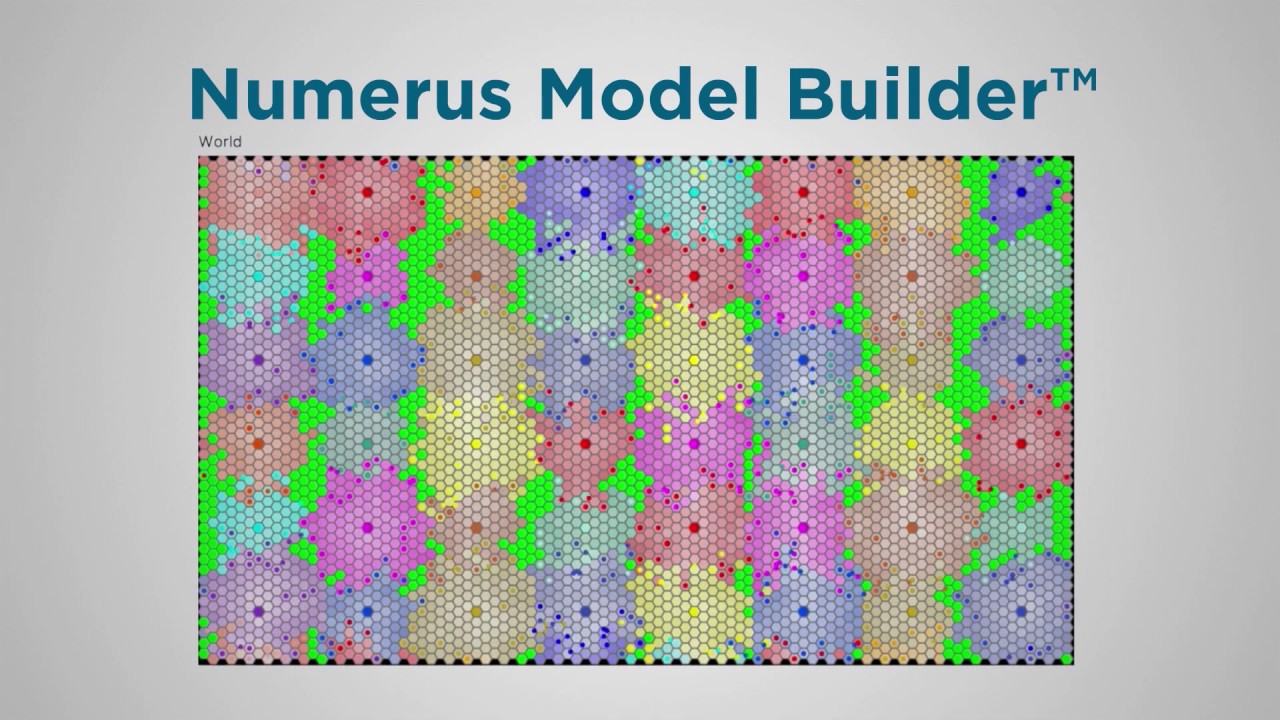
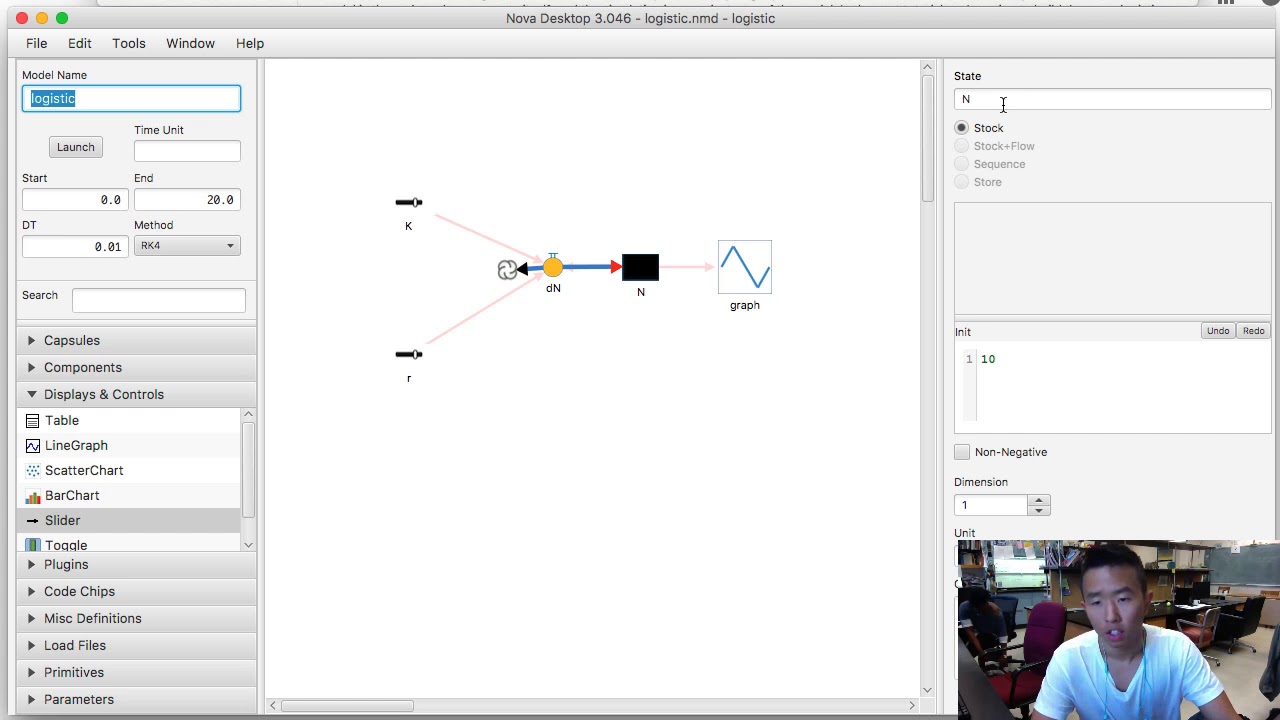
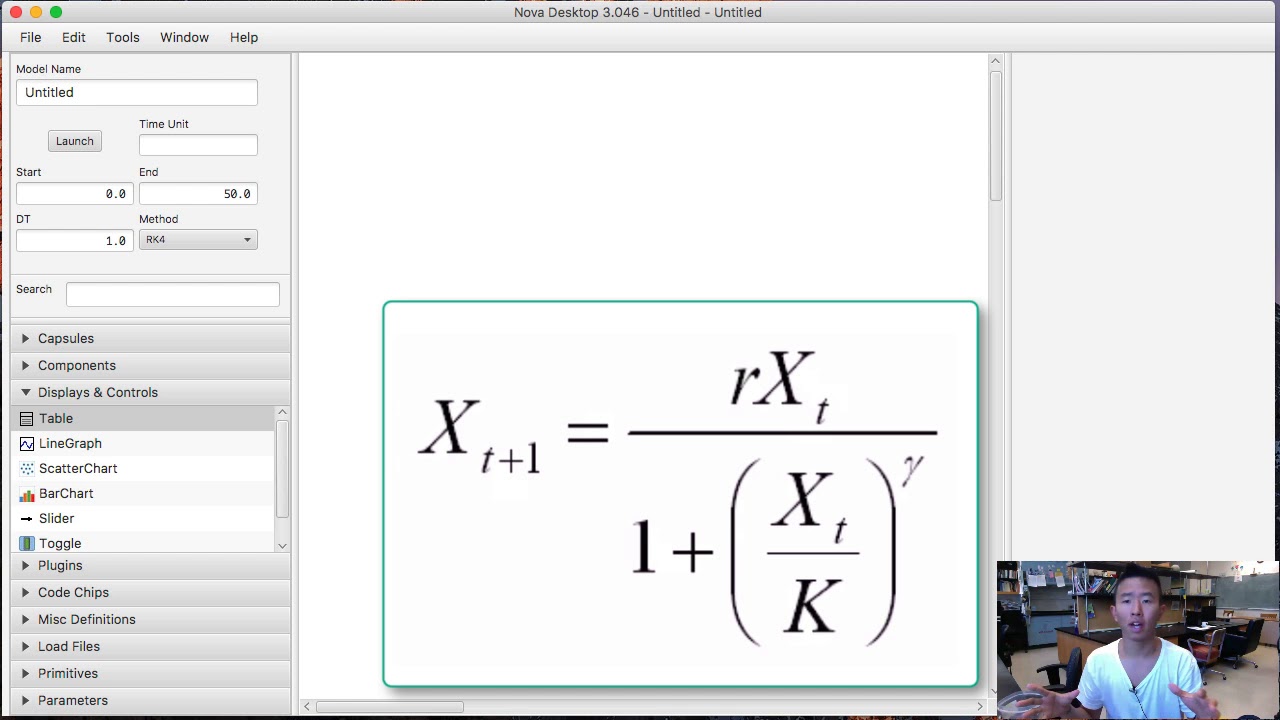
NOVA: An Interactive Graphics-Scripting Platform for Education and Computational Research
Nova: A Modern Platform for System Dynamics, Spatial, and Agent-Based Modeling - by Richard M. Salter (2013)
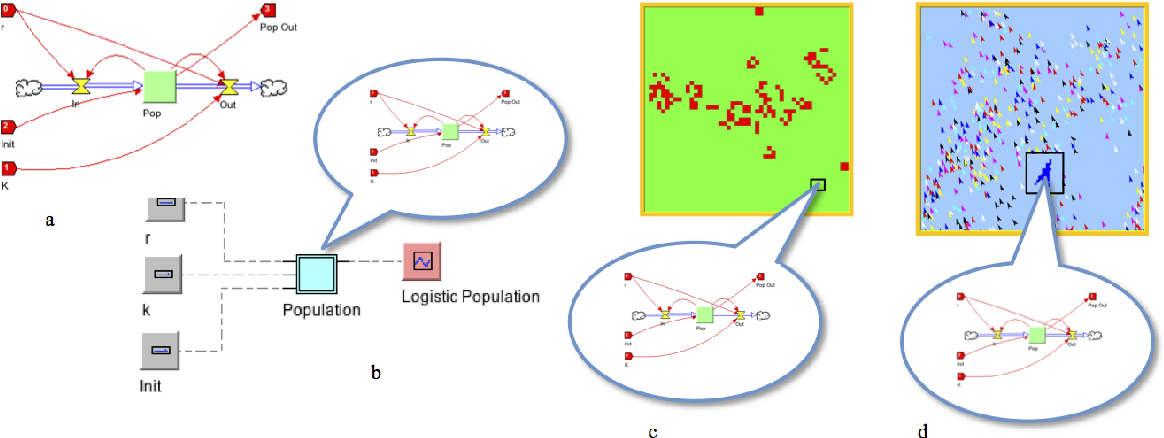
In this paper we describe Nova, a new Java-based modeling platform that naturally supports the creation of models in the system dynamics, spatial and agent-based modeling paradigms. Nova uses a visual language to express model design, and provides automatic conversion for such models to script form for execution. Nova's architecture promotes hierarchical design, code reuse, and extensibility through the use of plug-ins. The Nova Website, www.novamodeler.com, is being built to foster a vibrant user community by providing ample support for model and plug-in construction, and user services such as online repositories for user-contributed content.
Numerus Model Builder Tutorial 1a
-
Interview with Eric Trist (1909 – 1993), a British scientist and leading figure in the field of organizational development (OD). He was one of the founders of the Tavistock Institute.
-
Eugene Odum explains the key concepts of "ecosystem ecology"
Part 2: https://www.youtube.com/watch?v=6P9V6h2z79w
Part 3: https://www.youtube.com/watch?v=b6NmohVKEfg
Part 4: https://www.youtube.com/watch?v=zA65QA29bXM
Part 5: https://www.youtube.com/watch?v=f5EhdXpDO3o
Part 6: https://www.youtube.com/watch?v=_N6NbK5Bw_g -
Charles David Keeling (1928 – 2005)
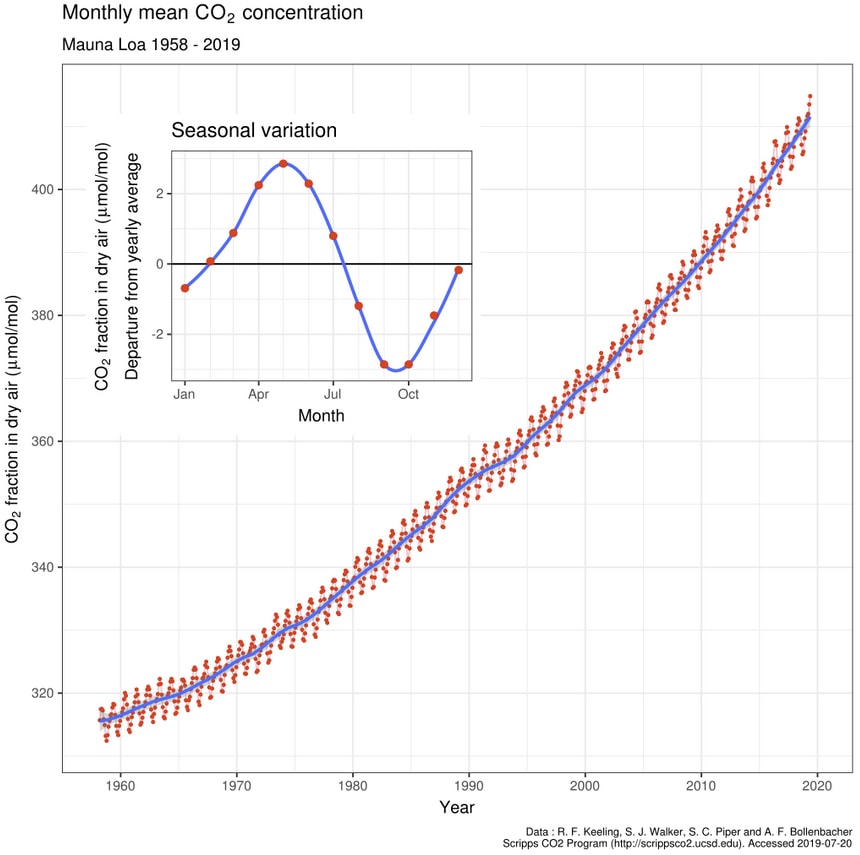
Charles David Keeling was an American scientist whose recording of carbon dioxide at the Mauna Loa Observatory first alerted the world to the possibility of anthropogenic contribution to the "greenhouse effect" and global warming. The Keeling Curve measures the progressive buildup of carbon dioxide, a greenhouse gas, in the atmosphere.
-
Simple, solar-powered water desalination (MIT, 2020)
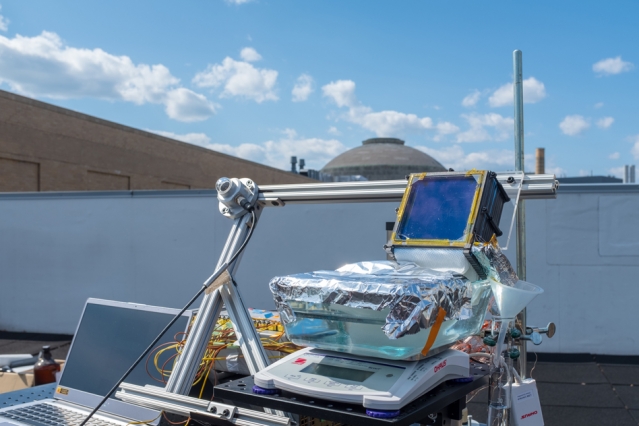
A completely passive solar-powered desalination system developed by researchers at MIT and in China could provide more than 1.5 gallons of fresh drinking water per hour for every square meter of solar collecting area. Such systems could potentially serve off-grid arid coastal areas to provide an efficient, low-cost water source.
-
Strong Opinions, Weakly Held — a framework for thinking - by Ameet Ranadive
“I have found that the fastest way to an effective forecast is often through a sequence of lousy forecasts. Instead of withholding judgment until an exhaustive search for data is complete, I will force myself to make a tentative forecast based on the information available, and then systematically tear it apart, using the insights gained to guide my search for further indicators and information. Iterate the process a few times, and it is surprising how quickly one can get to a useful forecast. Allow your intuition to guide you to a conclusion, no matter how imperfect — this is the ‘strong opinion’ part. Then –and this is the ‘weakly held’ part– prove yourself wrong. Engage in creative doubt. Look for information that doesn’t fit, or indicators that pointing in an entirely different direction. Eventually your intuition will kick in and a new hypothesis will emerge out of the rubble, ready to be ruthlessly torn apart once again. You will be surprised by how quickly the sequence of faulty forecasts will deliver you to a useful result.” - Paul Saffo
-
John Horton Conway: "On His LOVE/HATE Relationship with LIFE"
-
Mathematicians Prove Universal Law of Turbulence (quanta magazine)
By exploiting randomness, three mathematicians have proved an elegant law that underlies the chaotic motion of turbulent systems.