tag > Upcycling
-
Scientists find bug that feasts on toxic plastic (Guardian)

A bacterium that feeds on toxic plastic has been discovered by scientists. The bug not only breaks the plastic down but uses it as food to power the process. The bacterium, which was found at a waste site where plastic had been dumped, is the first that is known to attack polyurethane. Millions of tonnes of the plastic is produced every year but it is mostly sent to landfill because it it too tough to recycle.
-
Interview with Sissi Chao, passionate and inspirational entrepreneur, founder of REmakeHub

Sissi Chao has master’s degrees from the London School of Economics and Political Science, St Andrews University and Duke University. She has worked in a consulting firm Accenture as well as in the tourism industry at Mouzenidis Group in Greece. She decided that her life mission is to clean up the waste, turn them into renewable resources and recover the planet ecosystem. Her projects “Made for Saving Our Ocean” & “Fashion from Waste” is now on view as part of the socially responsible startup called “REmakeHub”.
-
YC graduate Genecis Bioindustries turns food waste into compostable plastics (techcrunch)
#Comment: The biotech industry continues their go-to "we must control and engineer life on all levels, or all die" narrative, under the implicit "Everything is IP & Money" paradigm . It illustrates, that the industry by and large still has not comprehended the power of "scaling out" systems , instead of the legacy "scaling up". In short, greedy control freaks disregarding the flexibility and resilience of natural ecosystems which have been evolutionary fine-tuned for aeons.
-
Roads made out of recycled plastic
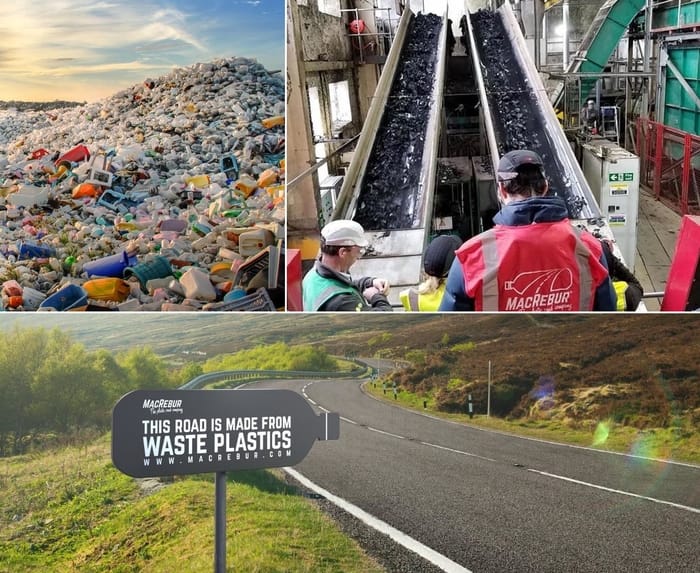
Scotland-based MacRebur company creates pellets out of recycled plastic waste and lays roads that are 60% stronger and expected to last about ten times longer than asphalt roads. One kilometer stretch of road uses the equivalent of about 684,000 plastic bottles or 1.8m single-use plastic bags.
-
Thinking Like A Forest: A Design Agenda for Bioregions - talk by John Thackara (2015)
Regenerative City - talk by John Thackara at Tongji University (2018)
-

This study reviewed 147 life cycle studies, with 28 found suitable for harmonizing food waste management methods’ climate and energy impacts. A total of 80 scientific soil productivity studies were assessed to rank management method soil benefits. Harmonized climate impacts per kilogram of food waste range from −0.20 kg of carbon dioxide equivalents (CO2e) for anaerobic digestion (AD) to 0.38 kg of CO2e for landfill gas-to-energy (LFGTE).
-
Can Compost Draw Down Carbon? - by Sally Brown
-
Aerogel from fruit biowaste produces ultracapacitors with high energy density and stability

• High performance supercapacitors synthesized from durian and jackfruit biowaste. • Outstanding performance due to large surface area, mesoporous structure and intrinsic nitrogen. • Pyridinic and graphitic n and facile ionic diffusion enable high performance supercapacitance. • Excellent stability, long-term cycling, energy density with pseudo-capacitance.
-
Marian Chertow Talks About Industrial Ecology and Symbiosis in the Developing World
Marian Chertow, Professor of Industrial Environmental Management, talks about industrial ecology and symbiosis in the developing world. Professor Chertow’s research and teaching focus on industrial ecology, circular economy, waste management, and urban sustainability. Her work has championed the study of industrial symbiosis involving geographically based exchanges of materials, energy, water, and wastes within networks of businesses globally. She also has carried out many studies of industrial ecology in China, India, and other emerging market countries as a way to value environmental benefits alongside economic ones.
-
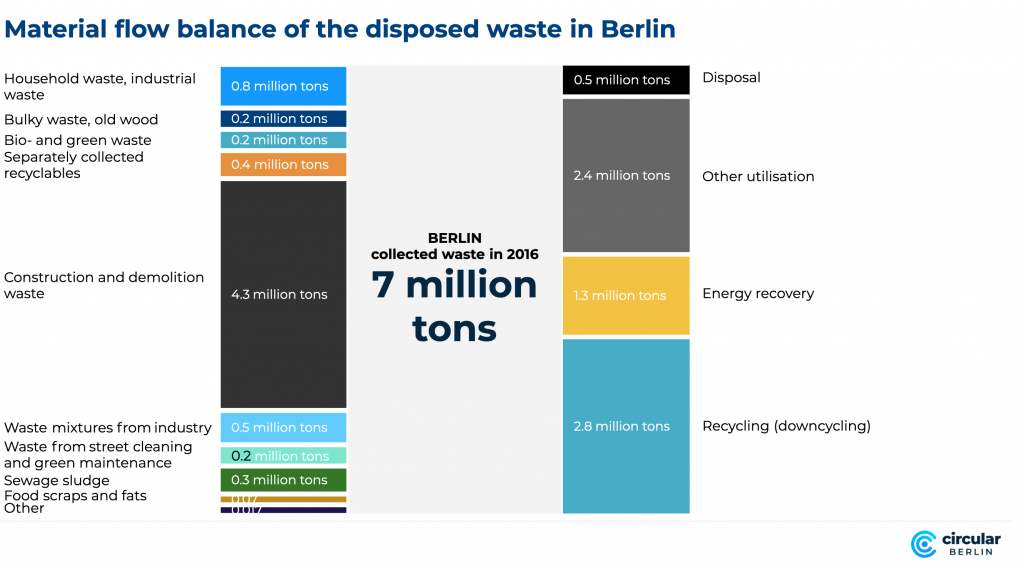
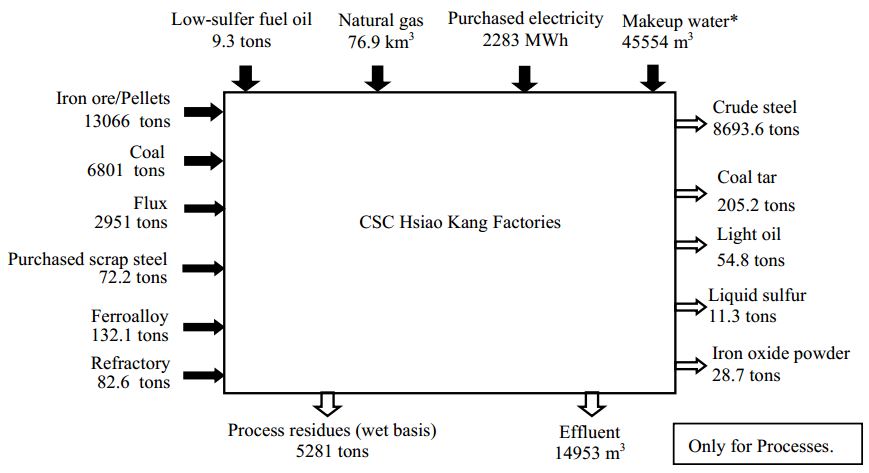
Dynamic material flow analysis of electronic equipment - Webinar by Esther Thiébaud
pymfa: A Tool for Performing Material Flow Analyses in Python 3
-
Study reveals food waste is worse than we thought — and which group is most to blame
Abstract: This work provides an internationally comparable consumer food waste dataset based on food availability, energy gap and consumer affluence. Such data can be used for constructing meaningful and internationally comparable metrics on food waste, such as those for Sustainable Development Goal 12. The data suggests that consumer food waste follows a linear-log relationship with consumer affluence and starts to emerge when consumers reach a threshold of approximately $6.70/day/capita level of expenditure. These findings also imply that most empirical models overestimate consumption by not accounting for the possibility of food waste in their analysis. The results also show that the most widely cited global estimate of food waste is underestimated by a factor greater than 2 (214 Kcal/day/capita versus 527 Kcal/day/capita). Comparison with estimates of US consumer food waste based on national survey data shows this approach can reasonably reproduce the results without needing extensive data from national surveys.
-
China’s overall paper imports dropped another 39% last year
China bought less of the world’s recycled fiber in 2019, the second year in a row of major decreases in recycled material imports. And the country’s environmental ministry has reiterated plans for an all-out import ban next year.
-
How do closed-loop ecosystems recycle waste? – AskNature Nuggets
Found via "Business Models: from Linear to Circular to Regenerative" by Desiree Driesenaar
-
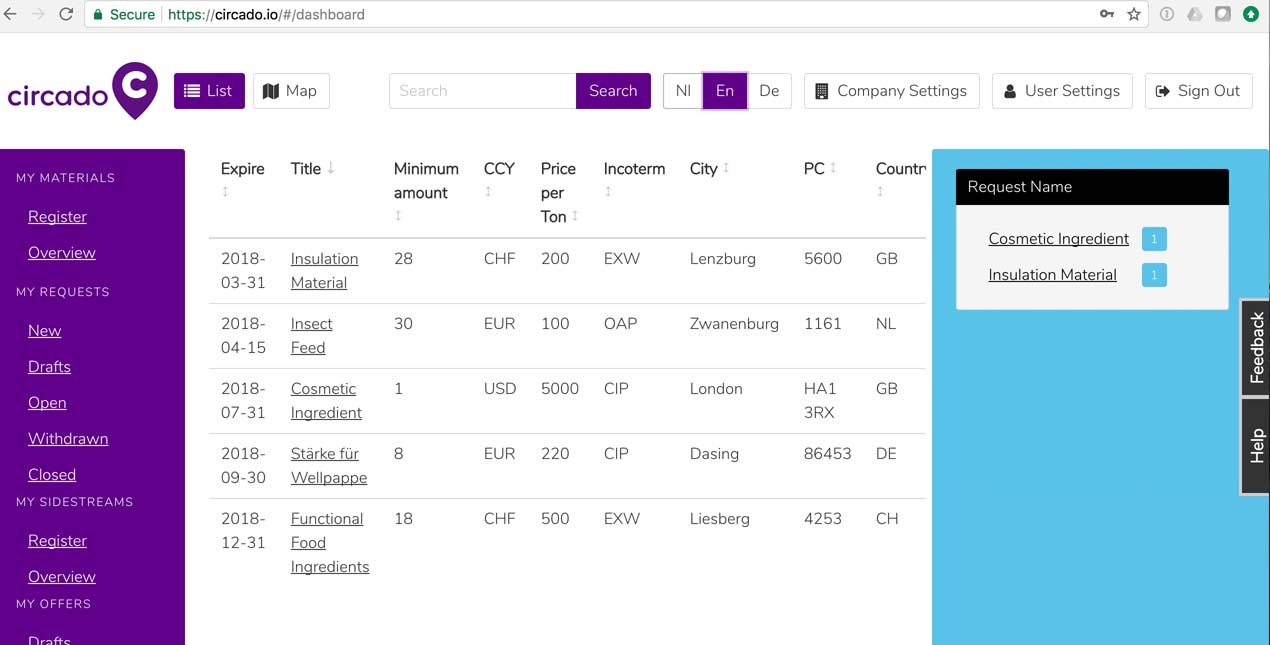
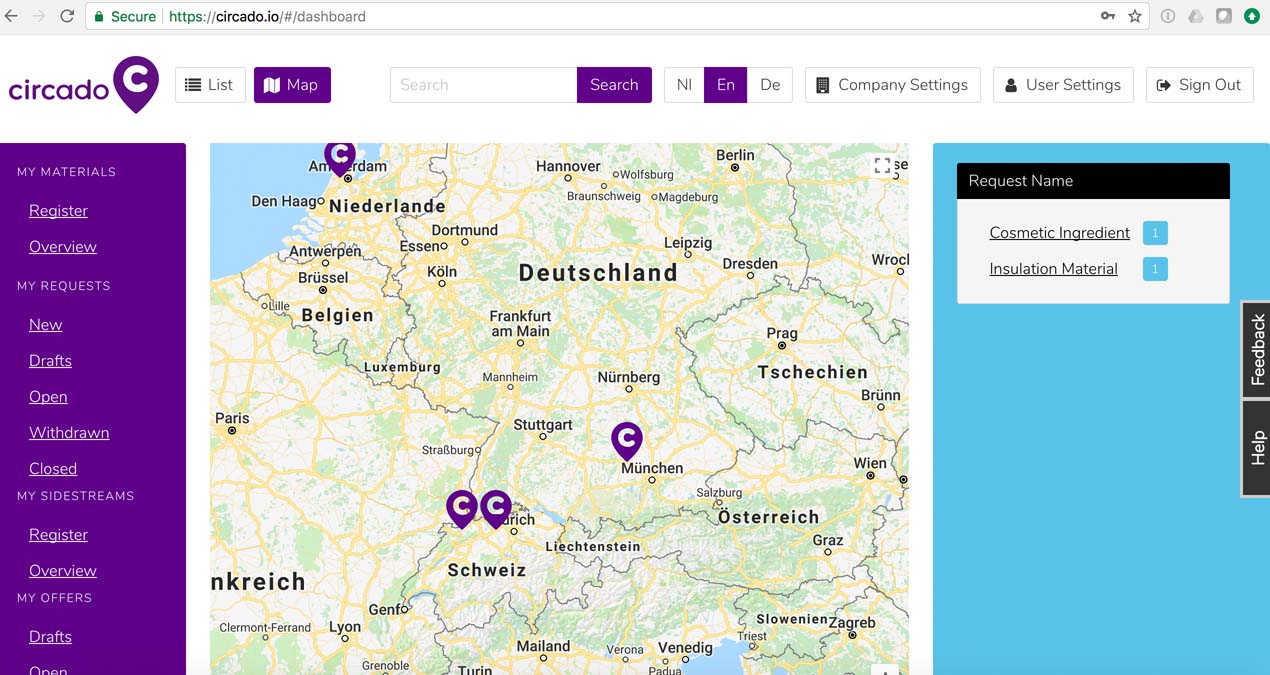
Circado - The first cross-industrial trading platform for industrial side streams.