-
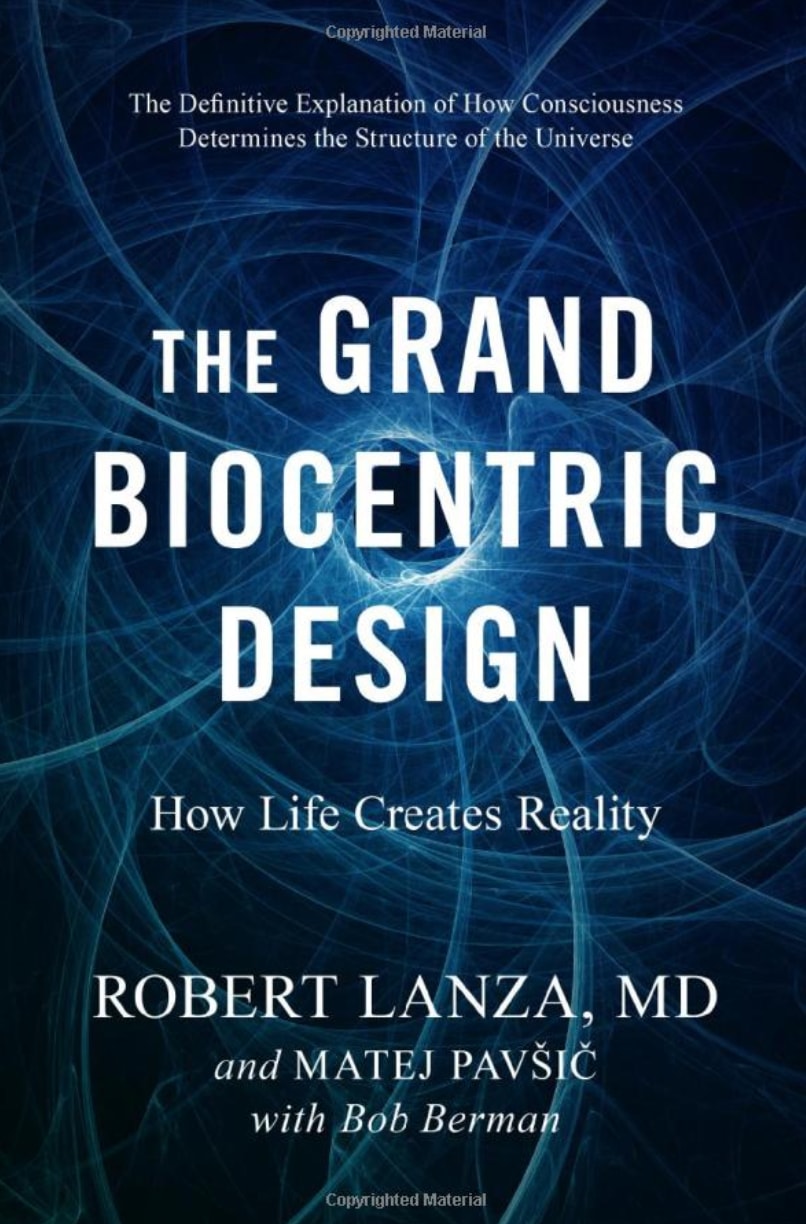
The Grand Biocentric Design / How Life Creates Reality - by Robert Lanza and Matej Pavšič, with Bob Berman
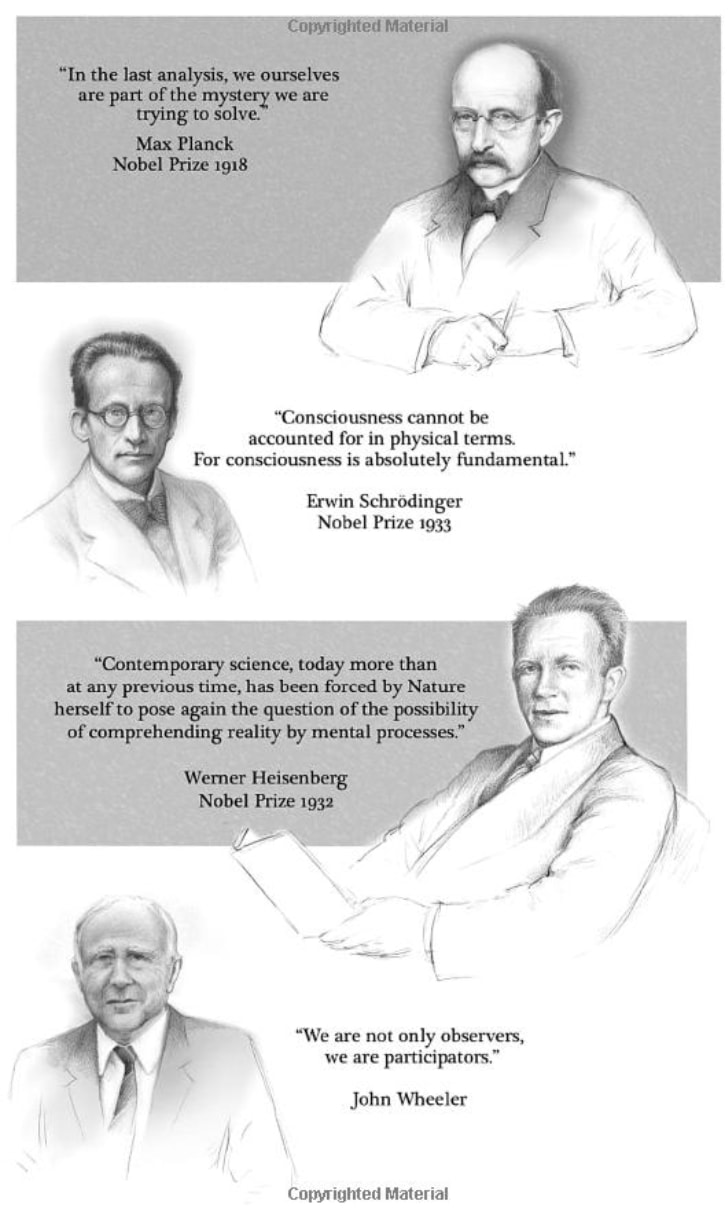
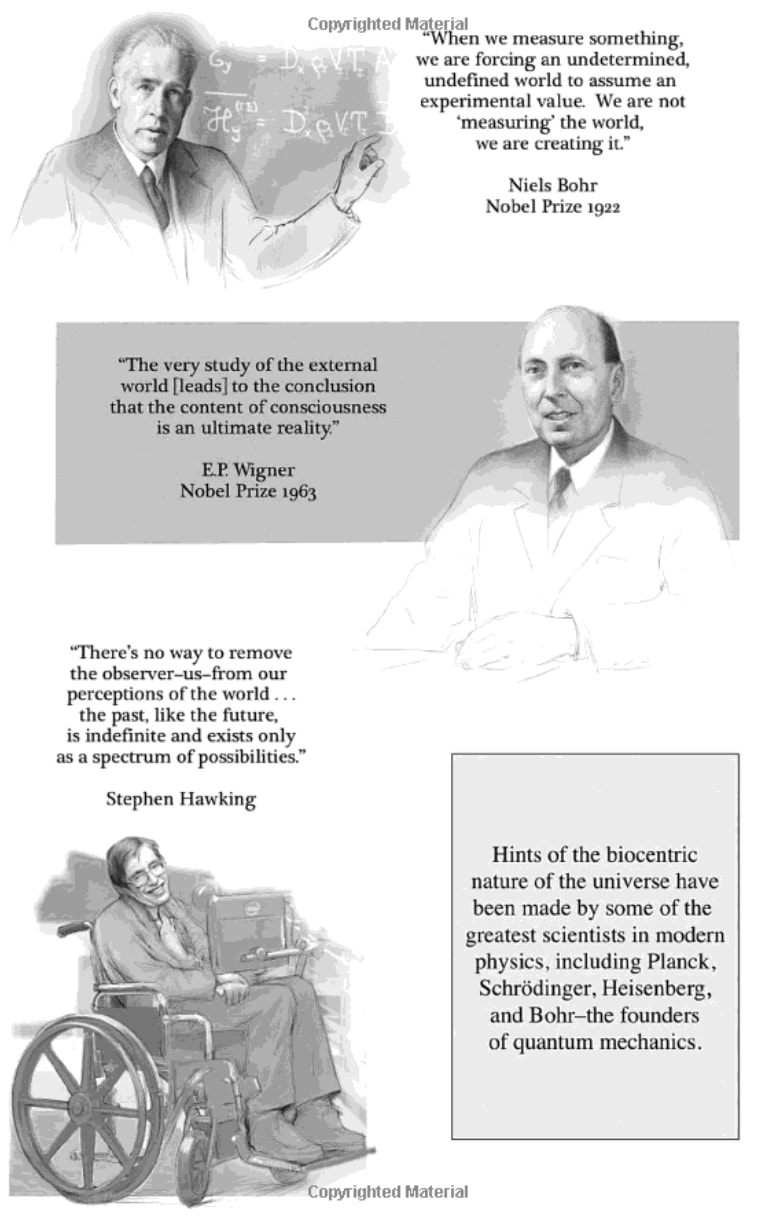
What if life isn’t just a part of the universe . . . what if it determines the very structure of the universe itself. The theory that blew your mind in Biocentrism and Beyond Biocentrism is back, with brand-new research revealing the startling truth about our existence.
"The universe is simply the spatial/temporal logic of the animal observer" - Robert Lanza
Robert Lanza: The Theory of Biocentrism, Part 1
Time & the Biocentric Universe as Explained by Dr. Robert Lanza Father of Biocentrism
Bob Berman - Strange Universe
-

"The Mandela effect is an unusual phenomenon where a large group of people remember something differently than how it occurred. Conspiracy theorists believe this is proof of an alternate universe, while many doctors use it as an illustration of how imperfect memory can be
Is the ‘Mandela Effect’ Science, Science Fiction, or Mass Delusion?
What some dismiss as misremembering could be a hint of alternate realities
-
No Escape from Our Techno-Feudal World - By Pepe Escobar

This article was originally published on Asia Times.
The political economy of the Digital Age remains virtually terra incognita. In Techno-Feudalism, published three months ago in France (no English translation yet), Cedric Durand, an economist at the Sorbonne, provides a crucial, global public service as he sifts through the new Matrix that controls all our lives.
Durand places the Digital Age in the larger context of the historical evolution of capitalism to show how the Washington consensus ended up metastasized into the Silicon Valley consensus. In a delightful twist, he brands the new grove as the “Californian ideology”.
We’re far away from Jefferson Airplane and the Beach Boys; it’s more like Schumpeter’s “creative destruction” on steroids, complete with IMF-style “structural reforms” emphasizing “flexibilization” of work and outright marketization/financialization of everyday life.
The Digital Age was crucially associated with right-wing ideology from the very start. The incubation was provided by the Progress and Freedom Foundation (PFF), active from 1993 to 2010 and conveniently funded, among others, by Microsoft, At&T, Disney, Sony, Oracle, Google and Yahoo.
In 1994, PFF held a ground-breaking conference in Atlanta that eventually led to a seminal Magna Carta: literally, Cyberspace and the American Dream: a Magna Carta for the Knowledge Era, published in 1996, during the first Clinton term.
Not by accident the magazine Wired was founded, just like PFF, in 1993, instantly becoming the house organ of the “Californian ideology”.
Among the authors of the Magna Carta we find futurist Alvin “Future Shock” Toffler and Reagan’s former scientific counselor George Keyworth. Before anyone else, they were already conceptualizing how “cyberspace is a bioelectronic environment which is literally universal”. Their Magna Carta was the privileged road map to explore the new frontier.
Those Randian heroes
Also not by accident the intellectual guru of the new frontier was Ayn Rand and her quite primitive dichotomy between “pioneers” and the mob. Rand declared that egotism is good, altruism is evil, and empathy is irrational.
When it comes to the new property rights of the new Eldorado, all power should be exercised by the Silicon Valley “pioneers”, a Narcissus bunch in love with their mirror image as superior Randian heroes. In the name of innovation they should be allowed to destroy any established rules, in a Schumpeterian “creative destruction” rampage.
That has led to our current environment, where Google, Facebook, Uber and co. can overstep any legal framework, imposing their innovations like a fait accompli.
Durand goes to the heart of the matter when it comes to the true nature of “digital domination”: US leadership was never achieved because of spontaneous market forces.
On the contrary. The history of Silicon Valley is absolutely dependent on state intervention – especially via the industrial-military complex and the aero-spatial complex. The Ames Research Center, one of NASA’s top labs, is in Mountain View. Stanford was always awarded juicy military research contracts. During WWII, Hewlett Packard, for instance, was flourishing thanks to their electronics being used to manufacture radars. Throughout the 1960s, the US military bought the bulk of the still infant semiconductor production.
The Rise of Data Capital, a 2016 MIT Technological Review report produced “in partnership” with Oracle, showed how digital networks open access to a new, virgin underground brimming with resources: “Those that arrive first and take control obtain the resources they’re seeking” – in the form of data.
So everything from video-surveillance images and electronic banking to DNA samples and supermarket tickets implies some form of territorial appropriation. Here we see in all its glory the extractivist logic inbuilt in the development of Big Data.
Durand gives us the example of Android to illustrate the extractivist logic in action. Google made Android free for all smartphones so it would acquire a strategic market position, beating the Apple ecosystem and thus becoming the default internet entry point for virtually the whole planet. That’s how a de facto, immensely valuable, online real estate empire is built.
The key point is that whatever the original business – Google, Amazon, Uber – strategies of conquering cyberspace all point to the same target: take control of “spaces of observation and capture” of data.
About the Chinese credit system…
Durand offers a finely balanced analysis of the Chinese credit system – a public/private hybrid system launched in 2013 during the 3rd plenum of the 18th Congress of the CCP, under the motto “to value sincerity and punish insincerity”.
For the State Council, the supreme government authority in China, what really mattered was to encourage behavior deemed responsible in the financial, economic and socio-political spheres, and sanction what is not. It’s all about trust. Beijing defines it as “a method of perfecting the socialist market economy system that improves social governance”.
The Chinese term – shehui xinyong – is totally lost in translation in the West. Way more complex than “social credit”, it’s more about “trustworthiness”, in the sense of integrity. Instead of the pedestrian Western accusations of being an Orwellian system, priorities include the fight against fraud and corruption at the national, regional and local levels, violations of environmental rules, disrespect of food security norms.
Cybernetic management of social life is being seriously discussed in China since the 1980s. In fact, since the 1940s, as we see in Mao’s Little Red Book. It could be seen as inspired by the Maoist principle of “mass lines”, as in “start with the masses to come back to the masses: to amass the ideas of the masses (which are dispersed, non-systematic), concentrate them (in general ideas and systematic), then come back to the masses to diffuse and explain them, make sure the masses assimilate them and translate them into action, and verify in the action of the masses the pertinence of these ideas”.
Durand’s analysis goes one step beyond Soshana Zuboff’s
The Age of Surveillance Capitalism when he finally reaches the core of his thesis, showing how digital platforms become “fiefdoms”: they live out of, and profit from, their vast “digital territory” peopled with data even as they lock in power over their services, which are deemed indispensable.
And just as in feudalism, fiefdoms dominate territory by attaching serfs. Masters made their living profiting from the social power derived from the exploitation of their domain, and that implied unlimited power over the serfs.
It all spells out total concentration. Silicon Valley stalwart Peter Thiel has always stressed the target of the digital entrepreneur is exactly to bypass competition. As quoted in Crashed: How a Decade of Financial Crises Changed the World, Thiel declared, “Capitalism and competition are antagonistic. Competition is for losers.”
So now we are facing not a mere clash between Silicon Valley capitalism and finance capital, but actually a new mode of production:
a turbo-capitalist survival as rentier capitalism, where Silicon giants take the place of estates, and also the State. That is the “techno-feudal” option, as defined by Durand.
Blake meets Burroughs
Durand’s book is extremely relevant to show how the theoretical and political critique of the Digital Age is still rarified. There is no precise cartography of all those dodgy circuits of revenue extraction. No analysis of how do they profit from the financial casino – especially mega investment funds that facilitate hyper-concentration. Or how do they profit from the hardcore exploitation of workers in the gig economy.
The total concentration of the digital glebe is leading to a scenario, as Durand recalls, already dreamed up by Stuart Mill, where every land in a country belonged to a single master. Our generalized dependency on the digital masters seems to be “the cannibal future of liberalism in the age of algorithms”.
Is there a possible way out? The temptation is to go radical – a Blake/Burroughs crossover. We have to expand our scope of comprehension – and stop confusing the map (as shown in the Magna Carta) with the territory (our perception).
William Blake, in his proto-psychedelic visions, was all about liberation and subordination – depicting an authoritarian deity imposing conformity via a sort of source code of mass influence. Looks like a proto-analysis of the Digital Age.
William Burroughs conceptualized Control – an array of manipulations including mass media (he would be horrified by social media). To break down Control, we must be able to hack into and disrupt its core programs. Burroughs showed how all forms of Control must be rejected – and defeated: “Authority figures are seen for what they are: dead empty masks manipulated by computers”.
Here’s our future: hackers or slaves.
-
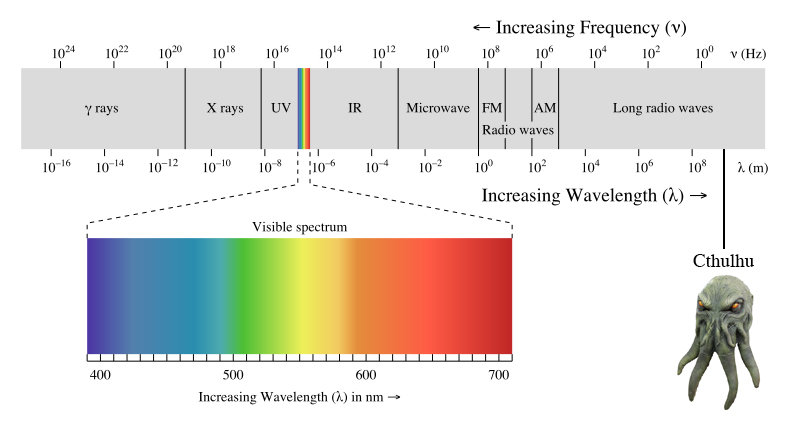
Havana syndrome: 'directed' radio frequency likely cause of illness – report (Guardian)
First official explanation of illness that affected US diplomats in Cuba says ‘pulsed’ energy may have led to unexplained symptoms
Electromagnetic spectrum management tool coming next year (c4isrnet)
The electromagnetic spectrum has gained importance in recent years, with adversaries becoming more proficient in exploiting it to jam communications and geolocate units based solely on their electromagnetic signatures. As such, the Department of Defense has realized it needs to take a more holistic approach than just electronic warfare — the manipulation of signals — to planning & managing forces and systems within the spectrum.
-
Desiderata - Poem by Max Ehrmann (1920s)

Go placidly amid the noise and the haste, and remember what peace there may be in silence. As far as possible, without surrender, be on good terms with all persons. Speak your truth quietly and clearly; and listen to others, even to the dull and the ignorant; they too have their story. Avoid loud and aggressive persons; they are vexatious to the spirit. If you compare yourself with others, you may become vain or bitter, for always there will be greater and lesser persons than yourself. Enjoy your achievements as well as your plans. Keep interested in your own career, however humble; it is a real possession in the changing fortunes of time. Exercise caution in your business affairs, for the world is full of trickery. But let this not blind you to what virtue there is; many persons strive for high ideals, and everywhere life is full of heroism. Be yourself. Especially do not feign affection. Neither be cynical about love; for in the face of all aridity and disenchantment it is as perennial as the grass. Take kindly the counsel of the years, gracefully surrendering the things of youth. Nurture strength of spirit to shield you in sudden misfortune. But do not distress yourself with dark imaginings. Many fears are born of fatigue and loneliness. Beyond a wholesome discipline, be gentle with yourself. You are a child of the universe no less than the trees and the stars; you have a right to be here. And whether or not it is clear to you, no doubt the universe is unfolding as it should. Therefore be at peace with God, whatever you conceive Him to be. And whatever your labors and aspirations, in the noisy confusion of life, keep peace in your soul. With all its sham, drudgery and broken dreams, it is still a beautiful world. Be cheerful. Strive to be happy.
-
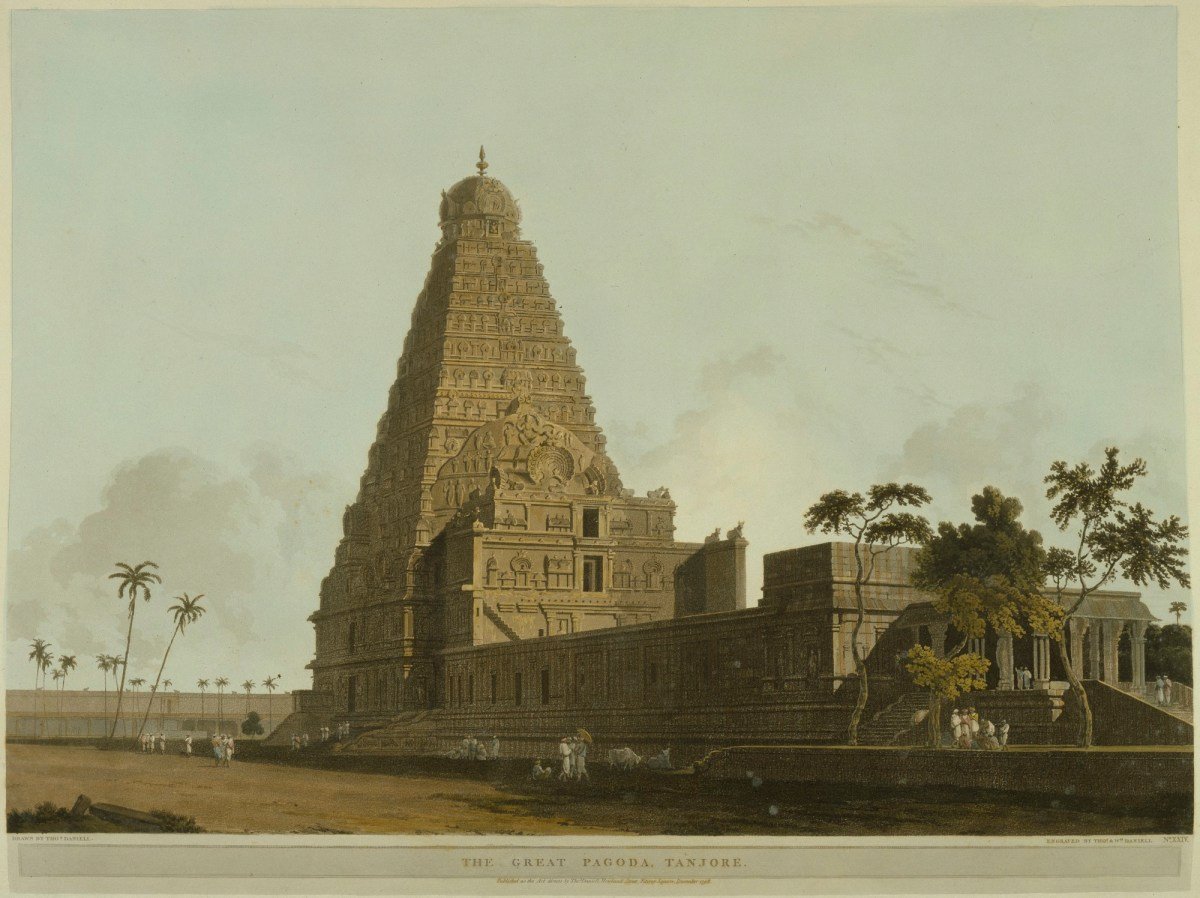
A 1798 view of The Great Pagoda at Tanjore, Tamil Nadu, South India - by Thomas Daniell, (1798)
-
China Expanding Weather-Control Program To Make Artificial Rain, Snow (businessinsider)
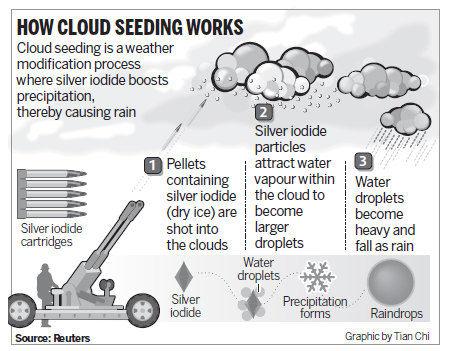
The practice of "cloud seeding" was discovered in the US in 1946 by a chemist working for General Electric. China launched its own similar program in the 1960s. Dozens of other countries -- including the US -- also have such programs, but Beijing has the world's largest, employing around 35,000 people, The Guardian reported. In a statement, China's State Council said that the country's cloud seeing project will expand fivefold to cover an area of 2.1 million square miles and be completed by 2025. (China encompasses 3.7 million square miles, meaning the project could cover 56% of the country's surface area.) The project will be at a "worldwide advanced level" by 2035, the State Council said, and will help alleviate "disasters such as drought and hail" and facilitate emergency responses "to forest or grassland fires."
-
“Soil, not oil, holds the future for humanity” - Vandana Shiva
-
Onsen (温泉) - the highly advanced relaxation culture of japan is simply astonishing



-
Your Guide to the Great Monetary Reset
Princes of the Yen: Central Bank Truth Documentary
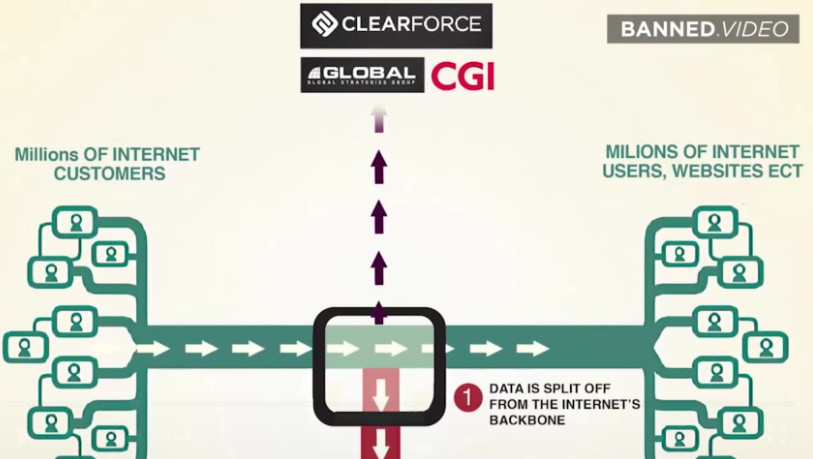
SHADOW GATE – Documentary by Millie Weaver - 2020
-
Question: Does the human experience of life (a comprehensive view on well-being etc.) linearly improve, the more energy we use?
This should be a central point of investigation when dealing with radical perspectives and agendas, such as this: Tesla CEO says electric cars will double global electricity demand
-
World Economic Forum - First 40 Years (PDF, 2013)
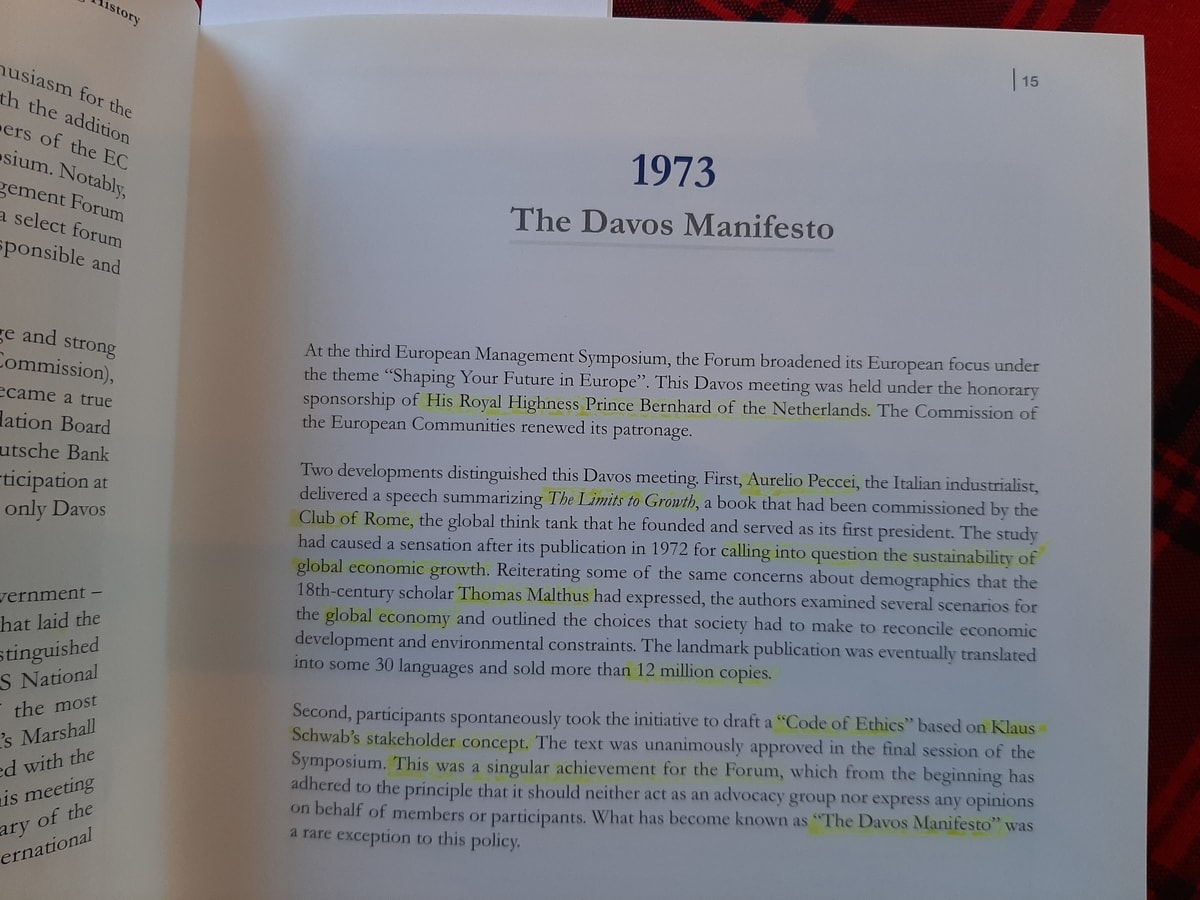
The 1973 Davos Manifesto included Bilderberg founder and Nazi SS member, Prince Bernhard of Lippe-Biesterfeld, Club Of Rome Founder Aurelio Peccei, among others.
In the early WEF milieux, the fascist/Nazi connections and themes were strong, with topics such as Social Darwinism, Technopoly, Eugenics or Transhumanism on the agenda.
-
The CIA’s Secret Global War Against the Left - by Branko Marcetic (jacobinmag)
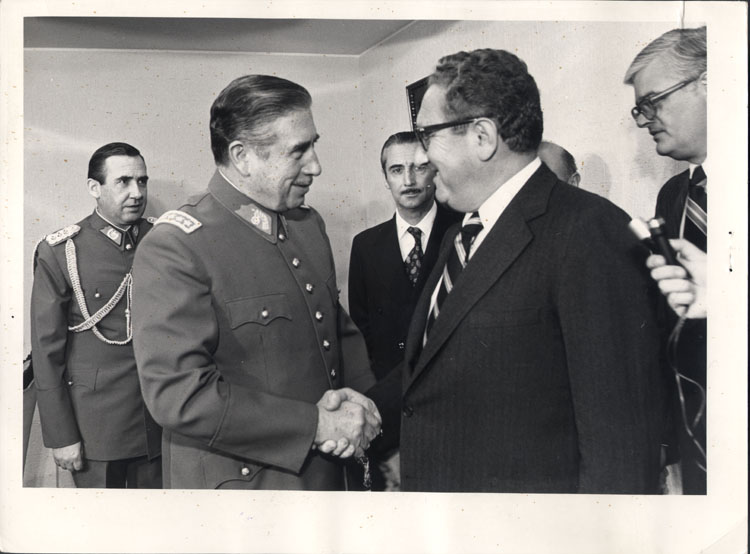
Forty-five years ago, under a cloak of secrecy, Operation Condor was officially launched: a global campaign of violent repression against the Latin American left by the region’s quasi-fascist military dictatorships. The US government not only knew about the program — it helped to engineer it.