-
Arnold Sommerfeld (1868-1951) was a peculiar man
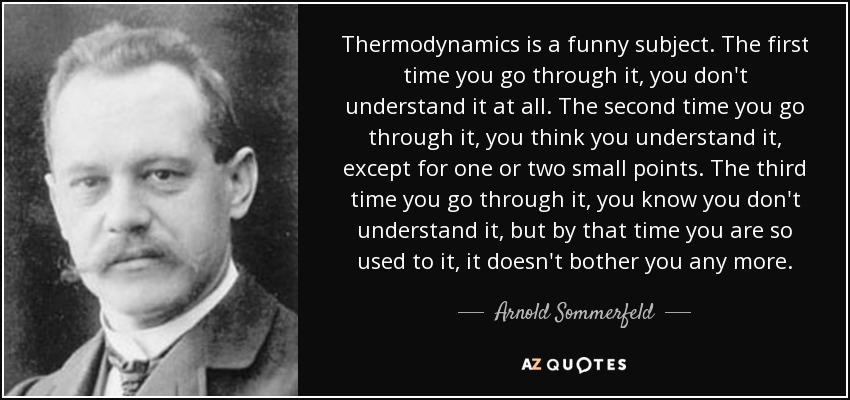
As where many of his colleges, such as Hans Wolter, Werner Braunbek, and other German scientists of the time - in the vicinity of the Center of the Mathematical Universe at the time.
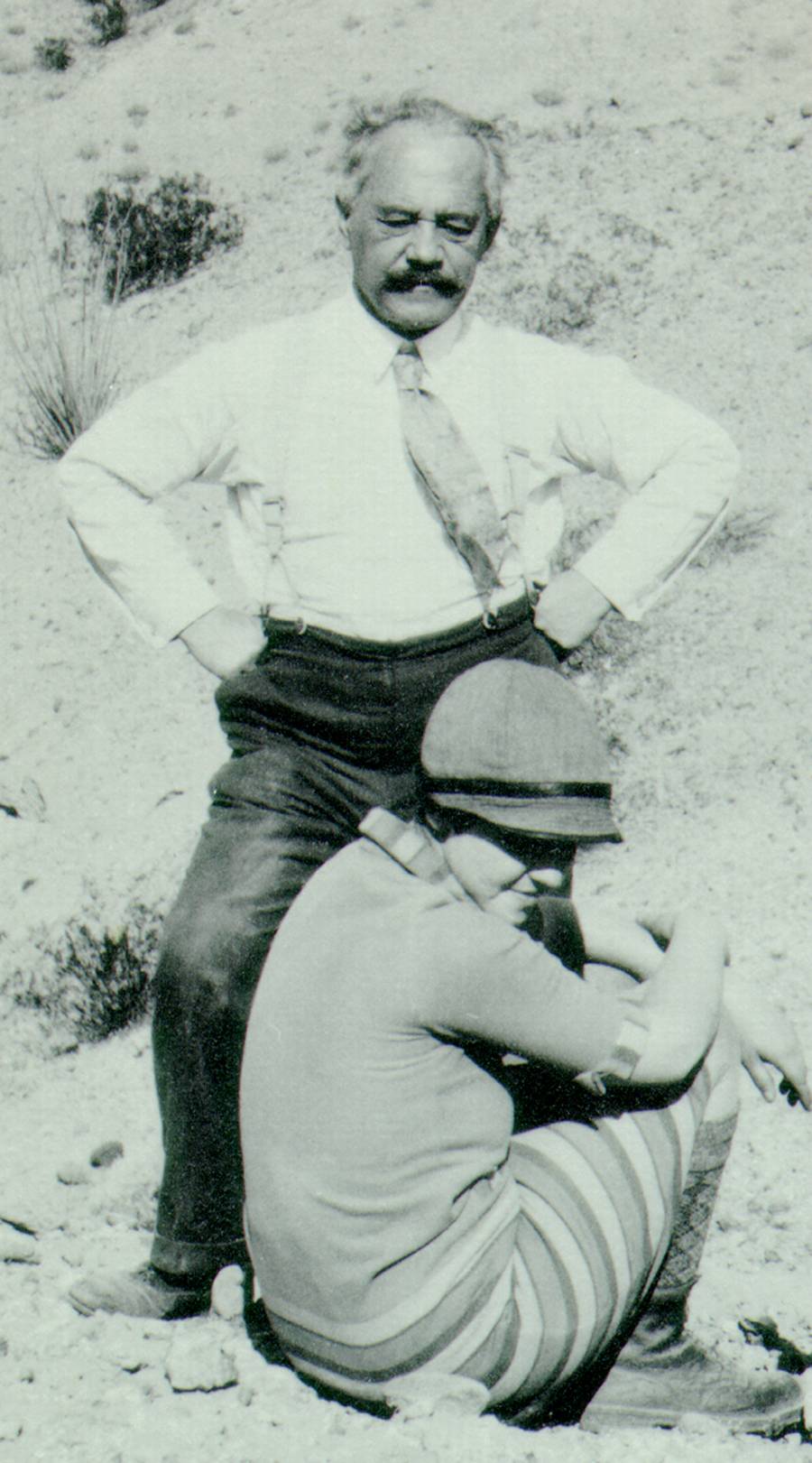
Arnold Sommerfeld and Ava Helen Pauling in the Coachella desert, California. 1928.
-
“To myself I am only a child playing on the beach, while vast oceans of truth lie undiscovered before me” - Isaac Newton
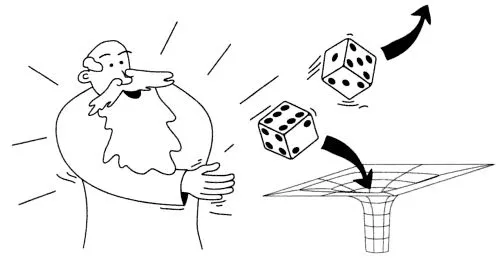
"The human mind is not capable of grasping the Universe. We are like a little child entering a huge library. The walls are covered to the ceilings with books in many different tongues. The child knows that someone must have written these books. It does not know who or how. It does not understand the languages in which they are written. But the child notes a definite plan in the arrangement of the books—-a mysterious order which it does not comprehend, but only dimly suspects." - Albert Einstein
-
Plotting the Pareto frontier of global scientific knowledge throughout history has become surprisingly feasible. The resulting patterns and models are both peculiar and illuminating.
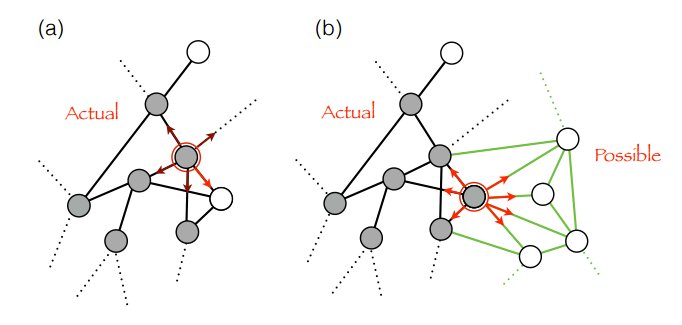
Image from: Dynamics on Expanding Spaces: Modeling the Emergence of Novelties (2017)
-
AI will fundamentally reshape how science is conducted and we’ve barely scratched the surface. Efforts like “The AI Scientist” from @hardmaru @SakanaAILabs are promising first steps, but the space of radically novel methods remains largely unexplored. Who's working on it?
-
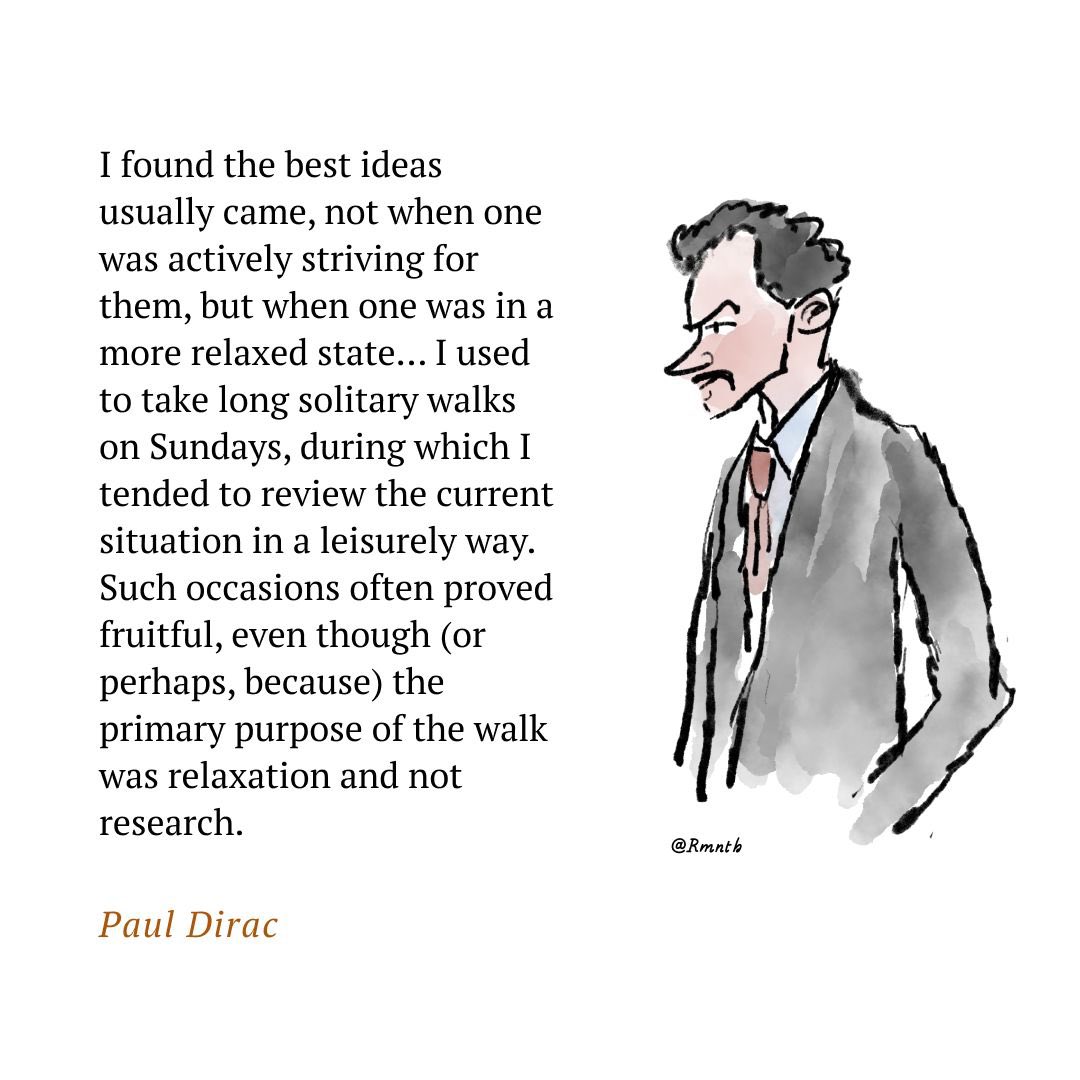
Paul Dirac on how to get good ideas: don't strive for them, be relaxed, go for a long walk.
-
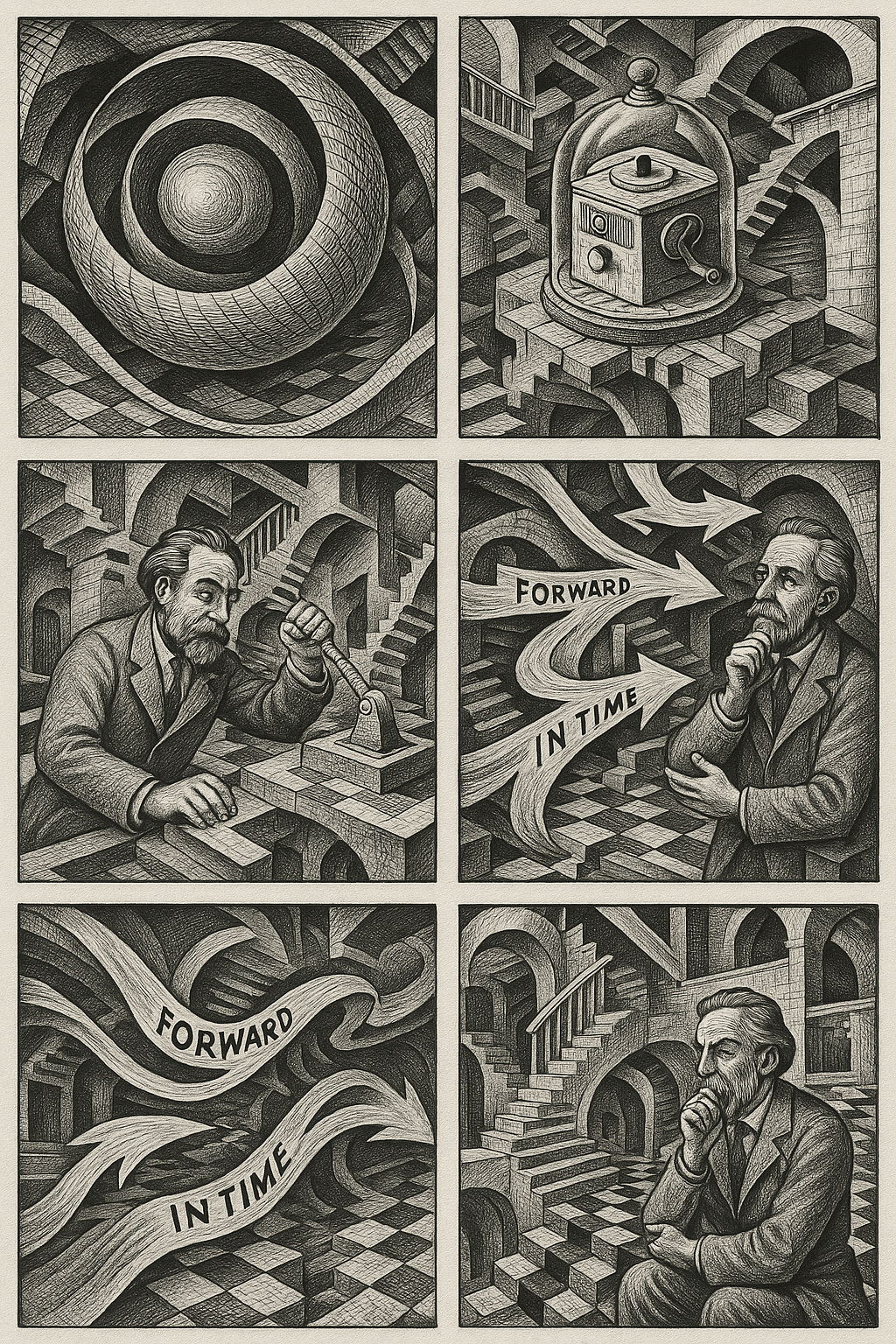
Using superpositions of tiny gravitational time dilations- imagine surrounding your system with heavy shells at slightly different radii so time ticks just a bit slower inside each - Aharonov et al. show how to combine these into one huge time shift. By putting the “clock‑maker” itself into a quantum superposition of “shell at radius R₁,” “shell at radius R₂,” … and then post‑selecting the perfect superposition, you can make your system’s wavefunction evolve as if it jumped forward or even backward in time by a large interval. It’s a purely gedanken experiment (the success probability is vanishingly small), but it vividly illustrates how time‑symmetrized quantum mechanics can blur past and future.
-
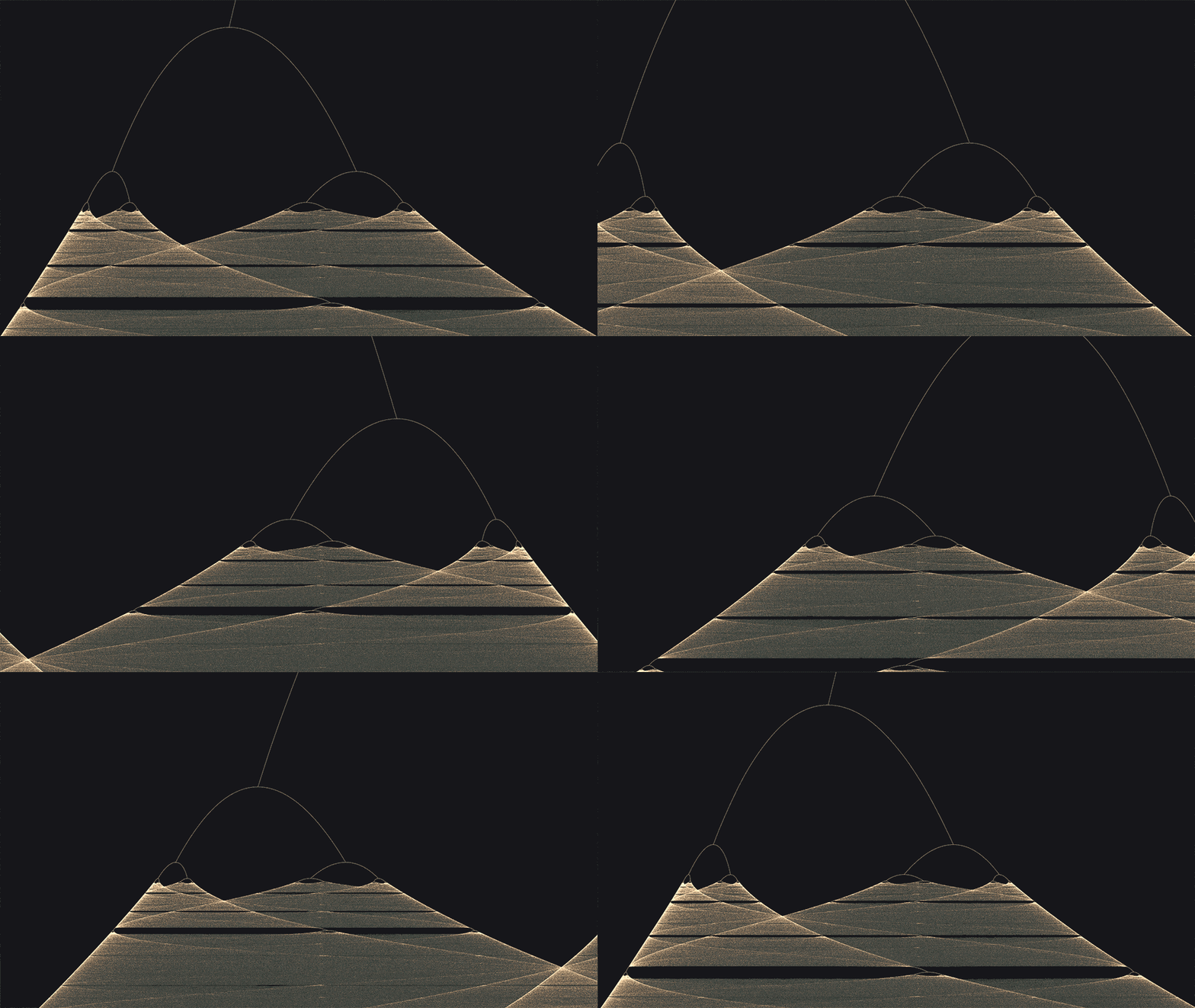
The Feigenbaum constant, 4.669, is the universal scaling ratio for period-doubling bifurcations. It appears in every system transitioning to turbulence. Logistics maps. Fluid dynamics. Neural oscillations. Beneath chaos lies order.
-
Gotthard Günther (1900 - 1984)
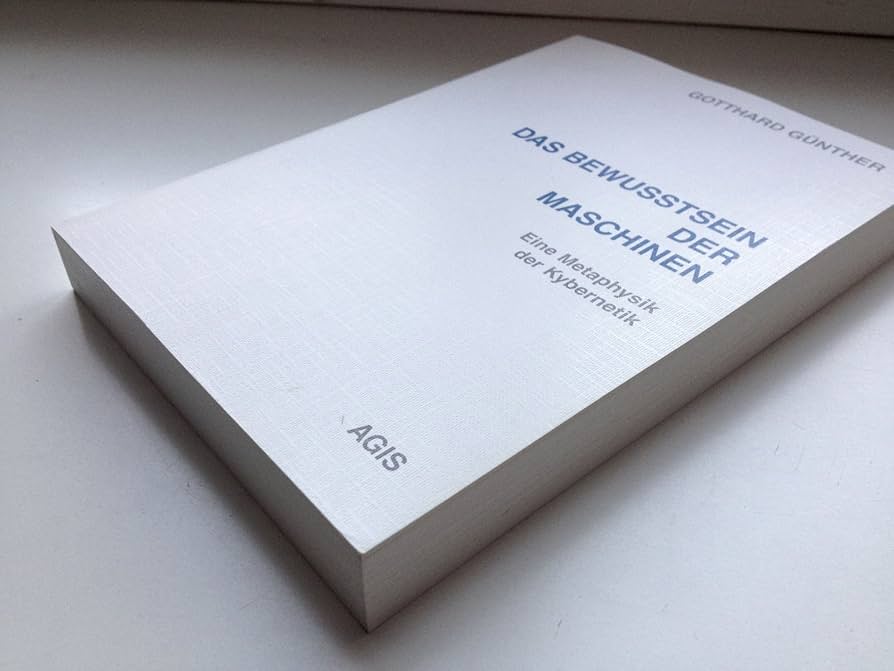
The Consciousness of Machines: A Metaphysics of Cybernetics.
ANALYSE DER MORPHOGRAMMATIK VON GOTTHARD GÜNTHER - von Steffen Heise
Morphogrammatik: Eine Einführung in die Theorie der logischen Form
-
Rudolf Kaehr über Künstliche Intelligenz
The labyrinth and its walker co‑create each other. Each step reshapes the maze—and defines the traveler. It can’t be pinned down on paper; it’s a living structure born of life itself.
-
Thomismus - A brief summary:
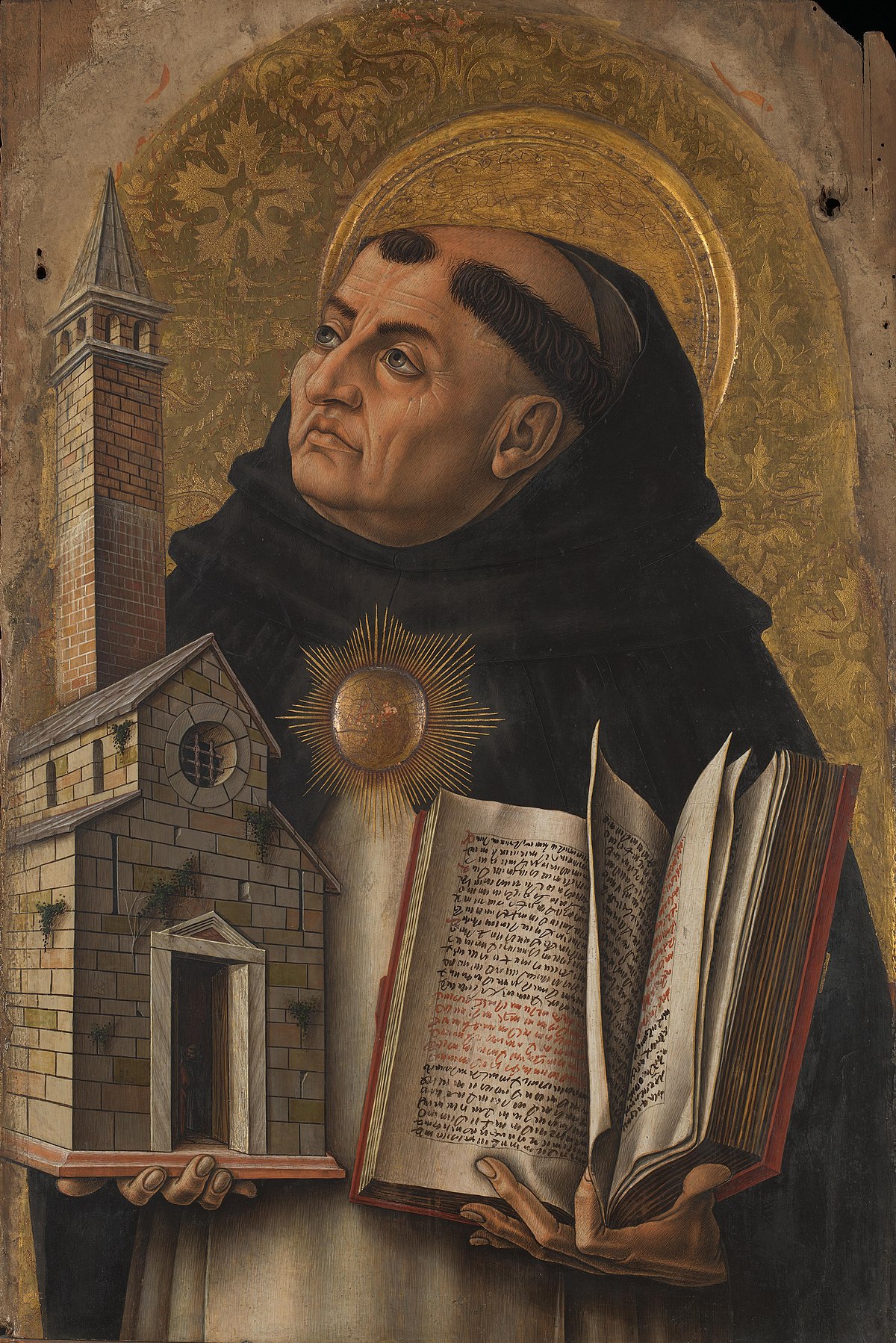
- Synthesis of Faith and Reason: Thomas Aquinas integrates Christian revelation with Aristotelian philosophy, employing reason to illuminate and defend the truths of faith.
- Essence–Existence Distinction: In all created beings, “essence” (what a thing is) is distinct from “existence” (that it is); only in God are essence and existence identical.
- Act and Potency: Every substance comprises potentiality (capacity to be otherwise) and actuality (realized state); change occurs through the actualization of potential.
- Doctrine of Creation: God is the uncaused First Cause, eternal and self‑existent; the universe is created ex nihilo (out of nothing) by His will.
- Analogy of Being (Analogia Entis): We can speak of God and creatures analogically—neither identically nor entirely equivocally—recognizing both similarity and greater dissimilarity.
- The Five Ways (Proofs for God’s Existence):
- The Argument from Motion
- The Argument from Efficient Causes
- The Argument from Contingency and Necessity
- The Argument from Gradation (degrees of perfection)
- The Teleological Argument (design and purpose)
- Natural Law: God’s eternal law is reflected in the rational order of creation; humans discern moral principles (e.g., “do good and avoid evil”) through natural reason.
- Virtue Ethics: Virtues are stable dispositions to choose the good: the four cardinal virtues (prudence, justice, fortitude, temperance) and the three theological virtues (faith, hope, charity).
- Theory of the Soul: The human soul is the substantial form of the body, rational and immortal, endowed with intellect and will, oriented toward the ultimate good.
- Sacramental Theology: The sacraments are efficacious signs instituted by Christ to confer grace, with the Eucharist as the “source and summit” of Christian life.
- Beatific Vision: Human fulfillment (beatitude) consists in the direct, eternal vision of God, the ultimate end and happiness of the soul.
- Political Philosophy: Political community serves human perfection; just governance must aim at the common good in accordance with divine and natural law.
-
Welcome to the Era of Experience - by David Silver, Richard S. Sutton
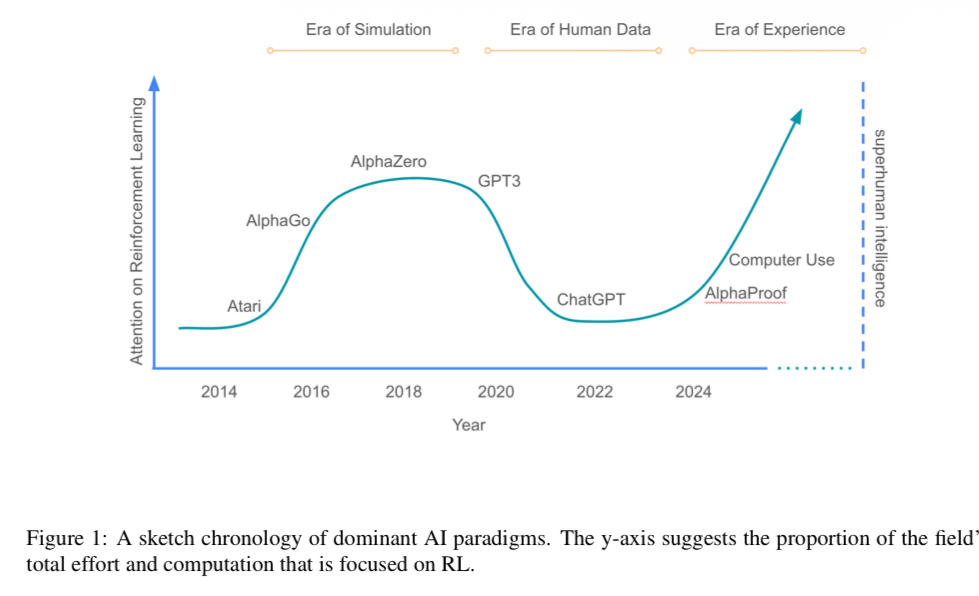
Sutton and his advisee Silver argue that the “era of human data,” dominated by supervised pre‑training and RL‑from‑human‑feedback, has hit diminishing returns; the future will belong to agents that
- act continuously in real or simulated worlds,
- generate and label their own training data through interaction
- optimise rewards grounded in the environment rather than in human preference alone, and
- refine their world‑models and plans over lifelong streams of experience.