tag > Education
-
I should have loved biology - essay by James Somers
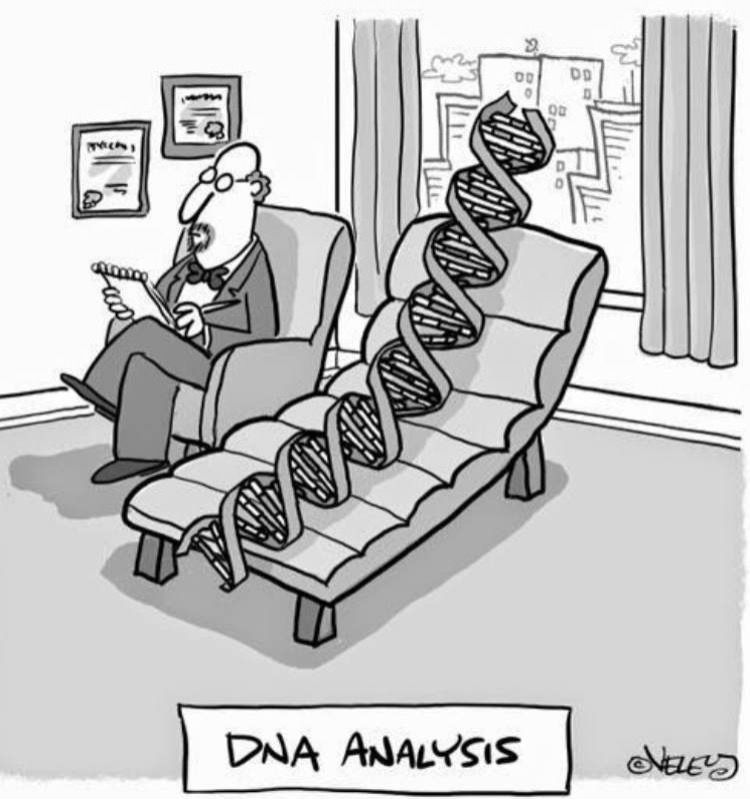
I should have loved biology but I found it to be a lifeless recitation of names: the Golgi apparatus and the Krebs cycle; mitosis, meiosis; DNA, RNA, mRNA, tRNA. In the textbooks, astonishing facts were presented without astonishment. Someone probably told me that every cell in my body has the same DNA. But no one shook me by the shoulders, saying how crazy that was. I needed Lewis Thomas, who wrote in The Medusa and the Snail: "For the real amazement, if you wish to be amazed, is this process. You start out as a single cell derived from the coupling of a sperm and an egg; this divides in two, then four, then eight, and so on, and at a certain stage there emerges a single cell which has as all its progeny the human brain. The mere existence of such a cell should be one of the great astonishments of the earth. People ought to be walking around all day, all through their waking hours calling to each other in endless wonderment, talking of nothing except that cell."
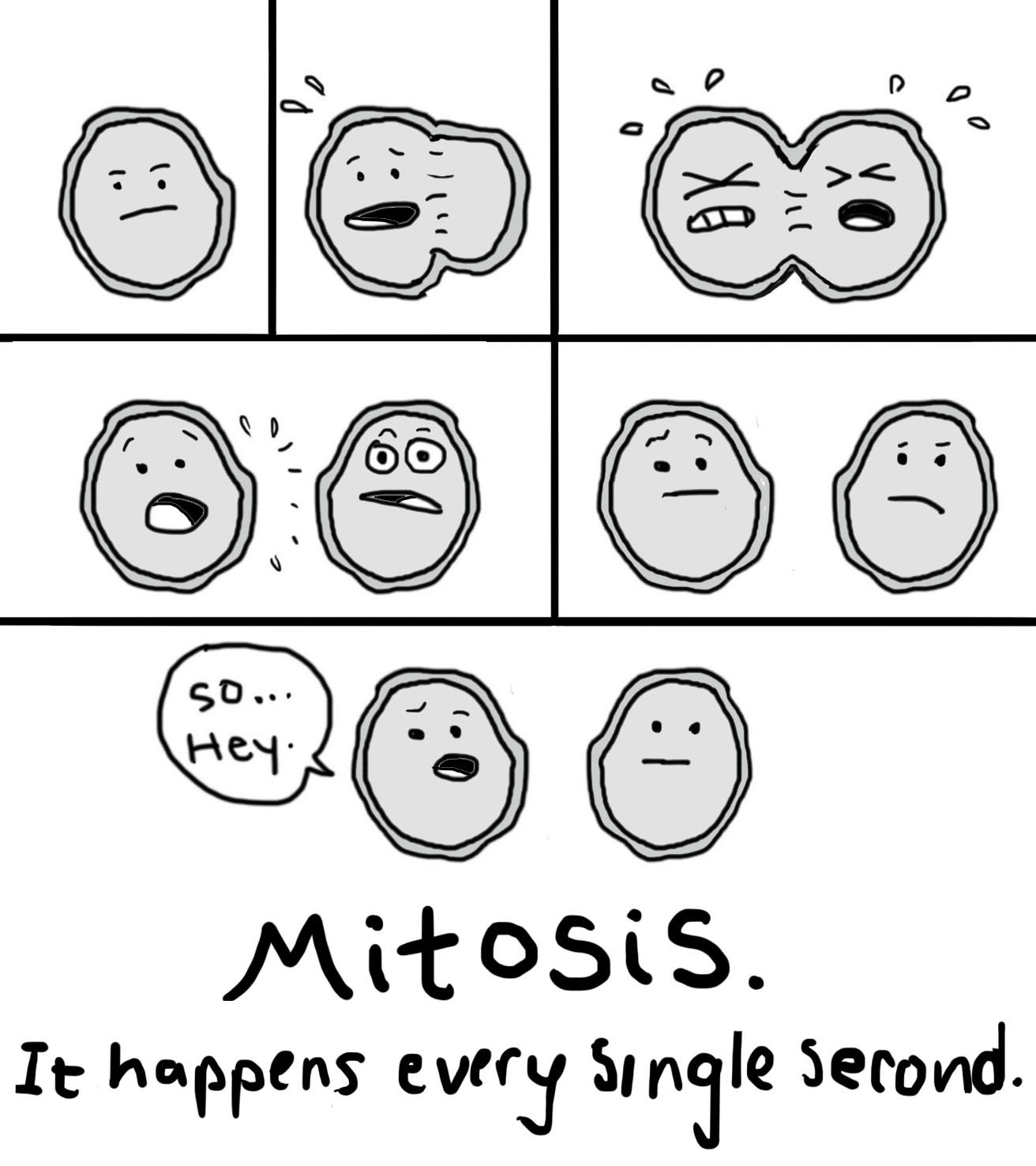
I wish my high school biology teacher had asked the class how an embryo could possibly differentiate -- and then paused to let us really think about it. The whole subject is in the answer to that question. A chemical gradient in the embryonic fluid is enough of a signal to slightly alter the gene expression program of some cells, not others; now the embryo knows "up" from "down"; cells at one end begin producing different proteins than cells at the other, and these, in turn, release more refined chemical signals; ...; soon, you have brain cells and foot cells. How come we memorized chemical formulas but didn't talk about that? It was only in college, when I read Douglas Hofstadter's Godel, Escher, Bach, that I came to understand cells as recursively self-modifying programs. The language alone was evocative. It suggested that the embryo -- DNA making RNA, RNA making protein, protein regulating the transcription of DNA into RNA -- was like a small Lisp program, with macros begetting macros begetting macros, the source code containing within it all of the instructions required for life on Earth. Could anything more interesting be imagined? [...]
-
Could a family dog help your child’s social and emotional development?

The bond between dogs and children can be remarkably strong. If you need proof just look at the countless viral videos of dogs and babies exhibiting very cute and very real friendships. Having a dog growing up is a quintessential childhood experience for many, and often the staple of tear-jerking dog-centred family films. Now, new research confirms there are significant social and emotional developmental benefits for children under the age of 5 who grow up around dogs.
-
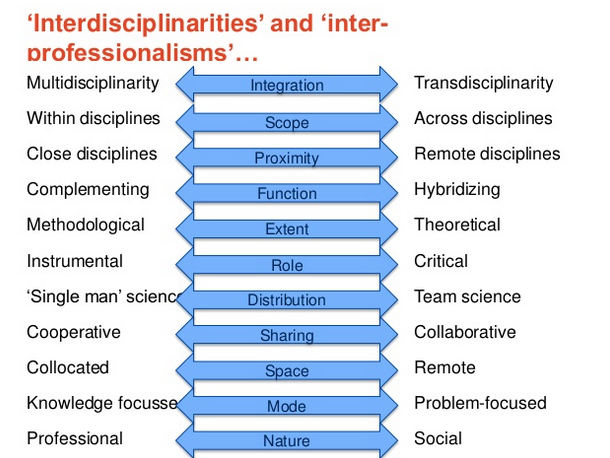
Interprofessional and interdisciplinary learning
-
“To learn and not to do is really not to learn. To know and not to do is really not to know.” - Stephen R. Covey
-
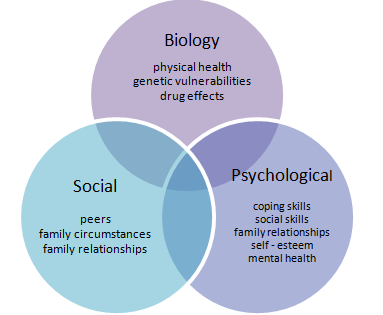
The biopsychosocial model is an interdisciplinary model that looks at the interconnection between biology, psychology, and socio-environmental factors. The model specifically examines how these aspects play a role in topics ranging from health and disease models to human development. This model was developed by George L. Engel in 1977 and is the first of its kind to employ this type of multifaceted thinking.
-
Twelve Ways to Win People to Your Way of Thinking
- The only way to get the best of an argument is to avoid it. Whenever we argue with someone, no matter if we win or lose the argument, we still lose. The other person will either feel humiliated or strengthened and will only seek to bolster their own position. We must try to avoid arguments whenever we can.
- Show respect for the other person's opinions. Never say "You're wrong." We must never tell people flat out that they are wrong. It will only serve to offend them and insult their pride. No one likes to be humiliated; we must not be so blunt.
- If you're wrong, admit it quickly and emphatically. Whenever we are wrong we should admit it immediately. When we fight we never get enough, but by yielding we often get more than we expected. When we admit that we are wrong people trust us and begin to sympathize with our way of thinking.
- Begin in a friendly way. "A drop of honey can catch more flies than a gallon of gall."[6]:143 If we begin our interactions with others in a friendly way, people will be more receptive. Even if we are greatly upset, we must be friendly to influence people to our way of thinking.
- Start with questions to which the other person will answer yes. Do not begin by emphasizing the aspects in which we and the other person differ. Begin by emphasizing and continue emphasizing the things on which we agree. People must be started in the affirmative direction and they will often follow readily. Never tell someone they are wrong, but rather lead them where we would like them to go with questions that they will answer "yes" to.
- Let the other person do a great deal of the talking. People do not like listening to us boast, they enjoy doing the talking themselves. Let them rationalize and talk about the idea, because it will taste much sweeter to them in their own mouth.
- Let the other person feel the idea is his or hers. People inherently like ideas they come to on their own better than those that are handed to them on a platter. Ideas can best be carried out by allowing others to think they arrived at it themselves.
- Try honestly to see things from the other person's point of view. Other people may often be wrong, but we cannot condemn them. We must seek to understand them. Success in dealing with people requires a sympathetic grasp of the other person's viewpoint.
- Be sympathetic with the other person's ideas and desires. People are hungering for sympathy. They want us to recognize all that they desire and feel. If we can sympathize with others, they will appreciate our side as well and will often come around to our way of thinking.
- Appeal to the nobler motives. Everyone likes to be glorious in their own eyes. People believe that they do things for noble and morally upright reasons. If we can appeal to others' noble motives we can successfully convince them to follow our ideas.
- Dramatize your ideas. In this fast-paced world, simply stating a truth isn't enough. The truth must be made vivid, interesting, and dramatic. Television has been doing it for years. Sometimes ideas are not enough and we must dramatize them.
- Throw down a challenge. The thing that most motivates people is the game. Everyone desires to excel and prove their worth. If we want someone to do something, we must give them a challenge and they will often rise to meet it.
-
Dolphins learn from their peers to use empty shells to catch fish (cell.com)
• Network-based diffusion analysis revealed that “shelling” spreads among associates
• Dolphin foraging innovations can spread socially outside of the mother-calf bond
• First quantification of a non-vertically learned foraging tactic in toothed whales -
NY Governor Cuomo questions why school buildings still exist — and says New York will work with Bill Gates to ‘reimagine education’ (washingtonpost)
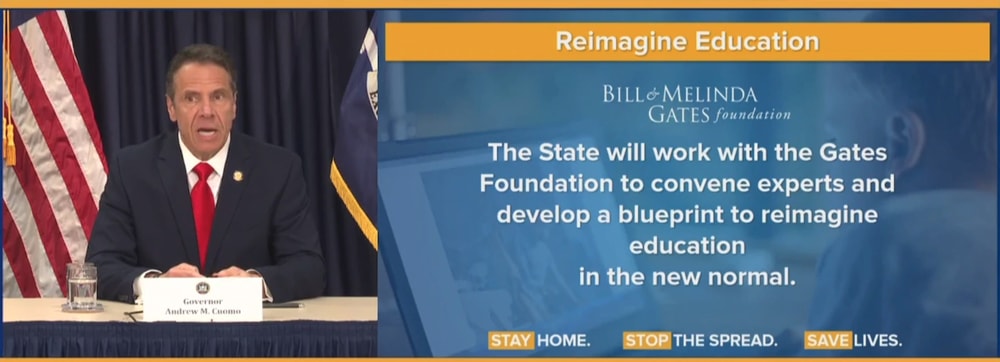
#Comment: Corporatism & stupidity rule in failed states. Great for comedy, horrible for kids.
-

In locked down Wuhan, teachers use an app called DingTalk to set homework. Kids realised if it got enough one-star reviews it would be removed from App Store. Thousands of reviews flooded in, and DingTalk’s rating fell from 4.9 to 1.4 overnight. Legends. (via)
-
"It is practically impossible to teach good programming to students that have had a prior exposure to BASIC: as potential programmers they are mentally mutilated beyond hope of regeneration." - Edsger Dijkstra (via)
-
“Learning preserves the errors of the past as well as its wisdom.” - A.N.Whitehead
“It isn’t what we don’t know that gets us into trouble, it’s what we know that ain’t so.” - Will Rogers
“Every man takes the limits of his own vision for the limits of the world.” - Arthur Schopenhauer
“The art of being wise is the art of knowing what to overlook.” - William James
“Never try to tell everything you know. It may take too short a time.” - Norman Ford
-
“Study requires calm, talent requires study. Without study there is no way to expand talent; without calm, there is no way to accomplish study.” - Zhuge Liang
-

"I used to think great teachers inspire you. Now I think I had it wrong. Good teachers inspire you; great teachers show you how to inspire yourself every day of your life. They don't show you their magic. They show you how to make magic of your own." - Alfred Doblin
-
Whitehead on Education

"The Aims of Education" - Book by Whitehead "Education with inert ideas is not only useless: it is, above all things, harmful." - A.N.Whitehead on what he called "inert ideas" - ideas that are disconnected scraps of information, with no application to real life or culture.
"For Whitehead, education should be the exact opposite of the multidisciplinary, value-free school model – it should be transdisciplinary, and laden with values and general principles that provide students with a bedrock of wisdom and help them to make connections between areas of knowledge that are usually regarded as separate." (wikipedia)
"Imagination is not to be divorced from the facts: it is a way of illuminating the facts. It works by eliciting the general principles which apply to the facts, as they exist, and then by an intellectual survey of alternative possibilities which are consistent with those principles. It enables men to construct an intellectual vision of a new world." - A.N.Whitehead
The following quotes on "knowledge" are fascinating:
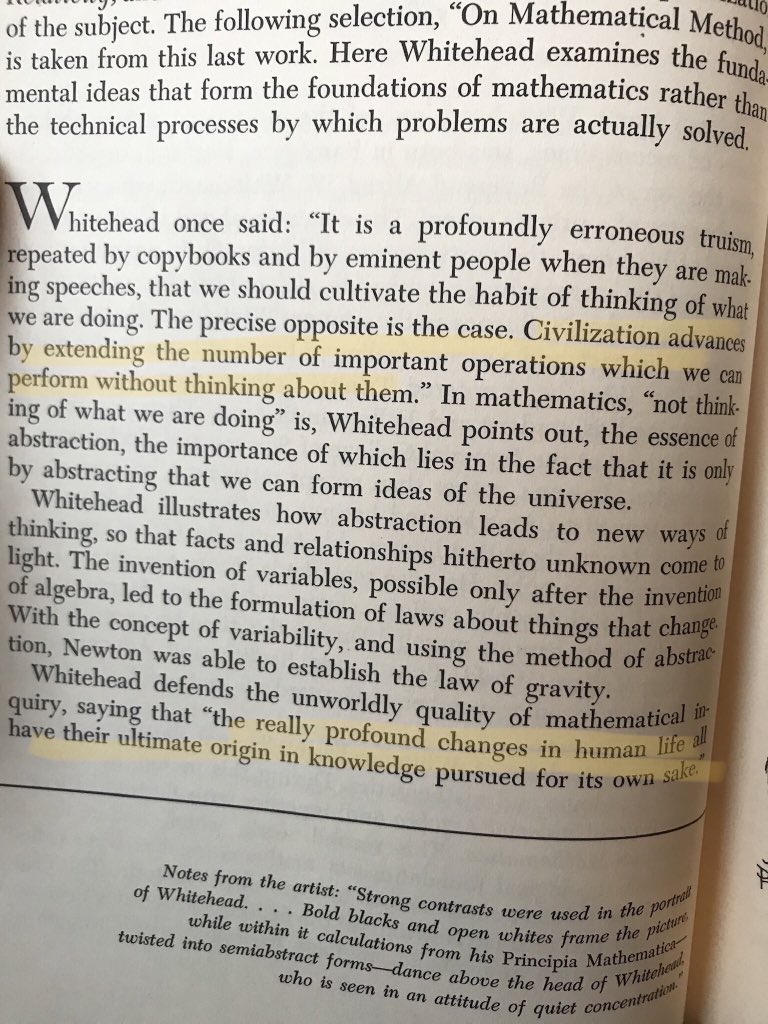
“The really profound changes in human life all have their ultimate origin in knowledge pursued for its own sake” - A.N.Whitehead
"Civilization advances by extending the number of important operations which we can perform without thinking about them" - A.N.Whitehead
From "Gateway to the Great Books" -
Argument Map - visual representation of the structure of an argument.
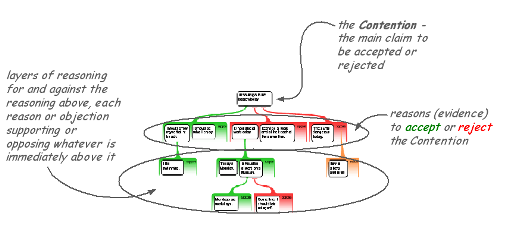
Argument maps are box-and-line diagrams that lay out visually reasoning and evidence for and against a statement or claim. A good map clarifies and organizes thinking by showing the logical relationships between thoughts that are expressed simply and precisely. Argument maps are driven by asking, ‘Should I believe that? Why, or why not?’.
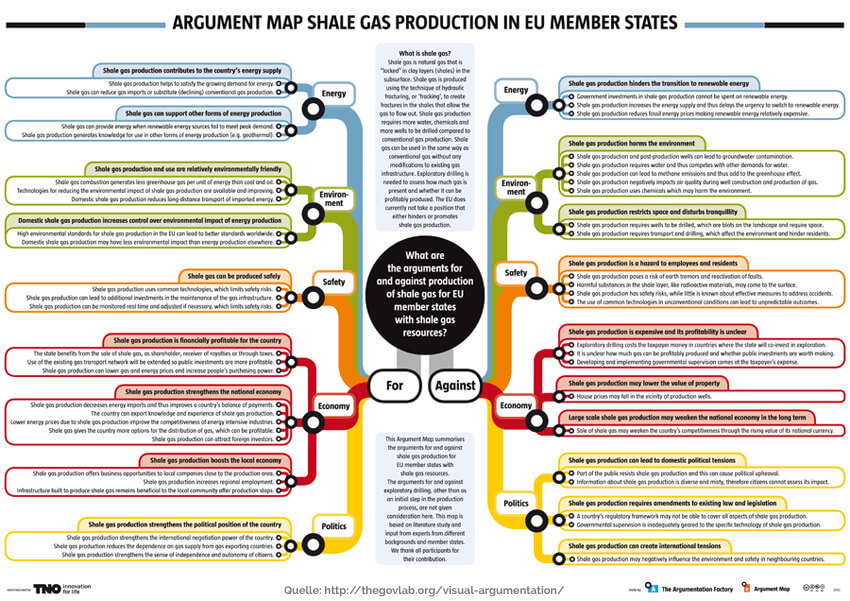
A collection of mapping tools can be found at: https://www.mind-mapping.org
Related: Seven management and planning tools & Affinity Diagrams#KM #Science #Philosophy #Education #Politics #Military #HCI #Design
-
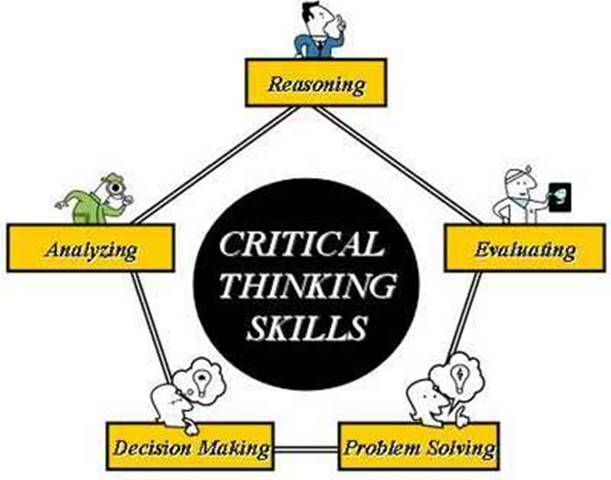
The core of critical thinking is your ability to correct and improve your own reasoning.
"It is the mark of an educated mind to be able to entertain a thought without accepting it."
- Aristotle