tag > Mindful
-
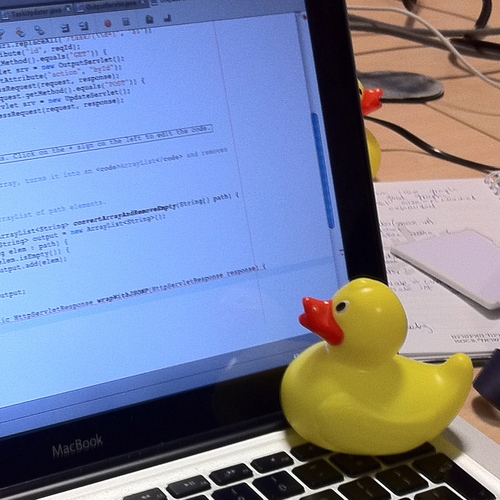
In software engineering, rubber duck debugging is a method of debugging code. The name is a reference to a story in the book The Pragmatic Programmer in which a programmer would carry around a rubber duck and debug their code by forcing themself to explain it, line-by-line, to the duck. Many other terms exist for this technique, often involving different (usually) inanimate objects, or pets such as a dog or a cat. "Desk check your code" is the original term for this technique.
-
Yūgen (幽玄) – Deep Awareness of the Universe
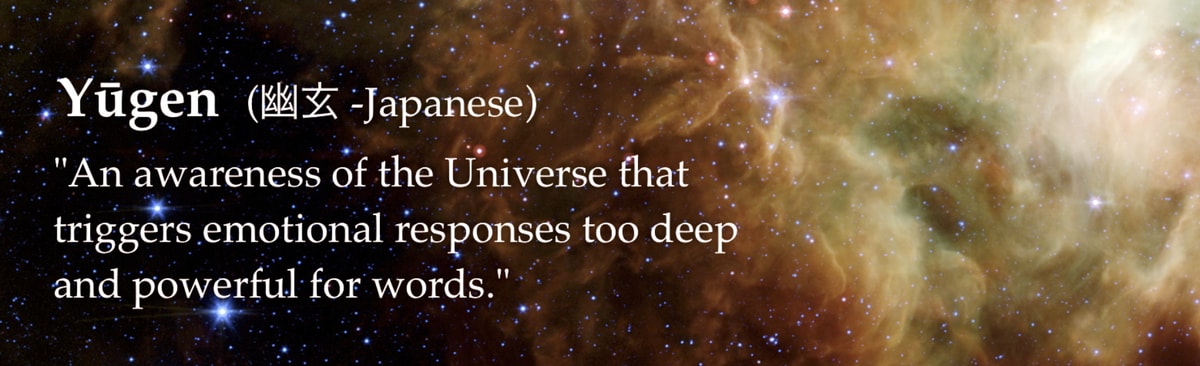
“Yūgen is an important concept in traditional Japanese aesthetics. The exact translation of the word depends on the context. Yūgen is not an allusion to another world. It is about this world, this experience…
“To watch the sun sink behind a flower clad hill. To wander on in a huge forest without thought of return. To stand upon the shore and gaze after a boat that disappears behind distant islands. To contemplate the flight of wild geese seen and lost among the clouds…” ~Zeami Motokiyo
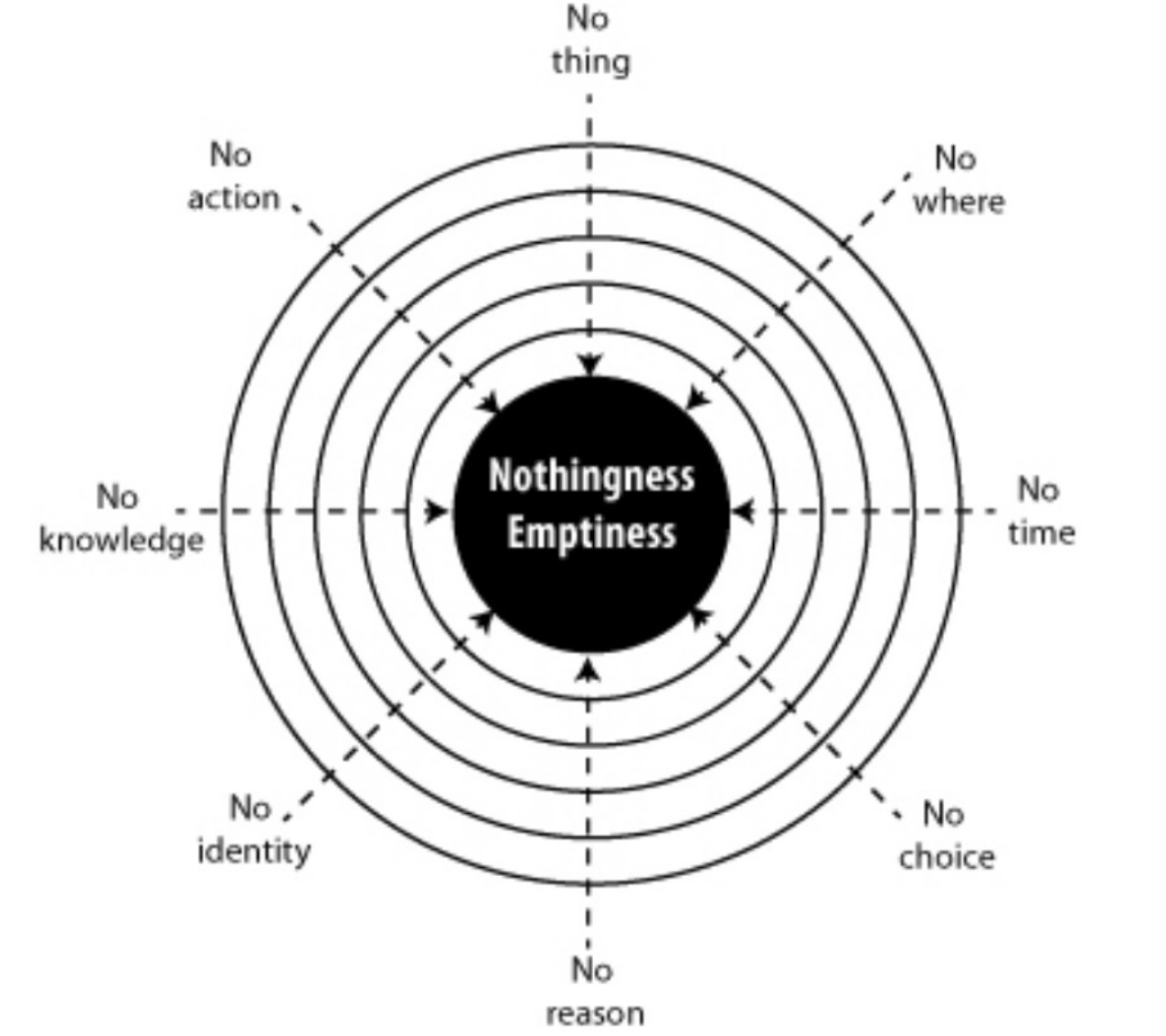
Japanese aesthetic ideals are most heavily influenced by Japanese Buddhism. In the Buddhist tradition, all things are considered as either evolving from or dissolving into nothingness. This “nothingness” is not empty space. It is rather a space of potentiality.
If the seas represent potential then each thing is like a wave arising from it and returning to it. There are no permanent waves. There are no perfect waves. At no point is a wave complete, even at its peak. Nature is seen as a dynamic whole that is to be admired and appreciated.
This appreciation of nature has been fundamental to many Japanese aesthetic ideals, “arts,” and other cultural elements. In this respect, the notion of “art” (or its conceptual equivalent) is also quite different from Western traditions..
Japanese aesthetics is a set of ancient ideals that include “wabi” (transient and stark beauty), “sabi” (the beauty of natural aging), and “yūgen.” These ideals, and others, underpin much of Japanese cultural and aesthetic norms.. Thus, while seen as a philosophy in Western societies, the concept of aesthetics in Japan is seen as an integral part of daily life.
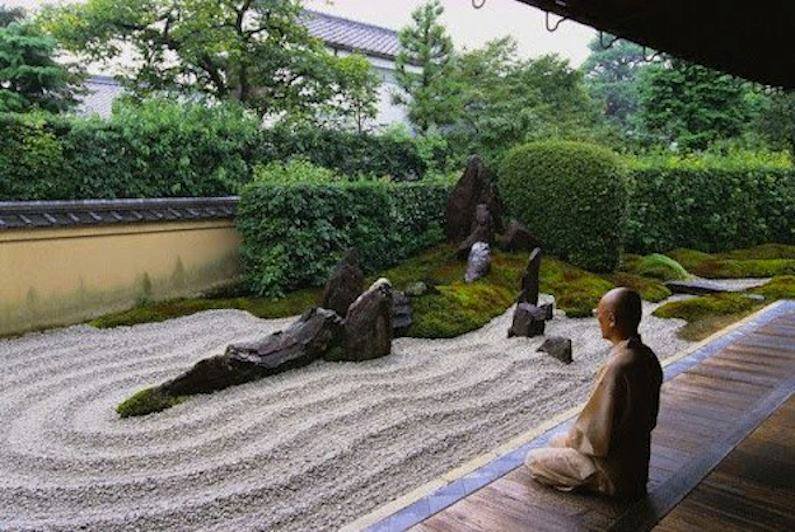
Wabi and sabi refers to a mindful approach to everyday life. Over time their meanings overlapped and converged until they are unified into wabi-sabi (侘寂), the aesthetic defined as the beauty of things “imperfect, impermanent, and incomplete.”
Things in bud, or things in decay, as it were, are more evocative of wabi-sabi than things in full bloom because they suggest the transience of things. As things come and go, they show signs of their coming or going and these signs are considered to be beautiful.
In this, beauty is an altered state of consciousness and can be seen in the mundane and simple. The signatures of nature can be so subtle that it takes a quiet mind and a cultivated eye to discern them. In Zen philosophy there are seven aesthetic principles for achieving wabi-sabi.
Fukinsei (不均整): asymmetry, irregularity; Kanso (簡素): simplicity; Koko: basic, weathered; Shizen (自然): without pretense, natural; Yugen (幽玄): subtly profound grace, not obvious; Datsuzoku (脱俗): unbounded by convention, free; Seijaku (静寂): tranquility, stillness.
Each of these things are found in nature but can suggest virtues of human character and appropriateness of behaviour. This, in turn suggests that virtue can be instilled through an appreciation of, and practice in, the arts. Hence, aesthetic ideals have an ethical connotation and pervade much of the Japanese culture.”
Principle text source: Wikipedia – Japanese Aesthetics
-
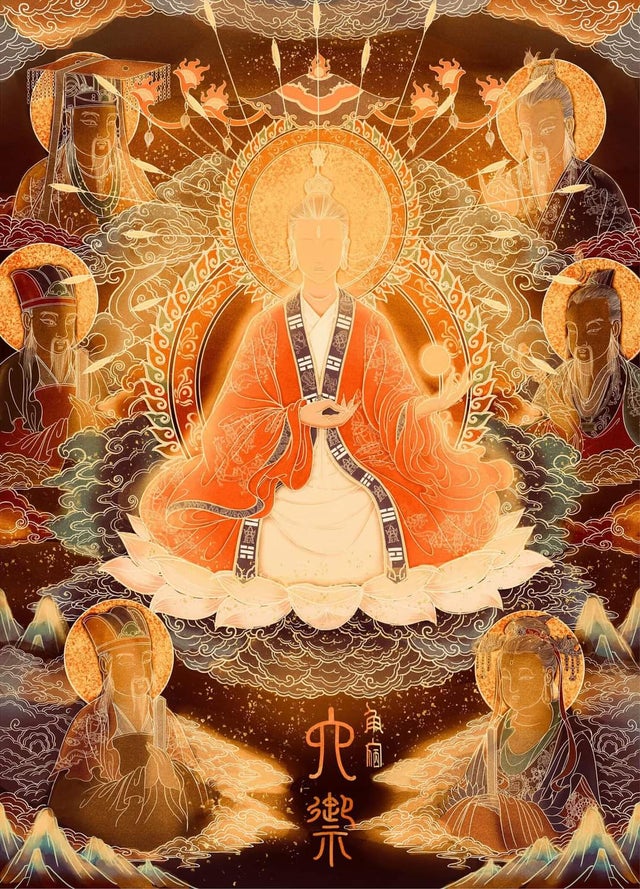
A contemporary portrait of Li Daochun (李道纯) (late 13th cent.), a Yuan-Dynasty Daoist master of the Quanzhen (全真) school and author of "The Book of Balance and Harmony“ (中和集)
-
Does a Dog Have Buddha Nature?
A monk asked the priest Jōshū, “Does a dog have buddha nature, or not?” Jōshū replied, “Mu!” - Zen kōan called Jōshū’s Dog
My beloved dog is called "moo" (pronounced Mu)
-
"In reality time and space exist in you; you do not exist in them." - Sri Nisargadatta Maharaj
-
Reflections on technology for meditation
The following is a responds to an interview about using "brain computer interfaces" and "virtual reality" to "enhance" the meditation experience. Even though i am a long term dedicated practitioner of the internal arts, this is just a momentary opinion and food for thought, from a beginners mind.

For me, one of the most beautiful and empowering aspects of meditation (and related internal arts, like qigong, yoga, etc.) is that one can perform it anywhere, anytime - completely with out the need for any complicated technology. There are almost no external dependency - it's just you, a cushion and some time. And many traditions (soto zen, etc.) emphasis that there is no "place to reach" or "thing to improve" (like some weird "mindful video-game high-score") - it is simply about sitting regularly in the here and now. I would argue it is precisely this simplicity, from which much of the power of the meditative experience emanates. While some scientists, technologists and designers make the case that "the ticket to entry is very high, hence we need more tech", i believe learning mediation and establishing it as daily habit, are very achievable goals - as illustrated by the quickly growing amounts of meditators.

One of the benefit of the traditional low-tech or no-tech approach to mediation/mindfulness, is that it deliberately makes/leaves space for direct human-to-human experiences (teaching and similar social activities.) and nature-to-human experiences. By introducing technology as definitive centre piece of a meditative praxis, we run the very real risk of deteriorating these essential human experiences. For all its blessings, the negative sides of technology should not be ignored - especially when talking about "tech for well-being" (for a nuanced view on tech, see this).
Don't get me wrong, i think technology can certainly help and has an important role to play making mindfulness a universally accessible mainstream culture - i am just earnestly questioning where the line is between "this tool is truly useful and essential for my well-being - not addictive, distracting, etc." - and "I actually just want to play with cool tech-toys, but not so much just sit and do the wonderful but often very challenging inner work".
-
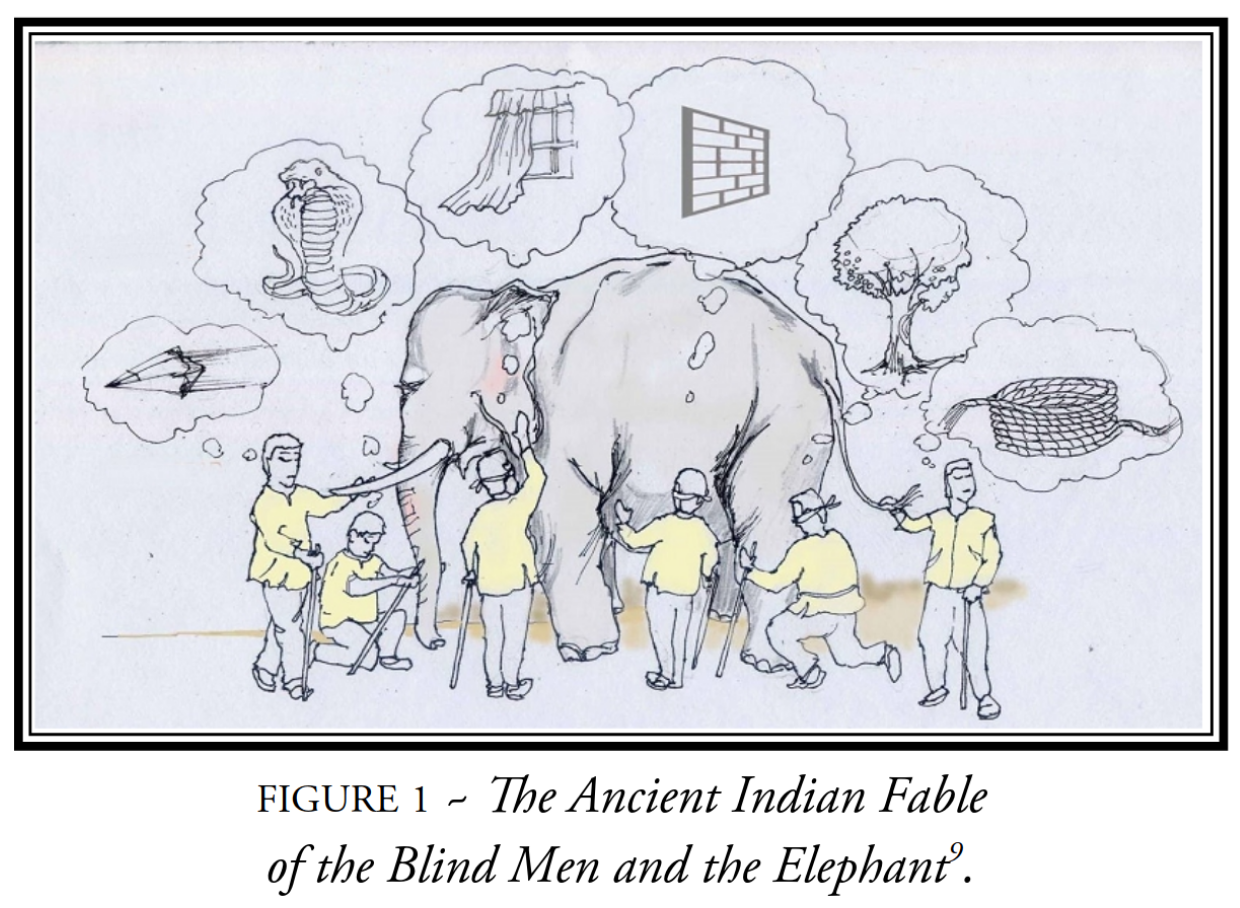
The Ancient Indian Fable of the Blind Men and the Elephant.