tag > Narrative
-
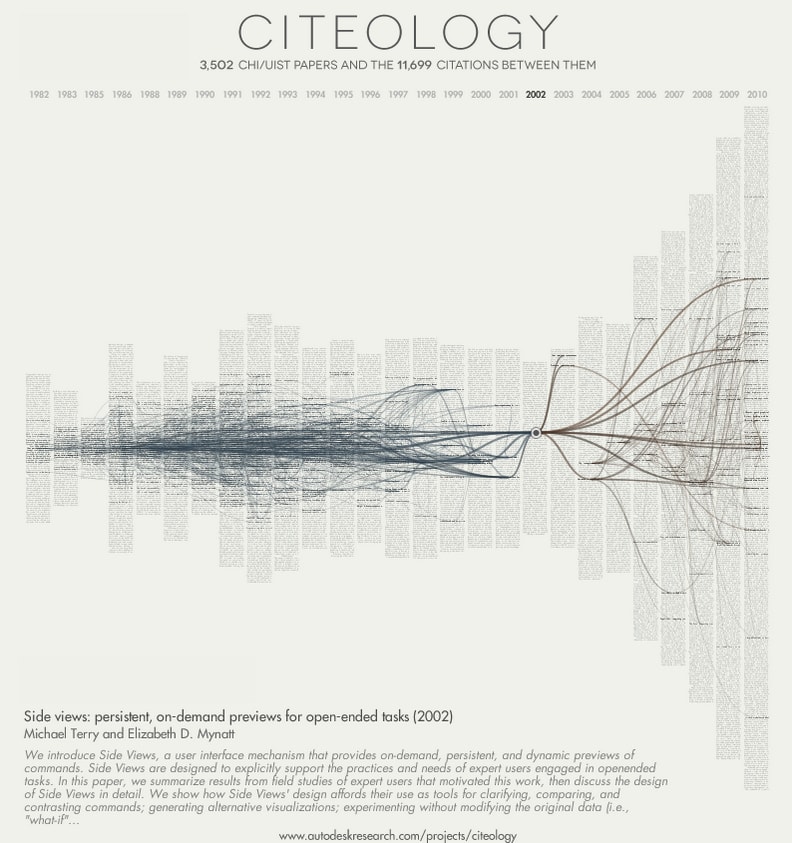
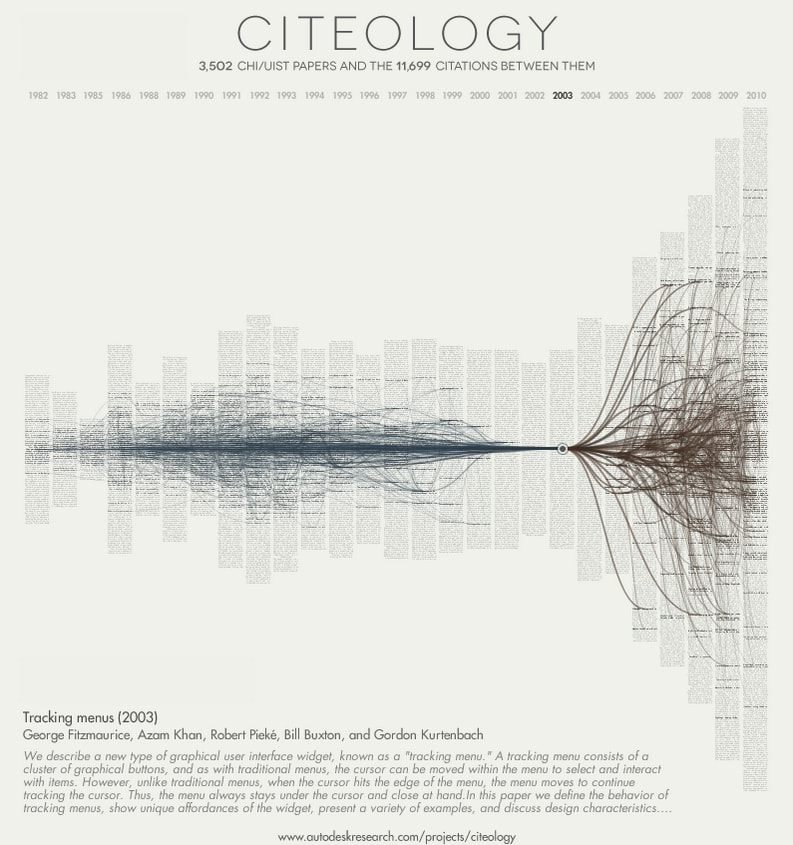
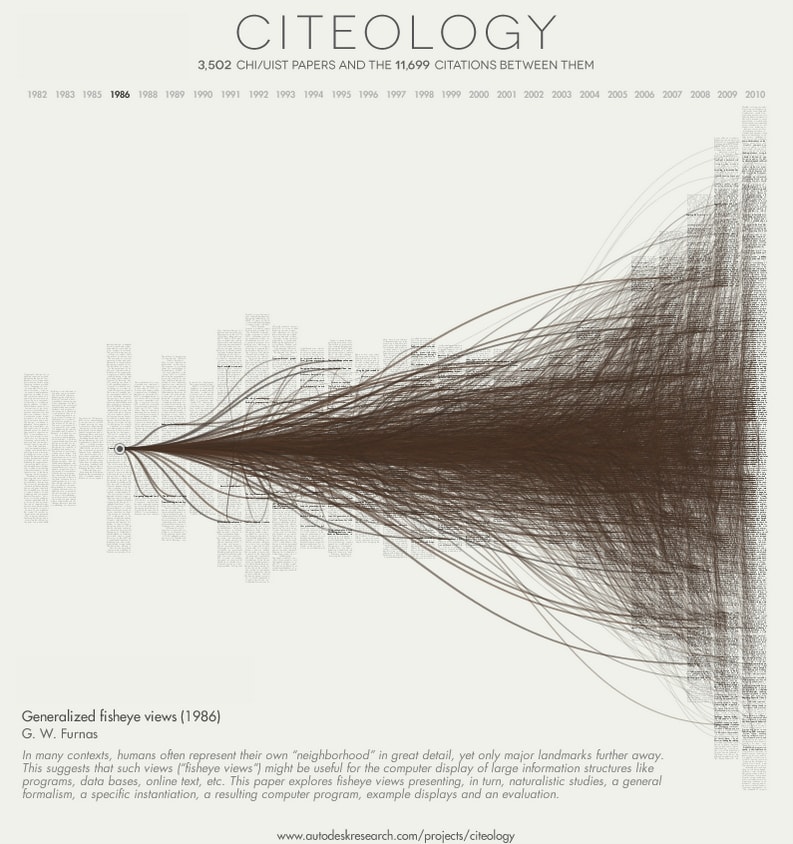
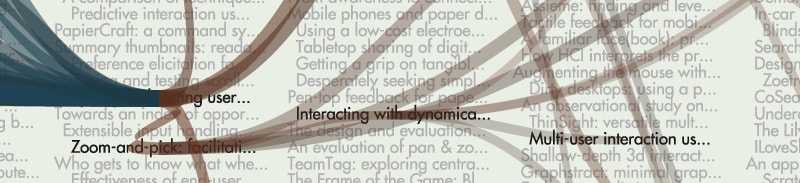
Citeology: Visualizing Paper Genealogy - by Autodesk Research (2012)
-

"I used to think great teachers inspire you. Now I think I had it wrong. Good teachers inspire you; great teachers show you how to inspire yourself every day of your life. They don't show you their magic. They show you how to make magic of your own." - Alfred Doblin
-
Peppercorns: "System failures that are not bugs. Peppercorn in your soup VS fly in your soup, could be in design, but may still be unpleasant or unusual." - coined by @lawrennd
-
Reflections on Temporarily
The "A Bifurcation called 2016" video by Mihai Nadin provoked a #Comment on time:
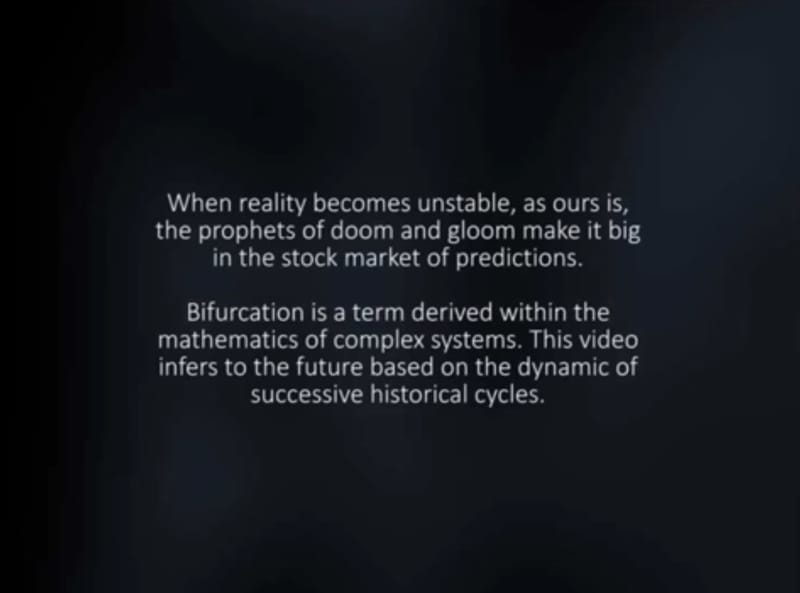
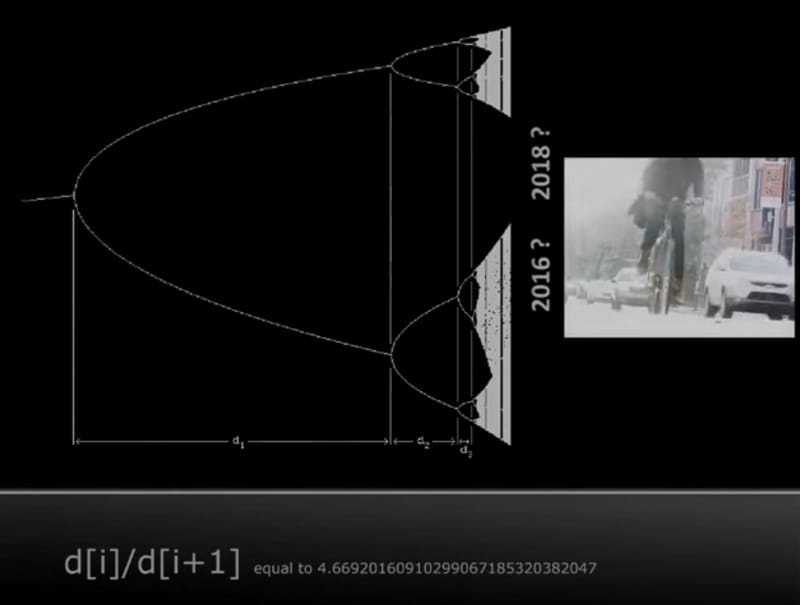
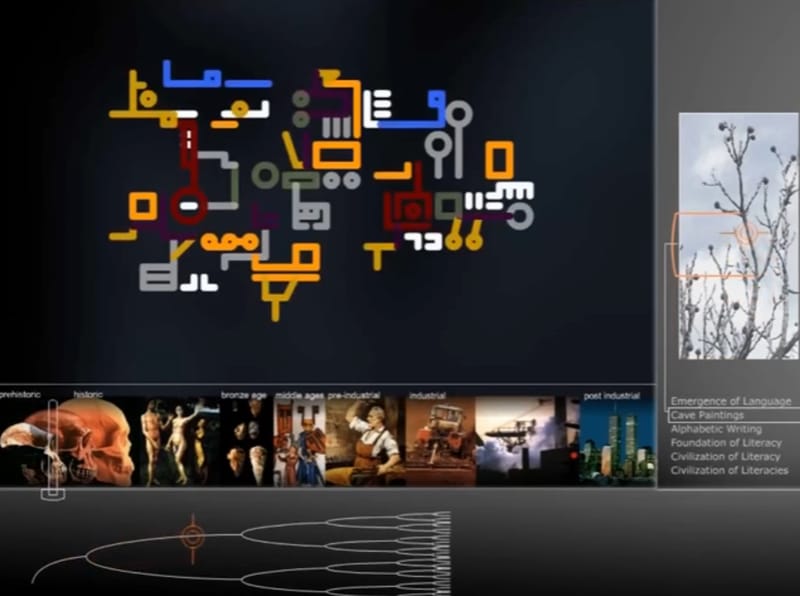
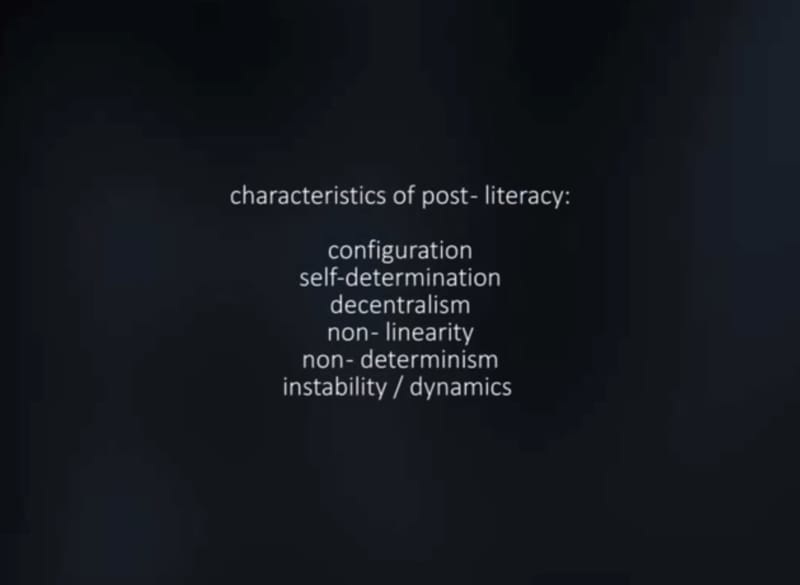
Mihai Nadin's entertaining 'bifurcation' model/theory is somewhat related to Terence McKenna's "Timewave Zero". I find it peculiar, that in all such "models of accelerating time/change" the critical singularity event is predicted to happen ("accidentally / conveniently") presciently during the life-time (or end of life, akin to the christian "armageddon") of the person stating the theory. Temporarily is the ultimate magic trick: As scientifically/objectively hardly approachable, it firmly is in the domain of the political, subjective and comedic. Paul Virilio's essay "Speed And Politics" on "Dromology" is an interesting read in this context. Within infinity, the distance from contemporary complex "Theories of Change" to ancient "Book of Changes" (I Ching) , is the same as the square root of negative one: Imaginary.
Terence McKenna - Timewave Zero:
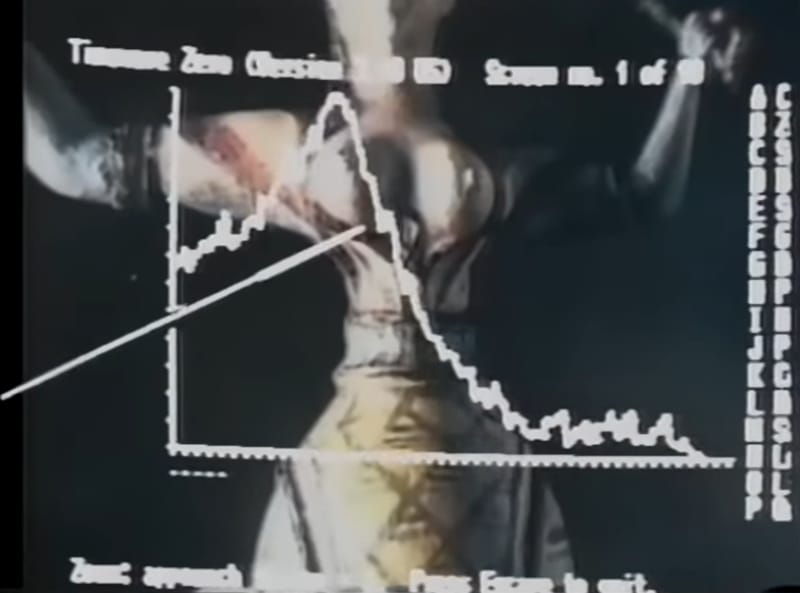
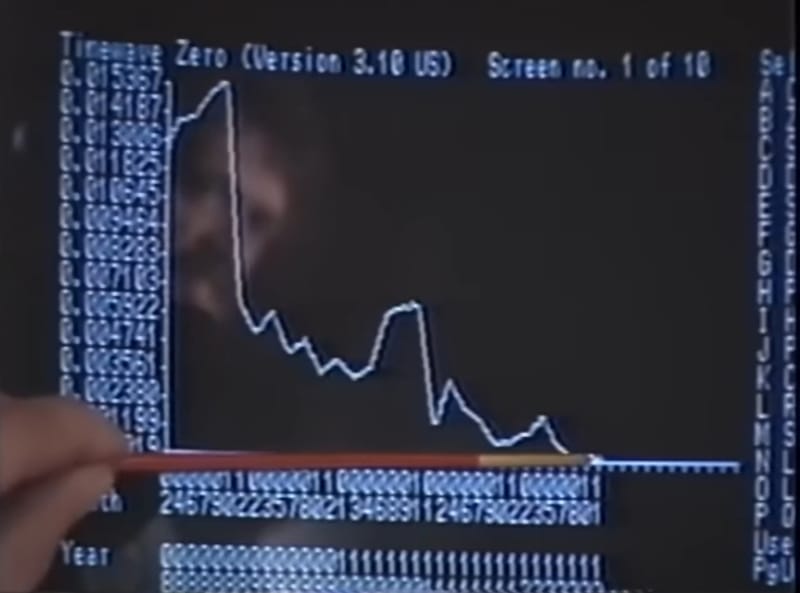
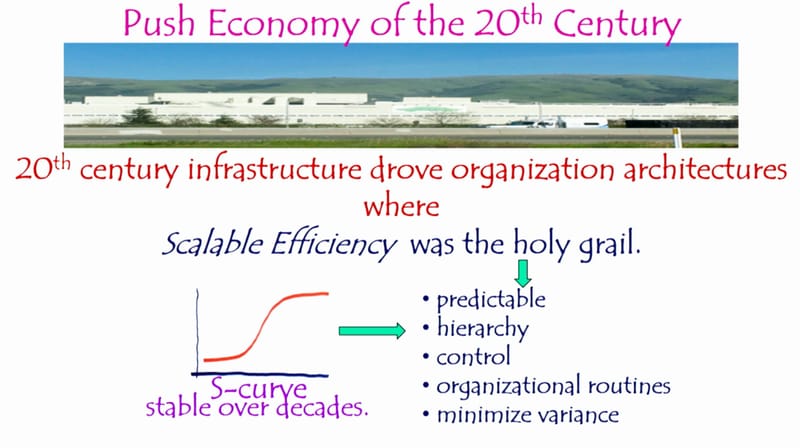
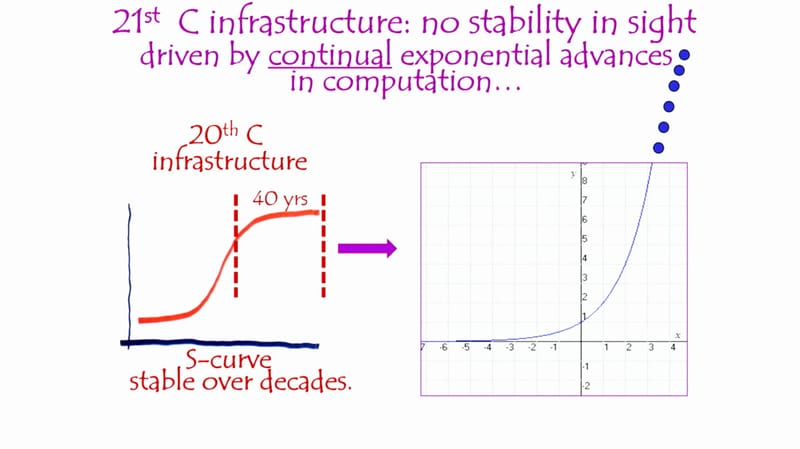
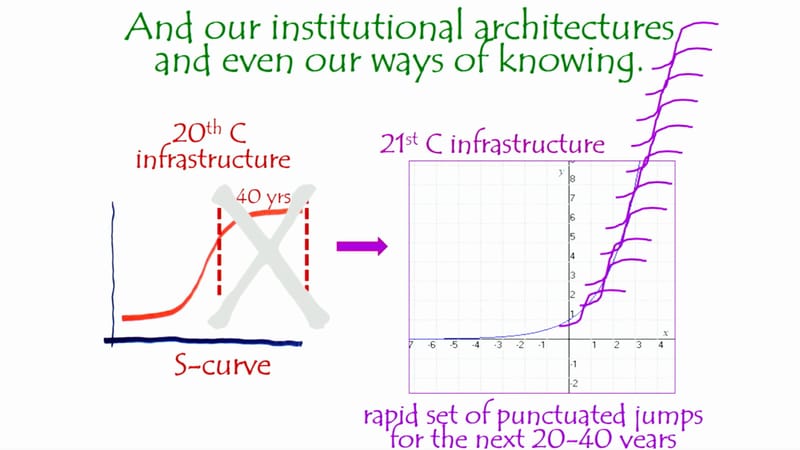
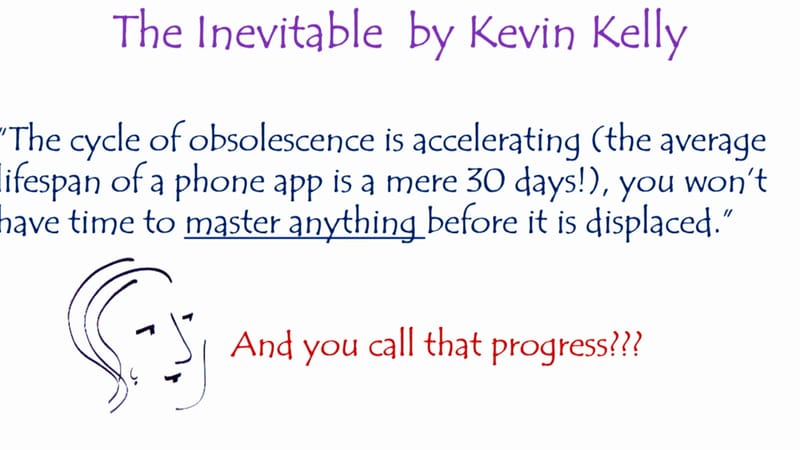
A far more pronounced example of the "acceleration fallacy" (almost bordering on the brute-force senseless & pointless speed-cult of Ray Kurzweil & co.) can be found in the following talk:
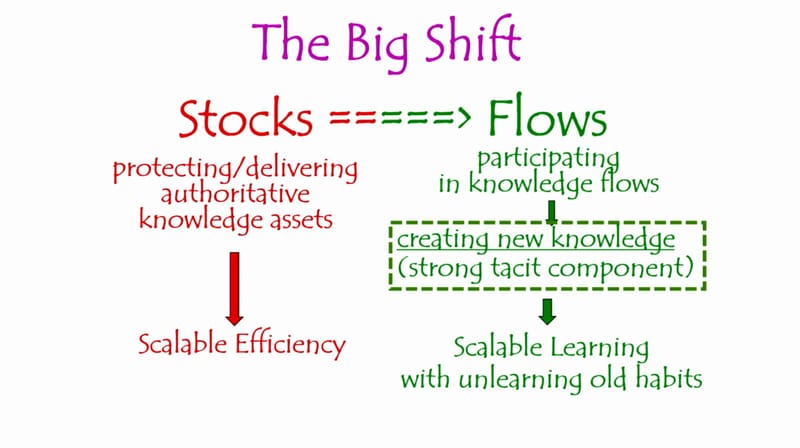
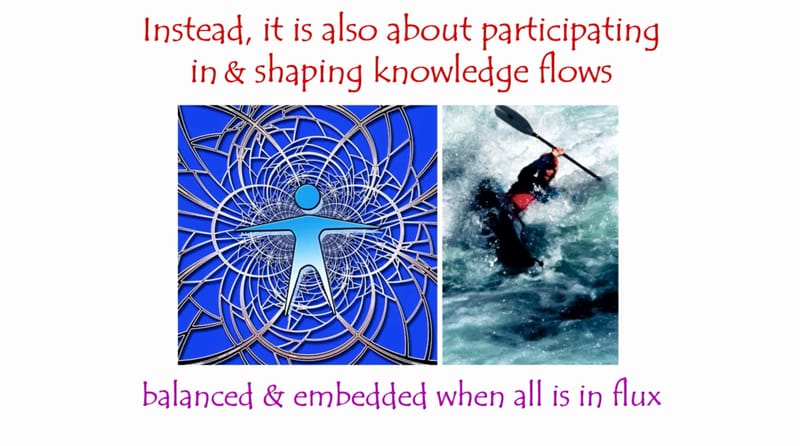
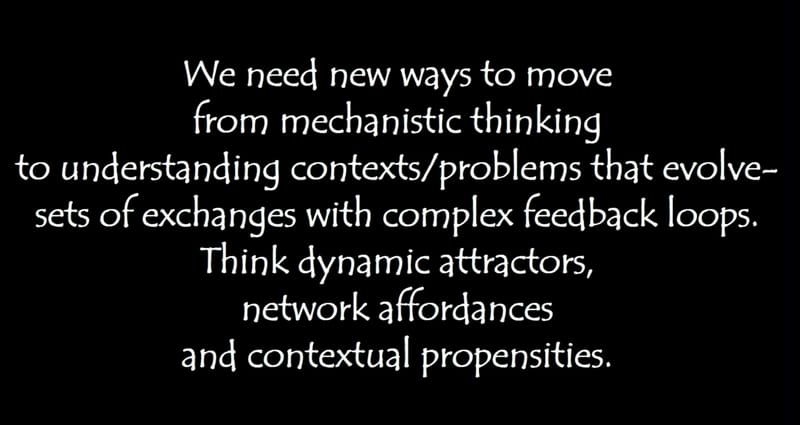
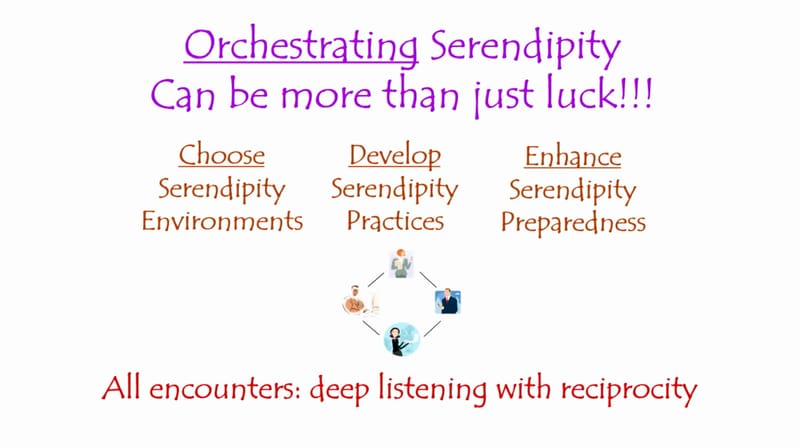
"Sense-Making in our Post AlphaGo World" - by John Seely Brown
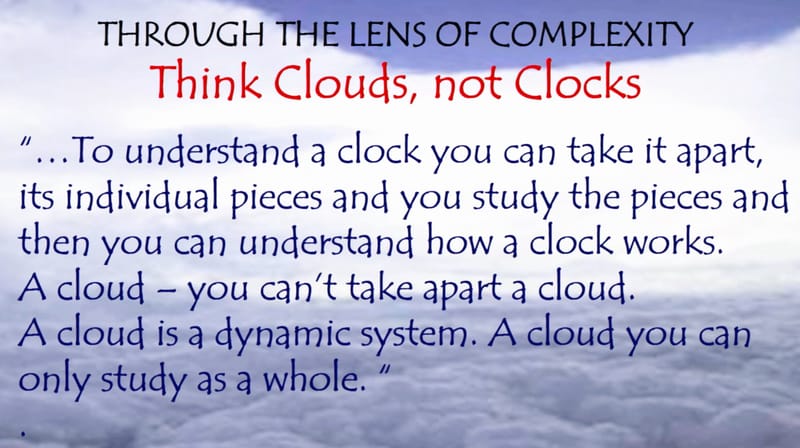
Directional/Qualitative/Evolutionary views on temporarily are very wide spread. See the following on A.E.Whitehead's views:"He then observes that the mark of higher forms of life is that they are actively engaged in modifying their environment, an activity which he theorizes is directed toward the three-fold goal of living, living well, and living better. In other words, Whitehead sees life as directed toward the purpose of increasing its own satisfaction. Without such a goal, he sees the rise of life as totally unintelligible.
"
The root of such "models of accelerating/progressing time/change" is essentially the illusive notion of the Afterlife (in Christianity, Islam, etc.), Enlightenment (in Buddhism, etc.) or more generally "the other" which "we are racing towards". It is truly peculiar, how this narrative tempted and confused thinkers across all ages, right up to the present day (the cult of optimization and objective functions in artificial intelligence, etc.). Isaac Asimov's "The Last Question" short story eloquently explores the nonsensical nature of of such narratives.

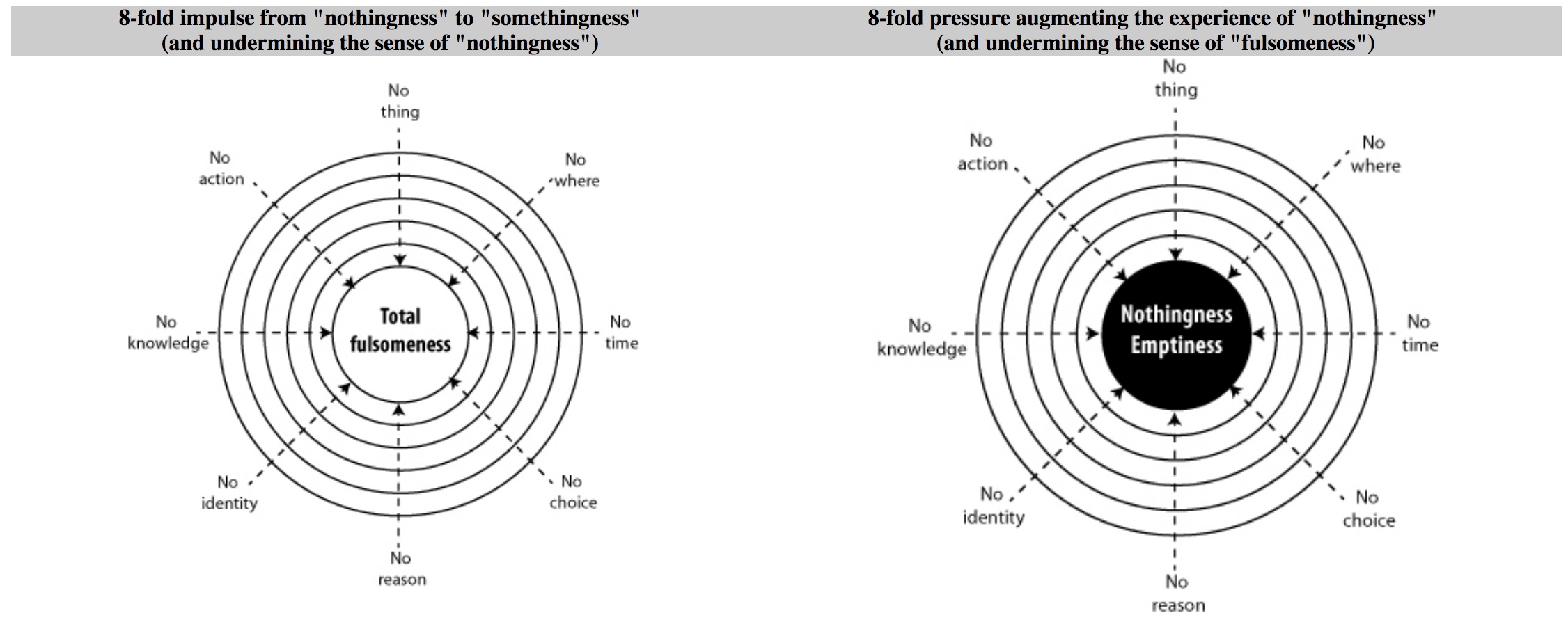
Interesting alternative perspective on temporarily ("non-directional", "static", etc.) can be found in Japanese Shintoism or Soto Zen, where practitioners do not actively seek Enlightenment, but rather seek to fully experience every moment; that is, to be acutely aware of every action in the here and now. As Zen Master Taisen Deshimaru once said, "Zazen has no object, it is purposeless, it only brings us back to ourselves." One doesn't need to worry about Satori. Or in other words: Stop trying to understand. There is nothing to compute. There is nothing to discover. This is it, here and now.
Finally, consider the following quote for a perhaps more relaxed and fun perspective on temporarily:
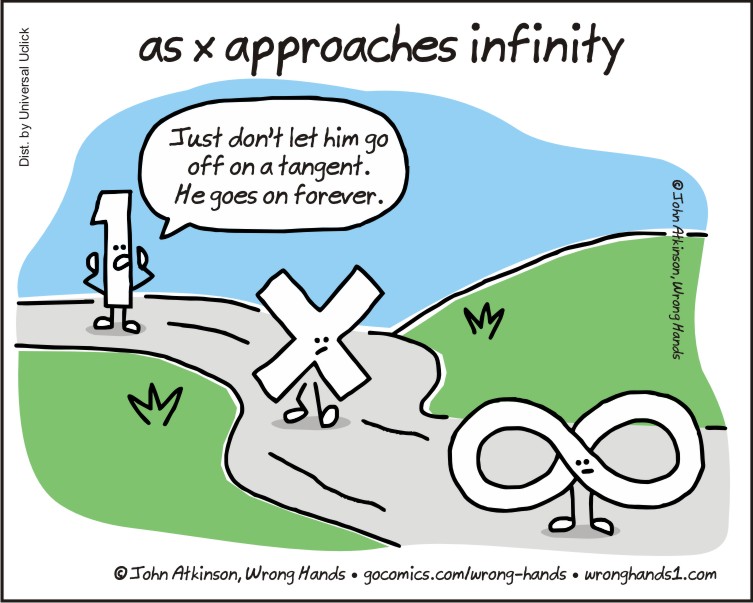
“In conclusion, there is no conclusion. Things will go on as they always have, getting weirder all the time.” ― Robert Anton Wilson
-
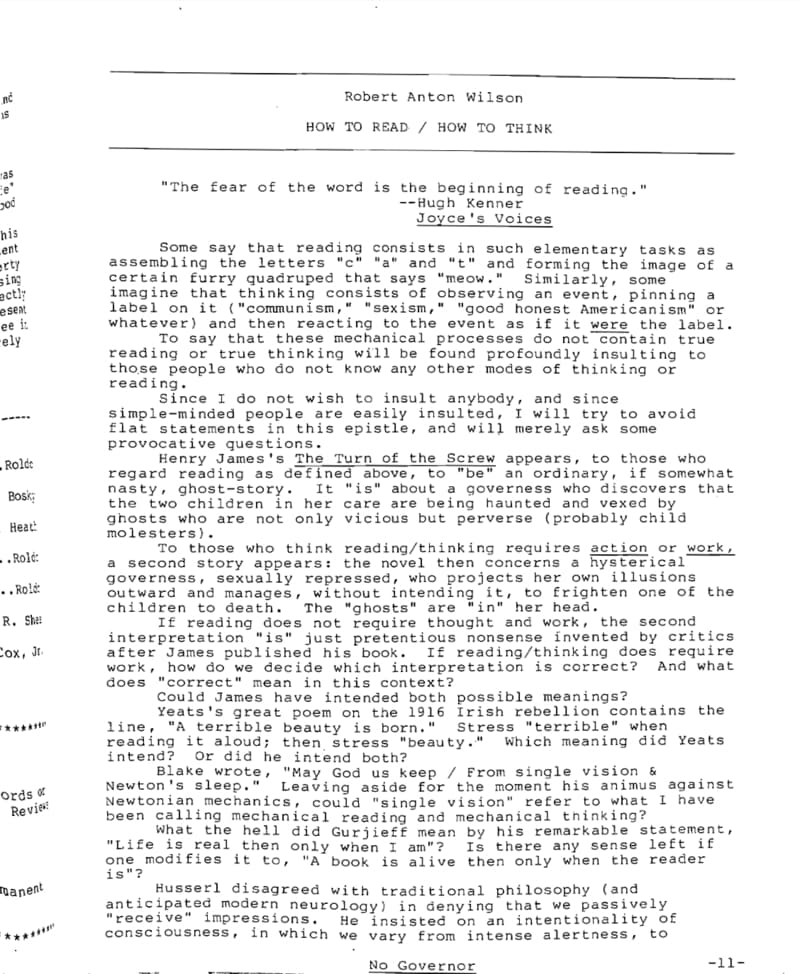
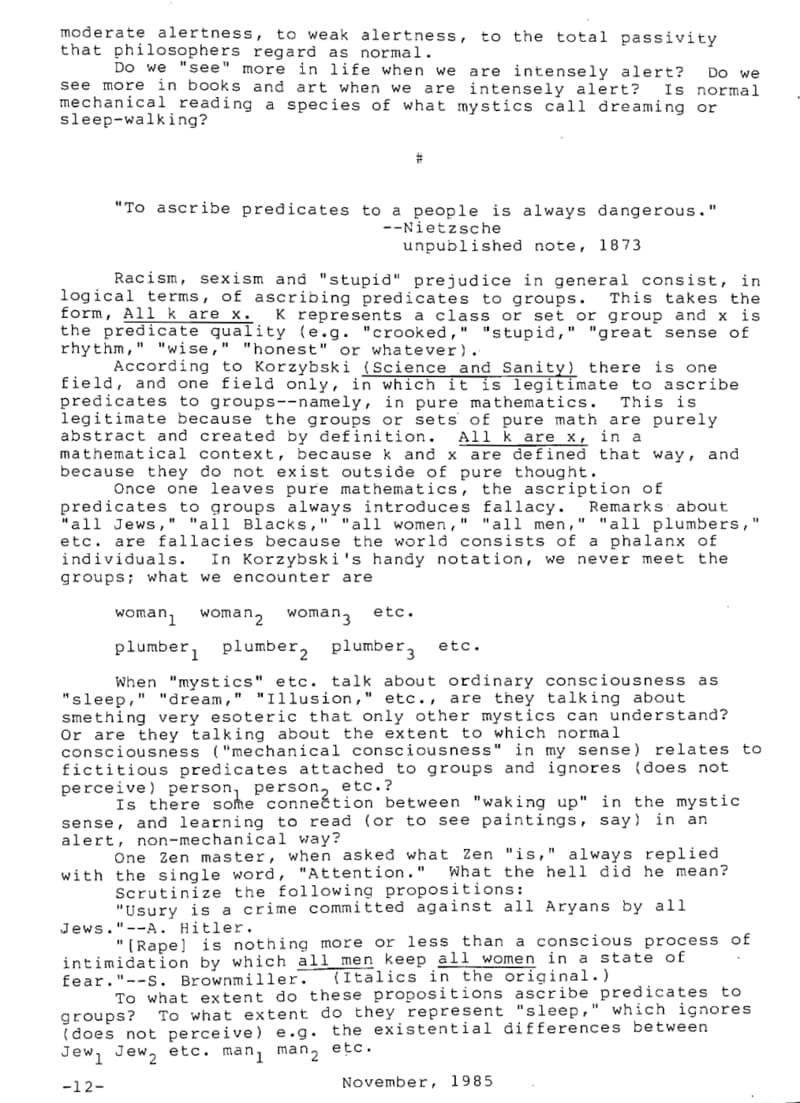
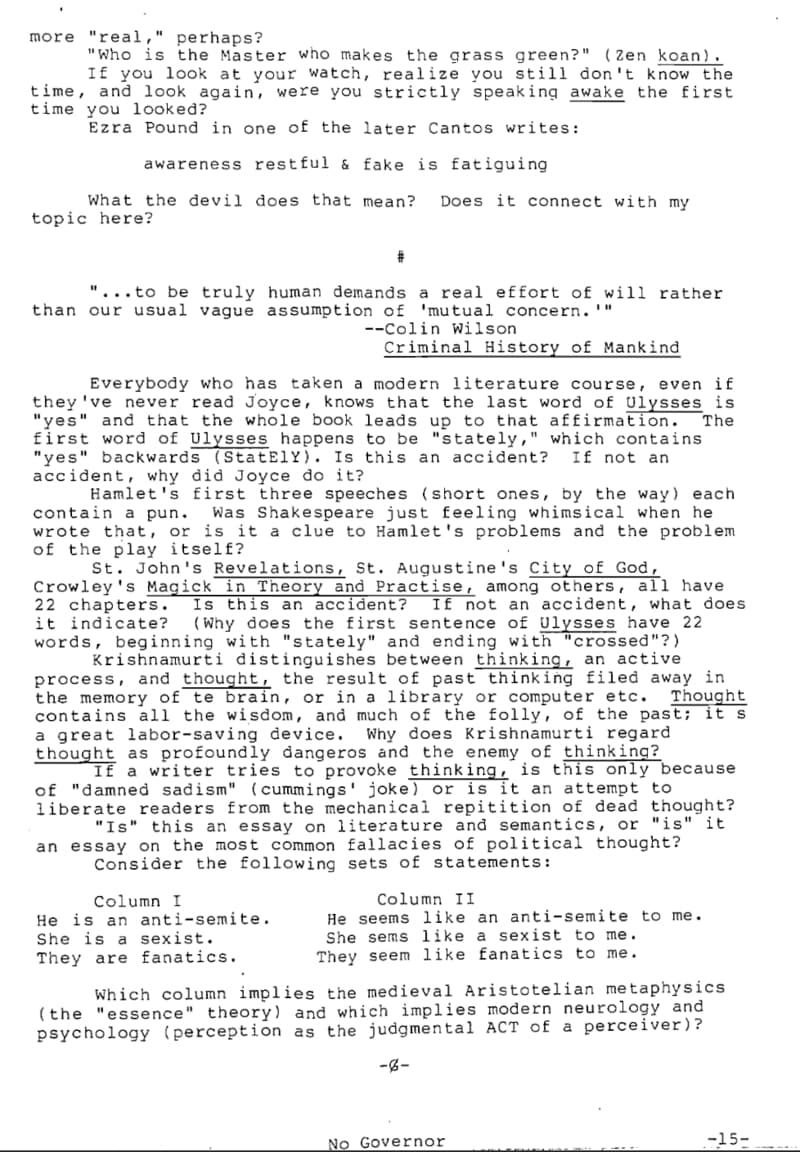
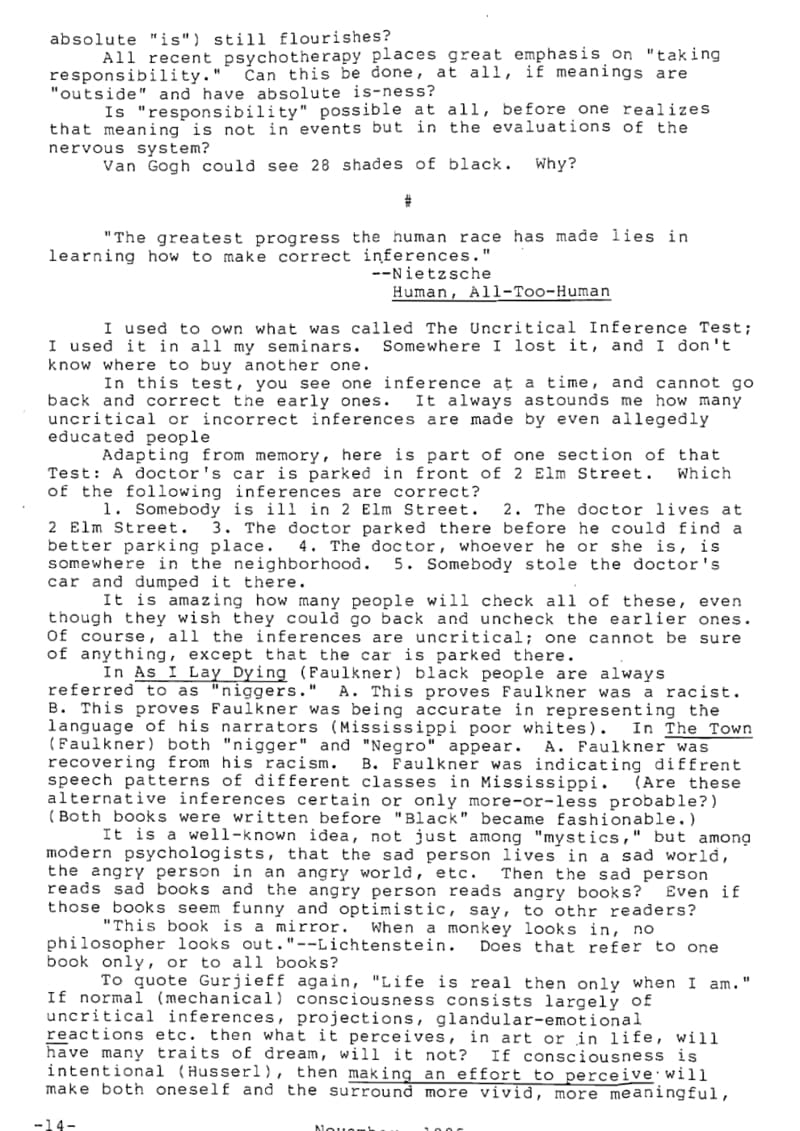
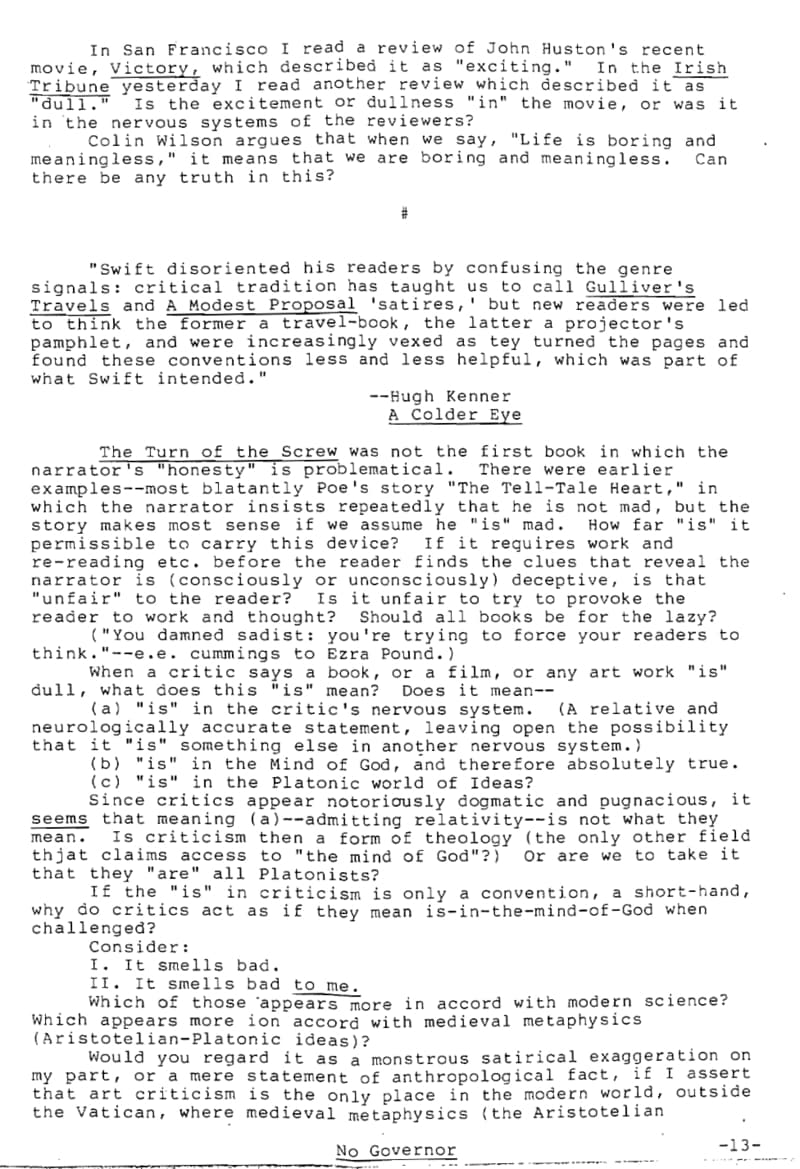
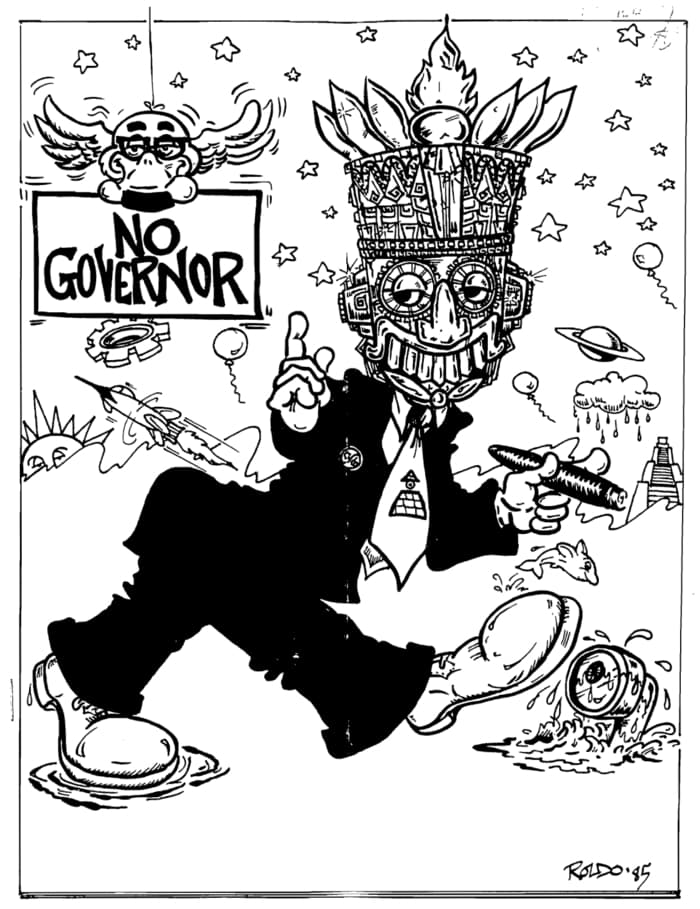
"How to read / How to think" - by Robert Anton Wilson, in "No Governer: 08" (1985)
"The fear of the word is the beginning of reading" - Hugh Kenner, Joyce's Voices
-
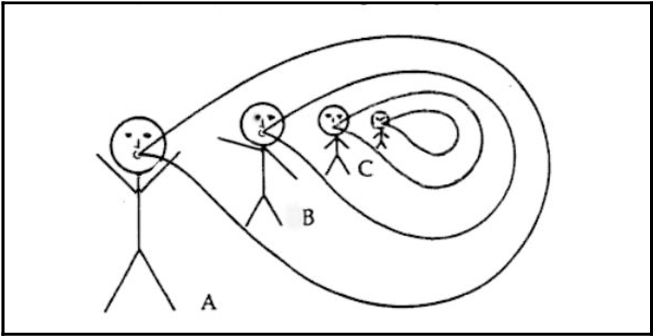
"Narrative structure of One Thousand and One Nights"
-

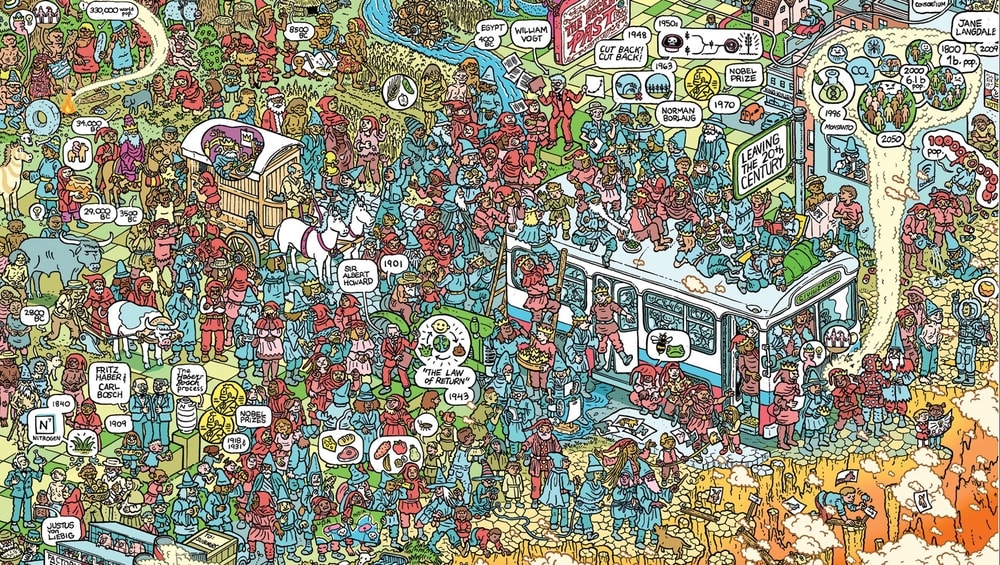
Greta Thunberg at an 'apocalyptic environmentalism' event by Extinction Rebellion (2019) William Vogt (1902 - 1968) "laid out the basic ideas for the modern environmental movement. He founded 'apocalyptic environmentalism'—the belief that unless humankind drastically reduces consumption & limits population, it will ravage global ecosystems. Vogt argued that affluence is not our greatest achievement but our biggest problem. If we continue taking more than the Earth can give, the result will be devastation on a global scale. Cut back! was his mantra."
Inhale & exhale deeply, relax and say "everything is ok, me and everyone will die either way"... then explore these related links:
- Book: "The Malthusian Moment: Global Population Growth and the Birth of American Environmentalism" - by Thomas Robertson
- Essay: "Can Planet Earth Feed 10 Billion People? Humanity has 30 years to find out." - by Charles C. Mann
- https://en.wikipedia.org/wiki/Doomsday_cult
- https://www.reddit.com/r/collapse/
-
"It works like magic." - Steve Jobs (2007, iPhone launch)

-
"I’m simply content to be alive and living my life. I have no bucket list. Life is the bucket. Enjoy every day. It may be your last." - quote from one of Ted Rheingold's final blog posts, before his death from cancer in 2017.
-
"Guerrilla Ontology is the basic technique of all my books. Ontology is the study of being; the guerrilla approach is to so mix the elements of each book that the reader must decide on each page 'How much of this is real and how much is a put-on?'" - Robert Anton Wilson, The Illuminati Papers (1980)

-
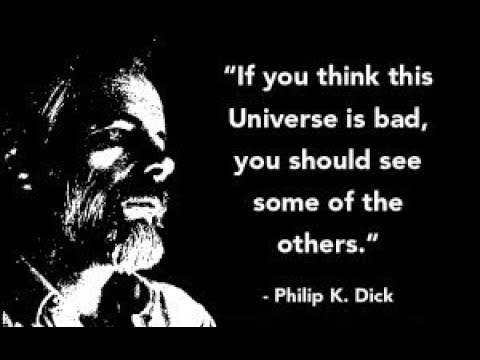
I Understand Philip K. Dick - by Terence Mckenna (via)
"Phil wasn’t nuts. Phil was a vortex victim.* Schizophrenia is not a psychological disorder peculiar to human beings. Schizophrenia is not a disease at all but rather a localized traveling discontinuity of the space time matrix itself. It is like a travelling whirl-wind of radical understanding that haunts time. It haunts time in the same way that Alfred North Whitehead said that the color dove grey 'haunts time like a ghost.'"
"Anyhow the man was a SF writer and a scholar of classical philosophy, he could not be expected to stay in touch with arcane discoveries beginning to take place on the frontiers of research mathematics. But he got very close, his intuition was red hot when he reached the conclusion that a unified abstract structure lay behind the shifting always tricky casuistry of appearances. The concept he needed was that of fractals and fractal mathematics. The infinite regress of form built out of forms of itself built out of forms of itself * unto infinity. The principle of self similarity. Phil was right, time is not a linear river. He was right, the Empire never ended. Parallel universes is too simple a concept to encompass what is really going on. The megamacrocosmos is a system of resonances, of levels, of endlessly adumbrated fun-house reflections. PKD really was Thomas and Elijah and all the other precursive concrescences that came together to make the cat-loving fat man who compacted trash into gold. The logic of being that he sought, and largely found, was not an either-or logic but a both-and and and-and kind of logic."
"What’s got to be gotten over is the false idea that hallucination is a private matter."
-
Talk by Jeremy Lent on "Cultural Mindfulness" - at the Stanford University "Contemplation By Design Summit" 2018.
#Comment: Mr.Lent's talk contains interesting notions, but overall its way to heavy on "we are so very progressive, post-dualist, post-materialist, post-post, woke people" virtue signaling touchy-feely boilerplate bla - indicative of current anglo eco culture. For my taste, he could shrink the talk to 15min and include a healthy does of high weirdness and comedy.
-
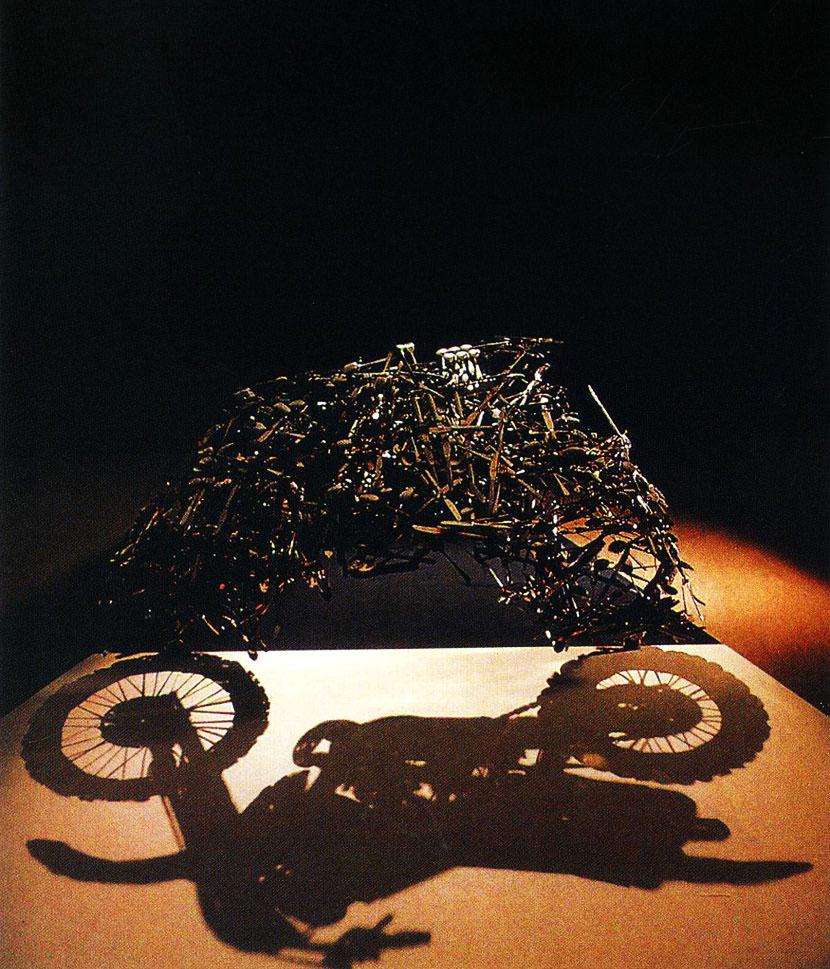
A great analogy for the contemporary A.I Hype?
The late Shigeo Fukuda's sculptures portray deception & optical illusions: created entirely from forks, knives, and spoons, they cast detailed shadows like this motorcycle: http://www.spoon-tamago.com/2015/08/03/illusionistic-shadow-art-by-shigeo-fukuda/
-
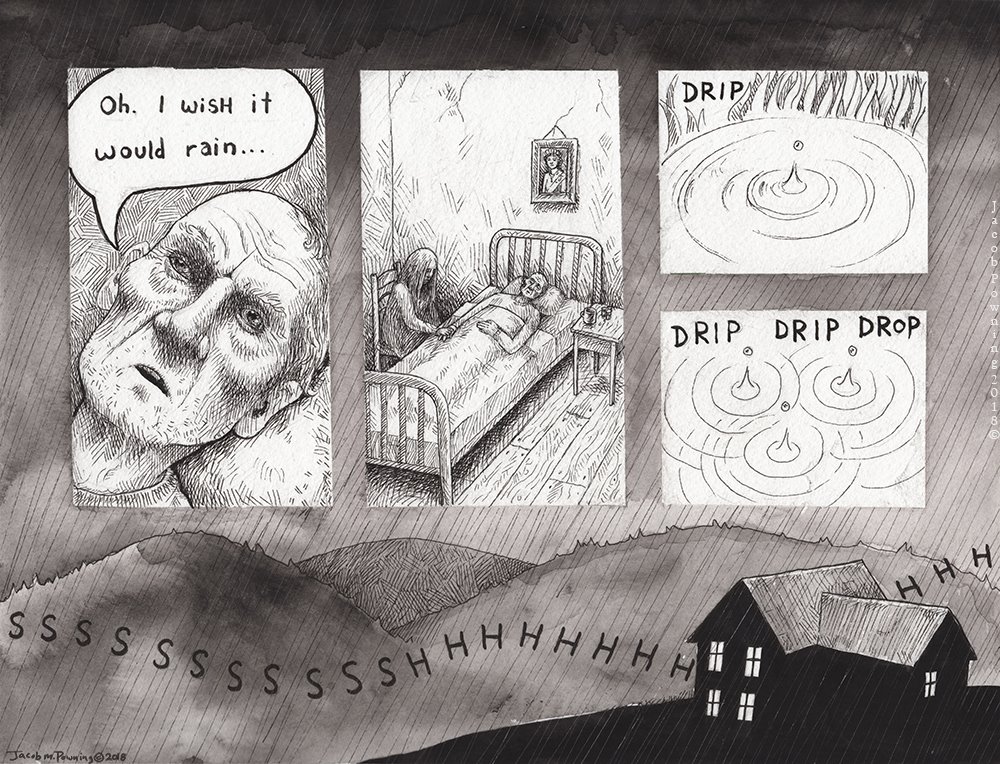
Micro #Narrative & illustration by Jake Powning