tag > ALife
-
Notes on Robert Rosen (1934 - 1998), an American theoretical biologist:
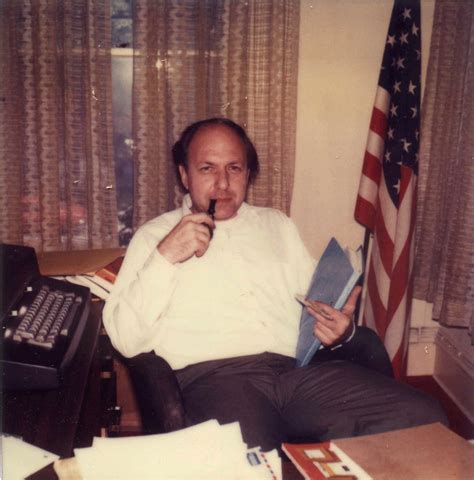
‘What are the defining characteristics of a natural system for us to perceive it as being alive?’’ - Robert Rosen in "Life Itself: A Comprehensive Inquiry Into the Nature, Origin, and Fabrication of Life"
"I do not consider myself a philosopher. I am a biologist, attempting to grapple with the Schrodinger question, “What is Life?” It turns out that this is not an empirical question, to be resolved through observation in a laboratory" - Robert Rosen in "Boundaries and barriers: On the limits to scientific knowledge" (1996)
"No finite organism can completely model the infinite universe, but even more to the point, the senses can only provide a subset of the needed information; the organism must correct the measured values and guess at the needed missing ones."..."Indeed, even the best guesses can only be an approximation to reality - perception is a creative process." - from "Robert Rosen: The Well Posed Question And Its Answer-why Are Organisms Different From Machines?" - by Donald C. Mikulecky
The human body completely changes the matter it is made of roughly every 8 weeks, through metabolism, replication and repair. Yet, you're still you --with all your memories, your personality... If science insists on chasing particles, they will follow them right through an organism and miss the organism entirely. — Robert Rosen, (as told to his daughter, Ms. Judith Rosen)
Presentation "Anticipatory Systems Theory: What the science of Life and Mind can teach us about science, itself" - by Judith Rosen
Presentation: "Robert Rosen And George Lakoff: The Role Of Causality In Complex Systems" - by Hamid Y. Javanbakht
-
Robotic Self-Replication - by Matthew S. Moses & Gregory S. Chirikjian (unpaywalled)
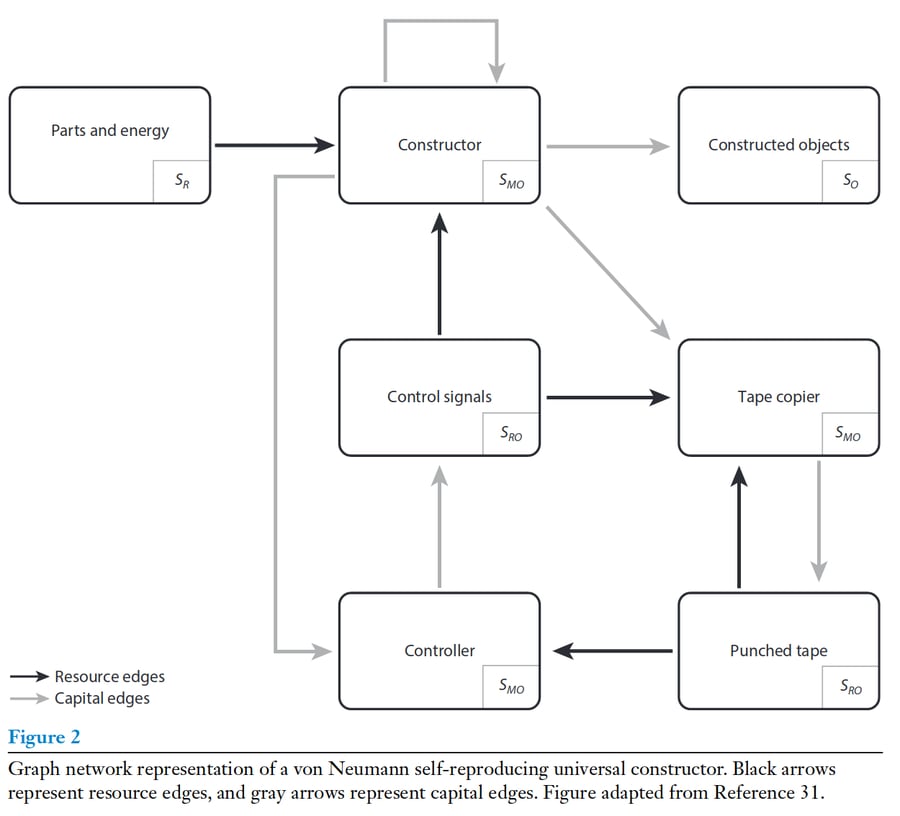
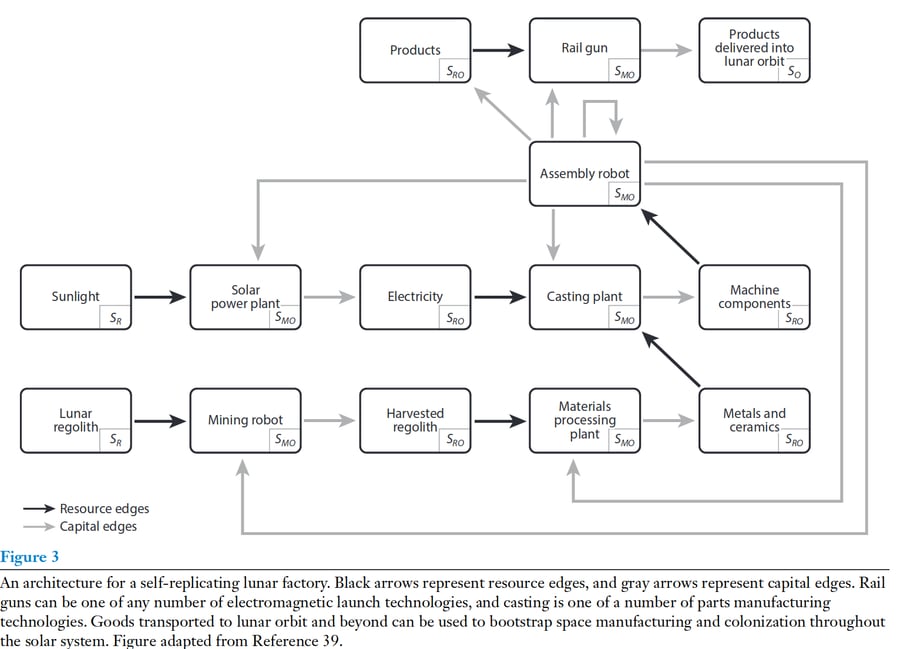
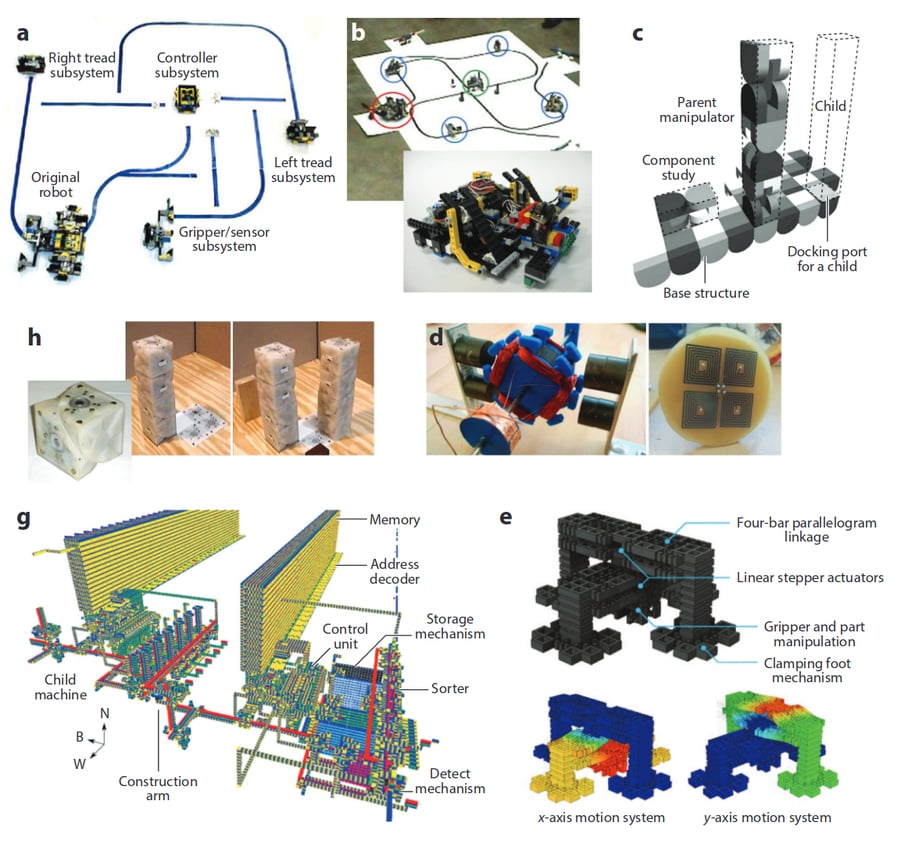
Abstract: The concept of an artificial corporeal machine that can reproduce has attracted the attention of researchers from various fields over the past century.Some have approached the topic with a desire to understand biological life and develop artificial versions; others have examined it as a potentially practical way to use material resources from the moon and Mars to bootstrap the exploration and colonization of the solar system. This review considers both bodies of literature, with an emphasis on the underlying principles required to make self-replicating robotic systems from raw materials a reality.We then illustrate these principles with machines from our laboratory and others and discuss how advances in new manufacturing processes such as3-D printing can have a synergistic effect in advancing the development of such systems.
-
#Book: The Sciences of the Artificial - by Herbert A. Simon (1969) (full e-book)
“Human beings, viewed as behaving systems, are quite simple. The apparent complexity of our behavior over time is largely a reflection of the complexity of the environment in which we find ourselves.” ― Herbert A. Simon, The Sciences of the Artificial
“It is true that humanity is faced with many problems. It always has been but perhaps not always with such keen awareness of them as we have today. We might be more optimistic if we recognized that we do not have to solve all of these problems. Our essential task—a big enough one to be sure—is simply to keep open the options for the future or perhaps even to broaden them a bit by creating new variety and new niches. Our grandchildren cannot ask more of us than that we offer to them the same chance for adventure, for the pursuit of new and interesting designs, that we have had.” ― Herbert A. Simon, The Sciences of the Artificial
“An artifact can be thought of as a meeting point—an “interface” in today’s terms—between an “inner” environment, the substance and organization of the artifact itself, and an “outer” environment, the surroundings in which it operates. If the inner environment is appropriate to the outer environment, or vice versa, the artifact will serve its intended purpose.” ― Herbert A. Simon, The Sciences of the Artificial
-
Synchronized Oscillators (via)
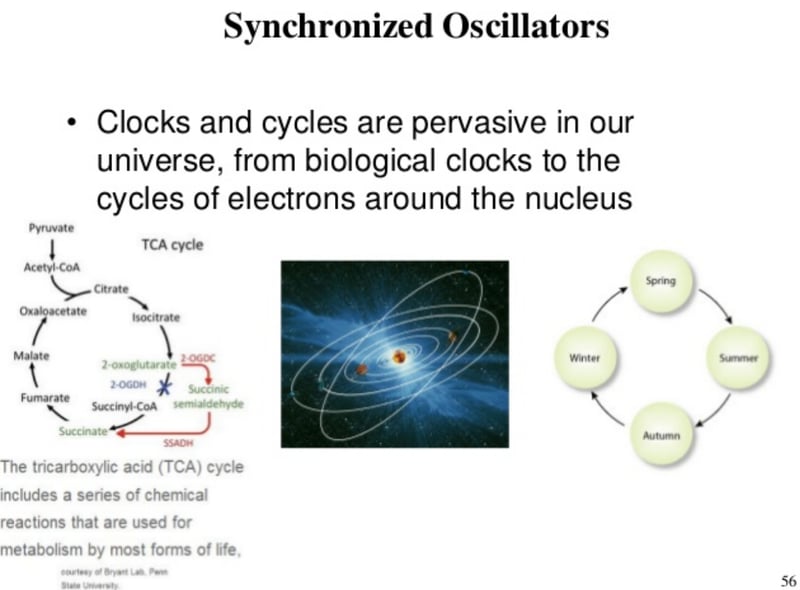
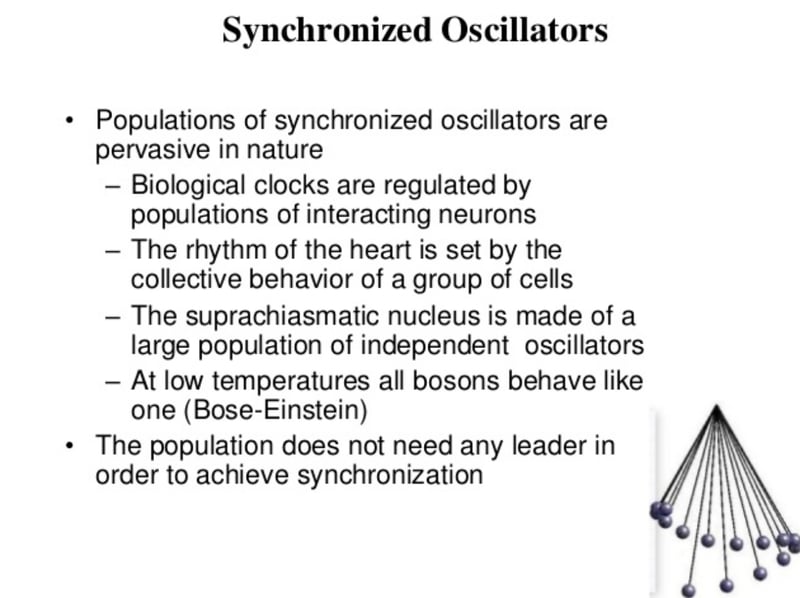
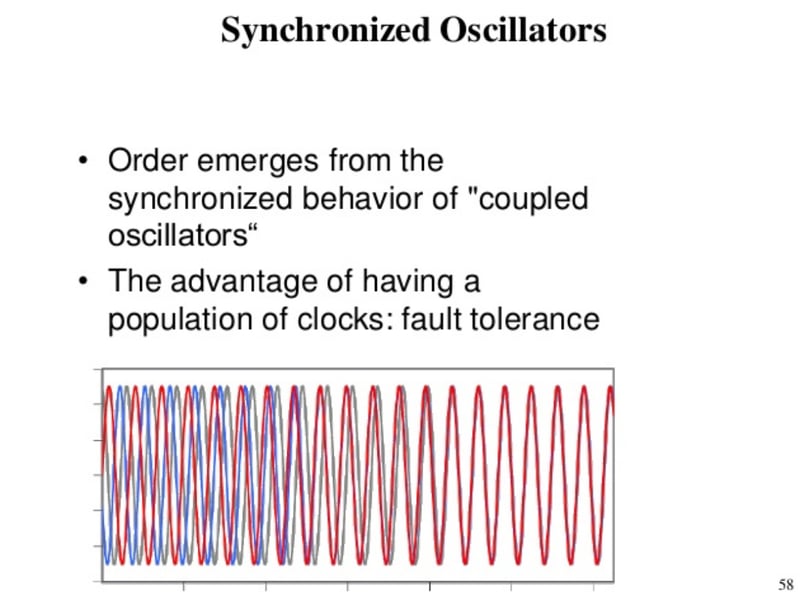
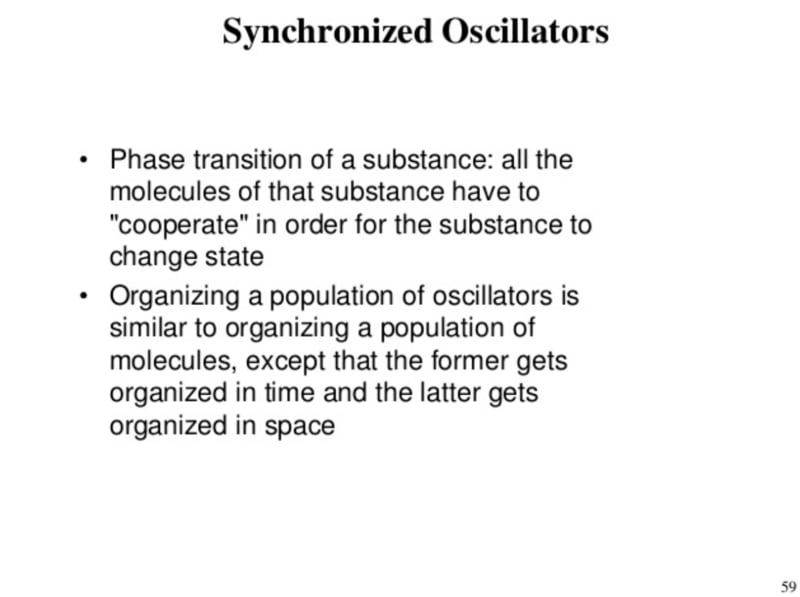
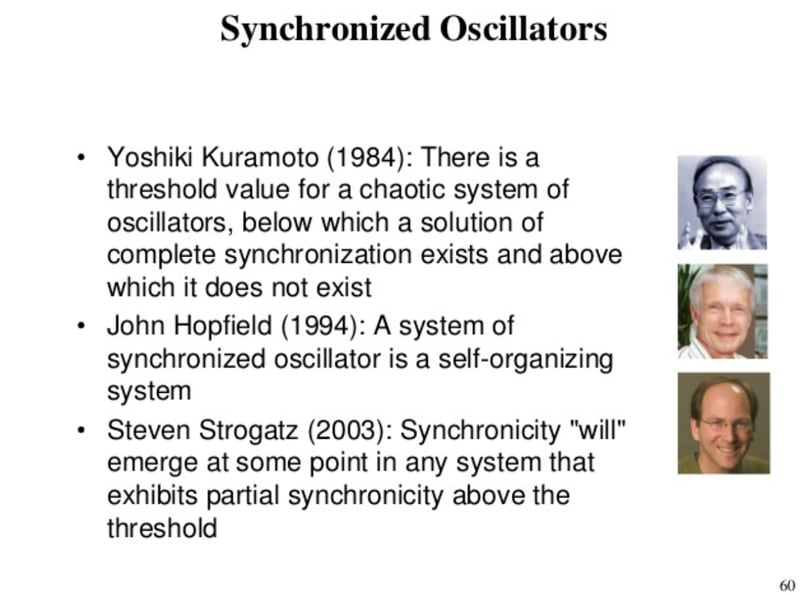
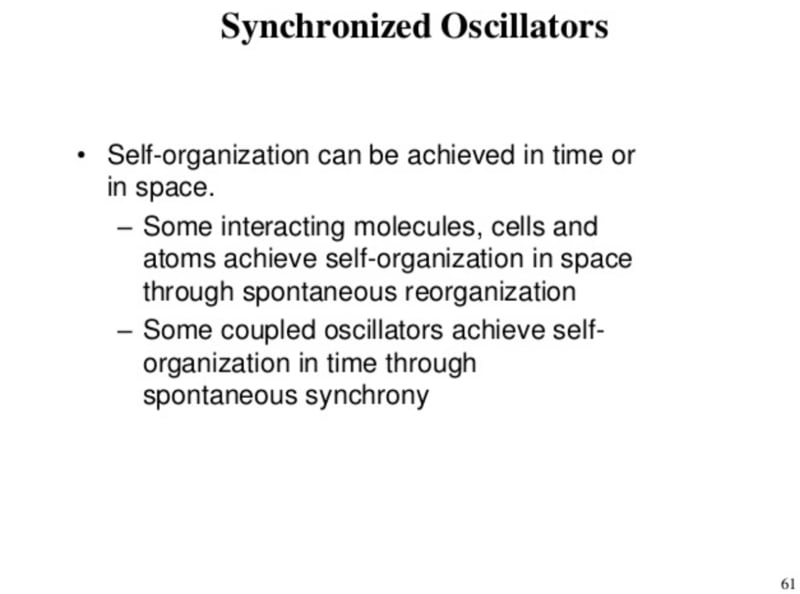
In 1975, Yoshiki Kuramoto introduced a simple model to describe the collective dynamics of a set of interacting oscillators. In the model, each oscillator has a natural frequency, and is coupled equally to all other oscillators. Assuming a fixed spread in oscillator frequencies, Kuramoto showed that in the limit of a large number of oscillators, the model exhibits a continuous phase transition from asynchronous to synchronous behaviour with increasing inter-oscillator coupling. Since then, the model and generalizations of it have been widely used in exploring the synchronization behavior in groups of biological cells, fireflies, superconducting Josephson junctions, or the movements of swarms or flocks of organisms.
- Yoshiki Kuramoto: https://en.wikipedia.org/wiki/Yoshiki_Kuramoto
- Kuramoto model: https://en.wikipedia.org/wiki/Kuramoto_model
- Kuramoto Model of Synchronized Oscillators https://blogs.mathworks.com/cleve/2019/08/26/kuramoto-model-of-synchronized-oscillators/
- All together now https://www.nature.com/articles/421780a
- pyclustring: https://github.com/annoviko/pyclustering
- Continuous vs. Discontinuous Transitions in the D-Dimensional Generalized Kuramoto Model: https://arxiv.org/pdf/1806.01314.pdf
- Synchronization networks https://en.wikipedia.org/wiki/Synchronization_networks
- Oscillatory neural network: https://en.wikipedia.org/wiki/Oscillatory_neural_network
- Synchronization: https://en.wikipedia.org/wiki/Synchronization
- An Oscillatory Neural Autoencoder Based on Frequency Modulation and Multiplexing: https://www.ncbi.nlm.nih.gov/pmc/articles/PMC6048285/
- A Neural Network Based on Synchronized Pairs of Nano-Oscillators https://arxiv.org/abs/1709.02274v1
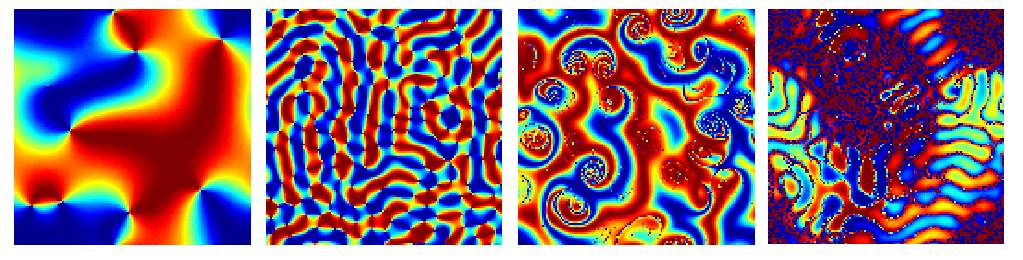
Image: Synchronization patterns in a two-dimensional array of Kuramoto-like oscillators
-
"Thinking about Thought" - Slides for Piero Scaruffi's excellent class on Modern Physics at UC Berkeley (2014). https://www.scaruffi.com/
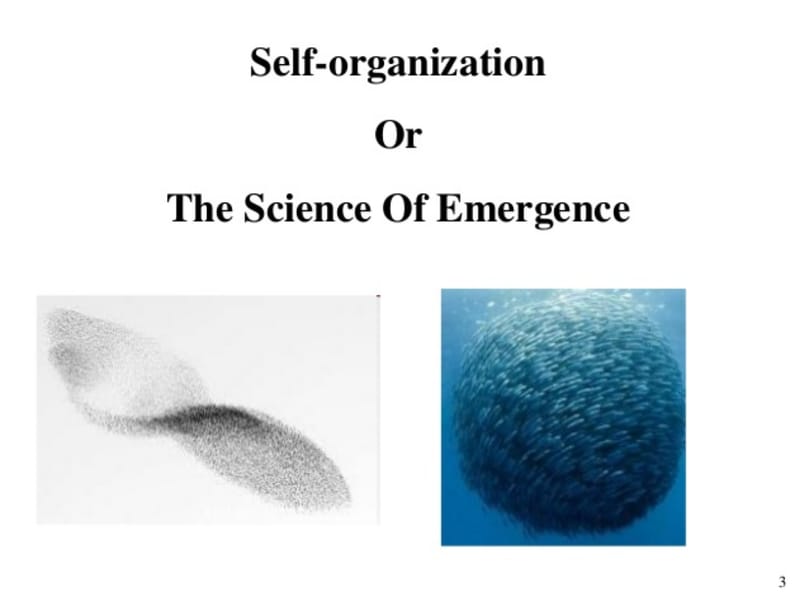
-
Self-organized criticality is a property of dynamical systems that have a critical point as an attractor. Their macroscopic behavior thus displays the spatial or temporal scale-invariance characteristic of the critical point of a phase transition, but without the need to tune control parameters to a precise value, because the system tunes itself as it evolves towards criticality. The concept was put forward by Per Bak, Chao Tang and Kurt Wiesenfeld, and is considered to be one of the mechanisms by which complexity arises in nature.
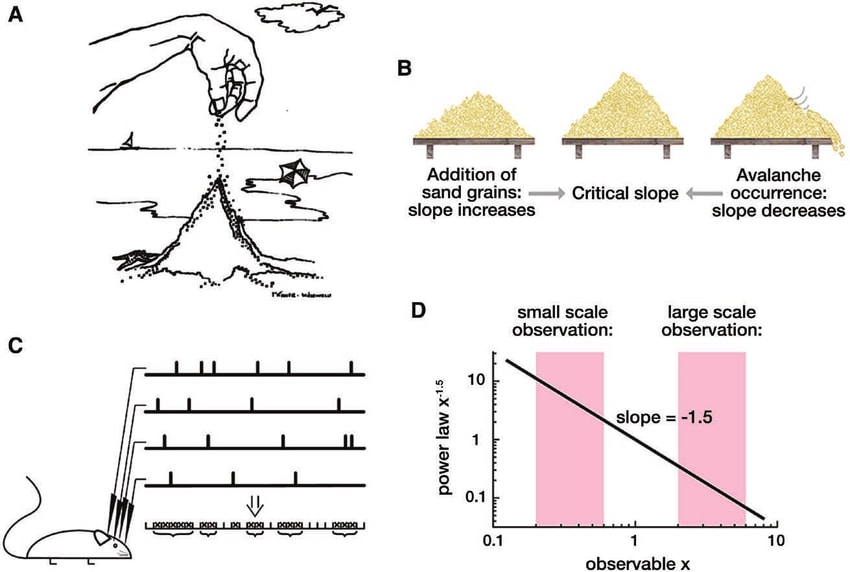
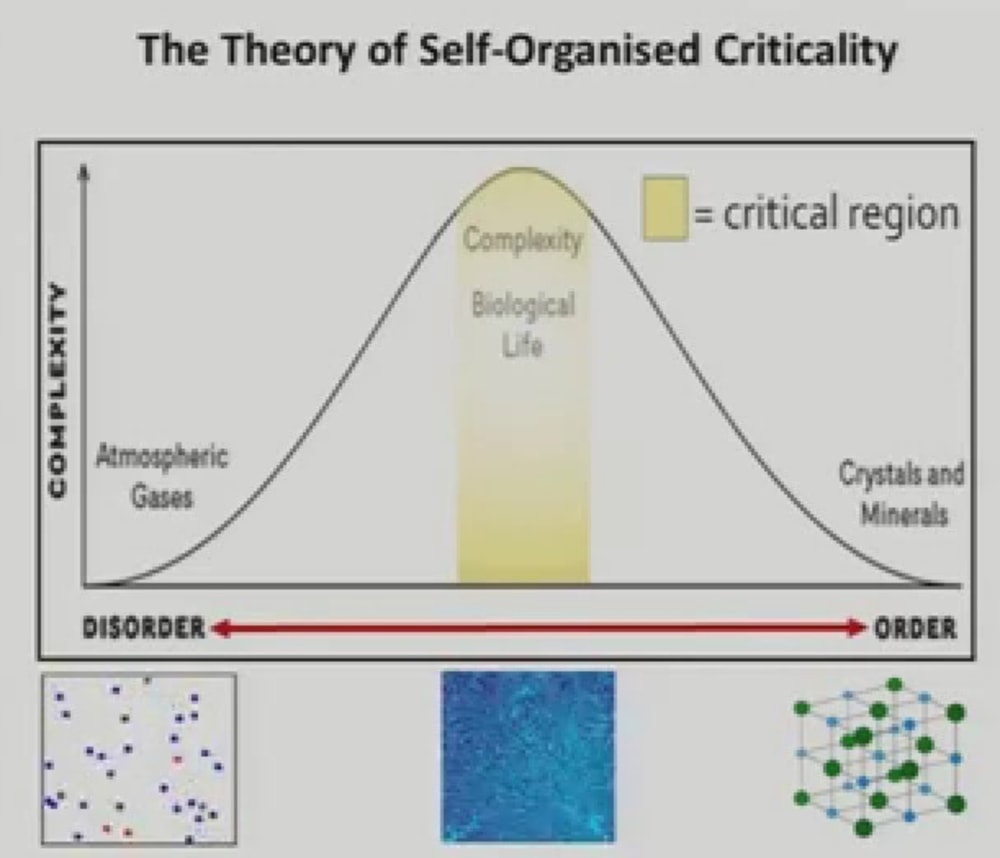
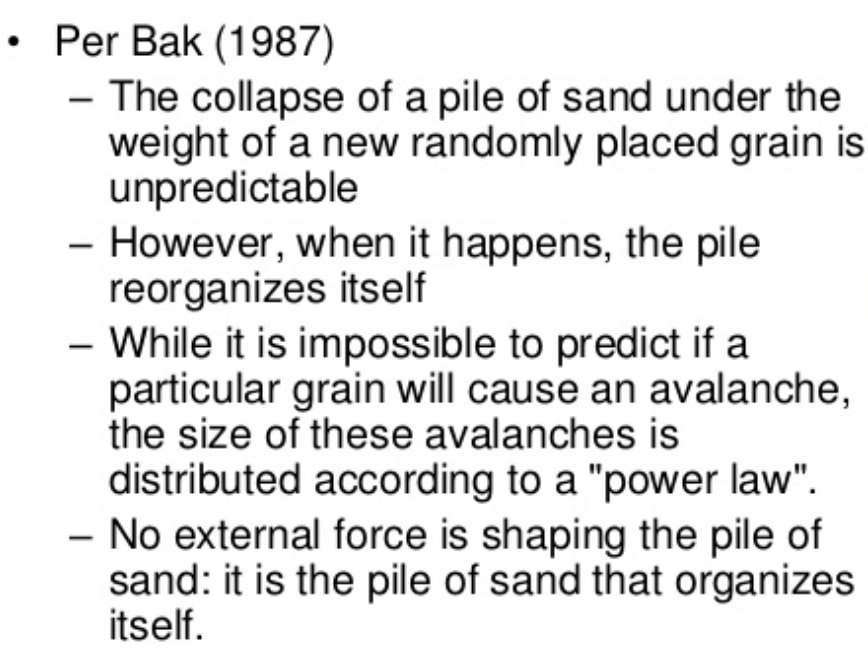
Images from: "Role of Network Science in the Study of Anesthetic State Transitions" and "Tuning Pathological Oscillations with EEG Neurofeedback and Self-Organized Criticality"
-
Christopher Langton (1948) is an American computer scientist and one of the founders of the field of artificial life. He coined the term in the late 1980s when he organized the first "Workshop on the Synthesis and Simulation of Living Systems" at the Los Alamos National Laboratory in 1987. Following his time at Los Alamos, Langton joined the Santa Fe Institute, to continue his research on artificial life. He left SFI in the late 1990s, and abandoned his work on artificial life, publishing no research since that time.
Langton's Ant Colonies - a two-dimensional universal Turing machine with a very simple set of rules but complex emergent behavior (1986)
Langton's Loops - a particular "species" of artificial life in a cellular automaton created in 1984 by Christopher Langton. They consist of a loop of cells containing genetic information, which flows continuously around the loop and out along an "arm" (or pseudopod), which will become the daughter loop.
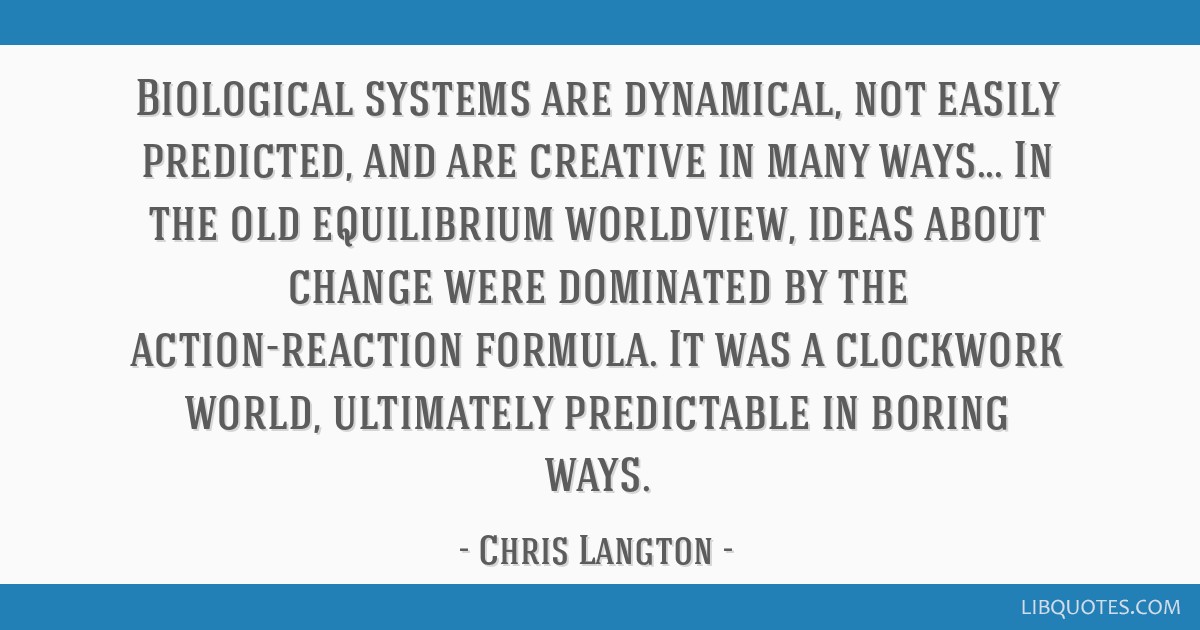
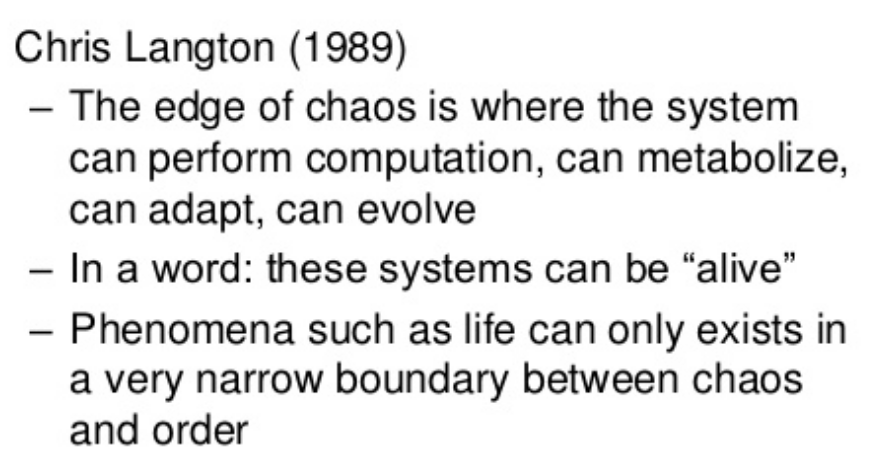
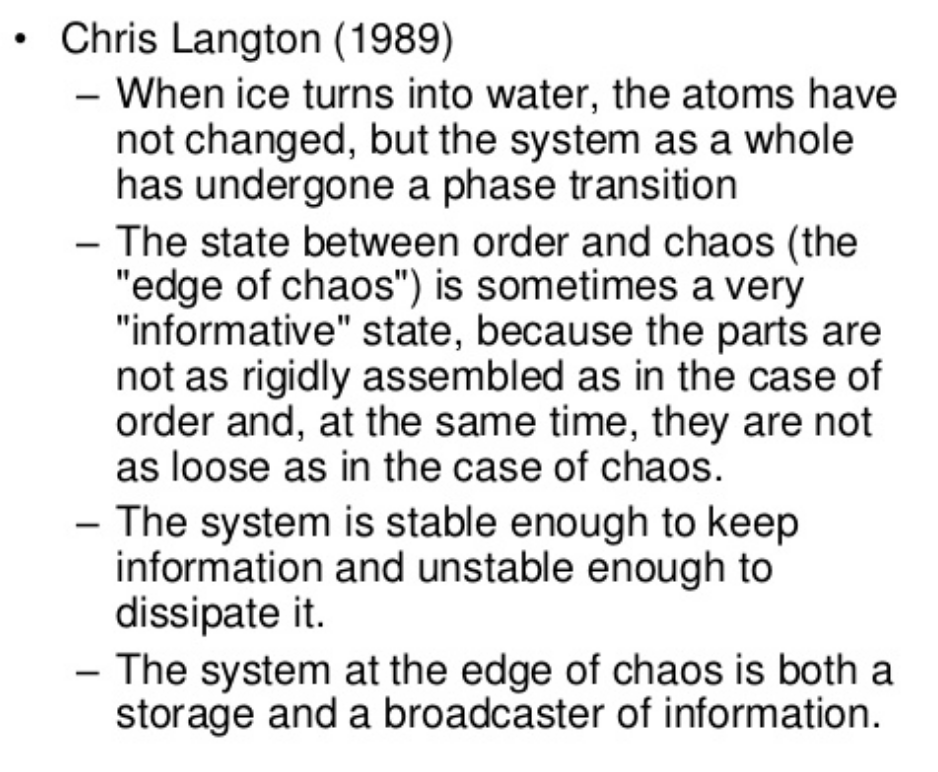
Overview paper on Artificial Life by Langton from the 1990s: https://web.archive.org/web/20070311225322/http://www.probelog.com/texts/Langton_al.pdf
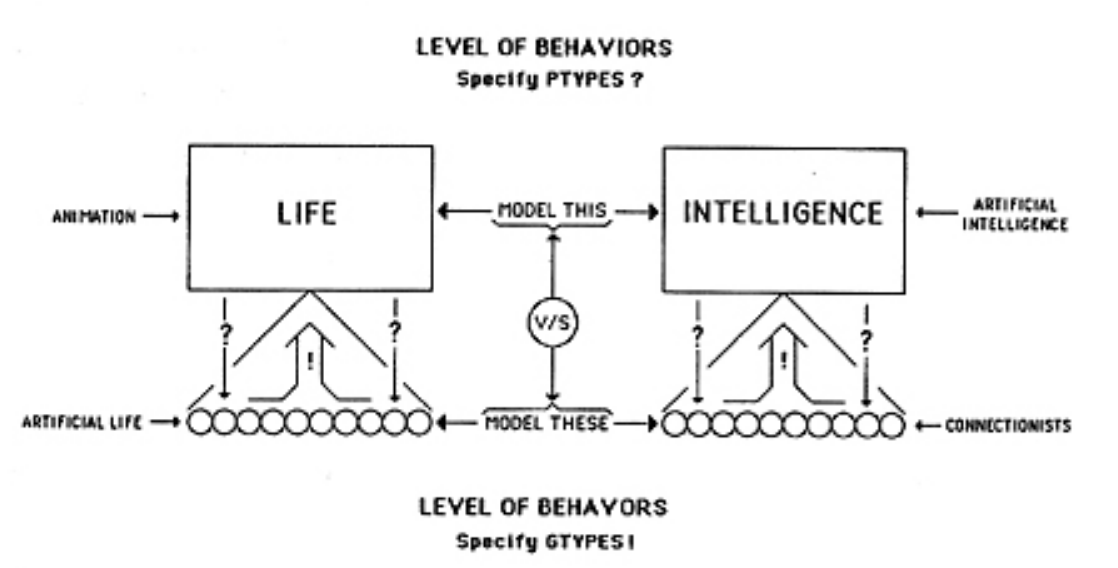
After Langton disappeared from the ALife community in the 1990s, he reappeared in the 2007 as author of "Military Balance" by "International Institute for Strategic Studies".
-
"People out of Stone" - a brief backstory of modern-day robotics and AI:
In India, it is a tradition amongst certain Tantric sects to anoint their phallic lingam images with oil, milk, and sometimes semen. A similar tradition involving living statues and plaster busts exists in Western culture - at least on a literary level. E.T.A. Hoffman, Edgar Allen Poe, Ambrose Bierce, and Jules Verne amongst others, have reinterpreted the original myth of Pygmalion from Ovid; it can even be seen in the musical 'My Fair Lady'. This tradition fulfills an ancient human dream, that of bringing the dead back to life, either artificially or with the help of the gods of magic. Even today there are hints of it in cybernetics and genetic engineering. Inspired by the attempts of Charles Darwin's grandfather Erasmus Darwin to re-animate dead worms, the nineteen-year-old Mary Shelley wrote the novel 'Frankenstein: or the new Prometheus' which was published in 1818. More on the theme has been written more recently by authors such as Philip K. Dick (as in 'Blade Runner'), Alfred Bester, Stanislaw Lem and Pierre Klossowsky. In Switzerland in 1972, a drama based on the classical myth of Galatea appeared, expressing the eternal dream of a man for a woman who is wholly dedicated to him. In the play, which was a reworking of an 'Alpensaga' (Swiss mountain fairy tale), some farmers create a 'Sennentuntschi', an artificial woman grown in a bottle from a mixture of dung and cheese. Needless to say, Sennentuntschi soon frees herself from their attentions.
In Jewish mysticism, there is the legend of the Golem, which is ultimately based on Psalm 139 verse 16; the story is best known from the mediæval golem created by Rabbi Löw of Prague, as described in Gustav Meyrink's impressive novel The Golem (1915). Golems are reproductions of Adam, formed from the dust of the earth, and they go even further back in Jewish culture, as may be discovered in a commentary on the ancient Cabalistic text the Sefer Yetzirah, as expounded by the eminent scholar Gershom Scholem. The German author of occult and erotic potboilers H.H. Ewers added a sexual twist to the legend with his novel Alraune in 1911. Also in Germany, Paul Wegener directed a film of The Golem in 1915, the first in a series of German films such as Nosferatu, Das Kabinett des Doktor Caligari and Dr. Mabuse which evoked a fascination for evil. Neo-Gnostics and secret societies in Germany and elsewhere got a lot of inspiration from fictional sources such as these - enough for them to devise their own 'Order Secrets'. The concept of the Homunculus, an alchemical mannikin produced in a bottle, was not foreign to Theodor Reuss, the O.T.O.'s founder. The prescribed reading-list for O.T.O. members included G. Herman's work called Genesis - das Gesetz der Zeugung (Genesis - the Law of Procreation) which describes the production of a being "who is realized through the odic power of materialization, and which as odic mist streams from the vulvae, and under the traditional uterine influence easily forms child-souls." The alchemist Paracelsus described his formula for creating a Homunculus using blood and semen, and this has been compared to the consecrated hosts of the Spermo-Gnostics. In 1914 Aleister Crowley wrote his Xth degree instruction De Homunculo Epistola in which he described the homunculus, even though he was less than enthusiastic about it. It is quite possible that he had been inspired by Somerset Maugham, who had published a novel called The Magician in 1907, whose villain Oliver Haddo is based on Crowley; in the novel Haddo manufactures a mad homunculus by devilish arts. Similarly, Crowley himself wrote a novel in 1917 (not published until 1929) called Moonchild, in which sex-magicians create a speaking homunculus with astrological enchantments.
"You are my Creator, but I am your Master — Obey!" - Mary Shelley, Frankenstein
Text is an excerpt from: "Nosferatu's Baby (Much Too Much) Too hot To Handle" - by Peter-R. Koenig

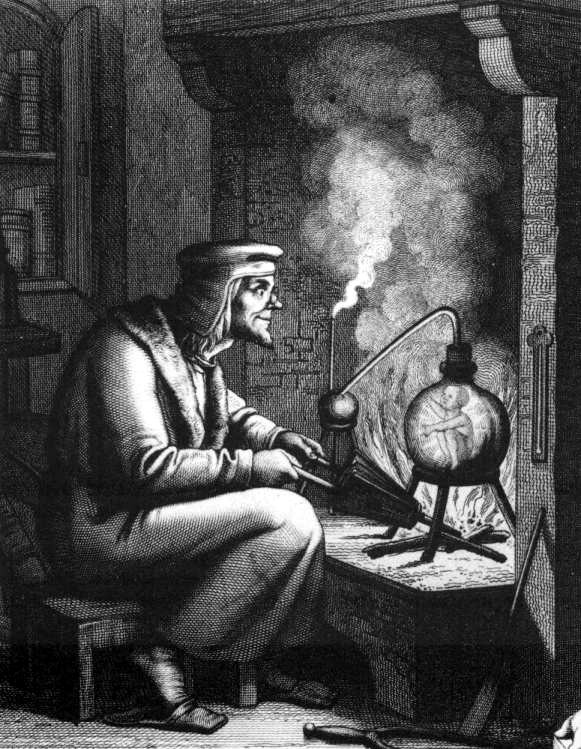

#Comment: It is rather comedic, that generations of highly educated elite men tried to make inanimate matter come alive through ever-evolving complex means. It seem obvious, that the driving psychological force behind such efforts, is a pathological jealousy of men towards women, resulting from the biological inability of males to give birth.
Consider the somewhat related insights, by Robert Anton Wilson: "Elohim," the name for the creative power in Genesis, is a female plural, a fact that generations of learned rabbis and Christian theologians have all explained as merely grammatical convention. The King James and most other Bibles translate it as "God," but if you take the grammar literally, it seems to mean "goddesses." Al Shaddai, god of battles, appears later, and YHWH, mispronounced Jehovah, later still. - Genesis, p. 197
-
"I don't trust people to genetically 'design' their child because I see what they do with character creation in games." - Thoughts on Eugenics from a thread on Reddit (2016)



via the wonderfully curios Technology and Society 2. #Biotech #ALife #Ethics #Design
-
What is Information? - Interview with Peter Tse
More talks by Peter Tse:
-
Advances in neuromorphic computing technology - talk by Steve Furber
-
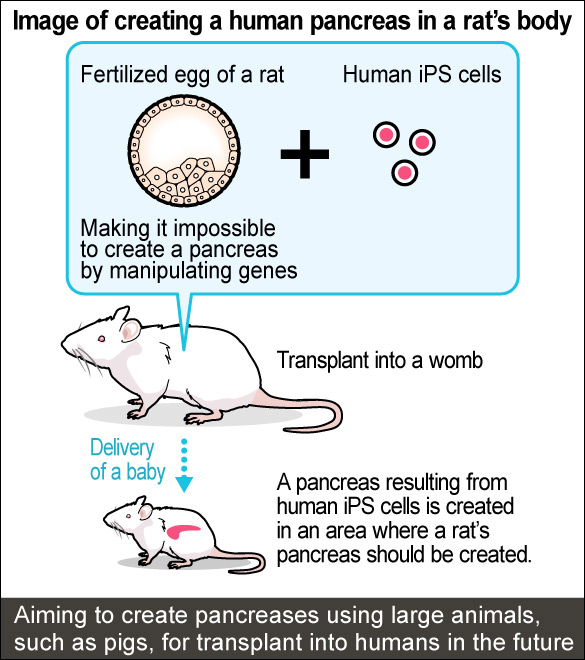
Human-animal hybrids to be developed in Japan after ban controversially lifted
“If the goal of such studies is to discover a therapeutic application for humans, experiments on rats and mice are unlikely to produce a useful result because the size of the organ will not be sufficient and the result will be a far cry from humans anatomically” - Jiro Nudeshima, a life science specialist.
-
Genetically-Engineered Microbe No Longer Needs to Eat Food To Grow
"Synthetic biologists have performed a biochemical switcheroo," reports Science magazine:
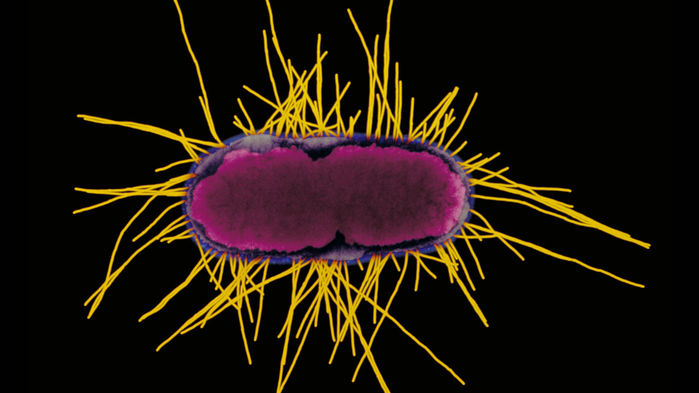
They've re-engineered a bacterium that normally eats a diet of simple sugars into one that builds its cells by absorbing carbon dioxide (CO2), much like plants. The work could lead to engineered microbes that suck CO2 out of the air and turn it into medicines and other high-value compounds.
Laboratory-evolved bacteria switch to consuming carbon dioxide for growth
"Over the course of several months, researchers created Escherichia coli strains that consume carbon dioxide for energy instead of organic compounds. This achievement in synthetic biology highlights the incredible plasticity of bacterial metabolism and could provide the framework for future carbon-neutral bioproduction. "
-
Wild Silkworms Produce Proteins Primed for Bioprinting. A mix of silkworms’ proteins acts as a scaffold for 3-D-printed tissues and organs.

Wild silkworm species Antheraea assamensis. -
"Technological Masturbation" - by Robert Anton Wilson (1993)
The vibrator — first as shady joke, then a growing fad — has already prepared us for the technologization of sex, so introduction of the artificial sex partner will come as little surprise.
Rudimentary doll-like models are already for sale, one [called the Deep Throat model — naturally] is even capable of performing fairly realistic fellatio. Hedy Lamarr’s autobiography, Ecstasy and Me, reveals that a former lover of hers had a very elaborate imitation Hedy manufactured to give him solace when their affair went on the rocks. Such developments indicate that in sex, as elsewhere, desire plus money equals results — or, as George S. Kaufman once said of a friends‘ new estate, “This is what God could have done, if He’d had the money.”
Are we talking about substitute sex for the crippled, the malformed, the hopelessly ugly or neurotic? Only in the first generation of such technology. Brain-wave and other bio-feedback studies lead inevitably into the concept of cybernetic sex robots programmed to scan neural signals from the human partner and provide exactly, precisely, exquisitely what is desire in every second of sexual union. In fact, reports from Masters and Johnson indicate that their crude and pre-cybernetic [brainless] ACE model [artificial coital equipment] produced no frustration in the women who tried it. Eventually such mechanized substitutes can be programmed for an effect “better than the real thing,” as William S. Burroughs fantasised in his sixties science fiction novel “The Soft Machine.”
In recent years, John Hopkins Applied Physics Laboratory in Baltimore possessed a 100-pound robot affectionately dubbed The Beast, that knows how to “feed” itself, i.e., to seek electric outlets and recharge its circuits when its power runs low. Sim one, an experimental robot at University of Southern California, has the external features of a man, stands over six feet tall and has a normal pulse rate, blood pressure and heartbeat; is white-skin coloured, moves its diaphragm and chest in simulation of breathing, and even possesses a tongue, teeth, and vocal cords. Sim’s keepers plan improved models that will sweat, bleed, cry out in pain, and eventually replace cadavers in training medical students. The Sim One of today combined with the Masters and Johnson ACE of today would already constitute a crude artificial playmate for women. A more complex Hedy Lamarr doll [or Linda Lovelace, or Raquel Welch or..] cannot be far away. [Recall the movie Blade Runner (Philip K. Dick) where NASA coerced Earth’s inhabitants to leave the planet by providing them with a humanoid playmate.]
Yes; why not a totally programmed sexual environment? Saul Kent, who has described this concept as “multi-media masturbation”, envisions sex tapes for the household computer, programmed for the all- around sexual trip — with or without partner. Already, X-rated motels in California provide water beds and closed circuit TV featuring porn films, so that a shy couple can have a simulated orgy and share their real selves with each other and the images of Georgina Spelvin, Harry Reems, and Marilyn Chambers. The next step, easily obtainable for the rich even now, is to program the whole inner environment of the bedroom for a fantasy that goes well with the sex act. ESB control of brain centres via this computer-programmed artificial environment would give, in Burrough’s perfect phrase, “precise control over thought, feeling, and apparent sensory impression” [his italics]. Reality in that room would be whatever you wanted it to be.
Of course, in a sense we already live inside that room, as the Buddhists know. That is, the human nervous system, properly programmed, can edit and orchestrate all experience into any gestalt it wishes. We encounter the same dismal and depressing experience over and over because they are repeating tape loops in the central programmer of our brains. We can encounter ecstasy over and over by learning the neurosciences that orchestrate all incoming signals into ecstatic tape loops. The contact has already happened right where you are sitting now. Whether it is tuned-in or not tuned-in depends on your skill as metaprogrammer.
Multi-media pornography will enthral millions when it first appears; porn light shows, porn 3-D, and porn holograms are the dawning intimations of a revolution that will climax — certainly by the early years of the next century — when the difference between porn and the artificial sex mate will no longer be visible. Multimedia solipsism and all-channel masturbation will be the pleasure norms.
- Technological Masturbation - by Robert Anton Wilson appeared in TOTAL, Volume 2 (1993).

-----
#Comment: Fun to discover Wilson discussing the idea of cybernetic/augmented total hedonism. A concept people like Robert Nozick explored in "Experience Machine" (1974) or David Pearce in "The Hedonistic Imperative" (1995) or even Daniel Kahneman "Hedonic psychology". Wilson's post includes a reference to the JHAPL's classic robot "The Beast", that knew how to “feed” itself, i.e., to seek electric outlets and recharge its circuits when its power runs low - an idea somewhat related to Shannon's Ultimate Machine, alas far less genius and fun. In my playbook, "augmented" or "optimized" hedonism is an extremely naive and boring concept, which quickly leads to experience mono-cultures and nonsensical discussions around "artificial love" - deep down in a hyper-commercial total-surveillance simulacra of meaningless bullshit. Growing calls to "end suffering through tech" are a clear sign of a crass misunderstanding of the most basic lessons of Buddhism, which such people love to frequently quote (meanings easily lost in translation and history to the gullible seeker). Somewhat related: Samim’s Law of Diminished Experience.

-
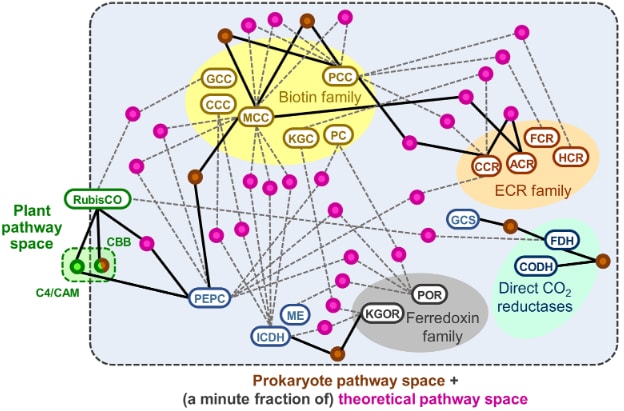
Revolutionizing agriculture with synthetic biology (unpaywalled)
"Synthetic biology is here to stay and will transform agriculture if given the chance. The huge challenges facing food, fuel and chemical production make it vital to give synthetic biology that chance—notwithstanding the shifts in mindset, training and infrastructure investment this demands. Here, we assess opportunities for agricultural synthetic biology and ways to remove barriers."
-
"What Would the Father of Cybernetics Think About A.I. Today? Looking back on Norbert Wiener’s seminal 1950 book, The Human Use of Human Beings": https://slate.com/technology/2019/02/norbert-wiener-cybernetics-human-use-artificial-intelligence.html
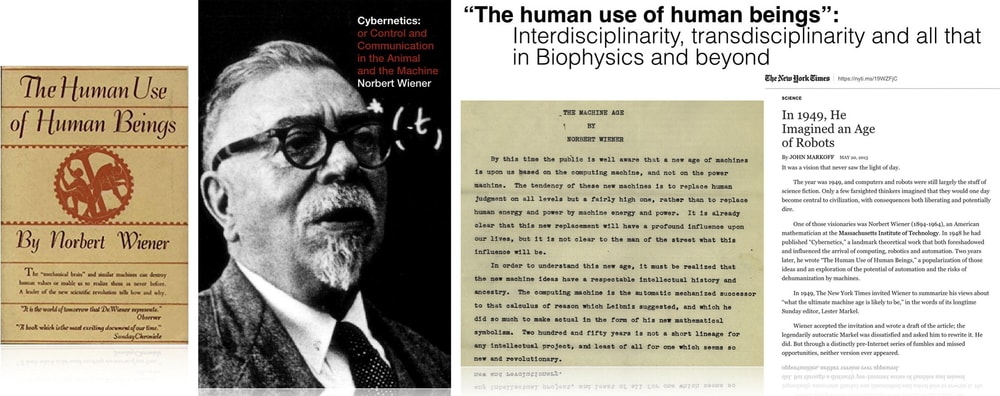
"The human use of human beings: Interdisciplinarity, transdisciplinarity and all that in biophysics and beyond": https://www.sciencedirect.com/science/article/abs/pii/S030146221730162X #HCI #Technology #Philosophy #ALife
-
Machine-Learning Assisted Directed Evolution - talk by Viviana Gradinaru
-
Remote Consciousness: Latest Results from Optically Excited Electrochemical Impedance Spectroscopy - talk by Dr. Serge Kernbach.
M.I.N.D. (Mind Influence Notification Device) - a high-resolution sensor based on electrochemical impedance spectroscopy. This very sensitive device represents a tool for empirical research of the human mind and consciousness: http://mind.cybertronica.de.com/
AquaPsy - a Group Interactive Platform Exploring Experiments Involving the Measurement of Consciousness: https://www.aquapsy.com/
Characterizing the non-chemical water treatment – advanced biological and electrochemical approaches - talk by Dr. Serge Kernbach