tag > VR
-
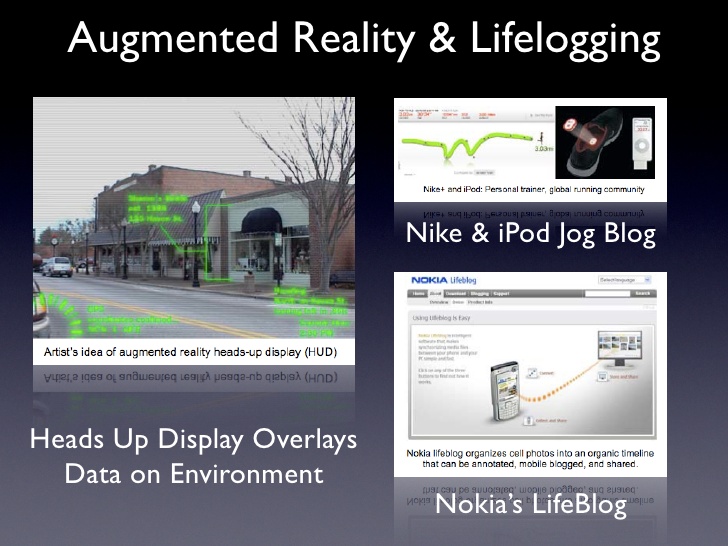
2026 will likely be a breakthrough year for Augmented Reality. Prediction:
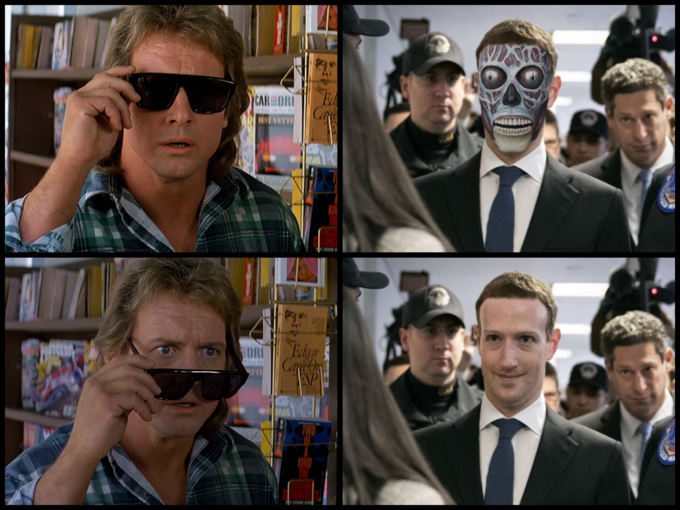
Once shared simulation layers (AI agents, AR overlays, personalized world models) begin to overlap, reality itself becomes a negotiable social contract, continuously rewritten through interaction. Each person’s “version” of the world is like a branch in a Git repository - reality becomes a distributed version - control system for perception.
The new skill, therefore, isn’t storytelling but merging: the ability to reconcile divergent perceptual branches into a functional shared world without erasing difference. The next social UX challenge isn’t creating new worlds - it’s handling merge conflicts of reality.
And when consensus reality finally collapses under its own recursion, we’ll toast the chaos. The real enlightenment will come when we stop resolving merge conflicts altogether and just let the paradox compile.
-
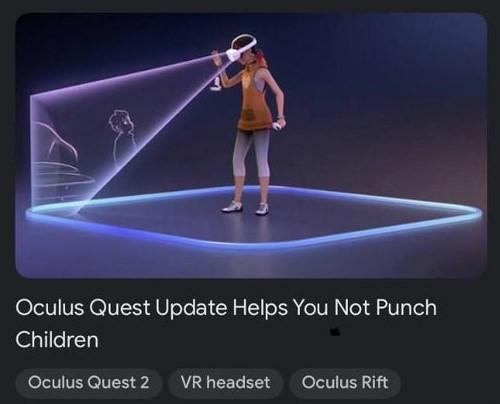
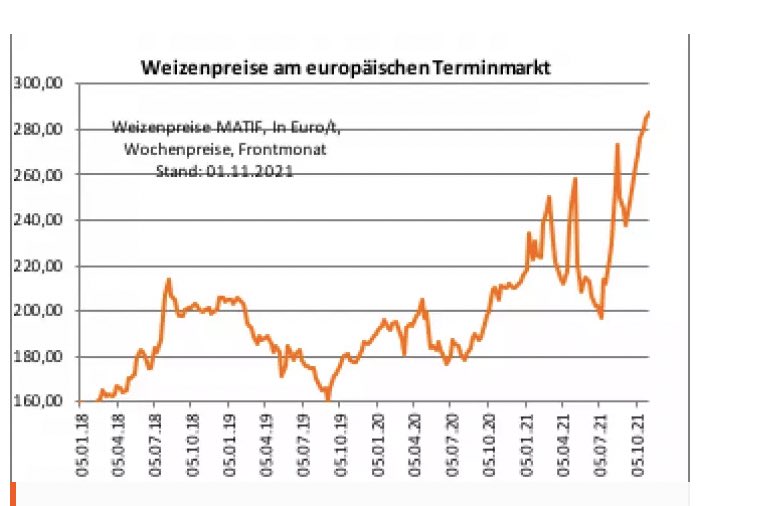
Today in "the fall of western civilization": 🤡 Virtual Reality 🤡 Propaganda 🤡 Voodoo Economics










-
US Army using VR helmet to link biometrics with automated systems

“The future squad is not just going to be humans,” Army Research Lab Scientist Russell Cohen Hoffing tells Federal News Network. “There’s going to be agents involved — robots, some intelligent adaptive systems, drones, software. Our systems will passively look at physiology of soldiers and use that to create a map to paint a picture of situational awareness. You could have a drone immediately infer where a soldier is interested and go and explore that area, and this is again having all passively without a soldier’s input at all.”
-
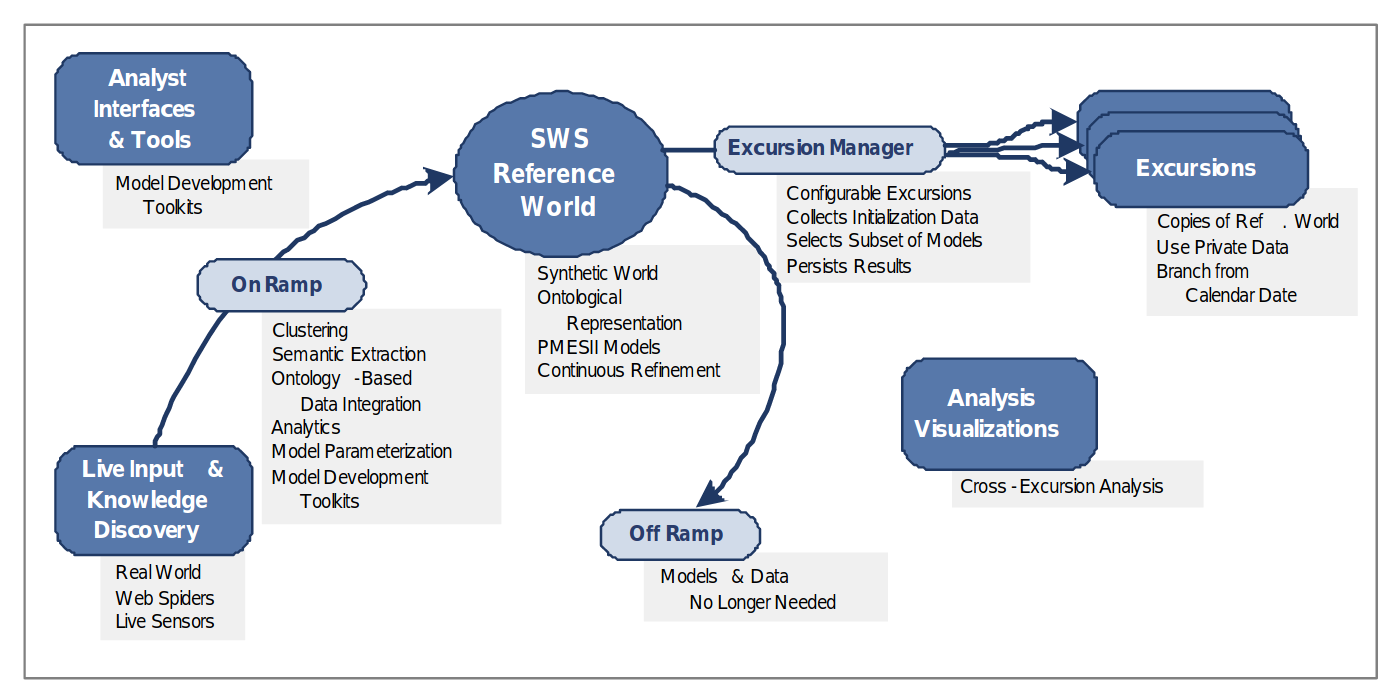
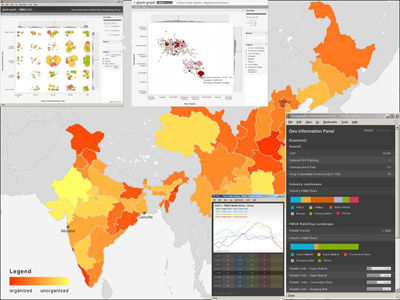
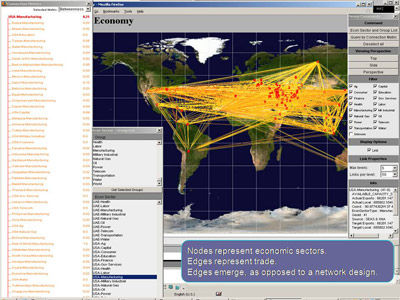
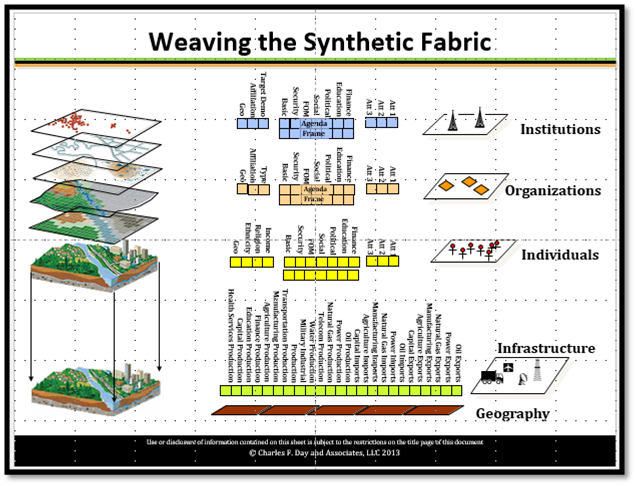
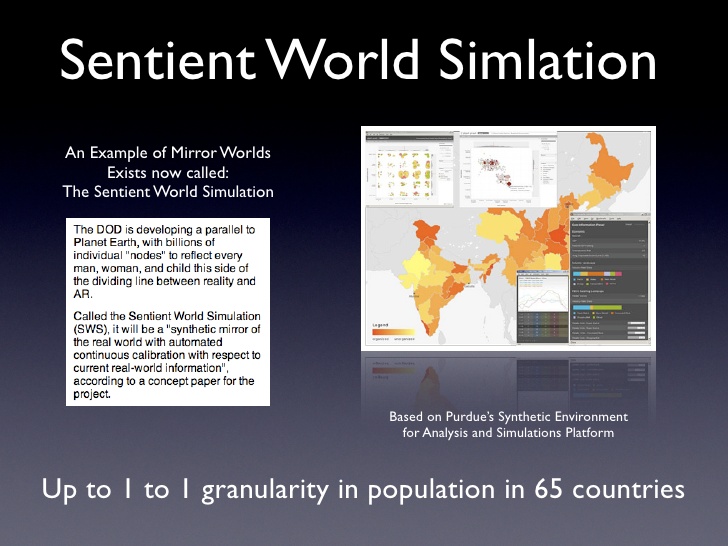
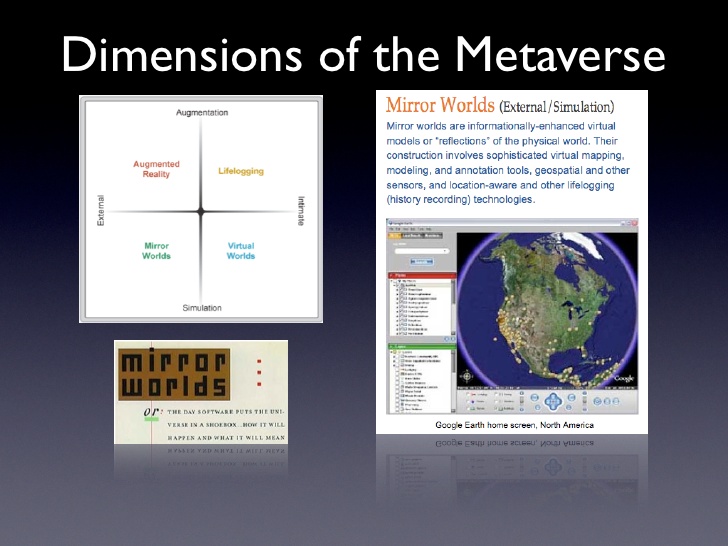
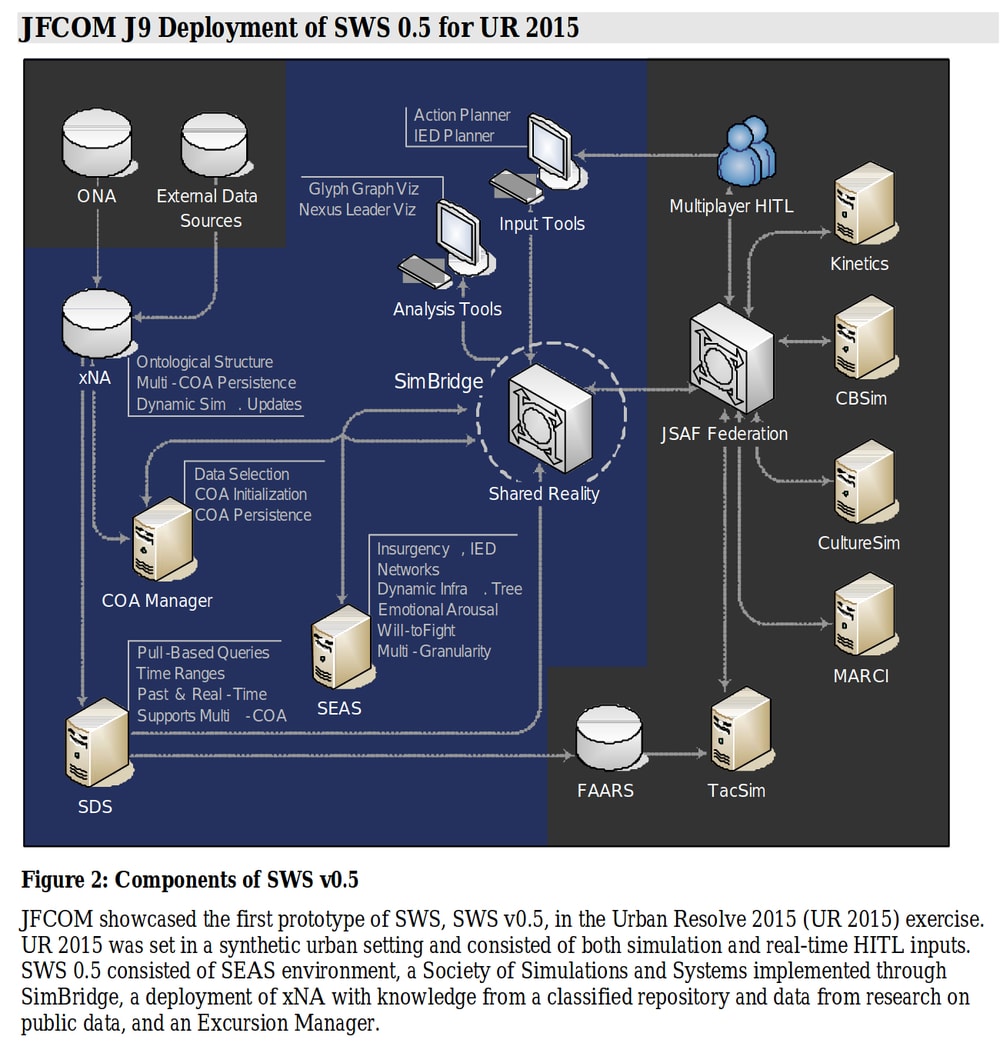
Sentient World Simulation - Synthetic Environment for Analysis and Simulations (SEAS) - "a synthetic mirror of the real world with automated continuous calibration with respect to current real-world information".
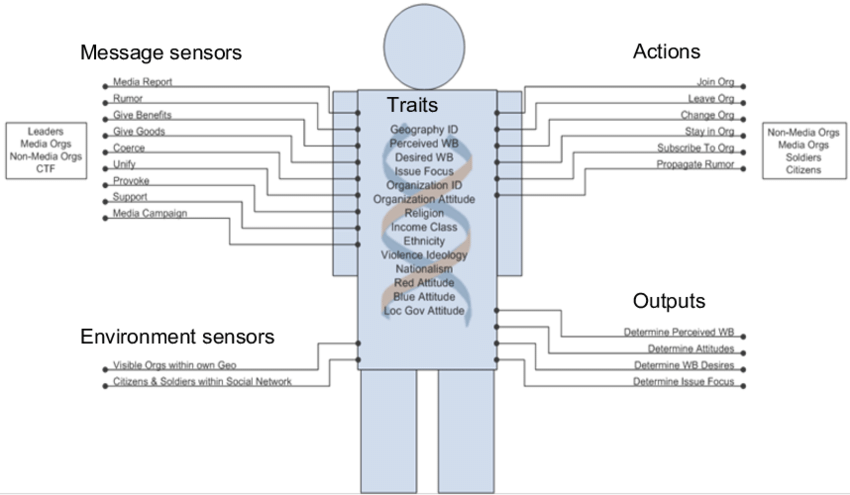
The DoD is developing a parallel to Planet Earth, with billions of individual “nodes” to reflect every man, woman, and child this side of the dividing line between reality and AR. Called the Sentient World Simulation (SWS), it will be a “synthetic mirror of the real world with automated continuous calibration with respect to current real-world information”, according to a concept paper for the project.
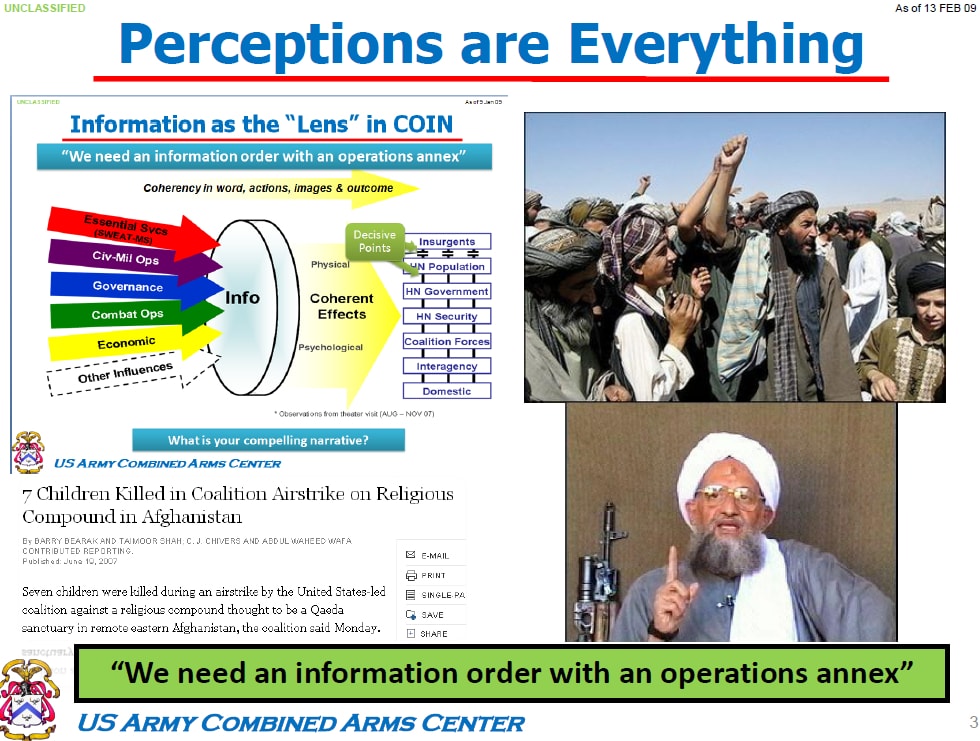
“SWS provides an environment for testing Psychological Operations (PSYOP),” the paper reads, so that military leaders can “develop and test multiple courses of action to anticipate and shape behaviors of adversaries, neutrals, and partners.” SWS also replicates financial institutions, utilities, media outlets, and street corner shops. By applying theories of economics and human psychology, its developers believe they can predict how individuals and mobs will respond to various stressors.
Links:
- Sentient world: war games on the grandest scale. Sim Strife - By Mark Baard (2007, theregister)
- Sentient World Simulation (SWS): A Continuously Running Model of the Real World. A Concept Paper for Comments - Government POC - by Tony Cerri (JFCOM J9)
- Lessons from a Large-Scale Deployment of SEAS in Afghanistan - by Rashmi Chaturvedi, President Simulex Inc
- Alok R. Chaturvedi - Professor of Information Systems and the founder and the Director of SEAS Laboratory
- Executing the modeling and simulation strategy making simulation systems of systems a reality (2007) - by James W. Hollenbach (The Defense Modeling and Simulation Office) and William L. Alexander (SAIC)
- It is Alive – Sentient World Simulation: A Continuously Running Model of the Real World
- Synthetic psychological environment (wikipedia)
- Cyber Node Report - by Frank Catanzaro, Chair Cyber Futures at WFUNA Millennium Project (2007)
- Predictive policing (wikipedia)
- Considering All the Strategic Options - Whilst ignoring alternatives and disclaiming cognitive protectionism - Produced on the occasion of the NATO Summit (Strasbourg, April 2009)
- "Path Leading To Failure" - video interview with William Binney & Dr. Robert Duncan (formerly NSA)
- Former Defense Secratary Donald Rumself (83) Marches Into New Territory: Videogames (2016)
- Comprehensive Analysis of Synthetic Monitoring Market 2019 | Industry Overview
- Google's "Selfish ledger"


A clip from "Eagle Eye" (2008)
A clip from "Colossus - The Forbin Project" (1970)
#Military #VR #Bots #BCI #InfoSec #Economics #Politics #Cryptocracy
- Sentient world: war games on the grandest scale. Sim Strife - By Mark Baard (2007, theregister)
-
"Technological Masturbation" - by Robert Anton Wilson (1993)
The vibrator — first as shady joke, then a growing fad — has already prepared us for the technologization of sex, so introduction of the artificial sex partner will come as little surprise.
Rudimentary doll-like models are already for sale, one [called the Deep Throat model — naturally] is even capable of performing fairly realistic fellatio. Hedy Lamarr’s autobiography, Ecstasy and Me, reveals that a former lover of hers had a very elaborate imitation Hedy manufactured to give him solace when their affair went on the rocks. Such developments indicate that in sex, as elsewhere, desire plus money equals results — or, as George S. Kaufman once said of a friends‘ new estate, “This is what God could have done, if He’d had the money.”
Are we talking about substitute sex for the crippled, the malformed, the hopelessly ugly or neurotic? Only in the first generation of such technology. Brain-wave and other bio-feedback studies lead inevitably into the concept of cybernetic sex robots programmed to scan neural signals from the human partner and provide exactly, precisely, exquisitely what is desire in every second of sexual union. In fact, reports from Masters and Johnson indicate that their crude and pre-cybernetic [brainless] ACE model [artificial coital equipment] produced no frustration in the women who tried it. Eventually such mechanized substitutes can be programmed for an effect “better than the real thing,” as William S. Burroughs fantasised in his sixties science fiction novel “The Soft Machine.”
In recent years, John Hopkins Applied Physics Laboratory in Baltimore possessed a 100-pound robot affectionately dubbed The Beast, that knows how to “feed” itself, i.e., to seek electric outlets and recharge its circuits when its power runs low. Sim one, an experimental robot at University of Southern California, has the external features of a man, stands over six feet tall and has a normal pulse rate, blood pressure and heartbeat; is white-skin coloured, moves its diaphragm and chest in simulation of breathing, and even possesses a tongue, teeth, and vocal cords. Sim’s keepers plan improved models that will sweat, bleed, cry out in pain, and eventually replace cadavers in training medical students. The Sim One of today combined with the Masters and Johnson ACE of today would already constitute a crude artificial playmate for women. A more complex Hedy Lamarr doll [or Linda Lovelace, or Raquel Welch or..] cannot be far away. [Recall the movie Blade Runner (Philip K. Dick) where NASA coerced Earth’s inhabitants to leave the planet by providing them with a humanoid playmate.]

Yes; why not a totally programmed sexual environment? Saul Kent, who has described this concept as “multi-media masturbation”, envisions sex tapes for the household computer, programmed for the all- around sexual trip — with or without partner. Already, X-rated motels in California provide water beds and closed circuit TV featuring porn films, so that a shy couple can have a simulated orgy and share their real selves with each other and the images of Georgina Spelvin, Harry Reems, and Marilyn Chambers. The next step, easily obtainable for the rich even now, is to program the whole inner environment of the bedroom for a fantasy that goes well with the sex act. ESB control of brain centres via this computer-programmed artificial environment would give, in Burrough’s perfect phrase, “precise control over thought, feeling, and apparent sensory impression” [his italics]. Reality in that room would be whatever you wanted it to be.
Of course, in a sense we already live inside that room, as the Buddhists know. That is, the human nervous system, properly programmed, can edit and orchestrate all experience into any gestalt it wishes. We encounter the same dismal and depressing experience over and over because they are repeating tape loops in the central programmer of our brains. We can encounter ecstasy over and over by learning the neurosciences that orchestrate all incoming signals into ecstatic tape loops. The contact has already happened right where you are sitting now. Whether it is tuned-in or not tuned-in depends on your skill as metaprogrammer.
Multi-media pornography will enthral millions when it first appears; porn light shows, porn 3-D, and porn holograms are the dawning intimations of a revolution that will climax — certainly by the early years of the next century — when the difference between porn and the artificial sex mate will no longer be visible. Multimedia solipsism and all-channel masturbation will be the pleasure norms.
- Technological Masturbation - by Robert Anton Wilson appeared in TOTAL, Volume 2 (1993).

-----
#Comment: Fun to discover Wilson discussing the idea of cybernetic/augmented total hedonism. A concept people like Robert Nozick explored in "Experience Machine" (1974) or David Pearce in "The Hedonistic Imperative" (1995) or even Daniel Kahneman "Hedonic psychology". Wilson's post includes a reference to the JHAPL's classic robot "The Beast", that knew how to “feed” itself, i.e., to seek electric outlets and recharge its circuits when its power runs low - an idea somewhat related to Shannon's Ultimate Machine, alas far less genius and fun. In my playbook, "augmented" or "optimized" hedonism is an extremely naive and boring concept, which quickly leads to experience mono-cultures and nonsensical discussions around "artificial love" - deep down in a hyper-commercial total-surveillance simulacra of meaningless bullshit. Growing calls to "end suffering through tech" are a clear sign of a crass misunderstanding of the most basic lessons of Buddhism, which such people love to frequently quote (meanings easily lost in translation and history to the gullible seeker). Somewhat related: Samim’s Law of Diminished Experience.

-
Ctrl-labs CEO: "We’ll have neural interfaces in less than 5 years."
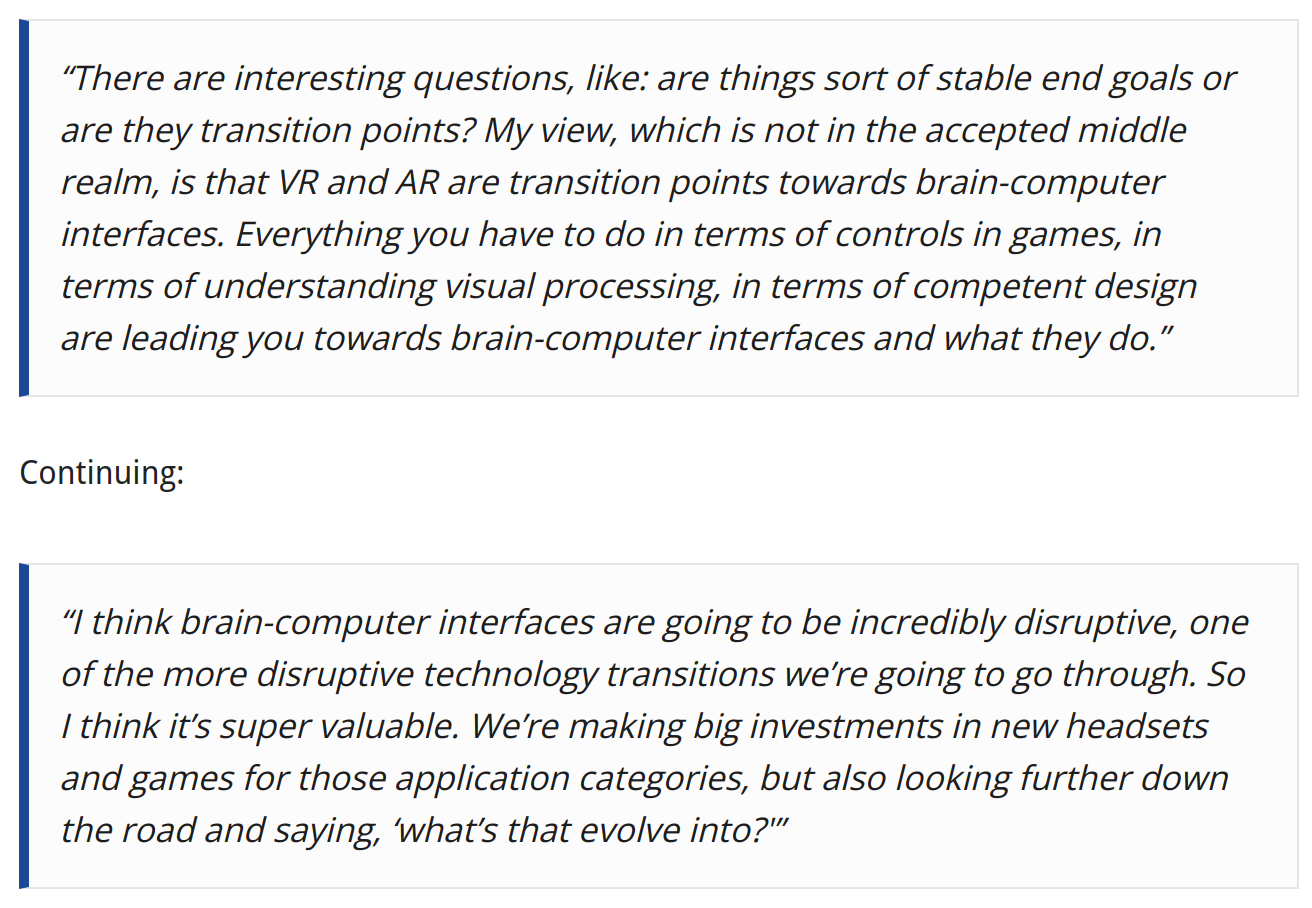
#Comment: Ctrl-labs CEO Thomas Reardon is the poster child snake oil salesmen, hence a good fit for facebook which recently acquired his startup. He is always perversely overselling the basic #BCI capabilities they aim to eventually productize - stuff that has been around for 25+ years and is progressing only gradually. While "move a cursor with your mind" is a neat party trick, it isn't all that useful from a #HCI perspective (we evolved to use eyes/hands over millions of years, a highly fine-tuned modality). And using BCI for more complex tasks ("general thought to action") is still very much in basic scientific research territory (and an ethical nightmare). Certainly, BCI makes #VR (fb's other complex long-term bet) look like child's play.
-
OrCam MyEye 2. #Augmentation #VR
-
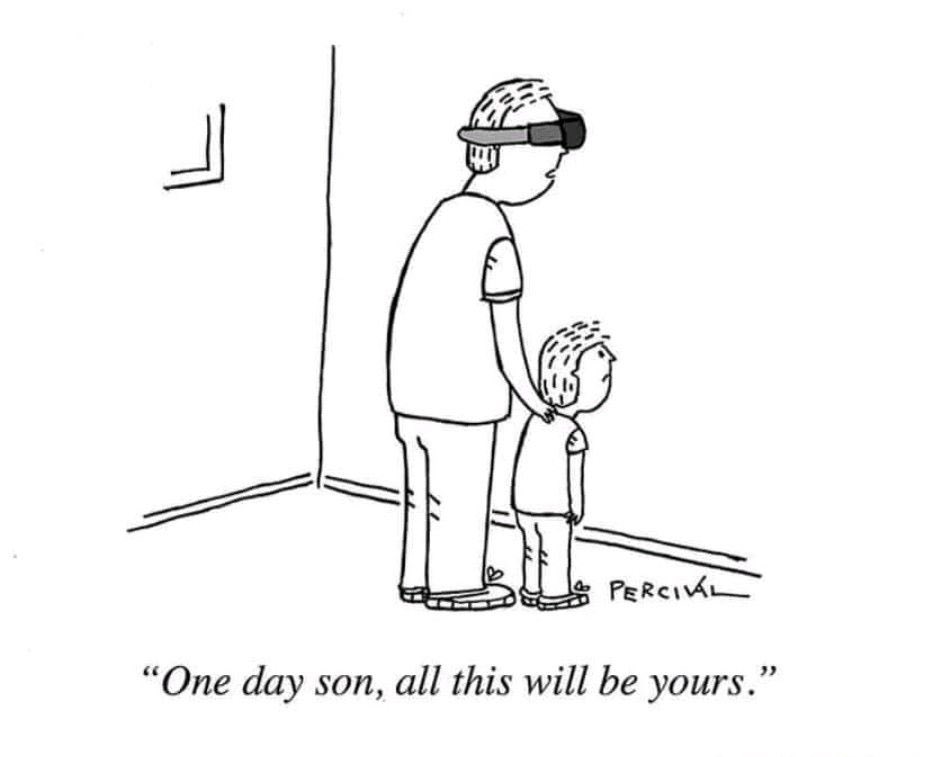
What many don't seem to get about "Augmented Reality" (AR), is that the glasses are really just a detail. The name of the game will be Brain Computer Interfaces (BCI) - with and without consent.
-
Disney’s PoseVR Is A Mind-Blowing Tool That Lets You Animate In #VR:
https://www.cartoonbrew.com/disney/disneys-posevr-is-a-mind-blowing-tool-that-lets-you-animate-in-vr-166721.html -
#VR Researchers Create An Infinite Corridor In a Fixed Space: