tag > Business
-
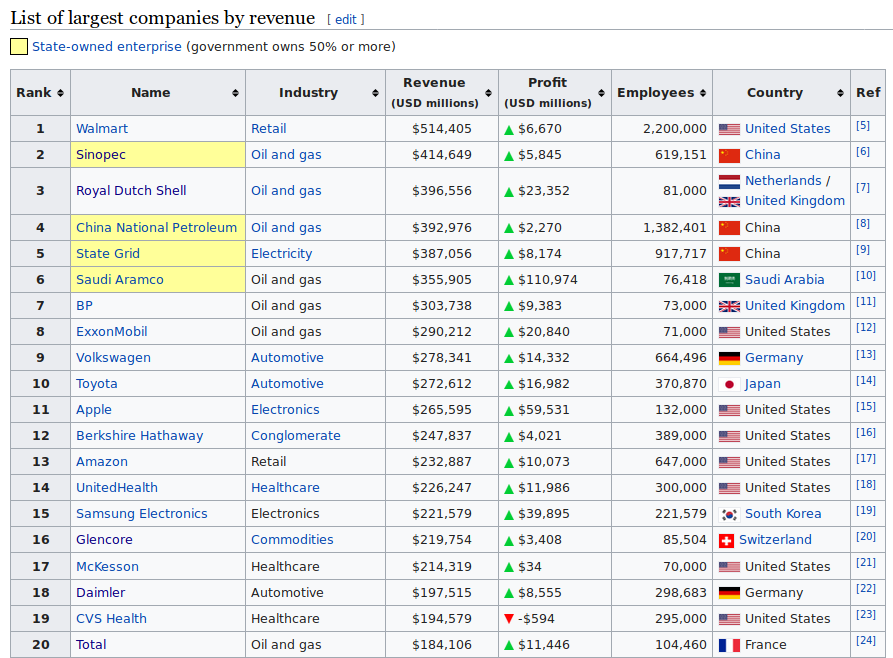
List of largest companies by revenue - 9 of the top 10 are in the oil business (2019)
-
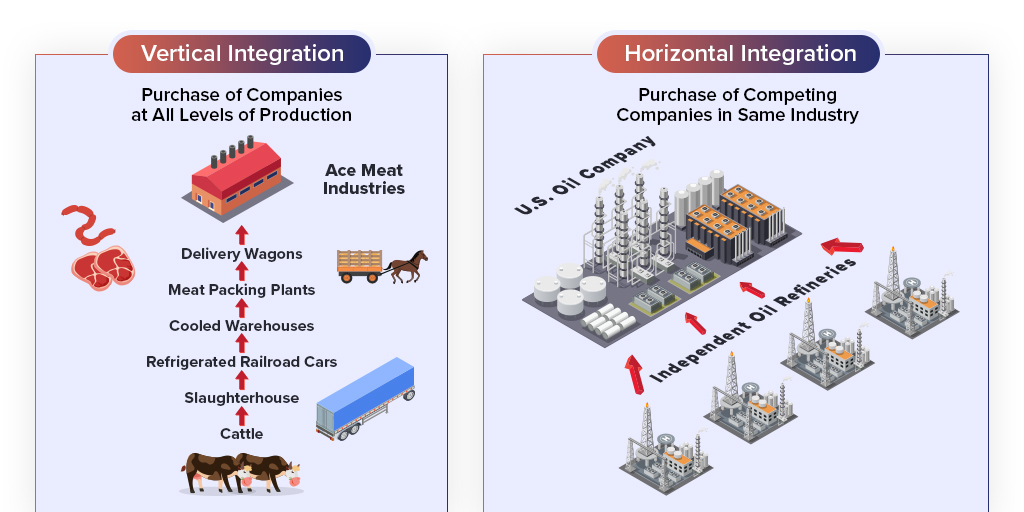
Horizontal and Vertical Integration.
Horizontal integration is the process of a company increasing production of goods or services at the same part of the supply chain. Via expansion, acquisition or merger. Vertical integration is an arrangement in which the supply chain of a company is owned by that company.
-
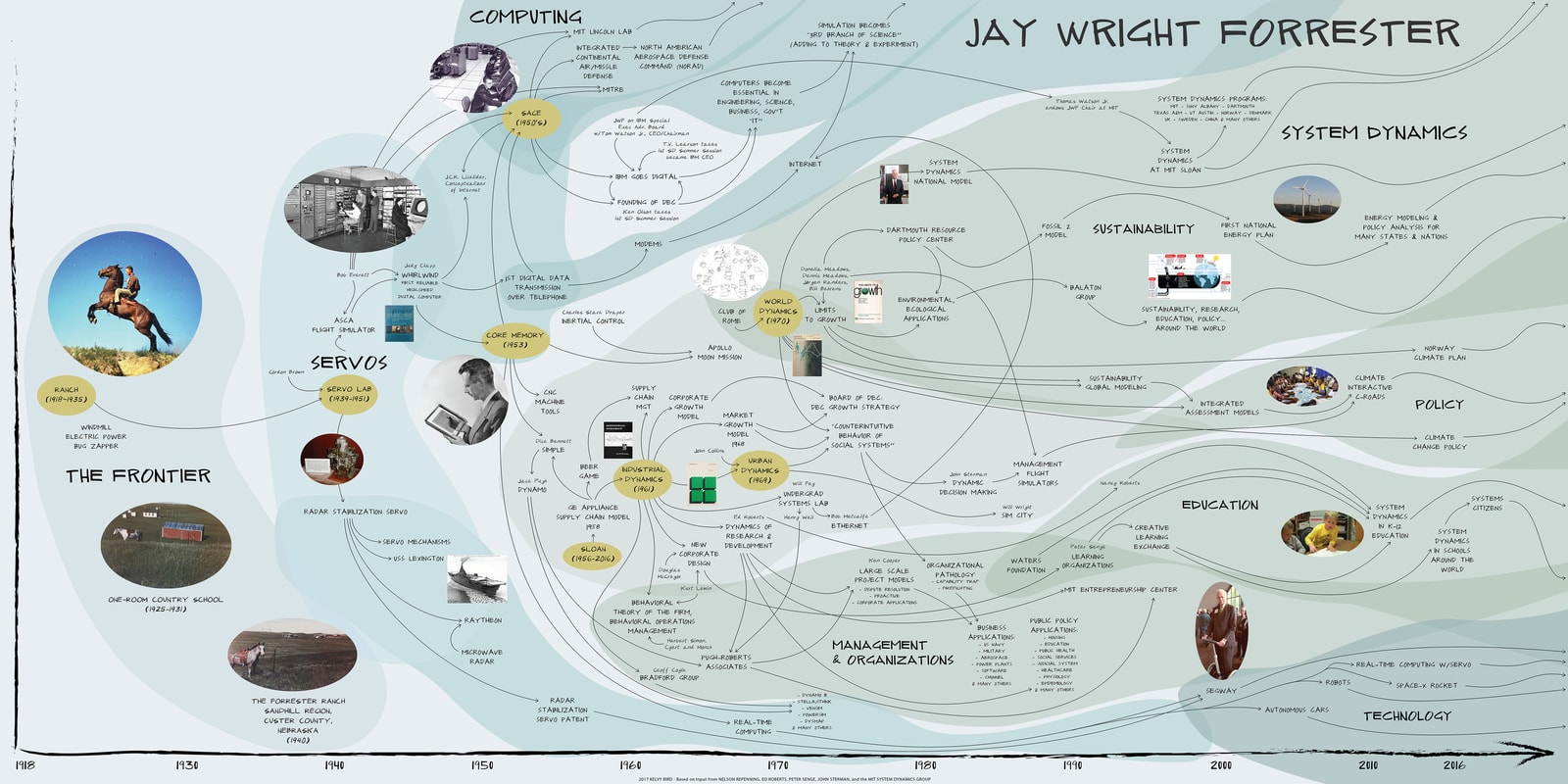
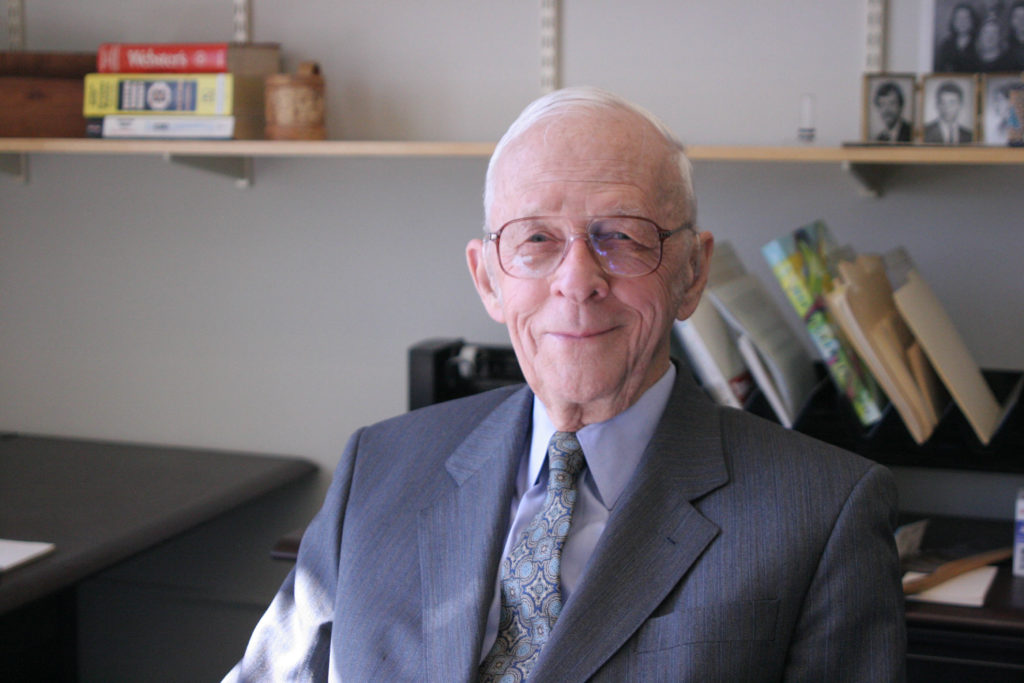
Jay Wright Forrester (1918 – 2016)
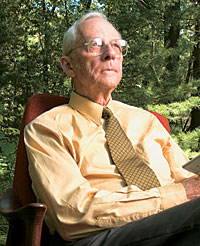
Jay Wright Forrester was a American computer engineer and systems scientist. He was a professor at MIT. Forrester is known as the founder of system dynamics, which deals with the simulation of interactions between objects in dynamic systems and is most often applied to research and consulting in organizations and other social systems.
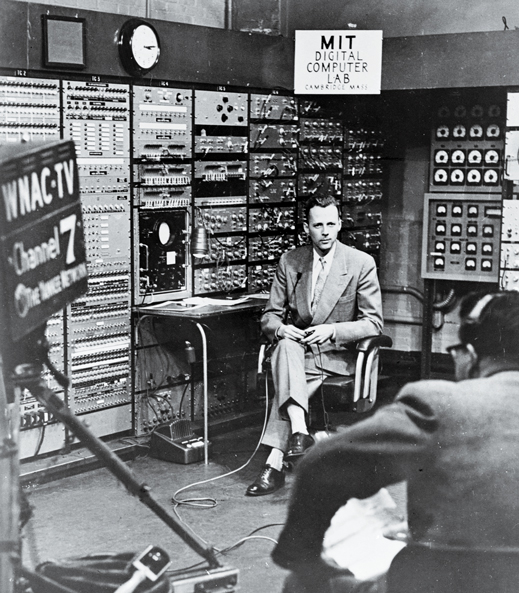
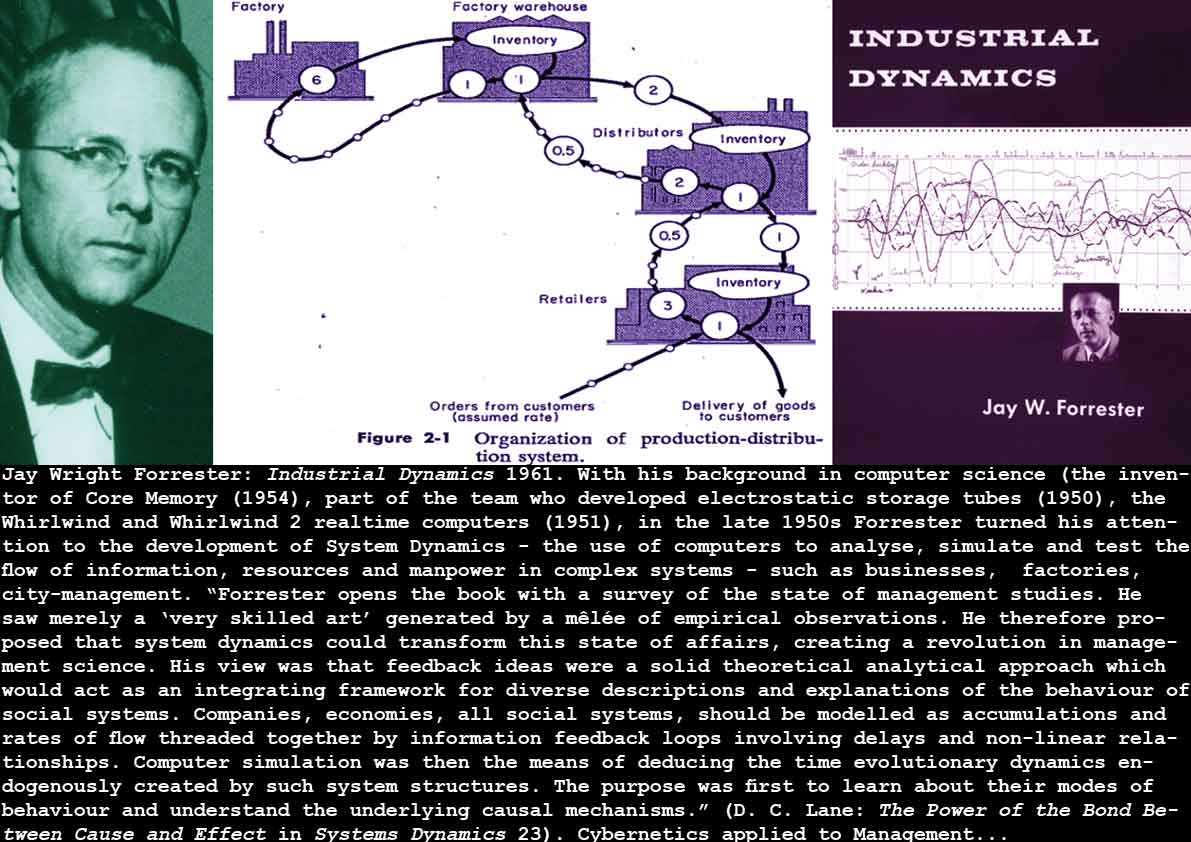
Image from: https://mediainspiratorium.com/1960-1970/ The Many Careers of Jay Forrester (MIT Tech Review)
"Computing pioneer Jay Forrester, SM ’45, developed magnetic-core memory. Then he founded the field of system dynamics. Those are just two of his varied pursuits."
Jay Forrester’s System Dynamics and World Model
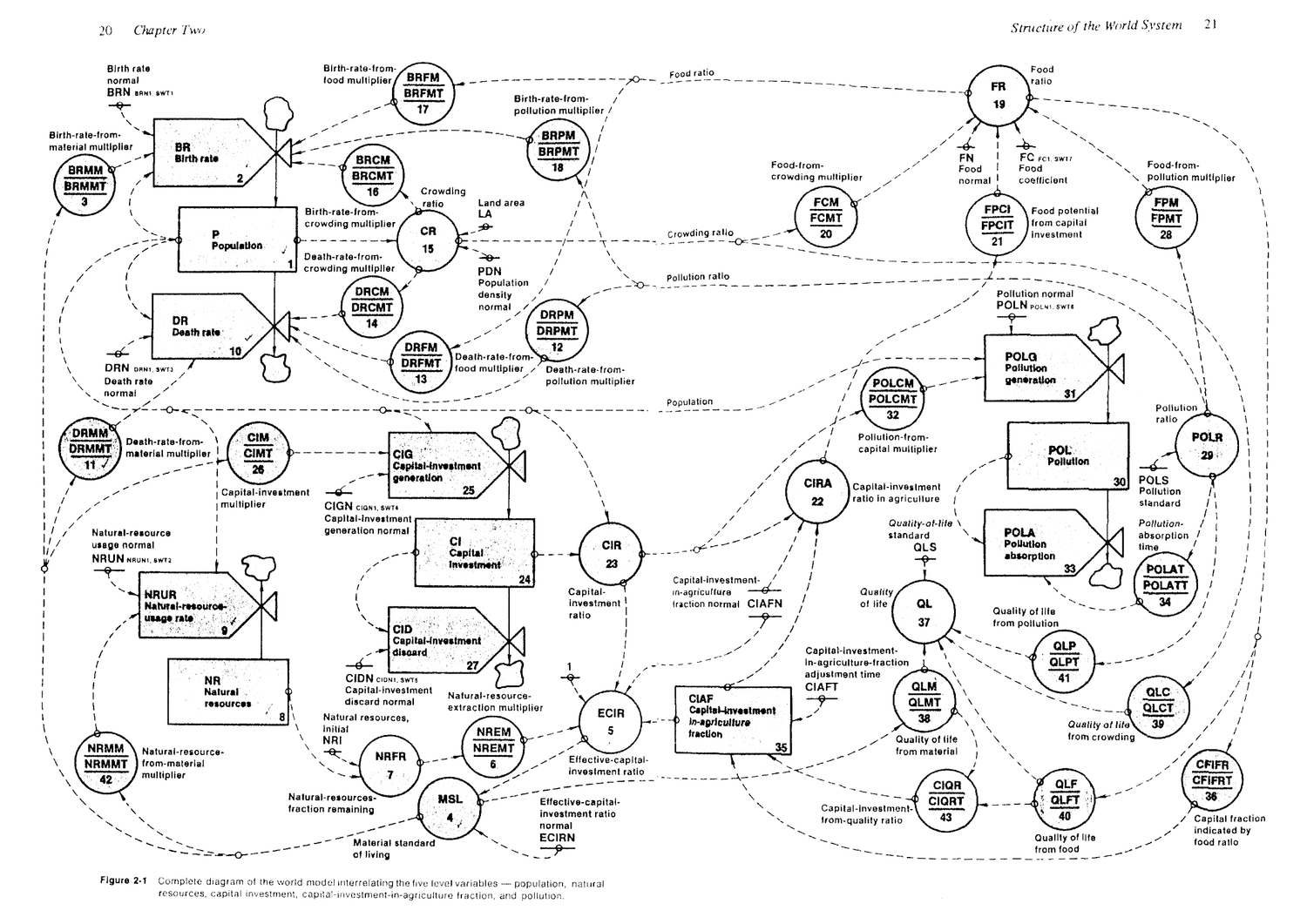
Forrester's model of the world's dynamics. This map models the dynamics between population and economic growth (from 1971 to 2021) by relating population, natural resources, pollution, capital investment, food and quality of life (Jay W. Forrester, 1973, p. 144). 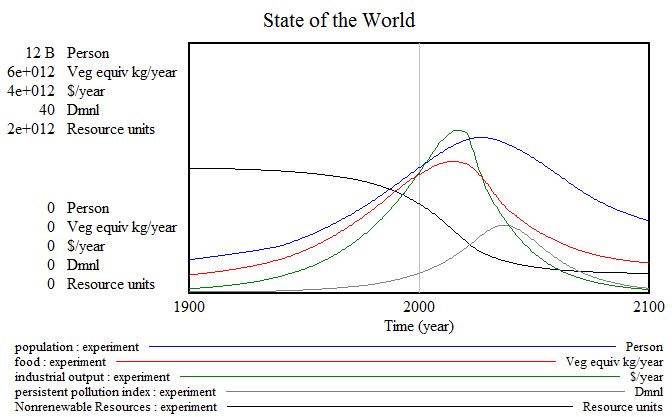
"The second major noncorporate application of system dynamics came shortly after the first. In 1970, Jay Forrester was invited by the Club of Rome to a meeting in Bern, Switzerland. The Club of Rome is an organization devoted to solving what its members describe as the "predicament of mankind"—that is, the global crisis that may appear sometime in the future, due to the demands being placed on the Earth's carrying capacity by the world's exponentially growing population. At the Bern meeting, Forrester was asked if system dynamics could be used to address the predicament of mankind. His answer, of course, was that it could. On the plane back from the Bern meeting, Forrester created the first draft of a system dynamics model of the world's socioeconomic system. He called this model WORLD1. Upon his return to the US, Forrester refined WORLD1 in preparation for a visit to MIT by members of the Club of Rome. Forrester called the refined version of the model WORLD2. Forrester published WORLD2 in a book titled World Dynamics."
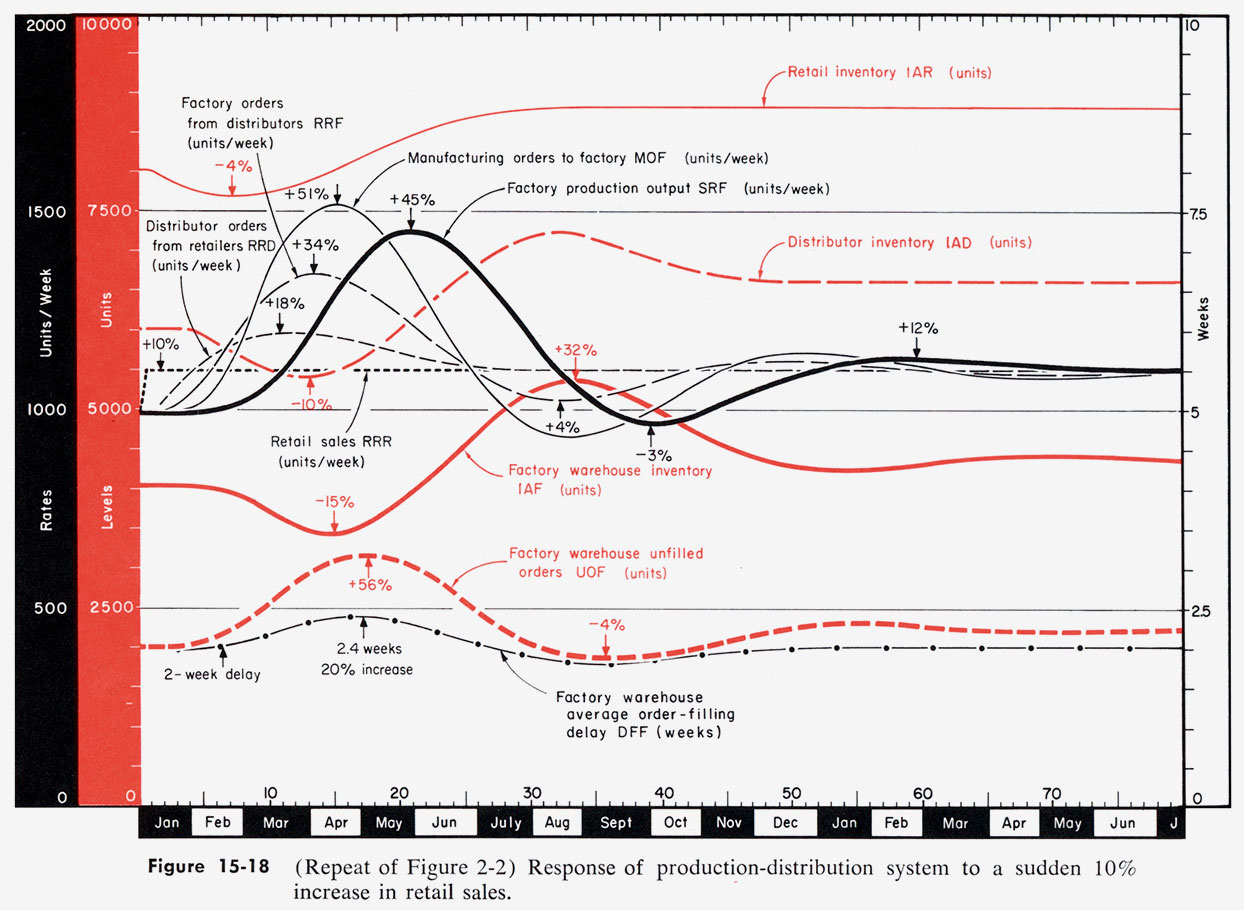
From Jay W. Forrester, Industrial Dynamics (Cambridge, MA: MIT Press, 1985 / 1st edition 1961), 174. The Prophet of Unintended Consequences - by Lawrence M. Fisher.
"Jay Forrester’s computer models show the nonlinear roots of calamity and reveal the leverage that can help us avoid it."
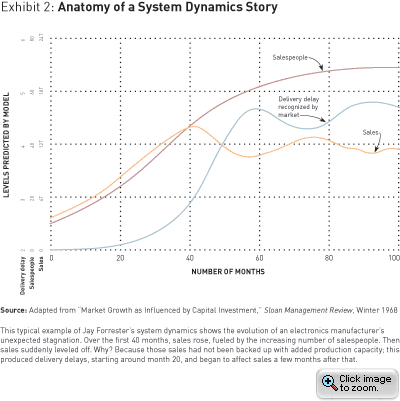
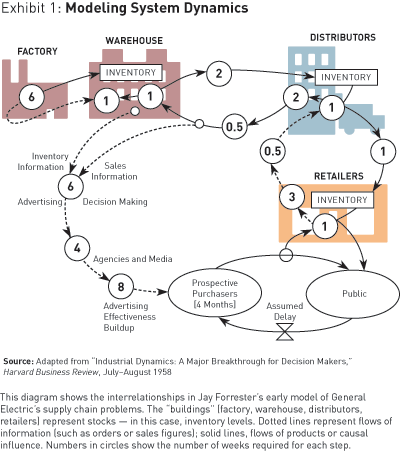
Model Metropolis - by Kevin T. Baker "Behind one of the most iconic computer games of all time is a theory of how cities die—one that has proven dangerously influential."
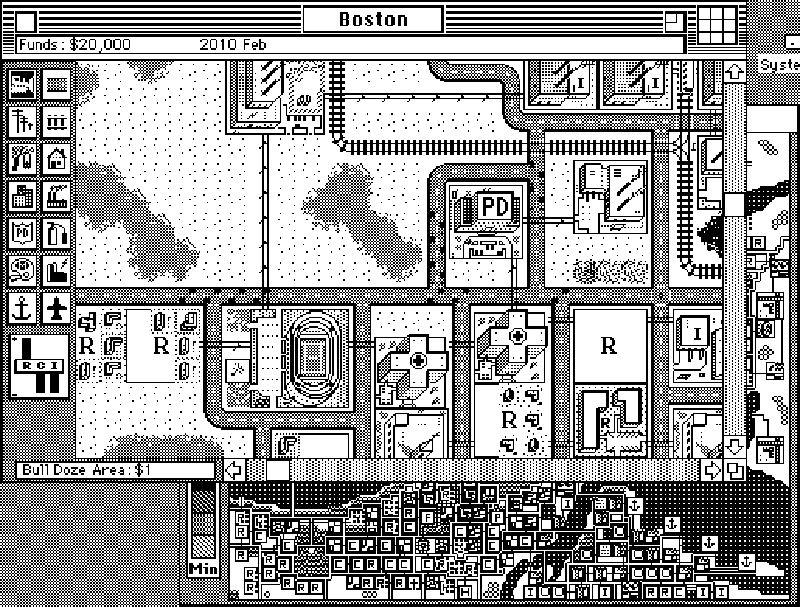
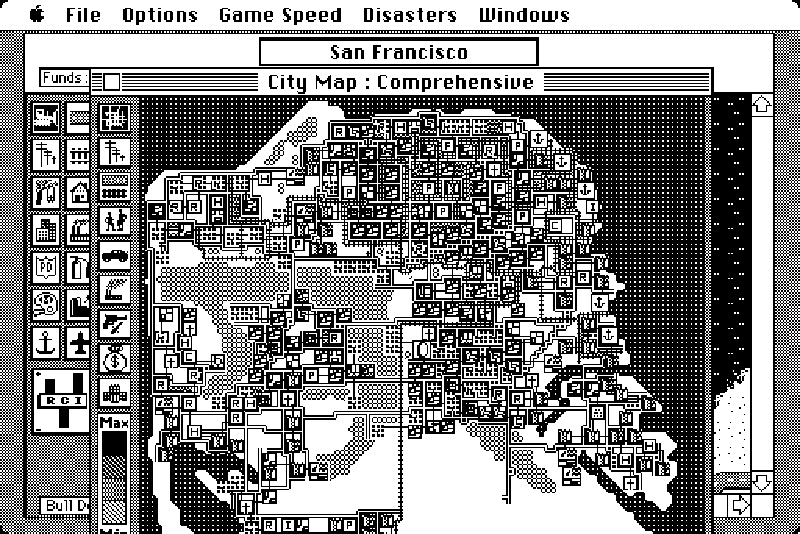
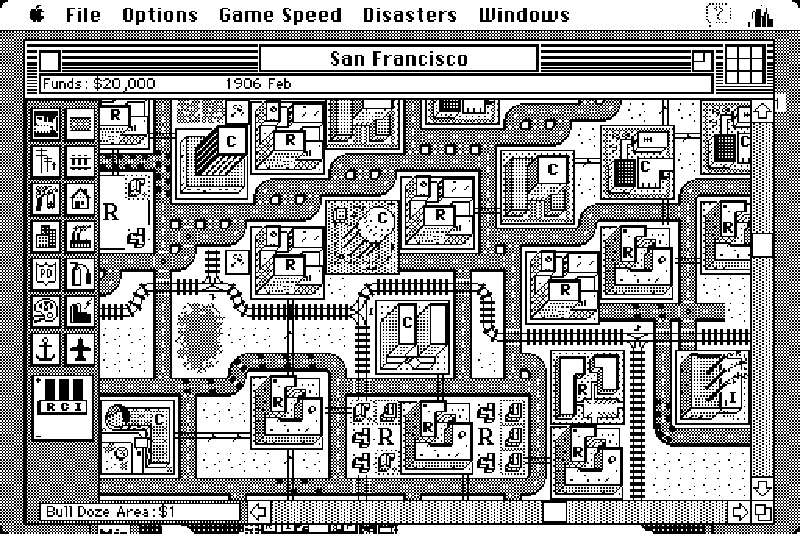
"Will Wright‘s SimCity was originally a map developing feature within the game Raid on Bungeling Bay. Born of Wright’s love for the intricacies of urban planning and of his interest in Jay Wright Forrester‘s System Dynamics, the city-building simulator was later developed as a spin-off program because Wright was more interested in building the city’s maps than playing the actual game. (via)"
Video: A Model Simulator: Lives of Jay W Forrester
Video: Jay Forrester (Part 1)
Applications of System Dynamics - Jay W. Forrester
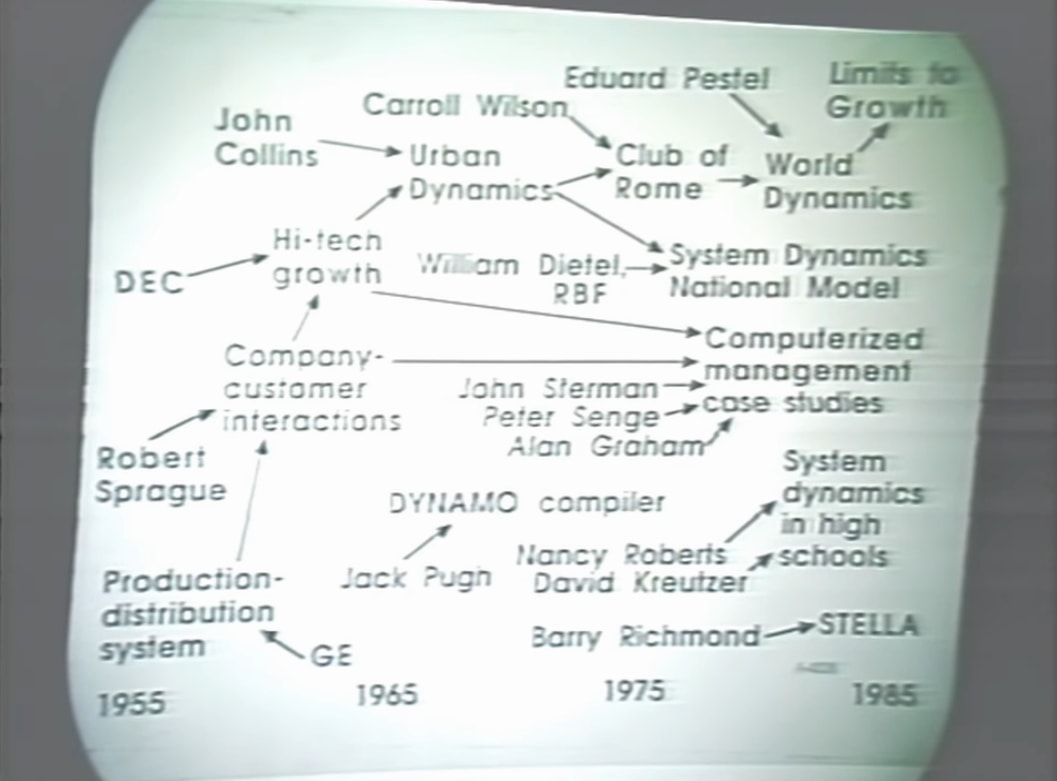
Forrester on Courage
"Life must be very practical, it is not theoretical, it is not conceptual with out purpose. What works gets results." - Jay Forrester
#Complexity #Systems #Business #Military #ClimateChange #Regenerative #ML #KM #SE
-
Climate threats now dominate long-term risks, survey of global leaders finds
"Long-term risks from climate change now outweigh those from cyberattacks, pandemics, geopolitical conflict and weapons of mass destruction, decision-makers say. [...] From wildfires in Australia, Brazil and California to worsening storms, floods and droughts, "all key indicators point that this is a situation that's bad and it's getting worse," said John Drzik, chairman of Marsh & McLennan Insights, a global risk, insurance and professional services firm. [...] For instance, 370 investors managing $40 trillion in assets have now pledged to make their investments climate friendly."
"Peter Giger, chief risk officer for the Zurich Insurance Group, warned that "the longer we wait (to tackle climate change), the more painful the transition will be" because of the rapid plunge in emissions that delay would necessitate.
He pointed to the rapid disappearance of insect species around the world, including those that pollinate 75% of the world's crops, as a result of climate change and other pressures. If insects and the pollination services they provide disappear, "that's a catastrophic outcome" for food security and for business, Giger said. The breakdown of planetary systems has "true costs", he added."
Climate change will reshape markets, McKinsey warns (Financial Times)
"By 2030, all of the 105 countries assessed by McKinsey — which represent 90 per cent of global GDP — were likely to suffer from physical changes such as increased water stress, flooding or a greater number of people exposed to extreme heat, it said."
"The insurance sector is particularly vulnerable, according to the report. Insurers’ current cash reserves may be insufficient to account for future losses and they may not be able to raise premiums enough to cover the gap, McKinsey said. Given the importance of insurance in rebuilding after disasters, this mismatch could send shockwaves through the system.
"
"Supply chains and the locations of property development might also need to be rethought. The frequency of hurricanes threatening semiconductor manufacturers is projected to grow as much as fourfold by 2040, McKinsey said. “For unprepared downstream players . . . the revenue loss in a disaster year could be as high as 35 per cent,” the report states."
The six key points of BlackRock's letter to the world's most powerful companies (bbva)
“The evidence on climate risk is compelling investors to reassess core assumptions about modern finance,” says Fink in his letter, recognizing that it “has become a defining factor in companies’ long-term prospects.” In his view, all governments, companies and shareholders must take climate change into account.
-
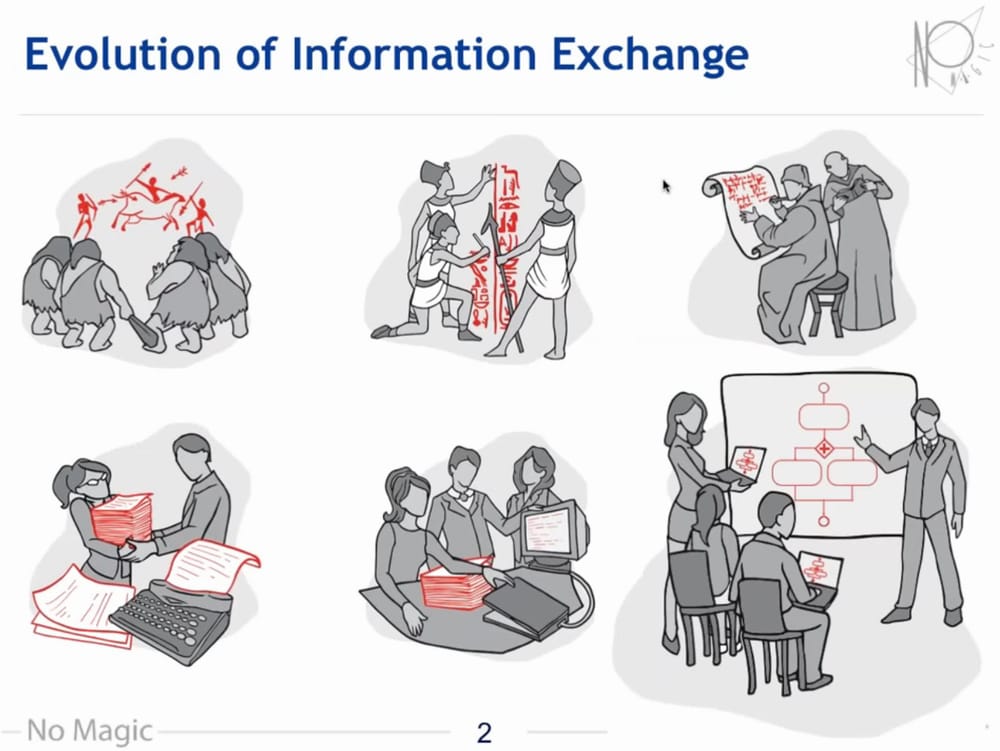
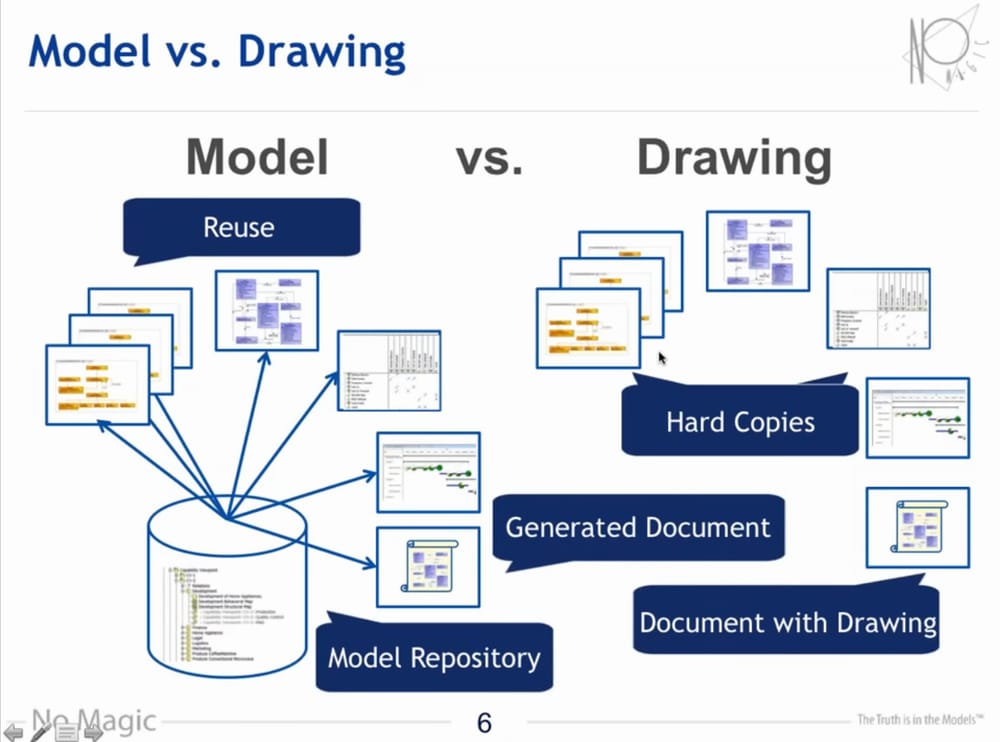
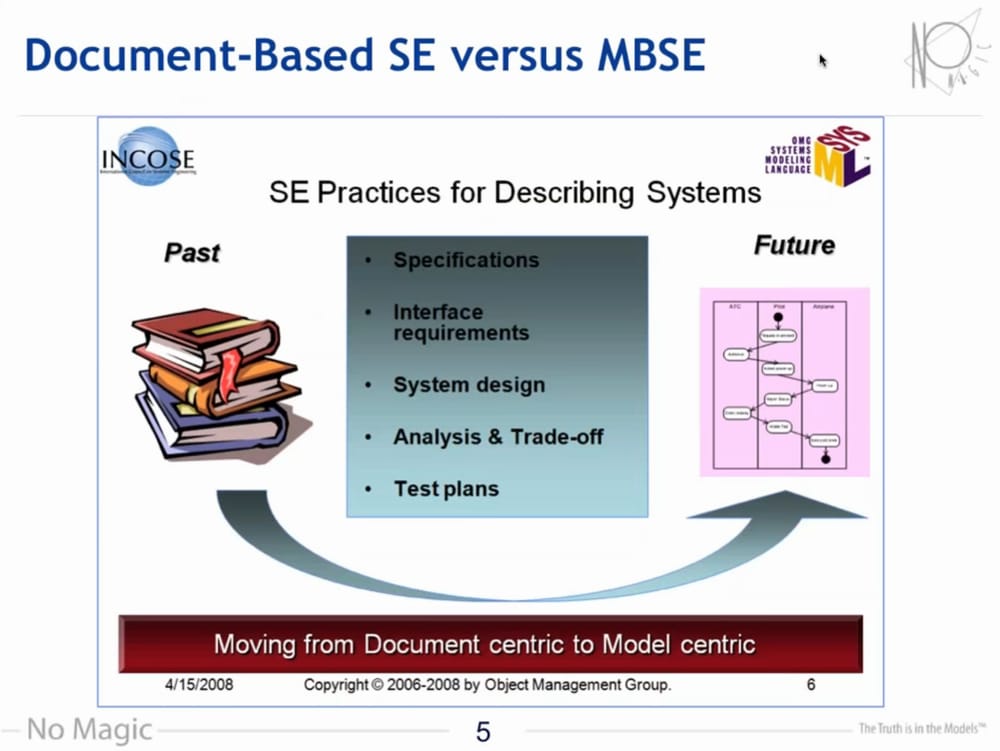
Moving from Documents to Models - Presentation by Dr. Darius Silingas (2016)
-
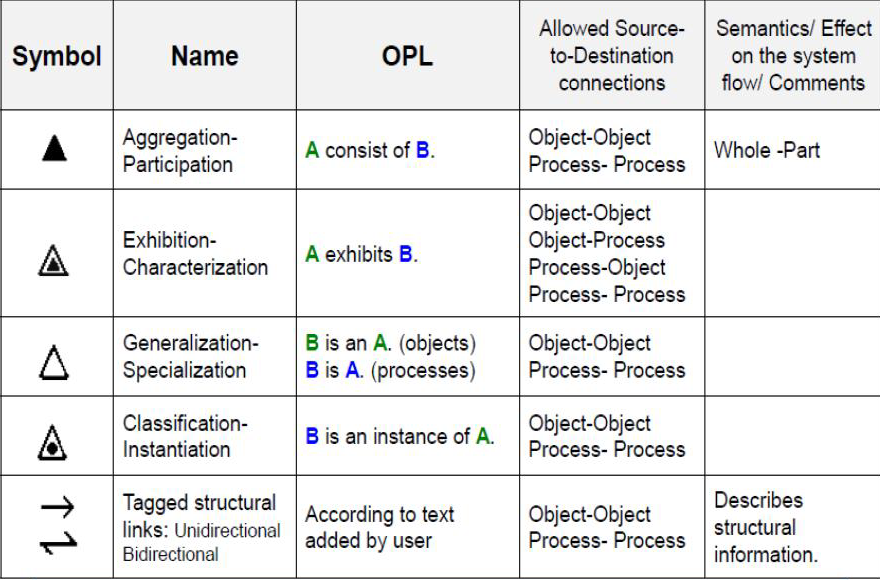
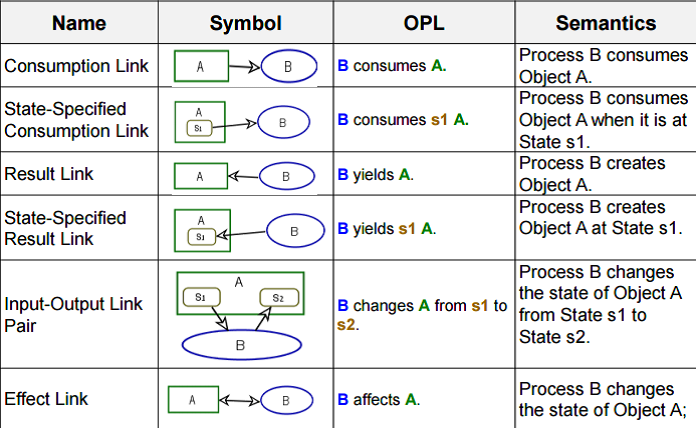
Object Process Methodology (OPM) is a conceptual modeling language and methodology for capturing knowledge and designing systems. Based on a minimal universal ontology of stateful objects and processes that transform them, OPM can be used to formally specify the function, structure, and behavior of artificial and natural systems in a large variety of domains. OPM was conceived and developed by Dov Dori. The ontology of OPM and ontology of Navya-Nyāya an ancient Hindu school of thought in india are identical.
More on OPM: Presi, Presi, Presi, Video, Video, Video, Video, Video, Video, Video, Video
Following text from the blog post "Object Process Methodology" - by Joe Gollner:
My encounter with OPM was facilitated by attending the above-referenced course at MIT. This course was delivered by Professor Dov Dori, the driving force behind OPM, and by Professor Edward Crawley, Head of the Cambridge MIT Institute and advocate for how OPM can be leveraged to model business as well as system considerations. The course, I should note, represents the best value I have ever encountered in a professional education program. I would highly recommend it to anyone who is interested in the general question of modeling complex systems in a way that all stakeholders can intuitively understand.
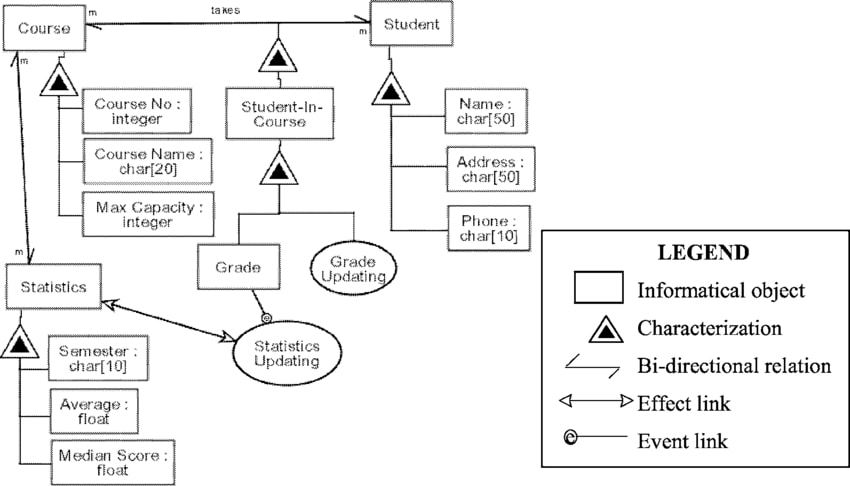
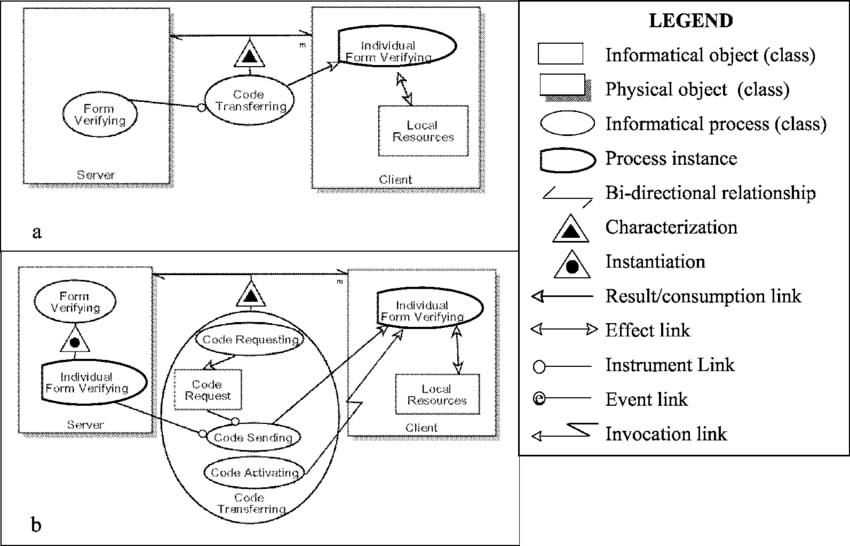
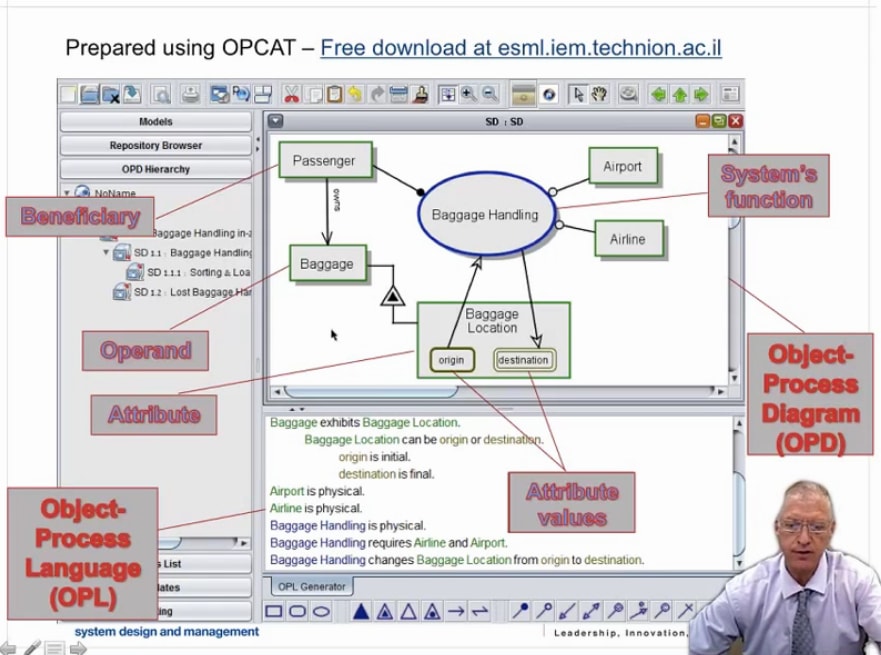
I will attempt an unforgivably brief description of OPM here. The Object Process Methodology offers an astoundingly simple framework for modeling systems and scenarios of unlimited complexity. The root of its ability to do so lies in the fact that it departs from the prevailing fixation with Object Orientation (OO) which, in ultimately trying to represent the world using constructs relevant to software, inevitably spawns bewildering models as soon as it moves beyond anything more "real" than a software component. The main departure that OPM makes, as its name suggests, is the elevation of "processes" to being peers to "objects". In the real world, there are things and there are things that happen to things and this basic decomposition of conceptual units fits reality to a tee. So it is that whereas the full envelope of UML diagrams provides over 150 individual symbols, OPM manages to get by with literally a handful. This simplicity then makes a second major departure possible - the elimination of the litany of diagram types. In OPM, there is only one diagram type and only one integrated view. This is one major reason why business people can immediately grasp the contents of an OPM model.
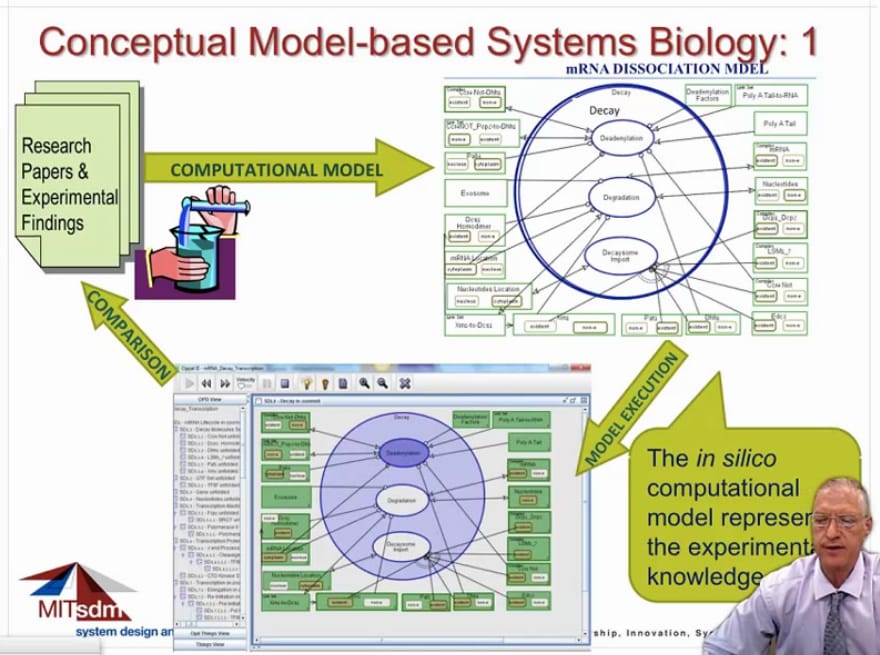
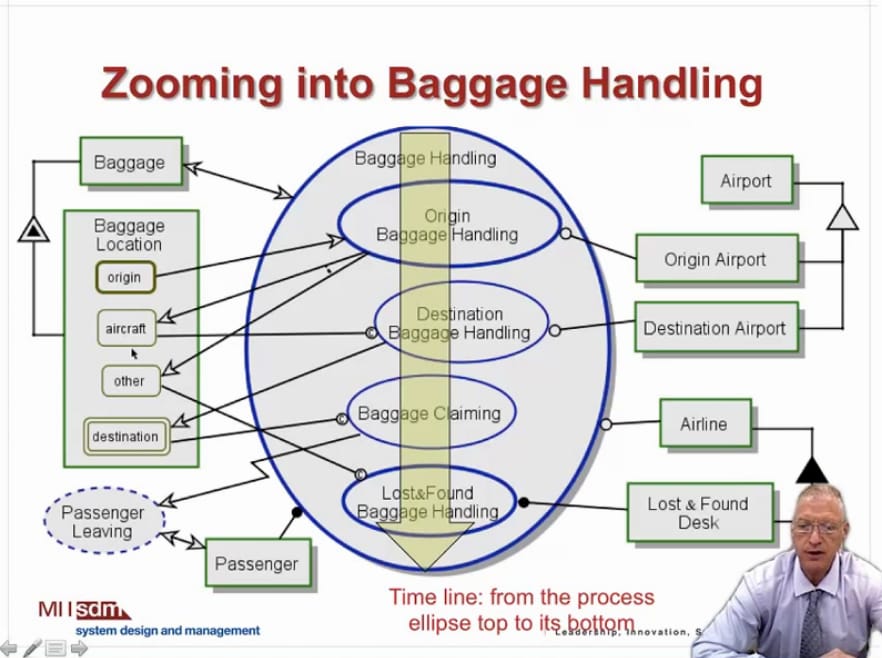
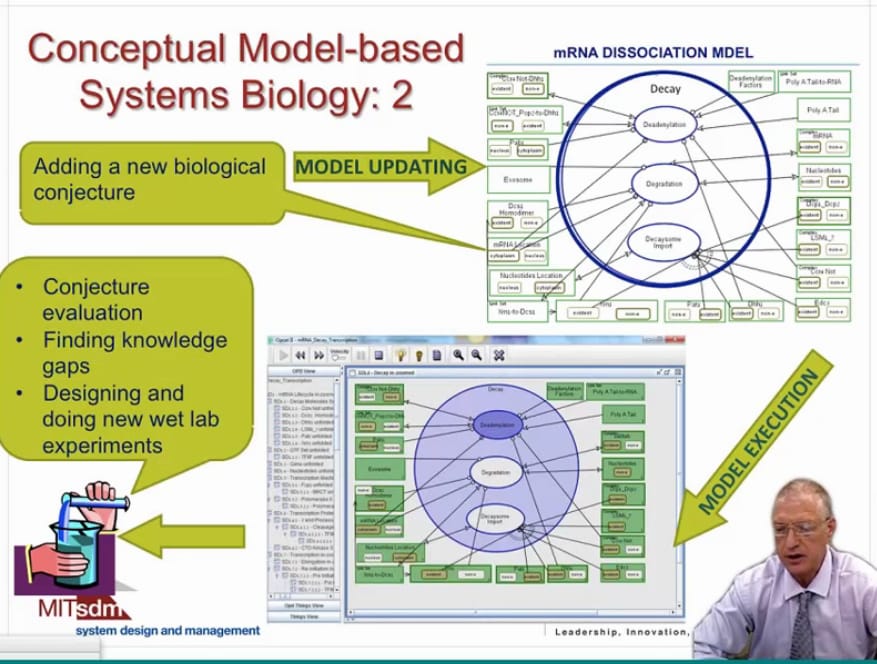
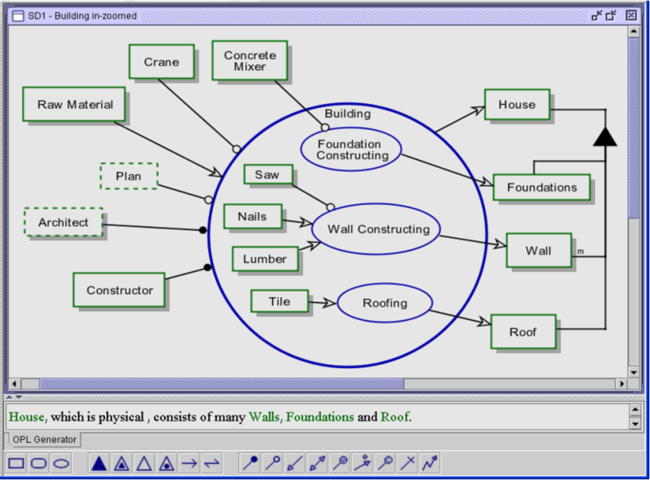
Equally interesting is the fact that associated with any visual representation that can be constructed using the OPM notation will be a supporting "natural language" expression. The above image illustrates a very simple OPM model. The image is taken from the OPCAT modeling tool and along the bottom of the screen shot can be seen both the limited set of symbols used and a segment of the natural language expression associated with the model. [...]
The short summary of this argument is that anyone interested in the general problem of understanding complex systems, and representing and communicating that understanding to a broad community of stakeholders, absolutely must take a closer look at the Object Process Methodology.
Short video interview with Dov Dori. Part of a free MOOC on OPM.
Tools: OPCloud and the Evolution of OPM Modeling Tools - Dov Dori et.al. which mentions the cloud based https://www.opcloud.tech/ and the OPCAT software:
-
EnAlgae - sustainable technologies for algal biomass production

EnAlgae brings together 19 partners and 14 observers across seven EU Member States. It aims to reduce CO2 emissions and dependency on unsustainable energy sources in North West Europe.The project is developing sustainable technologies for algal biomass production, bioenergy and greenhouse gas mitigation, taking them from pilot facilities through to market-place products and services.
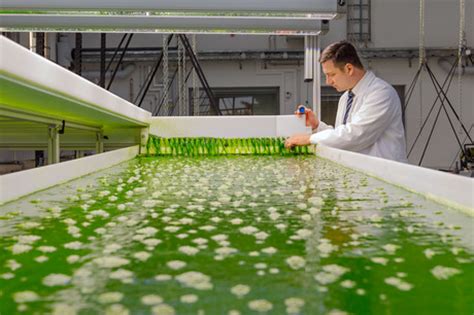
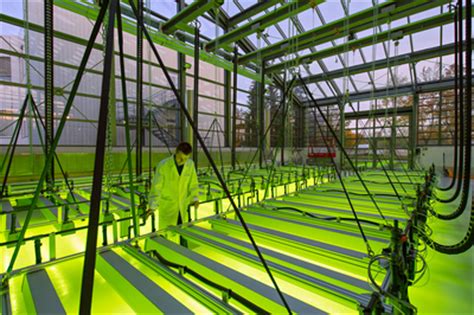
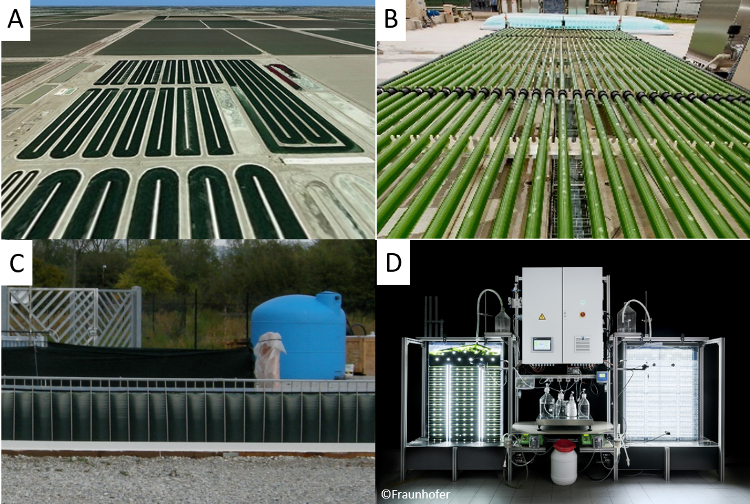
Capturing and representing knowledge from the EnAlgae project - Developing Decision Support Tools - presentation by Lynsey Melville
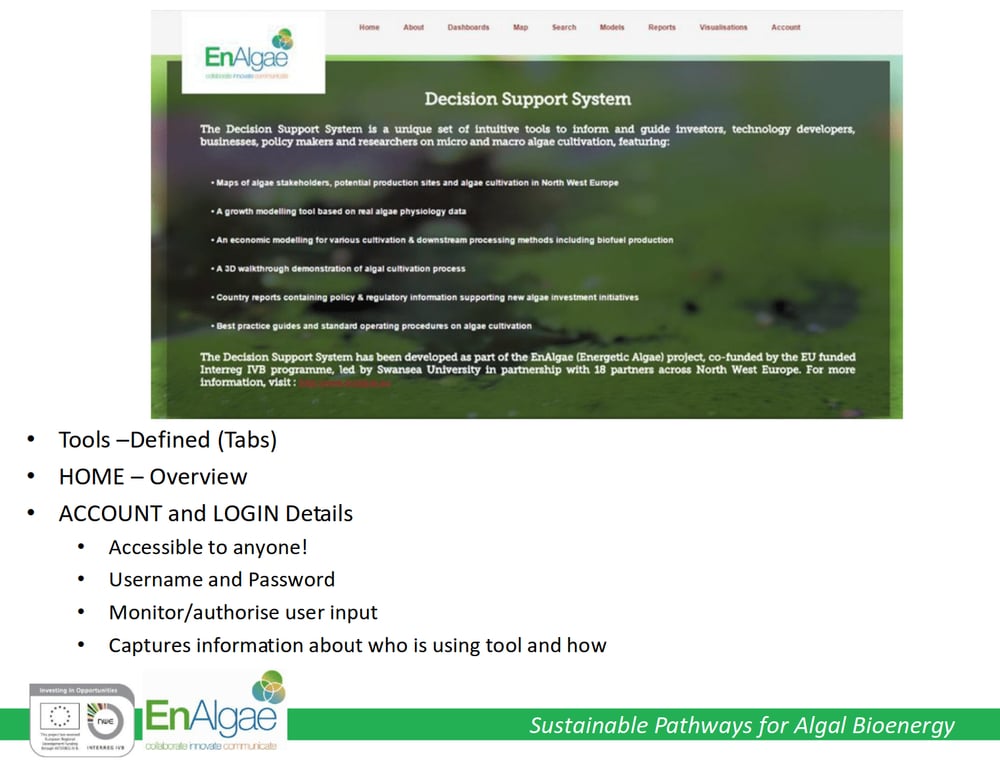
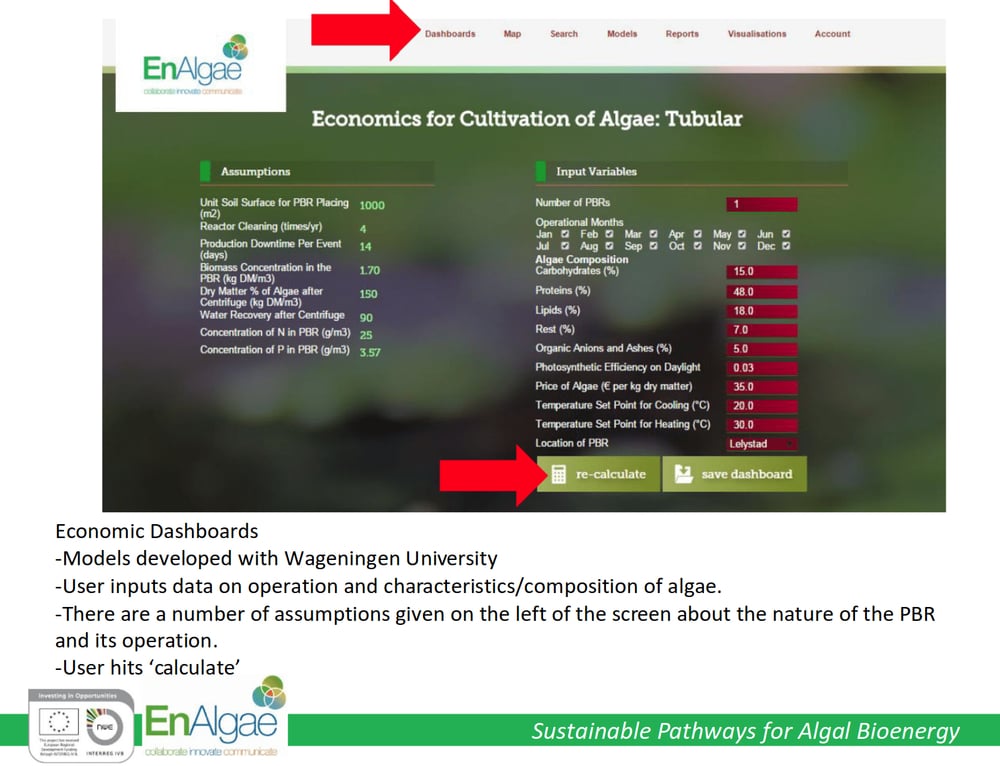
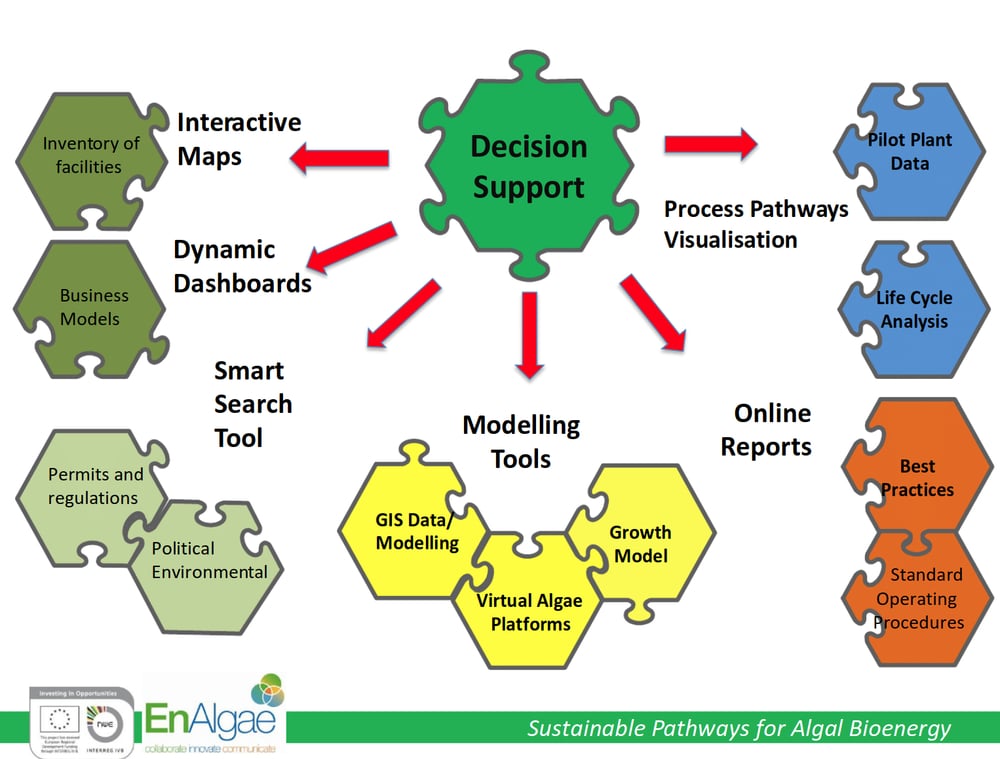
EnAlgae Decision Support Tool and Interactive Algal Growth Model
The Decision Support Toolset is a unique set of intuitive tools to inform and guide investors, technology developers, businesses, policy makers and researchers on micro and macro algae cultivation, featuring:
- Maps of algae stakeholders, potential production sites and algae cultivation in North West Europe
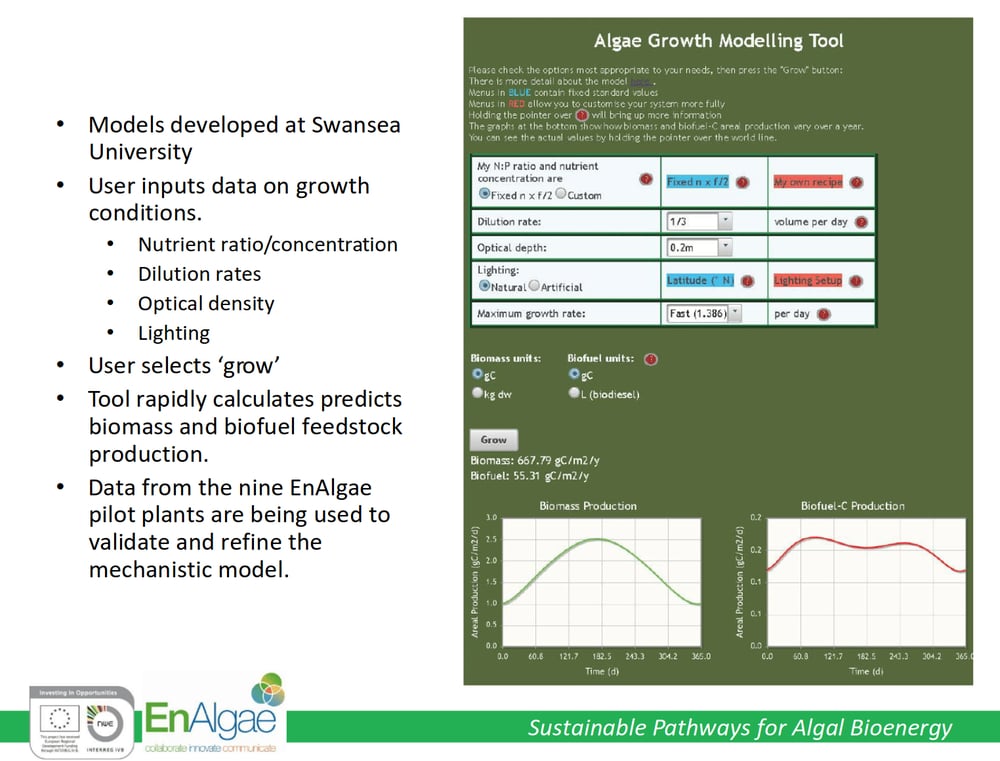
- A growth modelling tool based on real algae physiology data
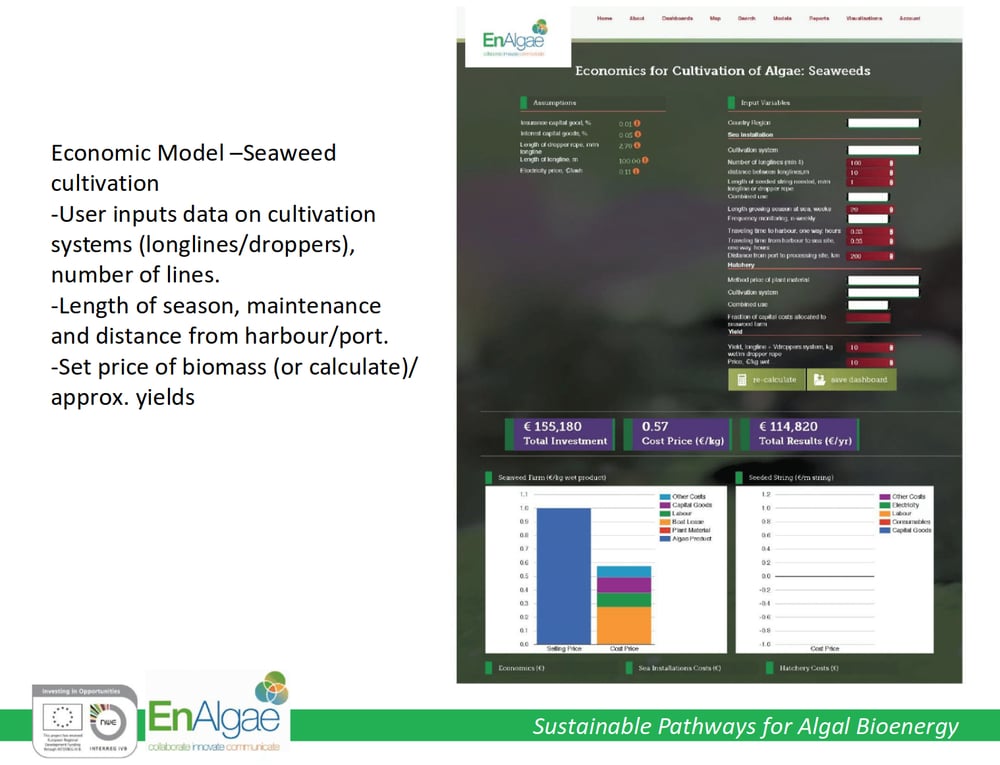
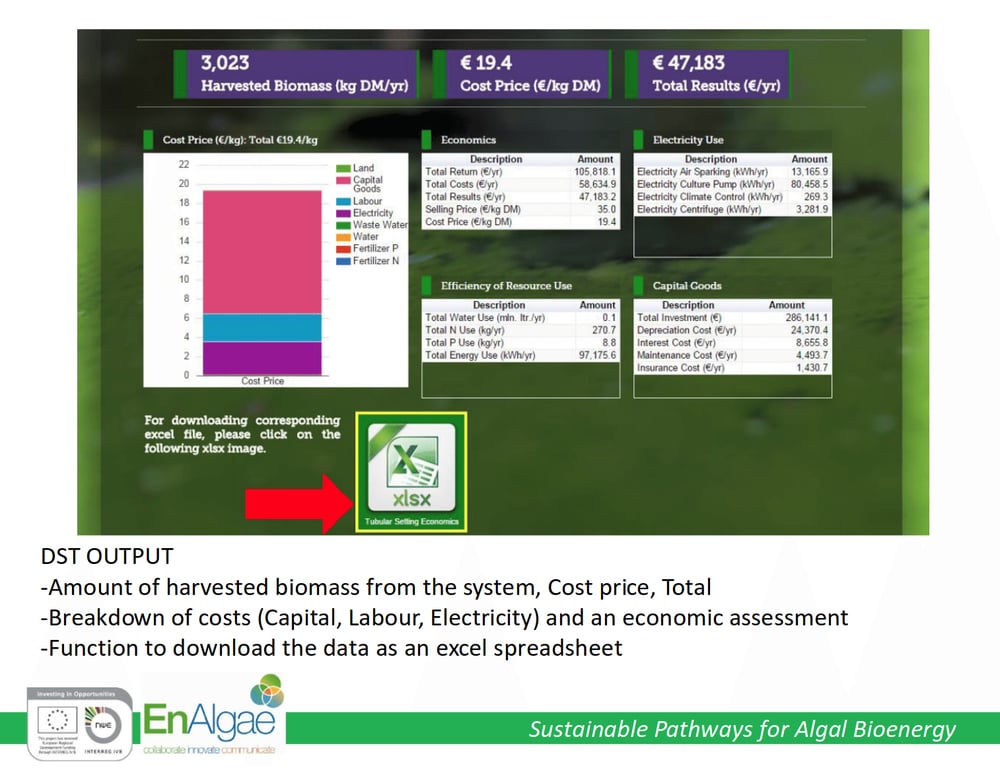
- An economic model for various cultivation & downstream processing methods including biofuel production
- A 3D walkthrough demonstration of the algal cultivation process
- Country reports containing policy & regulatory information supporting new algae investment initiatives
- Best practice guides and standard operating procedures on algae cultivation
EnAlgae Documentary: Panning for Green Gold
EnAlgae has been about finding sustainable pathways for algal biomass. Initially the focus was all about energy, specifically as a biofuel. But our journey over the past four years shows that there's likely to be a different future ahead for using algae - as energy in food for one thing, and much more. Watch our half hour film to find out more.
The Algal Information Network (AIN)
The AIN role will be to develop productive and active initiatives which are able to contribute to the algae sector scale up in Europe. Among the wide set of information, news and documents available, this website hosts the first public databases of European actors in the algae market, from research centres to industrial end-users, associations and consultancy companies. In addition, the AIN website presents the Decision Support Tool, designed by EnAlgae: one of the most advanced IT Tools, able to provide precise concept studies for a preliminary investigation on the potential benefits of new algae facilities in the NWE region.
-
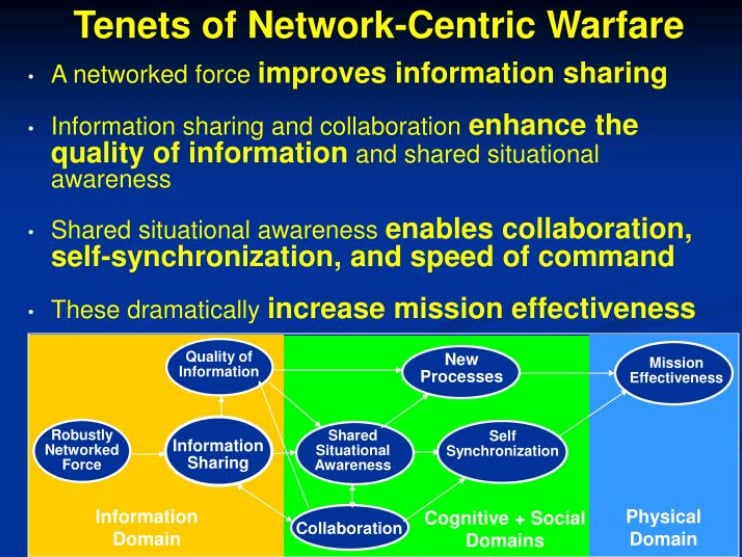
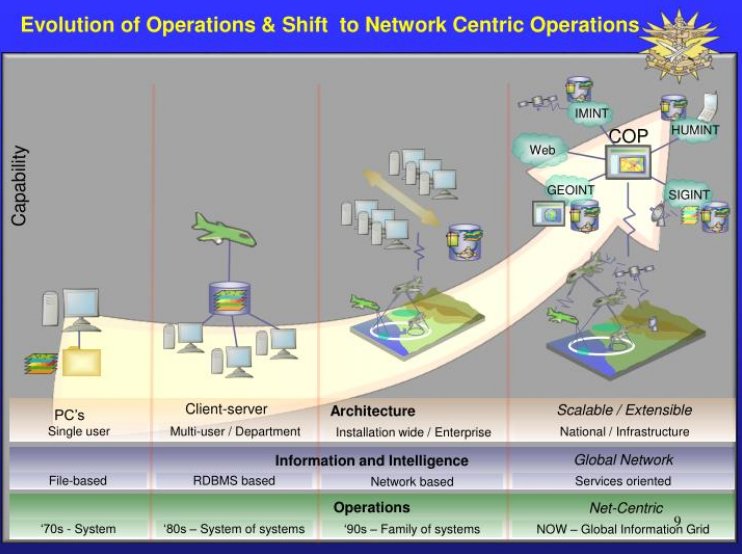
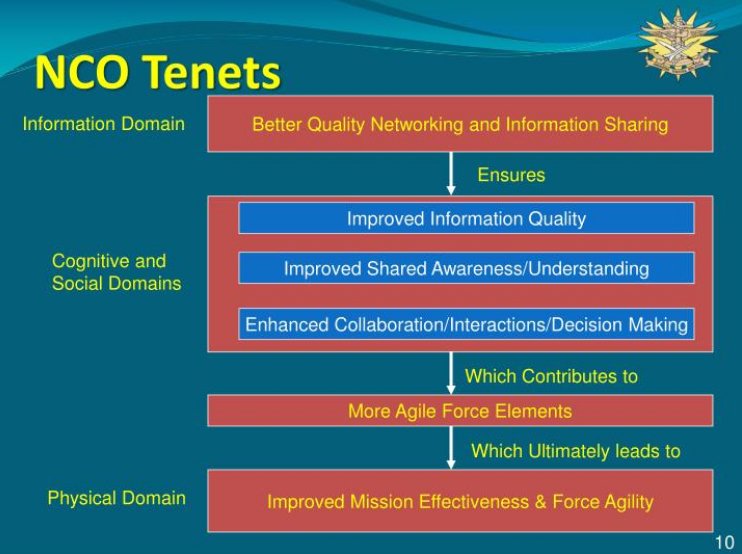
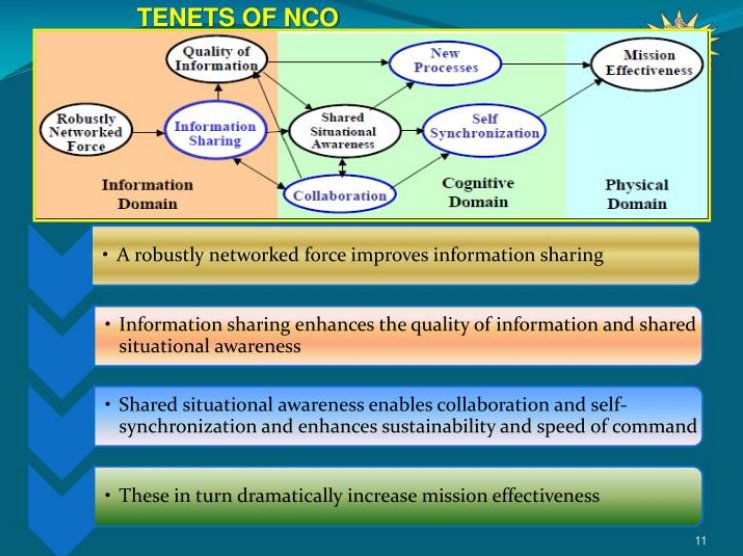
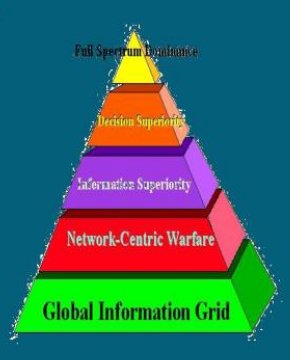
Network-Centric Warfare Domains: Information/Cognitive/Social/Physical
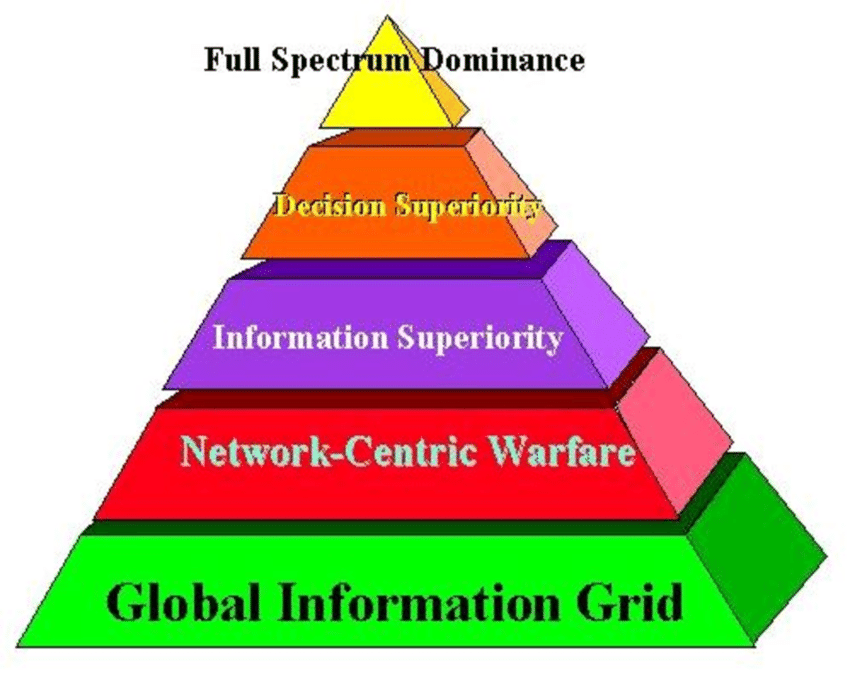
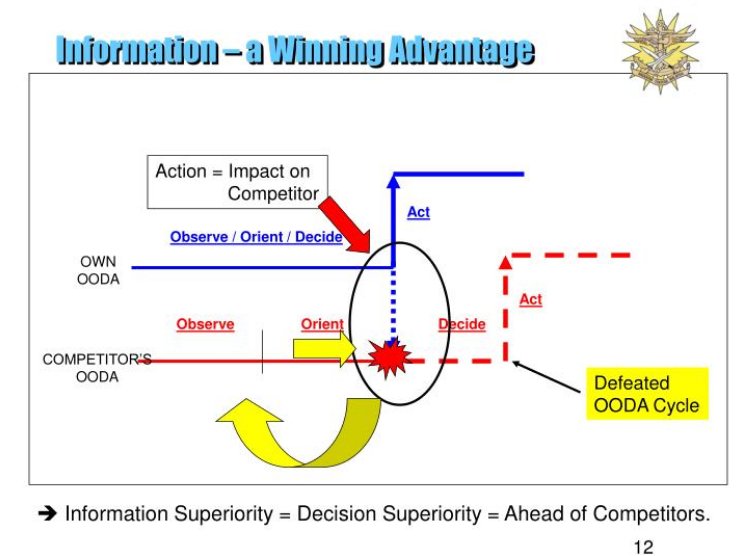
Network-centric warfare is a military doctrine or theory of war pioneered by the United States Department of Defense in the 1990s. It seeks to translate an information advantage, enabled in part by information technology, into a competitive advantage through the robust computer networking of well informed geographically dispersed forces.
Domains
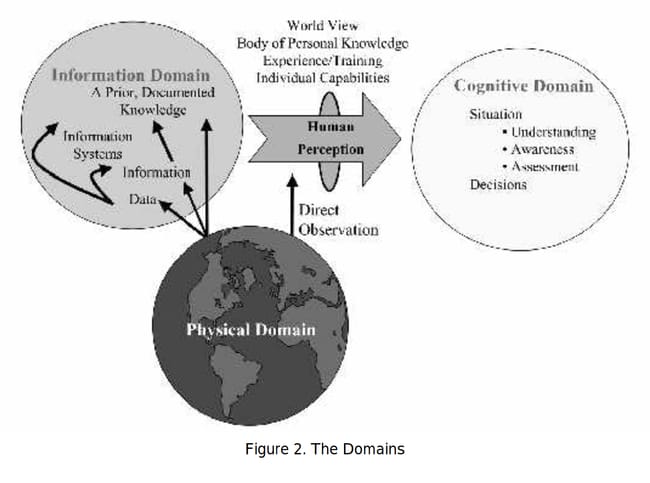
Network-centric Warfare brings together command and control (Social Domain) with assets on the ground (Physical Domain) and intelligence/recon data (Information Domain) to create a network-inclusive military. (Text Source)
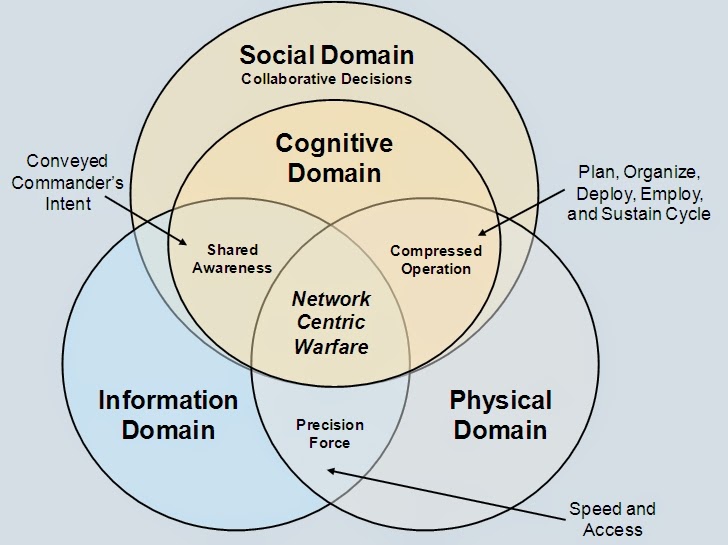
- Information Domain - Any intelligence or information that may offer a particular advantage. Information such as the disposition, schedule, and capabilities of the enemy or the specific knowledge of certain weapon systems, their function and their limits.
- Physical Domain - Any physical assets in the area of operation. From reconnaissance satellites to ground infantry companies and everything else in-between.
- Social Domain - This is a complicated category that encompasses human interaction, social theory, military hierarchy, discipline, and communication skills.
- Cognitive Domain - The planning and processing aspect of a large, lethal, and socially-restricted group within a hierarchical command structure. A subset of the Social Domain with emphasis on proper military decision-making skills, procedure, and doctrine.
- Precision Force - Precision force is having accurate data on enemy forces (such as that from recon reports or units in contact) as well as having military units within the area to react to the data at hand.
- Shared Awareness - If one has the proper intelligence and the correct process of command and control then one may attain a higher level of shared awareness. Merging commands intent (such as objectives or goals) and communication capabilities with the information available at hand to allow units to share awareness of their surrounding, their enemy, and priorities of the mission.
- Compressed Operations - The proper organization, deployment, and persistence of an operation in a efficient, supported, streamlined, and well-managed fashion. Good cognitive skills (command skills) with the proper forces can create compressed operation limited in scope and geography to allow for maximum efficiency of assets against enemy forces.
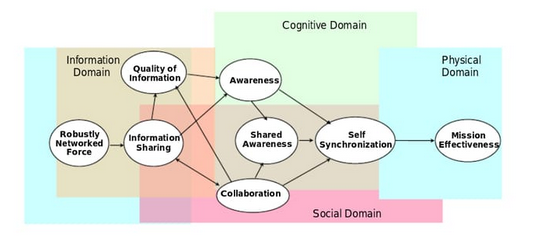
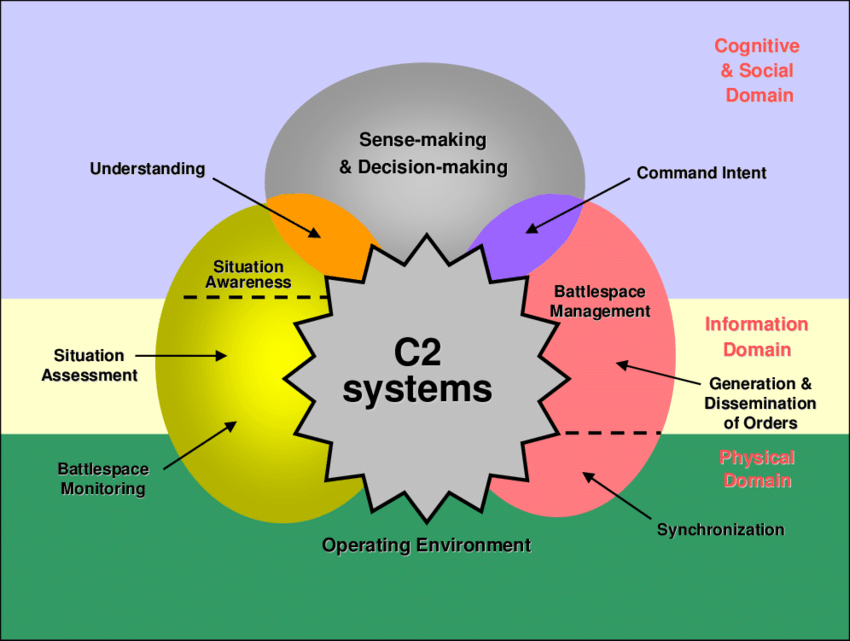
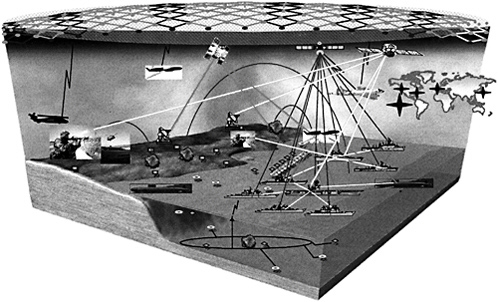
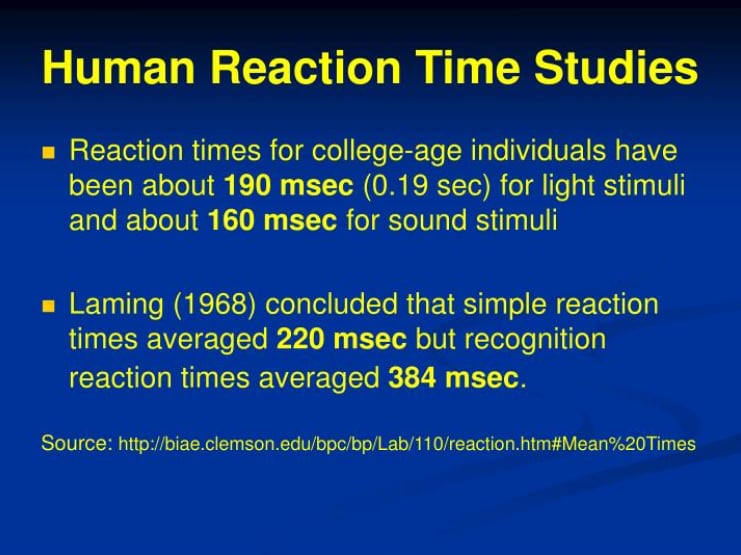
Net-centric warfare is heavily reliant on information technology integrated within military units to help units communicate, locate, and share information to each other in a rapid manner increasing mission effectiveness. Command units would be able to have a real-time assessment of where friendly forces are located while on the ground units are given an increased level of situational awareness through shared combat data such as enemy disposition, status of forces.
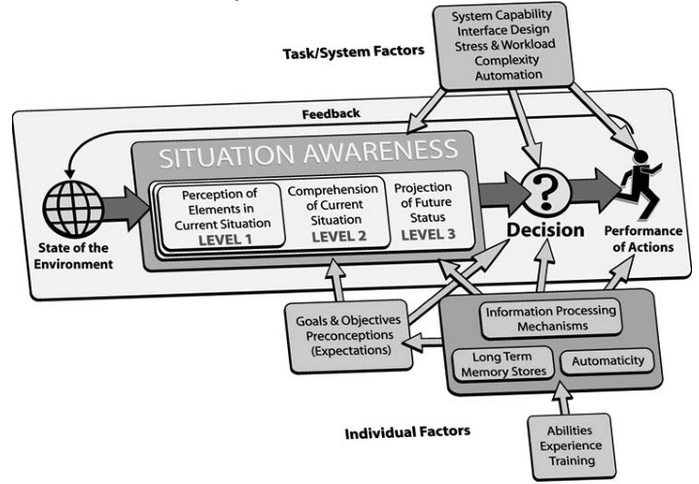
It's advantages are clear to see, units can have an increased degree of situational awareness almost down to the individual company, with its most extreme potential fitting small transmitting and receiving input and output capable computers down to the squad or squad member. Commanders from the very top can easily locate and visualize units on their own up-to-date map with a high degree of accuracy and informational support to allow for the best decision.
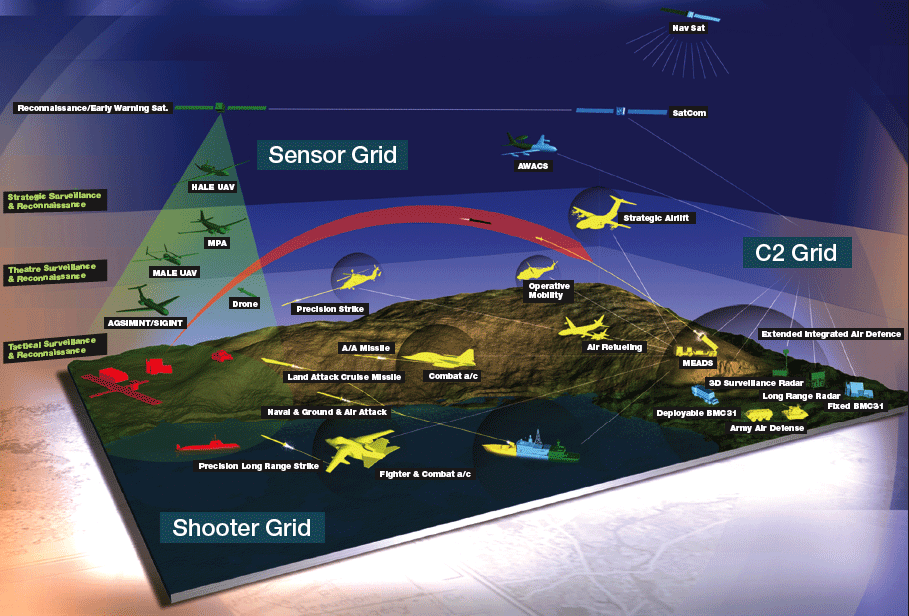
An area of operation under the network-centric warfare paradigm. Weapon systems, command and control and a "sensor grid" are interconnected with one another to allow for maximum efficiency. Network-centric warfare is possible due to a series of technological devices including IFF transponders, global position system, radio communications, RADAR contact, and other similar assets. The final dream of network-centric warfare is to allow units across the spectrum, from space, air, sea and land to share and relay communications, targeting and acquisition data, intelligence, and other related data with each other efficiently, securely, and on-demand. The end goal is to allow commanders throughout the command hierarchy a real-time command and control of units in a streamlined and yet precise manner.
The disadvantage to this however is the heavy reliance on technological convenience (over "warrior skills") and the degree of difficulty in controlling electronic emissions . The scope of a massive network-centric unit makes its communications vulnerable to enemy attacks attempting to destroy key nodes preventing the "self-healing" concept of a shared network. A large net-centric paradigm also demands much of the limited bandwidth physically capable by the EM spectrum especially if every individual unit is to have a emitting device. Encryption, secrecy, and signal interception by the enemy are also major concerns. The emissions of any radio or microwave signal can be detected easily by other enemy signal and electronic warfare units which can give away unit positions. Finally net-centric warfare still has several of the major issues that most, if not all, communication systems have in harsh terrain (such as urban centers, mountains, caves) with intermittent signal strength and sometimes signals blocked out entirely.
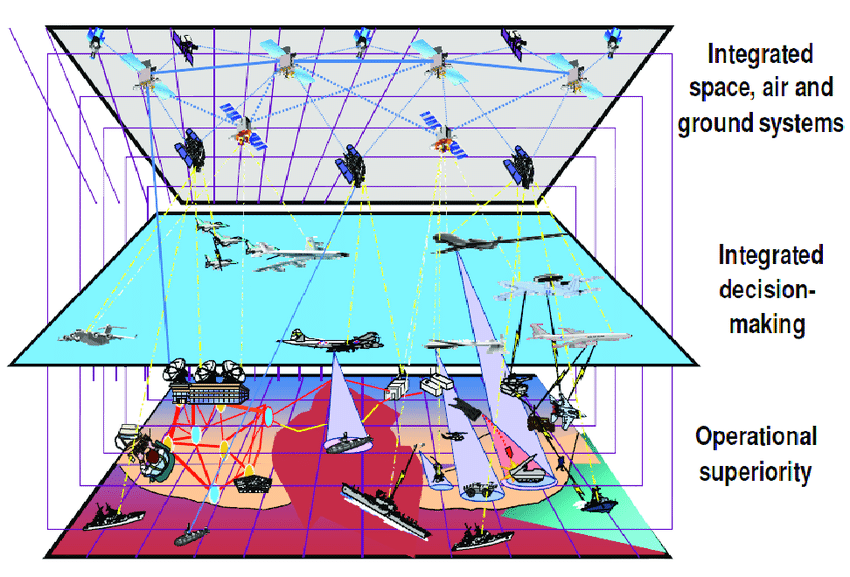
The Inter-Relation within Information Operations - by Gp.Capt.Niwat Niamploy, Royal Thai Air Force
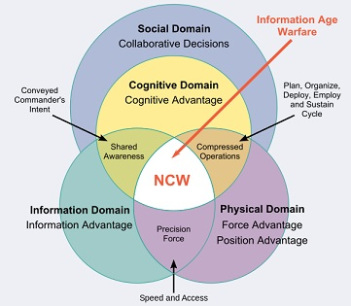
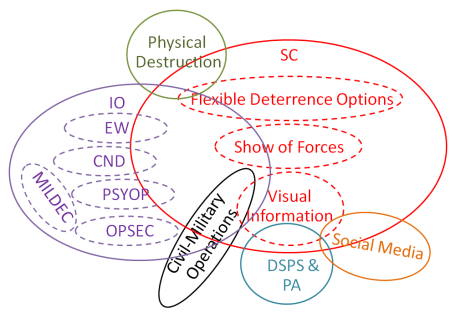
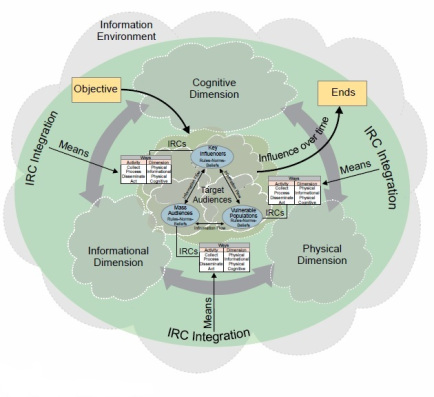
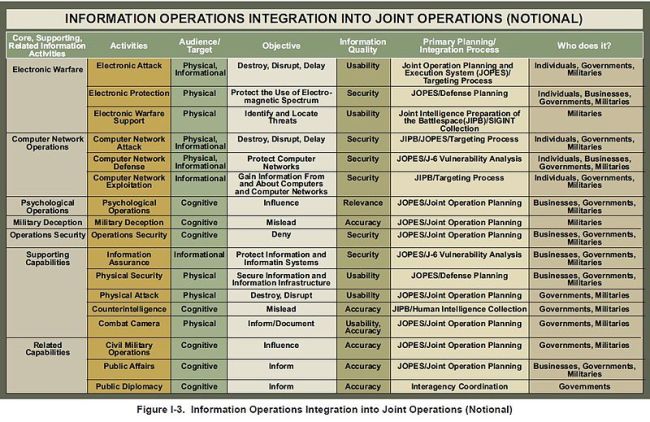
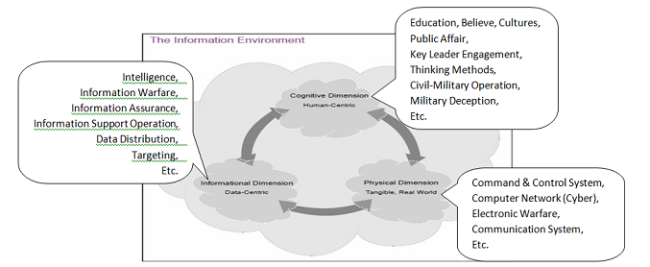
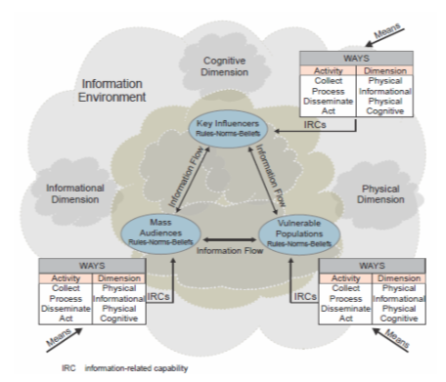
Sense-Shoot-Command on the Battlefield After Next - Presentation by Alexandra Romero
Sense-Shoot-Command on the Battlefield After Next. Koblenz Symposium on Information Technology Network Centric Warfare 28 August 2008. COL (ret) Kevin Cogan U.S. Army War College Center for Strategic Leadership Contractor: Booz Allen Hamilton.
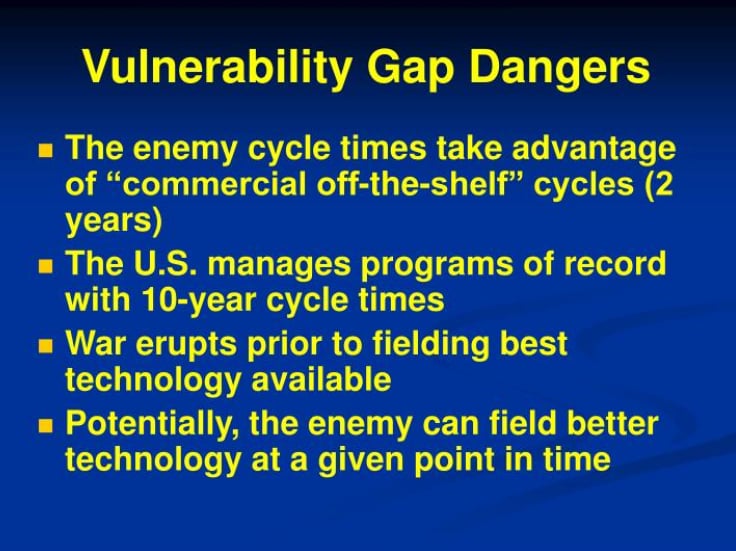
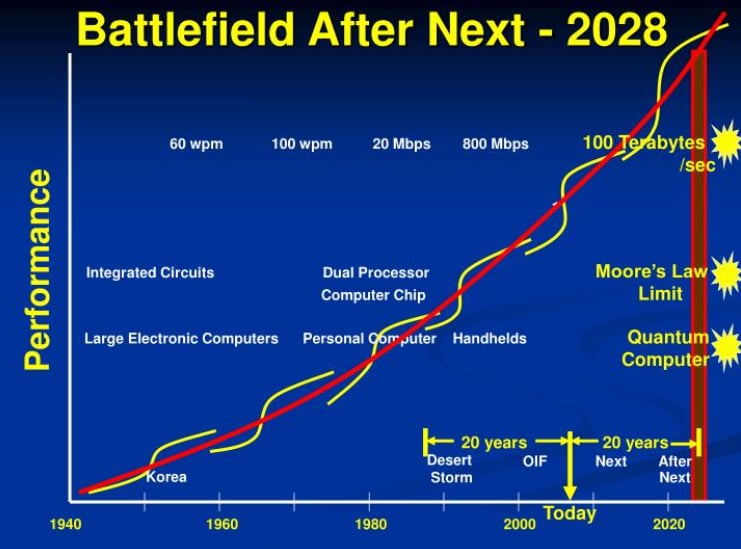
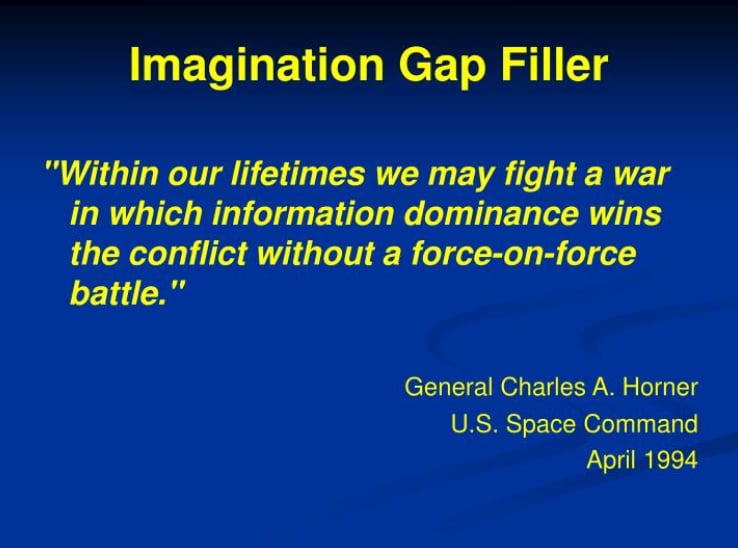
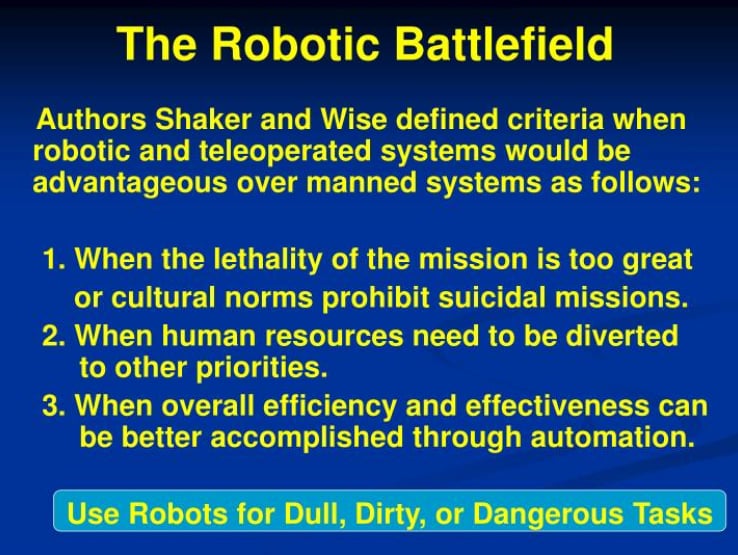
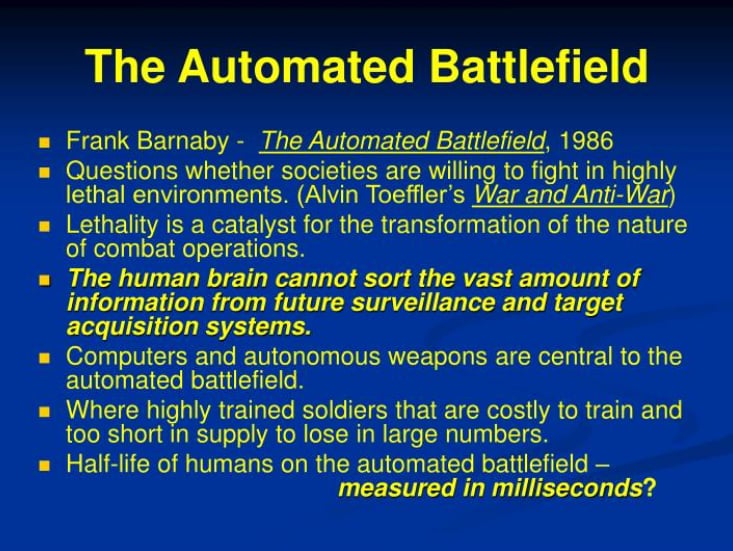
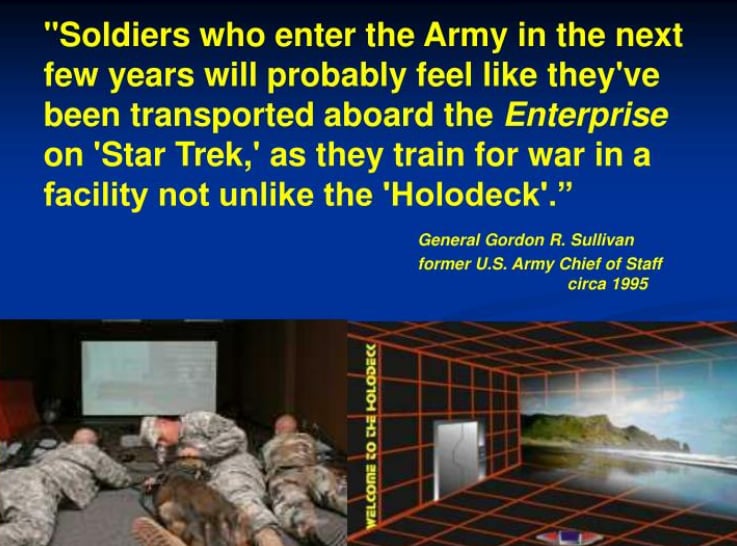
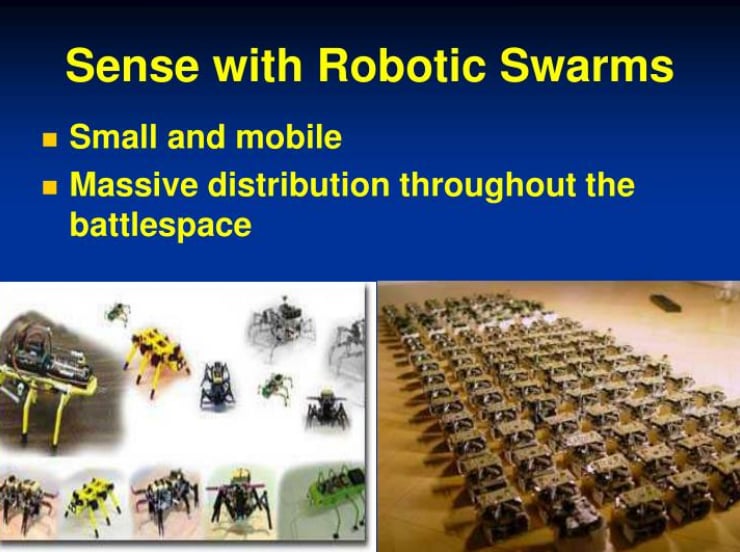
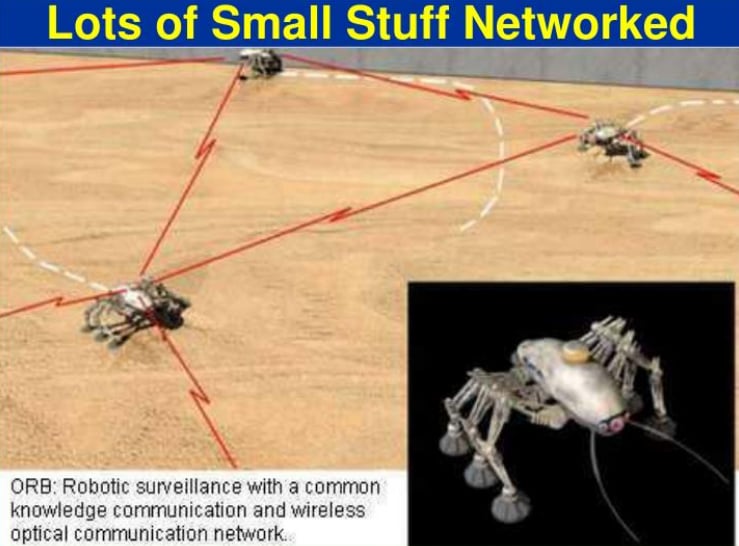
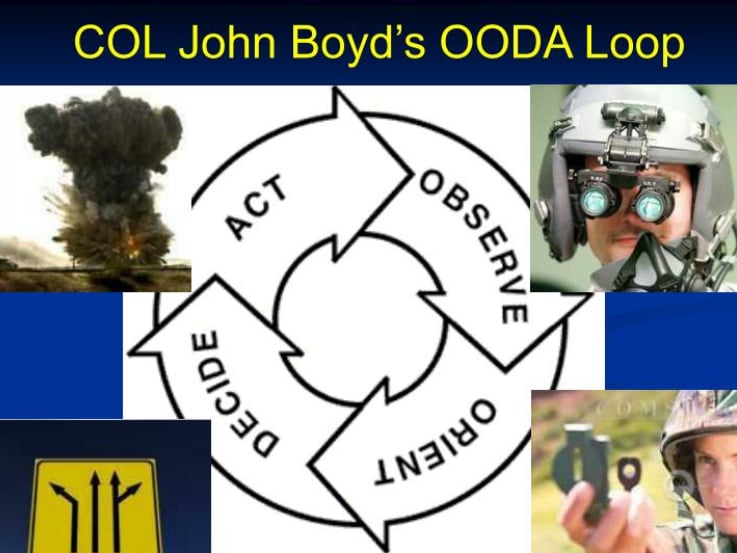
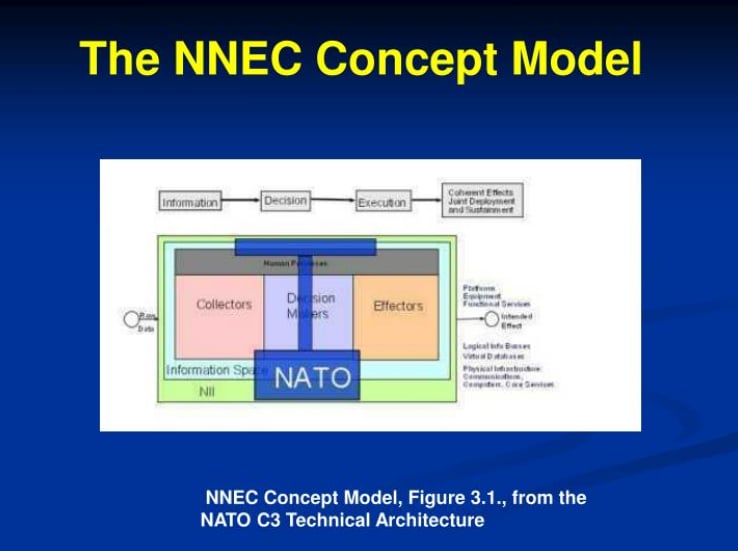
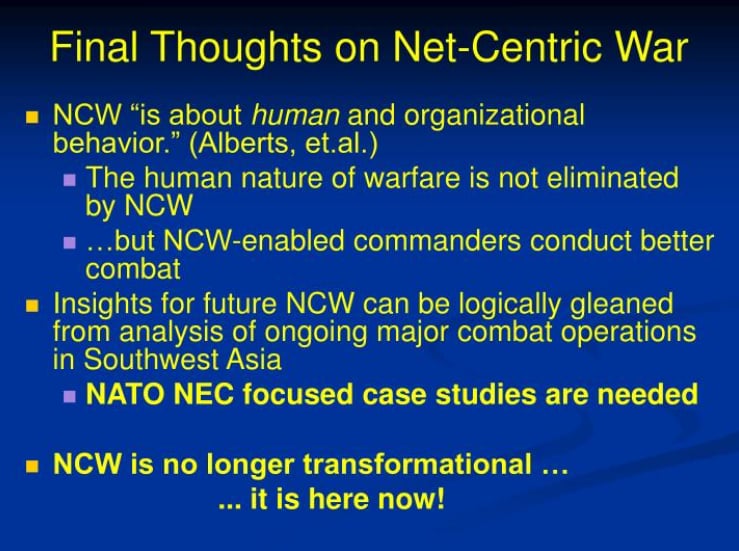
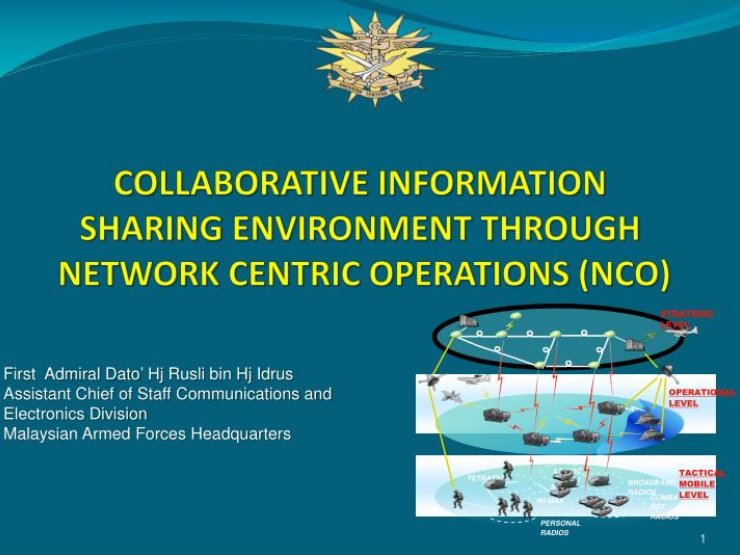
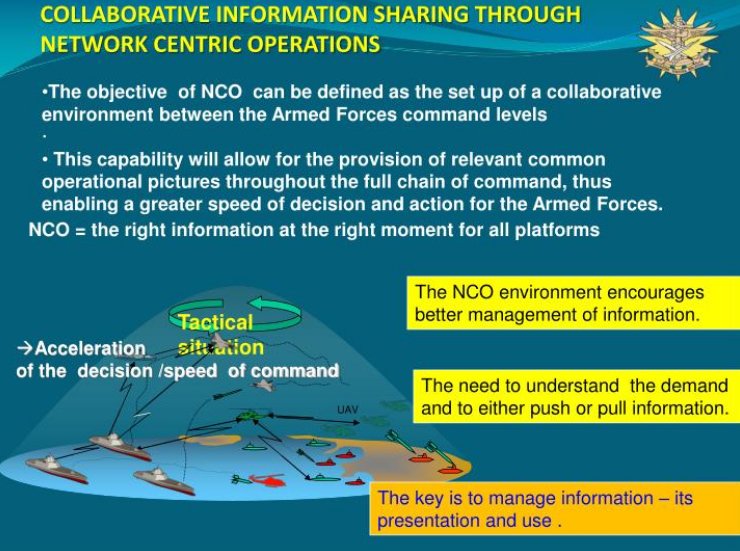
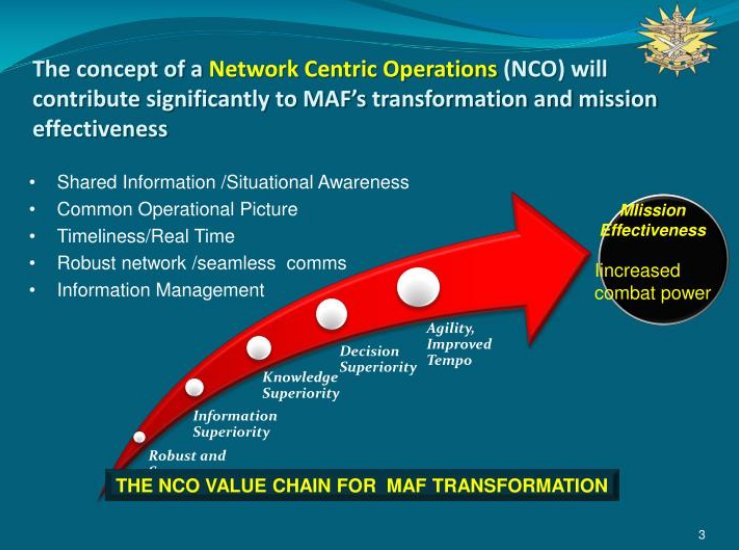
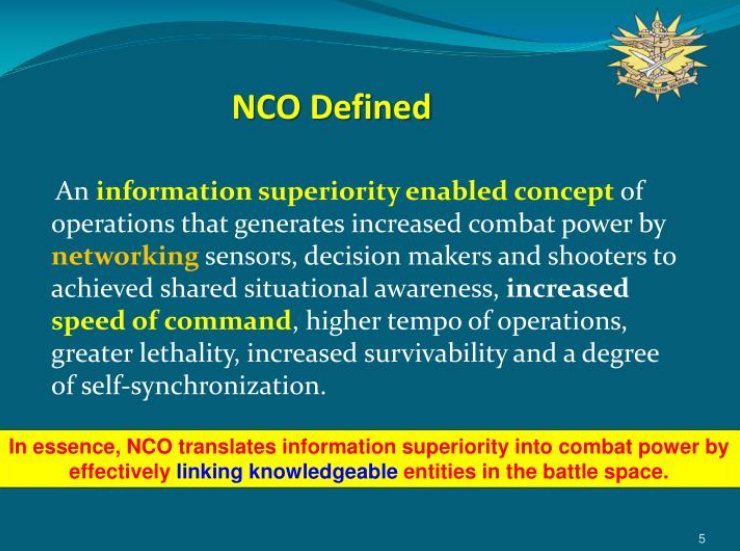
Collaborative Information Sharing Environment Through Network Centric Operations - Presentation by Danton Knox
-
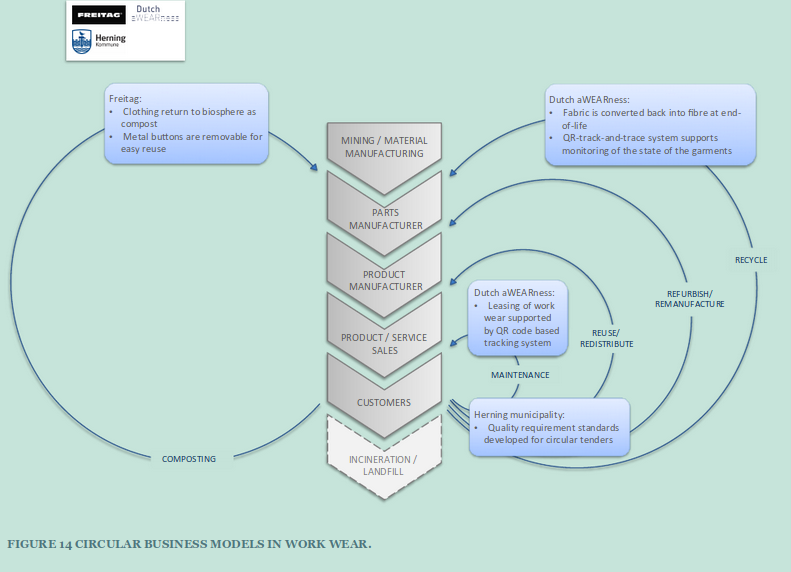
Best Practice Examples of Circular Business Models - by Eva Guldmann (2017)


-
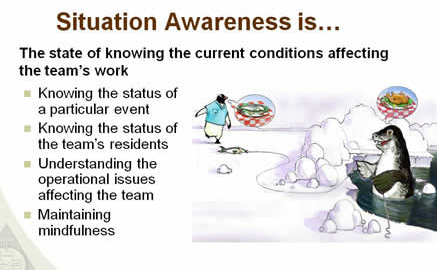
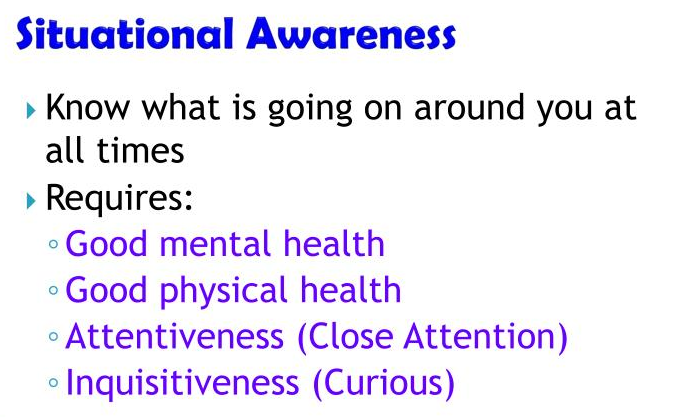
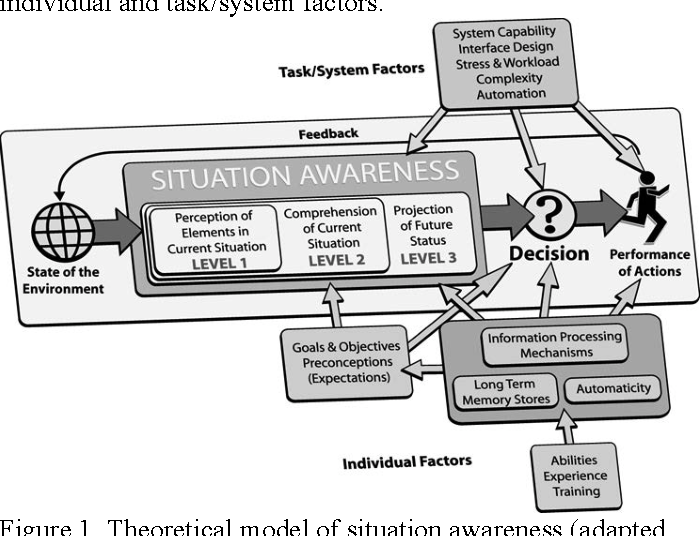
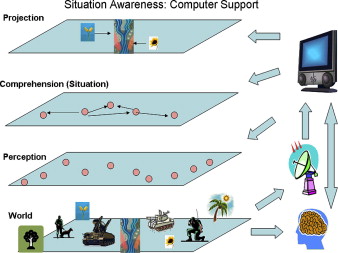
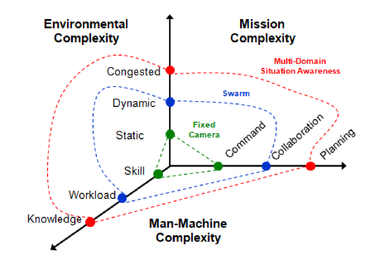
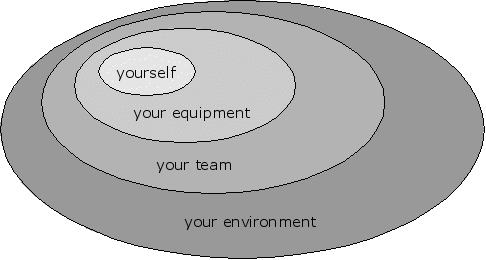
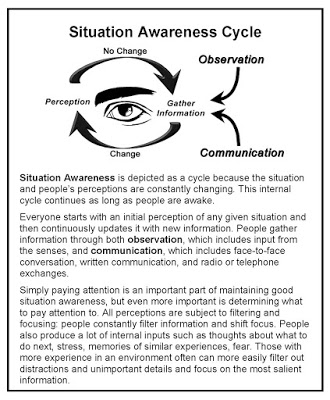
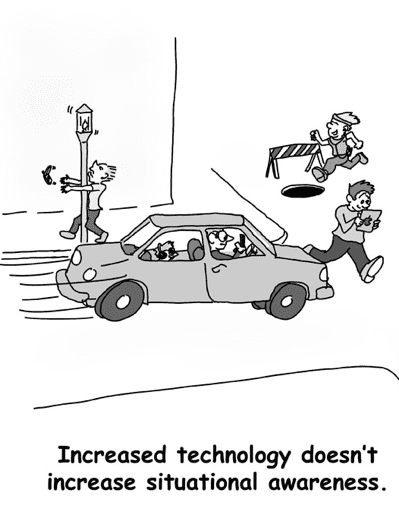
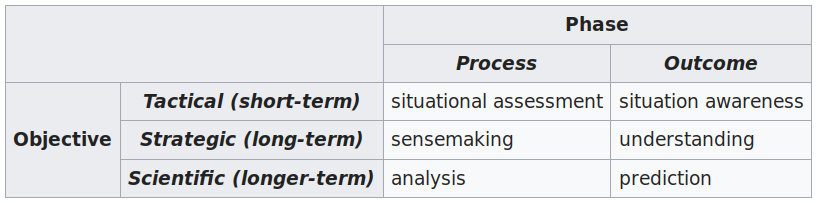
Situation Awareness is the perception of environmental elements and events with respect to time or space, the comprehension of their meaning, and the projection of their future status.
-
The Reflect! platform - "Designed to organize reflective consensus building on wicked problems in small teams" - by Dr. Michael Hoffmann and the "Reflect! Lab" at Georgia Tech
AGORA-Net - a Computer-Supported Collaborative Argument Visualization (CSCAV) tool. An argument is defined here as a set of statements—a claim and one or more reasons—where the reasons jointly provide support for the claim, or are at least meant to support the claim.
#Comment: If you have advanced "sensemaking" infrastructure, but in praxis predominately use it to advance the narrow interests of the military industrial complex ("kill, surveil, control"), shouldn't it be called "nonsensemaking" instead?
#KM #HCI #Complexity #Science #Philosophy #Design #Military #Business
-
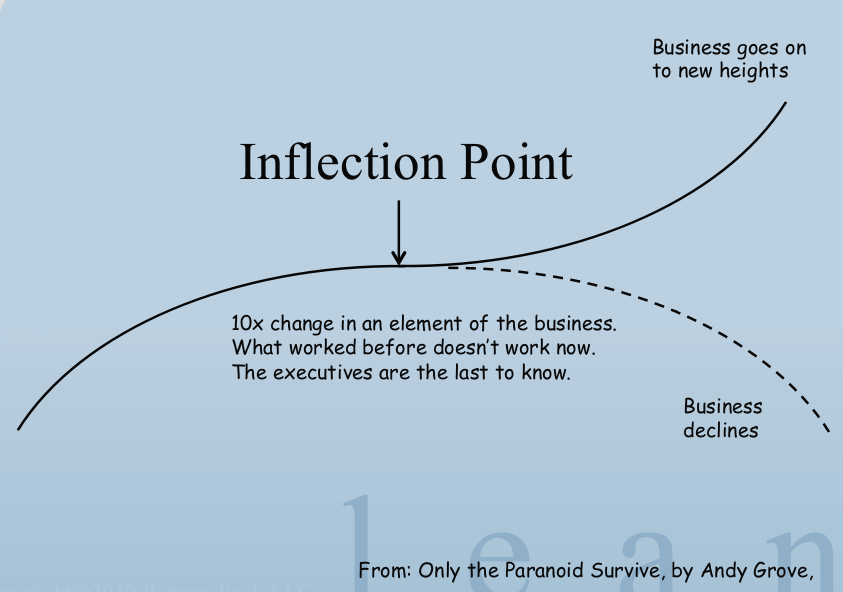
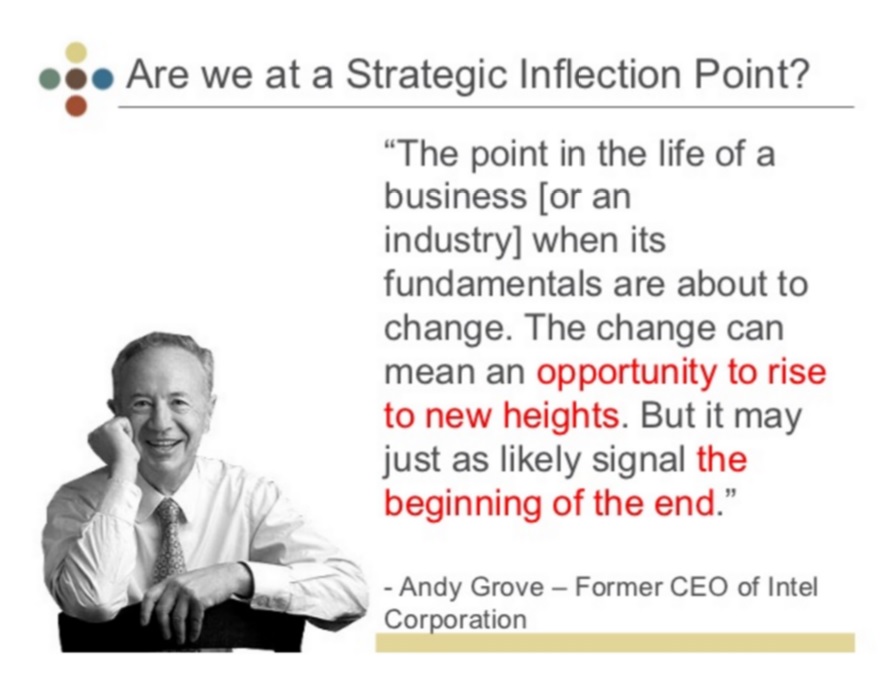
"Strategic Inflection Points" as defined by Andrew Grove (Intel co-founder) (talk)

-
-
The Linux magazine conducted an interview with the ex-mayor of Munich, who was responsible for Limux: https://www.linux-magazin.de/ausgaben/2019/10/interview-2/
Among other things, he tells of "spontaneous" visits by Steve Ballmer and Bill Gates. A wild tale of "business as usual" corruption, illustrating how the MS Mafia operates.