tag > India
-
Did China use microwave weapons on Indian soldiers?

The electromagnetic weapon, which cooks the human tissue of enemy troops, 'turned the mountain tops into a microwave oven' ... While the US has also developed microwave-style weapons, China’s alleged use of them may be the first against enemy troops anywhere in the world. Also envisioned for use in crowd control, the sensation was once described in a medical journal as equivalent to touching a hot lightbulb.
-
India plans to fell ancient forest to create 40 new coalfields
Modi’s dream of a ‘self-reliant India’ comes at a terrible price for its indigenous population.
-
The business of the Honey-Suckers in Bengaluru (India)
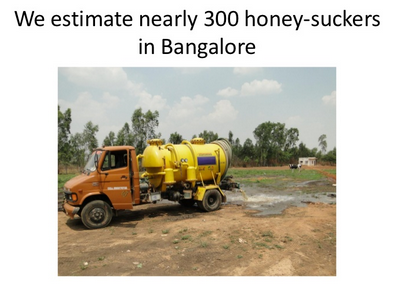
In the absence of a city-wide sewerage network in Bengaluru, one form of sanitation self-service that has emerged is that of the ‘honey-suckers’, which empty holding and septic tanks. Part of the faecal sludge is used productively by farmers in the fringe of Bengaluru. The honey-sucker service has emerged without any form of financial or technical assistance, but operates outside the legal framework.
-
China-India border conflict can be resolved with Himalaya nature reserve, says scientist

Indian environmentalist argues rare wildlife under threat as both countries build infrastructure along contested border. Ecology trumps geopolitics as Himalaya rivers supply water to more than 1 billion people, scientist says
-
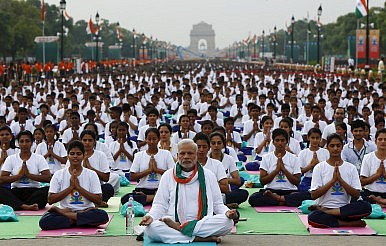
In this article, I will elucidate the Indian government’s two primary discourses concerning yoga since 2014 as right-wing Hindu Nationalist Prime Minister Narendra Modi and his Hindu Nationalist political party, the Bharatiya Janata Party (BJP), have interacted with both international and domestic audiences. These discourses can be broadly grouped into two categories, or what I refer to as Modi and the BJP’s “double discourse”: (1) Yoga as a global soft power solution to counter the Global North’s climate change privilege on the international stage and (2) Yoga as biopower for the advancement of India’s depressed economy on the domestic front. Relying on yoga’s polyvalent character, Modi and the BJP are able to frame yoga in these two particular ways—which together signal their commitment to neoliberal economic ideology—by drawing from historical and contemporaneous precedents which I also outline in the article. I conclude with a brief visit to the preparations for the BJP’s 2019 International Day of Yoga, where this double discourse becomes most evident in the two divergent themes announced for the event.
-
"India plans to build an all-seeing database to track citizens’ every move by 2021" (nextweb)

India, the world’s biggest democracy, built a massive database containing information and biometrics of its citizens in the form of Aadhaar back in 2009. Now, it’s planning to build a new database that will continually track the lives of 1.2 billion people living in the country — and further enable surveillance without legal frameworks to prevent its misuse.
-
Details on India’s mixed paper import crackdown (Resource Recycling, 2020)
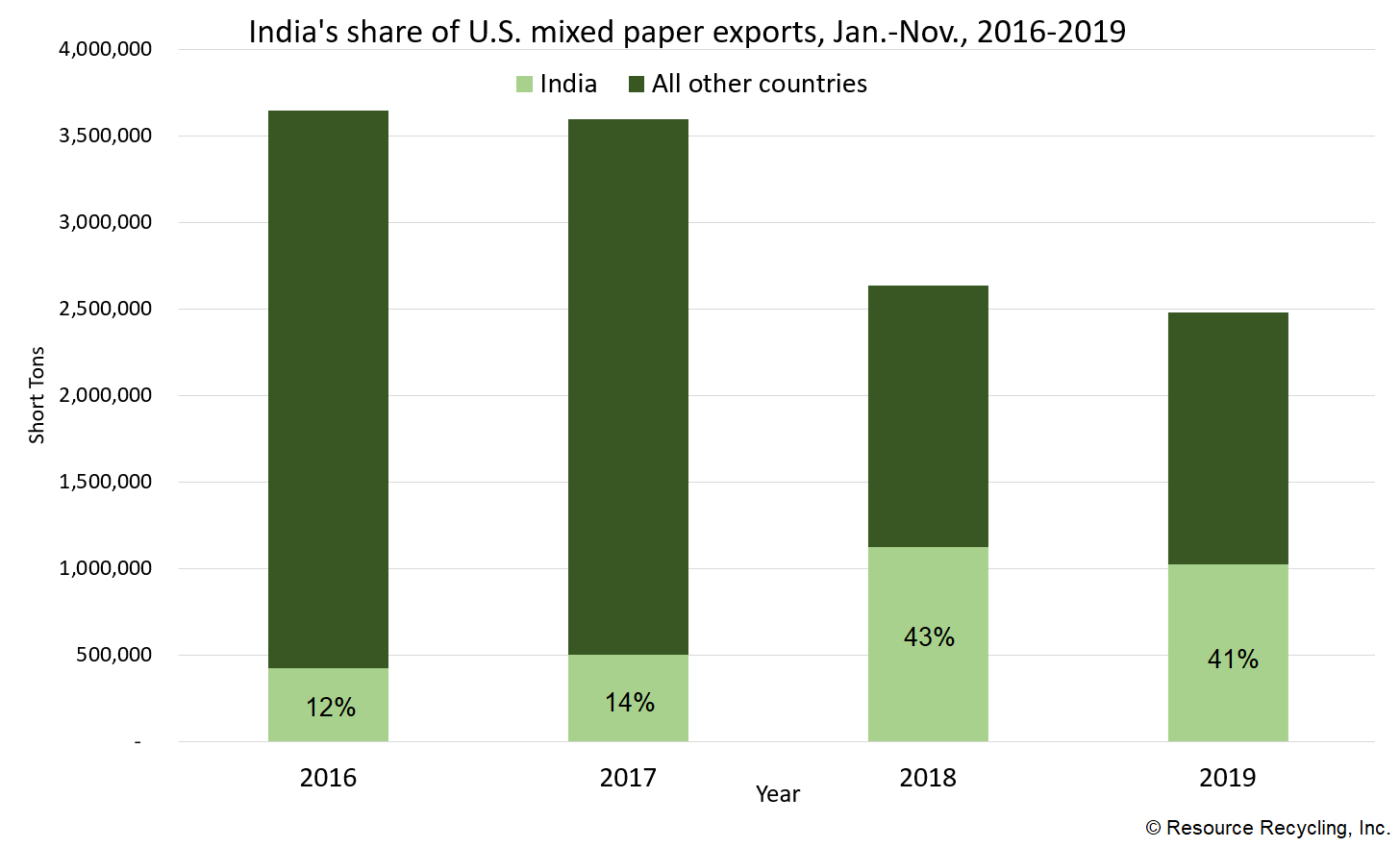
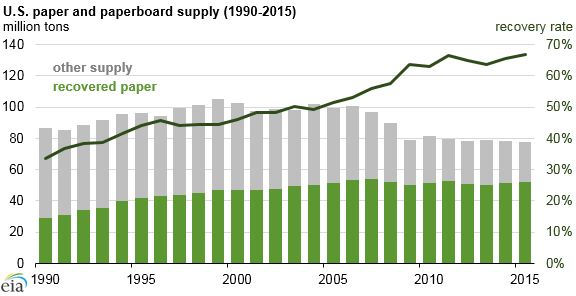
India has grown as a downstream market for U.S. mixed paper in recent years. "India, the largest overseas market for U.S. mixed paper, has tightened quality standards & reduced its recycled fiber import volume. Imported mixed paper will be allowed a maximum of 1% contamination and will face more rigorous inspections. The move threatens to close a major outlet for U.S. mixed paper: From January through November 2019, India imported 1 million short tons of mixed paper from the U.S., or 41% of all U.S. mixed paper exports."
“The new Indian implementation is potentially catastrophic for the U.K.,” said Simon Ellin, CEO of the U.K.-based Recycling Association. After China, India is the second-largest export market for U.K. recovered packaging, Ellin said, and the country bought more than 400,000 metric tons of U.K. fiber in 2019, most of which was mixed paper. “If they implement a 1% tolerance on non-fiber content, then it is an extremely brave person who would continue to export mixed papers there – source separated or co-mingled,” Ellin said.
-
Talk on Indian philosophy by Swāmī Agehānanda Bhāratī (Leopold Fischer) (1978)
He clearly lays out the argument, that the Indian "philosophy" (a western term, inadequate to describe Hinduism, Buddhism, etc.) tradition is at its core therapeutic, not scientific - yet it still uses scientific techniques (many of which it pioneered: logic, epistemology, etc.).
-
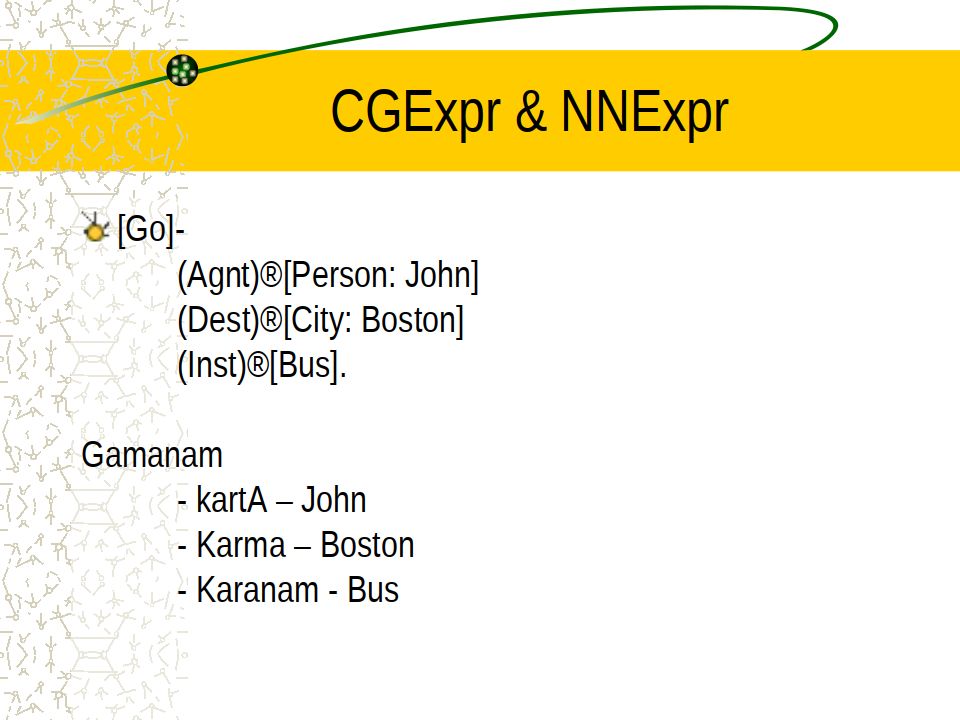
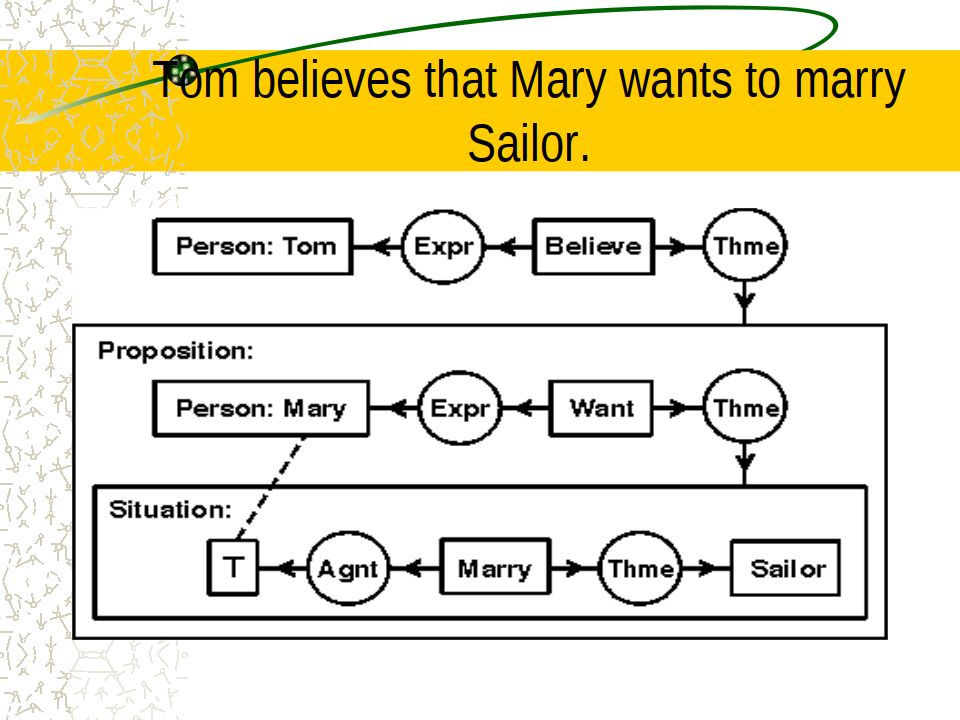
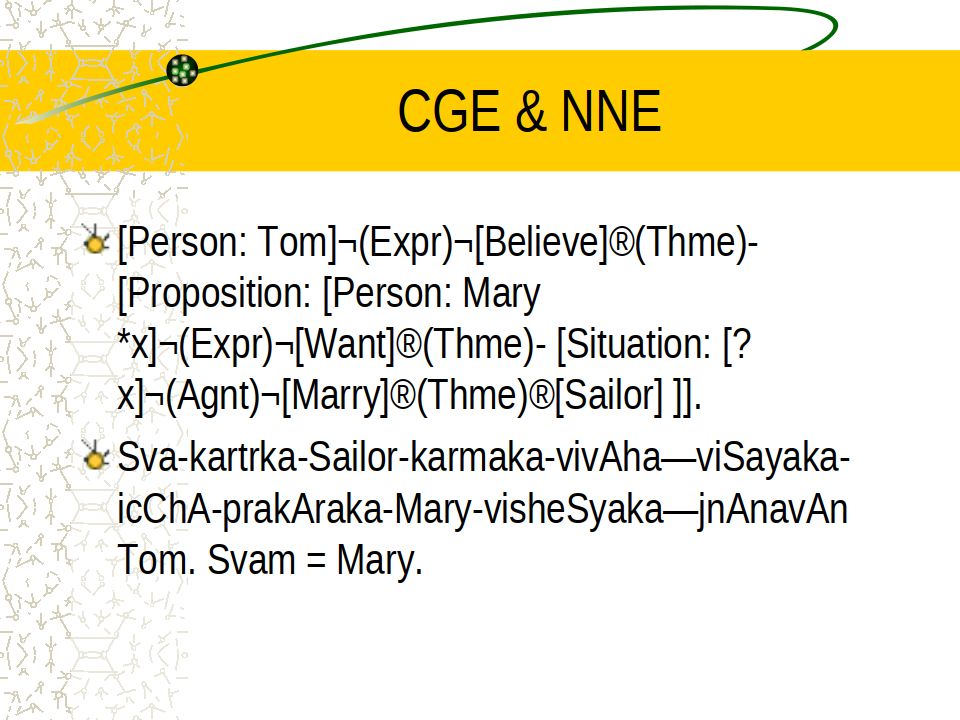
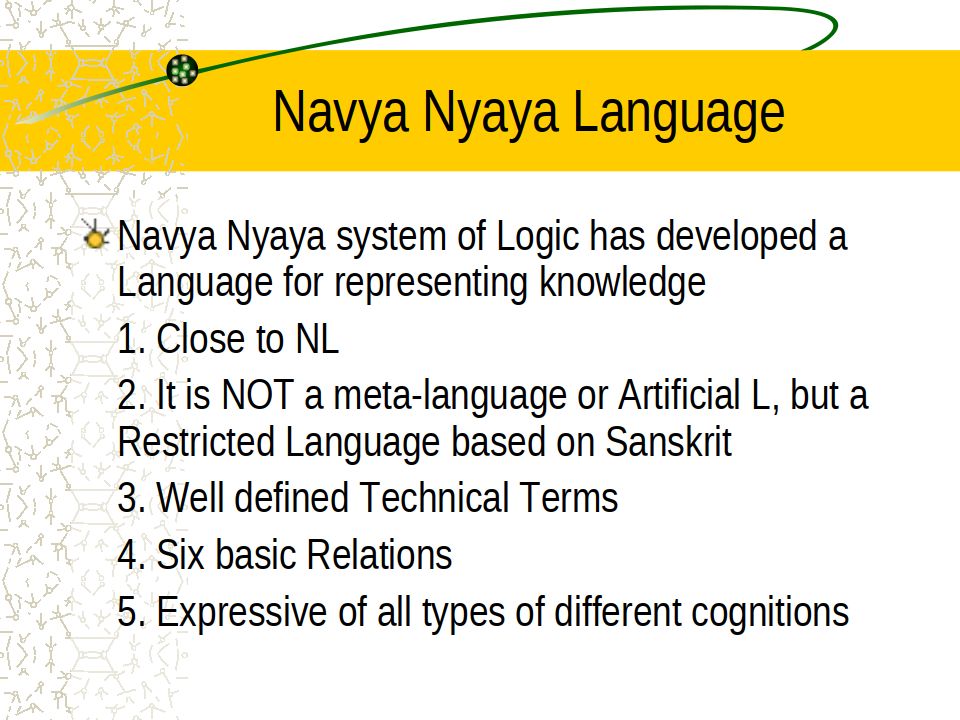
Navya-Nyāya
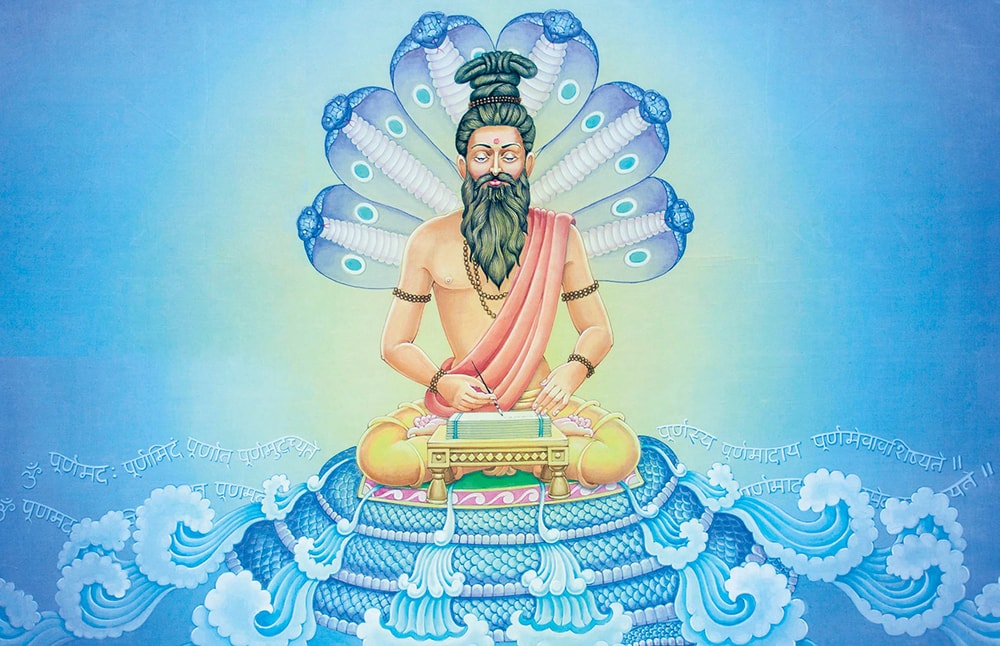
The Navya-Nyāya darśana (system/school) of Indian logic and philosophy was founded in the 13th century by the philosopher Gangeśa Upādhyāya. Other influences were the work of earlier philosophers Vācaspati Miśra (900–980 CE) and Udayana (10th century). Nyaya means correct thinking with proper arguments & valid reasoning. Its goal is “acquiring knowledge of the reality”. It remained active in India to the 18th century.
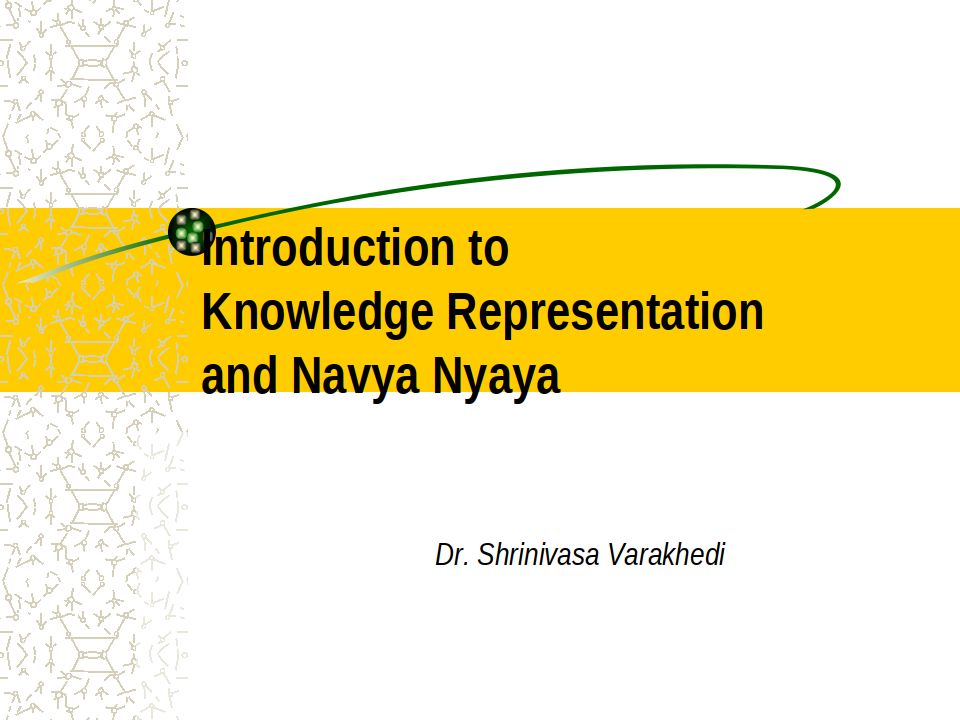
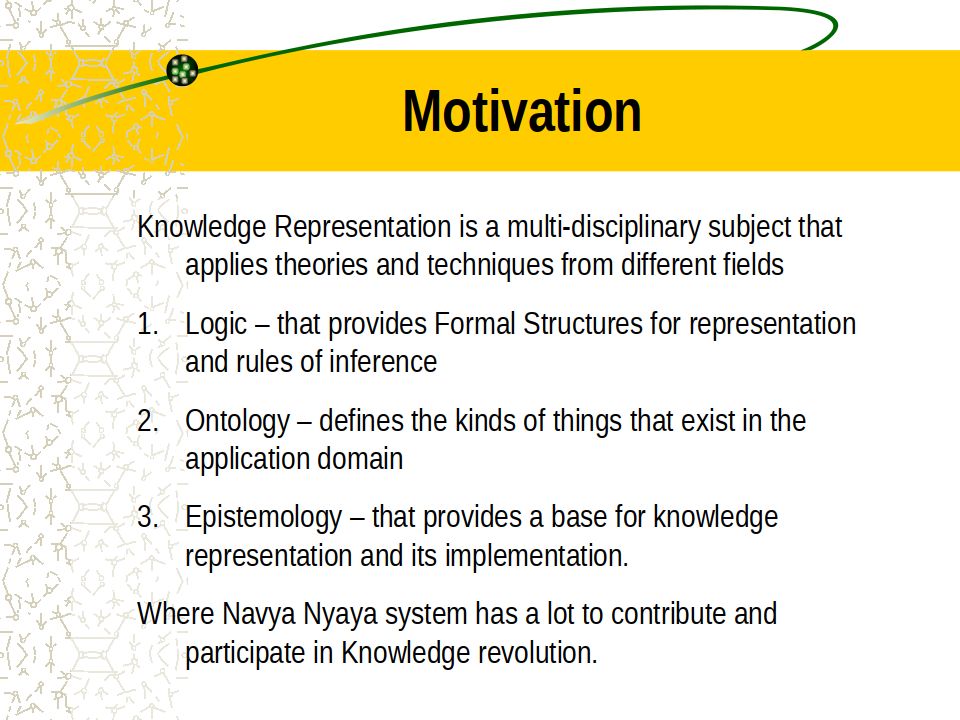
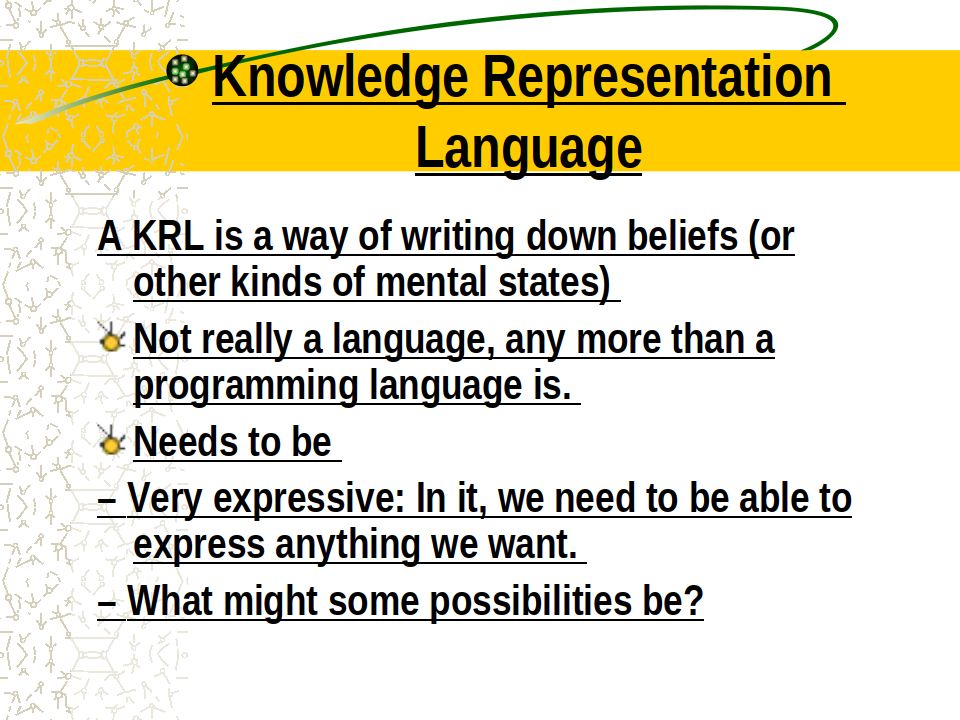
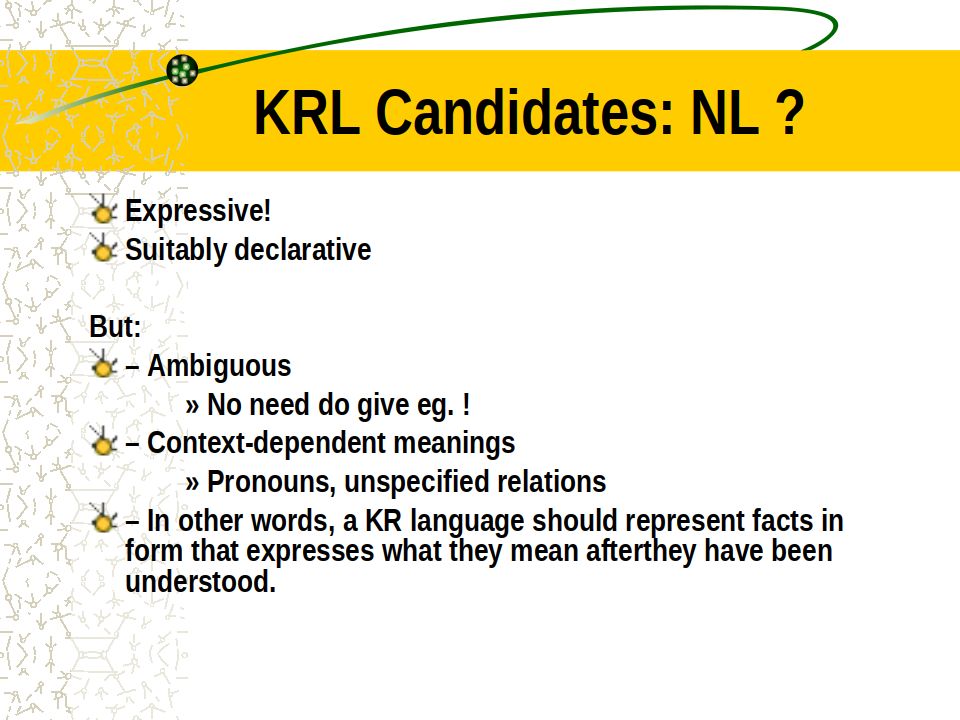
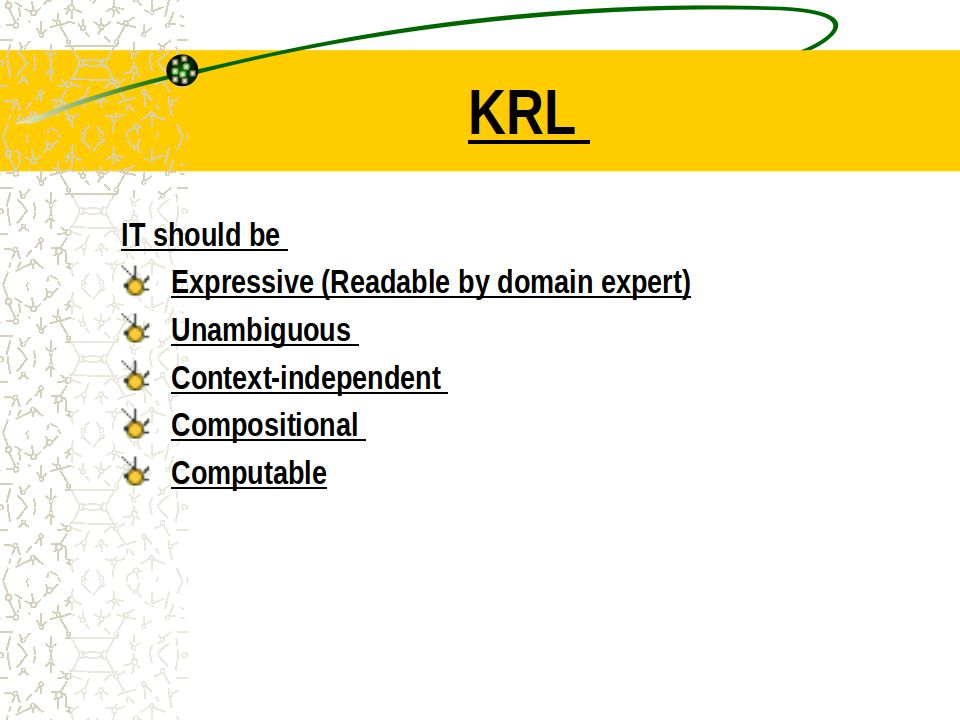
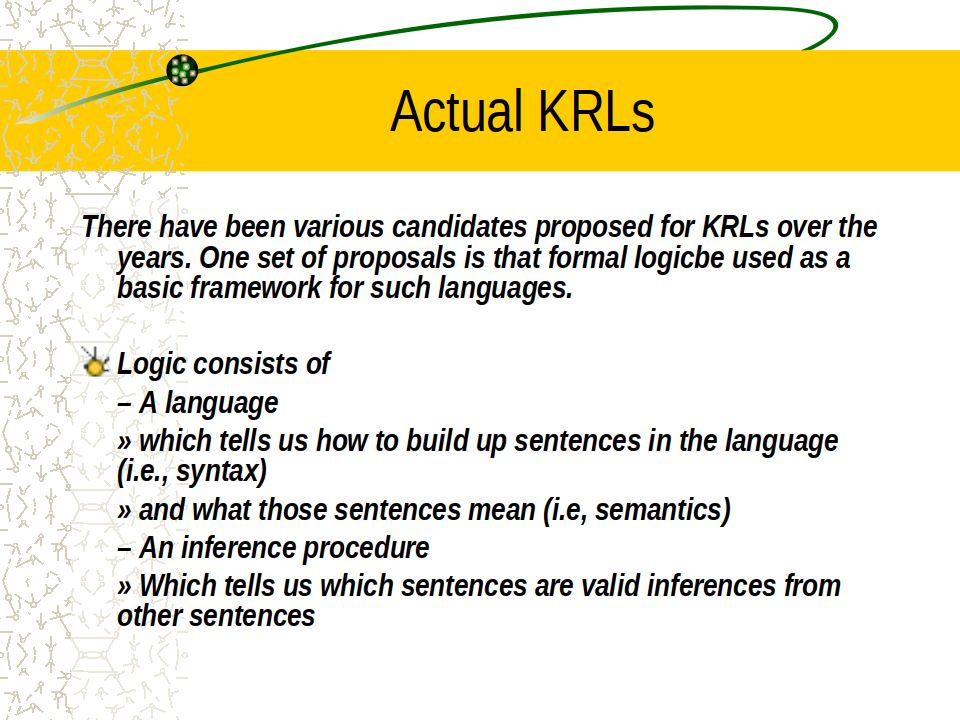
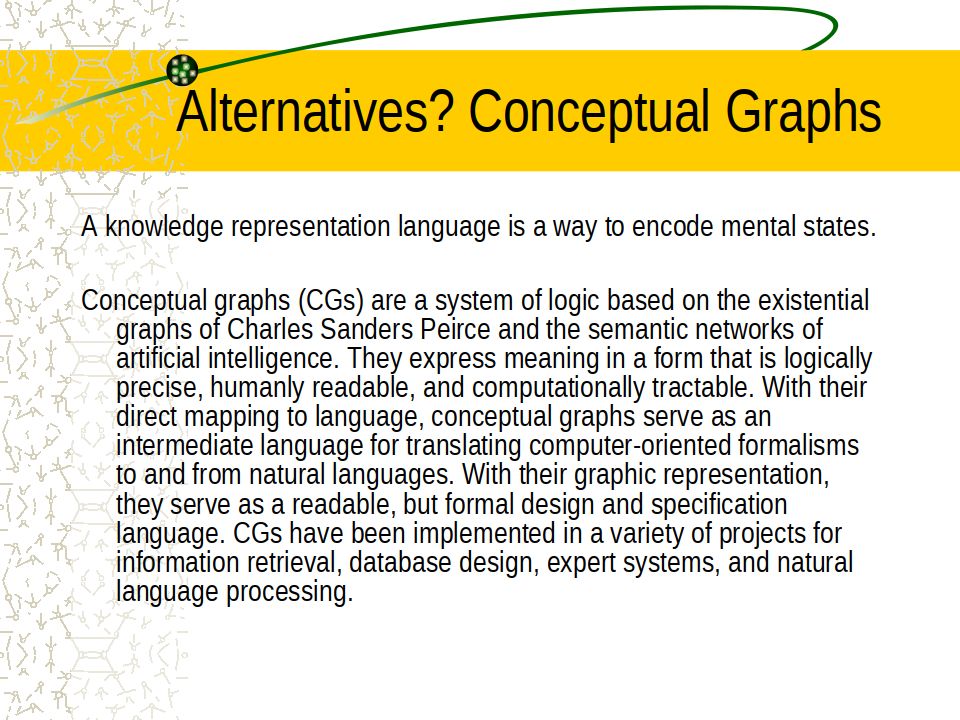
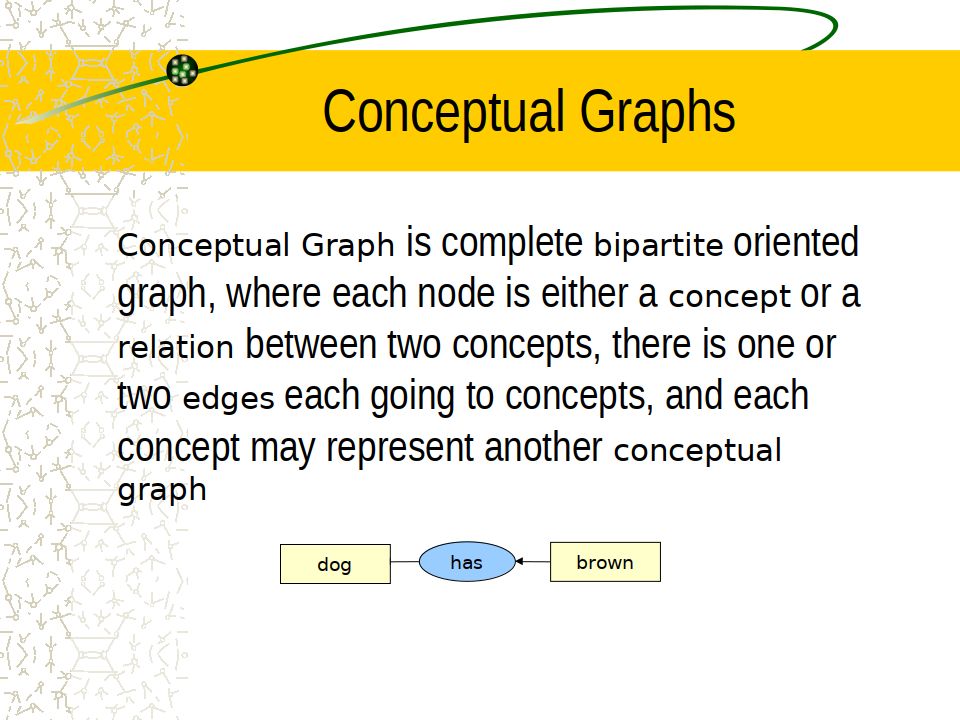
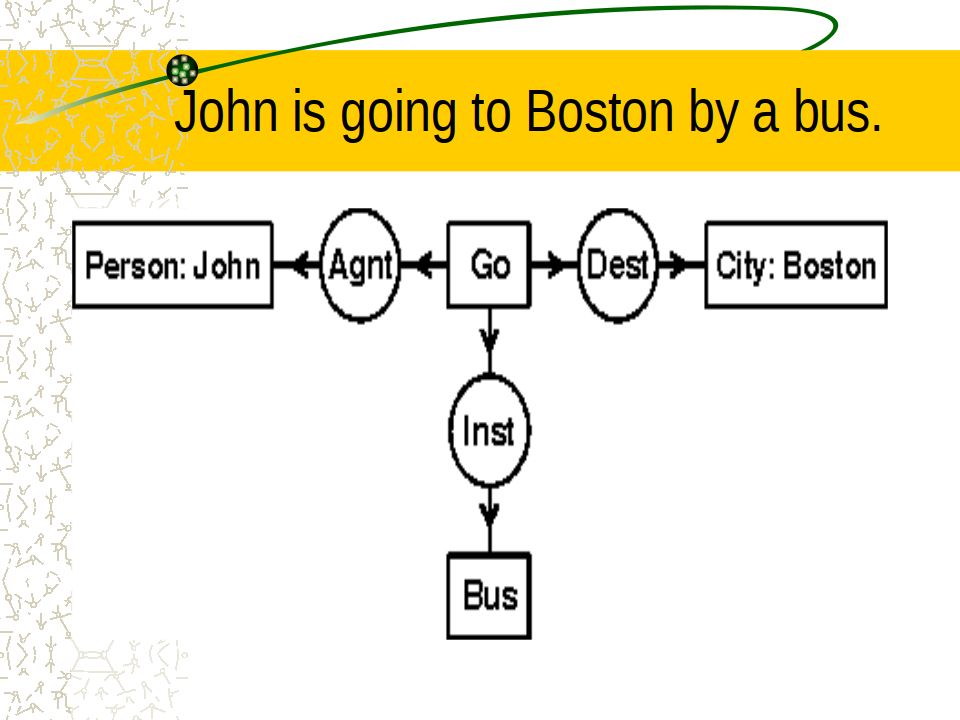
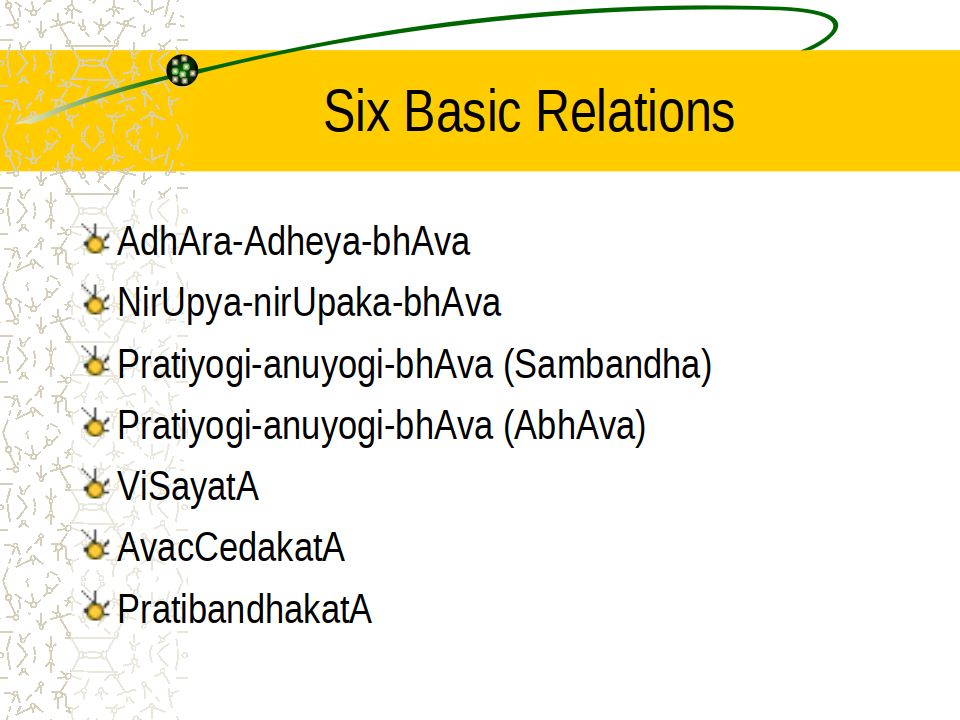
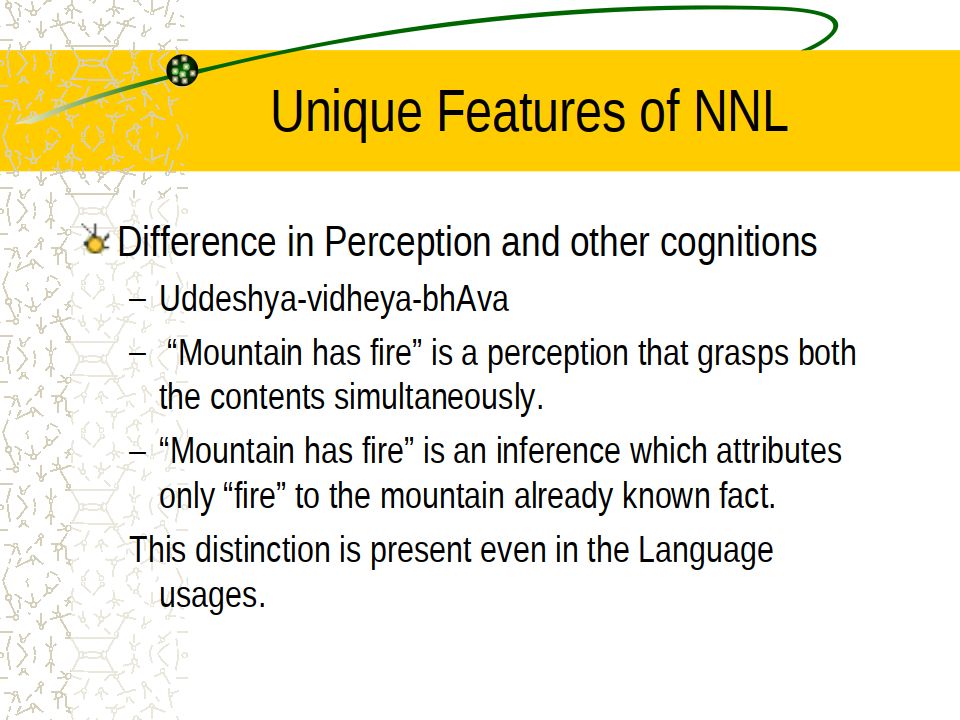
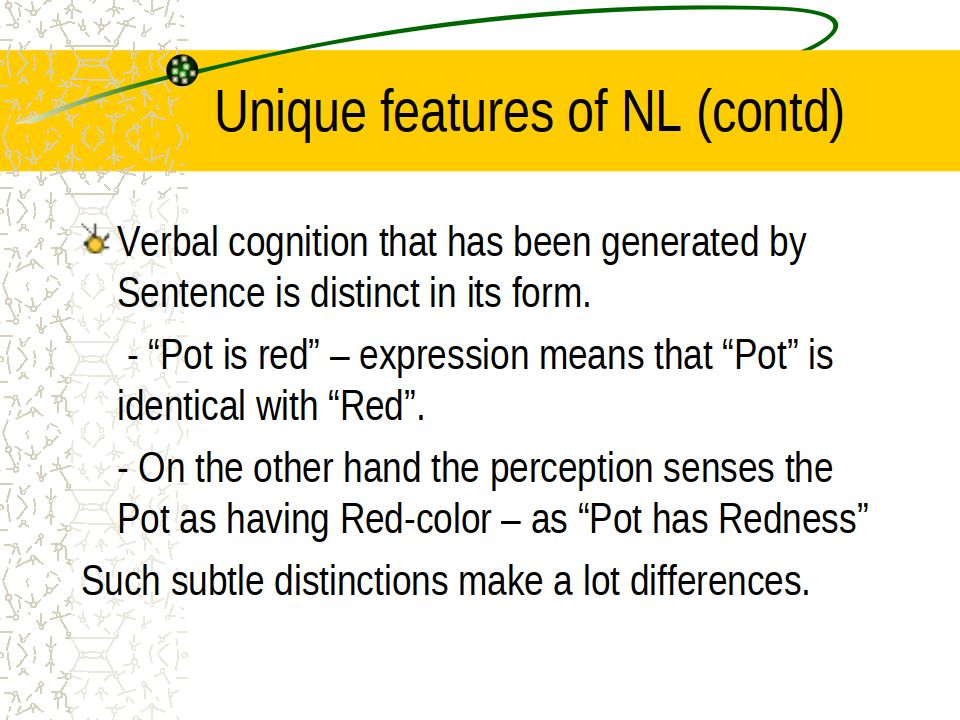
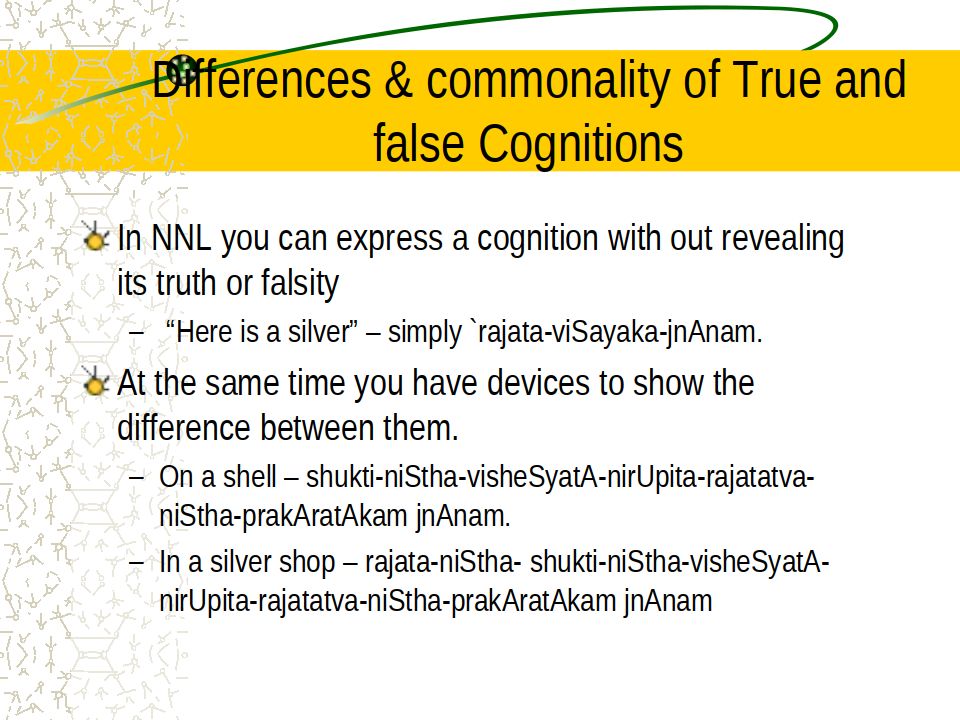
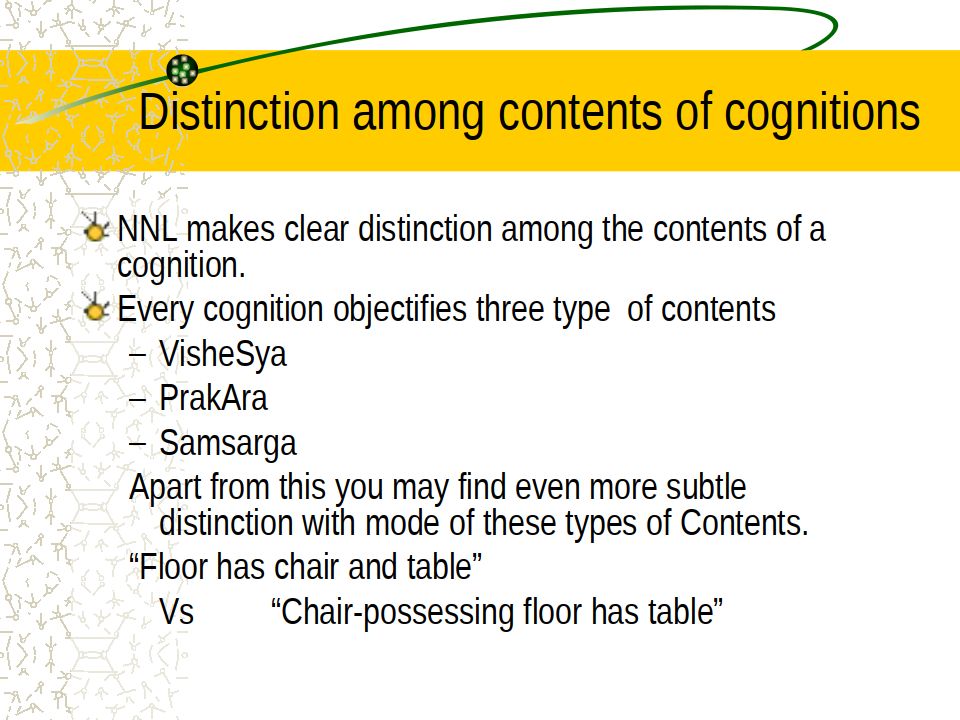
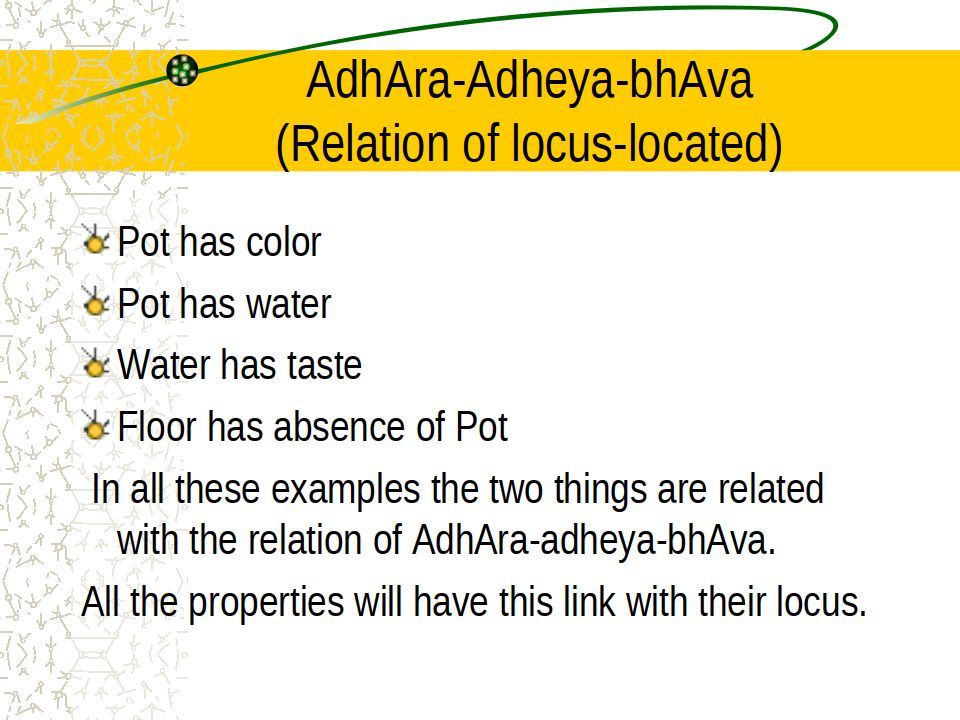
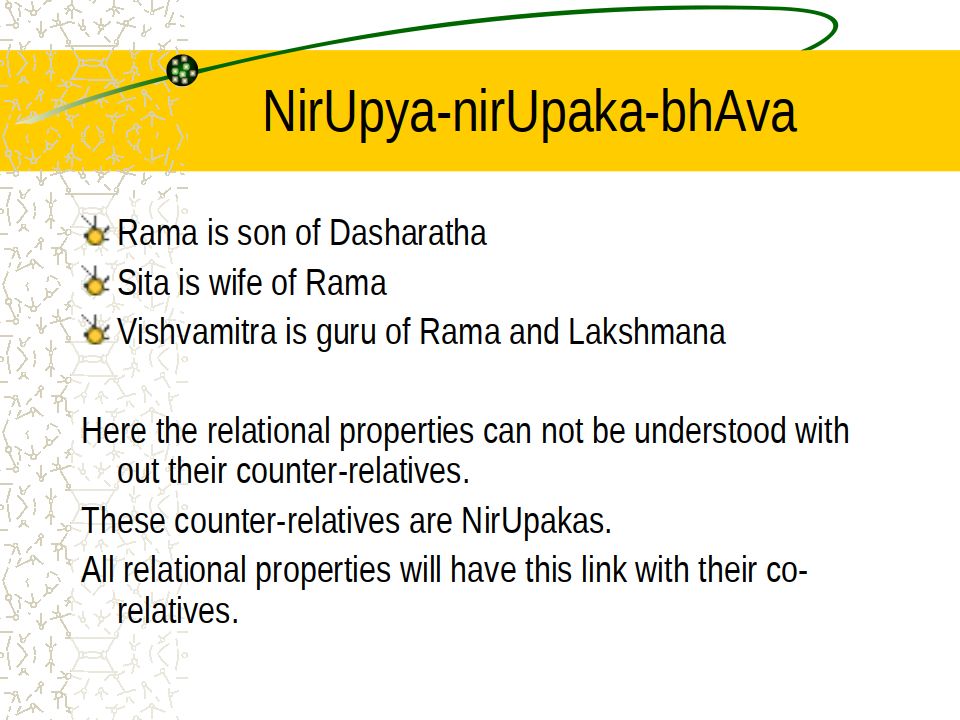
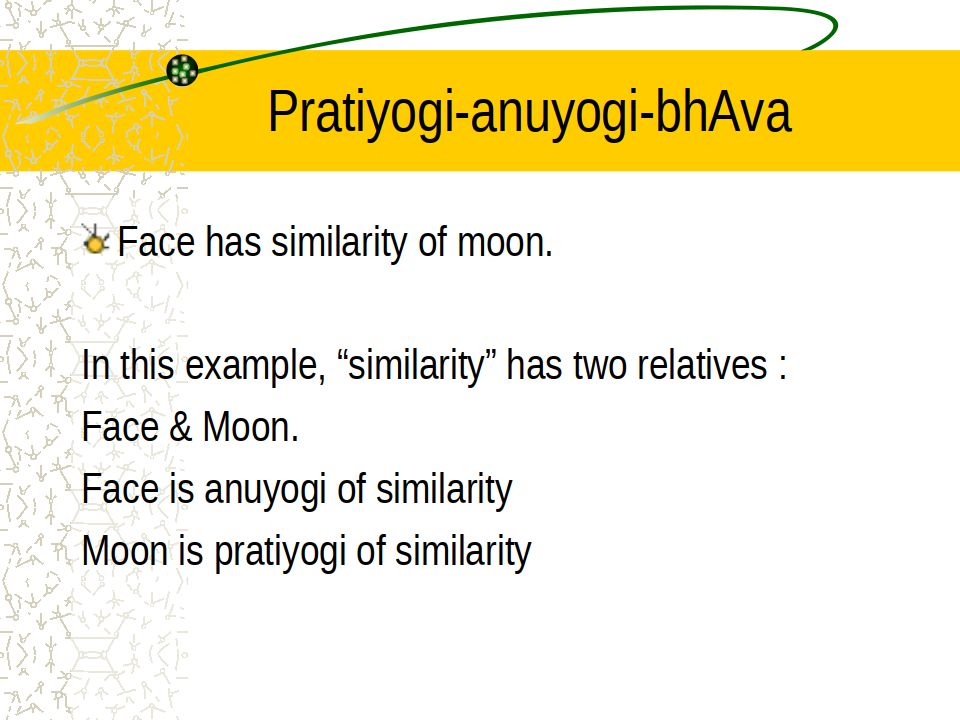
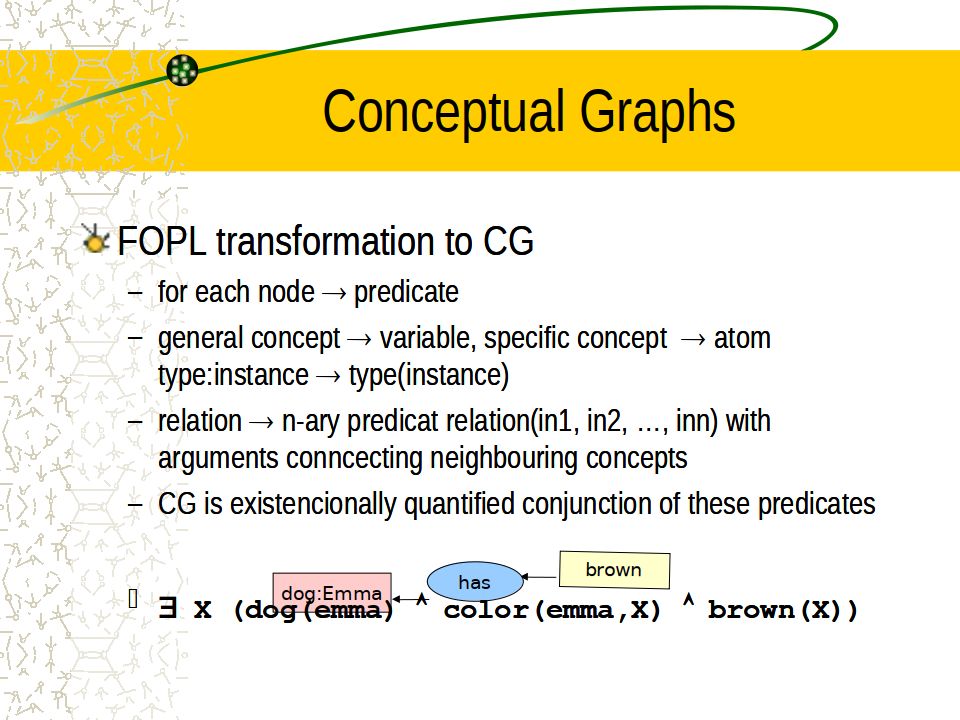
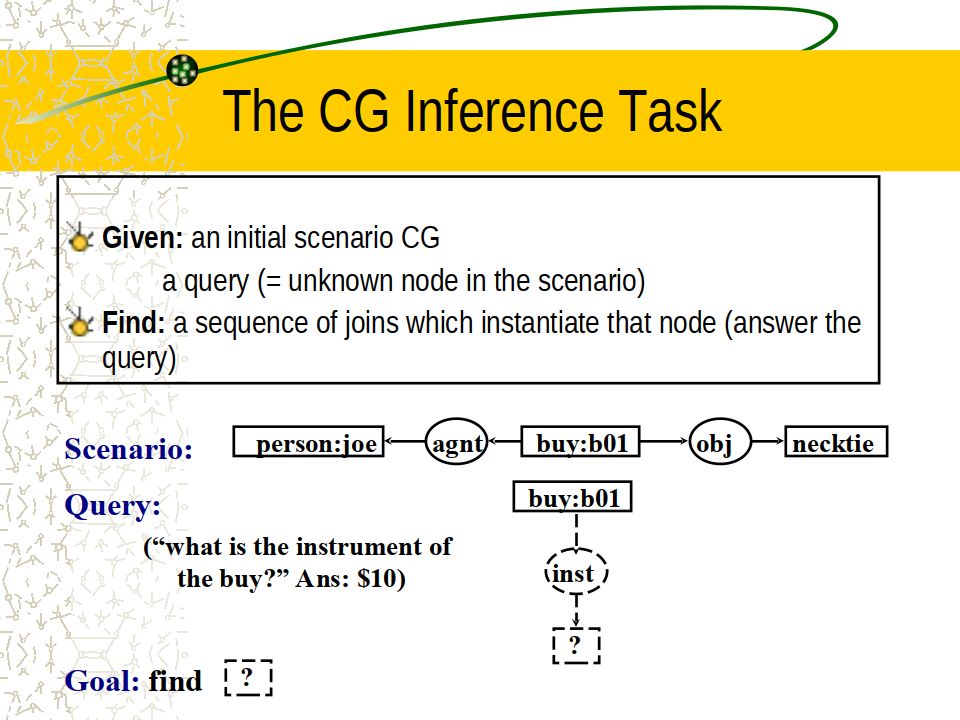
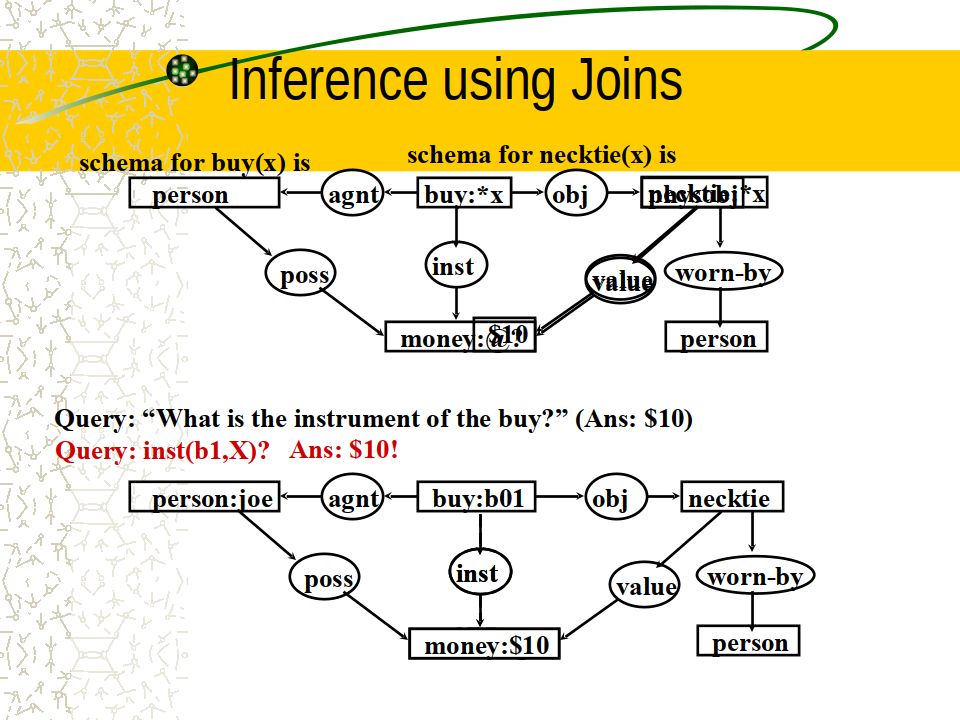
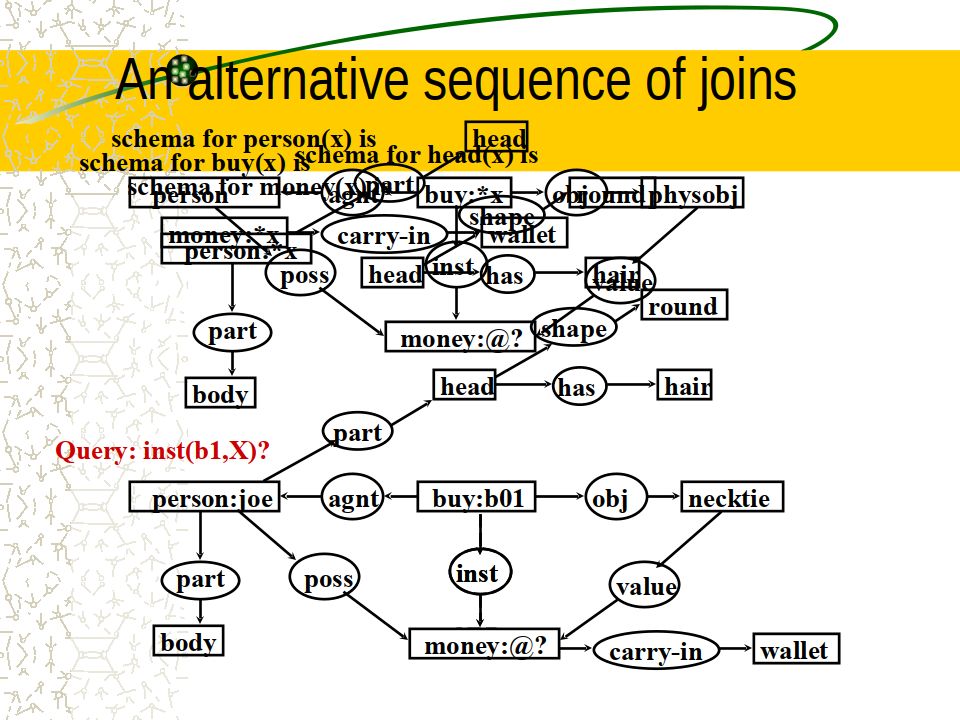
Introduction to Knowledge Representation and Navya Nyaya - by Dr. Shrinivasa Varakhedi
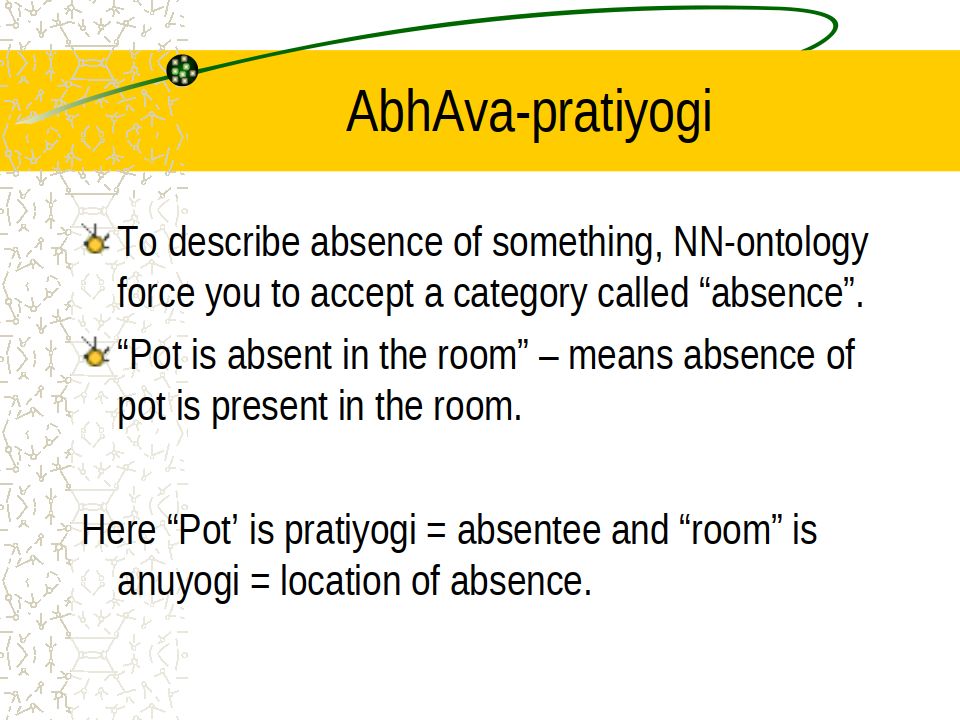
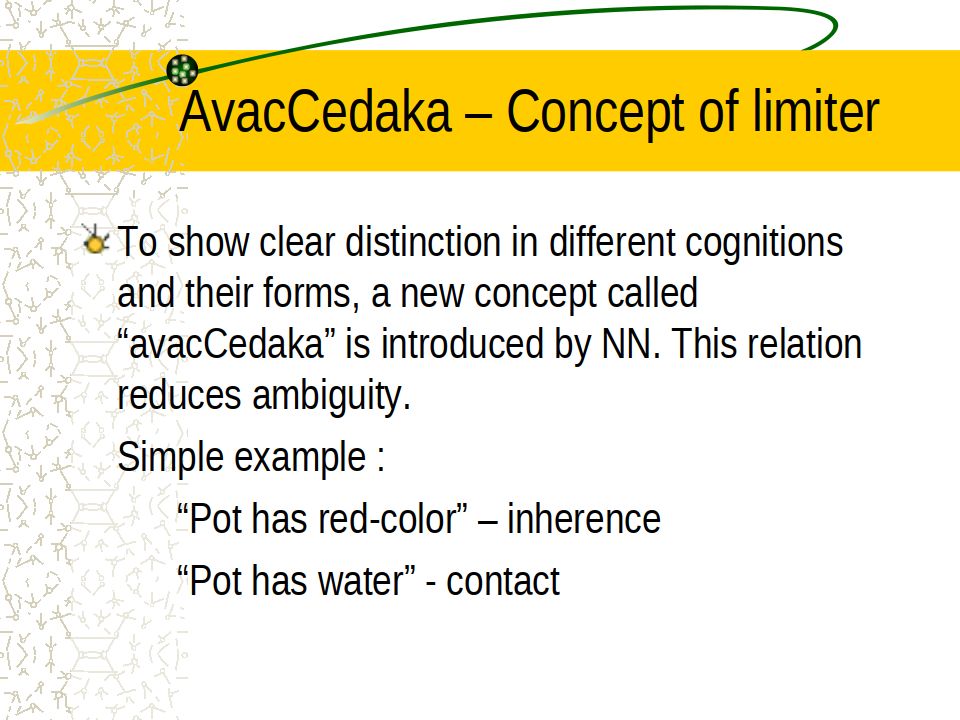
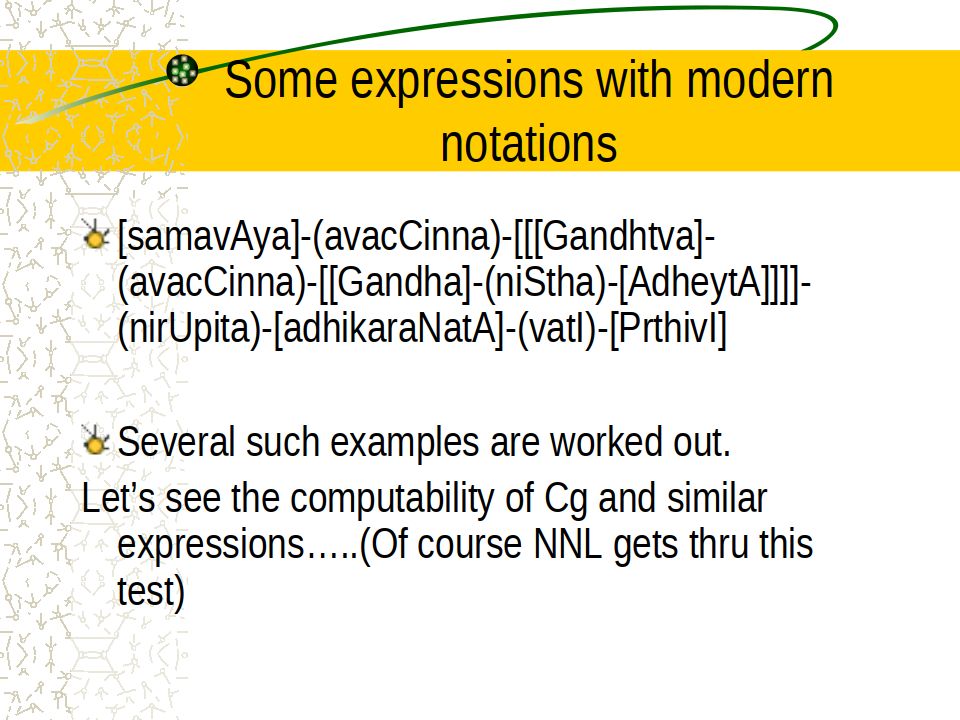
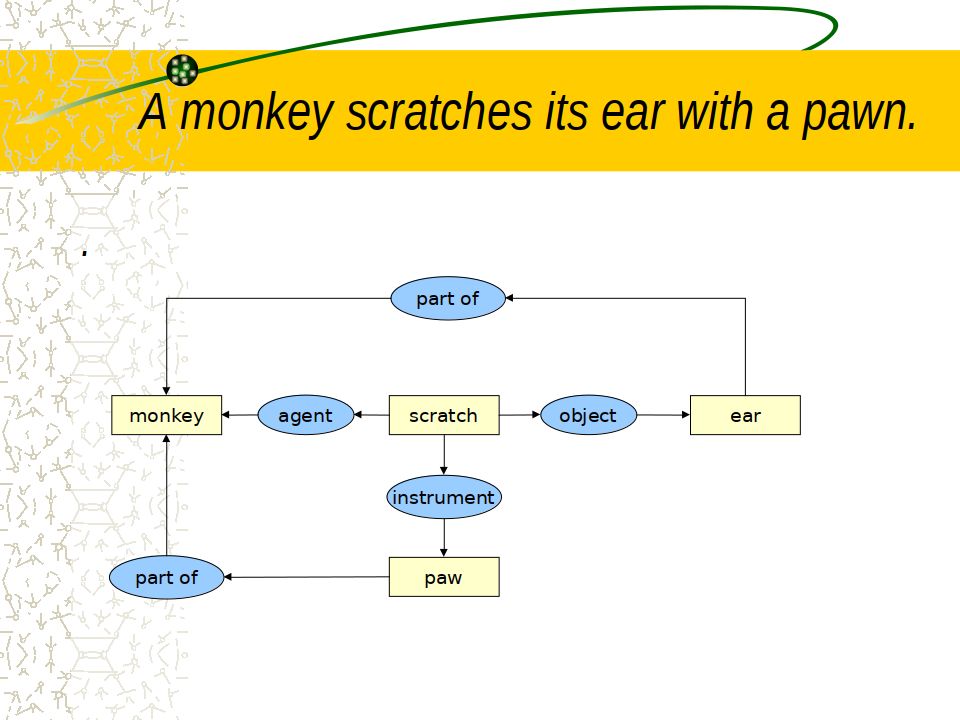
Related Links:
- Blog: The comparatively early appearance of sophisticated Nyāya logic, epistemology, and empiricism in Indian/Indic philosophy
- Research: Segmentation of Navya-Nyāya Expressions
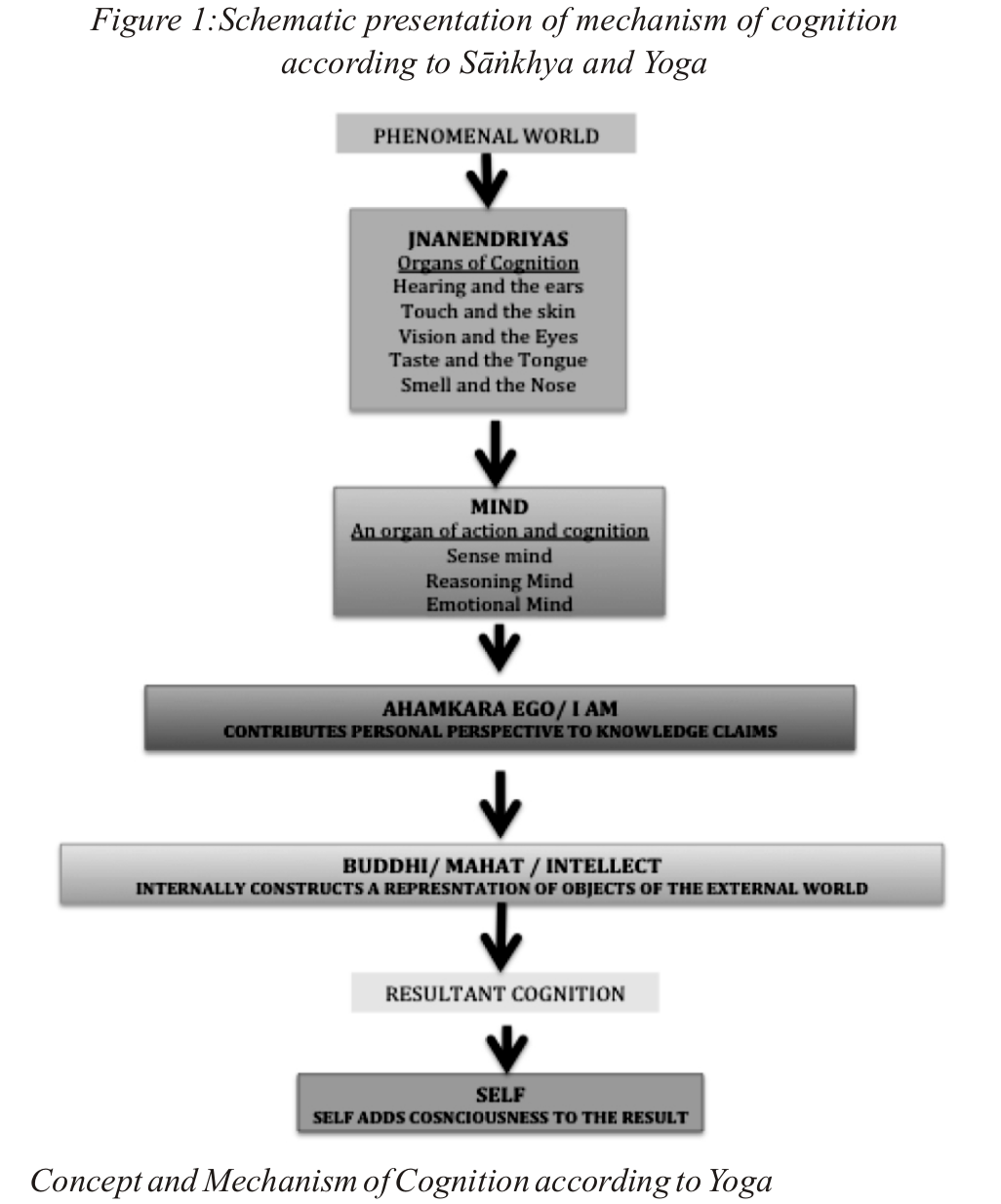
- Research: Concept and Mechanism of Cognition According to Ancient Indian Texts
- Research: A Survey and Evaluation of Diagrams for Navya-Nyāya
- Researchers: John Vattanky, Bimal Krishna Matilal
- Book: Navya Nyaya System of Logic - by D. Guha
- Book: Materials For The Study Of Navya Nyaya Logic - by Daniel H.H. Ingalls
- Context: Educational Insight: Six Streams Of Hindu Philosophy
- Context: Nyāya Sūtras
Nyaya Philosophy
Following Text is by Vikas Dhavaria from his Dhavaria blog:
1.1 Introduction
- Nyaya school is founded by sage Gautama (Aksapada).
- Nyaya means correct thinking with proper arguments and valid reasoning.
- Known as:
- Tarakshashtra (The science of reasoning)
- Pramanashashtra (The science of logic and epistemology)
- Hetuvidya (The science of causes)
- Vadavidya (The science of debate)
- Anviksiki (The science of critical study)
- Its goal is “acquiring knowledge of the reality”.
1.2 Epistemology
Nyaya school of thought is adhered to atomistic pluralism and logical realism.
Atomistic Pluralism
- atom is the constituent of matter,
- they are not one but many entities,
- both material and spiritual,
- as ultimate constituents of the universe.
Logical Realism
- world exist independently of our perception and knowledge.
- Independent existence of the world can be defended by logical argument and critical reflection on the nature of experience.
The Nyaya philosophy recognized sixteen categories and the first category is known as “Pramana” which focuses the logical and epistemological character of the Nyaya system.
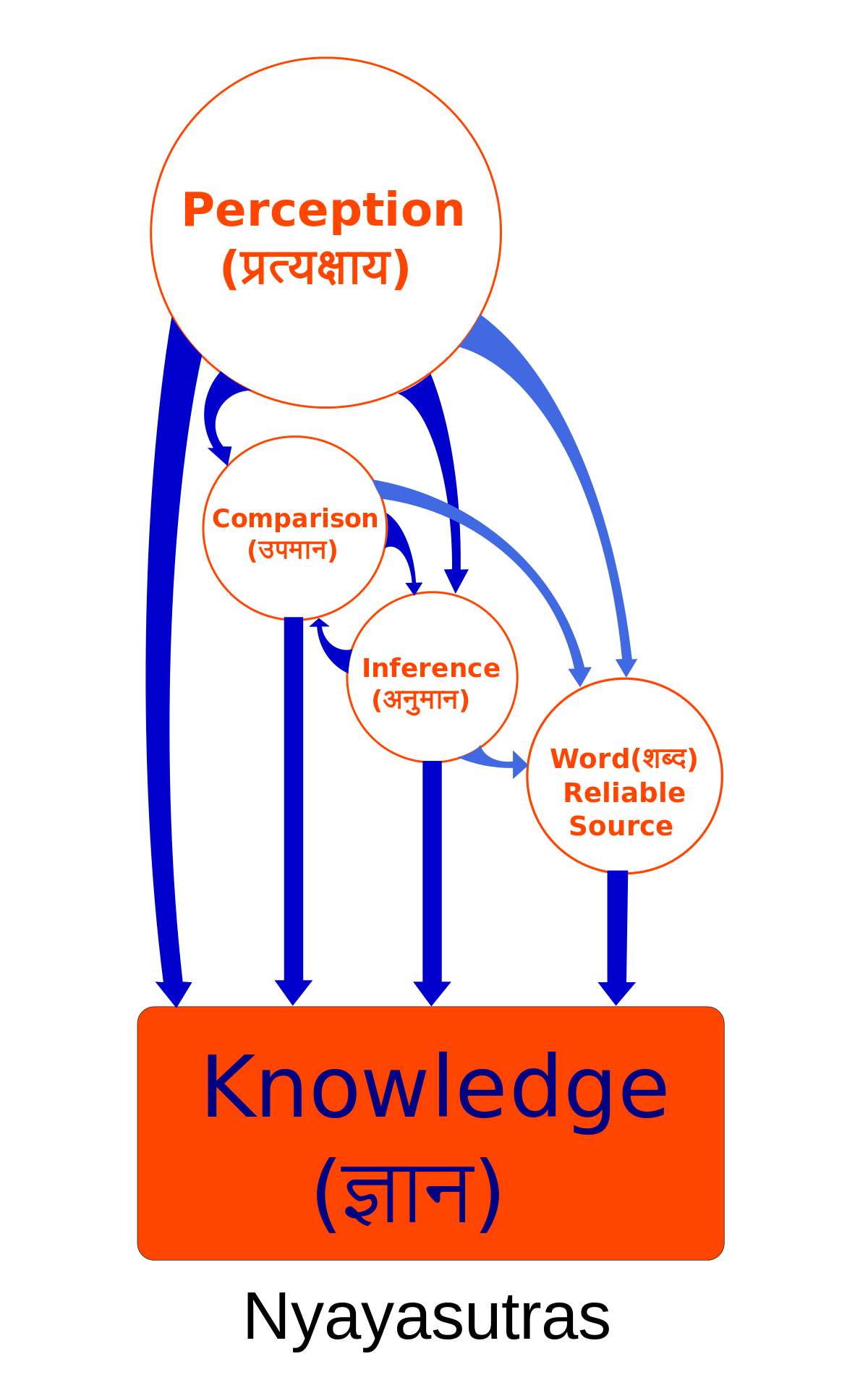
Pramanas – Four independent pramanas (sources of valid knowledge)
- Perception
- Inference
- Comparision
- Verbal testimony or sabda
Knowledge may be treated as cognition, apprehension, consciousness, manifestation of objects. Knowledge is of subjective and objective.
Subjective knowledge –
- Different people
- Different opinion
- Particular subject
Objective knowledge –
- Different people
- Similar opinion
- Particular subject
Knowledge may be valid (prama) or invalid (aprama).
Valid knowledge (Prama)
- True and right apprehension of an object.
- Manifestation of object as it is.
- Consequence of the correspondence theory of truth – truth is the correspondence between a proposition and reality.
- Presentative knowledge.
- Object of knowledge is directly present to the knower.
- Produced by four valid sources of knowledge-
- Perception
- Inference
- Comparision
- Sabda
Invalid knowledge (Aprama)
- Wrong apprehension of object
- It includes-
- Memory (smriti) – representative knowledge
- Doubt (samasya) – lack of certinity
- Error (viparyaya) – misapprehension
- Hypothetical reasoning (tarka) – invalid knowledge
Consider the four valid sources of knowledge (pramanas) that is upheld by the Nyayikas.
1. Perception
Direct and immediate cognition produced by the interaction between the object and sense-organs.
Four elements are necessary:
- self
- mind
- sense organs
- objects
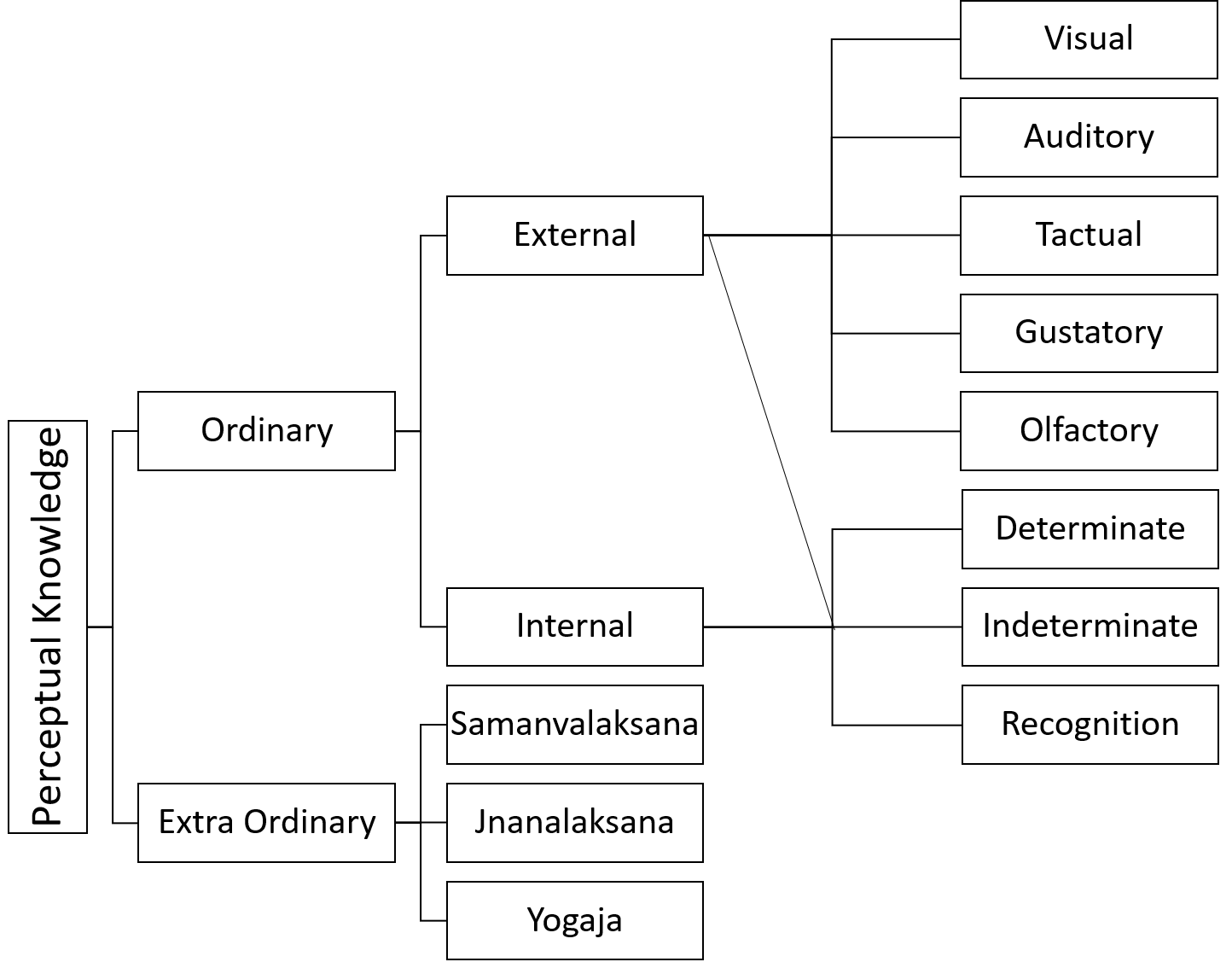
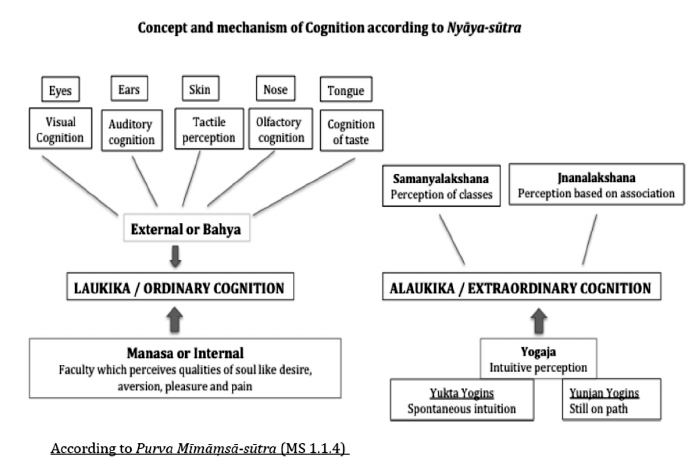
Two types of perception:
- Ordinary perception (laukika)
- Extra ordinary perception (alaukika)
Ordinary Perception (two types – external and internal)
- External perception (bahya)
- five sense organs
- auditory
- visual
- tactual
- gustatory
- olfactory
- five sense organs
- Internal perception (manas)
- only mind and object (example: feeling, desiring, wishing etc.)
Again, perceptions are divided in three sorts-
- Indeterminate perception (nirvikalpa)
- when we can not determine its features like color, shape, size etc.
- Determinate perception (savikalpa)
- when the knowledge of an object consists of characters, such as; name, color, shape etc.
- Recognition (prativijnana)
- the senses contact with the object and recalled that whether the same object had been encountered earlier or not.
Extra ordinary perception
It is a perception that provides knowledge even without the senses object contact.
Three types of extra ordinary perception
- Samanyalaksana
- perception of universals or classess
- all the particulars belonging to same class
- Jnanalaksana
- an object is not directly presented to the sense organs, but it is retrived in memory through the past cognition of it and is perceived through representation.
- example: the ice looks cold, the fire looks hot etc.
- Yogaja
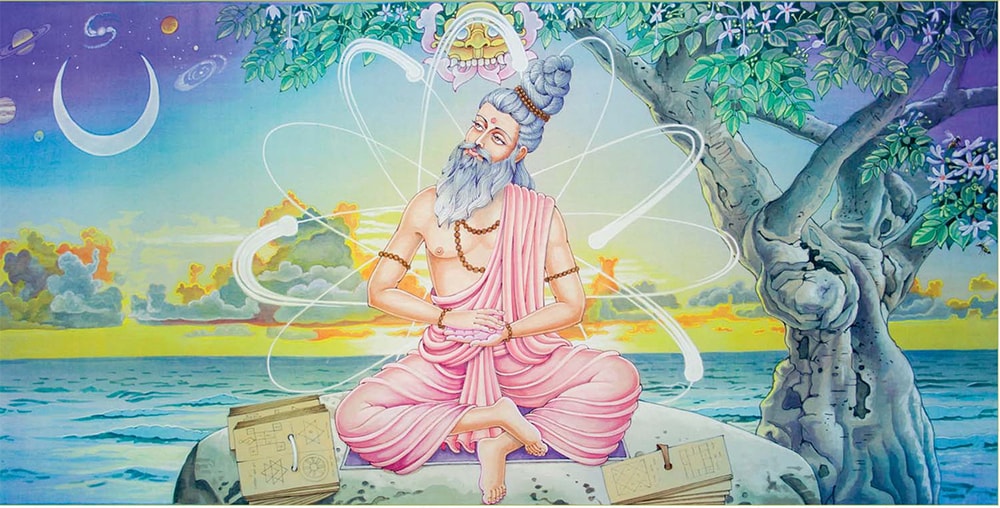
- yogis through their power of meditation can have intuitive and immediate perception of all objects, past, present and future.
2. Inference (anumana)
anumana, anu (after) + mana (cognition)
Anumana or inference is such knowledge which follows from other knowledge.
Constituents of inference
An inference is constituted with at least three sentences and these
- three sentences
- major premise
- minor premise
- conclusion
are again constituted of
- three different terms
- major term
- minor term
- middle term

Major Premise : All things which have smoke (middle/hetu) have fire (major/sadhya).
Minor Premise : This hill (minor/paksha) has smoke (middle/hetu).
Conclusion : Therefore, this hill has fire.- Major term or Sadhya is found in the major premise. Not perceived but it is inferred by us.
- Minor term or Paksha is found in minor premise. Perceived but not inferred by us.
- Middle term or Hetu is found in both premises. Establish a relation between Sadhya and Paksha.
In an inference, knowledge of and object is derived due to previous knowledge of some sign or mark. The previous knowledge is due to the universal relation between the major term and the middle term is being present in the minor term.
Types of Inference
- Svartha or for one’s self
- Parartha of for other
Inference for others consists of five constituents:
- This hill has fire (Pratijna).
- Because there is smoke (Hetu).
- Wherever there is smoke, there is fire (Udaharana).
- This hill has smoke (Upamana).
- Therefore, this hill has fire (Nigamana).
Smoke, the middle term appears three times. Therefore, it is also known as “tritiyanlinga paramarsa”.
3. Upamana (Comparison)
Upa (similarity) + mana (cognition) means… the similarity between the things and objects.
Four steps involved:
- Authoritative statement or description of object (Describe a squirrel)
- One observes any such object. (Observe an animal)
- Recollection of description. (Recall the description of squirrel)
- Resulting knowledge… object is same as described. (Observed animal is squirrel)
4. Verbal Testimony (Sabda)
Sabda is the instructive assertion of a reliable person.
Example: A local fisherman tells about the depth of river.
Kinds of Sabda:
Based on objects of meaning-
- Drustartha – deals with perceptible object. Table is brown.
- Adrustartha – deals with imperceptible object. Truth is noble.
Based on the origin of words-
- Laukika – secular. Only the words of trustworthy person.
- Alaukika – Divine or Vaidika.
1.3 Theory of causation (Asatkaryavada/Armbhavada)
Two important components in this theory:
- Cause – an unconditional and invariable antecedent of an effect.
- Effect – an unconditional and invariable consequent of a cause.
Effect is produced by a cause but the effect and the cause are not one and the same.
Effect is a new product comes to the existence.
1.4 Self and liberation
Infinite numbers of self exists in the universe.
Self:
- neither be identified with mind
- nor with pure consciousness
- but a consciousness belonging to an individual.
Self (no consciousness) when comes to contact with sense organs = Acquires consciousness. This acquiring produces bondage, hence aspires for liberation or salvation.
Liberation:
- The state refrain from all kinds of sufferings, cycle or birth and death.
- Can be achieved when there is cessation of karmic chain or karmic influx.
1.5 The concept of God
God:
- Creator, sustainer and destroyer.
- Efficient cause (not the material) of universe.
- Desires the universe remain in the state of stability and tranquillity.
- Omnipresent and omniscient being.
-
Why didn't the government of India open Vault B of the Padmanabhaswamy Temple in Kerala?
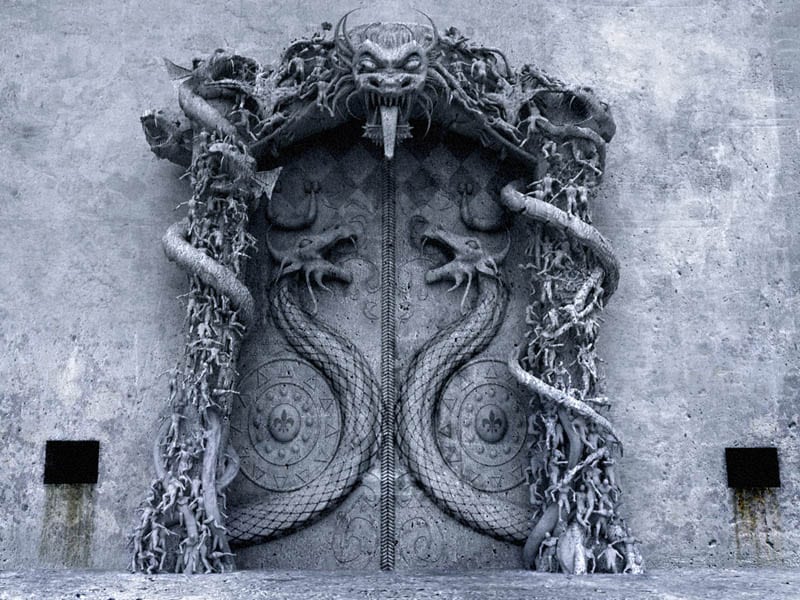
"Naga Bandhan" Door leading to Vault 'B' - Vault (Nilavara) B, the forbidden zone (wikipedia)
- Nāga (wikipedia)
- "Naga Magick: The Wisdom of the Serpent Lords" – Book by Denny Sargent
- The Tibetan Bon Terma of the Naga/Serpent Cults containing The Grimoire of Za-Rahula
- A Study of Naga Beings as a Global Phenomenon and their relation with Kailash/Manosarovar region
- Story of the nāga-king Elapatra
- The Naga worship
- Vault (Nilavara) B, the forbidden zone (wikipedia)
-
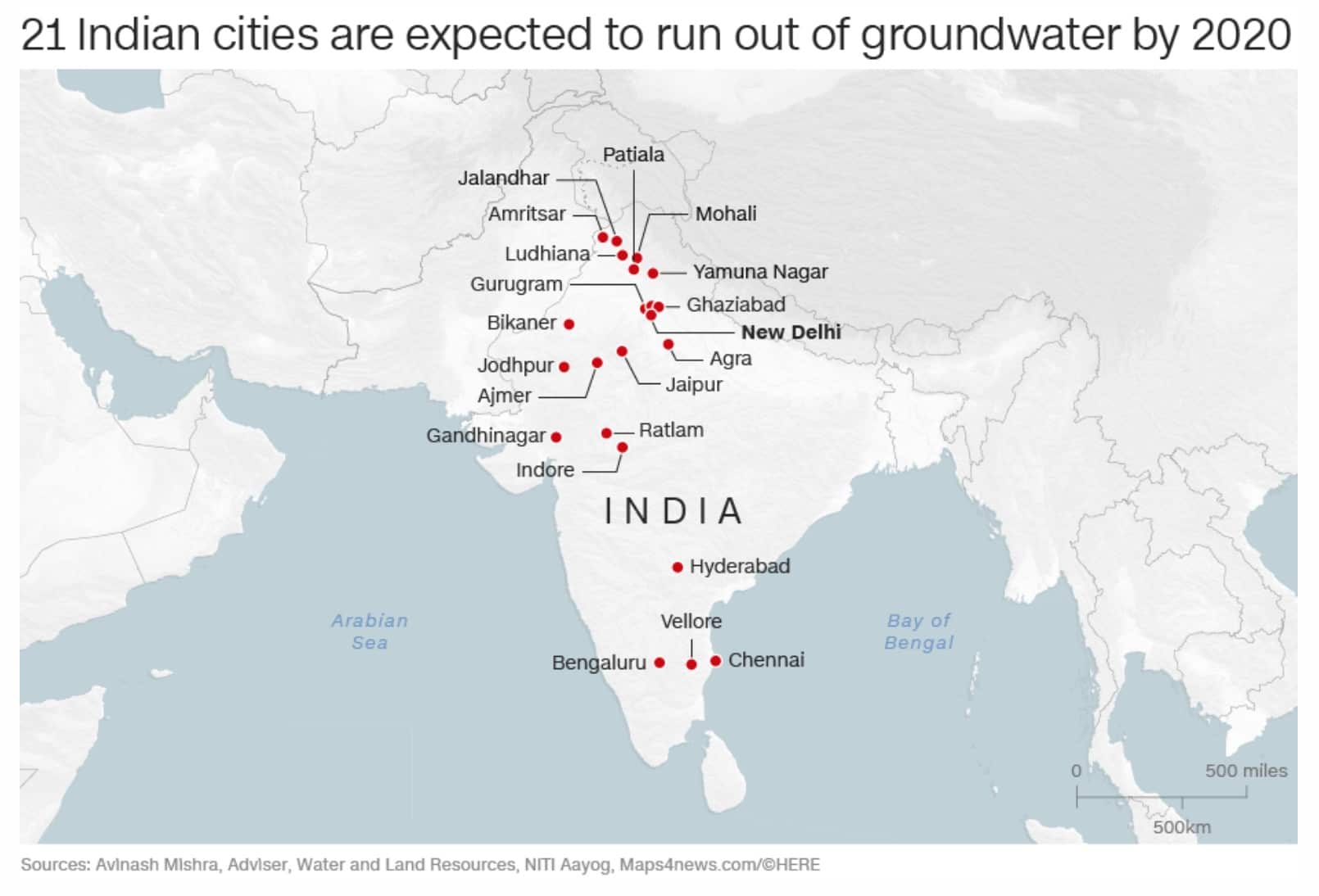
"21 Indian cites are expected to run out of groundwater by 2020": https://edition.cnn.com/2019/06/27/india/india-water-crisis-intl-hnk/index.html
-
Why Chennai, India's Sixth Biggest City, Has Run Out of Water: https://earther.gizmodo.com/why-chennai-indias-sixth-biggest-city-has-run-out-of-1835736767
India's sixth biggest city is almost entirely out of water:
https://edition.cnn.com/2019/06/19/india/chennai-water-crisis-intl-hnk/index.htmlWaterless in Chennai: ‘People are angry’—rising temperatures and tempers:
https://indianexpress.com/article/india/water-crisis-chennai-tamil-nadu-tanker-monsoon-rainfall-5795044/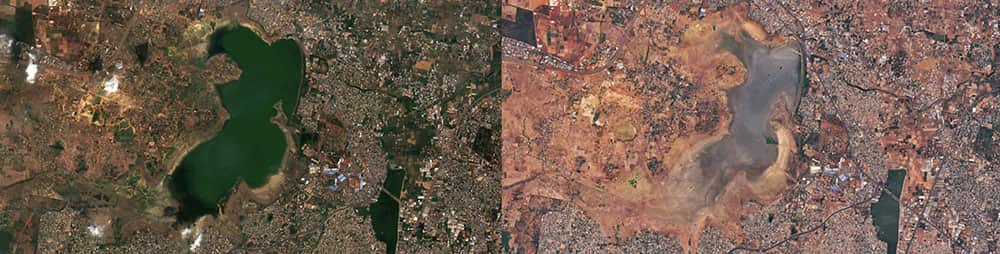
-
More than 500 arrested after protests and clashes as India water crisis worsens: https://edition.cnn.com/2019/06/20/india/chennai-water-crisis-intl-hnk/index.html
Kerala: India’s First Solar Cruise Vessel To Soon Be Launched In Alappuzha; To Drastically Reduce Operational Costs: https://swarajyamag.com/insta/kerala-indias-first-solar-cruise-vessel-to-soon-be-launched-in-alappuzha-to-drastically-reduce-operational-costs
-
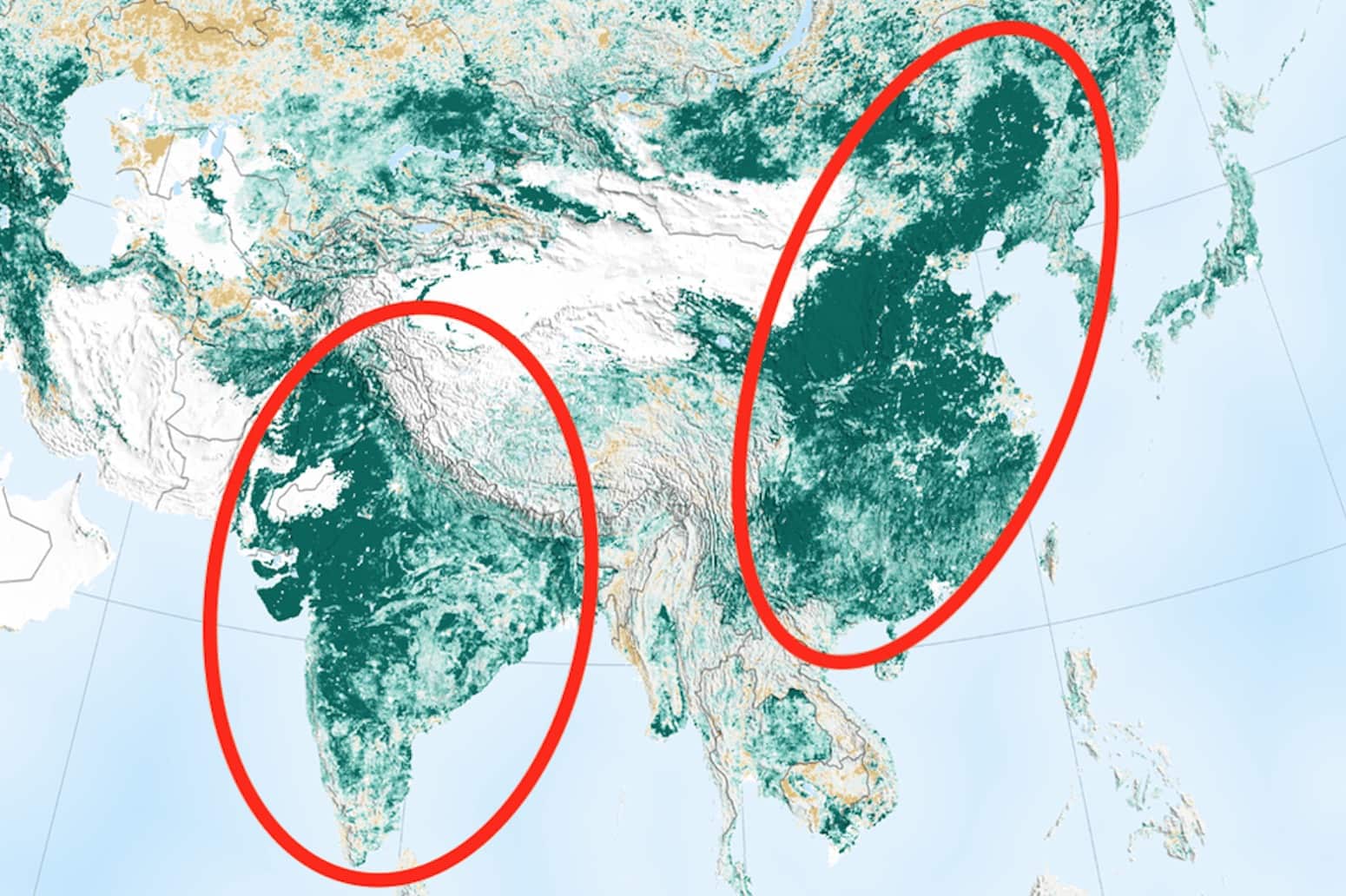
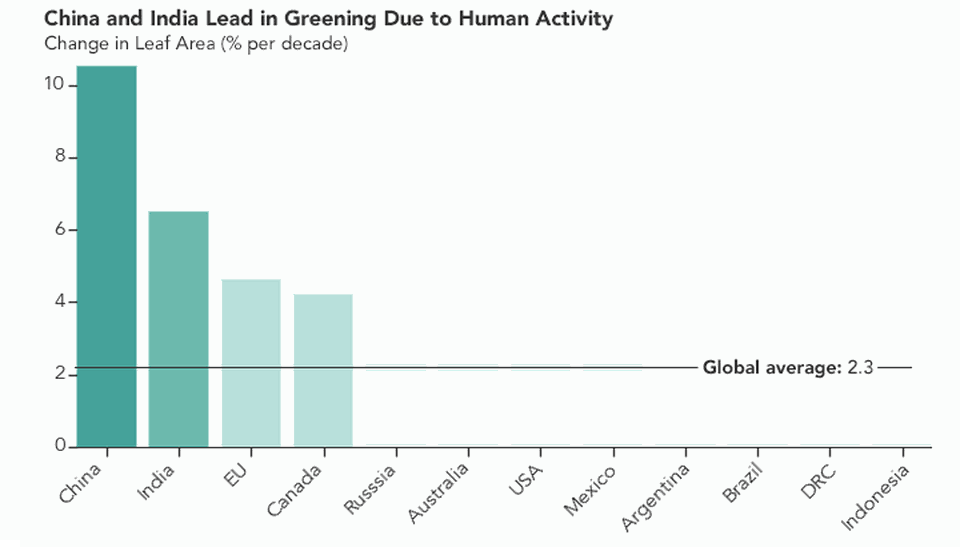
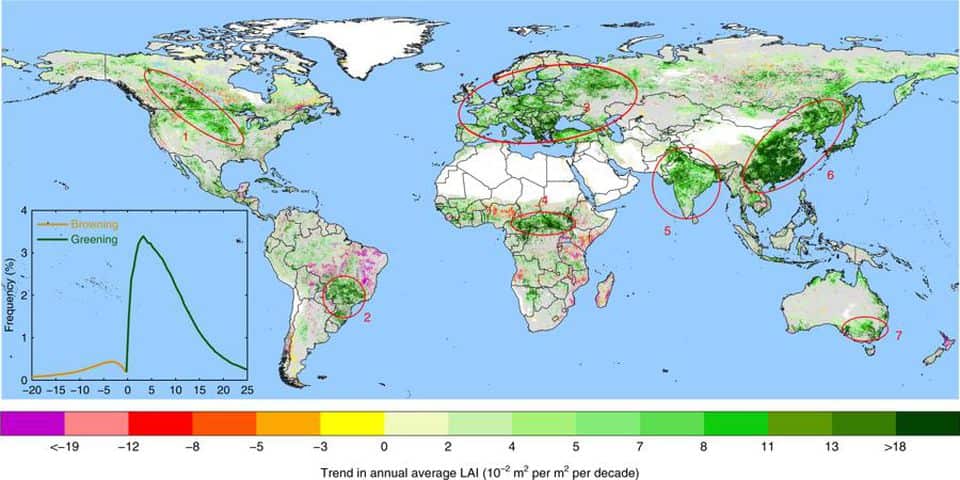
"NASA Says Earth Is Greener Today Than 20 Years Ago Thanks To China, India": https://www.forbes.com/sites/trevornace/2019/02/28/nasa-says-earth-is-greener-today-than-20-years-ago-thanks-to-china-india
-
"Climate Change And Why We Should Be Afraid" - interview with @GhoshAmitav (At India Today Conclave 2019)
-
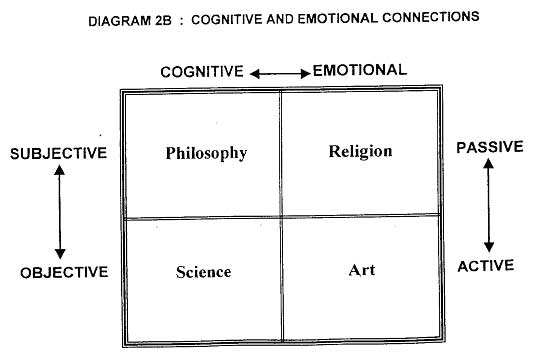
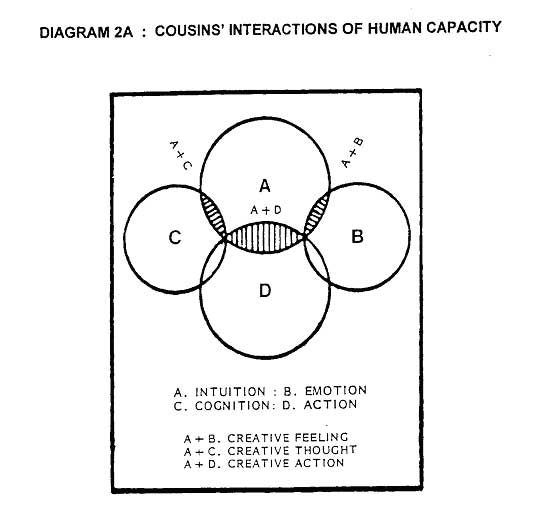
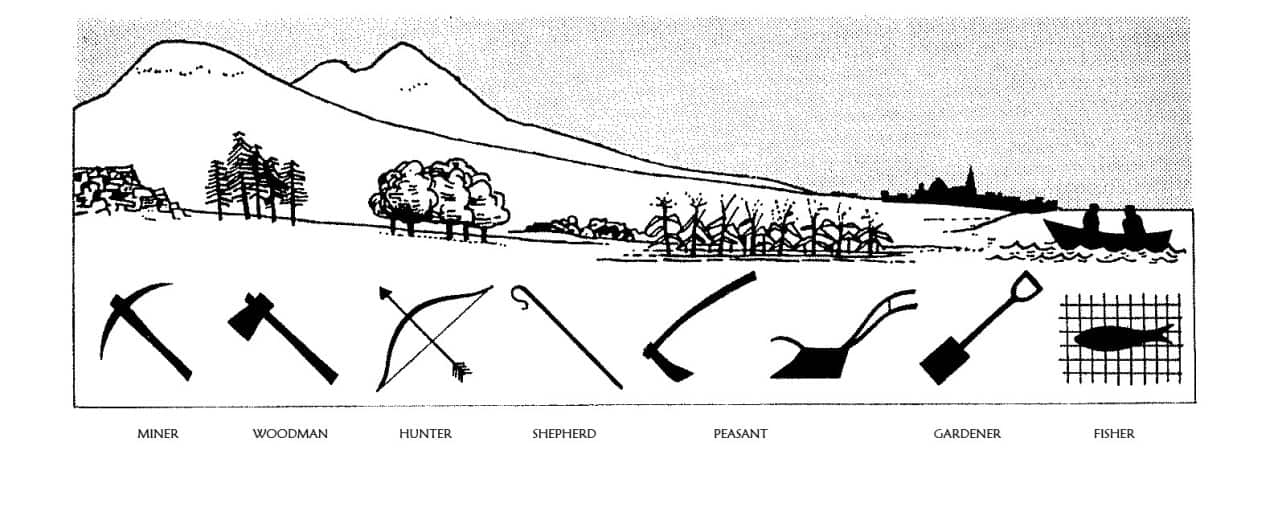
Patrick Geddes In India: From Synthesis To Integration:
http://hodgers.com/mike/patrickgeddes/feature.html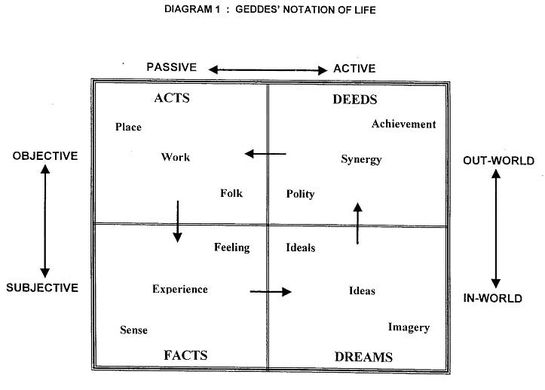
-
China and India lead in greening of the world through land-use management:
https://www.nature.com/articles/s41893-019-0220-7 -
Indian teacher seeks to promote China-India cultural exchange through yoga:
An inspiring dialogue between the worlds most populous nations (2.7b people combined). Understanding the explosive political power of yoga etc., the Communist Party clearly is watching closely.
CGTN Reports:
For many around the world, India is inseparable from yoga. When mentioning yoga, many would just simply associate it with all kinds of demanding asana practices. But for Yatindra Dutt Amoli, the ancient activity is more than that.
“Before we came here, we saw that people were more focused on the asana practice. The teachers were not making it clear that yoga is not only about practice, yoga is also philosophy, yoga is also a way of life,” the 36-year-old from an Indian university told CGTN.
In collaboration with the Indian Council for Cultural Relations, the India-China Yoga College was established in Yunnan Minzu University in the southwestern city of Kunming in 2015 and Amoli is just one of the first foreign teachers.
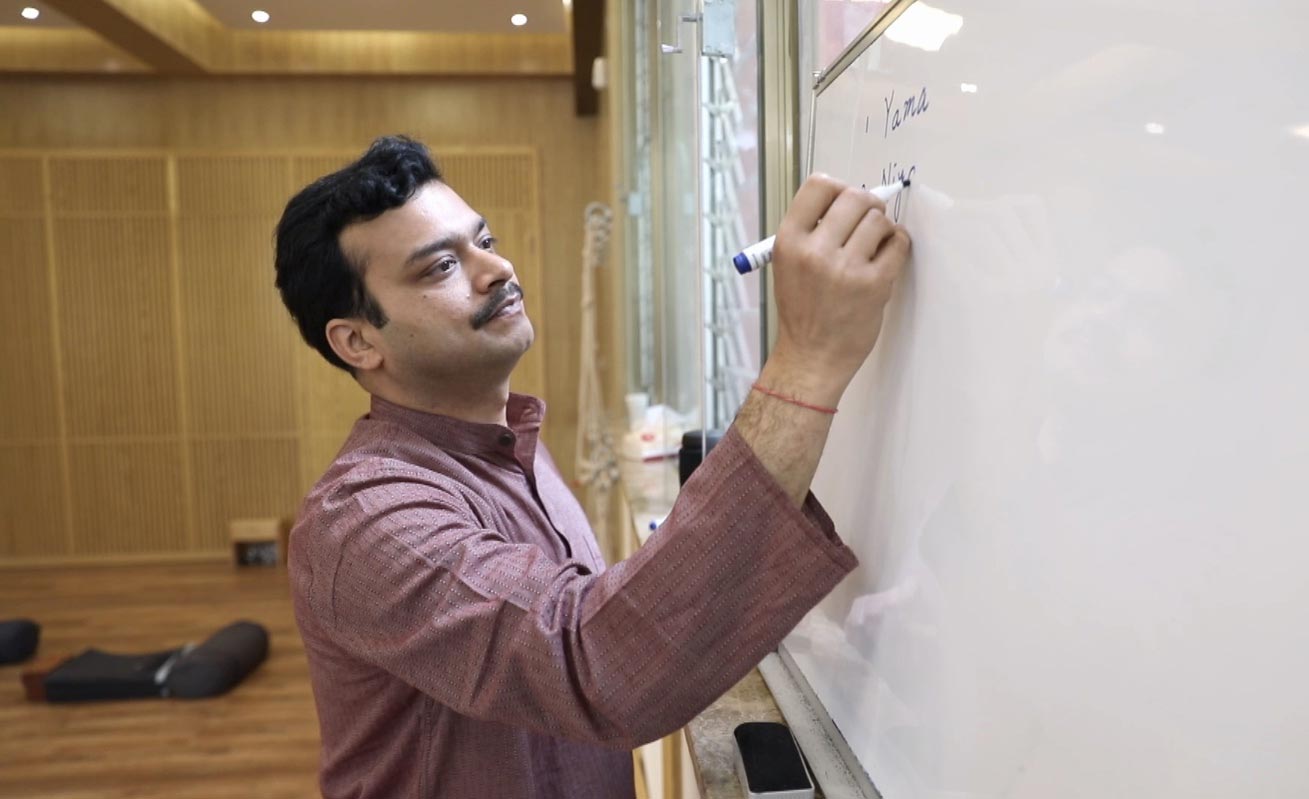
Yatindra Dutt Amoli teaches yoga philosophy to his students in Yunnan Minzu University. /CGTN Photo
“In the beginning, my life here was very difficult, because I'm from a totally different cultural background and society,” he recalled.
The friendliness of his colleagues and his growing interest in China resulted in him staying in the country longer than he had originally planned. Now, he is trying to impart systematic yoga knowledge to his Chinese students by integrating elements from Chinese culture.
“Gradually I understood that I have to change (my teaching method), I realized that if I teach yoga philosophy, I should teach it from a Taoism, Confucianism, Tai Chi point of view and Qigong point of view, even from their ethnic culture.”
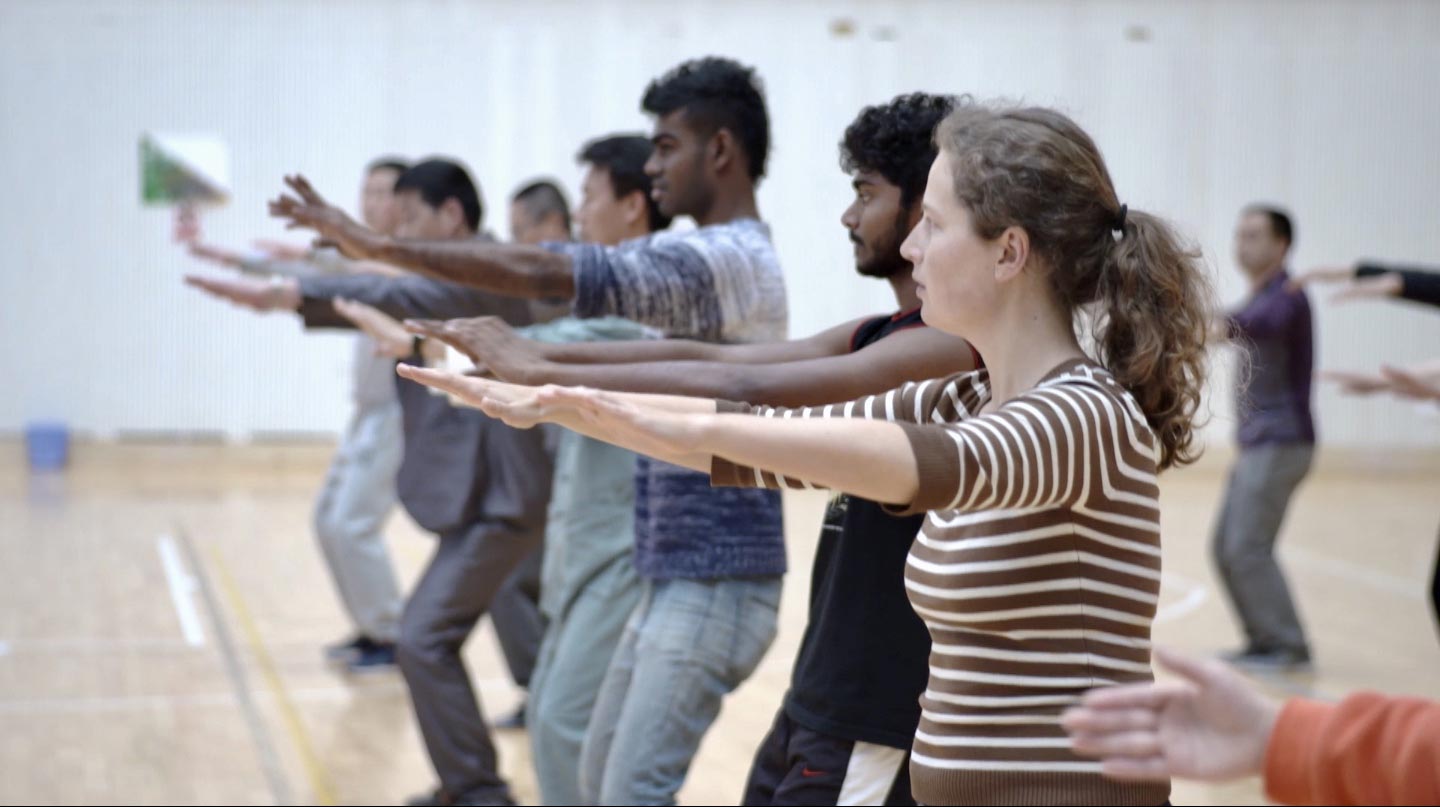
International students in Yunnan Minzu University learn Tai Chi from a Chinese master. /CGTN Photo
Actually, yoga is usually compared with China’s Tai Chi. For Amoli, the two widely practised activities represent two different cultures, while they also share many similarities. He compares Tai Chi to “moving meditation” and said that yoga and Tai Chi may be different in their process, but they both seek harmony between human beings and nature.
“This is cultural root. Yoga is from our cultural root and Tai chi is from your cultural root. If we communicate through the two mediums, we can cooperate more, even we can go further than cultural issues,” said Amoli.
To promote the cultural exchange, the university has also established a college specializing in Tai Chi and are sending teachers overseas including India.
“Both yoga and Tai Chi are the embodiment of the wisdom of the East. They’re good to promote people-to-people exchanges between the two countries and our universities can play an active role in this regard,” said Lang Gongxun, vice dean of the India-China Yoga College.
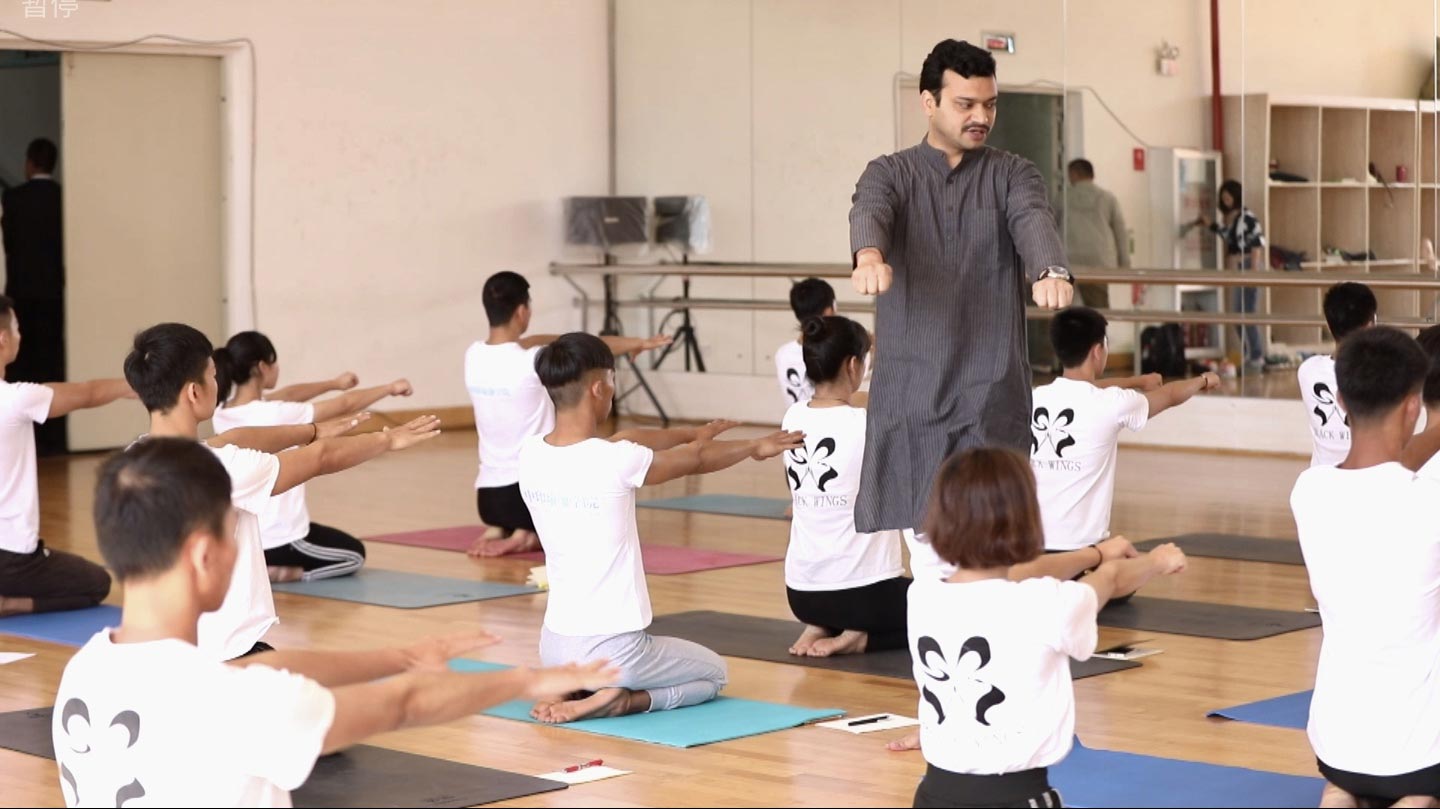
Yatindra Dutt Amoli in class. /CGTN Photo
He’s gotten used to life here, and Amoli said he wants to continue his stay in China to learn more about the country. He said he wants to find more ways to bring the two cultures together.
“By borders, we can say that you are Chinese, I am Indian. But as a human being, we’re all the same. Our lifestyles are quite rich, culture is quite rich. So we have to understand each other,”
said Amoli, who is obsessed with traditional Chinese classics such as Tao Te Ching, which provides the basis for the philosophical school of Taoism, and Huangdi Neijing, which has been considered as the fundamental doctrinal source for Chinese medicine.
Amoli said, when he went back to India last time, he found that people there knew very little about Chinese culture. “They said China has nothing. China only has Kung Fu,” he added.
Amoli is now devoting himself to learning Chinese. He said when he goes back to India next time or travels to other countries, he would like to tell people about other Chinese cultural treasures.
“I don’t know the political situation, and I am not interested in diplomatic things. I am just interested in cultural issues, and I think it’s time that we learn more from each other.”
"Why Indians say Americans are doing yoga wrong":
"More than 20 million Americans practice yoga. It's an industry worth more than 10billion dollars annually"
Yogic Paths: Exploring the Yogic Path
Yoga is meant to shape the life. To give a good shape to life. Its a way of living.