tag > Mindful
-
"Big moves are not as well polished as small moves; small moves are not as well polished as stillness!" - Kuo Lin Ying
(1895–1984)

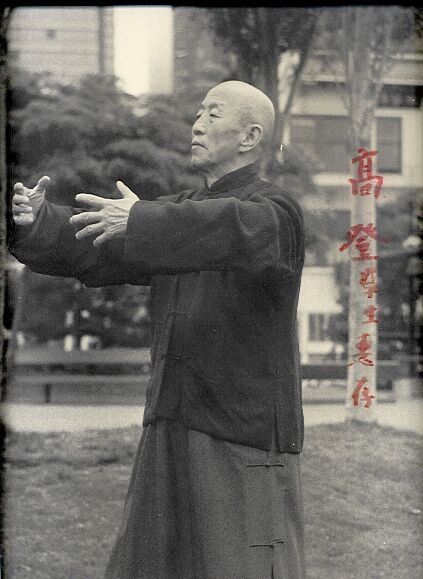

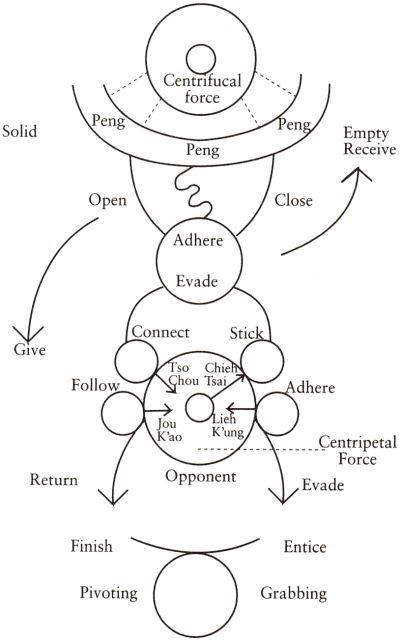
"The T'ai Chi Boxing Chronicle" - Book by Kuo Lien-Ying


-

"I used to think great teachers inspire you. Now I think I had it wrong. Good teachers inspire you; great teachers show you how to inspire yourself every day of your life. They don't show you their magic. They show you how to make magic of your own." - Alfred Doblin
-
Li Ching-Yuen (李清雲) - Qigong Master who lived a very long life
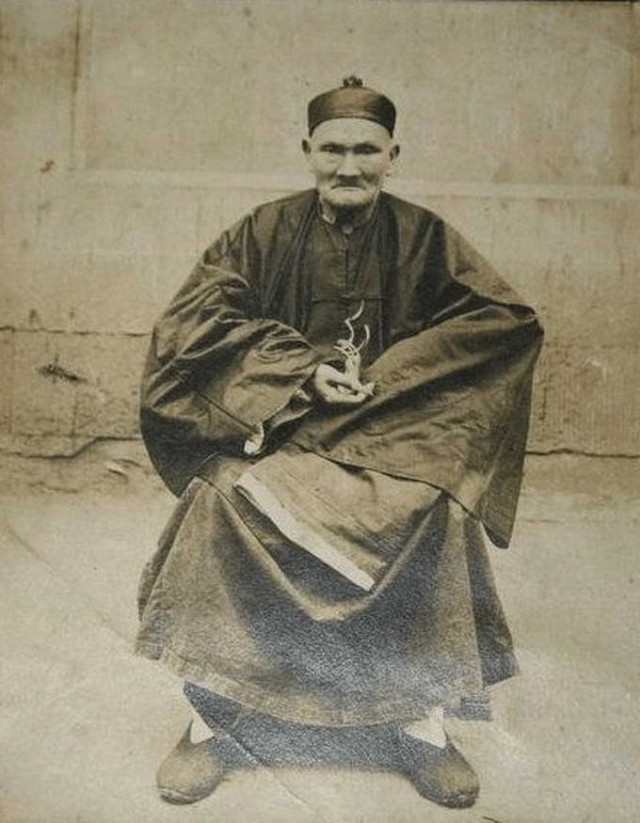
Li Ching-Yuen (simplified Chinese: 李清云; traditional Chinese: 李清雲) (1677 or 1736 – 6 May 1933) was a Chinese herbalist, martial artist and tactical advisor, known for his supposed extreme longevity. He claimed to have been born in 1736, while disputed records suggest 1677, implying an age at death of 197 or 256 years. Li Ching-Yuen spent most of his life in the mountains and was skilled in Qigong. He worked as an herbalist, selling lingzhi, goji berry, wild ginseng, he shou wu and gotu kola along with other Chinese herbs, and lived off a diet of these herbs and rice wine. He died from natural causes on 6 May 1933 in Kai Xian, Sichuan, China and was survived by his 24th wife, a woman of 60 years. Li supposedly produced over 200 descendants during his life span, surviving 23 wives.
After his death, General Yang Sen wrote a report about him, A Factual Account of the 250 Year-Old Good-Luck Man (一个250岁长寿老人的真实记载), in which he described Li's appearance: "He has good eyesight and a brisk stride; Li stands seven feet tall, has very long fingernails, and a ruddy complexion." General Yang became his disciple, practicing his teaching until the end of his life. In 1927 he invited him to his residence in Wanxian, Sichuan. The Tai Chi Chuan Master T. T. Liang (Liang Tung Tsai) learned from General Yang the practice of the "Eight Brocade Qigong". His student Stuart Alve Olson wrote in 2002 the book "Qigong Teachings of a Taoist Immortal: The Eight Essential Exercises of Master Li Ching-Yun", taking General Yang's report as reference. Some praticants of Jiulong Baguazhang, also known as Nine Dragon Eight Diagram Palm, claims that it was conceived by Li Ching-Yuen.
Longevity
Whereas Li Ching-Yuen himself claimed to have been born in 1736, Wu Chung-chieh, a professor of the Chengdu University, asserted that Li was born in 1677; according to a 1930 New York Times article, Wu discovered Imperial Chinese government records from 1827 congratulating Li on his 150th birthday, and further documents later congratulating him on his 200th birthday in 1877. However, gerontological researchers have viewed the age claim with extreme skepticism; the frequency of invalid age claims increases with the claimed age, rising from 65% of claims to ages 110–111 being invalid, to 98% of claims to being 115, with a 100% rate for claims of 120+ years.
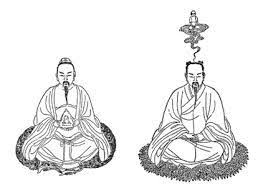
One of Li's disciples, the Taijiquan Master Da Liu, told of his master's story: when 130 years old Master Li encountered in the mountains an older hermit, over 500 years old, who taught him Baguazhang and a set of Qigong with breathing instructions, movements training coordinated with specific sounds, and dietary recommendations. Da Liu reports that his master said that his longevity "is due to the fact that he performed the exercises every day – regularly, correctly, and with sincerity – for 120 years."
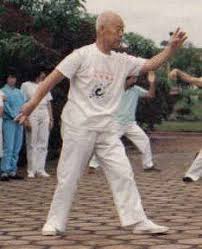
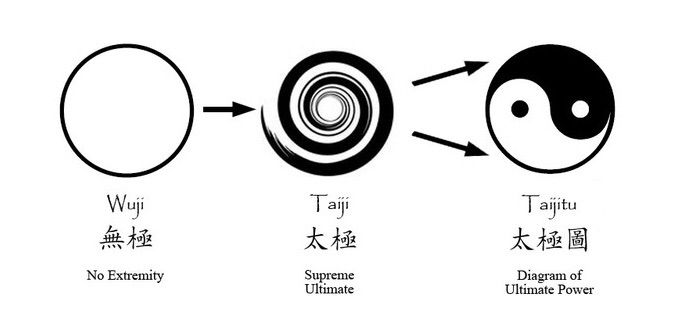
Master Liu Pai Lin (劉百齡) The Taoist Master Liu Pai Lin (劉百齡), who lived in São Paulo, Brazil from 1975 until 2000, had in his classroom another photograph of Master Li Ching Yuen unknown to the West. In this photo his face is clearly visible, as are his long and curled fingernails. Master Liu had met him personally in China, and considered him as one of his Masters. He used to say that Master Li answered to him that the fundamental taoist practice is to learn to keep the “Emptiness” (Wuji). Master Liu’s son, Master Liu Chih Ming, teaches the 12 Silks Qigong in CEMETRAC, as transmitted by Master Li.
The article "Tortoise-Pigeon-Dog", from the 15 May 1933 issue of Time reports on his history, and includes Li's answer to the secret of a long life:
- Keep a quiet heart
- Sit like a tortoise
- Walk sprightly like a pigeon
- Sleep like a dog
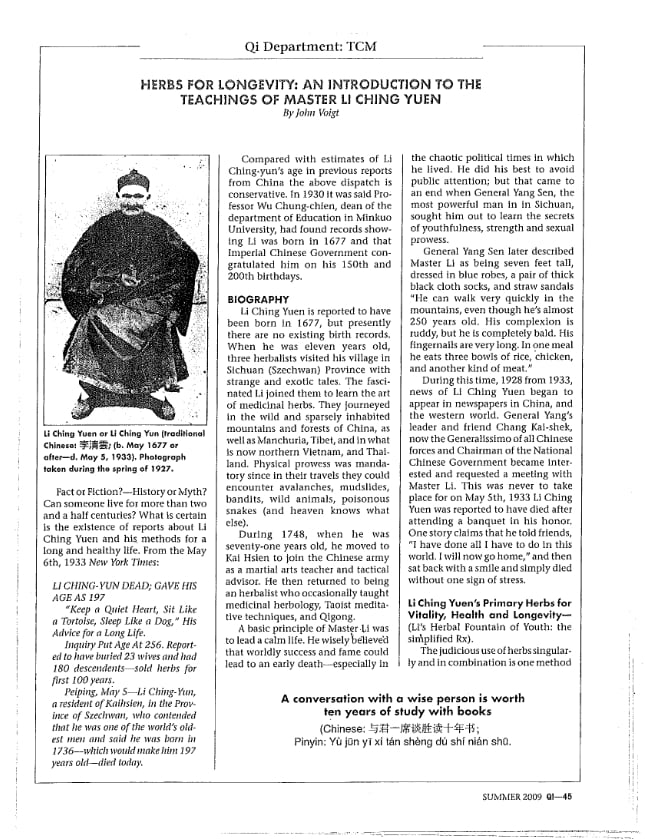
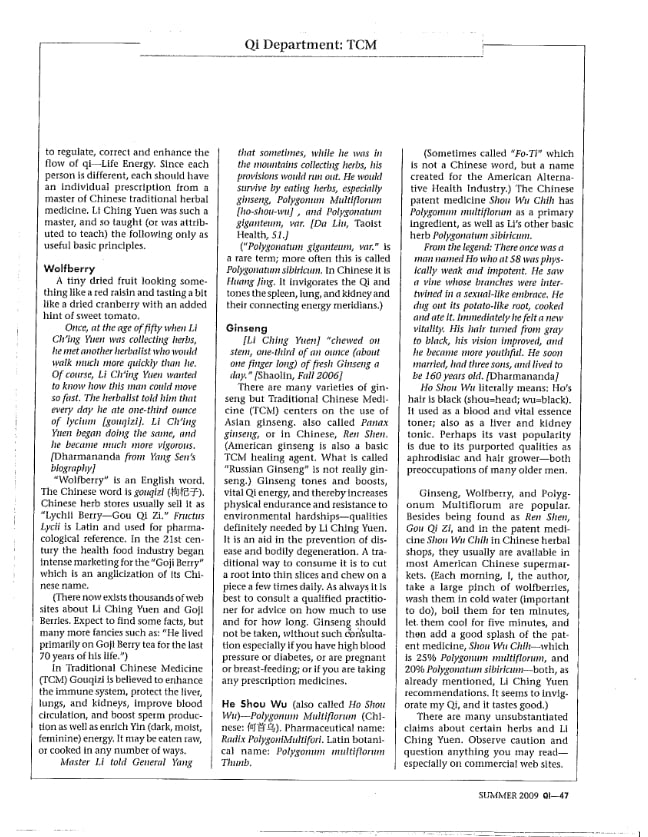
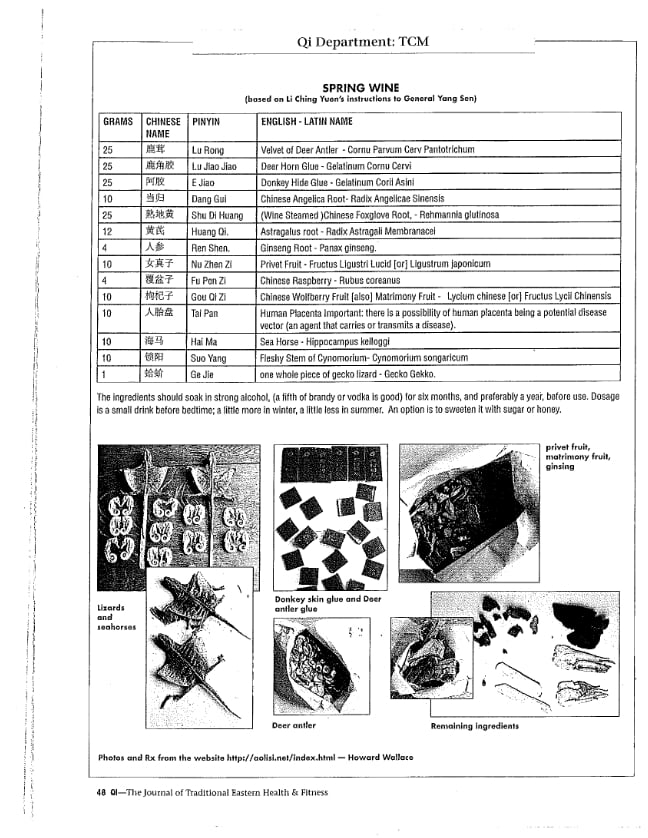
Following from "The Legend of Li Qingyun Meets Scientific Life Span Experiments":
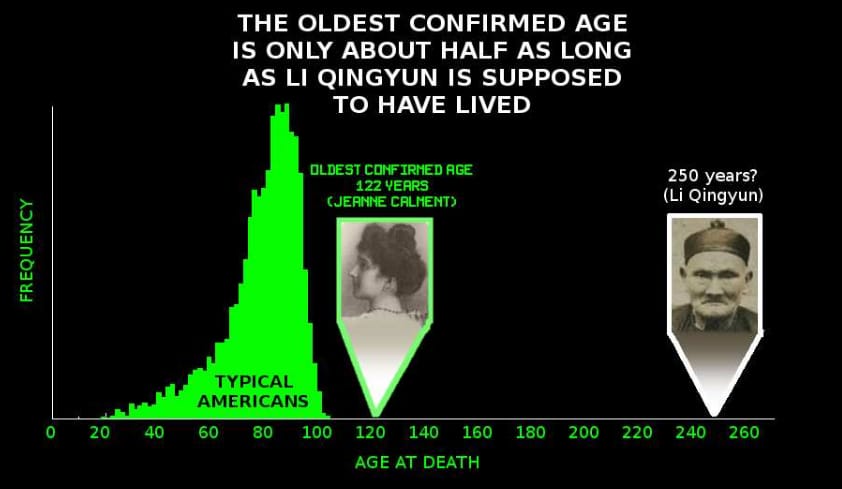
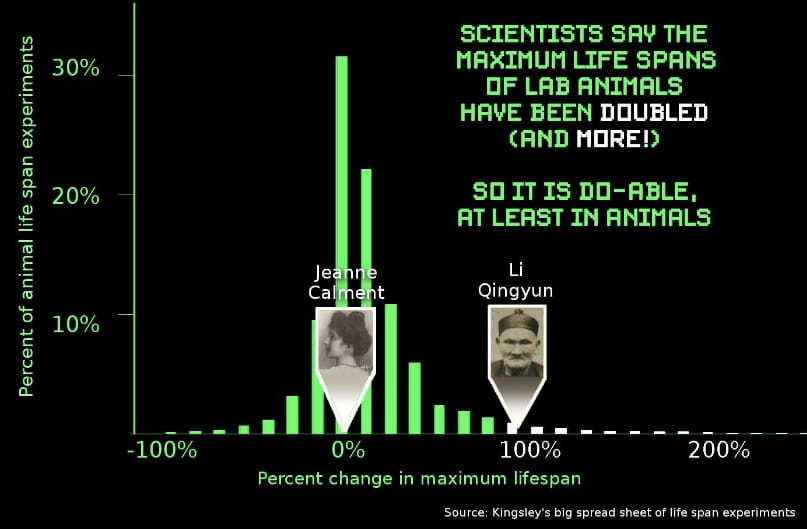
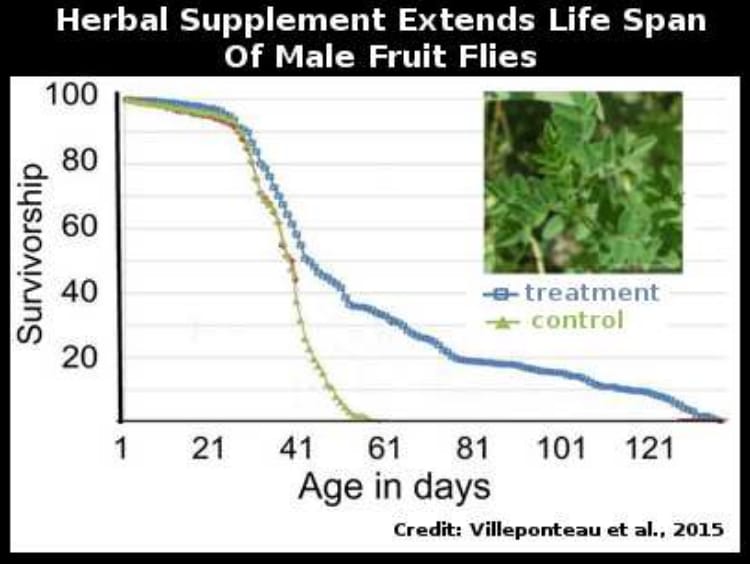
- Li Qingyun advised against feeling too happy
- Li Qingyun advised against drinking wine
- Li Qingyun meditated
- Li Qingyun ate rice
- Li Qingyun ate herbs
- Li Qingyun had plenty more tips for living longer.They included: Diet, exercise, sleep, religion, education, relaxing, living in remote areas, and occasionally going hungry.
Books:
- Qigong - The secret of youth - Da Mo’s Muscle/Tendon Changing and Marrow/Brain Washing Classics - by Dr. Yang, Jwing-Ming
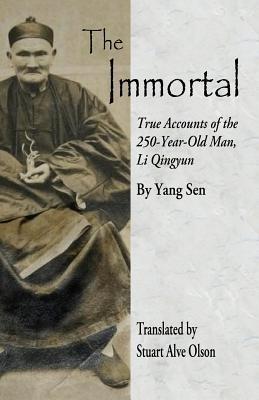
- The Immortal: True Accounts of the 250-Year-Old Man, Li Qingyun - by Yang Sen, Stuart Alve Olson
- The Jade Emperor's Mind Seal Classic: The Taoist Guide to Health, Longevity, and Immortality - by Stuart Alve Olson
- Blog post on Li Qingyun in Chinese
Related
-
Whitehead on Yijing
The Yijing, Whitehead, and Time Philosophy - by Yih-hsien Yu (PDF)
Whitehead and the Book of Changes - by Shih-chuan Chen, disciple of Thomé H. Fang
Time as Emotion VS Time as Moralization: Whitehead and the Yijing - by Linyu gu (PDF)
Process and Reality - by Alfred North Whitehead (PDF)
Organic Realism and Process philosophy (wikipedia)

I-Ching Cards by Klaus Holitzka 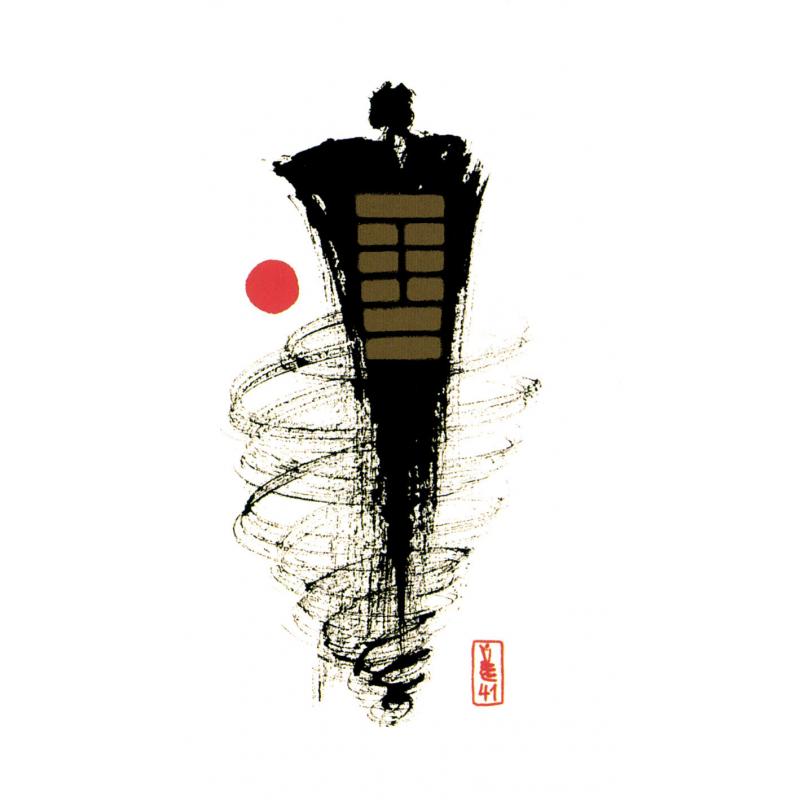
-
Online Pro-Tip: Don't argue with people or get annoyed by their stuff, just Unsubscribe

-
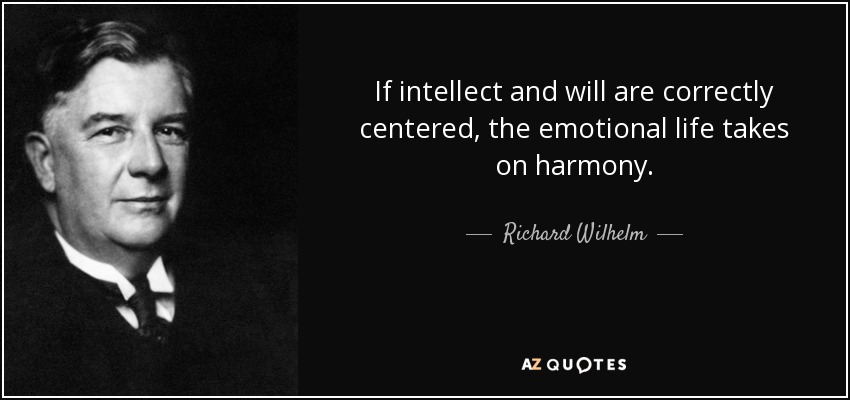
Richard Wilhelm (1873 - 1930) was a German sinologist, theologian, and missionary. He lived in China for 25 years. He is best remembered for his translations of philosophical works from Chinese into German, including the I Ching and The Secret of the Golden Flower (PDF)


-
“Those who know don’t talk. Those who talk don’t know.” - Tao Te Ching
https://www.thedaobums.com/ - Daoism Forum
https://rumsoakedfist.org/ - Martial Arts Forum
https://dharmawheel.net/ - Buddhism Forum
http://qi-encyclopedia.com - Qi Encyclopedia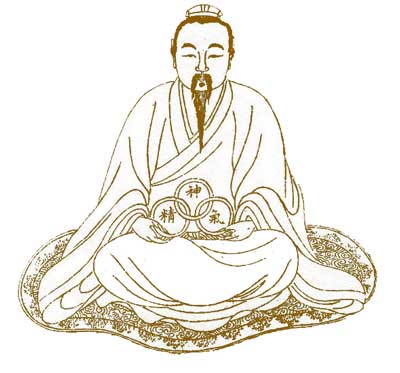
-
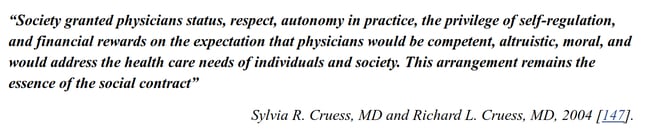
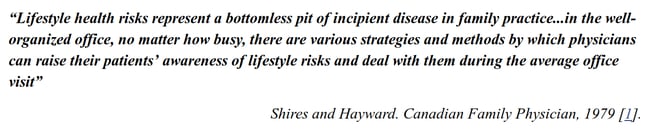
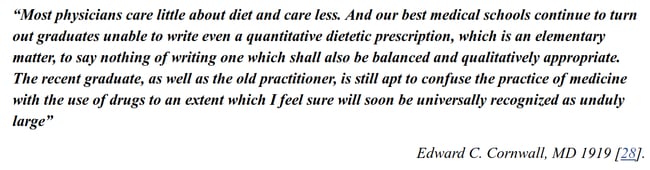
Golden Age of Medicine 2.0: Lifestyle Medicine and Planetary Health Prioritized (PDF)
Abstract: "The 'golden age of medicine' - the first half of the 20th century, reaching its zenith with Jonas Salk's 1955 polio vaccine - was a time of profound advances in surgical techniques, immunization, drug discovery, and the control of infectious disease; however, when the burden of disease shifted to lifestyle-driven, chronic, non-communicable diseases, the golden era slipped away. Although modifiable lifestyle practices now account for some 80% of premature mortality, medicine remains loathe to embrace lifestyle interventions as medicine. Here, we argue that a 21st century golden age of medicine can be realized; the path to this era requires a transformation of medical school recruitment and training in ways that prioritize a broad view of lifestyle medicine. Moving beyond the basic principles of modifiable lifestyle practices as therapeutic interventions, each person/community should be viewed as a biological manifestation of accumulated experiences (and choices) made within the dynamic social, political, economic and cultural ecosystems that comprise their total life history. This requires an understanding that powerful forces operate within these ecosystems; marketing and neoliberal forces push an exclusive 'personal responsibility' view of health - blaming the individual, and deflecting from the large-scale influences that maintain health inequalities and threaten planetary health. The latter term denotes the interconnections between the sustainable vitality of person and place at all scales. We emphasize that barriers to planetary health and the clinical application of lifestyle medicine - including authoritarianism and social dominance orientation - are maintaining an unhealthy status quo."



-
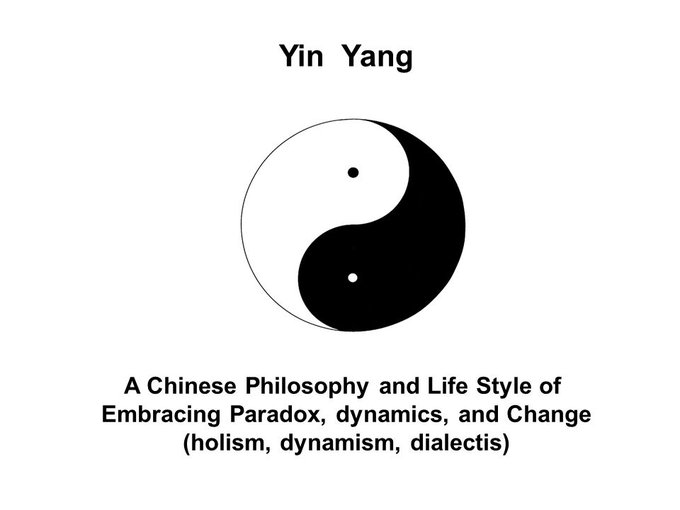
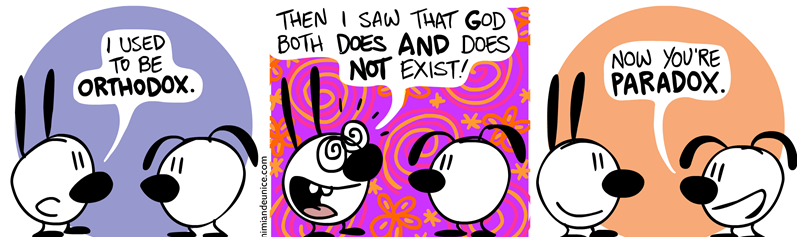
Cultivating an appreciation for the deeply paradoxical nature of reality is healthy: In the west, paradoxes are still seen as side-effects or bugs, in an otherwise perfectly computable universe (even we know the universe is uncomputable, because any computation to emulate it won’t halt until the universe ends). Yet the list of paradoxes keeps growing. Chasing the white rabbit in infinity, is a recipe for madness.
Related: Post on this blog 2y ago & More Paradoxes - #Science #Philosophy #Mindful #Ideas #Paradox
-
The Psychology of Willpower: Training the Brain for Better Decisions
In 2011, 27% of the respondents of the Stress in America survey reported a lack of willpower as the greatest obstacle to change. We rely on willpower to exercise, diet, save money, quit smoking, stop drinking, overcome procrastination, and ultimately accomplish any of our goals. It impacts every area of our lives. Willpower is not a new concept, but we still do not have widespread awareness as to how to nurture it. Mahatma Gandhi described willpower by noting that “Strength does not come from physical capacity. It comes from an indomitable will”. Many people have an intuitive sense of what this willpower is but lack the scientific knowledge to understand the forces that undermine it. How can we work with willpower instead of against its stubborn nature? They say knowledge is power, and in this case, knowledge is willpower.
-
An Introduction to Koichi Tohei (1920 - 2011) - 10th Dan aikidoka and founder of the Ki Society and its style of Aikido, Ki-Aikido. Practitioner of Shinshin-tōitsu-dō (Japanese Yoga).
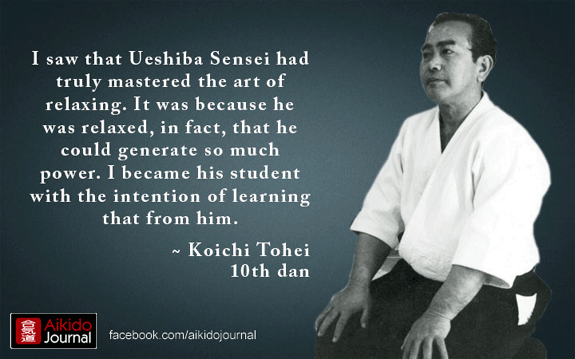
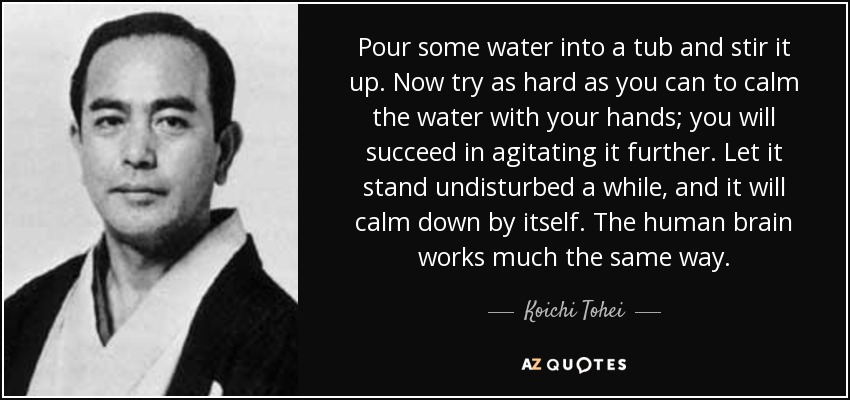
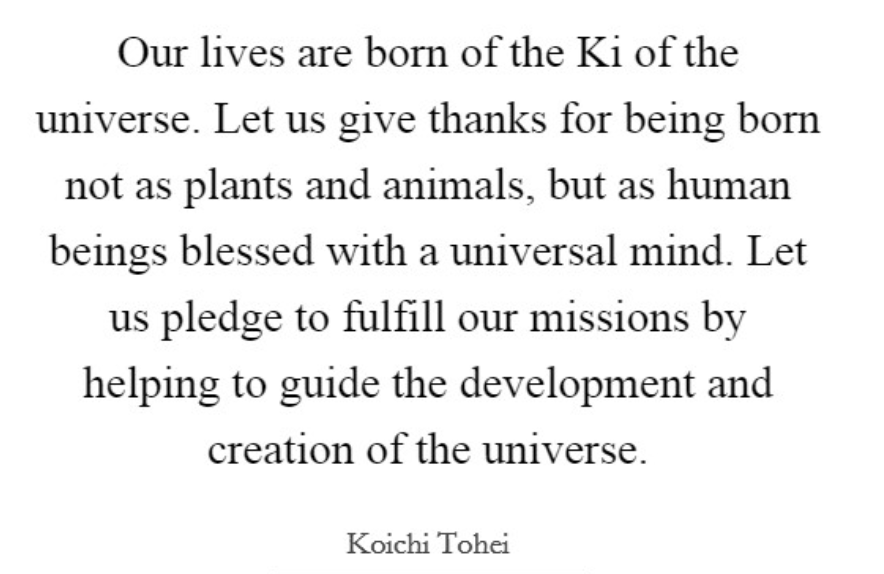
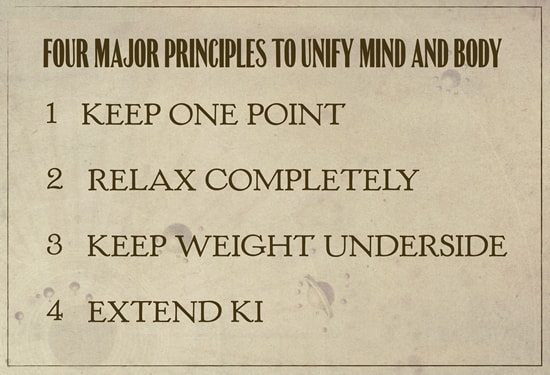
Four Basic Principles to Experience Mind and Body Unification 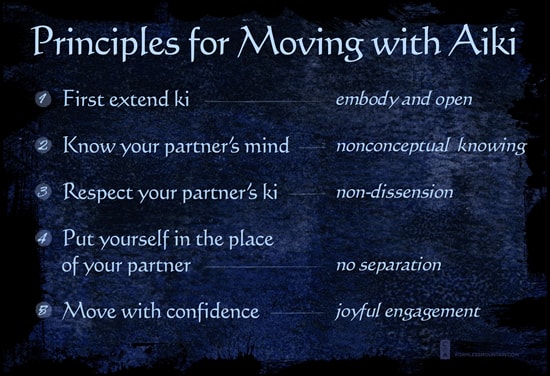
Principles for Moving with Aiki (via) 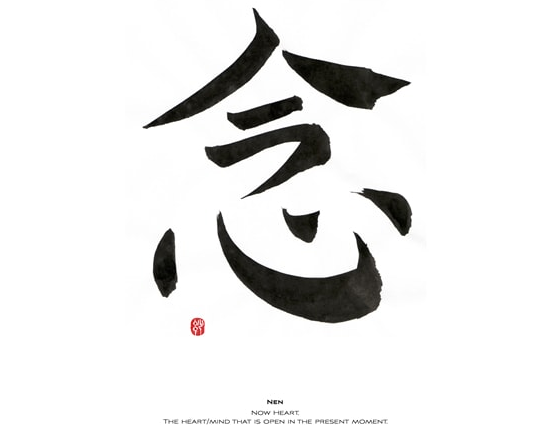
Nen - Heart Mind Now - Willpower Books: https://www.goodreads.com/author/show/248718.Koichi_Tohei
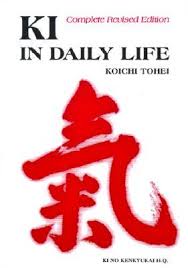
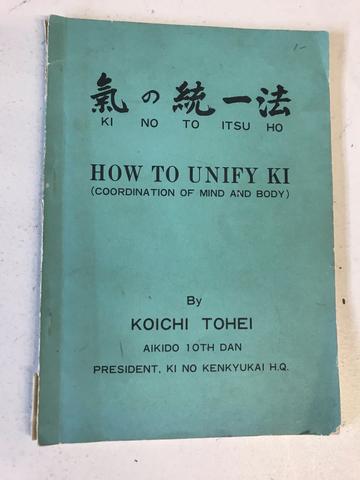
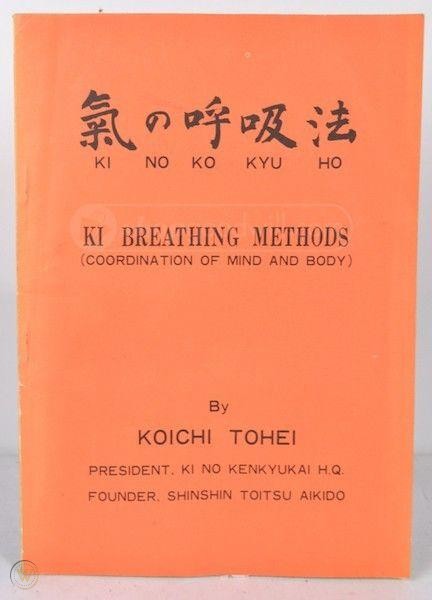
Videos: Intro - Ki Aikido - Fundamental Concept Principle Part1 - Part2 - Part3 - Part4 - Part5
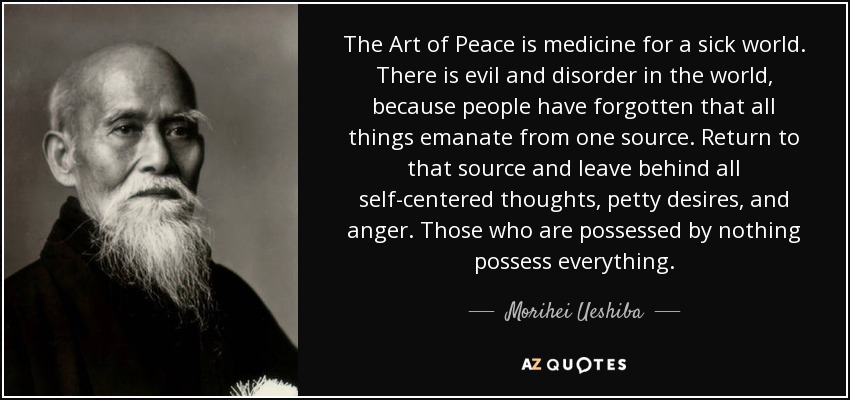
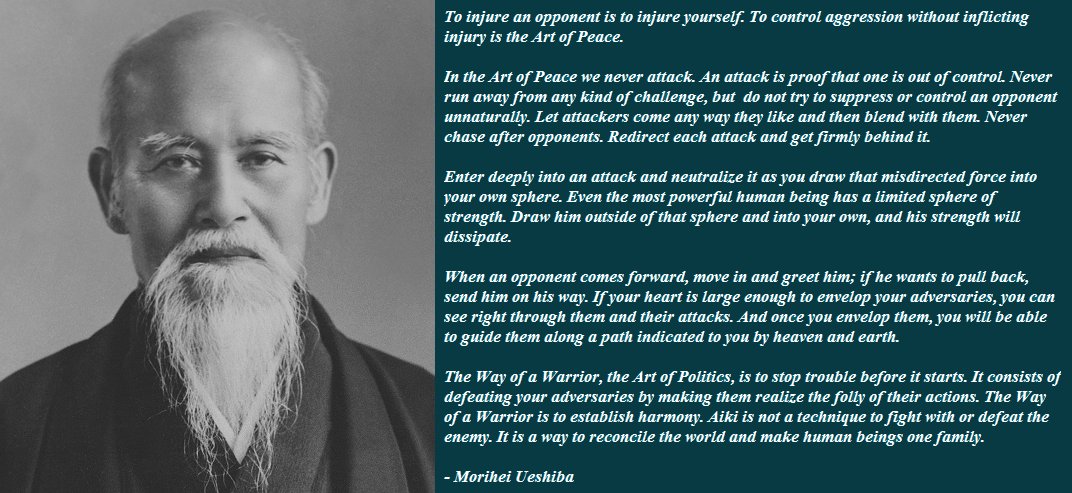
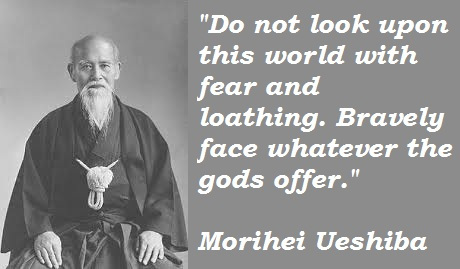
Tohei trained with Morihei Ueshiba - Japanese martial artist and founder of aikido.
-
Quotes on the impact of future prediction/anticipation (worrying) & its remedies (action)
“It only seems as if you are doing something when you worry”
– Lucy Maud Montgomery (1874-1942)“There is nothing that wastes the body like worry”
– Mahatma Gandhi (1869 – 1948)“Nothing diminishes anxiety faster than action”
– Walter Anderson (1944 - )“Not everything that is faced can be changed, but nothing can be changed until it is faced.” – James Baldwin (1924 – 1987)
“The starting point of all achievement is definite knowledge of what one wants”
– Andrew Carnegie -
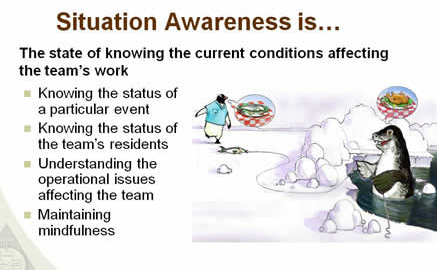
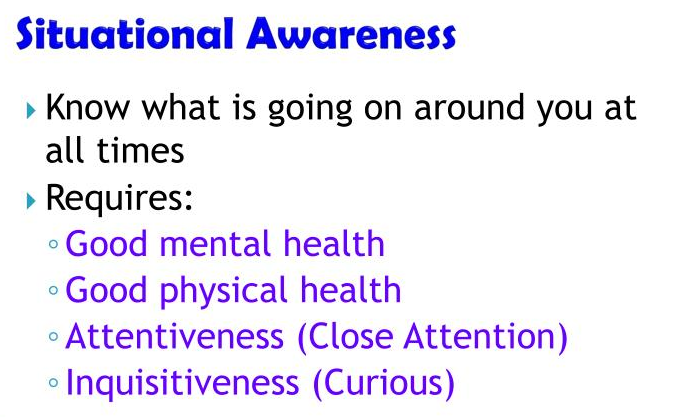
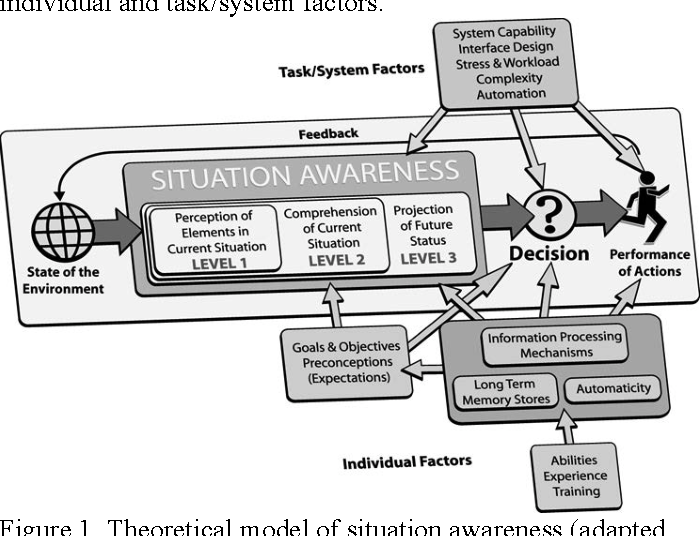
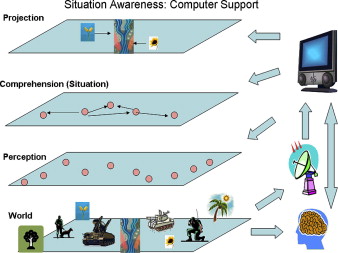
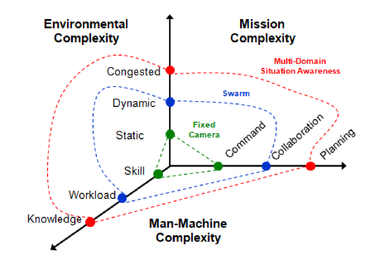
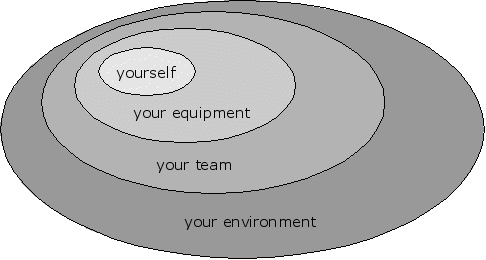
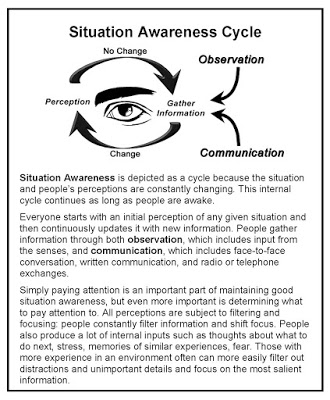
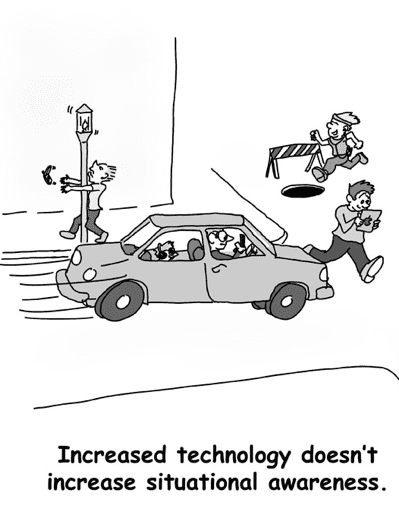
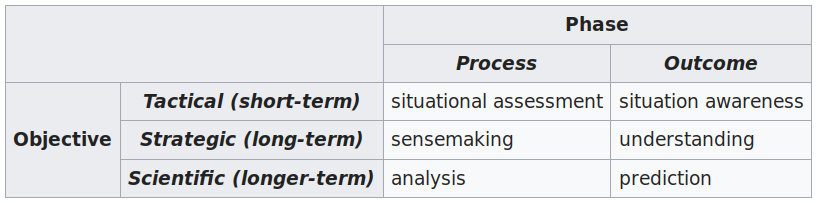
Situation Awareness is the perception of environmental elements and events with respect to time or space, the comprehension of their meaning, and the projection of their future status.