tag > Philosophy
-
#Book: The Sciences of the Artificial - by Herbert A. Simon (1969) (full e-book)
“Human beings, viewed as behaving systems, are quite simple. The apparent complexity of our behavior over time is largely a reflection of the complexity of the environment in which we find ourselves.” ― Herbert A. Simon, The Sciences of the Artificial
“It is true that humanity is faced with many problems. It always has been but perhaps not always with such keen awareness of them as we have today. We might be more optimistic if we recognized that we do not have to solve all of these problems. Our essential task—a big enough one to be sure—is simply to keep open the options for the future or perhaps even to broaden them a bit by creating new variety and new niches. Our grandchildren cannot ask more of us than that we offer to them the same chance for adventure, for the pursuit of new and interesting designs, that we have had.” ― Herbert A. Simon, The Sciences of the Artificial
“An artifact can be thought of as a meeting point—an “interface” in today’s terms—between an “inner” environment, the substance and organization of the artifact itself, and an “outer” environment, the surroundings in which it operates. If the inner environment is appropriate to the outer environment, or vice versa, the artifact will serve its intended purpose.” ― Herbert A. Simon, The Sciences of the Artificial
-
"I’m simply content to be alive and living my life. I have no bucket list. Life is the bucket. Enjoy every day. It may be your last." - quote from one of Ted Rheingold's final blog posts, before his death from cancer in 2017.
-
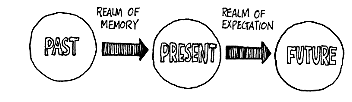
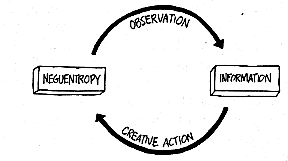
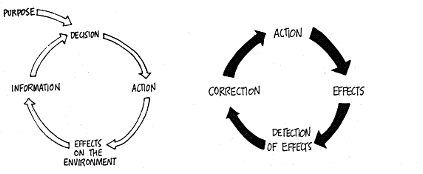
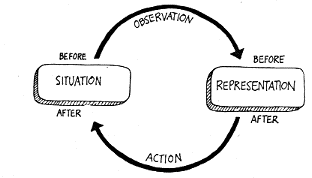
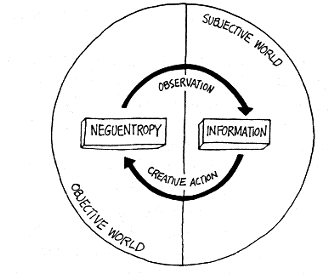
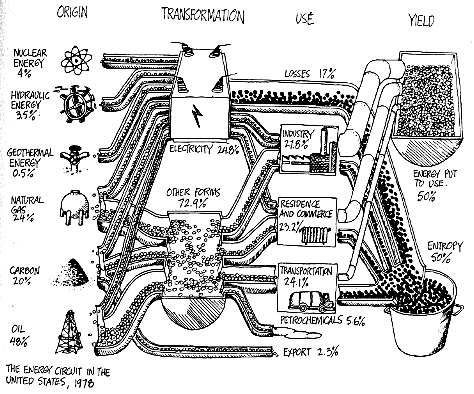
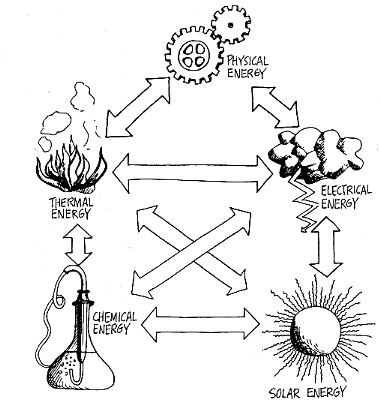
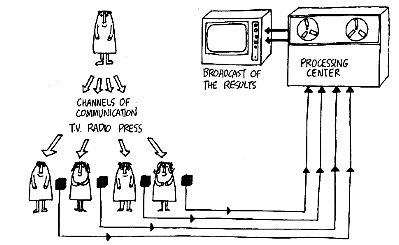
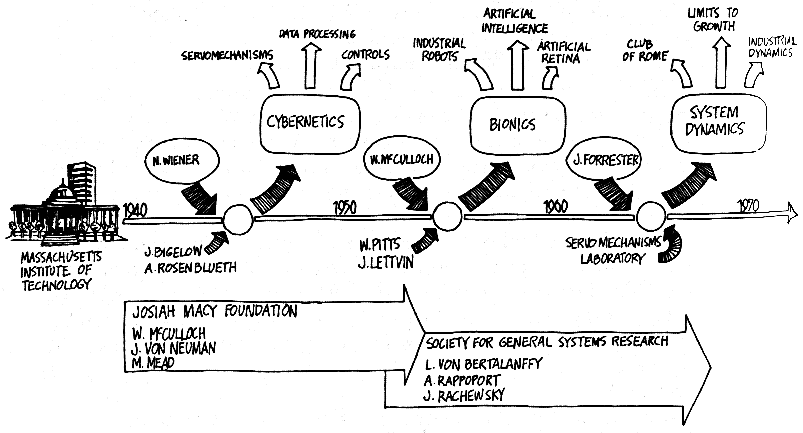
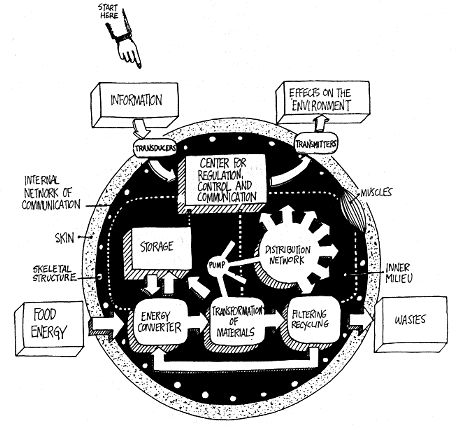
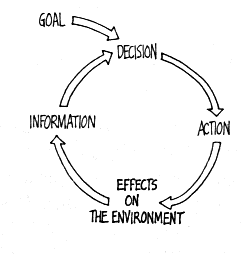
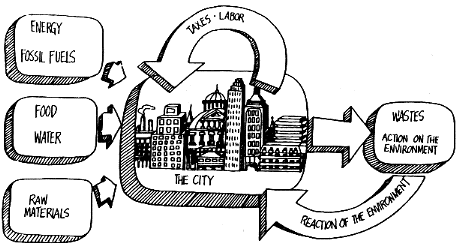
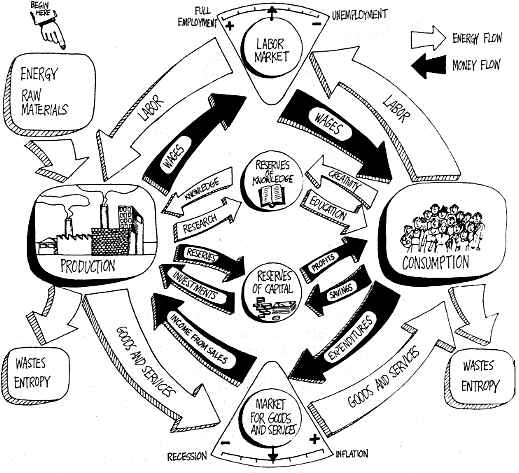
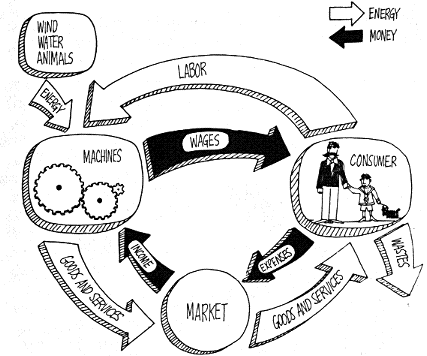
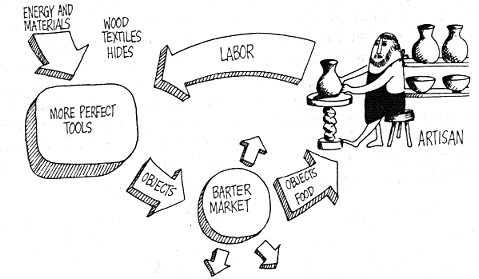
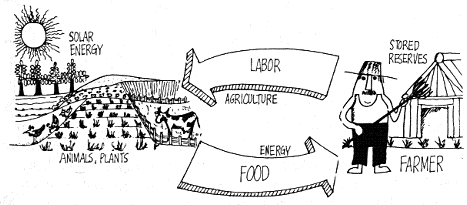
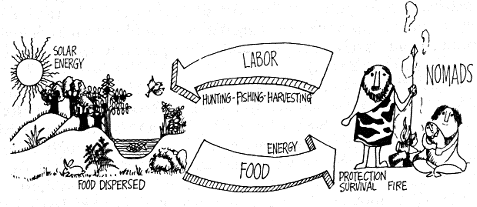
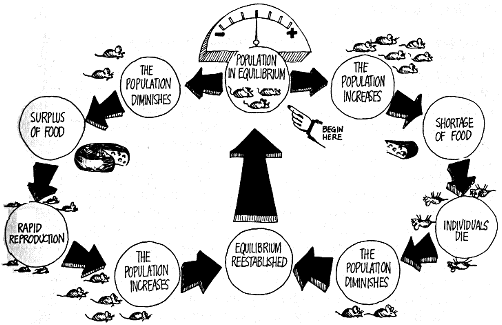
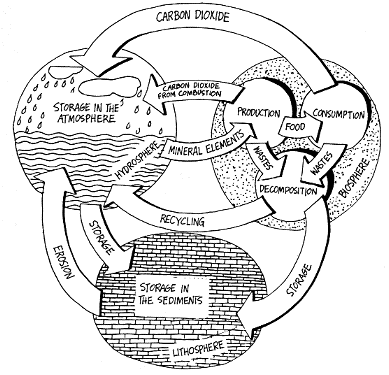
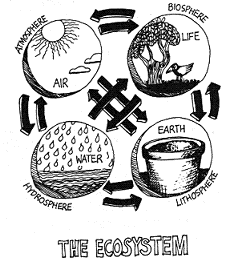
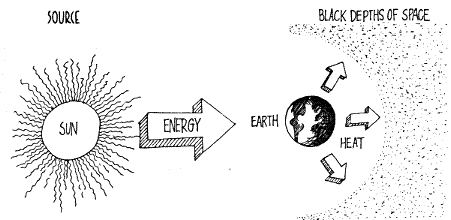
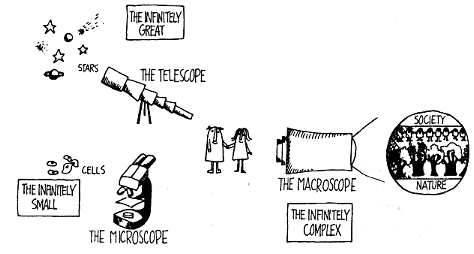
The Book "The Macroscope" by Joël de Rosnay (1979) features many fun illustrations and fun chapters, including one on Time and Evolution.
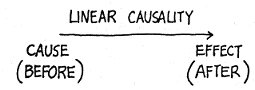
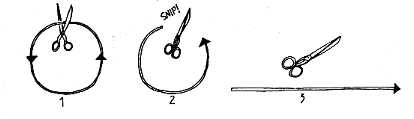
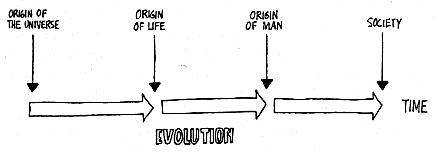
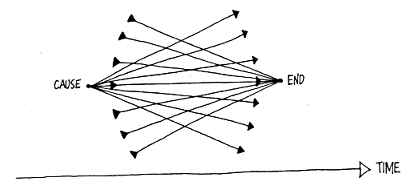
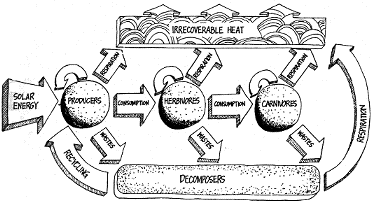
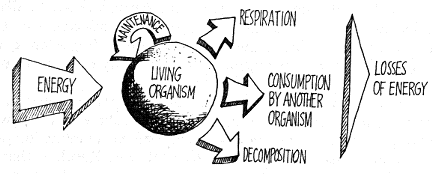
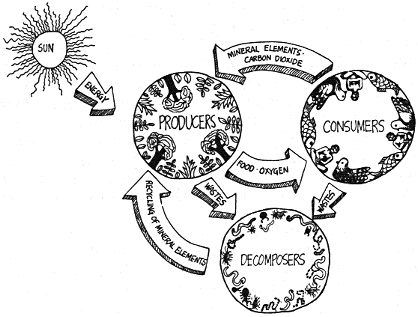
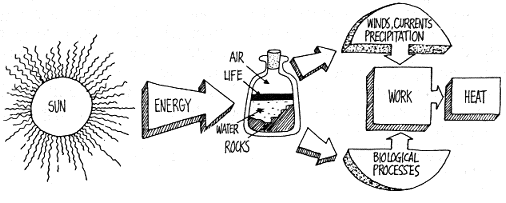
-
Mereology - (from the Greek μερος, ‘part’) is the theory of parthood relations: of the relations of part to whole and the relations of part to part within a whole.
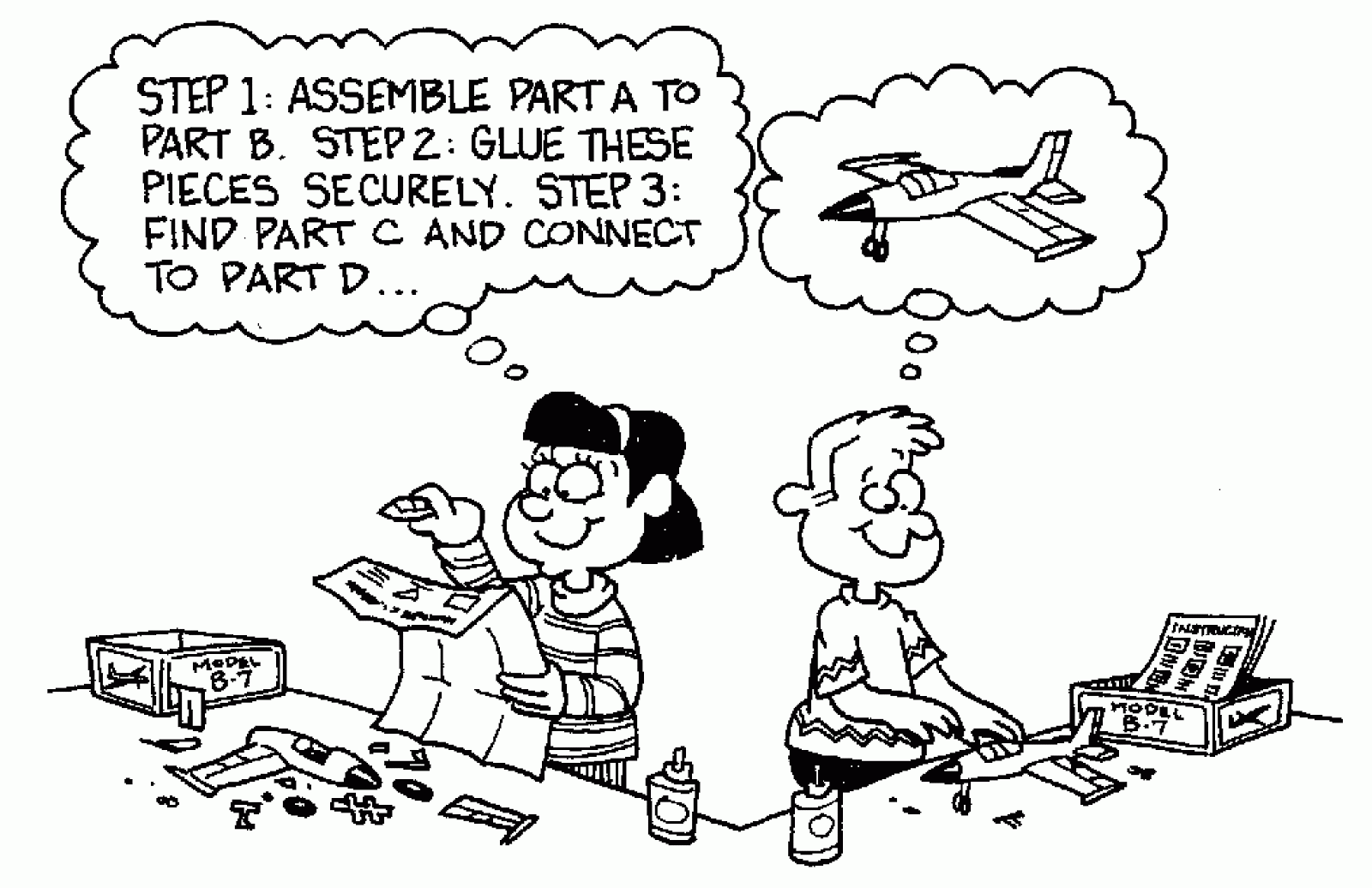
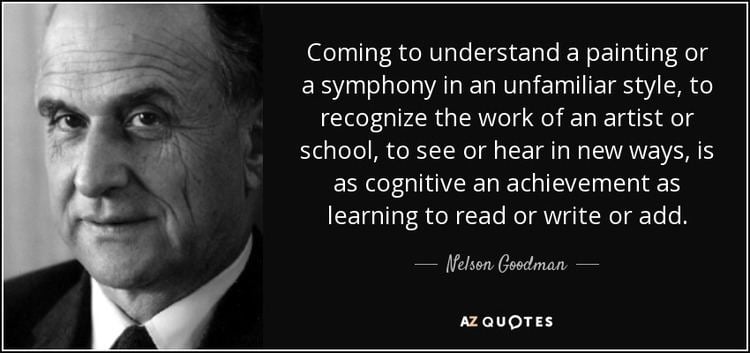
Nelson Goodman - american philosopher, known for his work on mereology & irrealism.
Mereology and Buddhism: Mereological Dependence in Buddhist Philosophy
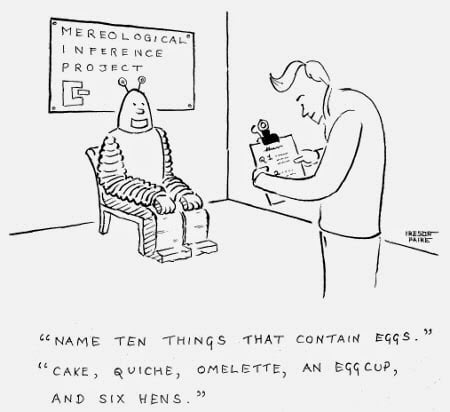
Top-down implies bottom-up
In Engaging Buddhism page 33, Jay Garfield points out that in Buddhist philosophy mereological dependency works both ways:
"As a consequence of the rejection of the ultimate existence of infinitesimal parts, the dependence relation between parts and wholes came to be recognized as a two-way street. Given that there is no ultimate decomposition of wholes into parts, the identification of any part as a part came to be seen as a matter of decompositional interest, just as the identification of a condition as an explanans is seen as dependent upon explanatory interests. For something to exist as a part of a whole, on this view, is to be dependent on the whole in two respects. First, if the whole does not exist, the part does not exist as the kind of thing it is when it figures in the whole.
To take Wittgenstein's example in Philosophical Investigations, a brake lever is only a brake lever, and not simply a metal rod, in the context of a car in which it so functions (§6). A biological organ, such as a heart, depends on an entire organism to develop, to function and to be an organ at all.
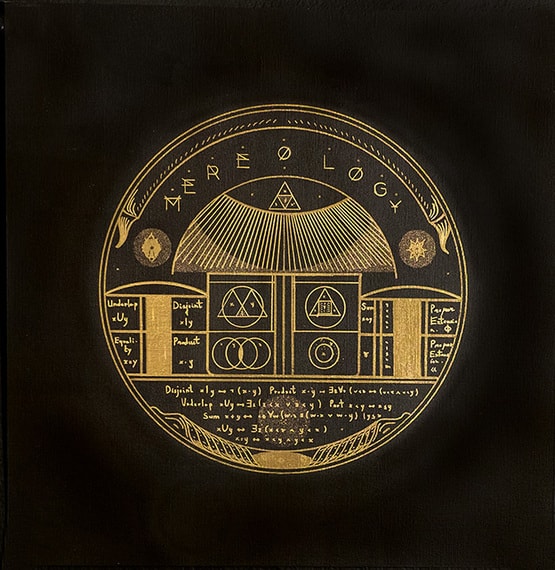
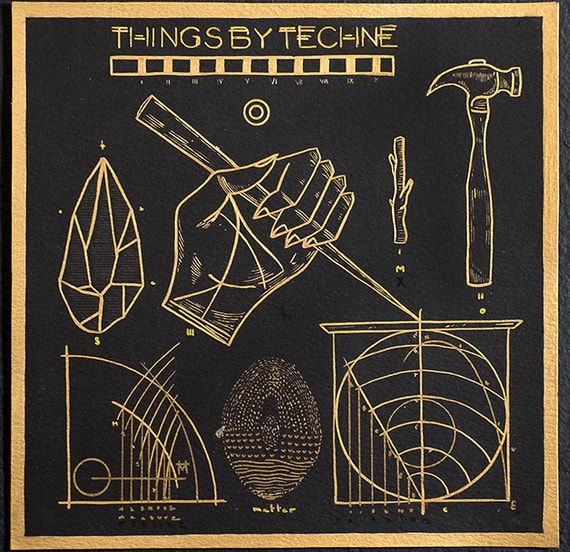
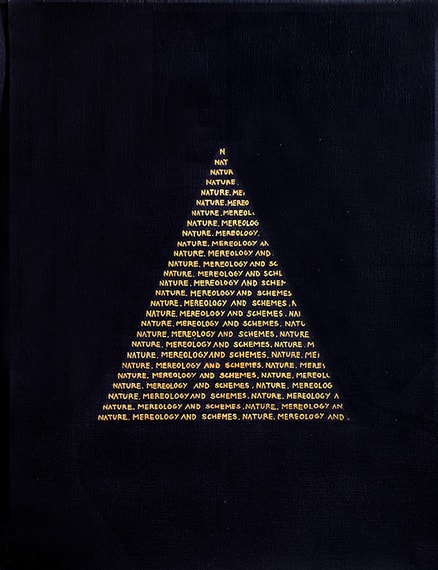
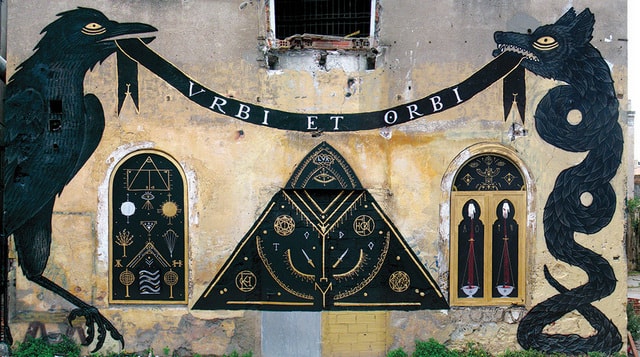
Second, decomposition can be accomplished in many ways. We might say that a memory chip is a part of a computer if we are decomposing it functionally, and that the parts of the chip are circuits, and so on. On the other hand, we might decompose the computer into adjacent 1 mm cubes, in which case the chip might turn out to be involved in several different parts, and not to be a part itself. If the whole in question is a solid volume, the cubes are parts; if it is a computer, the chip is a part, and 1 mm cubes are irrelevant. So, just as wholes depend on their parts, parts depend on their wholes.""Things, Mereology and Schemes" - Art by Leon Ka - (his Instagram stream)
"Leon Ka / aka Kafre (b. Barcelona, Spain 1980) is a Ph.D. student at Universitat de Barcelona with a dissertation on Metaphysical Relations: Ontological Dependence and Metaphysical Implication as well as a street artist that uses his art to make visual these seemingly abstract and esoteric concepts."
-
Thought as a System - by David Bohm (1994)
"Bohm maintains that thought is a system, in the sense that it is an interconnected network of concepts, ideas and assumptions that pass seamlessly between individuals and throughout society. If there is a fault in the functioning of thought, therefore, it must be a systemic fault, which infects the entire network. The thought that is brought to bear to resolve any given problem, therefore, is susceptible to the same flaw that created the problem it is trying to solve."
"Thought proceeds as if it is merely reporting objectively, but in fact, it is often coloring and distorting perception in unexpected ways. What is required in order to correct the distortions introduced by thought, according to Bohm, is a form of proprioception, or self-awareness. Neural receptors throughout the body inform us directly of our physical position and movement, but there is no corresponding awareness of the activity of thought. Such an awareness would represent psychological proprioception and would enable the possibility of perceiving & correcting the unintended consequences of the thinking process."
"In his book On Creativity, quoting the work of Korzybski, Bohm expressed the view that "metaphysics is an expression of a world view" and is "thus to be regarded as an art form, resembling poetry in some ways and mathematics in others, rather than as an attempt to say something true about reality as a whole."
(source: wikipedia)"Thought is constantly creating problems that way and then trying to solve them. But as it tries to solve them it makes it worse because it doesn't notice that it's creating them, and the more it thinks, the more problems it creates." - David Bohm
-
Neti Neti (नेति नेति) is a Sanskrit expression which means "not this, not that", or "neither this, nor that". It is found in the Upanishads and constitutes an analytical meditation helping a person to understand the nature of Brahman by first understanding what is not Brahman.
Neti Neti as understood through the quadrilemma articulated by Kinhide Mushakoji (Global Issues and Interparadigmatic Dialogue; essays on multipolar politics, 1988):
- this
- that (namely not this)
- this and that (namely this and not this)
- neither this nor that
-
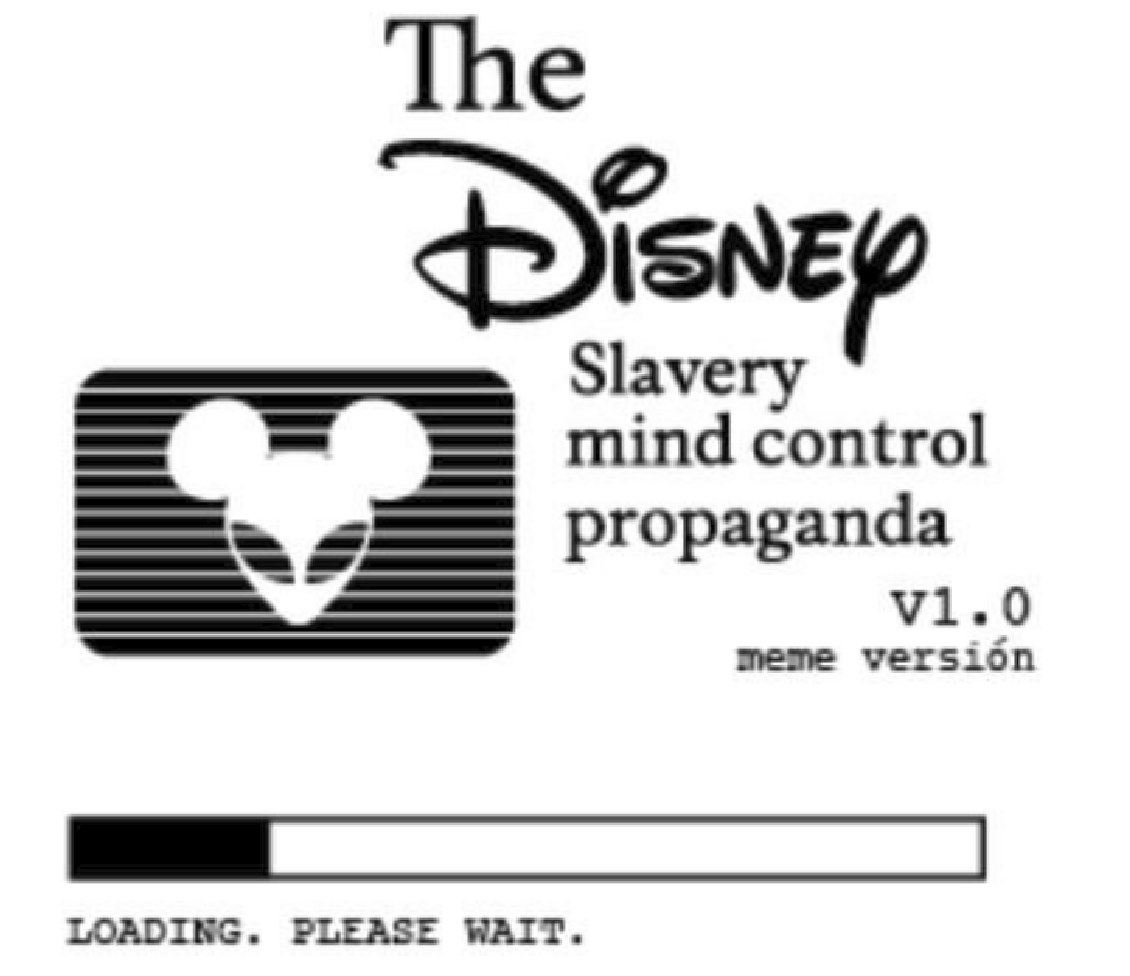
"Guerrilla Ontology is the basic technique of all my books. Ontology is the study of being; the guerrilla approach is to so mix the elements of each book that the reader must decide on each page 'How much of this is real and how much is a put-on?'" - Robert Anton Wilson, The Illuminati Papers (1980)

-
"Whereof one cannot speak, thereof one must pass over in silence"
- Ludwig Wittgenstein (Tractatus Logico-Philosophicus, 1922)."Keep quiet. Don't touch the thoughts. Let them be."
- H. W. L. Poonja -
Fascinating research essays by Anthony Judge:
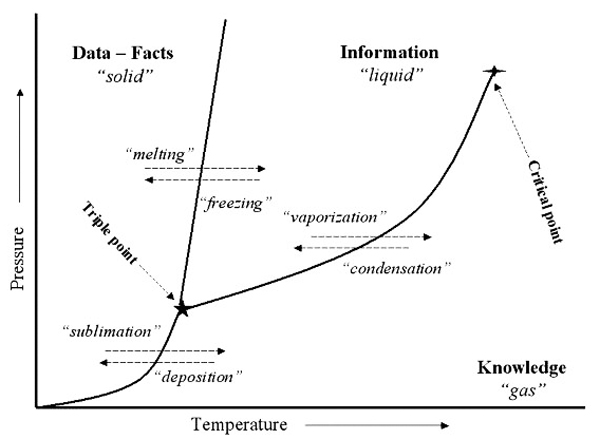
From ECHELON to NOLEHCE - enabling a strategic conversion to a faith-based global brain (2007)
#KM #Complexity #Philosophy #Magic #Politics #Economics #Cryptocracy #Military
-
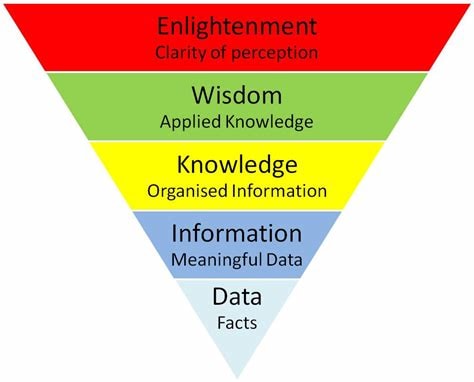
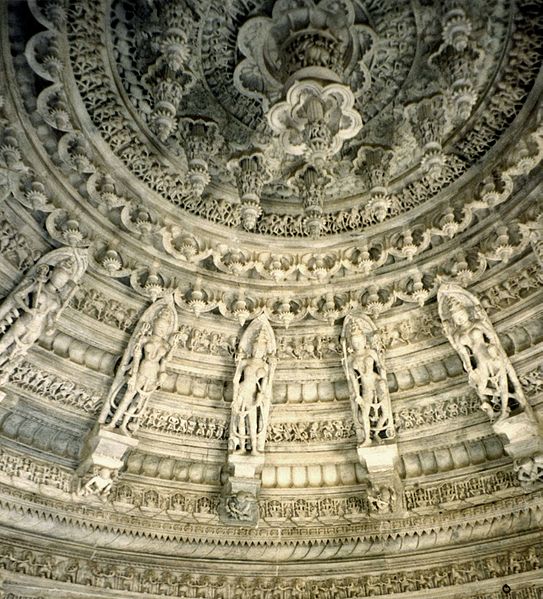
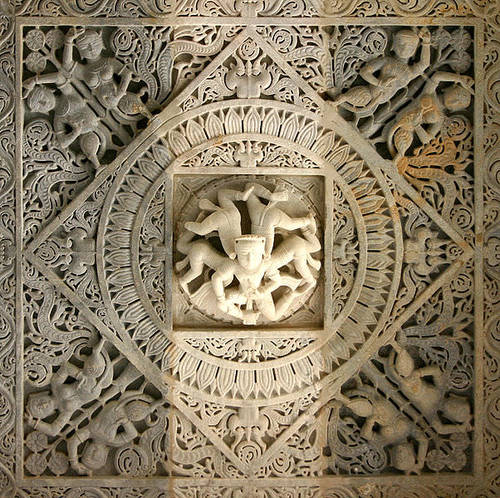
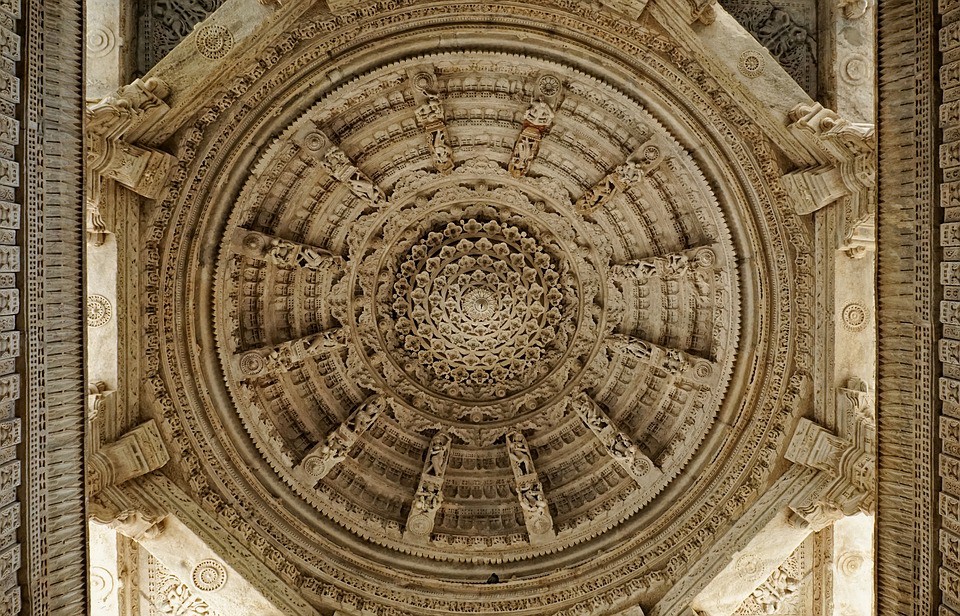
According to Jain epistemology, "knowledge is the essence of the soul. This knowledge is masked by the karmic particles. As the soul obtains knowledge through various means, it does not generate anything new. It only shreds off the knowledge-obscuring karmic particles. According to Jainism, consciousness is a primary attribute of Jīva (soul) and this consciousness manifests itself as darsana (perception) and jnana (knowledge)." (wikipedia)
Further Links:
- Presentation: Jain Philosophy
- Paper: An Epistemology of Jainism: A Critical Study
- Post: The Theory of Knowledge in Jainism
- Paper: Basic Jaina Epistemology (unpaywalled)
- Paper: Theories of knowledge and the experience of being: Jainism’s ontology of kinship
- Post: Types of knowledge in Janism
- Talk: Jaina Logic and Epistemology. Is This How it All Began? - talk by Prof Balcerowicz
- Presentation: Jain Philosophy
-
Talk by Jeremy Lent on "Cultural Mindfulness" - at the Stanford University "Contemplation By Design Summit" 2018.
#Comment: Mr.Lent's talk contains interesting notions, but overall its way to heavy on "we are so very progressive, post-dualist, post-materialist, post-post, woke people" virtue signaling touchy-feely boilerplate bla - indicative of current anglo eco culture. For my taste, he could shrink the talk to 15min and include a healthy does of high weirdness and comedy.
-
Book: Dreaming The Future: How Our Dreams Prove Psychic Ability Is Real, And Why It Matters - by Bruce Siegel (discussion). Reminiscent of the classic An Experiment with Time - by J.W.Dunne (1927) (full text)
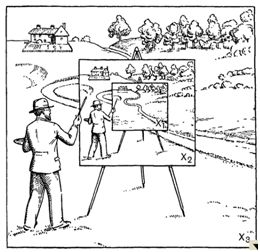
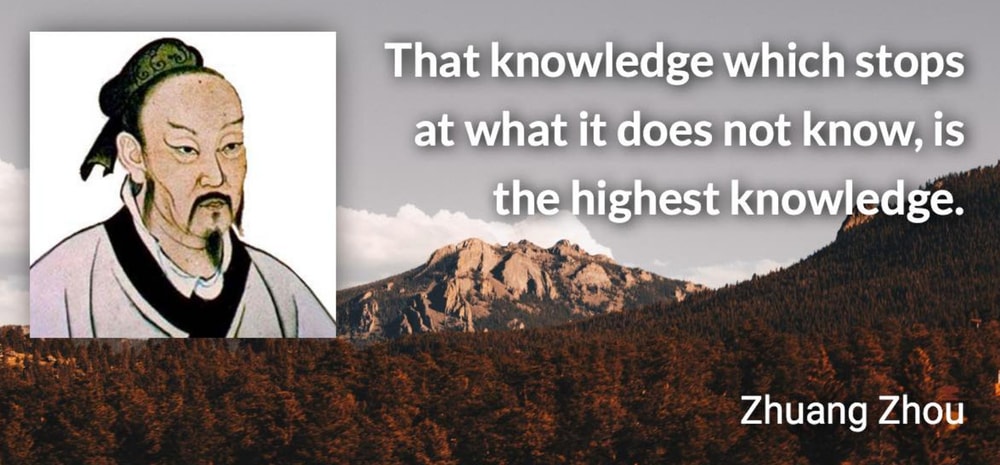
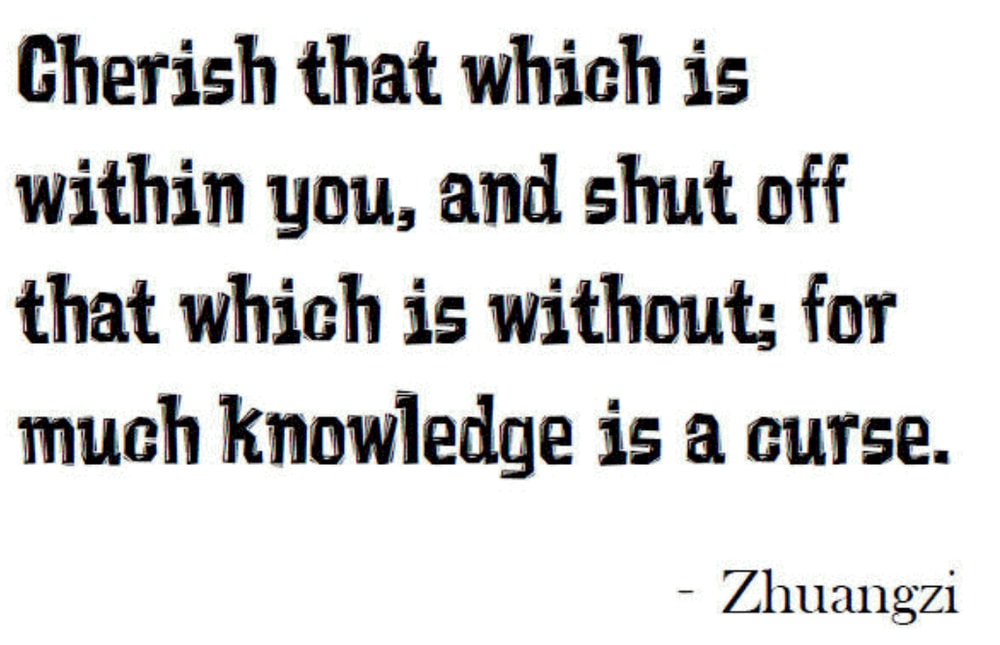
“Once I dreamed I was a butterfly, and now I no longer know whether I am Chuang Tzu, who dreamed I was a butterfly, or whether I am a butterfly dreaming that I am Chuang Tzu.” — Zhuangzi
-
“If one should desire to know whether a kingdom is well governed, if its morals are good or bad, the quality of its music will furnish the answer.” - Confucius
-
“The welfare of humanity is always the alibi of tyrants”
- from Homage to an Exile by Albert Camus, 1955“At the heart of all beauty lies something inhuman.”
- The Myth of Sisyphus by Albert Camus, 1942 -
Notes on Pattern formation in Nature and other peculiar ideas - by Jaap Bax
-
"Aldous Huxley suggested that bureaucracies behave stupidly because, unlike its individual members, a bureaucracy nevers sleeps and therefore never benefits from a fresh start in the morning of the mind. Sleep deprivation in most mammals promotes aggression as well as stupidity. The cosmopolitical headline here: International Sleep Disorder Causing Epidemic Dumbness and Hostility." (via, via)
-
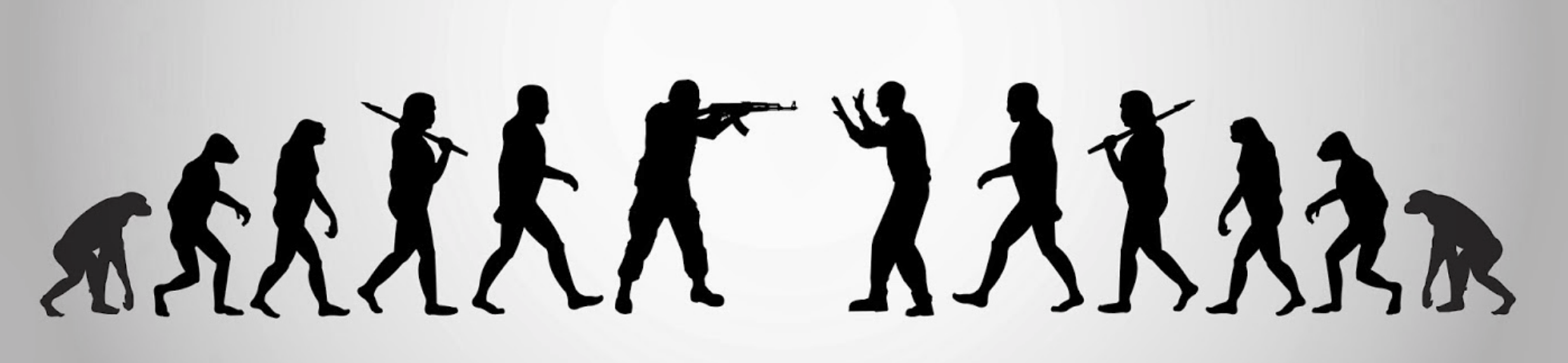
Cosmopolitanism "is the ideology that all human beings belong to a single community, based on a shared morality" (Wikipedia)
-
"Art Meets Science & Spirituality in a Changing Economy" (Ilya Prigogine, John Cage)
"Art Meets Science & Spirituality in a Changing Economy" (Dalai Lama, David Bohm)
-
Notes on the Book The End of Certainty - by Ilya Prigogine (1997)
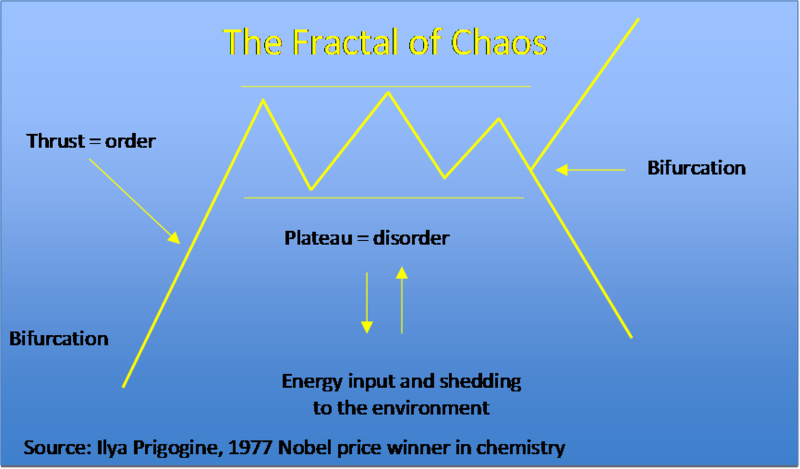
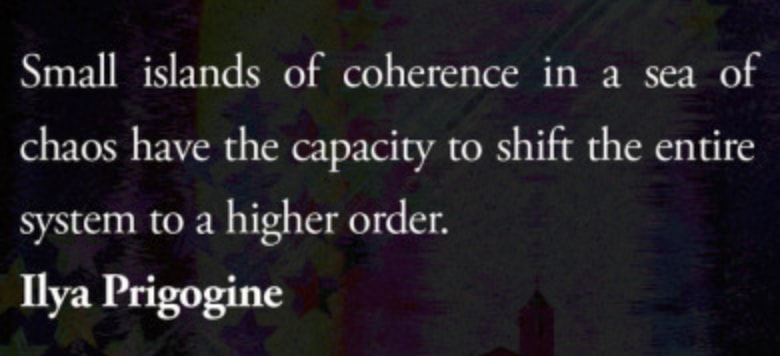
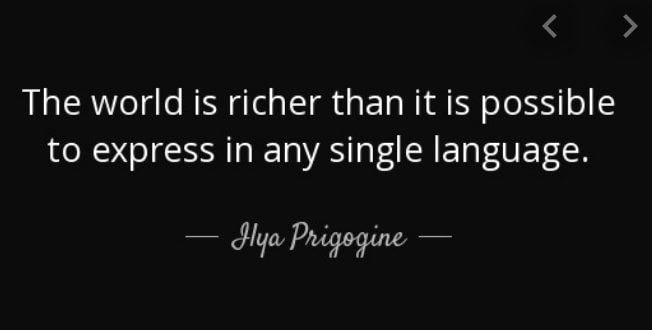
Interesing summery of the book by Mona M.Abd El-Rahman:
Prigogine’s view on cosmology (the more widely accepted Big Band Theory and The Steady State Theory) agrees with that of the Indian cosmologist Jayant Vishnu Narlikar, who wrote “Astrophysicists of today who hold the view that the ‘ultimate cosmological problem’ has been more or less solved may well be in for a few surprises before this century is out”.
“Many scientists have been willing to explain this singularity (the big bang) in terms of the “hand of God” or the triumph of the biblical story or creation.”
“In accepting that the future is not determined, we come to the end of certainty” says Prigogine. He does not believe, however, that this is an admission of defeat for the human mind. He asserts that the opposite is true.
He views the universe as a giant thermodynamical system far from equilibrium, where we find fluctuations, instabilities, and evolutionary patterns at all levels.
Some great quotes from the end of the book: For Einstein, science was a means of avoiding the turmoil of everyday existence. He compared scientific activity to the “longing that irresistibly pulls the town-dweller away from his noisy, cramped quarters and toward the silent high mountains. Einstein’s view of the human condition was profoundly pessimistic.
Science began with the Promethean affirmation of the power or reason, but it seemed to end in alienation – a negation of everything that gives meaning to human life.
Einstein repeatedly stated that he had learned more from Fyodor Dostoyevsky than from any physicist. In a letter to Max Born in 1924, he wrote that if he were forced to abandon strict causality (classical physics and relativity), he “would rather be a cobbler, or even an employee in a gaming house, than a physicist”. In order to be of any value at all, physics has to satisfy his need to escape the tragedy of the human condition. “And yet and yet”, when Einstein was confronted by Godel with the extreme consequences of his quest, the denial of the very reality that physics endeavors to describe, Einstein recoiled. (Godel took Einstein’s Theory of Relativity and classical physics and showed that past and future are equivalent and that it is possible to travel back in time).
Prigogine has tried to follow a narrow path between two conceptions that both lead to alienation: a world ruled by deterministic laws, which leaves no place for novelty, and a world ruled by a dice-playing God, where everything is absurd, acausal, and incomprehensible.
Prigogine ends his book with the following words: “As we follow along the narrow path, we discover that a large part of the concrete world around us has until now “slipped through the meshes of the scientific net”, to use Whitehead’s expression. We face new horizons at this privileged moment in the history of science”.From Wikipedia, on "The End of Certainty":
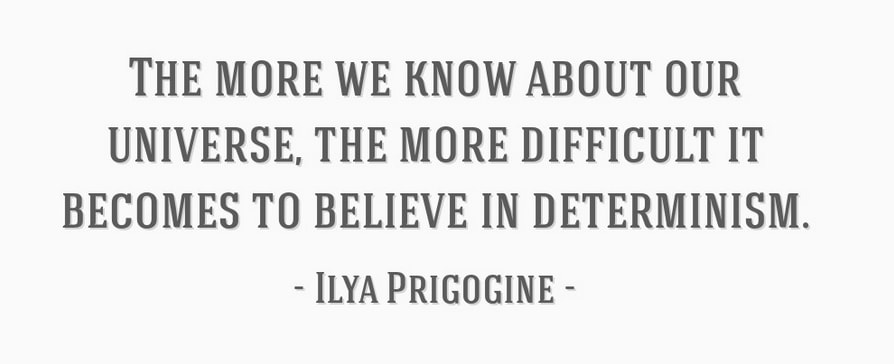
"In The End of Certainty, Prigogine contends that determinism is no longer a viable scientific belief: "The more we know about our universe, the more difficult it becomes to believe in determinism." This is a major departure from the approach of Newton, Einstein and Schrödinger, all of whom expressed their theories in terms of deterministic equations. According to Prigogine, determinism loses its explanatory power in the face of irreversibility and instability."
An interview with Ilya Prigogine by Yiannis Zisis
Ilya Prigogine – On Dualist Knowledge
Dissipative system (wikipedia)
"A thermodynamically open system which is operating out of, and often far from, thermodynamic equilibrium in an environment with which it exchanges energy and matter. A tornado may be thought of as a dissipative system."
#Science #Complexity #Generative #Regenerative #Religion #Philosophy #Book