tag > Space
-
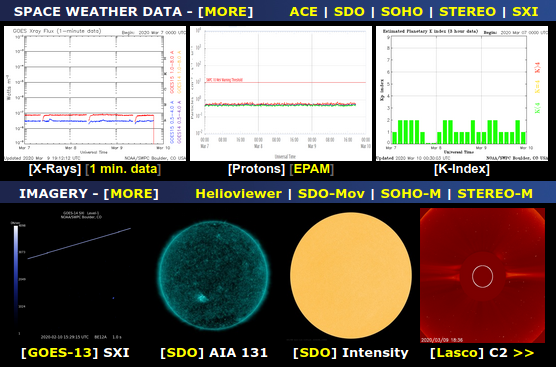
SolarHam is a website all about the Sun and how it affects Earth. It is also an Amateur (Ham) Radio website. SolarHam is routinely updated with breaking news, sometimes hours before other Space News websites. You can trust SolarHam.com for the most up to date and accurate solar information on the internet. The purpose of the website is to provide real time solar news, as well as data from various sources, all located in one spot for easy navigation.
-
Hydrogen made using rust (popular mechanics - alt: newatlas)

In the search to find an environmentally friendly alternative for fossil fuels, scientists from the Tokyo University of Science developed a new technique for safely and efficiently producing 25 times more hydrogen fuel by using a specific type of rust and light source.
-
Organic molecules discovered by Curiosity Rover consistent with early life on Mars
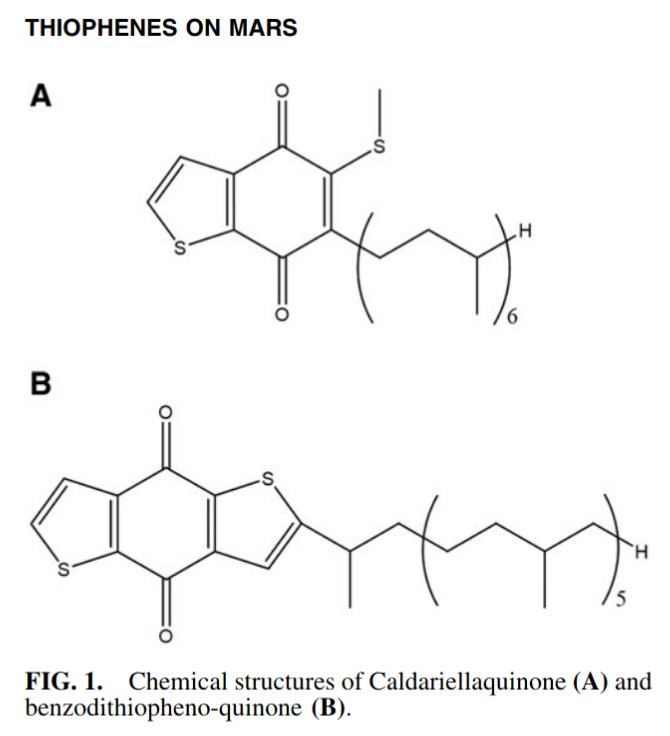
Organic compounds called thiophenes were recently discovered on Mars, and a new study published in the journal Astrobiology thinks their presence would be consistent with the presence of early life on Mars. Phys.Org reports: "We identified several biological pathways for thiophenes that seem more likely than chemical ones, but we still need proof," Washington State University astrobiologist Dirk Schulze-Makuch said. "If you find thiophenes on Earth, then you would think they are biological, but on Mars, of course, the bar to prove that has to be quite a bit higher."
-
Protein discovered inside a meteorite

Model of the 2320 hemolithin molecule after MMFF energy minimization In prior research, scientists have found organic materials, sugars and some other molecules considered to be precursors to amino acids in both meteorites and comets—and fully formed amino acids have been found in comets and meteorites, as well. But until now, no proteins had been found inside of an extraterrestrial object. In this new effort, the researchers have discovered a protein called hemolithin inside of a meteorite that was found in Algeria back in 1990.
-
Telescopes detect 'biggest explosion since Big Bang' (BBC)
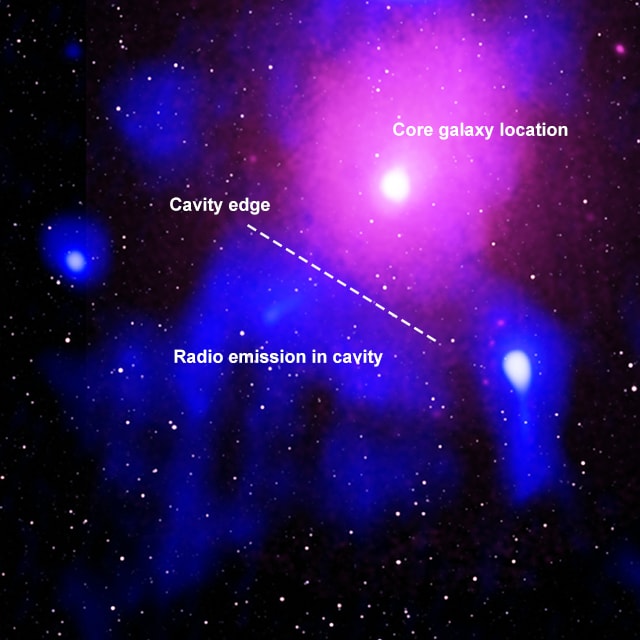
Scientists have detected evidence of a colossal explosion in space - five times bigger than anything observed before. The huge release of energy is thought to have emanated from a supermassive black hole some 390 million light years from Earth. The eruption is said to have left a giant dent in the Ophiuchus galaxy cluster. Researchers reported their findings in The Astrophysical Journal. "I've tried to put this explosion into human terms and it's really, really difficult," co-author Melanie Johnston-Hollitt told BBC News.
-
Scientists Find The First-Ever Animal That Doesn't Need Oxygen to Survive
Scientists have just discovered that a jellyfish-like parasite doesn't have a mitochondrial genome - the first multicellular organism known to have this absence. That means it doesn't breathe; in fact, it lives its life completely free of oxygen dependency.
-
Scientists discover virus with no recognizable genes (Science)
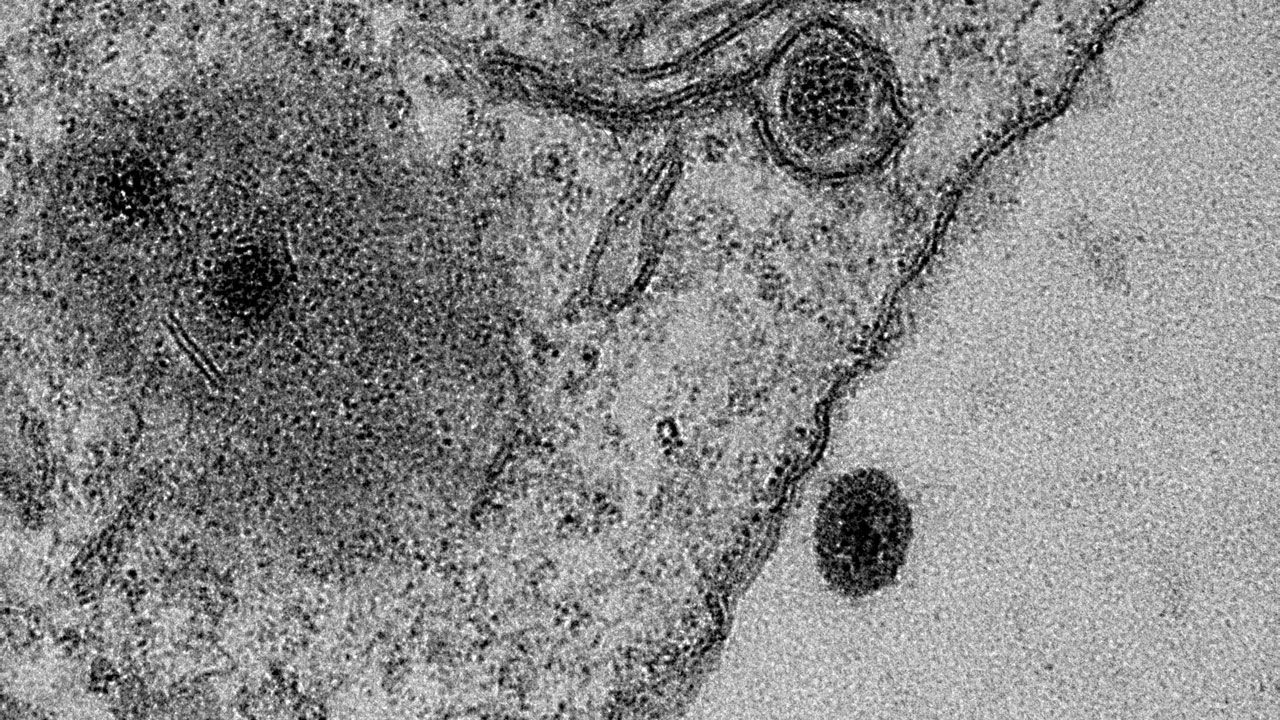
The Yaravirus (dark smudges) infects amoebae and has all novel genes. -
You thought quantum mechanics was weird: check out entangled time (aeon)
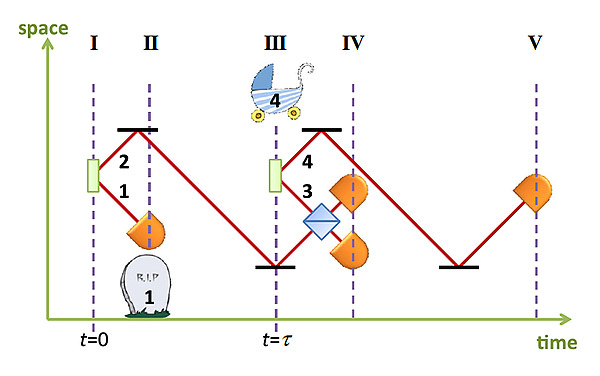
Up to today, most experiments have tested entanglement over spatial gaps. The assumption is that the ‘nonlocal’ part of quantum nonlocality refers to the entanglement of properties across space. But what if entanglement also occurs across time? Is there such a thing as temporal nonlocality? The answer, as it turns out, is yes.
-
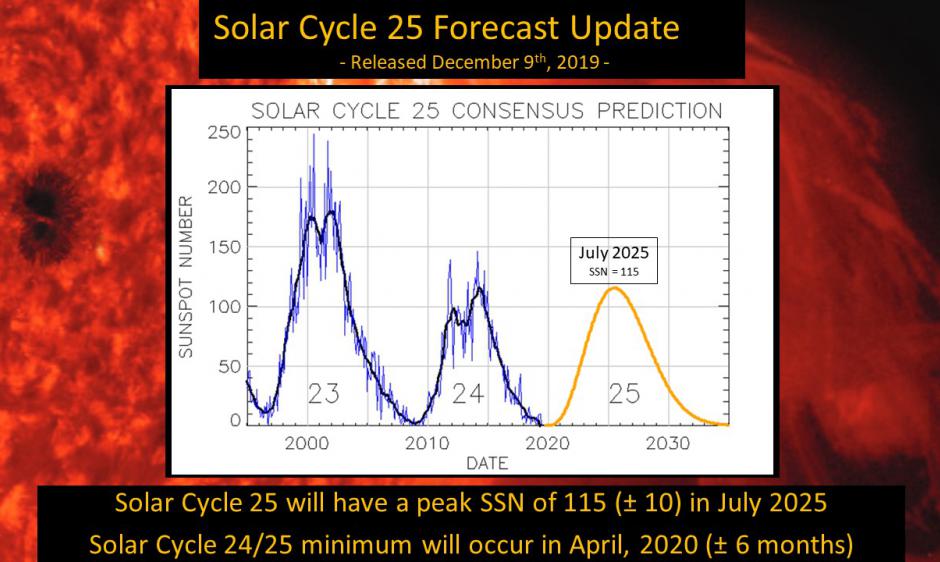
Solar Cycle 25 Forecast (NOAA)
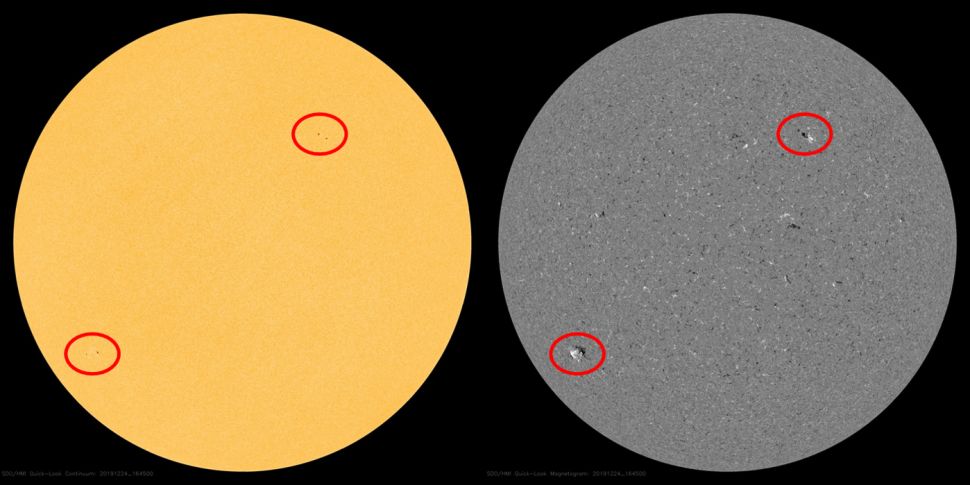
First new sunspots in 40 days herald coming solar cycle (space.com)
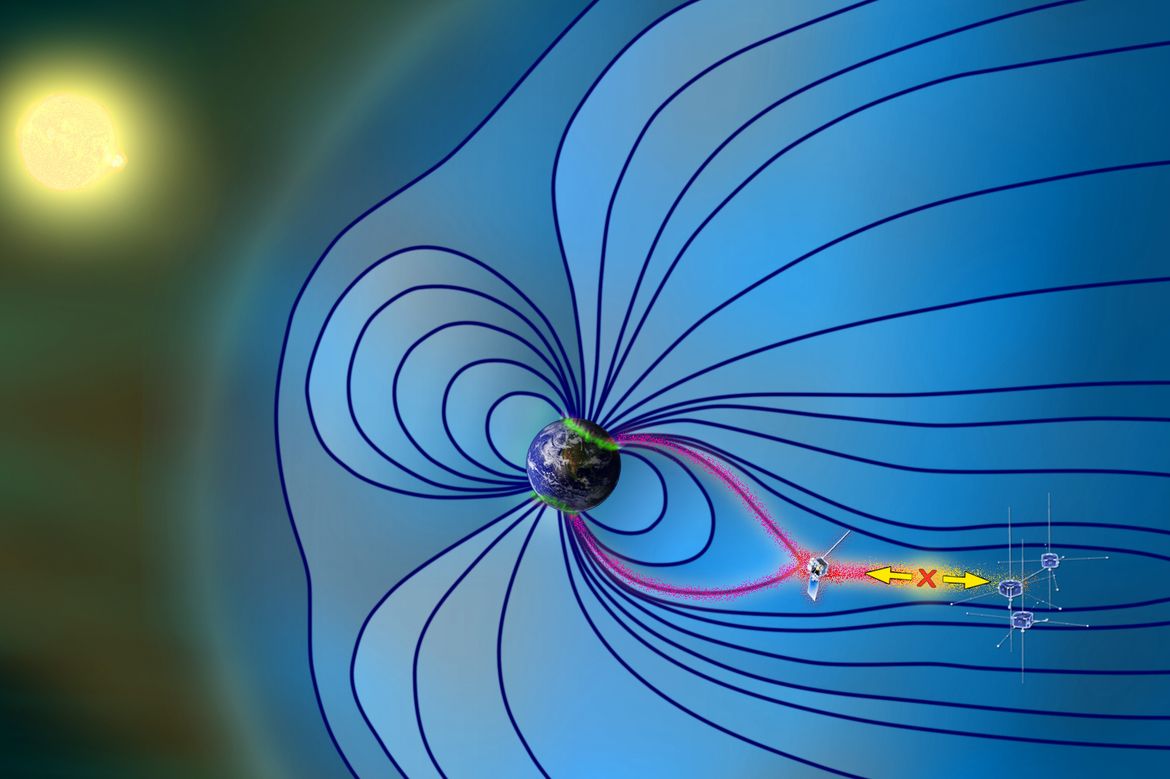
Researchers discover a new source of space weather – too close to home
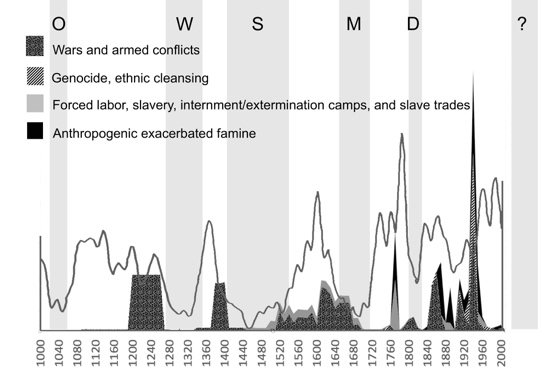
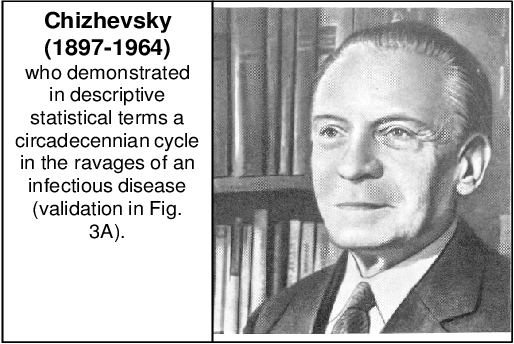
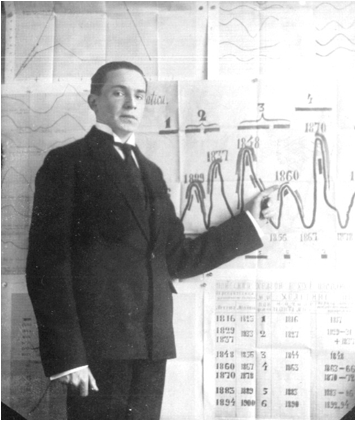
Alexander Chizhevsky (1897 - 1964) was a Soviet-era interdisciplinary scientist, a biophysicist who founded "heliobiology" (study of the sun's effect on biology) and "aero-ionization" (study of effect of ionization of air on biological entities). He also was noted for his work in "cosmo-biology", biological rhythms and hematology." He may be most notable for his use of historical research techniques (historiometry) to link the 11-year solar cycle, Earth’s climate and the mass activity of peoples.
Book: The Role of the Sun in Climate Change - by Douglas V. Hoyt & Kenneth H. Schatten (Oxford University Press, 2007) (PDF)
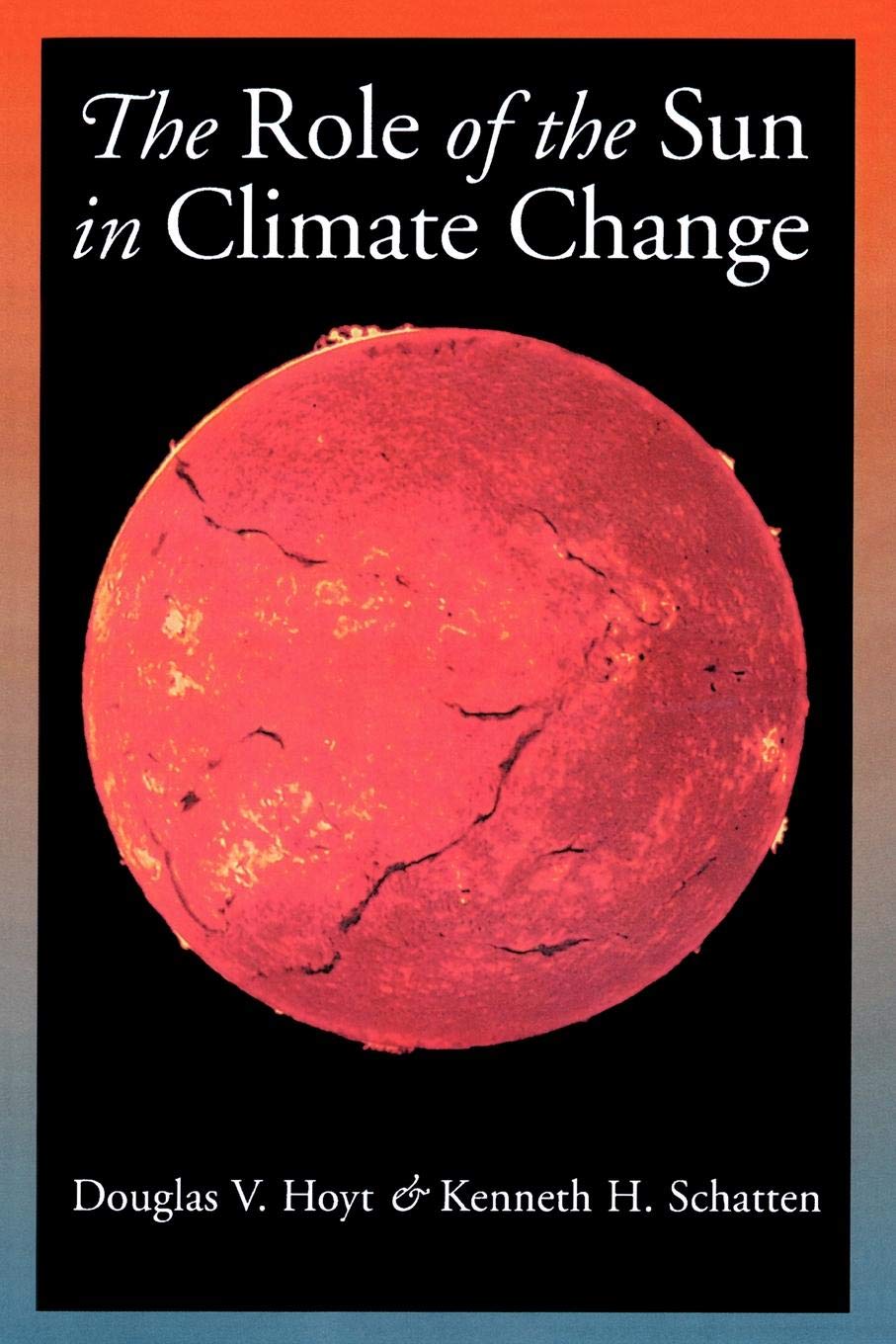
Book starts with this paragraph: "About 400 years before the birth of Christ, near Mt. Lyscabettus in ancient Greece, the pale orb of the sun rose through the mists. According to habit, Meton recorded the sun’s location on the horizon. In this era when much remained to be discovered, Meton hoped to find predictable changes in the locations of sunrise and moonrise. Although rainy weather had limited his recent observations, this foggy morning he discerned specks on the face of the sun, the culmination of many such blemishes in recent years. On a hunch, Meton began examining his more than 20 years of solar records. These seemed to confirm his belief: when the sun has spots, the weather tends to be wetter and rainier."
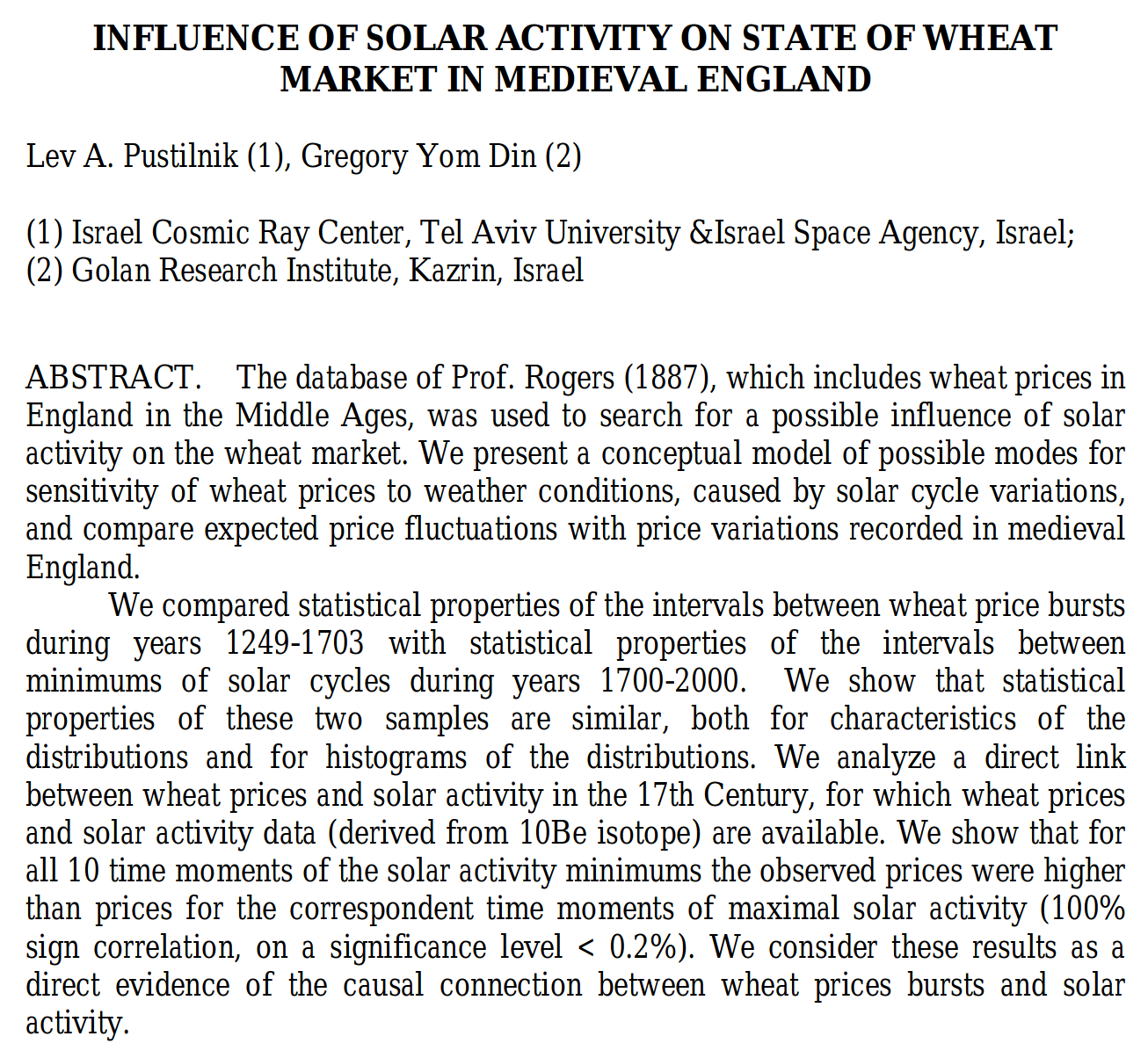
Influence Of Solar Activity On State Of Wheat Market In Medieval England - research by Lev A. Pustilnik & Gregory Yom Din
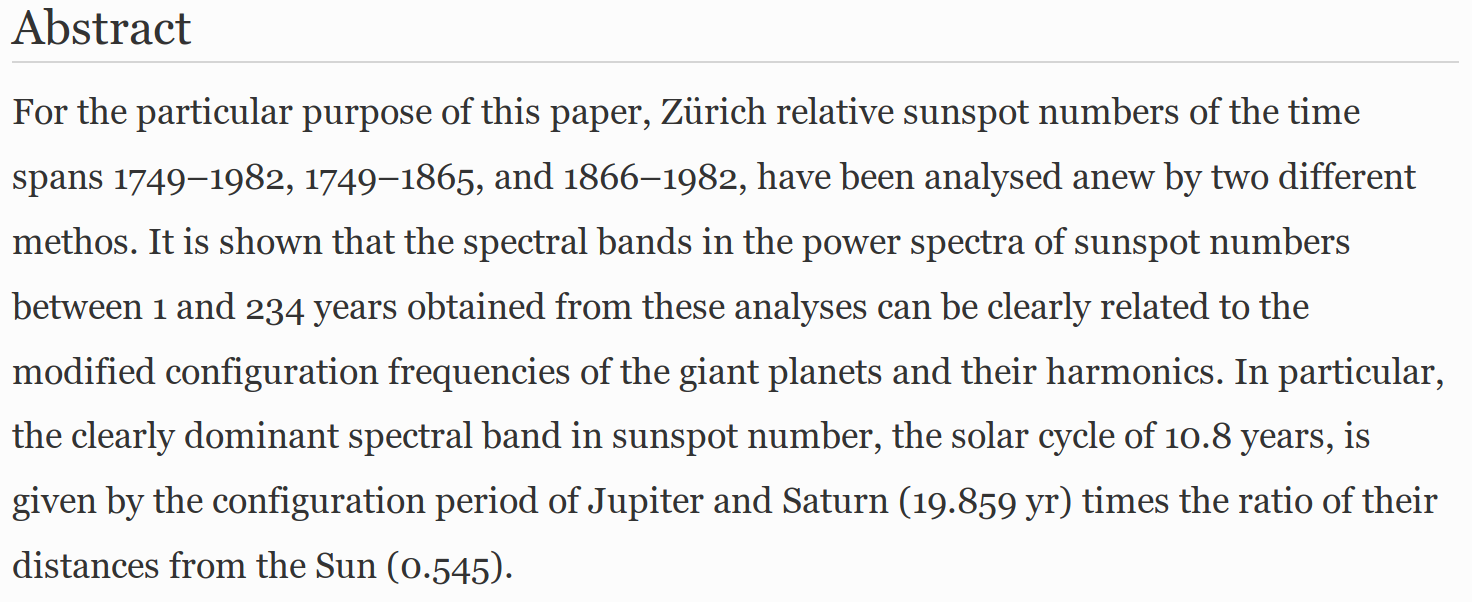
A possible relationship between spectral bands in sunspot number and the space-time organization of our planetary system - by Schwentek & Elling (1984).
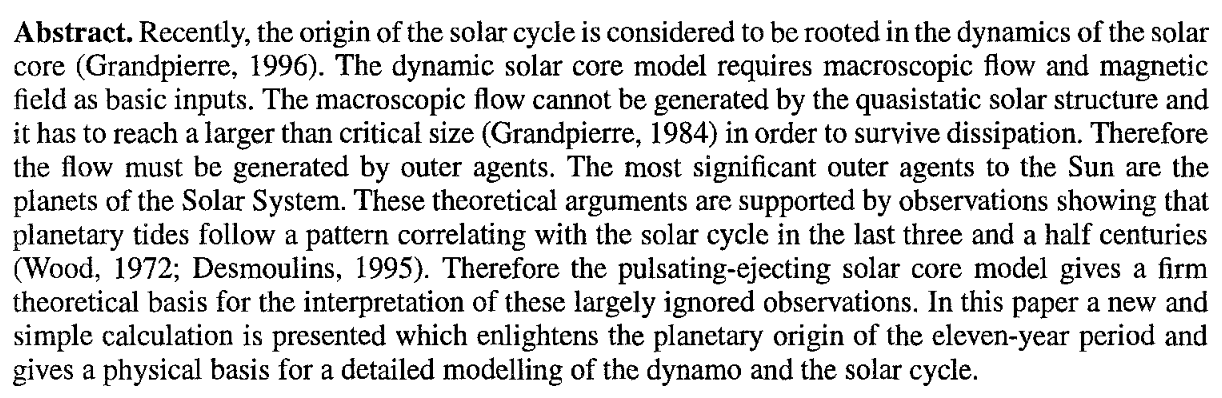
On the origin of solar cycle periodicity - by Attila Grandpierre (1996)
-
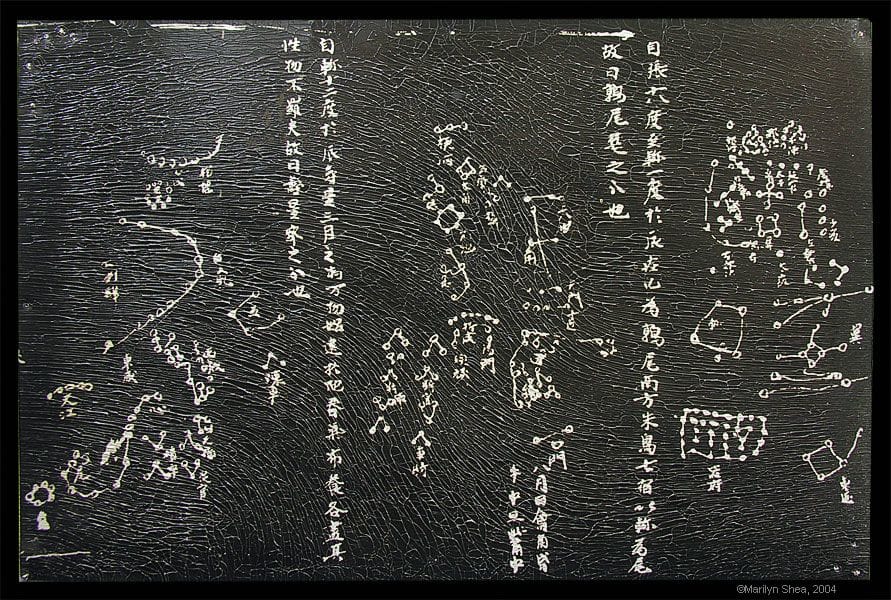
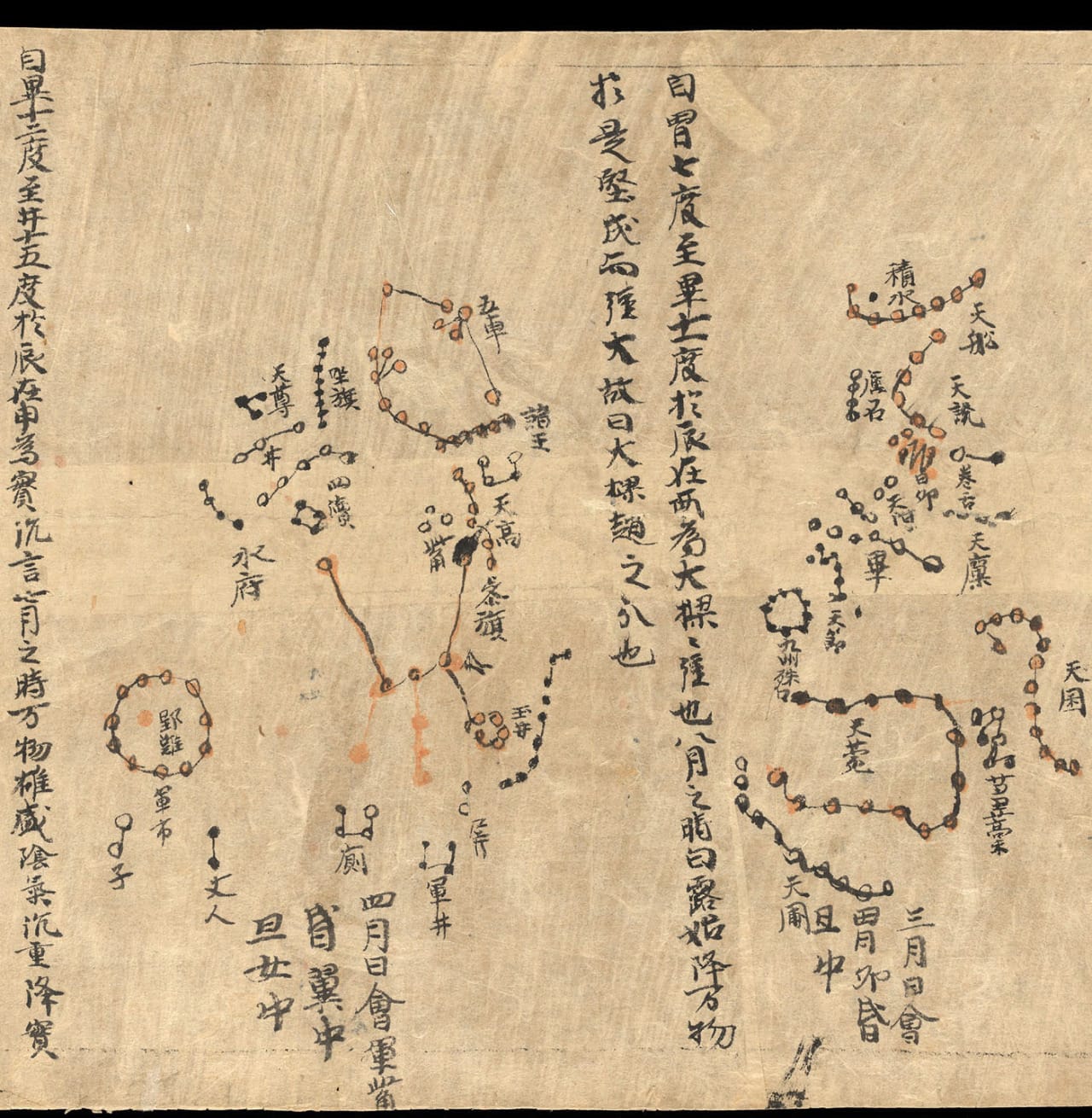
The Dunhuang Star Chart is one of the first known graphical representations of stars from ancient Chinese astronomy, dated to the Tang Dynasty (618–907). A recent analysis notes the atlas marks positions of over 1,300 stars and outlines 257 Chinese star groups. The star positions in the hand drawn atlas were found to be accurate to within a few degrees.
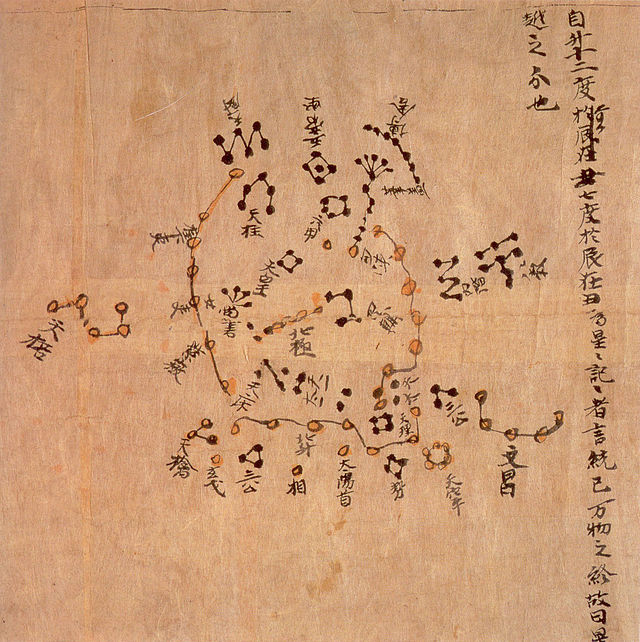
This example showing the north polar region, a very recognizable Big Dipper, part of the modern constellation Ursa Major, lies along the chart bottom. The Dunhuang Star Map was found in the Dunhuang Mogao Grotto(敦煌莫高窟) in a cache of manuscripts in a covered alcove. At that time, the Grottos were all but abandoned and the monk who found them was selling manuscripts piece by piece to support himself and what was left of the monastary. In 1907, Aurel Stein and Paul Pelliot bought over 9000 objects and manuscripts from him. They sent trunks of items to Beijing to try to alert the government to the importance of the find, but most of the items disappeared into private collections. The rest were sent to Europe. The Dunhuang Star Map is now housed in the International Dunhuang Project at the British Library in London, United Kingdom.
The star map has recently been dated back to the 700s. Earlier it was thought to date to the 900s. The map contains 1,350 stars in thirteen sections. One of the most interesting features of the charts is that they used two different methods to display the stars. One was a cylindrical projection for the stars around the horizon. When you flatten a curved object it changes the relationship among the objects on the surface. It is like a Mercator projection first seen in Europe in 1568.

Imagine cutting a ball to try to flatten it. You would have large segments of empty space between the slices of ball. On a cylindrical map, the lines of the ball are straightened artificially to maintain some relationship between the objects on the ball. This works fairly well on the equator or in the case of the sky, the horizon. When you get to the poles, the distances of the flattened slices are extremely distorted. To solve the problem, on the Dunhuang Star Map they used a circular polar projection method to draw the region around Polaris. That method, if used alone, would have distorted the measurements at the horizon.
What was it doing in Dunhuang? Usually such materials would be found in imperial archives. It is speculation, but it could have been used to guide travelers along the Silk Road. Dunhuang was the last major resting place before starting on the journey on the north or south routes across the Taklamakan desert to the west. (text source)

Related from contemporary science: The oldest extant star chart
-
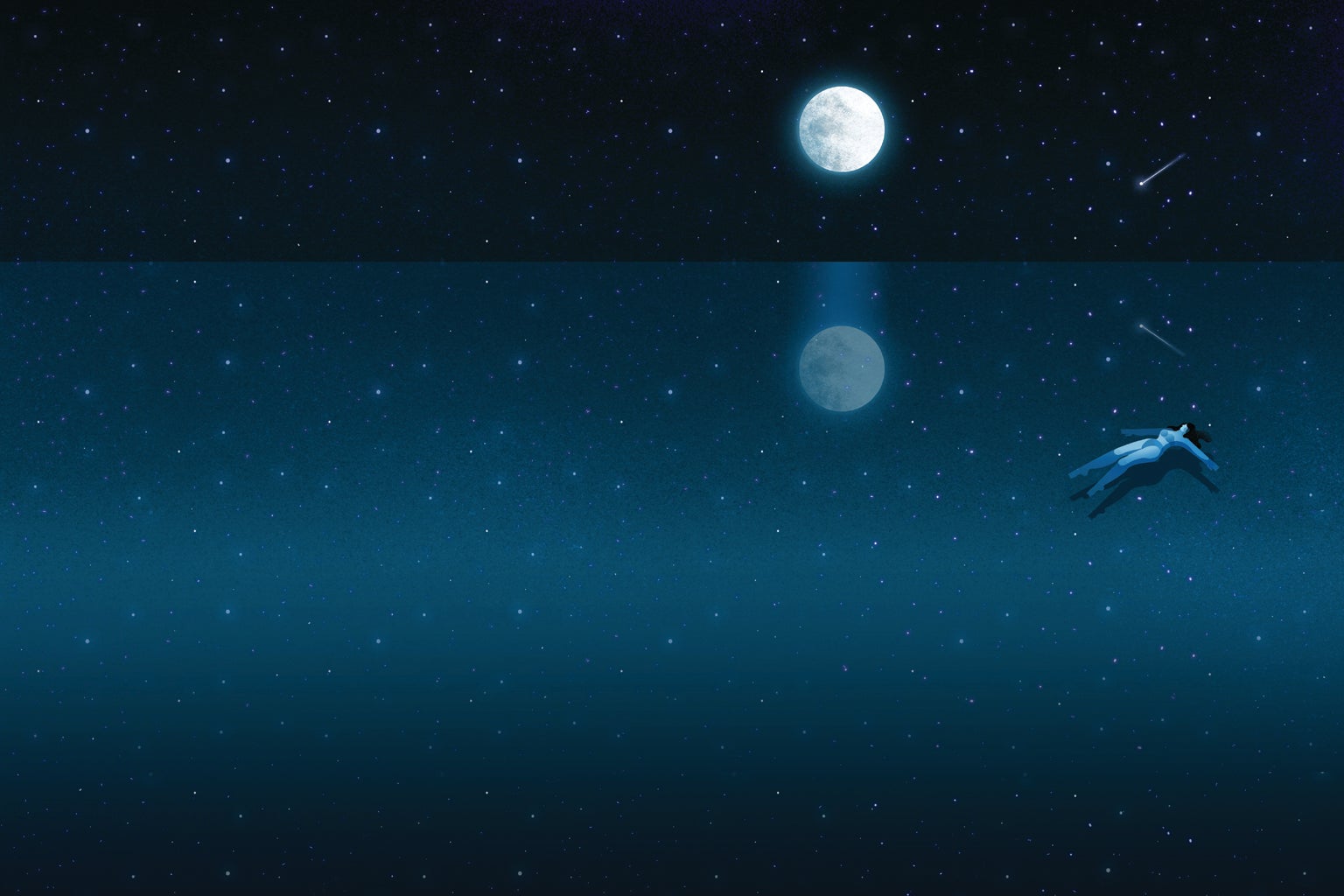
Alone in a Crowded Milky Way (Scientific American)
"The most likely explanation for Earth's apparent solitude may be that galactic settlement occurs in waves and that our species has arisen on an out-of-the-way planet during a local lull in interstellar exploration."
-
Where do minds belong? - by Caleb Scharf (Director of astrobiology at Columbia)
"Intelligence could have been moving back and forth between biological beings and machine receptacles for aeons"
"Any machine intelligence might already be dreaming of becoming biological again, returning to an islanded state in the great wash of interstellar space"
-
Recently Retired USAF General Makes Eyebrow Raising Claims About Advanced Space Technology (thedrive)
"The technology is on the engineering benches today. But most Americans and most members of Congress have not had time to really look deeply at what is going on here. But I’ve had the benefit of 33 years of studying and becoming friends with these scientists. This technology can be built today with technology that is not developmental to deliver any human being from any place on planet Earth to any other place in less than an hour." - Retired US Airforce Lt. Gen. Steven L. Kwast
Barrett, Rogers consider declassifying secretive space programs (defensenews)
"Secretary of the U.S. Air Force Barbara Barrett says that declassifying intelligence is key to combating the growing threat to the the nation's space capabilities, and the sooner the better.
"
Defense policy deal creates Space Force, sidesteps border wall controversy (defensenews)
"Lawmakers involved in annual defense authorization negotiations finalized a sweeping deal late Monday that creates a new Space Force among other policies, but it dropped contentious border wall restrictions and several other provisions favored by progressives."
Navy files for patent on room-temperature superconductor (phys.org)
"A scientist working for the U.S. Navy has filed for a patent on a room-temperature superconductor, representing a potential paradigm shift in energy transmission and computer systems."
Other recent developments:
- DOD and HUD $21 Trillion Missing Money: Report & Supporting Documentation
- 2019 was banner year for credible UFO sightings
- NASA Astronaut Shockingly Hints at Aliens in Tweet About 'Life Forms'
- US Navy 'covered up' new technology by saying USS Nimitz UFO was unidentified
- A military plane with 38 people on board has disappeared en route to Antarctica, Chile's air force says.
- DOD and HUD $21 Trillion Missing Money: Report & Supporting Documentation
-
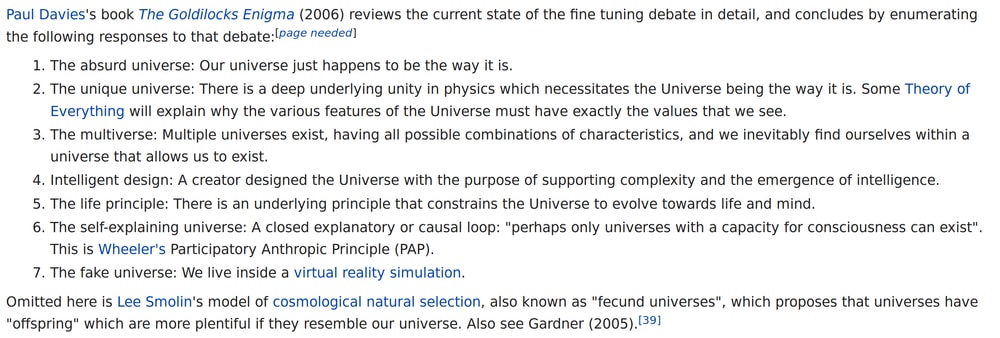
#Comment: Many of the (philosophical) musings of the contemporary "high priests of reality" (physicists, mathematicians etc.), such as "the Anthropic Principle" (see this intro video by Sabine Hossenfelder: "Is the Anthropic Principle scientific?") would make for truly great absurd comedy - if only such people would learn to not take themselves and everything else so very serious (great minds with even greater egos) and laugh far more often: Hairless monkeys which just recently developed language, convinced that they can "understand and predict everything", by compressing the totality of unfolded (infinite) existence into their tiny (finite) brains - pure paradoxical grand comedy! The "theory of everything" fairy-tales of religious traditions at least focus on practical things like rituals, aesthetics, art, ethics and culture (sensing that life is not a problem to be solved, but a reality to be experienced.) - which is overall lacking in today's science cult-ure.
-
"Implicate and explicate order" are ontological concepts for quantum theory coined by theoretical physicist David Bohm during the early 1980s.
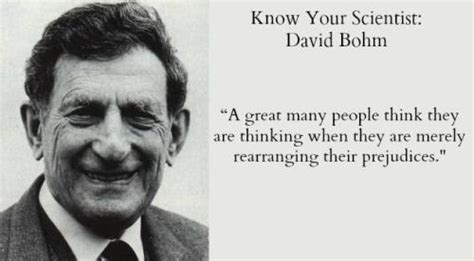
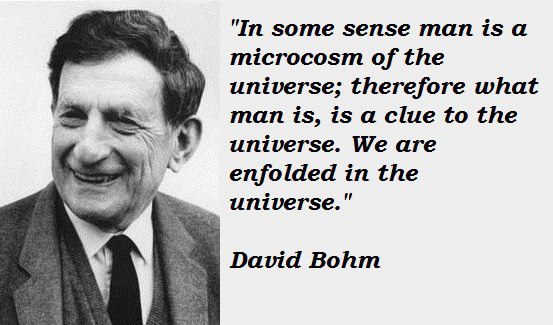
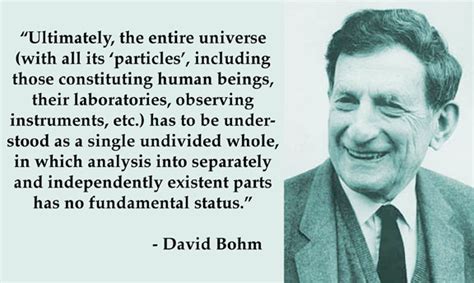
Book: Science, Order, and Creativity by David Bohm and F. David Peat (1987).
#Science #Space #Philosophy #Religion #Complexity #Creativity