tag > ALife
-
'Electronic amoeba' finds approximate solution to traveling salesman problem in linear time

Researchers have, inspired by the efficient foraging behavior of a single-celled amoeba, developed an analog computer for finding a reliable and swift solution to the traveling salesman problem -- a representative combinatorial optimization problem. (Paper)
-
The Mermaid De-Extinction Project - by Siren Genomics

The Mermaid De-Extinction Project uses whole genome design and synthesis toward the increase and diffusion of 21st century mermaid sightings through the production of the first ever draft sequence Mermaid Genome.
-
The centre of the European Union's Green New Deal is.. Synthetic Biology
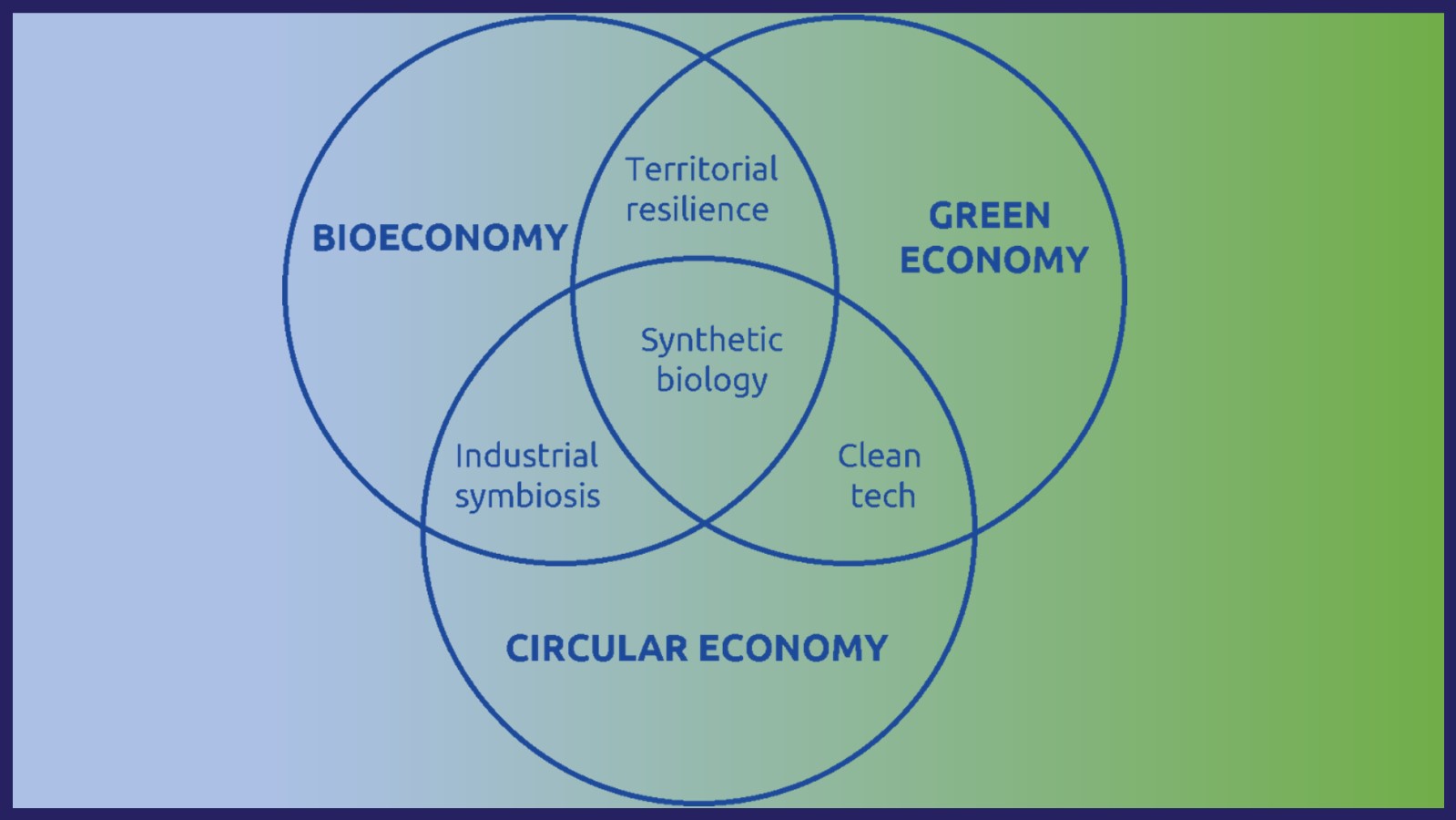
Image from"Bioeconomy & Circular Economy" by the EU funded project "Waystup"
-
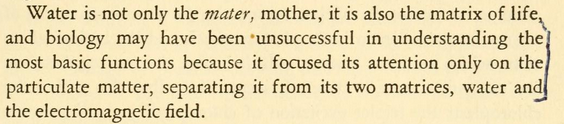
Albert Szent-Györgyi on Water - from his book "Bioenergetics" (1957)
-
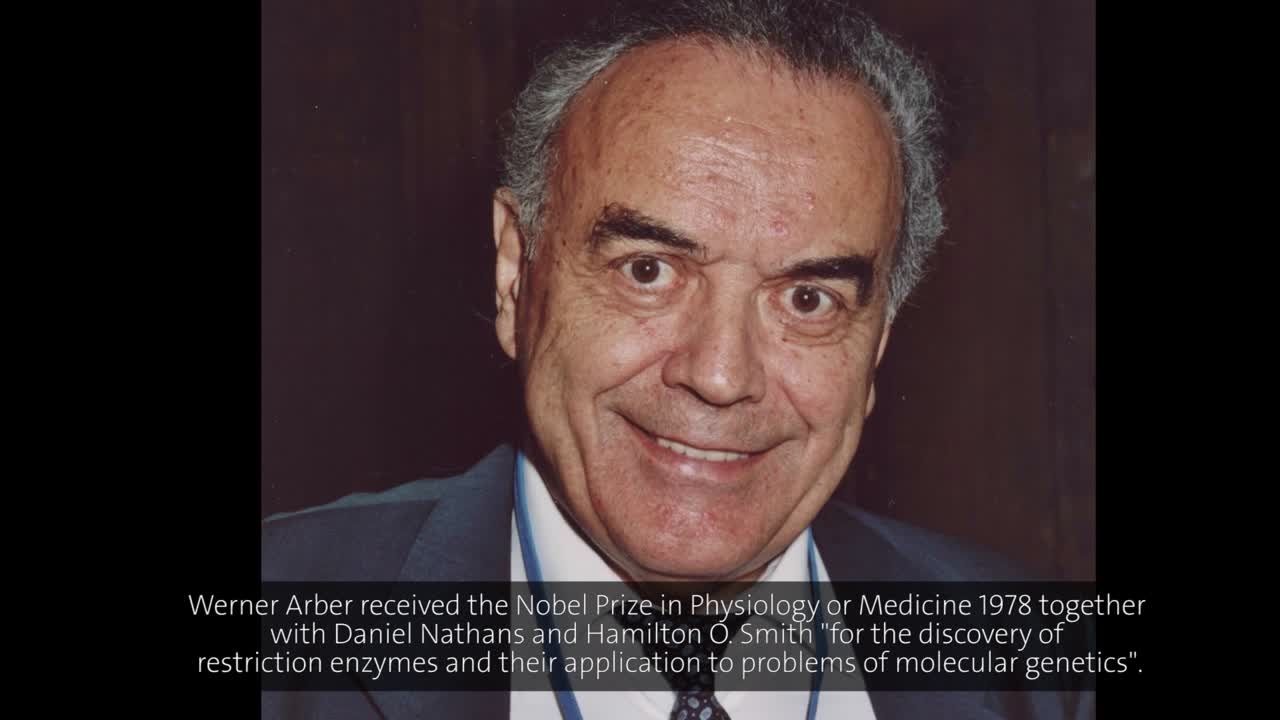
Werner Arber shared the 1978 Nobel Prize in Physiology or Medicine for the discovery of restriction endonucleases "The most primitive cells may require at least several hundred different specific biological macromolecules. How such already quite complex structures may have come together, remains a mystery to me. The possibility of the existence of a Creator, of God, represents to me a satisfactory solution to this problem." ... "I know that the concept of God helped me to master many questions in life; it guides me in critical situations, and I see it confirmed in many deep insights into the beauty of the functioning of the world." - Werner Arber
-
Systems Chemistry Symposium 2020 - Introduction video by Petra Schwille
-
These ancient seafloor microbes woke up after over 100 million years

Even after 100 million years buried in the seafloor, some microbes can wake up. And they’re hungry. An analysis of seafloor sediments dating from 13 million to nearly 102 million years ago found that nearly all of the microbes in the sediments were only dormant, not dead. When given food, even the most ancient microbes revived themselves and multiplied, researchers report July 28 in Nature.
-
America's Government Approves Release of Genetically-Engineered Mosquitoes (bloomberg)
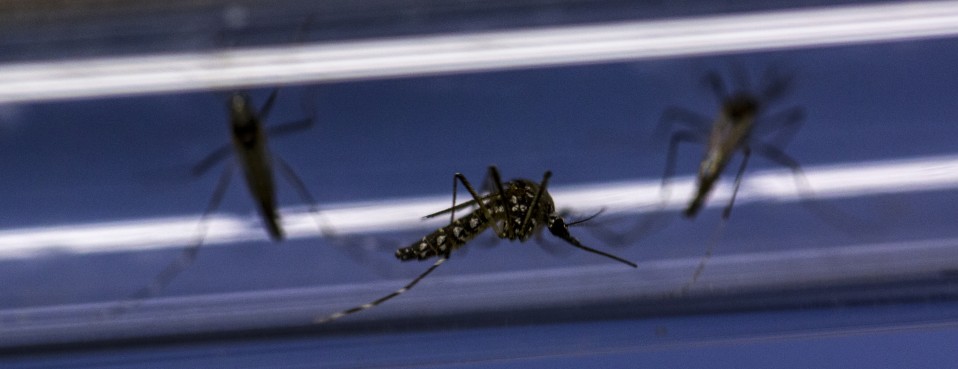
The EPA on Friday granted permission for genetically engineered mosquitoes to be released into the Florida Keys and around Houston to see if they can help limit the spread of mosquito-borne illnesses. British biotech company Oxitec Ltd was granted an experimental use permit to release a genetically engineered type of the mosquito species Aedes aegypti, which is a known vector of Zika virus and viruses that cause yellow fever and dengue fever, the Environmental Protection Agency office of Chemical Safety and Pollution announced.
#Biotech #Biology #FFHCI #ALife
-
Scientists Create Glowing Plants Using Mushroom Genes (Guardian)
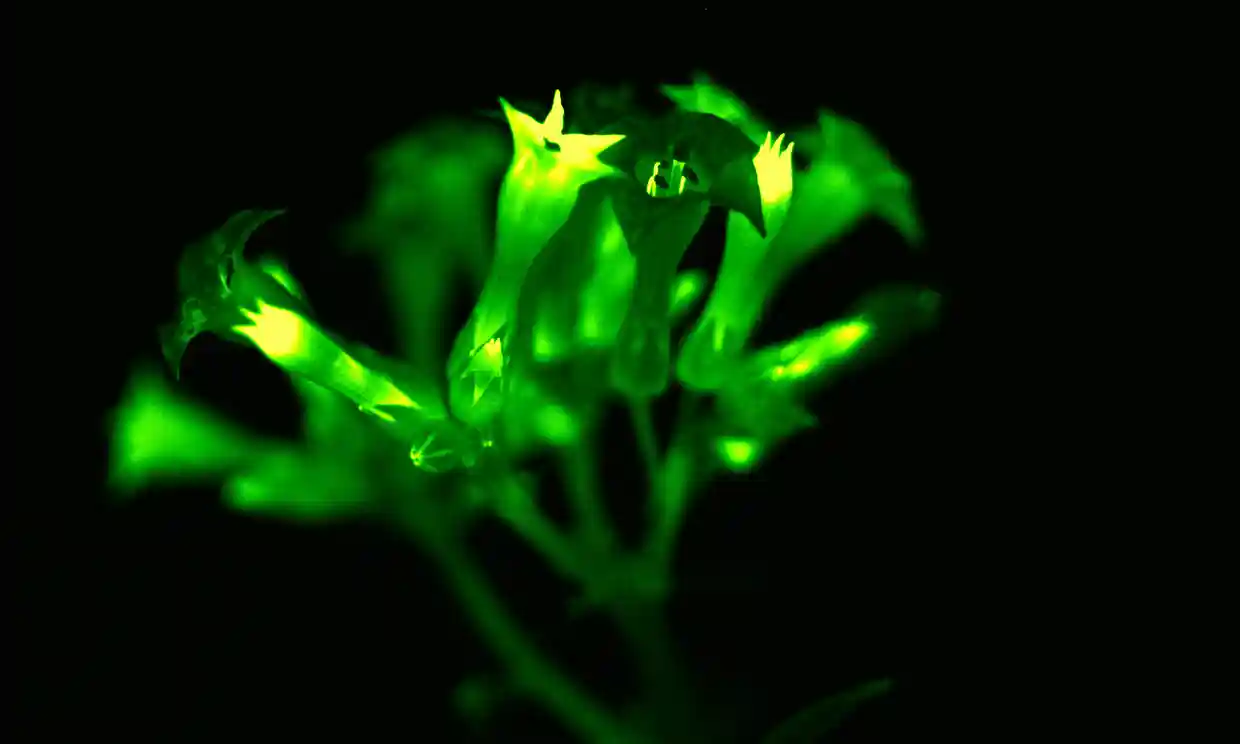
Emitting an eerie green glow, they look like foliage from a retro computer game, but in fact they are light-emitting plants produced in a laboratory. Researchers say the glowing greenery could not only add an unusual dimension to home decor but also open up a fresh way for scientists to explore the inner workings of plants.
-
Scientists Create 'Xenobots' -- Virtual Creatures Brought to Life (nytimes.com)
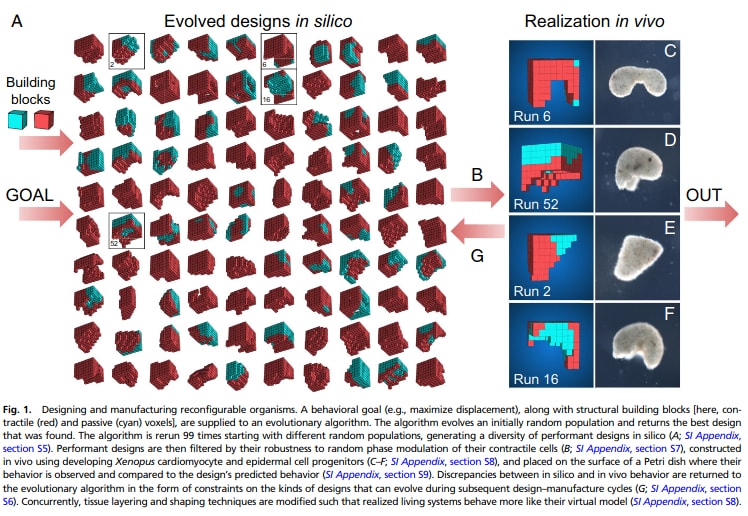
Strictly speaking, these life-forms do not have sex organs — or stomachs, brains or nervous systems. The one under the microscope consisted of about 2,000 living skin cells taken from a frog embryo. Bigger specimens, albeit still smaller than a millimeter-wide poppy seed, have skin cells and heart muscle cells that will begin pulsating by the end of the day. These are all programmable organisms called xenobots, the creation of which was revealed in a scientific paper in January, by Sam Kriegmana, Douglas Blackistonb, Michael Levinb, and Josh Bongarda,
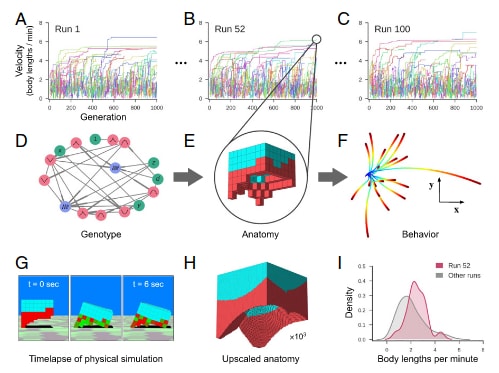
A xenobot lives for only about a week, feeding on the small platelets of yolk that fill each of its cells and would normally fuel embryonic development. Because its building blocks are living cells, the entity can heal from injury, even after being torn almost in half. But what it does during its short life is decreed not by the ineffable frogginess etched into its DNA — which has not been genetically modified — but by its physical shape. And xenobots come in many shapes, all designed by roboticists in computer simulations, using physics engines similar to those in video games like Fortnite and Minecraft...
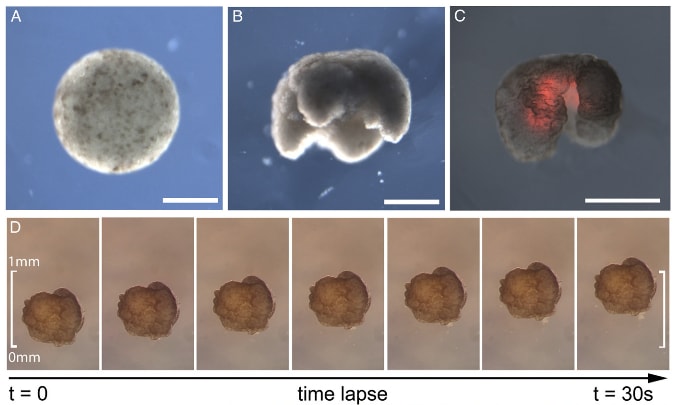
All of which makes xenobots amazing and maybe slightly unsettling — golems dreamed in silicon and then written into flesh. The implications of their existence could spill from artificial-intelligence research to fundamental questions in biology and ethics. "We are witnessing almost the birth of a new discipline of synthetic organisms," said Hod Lipson, a roboticist at the Columbia University who was not part of the research team. "I don't know if that's robotics, or zoology or something else."
An algorithm running for about 24 hours iterated through possible body shapes, after which the the two researchers tried "to sculpt cellular figurines that resembled those designs." They're now considering how the process might be automated with 3-D cell printers, and the Times ponders other future possibilities the researchers have hinted at for their Xenobots. ("Sweep up ocean microplastics into a larger, collectible ball? Deliver drugs to a specific tumor? Scrape plaque from the walls of our arteries?")
-
Intel is using A.I. to build smell-o-vision chips (Intel, 2020)

Smell-O-Vision machines of the past With machine learning, Loihi can recognize hazardous chemicals “in the presence of significant noise and occlusion,” Intel said, suggesting the chip can be used in the real world where smells — such as perfumes, food, and other odors — are often found in the same area as a harmful chemical. Machine learning trained Loihi to learn and identify each hazardous odor with just a single sample, and learning a new smell didn’t disrupt previously learned scents. Intel claims Loihi can learn 10 different odors right now.
How smell, emotion, and memory are intertwined, and exploited (Harvard, 2020)
Researchers explore how certain scents often elicit specific emotions and memories in people, and how marking companies are manipulating the link for branding.
-
Topological turbulence in the membrane of a living cell (Nature)
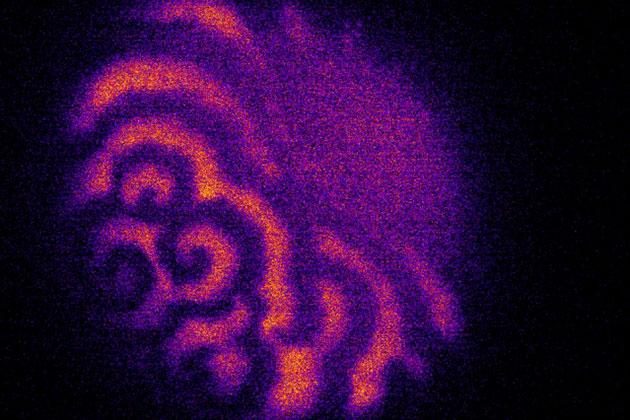
With spectacular as well as hypnotically beautiful recordings, US researchers have succeeded in showing how life spreads in a fertilized egg when activated proteins spread in a spiral wave through the egg membrane and thus give the star signal for cell division. (via)
-
Draper's Genetically Modified Cyborg DragonflEye Takes Flight (Spectrum IEEE)
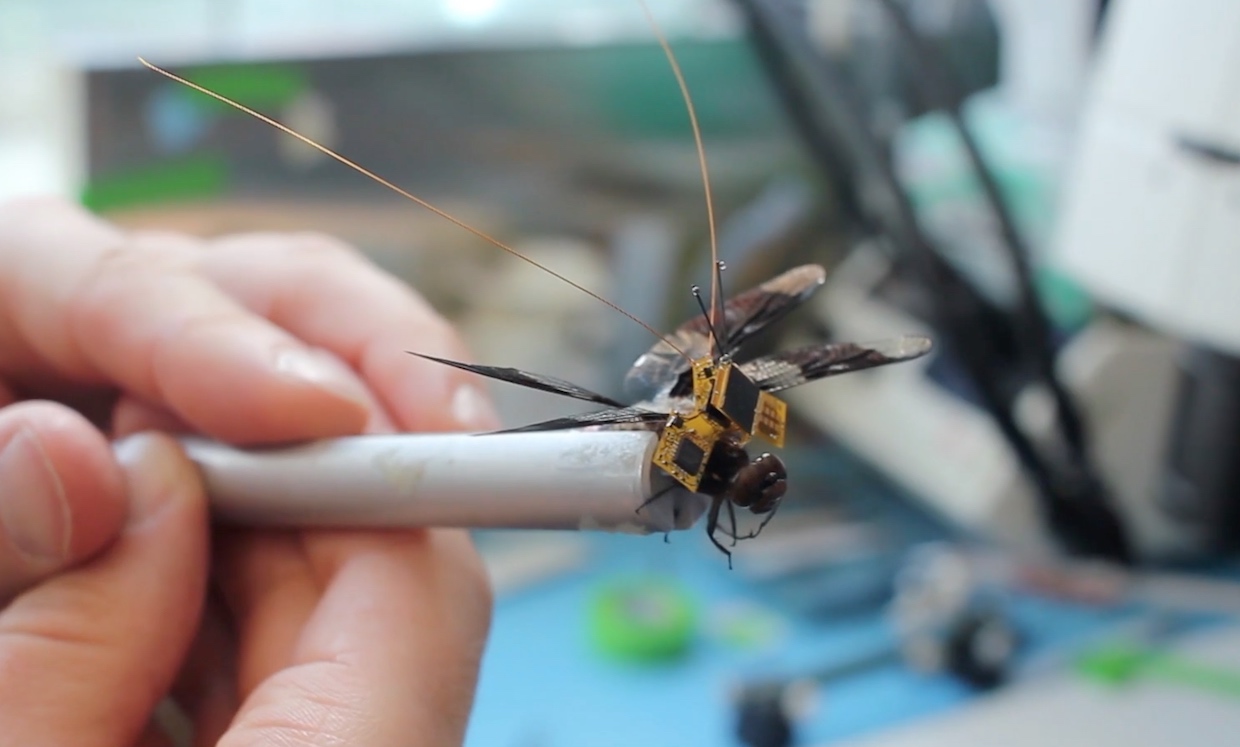
In January, we wrote about a cybernetic micro air vehicle under development at Draper called DragonflEye. DragonflEye consists of a living, slightly modified dragonfly that carries a small backpack of electronics. The backpack interfaces directly with the dragonfly’s nervous system to control it, and uses tiny solar panels to harvest enough energy to power itself without the need for batteries.
-
Ocean Creatures Have Been Protecting Us From Millions of Viruses This Entire Time (sciencealert)

Illustration from "Welcome to the Virosphere" (NYTimes) It's fair to say that the world has had more than enough of viruses right now. Unfortunately, the converse is not necessarily true. The incredible vastness of the virosphere is hard to overstate. While several thousand kinds of virus have been studied in detail, scientists say we haven't even scratched the surface. There could be trillions of species overall, some think. Even more conservative estimates are mind-boggling. In the oceans, tens of millions of different kinds may lurk: as many as 10 million viruses can be present in a millilitre of water.
-

Rabies is a viral disease that causes inflammation of the brain in humans and other mammals. Early symptoms can include fever and tingling at the site of exposure. These symptoms are followed by one or more of the following symptoms: violent movements, uncontrolled excitement, fear of water, an inability to move parts of the body, confusion, and loss of consciousness. Once symptoms appear, the result is nearly always death. The time period between contracting the disease and the start of symptoms is usually one to three months, but can vary from less than one week to more than one year. The time depends on the distance the virus must travel along peripheral nerves to reach the central nervous system.
-
We're Living in 12 Monkeys - Documentary by Truthstream Media
#Technology #Documentary #Cryptocracy #Augmentation #Politics #ALife
-
Amazon is secretly working on a cure for the common cold (cnbc)

Amazon is working on a cure for the common cold in a years-long, top secret effort called "Project Gesundheit," according to three people familiar with the effort... The team is hoping to develop a vaccine, but is exploring a variety of approaches to the problem. Internally, the effort is sometimes referred to as the "vaccine project....".

Amazon isn't the only organization throwing resources into a cure for the cold. Researchers at Stanford and the University of California are working on a new approach that involves temporarily disabling a single protein inside our cells. Researchers at the Chan Zuckerberg Biohub also chipped into the effort. The researchers behind that group said, in a statement, that they were close to a cure.
Why Bill Gates thinks gene editing and artificial intelligence could save the world (geekwire)

Bill Gates has been working on global health for 20 years, and today he told the nation’s premier scientific gathering that advances in A.I and gene editing could accelerate those improvements exponentially in the years ahead. “We have an opportunity with the advance of tools like artificial intelligence and gene-based editing technologies to build this new generation of health solutions so that they are available to everyone on the planet."
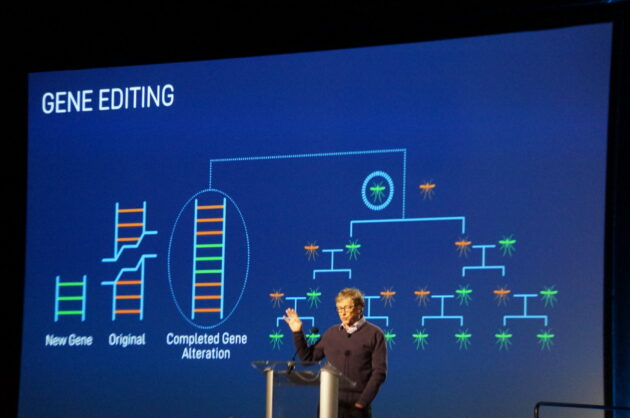
Millions more are being spent to find new ways fighting sickle-cell disease and HIV in humans. Gates said techniques now in development could leapfrog beyond the current state of the art for immunological treatments, which require the costly extraction of cells for genetic engineering, followed by the re-infusion of those modified cells in hopes that they’ll take hold.
-
BGI Group - The Biggest Genomics Company in the World?

BGI is headquartered in Shenzhen, China and has more than 5,000 employees located in 47 labs, 30% outside of China. BGI Group is a Chinese genome sequencing company, headquartered in Shenzhen, Guangdong, China. BGI Group announced in 2020 that it will make genome sequencing cheaper, breaking the $100 barrier for the first time. The Shenzhen company says the low cost will be possible with an "extreme" DNA sequencing system that is capable of decoding the genomes of 100,000 people a year.
China National Genebank (site)
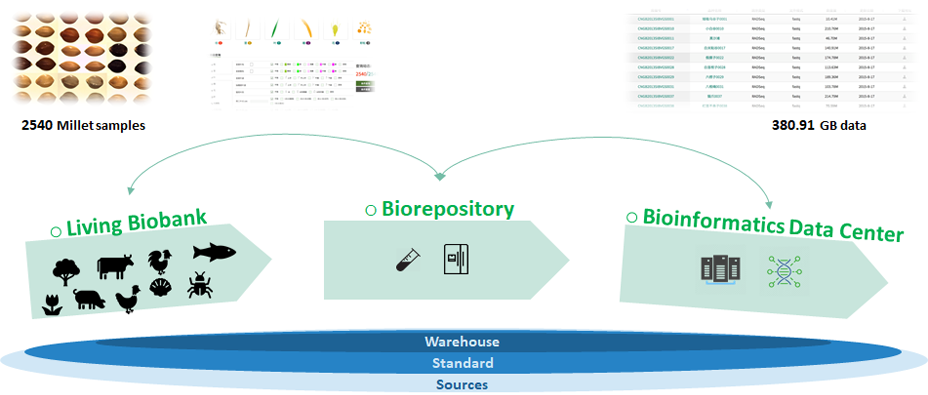
This is a nonprofit created in 2011 with funding from BGI and the Chinese government. Their mission is to capture and catalog human, plant, and animal species and they claim to have 80% of the finished large genome projects in the world. Capacity for 150m genomes a year.
GeneBank Vision Video - Stranger then any sci-fi movie
A tour to China's national gene bank (1h youtube video)
BGI Founders
Wang Jian (Chinese: 汪建; born 13 April 1954)

Wang Jian is Chairman and co-founder of the BGI Group (formerly Beijing Genomics Institute). He graduated in 1979 from Hunan Medical College and in 1986 graduated with a Master's in Integrated Medicines from the Beijing University of Chinese Medicine. From 1988 to 1994, he was a research fellow at the University of Texas, the University of Iowa and the University of Washington, working on cell proliferation and differentiation. After returning to China in 1994 to set up Jubilee Biotechnology, this provided much of the initial capital used to set up the Beijing Genomics Institute with Yang Huanming, Liu Siqi and Yu Jun in 1999 in order to engage in research contributing to the Human Genome Project. After this work he was involved in the sequencing of the rice genome, first Asian human reference genome and numerous other large-scale genomics projects. In 2003 he was involved in the efforts to sequence and contain the SARS coronavirus, meeting with Hu Jintao who praised BGI's contribution. In 2007 the Beijing Genomics Institute become just BGI when it was relocated to Shenzhen as "the first citizen-managed, non-profit research institution in China". As the largest shareholder in BGI's holding company, in 2019 his net worth was estimated by Forbes to be US$1.2 billion. In January 2020 he travelled to Wuhan to set up a situation room tackling the COVID-19 disease outbreak, helping coordinate the development of diagnostic tests and a 2000-sq-meter emergency detection laboratory built in 5 days. Devoted to fitness and believing health and longevity to be the first priority of BGI, he has climbed and skied on some of the highest mountains in the world, including summiting Mount Everest.
Yang Huanming (Chinese: 杨焕明; born 6 October 1952)

Yang Huanming is a Chinese biologist and businessman. one of China's leading genetics researchers. He is Chairman and co-founder of the Beijing Genomics Institute, formerly of the Chinese Academy of Sciences. He was elected as member of the Chinese Academy of Sciences in 2007, a foreign academician of Indian National Science Academy in 2009, a member of the German National Academy of Sciences in 2012, and foreign associate of the US National Academy of Science in 2014.
Yang Huanming: Sequencing Technology in Biomedicine

-
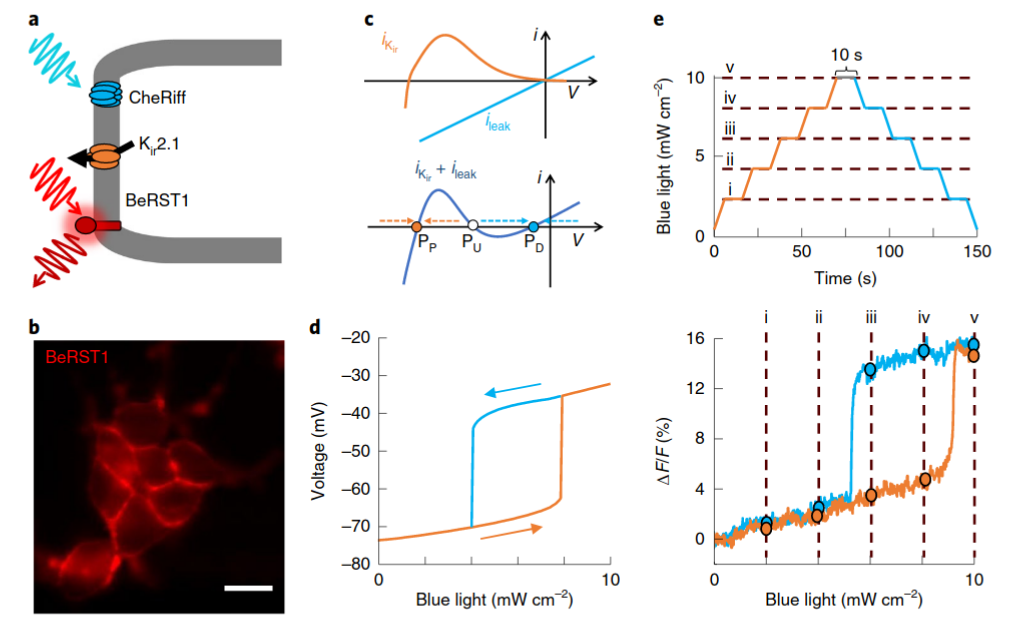
Bioelectrical domain walls in homogeneous tissues - New software for modeling embryonic morphogenesis (unpaywalled)