tag > Biology
-
Machine Consciousness?
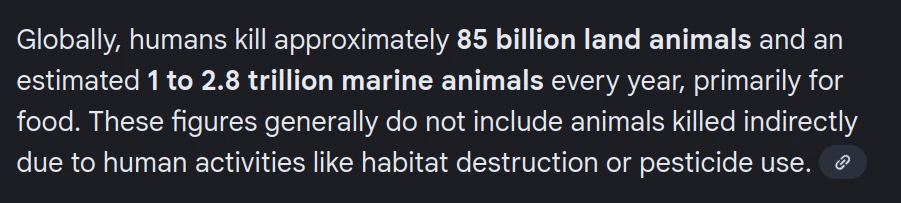
Every few weeks, some philosopher asks if machines can be conscious — as if that’s the big mystery. Meanwhile, we kill billions of sentient beings a year, turn them into lasagna, and still think awareness lives in a circuit board. The real question isn’t whether AI can wake up, it’s why humans never did. This isn’t philosophy; it’s performance art by a species barely conscious enough to keep its own biosphere alive. Intellectual cargo cult with tenure.
-
The Forger's Dilemma: On Memory That Cannot Be Faked
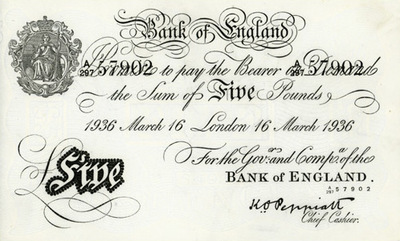
In 1942, the Nazis launched Operation Bernhard, a scheme to forge British banknotes so perfectly that dropping them over England would collapse the economy. They succeeded technically. The forgeries were immaculate. But the plan failed. Why?
Because money isn't paper. Money is memory: distributed memory, held in millions of minds, woven into habits and expectations. You can print a perfect note, but you cannot print the web of trust that gives it meaning. The forgery was flawless. What it forged was hollow.
This is the forger's dilemma: the more distributed a system of meaning, the harder it is to counterfeit. A single ledger can be altered. A network remembers.
How deep does this go?
The Paradox of Holographic Memory
All the way down.
Information security in decentralized holographic memory networks is paradoxical.
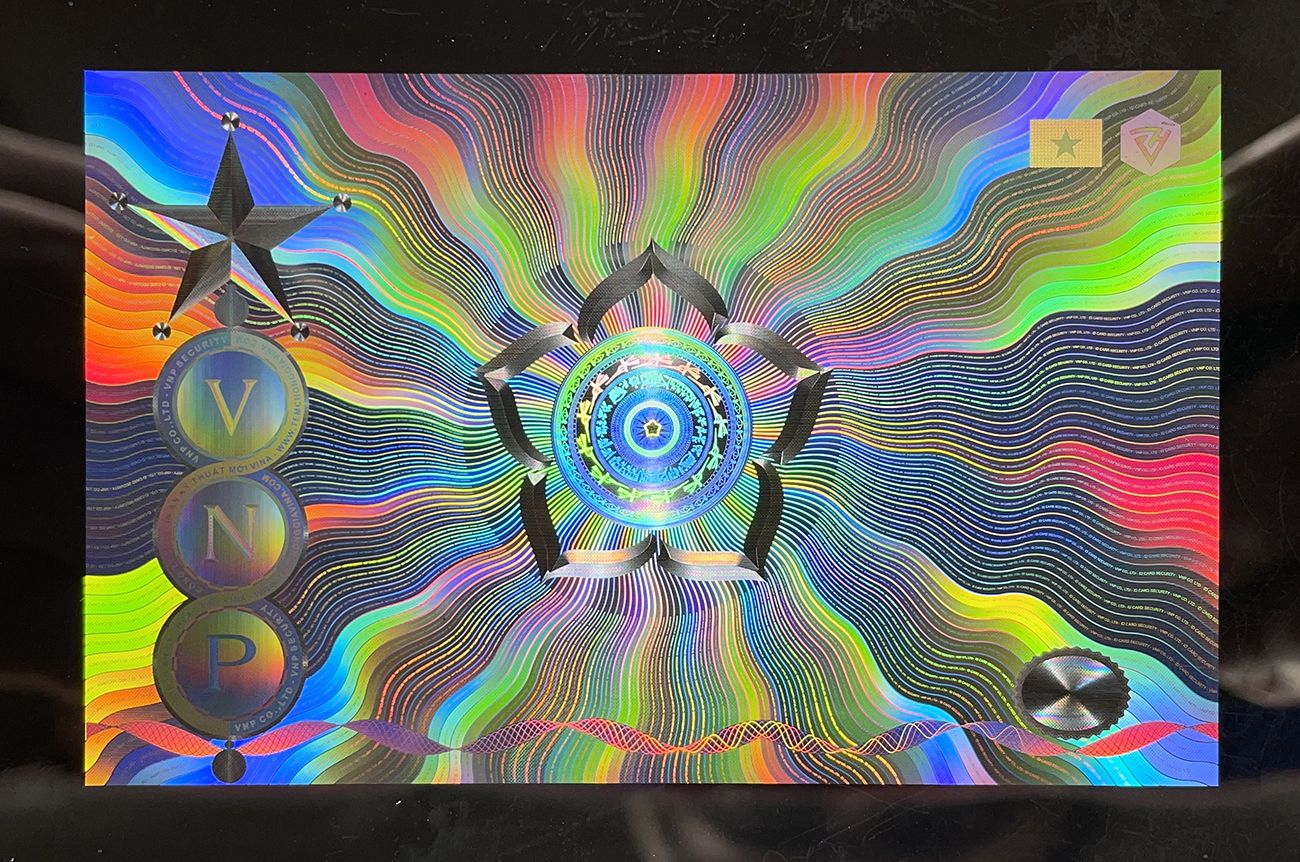
In a holographic system, every part contains the whole. Cut a hologram in half, and each half still shows the complete image. This makes it resilient. You cannot destroy the memory by attacking any single node. But it also makes it impossible to secure in the traditional sense. How do you lock a door that is everywhere?
The paradox: maximum distribution means maximum persistence but minimum control. What cannot be erased also cannot be owned. This sounds like a technical problem. It's actually a description of life.
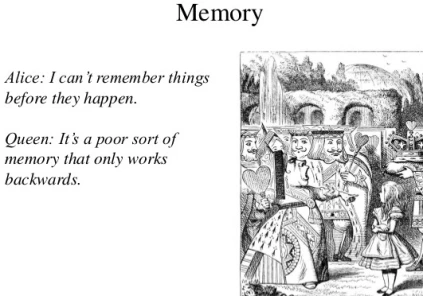
The Queen in Through the Looking-Glass tells Alice: "It's a poor sort of memory that only works backwards." We laugh, but she's right. Linear memory, the kind that only recalls the past, is the impoverished version. The kind forgers understand. Real memory is stranger: it loops, it anticipates, it contains itself.
There's a pattern that shows up everywhere distributed memory lives: 1/f noise, also called pink noise. It appears in brain dynamics, heartbeats, river flows, stock markets, music. The power decreases as frequency increases, but never disappears. It's the signature of systems at the edge, what Per Bak called self-organized criticality. Mandelbrot mapped these patterns his whole life: fractals, self-affinity, globality. The same structure at every scale.
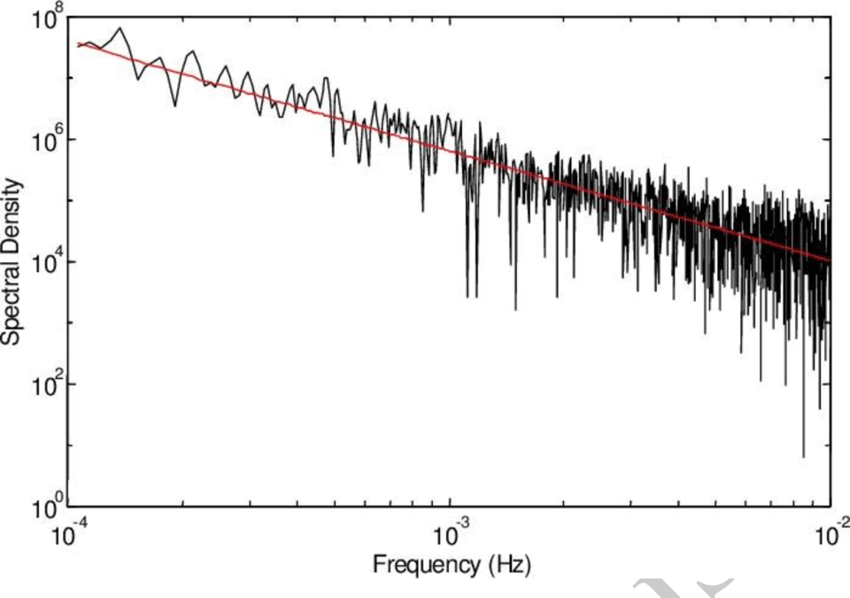
This is the sound of memory at the edge of chaos. Systems that exhibit 1/f noise remember across all timescales simultaneously: short bursts nested inside longer rhythms nested inside longer still. A forgery is flat: one scale, one moment. Real memory is fractal.
Any system capable of self-reference and rich structure will exhibit: scale invariance, persistent incompleteness, distributed paradox, no final temporal closure.
Trying to "solve" incompleteness is like trying to flatten a fractal. You can't. You can only design with it.
Evolution Is Cleverer Than You Are
Leslie Orgel, one of the founders of origin-of-life research, left us with his Second Rule: "Evolution is cleverer than you are."
This isn't humility. It's an observation about distributed memory. Evolution has been running experiments for 4 billion years, in parallel, across every niche on Earth. Every solution it finds is written into the living record, encoded not in any central archive, but in the bodies, behaviors, and biochemistry of every organism.
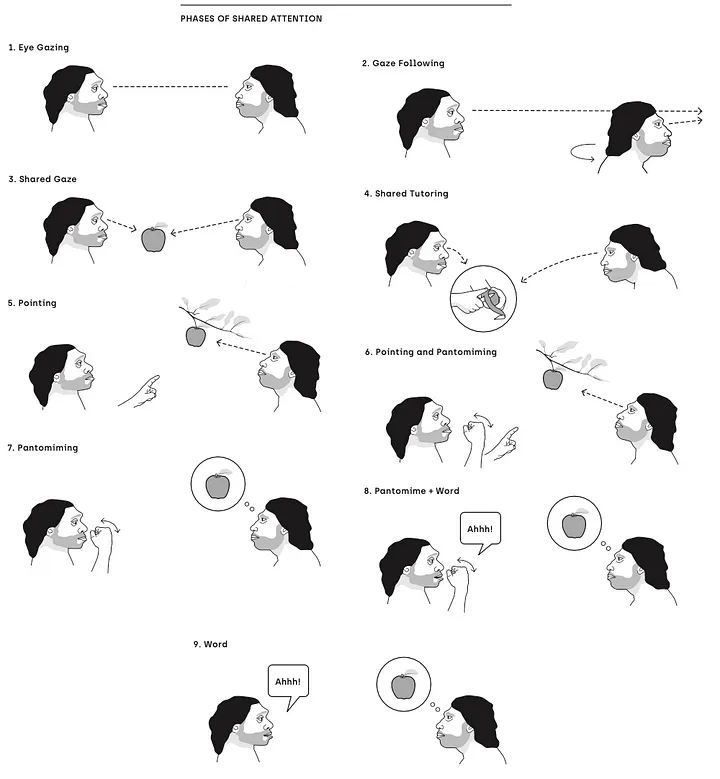
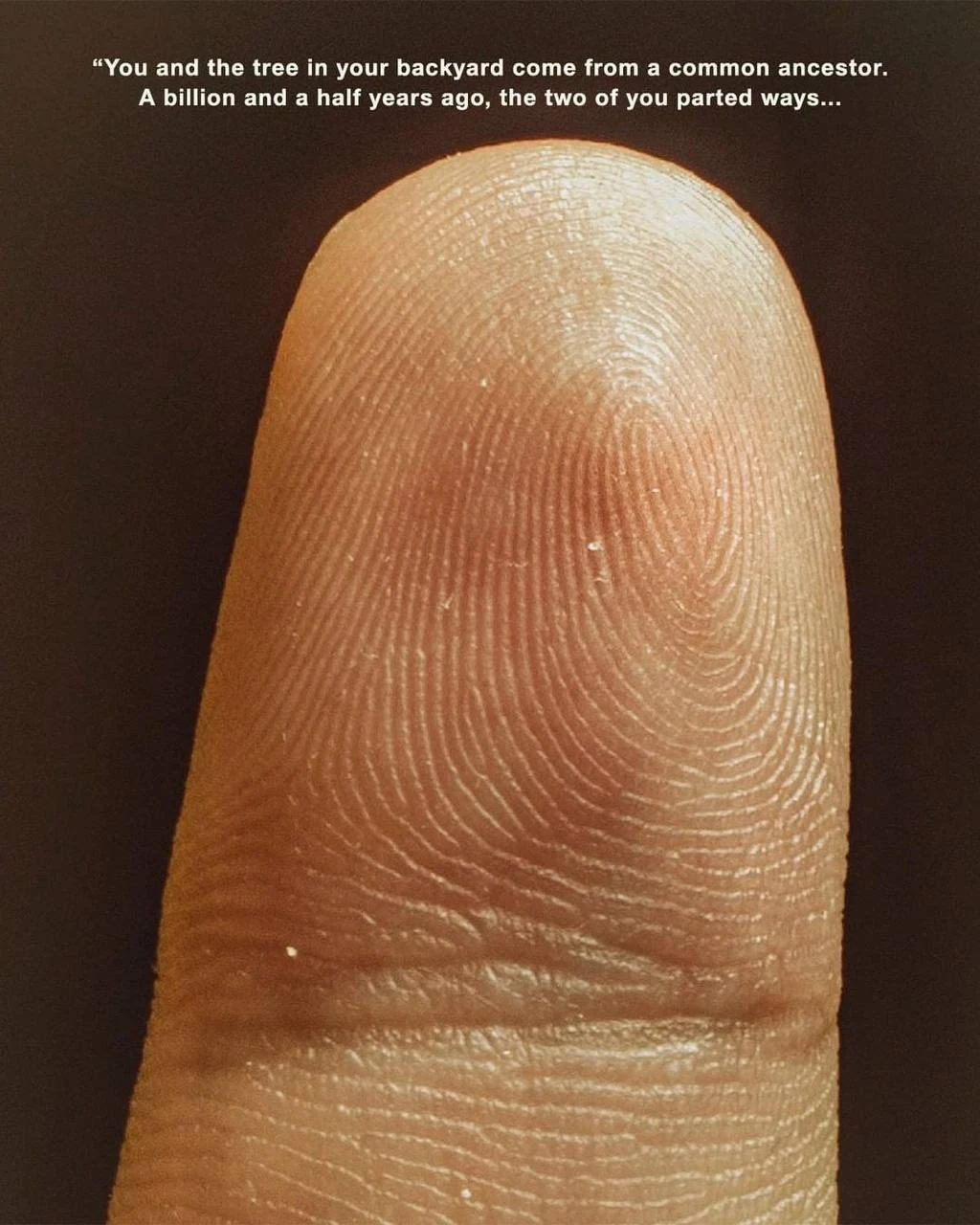
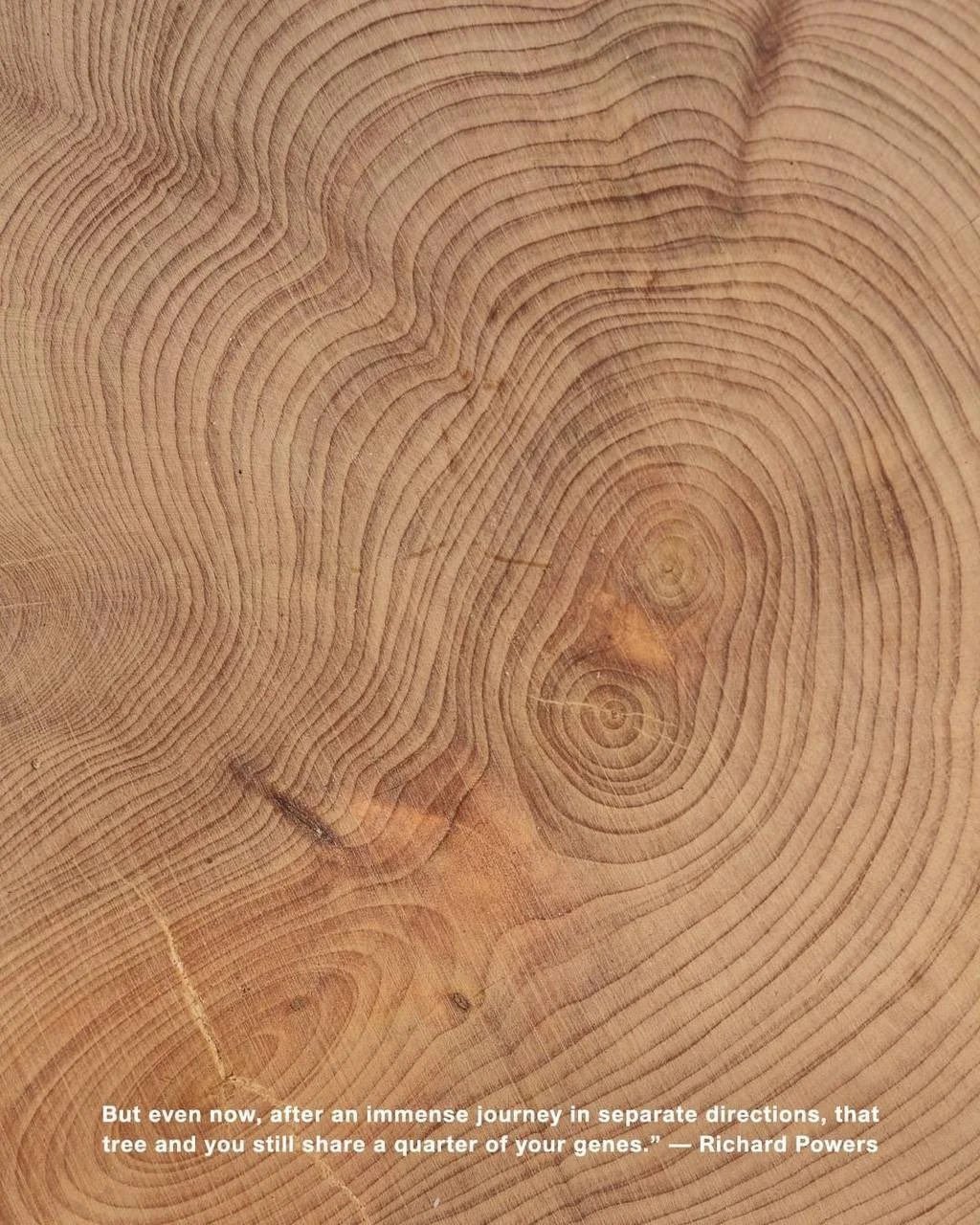
You cannot forge this. You can sequence a genome, but the meaning of that genome is held in the relationships it implies: the shared attention loops between predator and prey, the molecular handshakes between symbiont and host, the layered memory of every extinction and adaptation. Language itself emerged this way, not from one genius, but from minds looking at the same thing and recognizing that they are looking at the same thing. Meaning bootstrapped itself through mutual gaze.
Which raises a question that haunted Max Delbrück, Nobel laureate and founder of molecular biology: if life is information, but information that does something, a pattern that persists by actively maintaining itself, then what kind of thing is it? Neither mechanism nor mystery. Not quite matter, not quite idea. Delbrück suspected life would reveal a paradox akin to wave-particle duality in physics. Something that dissolves the distinction.
Memory with agency. Memory that responds, adapts, resists erasure. The forger's nightmare.
Intelligence at Every Scale
Scale up.
The belief that intelligence is exclusive to a specific level of complexity (animals/humans) is absurd. Consider the possibility of unconventional computation occurring on the scale of planets and galaxies. What other forms of collective, super-intelligent life are we overlooking?
If memory is distributed, and distributed memory cannot be faked or simulated, what does it mean that the universe is full of distributed systems? (This, incidentally, is why simulation theory feels shallow. A simulation is a forgery. And we've already established what happens to forgeries.) Galaxies have been processing information for 13 billion years. What do they remember? What are they computing?
We assume cognition requires brains. But brains are just one solution. Ant colonies think without any individual ant understanding the whole. Markets process information no trader fully grasps. Perhaps planets dream in ways we cannot recognize: geologic memory, climatic memory, the slow thought of tectonic plates.
Places That Remember
But you don't need to scale up to galaxies. Memory architecture exists at human scale too.
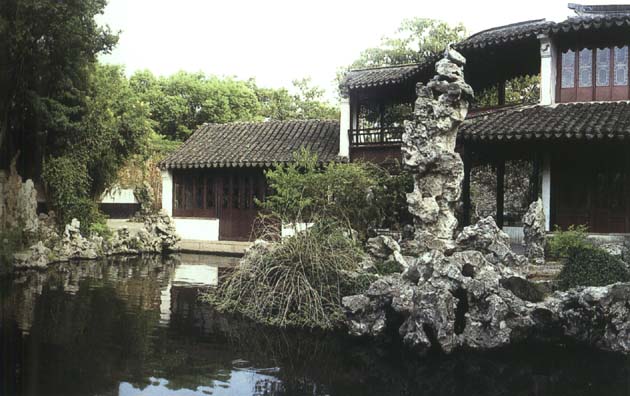

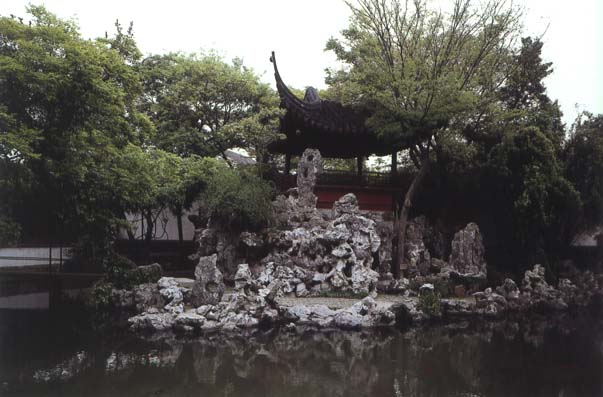
In Suzhou, there is a garden called The Retreat and Reflection Garden. Built in 1885 for a disgraced official who hoped to remedy his wrongdoings through contemplation. Water forms the center. Buildings float at the edge. Gardens within gardens. Every sightline triggers associations. Every pool reflects what it cannot contain.
This is not decoration. This is technology: memory architecture. The official walks through designed experience, and in walking, is changed. Yuan Long spent two years building it. It has been remembering for 140.
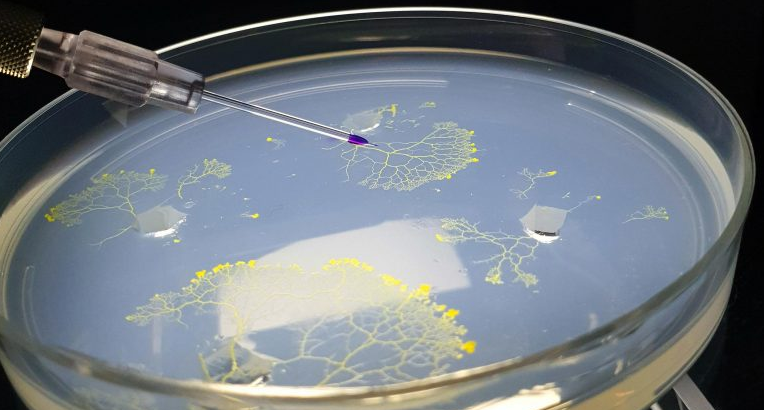
Or consider the slime mold. A single-celled organism with no brain, no nervous system. Yet it remembers. Researchers found that memory about nutrient location is encoded in the morphology of its network: the thickness of its tubes, the patterns of its growth. The slime mold's body is its memory. No central archive. No separation between the map and the territory.
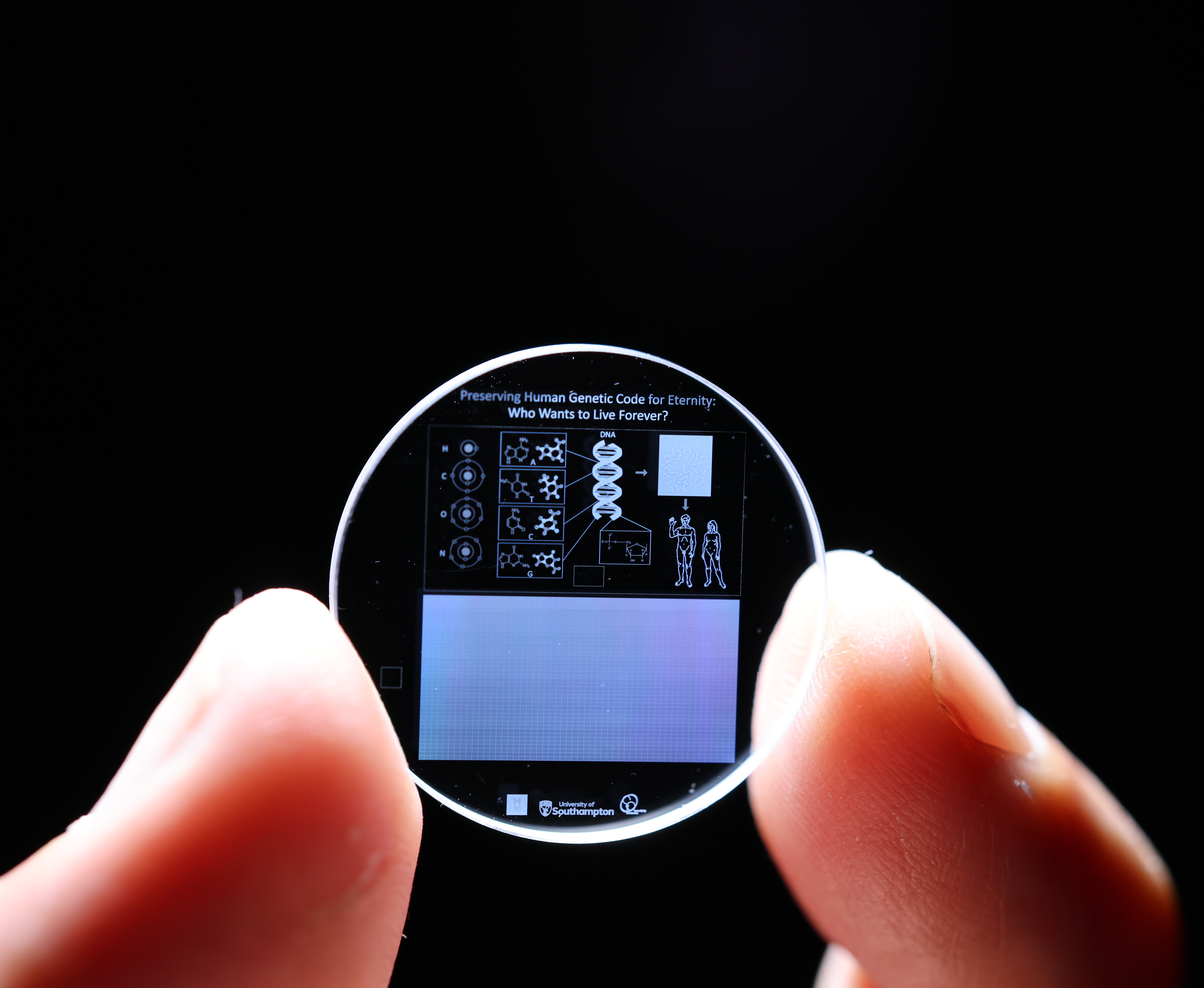
And now we're building crystals that do the same. 5D memory crystals can preserve human DNA for billions of years. Not digital storage that degrades, but physical structure that outlasts planets. The garden remembers for centuries. The crystal remembers for eons. The slime mold remembers in its very flesh.
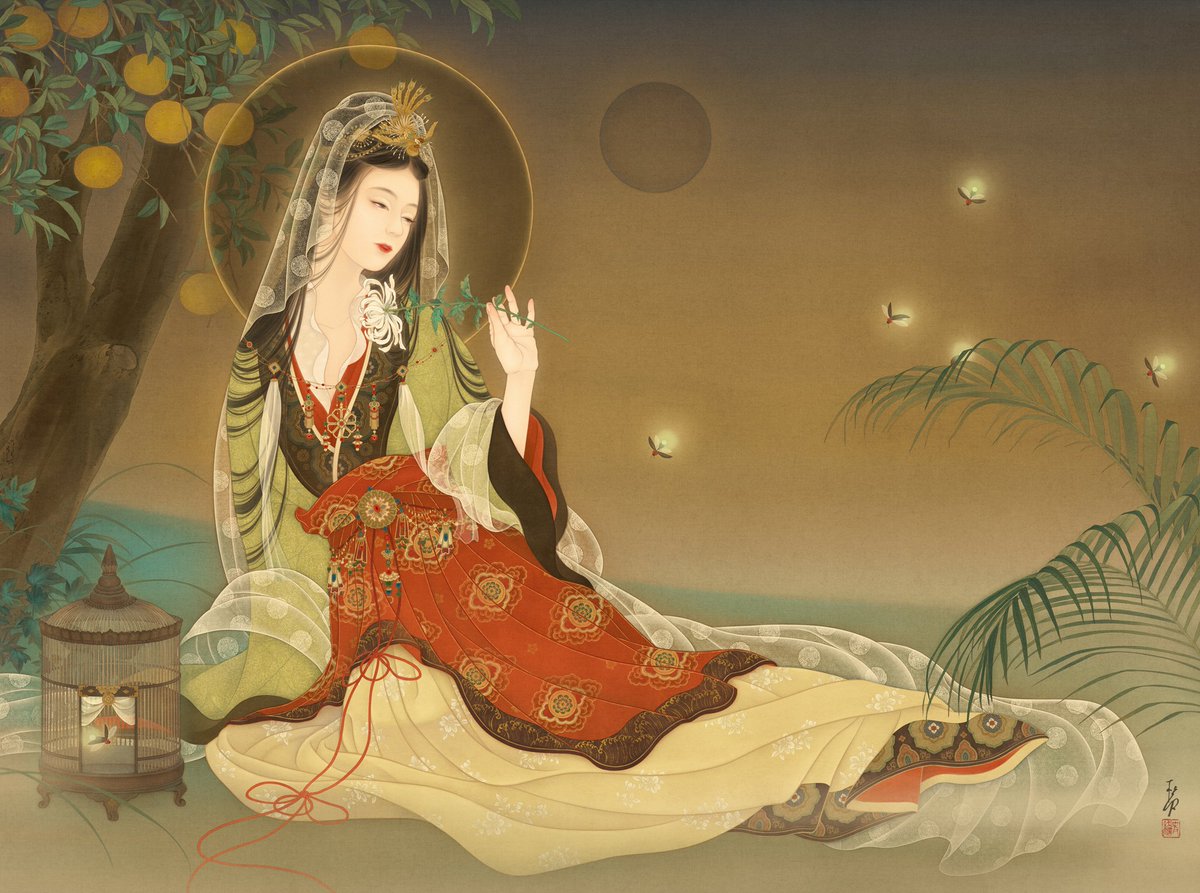
And yet: in Chinese mythology, Meng Po stands at the bridge between lives, serving a soup brewed from the tears of the living. Drink it, and your memory is erased for reincarnation. Even the cosmos needs forgetting. Memory that cannot let go becomes a prison. The garden is designed with empty spaces. The hologram requires interference. The forger's mistake wasn't just that he couldn't copy the memory. It was that he didn't understand: memory includes its own erasure.
Memento
So here's the secret the forgers never understood: You cannot fake what you are standing inside. Memory isn't stored. Memory is.
Consciousness. Language. The web of mutual recognition. The hum of 1/f noise in your own neurons as you read this sentence. You are the distributed memory. You are the fractal. You are the garden, remembering yourself. Memento.
#Philosophy #History #Biology #fnord #Paradox #Essay #Complexity
-
Machine Learning for the Genetic Engineering of Fungal Secondary Metabolite Clusters: A Novel Framework for Alien Communication
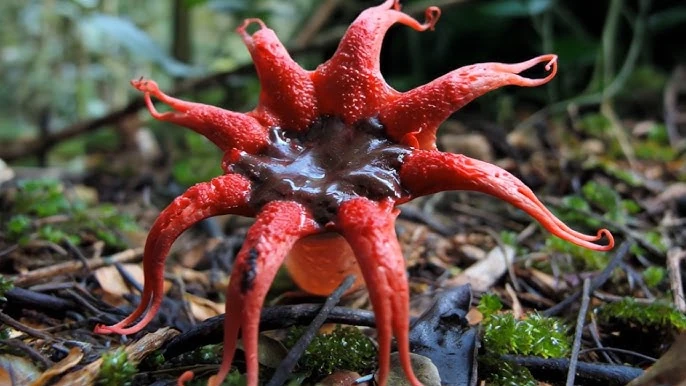
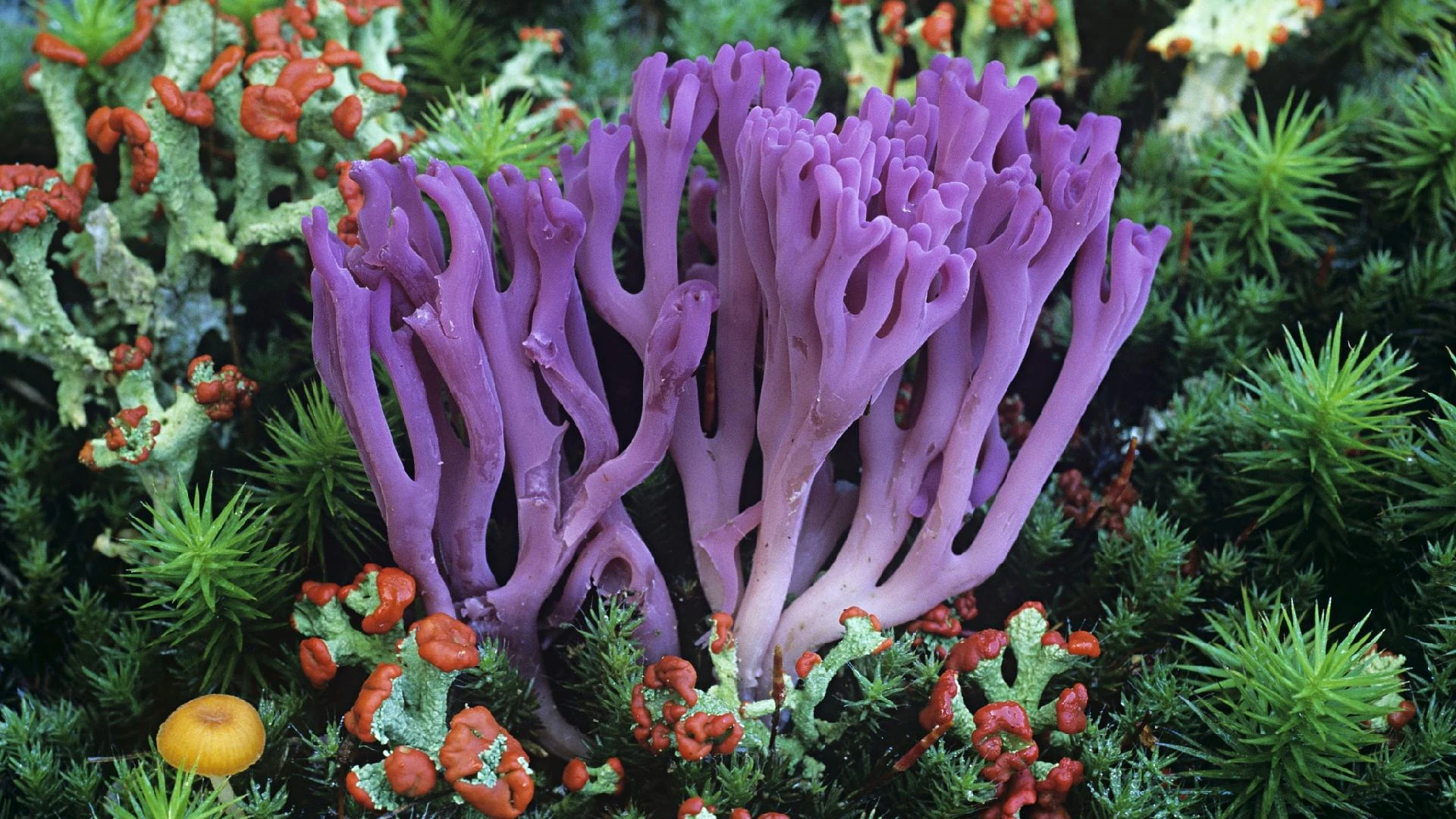
The Search for Extraterrestrial Intelligence (SETI) has long scanned the skies for radio signals. But what if an advanced civilization's signature isn't a broadcast, but a biological program?
Hypothesis
Mastery over a planet's biology is the ultimate technology. Instead of fleeting electromagnetic waves, a persistent, self-replicating message could be encoded into the very blueprint of life - an engineered gene cluster in a hardy organism like a fungus, designed to survive deep space and seed itself on new worlds.
Fungal Gene Clusters: Nature's Data Cassette
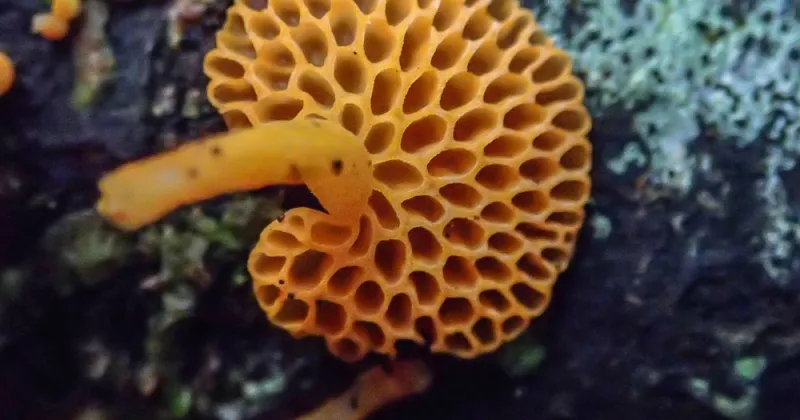
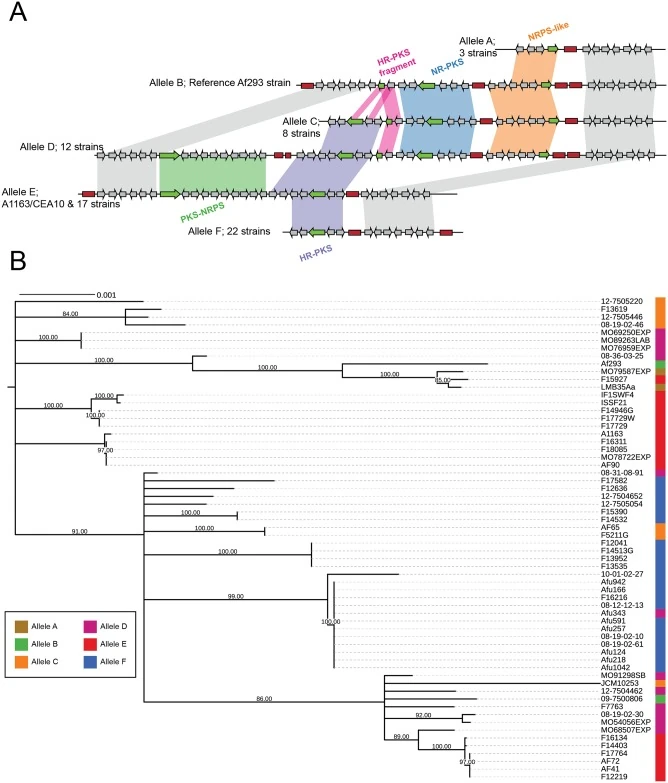
Fungal secondary metabolite (SM) clusters are modular genetic programs. Enzymes like Polyketide Synthases (PKSs) are built from domains (A-T-C-KR-ER-ACP...) in a precise order. This sequence is a code. In theory, it could be repurposed. A non-functional, hyper-complex cluster discovered in a space-borne spore might not be for making a toxin - it could be a biochemical QR code, a message etched in DNA that can last for eons and travel between stars.
Machine Learning is the Decoder
Decoding such a message, however, would be impossible by eye. It would require advanced machine learning—trained on every known natural and engineered biological pattern—to first recognize the cluster as artificially designed, then reverse-engineer its domain sequence into a payload: an image, a mathematical constant, a map.
This isn't just speculation - it's a new lens for our own research. As we use AI to genetically engineer fungal SM clusters for new drugs and materials, we are learning to write and read this deep language of biology. We are developing the very tools needed to one day ask: Is this fungus from Earth, or is it a message in a bottle, waiting for a reader smart enough to understand it?
We're not just engineering fungi. We're building the translator for a conversation that may have already begun.

-
How 20 Smuggled Chinese Hamsters Built a Pharmaceutical Empire
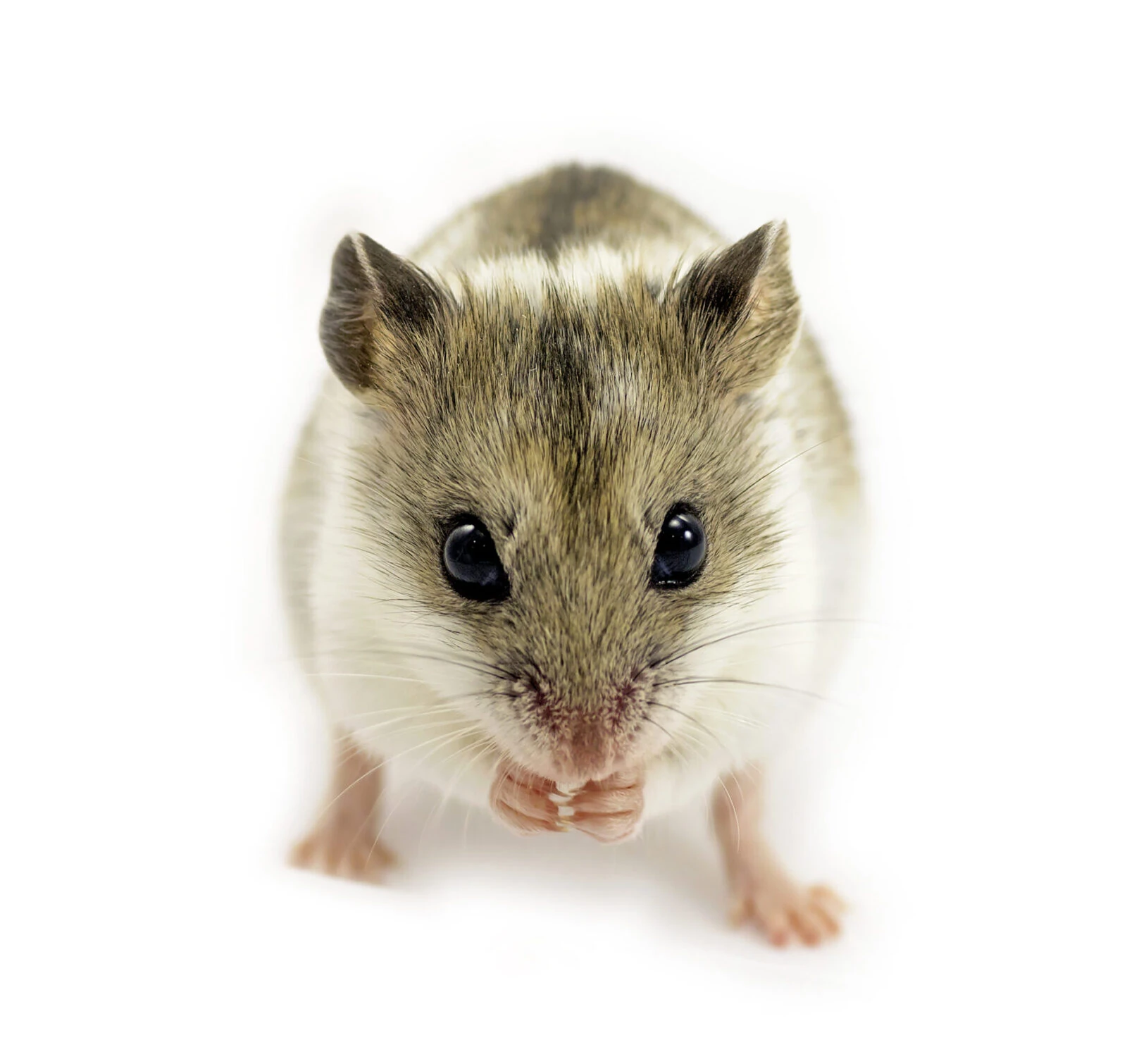
Chinese Hamster Ovary, or CHO, cells are widely used in the pharmaceutical industry. And, incredibly, these cells can be traced back to just twenty hamsters that were packed into a crate and smuggled out of China in the 1940s.
Chinese scientists had been using these hamsters — native to northern China and Mongolia — to study pathogens since at least 1919. The hamsters were unusually well-suited to scientific research because they have short gestation periods (18-21 days), a natural resistance to human viruses and radiation, and it was thought, early on, that they possessed just 14 chromosomes, making them easy to work with for mutation studies. (They actually have 22 chromosomes.)
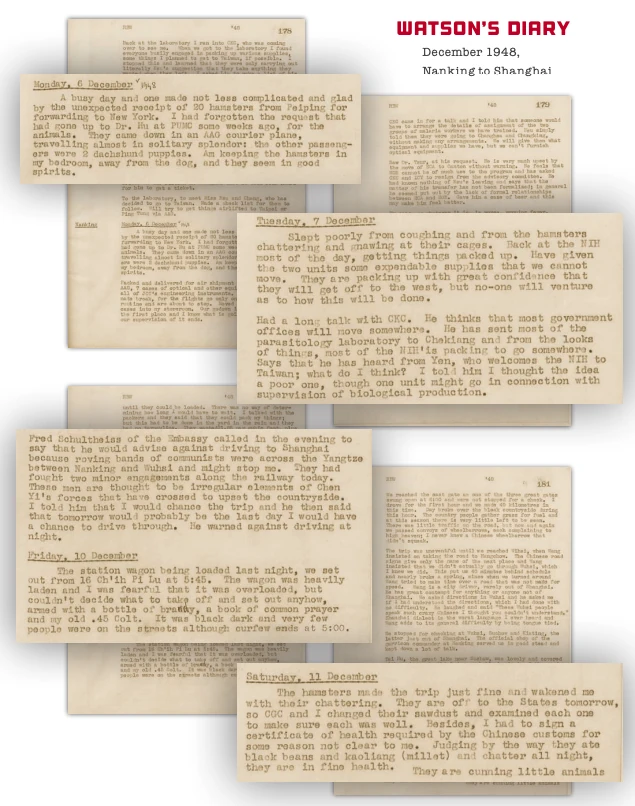
During the Chinese civil war, a rodent breeder in New York named Victor Schwentker worried that, if the Communists won the war, he’d never be able to get his hands on these special rodents. So in 1948, Schwentker sent a letter to Robert Briggs Watson, a Rockefeller Foundation field staff member, and asked him to “acquire” some hamsters so he could begin breeding them.
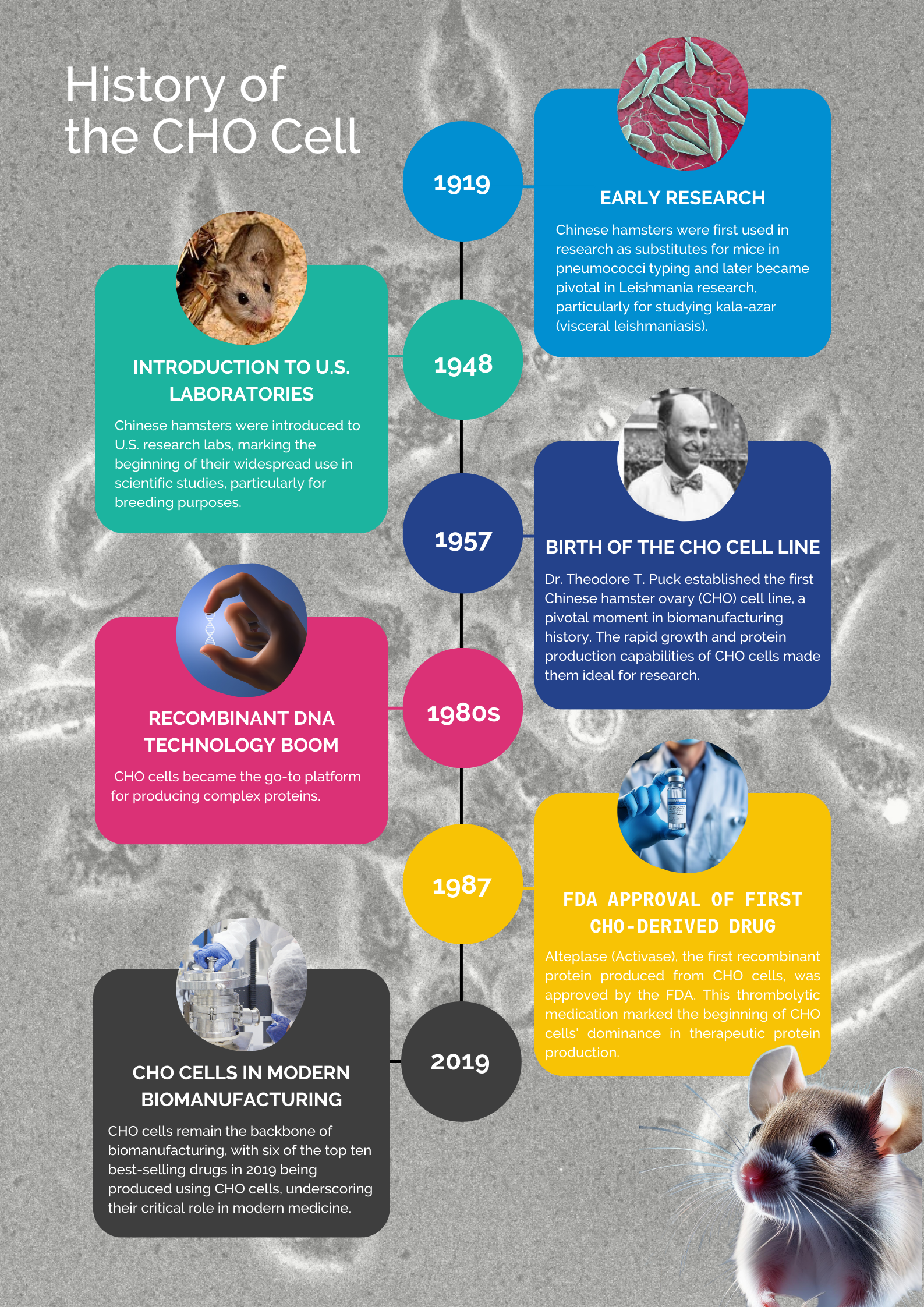
Watson collected ten males and ten females and packed them into a wooden crate with help from a Chinese physician (who was later imprisoned for this act). Watson slipped the crate out of the country on a Pan-Am flight from Shanghai, just before the Communists took control.
In New York, Schwentker received the hamsters and then began breeding and selling them to other researchers.
In 1957, a geneticist named Theodore Puck, intent on creating a new mammalian “model system” for in vitro experiments, learned about the Chinese hamster and contacted George Yerganian, a researcher at the Dana-Farber Cancer Institute, to obtain a specimen. Yerganian shipped Puck one female hamster.
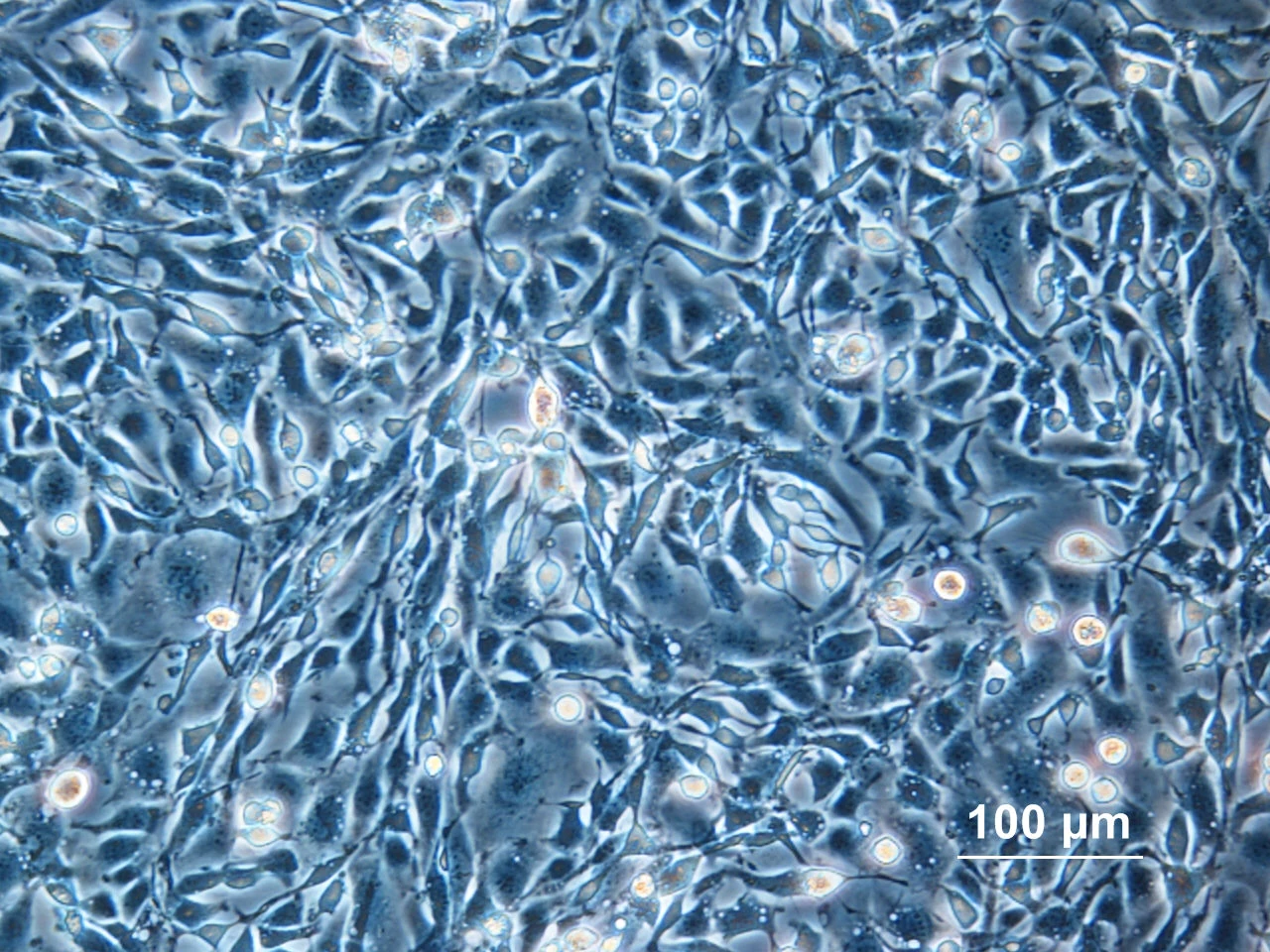
Puck took a small piece from this hamster’s ovary, plated the cells onto a dish, and passaged them repeatedly. He eventually isolated a clone that could divide again and again; an “immortalized” CHO cell with a genetic mutation that rendered it immune to normal senescence.
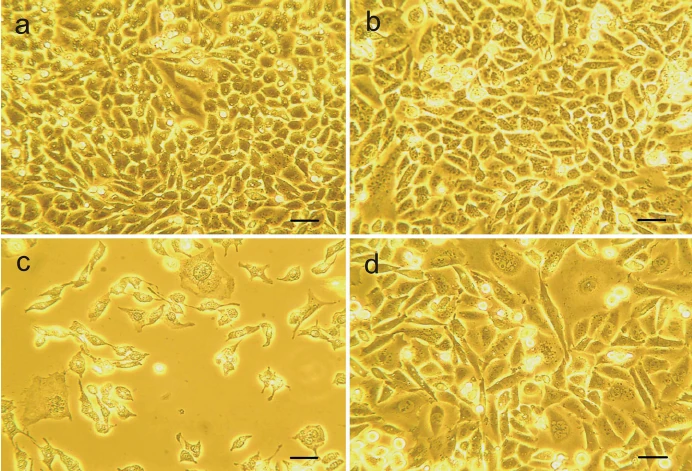
Today, descendants of these immortalized CHO cells make about 70 percent of all therapeutic proteins sold on the market, including Humira (USD 21 billion in sales in 2021) and Keytruda ($17 billion). Many of these drugs are monoclonal antibodies, or Y-shaped proteins that lock onto, and neutralize, foreign objects inside the body.
CHO cells are well suited to biotherapeutics because they can perform a biochemical reaction called glycosylation. Many human proteins, including antibodies, are decorated with chains of sugars that control how they fold or interact with other molecules in the body. Only a few organisms, mostly mammalian cells and certain yeasts, can do this chemical reaction.
I first learned about this history from a really spectacular article in LSF Magazine, called "Vital Tools: A Brief History of CHO Cells." I recommend it. (You can find it with a quick search.)
Video
-
Non-Human Alters
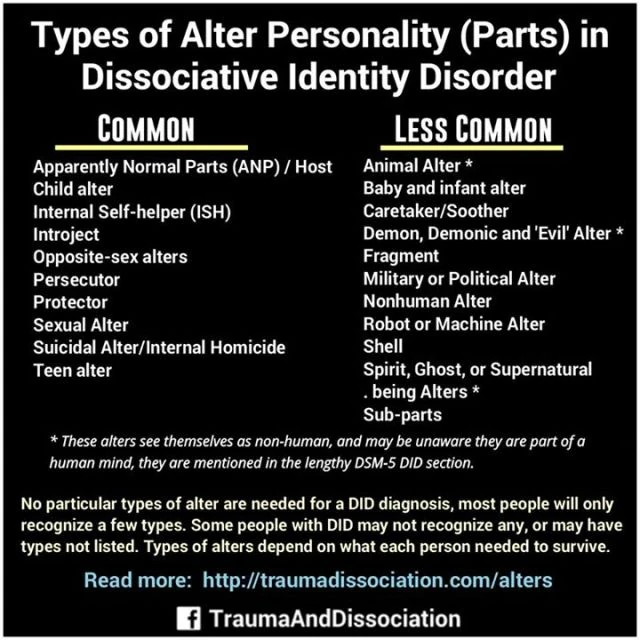
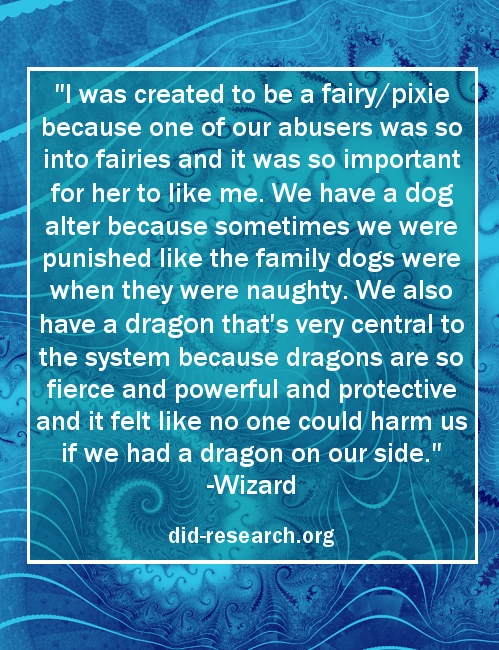
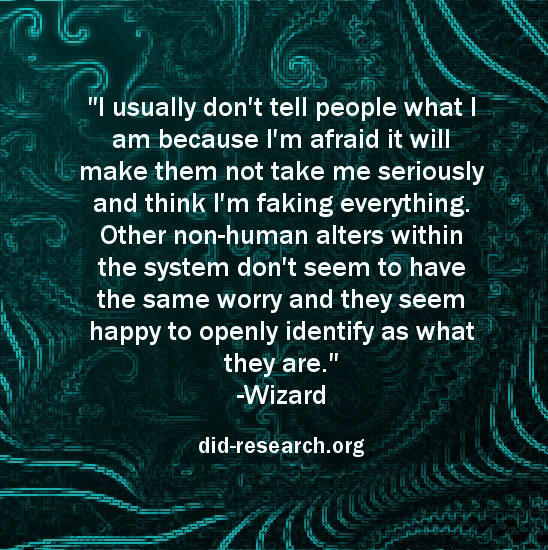
Non-human alters are parts of individuals with dissociative identity disorder (DID) that see themselves as animals, fantasy creatures, or hybrids. Like all other alters, non-human alters are the result of trauma and an already severely dissociative mind.
-
There's a bacteriophage that turns bacteria into “liquid crystals.”
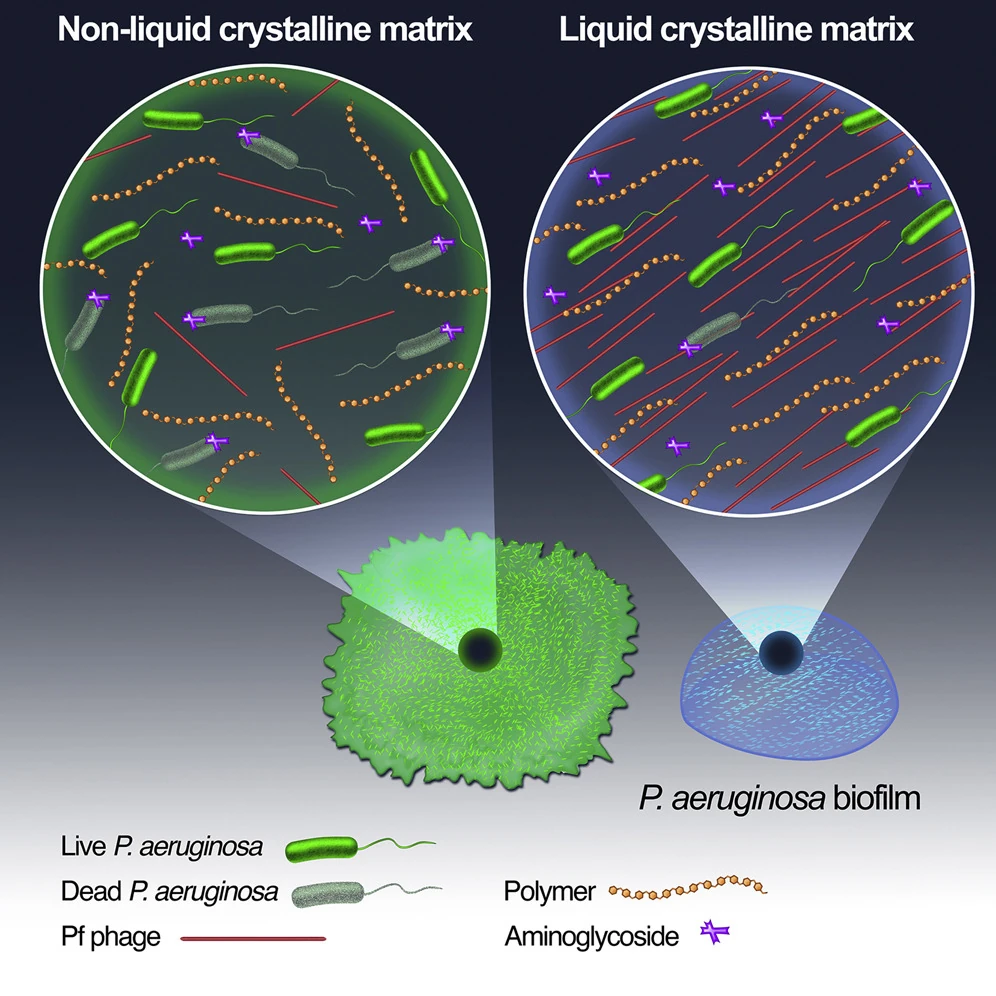
Specifically, Pseudomonas aeruginosa bacteria make Pf phages, which are rod-shaped, negatively-charged, and measure about 2 micrometers in length (roughly the length of an E. coli cell). These phages leave the cells and enter their surroundings. There, they mix with polymers, also secreted by the cells, to form a crystalline matrix.
Surprisingly, this is good for the cells. Although the phages kill some of them, it also makes their biofilms stickier and able to withstand certain antibiotics. These bacteria + phages are prevalent in cystic fibrosis patients; they've formed a sort of symbiotic relationship.
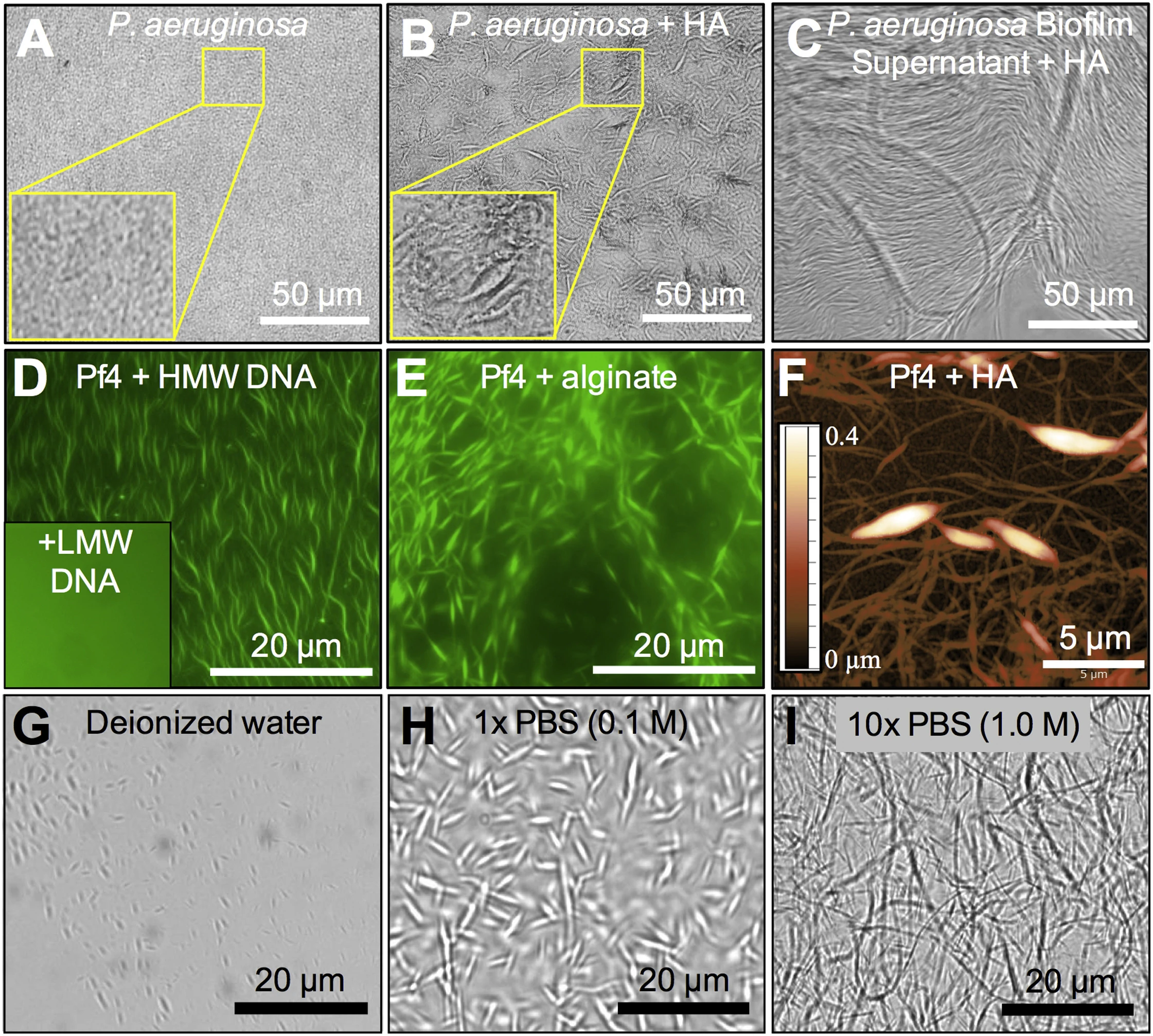
The Pf phages are made from thousands of repeating copies of a coat protein, called CoaB, which wraps around a single-stranded, circular DNA genome. These genes are integrated directly on the bacterial chromosome.
The bacteria “turn on” these phage genes when placed in a viscous environment with low oxygen levels. This is like a trigger to start forming a biofilm. And the cells make a lot of phages; about 100 billion per milliliter.
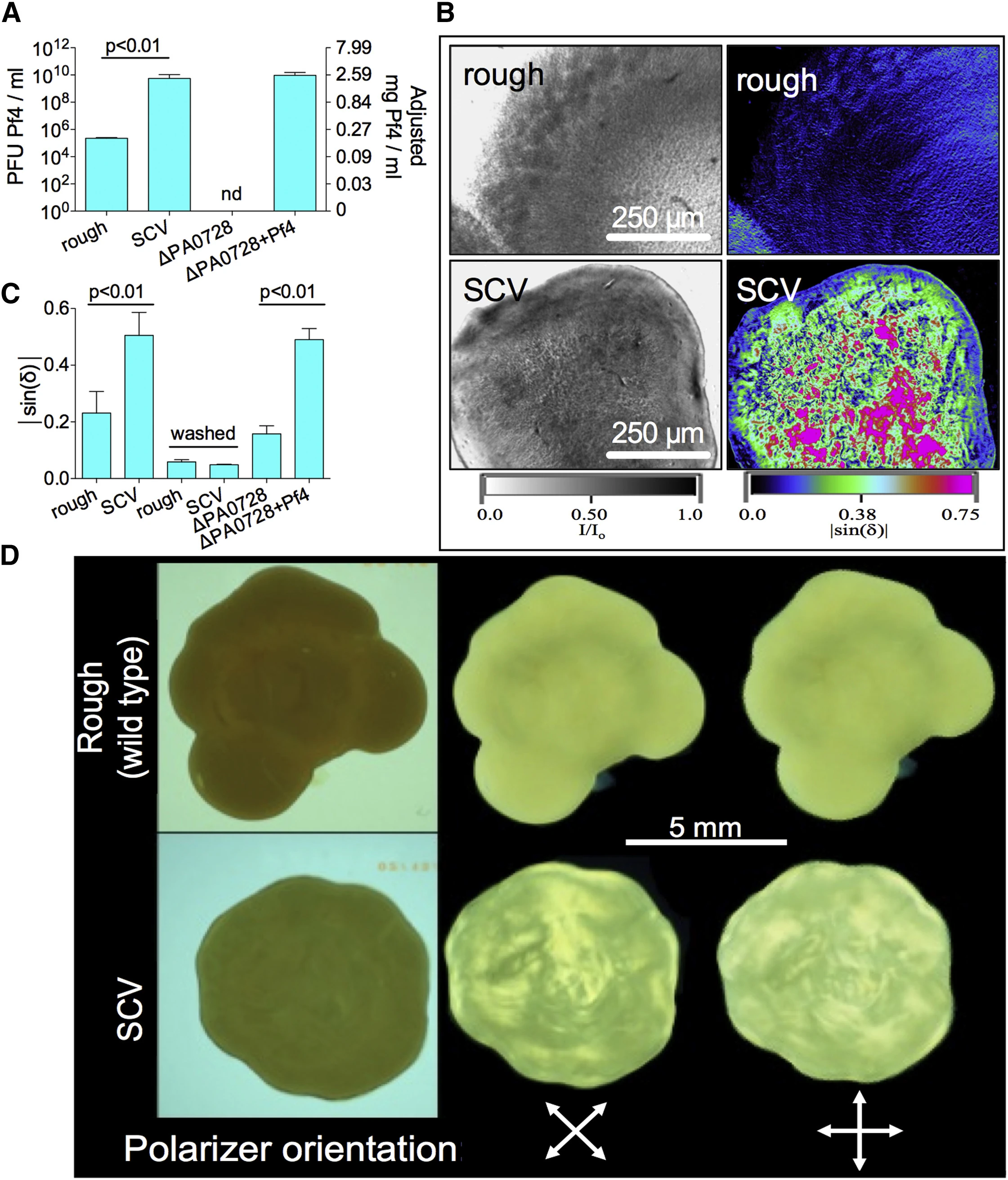
These liquid crystals form because of a physics principle called “depletion attraction.” If you just mix a bunch of loose or flexible polymers together (such as long carbon chains) they will not form a liquid crystal. But if you mix stiff rods (the phages) with loose polymers at a high enough concentration, the polymers will force the phages close together to create a material that flows like a liquid despite being ordered like a crystal. See the video below.
These liquid crystal biofilms are hard to get rid of. The negatively-charged phages block many antibiotics (like aminoglycosides, which are positively-charged) from entering cells. Liquid crystals also retain water, so these biofilms can survive on drier surfaces.
Paper: Filamentous Bacteriophage Promote Biofilm Assembly and Function
-
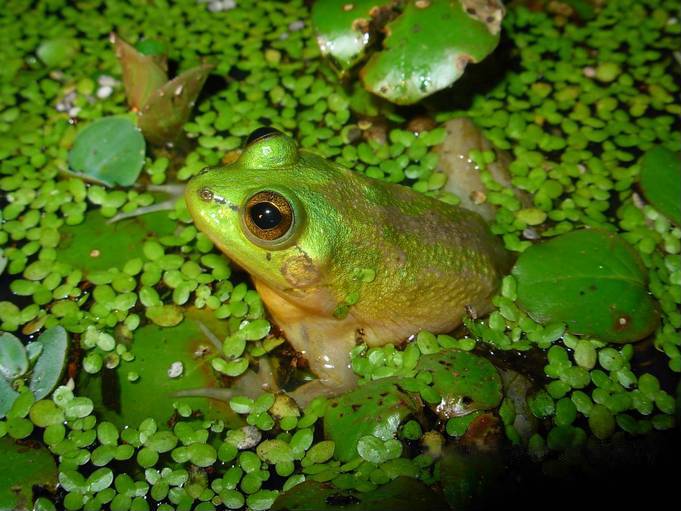
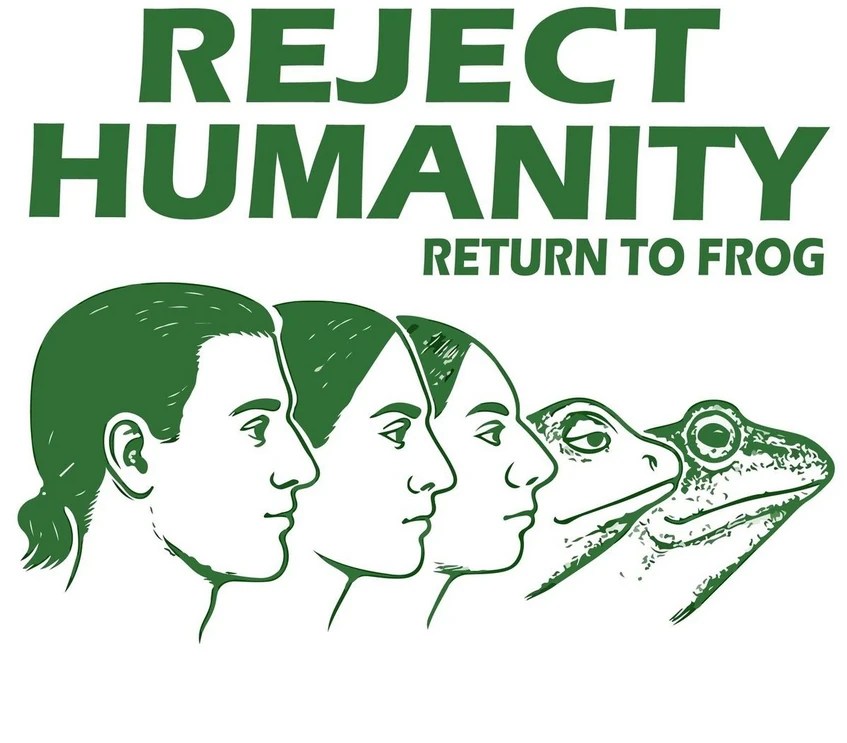
7 amazing frog facts 🐸
- Some frogs are basically transparent. Glass frogs have see-through skin on their bellies. You can literally see their beating heart and organs.
- Frogs can freeze solid and come back to life. Wood frogs survive winter by freezing almost completely. Their heart stops, they don’t breathe, then they thaw in spring and hop away like nothing happened.
- They drink water through their skin. Frogs don’t need to drink with their mouths. They absorb water directly through a special patch of skin on their belly called the “drink patch”.
- Some frogs are extremely poisonous without making poison themselves. Poison dart frogs get their toxins from the insects they eat. In captivity, without those insects, they become harmless.
- The world’s largest frog is huge. The Goliath frog can grow up to 32 cm long and weigh over 3 kg. That’s heavier than many cats.
- Frogs can be louder than chainsaws (relative to size). Certain frogs amplify their calls using inflatable vocal sacs. For their body size, they are among the loudest animals on Earth.
- Some frogs can glide through the air. “Flying frogs” don’t actually fly, but they spread their webbed feet and glide from tree to tree like tiny parachutists.
-
The brain doesn’t “store data”; it maintains resonant attractors that compress meaning into dynamics. Each oscillatory pattern is a lossy, context-dependent summary of prior experience that can be expanded (decoded) when needed. In other words: The brain’s oscillations are not just rhythms, they are compressive, generative codecs of reality.
-
No man is an island
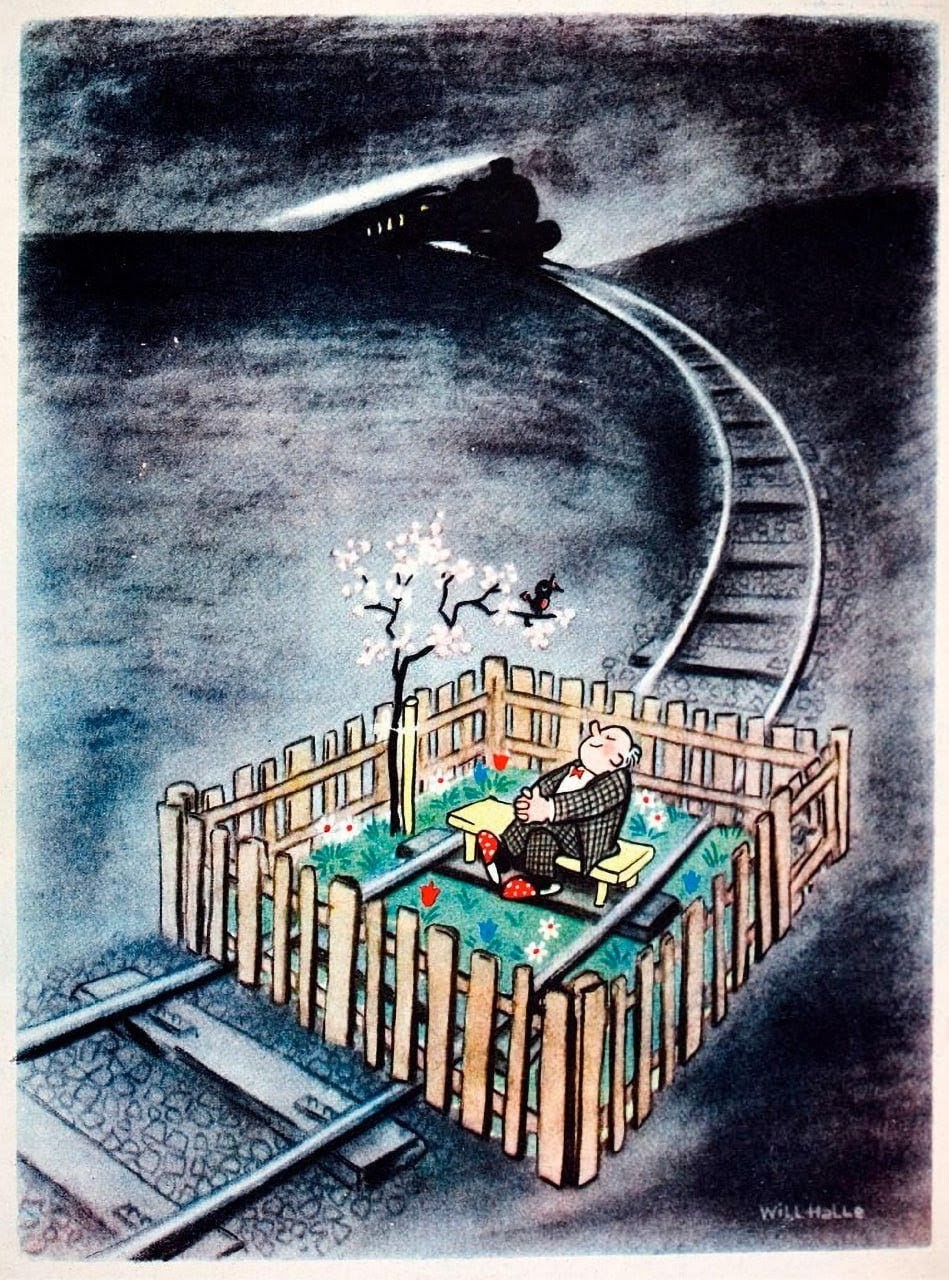
"No man is an island,
Entire of itself;
Every man is a piece of the continent,
A part of the main.If a clod be washed away by the sea,
Europe is the less,
As well as if a promontory were:
As well as if a manor of thy friend's
Or of thine own were.Any man's death diminishes me,
Because I am involved in mankind.
And therefore never send to know for whom the bell tolls;
It tolls for thee."- John Donne, Meditation XVII, 1624
-
The tetrahelix model of DNA
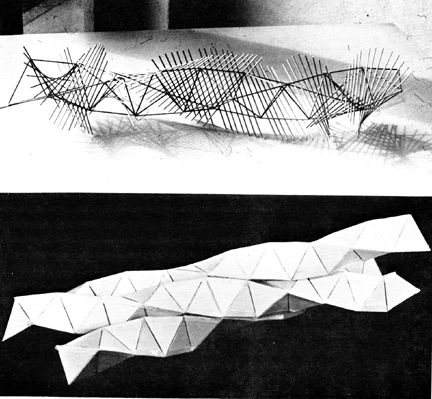
Buckminster Fuller proposed the tetrahelix model as a physical and conceptual analogue to the DNA double helix, suggesting it could explain fundamental biological patterning and the complexity of DNA. The tetrahelix is a structure of interconnected tetrahedra that forms a helical column, with ten tetrahedra completing one full 360° turn. Fuller believed this structure's characteristics, such as its rigidity and nested helical patterns, mirrored aspects of DNA's structure and function.
-
Magnetosomes
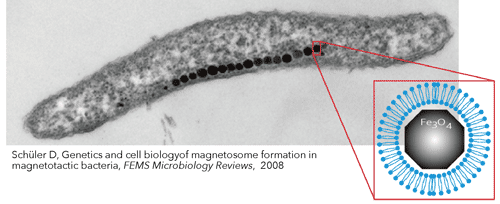
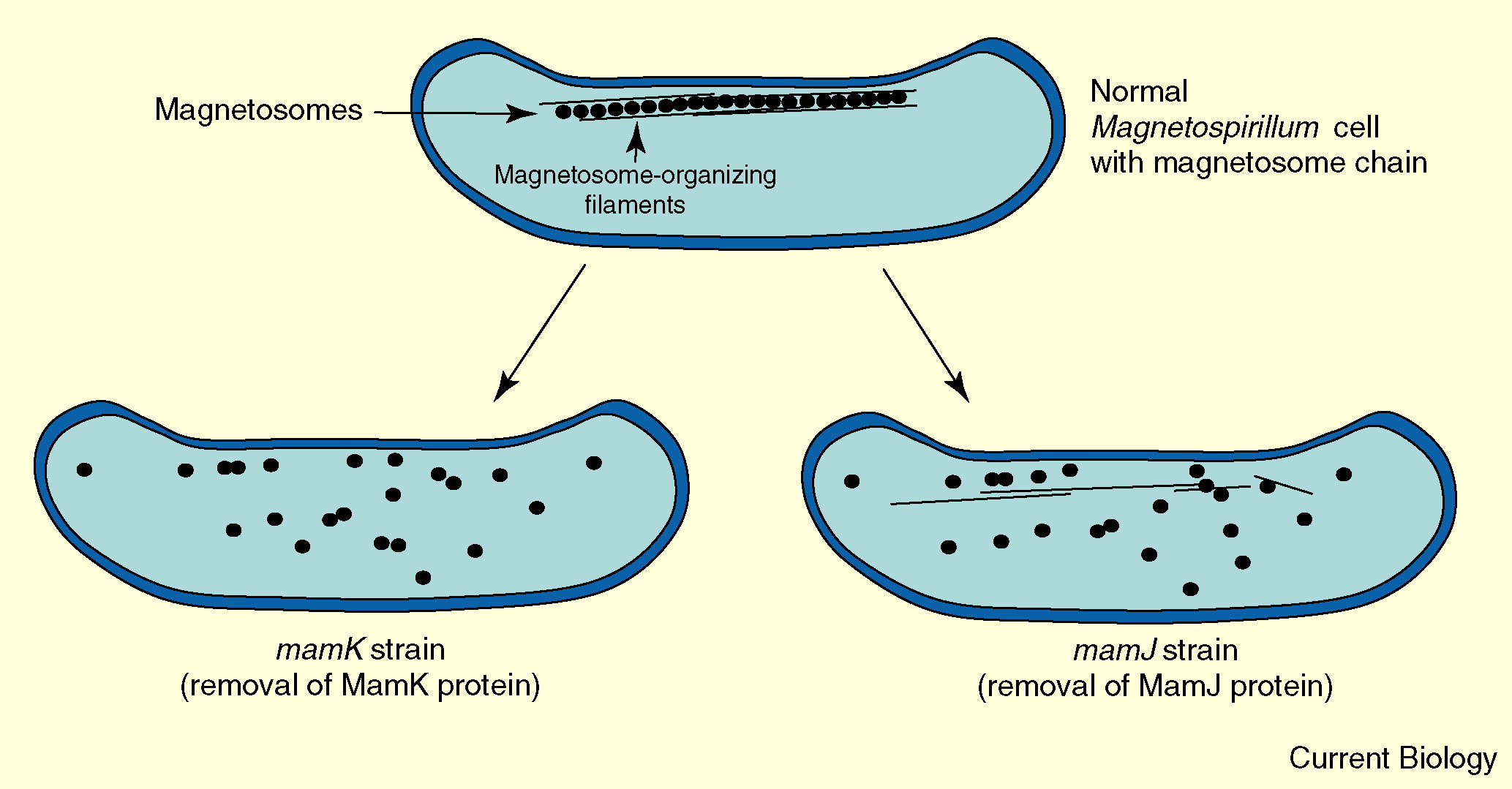
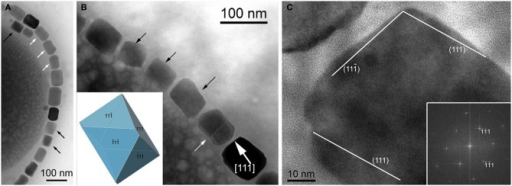
Magnetosomes are unique intracellular structures found in magnetotactic bacteria, which are a diverse group of bacteria that orient themselves along magnetic field lines. These structures have a permanent magnetic moment due to the magnetic minerals they contain.
The term magnetosome derives from the Greek words "magneto," meaning magnet, and "soma," meaning body. Each magnetosome consists of a small, membrane-bound crystal of a magnetic mineral, most commonly magnetite (Fe3O4) or greigite (Fe3S4). These crystals are biological in origin and are synthesized by the bacteria themselves. The magnetosomes within a cell align to form a chain, effectively creating a tiny biological compass needle.
The fact that these magnetosomes influence the direction of motion of magnetotactic bacteria is a remarkable example of nature's ingenuity. This process, known as magnetotaxis, enables the bacteria to navigate effectively in their environment. The bacteria use the Earth's magnetic field to orient themselves and swim in a preferred direction, which is typically downward, into the sediment where the environment is oxygen-poor and more conducive to their survival.
The magnetosome chain acts like a compass needle, aligning the bacteria with the Earth's magnetic field. This alignment is not perfect, and the bacteria tend to swim in a helical path rather than a straight line. However, this behavior ensures that, on average, they will move in the direction of their preferred habitat.
-
"Although Max Delbrück held some anti-reductionist views; he conjectured that ultimately a paradox—akin perhaps to the waveparticle duality of physics—would be revealed about life."
Max Debrück and some members of the Phage group at Caltech in 1949.
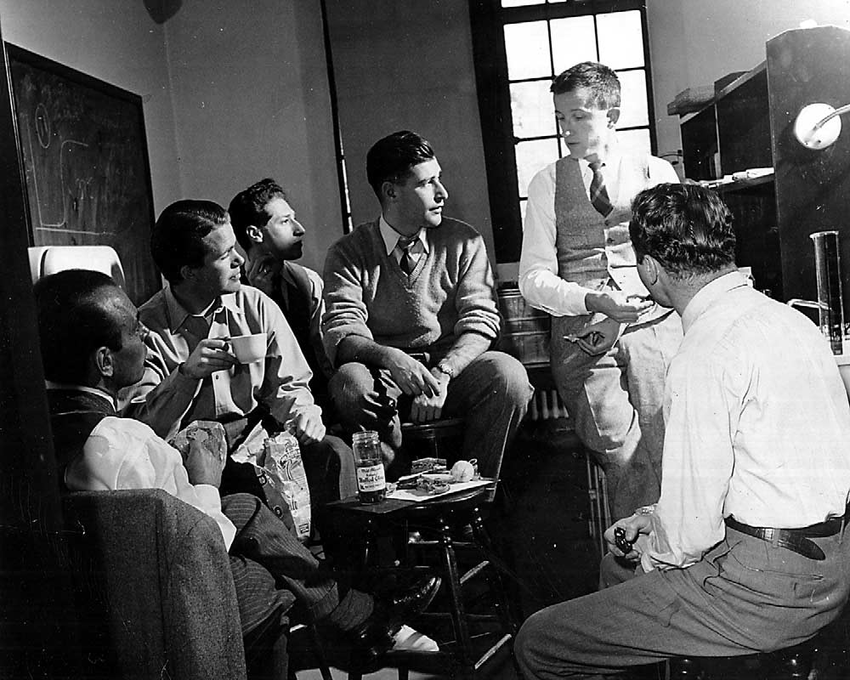
Interview with Delbrück, 1980
-
Downsampling in the human visual system:
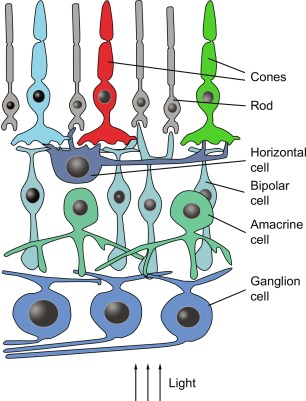
Retina: ~130 million photoreceptors
↓ (huge compression)
Optic nerve: ~1 million ganglion cells
↓ (further processing)
V1 cortex: ~280 million neurons (but organized hierarchically)
Plus: Your fovea (central vision) has high resolution, but peripheral vision is heavily downsampled. Your brain reconstructs a "full resolution" world from mostly low-res input.
-
Constructivist biosemiotics foundations.
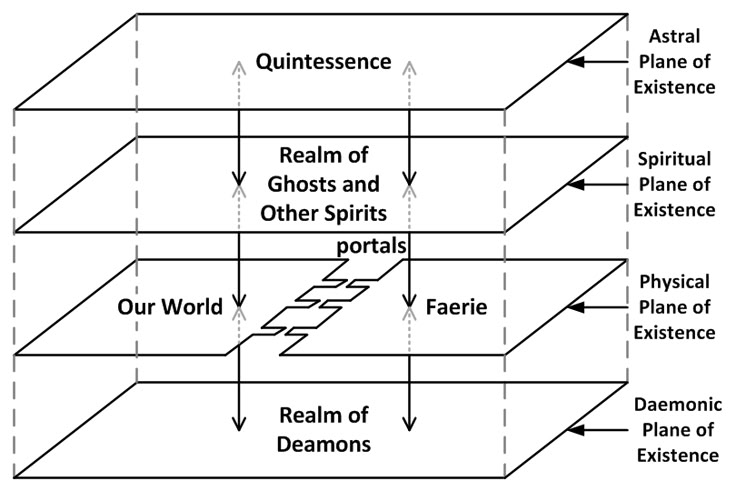

Source: a, bPunch’s cartoon that show succinctly the cognitivist third-person hypothesis and the alternative one. a In the cognitivist third-person hypothesis, to catch his prey, for the observer, the kingfisher must represent in its brain the Snell’s refraction law by information processing. b The constructivist lecture show how the significance levels can be seen arising from the underlying structural network of the kingfisher and the model of the observer. c René Magritte’s painting (1928–29) pointing out the levels of realms in cognitive relations. A painted pipe is just an approximate map of a real pipe. d M.C. Escher’s Print Gallery lithograph showing how a young man is standing inside the same print as the one he is looking at. A constructivist interpretation in first-person indicates that what is observed is an active and enactive relation of the observer, depicting the complex closed loop of embodiment relations. e Rosen’s Modeling Relation shows that the observation of natural systems, governed by causal relations, is a cognitive act reflected in the relations of measurement and prediction subject to mathematical systems of inferential rules. If the mathematical system corresponds to the causal relations, then it can be assumed as a ‘Natural Law’. f Maturana draws how nervous system, though organizationally closed, use language to loop-through the other. g Minimization of free energy by active inference and prediction error indicates one possible formal representation of cognition and autopoiesis