tag > China
-
In Coronavirus Fight, China Gives Citizens a Color Code, With Red Flags (NYTimes)
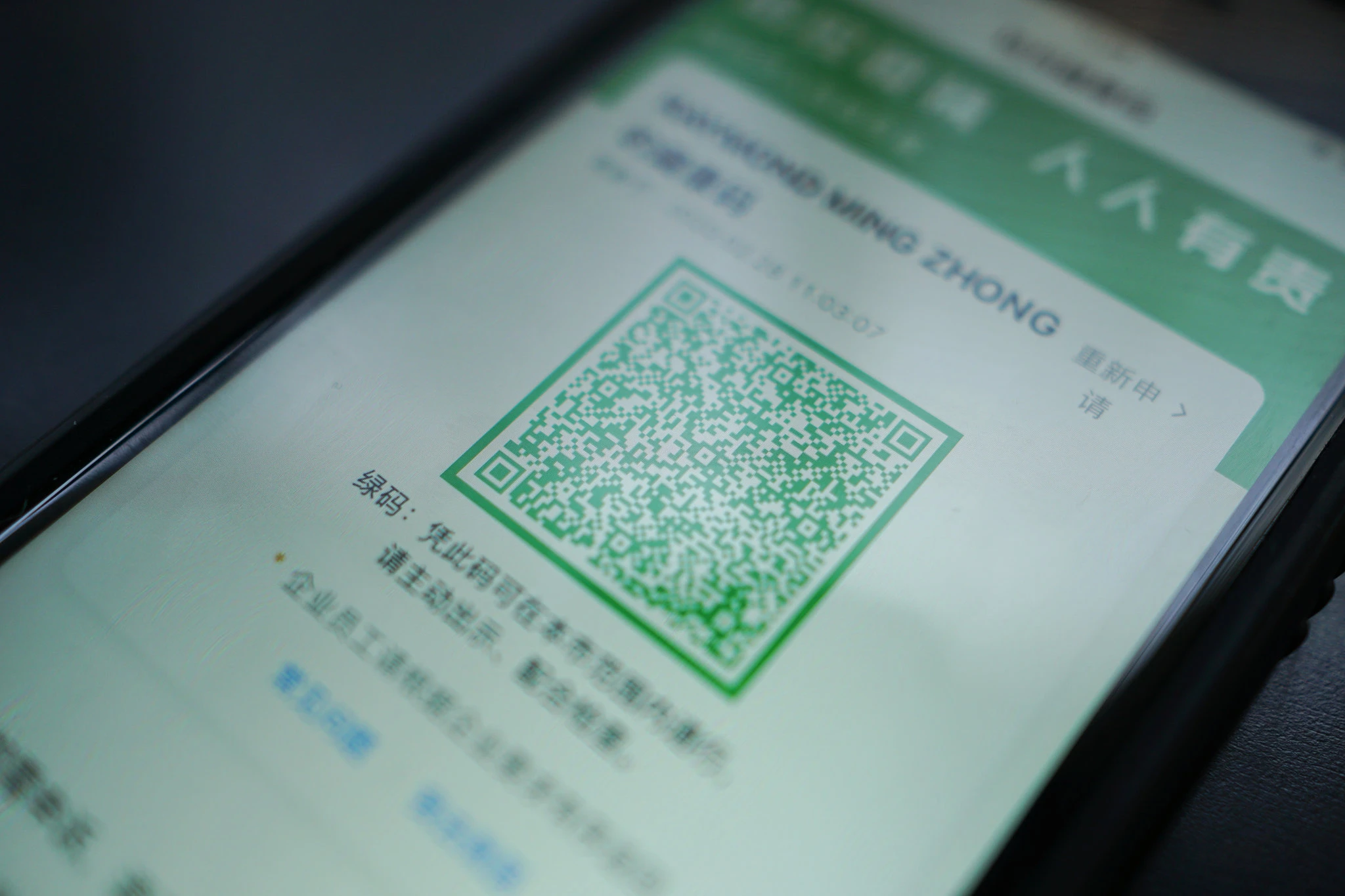
The QR code inside the Alipay app. Green is good, and allows the holder to travel freely. As China encourages people to return to work despite the coronavirus outbreak, it has begun a bold mass experiment in using data to regulate citizens’ lives — by requiring them to use software on their smartphones that dictates whether they should be quarantined or allowed into subways, malls and other public spaces. It also appears to share information with the police, setting a template for new forms of automated social control that could persist long after the epidemic subsides.
#Comment: Rest assured, NSA & co have been implementing similar cybernetic social control systems for quite some time - just with the added "freedom and democracy" PR packaging.
-
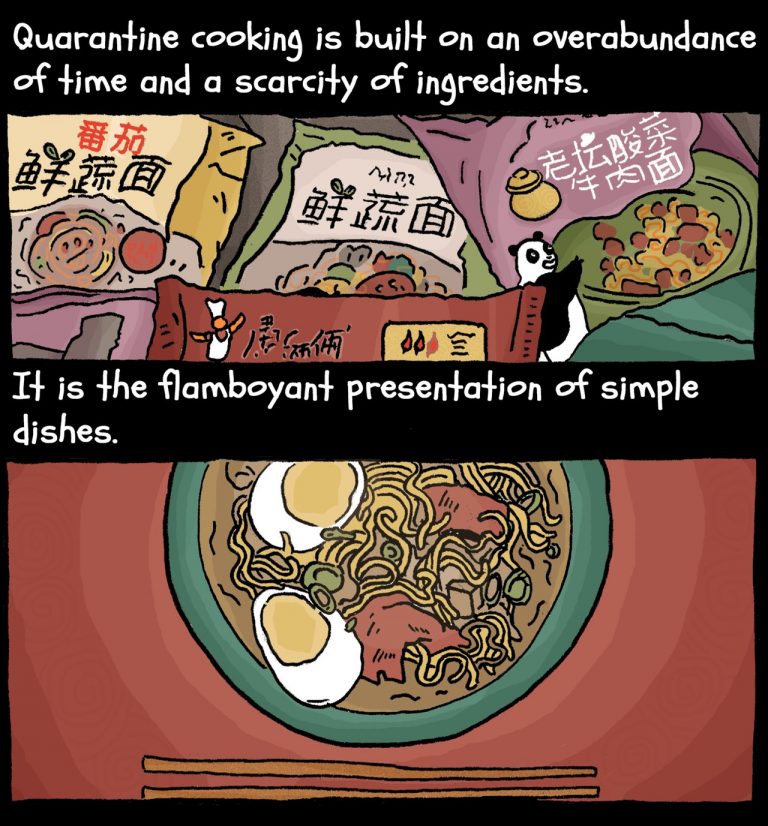
Coronavirus side-effect: Transformation of China’s business models, logistics, and service delivery - by Niti Bhan
Just the way the SARs epidemic kicked off China’s e-commerce revolution back in 2003, the ongoing COVID-19 containment strategies maybe triggering an even larger transformation of the Chinese economic ecosystem.
-
China has built an antenna five times the size of New York – but at what risk? (NZherald, 2019)
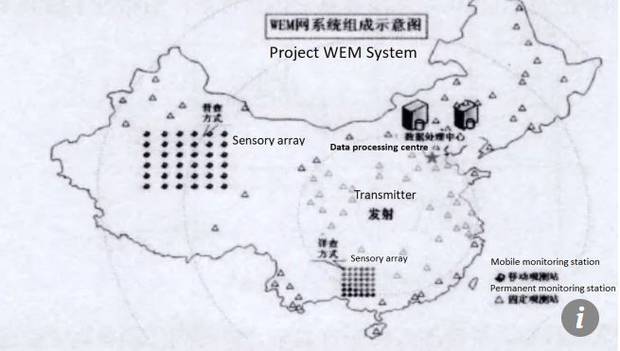
"The exact location of the project has not been disclosed." The Wireless Electromagnetic Method (WEM) project took 13 years to build but researchers said that it was finally ready to emit extremely low frequency radio waves, also known as ELF waves. Although the project has civilian applications – officially it will be used for earthquake and mineral detection and forms part of China's 11th five-year plan – it could also play a crucial role in military communications.
-
China Confronts COVID19 with Endless Creation Towards a Shared Future for Mankind - by Peter Koenig (Neo - New Eastern Outlook)
The new coronavirus (2019-nCoV / COVID19) has as of this date killed more than 3,000 people and infected more than 80,000 around the globe, the vast majority of them in China. The virus has spread to at least 33 countries. What western media do not talk about is that with high probability the virus was man-made in one or several bio-warfare laboratories of which the Pentagon and CIA have about 400 around the world. But such high-security bio-labs also exist in Canada, the UK, Israel and Japan. Western media also are silent about the fact that the virus is directed specifically at the Chinese race, meaning, it targets specifically Chinese DNA.
-
China’s Foreign Ministry has accused the United States of being a “hacker empire”
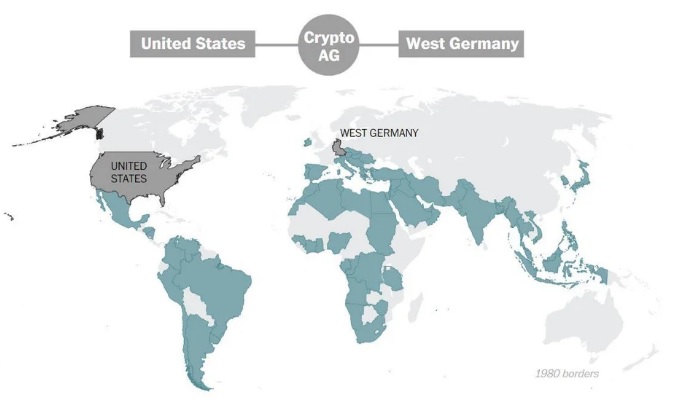
Map of Crypto AG "Customers" (victims) The CIA has been using the Crypto AG’s encoding devices to spy on over 120 countries for decades. Foreign Ministry spokesman Geng Shuang said facts have repeatedly shown that the US is the world’s largest monitor in cyberspace. He said its surveillance operations have no respect for international rules. The spokesman called on the US to give the international community an explanation."
-
China’s overall paper imports dropped another 39% last year
China bought less of the world’s recycled fiber in 2019, the second year in a row of major decreases in recycled material imports. And the country’s environmental ministry has reiterated plans for an all-out import ban next year.
-
Chinese government rolls out coronavirus ‘close contact detector’ app (BBC)
The “close contact detector” notifies users if they have had exchanges with any individuals who have been confirmed or suspected of carrying the virus. All users need to do is scan a QR code with an app like Alipay or WeChat. People at risk are then advised to stay at home or inform local health authorities.
#InfoSec #Health #Biology #Biotech #China #Augmentation #Cryptocracy
-
China’s Smartphone Shipments Could Drop 30% in Q1 Due to Coronavirus: IDC
China’s smartphone shipments are likely to suffer a year-on-year drop of more than 30% in the first quarter of 2020 due to the novel coronavirus that has led to the shutdown of countless handset manufacturing plants in the country, according to research firm IDC.
-
AI contributes to coronavirus diagnosis (China Daily)
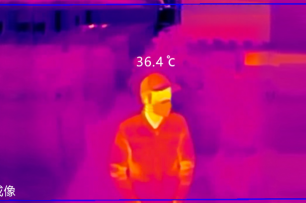
The Mudanyuan station on the Beijing subway's Line 10 uses an artificial intelligence based fever screening system. Developed by Beijing-based Megvii and put into use on Tuesday, it supports non-contact remote temperature screening from a distance of 3 meters. The system's margin of error is within 0.3 degree Celsius and it can send fever alerts for up to 15 people per second.
-
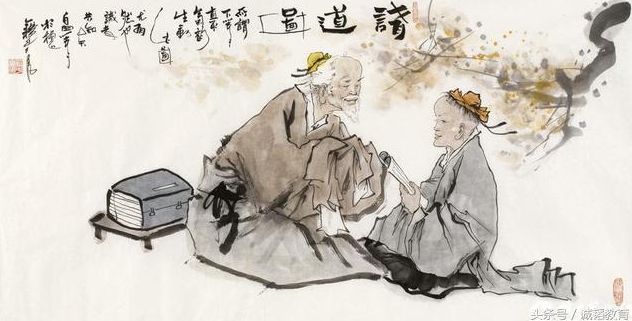
Wang Yangming (王陽明) - The Unity of Knowledge and Action
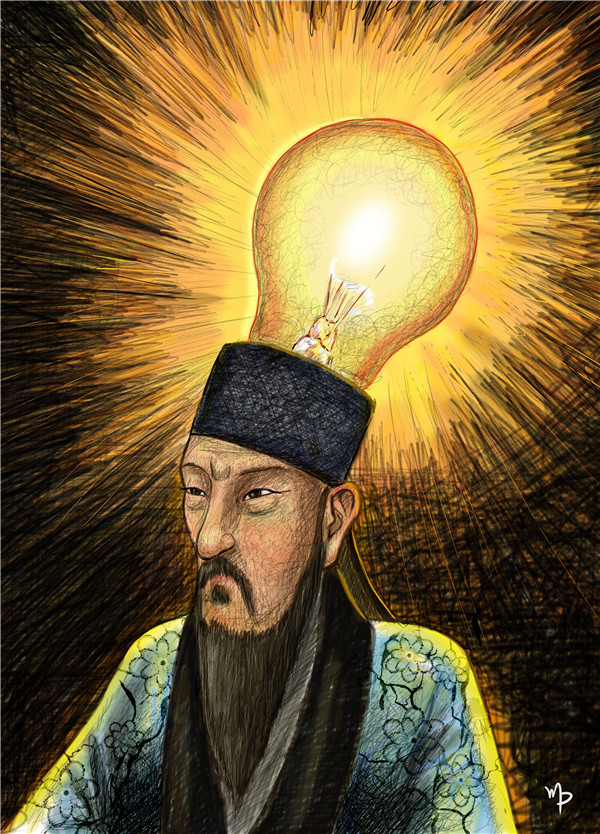
Wang Yangming (1472 - 1529) was a Chinese calligrapher, military general, philosopher, politician, and writer during the Ming dynasty. He is commonly regarded as the most important Neo-Confucian thinker, with interpretations of Confucianism that denied the rationalist dualism of the orthodox philosophy of Zhu Xi. Wang was the leading figure in the Neo-Confucian School of heart. This school championed an interpretation of Mencius, a Classical Confucian who became the focus of later interpretation, that unified knowledge with action. Their rival school, the School of Principle (Li) treated gaining knowledge as a kind of preparation or cultivation that, when completed, could guide action. (wikipedia)
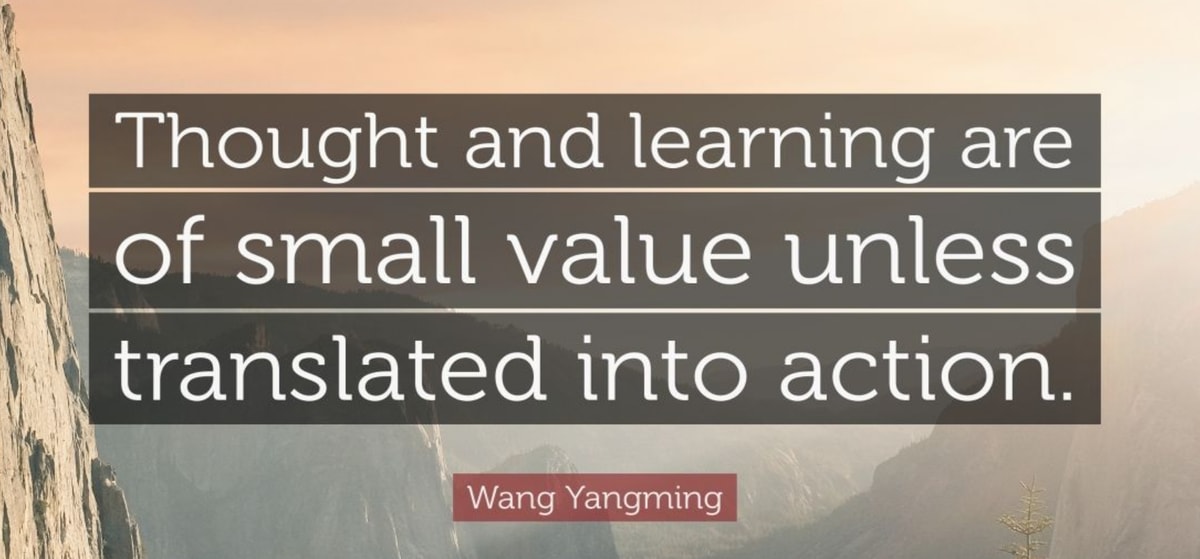
Wang Yangming: Integration of Knowledge and Action (text source)
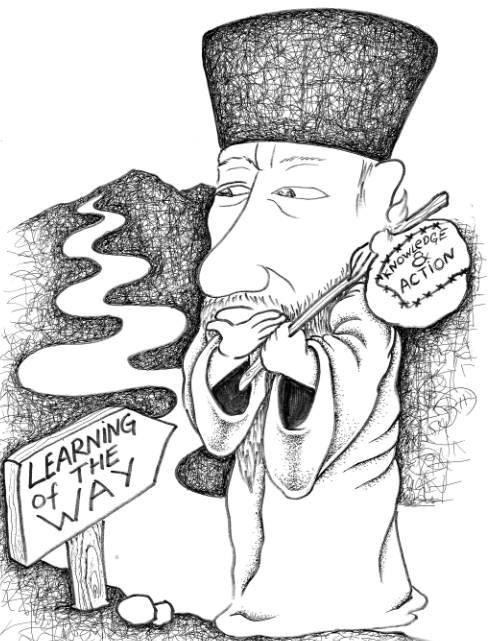
Wang Yangming was the leading figure in the Neo-Confucian School of Mind in Ming Dynasty. In his work about “Great Learning” or Daxue, Wang said, “A great learner makes himself united with Heavens, earth and all living beings. He views the whole world as one family, and all people as one individual.” With that, we understand that “great learning” is not just the learning for adults or learners with great mind, it relates to total harmony between human and nature. All things are ONE, not two, not three, not four. With this understanding, he can be named “gentleman of virtues” or “man of enlightenment”.
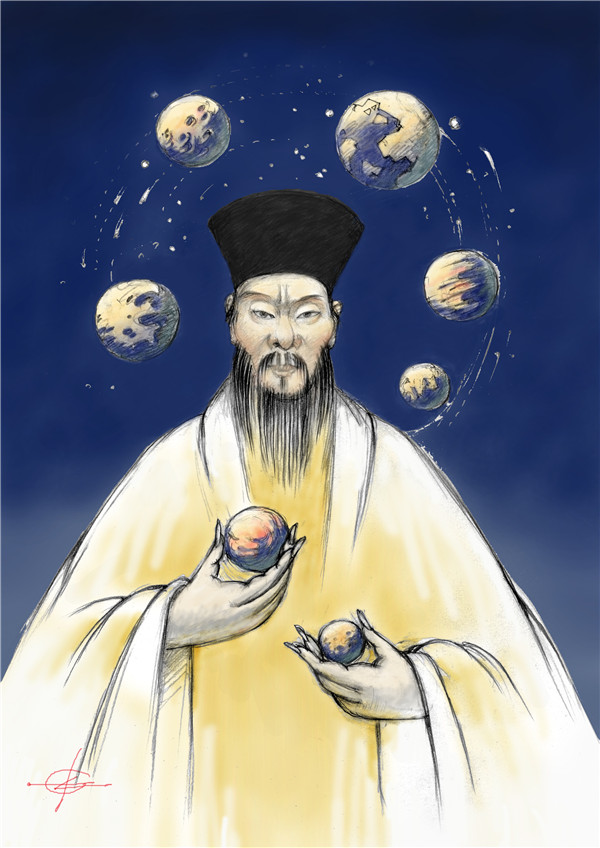
Out of Cheng-Zhu’s Neo-Confucianism that was mainstream at the time, Wang Yangming developed the idea of innate knowing, arguing that every person knows from birth the difference between good and evil. Wang claimed that such knowledge is intuitive and not rational.Wang said, “The man of supreme goodness is one of enlightenment and kindness to other people. He who loves his own father also loves the fathers of others; He who loves his own son also loves the sons of others. And he extends this goodness to animals and plants on earth”. Wang held that everything finally finds its root in the mind. It’s the goodness of the mind that directs people to do good to others.
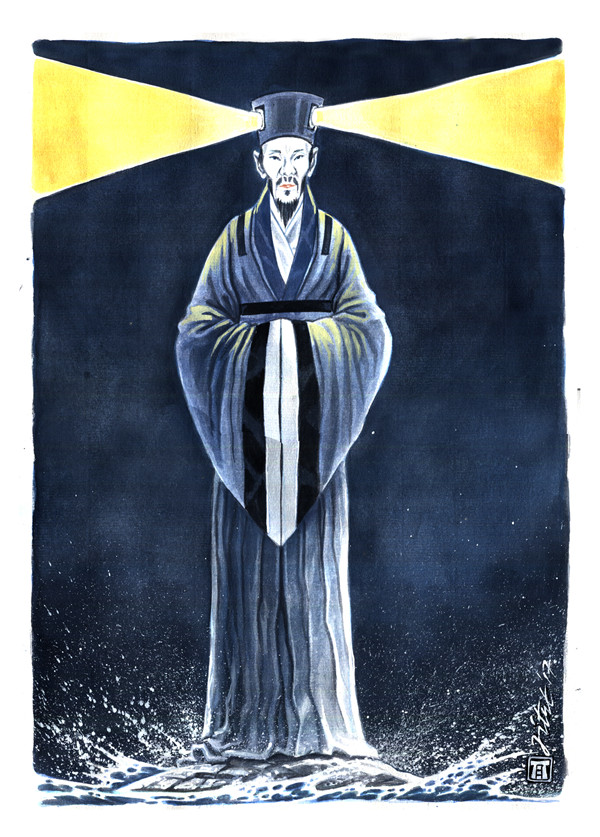
He spoke highly of the integration of knowledge and action.Wang’s rejection of the pure investigation of knowledge comes from the traditional view of Chinese belief that once one gained knowledge, one had a duty to put that knowledge into action. In develop his philosophy of action, Wang believed that only through simultaneous action could one gain knowledge and denied all other ways of gaining it. To him, there was no way to use knowledge after gaining it because he believed that knowledge and action were unified as one. Any knowledge that had been gained then put into action was considered delusion or false.
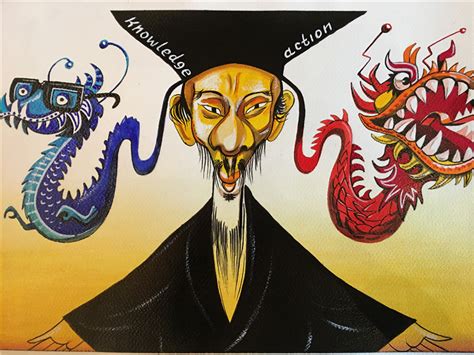
Confucius believes that one shall behave themselves as daily training before they can serve the nation and the people with good management. This training is all about the mind. Wang held that objects do not exist entirely apart from the mind because the mind shapes them. He believed that it is not the world that shapes the mind, but the mind that gives reason to the world. Therefore, the mind alone is the source of all reason.
He understood this to be an inner light, an innate moral goodness and understanding of what is good. Wang agreed with ancient philosophers that to be enlightened, one has to cut his selfish wants and desires. In order to eliminate selfish desires that cloud the mind’s understanding of goodness, one can practice his type of meditation often called tranquil repose or sitting still. This is similar to the practice of Zen meditation in Buddhism.
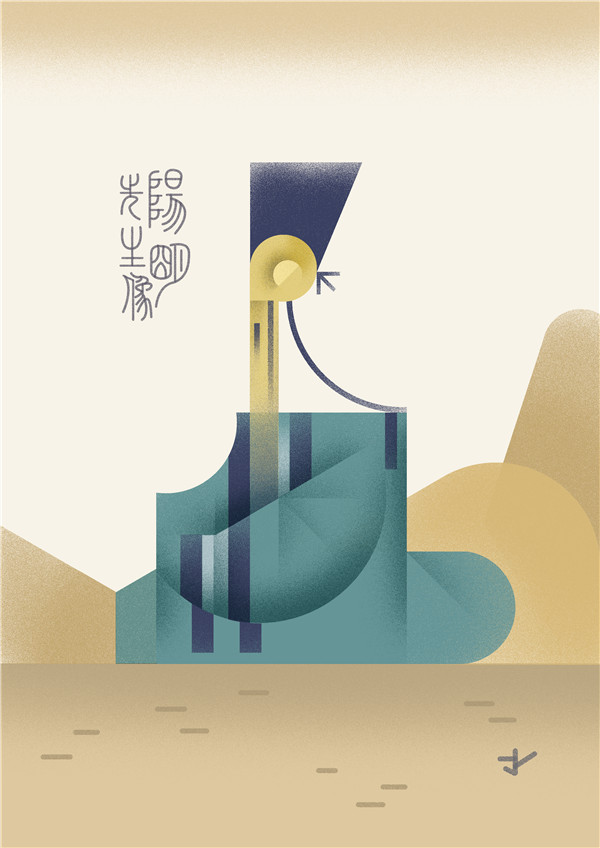
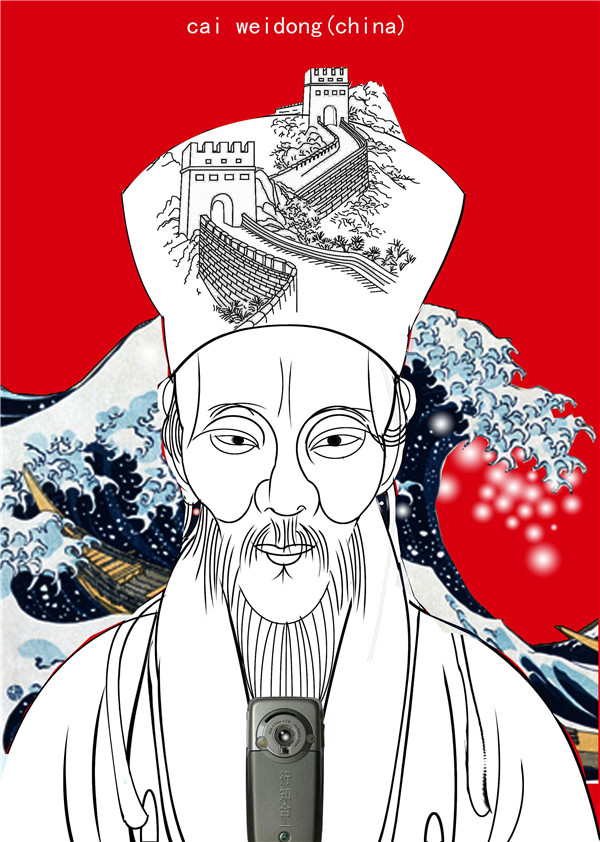
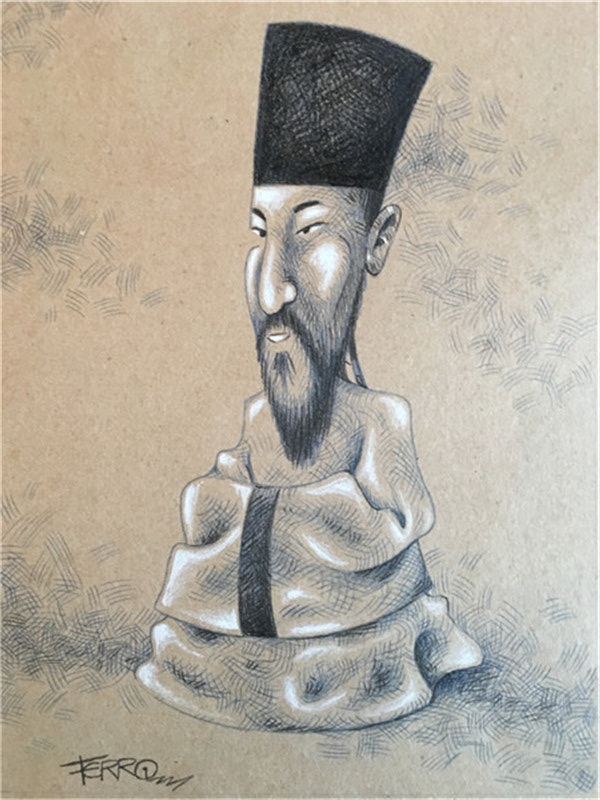
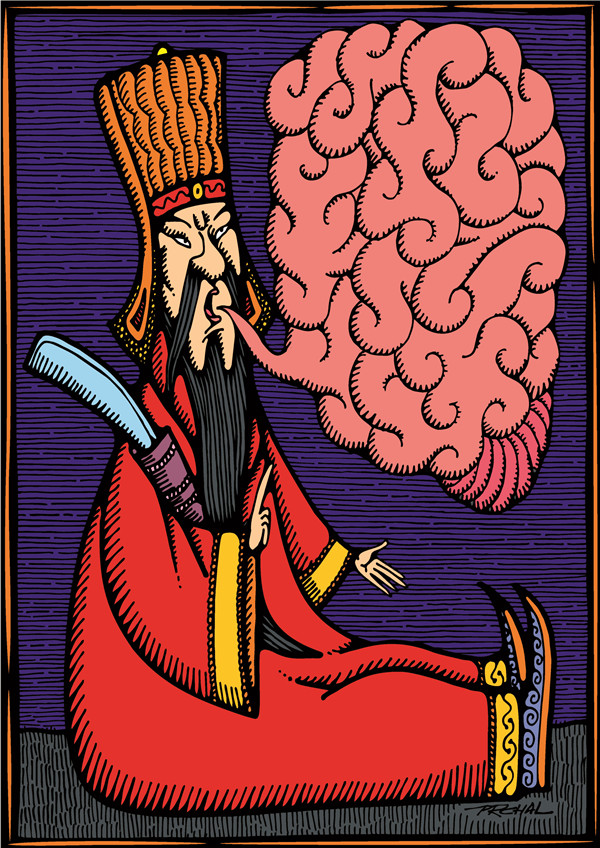
Wang Yangming Art
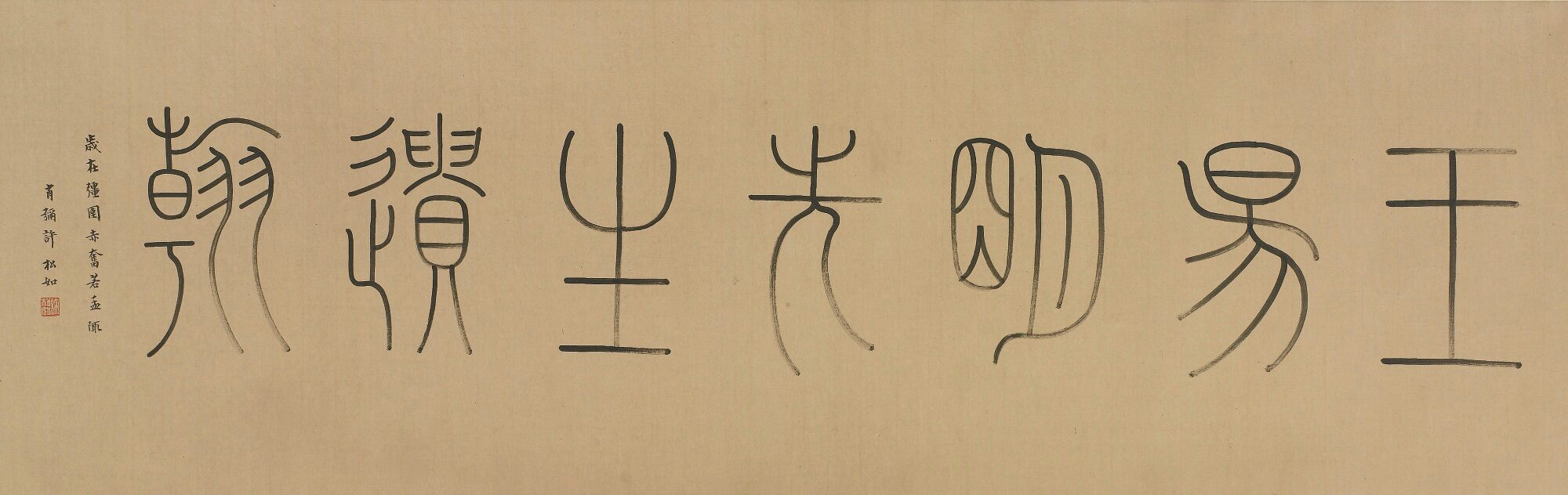
Wang Shouren - Poems in cursive script - Sold by Sothebys for 965,000 USD
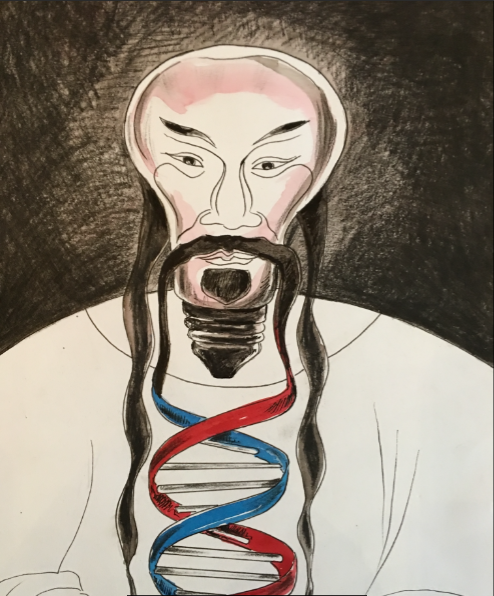
Wang Yangming Research
Presentation: "Neoconfucianism. Renewal of Confucianism Occurring in the Song dynasty Dàoxué – ( 道學 ) teachings of Dao Dàotong – ( 道统 ) transmission of Dao."
Knowledge is the beginning of action and action is the completion of knowledge.
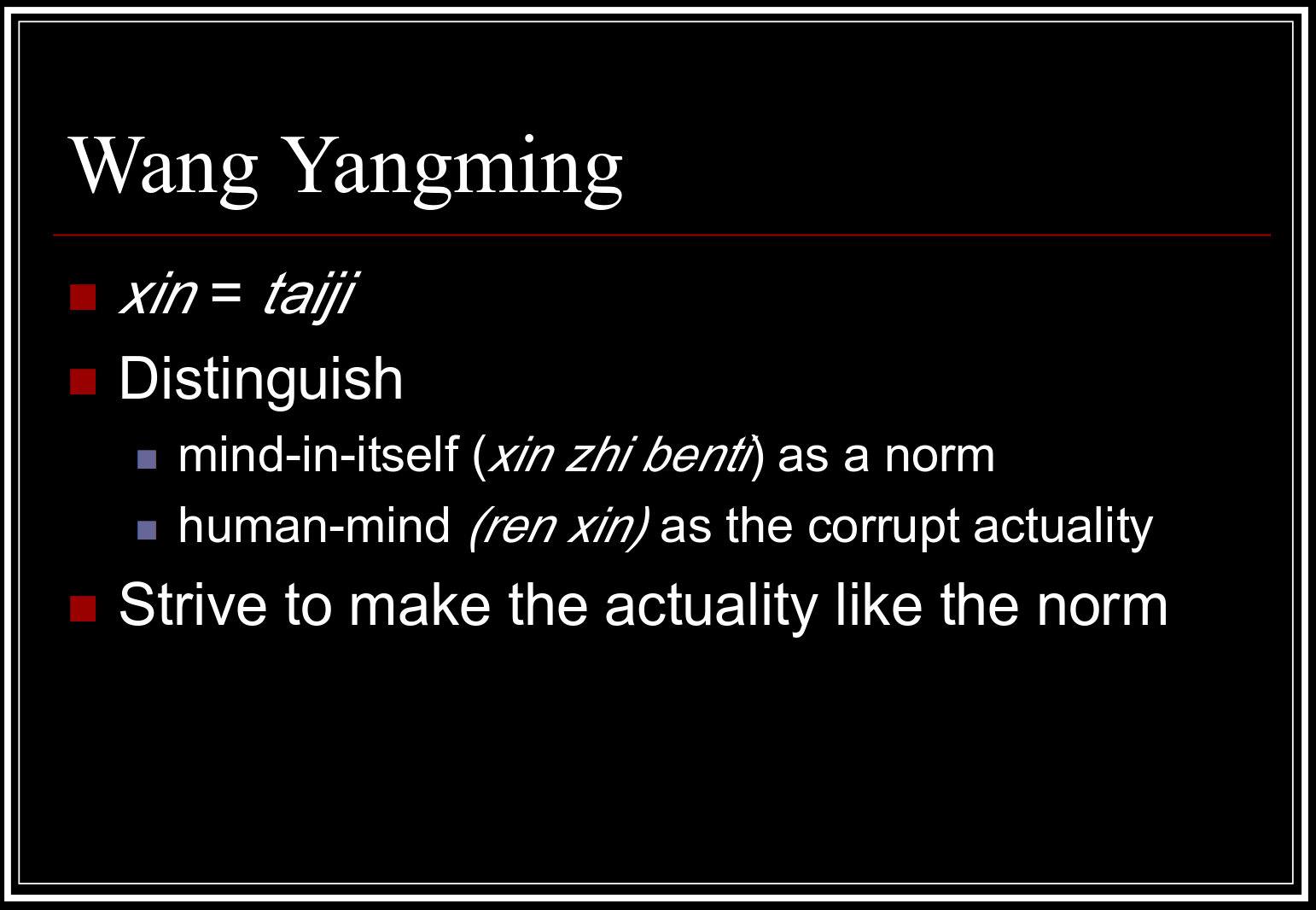
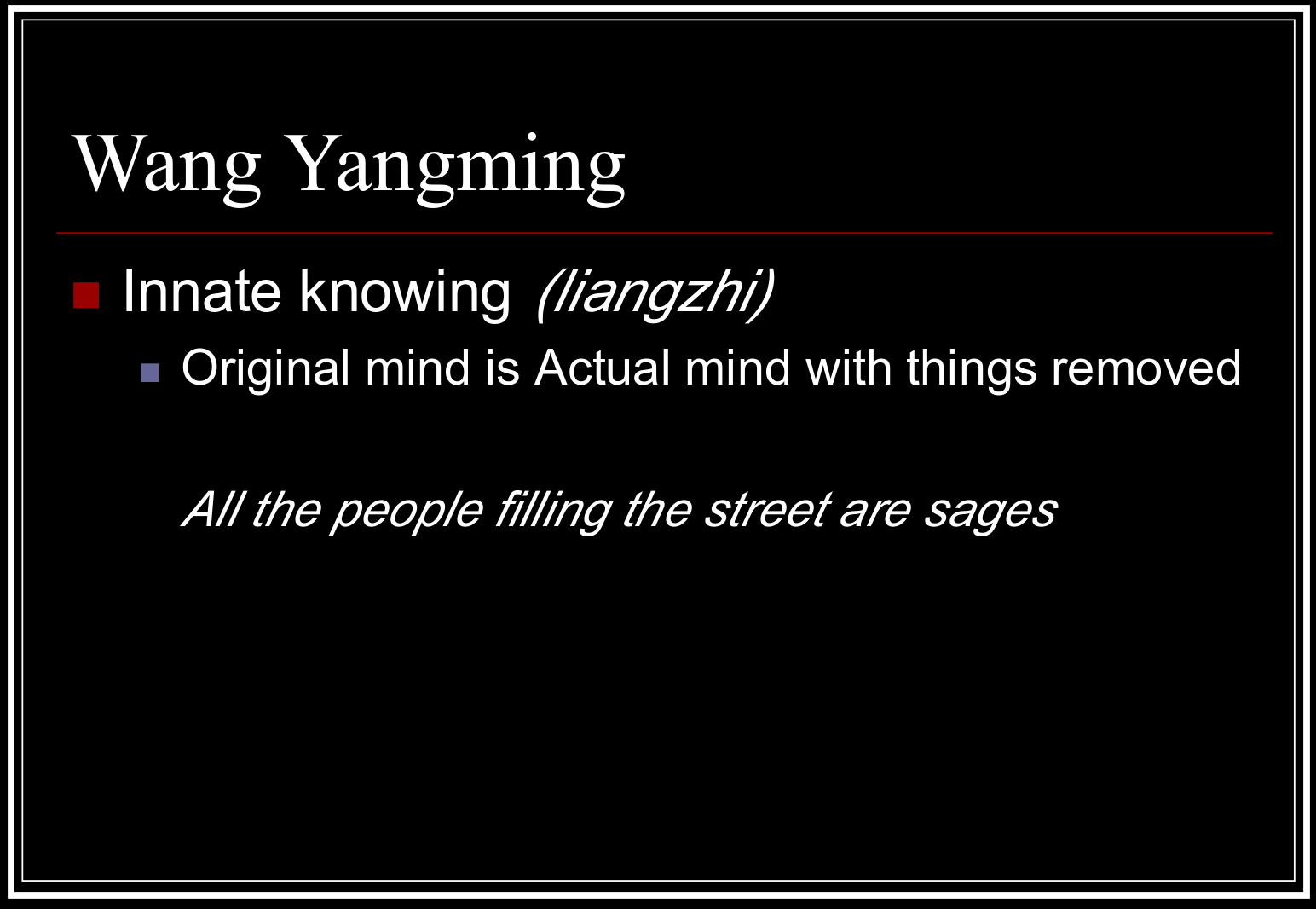
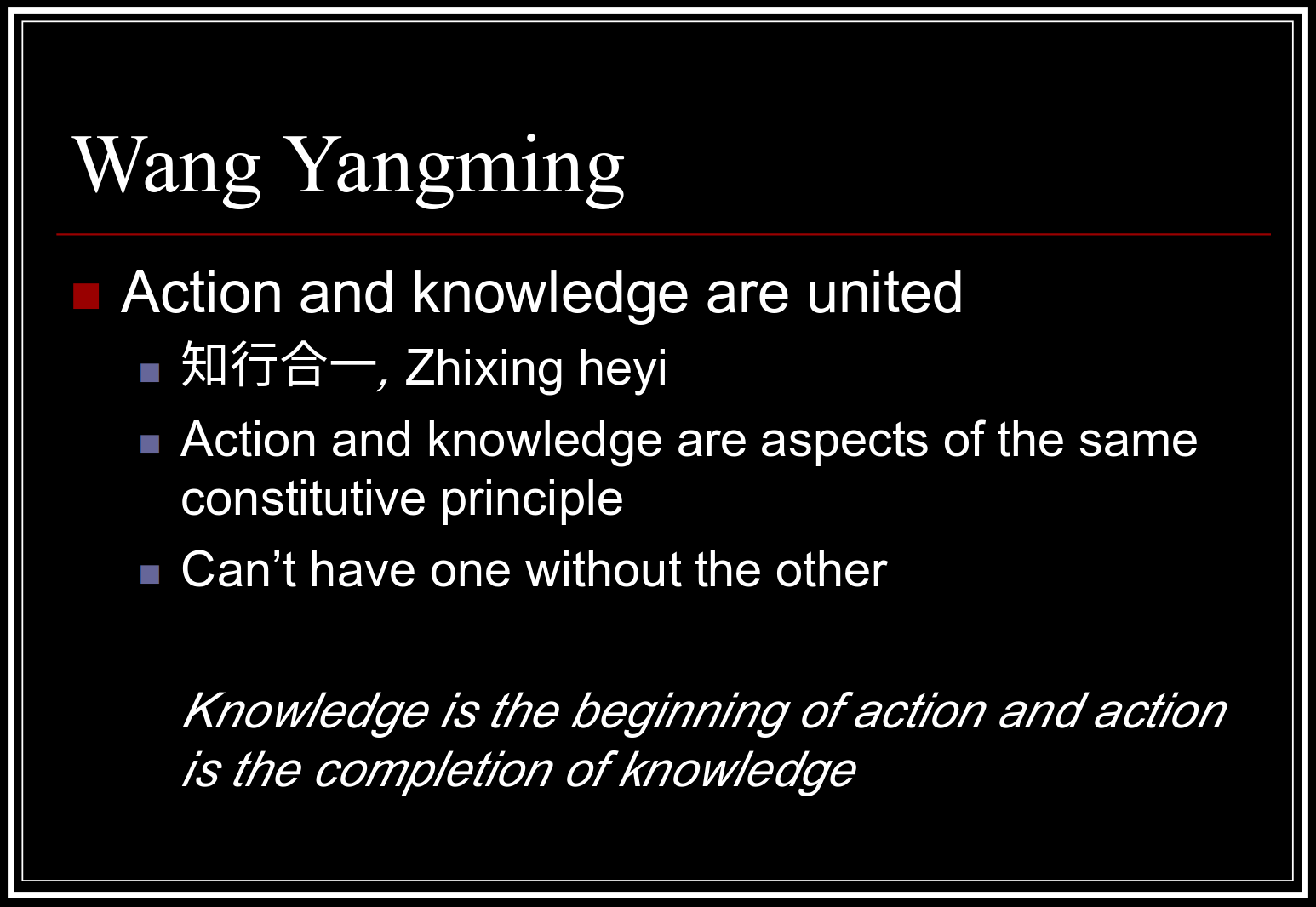
Wang Yangming (Stanford Encyclopedia of Philosophy)
Wang Yangming (1472–1529) was a Chinese statesman, general, and Neo–Confucian philosopher. He was one of the leading critics of the orthodox Neo–Confucianism of Zhu Xi (1130–1200). Wang is perhaps best known for his doctrine of the “unity of knowing and acting,” which can be interpreted as a denial of the possibility of weakness of will.
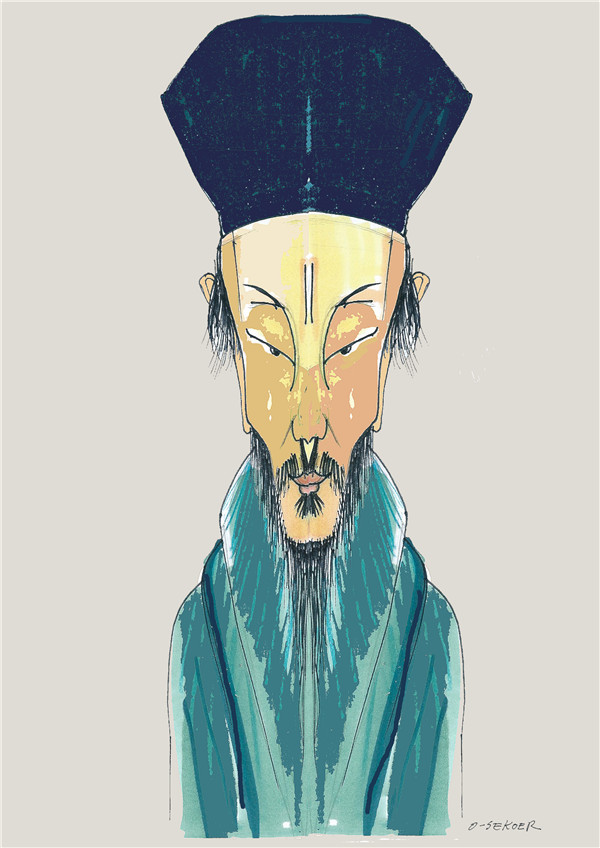
A portrait of Wang Yangming, the philosopher who expanded the concept of the “thing” beyond materiality to embrace moral precepts and ideas. Neo-Confucianism combined principles from the three major ancient philosophies of China—Daoism, Buddhism, and Confucianism—and the Wang Yangming school was one of its dominant and most influential movements.
The Quest For Ethical Truth: Wang Yangming On The Unity Of Knowing & Acting - by Weimin Shi (PDF)
Abstract: Drawing an analogy between Wang Yangming’s endeavor to know ethical truth and Descartes’ quest for epistemic certainty, this paper proposes a reading of Wang's doctrine of the unity of knowing and acting to the effect that the doctrine does not express an ethical teaching about how the knowledge that is already acquired is to be related to acting, but an epistemological claim as to how we know ethical truths. A detailed analysis of Wang’s relevant texts is offered to support the claim.
The Introspective Model of the Unity of Knowledge & Action - by Harvey Lederman, Assistant Professor in the Department of Philosophy at Princeton (2019) (PDF)
Abstract: This paper presents a new interpretation of the great Ming dynasty philosopher Wang Yangming’s (1472-1529) doctrine of the “unity of knowledge and action” (知行合一). My interpretation focuses on a new understanding of Wang’s notion of“genuine knowledge”, according to which Wang held that genuine knowledge requires freedom from a particular form of doxastic conflict. I argue that Wang believed that freedom from this form of doxastic conflict requires freedom from motivational conflict, and that if a person is free from motivational conflict, they are acting virtuously. Thus, on my interpretation, Wang held that knowledge and action are unified at least in the sense that, if a person has genuine knowledge, they are acting virtuously.
Perception and Genuine Knowledge in Wang Yangming - by Harvey Lederman (2020) (PDF)
Conclusion: The first aim of this paper was to develop the perceptual model in more detail than has been done before. I argued that Total Knowledge was the best hope for making sense of the claim that perception is a part of some episodes of genuine knowledge, and I showed how, given Total Knowledge, we could make sense of Unity, which I take to be the core of the unity of knowledge and action.This result is already surprising. Proponents of the perceptual model have spoken in quite different ways about the supposed role of perception in genuine knowledge.They have not taken perception to be merely a side-light of the total mental event which36is genuine knowledge. Rather they have focused on a value-laden form of perception,and seen their interpretation as making Wang’s doctrine centrally about how we should perceive the world around us. But I argued that no such interpretation could be squared with Wang’s examples of the qualities we genuinely know, and that Total Knowledge was the best hope for the perceptual model.I then presented the introspective model, and argued that it was a more natural interpretation of what Wang wrote than the perceptual model. Wang doesn’t speak very much at all about the role of perception in virtuous action; by contrast he constantly emphasizes the role of liang zhi in recognizing one’s good inclinations and fostering them.Aside from two passages, the evidence points firmly toward the introspective model.Even those two passages, on inspection, do not clearly favor the perceptual model –one of them ([T4]) tells against it. So we should prefer the introspective model.The unity of knowledge and action is not a doctrine about a rich form of perception.Rather, it concerns the conditions under which the conscience-like faculty of liang zhi could fully recognize the ethical qualities of one’s own mental events. Wang believed that people could achieve this full recognition – genuine knowledge – when and only when they were acting virtuously. In this sense, he believed, knowledge and action are one.
Wang Yangming on the Unity of Knowing and Acting (The Splintered Mind , 2016)
There have never been people who know but do not act. Those who "know" but do not act simply do not yet know.... Seeing a beautiful color is a case of knowing, while loving a beautiful color is a case of acting. As soon as one sees that beautiful color, one naturally loves it. It is not as if you first see it and only then, intentionally, you decide to love it.... The same is true when one says that someone knows filial piety or brotherly respect. That person must already have acted with filial piety or brotherly respect before one can say she knows them. One cannot say she knows filial piety or brotherly respect simply because she knows how to say something filial or brotherly (Ivanhoe 2009 trans., p. 140-141).
-
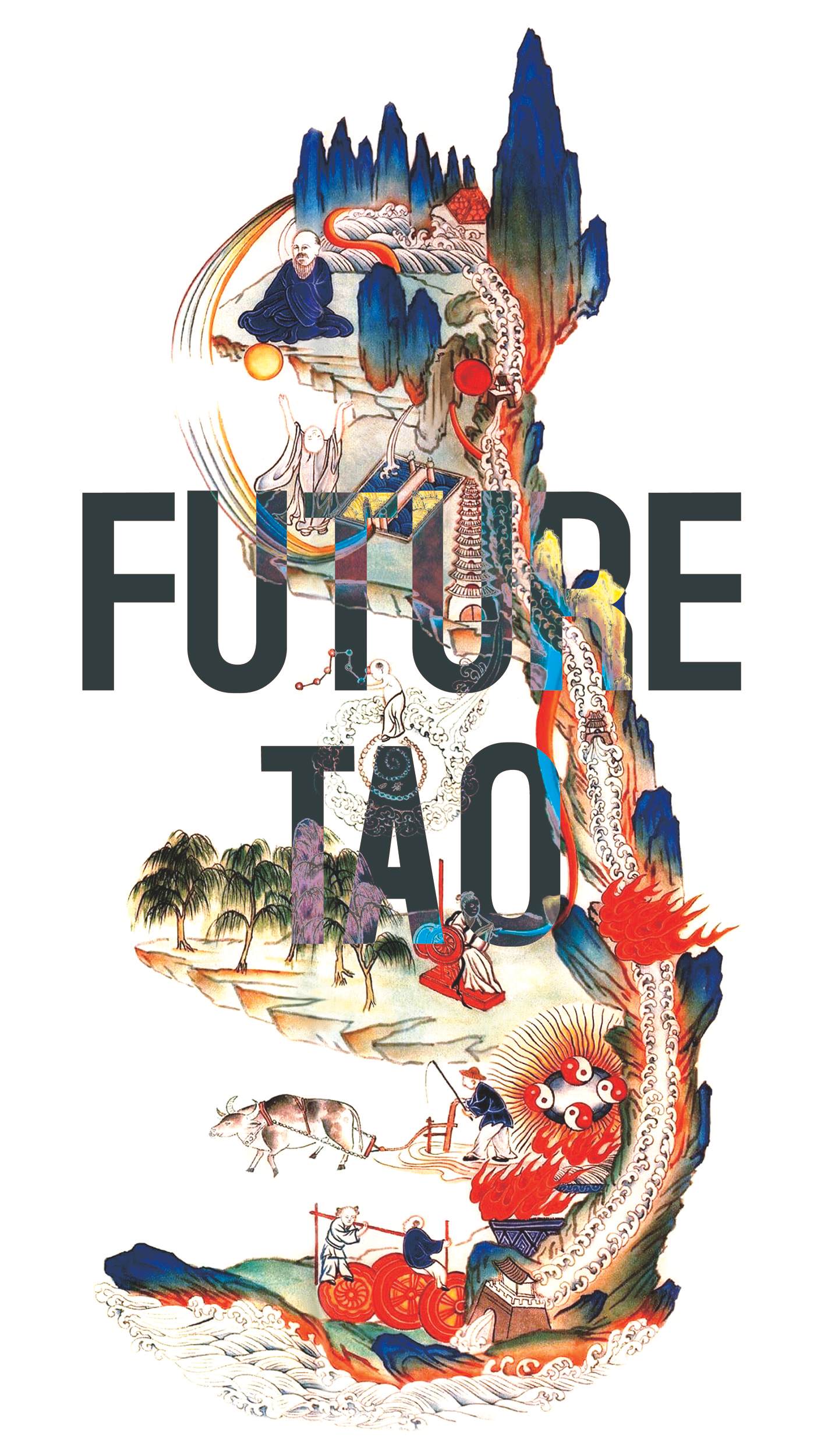
lololol Future Tao: Online Inner Scripture
“Future Tao” is an ongoing interpretive manuscript of Taoist-informed experimental practices for mind and body cultivation in contemporary times. Initiated by lololol, the manuscript is collectively written and organically evolving, and includes a decentralized program of exercises and techniques shared as a community for inspiring healthy living.
-
85,000 Chinese museum artefacts lost in New York fire in Lunar New Year disaster (SCMP)
‘One hundred per cent of the museum’s collection’ was lost in the blaze, the Museum of Chinese in America says. The museum’s collection included items such as textiles, restaurant menus and ship tickets that tell the story of Chinese migration to the US. The fire came ahead of the Lunar New Year on Saturday.
-
China moves to phase out single-use plastics (reuters)
China is stepping up restrictions on the production, sale and use of single-use plastic products, the state planner said on Sunday, as it seeks to tackle one of the country’s biggest environmental problems. The National Development and Reform Commission and the Ministry of Ecology and Environment, which issued the new policy, said plastic bags will be banned in all of China’s major cities by the end of 2020 and banned in all cities and towns in 2022. Markets selling fresh produce will be exempt from the ban until 2025. By end of 2020, the restaurant industry will be banned from using single-use straws. By 2025, towns and cities across China must reduce the consumption of single-use plastic items in the restaurant industry by 30%.
China starts 10-year fishing ban on Yangtze River (xinhuanet)
Starting from this year, the ban will be observed in 332 conservation areas in the Yangtze River basin, which will also be expanded to all natural waterways of the river and its major tributaries from no later than Jan. 1, 2021. Fishing will also be prohibited on natural waterways of large lakes connected to the Yangtze such as the Dongting Lake and Poyang Lake for 10 years starting from no later than Jan. 1, 2021.
-
Chinese authorities confirm human-to-human transmission of new coronavirus (TASS)
Human-to-human link to some cases of new China virus, Sars expert says (SCMP)
China warns Communist Party officials: cover up spread of Wuhan virus and be ‘nailed on pillar of shame for eternity’ (SCMP)Priority now to stop emergence of ‘super-spreader’, with one carrier already infecting more than a dozen medical staff, specialist says. Authorities in Wuhan, the epicentre of the virus outbreak, report a fourth death and 15 infections among hospital staff.
-
Lo Shu Square (洛书) is part of the legacy of ancient Chinese mathematical and divinatory (cf. the I Ching 易經) traditions, and is an important emblem in Feng Shui (風水), the art of geomancy concerned with the placement of objects in relation to the flow of qi (氣)
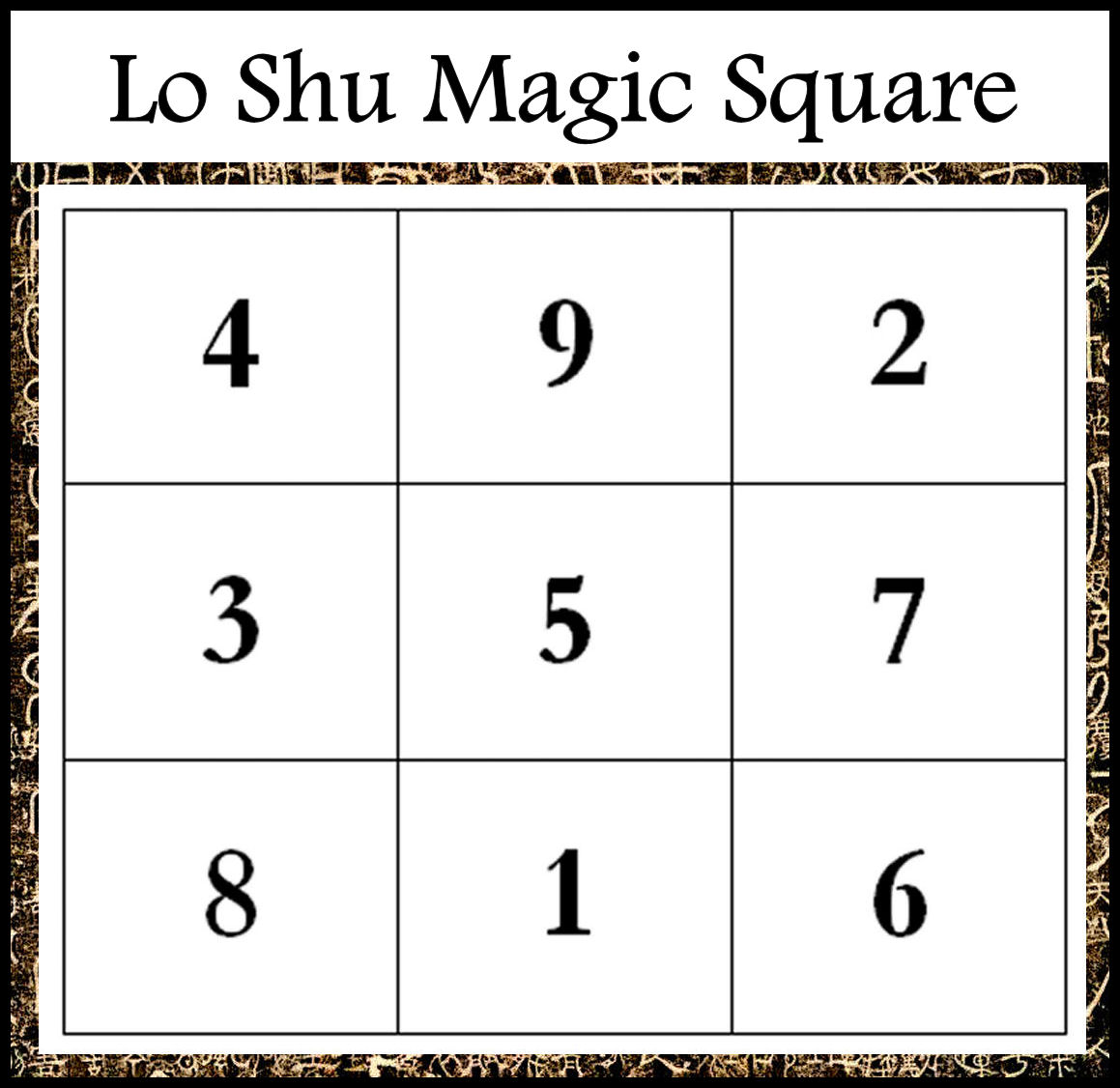
Image Source: https://benebellwen.com/2017/09/09/tinkering-bell-series-architecture-of-sacred-space-part-i/ 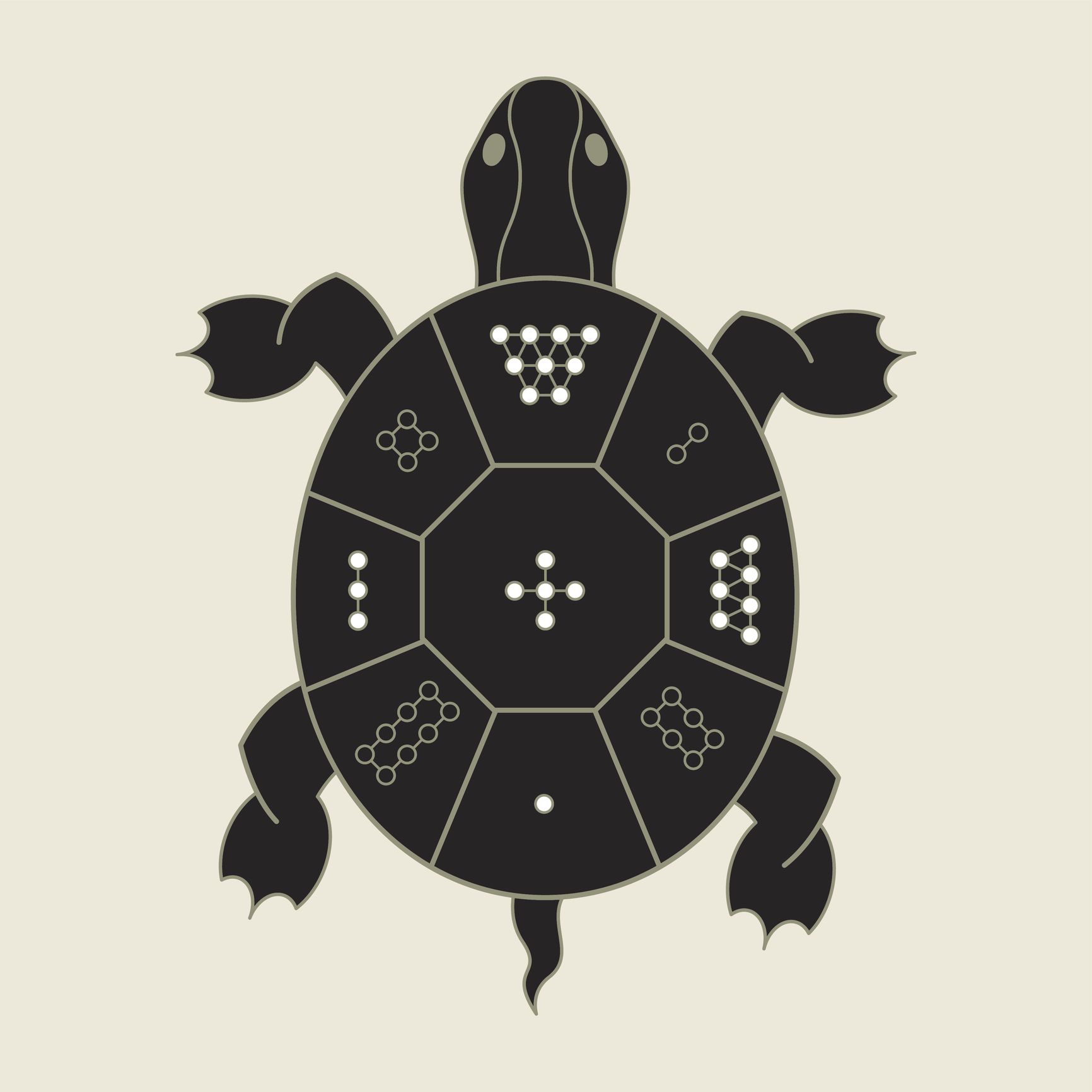
Image Source: https://www.thespruce.com/feng-shui-magic-of-the-lo-shu-square-1274879 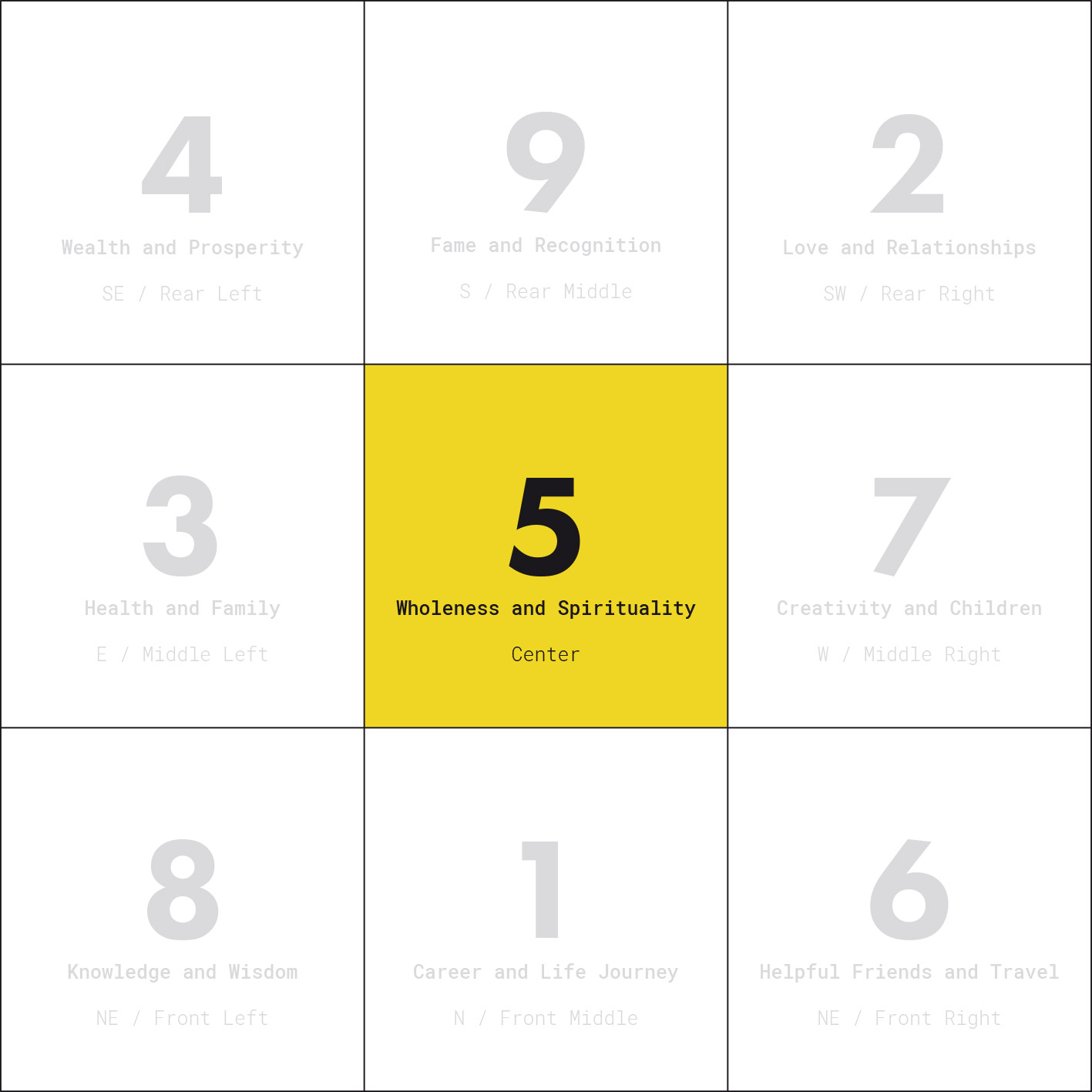
Image Source: https://thoth-adan.com/blog/wholeness-and-spirituality 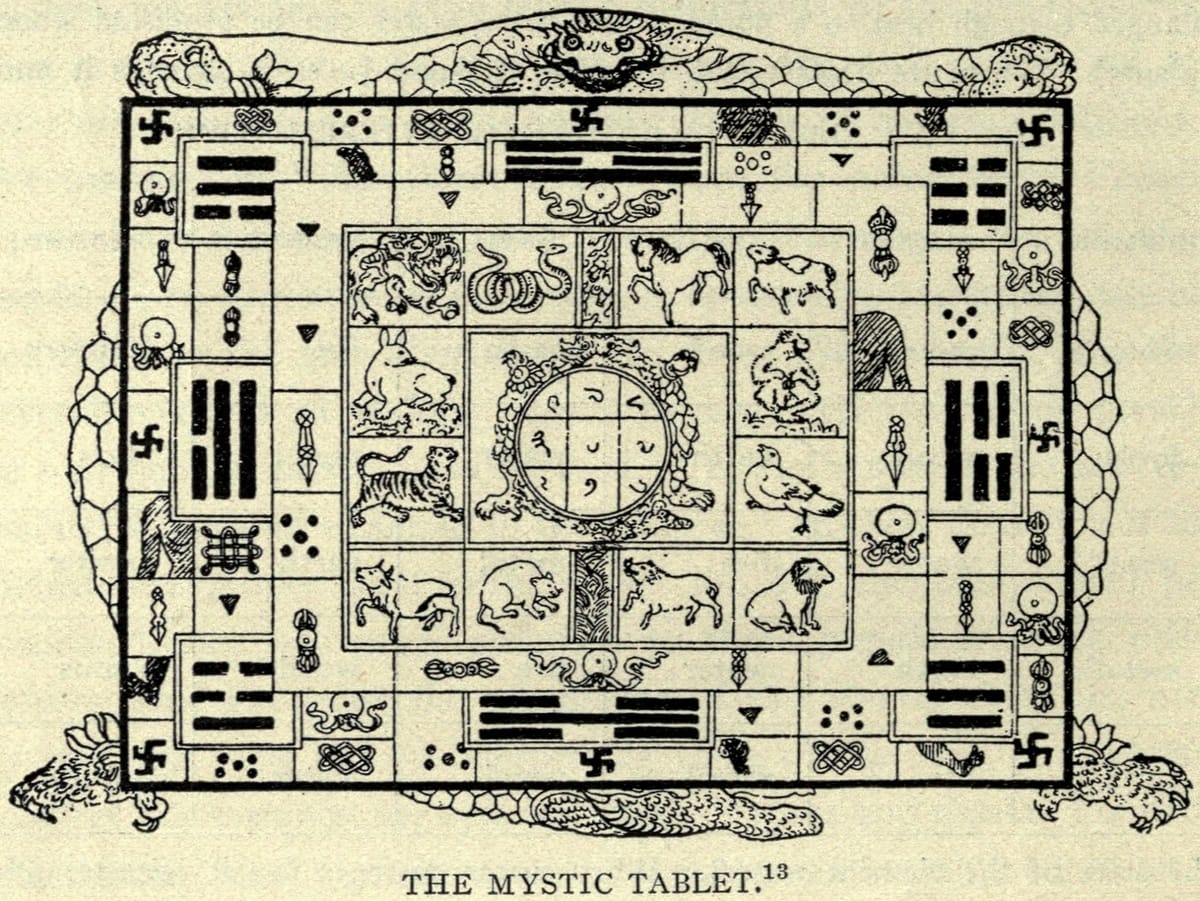
Related: Carl Jung called the framework behind his Archetypes a Quaternion, a 4×4-square that contains complementary (“dual“) concepts (Senses/Facts vs Imagination), (Object/Unity) vs/Subject (Social). Complementary concepts share the void when they are united. They are often called a Paradox. The Quaternion has a lot in common with the Chinese Lo Shu Magic square which is the “generator” of the ancient Chinese Cyclic Models. The Lo-Shu was given to the mythical Emperor Yu before the great Deluge when he was sitting at the Yellow River. The Lo Shu Magic Square was an important model for time and space and served as a basis for city planning, tomb design, and temple design. The Magic Square was used to designate spaces of political and religious importance. (via)
Related: About the Chinese Domino Game and the Magic Square of Lo Shu
-
“Behind the rock in the dark probably hides a tiger, and the coiling giant root resembles a crouching dragon” (暗石疑藏虎,盤根似臥龍) - Yu Xin (513–581)